Boring, moi? Geneva fights back!

Geneva, Switzerland’s second city, is known as a hub of worldwide diplomacy and banking. Added to the fact that it’s in Switzerland, which has a reputation fot being a bit, well, unexciting. And rich, therefore expensive. So basically, not very enticing in terms of a weekend break.
However, I’ve been to Lucerne before and was blown away by the scenery. More importantly, I’m travelling with my friend Heather to celebrate 25 years of riotous friendship. Boredom is simply not on the cards. We decide to give Geneva a go…
First impressions are good. Swiss efficiency is on parade as we obtain our free train transfer tickets into the city. Many cities see airport trains as their first opportunity to rip off tourists (yes, Heathrow Express, I’m talking to you!) so this is a breath of fresh air. Naturally, the train leaves on time. Before long, Heather and I are strolling downhill from the central station to the lakeside, where our hotel is situated.
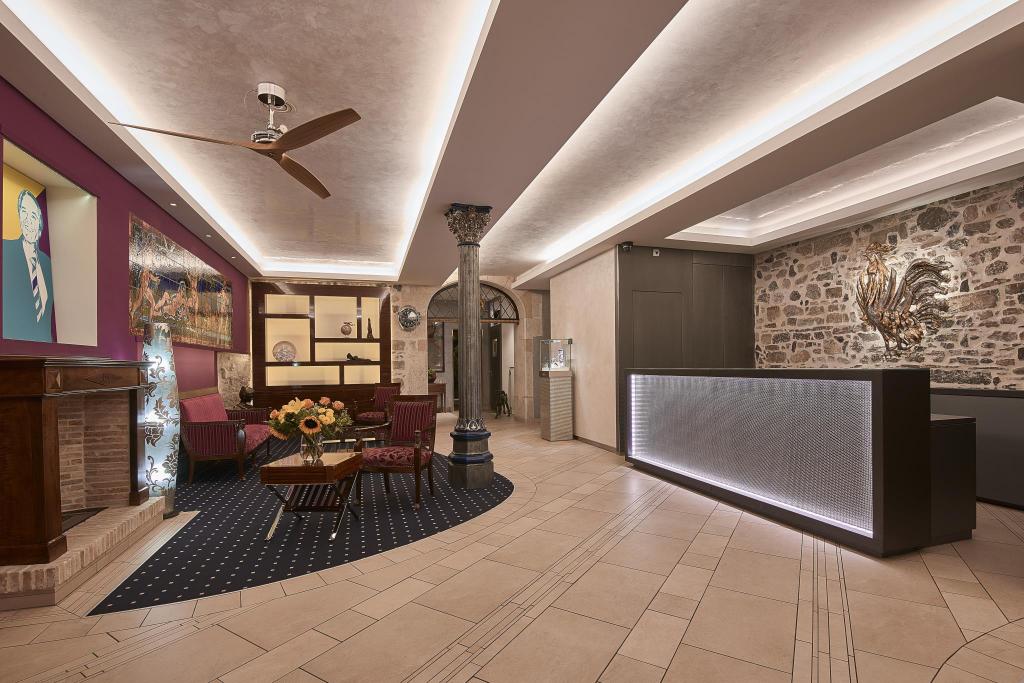
We’re staying at the 4 star Hotel d’Alleves which does everything it says on the tin, with pleasant staff, comfy rooms and a decent breakfast included. Admittedly, Heather does have a nasty fall in the shower which results in quite a spectacular bruise, but we can hardly blame the hotel for that! We are both equally accident-prone, so I’m just relieved that fortune seems to be shining on me, for now at least.
Location-wise, we have chosen well. A short hop over nearby Pont de La Machine, one of the pedestrian bridges crossing the Rhone river, and we’re in the old town. Here steep cobbled lanes and staircases all head upwards towards the Cathedral Saint Pierre. It’s a beautiful sunny day and we have a weekend of exploring before us. It really doesn’t get much better than this, in my humble opinion. I couldn’t be less bored if I tried.
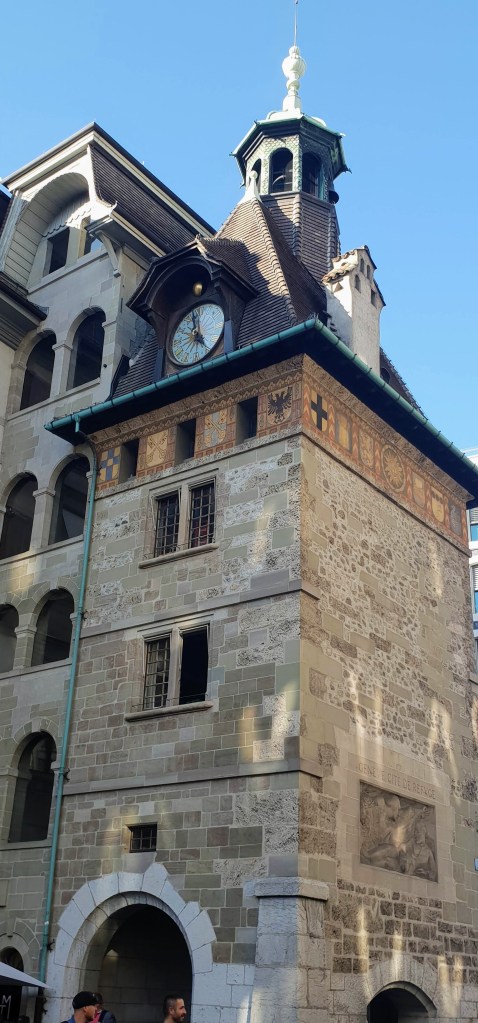
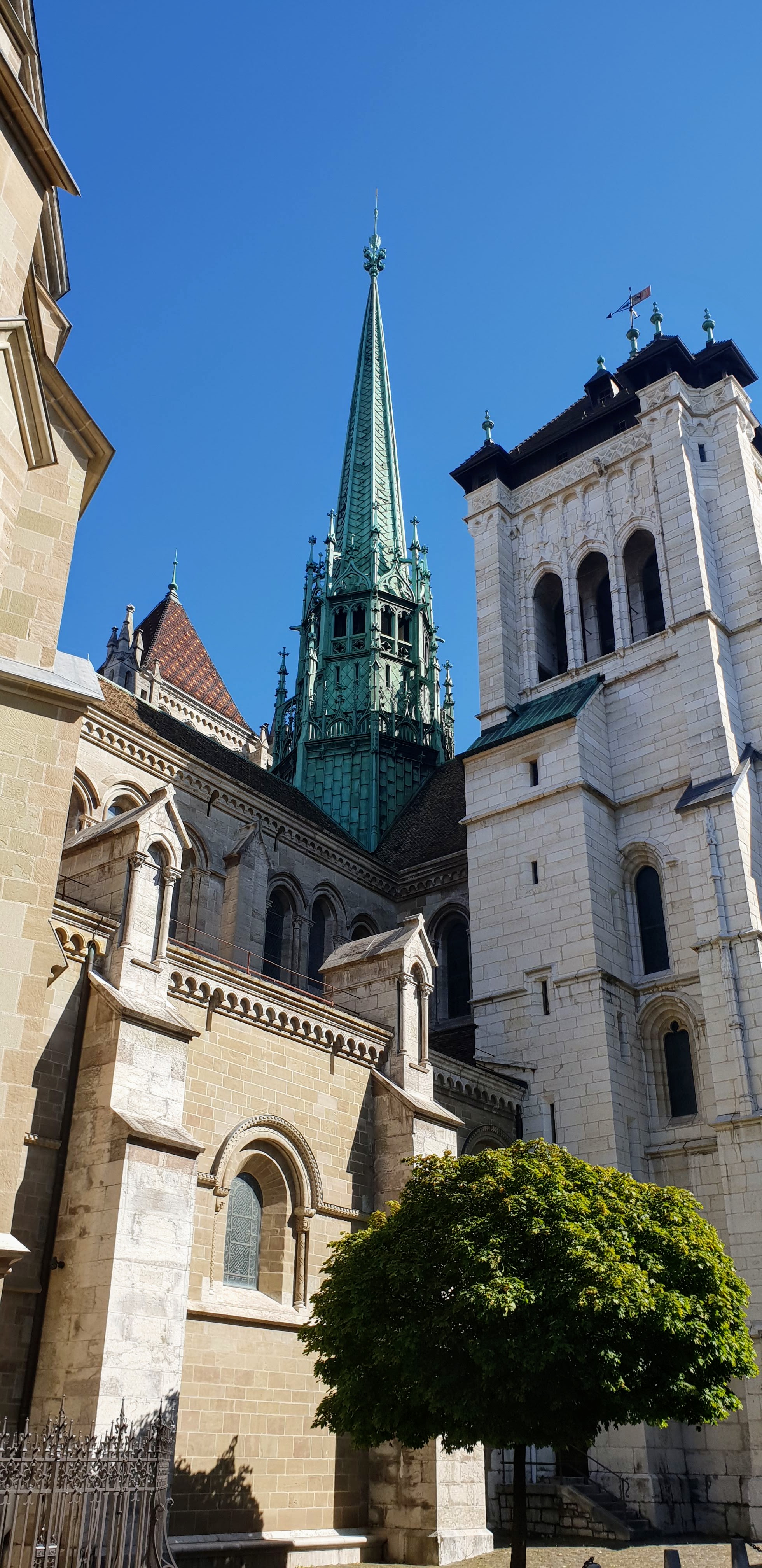
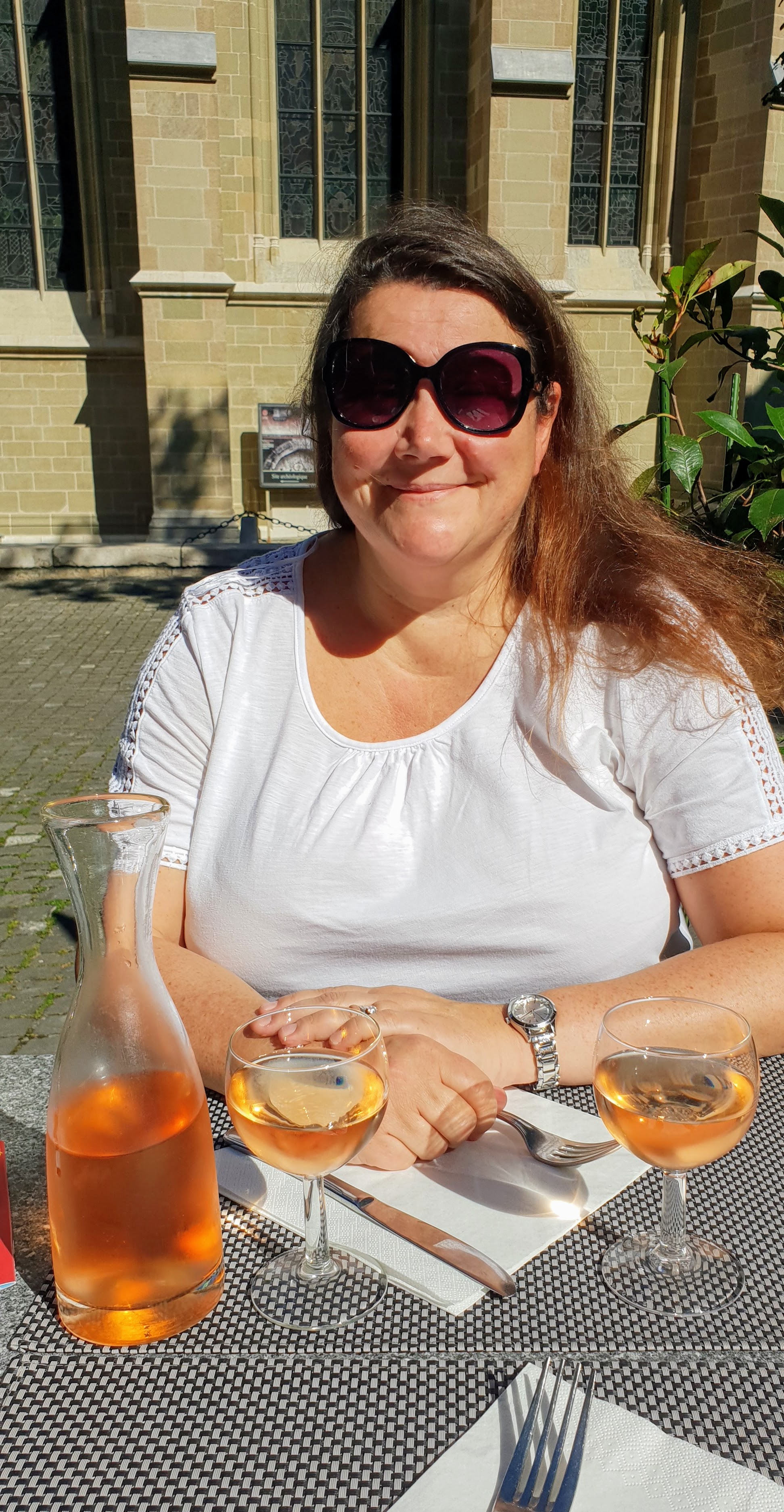
First priority: Catching up over lunch and drinks. Cafe Saint Pierre has sunny tables directly opposite the cathedral, and offers the most delicious crepes. We spend a happy hour here over a carafe of local rose wine. We like both restaurant and rose so much that we come back for lunch another day.
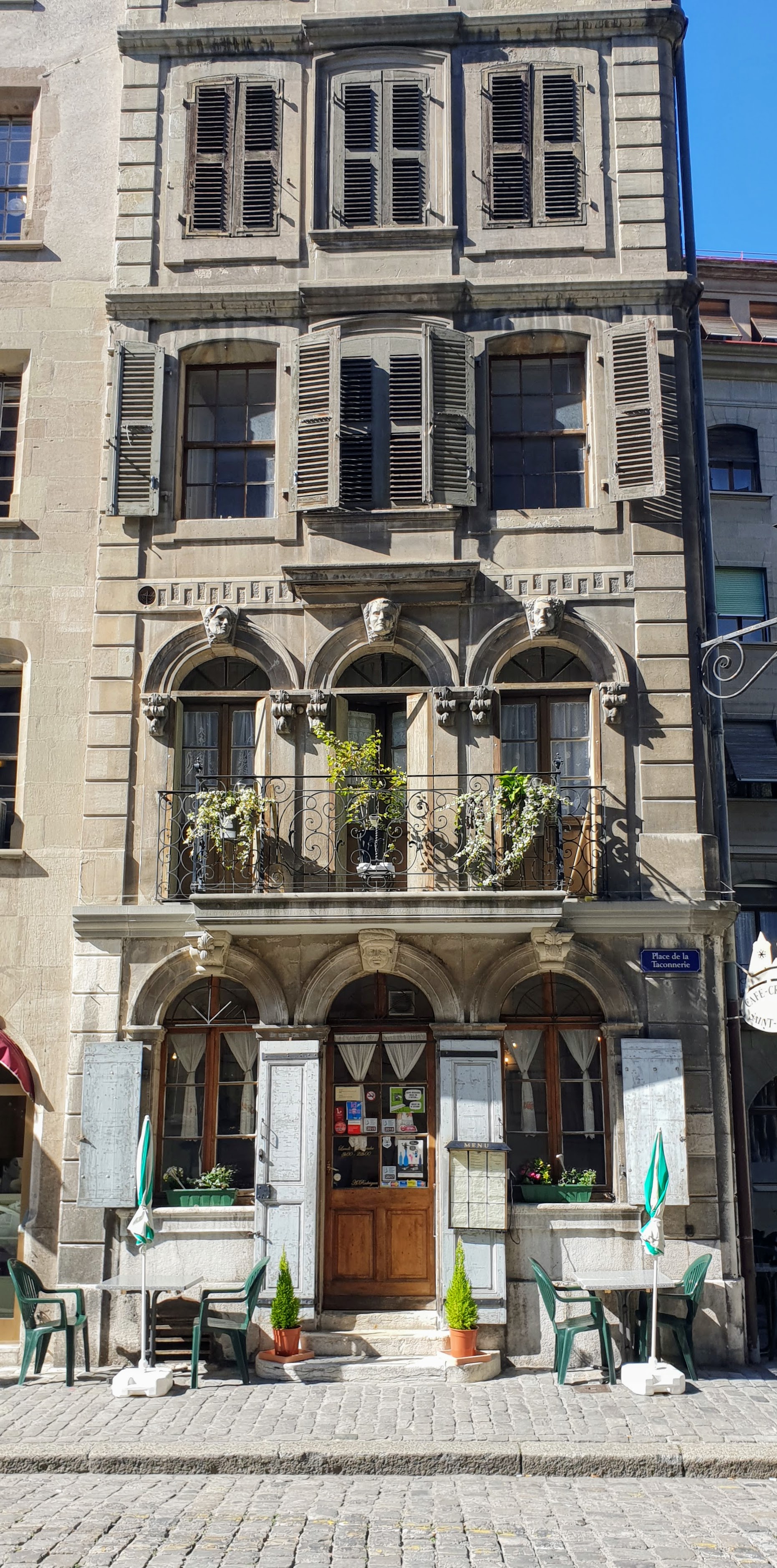
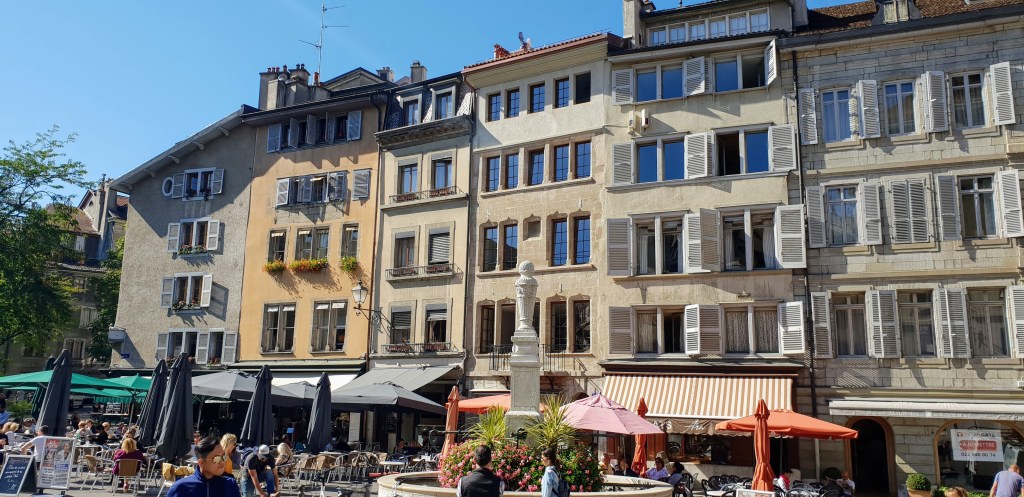
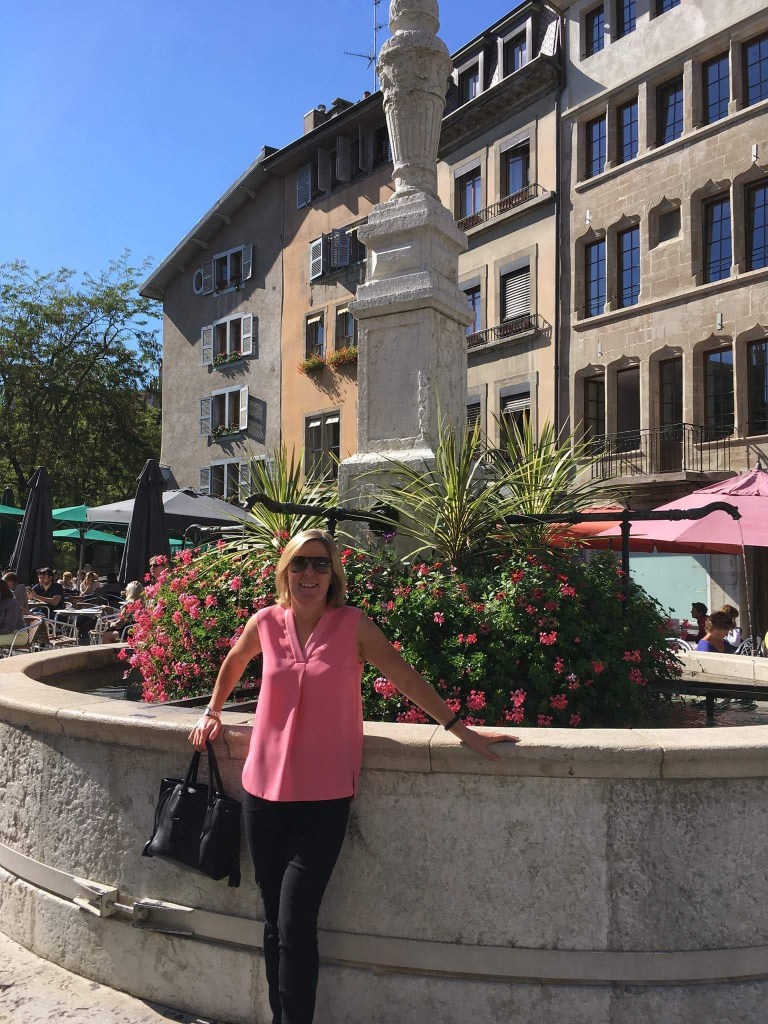
A short walk away is Geneva’s oldest square, Place du Bourg-de-Four, which has served as a meeting point since Roman times when there was a cattle market here. It continued to be a marketplace through the Middle Ages and nowadays restaurants and cafes surround a lovely 18th century fountain. It’s a perfect place to sit outside a pavement cafe and watch the world go by. Which, of course, we do.
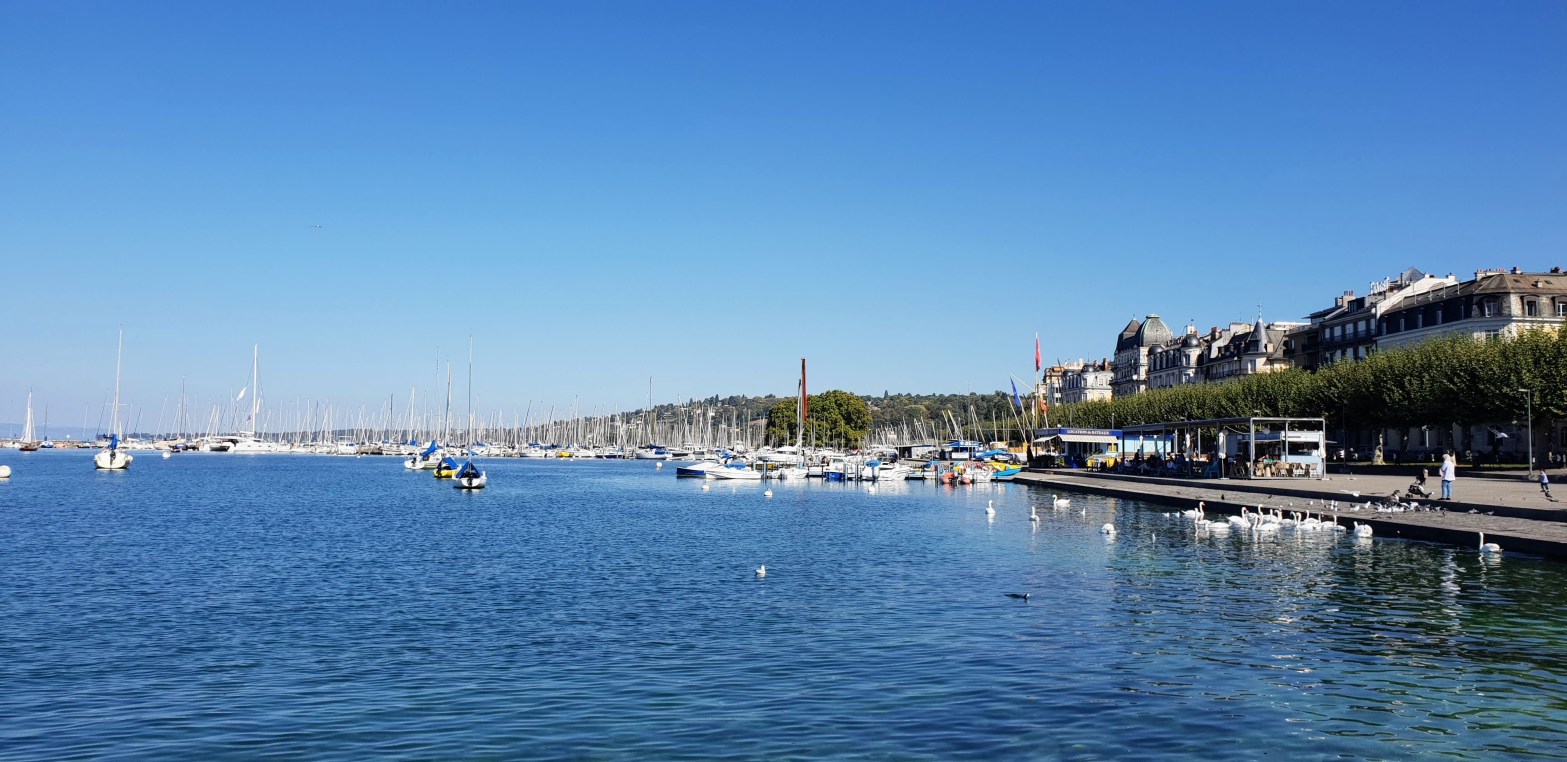
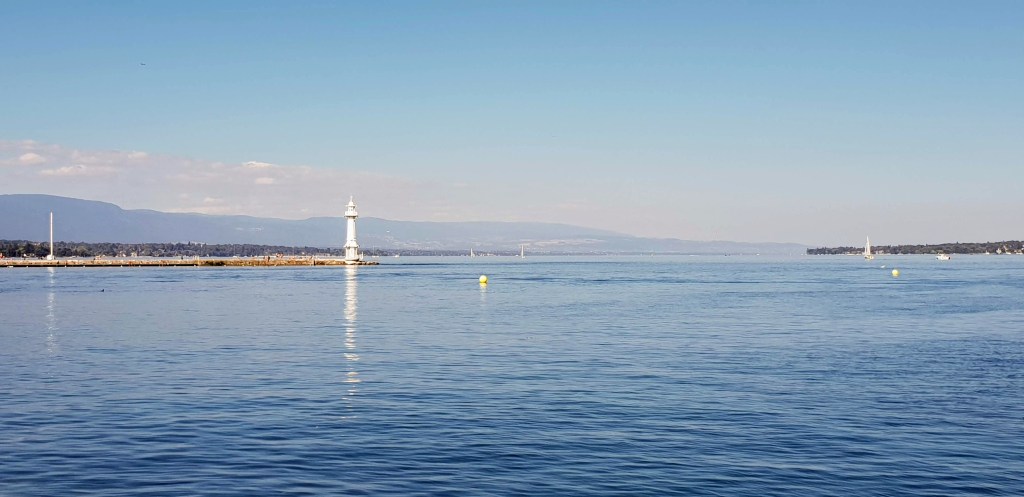
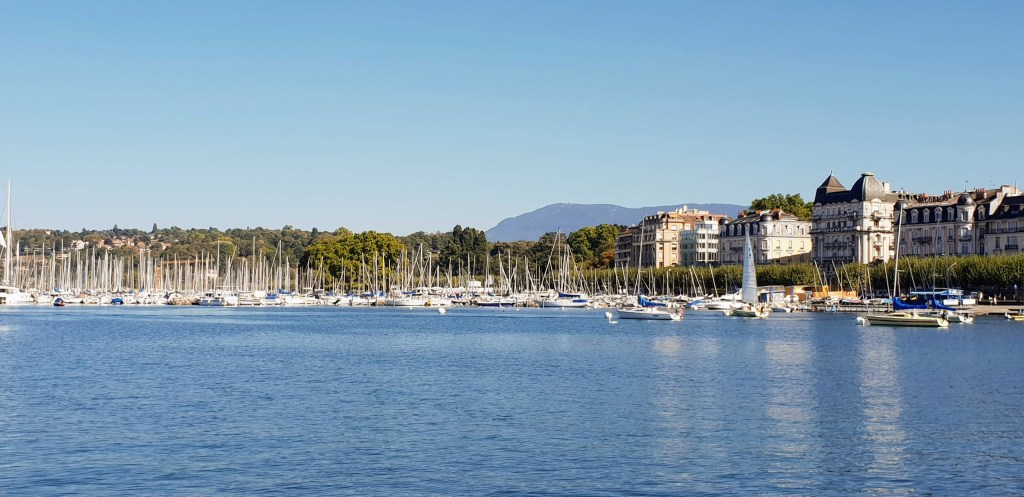
Next, we head down to the shores of Lake Geneva, or Lac Leman to the French – it’s shared between the two countries 60:40 so the Swiss get most of it. One of the biggest lakes in Western Europe, 73km long and up to 310m deep, it’s huge. It’s also very pretty, whichever way you look at it.
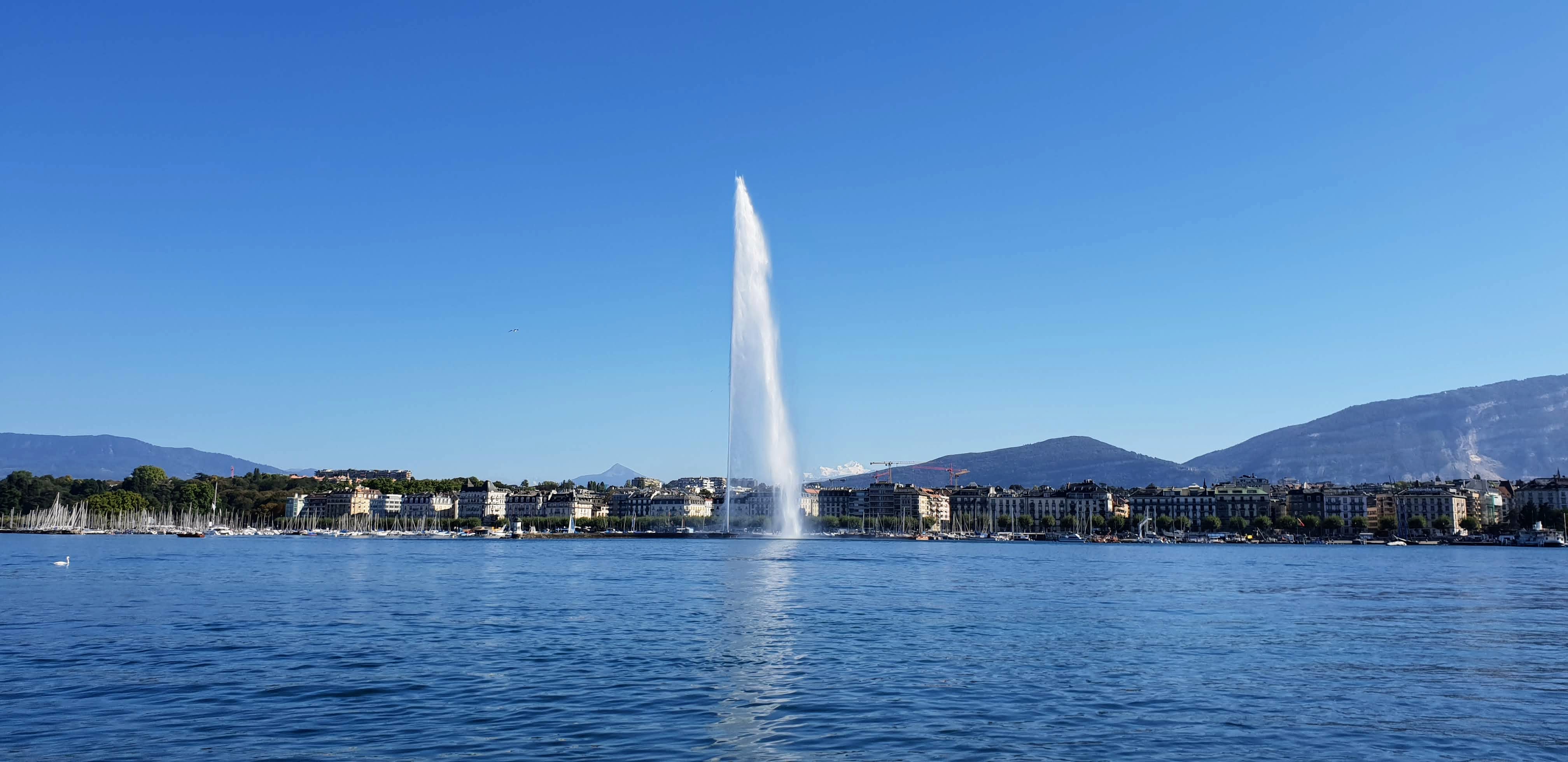
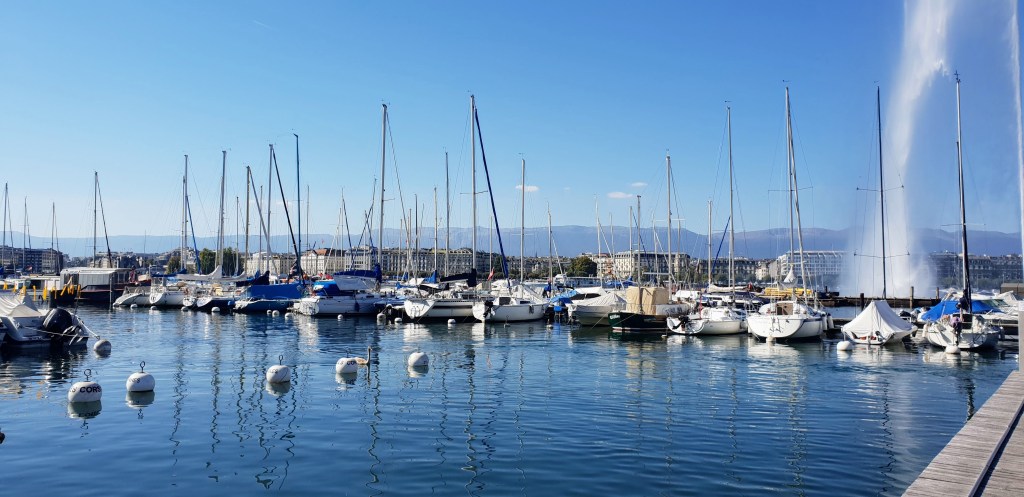
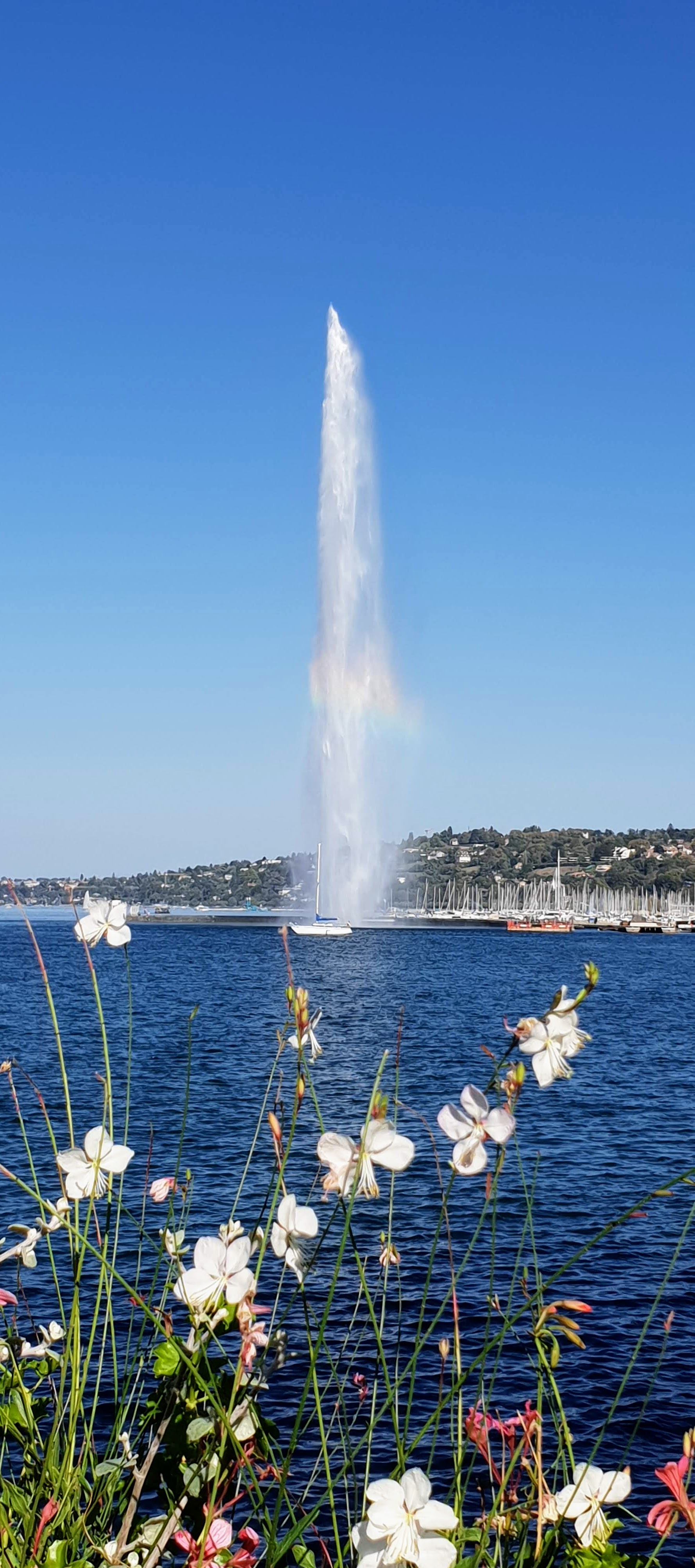
The Jet d’Eau water fountain is one of the city’s most famous landmarks, rising up to 140 metres in the air. It’s fairly spectacular, especially when seen against a clear blue sky.
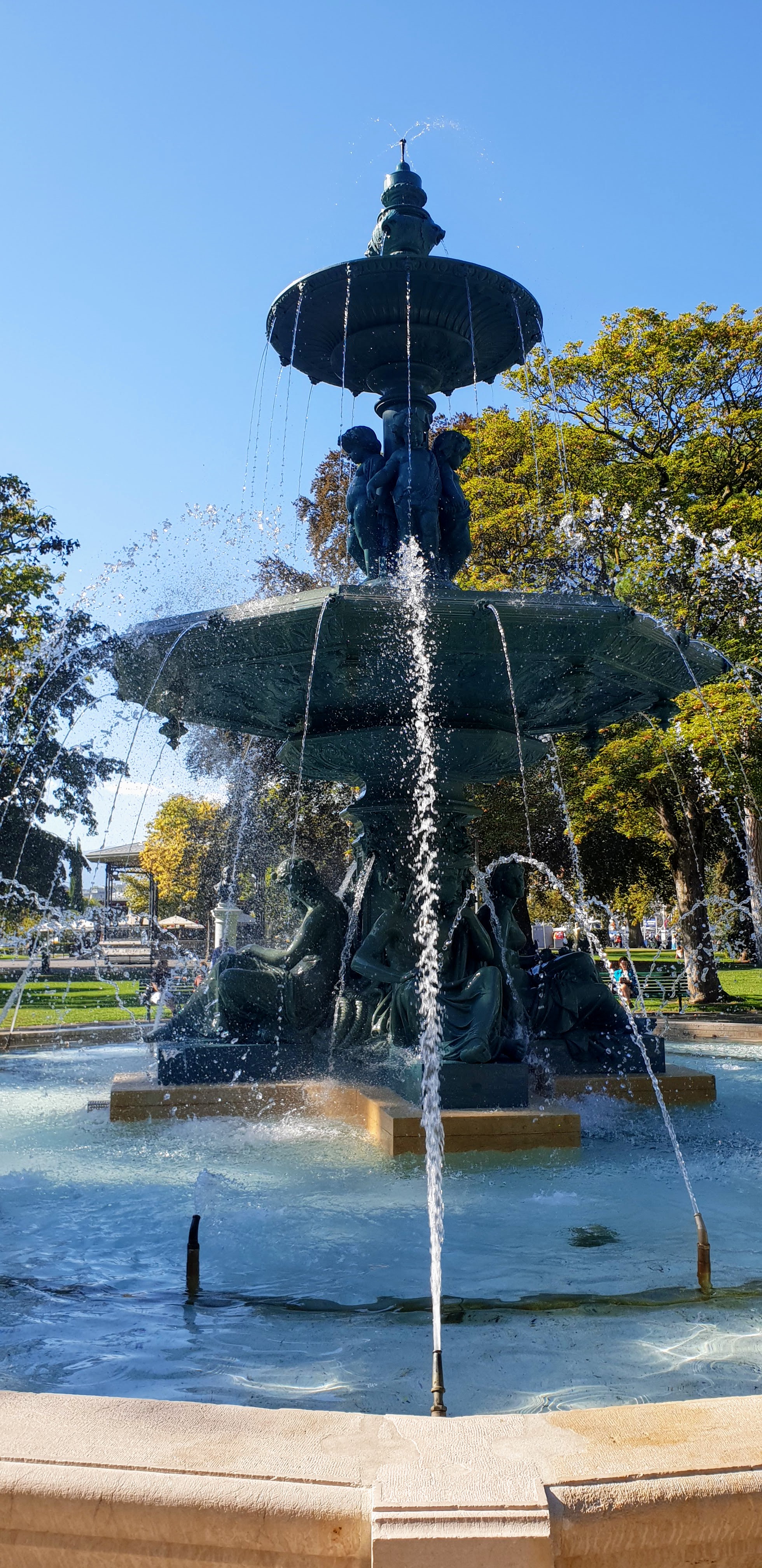
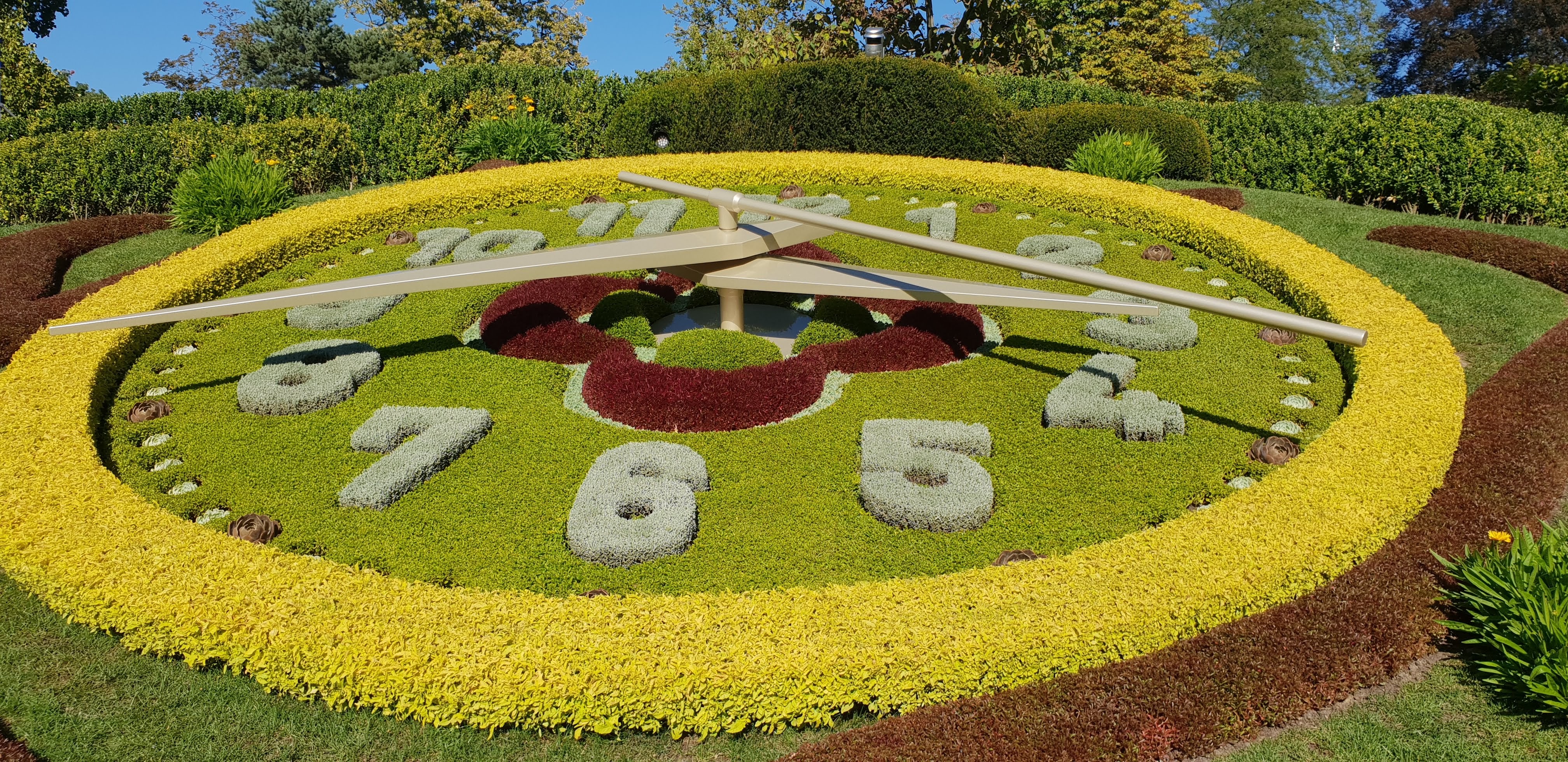
A walk along the lakeside promenade is a must both for the outlook and the gorgeous landscaping. As in so many European cities there’s a Jardin Anglais or English Garden which resembles nothing I’ve ever seen in England. It has a lovely bronze fountain, a national monument and a flower clock which keeps perfect time – hmmm, I’m not getting visions of home yet! The timekeeping in particular is a bit of an anomoly. Why not just call it a Swiss Garden? Or at least make the clock run slightly behind time – that would be much more English!
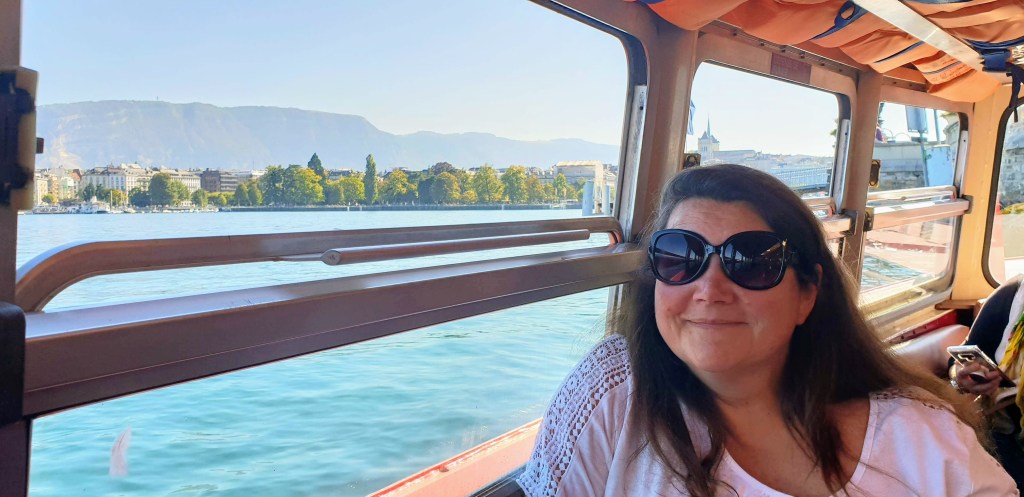
Getting around Geneva is a dream, as you’d expect in this most efficient of countries. Trams, trains, buses all run on time and are immaculately clean, but my favourite method of transport here are the cute little ferries that shuttle across the lake. We zigzag around a few times just because it’s fun and the views over the lake to the mountains are stupendous. Travel is such a joy when things work, isn’t it? Nope, we’re still not bored.
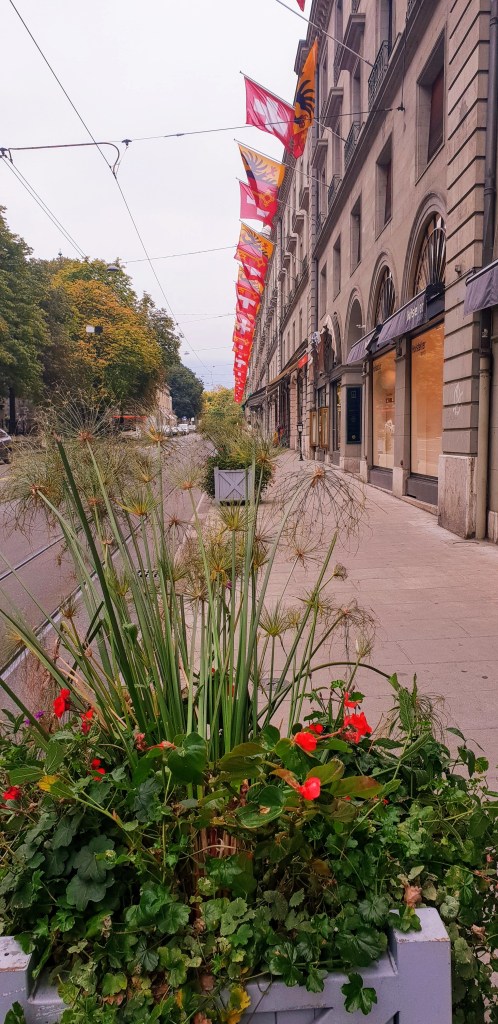
After exploring the old town and the lakeside, my picks for getting to know Geneva a bit more intimately are as follows. Number one, catch the tram out towards the groovy little suburb of Carouge. You can stop off at the flea market of Plainpalais on the way there. If you’re a keen bargain hunter you may be able to pick up something that will impress on Antiques Roadshow. I am not, and I spend most of my time trying not to laugh at the hideous things people are hoping to flog.
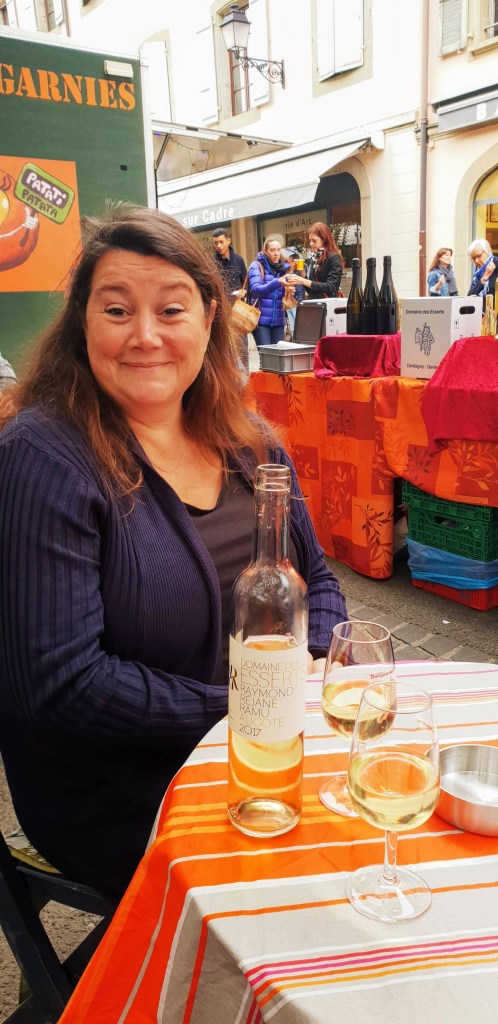
Carouge itself centres on its farmers market, which is much more my kind of thing – food! Even better, there are stalls set up by local winemakers. It would be rude not to try some wouldn’t it? Heather and I happily take a pew and do some enthusiastic tasting. Cultural research, we call it. Far from boring.
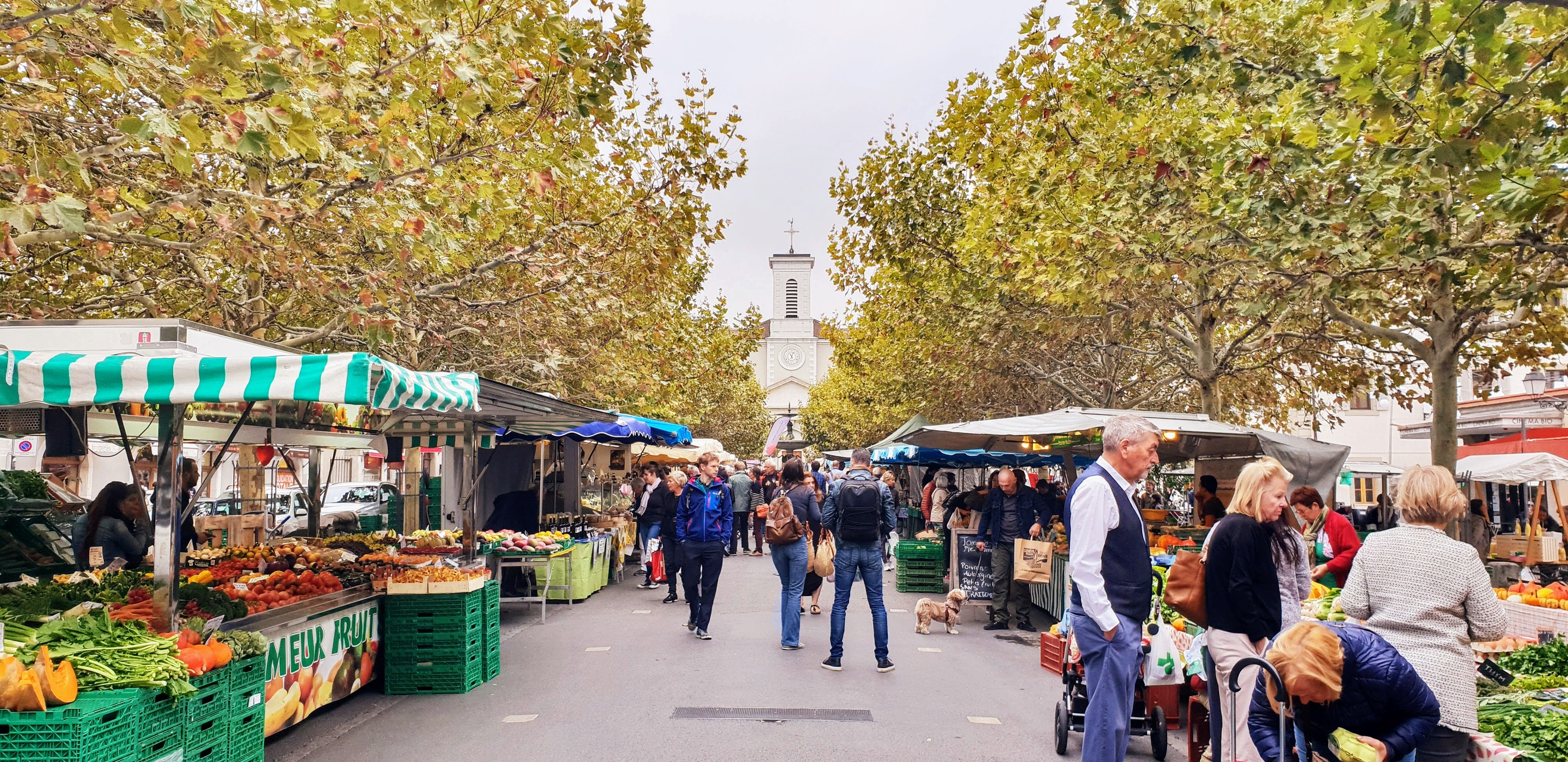
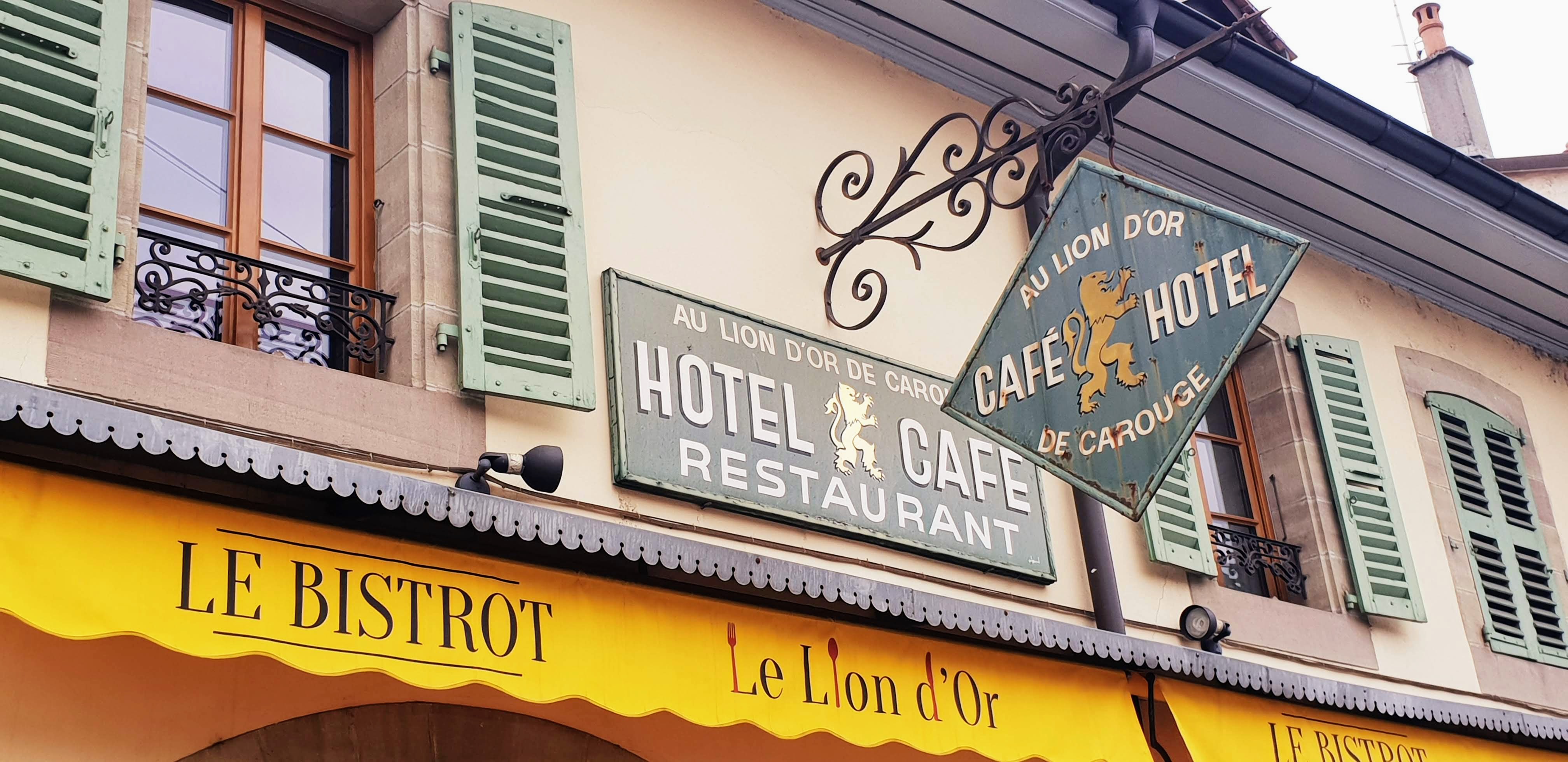
Quite apart from the marché, it’s worth strolling around the backstreets to admire the architecture here. Carouge is known as Geneva’s Little Italy, with a different feel to the rest of the city due to the area’s Sardinian heritage. The area has lots of cafes, galleries and independant shops to check out. We find a great little Italian restaurant where they prepare a huge pan of the pasta of our choice. Plates cleared, the contents of the pan keep coming. I’m stuffed, but it feels rude to refuse, plus it’s delicious. Go on then, just a small second portion.
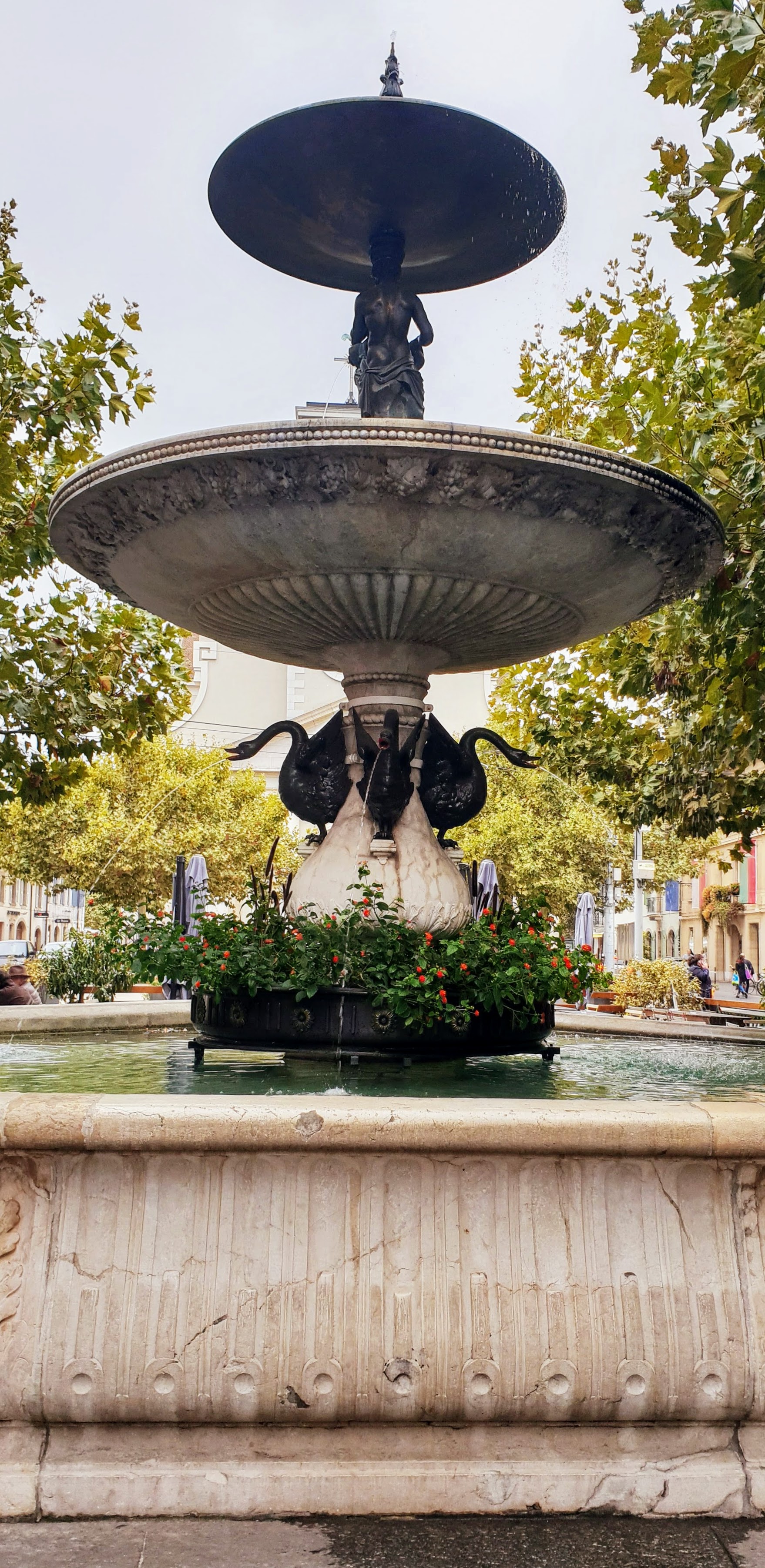
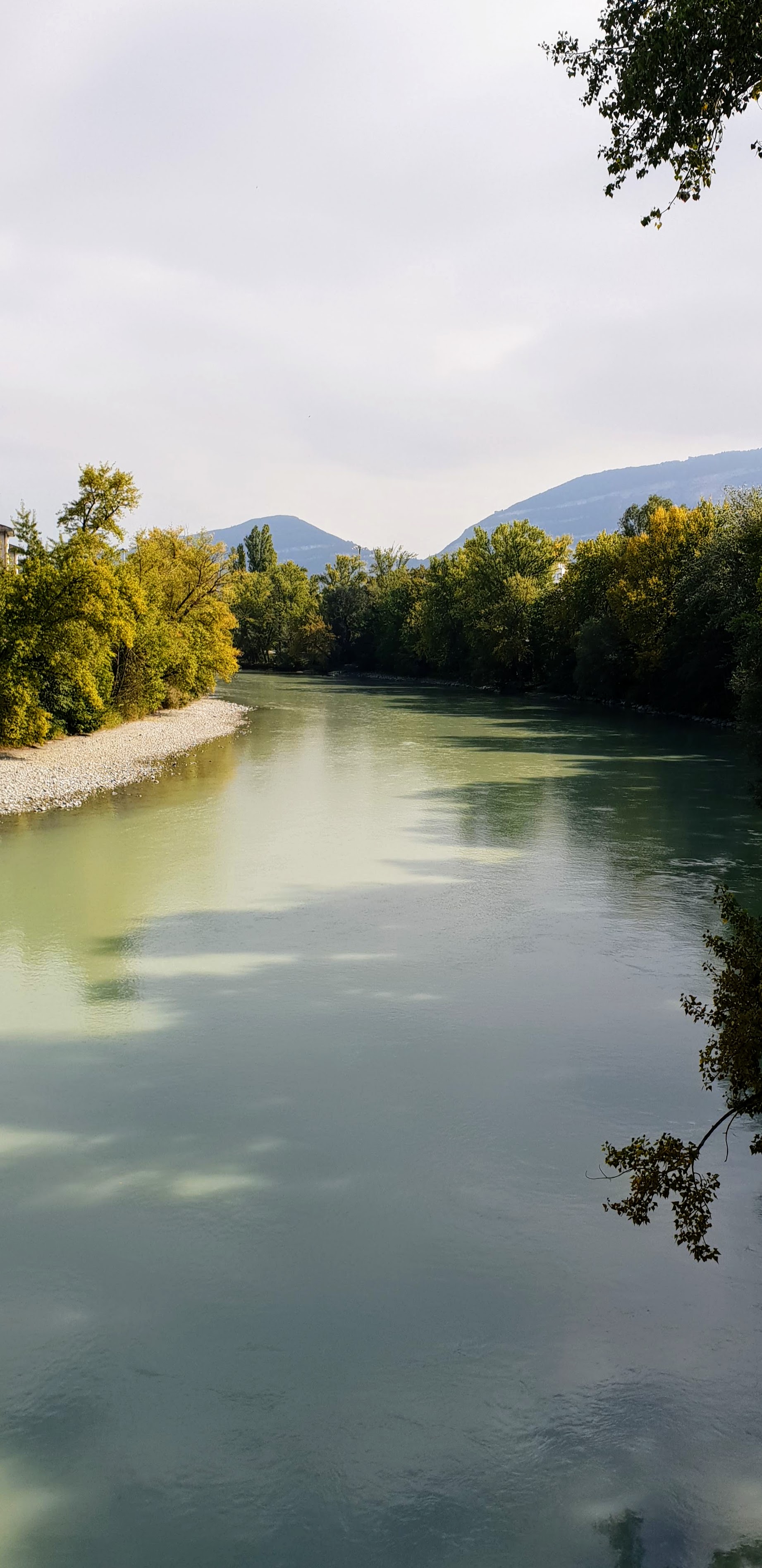
Walking, or rather waddling back to the city centre, in the vain hope of shifting the kilos of carbohydrate we’ve consumed, we cross the River Arve. This flows into the Rhone, which in turn flows into the lake. Geneva really is a city where water dominates, which is one of the reasons I like it. Rivers and lakes guarantee good walks.
Because of the famous Swiss neutrality, Geneva hosts more international organisations that anywhere else in the world. So my second recommendation is to visit the headquarters of the United Nations and the Red Cross and find out more about the serious work that goes on here.
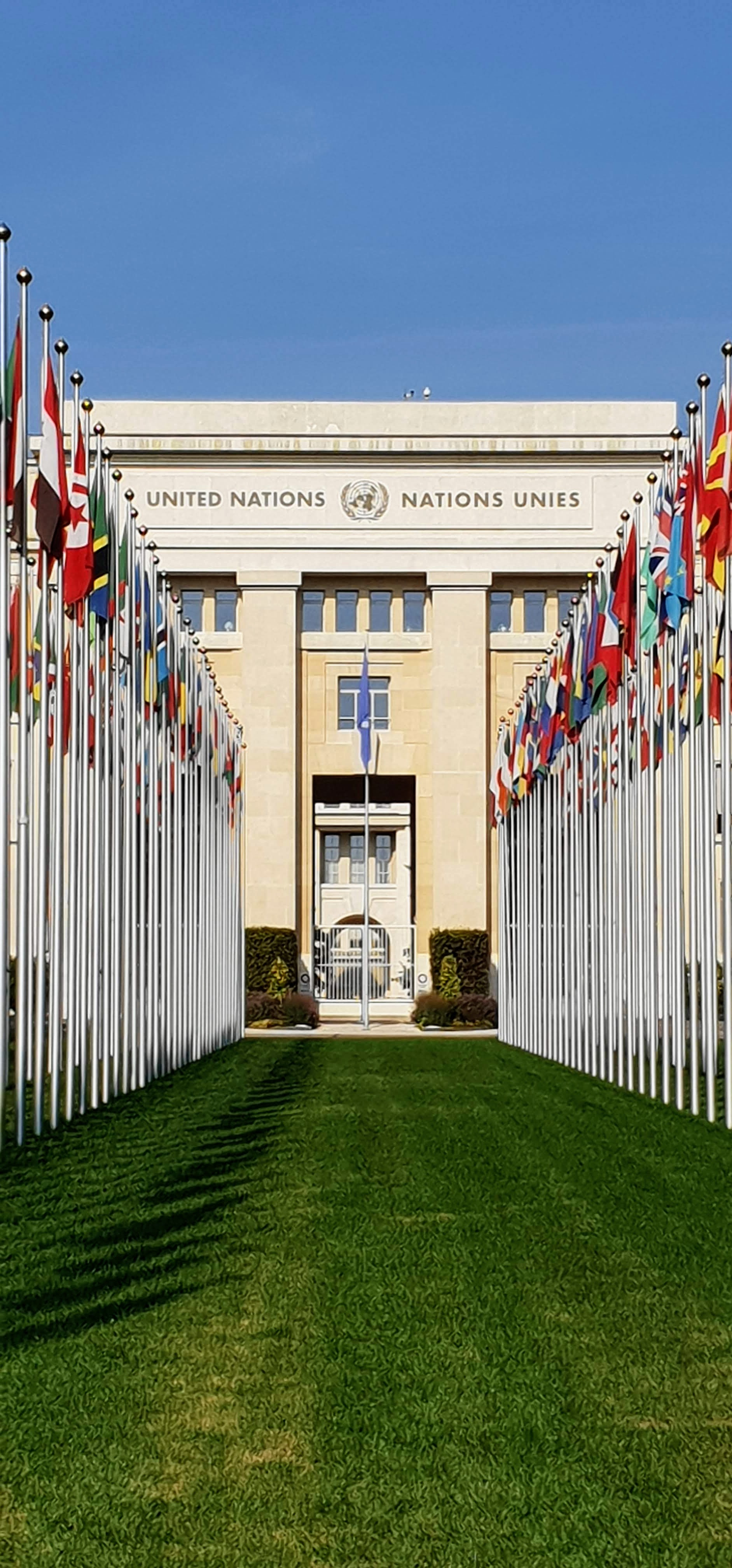
The UN was founded in 1945 after WWII to stop wars and promote dialogue between countries. That’s not going so well then is it? Home is the Palace of Nations in the north of the city. Around 10,000 meetings take place here each year, which doesn’t necessarily mean a lot gets done in my experience. Ironically, when a competition was held to design the palace, the international jury was unable to agree on a winner, so five different architects were asked to collaborate on the building. These things have to be shared out, you know. When built, it was almost as big as Versailles, and it’s had huge extensions since then. It’s mind boggling, the amount of time and money that goes into an organisation like this.
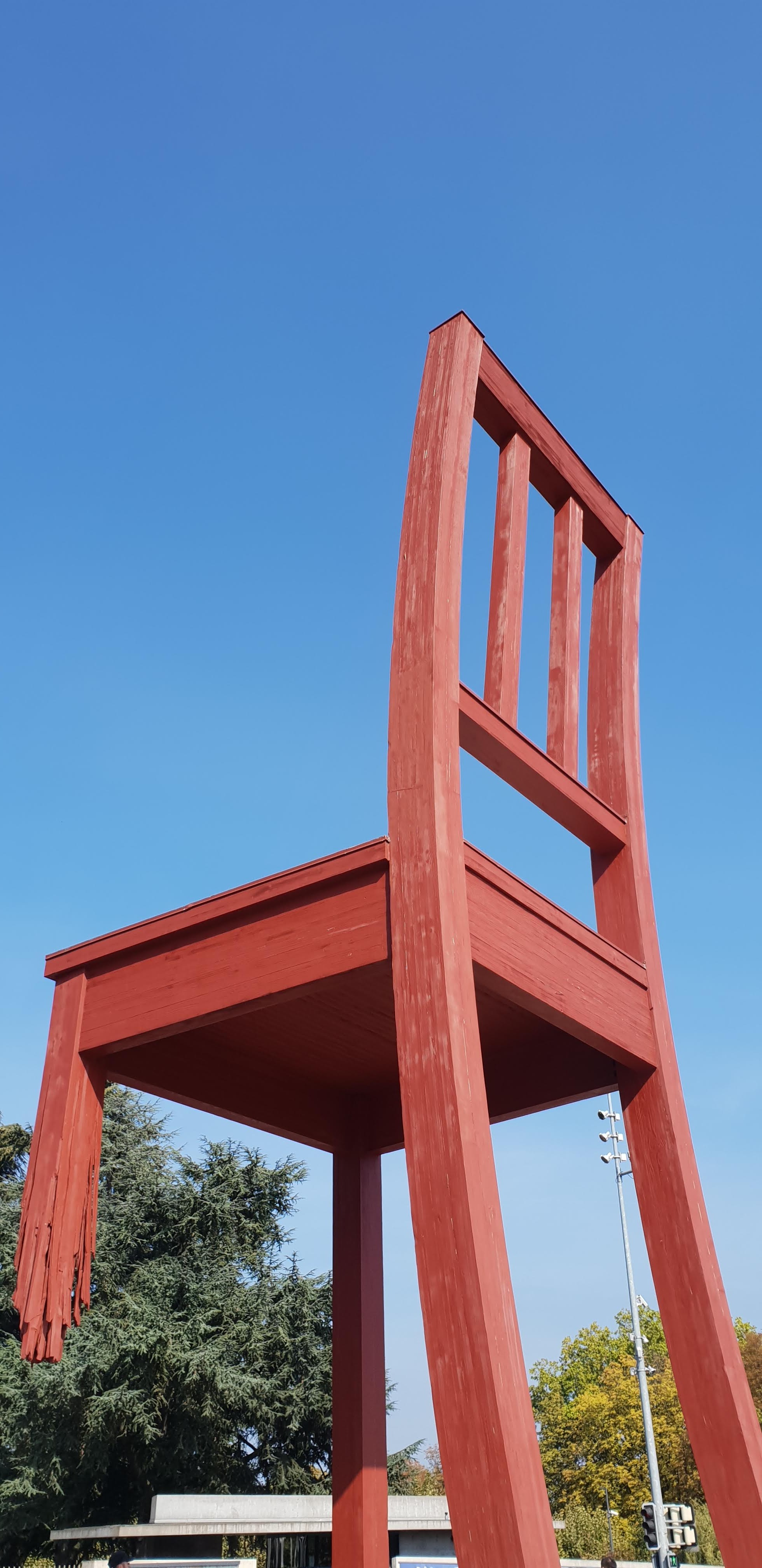
Outside, the most striking monument in the Place des Nations is The Broken Chair which symbolises opposition to landmines. Twelve metres high and bright red, with one leg blown off, it’s hard to ignore. Originally a temporary installation, it proved so popular with the public that it’s still in place 23 years later.

The International Museum of the Red Cross and the Red Crescent is just a bit further up the road. The mission here is to alleviate human suffering, which again seems like a big ask, and something we are far from achieving. Originally formed to tend to those wounded in battle, it has become the largest humanitarian organisation in the world. The galleries definitely provide food for thought.
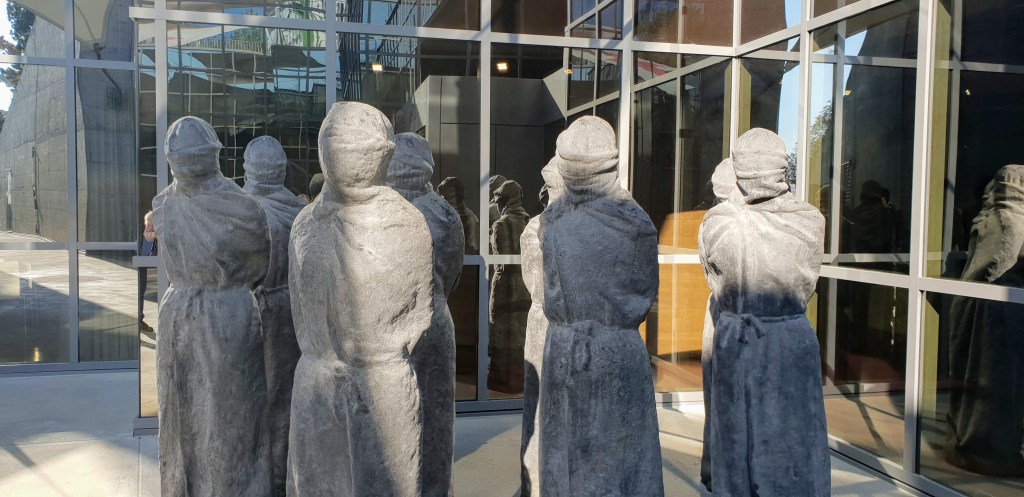
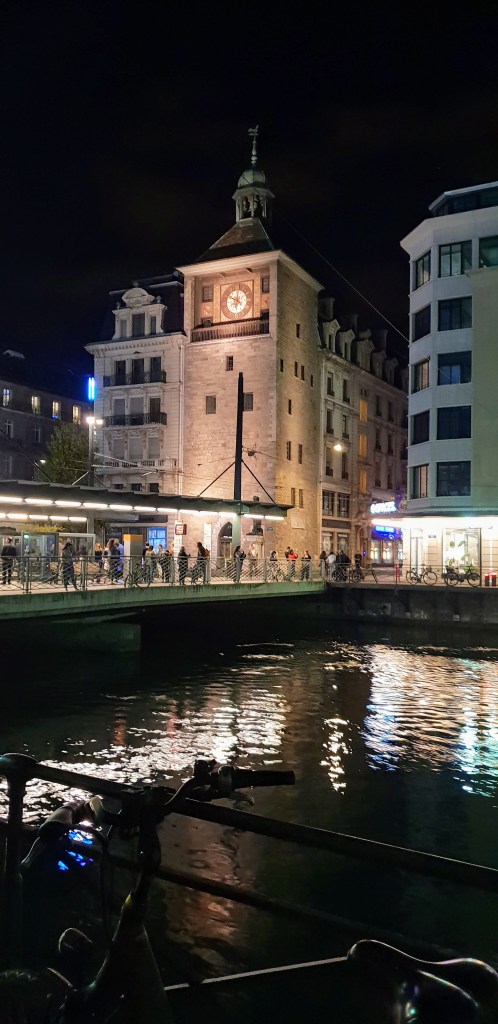
For evenings out in Geneva, there are lots of waterside options with stunning views, and the old town is beautifully lit and brimming with atmosphere at night. I can’t say I’m blown away by the food here – Switzerland isn’t really famous for cuisine, fondue excepted. We have quality meals, but nothing truly memorable.
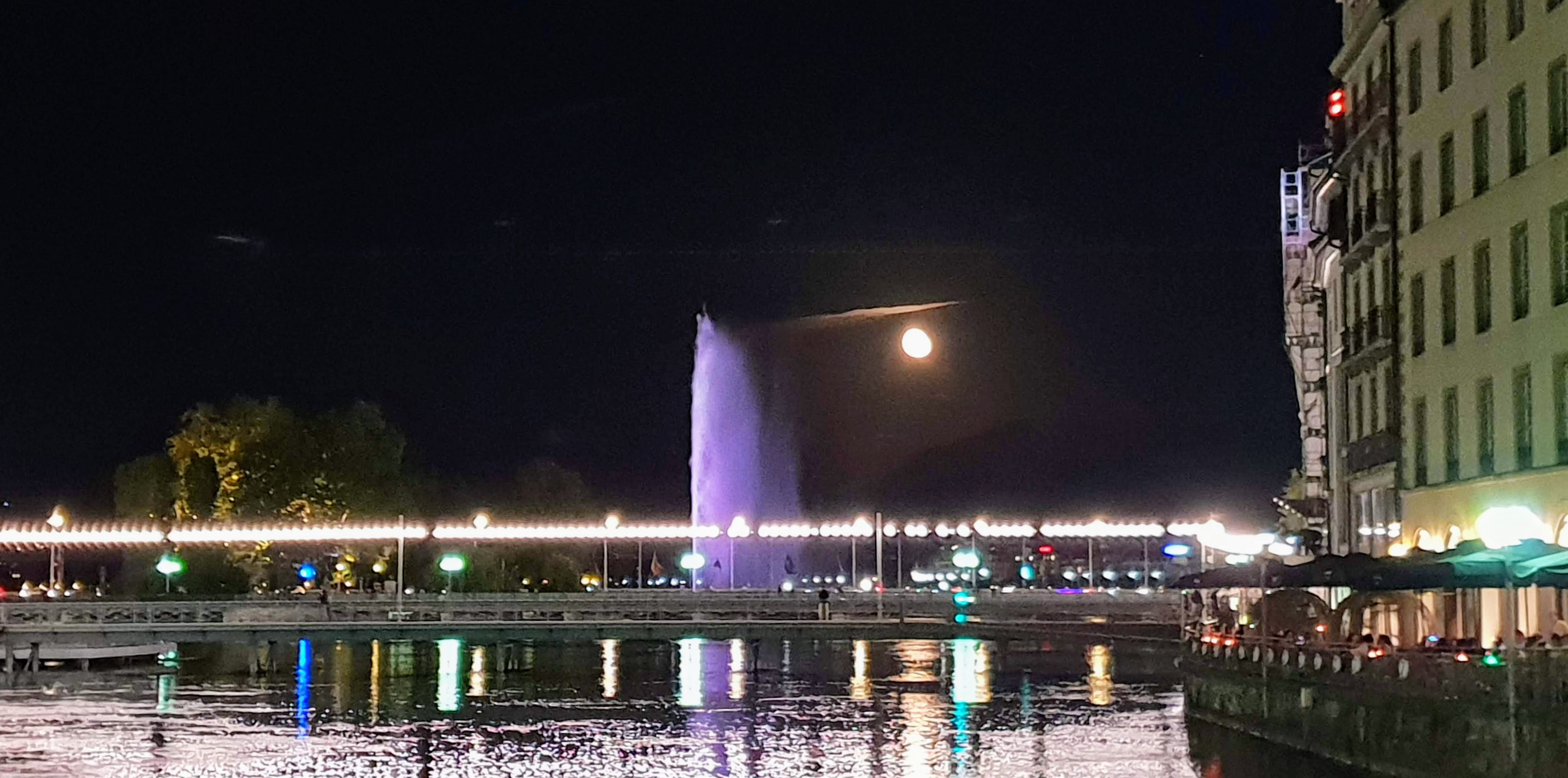
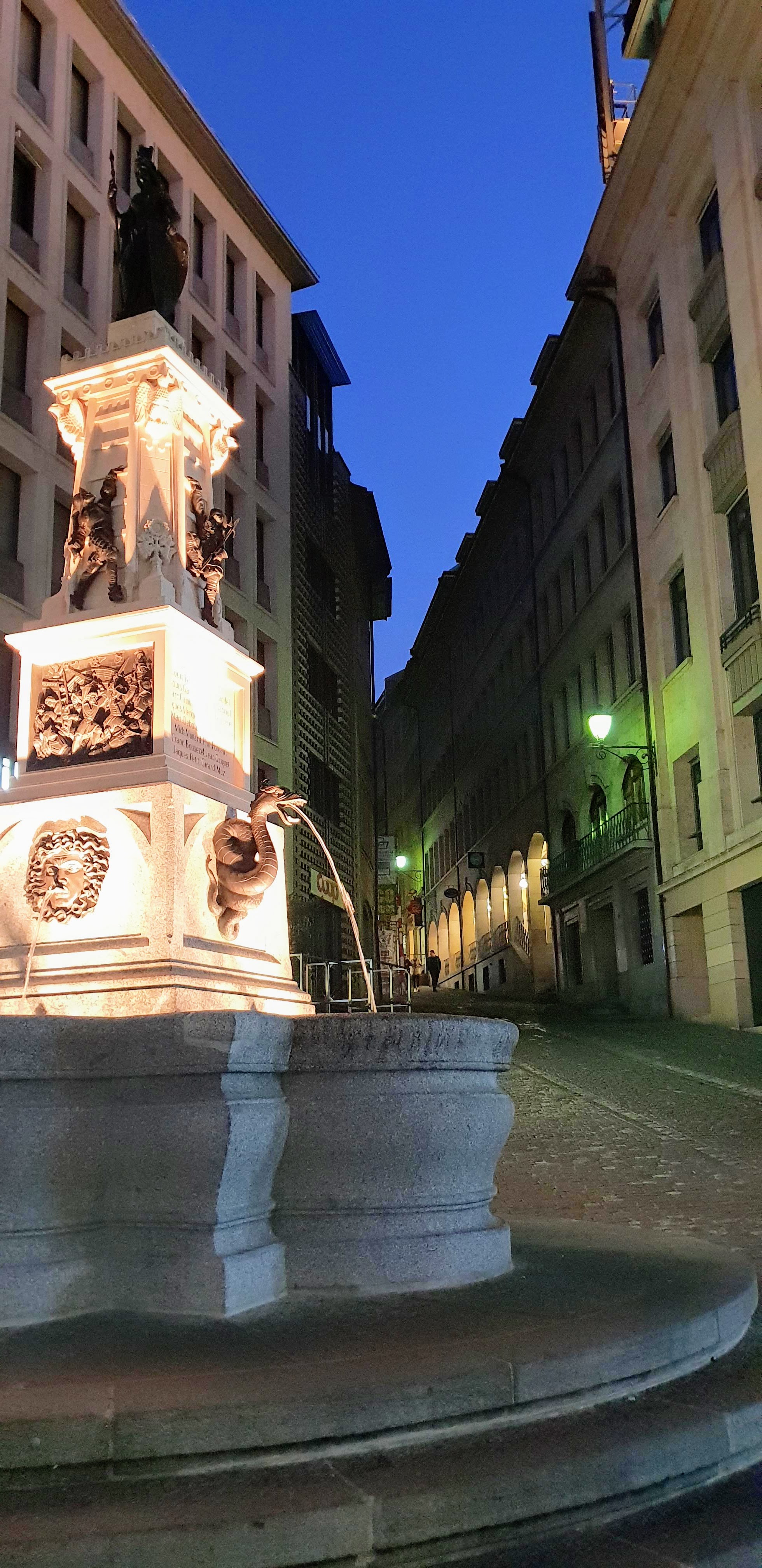
Geneva does excel in ambience though, whether in historic pavement cafes, sophisticated waterside bars or cosy places for a nightcap hidden down narrow lanes. We have lots of fun trying out all the various options. Sooo far from dull.
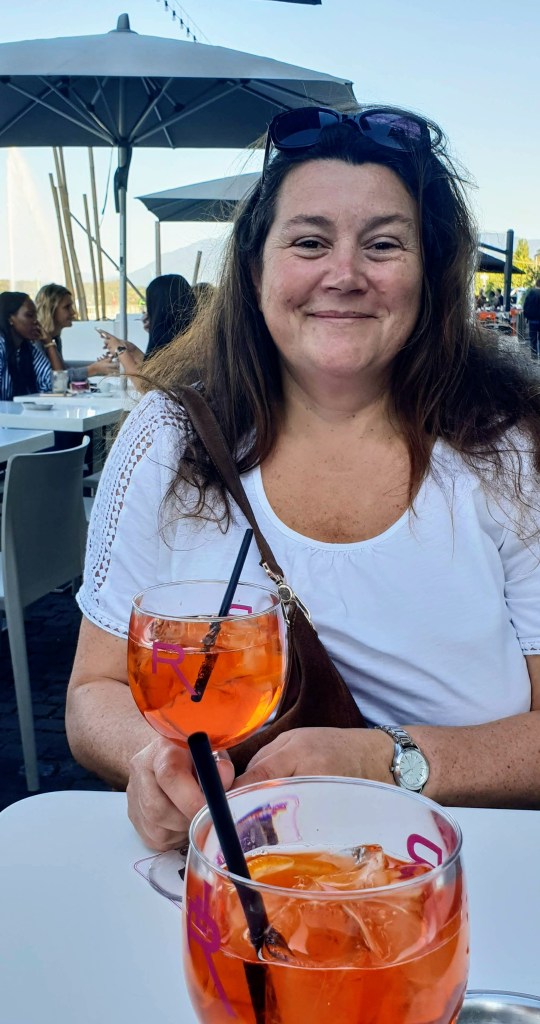
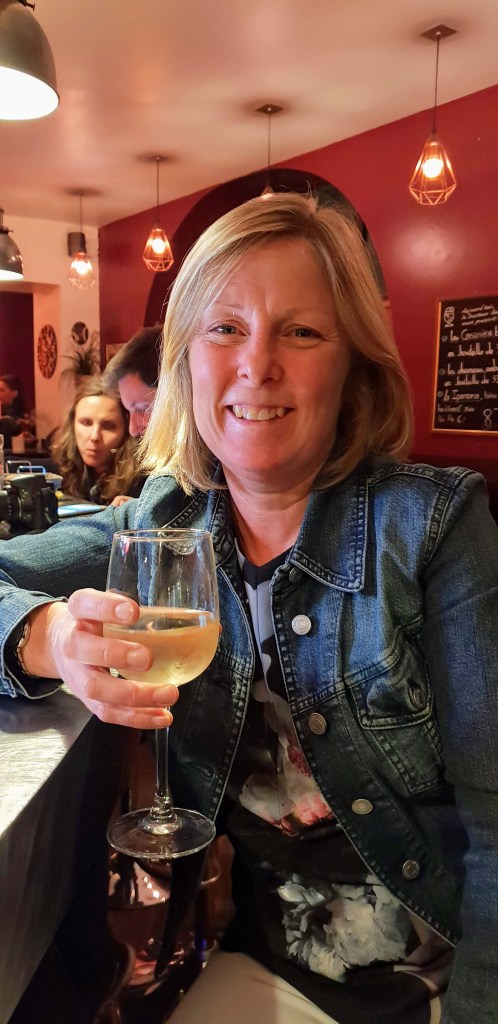
So, the overall verdict on Geneva is a thumbs up from us. Anyone describing this city as boring should take a good look at themselves. Maybe they are a little bit unexciting? It’s all to do with attitude, and I always pack lots of positivity along with my Birkenstocks.
Come walk with me to Dorchester-on-Thames

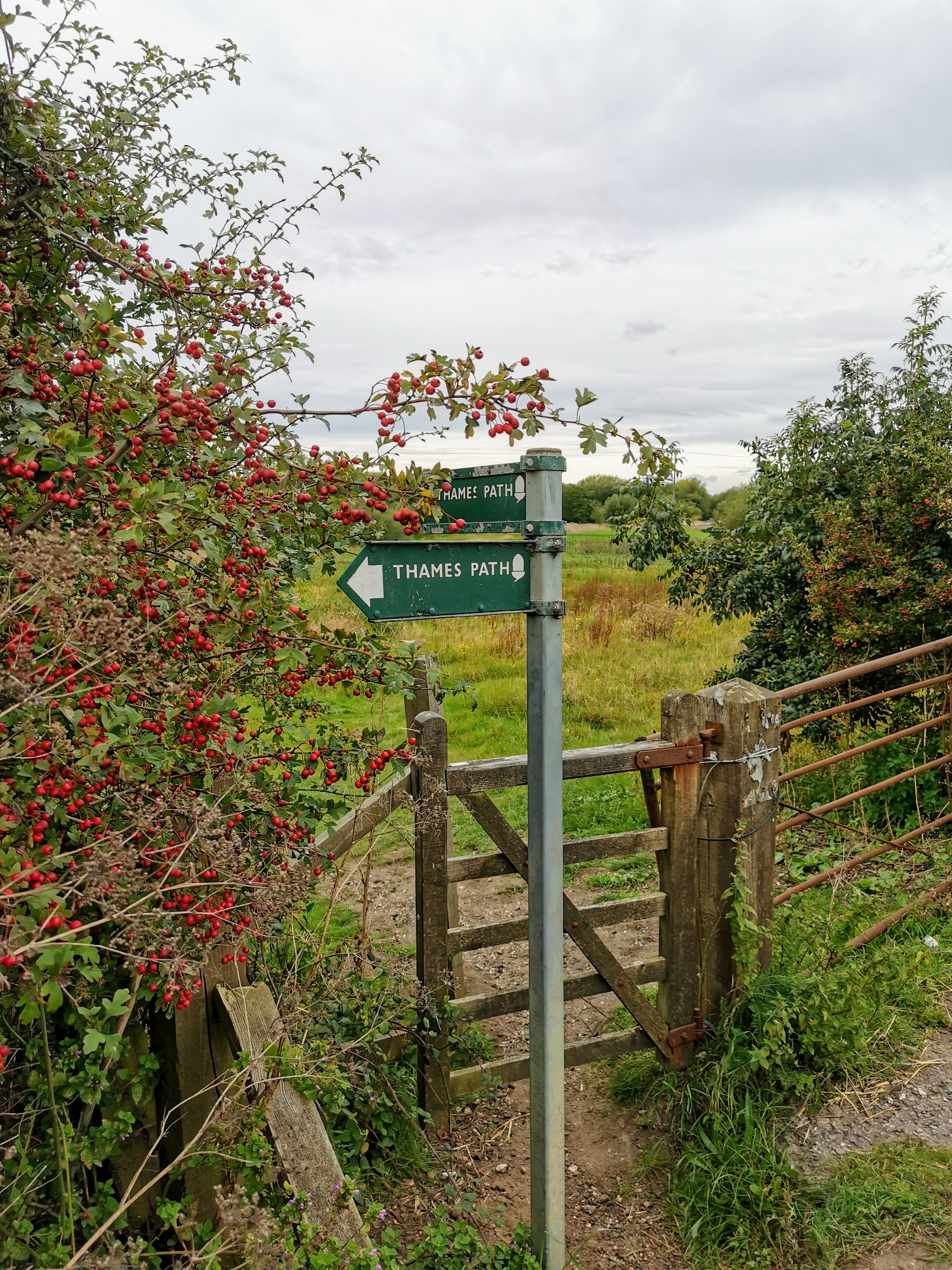
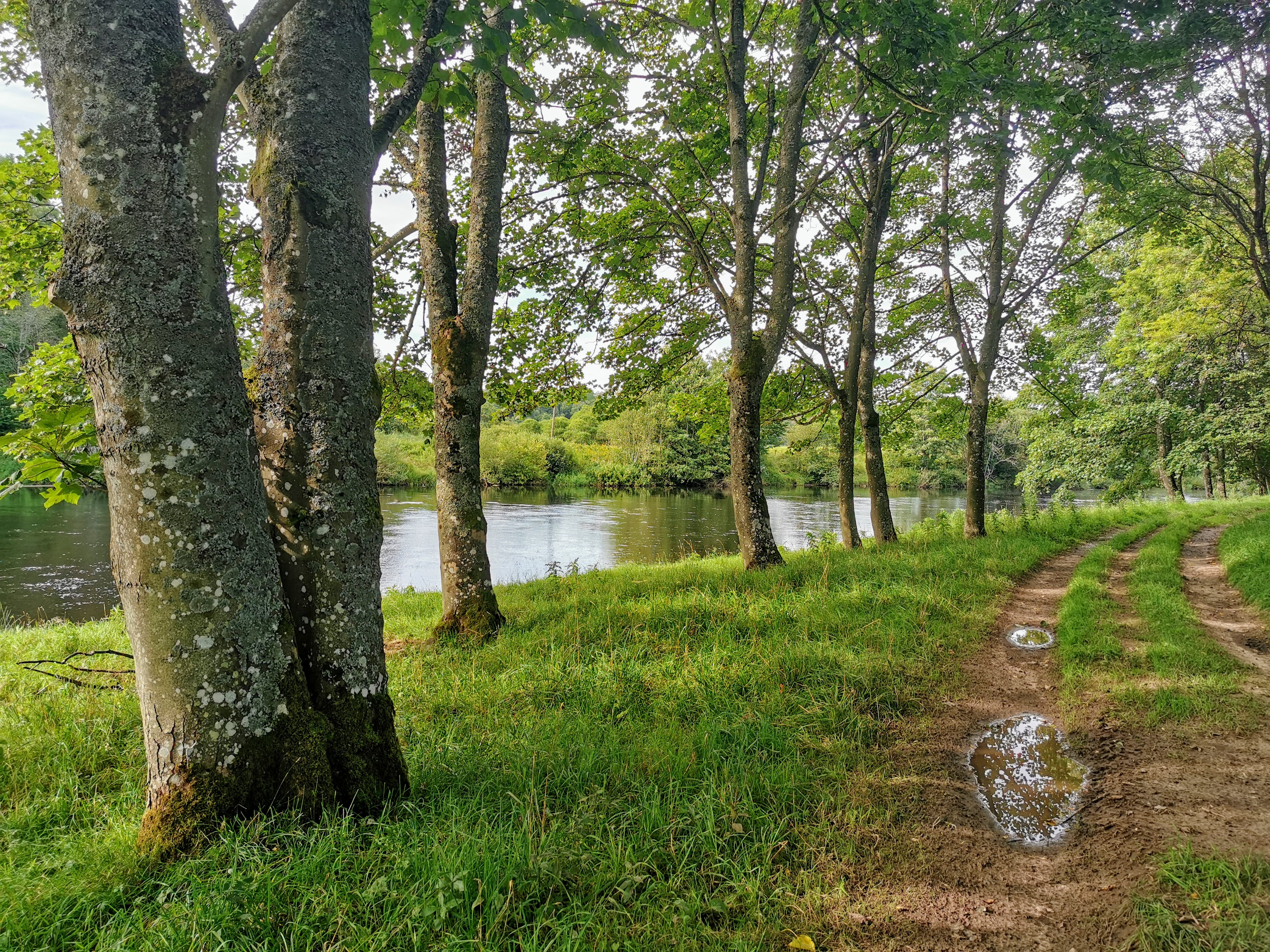
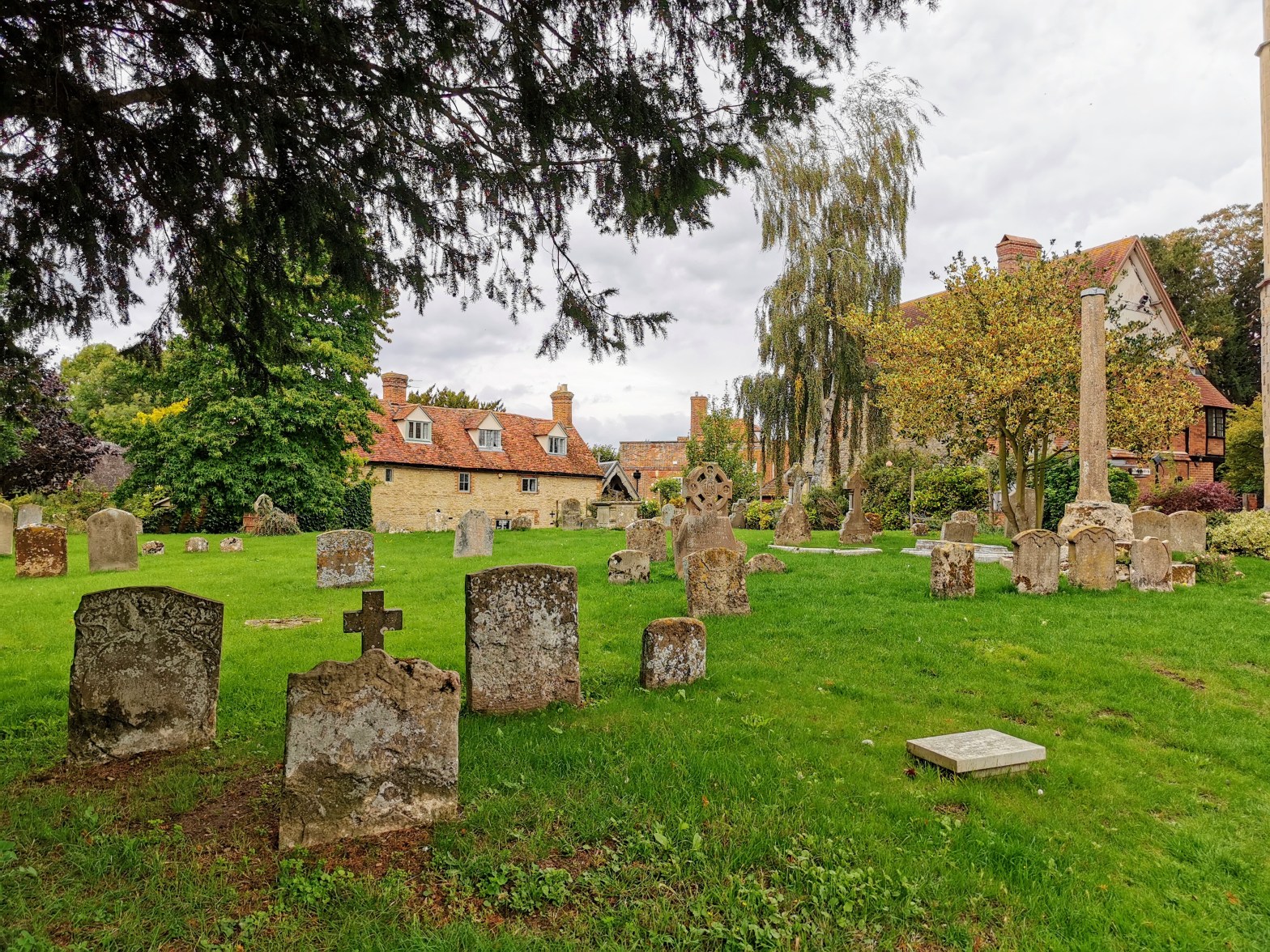
It’s walking time again while the UK weather holds out. Today I’m back on the glorious Thames Path, exploring a new stretch of my favourite walkway along our most famous river. I’m going from Benson to Dorchester on Thames, a distance of around 4 miles, but unfortunately as I don’t have a chauffeur I’ll then have to walk back again. Such is life!

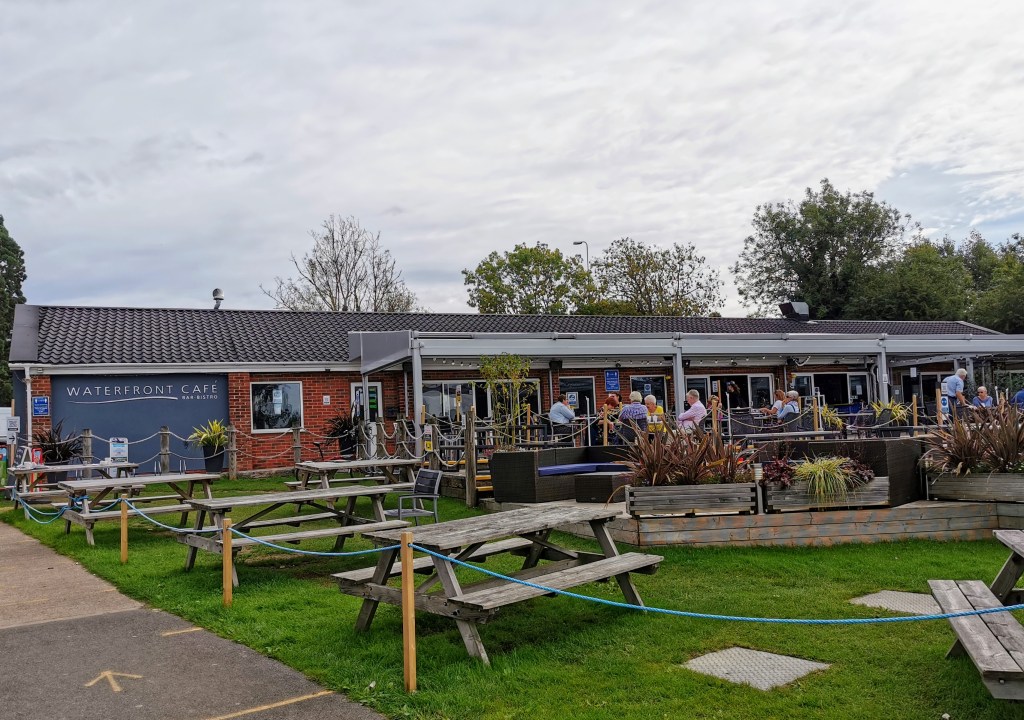
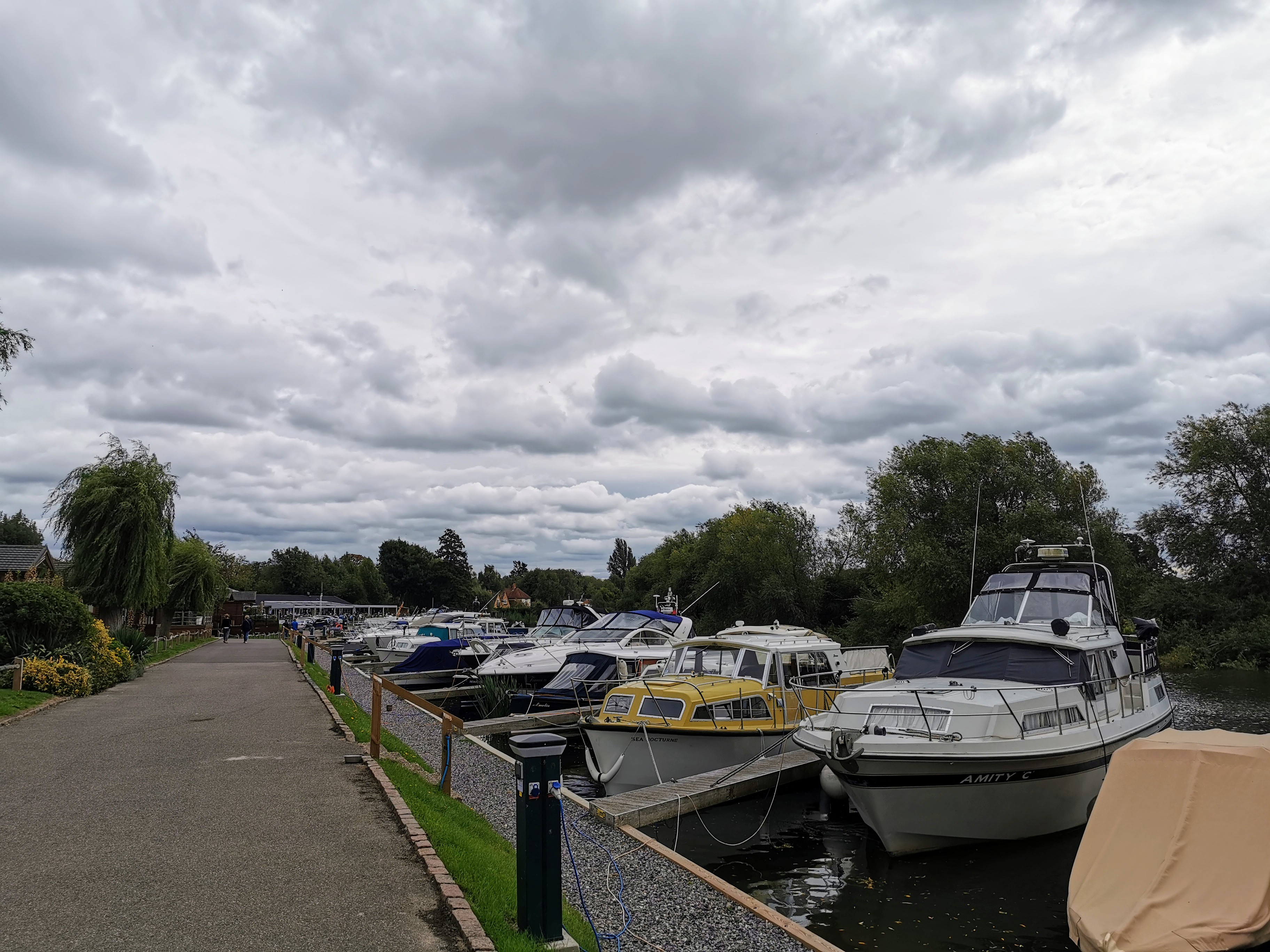
Benson is an easy 40 minute drive from home, through Henley, some lush Oxfordshire countryside and the cute little village of Nettlebed. Great name! My walk starts at the Waterside Cafe overlooking the Thames, which is fairly busy on what’s quite a warm day. I’m tempted to sit down, order a drink and watch the world go by like everyone else, but no, maybe later when I’ve earned the rest! Let’s walk…

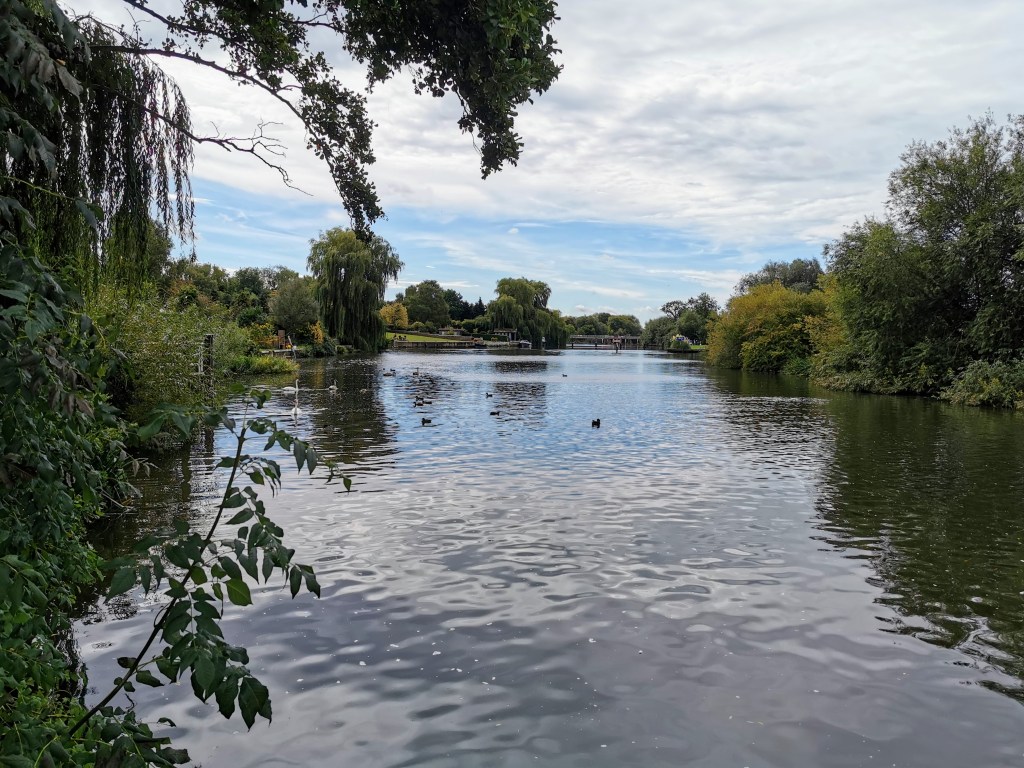
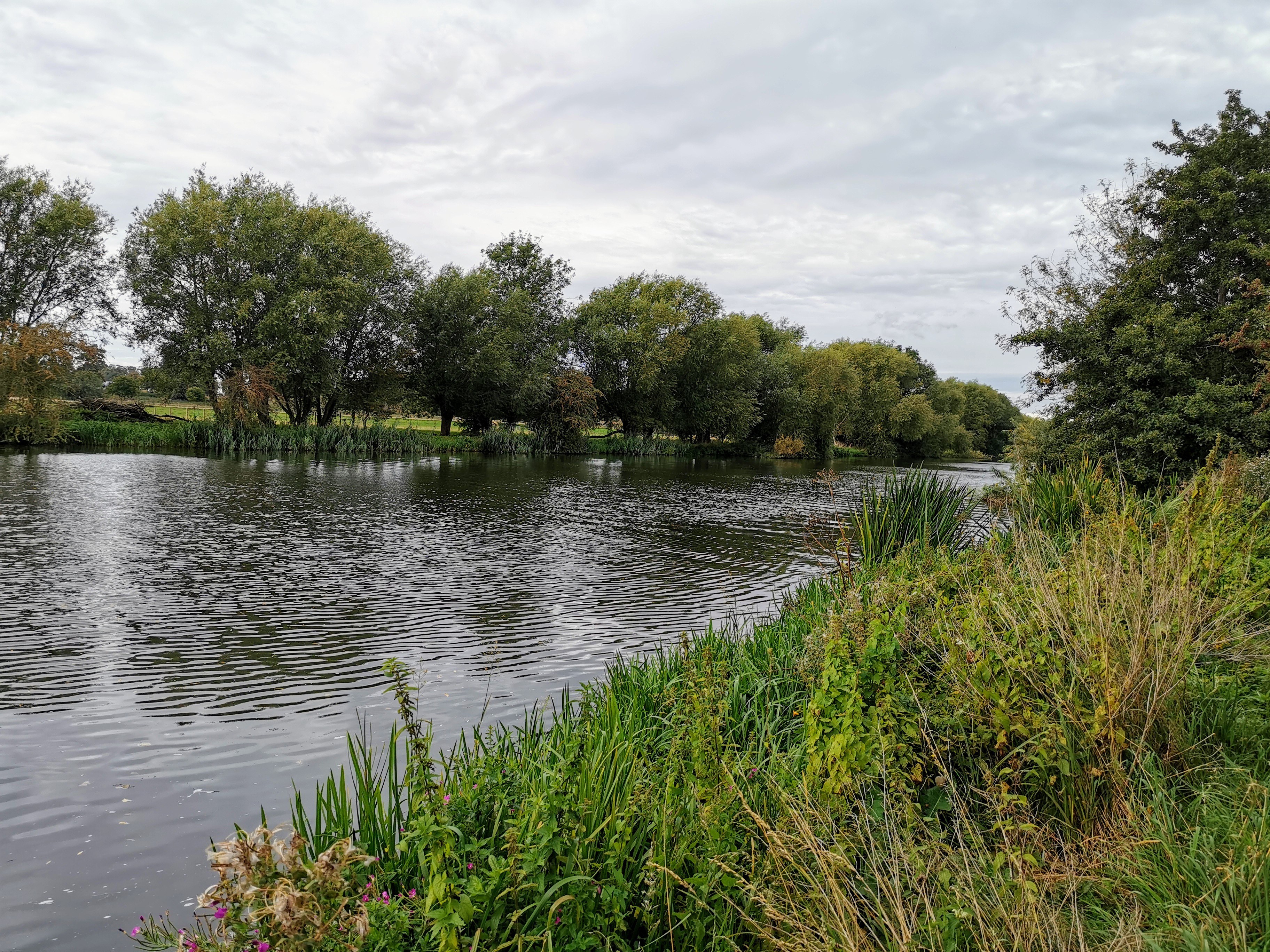
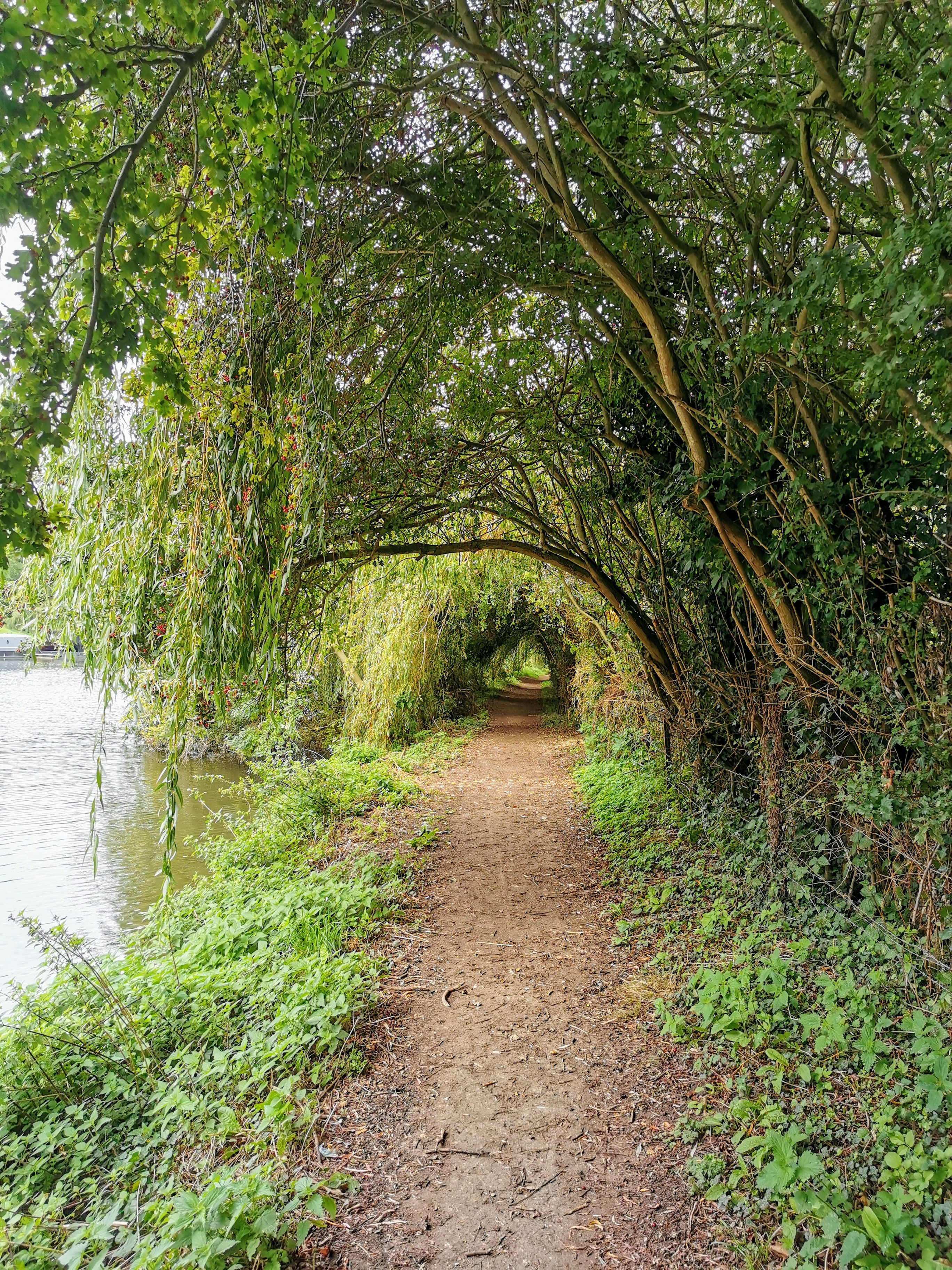
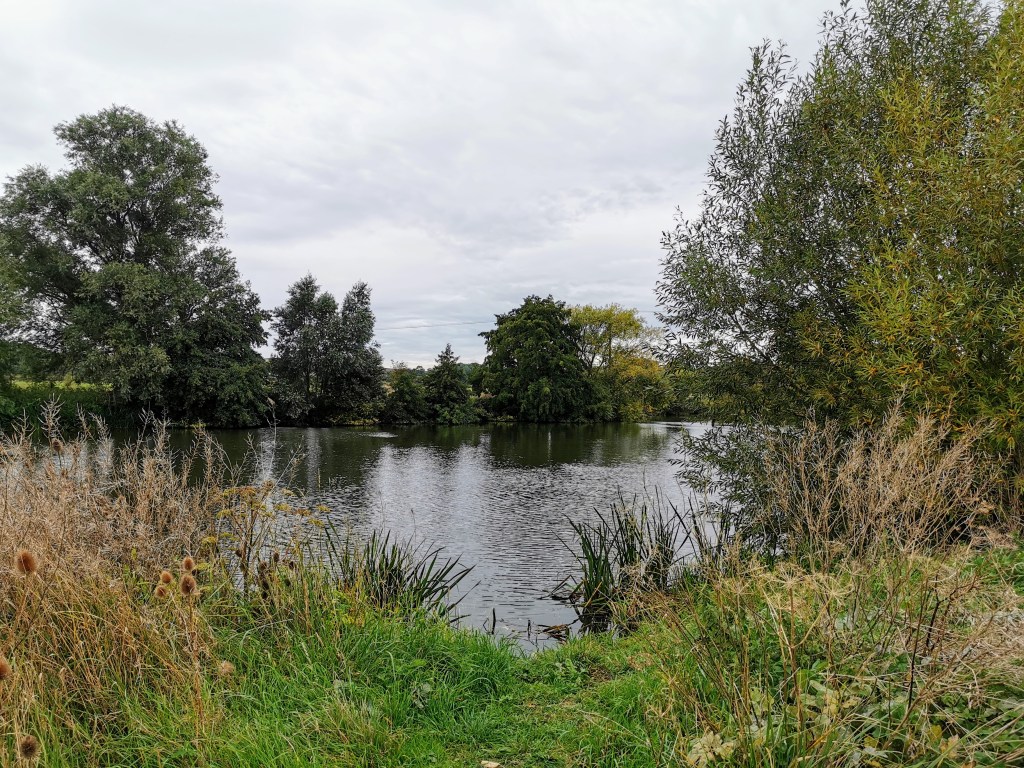
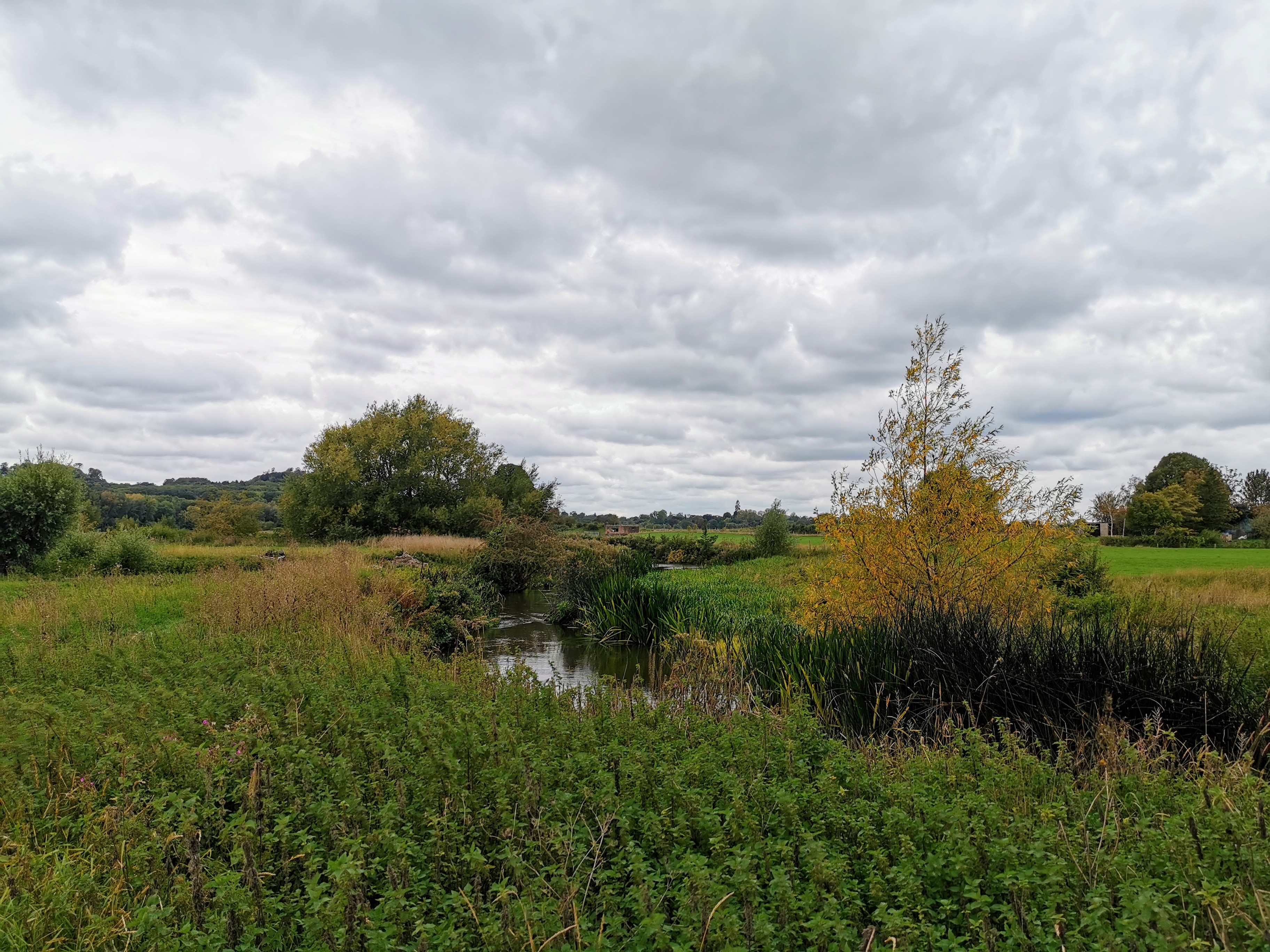
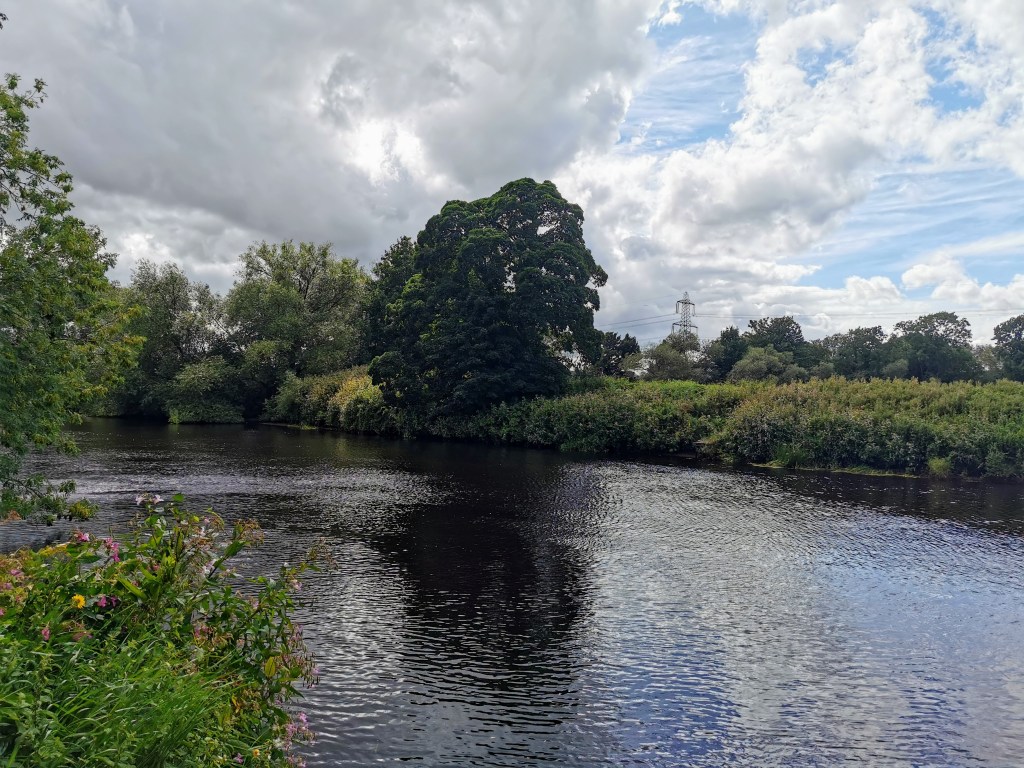
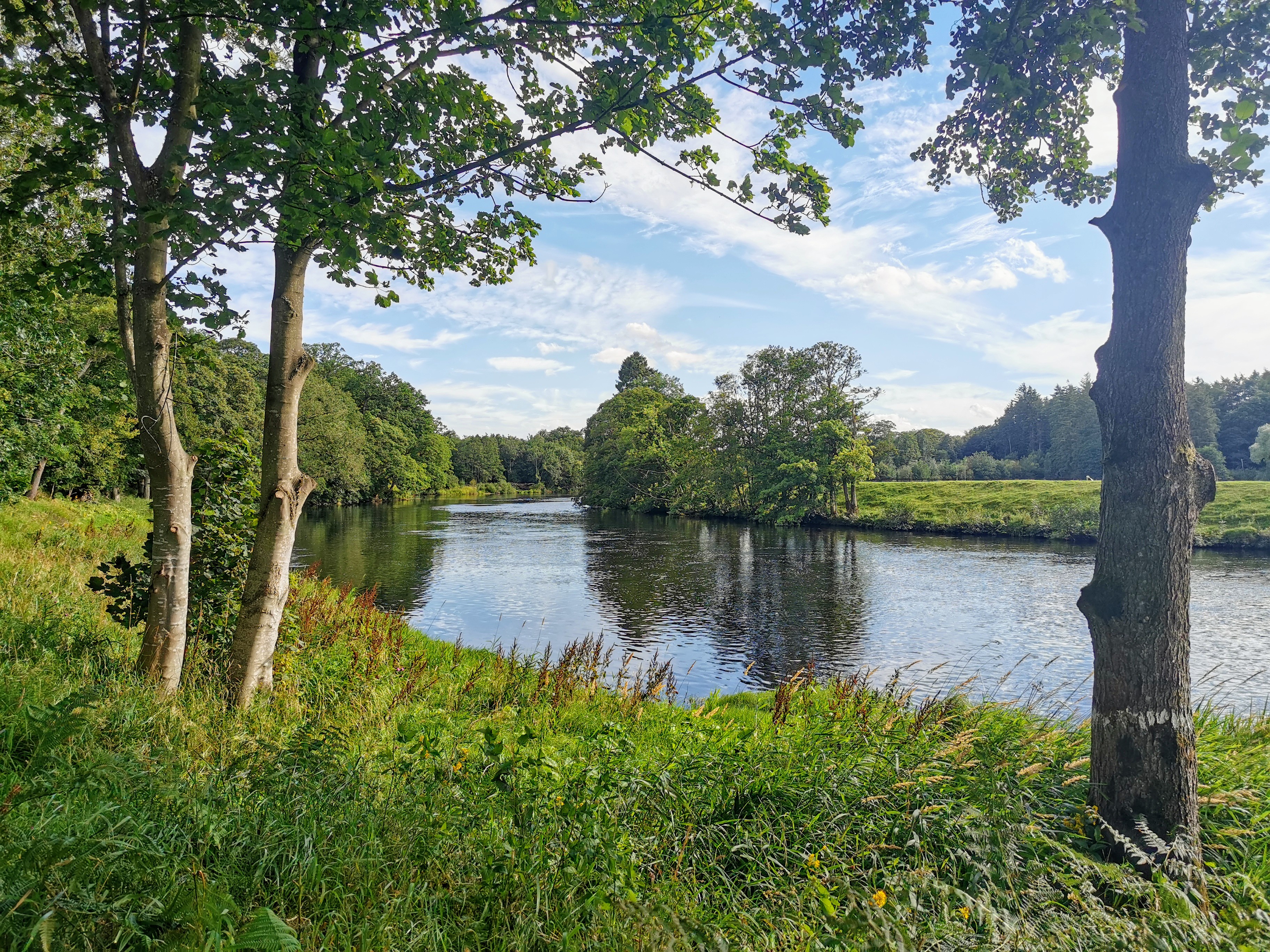
The Thames Path strikes out along the riverbank here in familiar fashion, mostly sticking close to the water’s edge, but sometimes snaking into the neighbouring fields. There are a few walkers about with their dogs but mostly I have the pathway to myself. I stride along, feeling happy to be alive. Lockdown may be over, but with temperatures dropping and nights drawing in, the spectre of further restrictions hangs over us all. I’m making the most of freedom while I can.

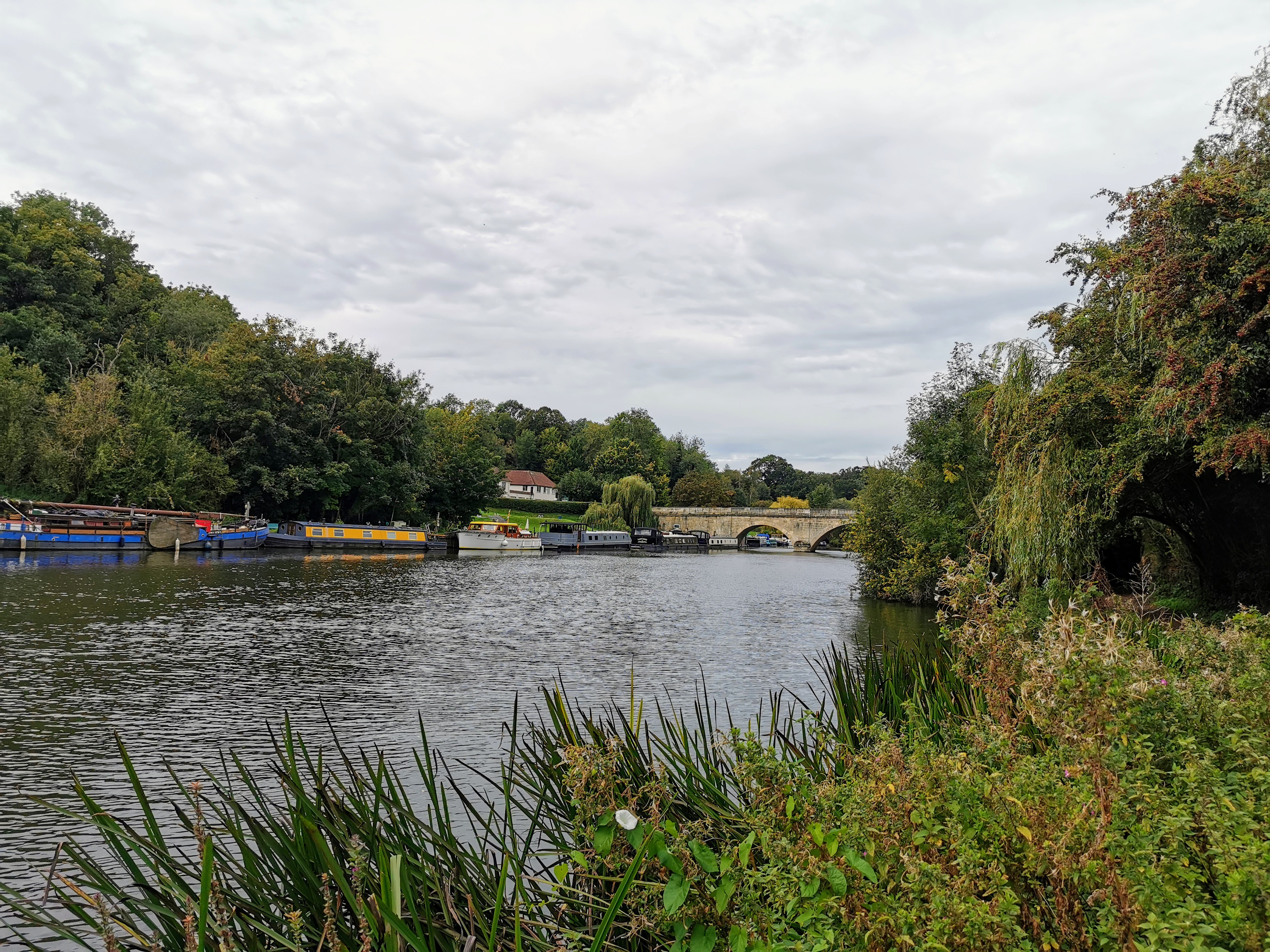
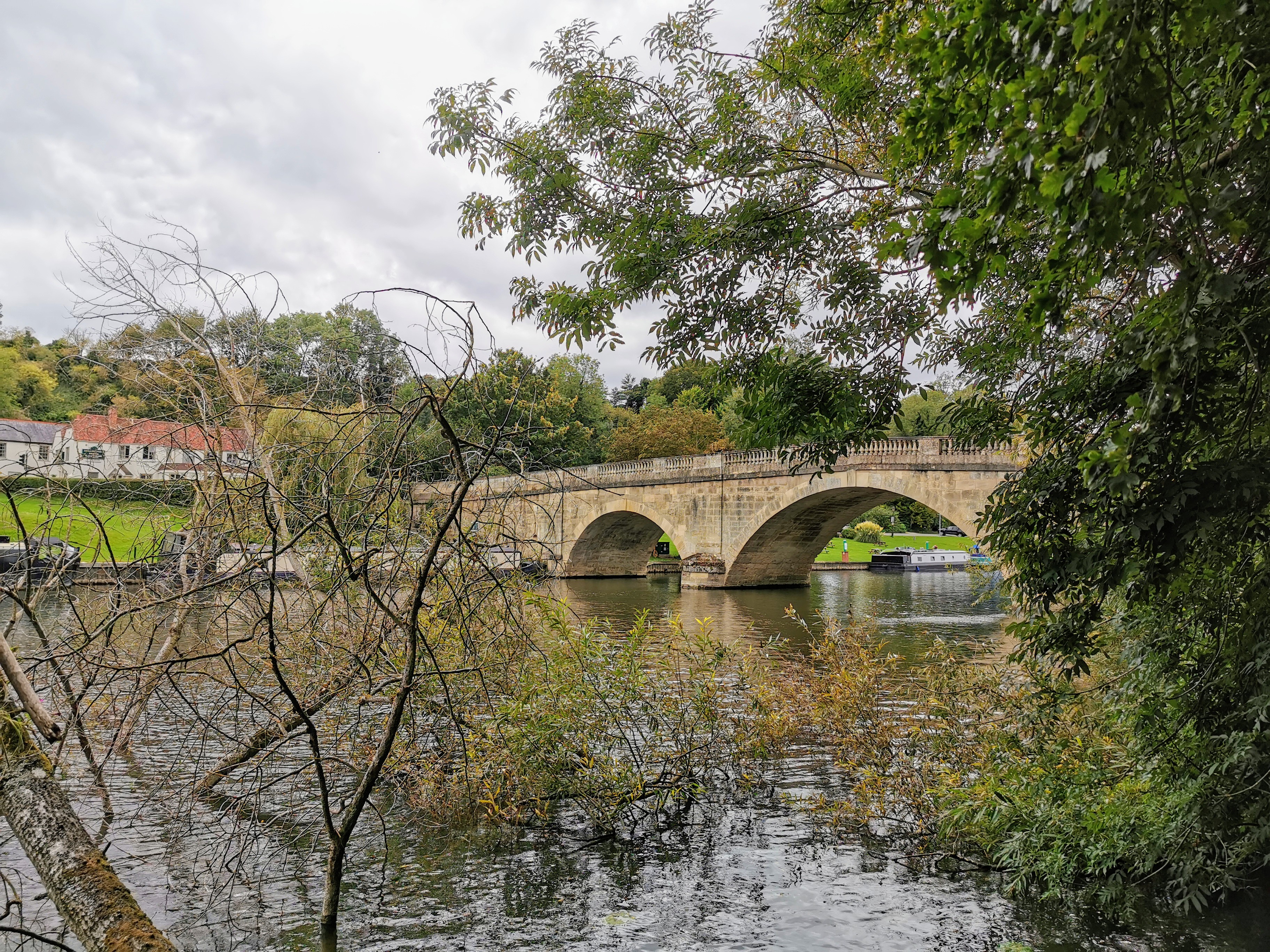
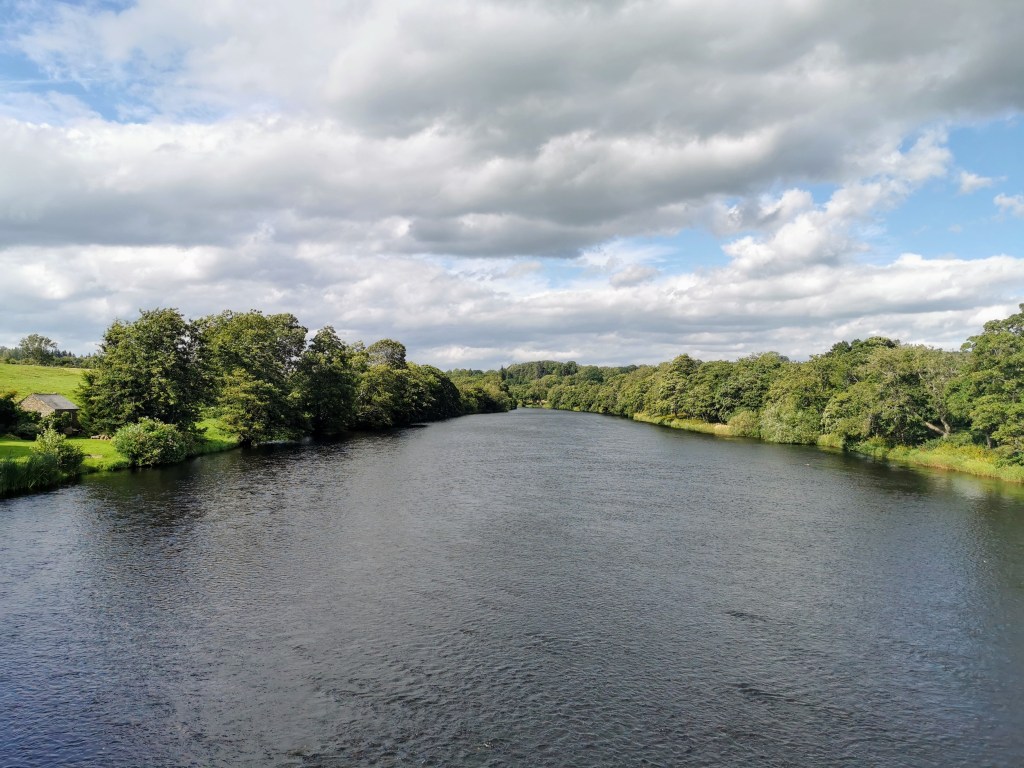
After about 30 minutes the Shillingford Bridge comes into view, marking the 1.5 mile point. Nearly halfway there. A ferry crossed the Thames here until 1767, when a timber bridge was built, in turn replaced by the current stone structure in 1827. The path ends at the bridge, so I turn right towards the village.

At Shillingford, a pretty hamlet filled with lovely old houses, the path veers away from the river and onto the roads, no doubt because landowners here refused access for a public right of way on their property. I’m not sure I would want ramblers constantly peering into my garden either but it does seem a shame. The Thames Path without the river is just wrong, especially as we come out of Shillingford and onto a main road.

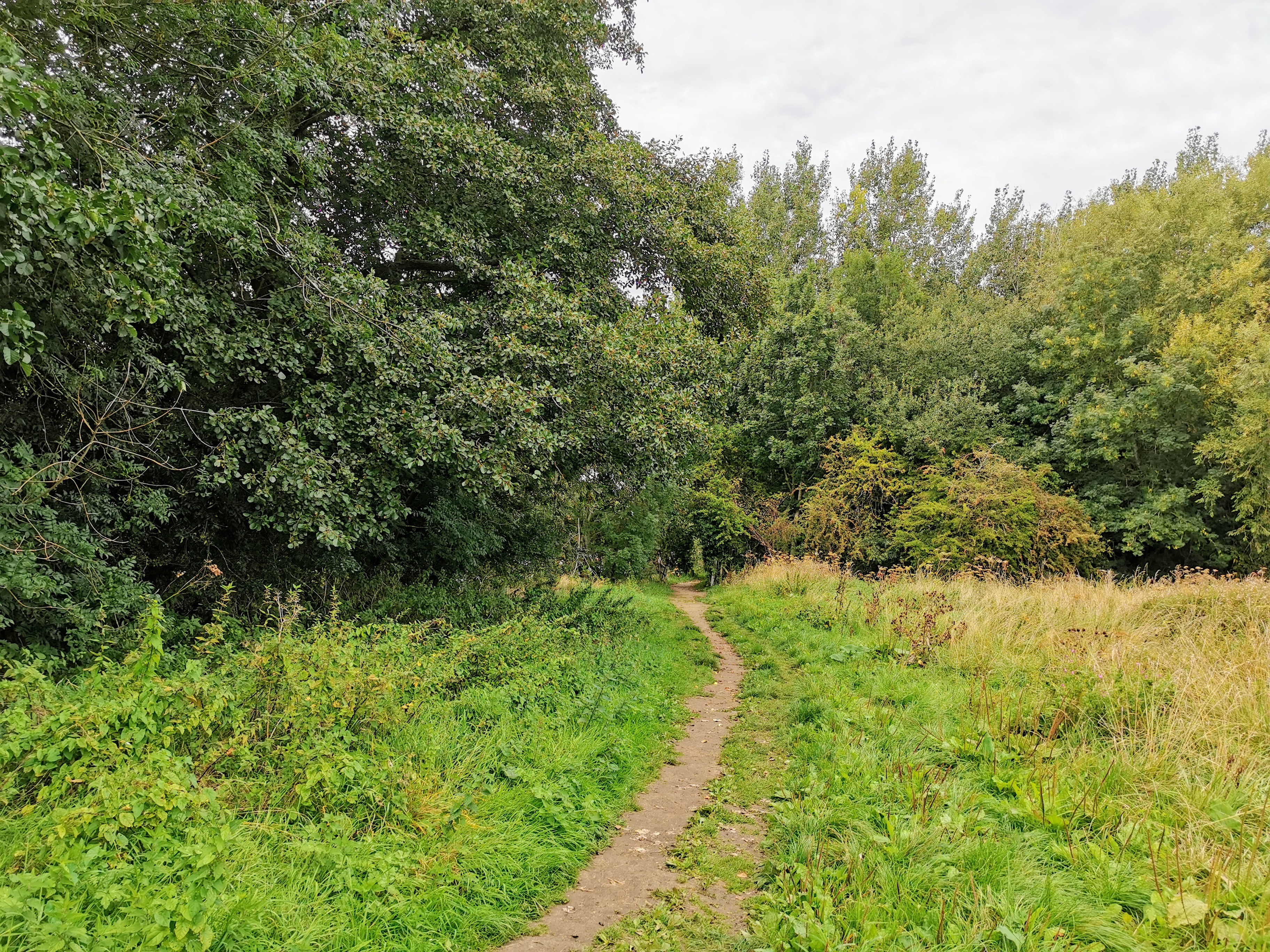
It’s only five minutes or so alongside the traffic, but with lots of lorries trundling by on a single carriageway I’m very relieved to see the gate leading back to the footpath. A return to tranquility, ahhh! The powers that be need to sort out those selfish landowners, how dare they send humble pilgrims like me out onto the concrete?

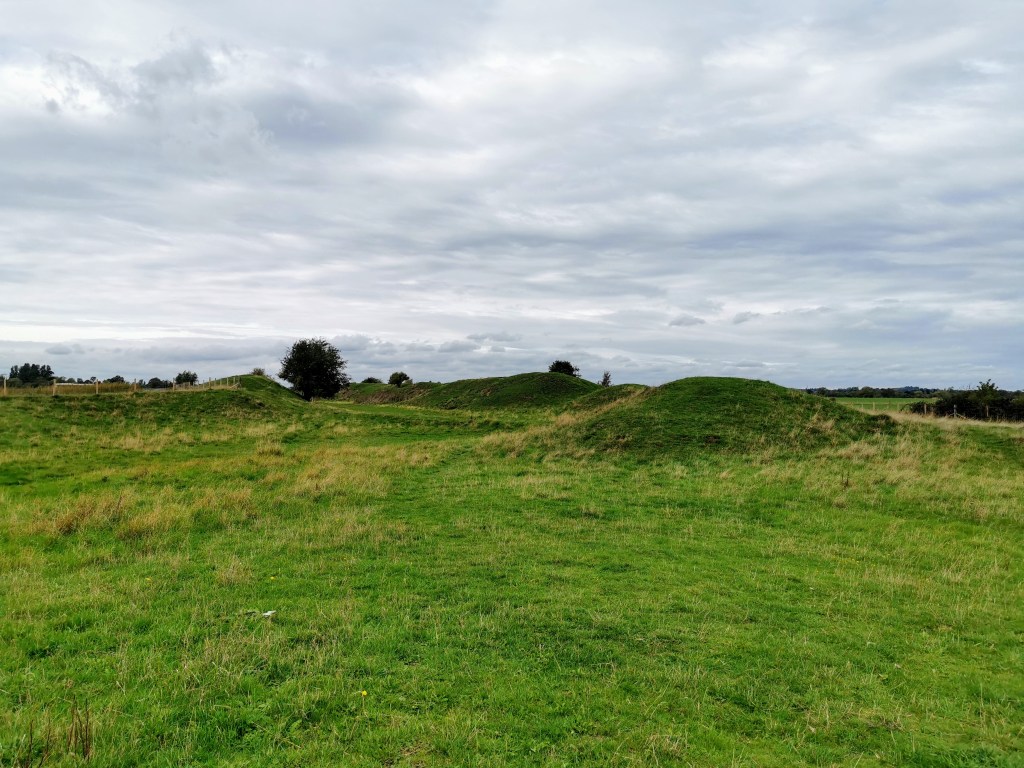
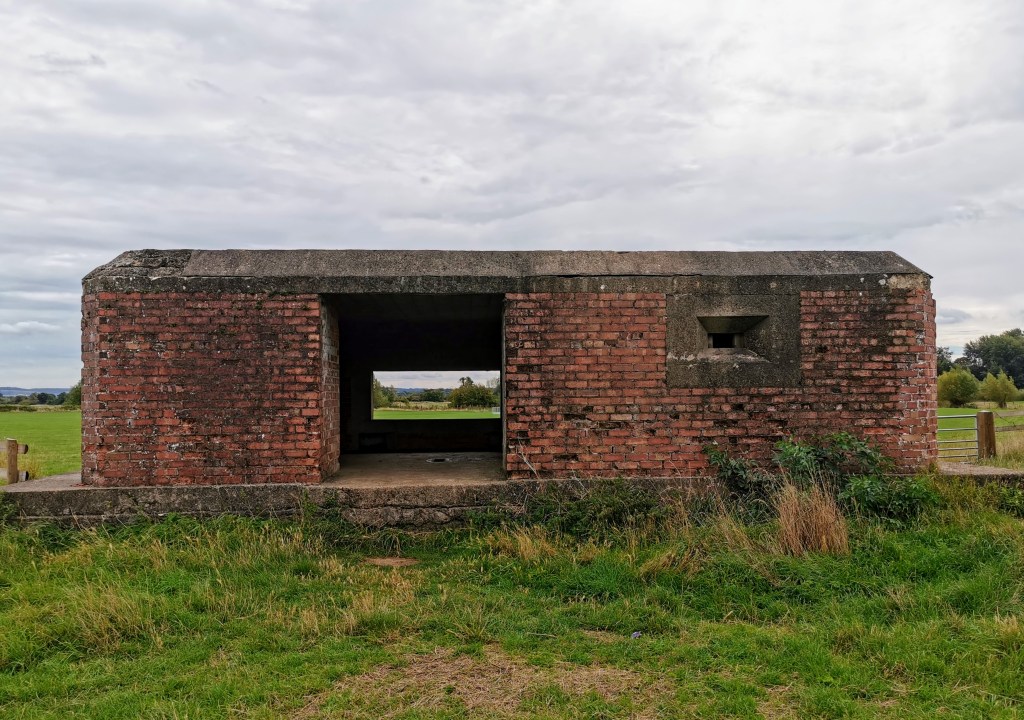
Where the meandering River Thame meets the much wider Thames I head north through the fields, leaving the main Path behind. The otherwise flat landscape is punctuated here by some mysterious looking mounds. These are the Dorchester Dykes. This land was settled throughout the Bronze Age and Iron Age, and the mounds are all that remains of an ancient hill fort.

In the 19th century these structures were partly destroyed by a greedy farmer who started to plough them away so the fields could be fully cultivated. He had to be ‘persuaded’ to stop by the Secretary of the Etymological Society in London. Whatever it takes to protect our heritage! Nowadays they are safely fenced off but disappointingly there is no information on site about their history.

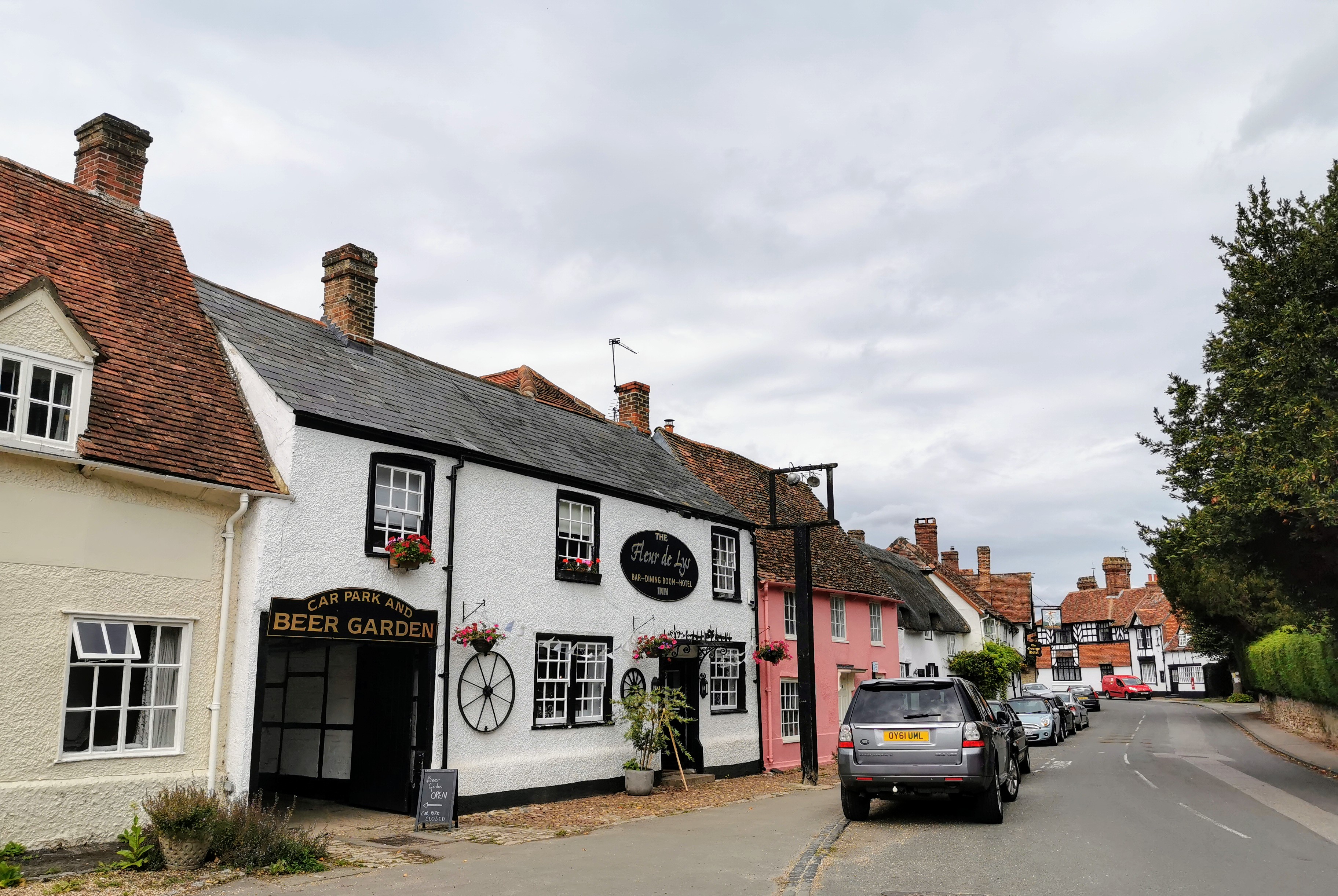
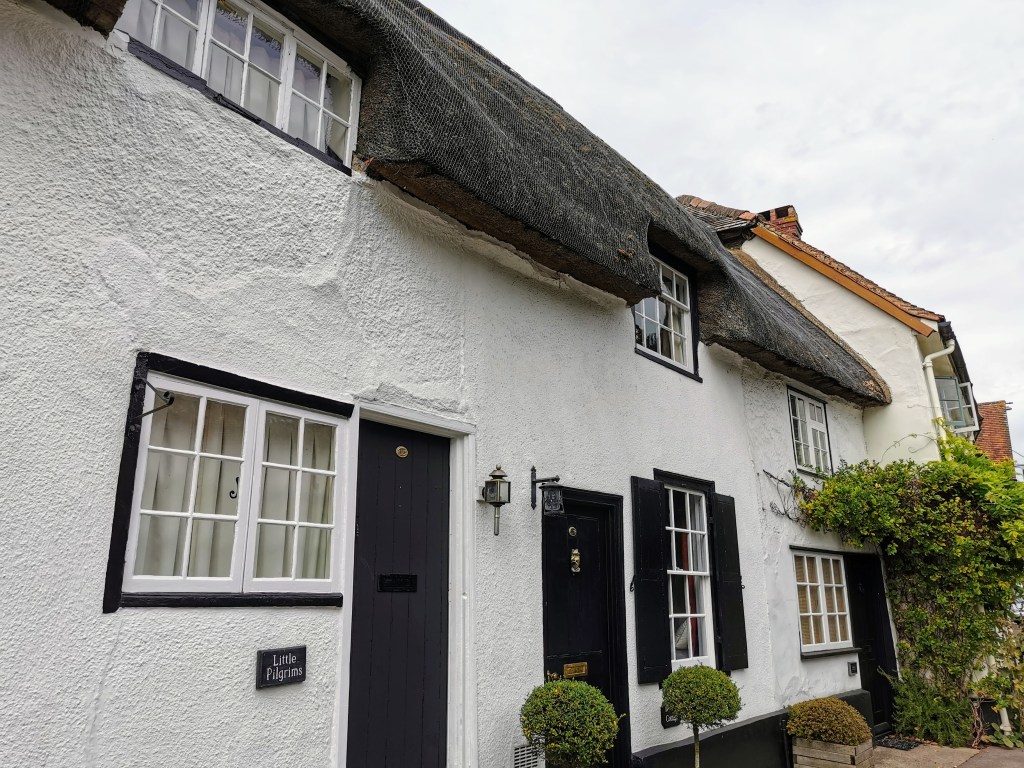
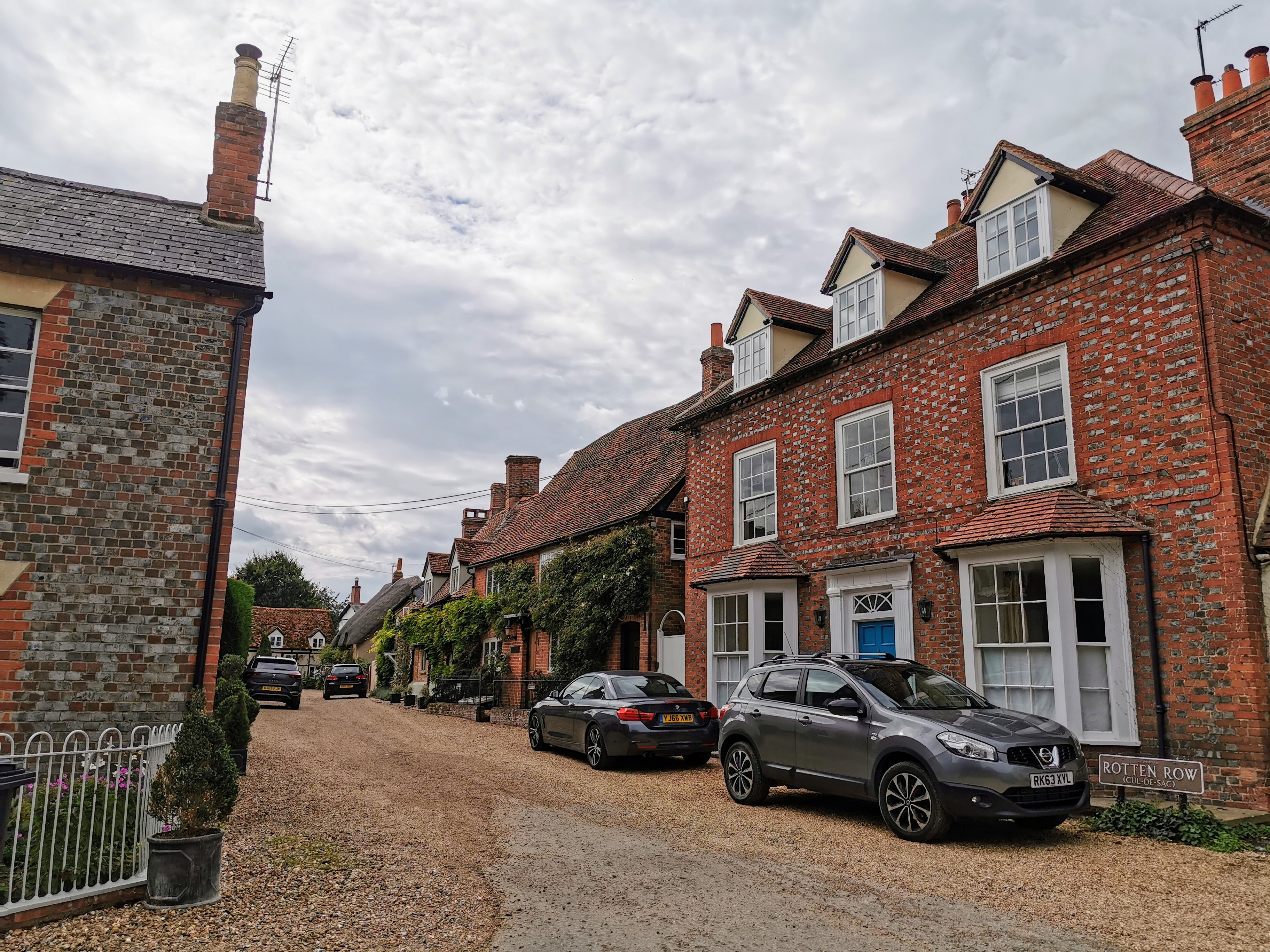
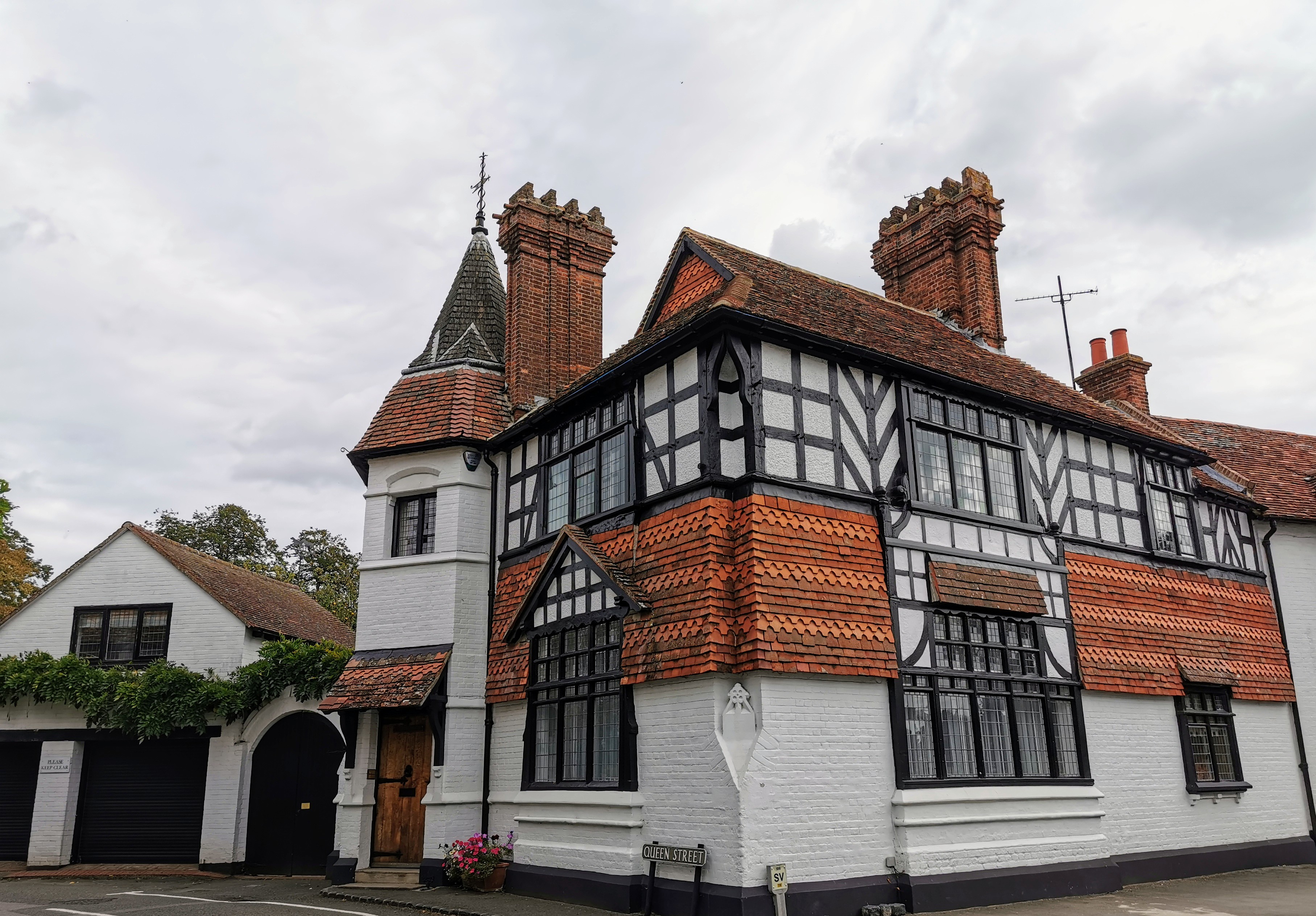
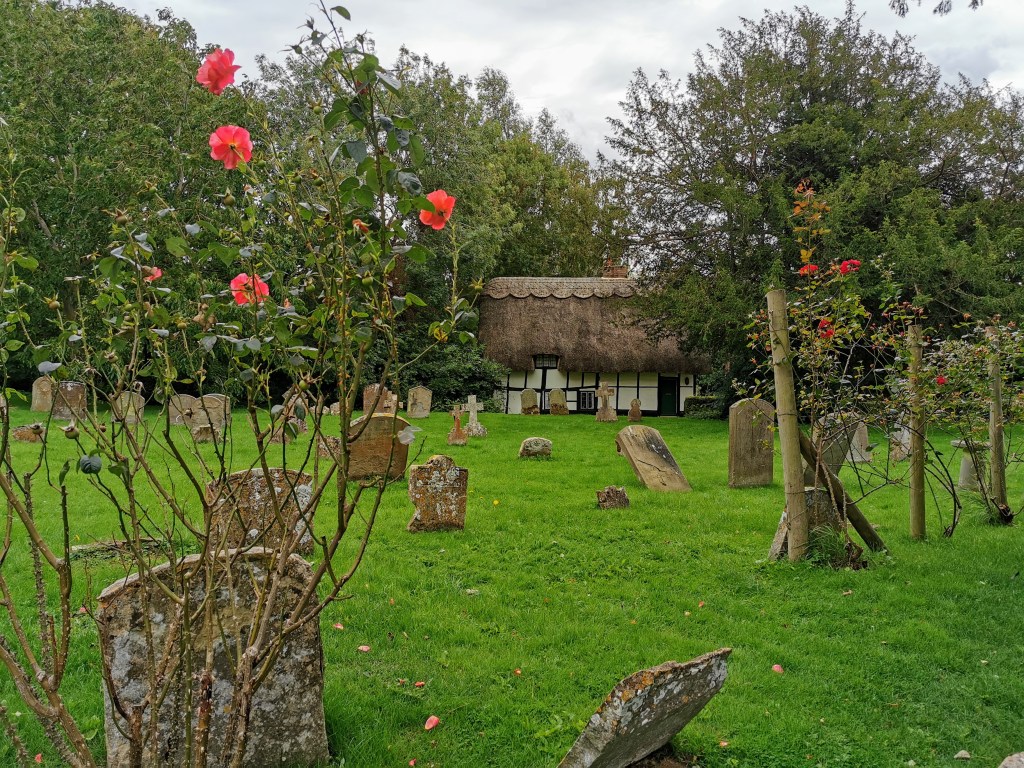
Arriving in Dorchester through a laneway bordered by orderly looking allotments, I reach the High Street. This is picture-book-England territory. There are thatched roofs, pastel hues and wisteria galore. Not for the first time, I wish I could wave a wand and get rid of the cars. Useful they may be, but oh so ugly. They ruin my photos. Without them, this place would be idyllic.

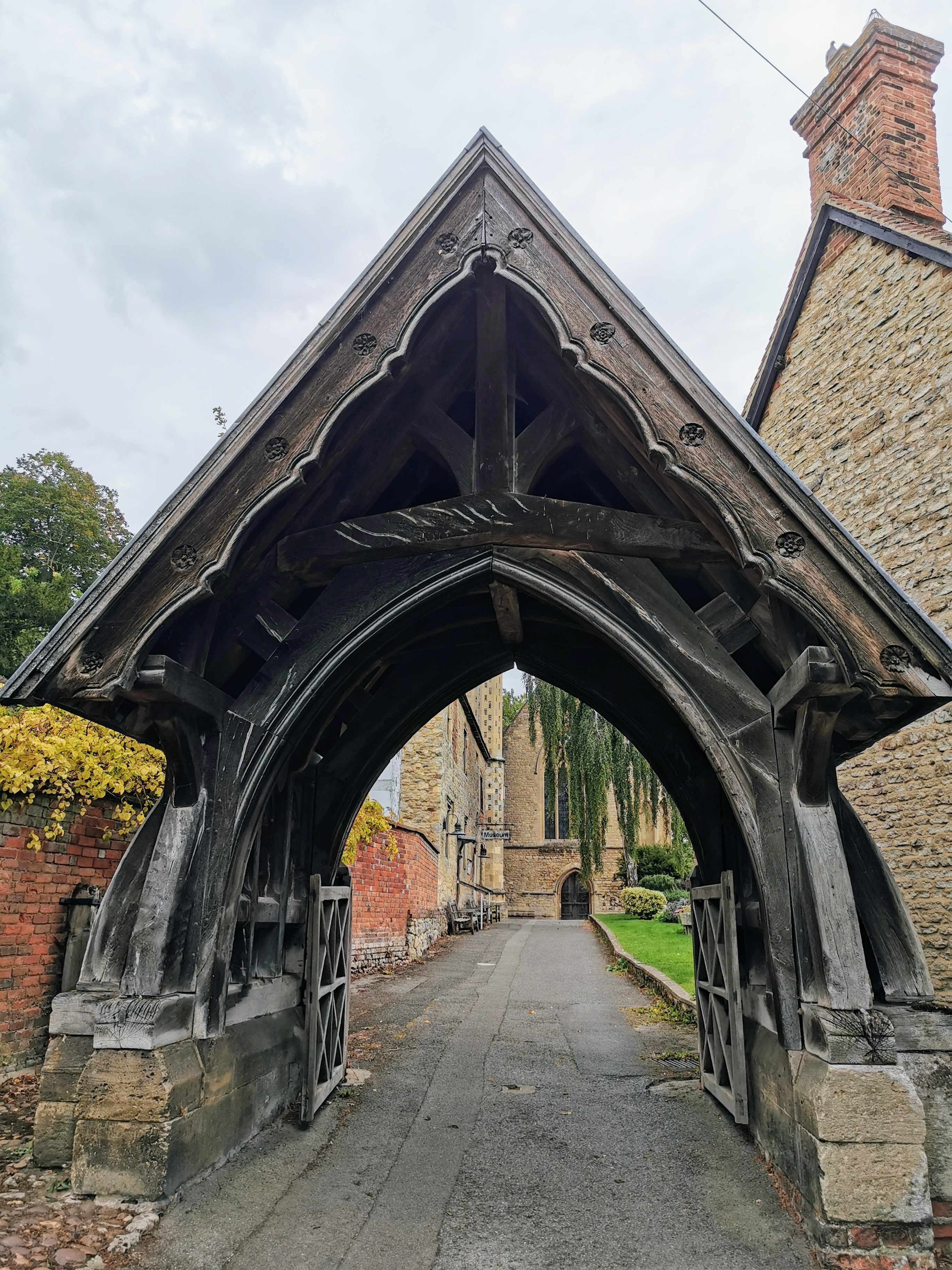
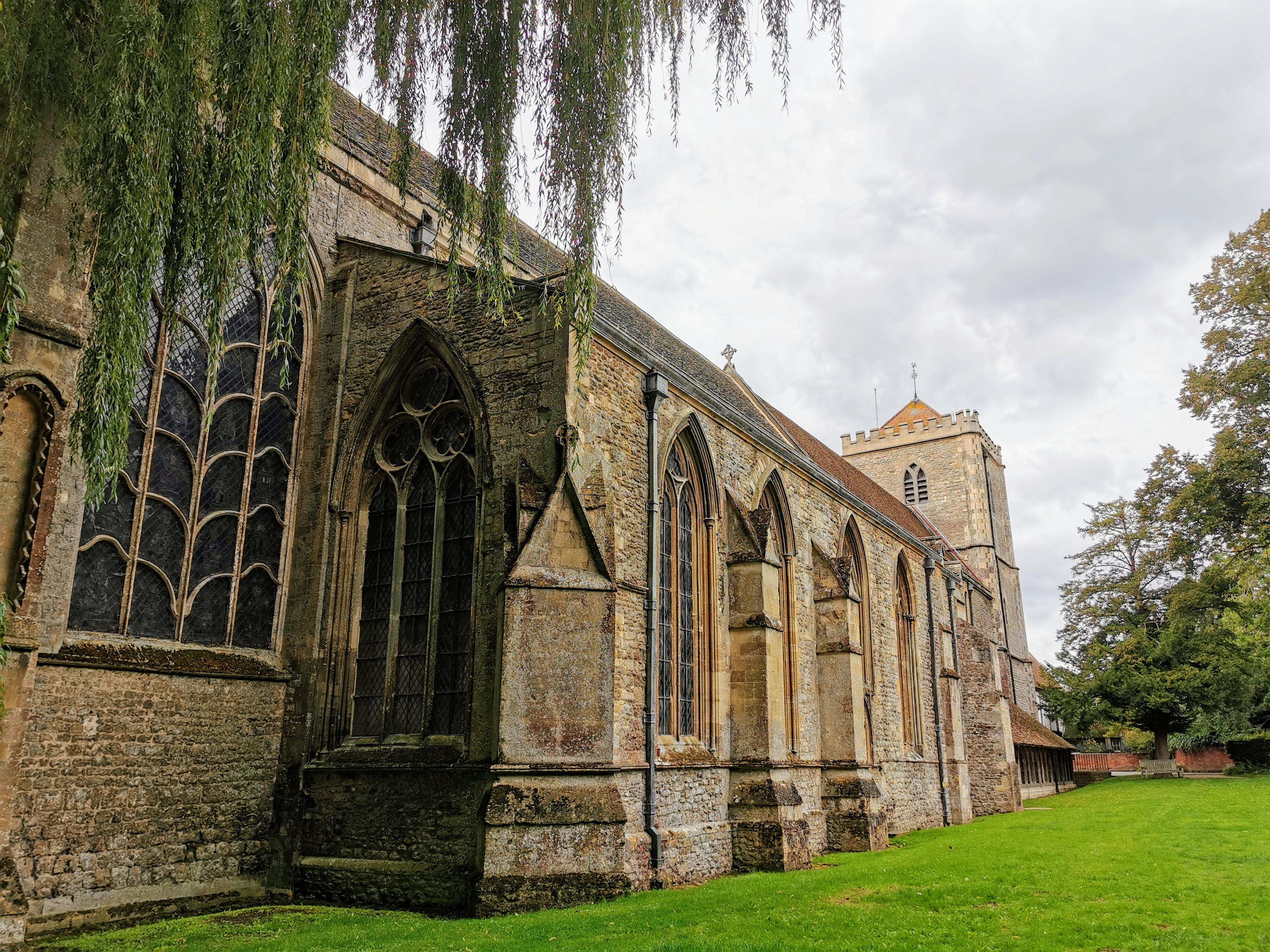
The main sight in the village is Dorchester Abbey, which was founded in 1140. Almost impossible to believe now in this sleepy little place, but it used to be the religious centre of a huge area – the old kingdoms of Wessex and Mercia. The Bishop of Dorchester established his seat here in the 7th century and wielded huge amounts of power, before the bishopric moved to Lincoln in 1072. How fortunes change!

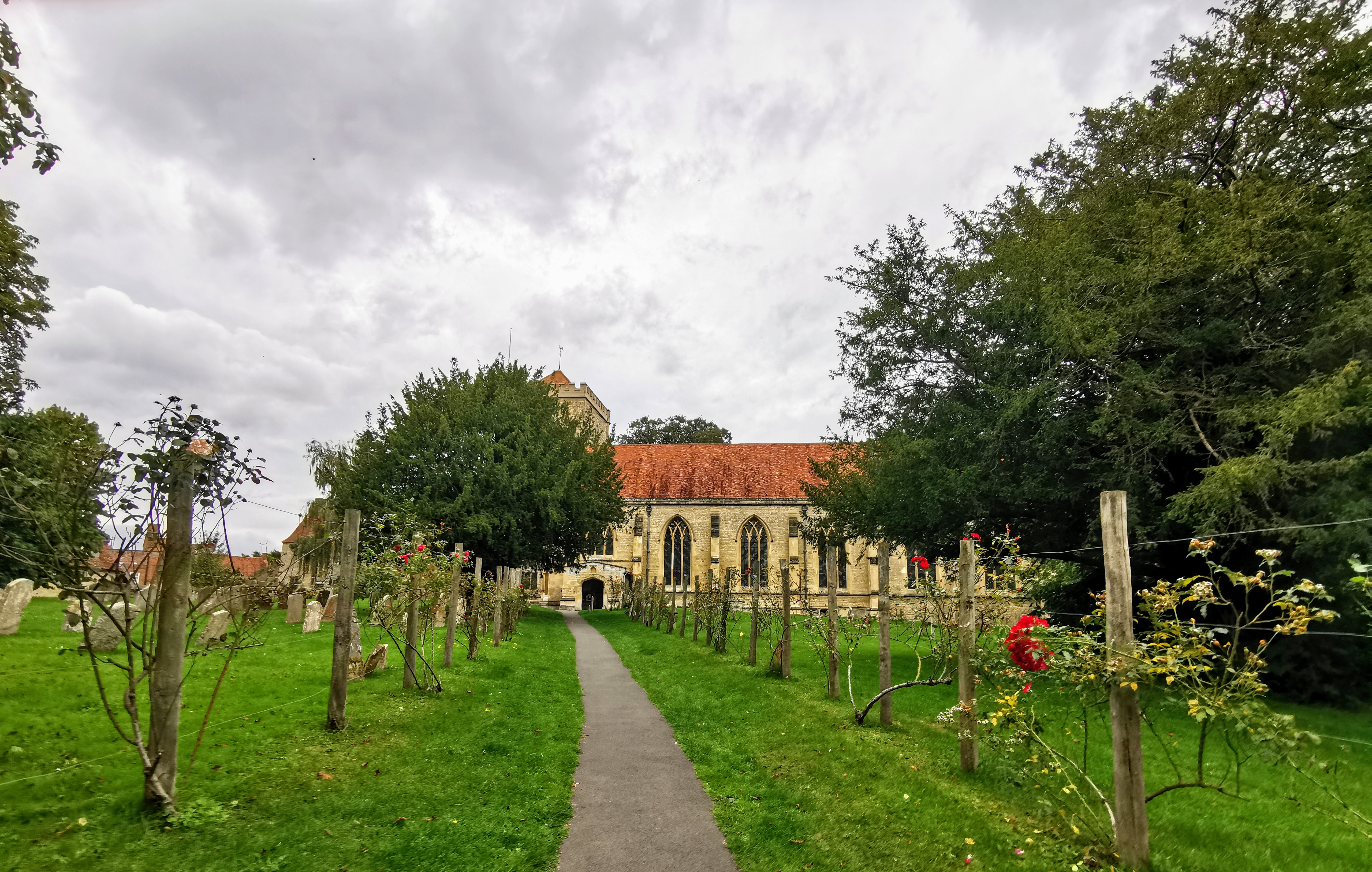
The Abbey was dissolved in 1536 by nasty old King Henry VIII, of course, but happily it wasn’t destroyed as many others were. Since then, this small place has had a mightily impressive parish church. Regardless of religious leanings, it’s a calm and beautiful spot, well worth a visit.

For a moment I consider popping into one of Dorchester’s enticing looking pubs for a quick snifter before starting my long walk back to Benson. Experience has taught me, however, that it will seem even longer after a large glass of wine, so I desist. I’m definitely getting wiser!

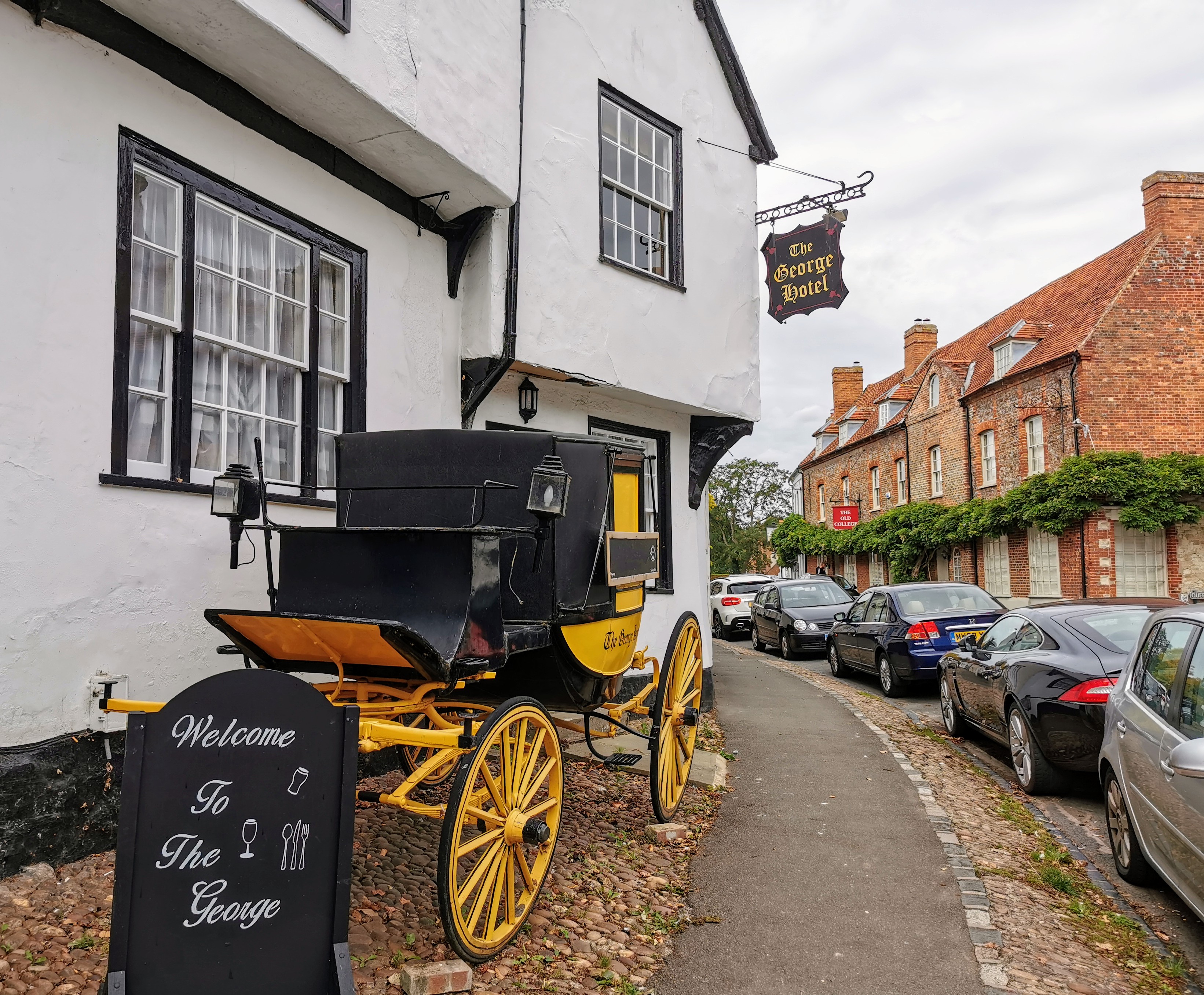
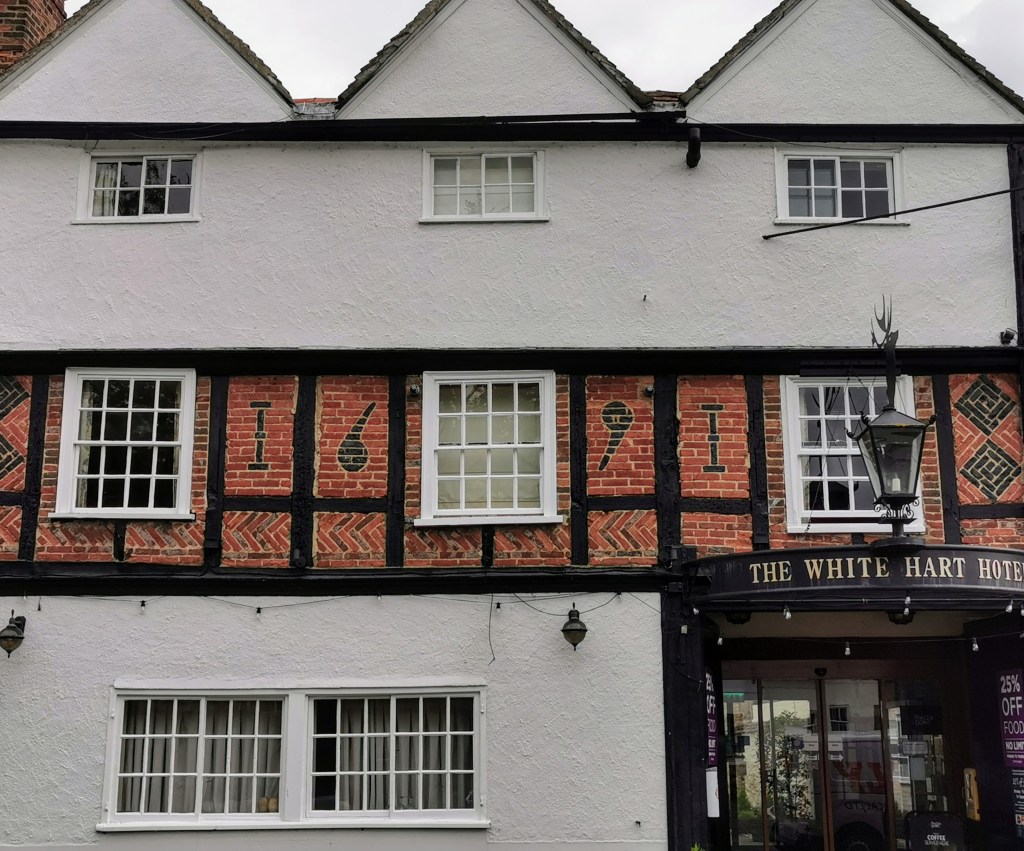
Dorchester once served the stagecoaches on the main London to Gloucester route, and at one point had ten coaching inns. Unfortunately just two of these remain, The George dating from the 15th century and The White Hart from the 17th – but then this is just a small village with less than 1000 inhabitants – how many pubs does it need?

Heading back to Benson, I take a slightly different route along the Thame. Pity about the lack of chauffeur – my feet are starting to hurt. Ah, the trials and tribulations of a travel blogger!

Postscript: The Waterside Cafe is even busier when I arrive back there, footsore and thirsty. No refreshments for me on this walk then. It’s great that most places are open now, but will everyone else please go home so I can get a drink?

Travels in the North – Yarm

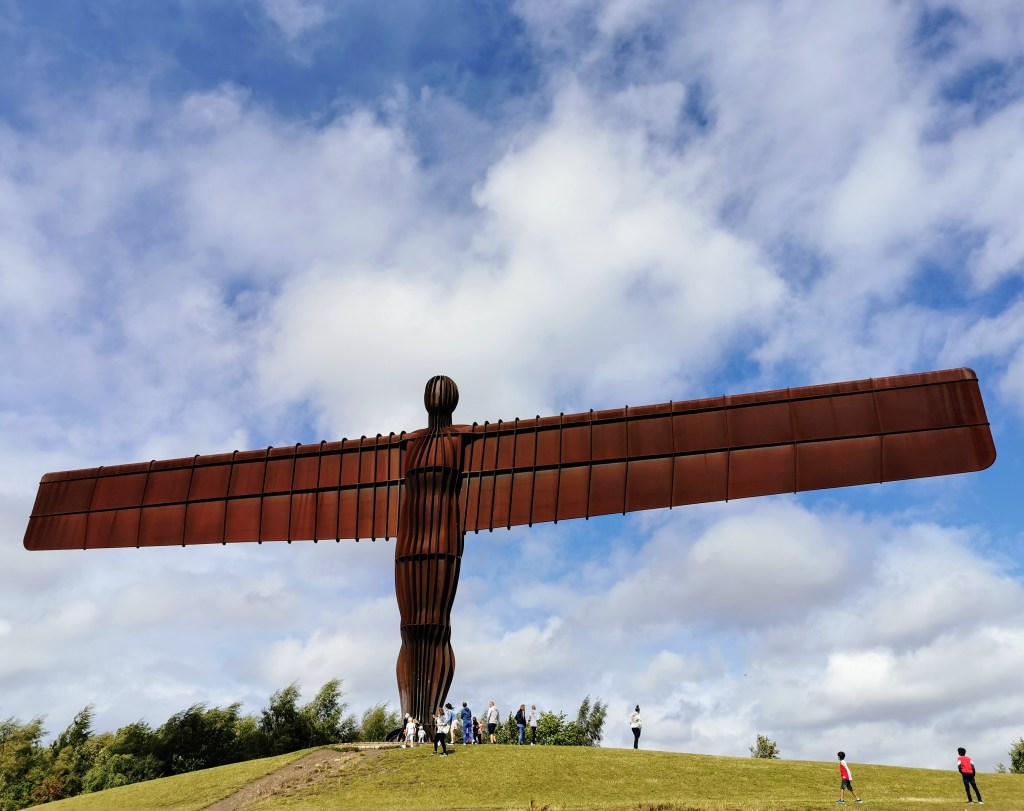
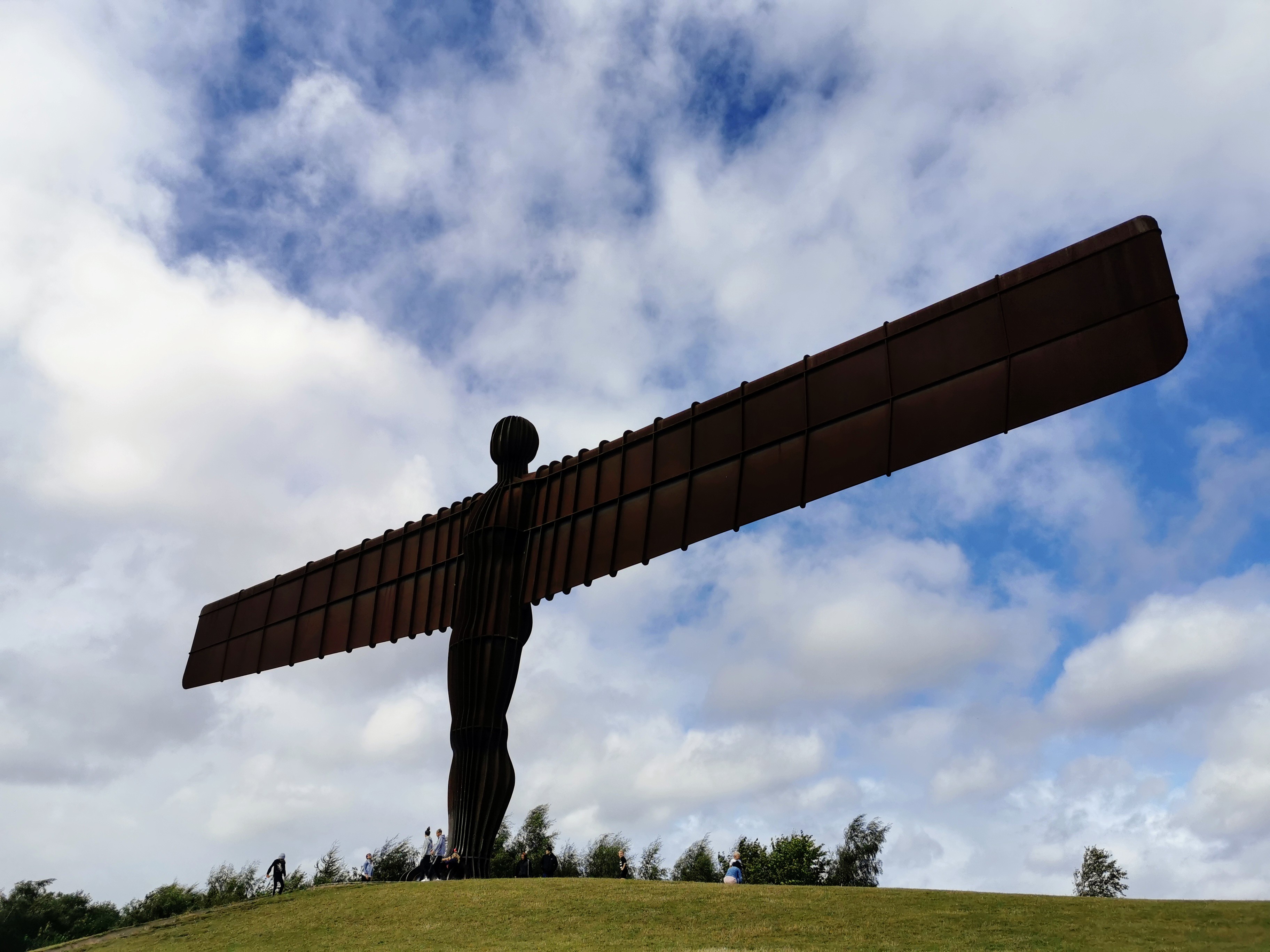
It’s the last leg of our road trip, and we’re heading south, leaving Northumberland behind and driving down to Yorkshire. On the way, there’s something I want to see. The Angel of the North, designed by Anthony Gormley, stands 20 metres high and 54 metres wide just off the A1 in Gateshead. It’s hard to miss as you drive past, in fact it almost wasn’t built for fear of causing road accidents, but I’ve never stopped before, and it’s even more impressive at close quarters.

Britain’s largest sculpture has stood here since 1998. It was commissioned to provide the northeast with an iconic landmark, and is now considered the most famous piece of public art in the UK. Job done then! Typically though, visiting the Angel isn’t as pleasant as it could and should be, as someone has fouled up a bit on the signage. It’s clear how to get to the Angel, but when you want to get back to the A1, you’re on your own. Exiting the car park, visitors end up speeding off down a dual carriageway in the wrong direction with no signs and no turning options. As a nation, why are we so bad at those all important details?

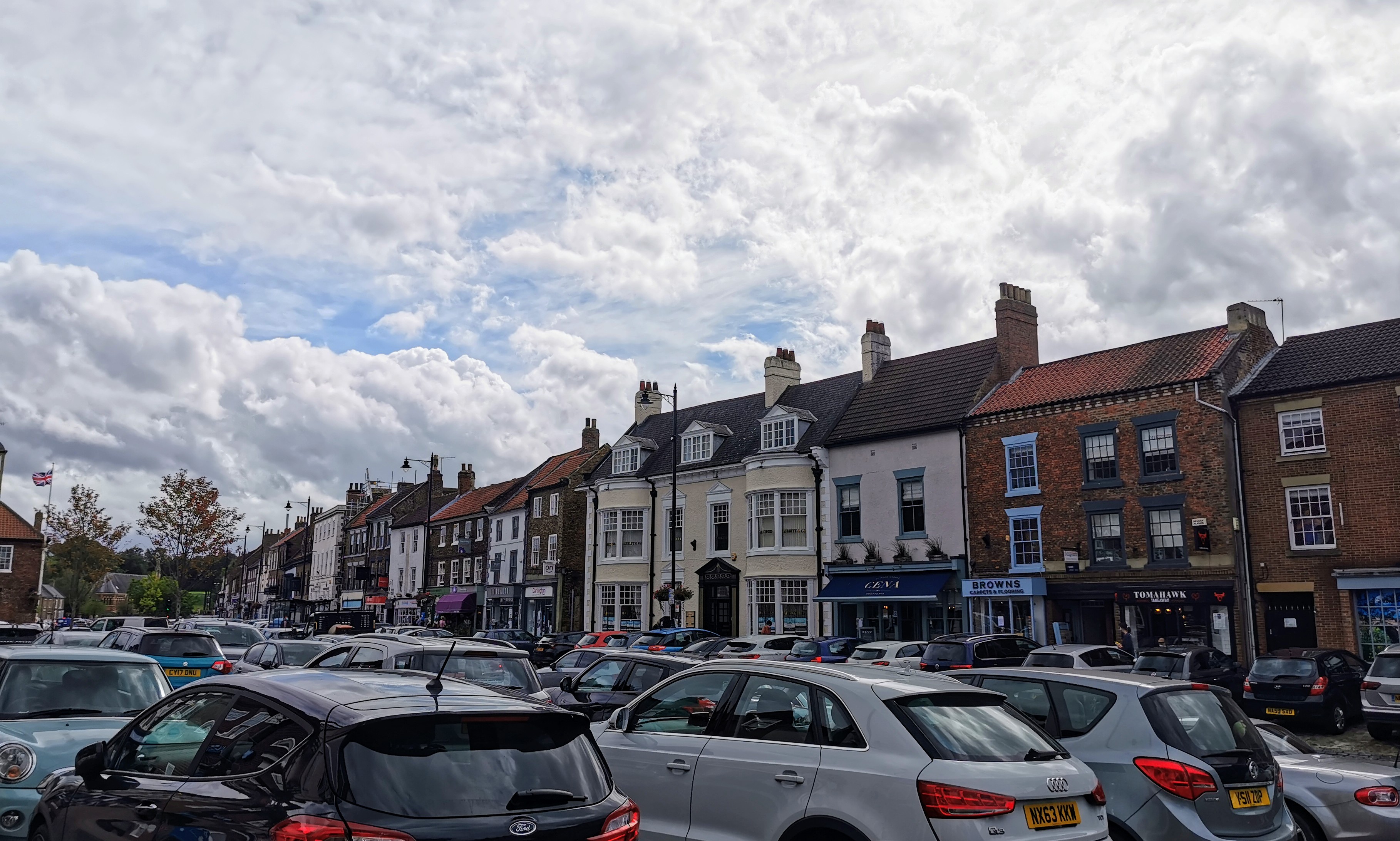
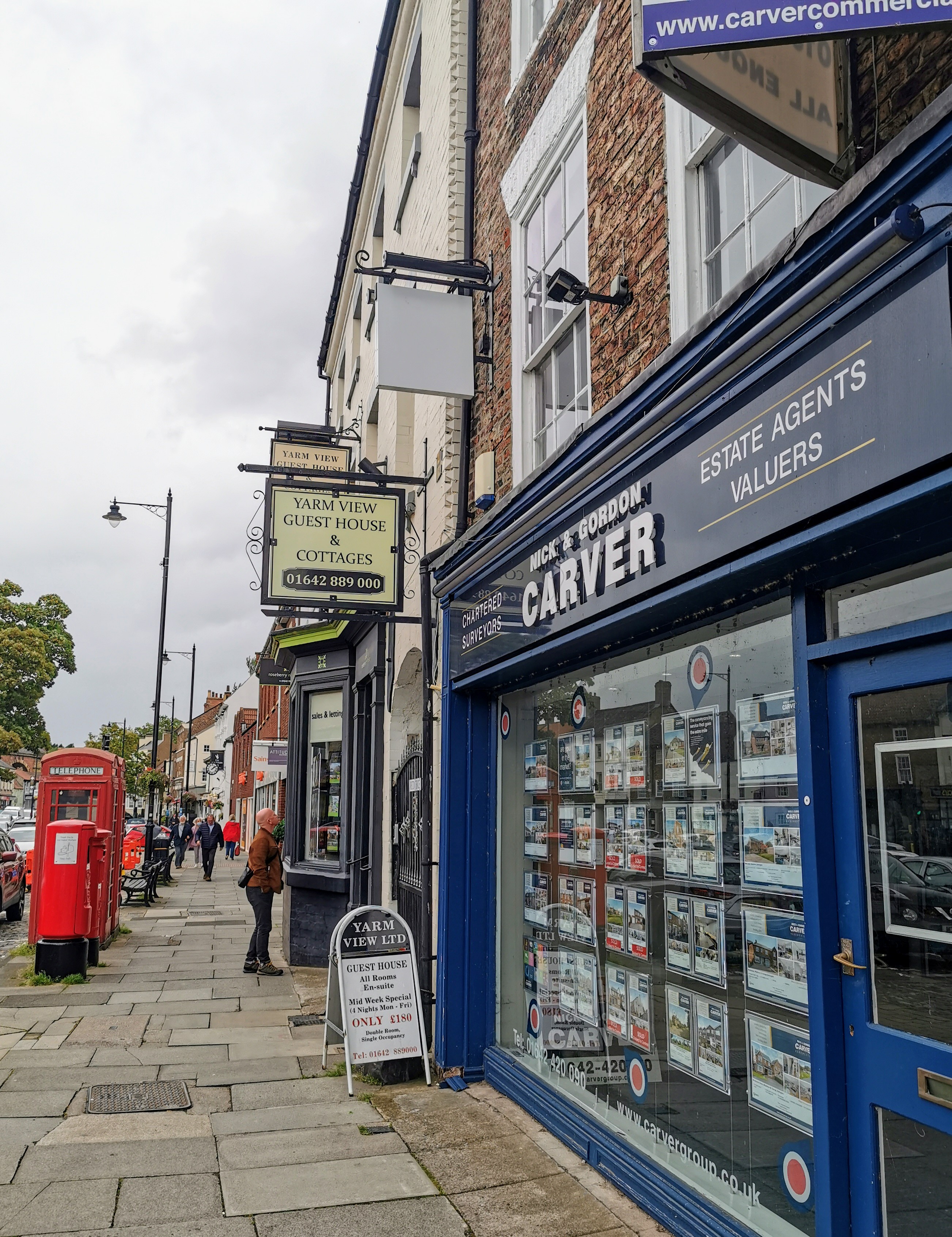
Finally back on the right road, our last destination of this northern roadtrip is the market town of Yarm, which sits on the southern bank of the River Tees. We’ve been here before in pre-blogging days to see friends Helen, James and Alistair, but I’m looking forward to having a proper look around today, especially when I consult the map and see there’s a castle hidden away down the back streets. I had no idea!

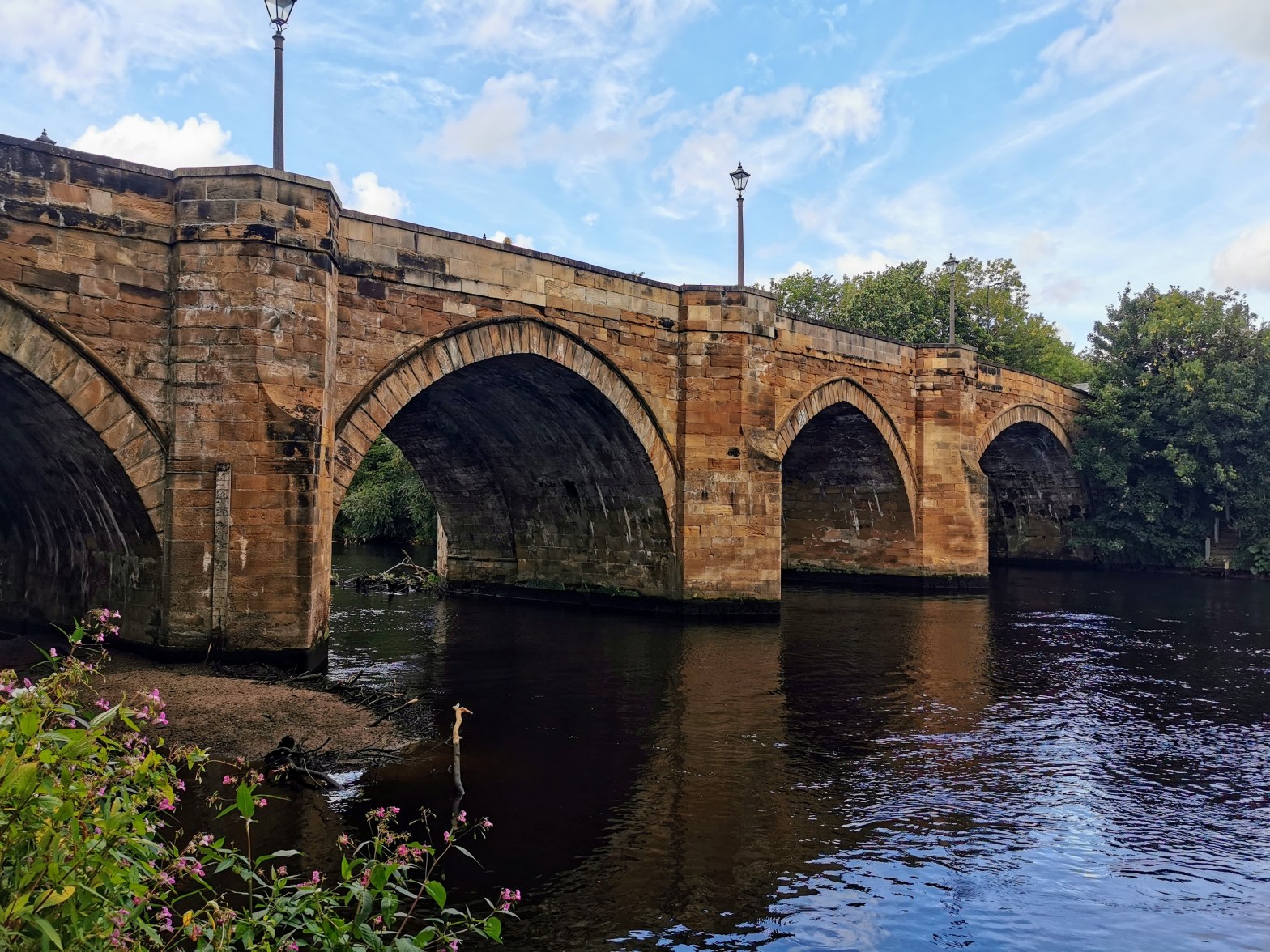
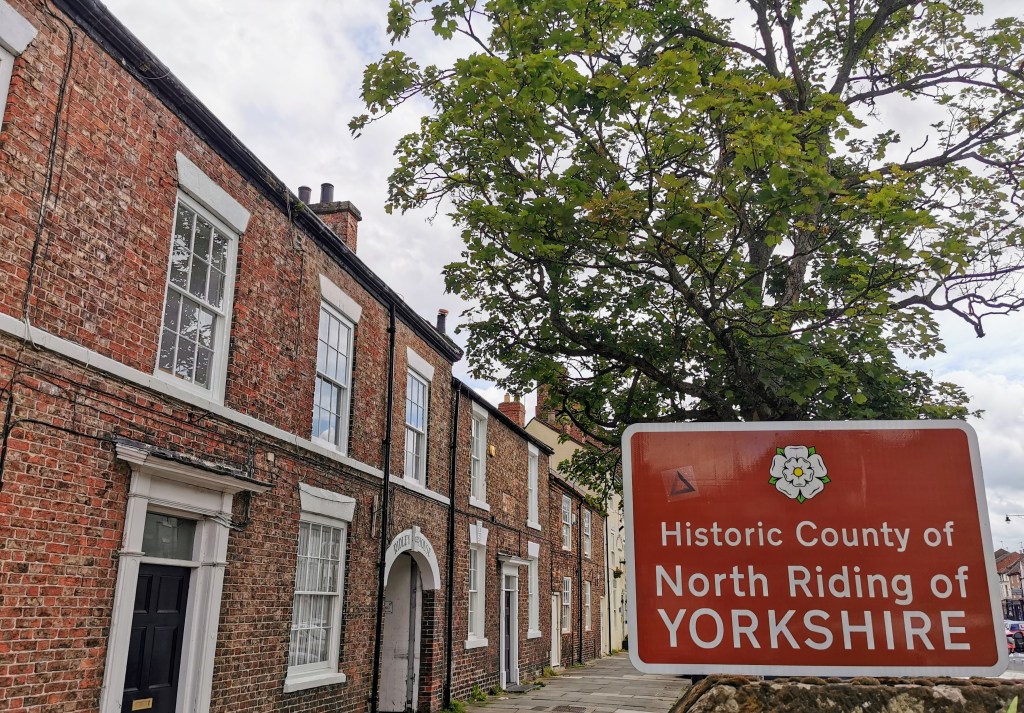
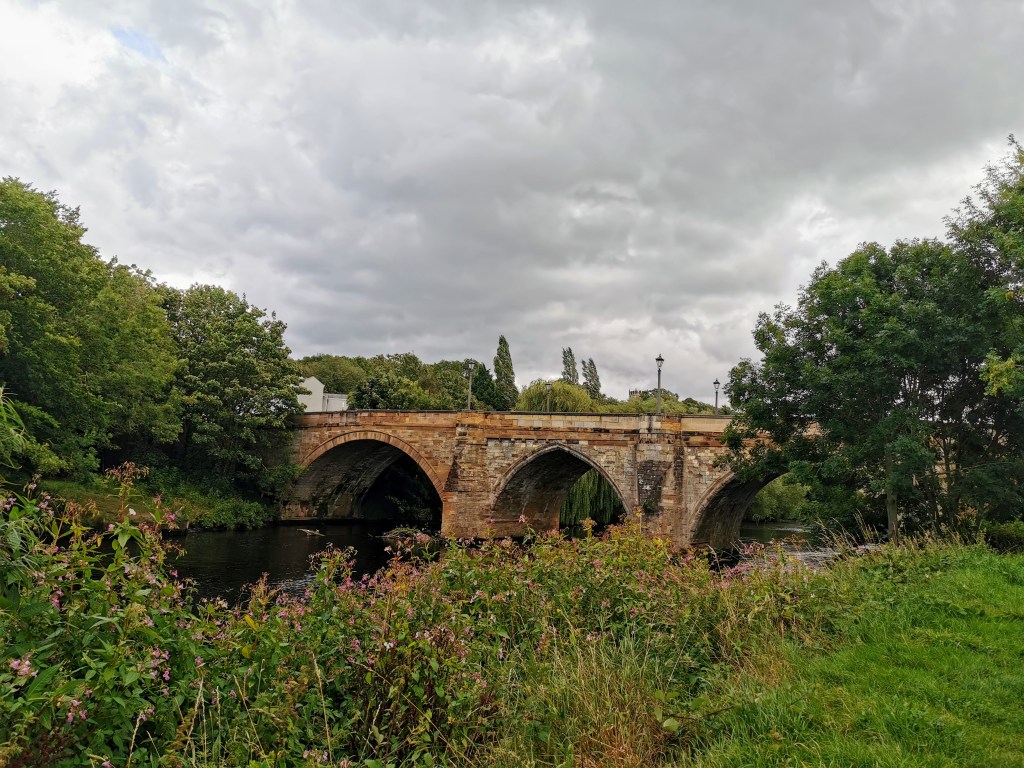
Yarm is a small and bustling market town (my favourite kind of place) first mentioned in the Domesday Book of 1086. King John granted a charter to hold a market here back in 1207. The ancient settlement sits in a loop of the river with the historic Yarm Bridge (built in 1400) spanning the Tees to the north. Today, it’s part of Stockton-on-Tees District, but the town is proud of its historic links to the North Riding of Yorkshire. Well, as a Yorkshire lass I can understand that…

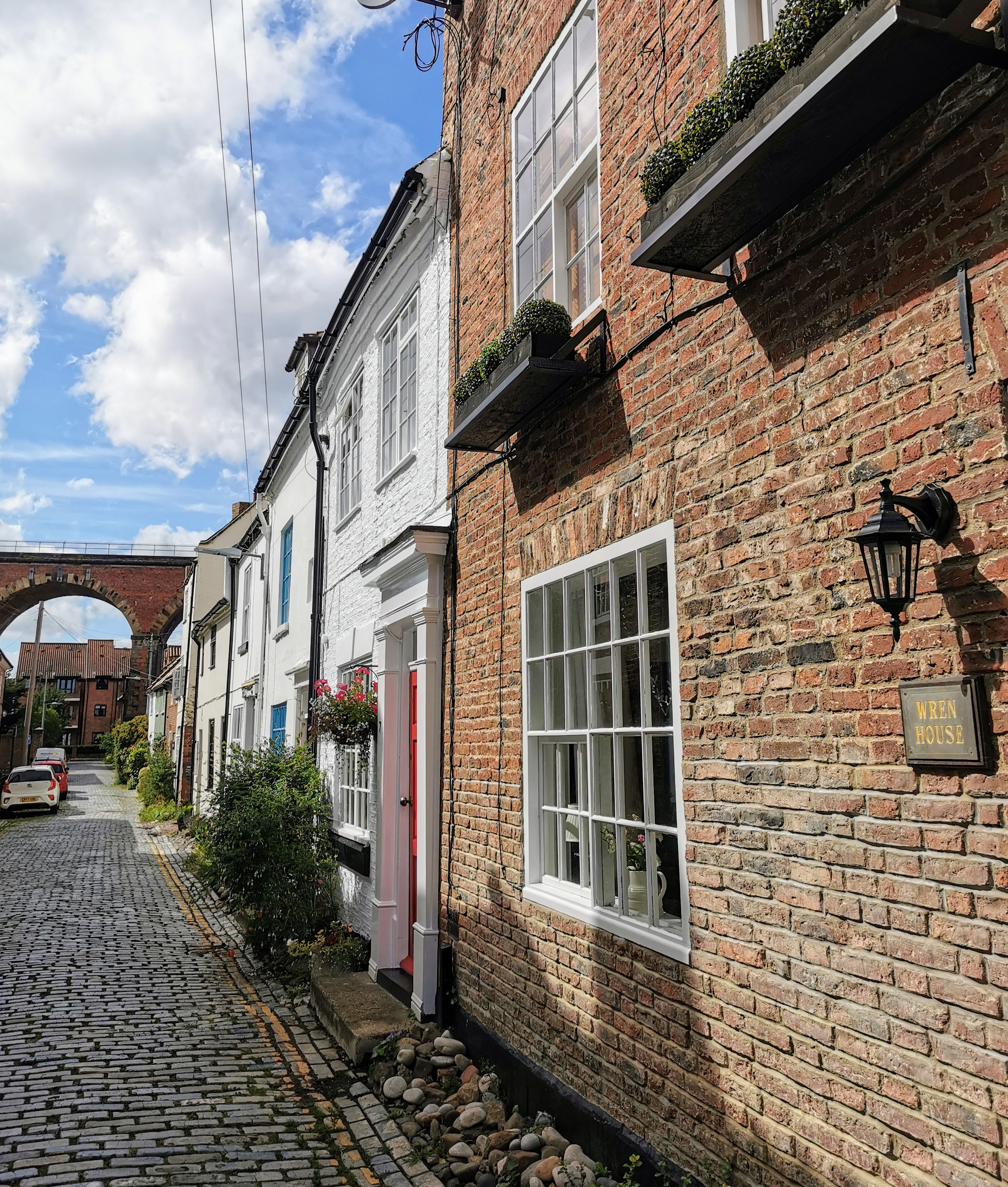
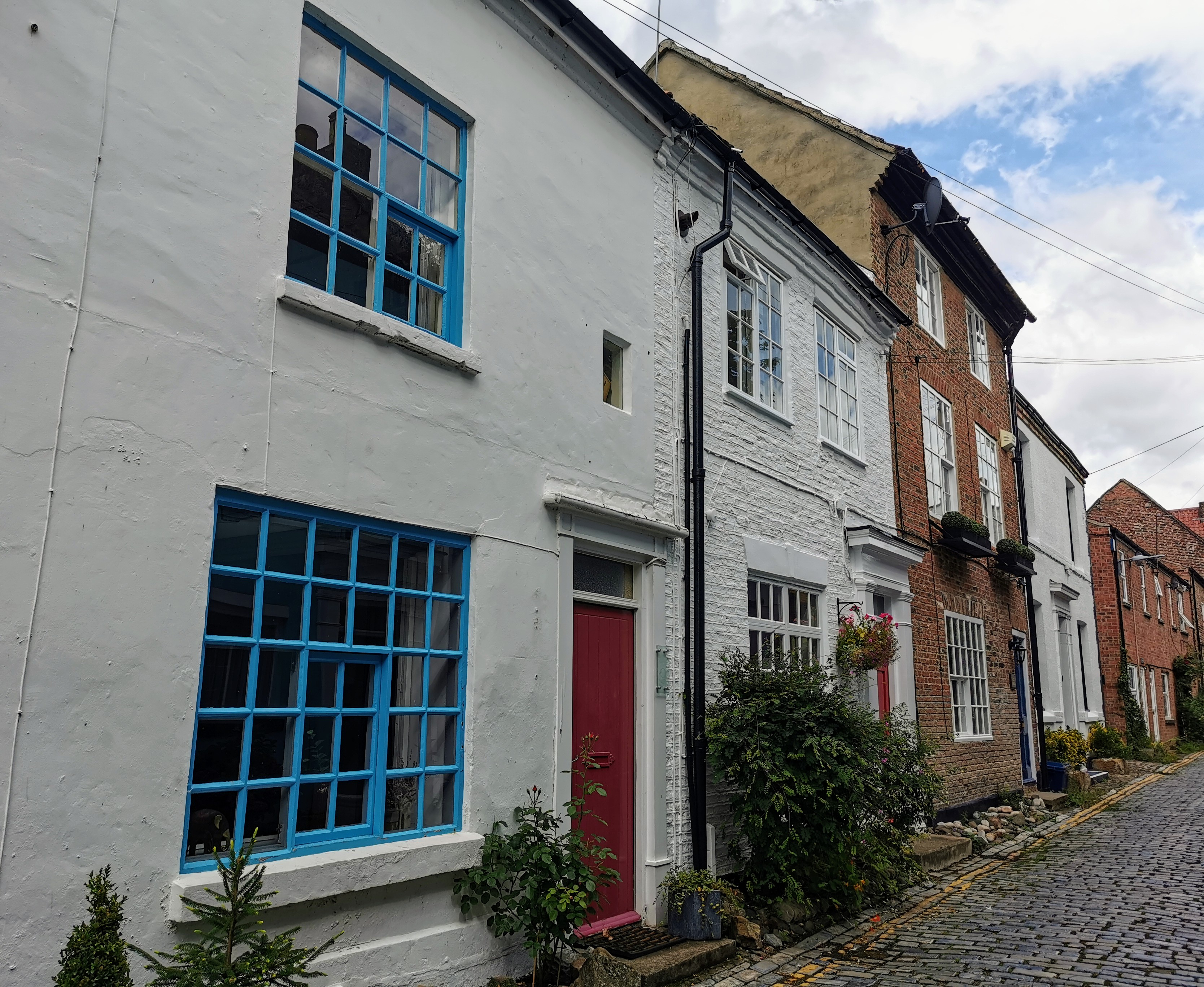
Historically, Yarm was an important staging post on the route between York and Newcastle, and hence it became very wealthy. In the town centre are a plethora of listed buildings dating mainly from the 18th century, so the Georgian character of the town is protected for the future. It’s small and easily strollable, with cobbled lanes known as ‘wynds’ and attractive vistas everywhere you look. But where is that castle?

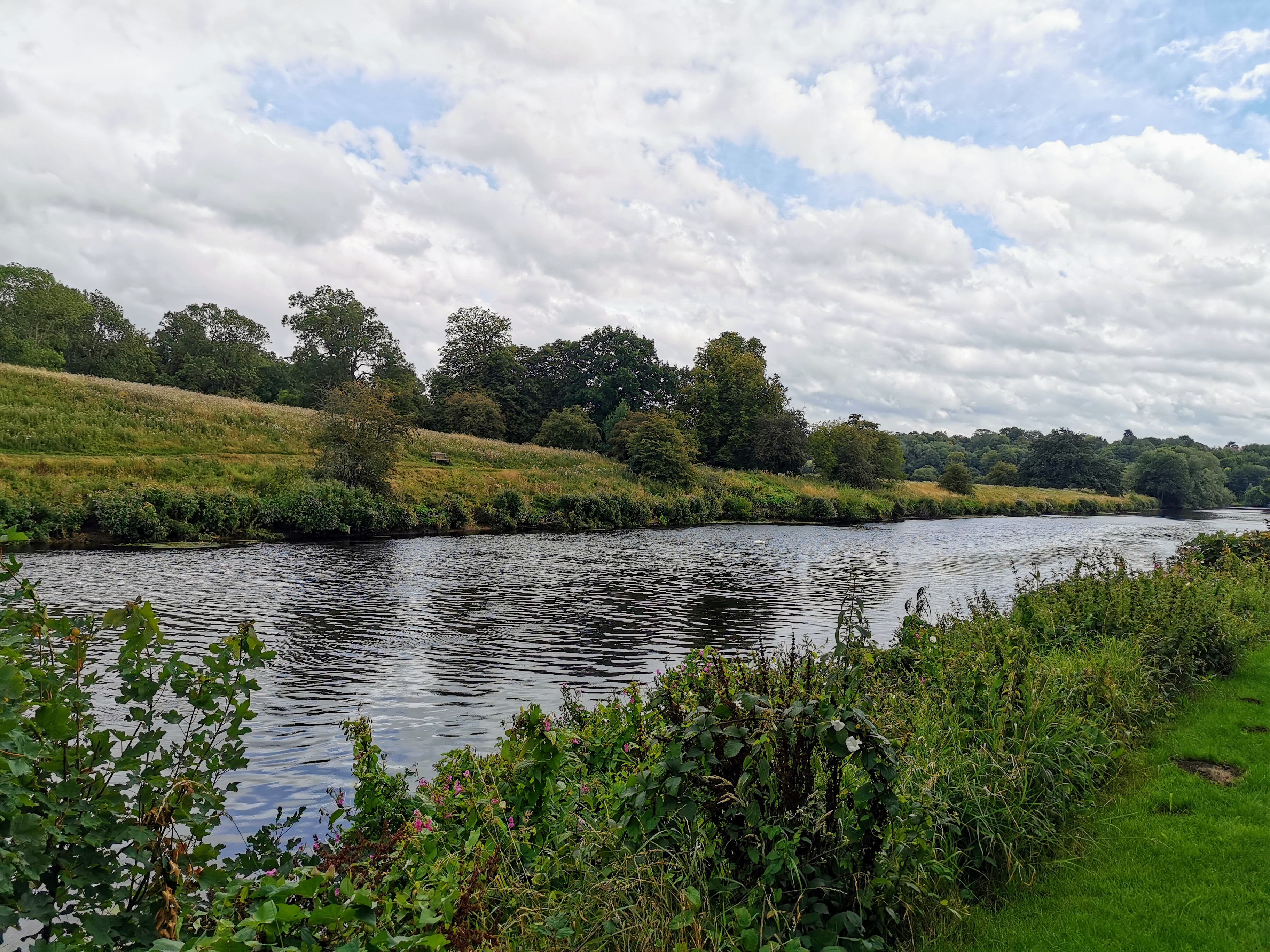
We walk in what we think is the right direction, but end up on the banks of the river Tees without spotting any castle-like structures. The walk along the water is lovely, but there are no fortifications of any kind to be seen, although we do get a great view of the old bridge as we pass underneath and skirt the eastern side of town. Honestly, this is like the search for the Scarlet Pimpernel!

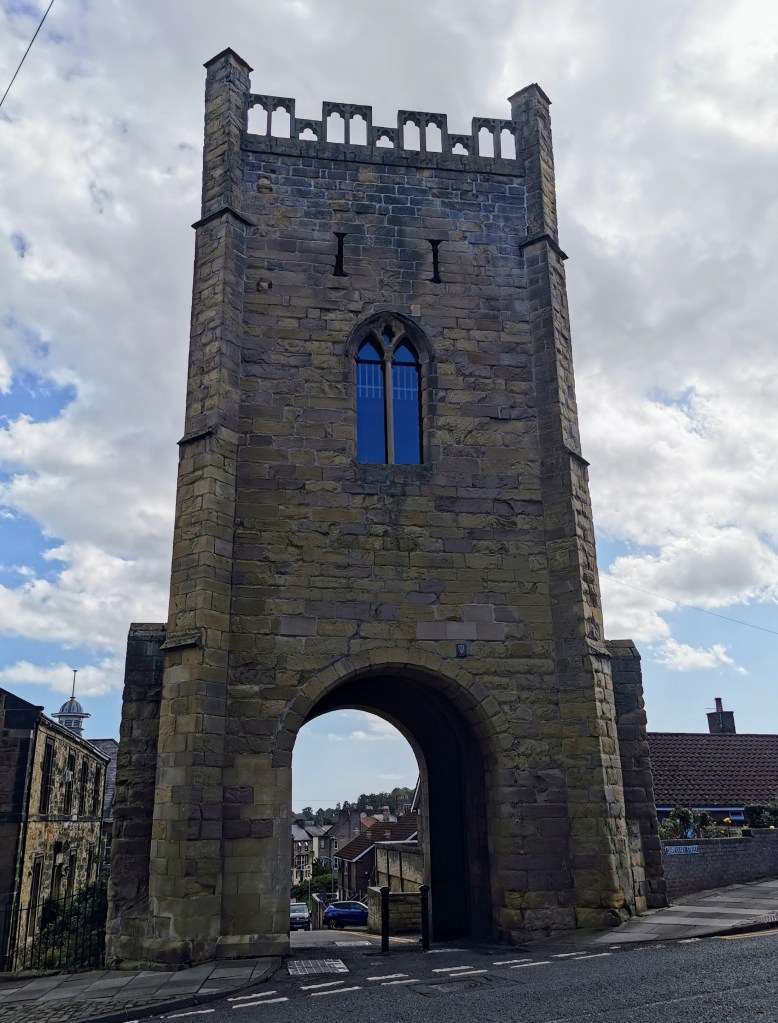
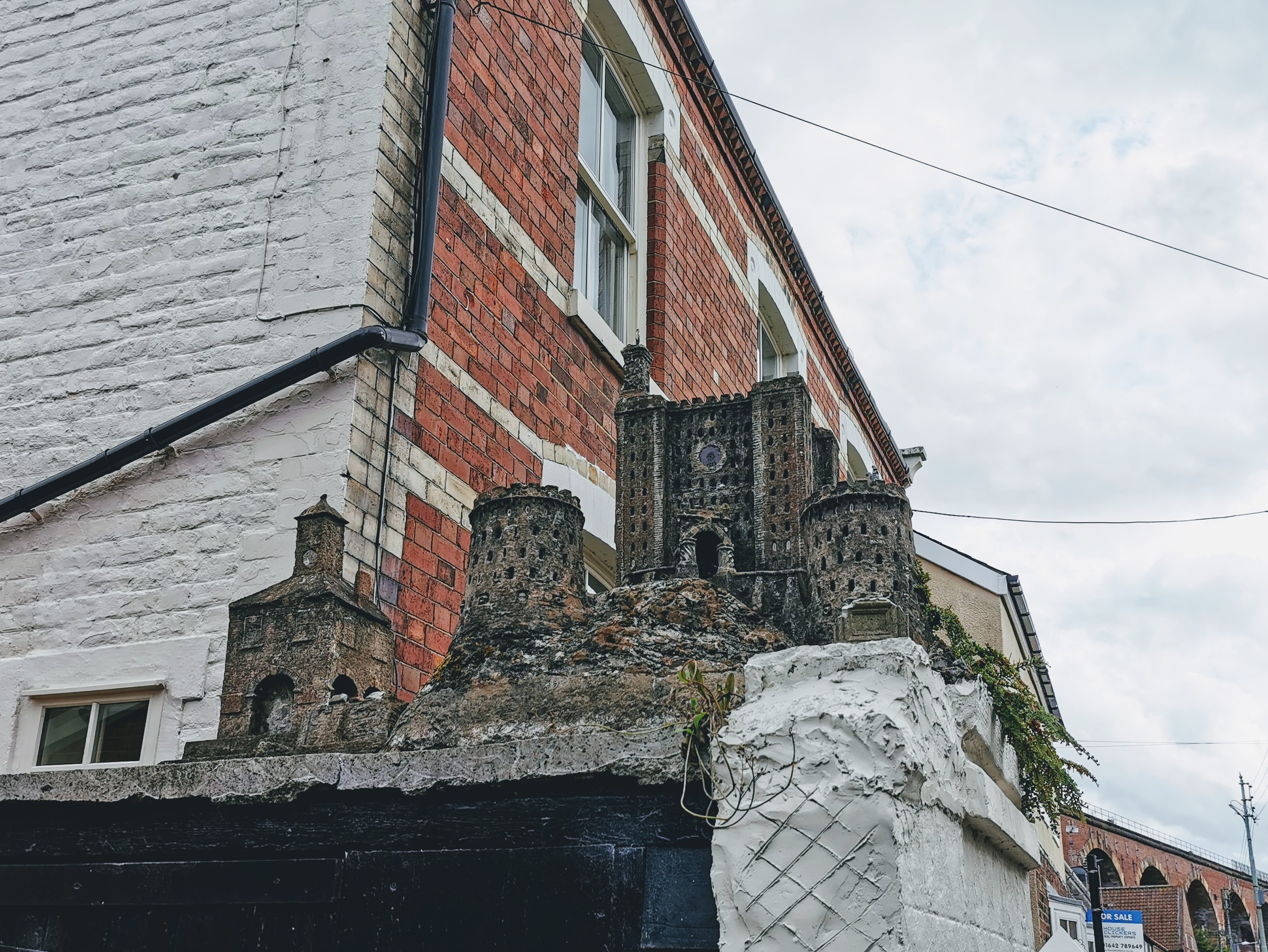
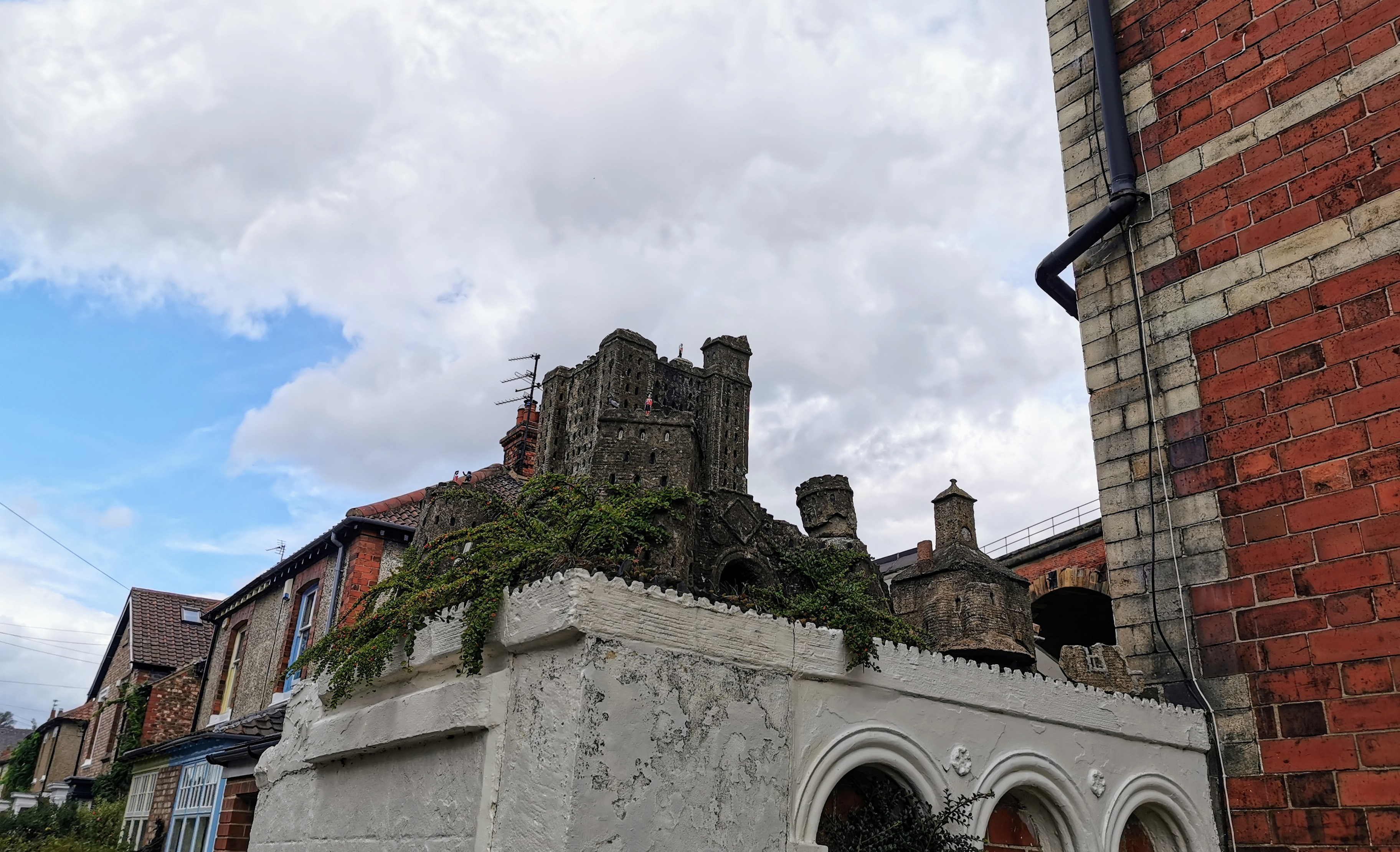
Another circuit it is then. I’m determined to find this elusive castle. The husband is getting impatient, are you sure it’s here? It’s on Google Maps, for goodness sake! At last we find it, and have to laugh. Like many visitors here, we’ve been duped – the ‘castle’ is actually a model built in the 1880s by the owner of the property where it stands. Why on earth would you build a miniature fortress on top of your garden wall? How very British, I love this kind of thing!

Yarm is a good place for a pub crawl and always has been – in 1890 there were 12 inns listed in the town and many of them are still standing, so not much has changed really. On a Friday and Saturday evening, expect to see a lot of tanned flesh on display, regardless of the weather. This is the northeast, pet, and they don’t feel the cold. You won’t be too surprised to hear that we’ve visited a few of the pubs before, but not tonight.

We’re having a night in with Helen’s excellent cooking, but first we pop into the Fourteen Drops wine bar and deli for a glass of vino, and pick up some gourmet cheese for later. How very civilised. Our hosts laugh when we ask about ‘Yarm Castle’ – we’re not the first to go off on this particular wild goose chase, and we won’t be the last. It’s a useful reminder that the Internet isn’t always our best friend…

As usual, I can thank my blogging habit for encouraging me to get to know somewhere better. Scratching below the surface really does make you appreciate places you thought you knew. Obviously, there are going to be some disappointments too – I really wanted Yarm to have a castle – but on the whole it’s positives all the way. A bit of research is highly recommended. Just don’t get overexcited and start to write about your trips, I have enough competition thanks!

Travels in the North – Northumberland

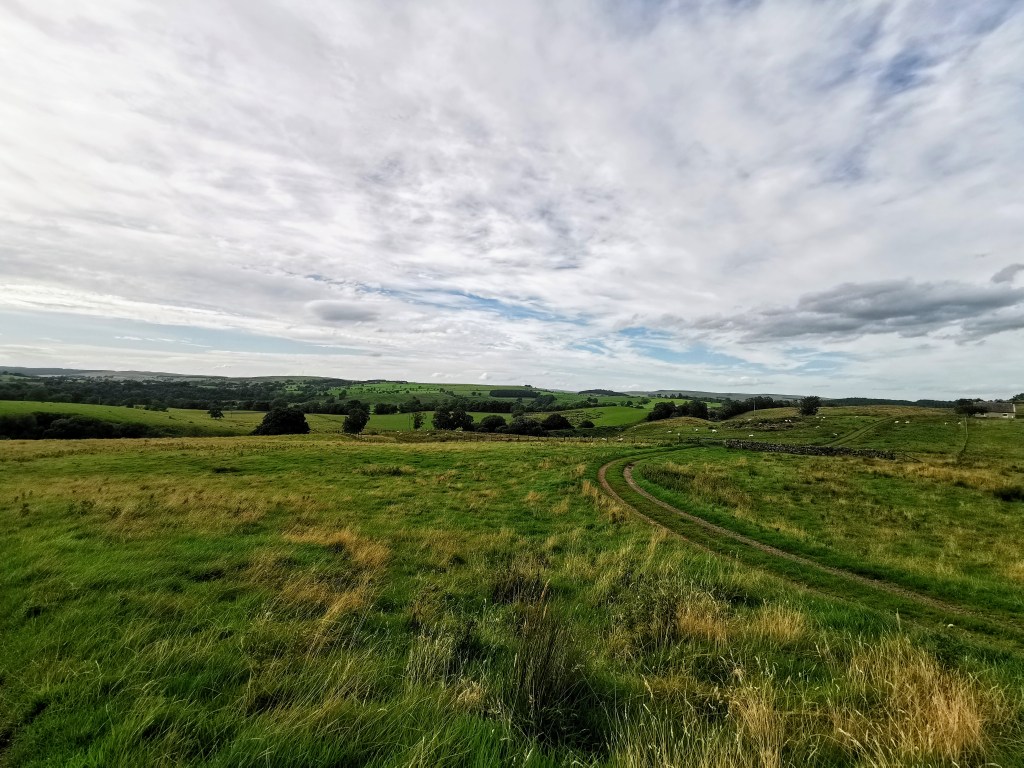
The emptiest part of England, Northumberland is the place to escape if you’re not that keen on people, so I’m surprised the husband hasn’t brought me here before now. There are only 62 inhabitants per square kilometre here, compared with an average of 275 for the UK as a whole. It’s renowned for being desolate and windswept, but also extraordinarily beautiful. And cold. A slightly different experience to our planned trip to Nice.

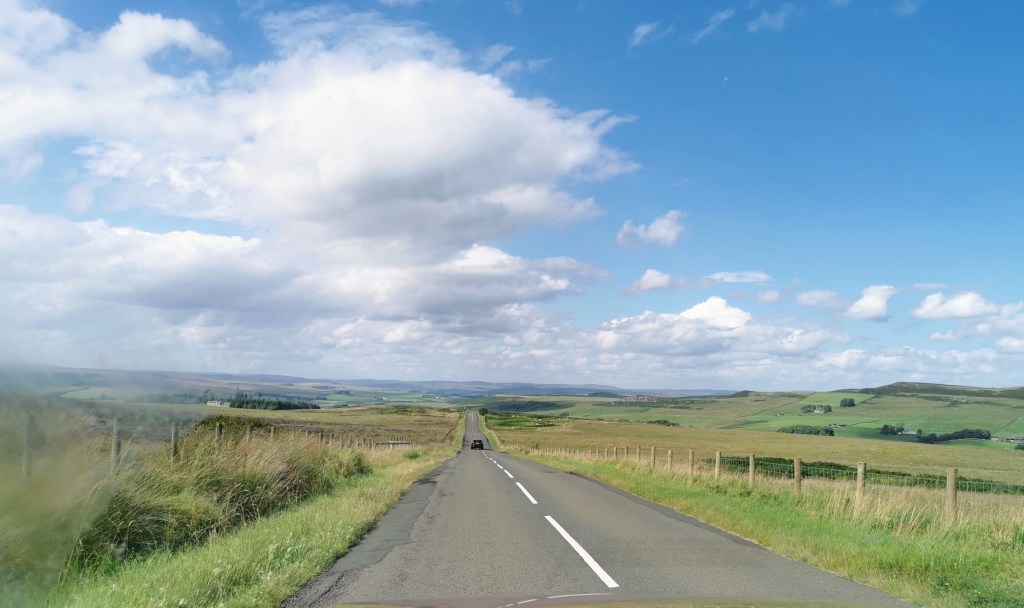
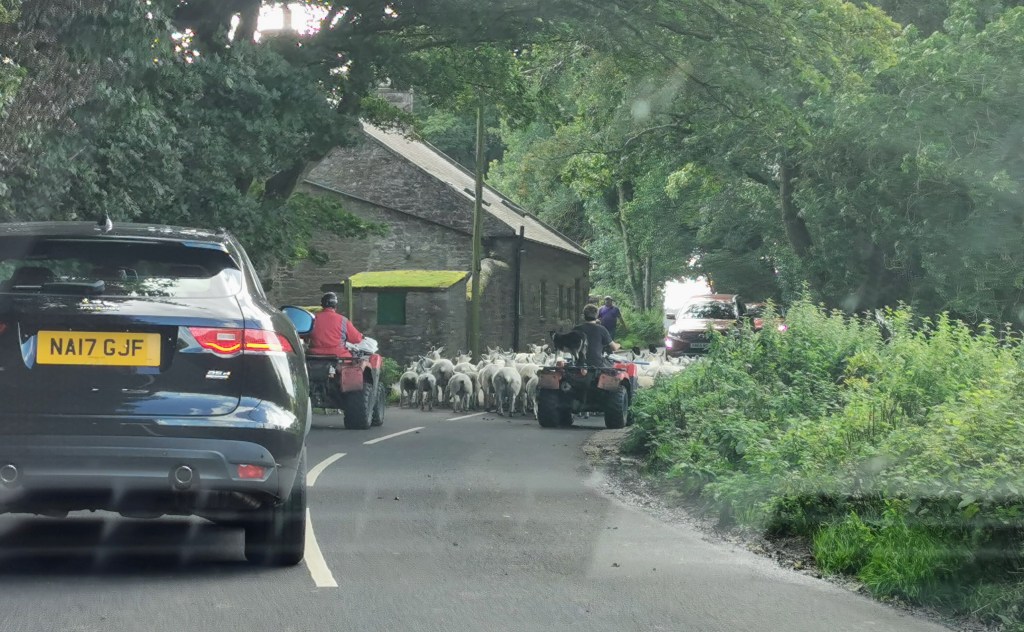
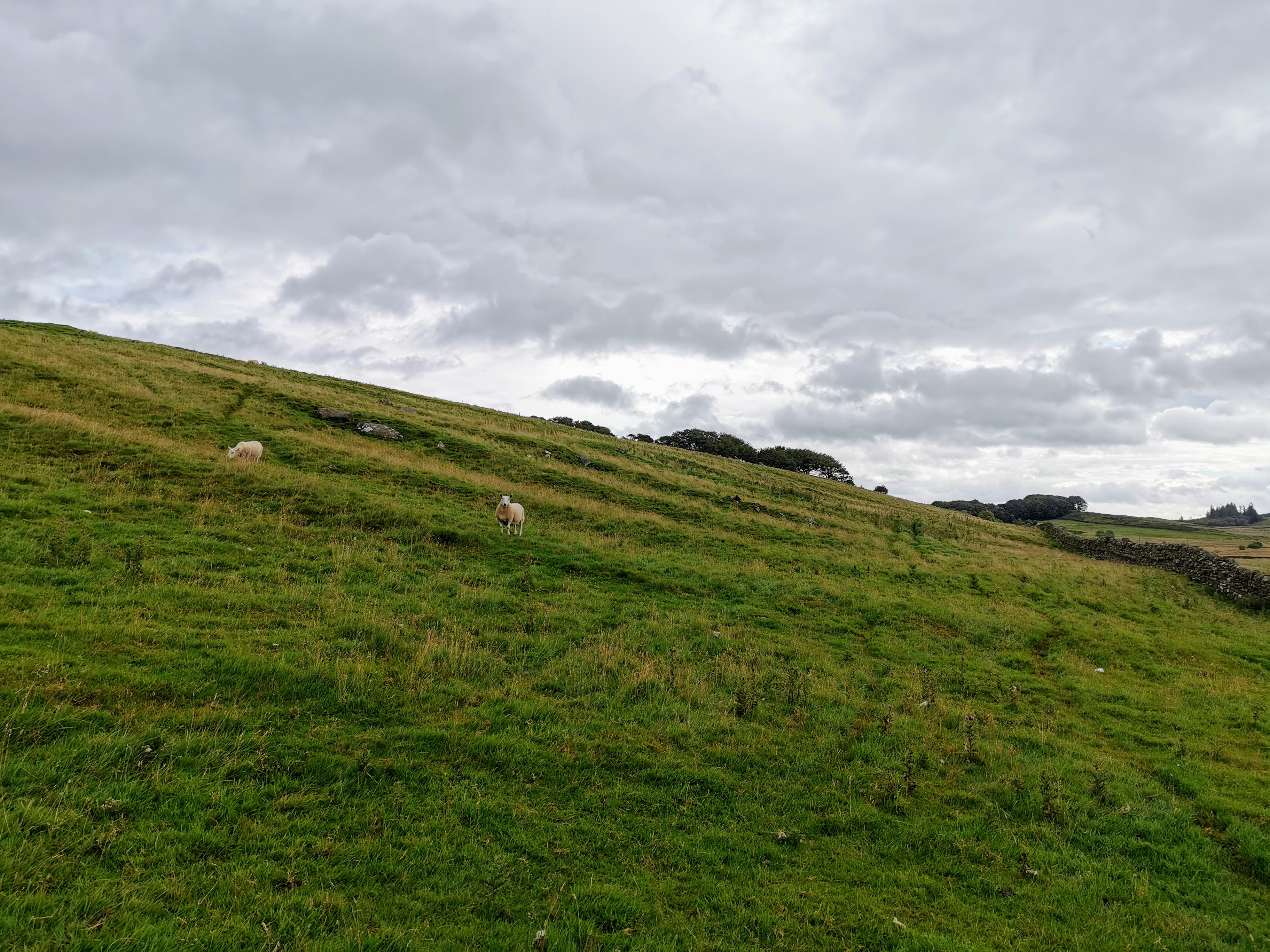
Driving along almost empty roads through uninhabited countryside, the only holdup we experience is due to sheep being herded back to the farm. Crawling along behind them as they leap around the road is the most fun I’ve ever had in a traffic jam. Job done, the herders wave to thank us. It was our pleasure!

There are two iconic sights we want to see here in this northernmost county of England. First, Holy Island, a natural phenomenon – a tidal island only accessible at certain times of day and otherwise cut off from the coast. Second, Hadrian’s Wall, a totally man-made structure stretching right across the country for 73 miles. We both visited as children, no doubt moaning about being bored. How times change…

Driving south from Berwick along the Northumberland coast is a totally different experience to a few days before, when lashing rain reduced visibility to a few metres, and the roads were flooded. Today is a beautiful sunny day, perfect for exploring. We can actually see where we’re going, which helps.

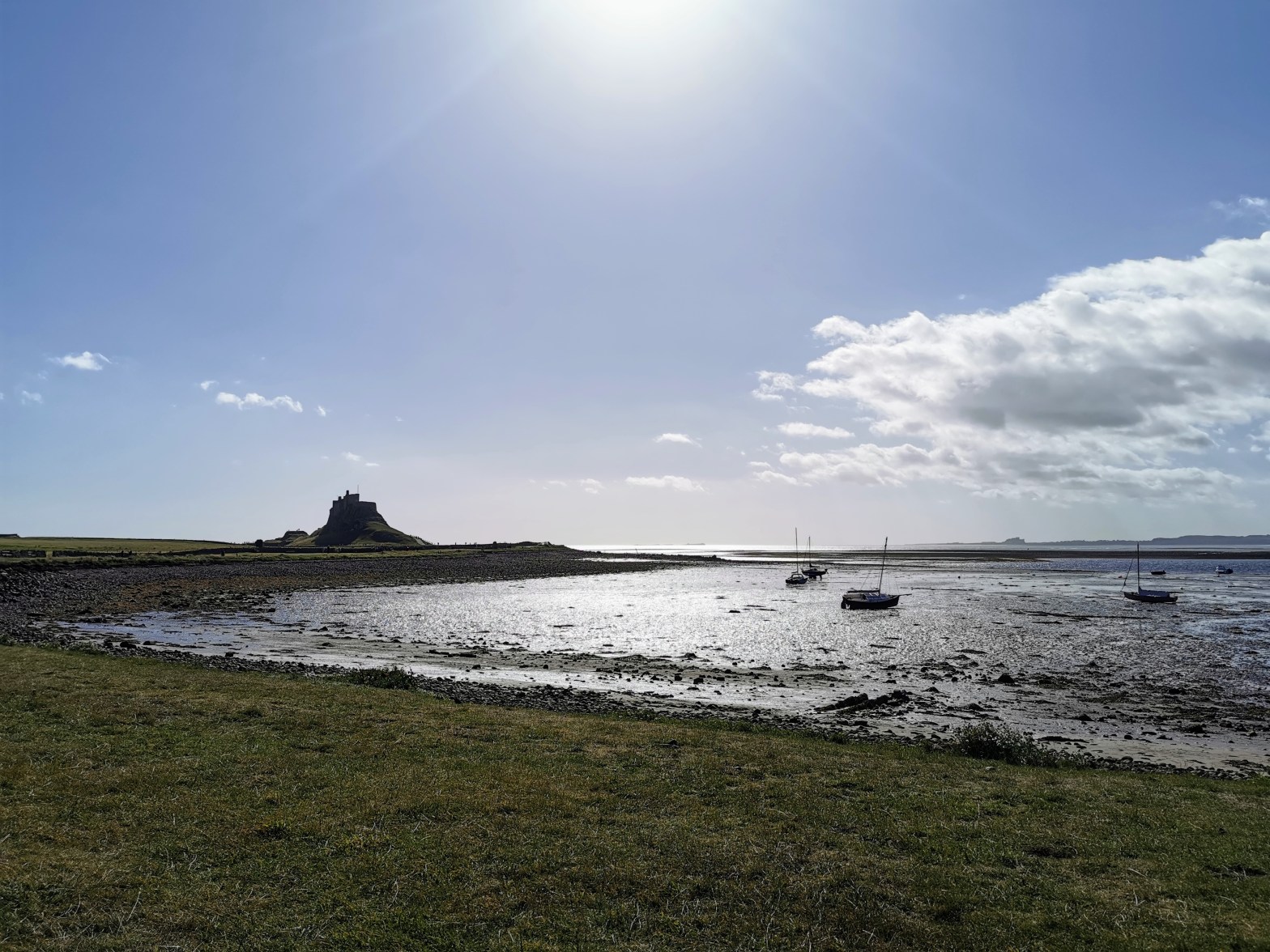
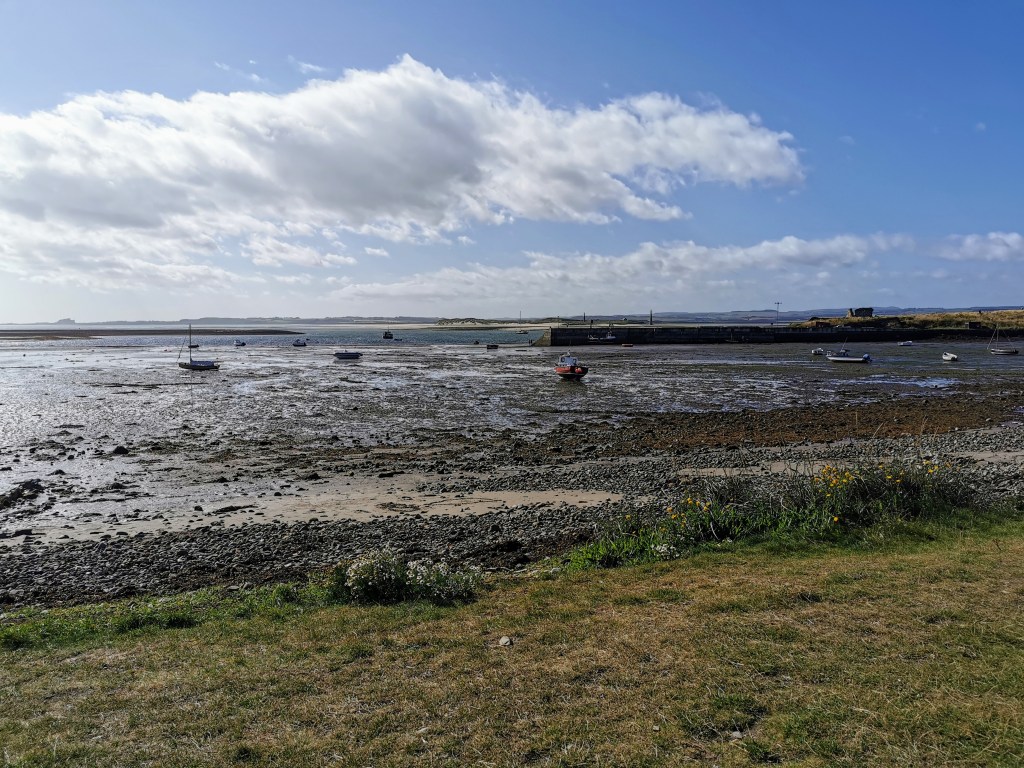
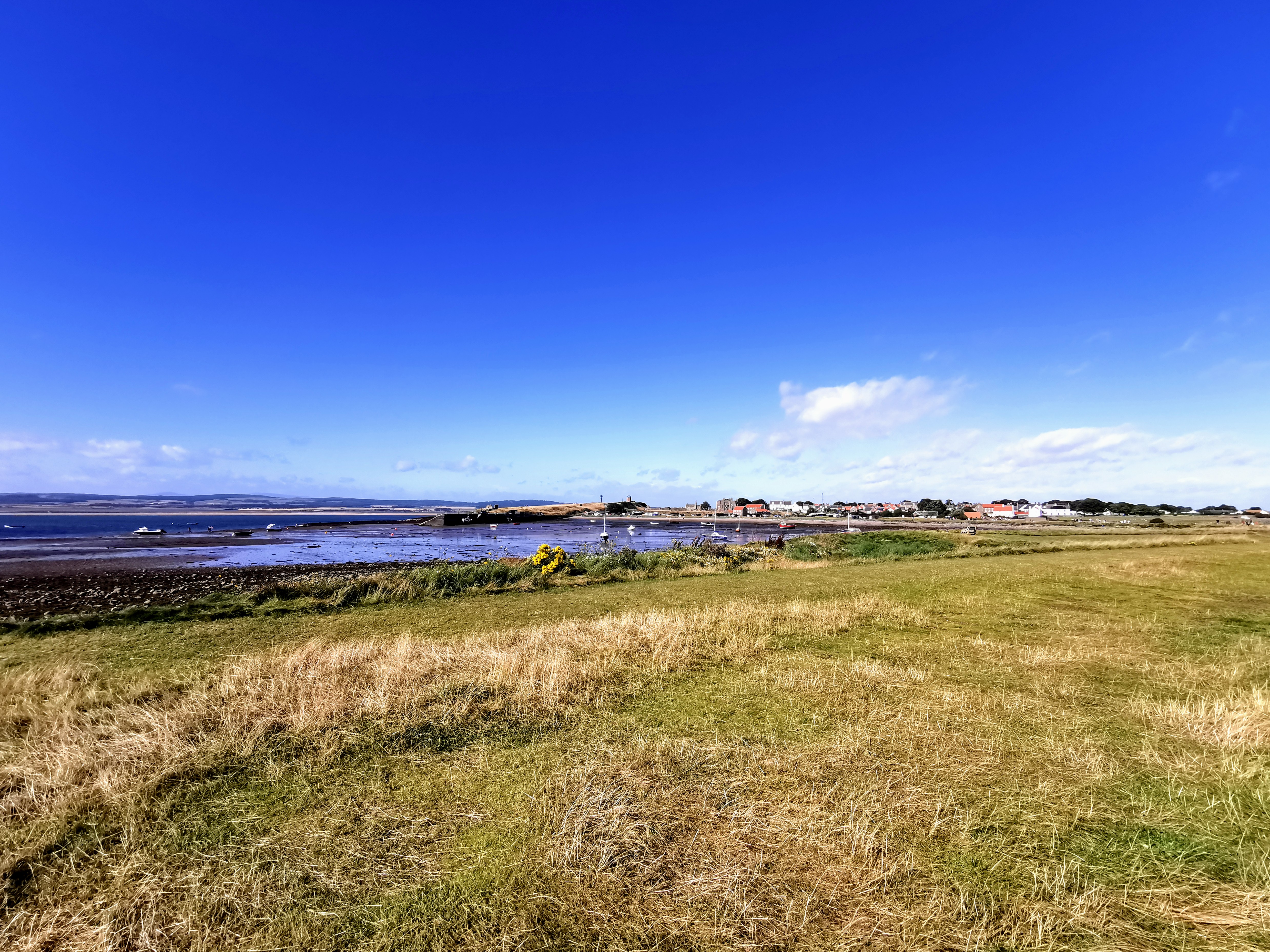
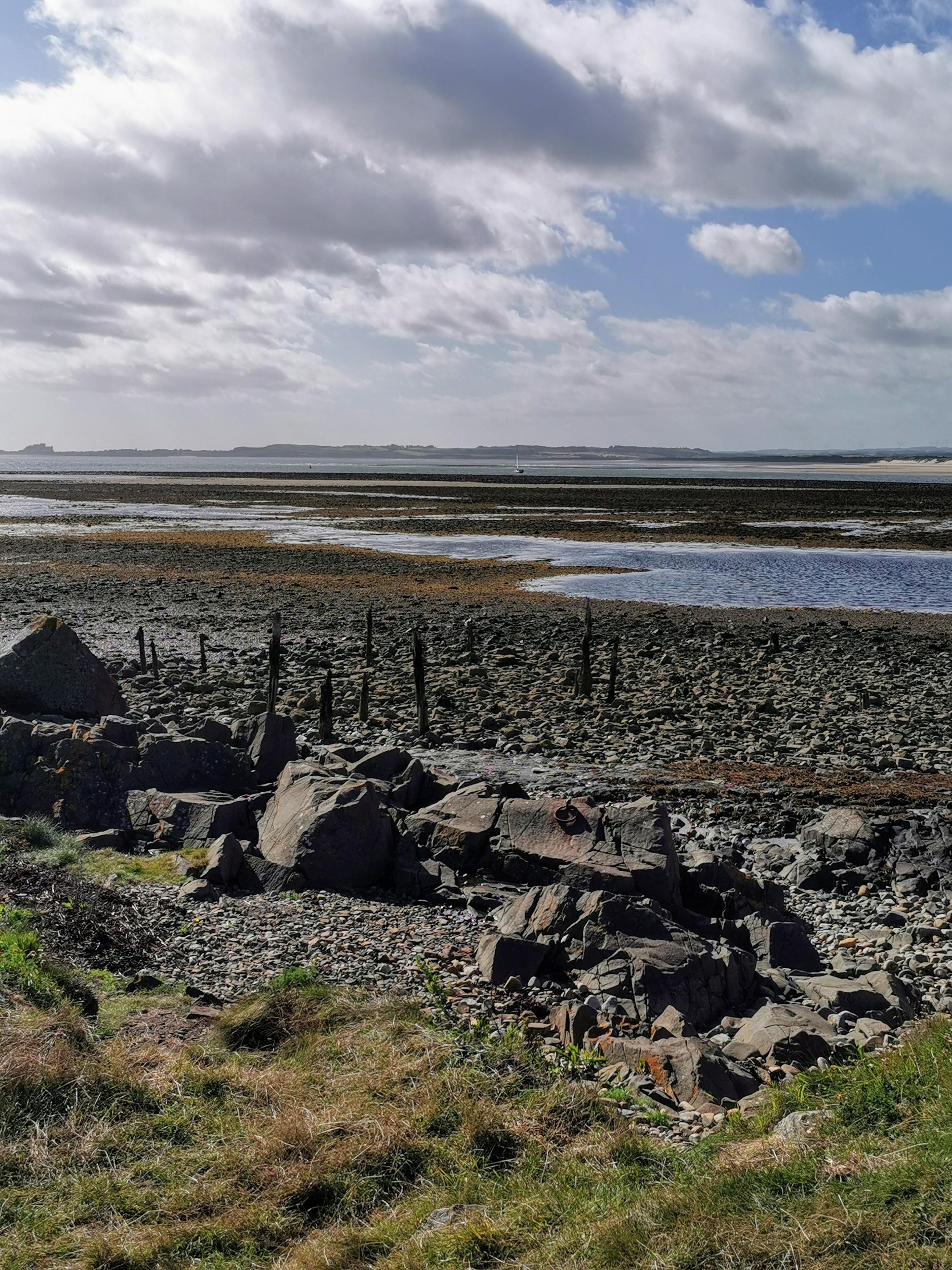
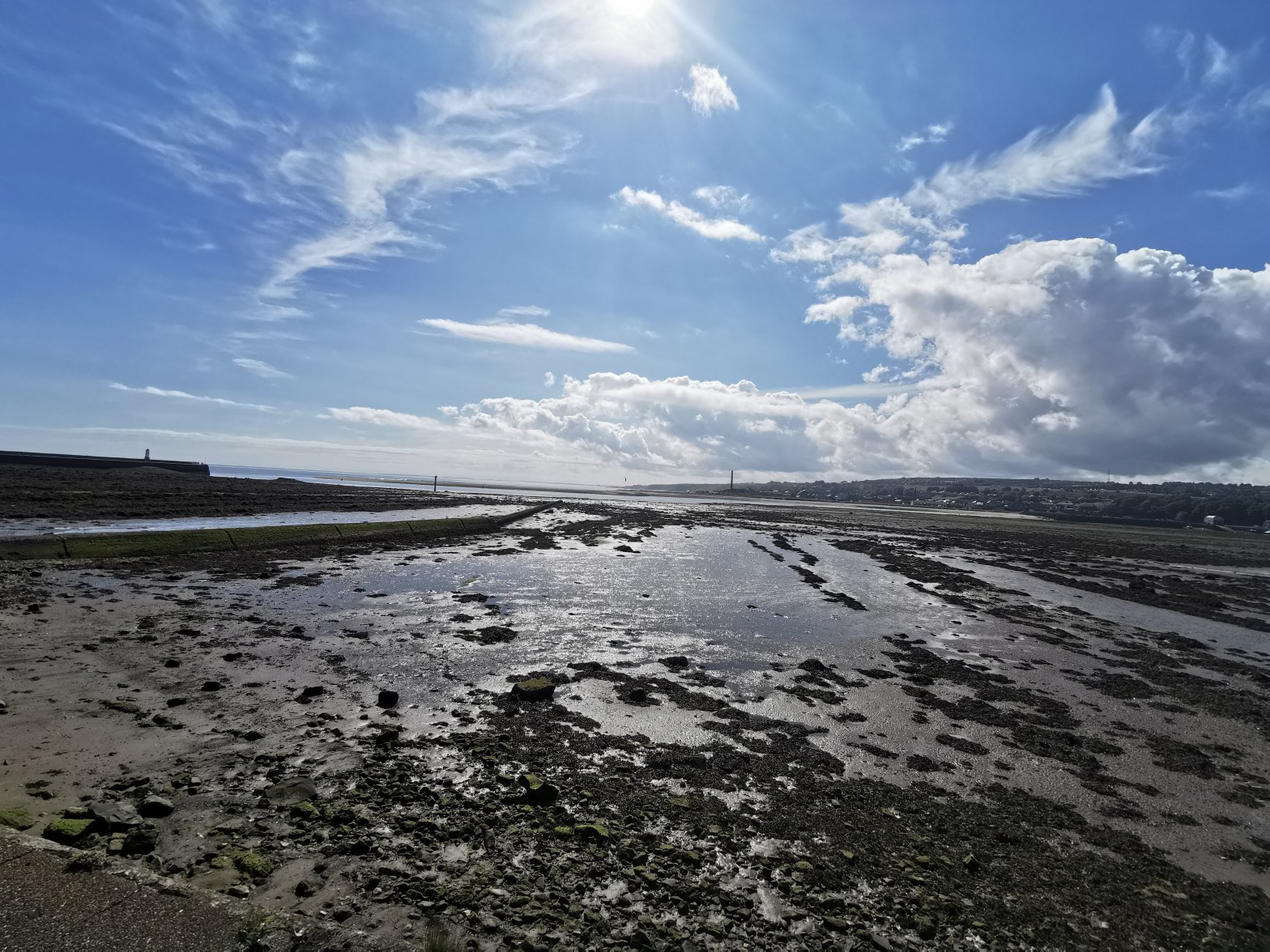
The Holy Island of Lindisfarne has been an important religious site since the 6th century. At high tide, the island covers around 1,000 acres but low tide reveals a larger area of national park, and also the causeway that links the island to the mainland. The local council website details safe times to cross, but unbelievably one vehicle per month gets stranded by the rising seawater and requires rescue. I don’t know why I’m surprised really…

It feels like a long drive to reach the island, but it’s an even longer walk for the line of pedestrians we can see following the ancient pilgrim path marked by poles across the mudflats. There are lots of people braving the walk, and I wish we had more time to do it to. Even driving feels a bit adventurous, thanks to the receding waters. Well, I think so. The husband just rolls his eyes.

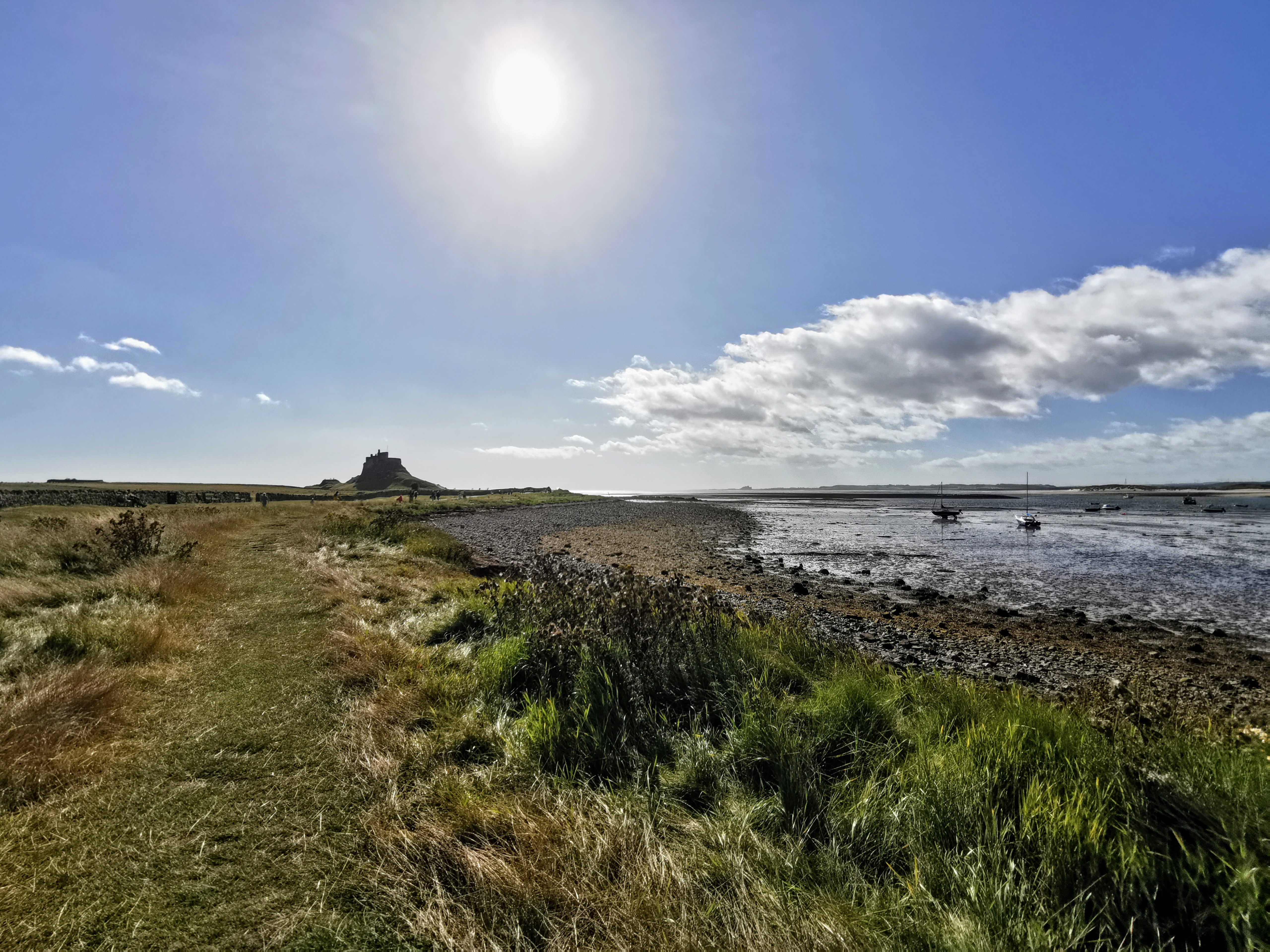
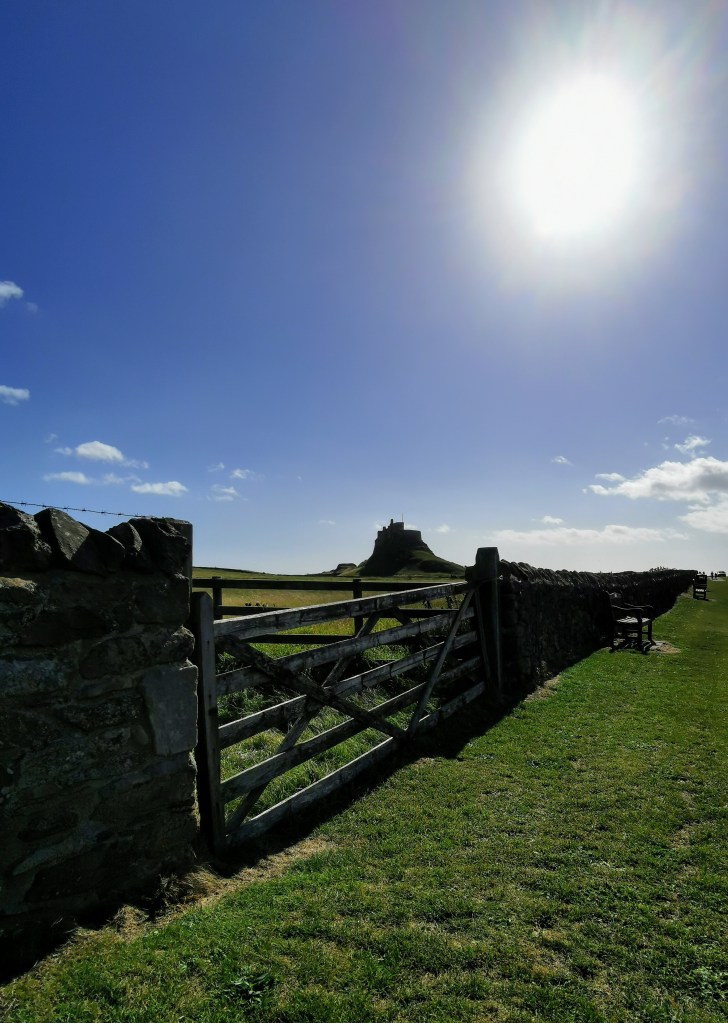
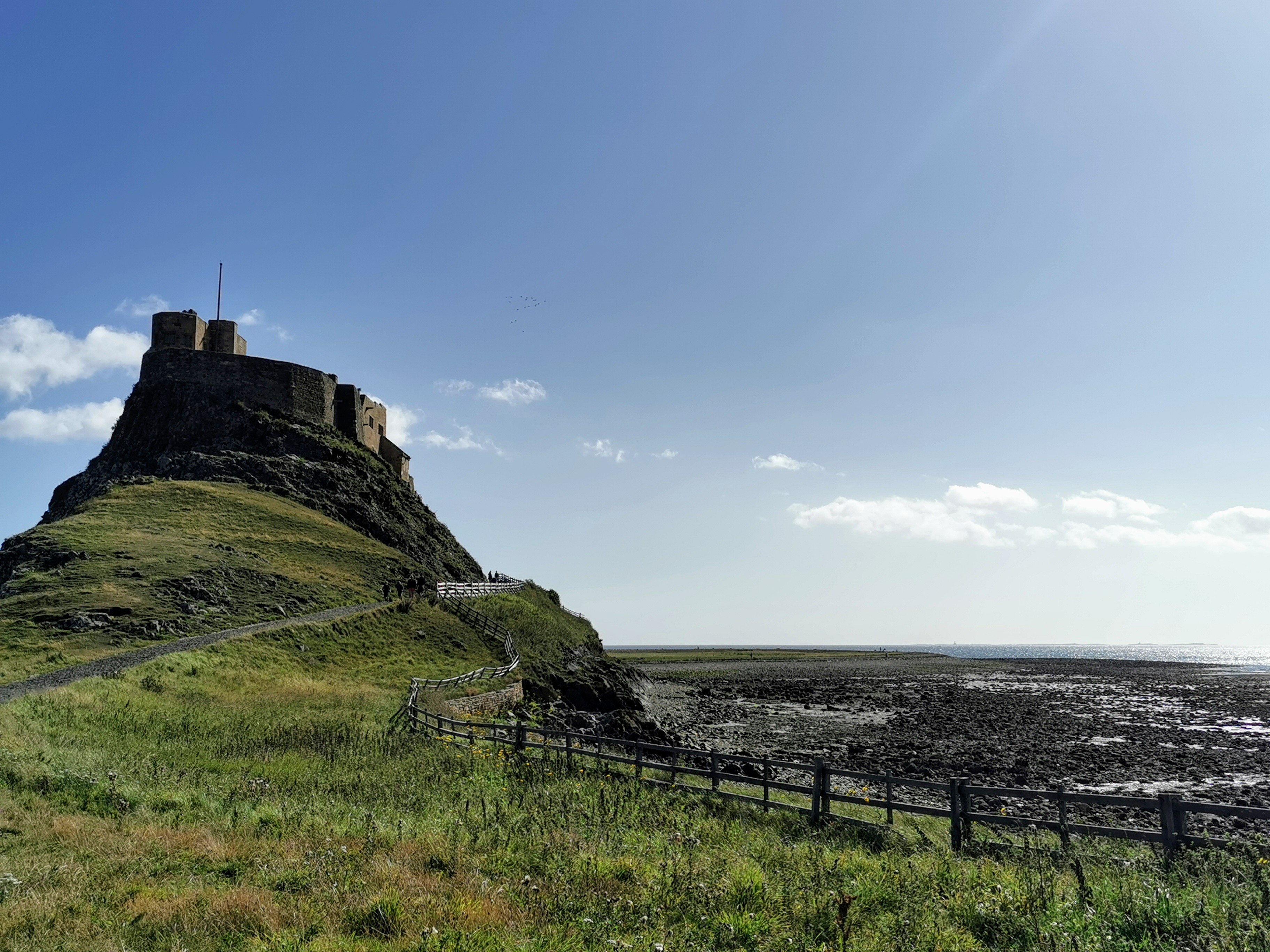
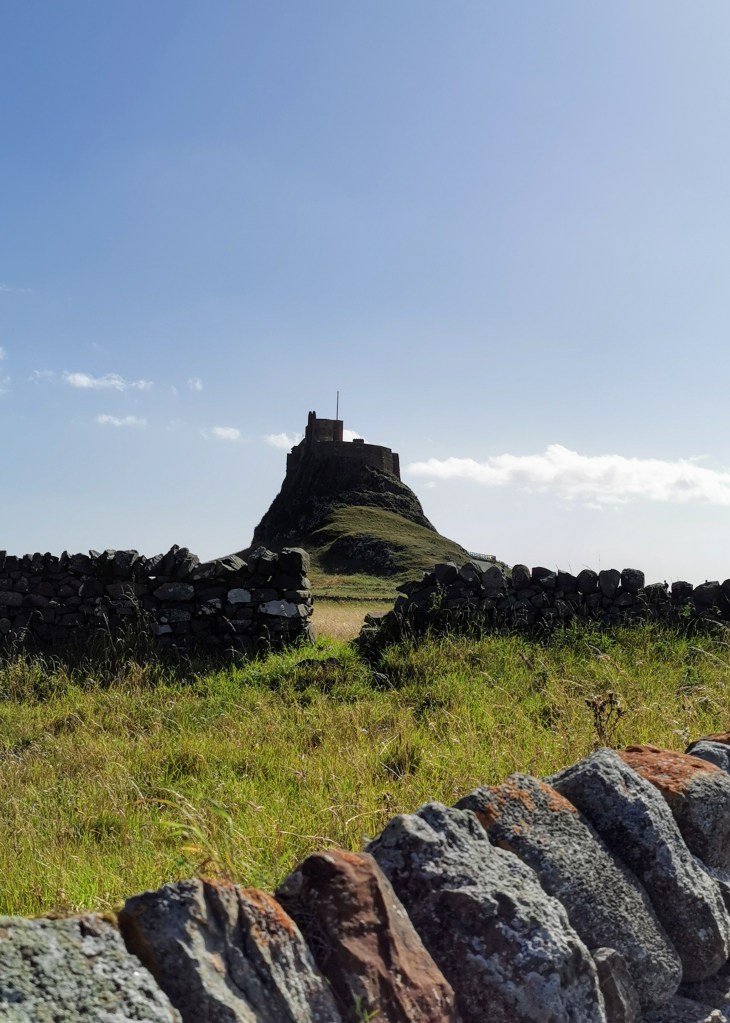
On the island there’s an ancient priory built in 634 and a castle that’s modern by comparison, dating from 1550. A scenic circular walk around the bay takes in both, and also the island’s small settlement of around 180 people. They must long for the tide to come in sometimes, because we’re amazed by the number of visitors streaming across from the mainland to disrupt the peace and quiet. Where do they all go and what do they do? There are only a handful of pubs and shops to visit. It’s probably advisable to come to Holy Island outside of peak holiday times. Thank goodness we came early.

We leave the island, marvelling at the long line of cars queuing on the causeway. It feels like everyone who can’t go to Mallorca this Summer is here instead. We’re quite relieved to be leaving! Our next stop is the county town of Northumberland, Alnwick (pronounced Annick just to cause confusion). It’s just a small market town with lots of tea shops, but it does have a major claim to fame.

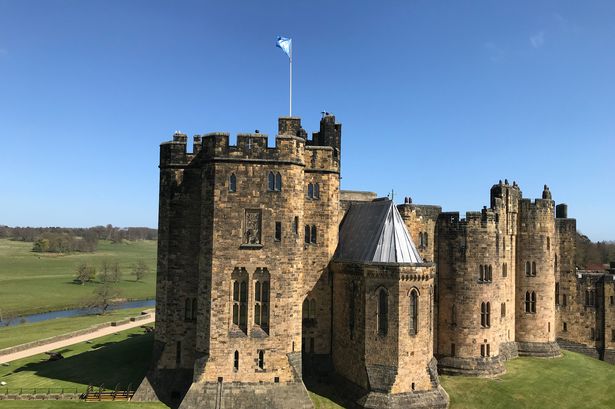
Built in the 11th century and home to the Duke of Northumberland, Alnwick Castle is better known as Hogwarts. Sadly, it’s closed today, so we can’t take a broomstick riding lesson, I’m sure the husband would have loved that. Instead we wander around the medieval town centre. There’s a small outdoor market going on and lots of pensioners drinking tea in the sunshine. We’re transported back to the 1970s. That’s England for you!

Battlesteads Hotel and Restaurant, our abode for the night, is sadly underwhelming. Continuing the 70s theme, I feel like I’m at the Crossroads Motel. We follow pokey corridors to an empty reception, and are given the key to room 11, overlooking the car park. Our run of luck is broken, things are back to normal. We’re a bit flummoxed by the excellent reviews on Trip Advisor. Compared to where we’ve stayed lately (for a similar price) this is decidedly drab.

But you know me, there are always positives to be found. I take a leaflet about local walks from reception and realise we can do a nice 5-miler along the Tyne river and back through farmland. After a large breakfast and a huge lunch, I need some exercise before the inevitable massive dinner.

Is it just me, or is anyone else humming Fog on the Tyne at this point? Although it’s actually a lovely sunny afternoon, great for walking.

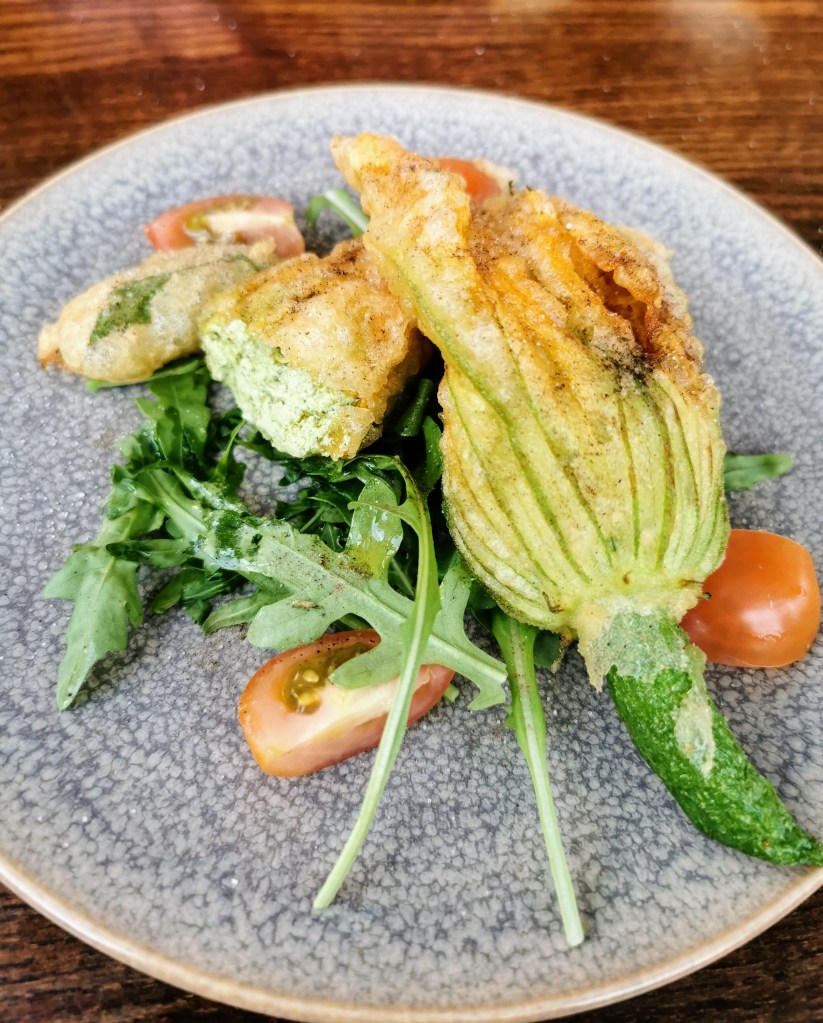
The other good thing about Battlesteads is the food. Their stuffed courgette flowers in particular make me feel very happy, but everything we order is really tasty. It’s just a pity about the service, which starts off being rushed and then peters off into non-existent. It would be nice to be offered more drinks or coffee, but we get fed up of waiting and go to bed early instead. Could do better!

We’re up and about early the next morning, not least because the chef at Battlesteads is in a rush (again) to get the food out on the tables. Breakfast is yummy but not very relaxed. I wonder why they do this? Anyway, we’re happy enough to leave, this hasn’t been our favourite stop.

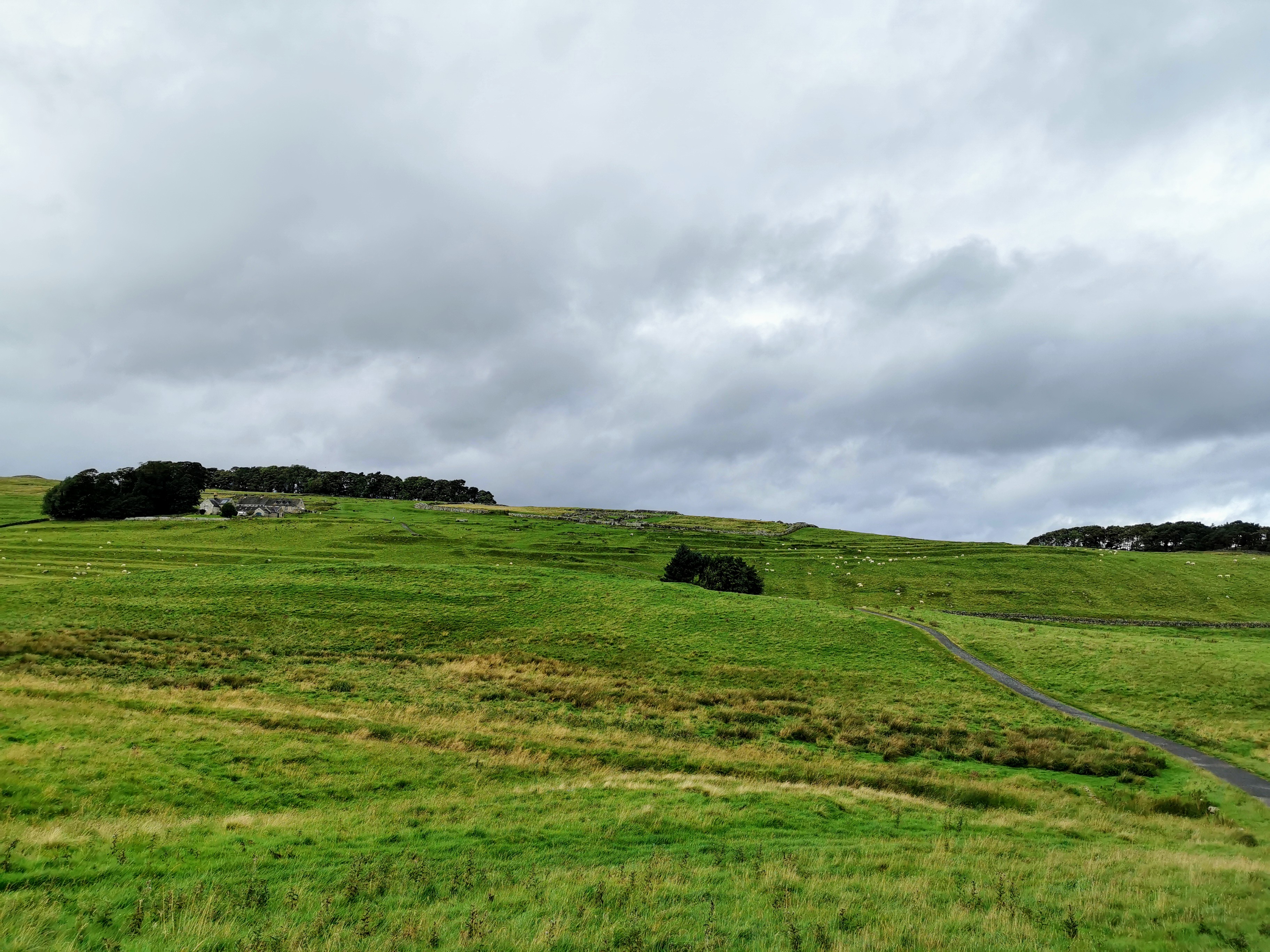
Lulled into a false sense of security by yesterday’s clement weather, I’m wearing shorts. I’m on holidays after all and the eternal optimist. In fact looking through my case I think I forgot that our trip to France was cancelled. No coat, no brolly, no sensible shoes. Unfortunately, grey skies do not bode well as we head south and inland towards the UK’s answer to the Great Wall of China (sort of). I could be on my way to a serious wardrobe malfunction.

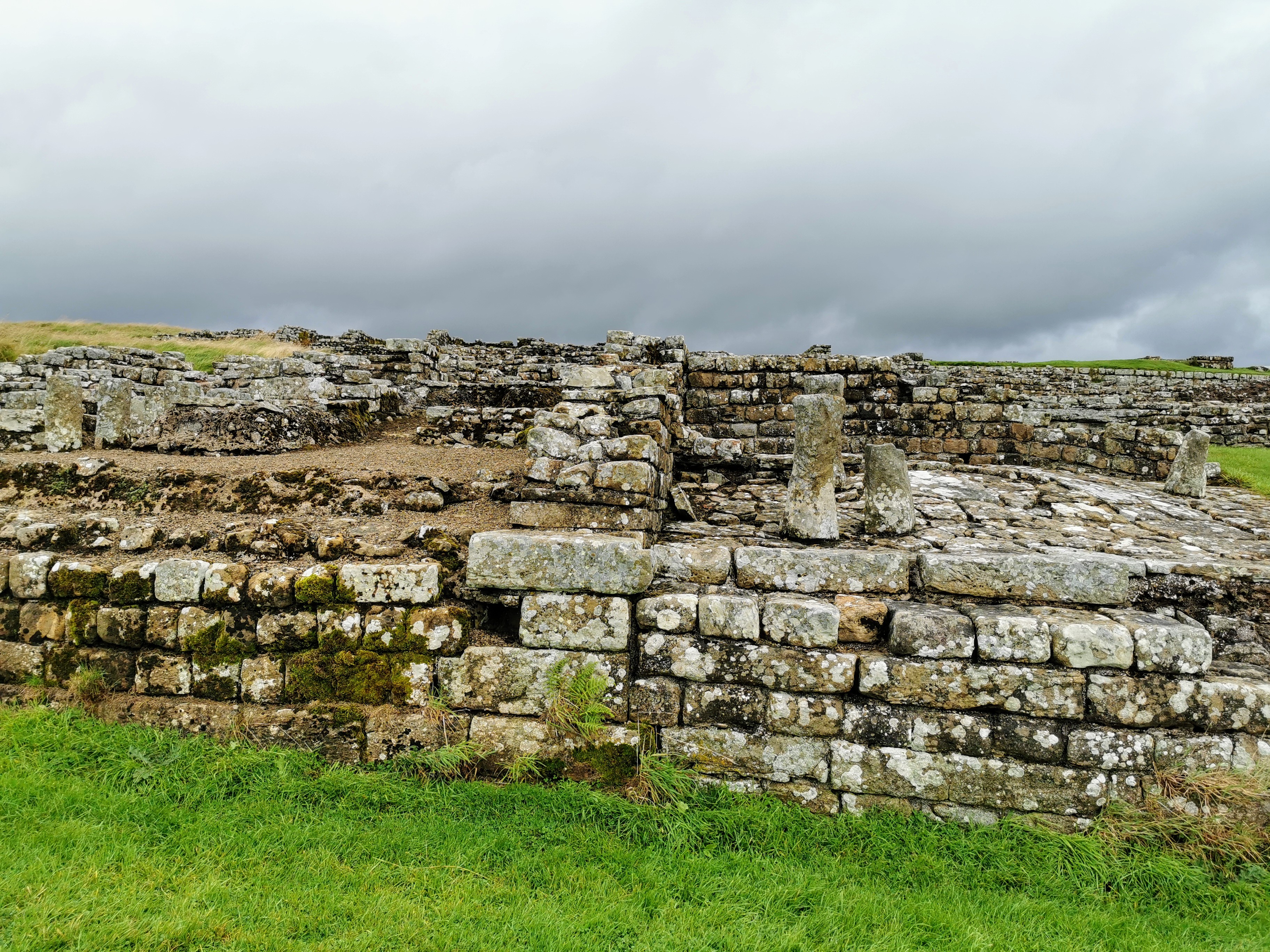
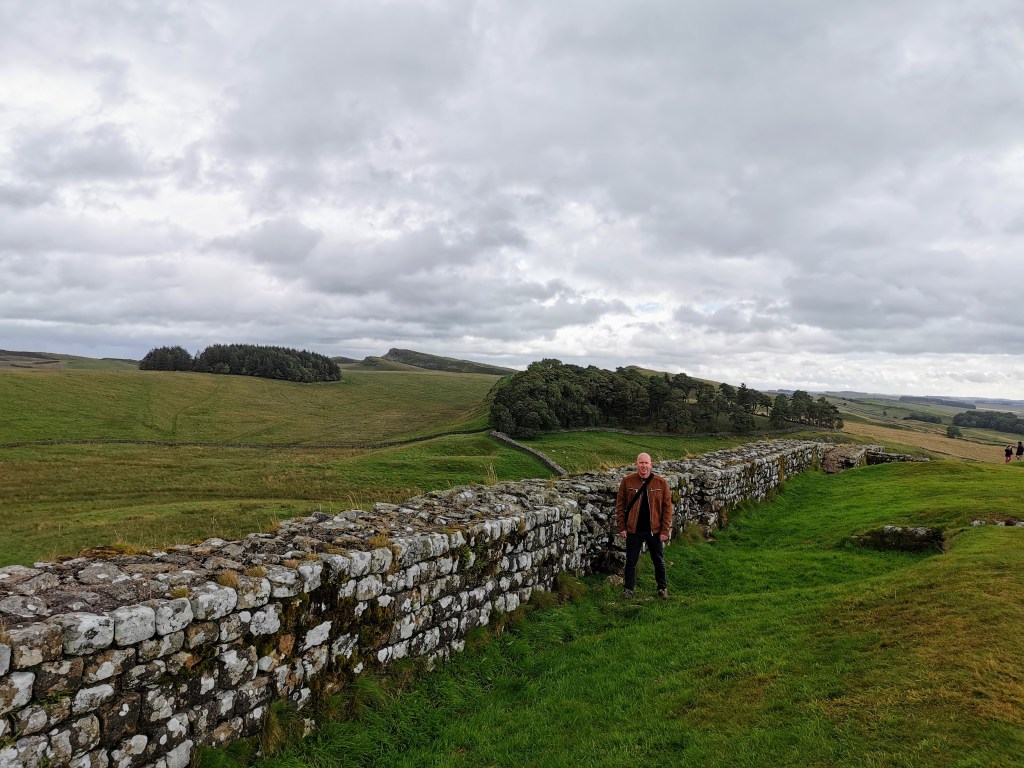
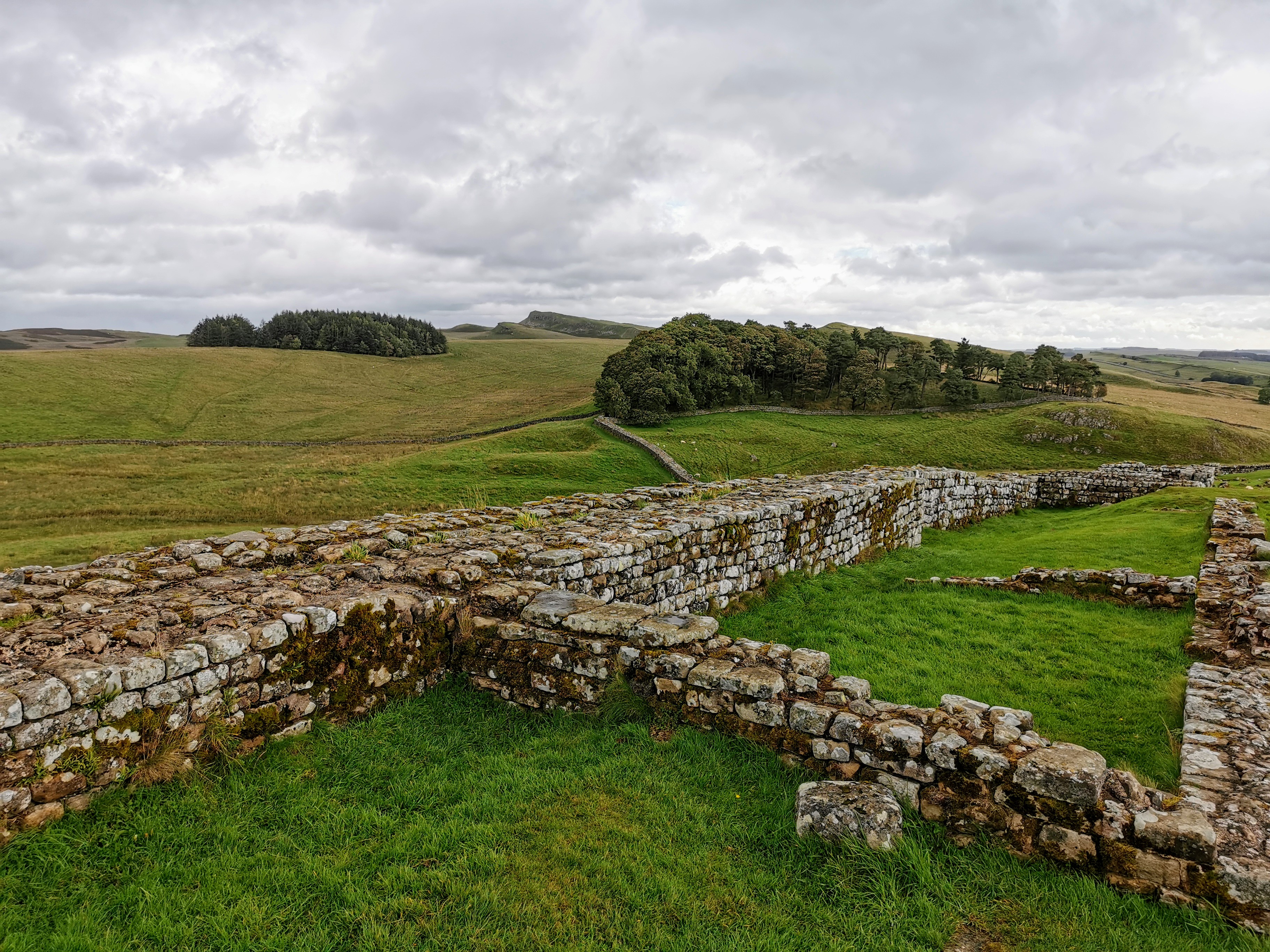
Hadrian’s Wall was constructed on the orders of the Roman Emperor in 122 AD to mark the northernmost border of the Empire. It was made of stone and turf, with a maximum height of 4.6 metres. Amazingly, it only took six years to build a wall right across the country, from coast to coast. Maybe Crossrail needs some Romans!

Although this stone barrier was impressive and manned by military garrisons, it probably wasn’t built to keep out those ‘barbarians’ to the north (sorry Scotland). The wall gave the Romans control over their dominions and enhanced their reputation for great works. In other words, it helped to keep the English folk in line. Crafty!

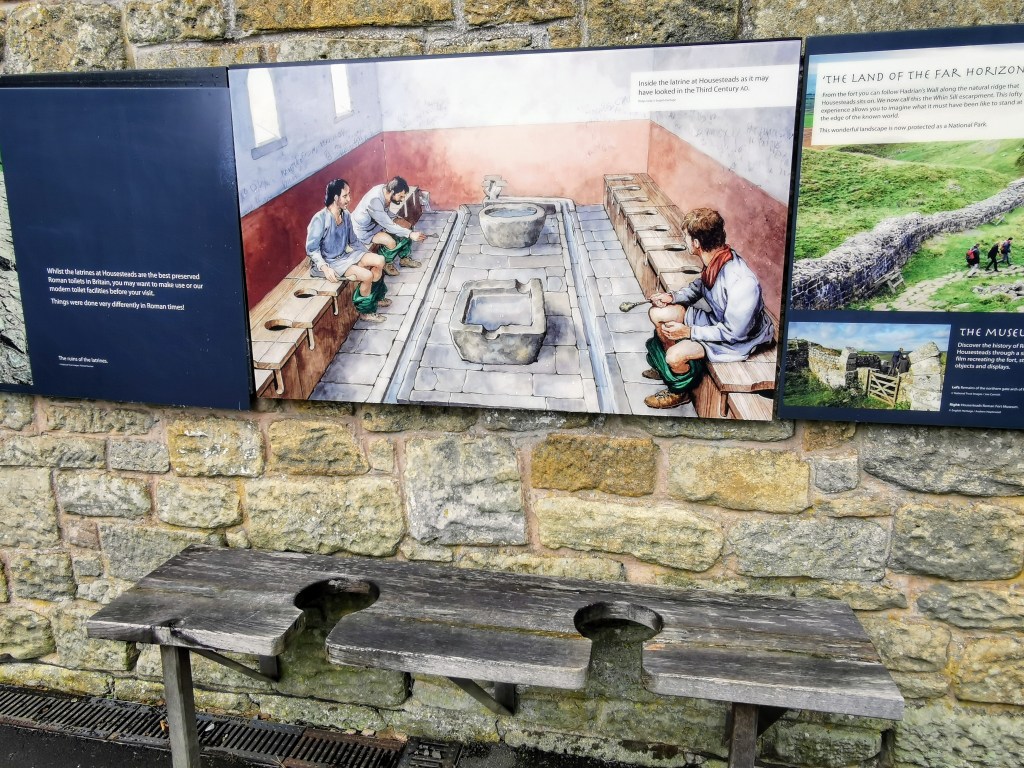
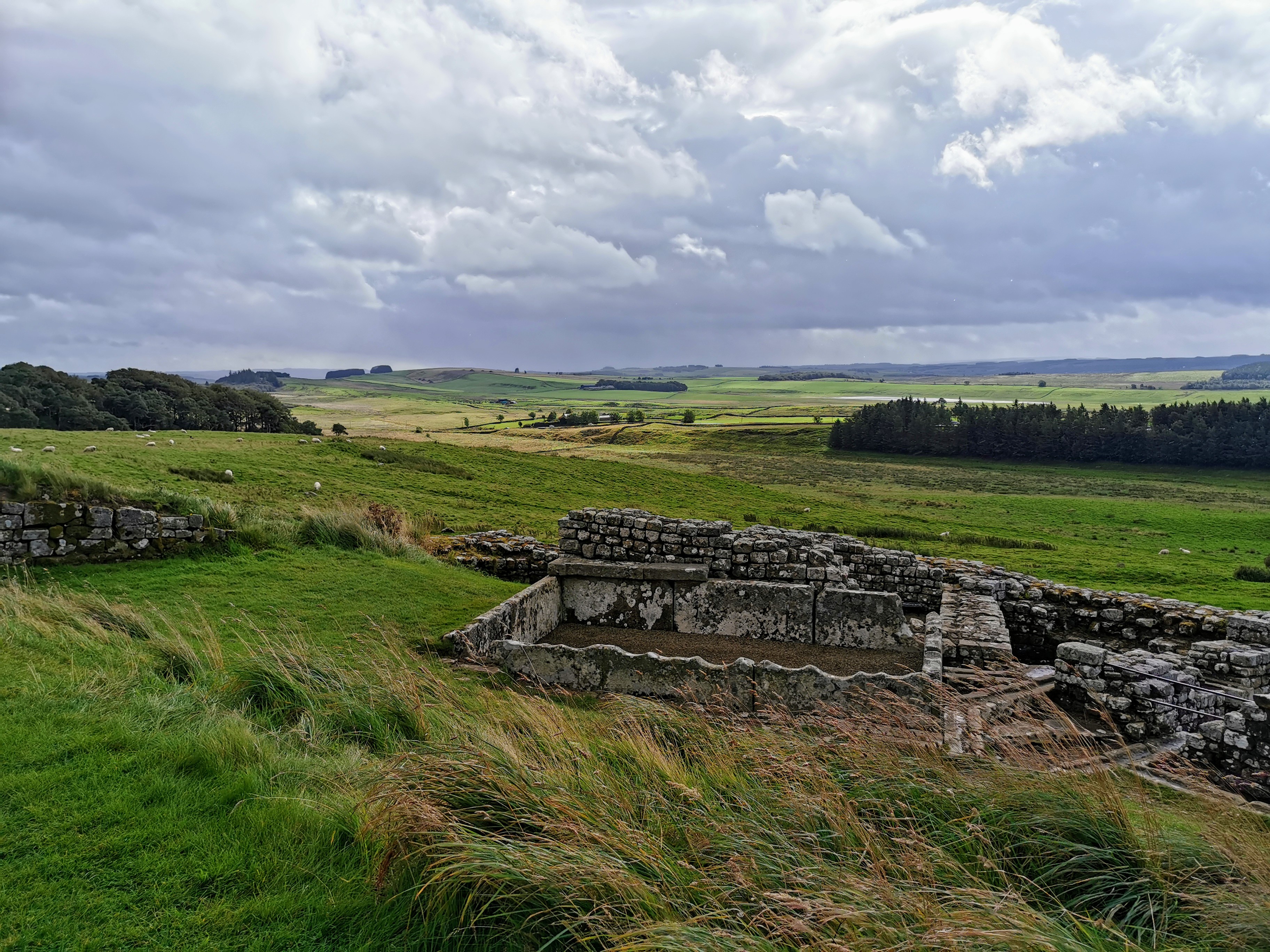
Exploring the ruins of the Housesteads Fort that adjoined the wall, you can’t help but be overawed by the organisation and workmanship of the soldiers who built these structures so long ago. You may also want to visit the best preserved Roman communal toilets in Britain, which apparently still flush when it rains. Although the image below contains a bit too much information for my liking…the spoons, ugh!

Despite evermore leaden skies, the rain has held off thus far, but as we’re leaving it starts to come down in earnest. Maybe wearing shorts wasn’t the best idea. A visit to Hexham is jettisoned – we can’t bear the thought of a wet and miserable afternoon. Well, we can’t claim to be too surprised. This part of the country is not renowned for great weather.

We’re enjoying our coronavirus-induced staycation. Travel in the UK has many plus points – the scenery, the history, the pubs. But it would definitely have been warmer on the Cote D’Azur!

Travels in the North – Berwick

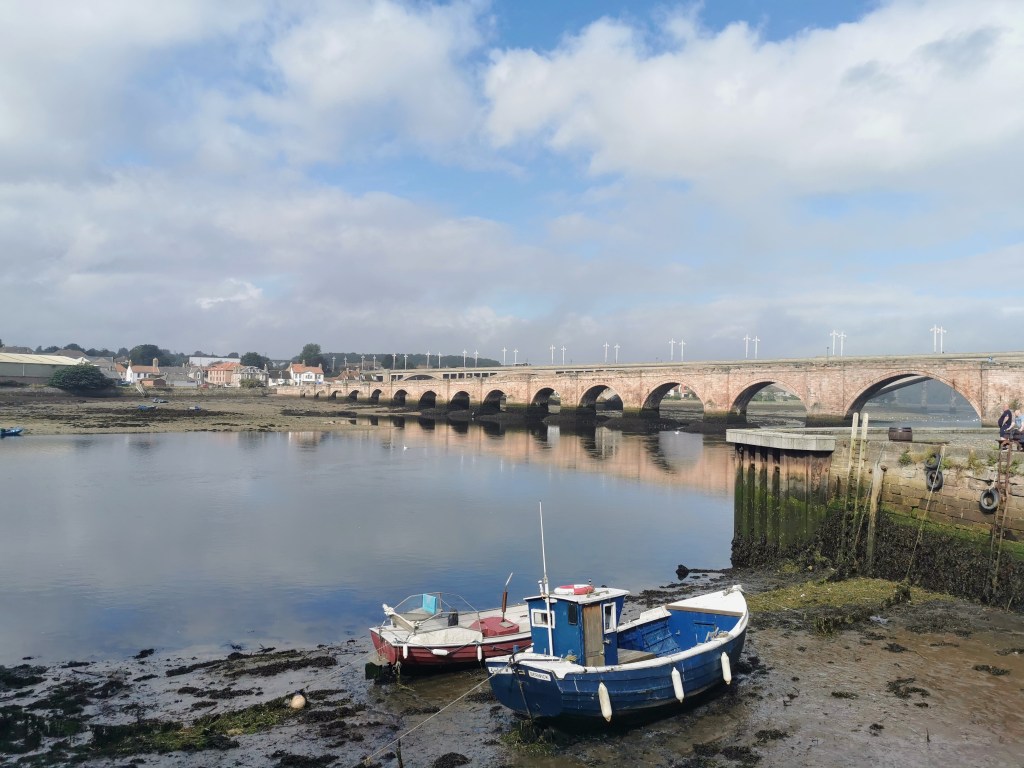
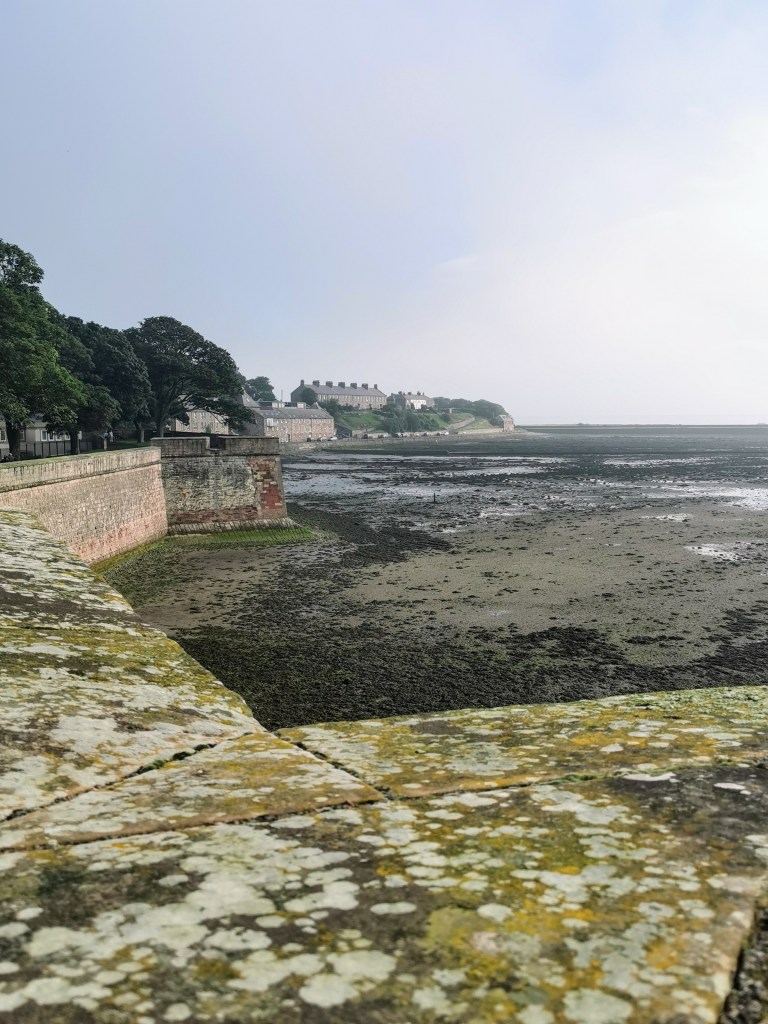
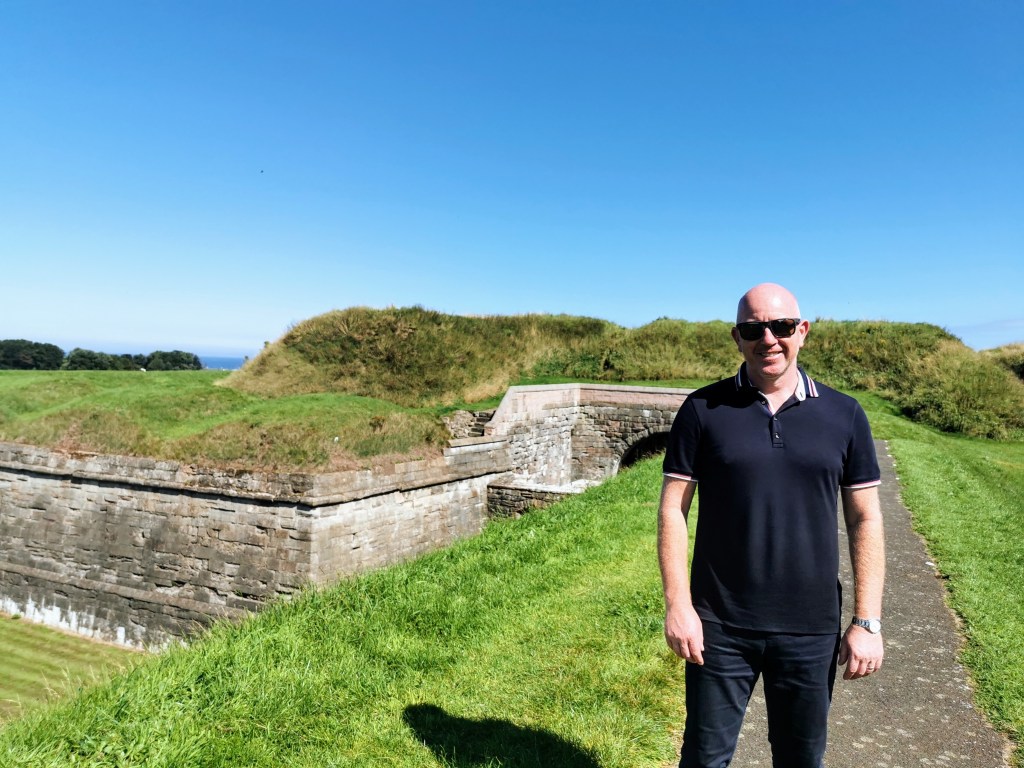
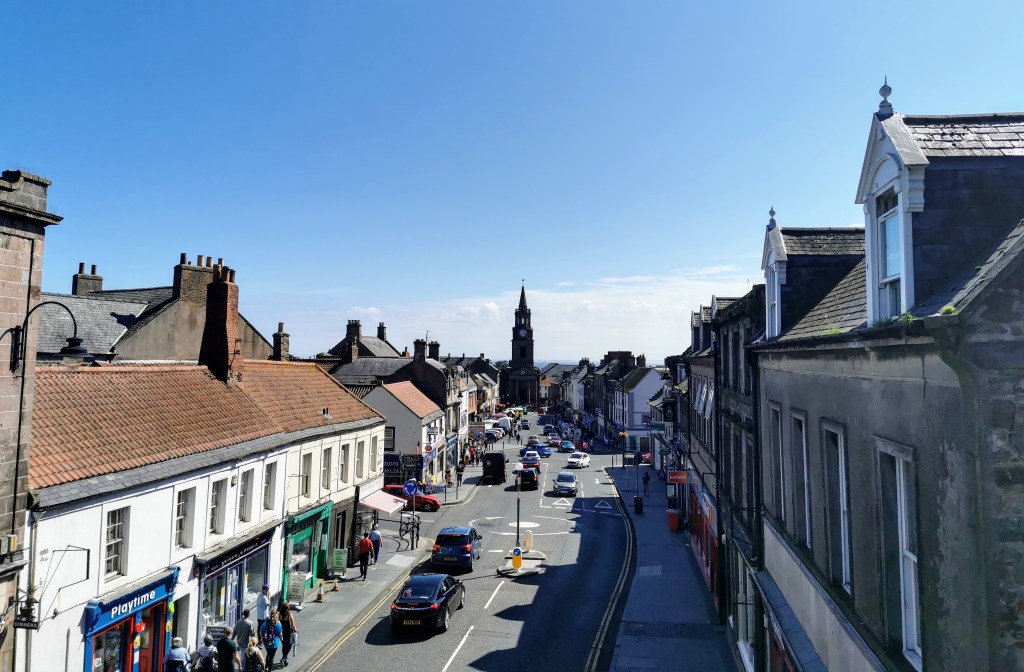
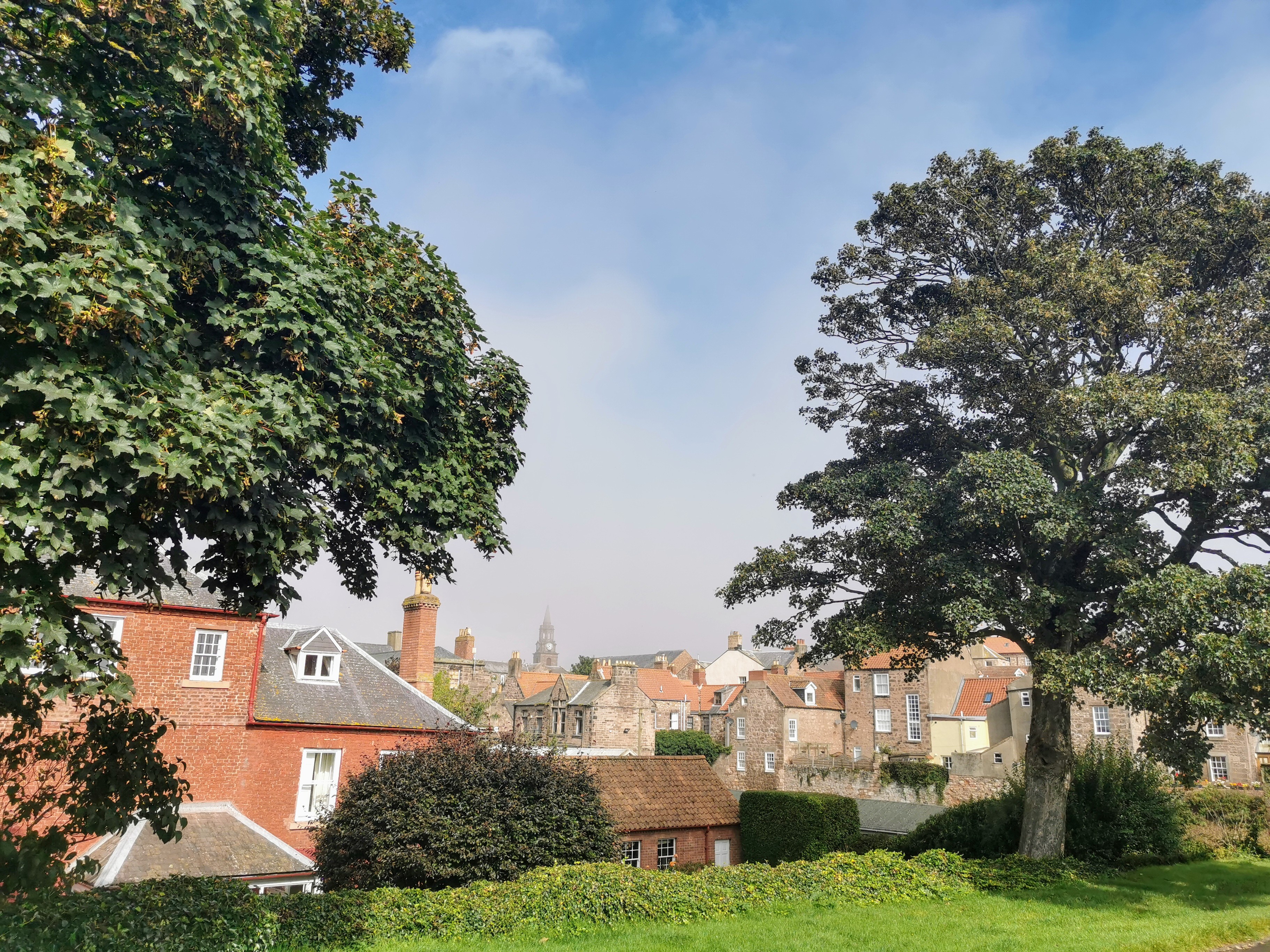
The English and the Scots fought for centuries over Berwick-upon-Tweed, so I figure it has to be worth a visit. The northernmost town in England sits in a strategic position where the River Tweed meets the sea. Berwick’s role as a border fortress led to enormous sums being spent on fortifications during the reign of Elizabeth I. Amazingly, the most expensive building works of the 16th century are still in existence.

We arrive mid-morning and park on the quays above the river, where a baby gull is squawking loudly for food. The Old Bridge over the river dates from 1611, relatively young by local standards! It promises to be a nice day, 19 degrees, perfect for walking around those Elizabethan walls! So off we go…

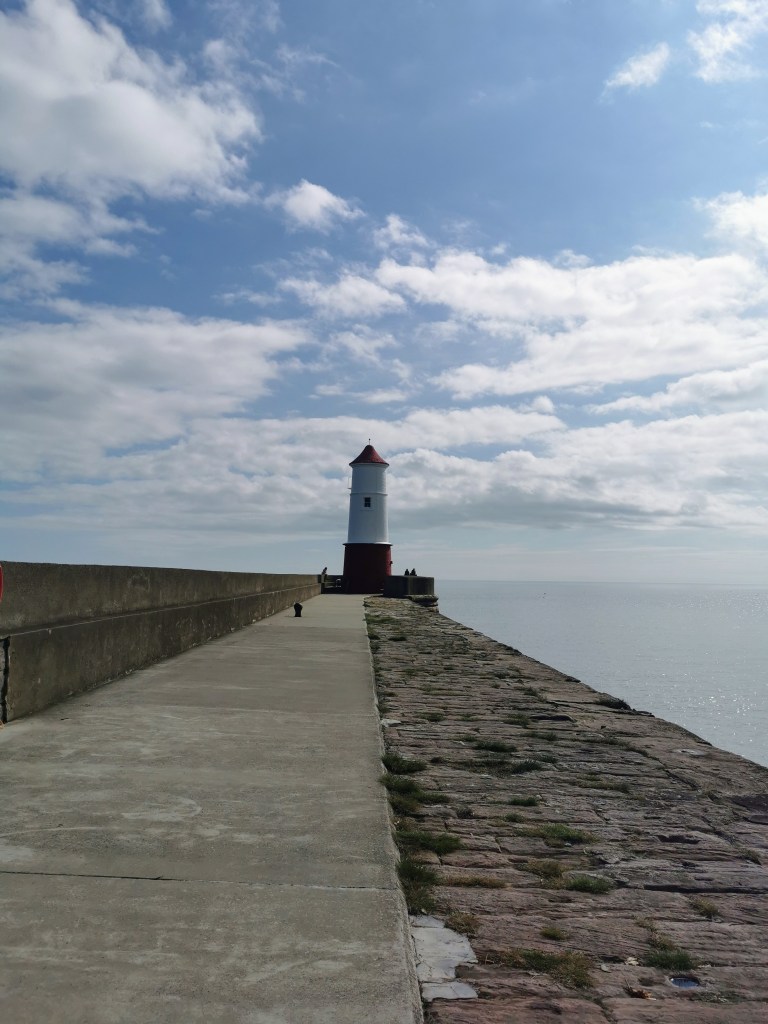
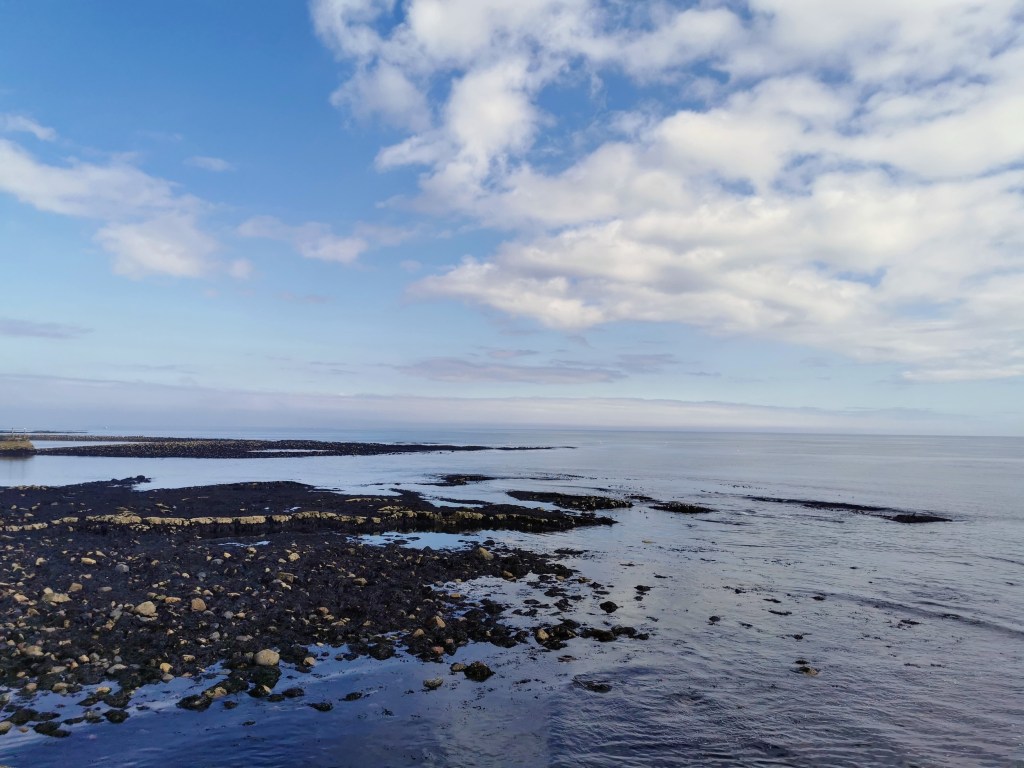
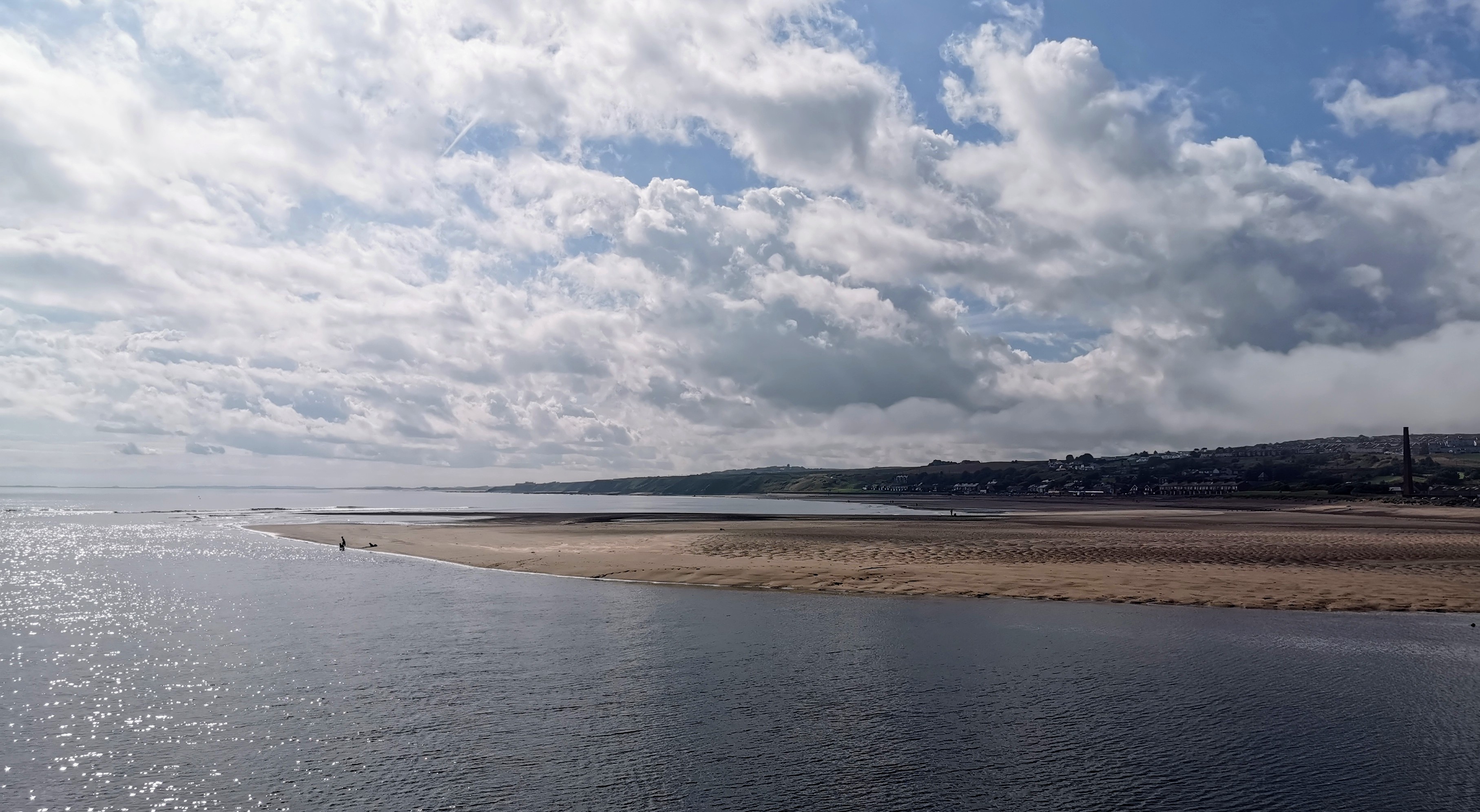
Berwick is absolutely made for walking, and the sun has come out, which means the views are stunning. We walk out along the pier to the lighthouse, a brisk half mile in distance. Unfortunately the dolphins are elusive today but the outlook down the Northumberland coast is tremendous.

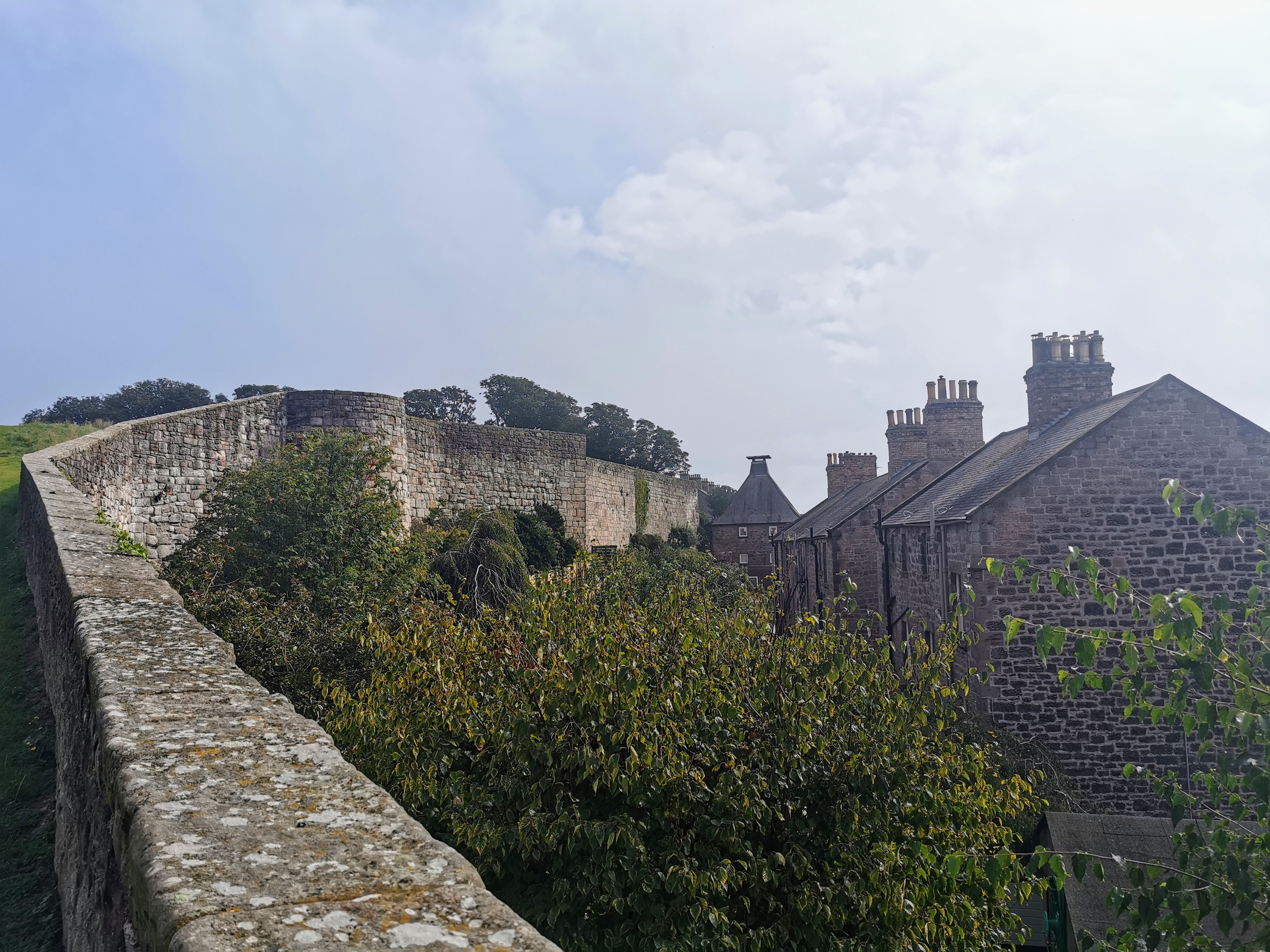
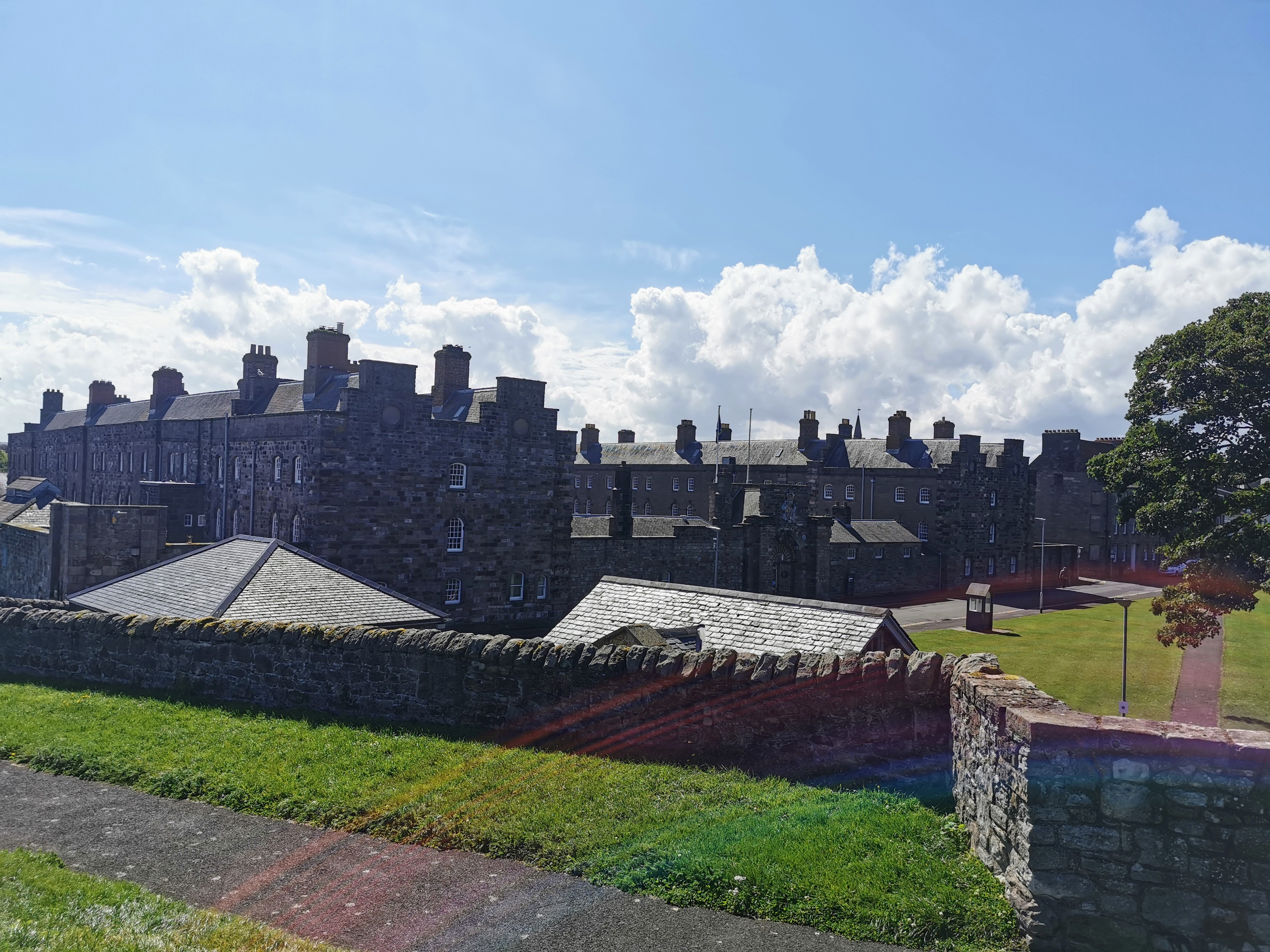
Back on the walls, we circumnavigate the town, getting a good idea of the layout. Well, I do anyway, the husband could get lost anywhere – map reading is a dark art to him. Most of the main sights of the town can be seen by strolling around the ramparts, including the Georgian Town Hall and the oldest military barracks in Britain.

Berwick today is just a small and sleepy market town with around 12,000 inhabitants. You wouldn’t believe that it was once a wealthy centre of commerce, and pivotal to the power battles that raged across the border.

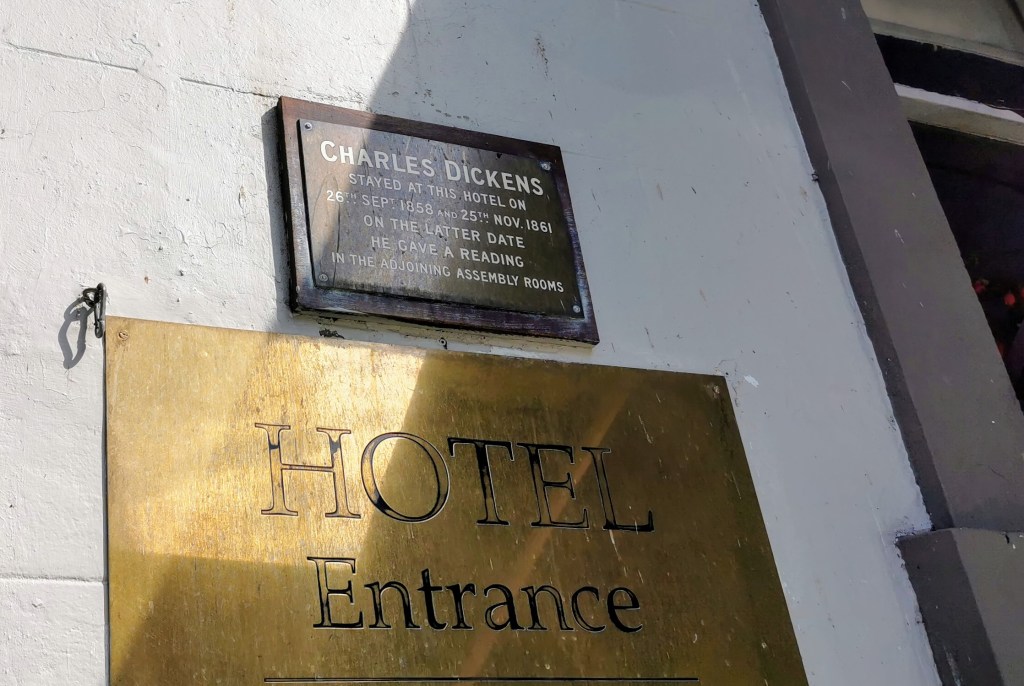
There are some interesting shops and galleries in the town, along with the usual dreary chains, and a good selection of pubs and restaurants. You can even walk in the footsteps of Charles Dickens at the King’s Arms Hotel on Hide Hill – he stayed here in 1861. We do, of course, it’s a great excuse for a gin and tonic.

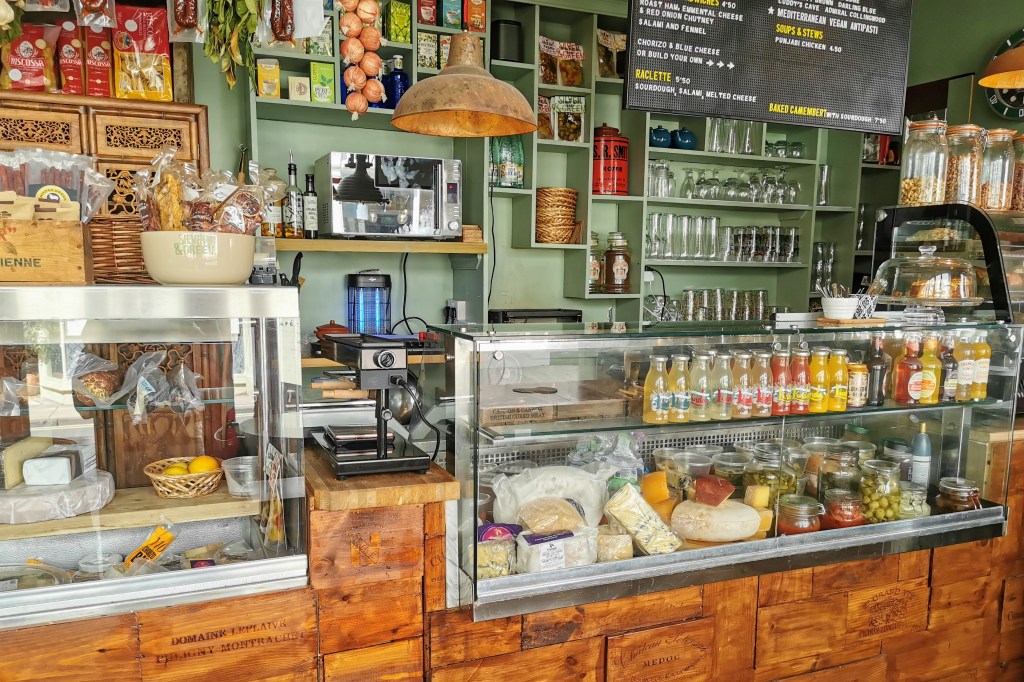
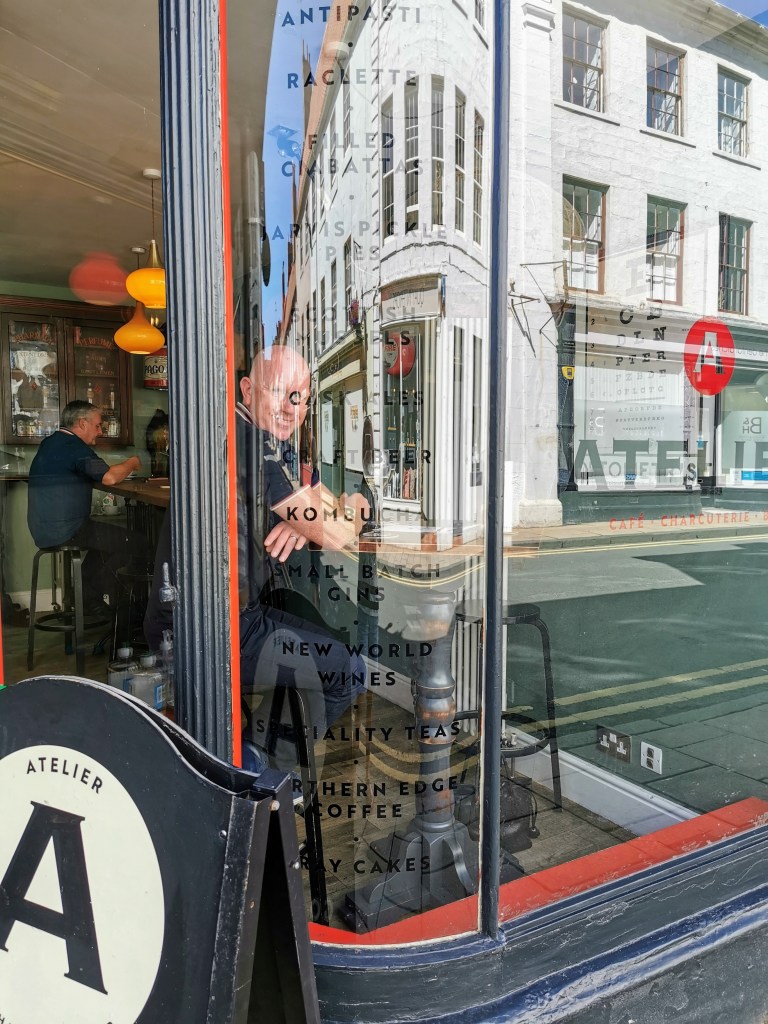
For lunch, we decide upon the stylish looking Atelier bar and deli, and try a local pie by the Jarvis Pickle company based just over the border in Eyemouth. ‘Cullen skink’ filling comprises smoked haddock, potatoes and onions, and very tasty it is too.

As we sit and finish our wine the owner of Jarvis Pickle Pies turns up in his delivery van. Turns out he and his business partner named the company after their cocker spaniels. Pickle the dog is smiling at us through the van window. I like these pies even more now!

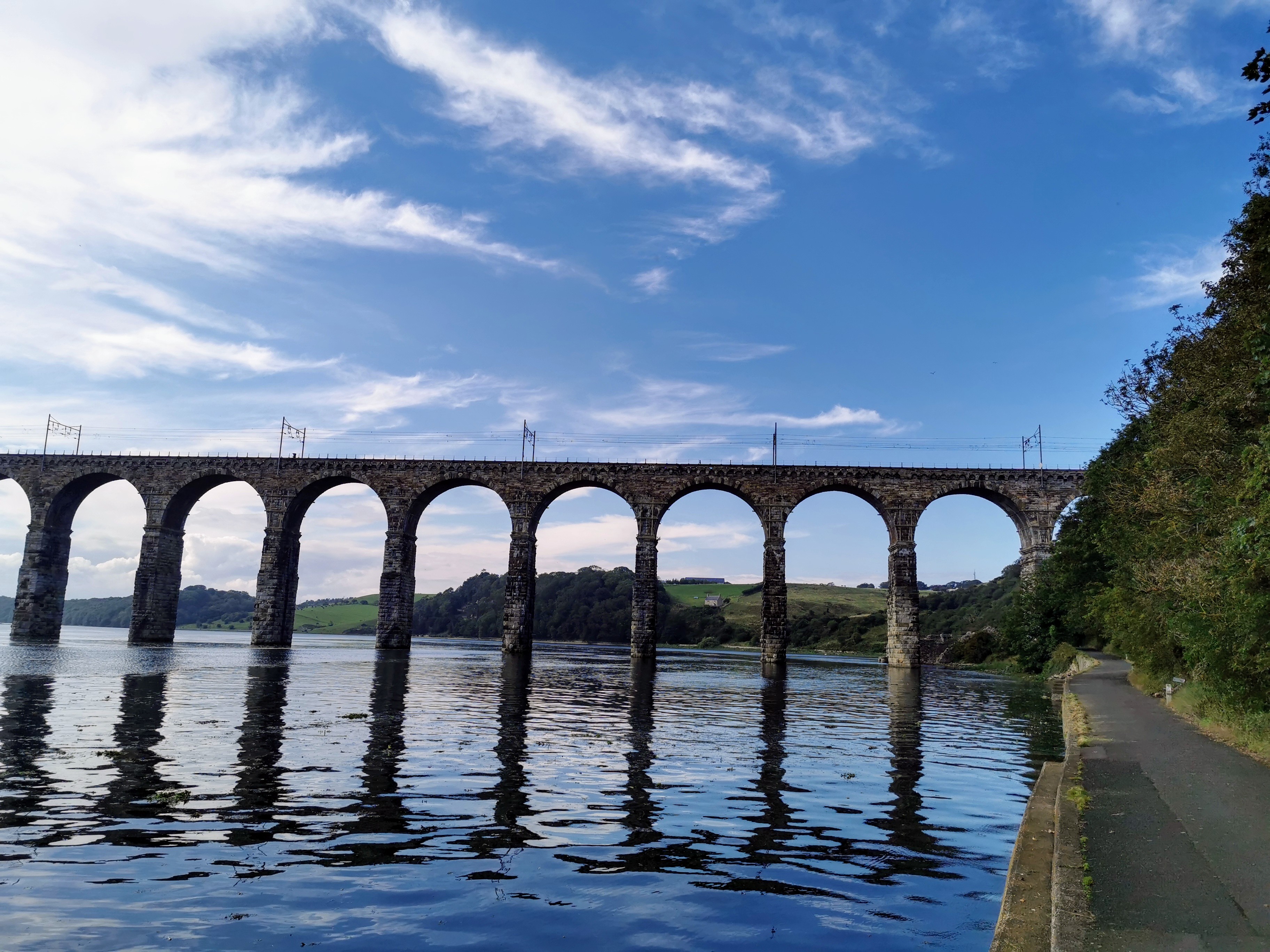
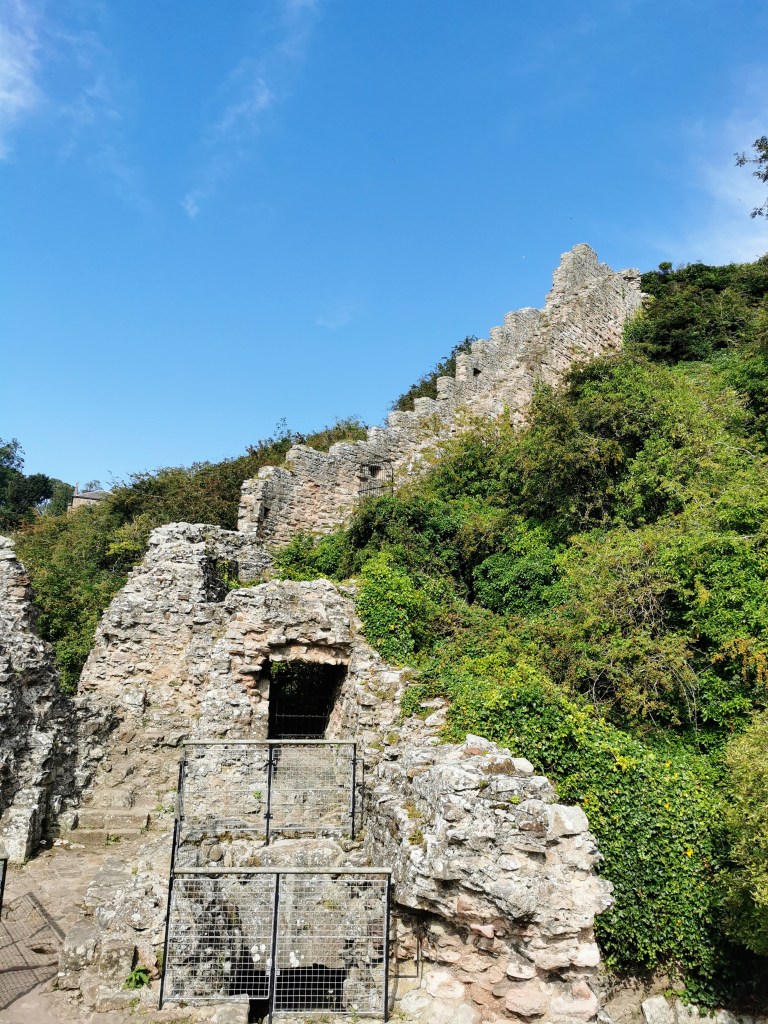
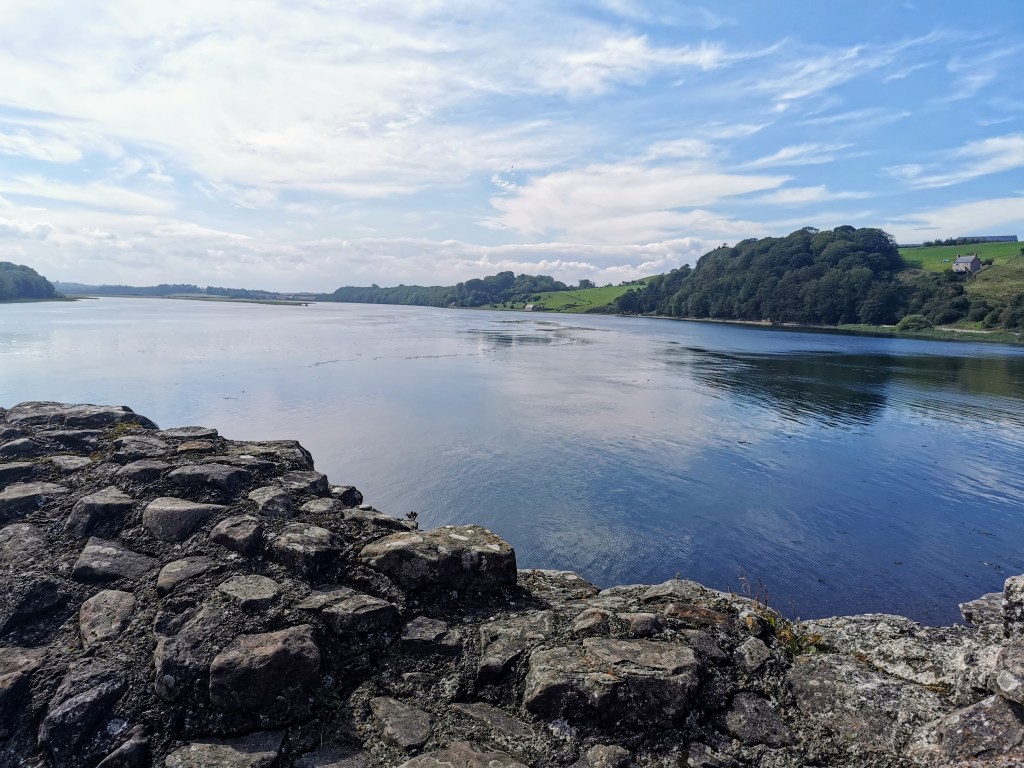
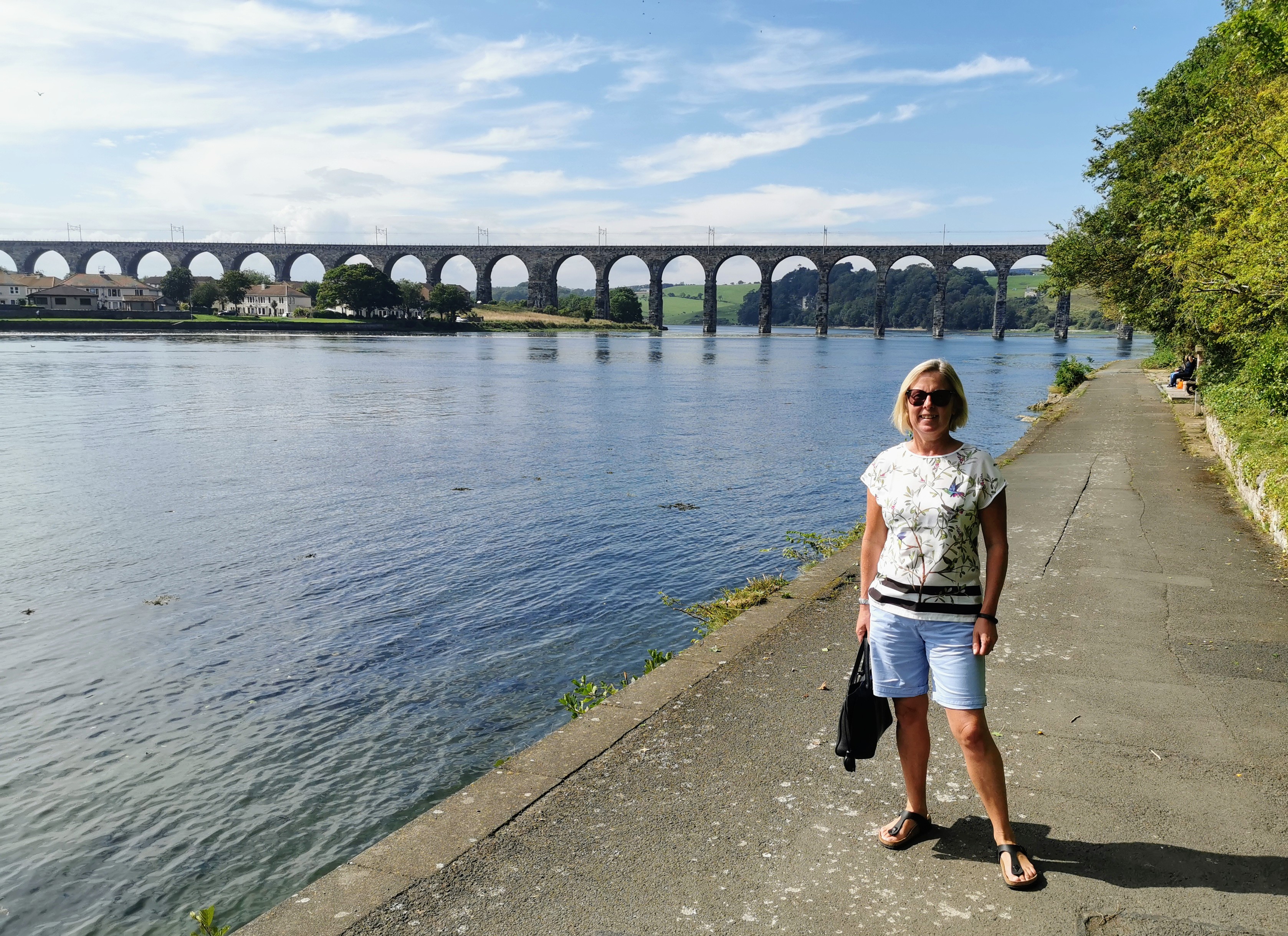
After lunch we take the riverside path along the Tweed to the ruins of Berwick Castle, and admire the 28 arches of the Royal Border Bridge, a railway viaduct designed in the 1840s by Robert Stephenson, and opened by Queen Victoria.

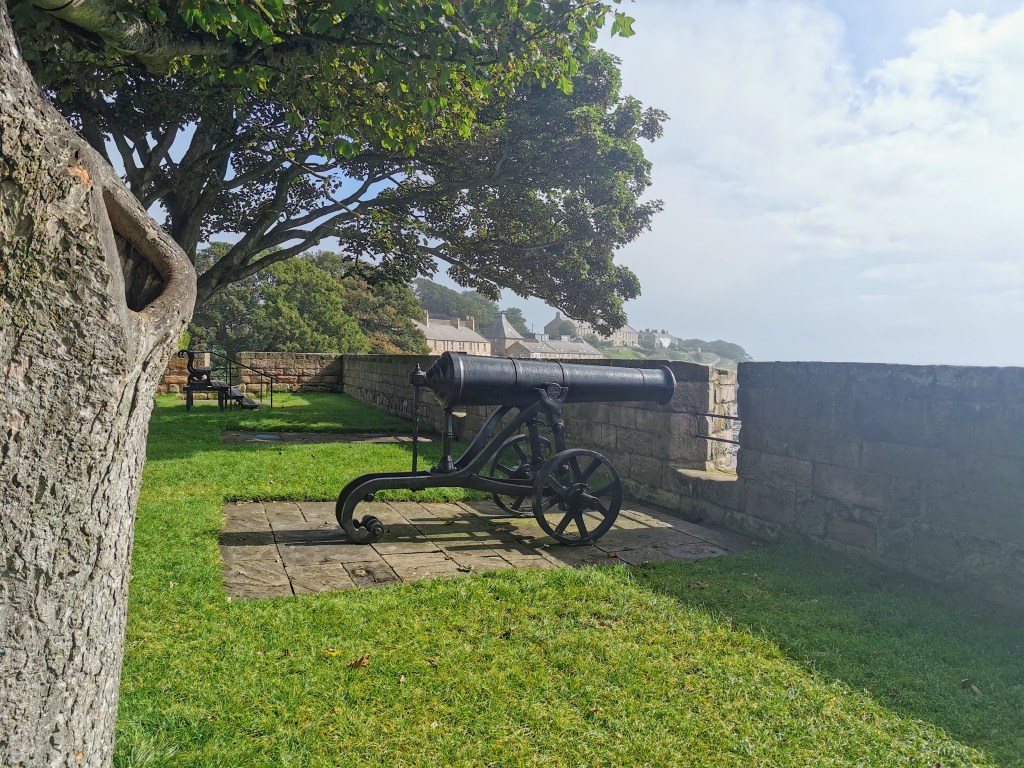
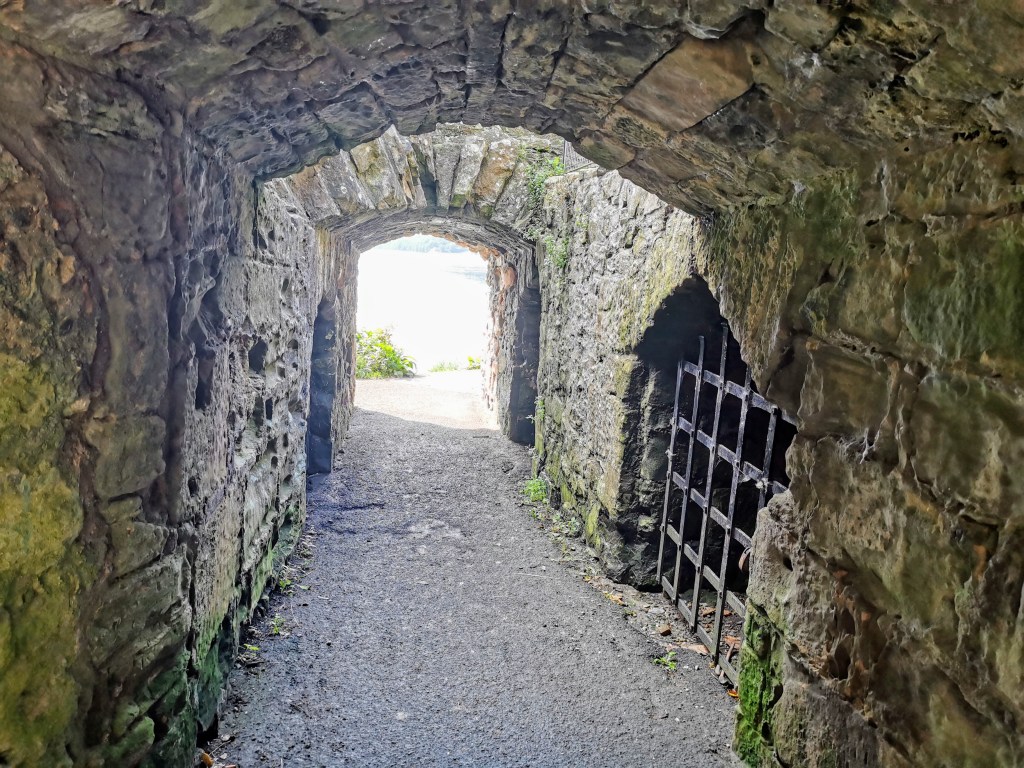
The Castle itself, or what remains of it, dates from the 12th century. It’s location in the disputed border country made it one of the most important fortresses in the land. Once the walls around Berwick were built it was no longer needed, and so sadly it fell into decline. Regardless, it’s a lovely spot. We walk back into town through Castle Vale Park and past the bulk of Meg’s Mount, one of the bastions of the fortifications, named after ‘Roaring Meg’, the cannon that was once mounted here.

We have pre-dinner drinks in the Brown Bear Inn, refusing to be put off by the yellow tape around each table which give it the air of a crime scene. The barstaff are ever so friendly, which makes up for their intimidating coronavirus measures. As I’m walking out, a guy down the road shouts out ‘If I was a single man…’ The husband is less than impressed, but I’m secretly quite pleased. Obviously, the locals are pretty discerning around here!

Dinner at the Queen’s Head Hotel is a strange mixture of olde worlde service, cracking food and a constant barrage of Mick Hucknell. I like Simply Red, but seriously, their whole back catalogue in one evening? My starter of beetroot sorbet with pickled root veg is really unusual, in a good way. I can never resist beetroot on a menu – it’s the taste of childhood, although Mum never made me a sorbet. Our verdict – full marks for grub, but the ambience needs a bit of work.

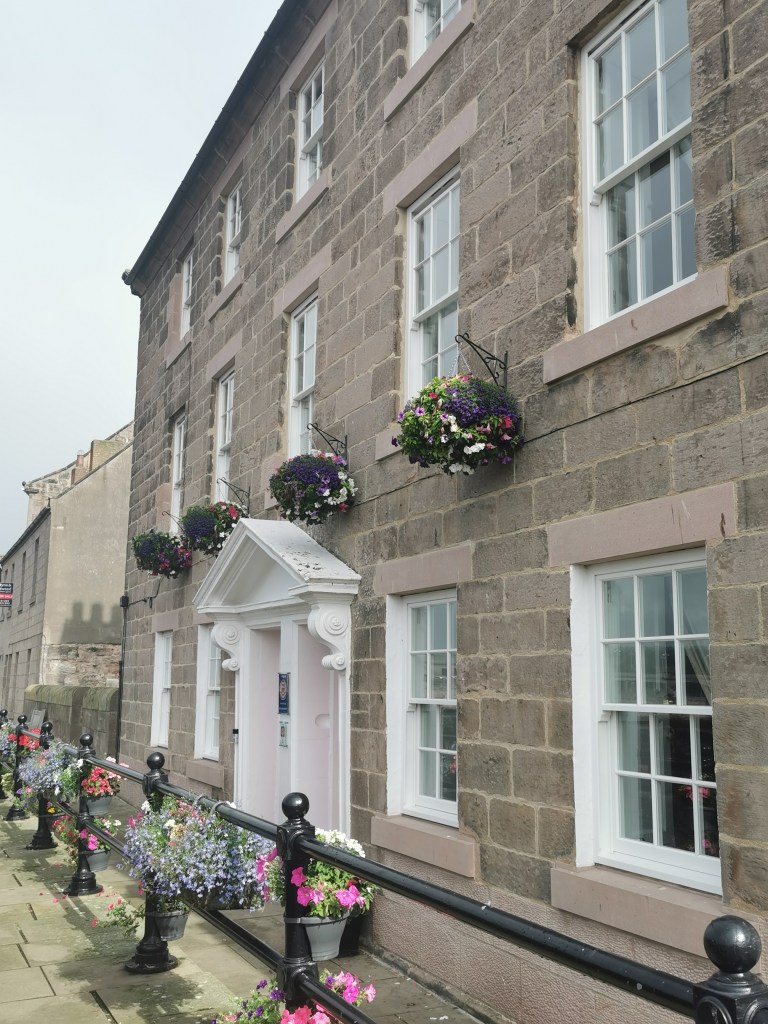
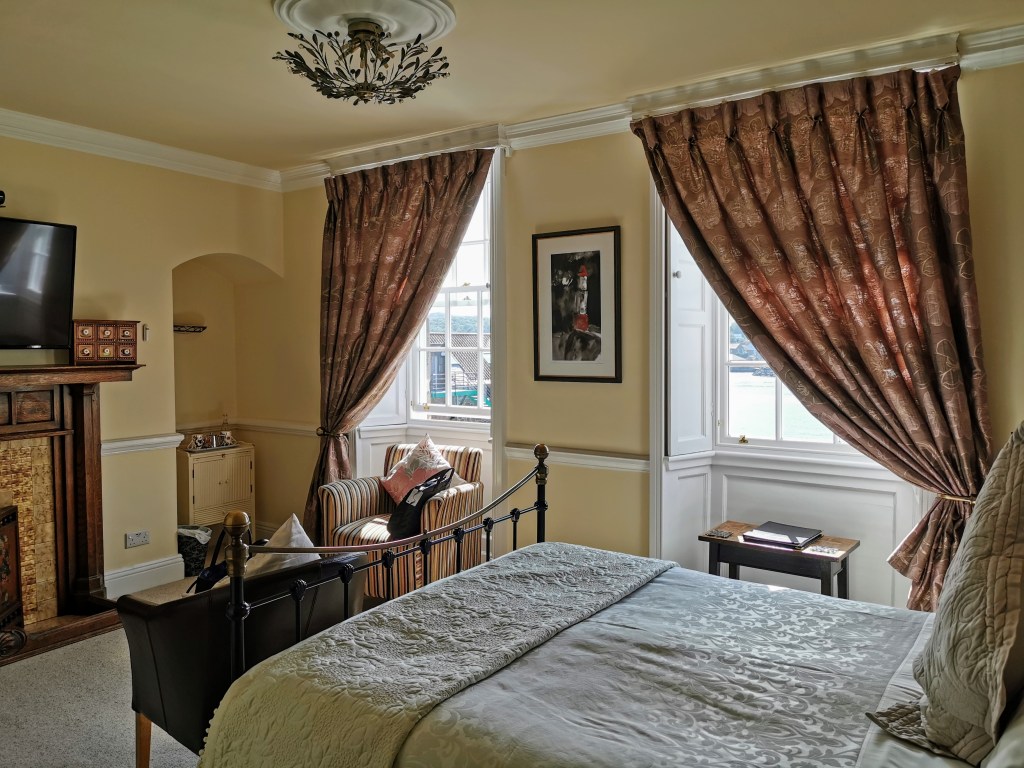
Our base in Berwick is The Walls, which unsurprisingly is situated right on the fortifications. A B&B with just four rooms, it gets top marks on Trip Advisor, and I’ve been impressed by communications giving directions and restaurant recommendations prior to our arrival. Our room has a view of the river, rather than our usual car park vista, hurrah!

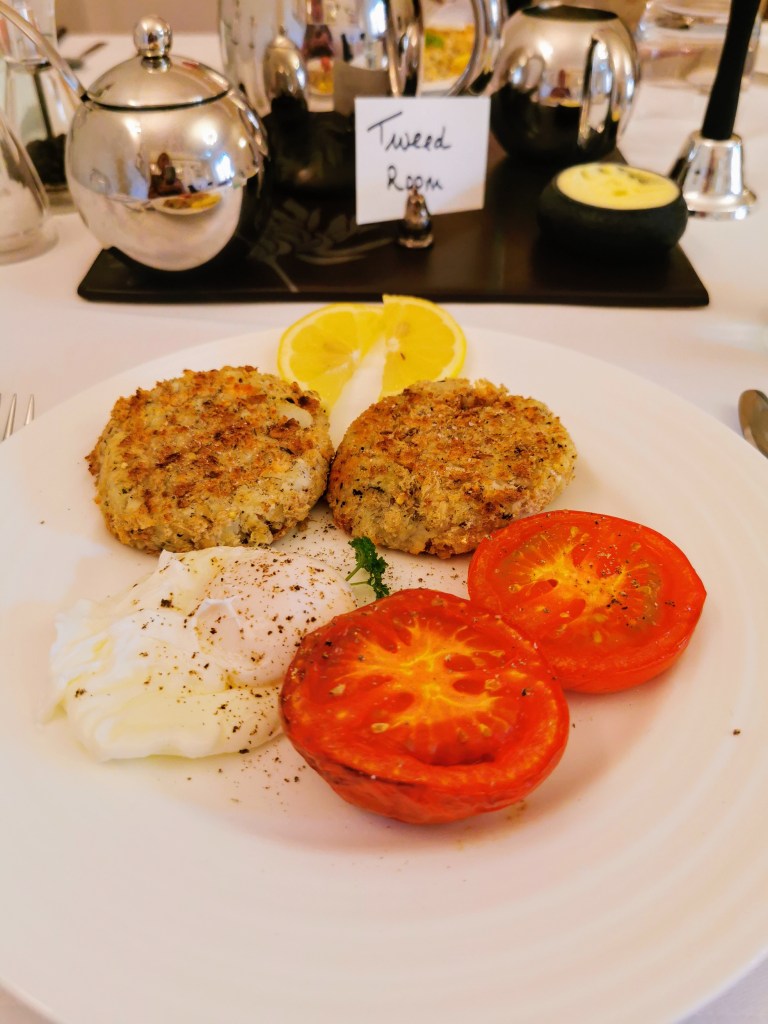
Greedy as ever, I’m particularly impressed by the offer of homemade fishcakes for breakfast – made of three different types of fish, no less, fresh from the fishmonger in Eyemouth. I don’t think I’ve ever seen them on the menu before at this time of day, and they are scrumptious.

It may have a ferocious past, but Berwick today is a bit of a pussy cat. If, like me, you travel mainly to walk and to eat, it should be on your list.

Travels in the North – Stockbridge

There’s always something new to discover in any great city, so we’re making the trek up to Edinburgh again with high hopes. However, we arrive feeling grumpy – the rain has been biblical all morning, making our scenic coastal drive a total washout. The most entertaining part of the journey is gaping at the hordes of schoolkids queueing outside the chip shops – we haven’t seen such a crush of humanity since coronavirus hit.

Hopefully our stay in the trendy suburb of Stockbridge will cheer us up. It’s my first time in this part of town. The husband has been on a Stockbridge pub crawl, so his memories are blurry. The area is described as having a village vibe, with lots of cafes and independant shops catering to the affluent young professionals who live here. The main drag, Raeburn Place, certainly looks busy enough as we drive through.

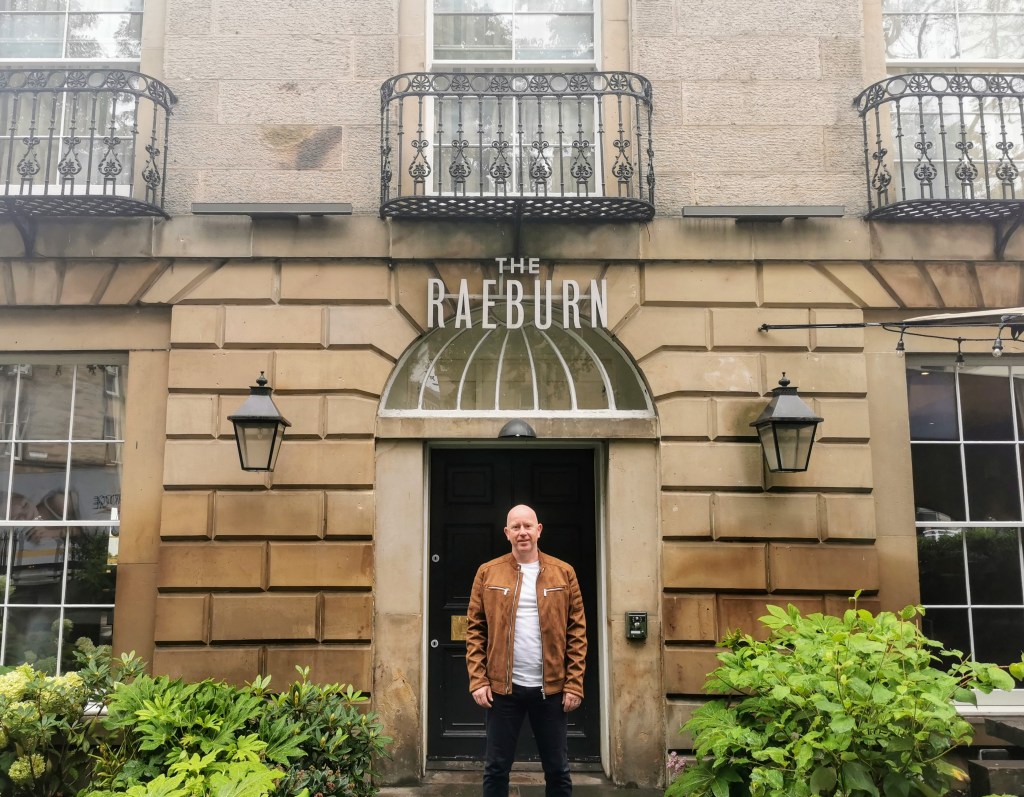
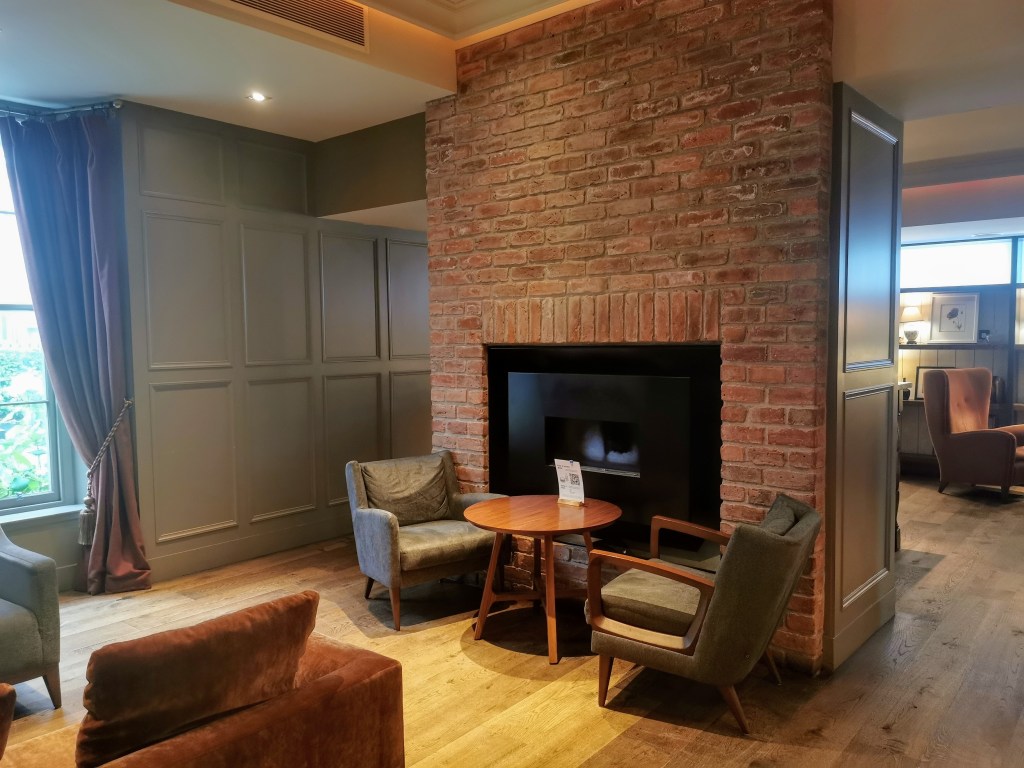
I’ve wanted to stay at The Raeburn for a while, but the price was always right up there. At the moment it’s a bargain, with a free upgrade to boot. We’re staying here for two nights so I’m hoping it meets my expectations.

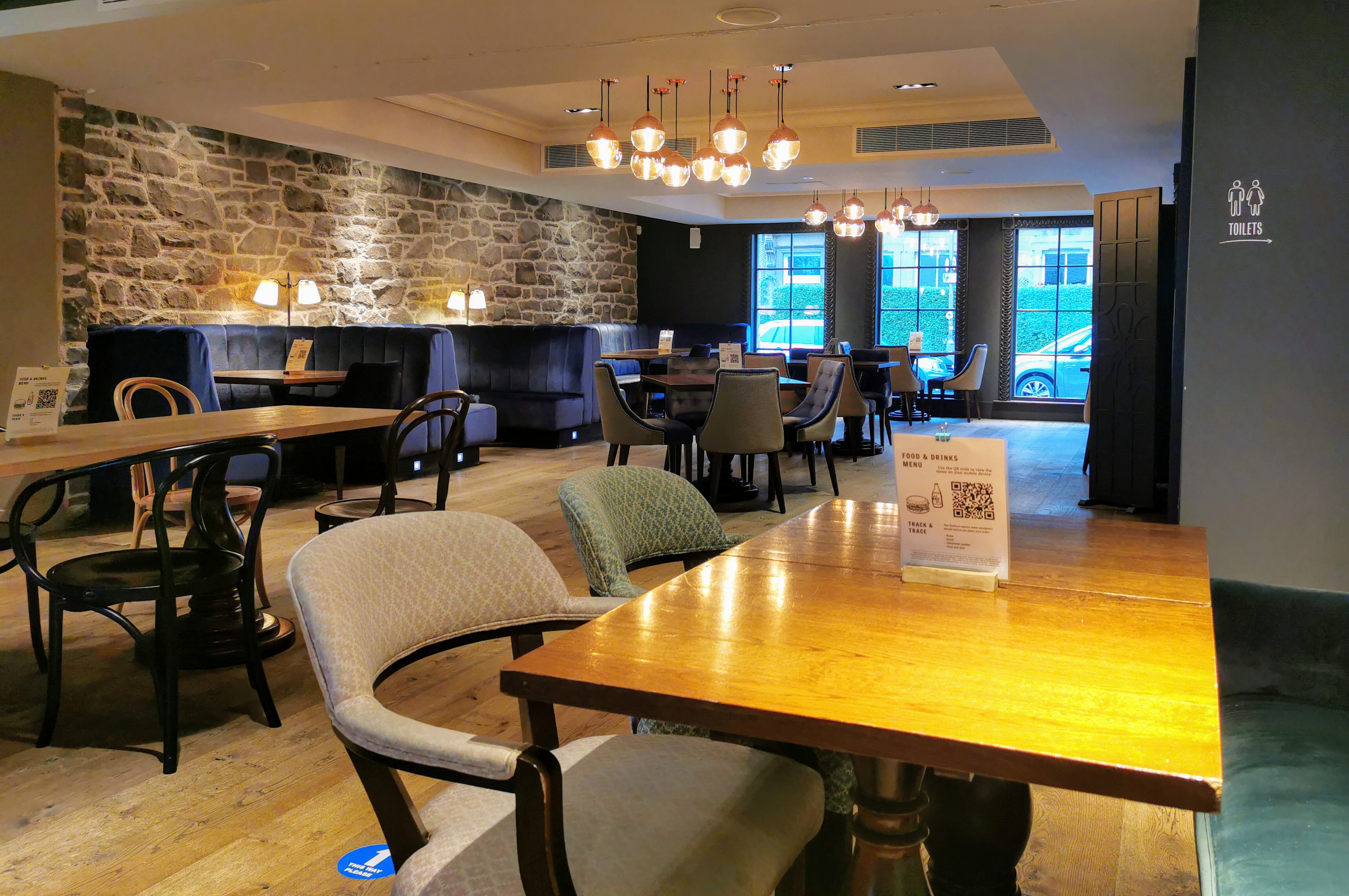
An elegant Georgian house built in 1832, The Raeburn has been tastefully converted into a ten-bedroom boutique hotel, with a large bar and restaurant that are popular with locals. We arrive at lunchtime and every table is full. The welcome is enthusiastic, despite the clunkiness required due to the pandemic – walk this way, don’t stand there etc. The staff here are friendly enough to make it a very minor inconvenience.

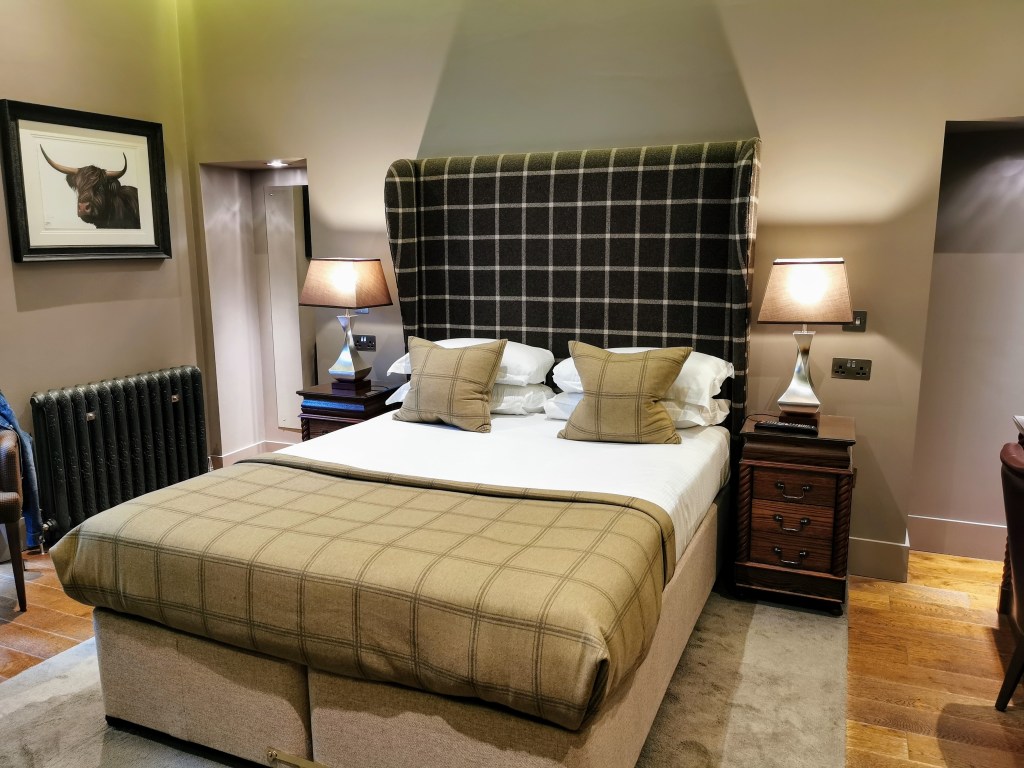
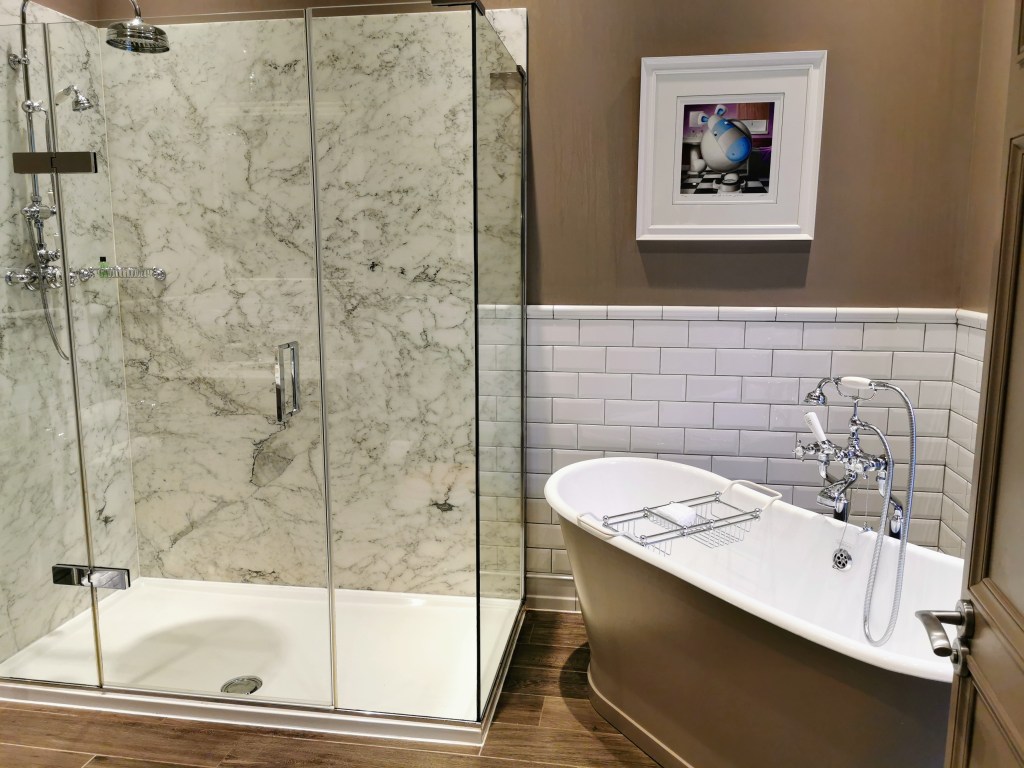
Our room is at the front of the hotel, so there is a bit of noise from the road. But it’s big and tastefully decorated, with a very stylish bathroom. There’s also plenty of free spring water in the fridge, which gets a huge tick from me. My pet hate when travelling is stinginess with basic necessities. There is always a definite possibility that I will need to hydrate at some point due to my penchant for gin and wine. And no, I don’t want to drink tap water, thanks.

Service in the bar is slow, with one young waiter obviously distracted by his phone. The husband mutters ‘Kids have no idea’ like a true grumpy old man. Staff in the restaurant are more attentive. The whole place is packed out both evenings during our visit, perhaps helped along by Eat Out to Help Out. I have a feeling it would be busy regardless, it’s such a welcoming space. Dinner (with our friends the Johnstones) is good. Breakfast is quite simply marvellous.

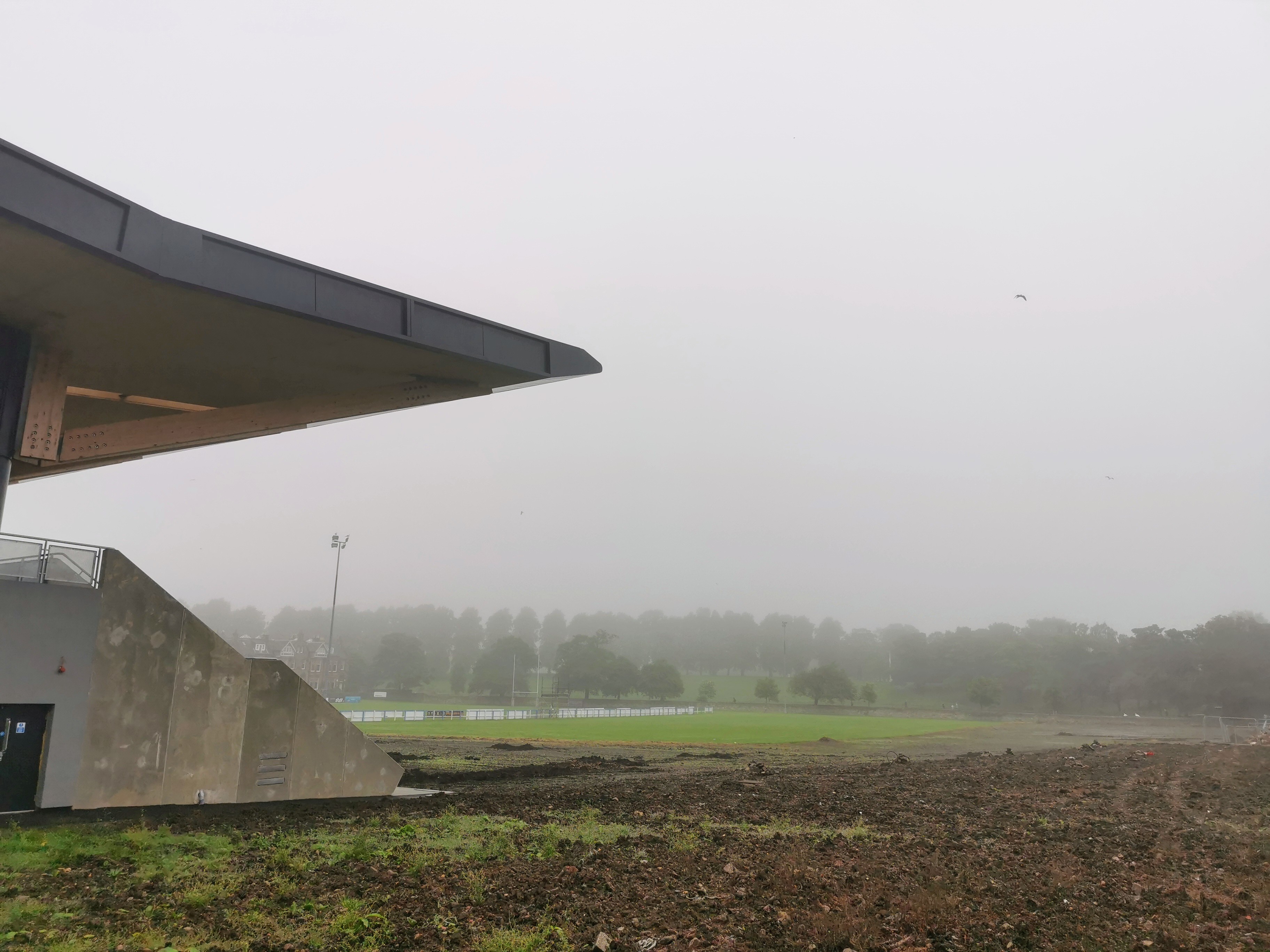
Anyone who’s a rugby fan, like the husband, may be interested to know that The Raeburn overlooks the ground where the very first Scotland v England game took place back in 1871. It was in fact the very first international game ever played, and annoyingly the Scots won. The ground is the home of the Edinburgh Academicals team. If you’re not particularly into rugby (like me) you may be unimpressed with a rather dull patch of grass. It takes all sorts.

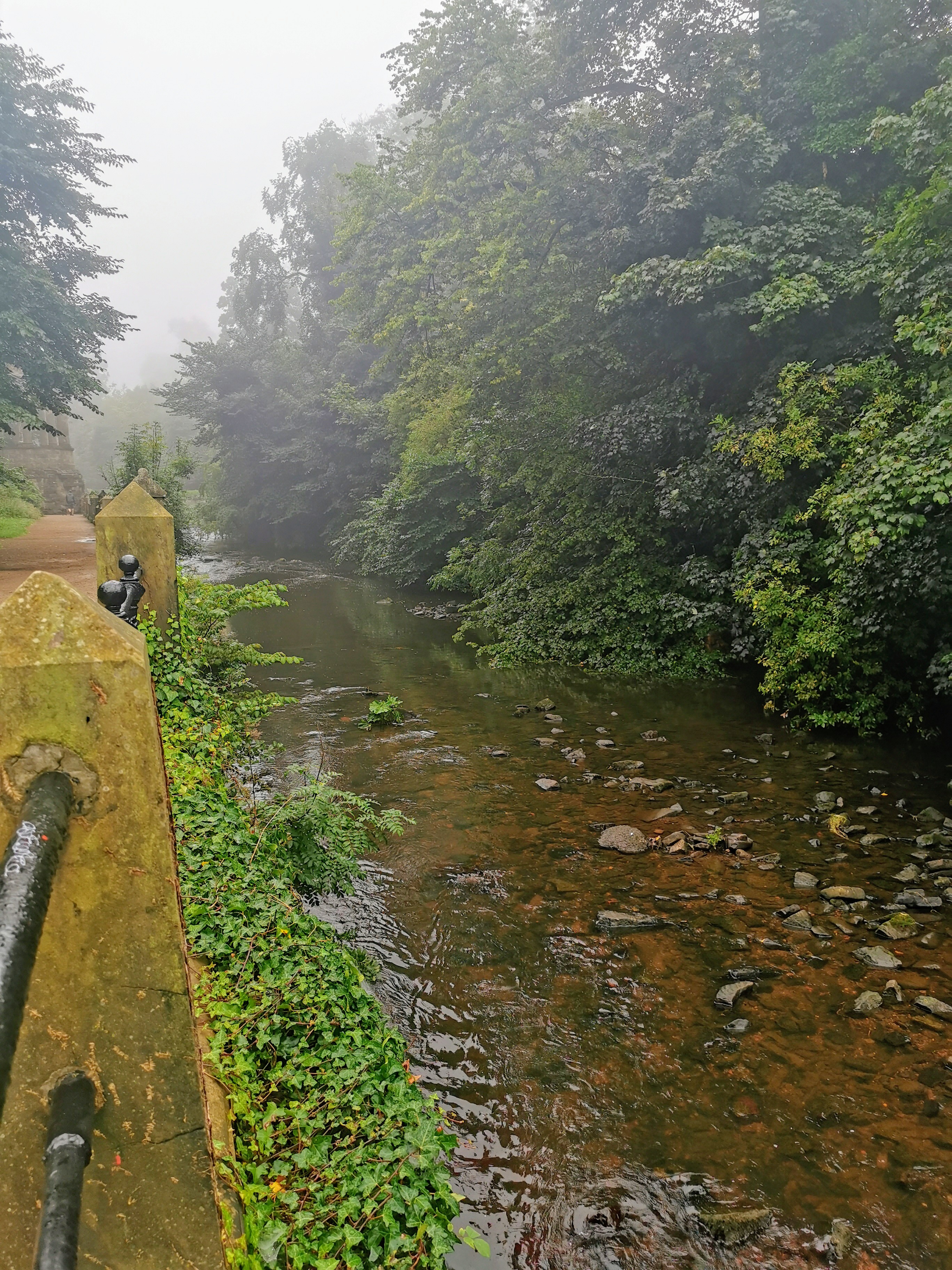
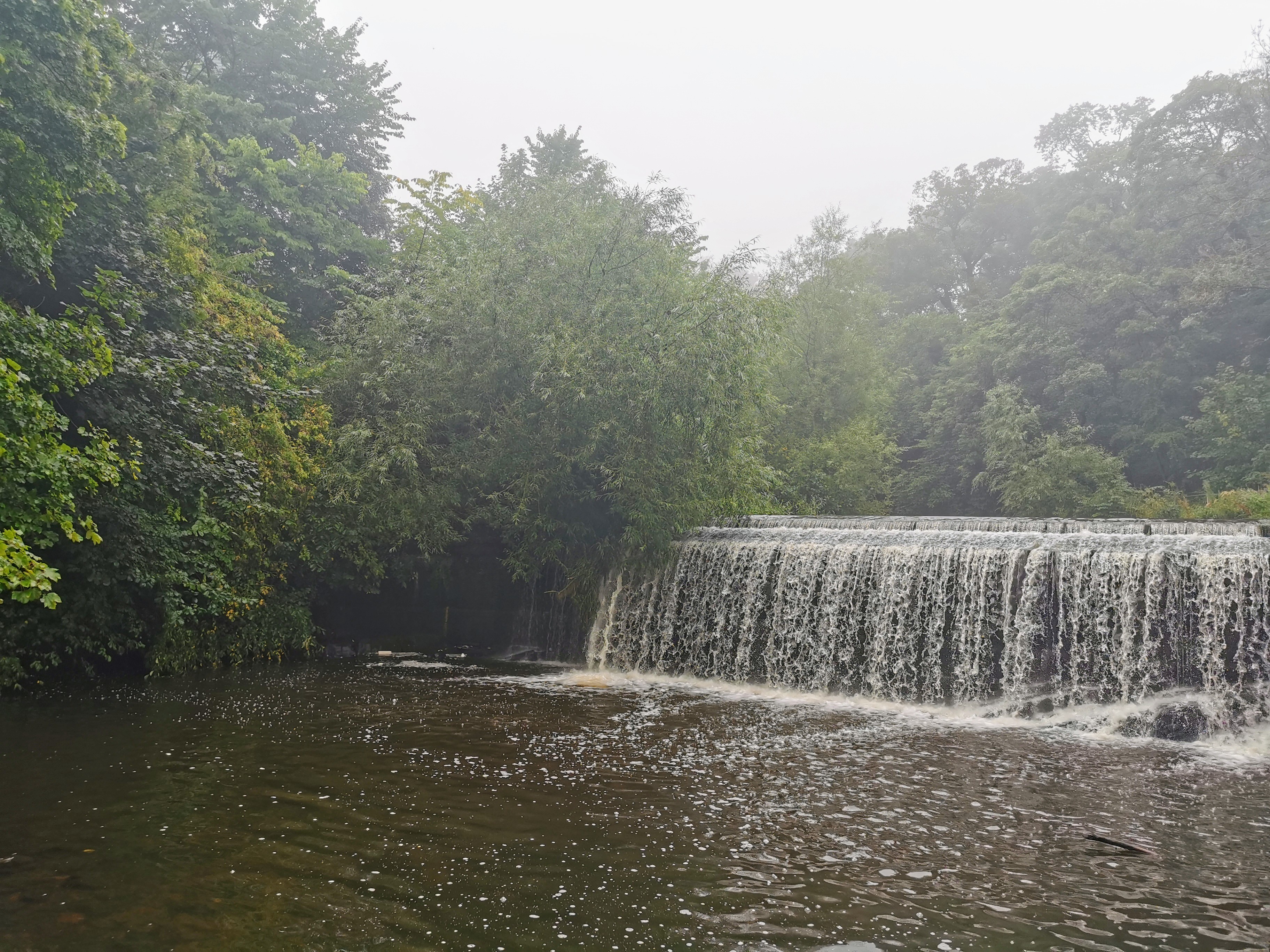
I’ve chosen my walk for this trip – I want to discover the city’s hidden river, the Water of Leith, which winds its way for 35 miles from the Pentland Hills to the Firth of Forth via the northern suburbs of Edinburgh. I expect most visitors are unaware that the city has a river at all, as it goes nowhere near the centre. It passes right through the middle of Stockbridge, however, and I want to follow the route from Canonmills to the Village of Dean.

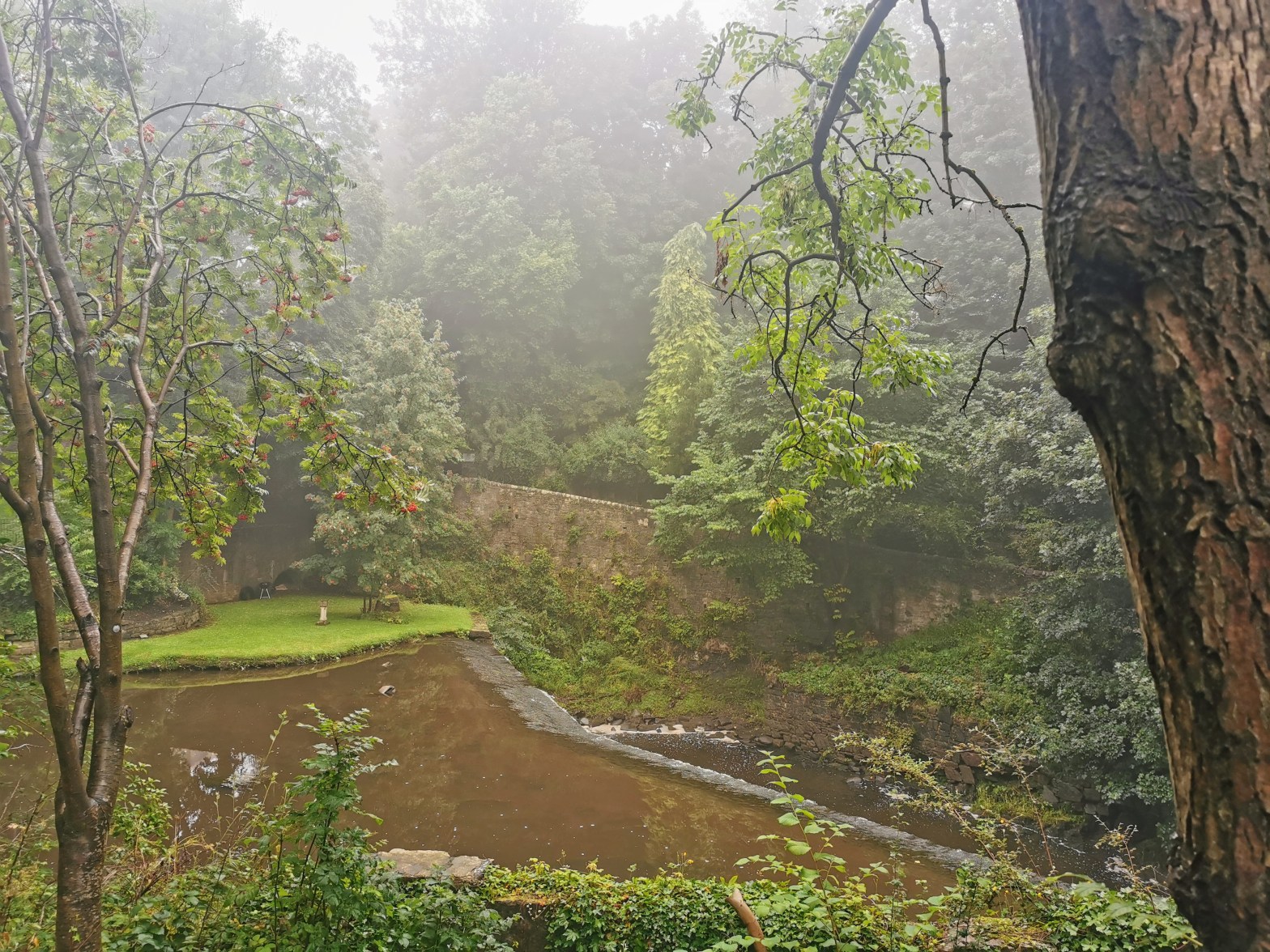
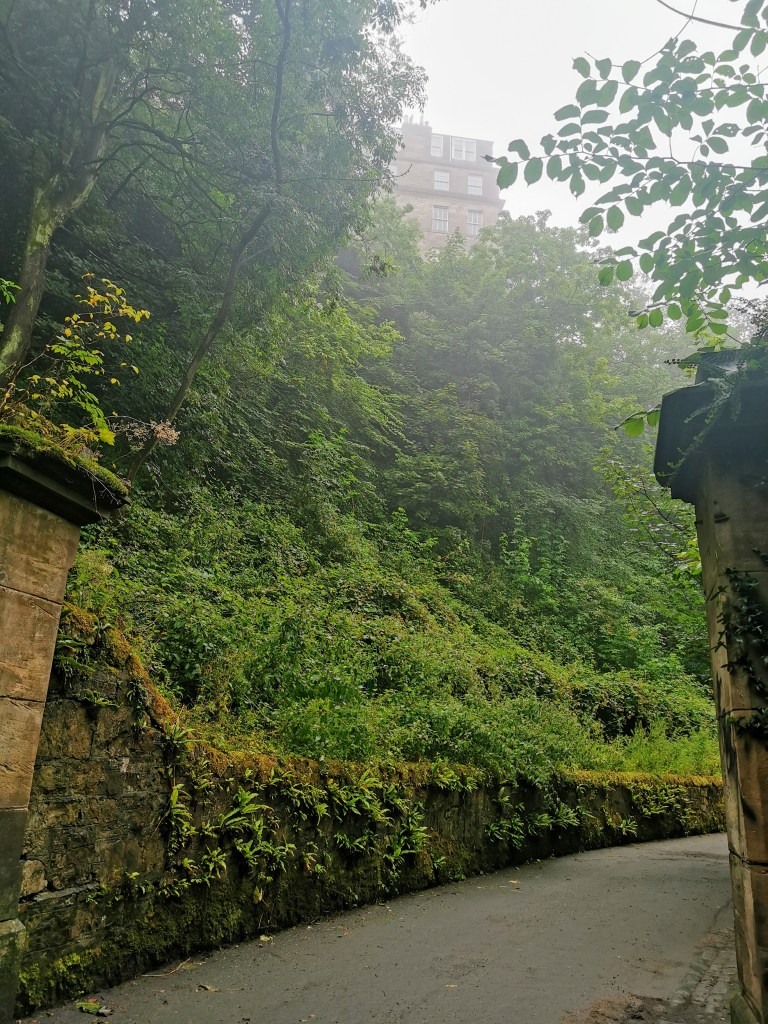
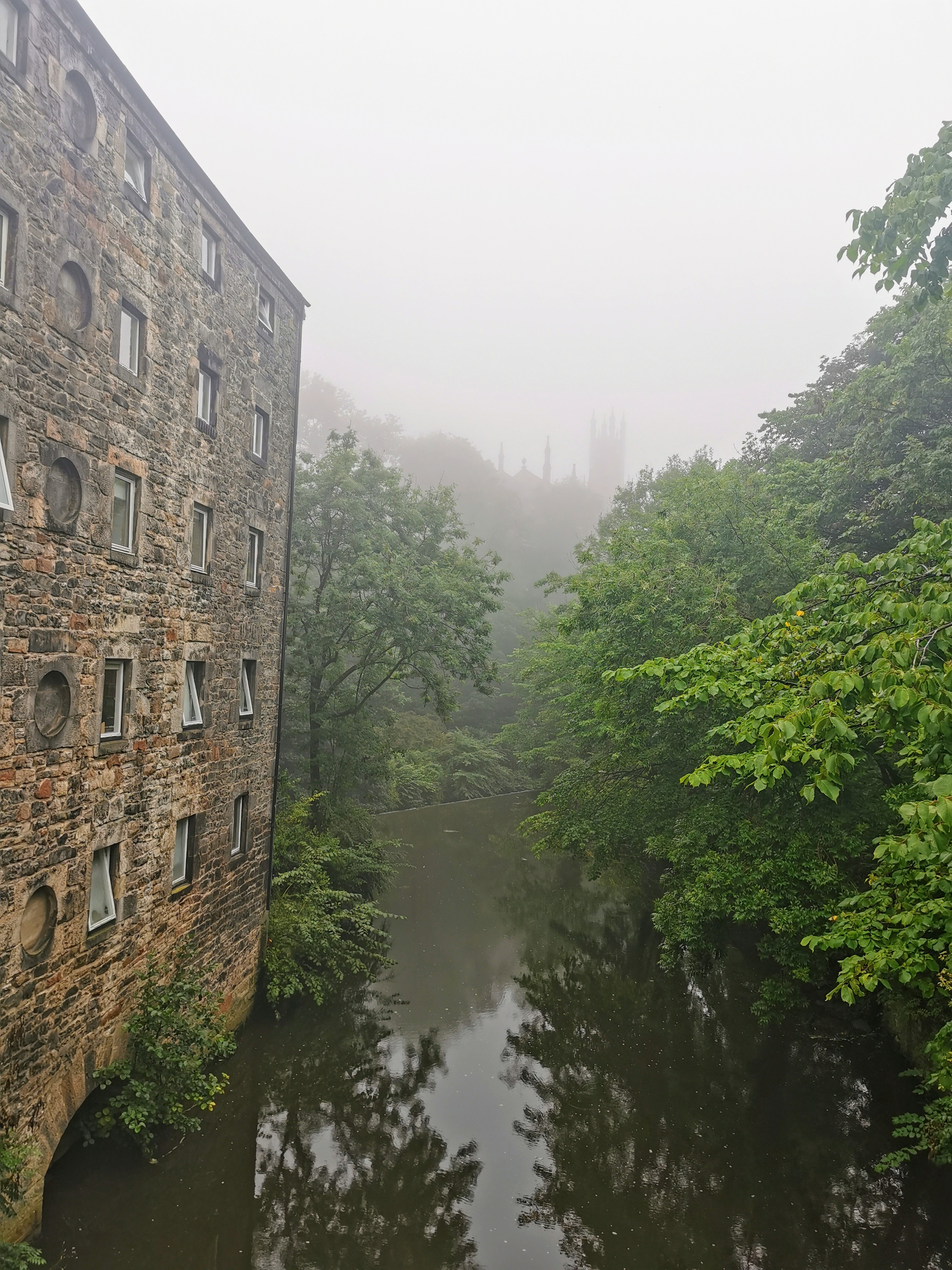
It’s a foggy day, and my local expert Heather advises me to expect the haze to stick around, but that just adds to the atmosphere. In this city of hidden alleyways, staircases and tunnels you almost don’t want the sun to shine and disperse the sense of mystery. There’s a reason I love the books of Ian Rankin. Bring on the menacing ambience!

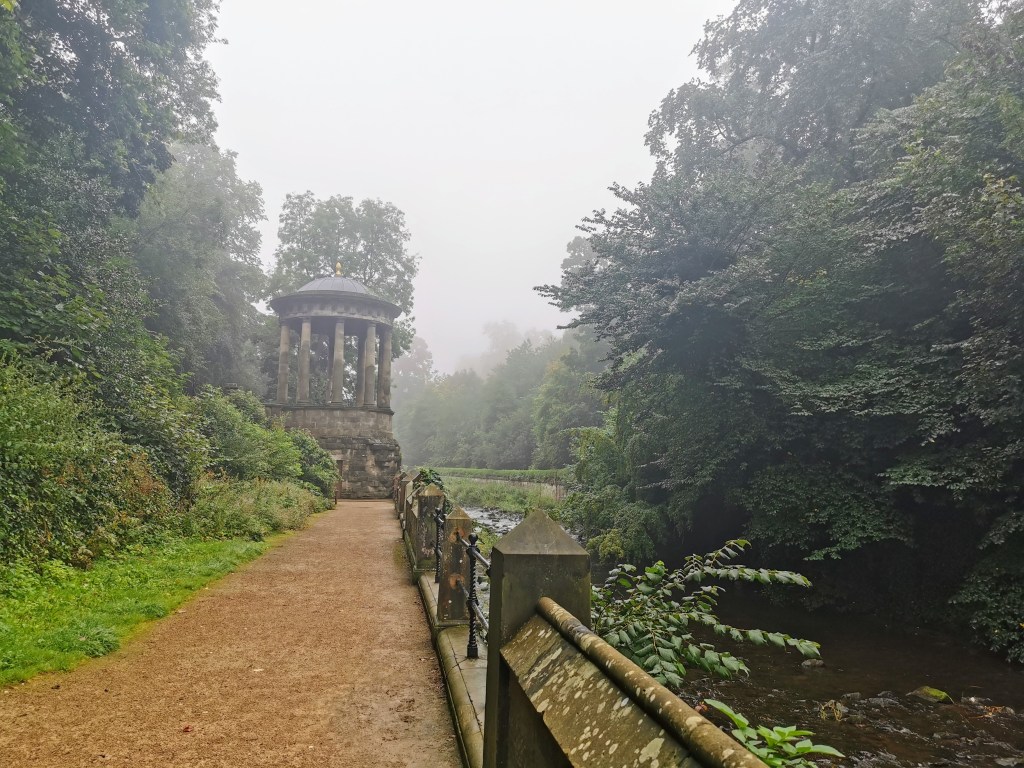
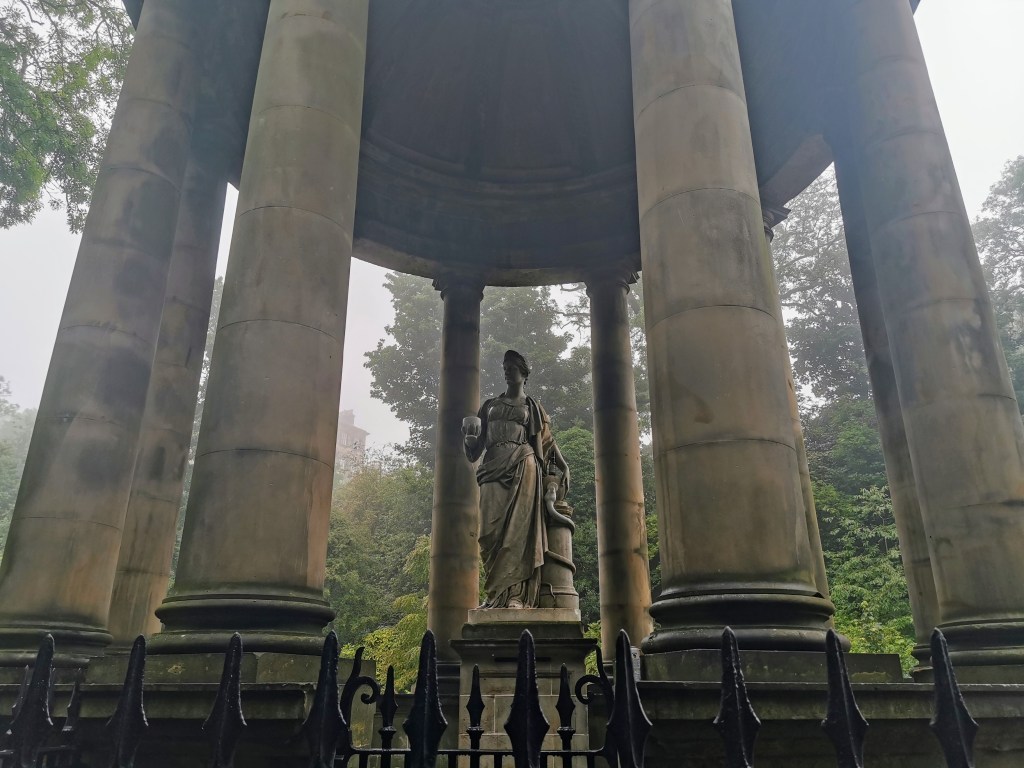
We pass St Bernard’s Well, where a statue of the Greek goddess of health stands atop an old pump house. A natural spring was discovered here in the 18th century and soon developed a reputation for healing properties. As more people came to take the waters, the pump house was built to accommodate their needs, and an imposing temple-like structure was erected above it. No sign of anyone lining up for healthy water today.

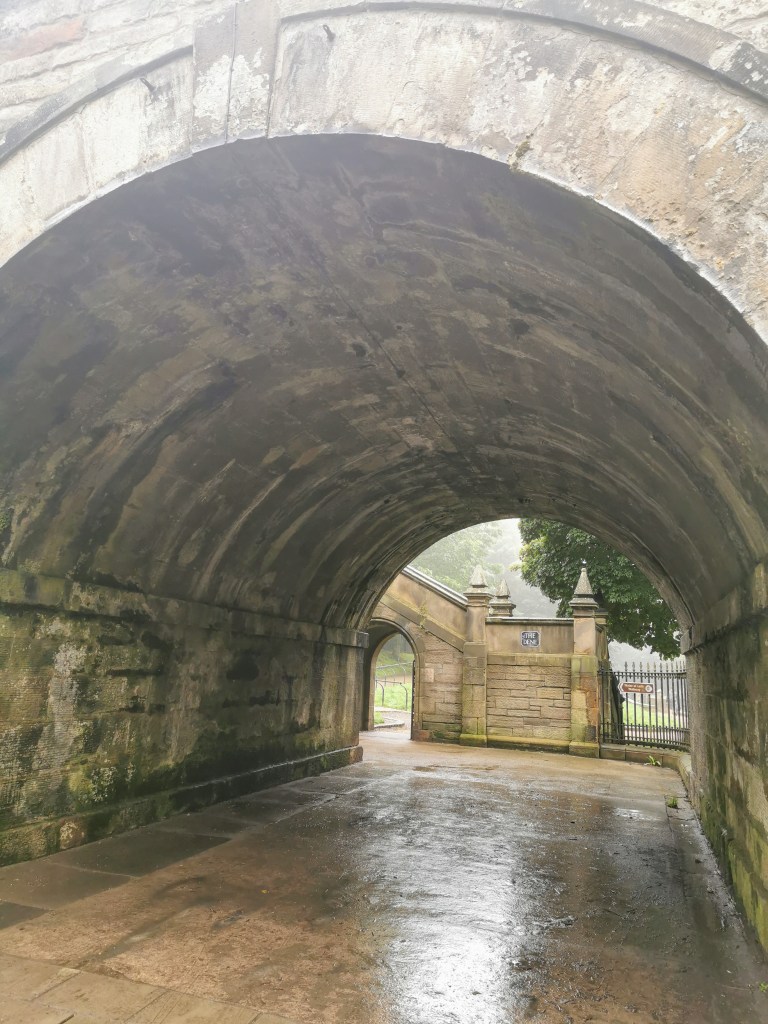
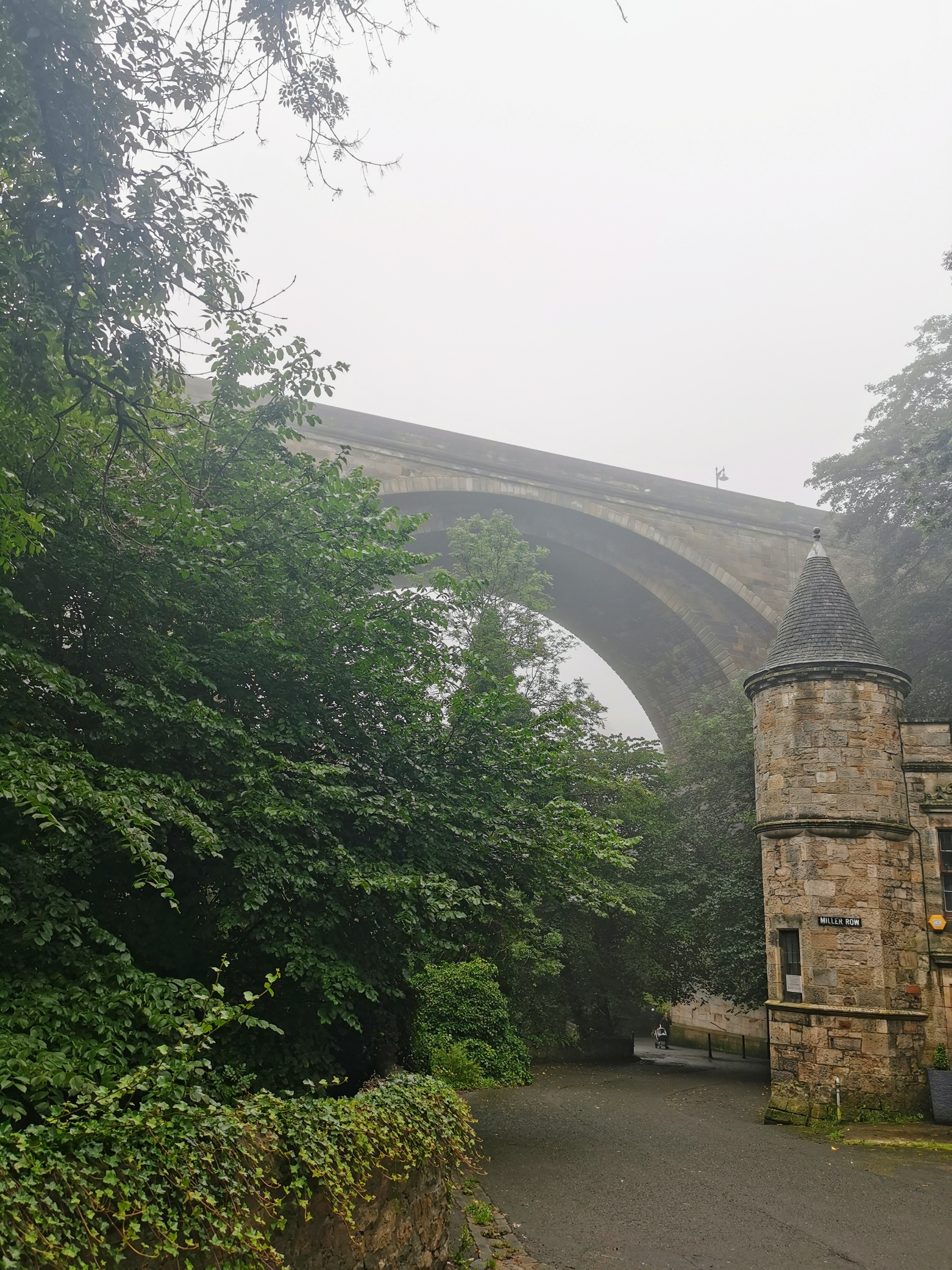
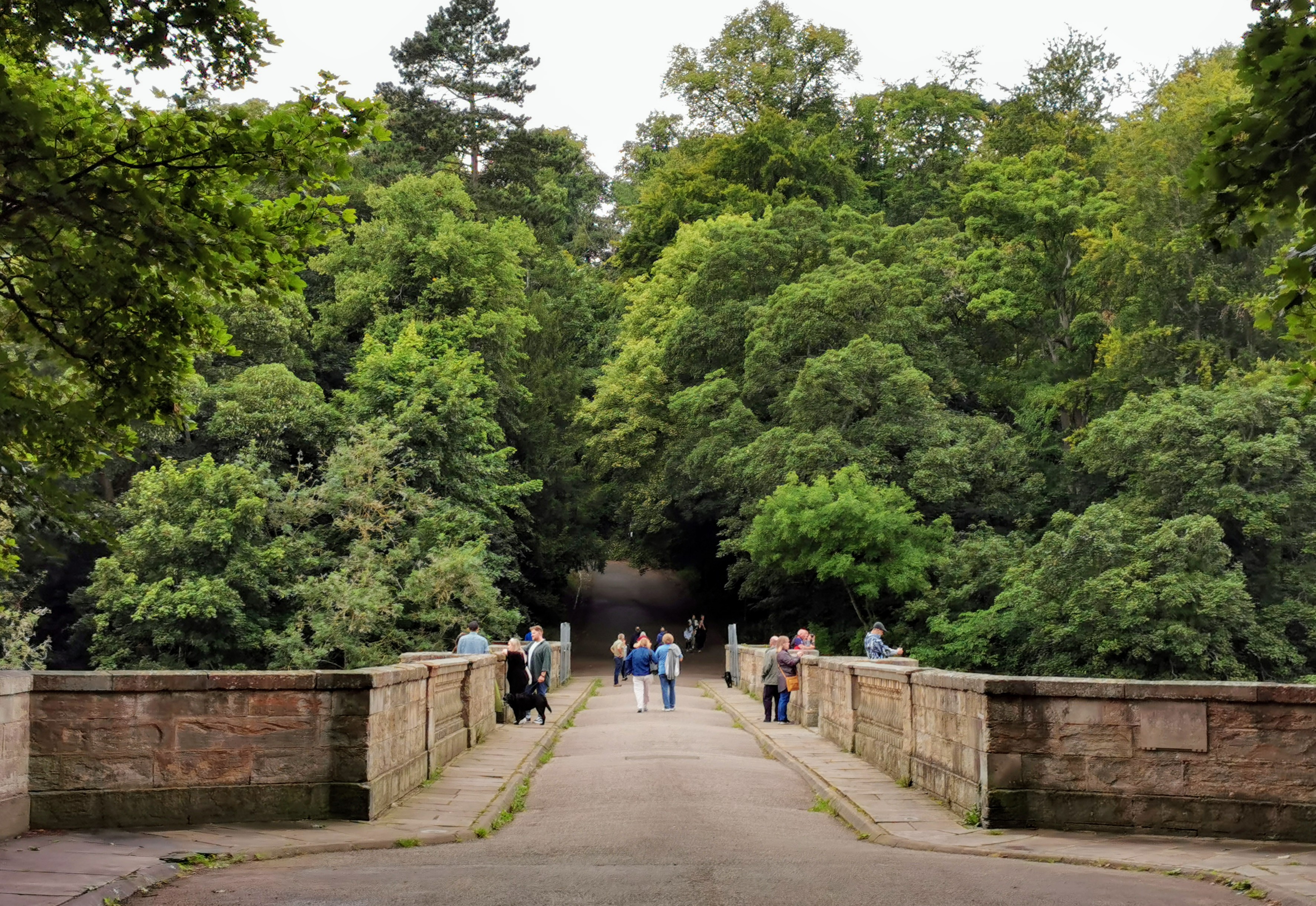
Dean Bridge, which spans the river just before Dean Village, was one of the last projects of engineer Thomas Telford in 1831. When it was first opened, the residents of Edinburgh could pay a penny to walk across it and admire the view. Don’t you just love the olden days? No TV or smartphones. Go and try this amazing new water. Or take a walk over a bridge and enjoy the vistas. How very refreshing! I think I was born in the wrong era.

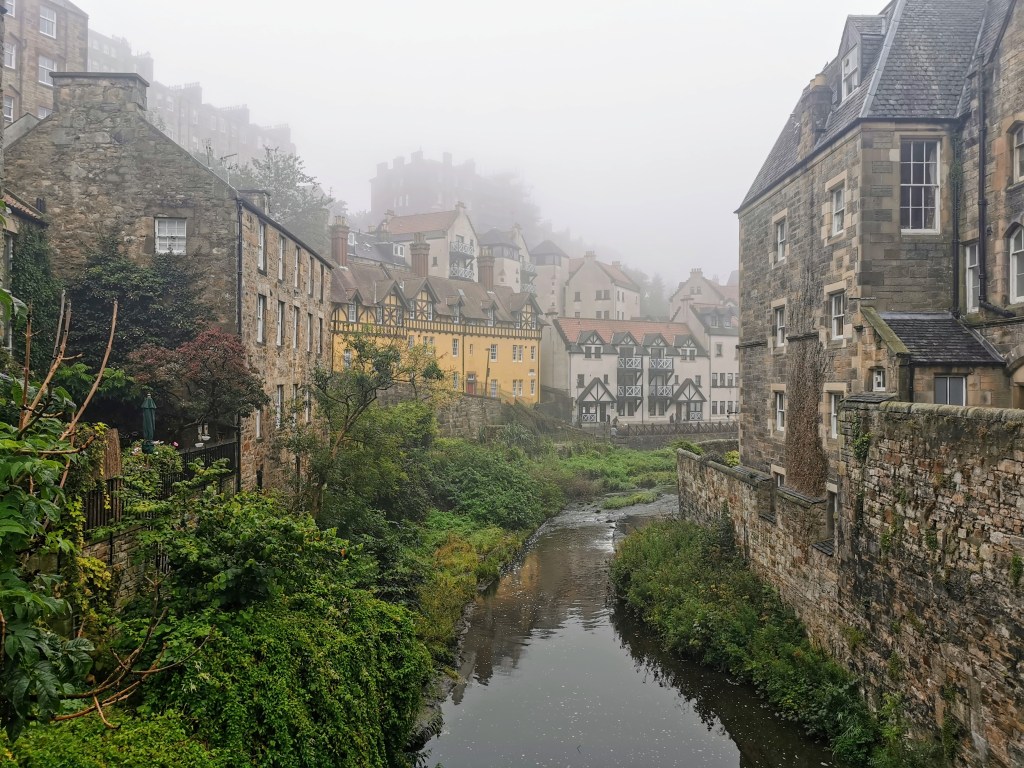
My first thought upon arriving in the village is that I could almost be in Colmar, in northeastern France. The view along the river has a distinct air of Alsace. Originally an industrial enclave of watermills, this area is now residential and feels frozen in time and a long way from the city centre, despite being only a short walk from Princes Street. We’re not heading that way though – we continue westwards along the water through the mist.

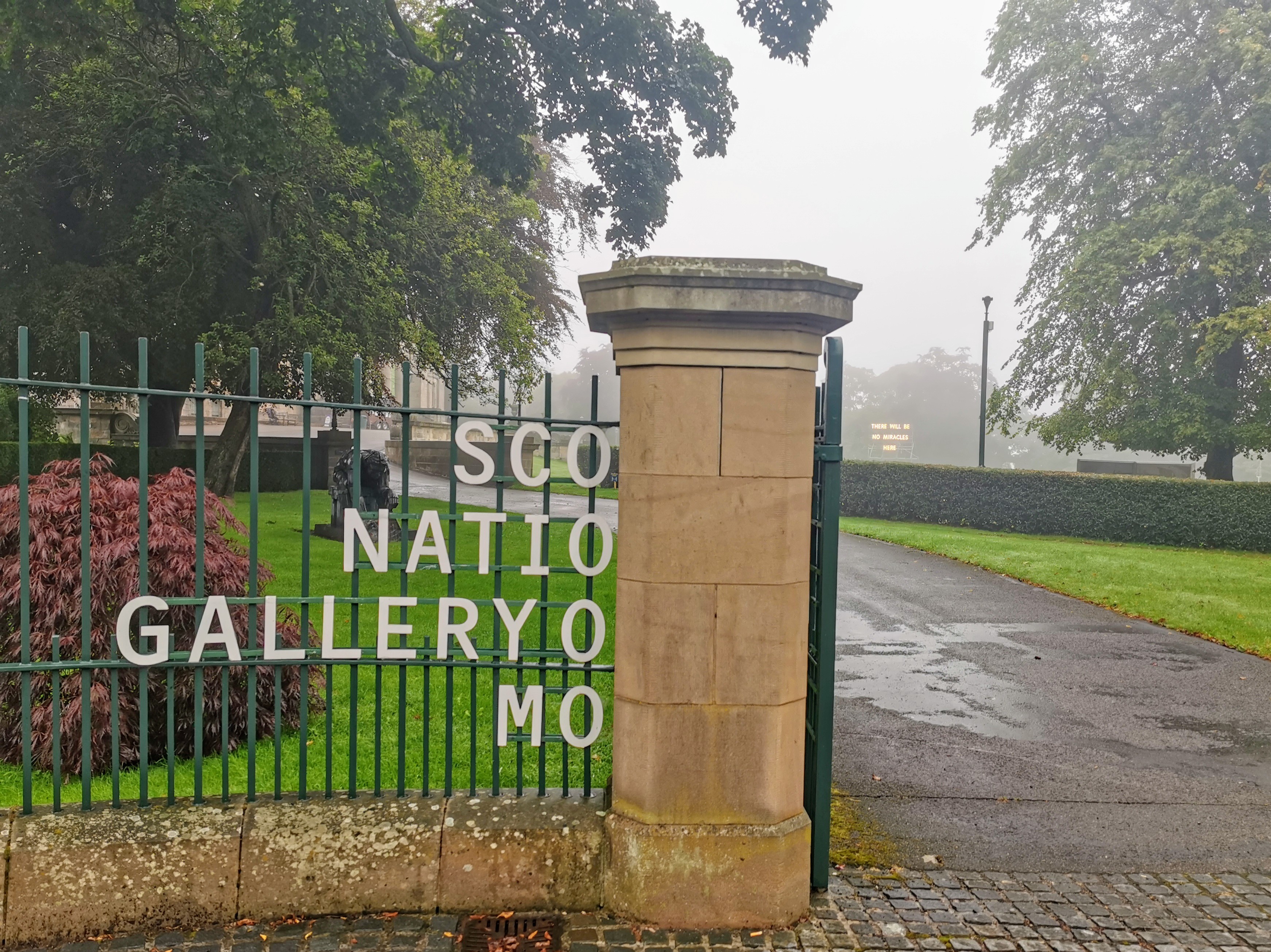
Emerging from our eerie riverside walk at the Scottish National Gallery of Modern Art, we stop to ponder Nathan Coley’s outdoor sculpture There Will Be No Miracles Here. It seems a strange sentiment outside a temple to the arts – surely here is exactly where you would expect inspiration to strike?

We’re nicely warmed up now, so we decide to keep on walking, past Haymarket Station and towards the western suburbs of Merchiston and Bruntsfield. We love this area for the lively shops and cafes, and the wide open green spaces, although we do pass through a few dubious streets and underpasses on our way there. When you walk, you see all sides to a city, salubrious and not-so. We just walk a bit quicker through the dodgy bits.

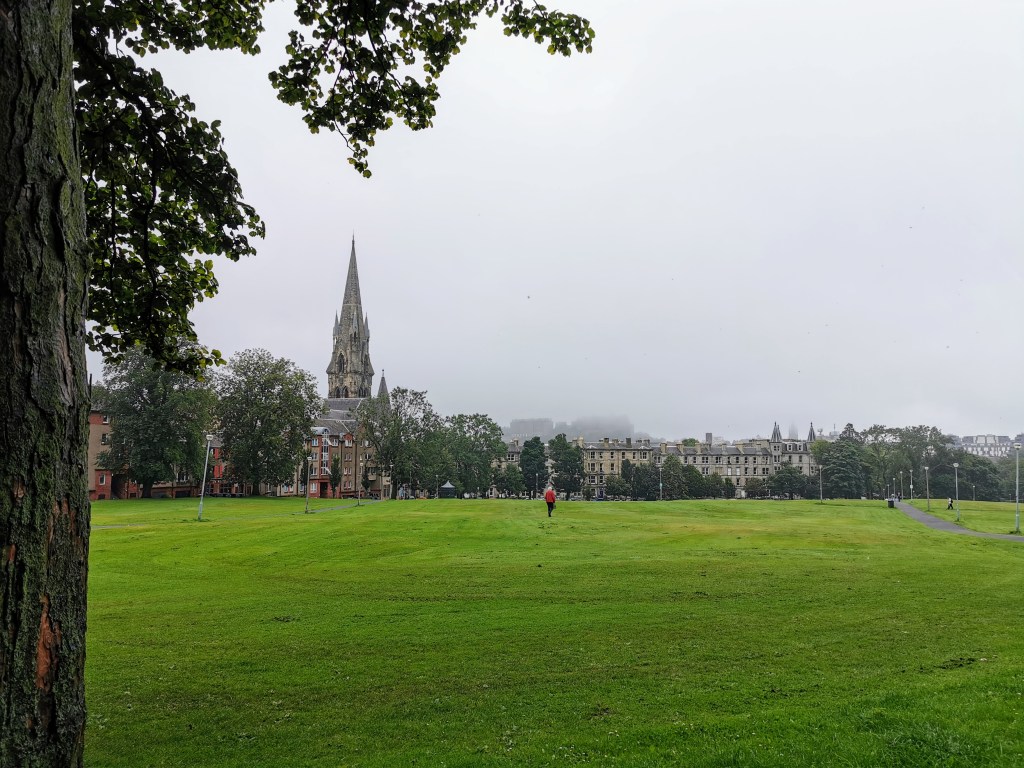
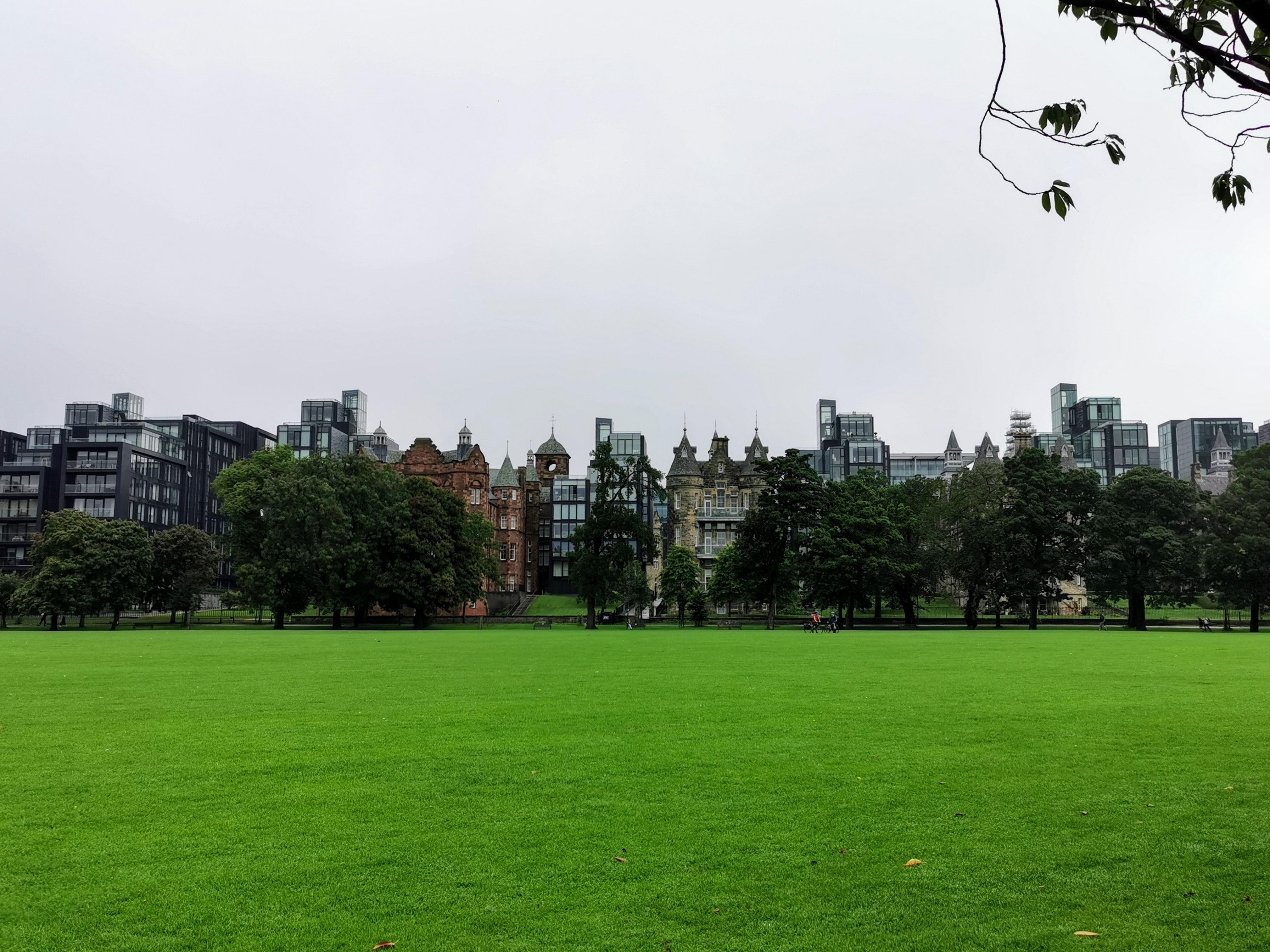
The views across Bruntsfield Links and The Meadows towards the Old Town are less impressive and less recognisable than usual, for us at least. We’ve been lucky enough to get great weather on our previous trips. Today, the Castle has simply disappeared into the murk. But the luminous colour of the parkland bears witness to the nature of the climate here. At home in Berkshire, the grass is like straw. Never mind, there are plenty of nice cosy bars in town if it starts to rain again.

One more place to mention before I close today’s post – the excellent little Stockbridge restaurant Rollo, conveniently situated for us right nextdoor to The Raeburn. We have one of our best meals in ages here. Of particular note is the side of tempura broccoli with blue cheese crumble, but everything we taste is scrumptious. The space is cosy and the staff are excellent – even the grumpy husband is charmed.

Mission accomplished, we’ve seen another side to the Scots capital this visit. In the spirit of discovery, I’ve also tried vegetarian haggis for the first time. Not strictly authentic, but very nice nonetheless. Edinburgh is definitely one of those places which keep on giving. No doubt we will be back again some time soon.

Travels in the North – Durham

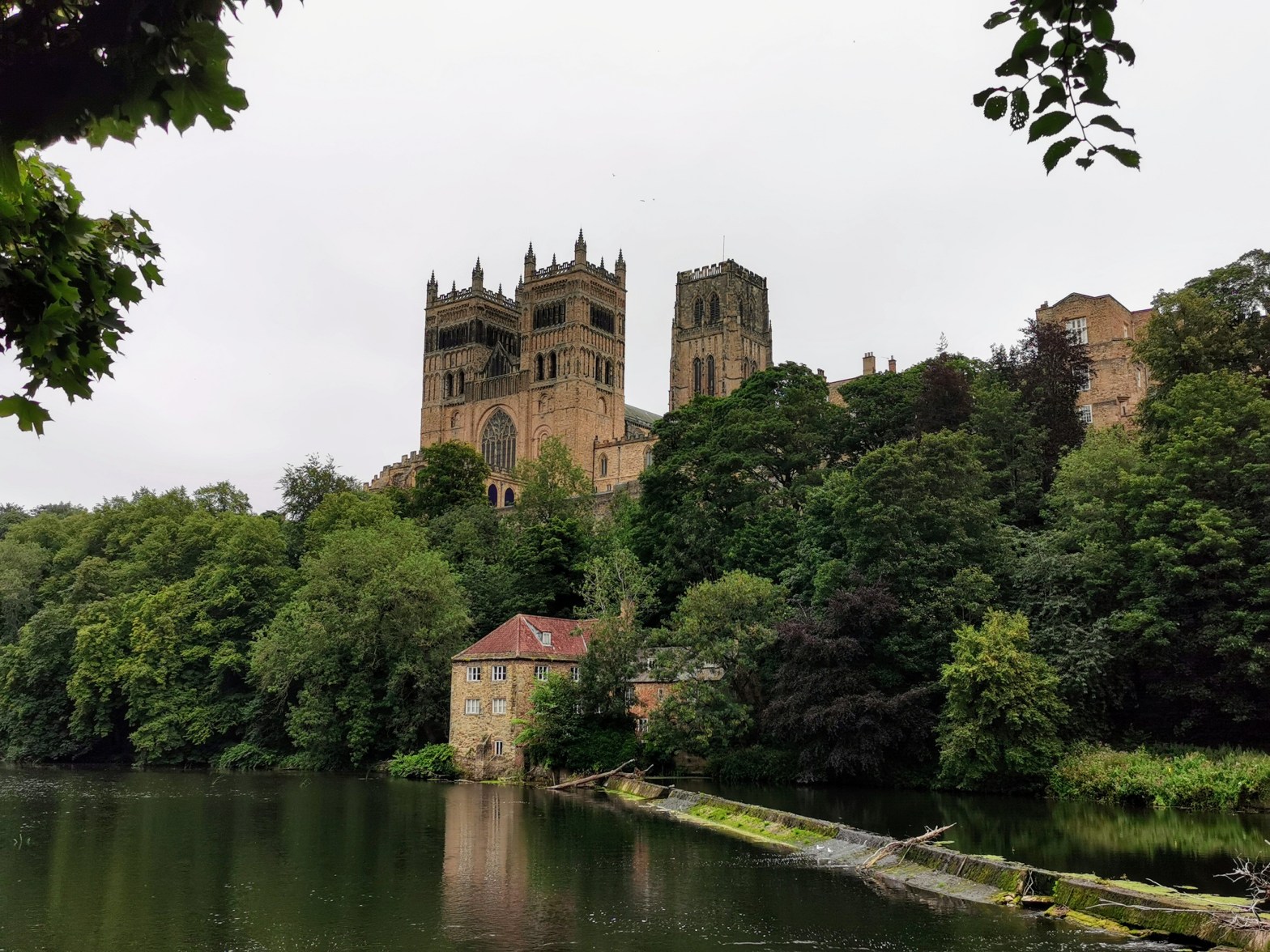
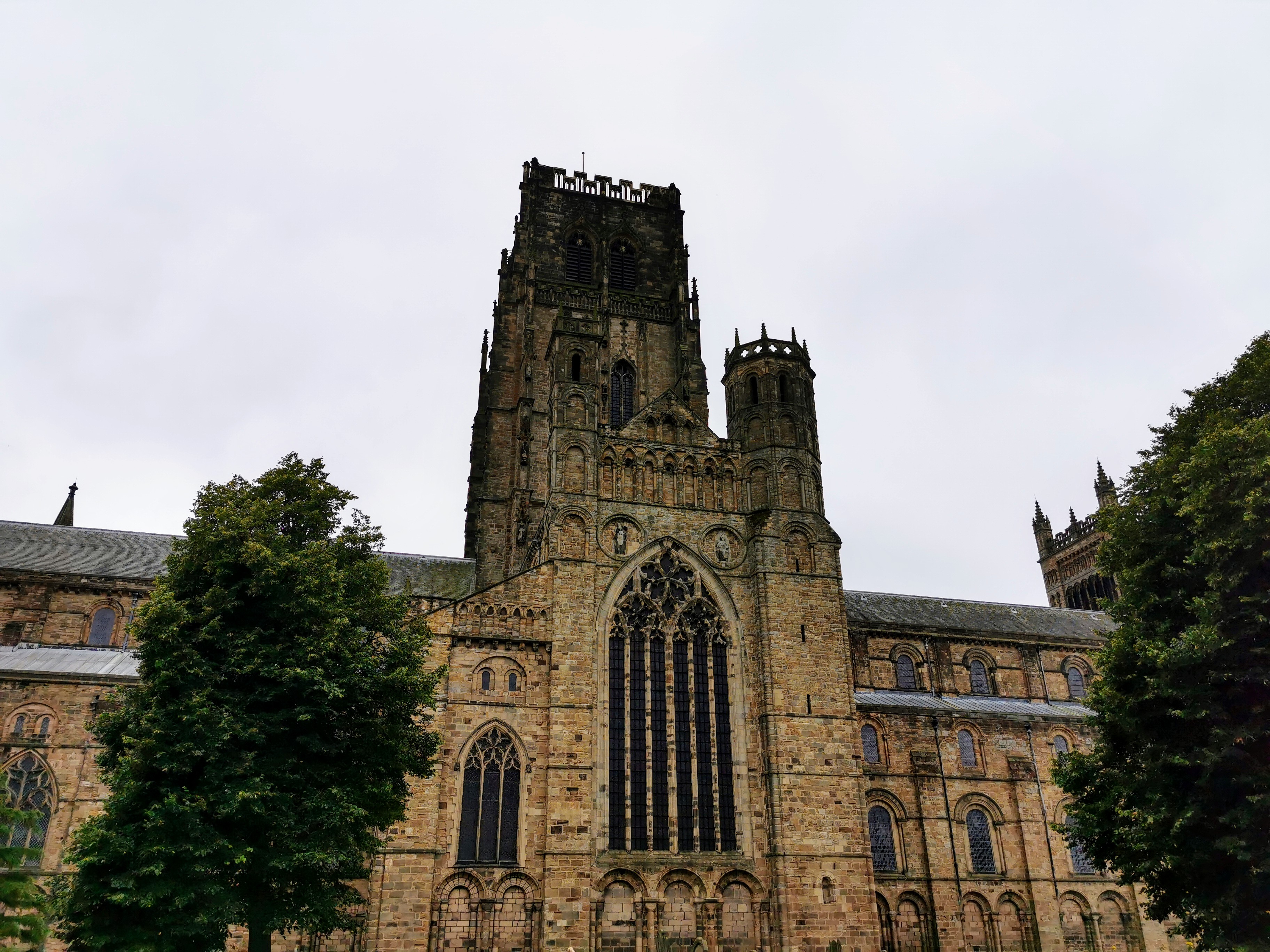
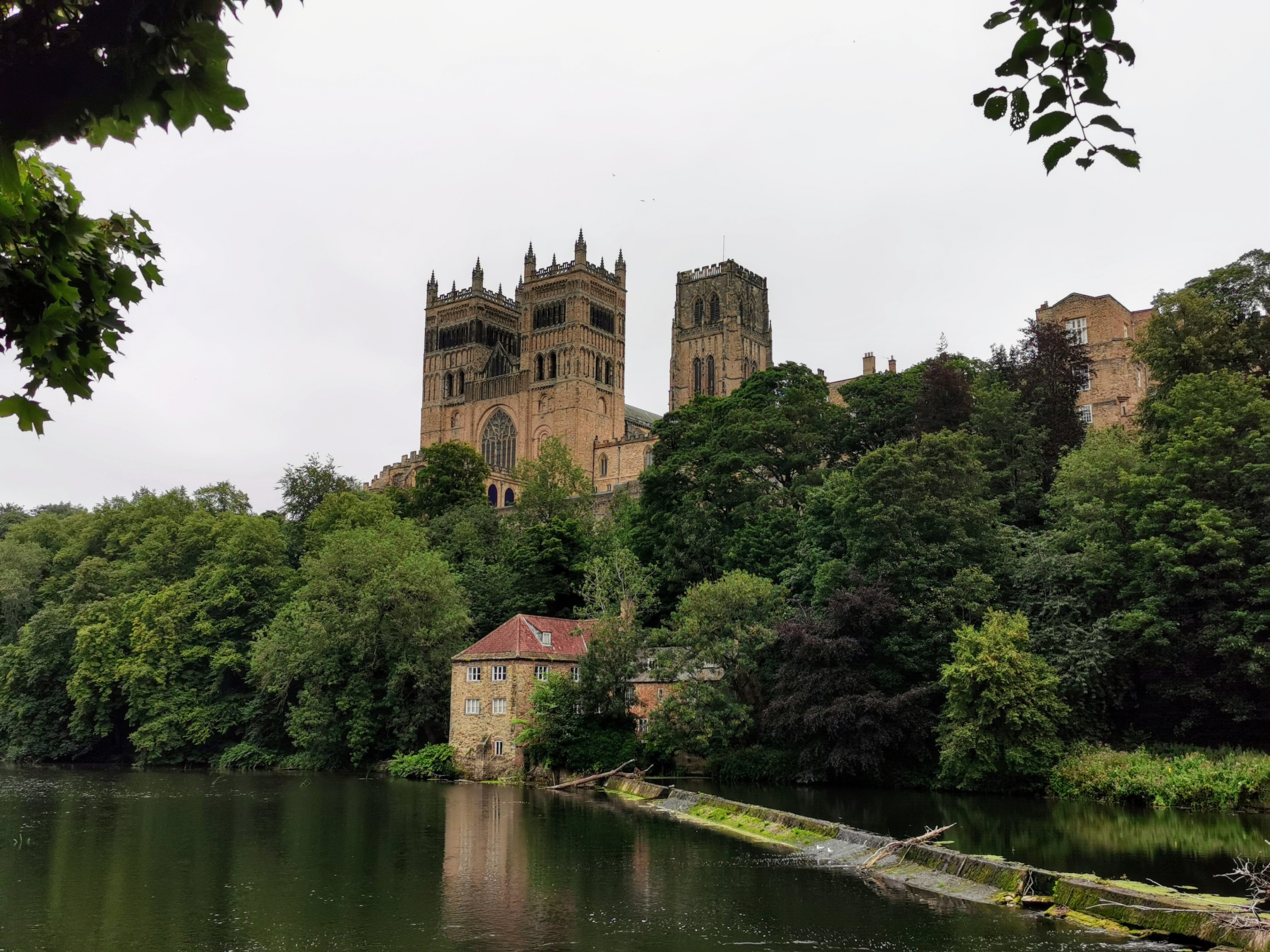
The city of Durham in the North of England is renowned for its Norman castle and cathedral, standing high and proud above a loop in the River Wear in County Durham, the Land of the Prince Bishops. It’s also where I went to university to study French and German, more years ago than I like to remember.

Our trip to France is cancelled – the sad refrain of 2020 – so we decide to head up to Scotland instead. Why not have a nostalgic stopover en route? I last visited Durham in 1999, so it’s been a while…

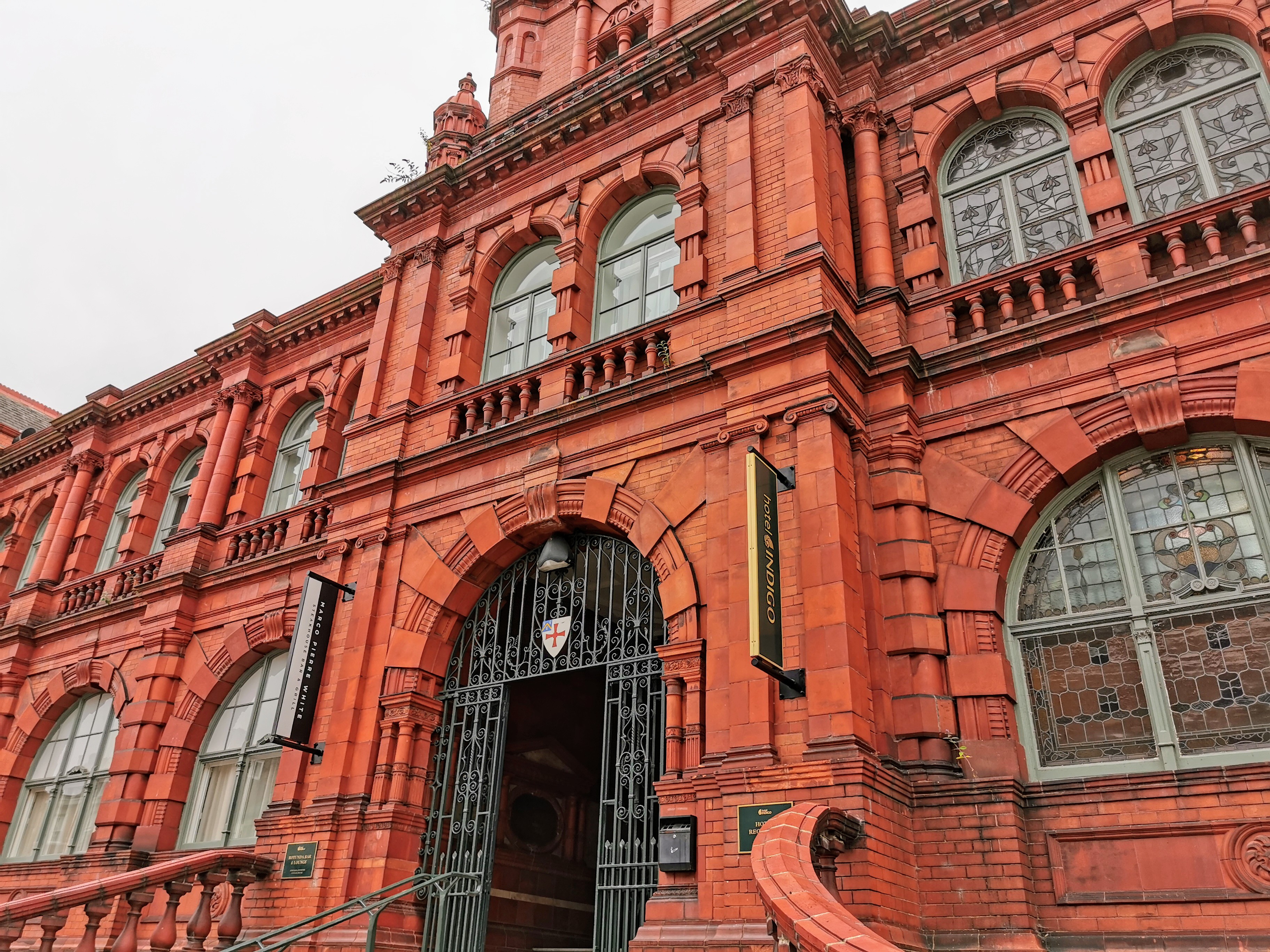
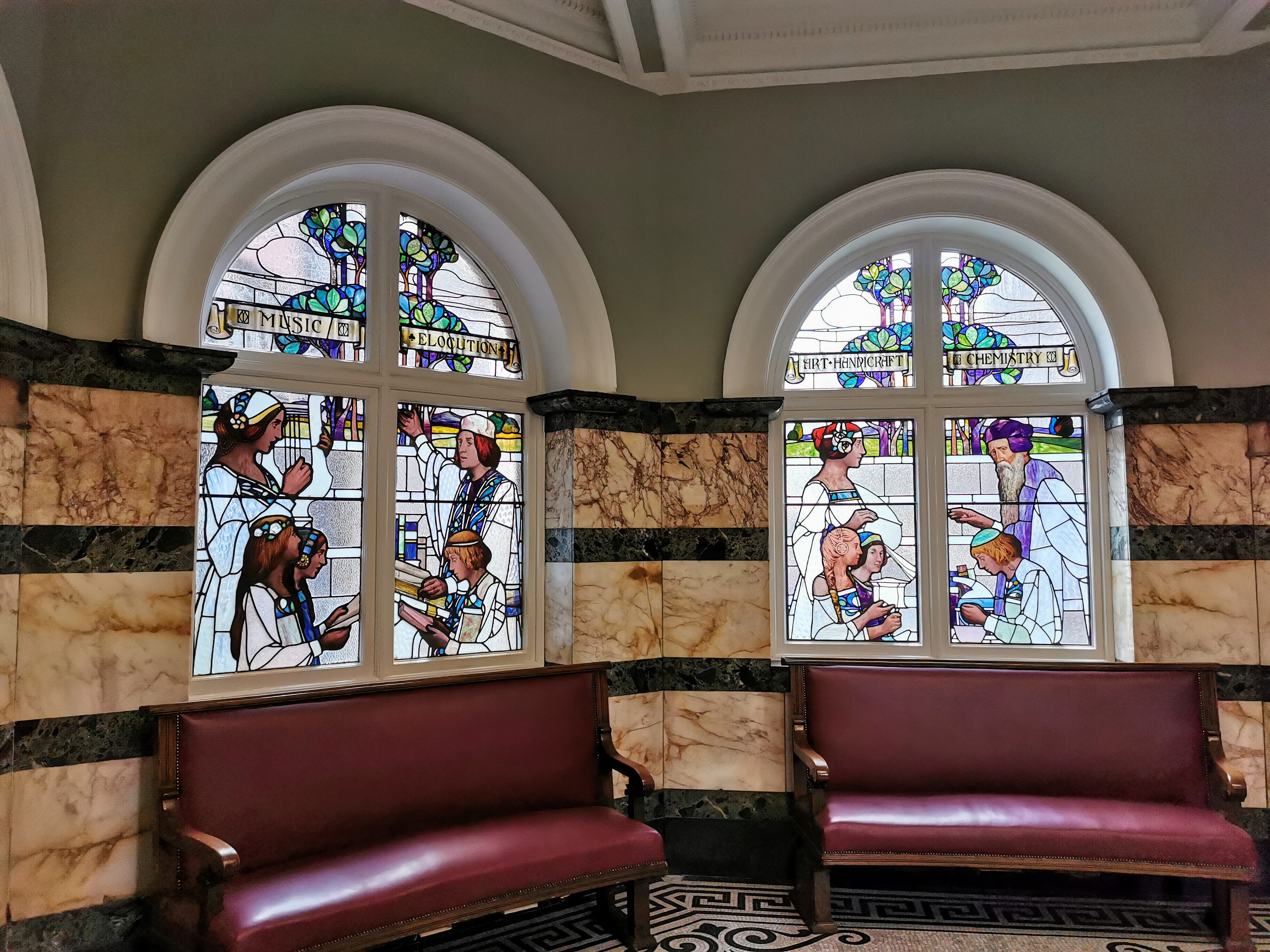
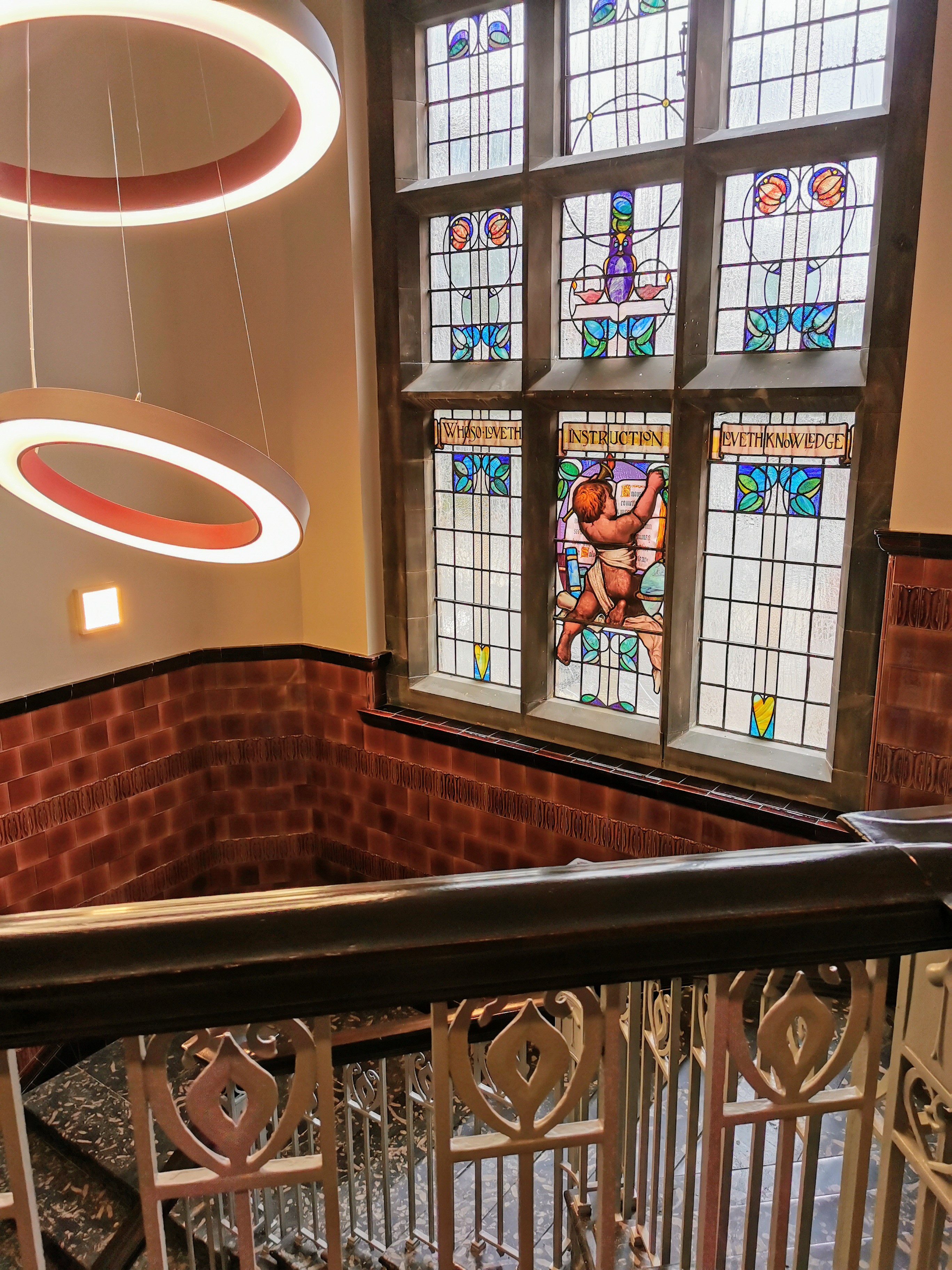
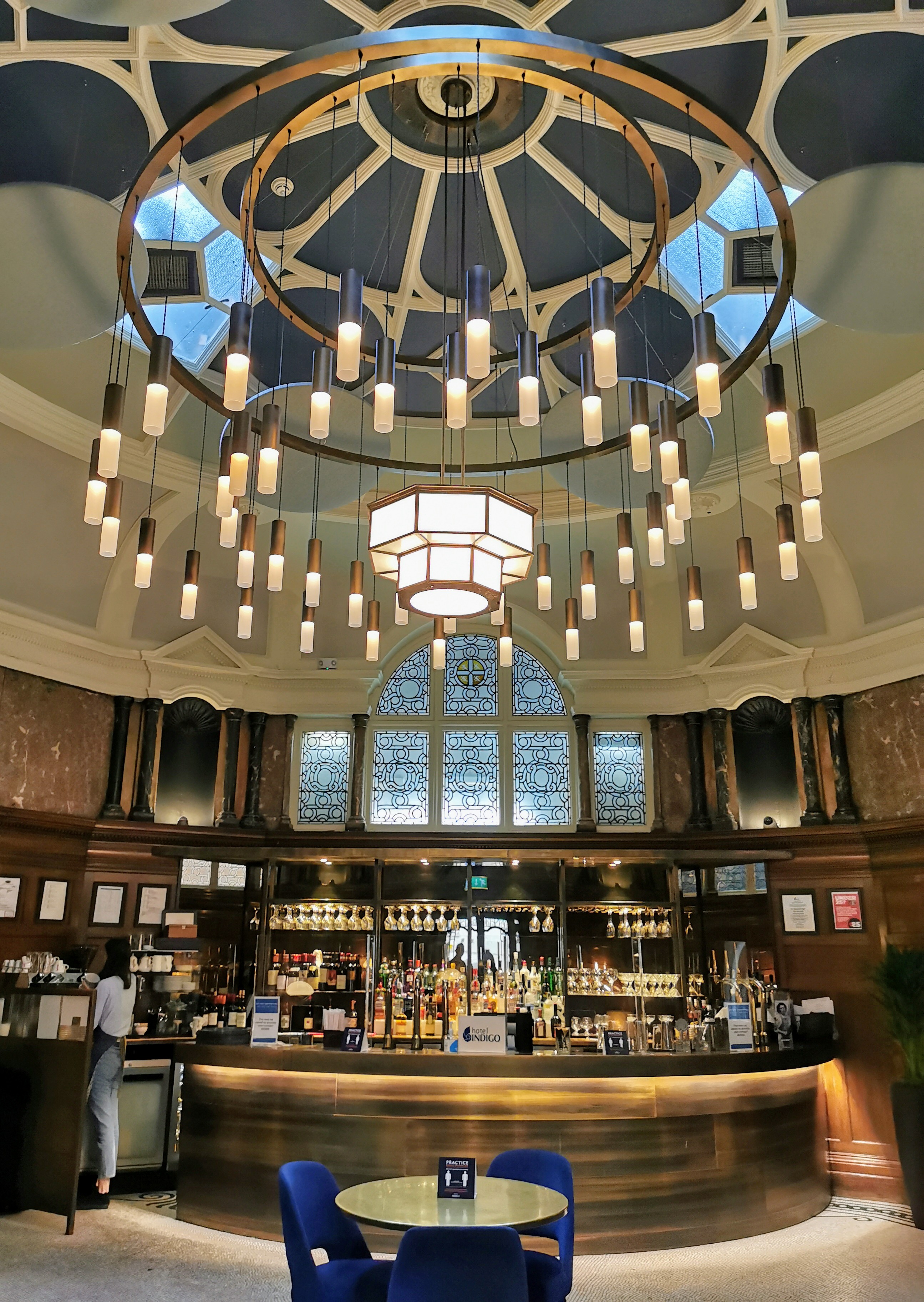
We’re staying at the Hotel Indigo on Old Elvet. The building was originally Council Chambers, and then part of the University – Old Shire Hall was where you went to get your exam results. It was built in 1898 and is Grade II listed. After the Uni moved out in 2012 it stood empty for 6 years, until the careful conversion to hotel began, retaining the stained glass windows, wood panelling and extensive tiling.

It’s a beautiful building and I’m so glad it’s been lovingly preserved. Our only complaint is that the girl serving in the bar looks like she would rather be anywhere else, and she really can’t be bothered to offer us a drink. It’s such a shame, when the Rotunda Bar itself is so spectacular. Perhaps she’s just having an off day.

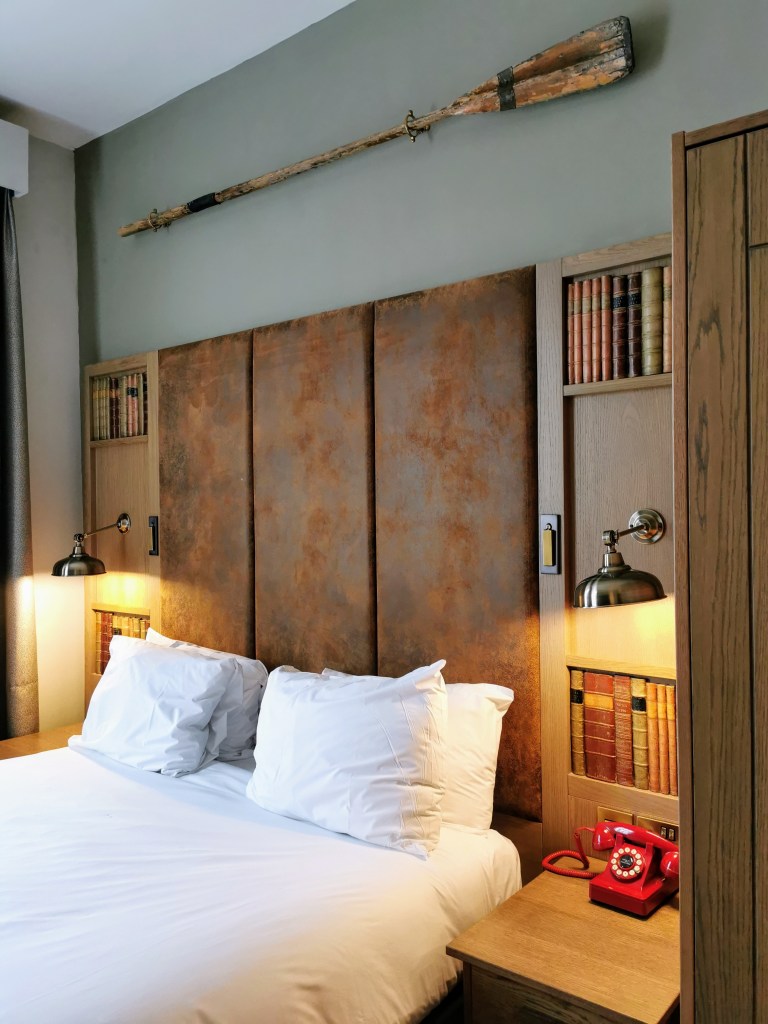
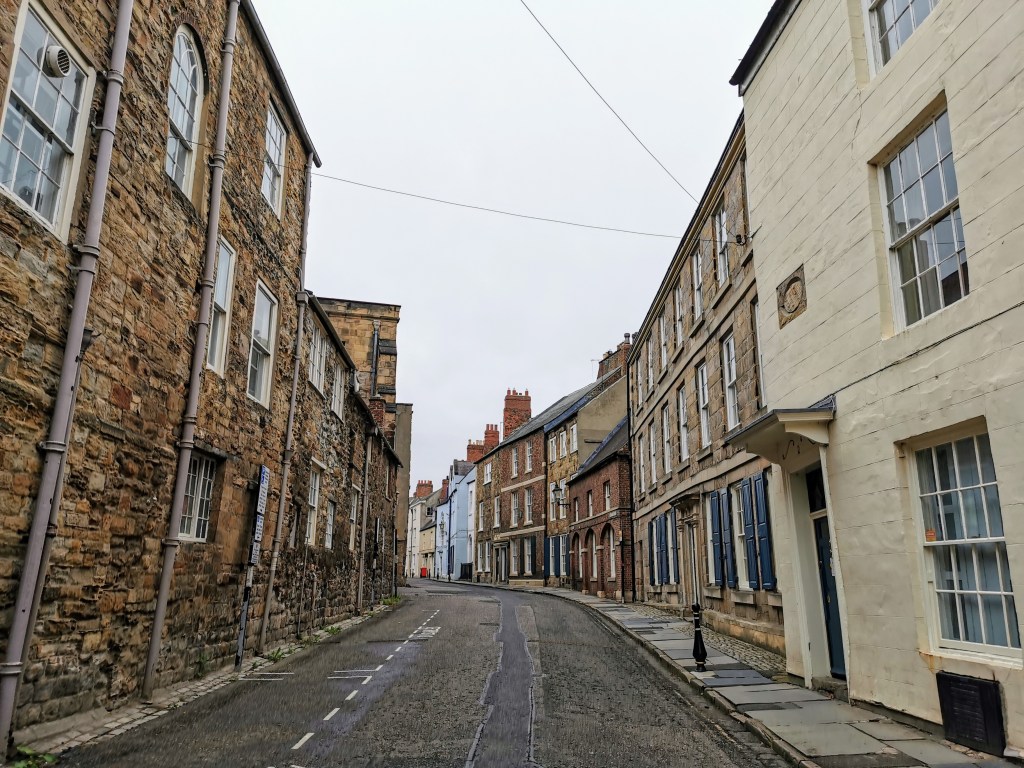
In a nice touch, our room is decked out in University memorabilia, including an oar over the bed. I tried rowing once, but was an absolute failure, spending most of my time trapped underneath the oar. Running is much less dangerous if you’re a bit weedy like I am. The room is compact but comfy, overlooking the attractive Georgian terraces on the street outside.

Leaving the hotel, I’m pleased to say that Durham isn’t a ghost town. Presumably, the people around us are fellow staycationers who couldn’t get to France or Spain this Summer, but it’s good to see them here boosting the local economy. I doubt it makes up for losing the hordes of international tourists who usually flock here, but it’s better than nothing.

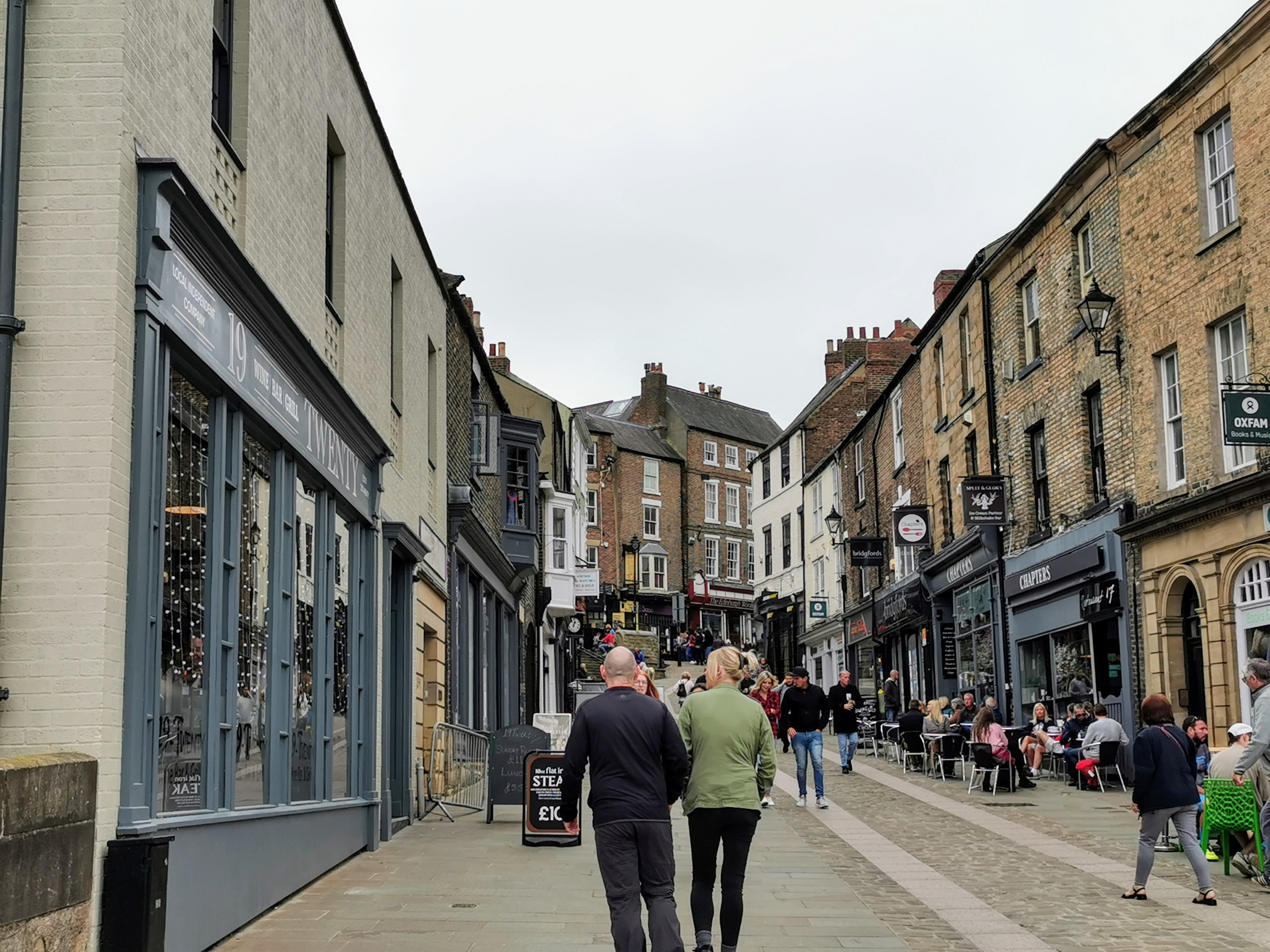
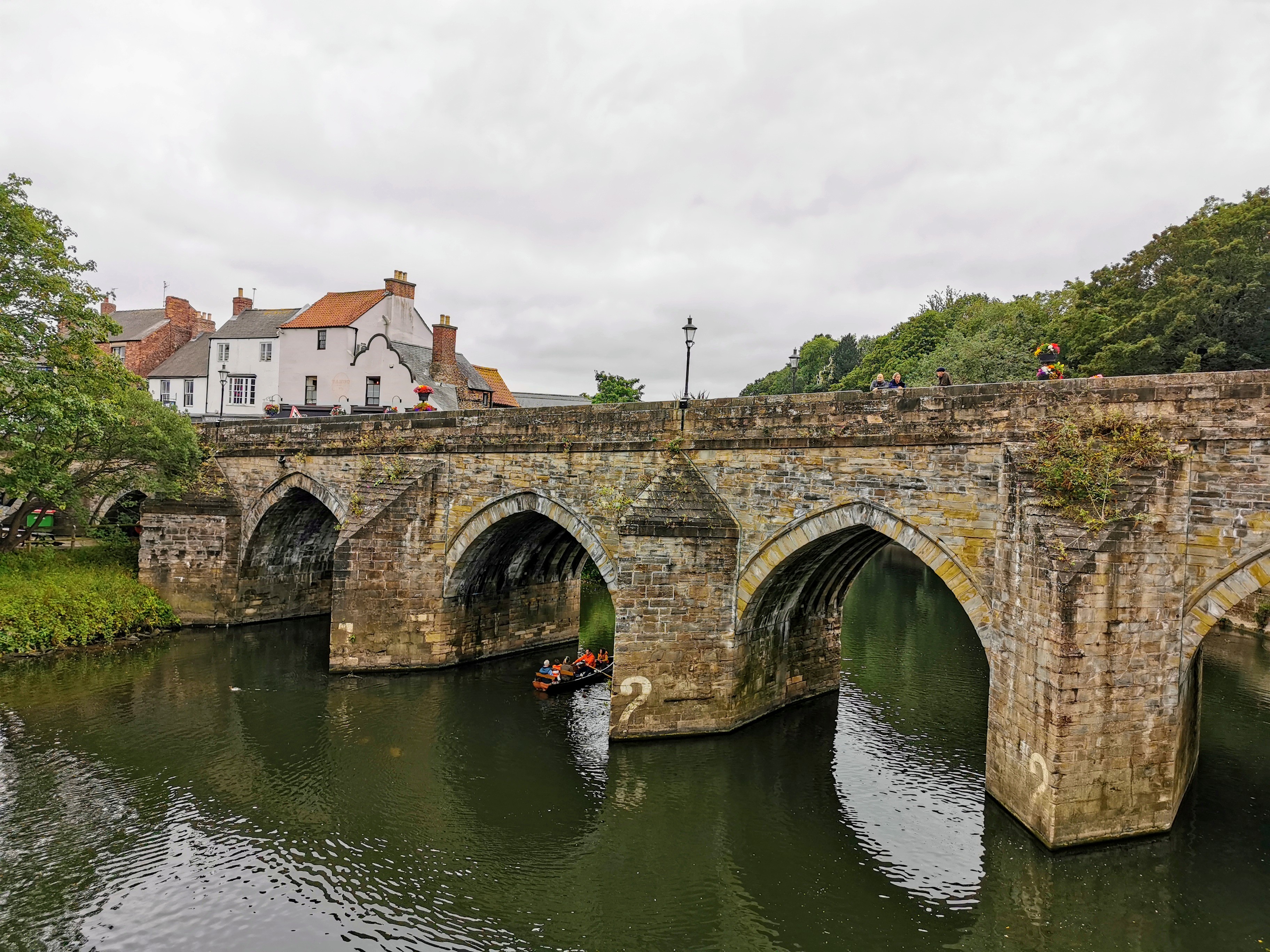
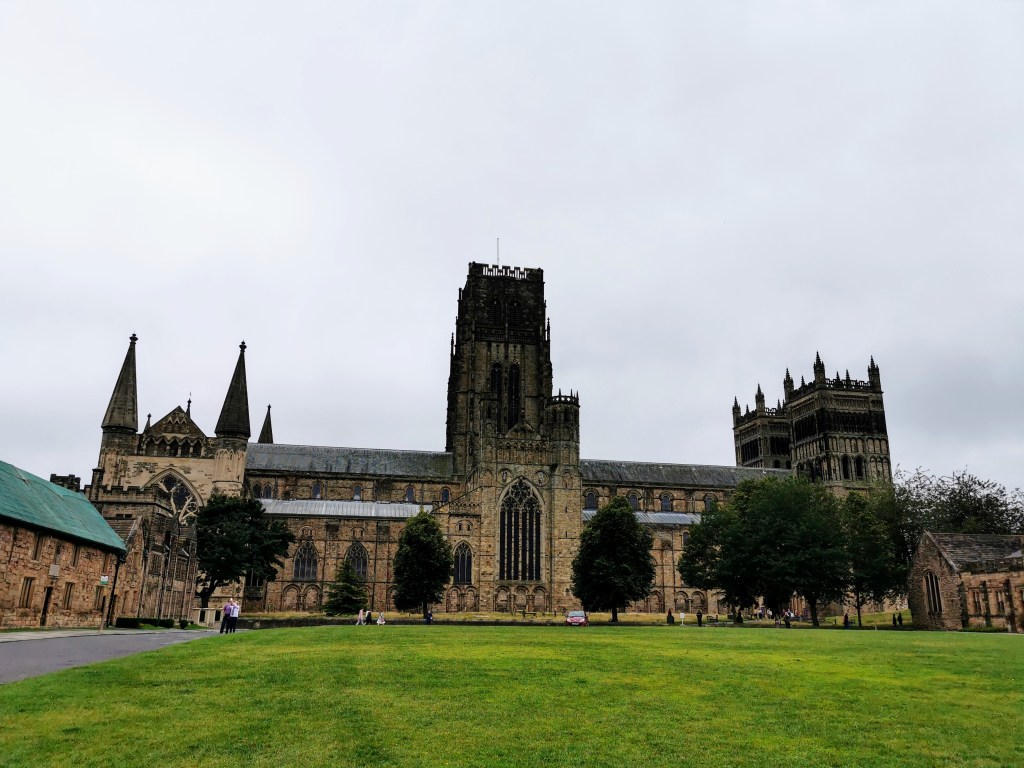
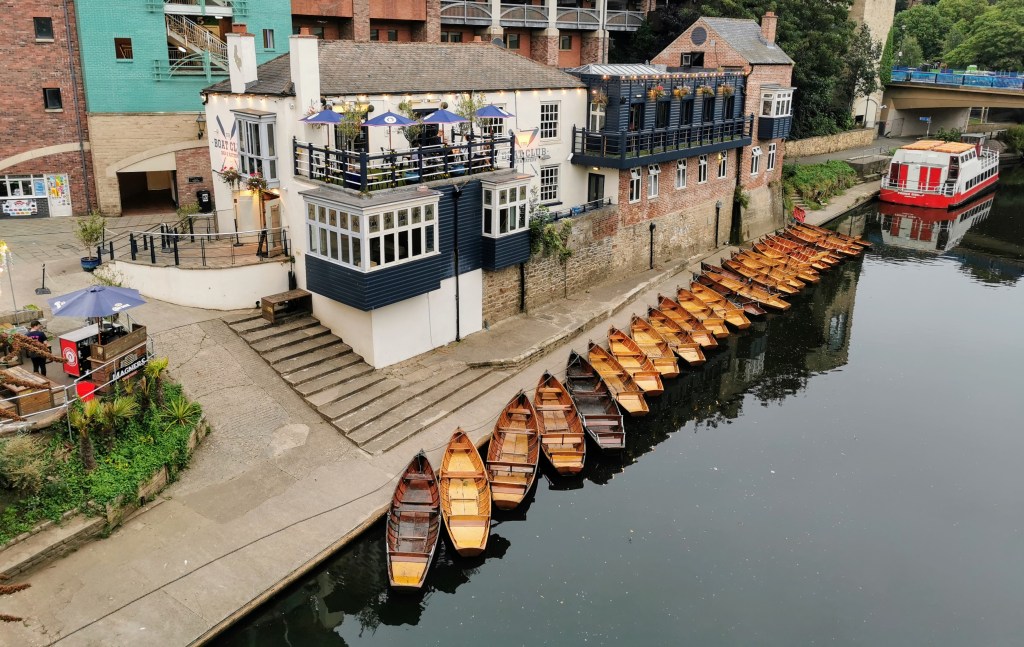
We start our walk, like everyone else, by crossing Elvet Bridge and strolling up Saddler Street to where the castle and cathedral face off across Palace Green. A few of the names have changed – the student favourite for cheesy chips, Saddlers Cafe, is now a shop – but Durham looks pretty much the same as it did 30 years ago.

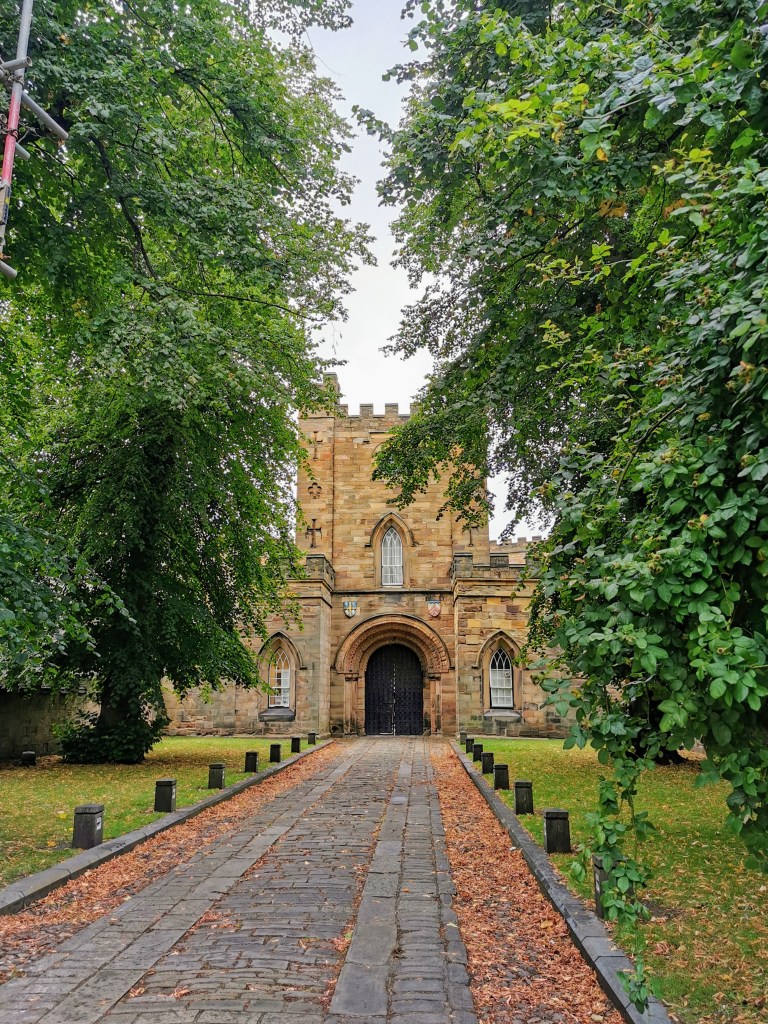
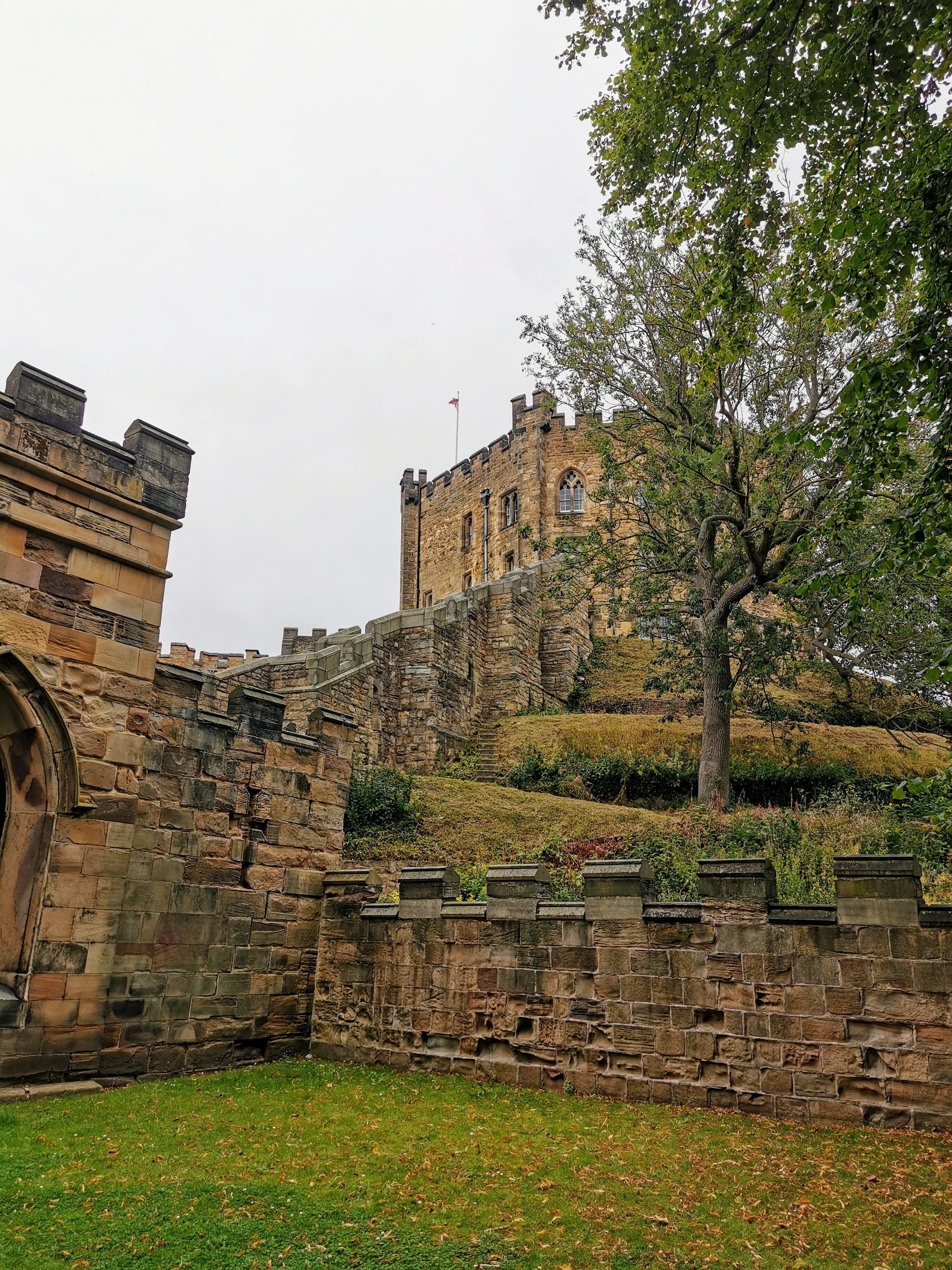
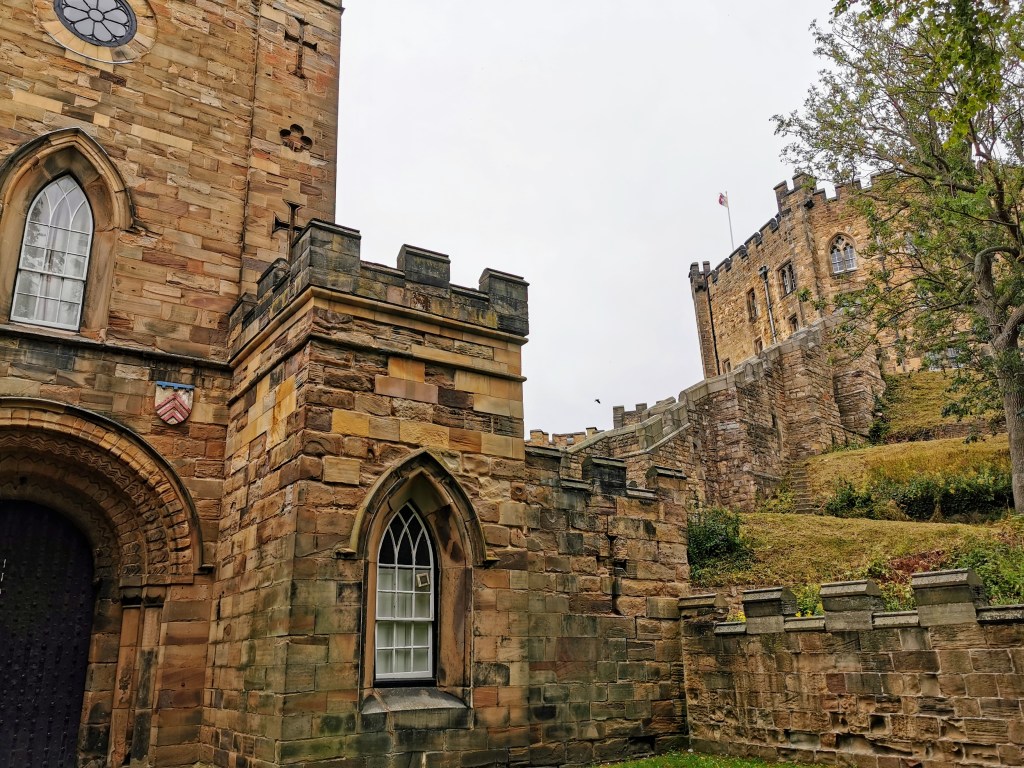
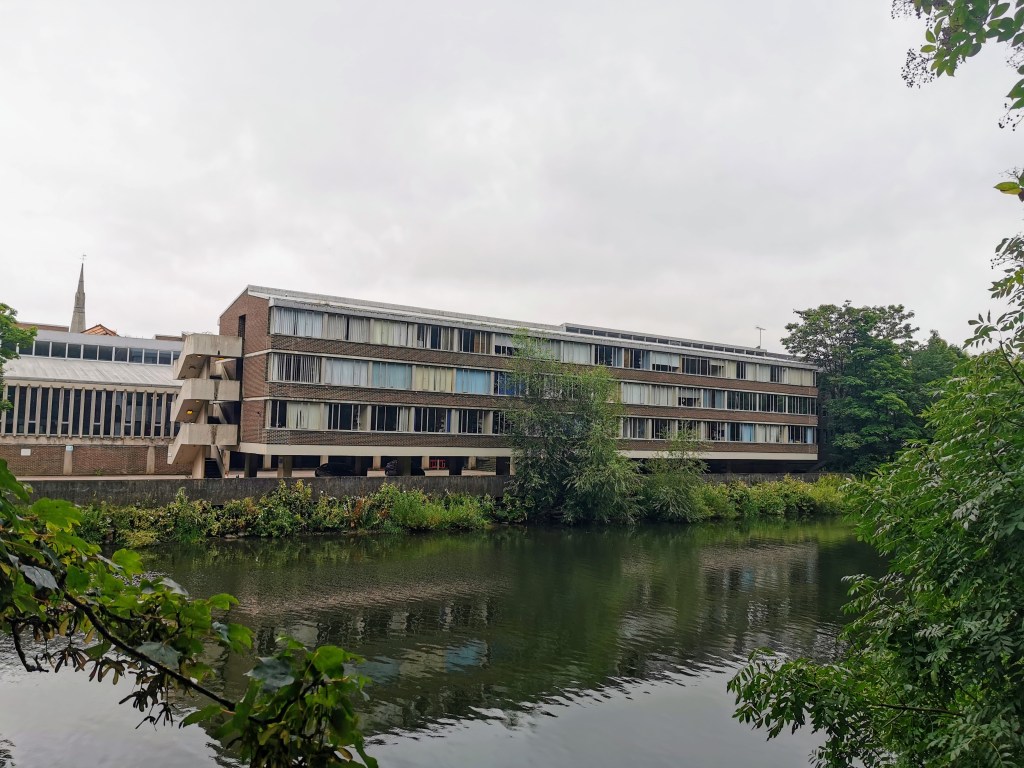
Durham Castle dates from 1072, in the reign of William the Conqueror, and was the home of the Prince-Bishops of Durham for hundreds of years. In 1832 the castle was bequeathed to the University and has been a student college since then. Yes, some lucky students get to live here! I wasn’t one of them, unfortunately, being banished to Van Mildert College on the outskirts of town, otherwise known as ‘the Poly on the Hill’ due to its 1960s concrete design. Typical.

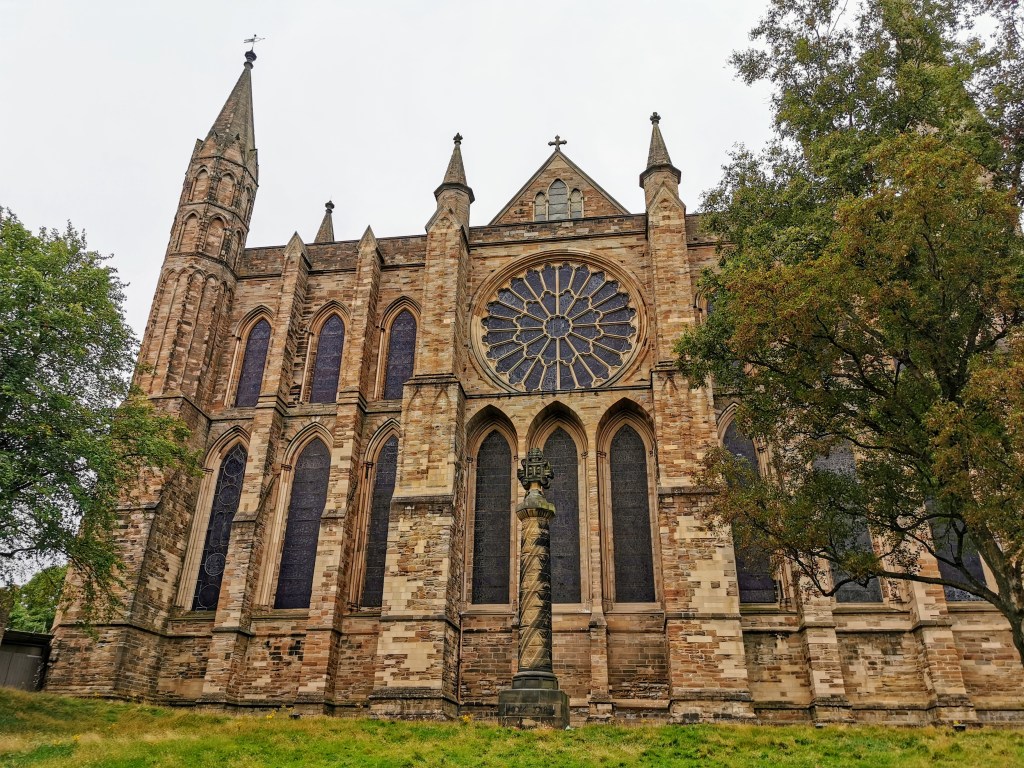
The Cathedral is directly opposite on the other side of the Green. Construction began in 1093 and it’s the seat of the fourth ranked Bishop of the Church of England (after Canterbury, York and London in case you’re wondering). It is considered to be one of the great cathedrals of Europe.

As a student, marching down the hill to this impressive building wearing a flowing black gown was guaranteed to give you a great sense of occasion. Even as an 18-year-old I could feel the weight of history and tradition – I still skipped lectures with a hangover though.

As I’ve said before, you don’t have to go too far far to ditch the ever-lazy crowds. Walking down the Bailey towards Prebands Bridge we could be the only people in town. Most of the buildings along here belong to the University and therefore currently sit empty. Our footsteps echo in the silence as we tramp down to the river.

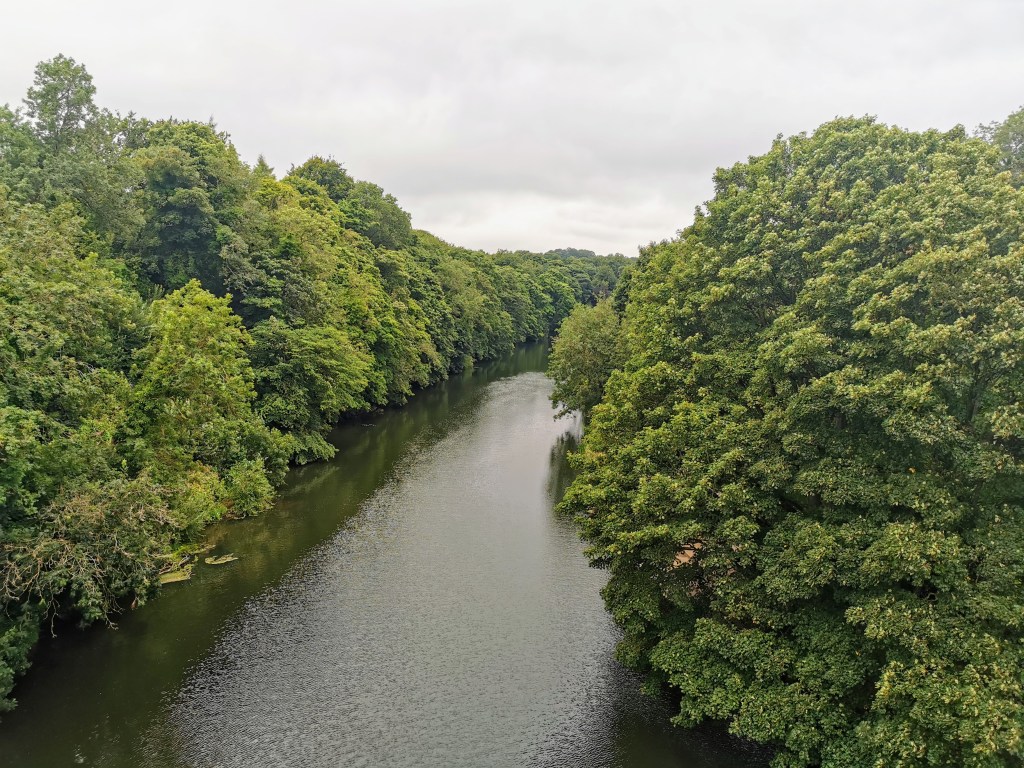
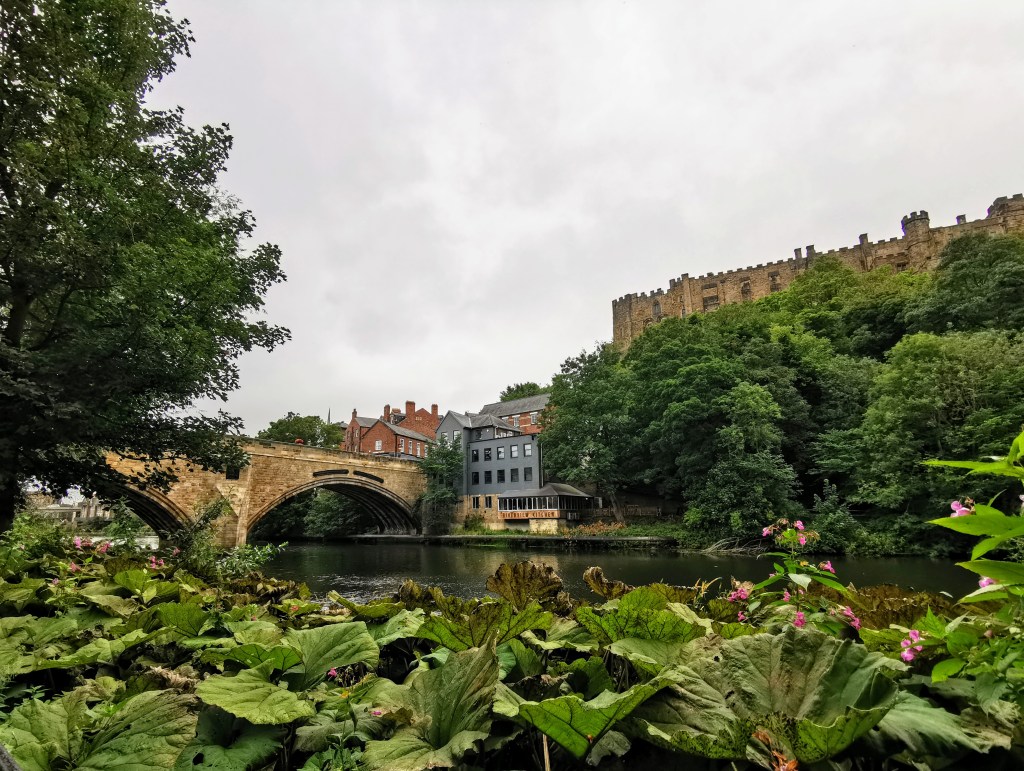
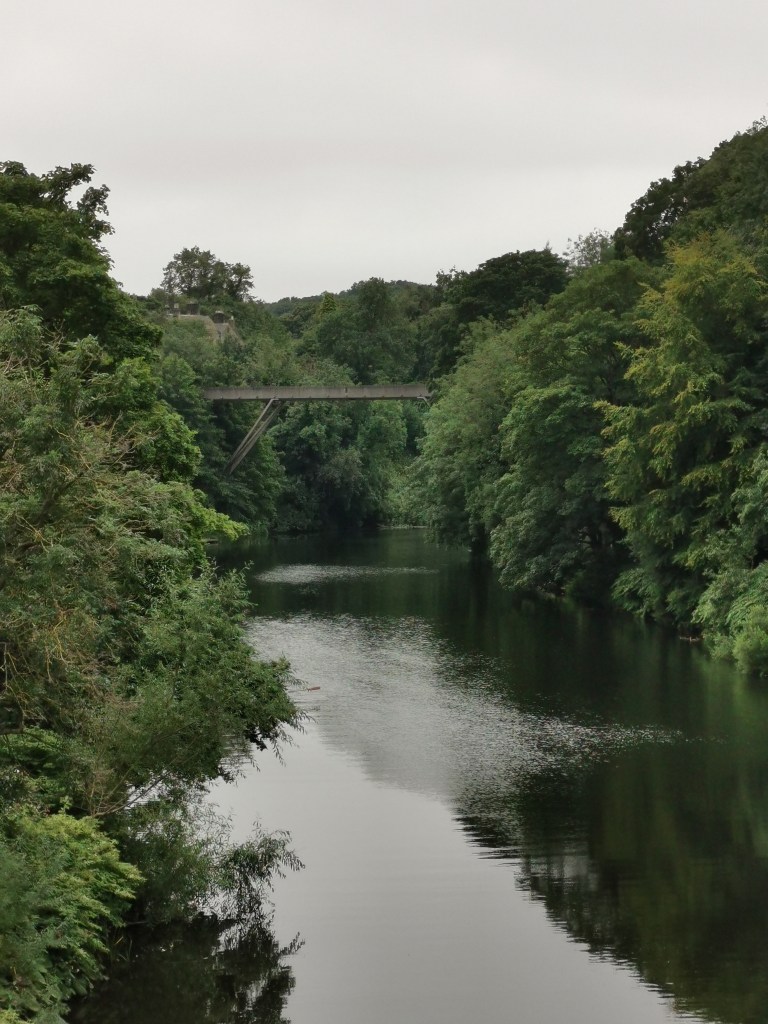
The riverside walk from Prebands Bridge to Framwellgate Bridge rewards with the most iconic views of Durham. It’s really quite breathtaking, especially when you think about how long these old buildings have been surveying the landscape from their hilltop perch.

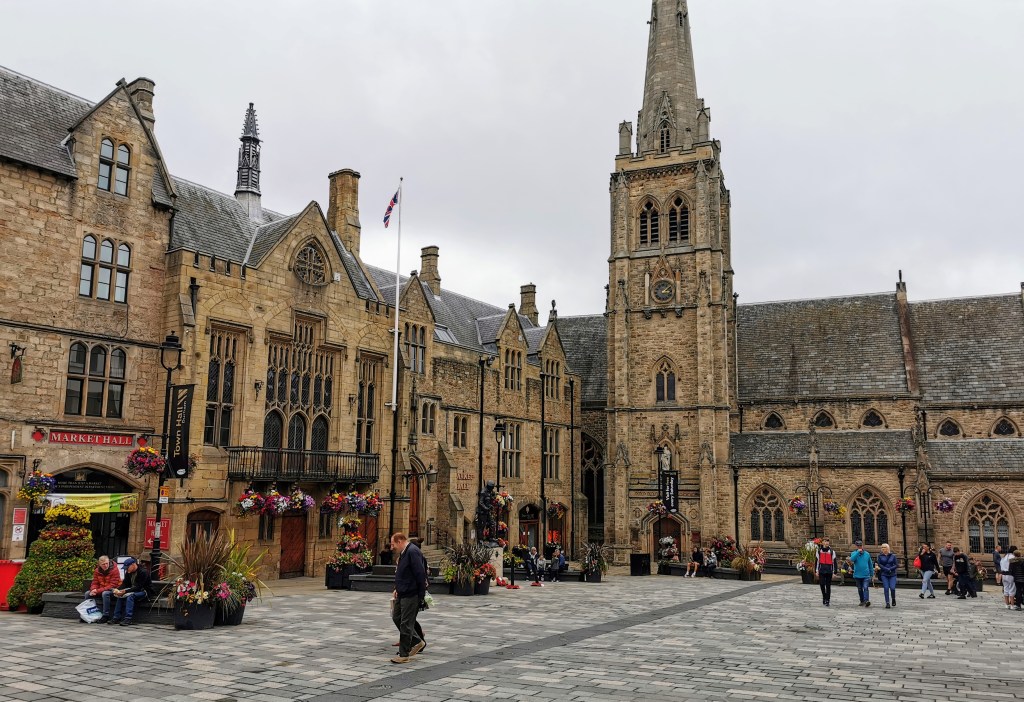
Back in the centre of town, we can see that Durham hasn’t been spared the national malaise of the High Street slump. Many shops here are empty and boarded up, just as they are in other towns and cities across the UK. But the market square still looks lovely.

‘The perfect little city’ is how Bill Bryson described Durham during his travels around the UK. If you haven’t read Notes From a Small Island then I suggest you do – it’s a very amusing portrait. Bill was subsequently invited to become University Chancellor, taking over from actor Peter Ustinov who carried out the role when I was a student. Mum and Dad were thrilled to bump into Hercule Poirot himself when they stayed at the Royal County Hotel for my graduation.

One more clamber down to the riverside is needed so that we can gaze up at some of the least beautiful buildings in Durham. Elvet Riverside is the home of Modern Languages and hence where I spent many happy hours (when I managed to get out of bed). Apparently, students like the quirkiness of the building even now – the rooms are dark, the numbering doesn’t make sense and the heating system has a mind of its own.

Sitting next to it is Brutalist Dunelm House, Durham’s Student Union. The exterior viewed from the riverbank is so dreadfully ugly that I can’t even bear to take a photo, although the inside is really spacious and pleasant. Luckily it’s much obscured by trees when you gaze along the river, with only the quite dainty pedestrian Kingsgate Bridge protruding over the water, so it doesn’t spoil the view. Sights seen and walking done, we retire to our hotel for a breather.

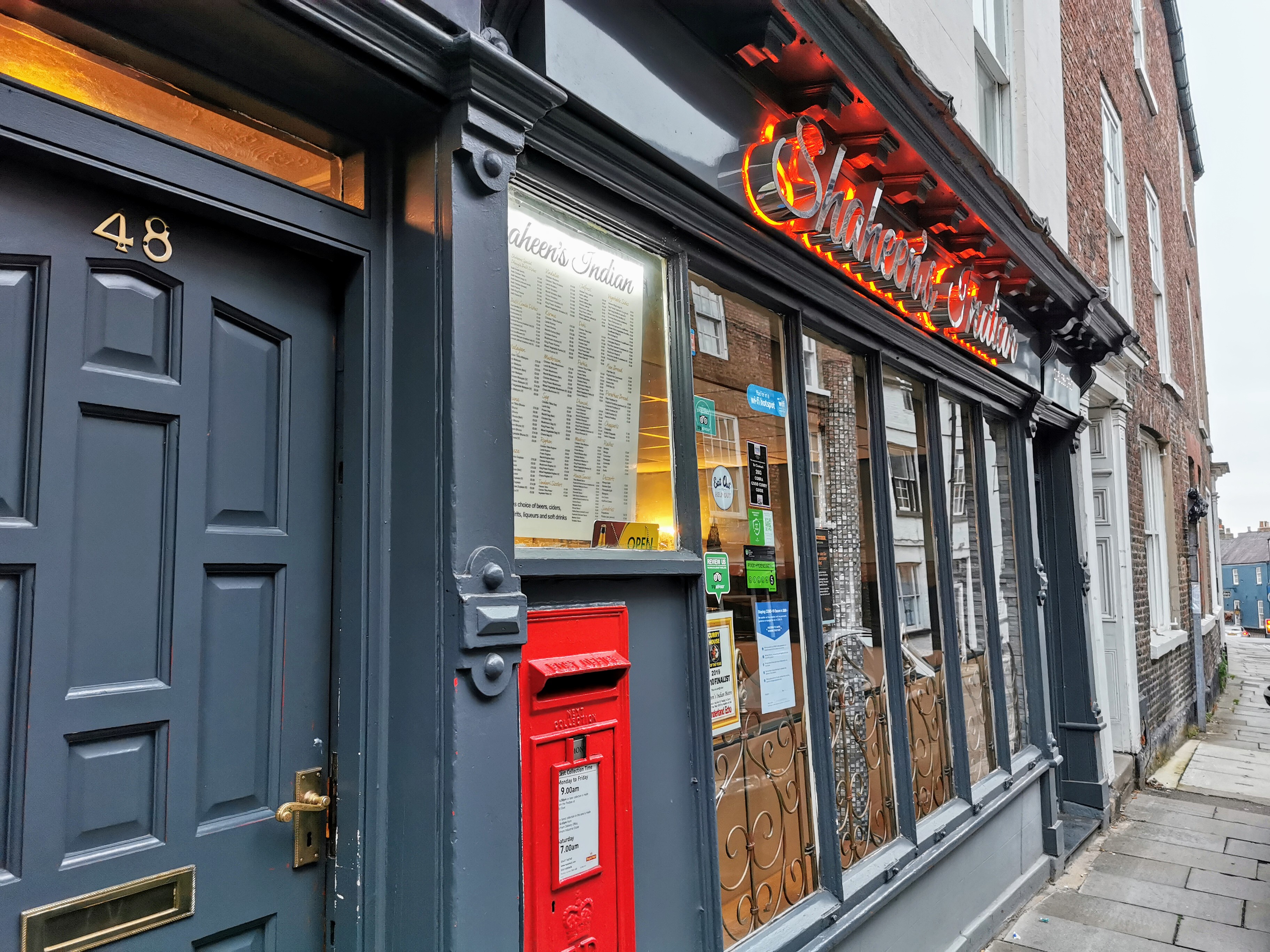
For dinner, we visit Shaheen’s restaurant. As you know by now, the husband is partial to a curry, and this place is number one on Trip Advisor. I had my very first curry here at the ripe old age of 21. For someone who’s obsessed with food, I started out as a very fussy eater. The long list of things that teenaged me refused to eat included cheese, tomatoes, mushrooms and rice. I have no idea how I survived, but I remember eating a lot of baked potatoes!

We’re warmly welcomed by the family who have owned and run the restaurant for over 30 years, although sadly they don’t remember me. The food is fresh and light, in fact we have what we both believe to be the healthiest tasting Indian meal ever. Really! Highly recommended if you’re in the neighbourhood.

I’ve thoroughly enjoyed my trip down memory lane, and I don’t think I’ve bored the husband too much with my reminiscences. And he’s had a curry, which generally keeps him happy. Now I just hope that some University bigwig reads this blog and offers me a job as Chancellor. Well, it worked for Bill! In the meantime, we’re heading for the border…

A shopping trip to post-lockdown London

The husband wants to go shopping in the Big Smoke. Normally I would groan and try to wriggle out of accompanying him. Today, after our recent trip to a very quiet Palermo, I feel that I should go and assess how things are going in London in the wake of coronavirus.

The train to Paddington is empty. It feels a bit silly wearing a mask to protect ourselves from ourselves, but the Government rules don’t allow for common sense. Luckily the train is new and the air con is good – it’s another hot day in the UK. The Tube to Oxford Circus, on the other hand, is quite busy. A lady gets on with her mask round her neck and you can feel the tension. I’m glaring at her myself, in fact. She obviously feels the disapproving vibes and pulls her mask into place.

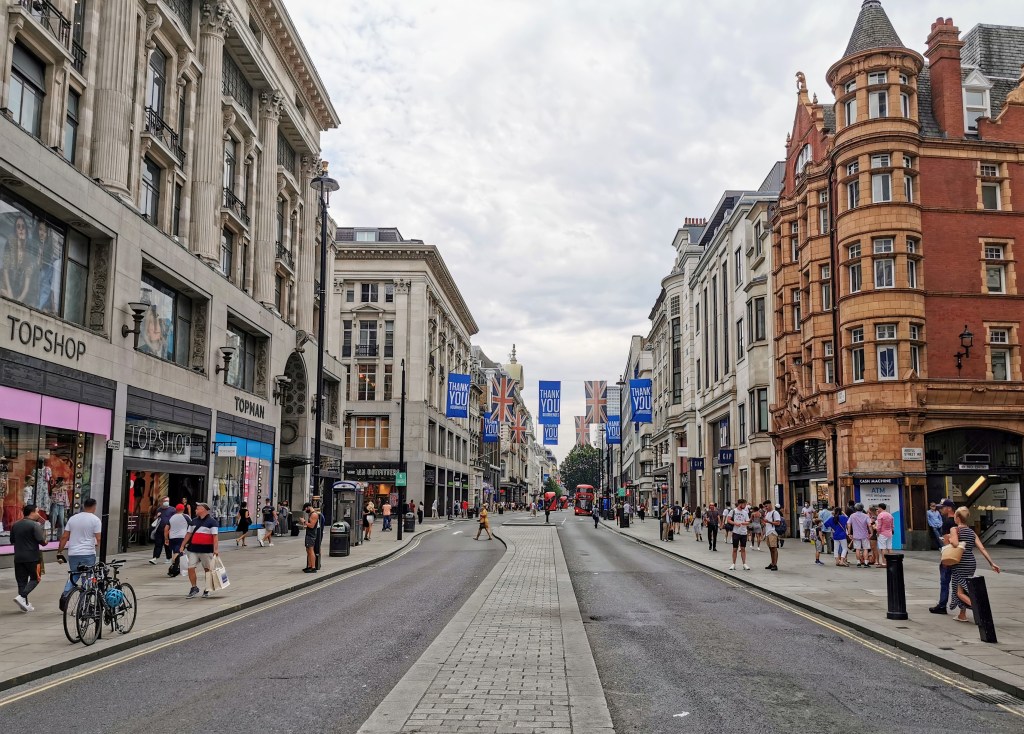
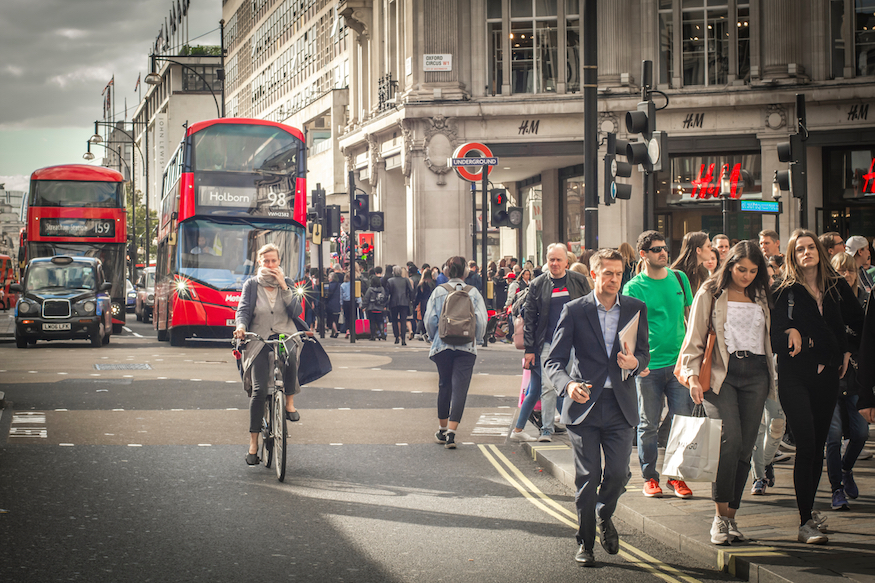
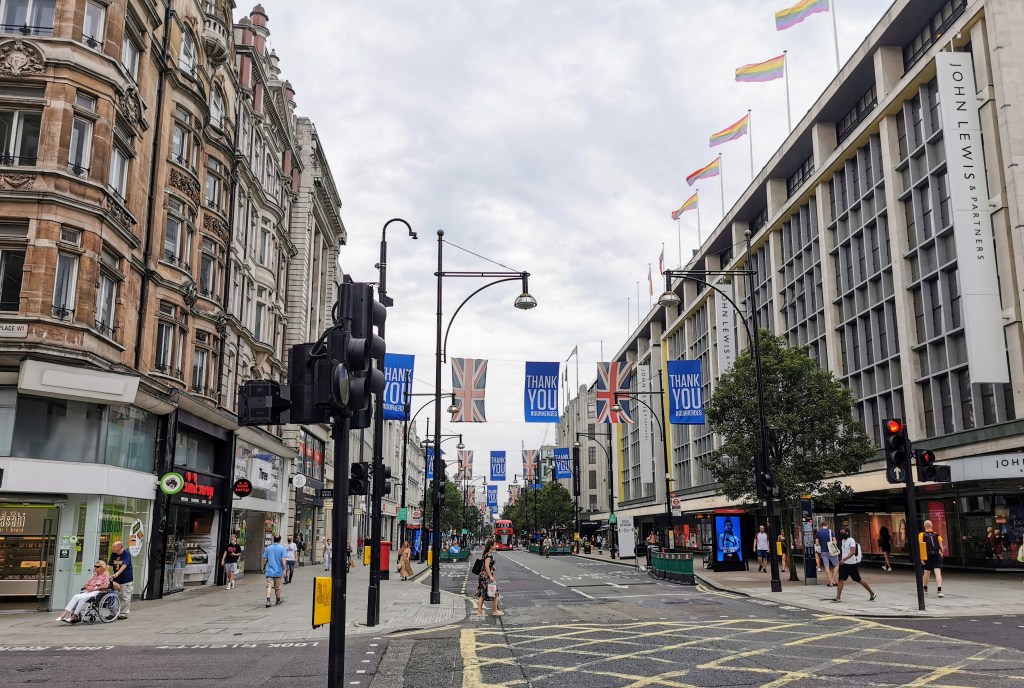
Our first shopping destination is Oxford Street. Originally a Roman road, then a major coaching route, it developed into a major retail hub in the 19th century. Famous department stores John Lewis and Selfridges were founded here. In normal times, it’s the busiest shopping street in Europe.

Today, all is quiet. The traffic is non-existent, basically only a few buses and taxis. Walking along the pavement here in the middle of Summer is usually like being in a computer game, dodging left and right to avoid the idiots taking selfies. We tend to avoid it like the plague. Now, well, we can walk normally. It’s rather nice for us, not so great for the economy.

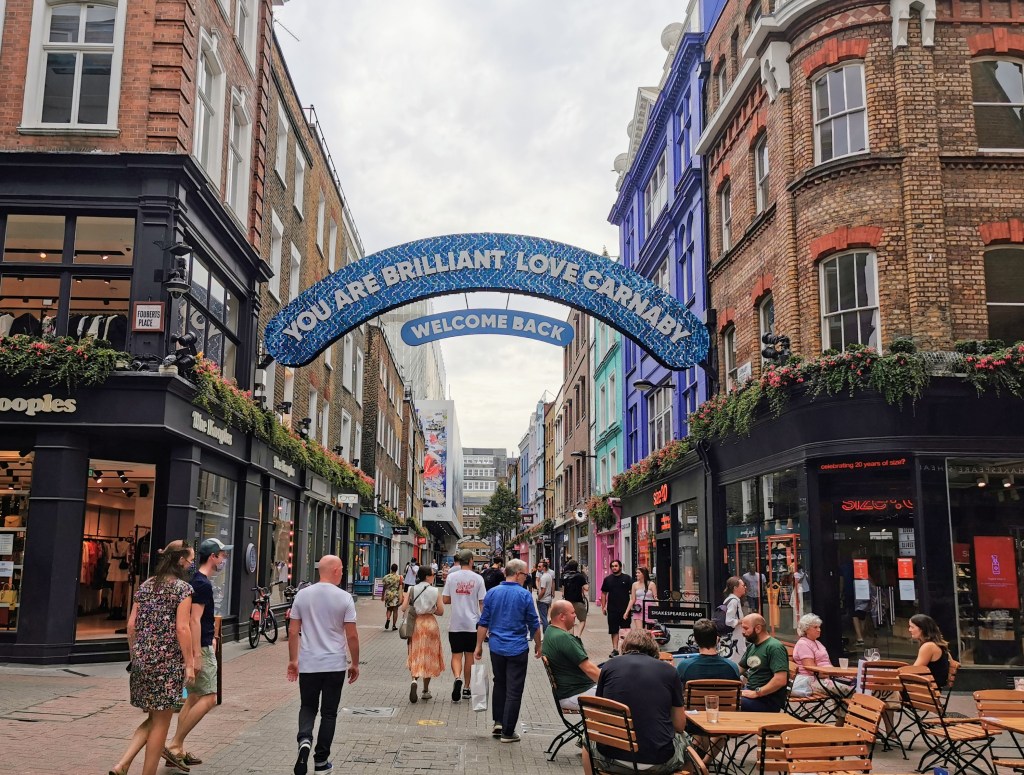
The husband has a list of shops to visit, at least he’s organised. And it’s a reasonably short list too. He promises me a pub stop halfway. This should be quite painless. We head just around the corner to our second shopping mecca, Carnaby Street, birthplace of 1960s Swinging London.

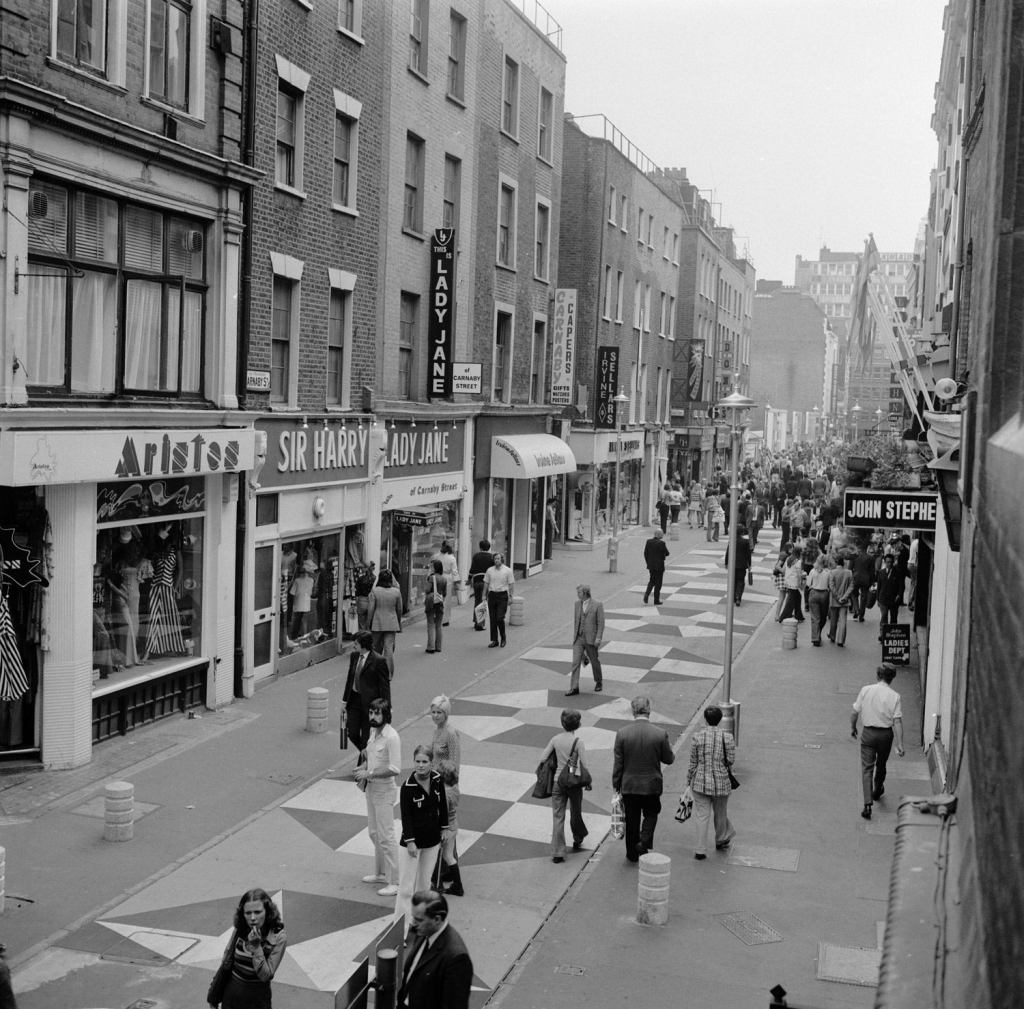
The first clothes shop opened here in 1957 and it soon became known as fashion central, particularly after the first women’s boutique Lady Jane arrived, complete with publicity stunts such as models getting dressed in the window. Owner Henry Moss was fined £2 for causing the blockage of a highway. Designers such as Mary Quant moved in, bands like The Who and The Stones came here to shop, and a legend was born.

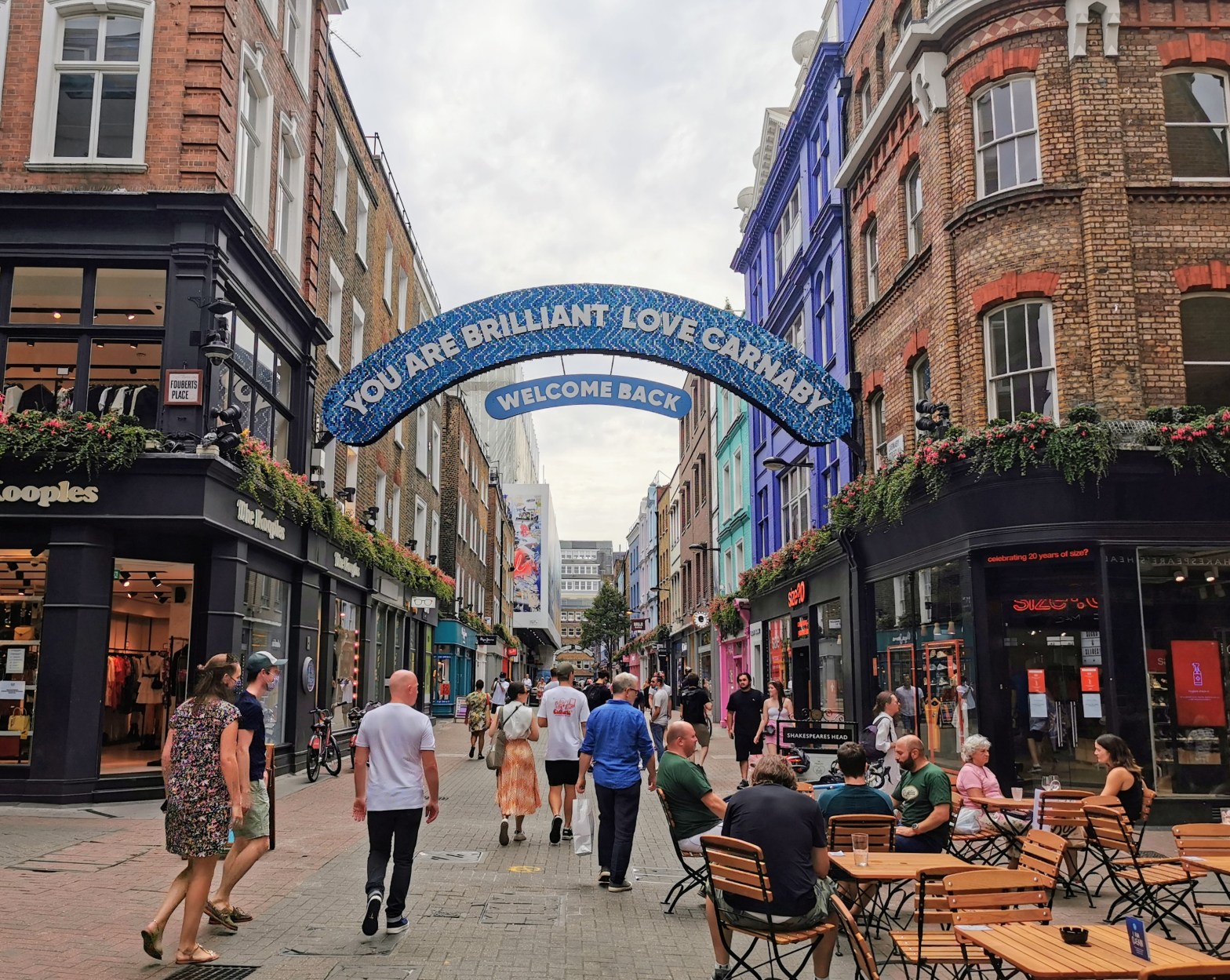
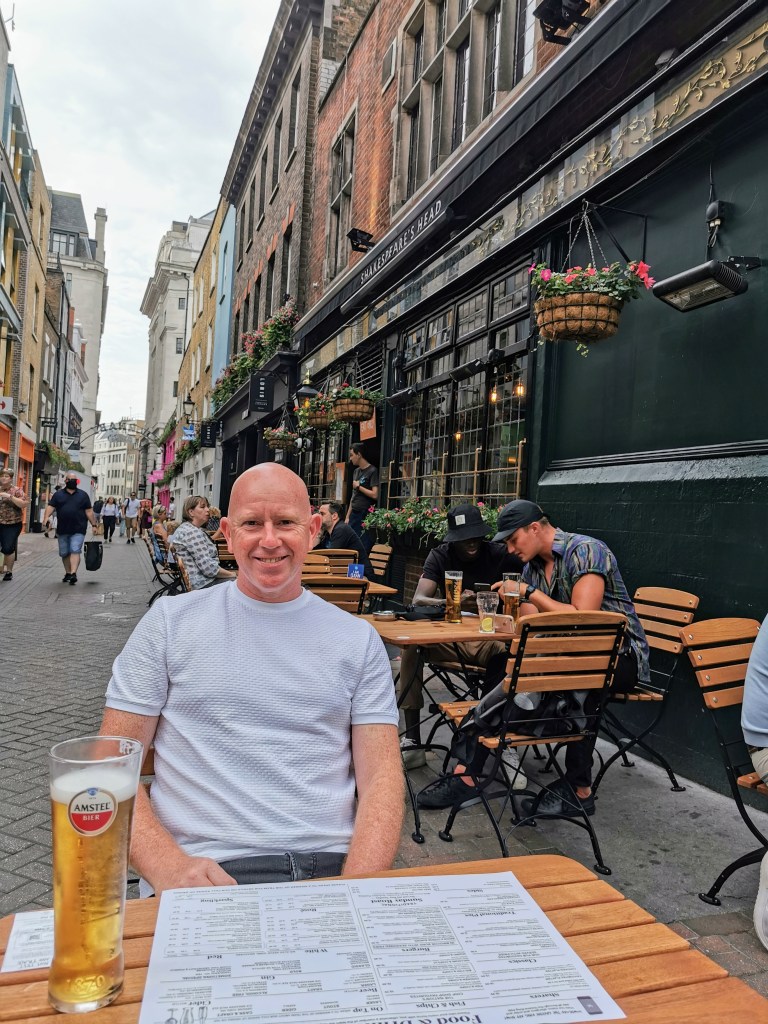
No longer cutting edge, nowadays Carnaby is still a hugely popular, pedestrianised shopping and eating district. Today it feels pleasantly buzzy and relaxed. There are free seats, outside, in the middle of Summer – unheard of! We happily grab a table. In previous visits we’ve sought one in vain.

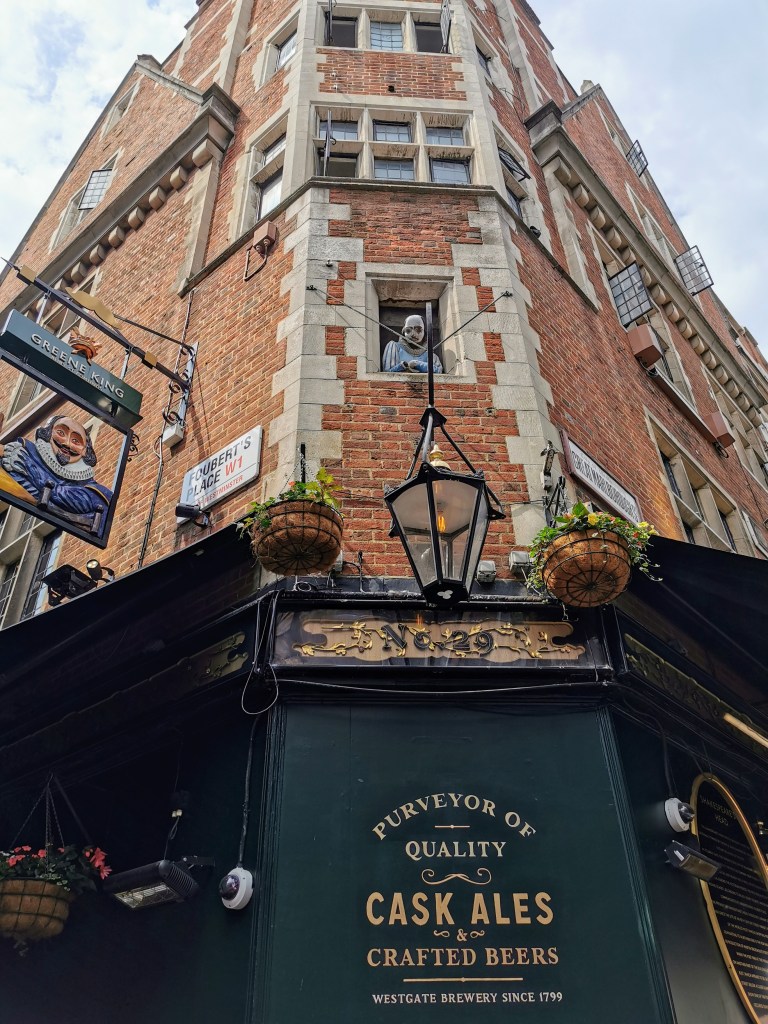
The Shakespeare’s Head was built in 1735 and actually belonged to relatives of the Bard, Thomas and John Shakespeare. How exciting! I nearly spit out my wine when I see Will himself looking down at me from the window above. He’s missing a hand, thanks to a WWII bombing nearby.

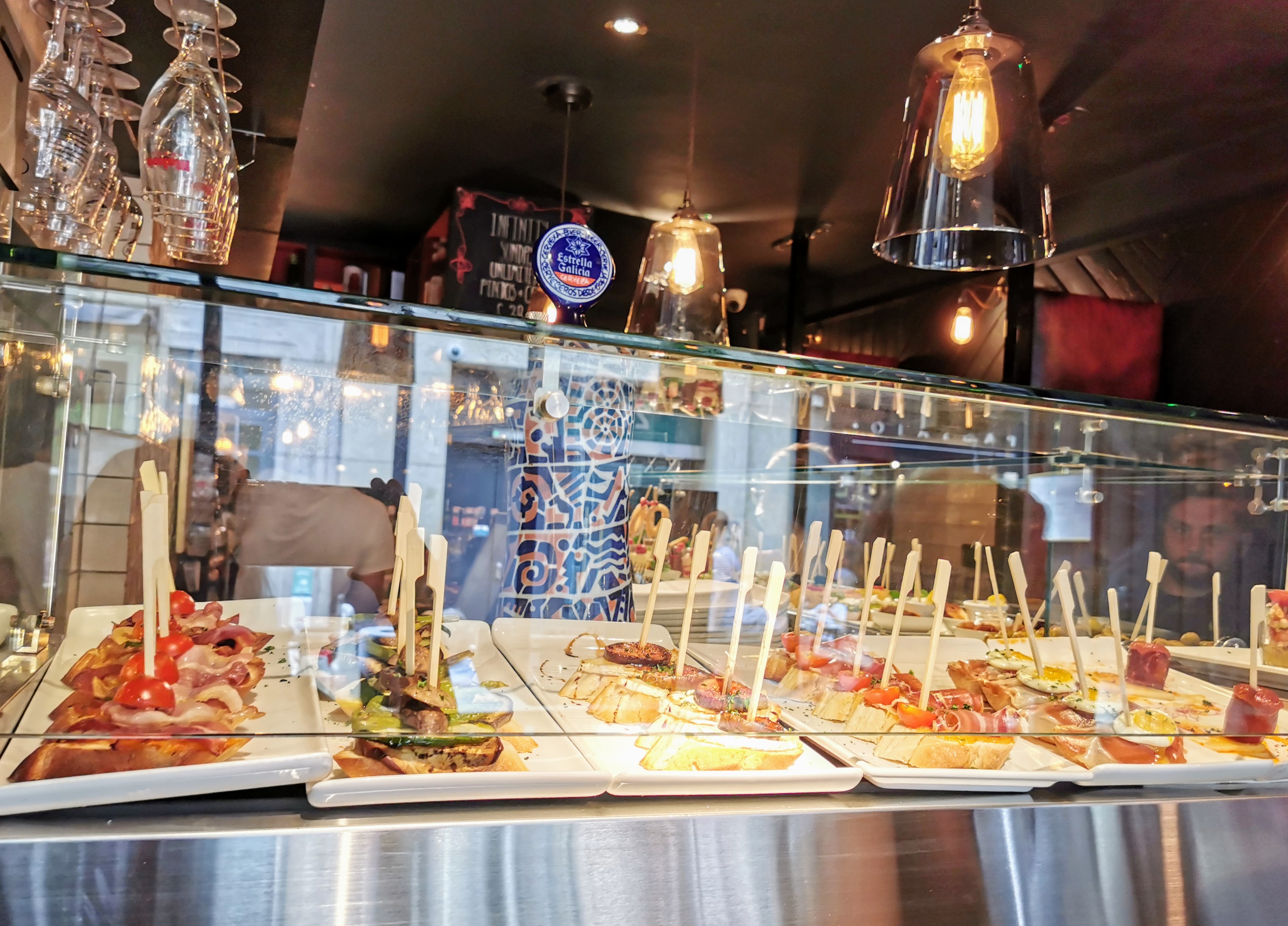
One more shop and then it’s time for lunch. The husband knows I can only go so long without sustenance. I booked, erring on the side of caution due to past experience, but probably didn’t need to bother. The restaurants here, usually full to the brim, are mostly quiet. Pinxchos at Pix is perfect as a light meal, and everything is tasty and authentic, albeit smaller than the snacks we’ve had in Spain.

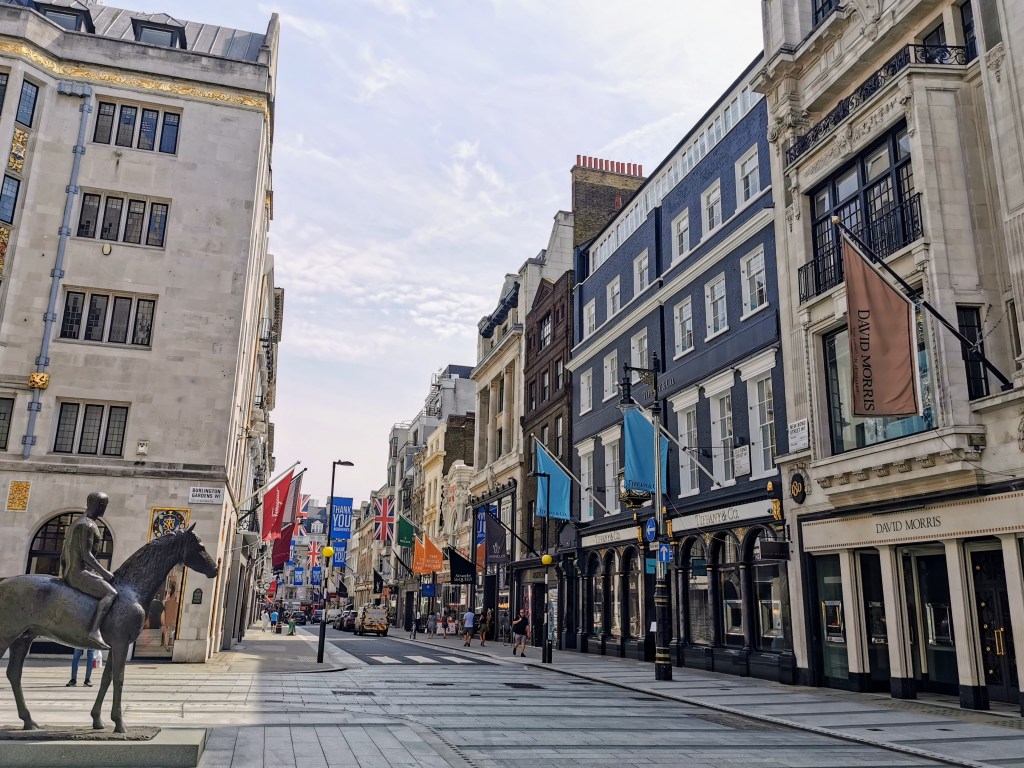
Our final destination is oh-so-snazzy Mayfair, famous for its high-end tailors, designer boutiques and auction houses. The most expensive space on the Monopoly board is also the site of Britain’s most expensive home, worth £250 million.

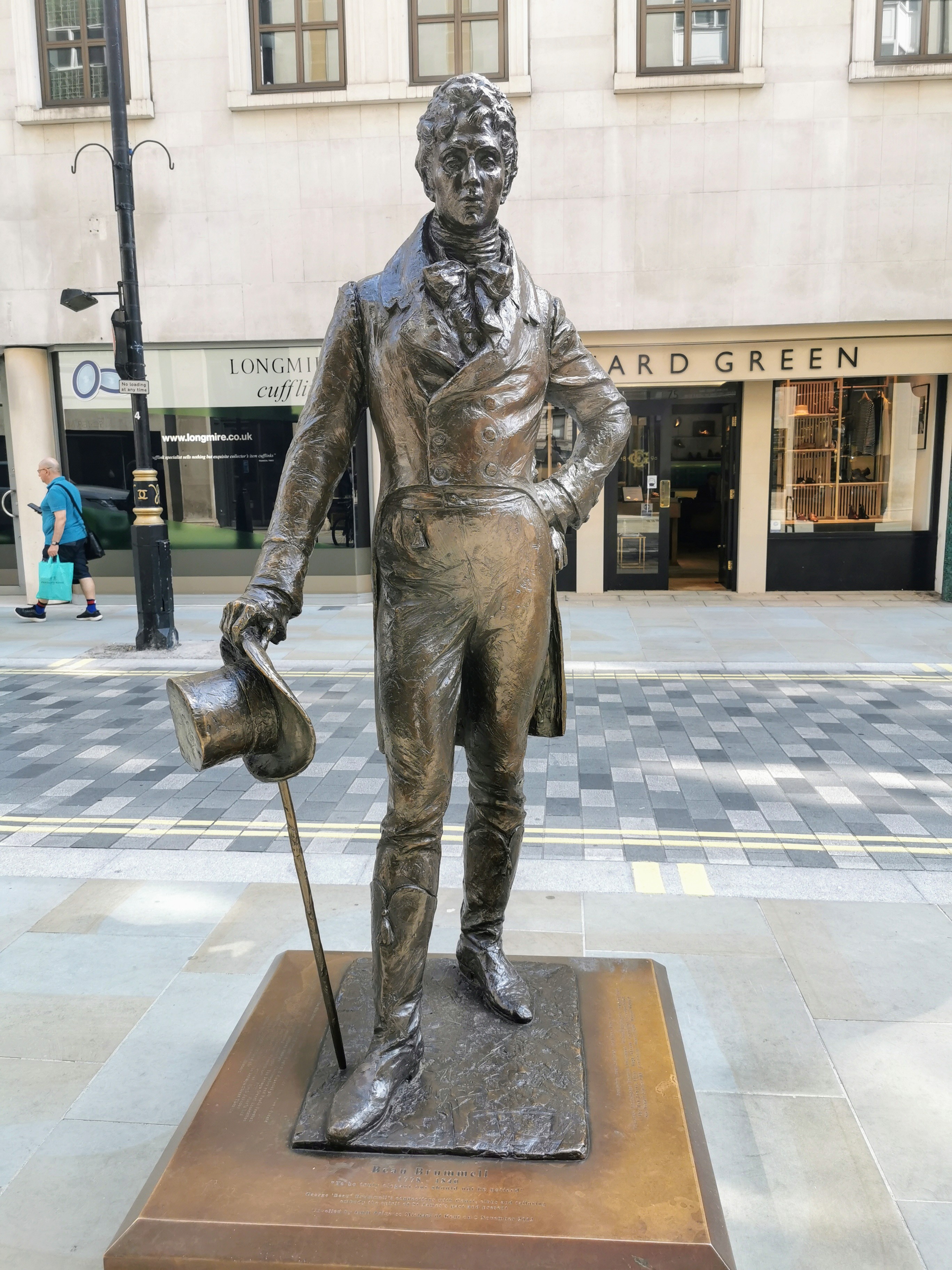
Fittingly, we’re greeted by Beau Brummel, the most fashionable man of his time. Born in 1778, Brummel was the original dandy, friend of royalty and arbiter of taste. He famously refused to live in Manchester as it had no culture or civilisation. If anyone from Manchester is reading this, don’t shoot the messenger!

The May Fair was held in this area in the 17th and early 18th centuries, when it was largely rural. The Grosvenor family then purchased 100 acres of land and laid out a grand plan for development, with large squares and mansions. The ‘undesirable’ fair was abolished and the upper classes moved in. Mayfair has never looked back.

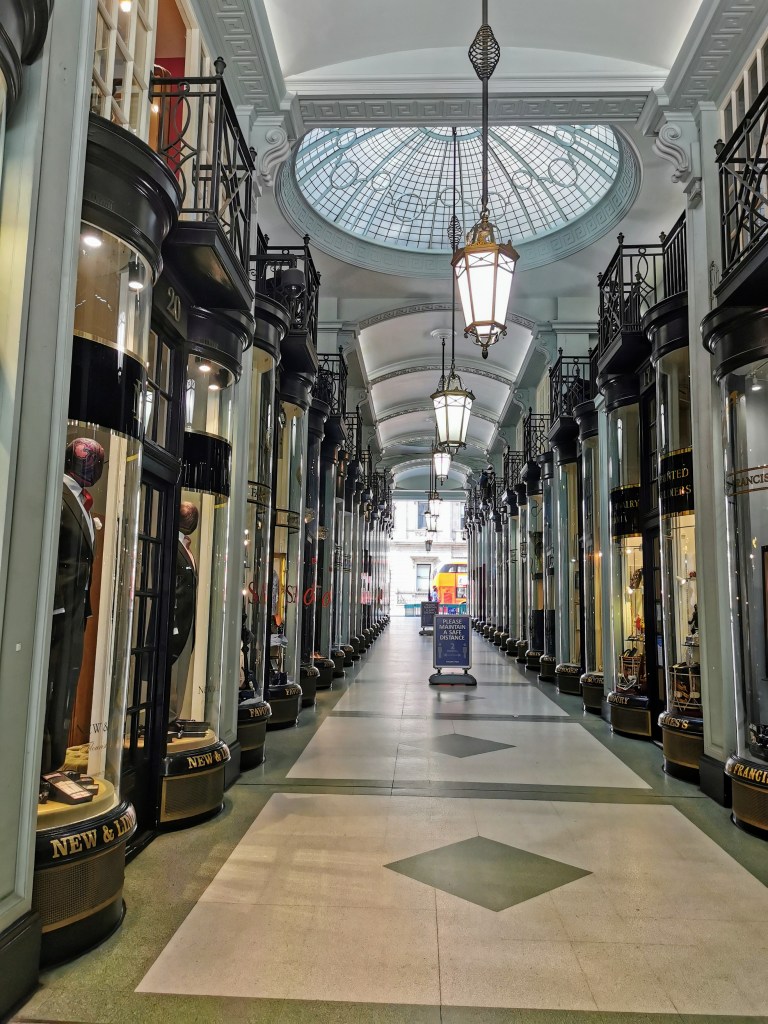
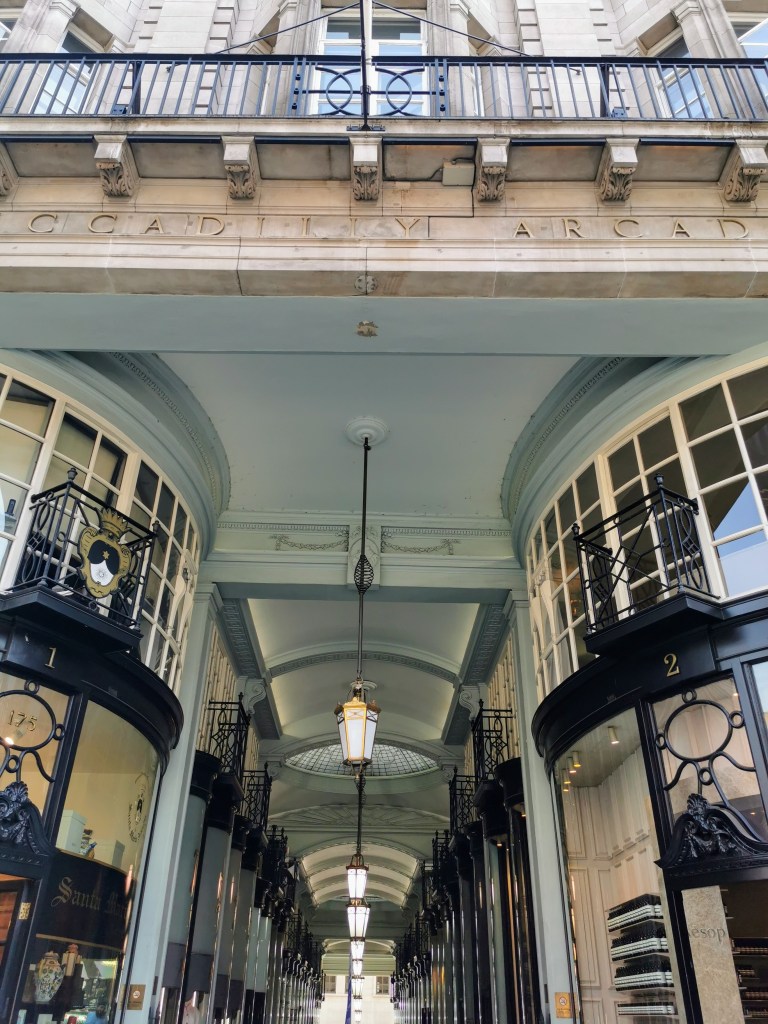
We walk through the area’s celebrated arcades, which are totally deserted – it’s quite eerie on a Saturday afternoon. The Piccadilly Arcade opened in 1909 and sells ‘fashion, jewellery and taste’ according to the website. No-one is buying any of those today.

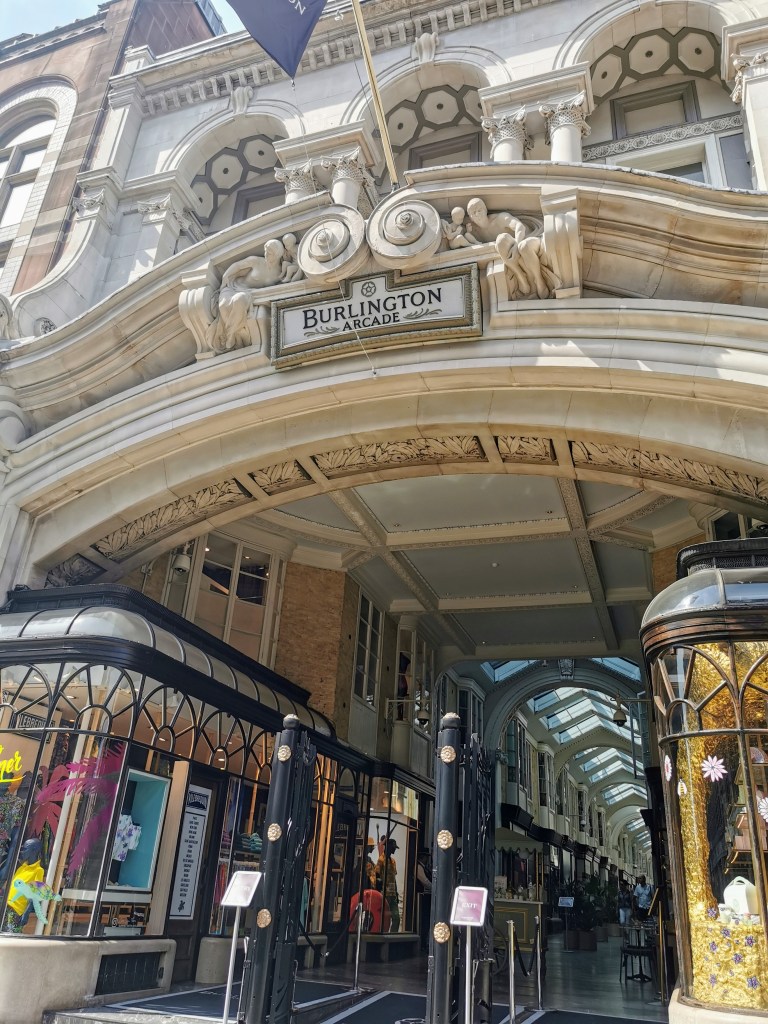
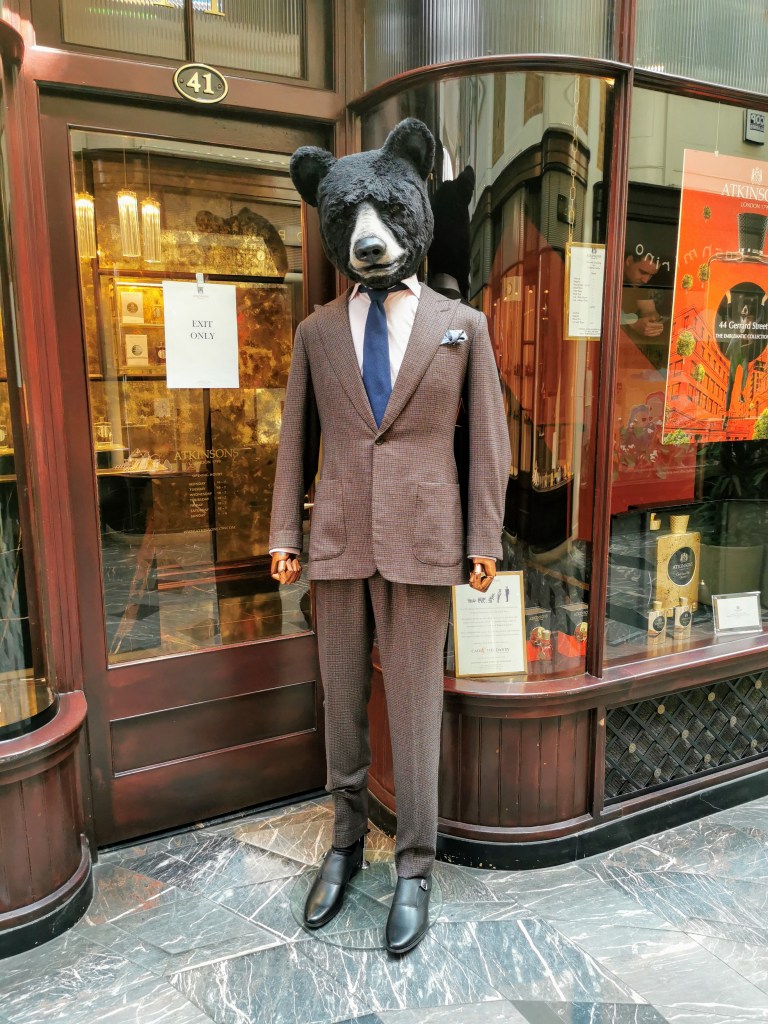
The Burlington Arcade has been attracting rich shoppers and gawkers since 1819 with its high end shops. Humming, singing and hurrying are banned, and there are usually uniformed beadles on duty (known as Burlington Berties) to ensure that rules are adhered to. No sign of them today, but then they’re really not needed. There’s no-one here to misbehave.

Our shopping trip has been successful in terms of purchases, but we are both feeling quite subdued as we return to Paddington to get the train home. We’ve heard on the news how badly London is suffering during the pandemic, but it’s different to actually seeing the impact for ourselves. Clearly, this city will take a while to recover, if it ever does. Churchill and Roosevelt may be smiling, but no-one else around here is.

Travels in my neighbourhood: Henley on Thames

I decided to write a blog about Henley because I drove there spontaneously on a sunny afternoon and was so heartened to find it was busy despite the pandemic. After visiting Windsor recently and finding it dead on its feet, I felt a huge sense of relief. Yes, we all want to stay safe, but we can’t let coronavirus destroy our way of life.

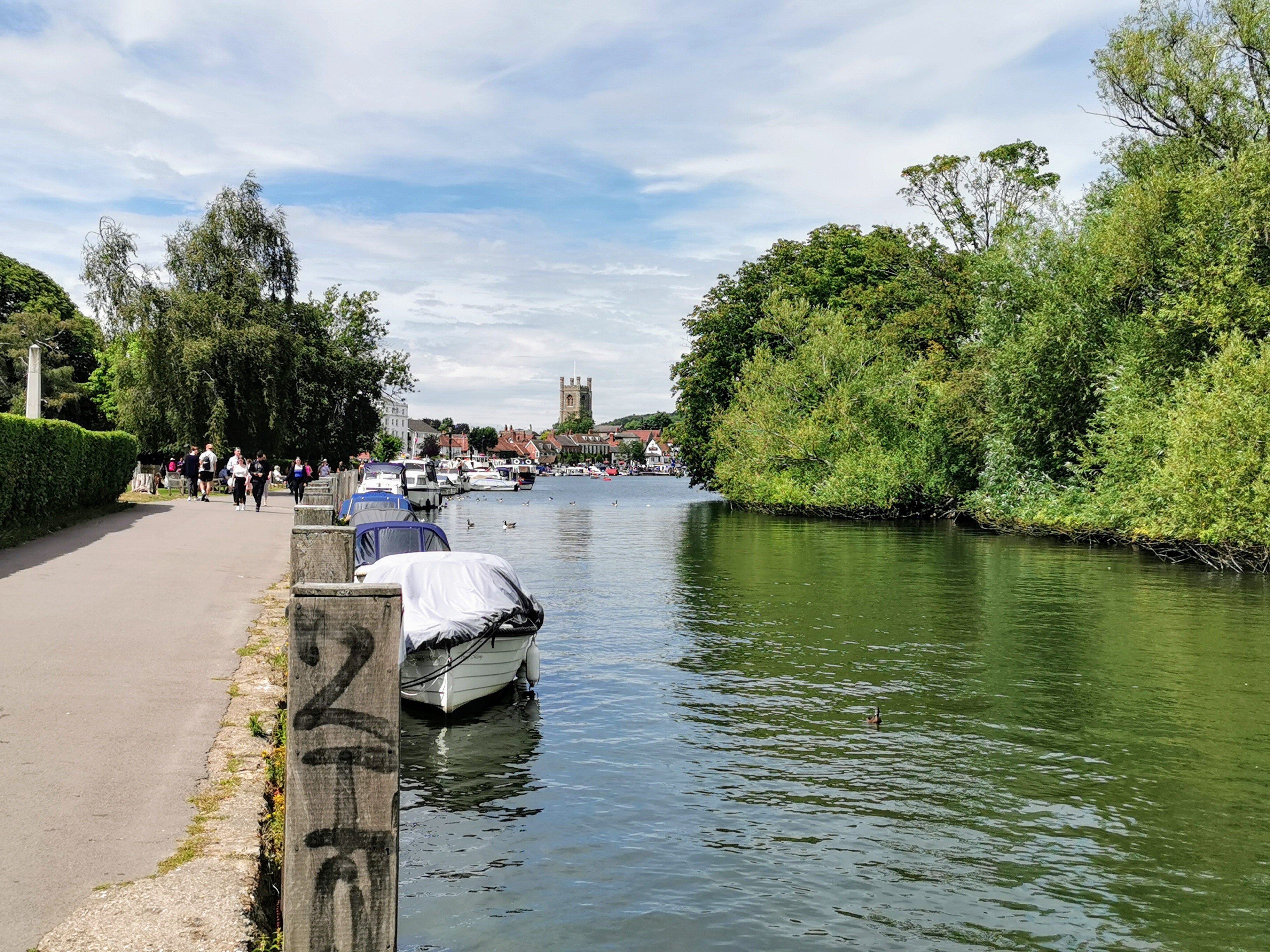
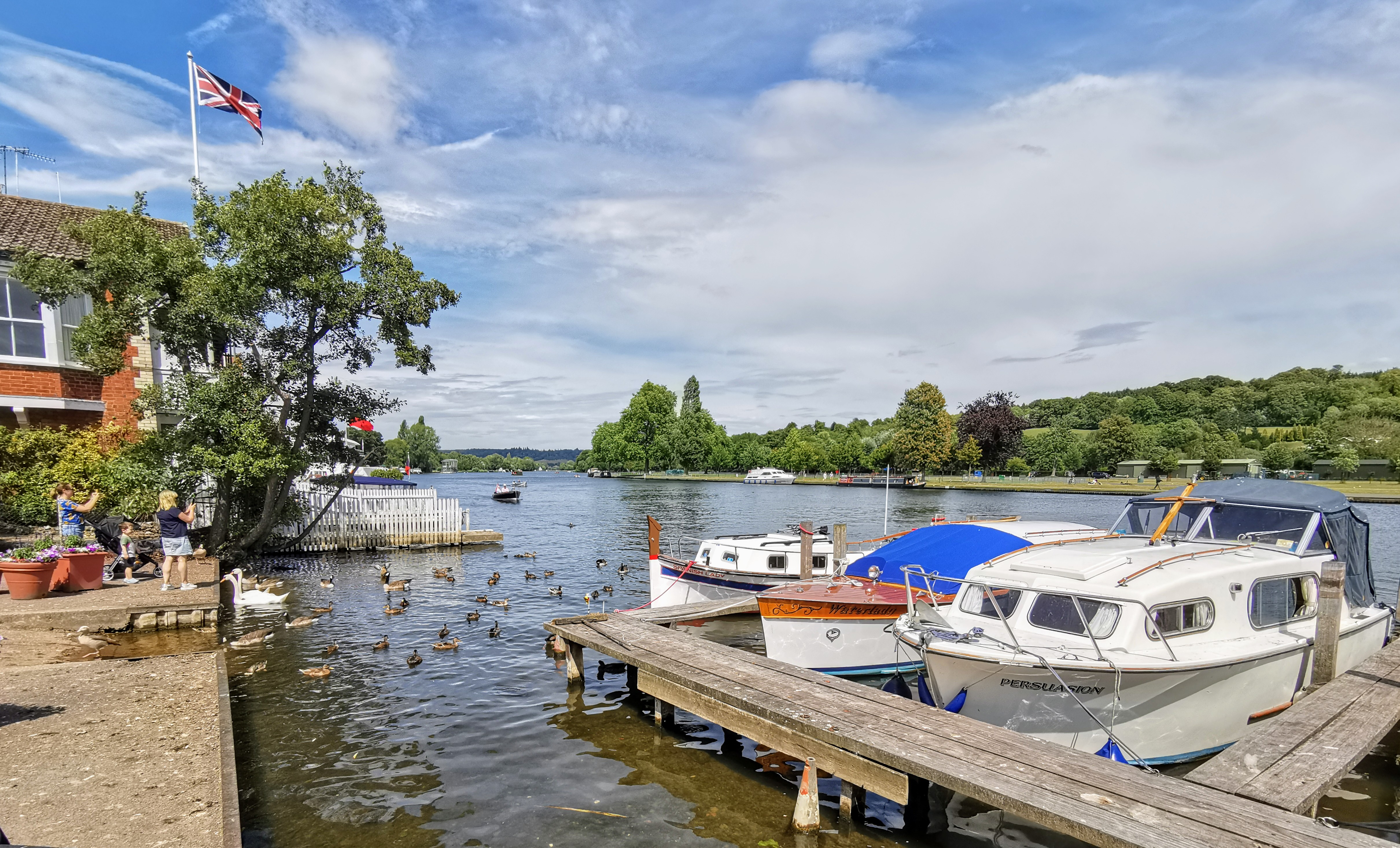
Henley is a beautiful market town on the banks of the river Thames, straight out of a chocolate box. The kind of place that Americans sigh over, because it’s just so darned pretty. Not that many US citizens are venturing to the UK at the moment…

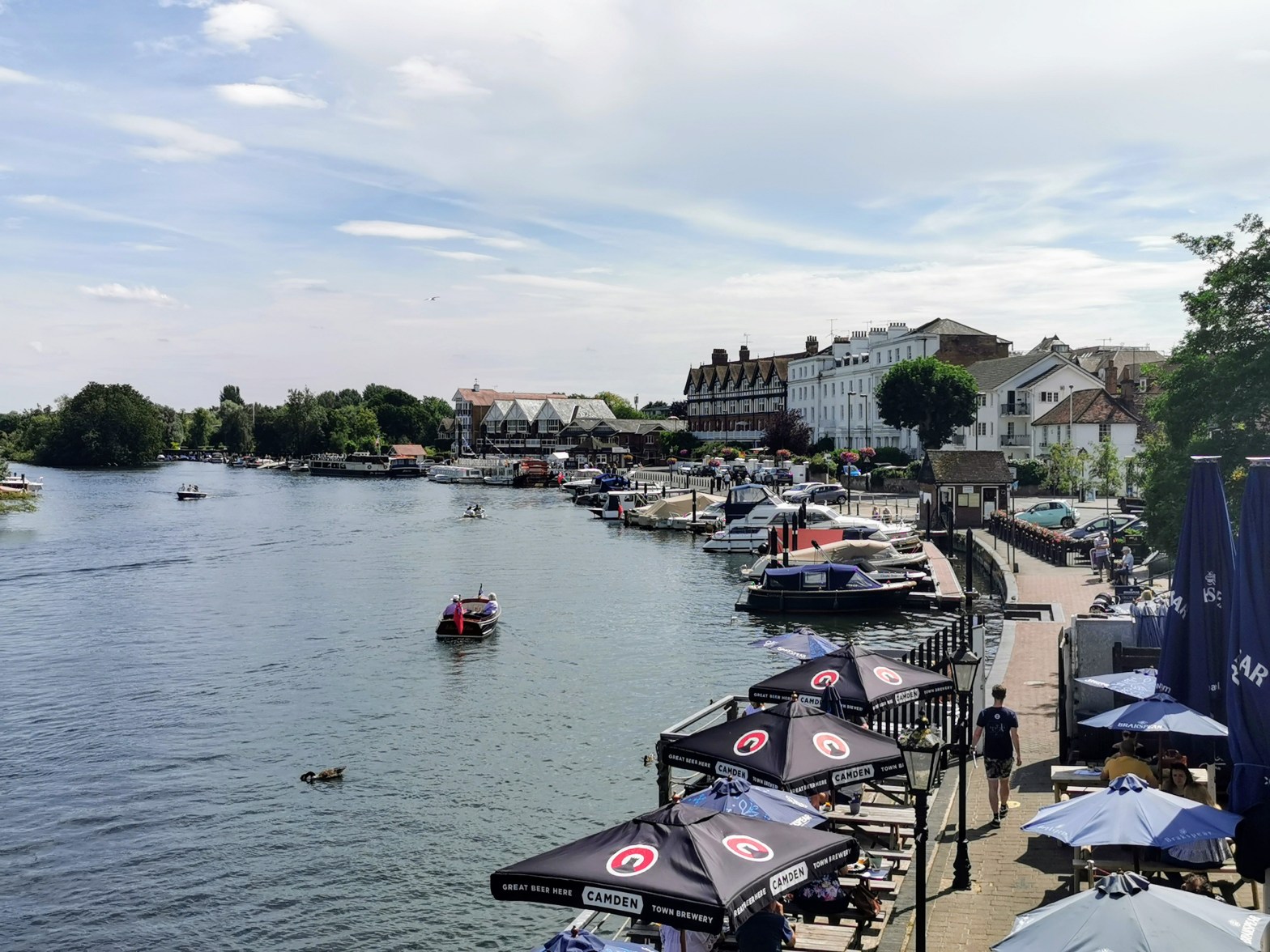
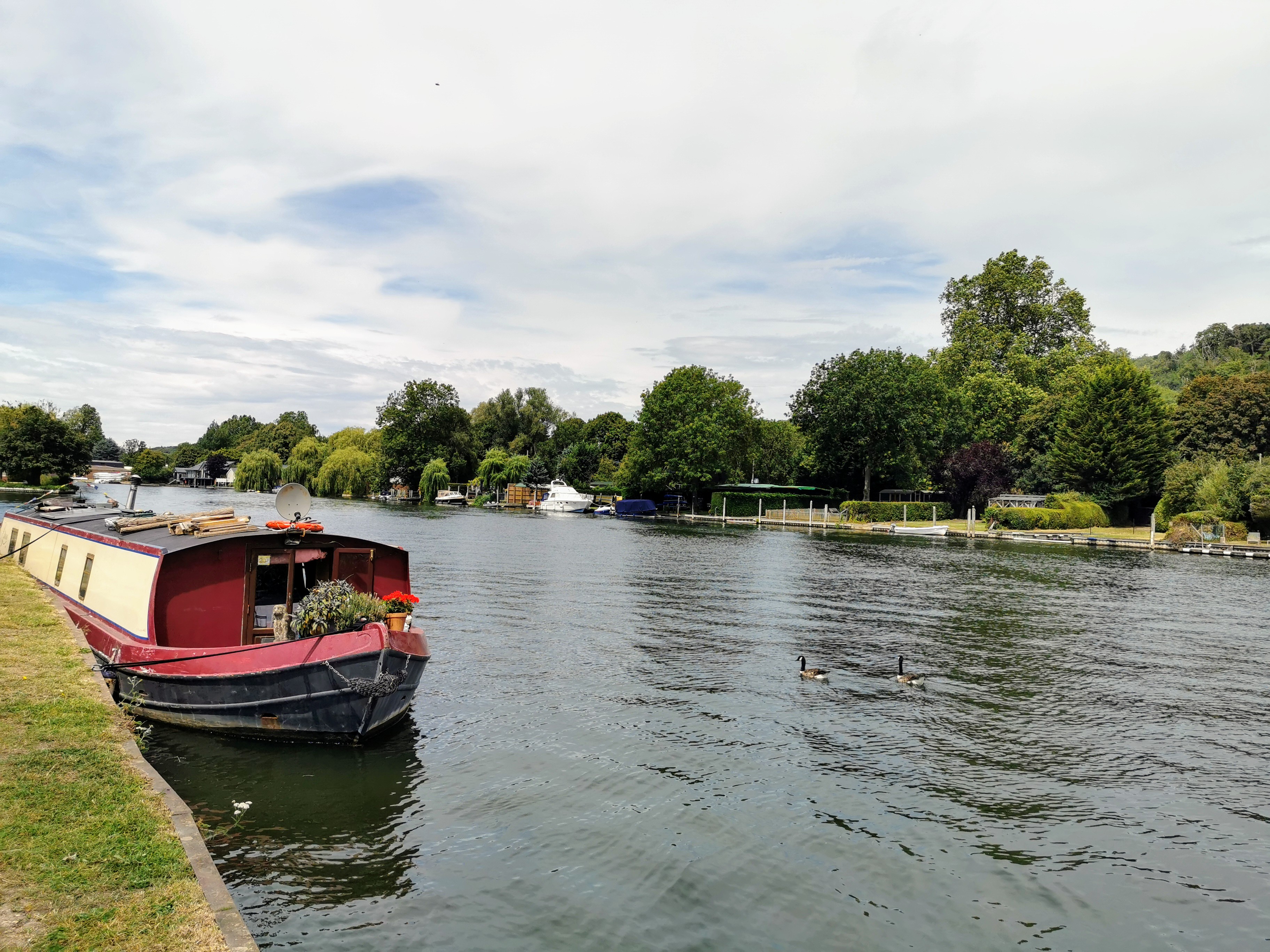
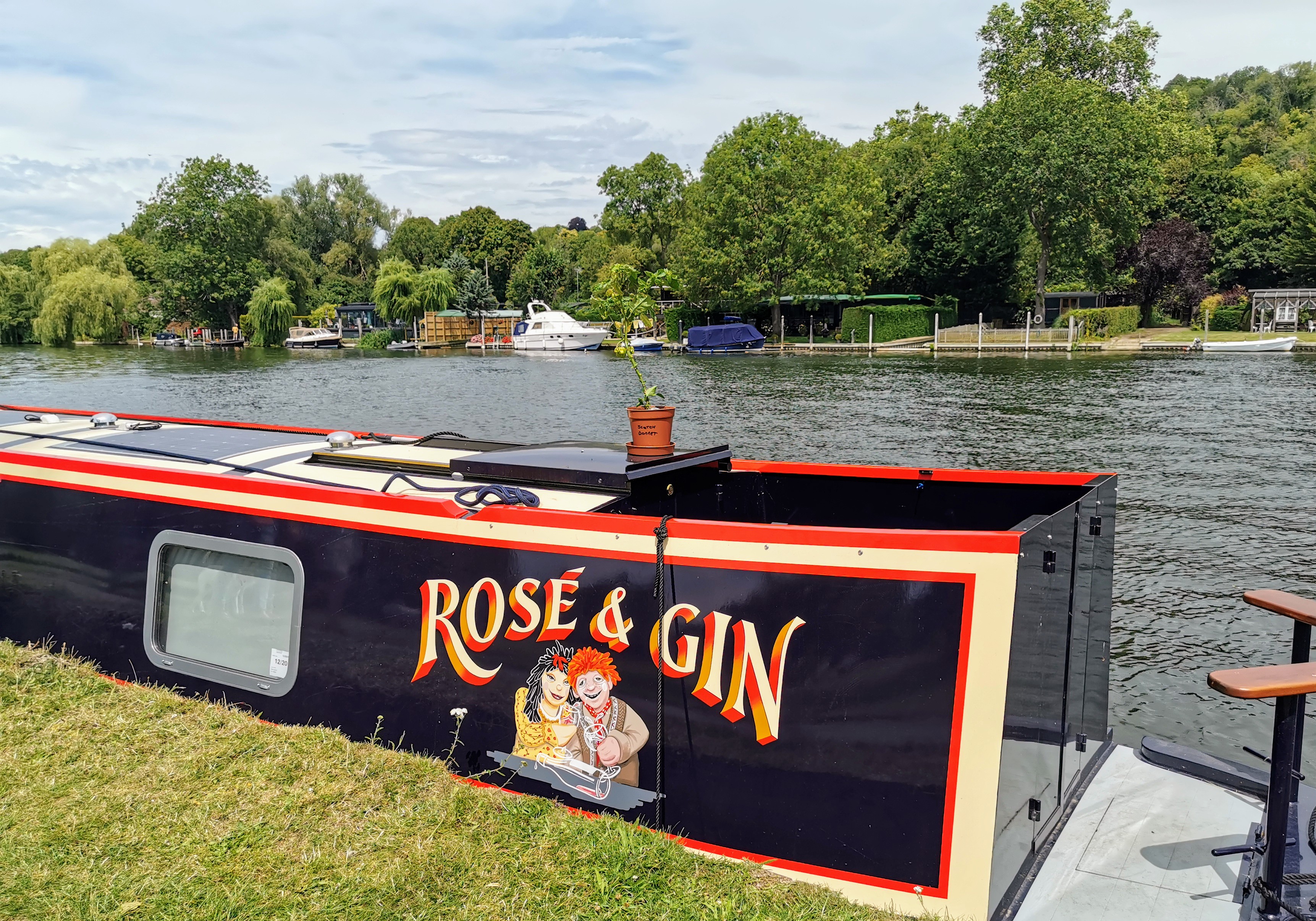
I park a little way out of town at Mill Lane (a) because it’s free – this is the main reason I admit, and (b) because I can then walk along the Thames enjoying the views of water, boats and summer homes. There are plenty of other people strolling the banks or sitting and enjoying the vista on a lovely afternoon.

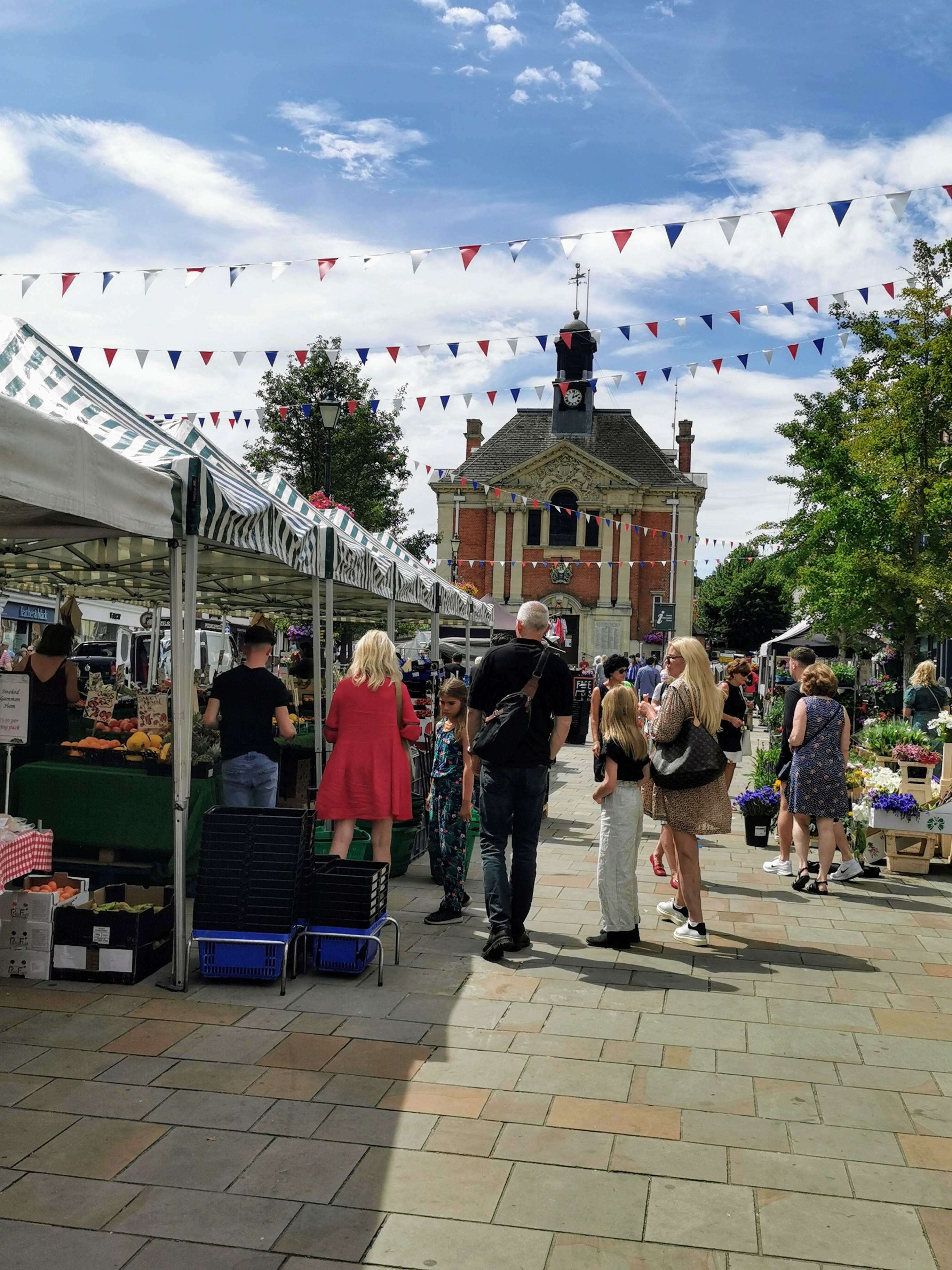
The existence of a settlement here was first recorded on 1179, and a charter to hold a market was granted by King John soon afterwards. The market square sits in front of the imposing Town Hall, opened in 1901 to commemorate Queen Victoria’s Diamond Jubilee. There’s a market going on today, just as they have for hundreds of years, and I’m really glad to see that.

Predictably, because of the famous regatta, much of the focus in Henley is on the riverfront, with it’s grand buildings, boats and waterfront promenade. The Henley Royal Regatta was established in 1839 and takes place every year over 5 days in late June and early July. The regatta is part of the social season with strict dress codes and celebrity spotting galore, all of which gives the town an upper crust allure.

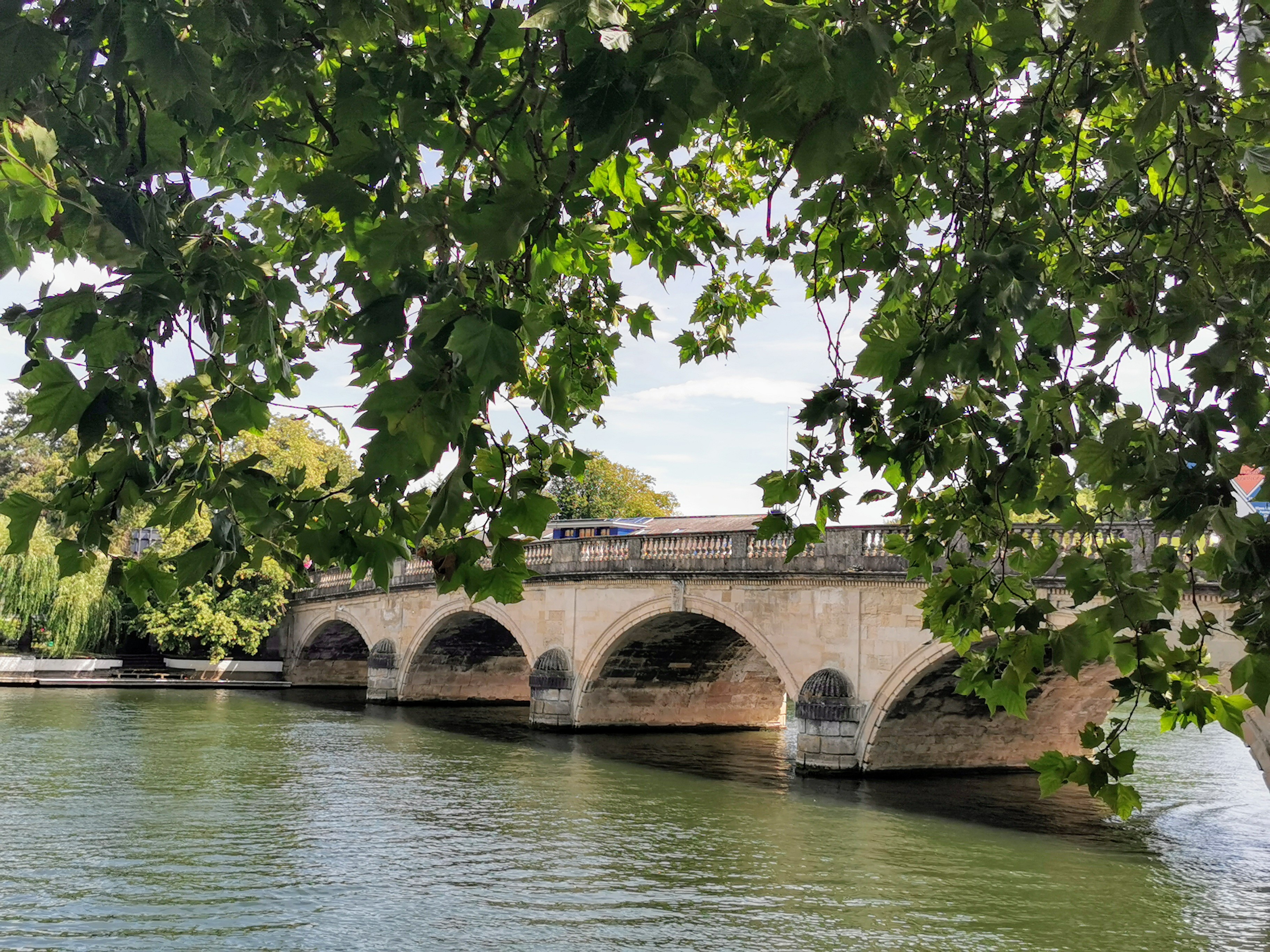
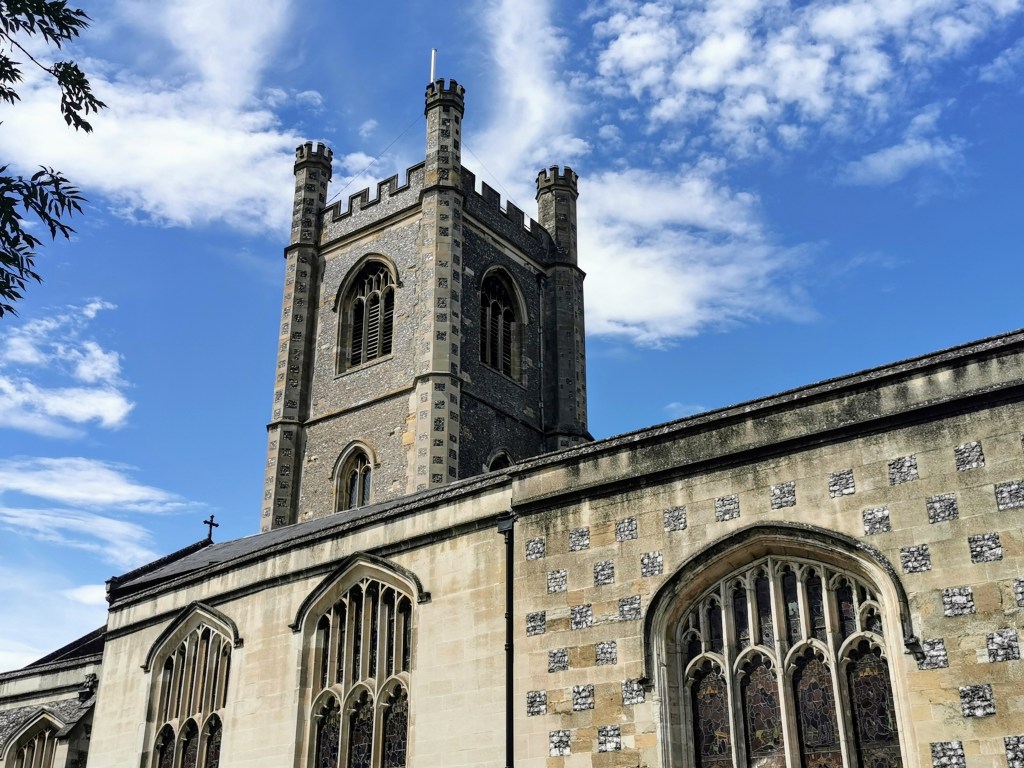
The Henley Bridge crossing the Thames dates from 1786 but this has been a crossing point since ancient times, and the first recording of a bridge here was in the 12th century. St Mary’s Church sits at the western end of the bridge, next to the old Red Lion coaching Inn and then Hart Street continues into the commercial heart of town.

St Mary’s has a few claims to fame. Apparently the churchyard is haunted by the ghost of Mary Blandy, who was hanged in 1752 for poisoning her father. On a slightly more cheery note, each April fans of Dusty Springfield celebrate Dusty Day here, where her ashes were scattered.

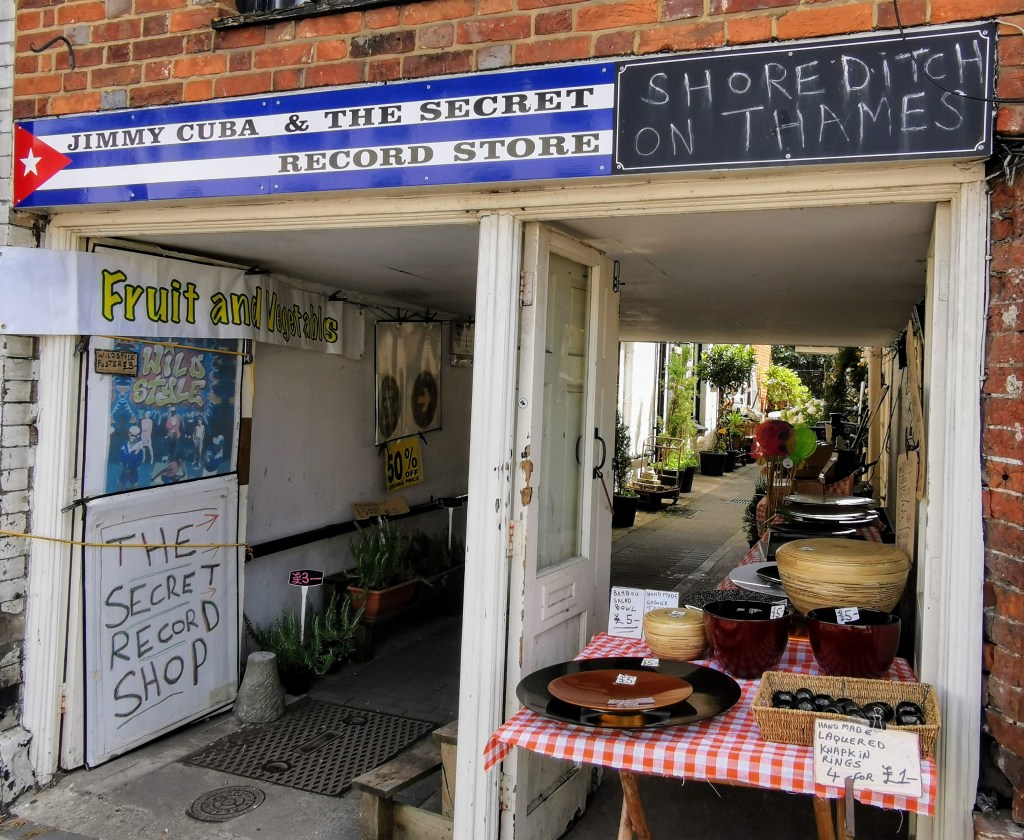
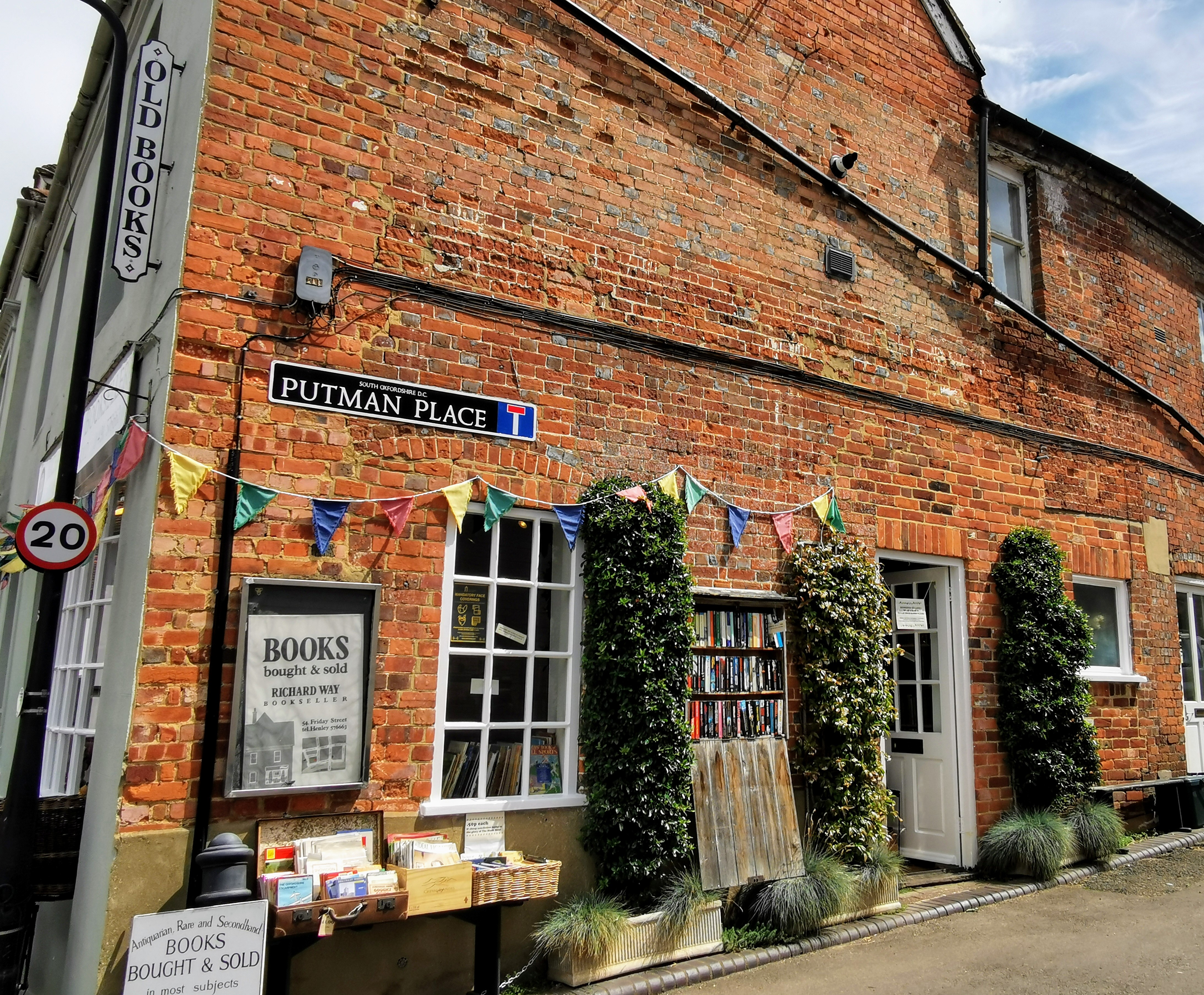
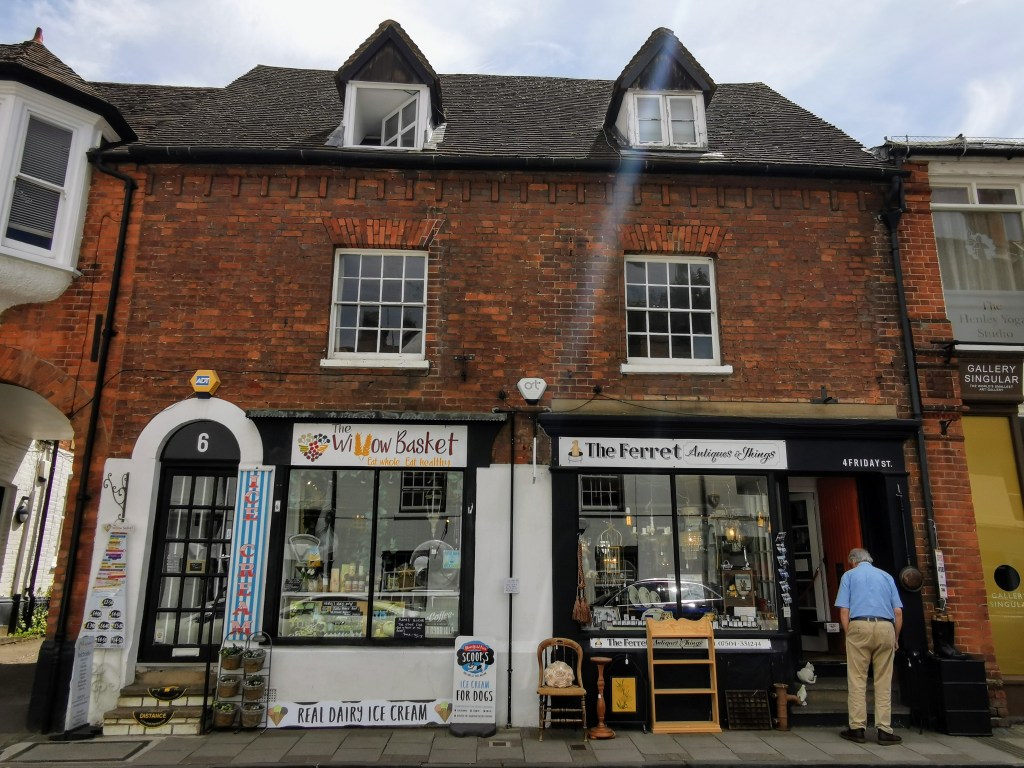
The centre of town is lively today. Most of the shops seem to be open, and there are even some queues outside. I’m not here to buy, but I have to admit I’m tempted by some of the more individual businesses. Henley has more than its fair share of independent shops sprinkled around town. Hurrah! Shoreditch on Thames (see below) is probably pushing things a bit too far though.

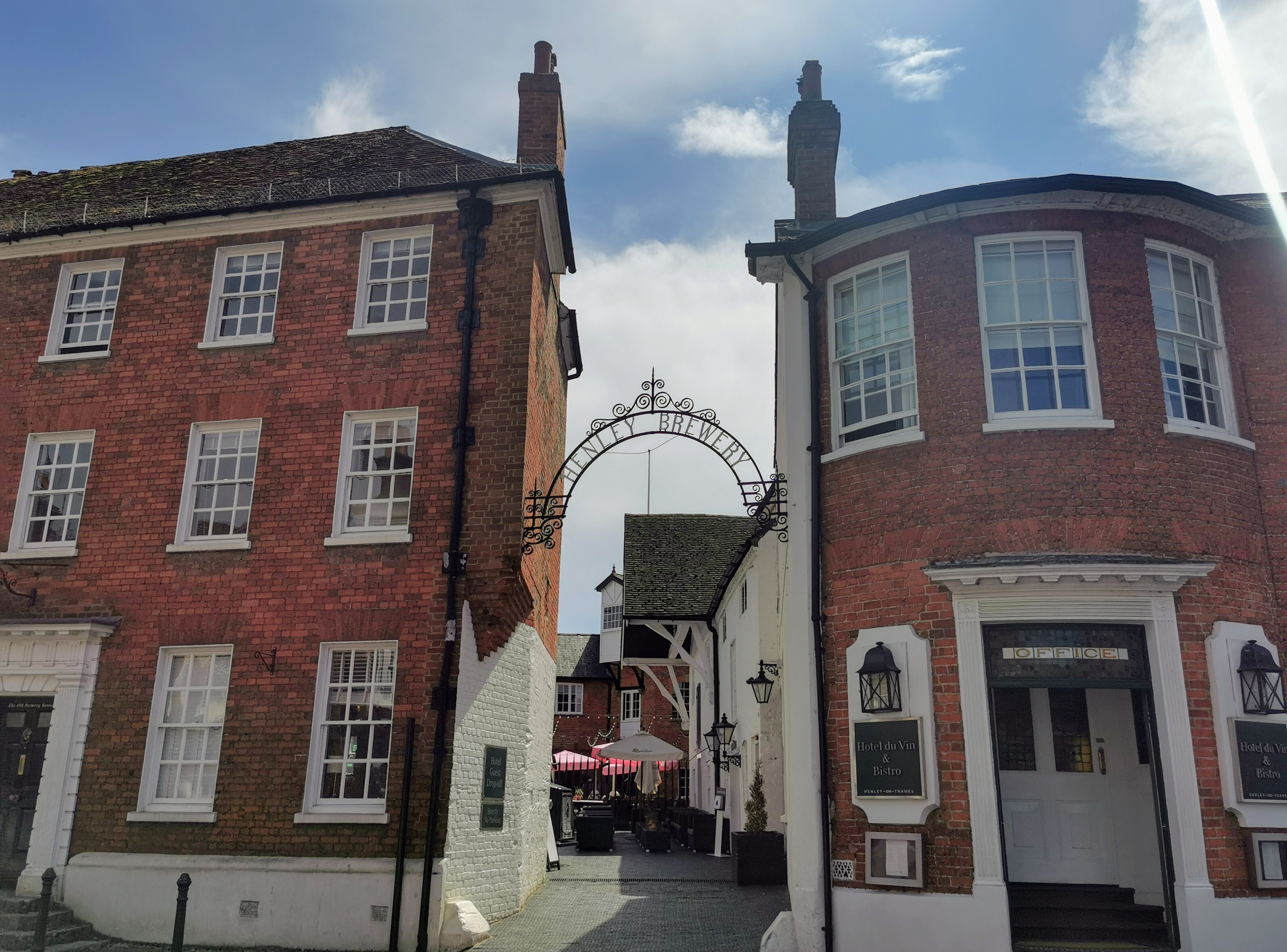
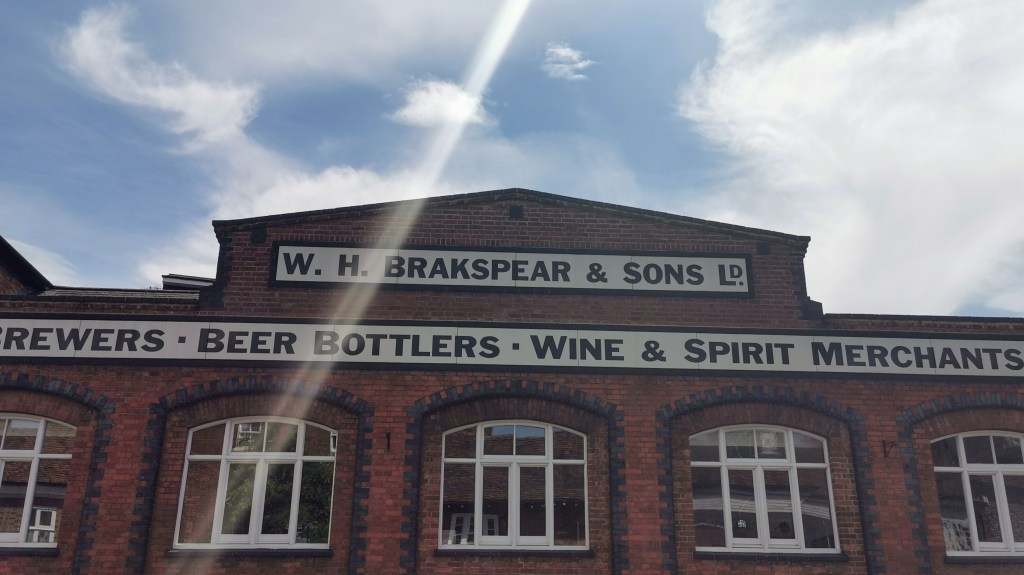
Henley is a small place and the backstreets merit exploration as there are some interesting and quirky buildings. The Brakspear Brewery buildings in New Street are one such example. Beer was made here in Henley from 1711 to 2002 when the company sold the license to brew its beers. Part of the old brewery is now a Hotel du Vin – no doubt Mr Brakspear is turning in his grave. There are still 10 Brakspear pubs in Henley, which constitutes quite an impressive pub crawl if you’re so inclined. If the husband was with me, I might be tempted.

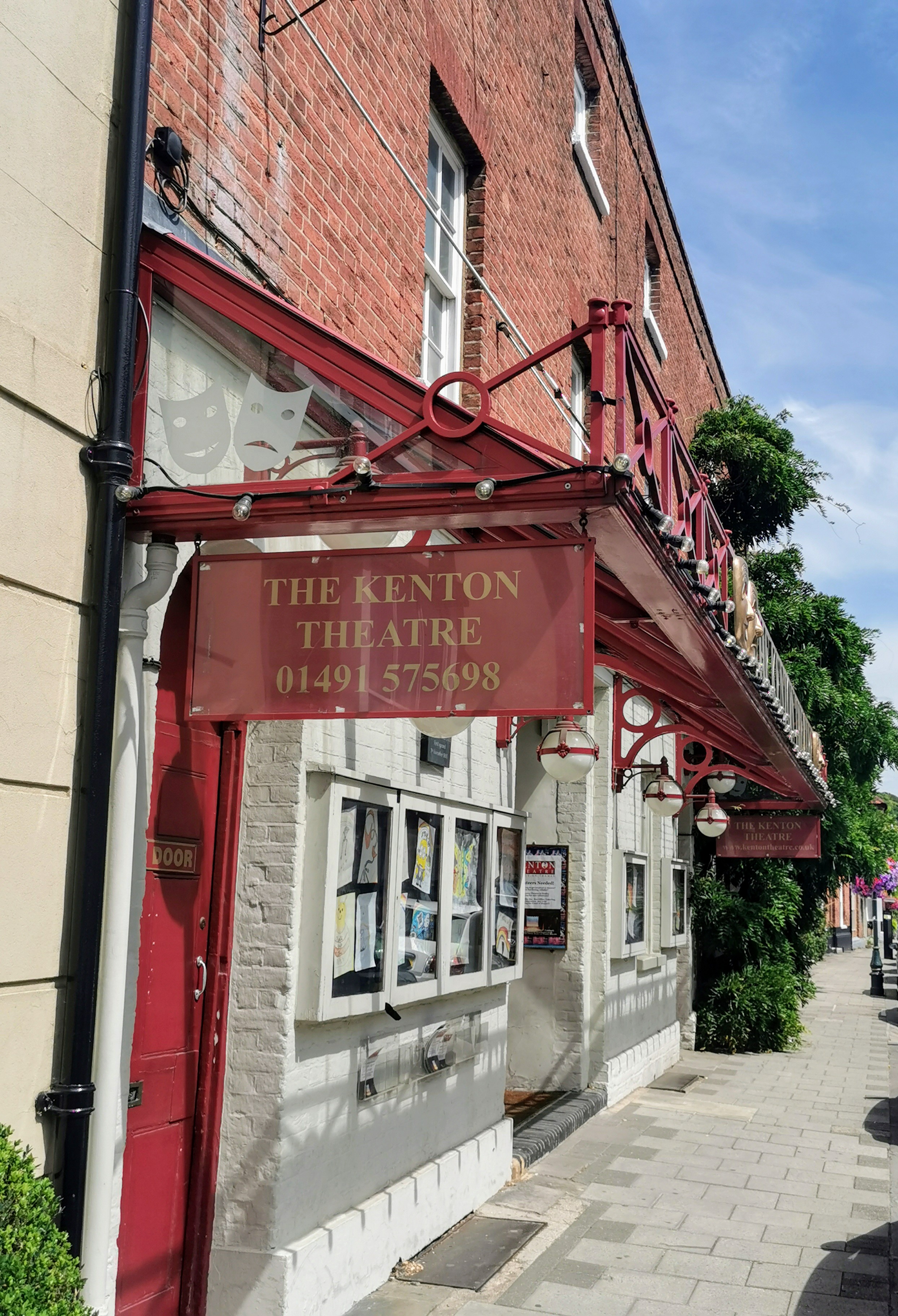
Opposite the old brewery is the Kenton Theatre, founded in 1805, which makes it the fourth oldest in the UK. It’s closed at the moment, obviously, due to the pandemic, but the website states an intention to open in Autumn 2020. Let’s hope so.

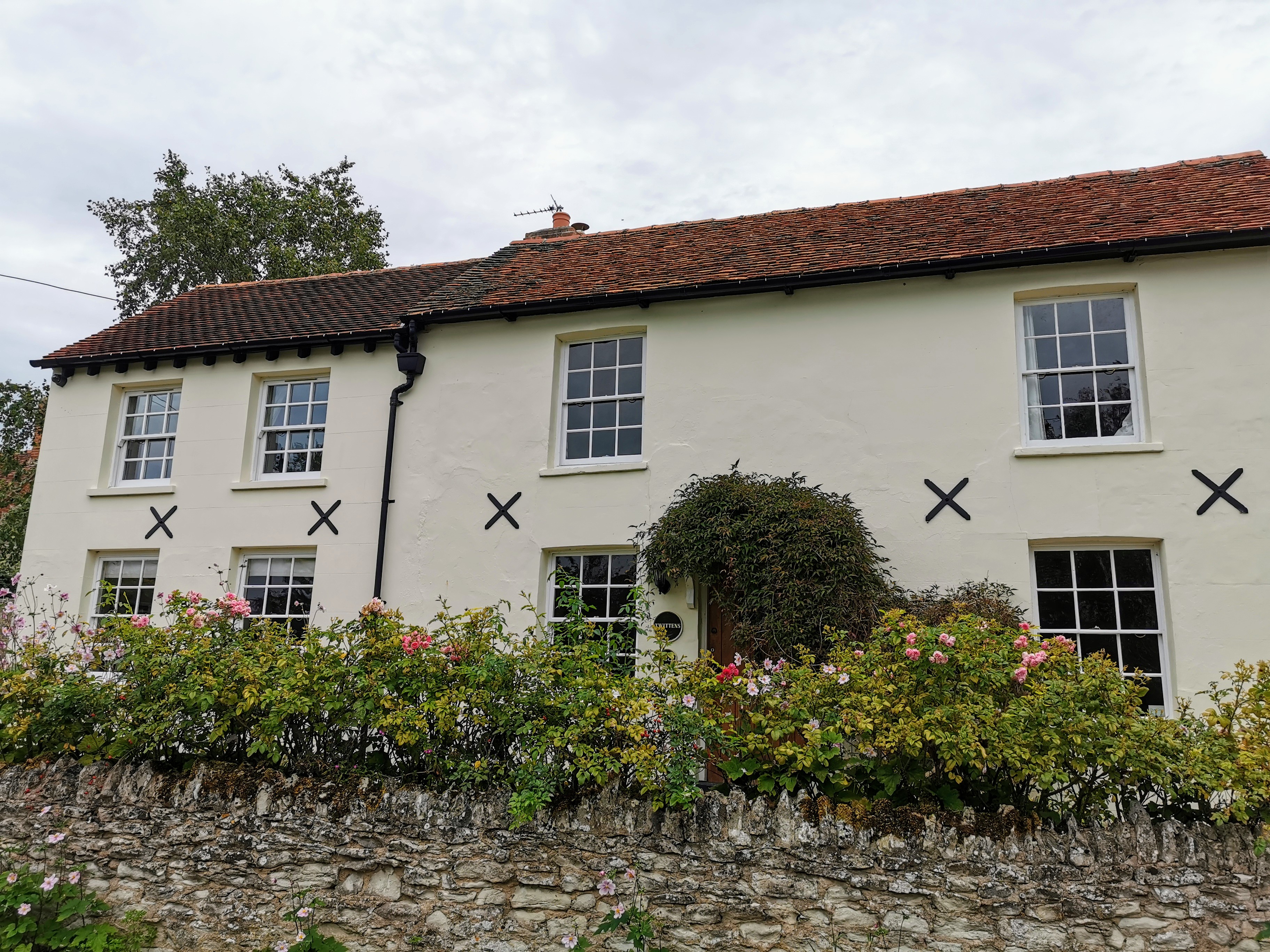
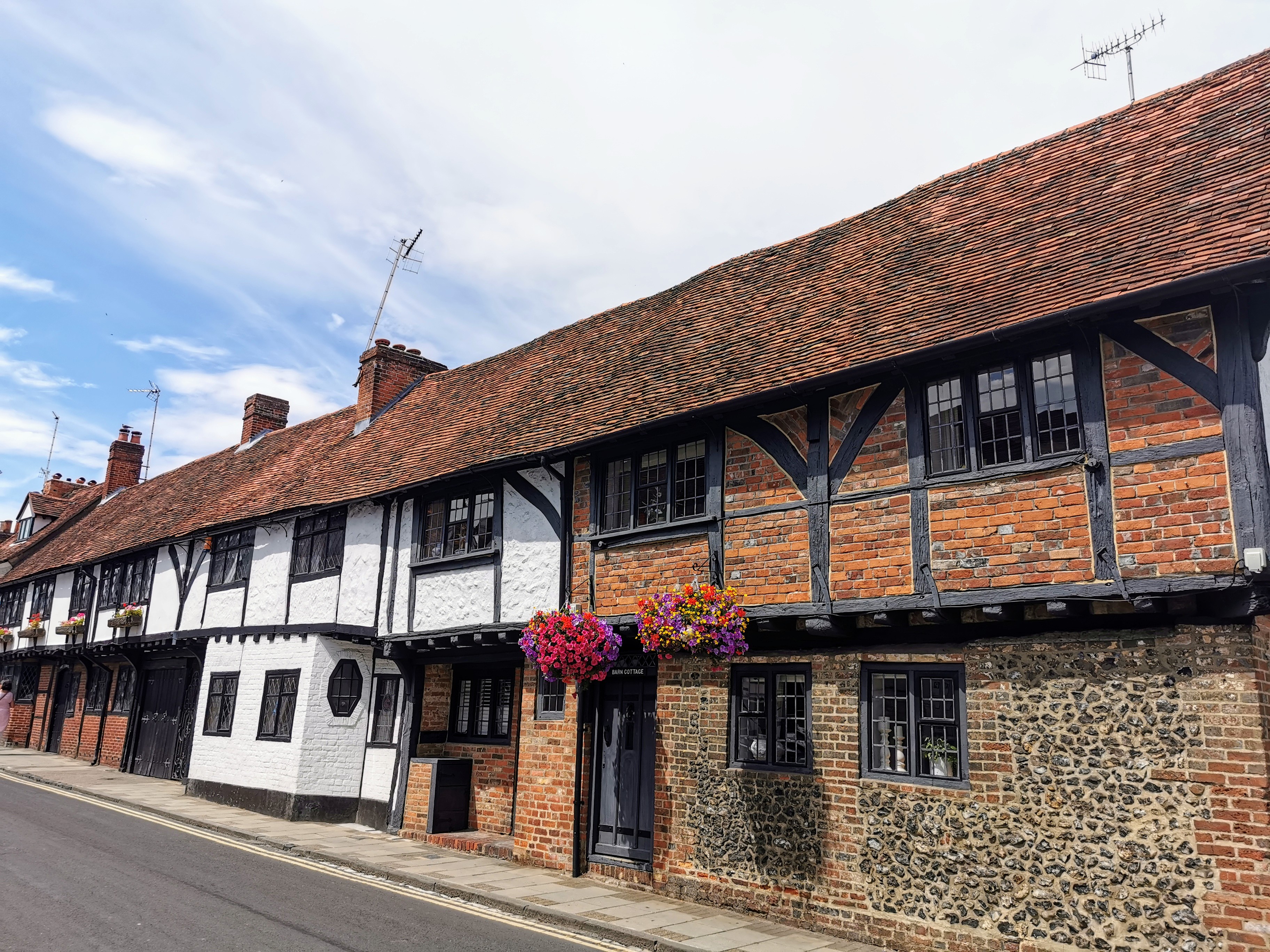
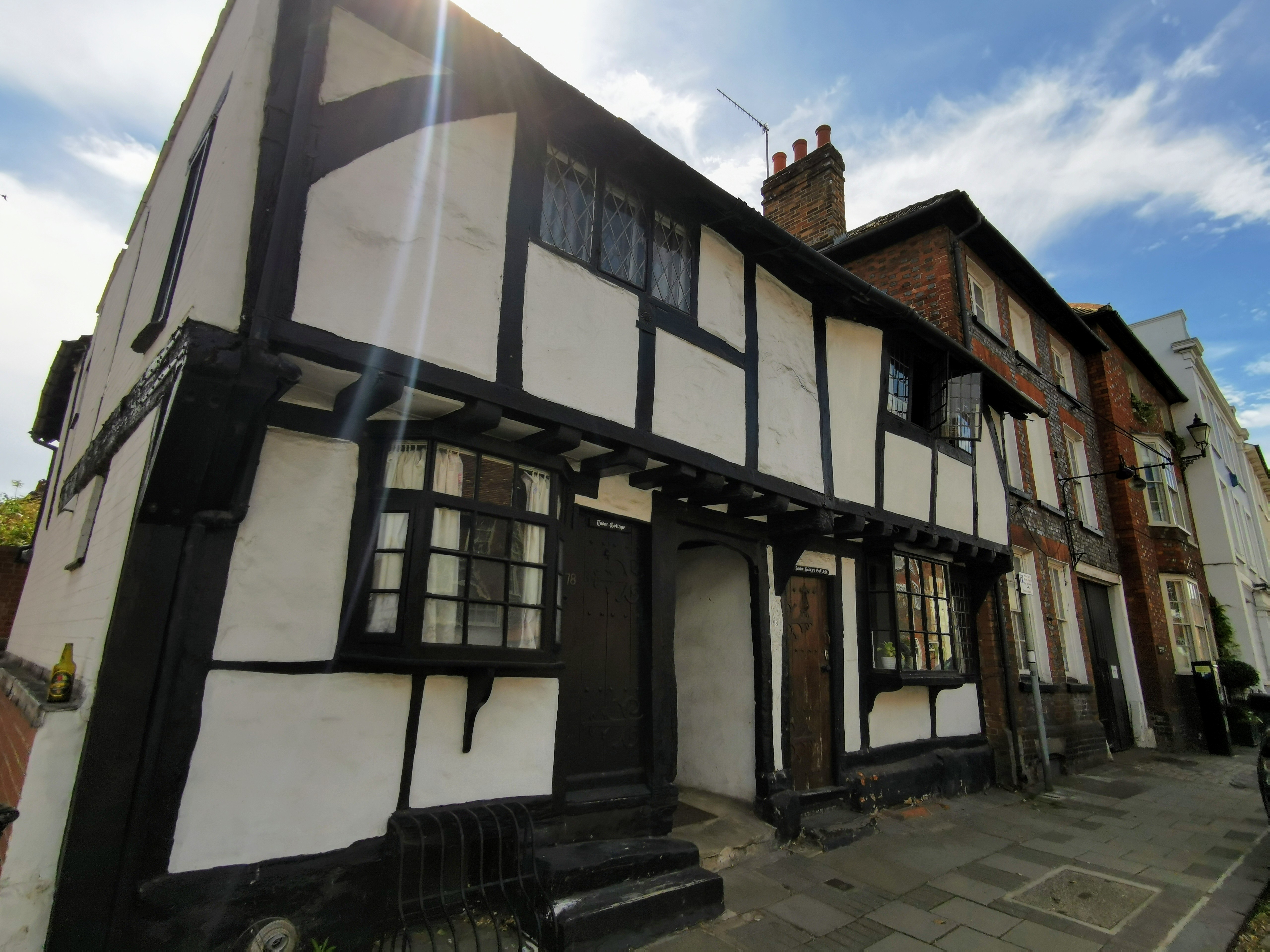
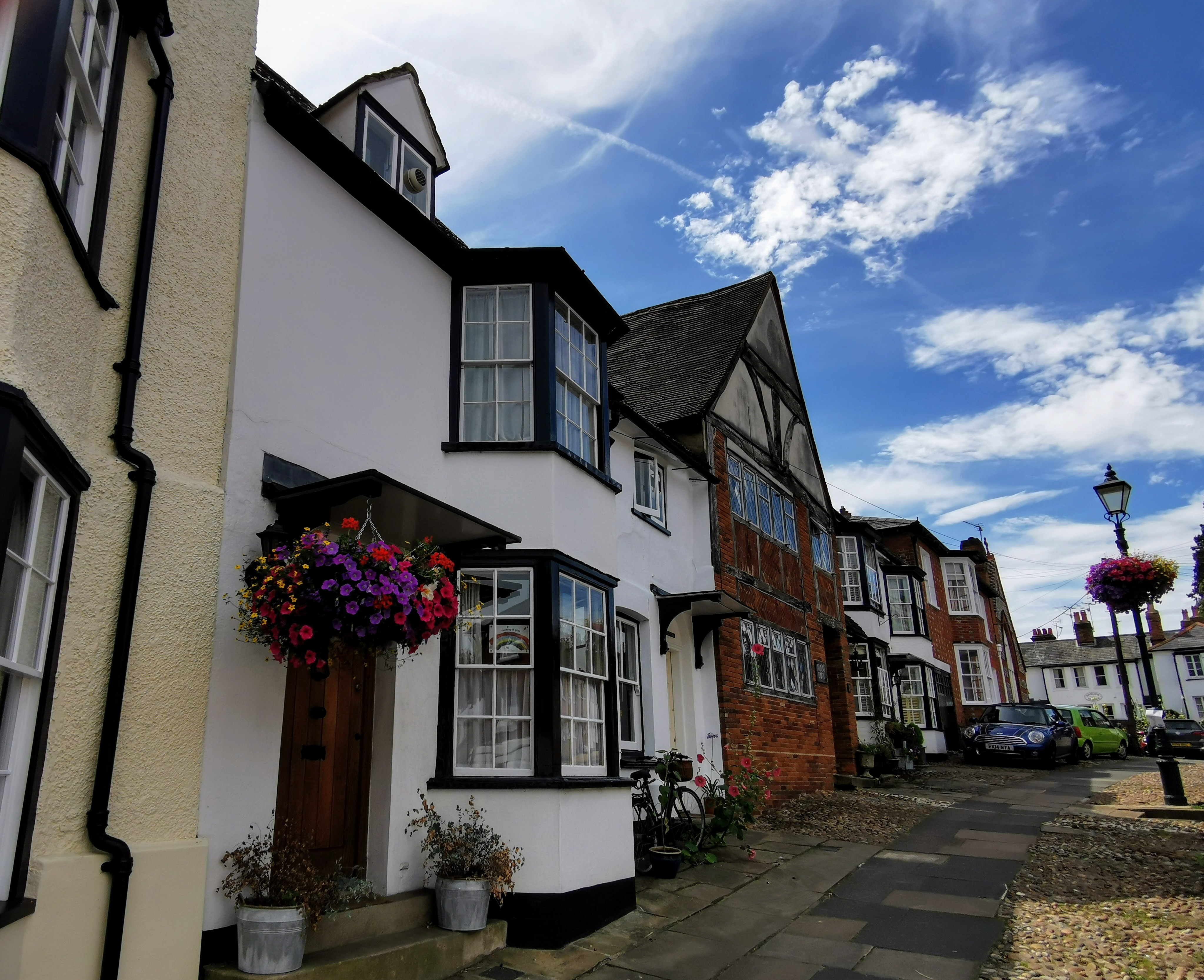
Henley has around 300 listed buildings of architectural or historic interest, so you don’t have to walk far to spot them. There are beams, bays and window boxes galore. It’s no wonder that average house prices in the town are more than three times the UK average of £240,000. Happily, looking around is free, particularly if you use my recommended car park.

I’ve rhapsodised before about the joys of strolling around a market town in sunny weather, but really it can’t be beat. I’m feeling very content right now. All that’s missing is a fellow explorer so we could go and enjoy a G&T at a table overlooking the river. Next time!

Palermo part 2 – In the swing of things

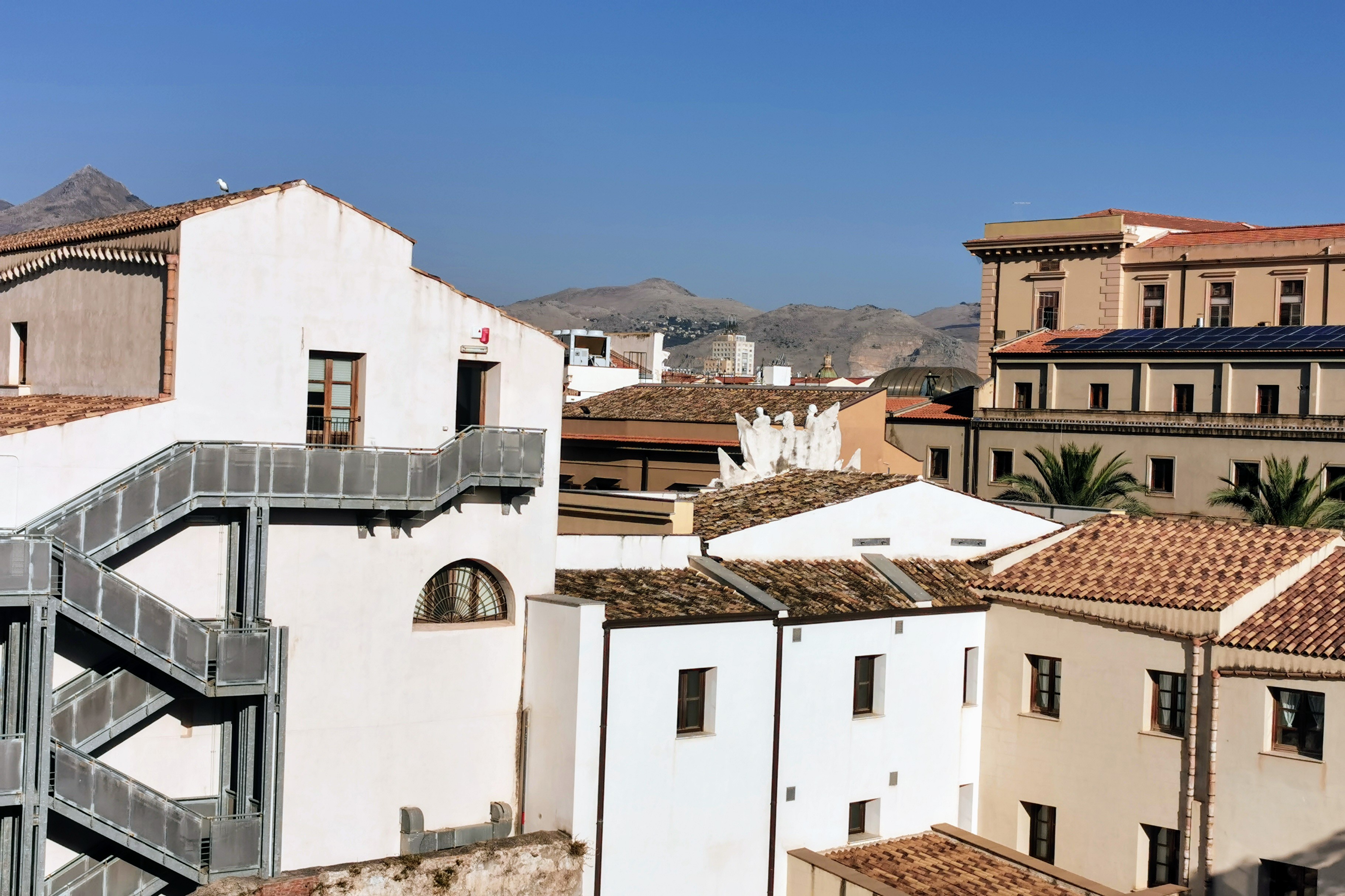
We awake on day two in Palermo full of renewed purpose. It’s a strange privilege to explore a European city that is largely bereft of tourists, like going back to the 1970s when we went away with our parents, and we need to make the most of it. A continental breakfast overlooking the rooftops of the city fuels us up nicely – as usual we will be covering a lot of ground over the next few days. Birkenstocks at the ready – I brought a brand new pair.

The breakfast buffet is officially dead, sob, and the new process is a bit of a faff, I have to say. Stand up, mask on, sit down, mask off, go to the counter and point, have tray of food delivered to your table. It means lots more work for the staff, but at the Hotel Porta Felice they are rising to the challenge, shuttling around at speed with trays aladen. A large group of Italian ladies are hugging and kissing nearby, not sure how they square that with social distancing? However, this country is managing to keep a lid on coronavirus for the moment, so they’re doing something right!

Discovering Palermo turns out to be a joy. Yes, it’s hot, and yes, it’s a bit scruffy, but this place has personality. The population is still valiantly struggling to overcome the ravages of WWII, compounded by Mafia-financed shonky development and poor infrastructure, but they still manage to smile, welcome visitors and enjoy life. Here are my recommendations if you fancy a trip while Italy remains quarantine-free.

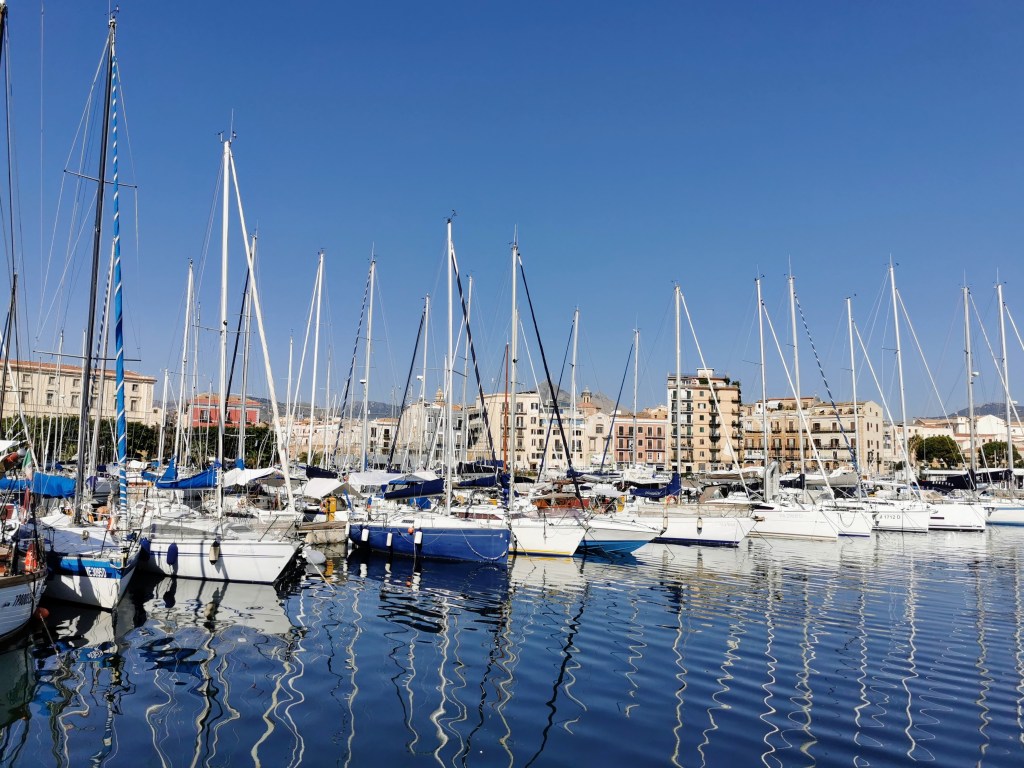
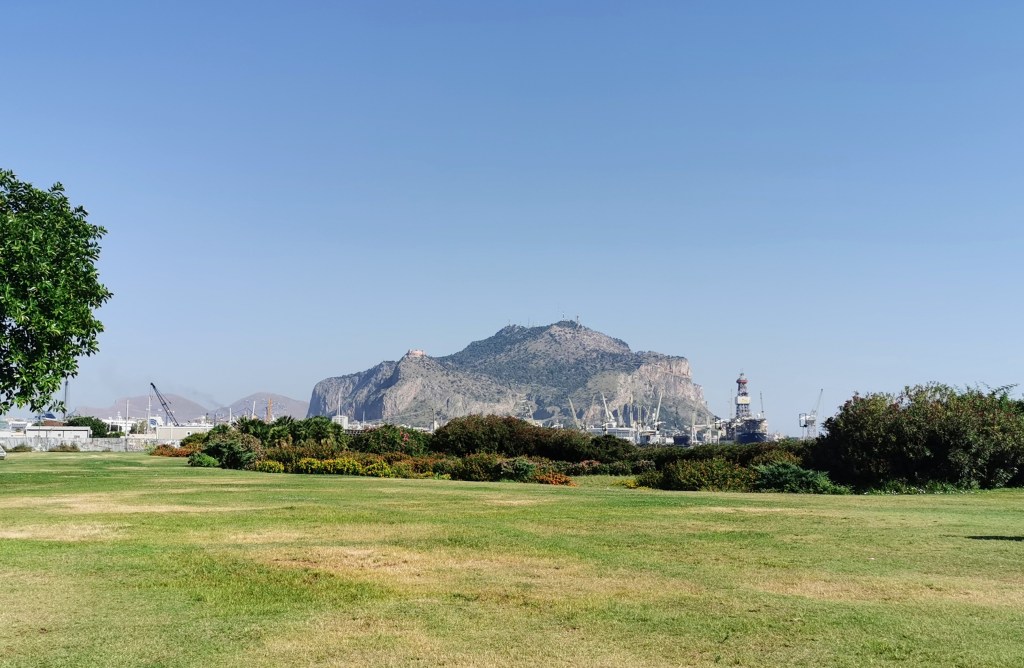
Stroll along the waterfront: Palermo is a coastal city, so get out and enjoy the views over the water, from the bobbing boats of La Cala harbour heading south along the Foro Italia walkway which skirts the city walls. There’s not much in the way of shade though, so do this early or prepare to sizzle.

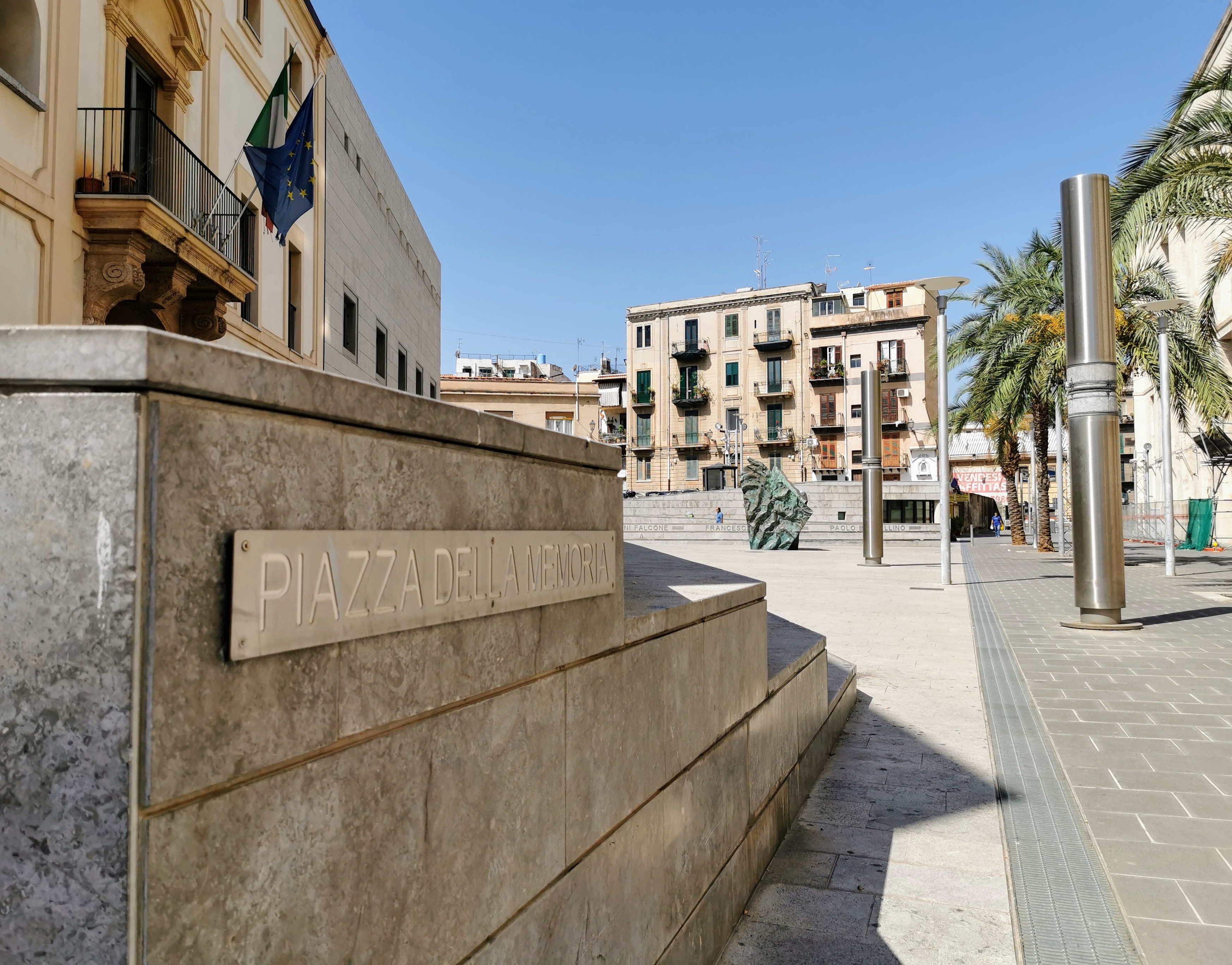
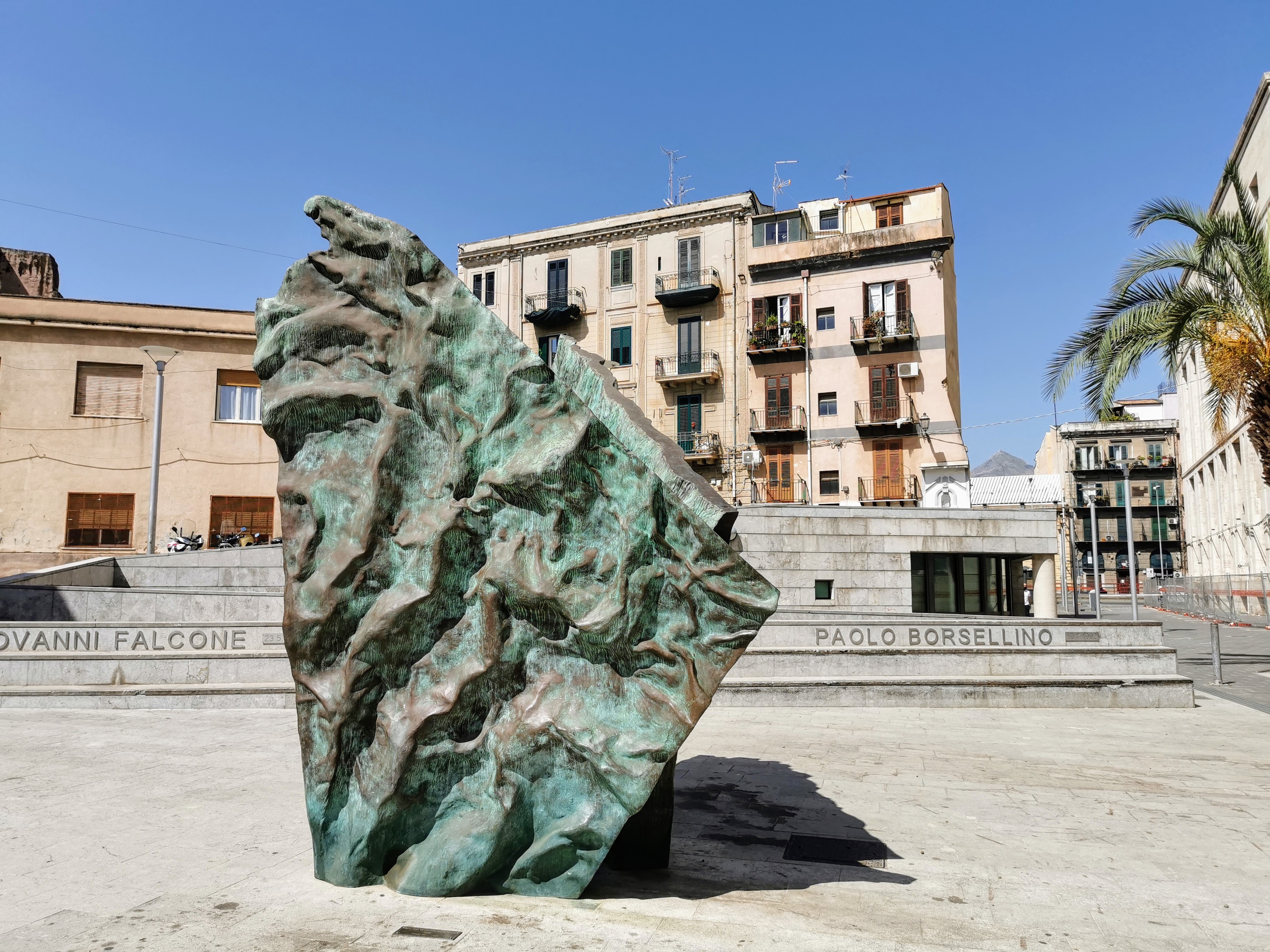
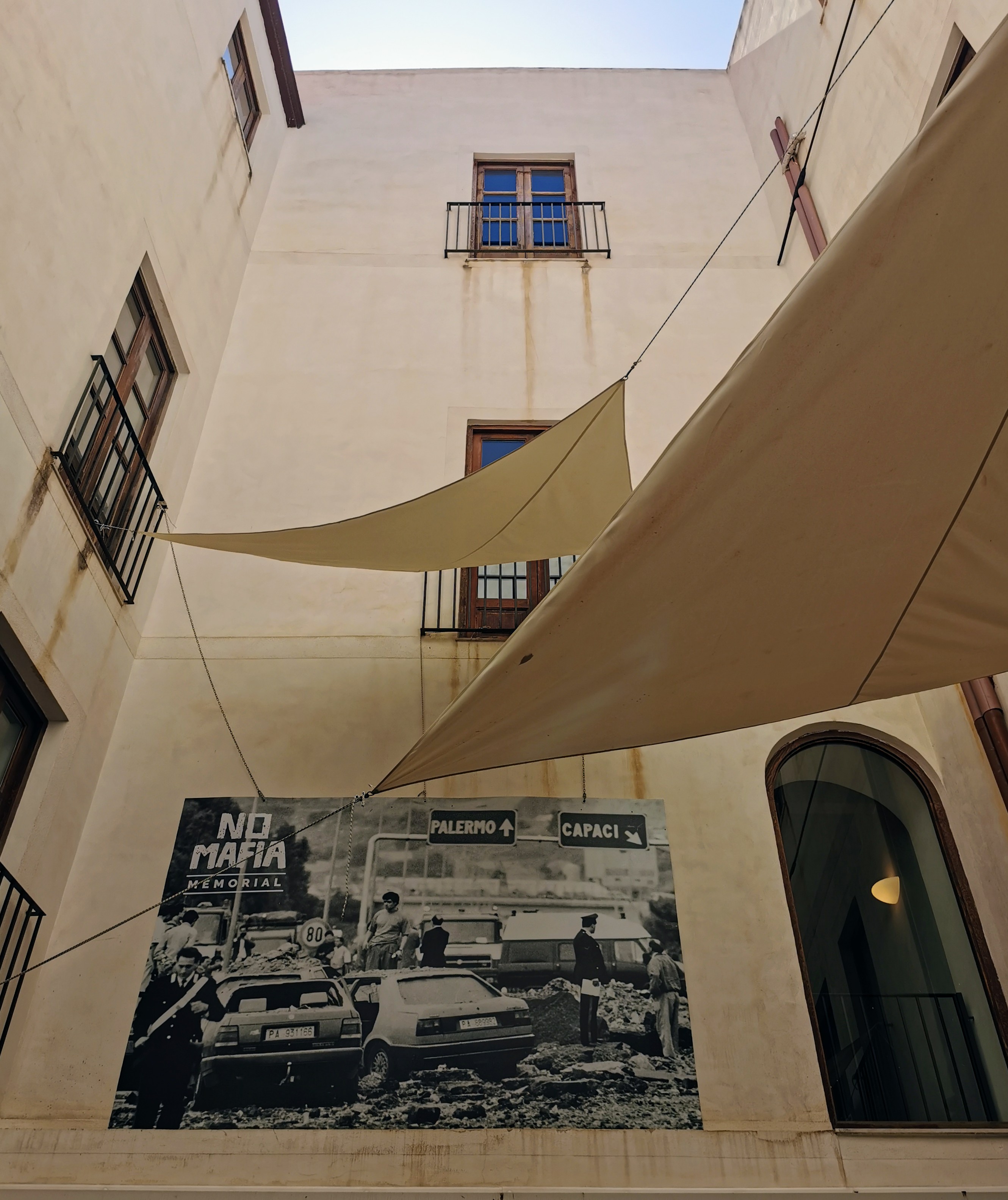
Learn about the fight against the Mafia: In 1992 Giovanni Falcone and Paolo Borsellini, the leading prosecutors in the Maxi Trial which indicted 475 members of Cosa Nostra, were both murdered in separate bomb attacks. Falcone died on the motorway from the airport with his wife and police escort – two memorial pillars mark the spot. Borsellini was killed outside his mother’s flat in a Palermo suburb. The Piazza della Memoria outside the Palermo courthouse is dedicated to them.
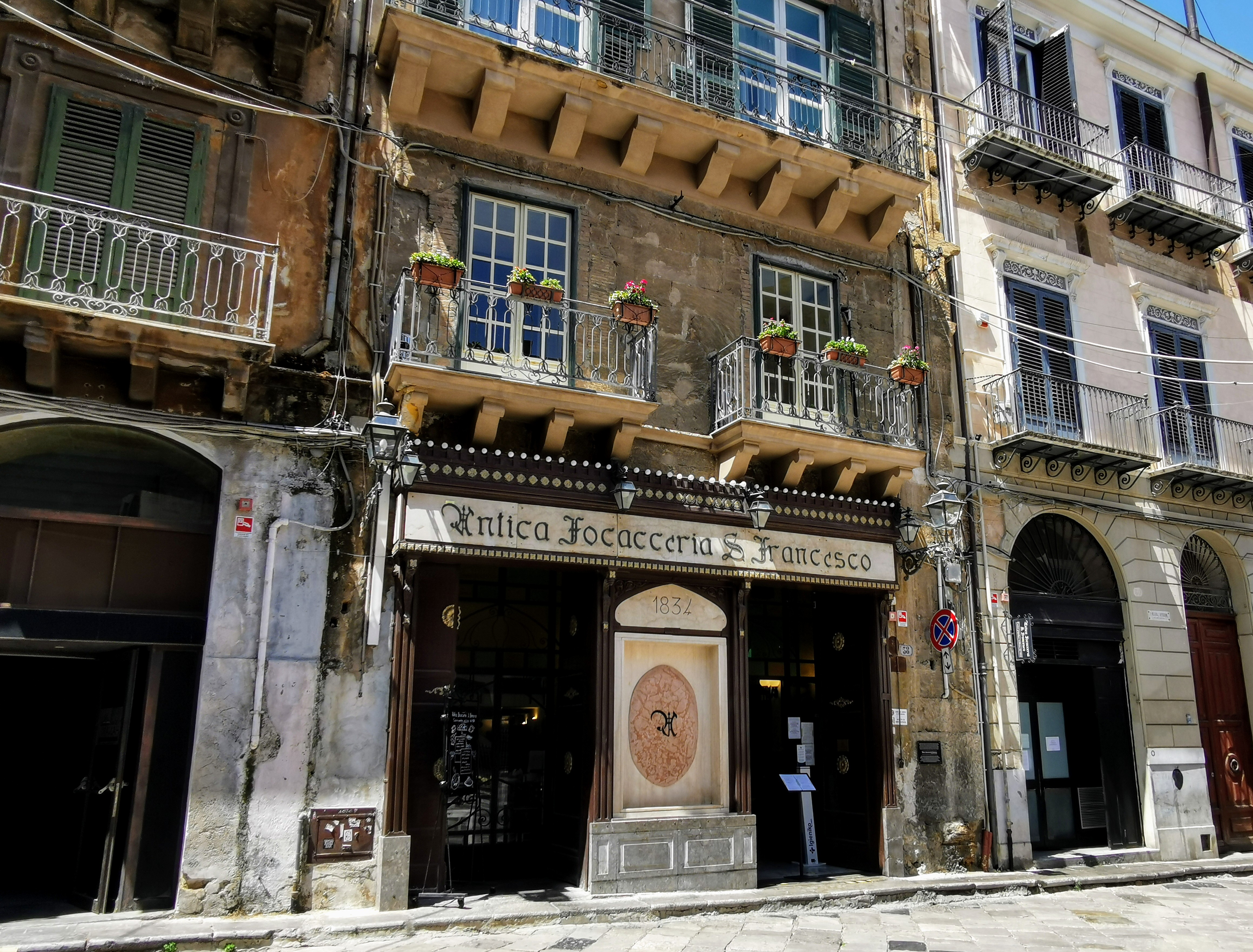
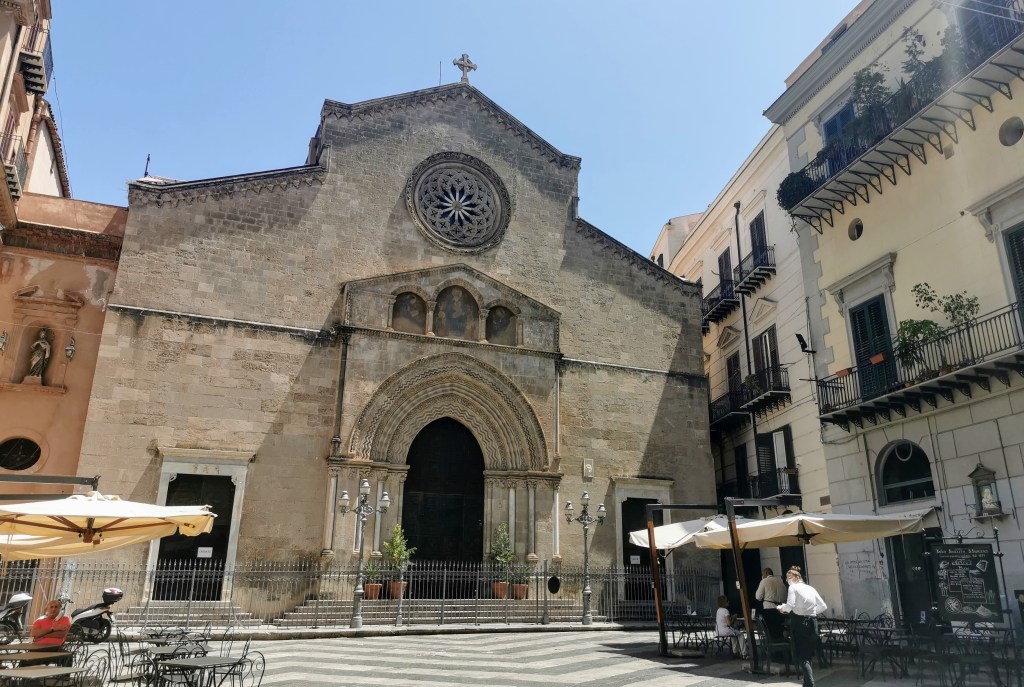
The assassinations caused a public outcry and a determination to crack down further on the Sicilian Mafia. The Addiopizzo movement was formed protesting against corruption and extortion – the pizzo (literally meaning lace) is the protection fee that mafiosi demand from local businesses. Many publicly refuse to pay it, including the venerable street food cafe Antica Focacceria San Francesco which has been serving up local delicacies in a picturesque square since 1834. Falcone and Borsellini were regulars here. A visit is almost obligatory, and the food is pretty good.

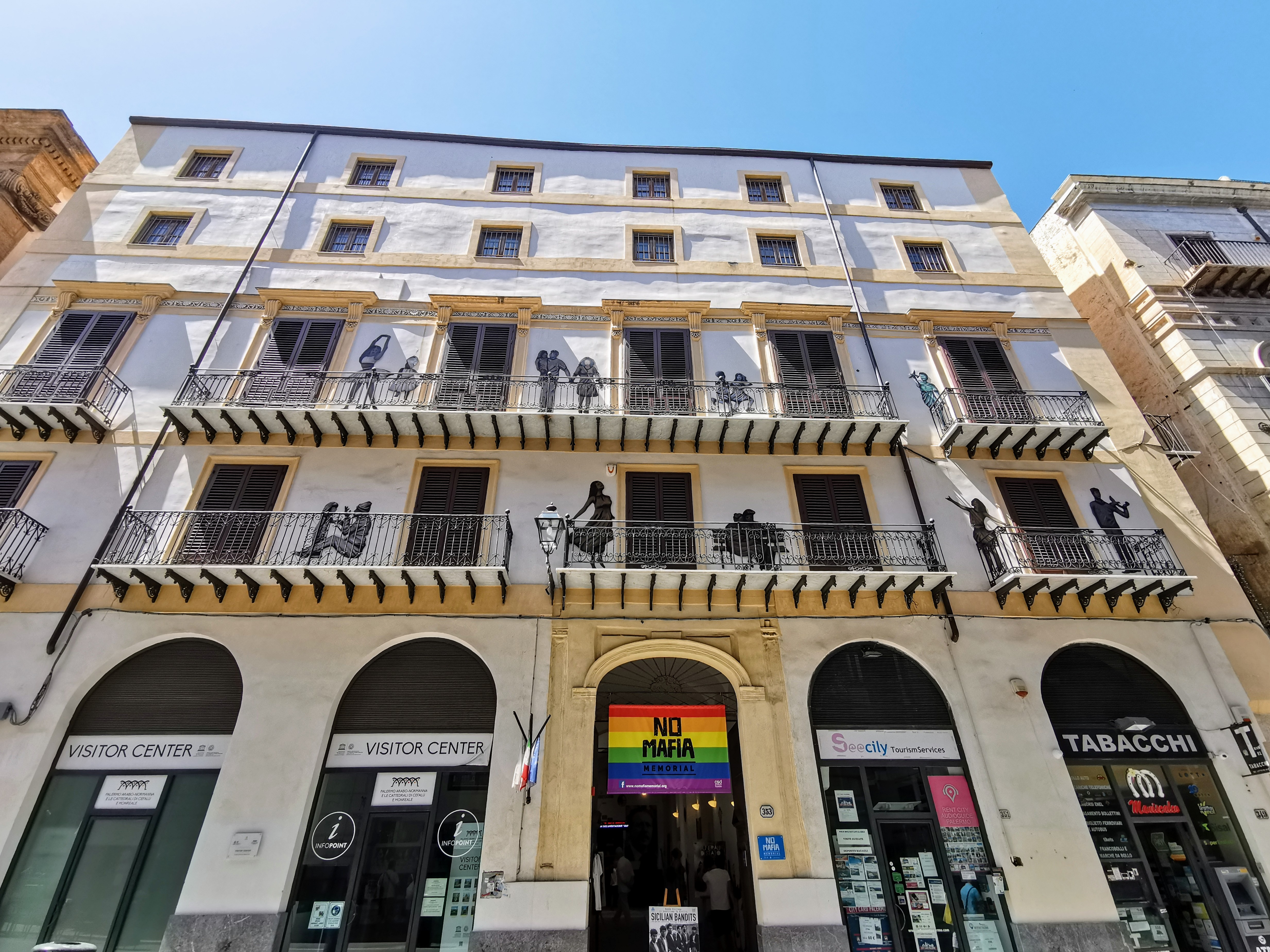
You can find out more at the No Mafia Memorial close to the Quattro Canti in the centre of town, where the story of Cosa Nostra domination and public fightback is told in photos and film. A huge depiction of the Falcone bombing looms over the central courtyard, as it was such a seminal event here.

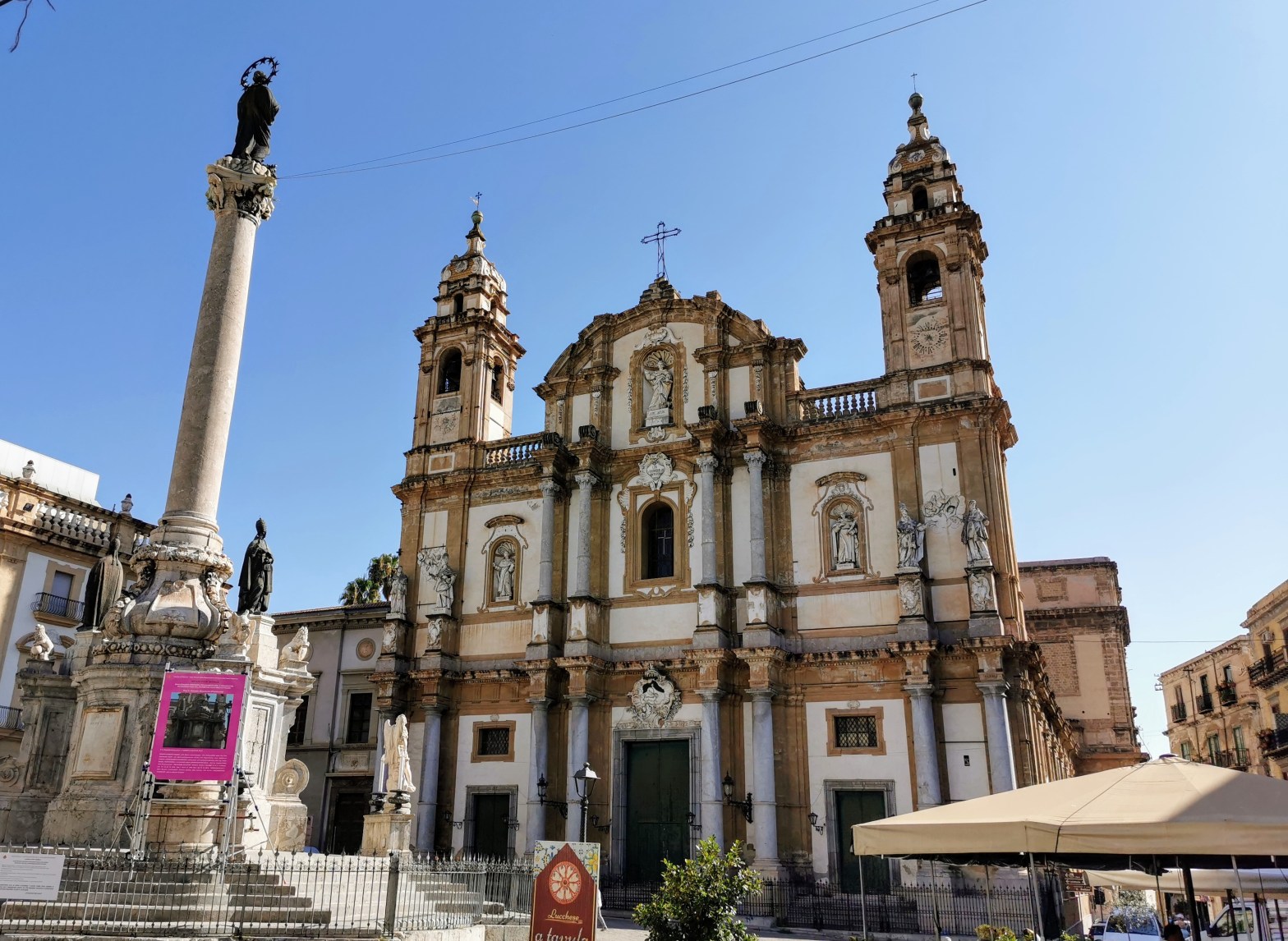
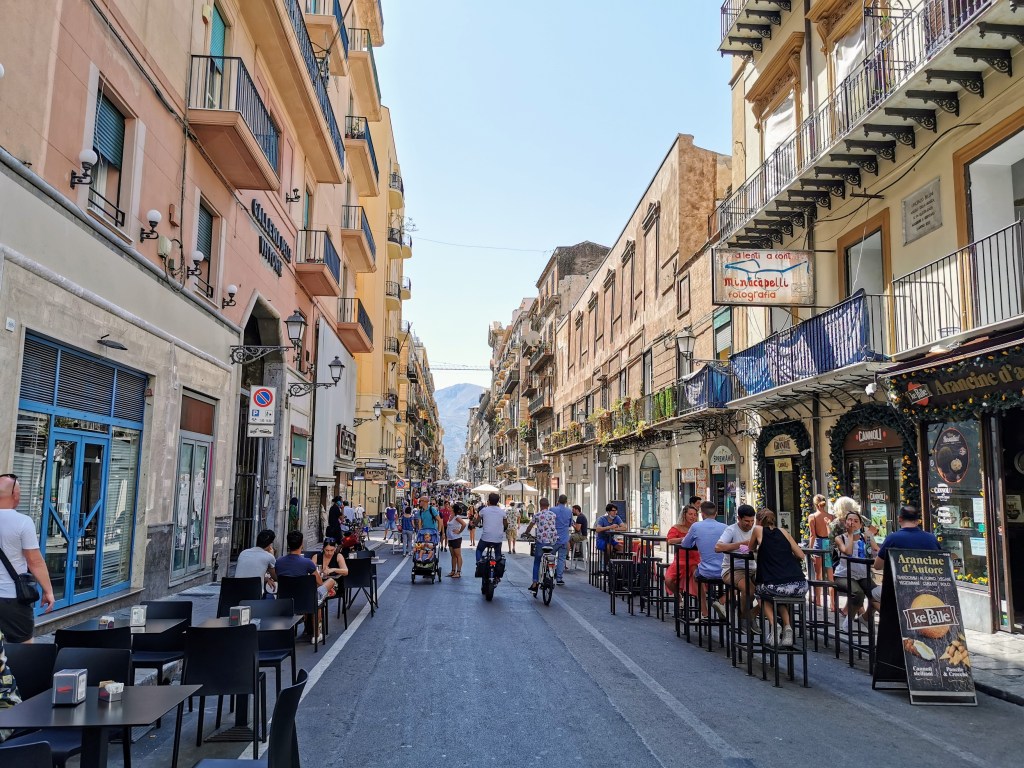
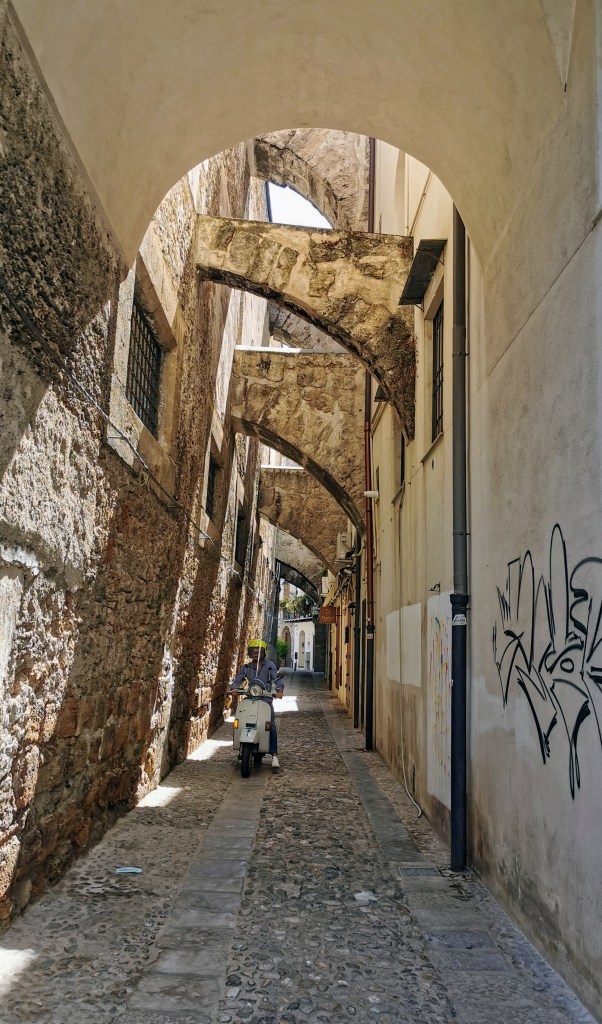
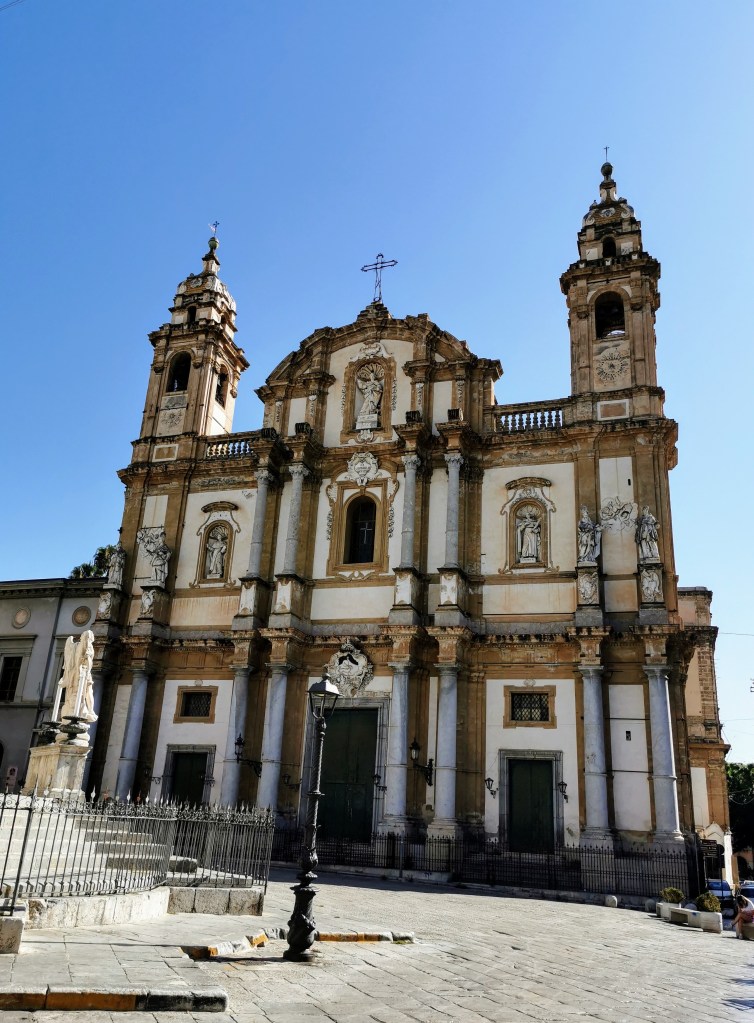
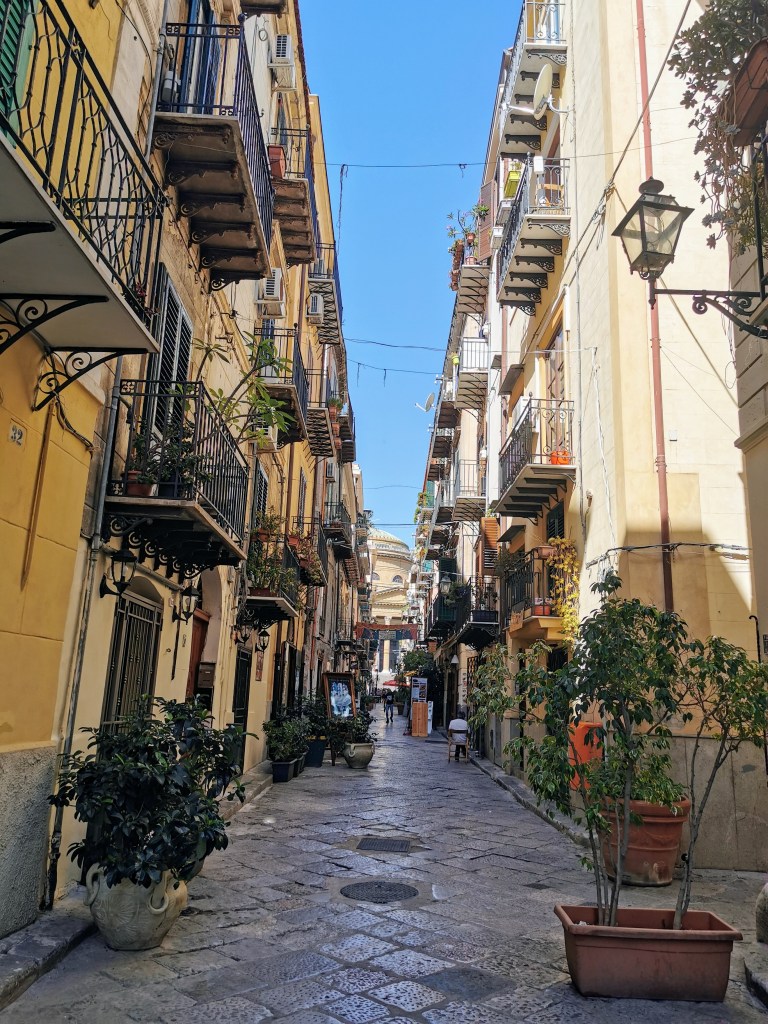
Get lost in the backstreets: The main thoroughfares of Palermo are straight roads which stretch on forever in true Roman fashion, but in between them is a warren of alleyways, squares, staircases and winding lanes where you can get lost for hours. You are guaranteed to emerge at regular intervals into yet another piazza with a church and a trattoria as standard.

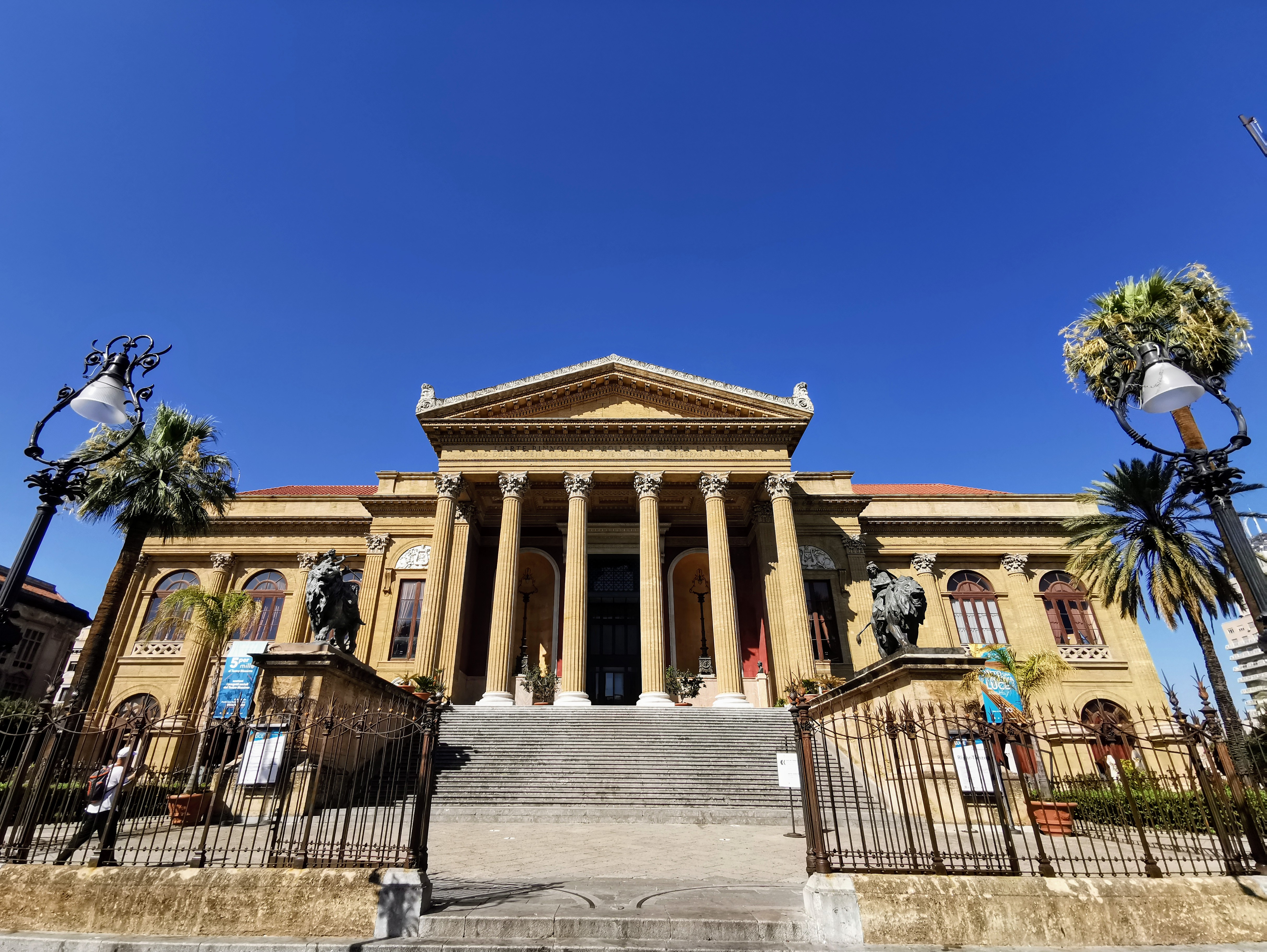
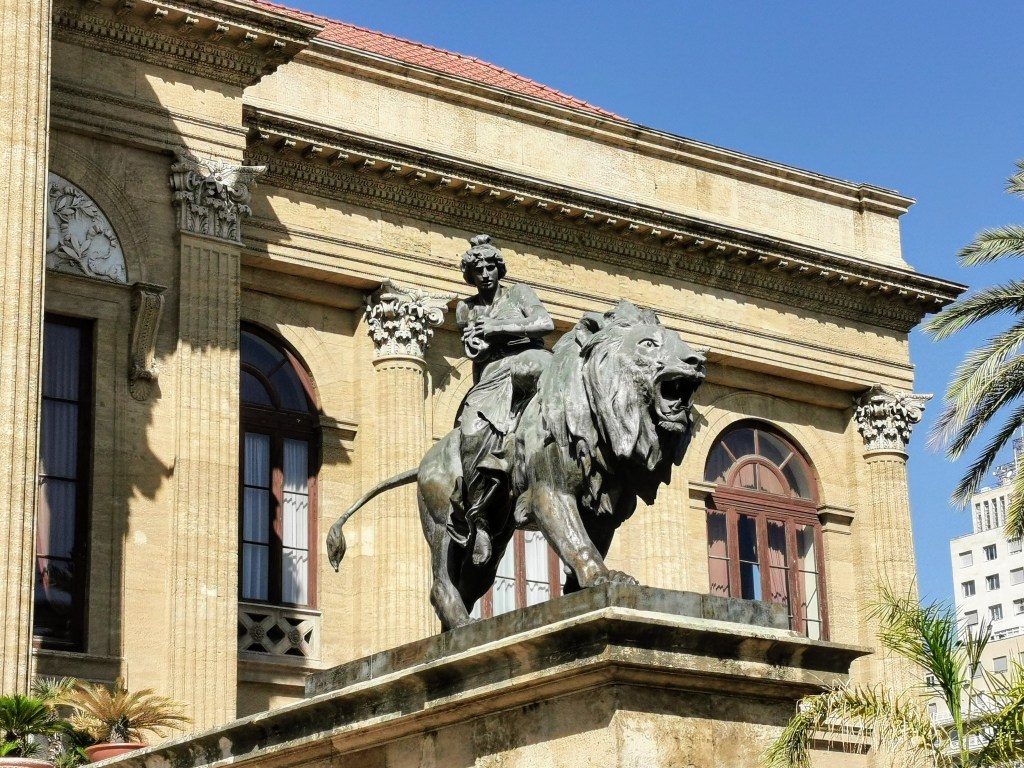
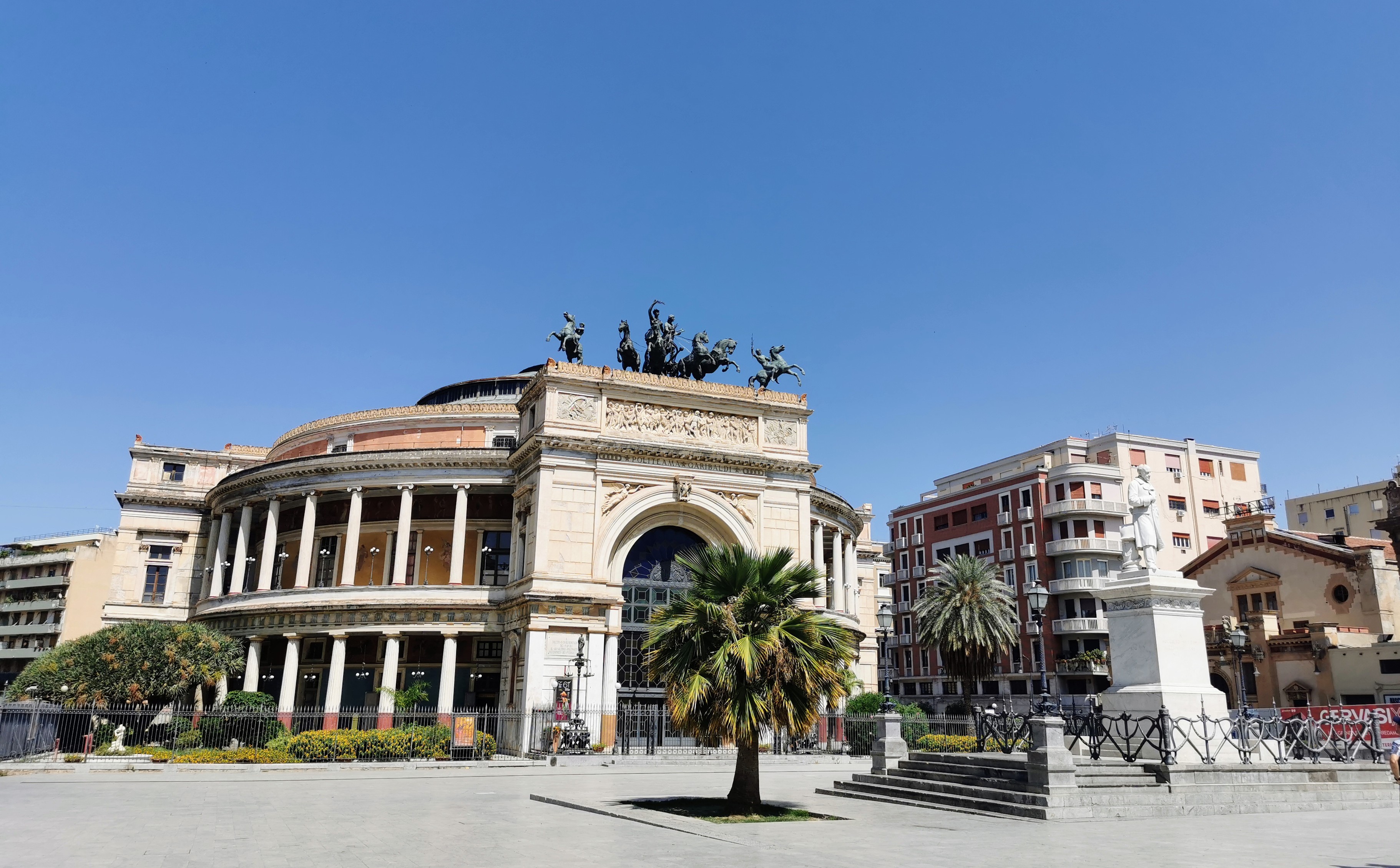
Soak up the drama of the opera house: The Teatro Massimo opened in 1897 and is one of the largest opera houses in Europe and the biggest theatre in Italy. It closed for renovations in 1974 and didn’t reopen for more than 20 years due to corruption and political infighting. In 1989, Francis Ford Coppola was determined to use the neglected building for his film The Godfather Part 3 but it was so delapidated, he could only use the outside for filming, and had to recreate the interior in a studio.

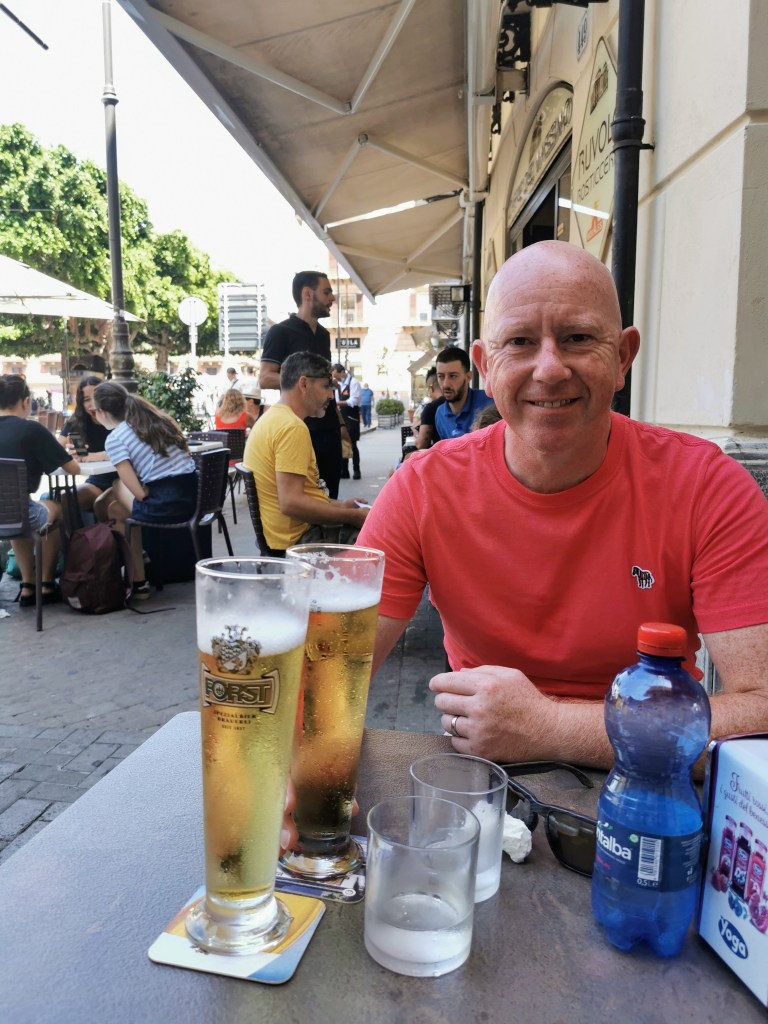
Even just the external scenes required a major clean-up, and they were filmed from the balconies above the cafe where we stop for a much needed cold beer. Palermo is proud of the fact that the influential trilogy ends in the city, with the tragic death of Michael Corleone’s daughter, Mary, on the stairs of the Teatro Massimo. Crime doesn’t pay, seems to be the message, but I doubt everyone here would agree with that sentiment.

No such drama on the piazza today, but we notice an old street dog lazing on the pavement. A local lady arrives with a bag of food and medicine, putting drops into the dog’s eyes and hand feeding her. We’re both really touched and stop to chat. The dog is 14, nearly as old as Henry, our Golden Retriever, but what a difference in life experiences – and how lovely that someone cares. Our opinion of the Palermitani goes up again.

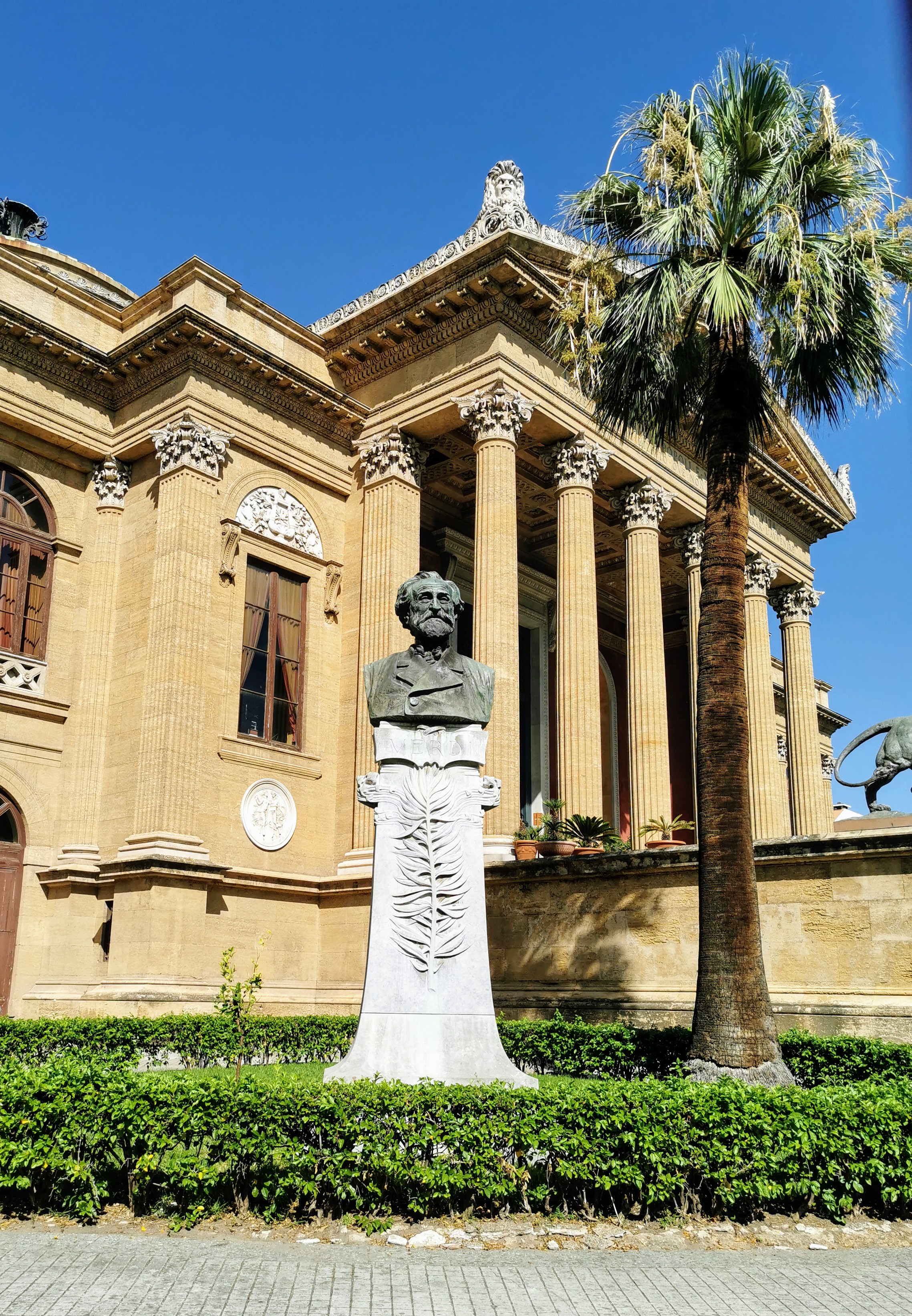
The opera house sits in Giuseppe Verdi Square, for obvious reasons, and a bust of the composer sits in the gardens outside. What are you taking a photo of? asks the husband. Giuseppe Verdi, I reply. But the husband is getting a bit hard of hearing, ‘Who’s Giuseppe Mary?’ he asks. I give up!
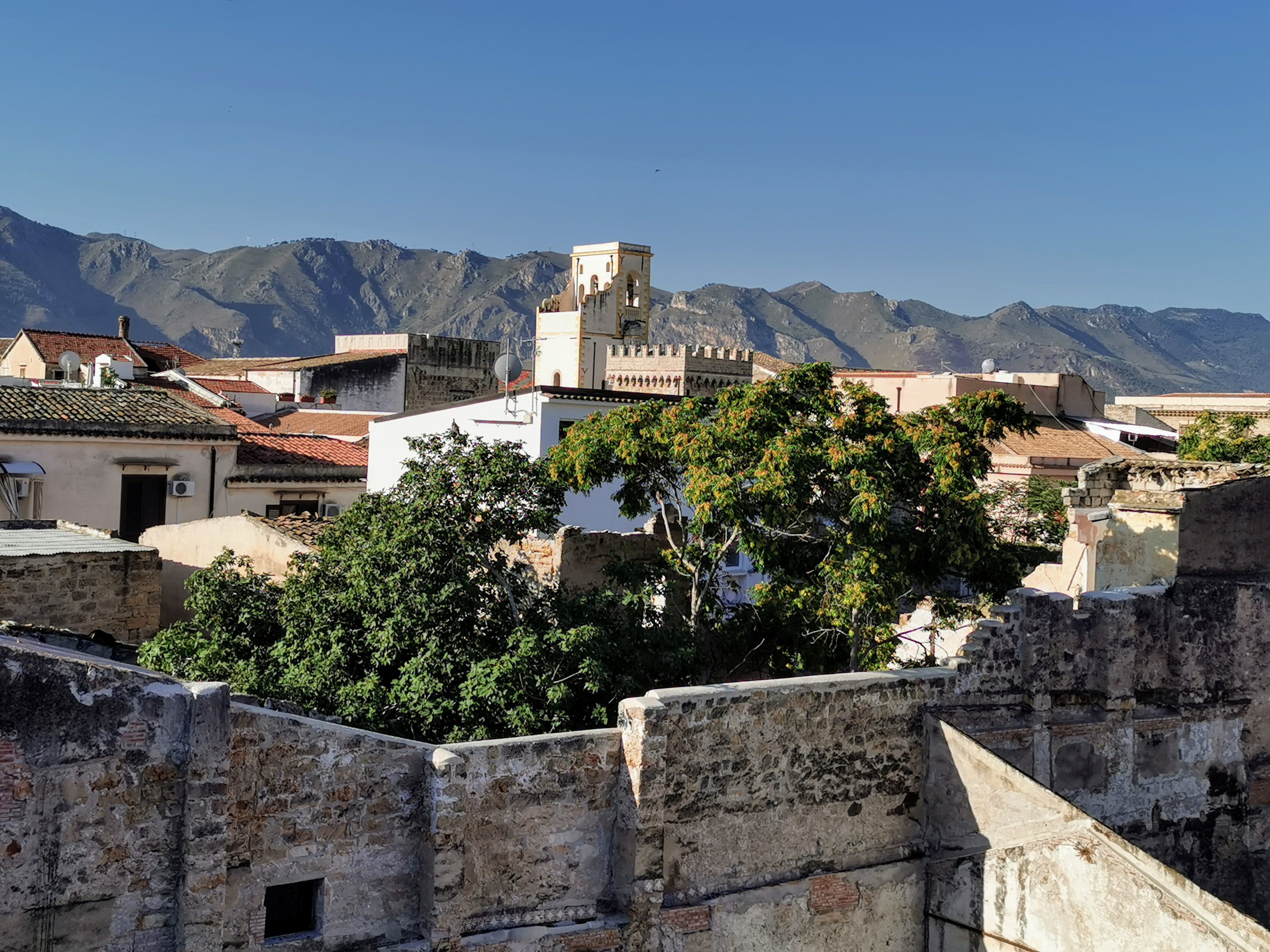
Visit the castle on the hill: A walk up to the Castello della Zisa takes you through the fascinating Monte di Pieta District, where you can get an insight into Palermitani daily life. The winding streets are full of tightly packed apartments. Washing flaps from every window, and whole families can be seen crammed onto tiny balconies trying to catch a breeze. You can understand why la passeggiata is such a ritual – when the day begins to cool down, everyone desperately wants to get out for a stroll in the open air.
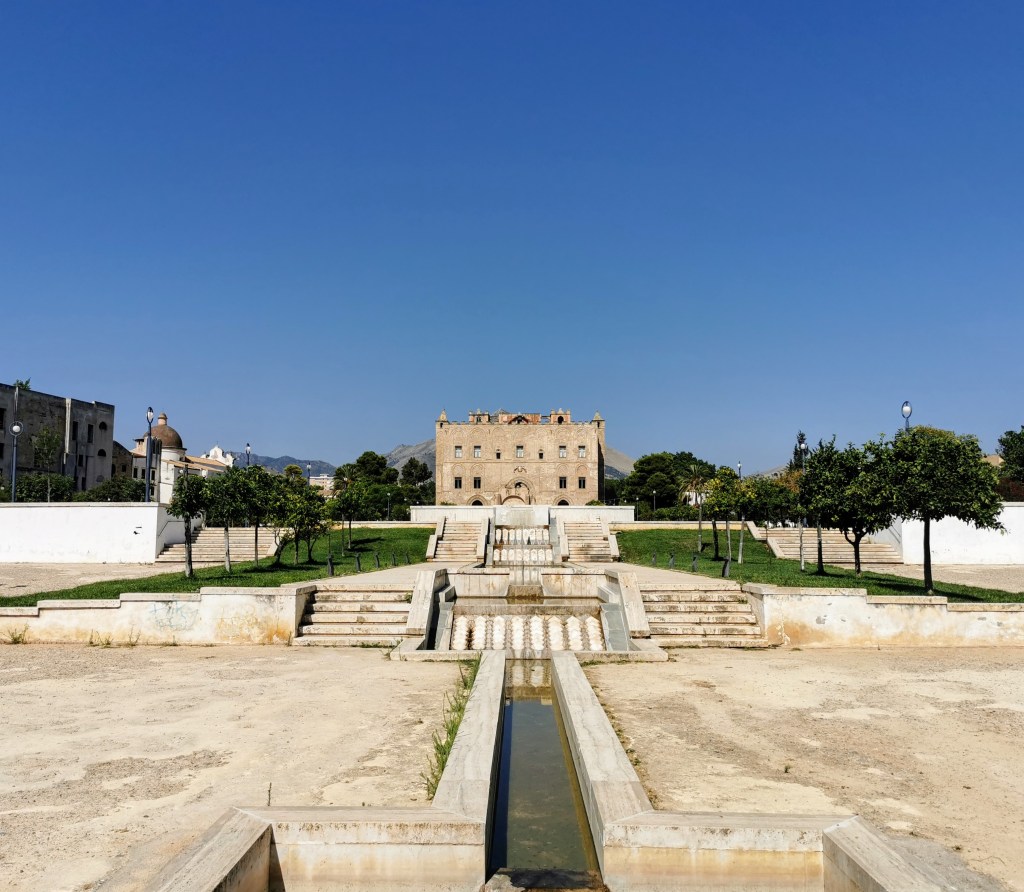
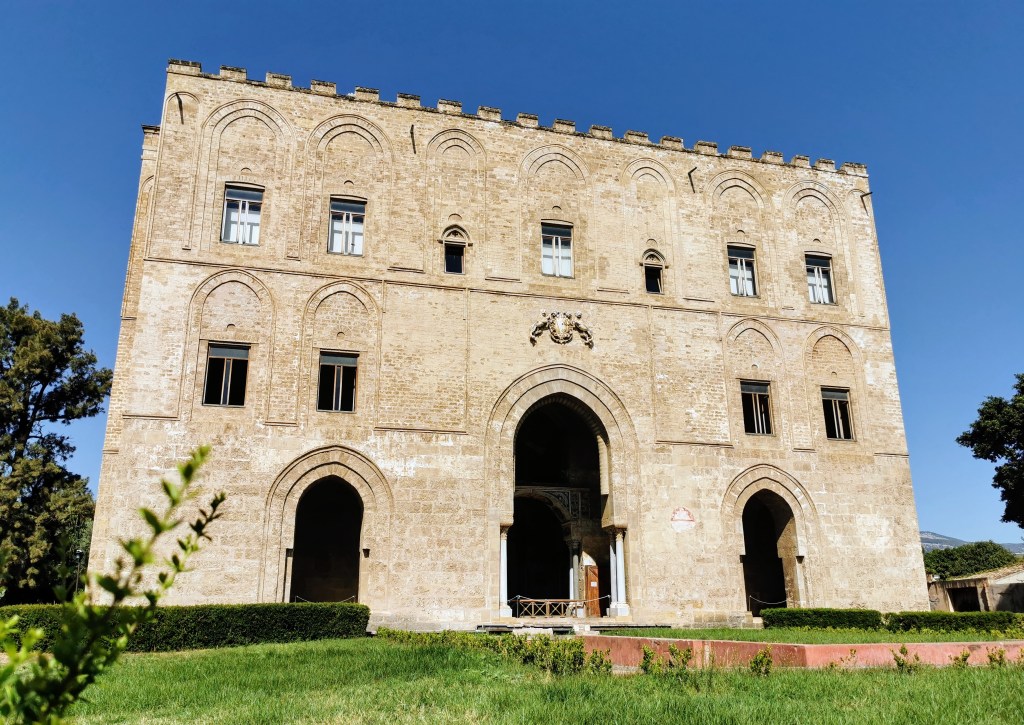
The castle itself was built in the 12th century by Arab craftsmen. The gardens in front of the castle were added in the early 20th century to improve the appeal of the site to tourists, but unfortunately that’s no longer the case. The fountains have been switched off, and the general impression is one of neglect. The area seems to be a glorified dog park at the moment. It seems such a shame, but if no-one is visiting then you can understand why money won’t be spent here – we are apparently the only people interested in this gorgeous building today.

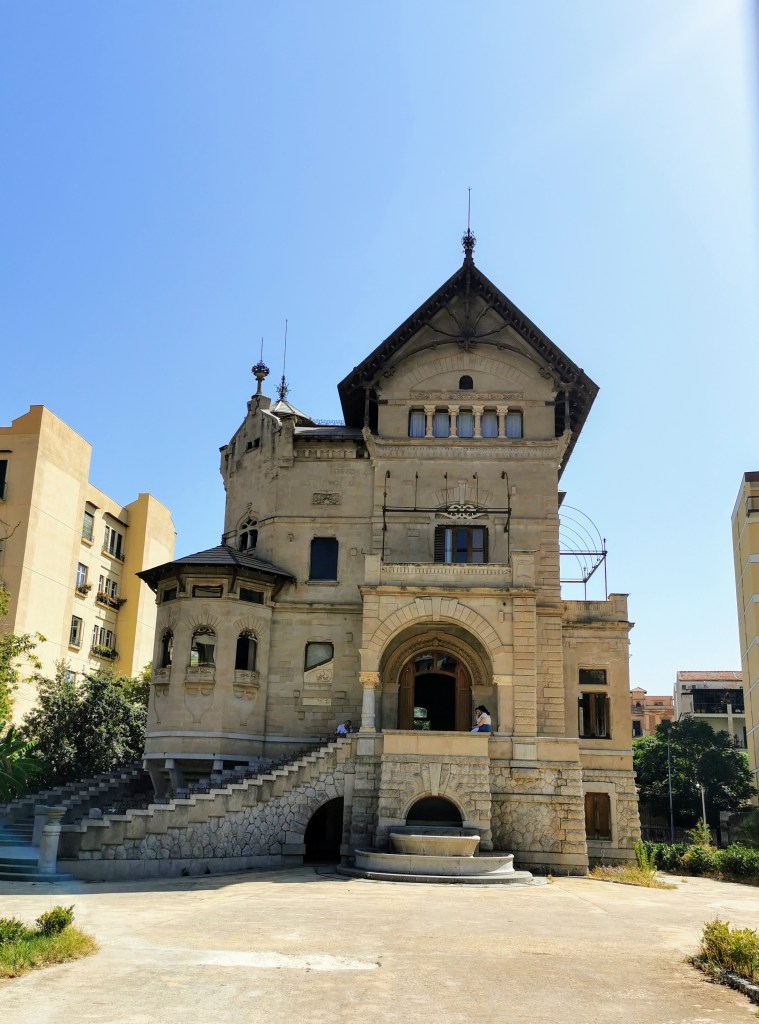
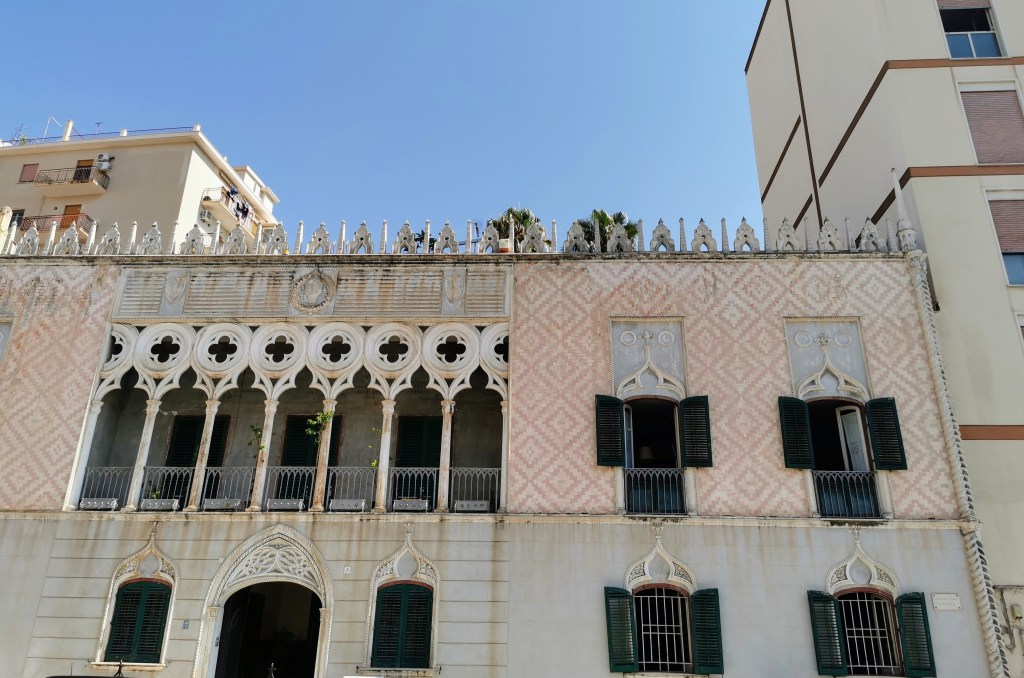
Just around the corner we stumble upon another ‘tourist attraction’ with zero visitors. The Villino Florio is a beautiful Art Nouveau villa. Inevitably, it looks quite run down, but at least here there are some signs of life. It does make me feel sad to see the deterioration of all these lovely buildings, but unfortunately the pandemic is just another hurdle for one of Italy’s poorest regions. In terms of GDP per capita, Sicily ranks second from bottom.
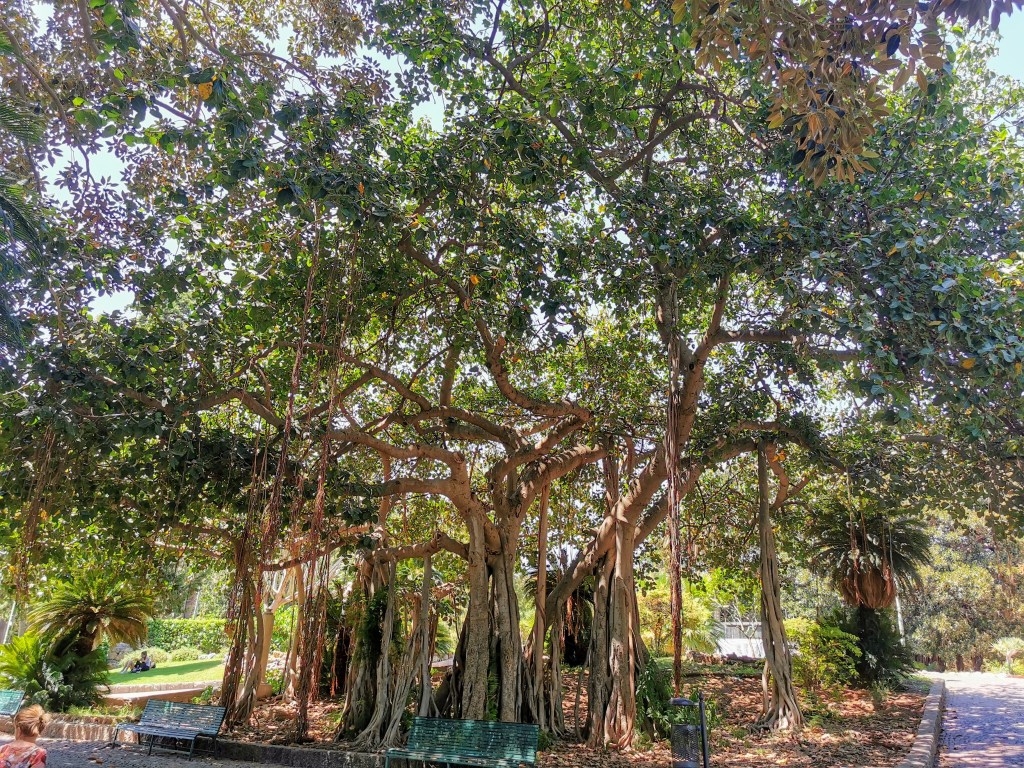
Shop till you drop on Via della Liberta: Temperature checks at shop entrances may be required, and inefficient air conditioning can make wearing a mask in Palermo’s heat a bit tortuous, but…oh joy, the changing rooms are open! After being deprived this luxury in the UK, and consequently not really going shopping, we are pretty excited. The city’s main commercial street also has some impressive architecture and the English Gardens provide welcome greenery and shade. I’m not quite sure how the cacti, figs and agaves are reminiscent of England though?

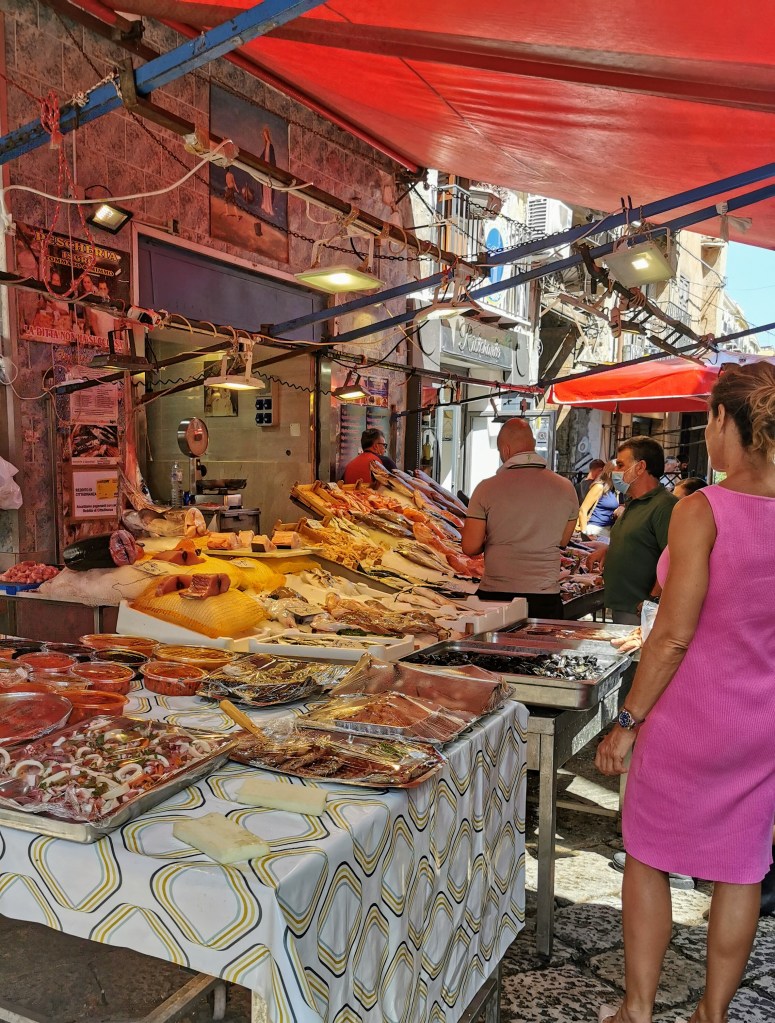
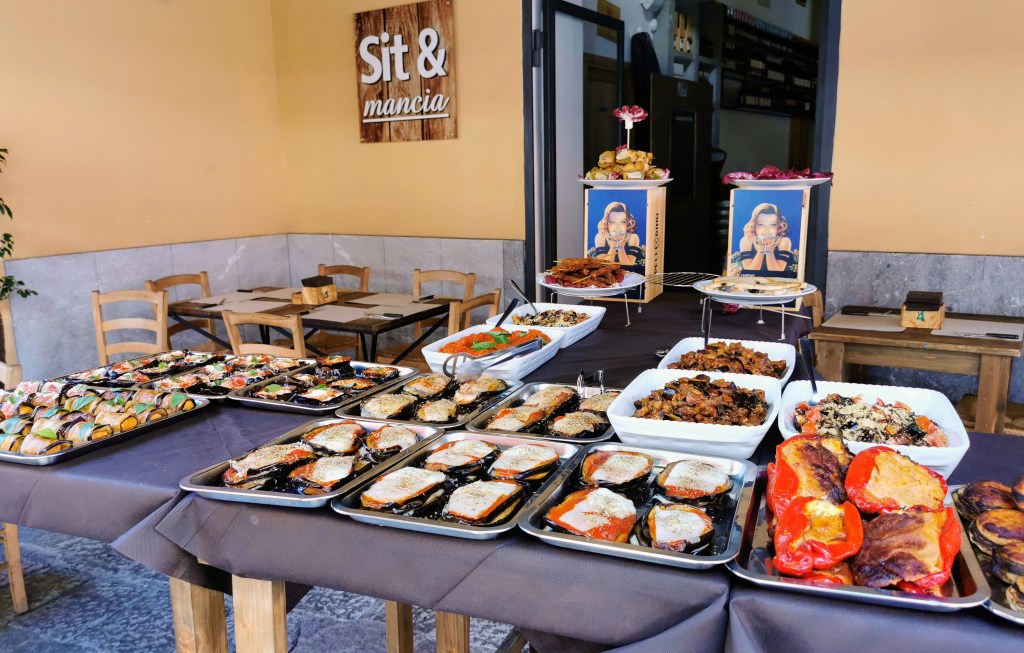
Join the Palermitani at play: Food and drink is taken seriously here, hence the local produce markets that dot the city, and the bars and restaurants on every corner. Like elsewhere in Italy, don’t expect a great variety of cuisines – you won’t be having a curry or a stir fry, it’s local specialities all the way. But do expect lots of enthusiasm – people are more than happy to make recommendations and explain ingredients – they want visitors to enjoy themselves.

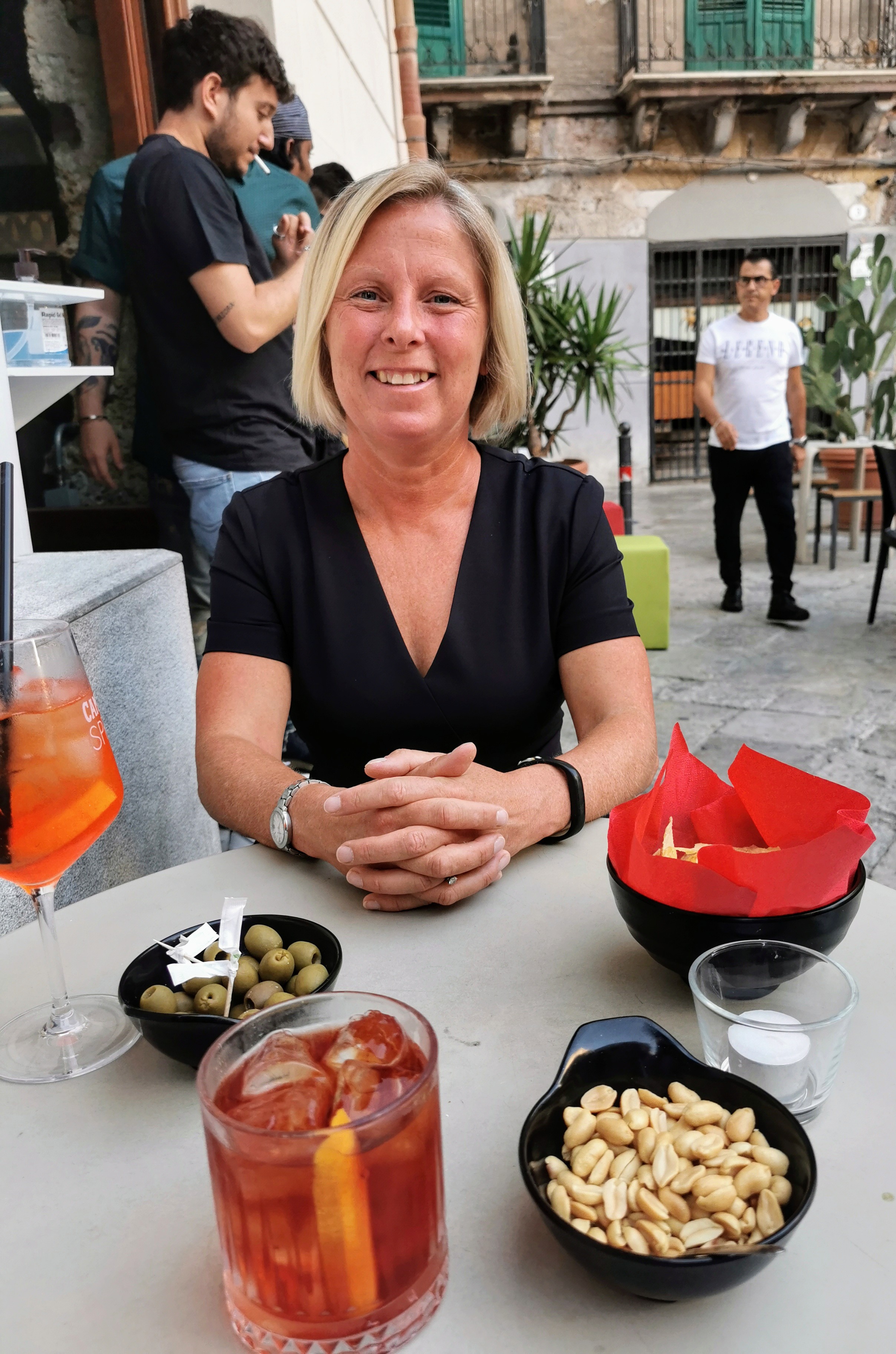
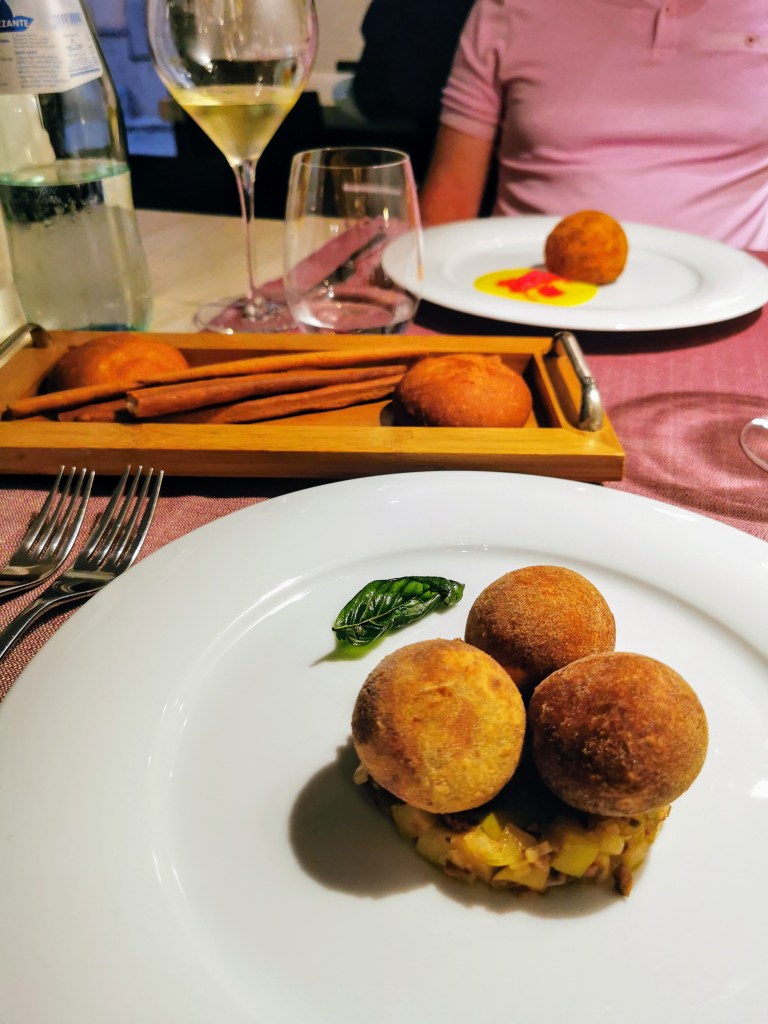
I have pretty much resigned myself to starvation rations when I get home – the deluge of snacks is impossible to resist. Crisps, nuts, olives, they just keep on coming. And then looking at restaurant menus, restricting myself to one course is also asking too much. Crispy fish balls on a bed of artichokes is a particular favourite starter, but everything is delicious, wherever we go. Make sure you try panelle, crispy fried chickpea fritters – a street food specialty. There’s also a lot of offal about, but I give that a wide birth. I have fed my dogs tripe before and there’s no way I’m going to try it. You may be braver…

So, at the end of our trip, which didn’t have the best start, we are so glad we came. The husband’s verdict: This is by far the scruffiest place I’ve been, but it has the best food and the friendliest people. That, dear reader, is a recommendation if ever I heard one. He is not the easiest person to please. There is one good thing about going home though, we think – it will be cooler. And then we get off the plane into a UK heatwave!

Design a site like this with WordPress.com
Get started