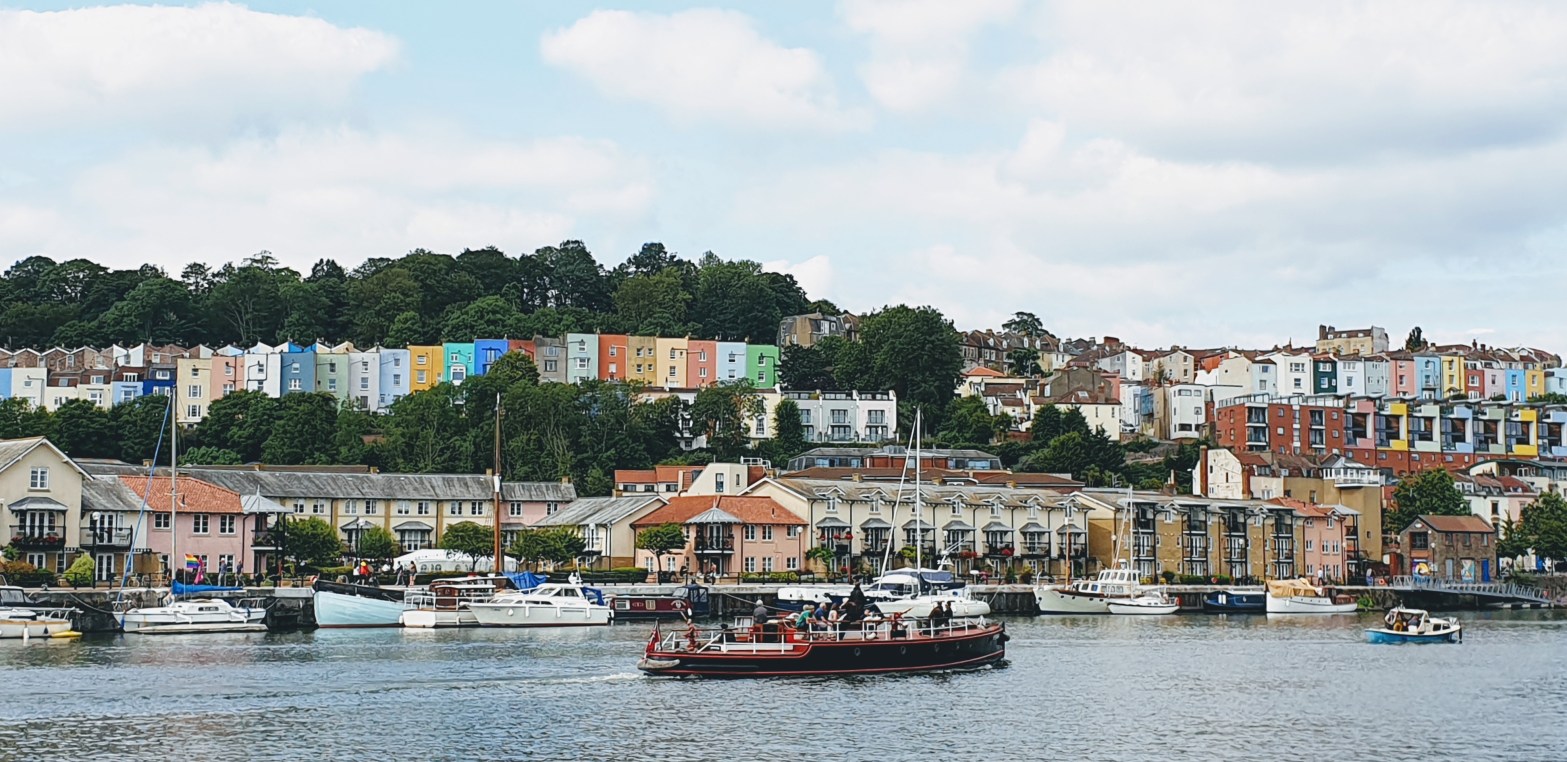
Looking past the headlines in Bristol

In 2020, Bristol was in the news quite a bit, but not for the right reasons. The toppling of slave trader Edward Colston’s statue during a Black Lives Matter protest kicked off a huge debate about how the UK should deal with its history of profiting from the slave trade. The furore still continues in 2021 and has certainly not enhanced the reputation of the city.
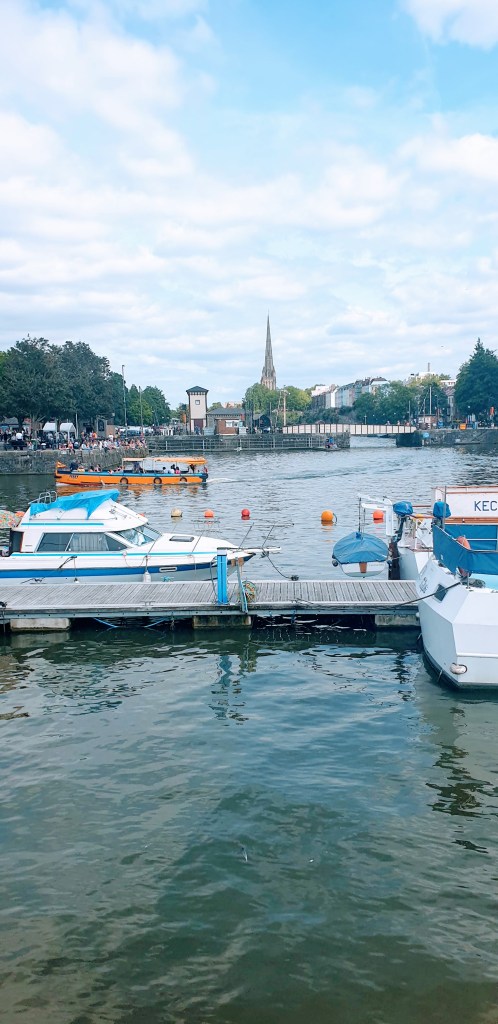
Unfortunately for England’s sixth largest city, the history of Bristol is distinctly murky. As always, it’s down to location. Founded in the 10th century, Bristol’s strategic position where the rivers Avon and Frome meet and then flow towards the sea saw it become the second most important port in the country and also gave it the Old English name Brycgstow – the place at the bridge.
The city’s position on the west coast of England meant that it was well placed for trade with Ireland, Spain and then the Americas. Yes, voyages of discovery were launched here but the city is better known for first smuggling and then slavery. The slave trade in particular was lucrative, and the profits literally laid the foundations for much of Bristol’s glorious architecture. Ships left here bound for Africa, laden with locally produced goods which were traded for slaves. The slaves were transported to America and exchanged for cotton, tobacco and sugar, which had a ready market in Europe. Bristol’s merchants got rich and the city thrived. It’s not a pretty picture, is it?
If the links to slavery are putting you off, don’t let them. It all happened a long time ago, after all, and Bristol has so much more to offer than its somewhat dodgy history. With a population of almost half a million, the south-west’s largest city often scores highly in ‘best place to live’ type surveys due to its restaurants, cultural events and community spirit. Personally, Bristol makes me think of sherry – John Hervey started blending his distinctive ‘cream’ here in the 19th century – so I had positive impressions even before visiting. It may not be trendy, but I’m quite partial to a sherry!
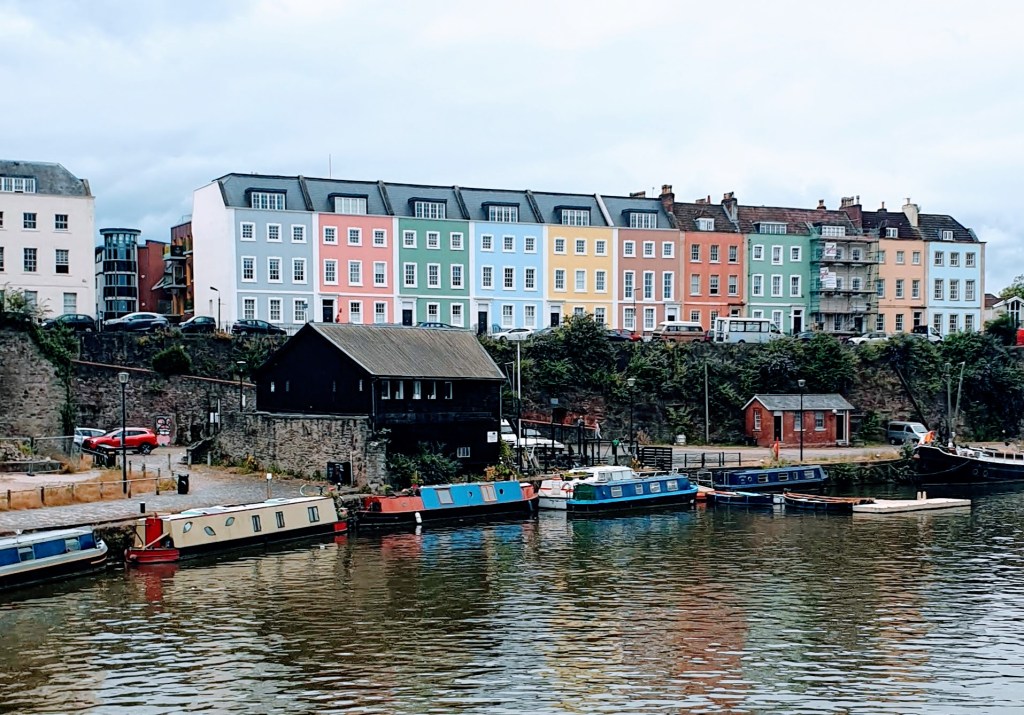
I visited Bristol for the first time in 2019 and loved it. Today I’m going back there to tell you why I, and more importantly the husband, liked it so much. He is much more picky than I am, after all. It’s July so we’re expecting nice weather, although you can never quite rely on that in the UK. We’re travelling by train, ahhh, so civilised. Unfortunately our first impressions on arrival at the rather lovely Temple Meads station are marred by huge roadworks to improve the approach to the city. Never mind, it’s only a 15 minute walk to our hotel in the city centre.
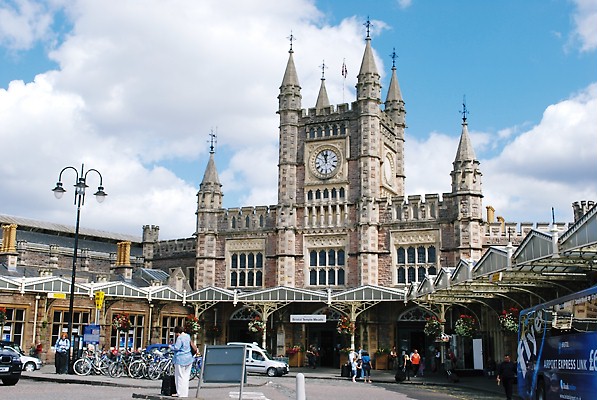
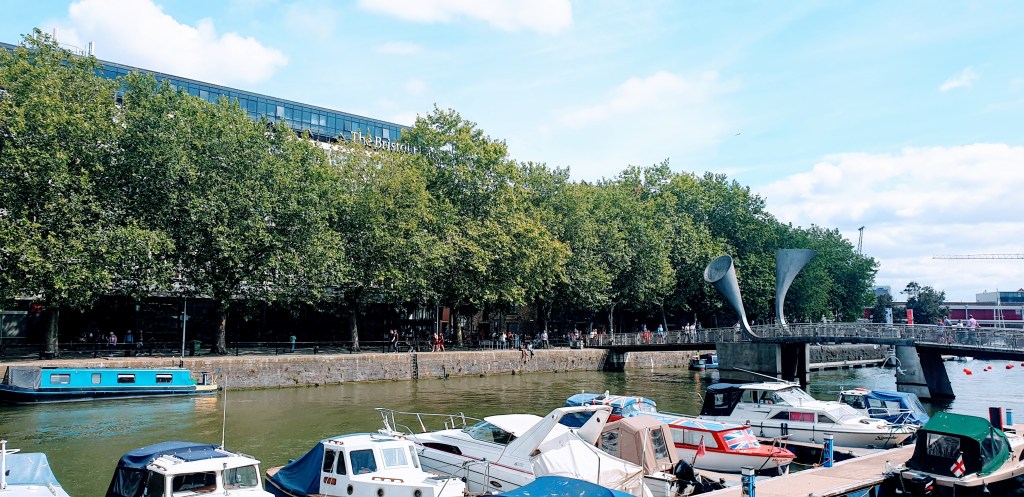
We’ve chosen to stay at the Bristol Hotel because it has the perfect location right on the water in the Old City. It’s not a pretty building by any reckoning, but for a short stay convenience is king in my book. Check-in is straightforward, our room is perfectly satisfactory, and we’re soon having lunch in a nearby pub. It’s a promising start.
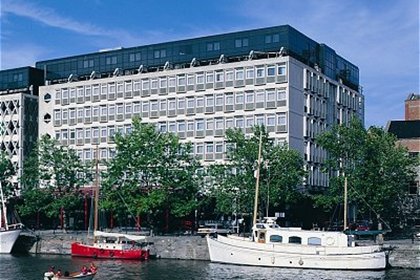
On to exploration. The Old City, centred on the green expanse of Regency era Queen Square, has some interesting streets and lovely old buildings. We pass the pubs of King Street where alfresco drinking is the order of the day. It’s tempting, but we resist. Along Corn Street a flea market is in full swing, although unfortunately the historic St Nicholas Market is closed. In Castle Park, locals laze on the grass in the sunshine. Bristol Castle was one of England’s greatest in the 12th century, but not much remains today, much to the husband’s relief – he would be dragged around it otherwise. This area is the site of the old medieval city, once enclosed by walls and still the busy, beating heart of Bristol.
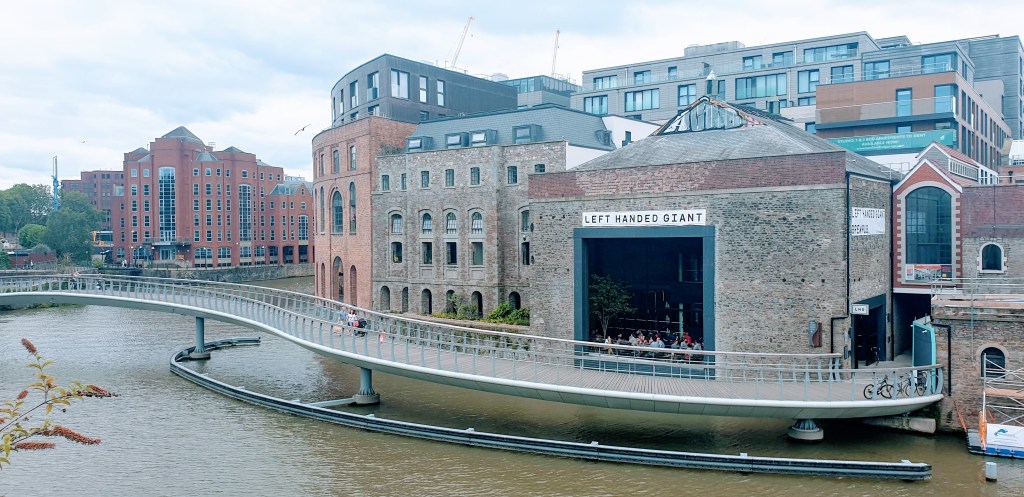
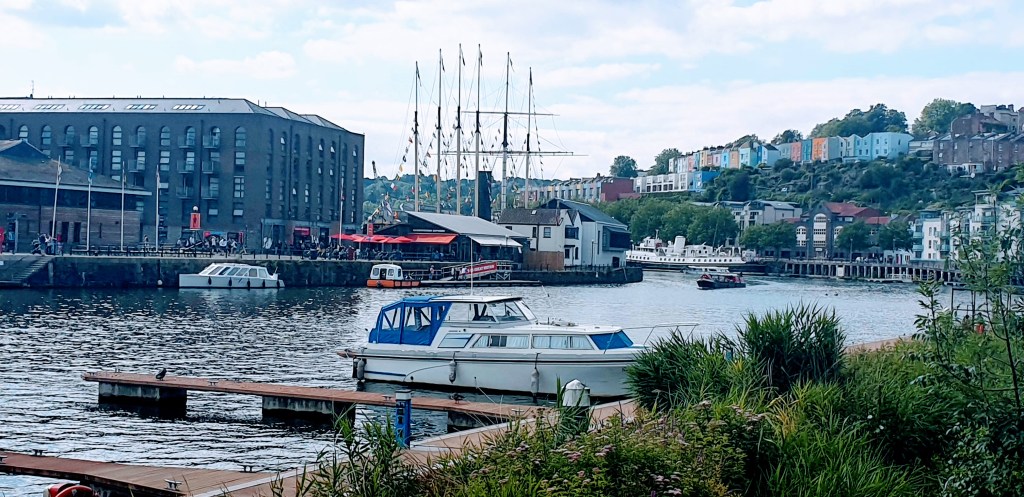
We walk back along the waterside pathway to Wapping Wharf, on the banks of the so-called Floating Harbour. Water from the nearby River Avon was enclosed here to allow ships to be safely loaded and unloaded away from the tidal drag. It’s now largely recreational, but the vibe remains industrial. Bristol’s history is explained at the M Shed Museum, housed in a 1950s transit shed. Behind the museum, Cargo is a collection of shipping containers converted into independant restaurants and shops.
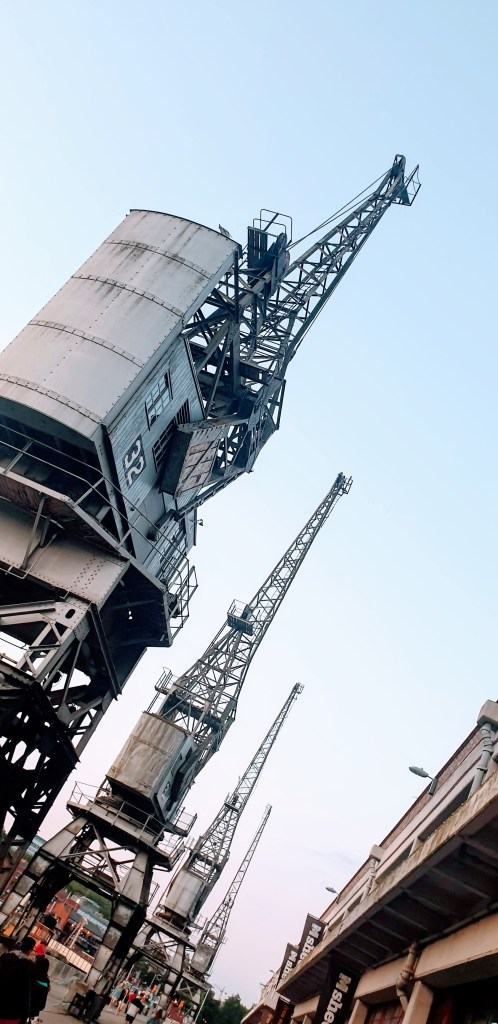
As you know, walking is a vital element of a successful city break for me, and Bristol does not disappoint. Riverside strolls are always a treat, and the city centre wharves are the starting point for footpaths that stretch for miles. After a quick snifter at one of the many bars in the converted warehouses along the Waterfront, we head west towards the suburb of Hotwells.
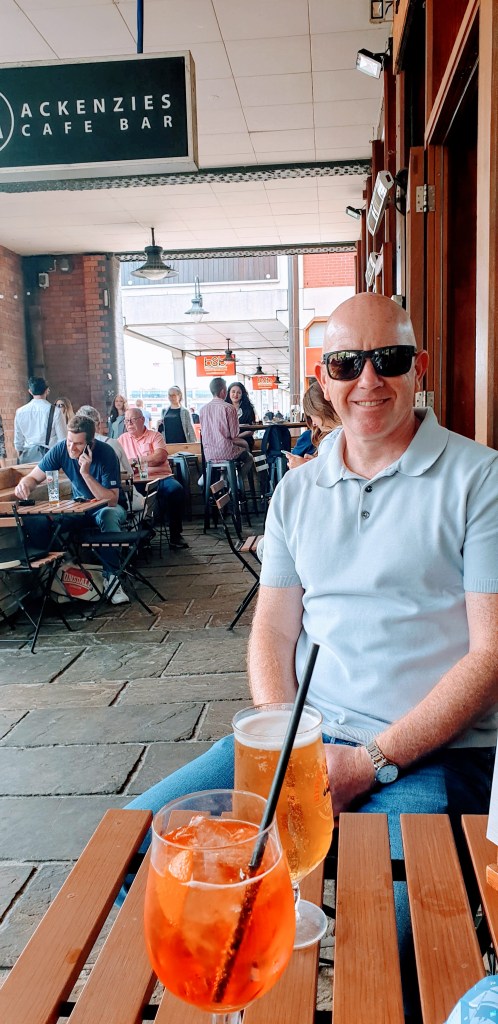
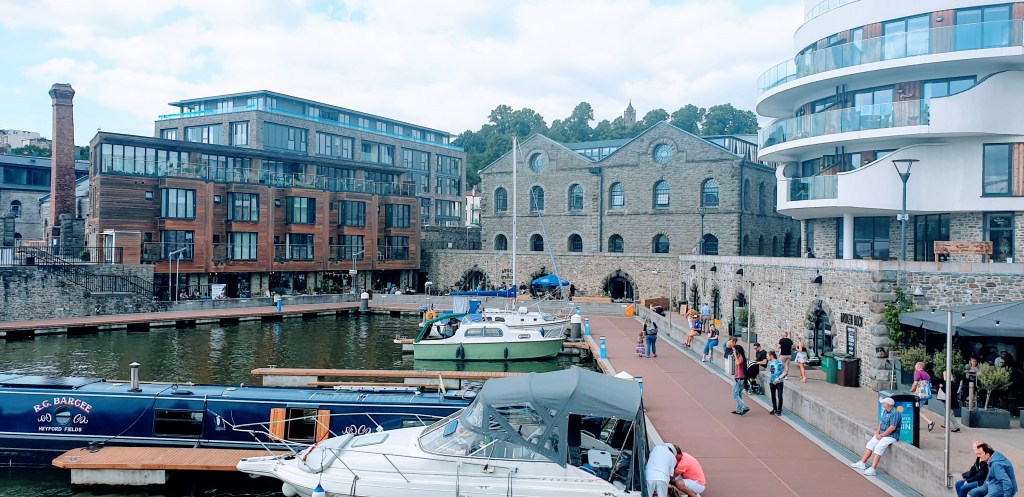
There’s lots to admire along the way – attractive apartment blocks both modern and heritage in converted warehouses, some characterful and very busy pubs (this was in the good old days when they were always open, remember!) and boats of all shapes and sizes. At Merchants Road we cross over the bridge to Spike Island, home to art studios and galleries since the 1970s, and turn east back towards the centre.
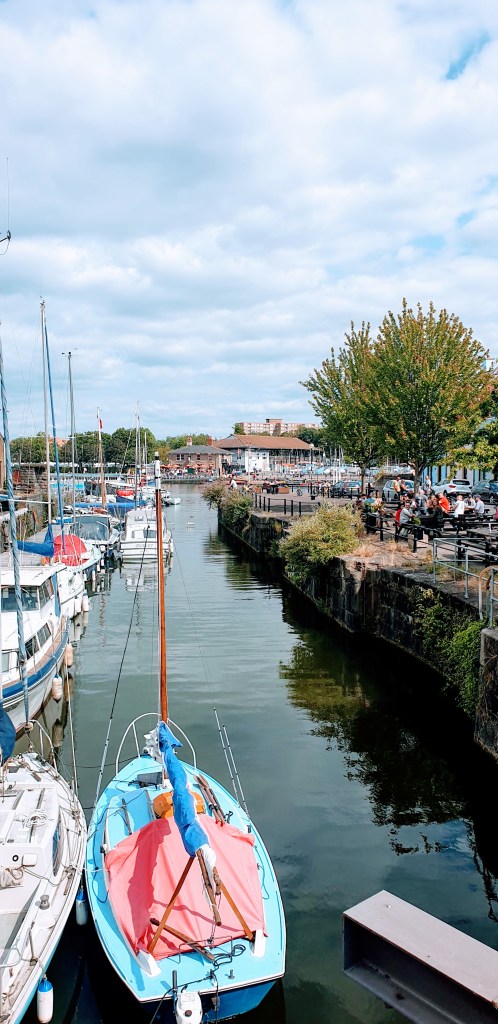
We pass Underfall Yard, a Victorian working boatyard and museum, and Bristol Marina, previously the Albion Dockyard, where some of Bristol’s biggest shipbuilders were based. And talking of ships, as we turn a corner we come face to face with a particularly famous one – Brunel’s SS Great Britain, billed as the ship that changed the world. Launched in 1843, the Great Britain was the largest ship afloat at the time, and revolutionary in design. Unfortunately this also made her expensive to build and prone to operational issues, bankrupting her original owners.
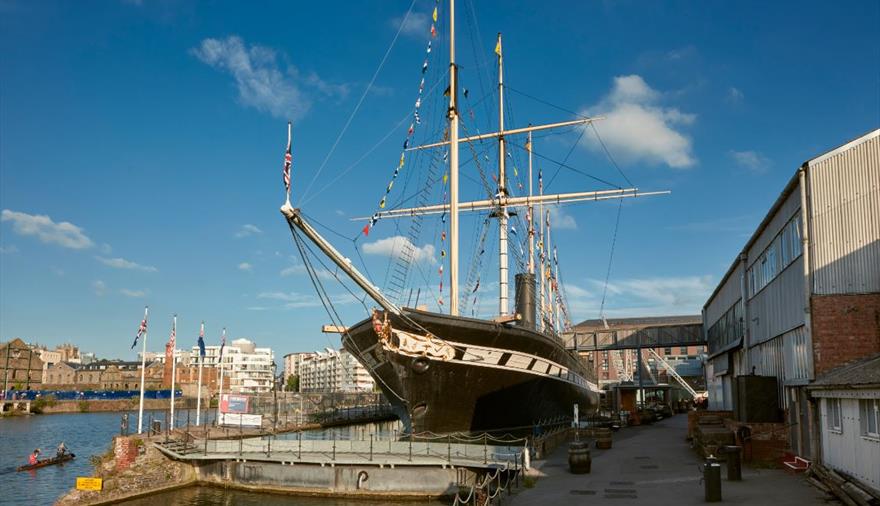
Originally built for the transatlantic route, the Great Britain ended up taking emigrants and gold seekers to Australia for almost 30 years. Her longtime captain, John Grey, mysteriously disappeared one night on a voyage home from Melbourne. The ship sadly ended up transporting goal before being abandoned in the Falkland Islands. Thanks to some rich benefactors, her story ended happily with a rescue operation bringing the Great Britain back to her birthplace in Bristol. You can now visit and explore the ship for £18. Well not right now, obviously, but soon…hopefully!
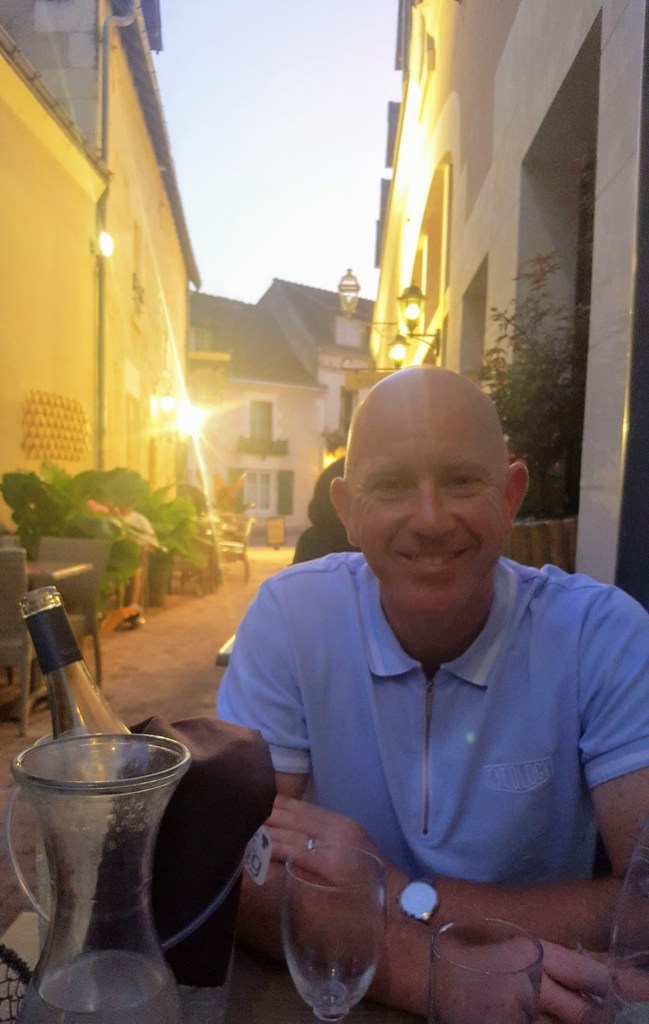
After dashing around all day, we are more than ready for evening refreshments. I’ve pre-booked dinner, of course, I like to be organised, but we fancy a few drinks beforehand. We start with traditional at the King William Ale House on King Street, before progressing to something a bit more funky at The Wild Beer Company down by the harbour. Yes, we are probably the oldest people in there but what the heck! Dinner at The Olive Shed is lovely, lovely tapas. We look quite content afterwards, don’t we?

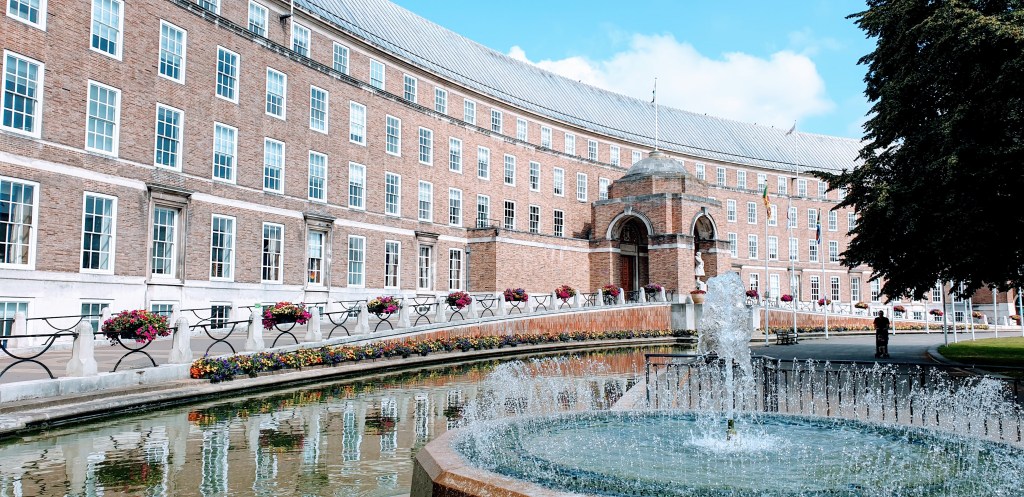
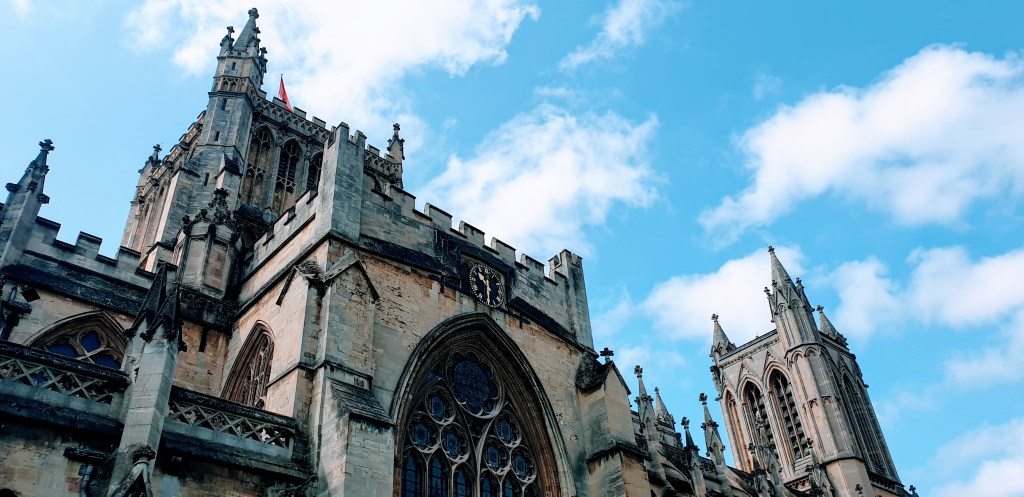
The next morning doesn’t start well – there’s a queue for breakfast in the hotel. For someone who generally wakes up starving, this is a major drama! Fill your boots, I advise the husband when we finally get seated – I have another walk in mind, this time to Clifton, home of the famous suspension bridge. Past the impressive Cathedral and City Council building, through Brandon Hill Park and up Constitution Hill we go to the village-like suburb where everyone wants to live.
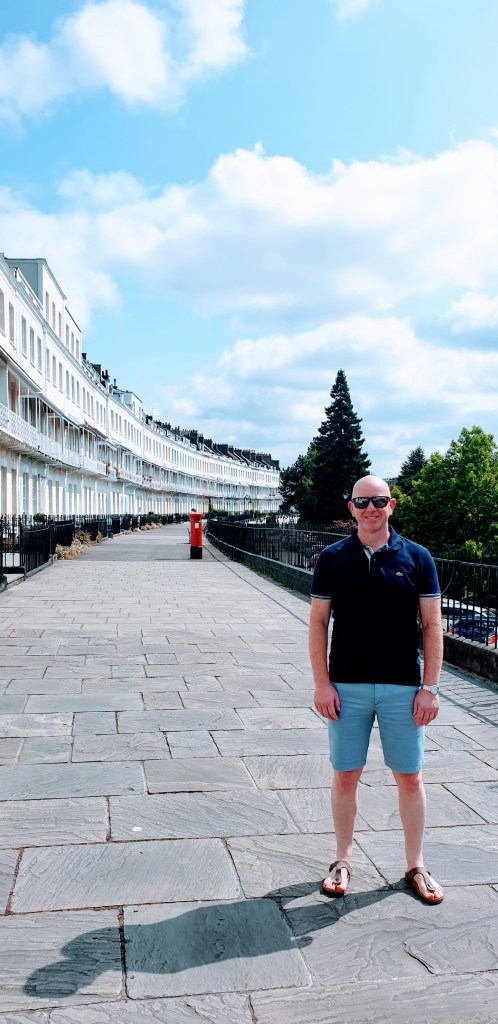
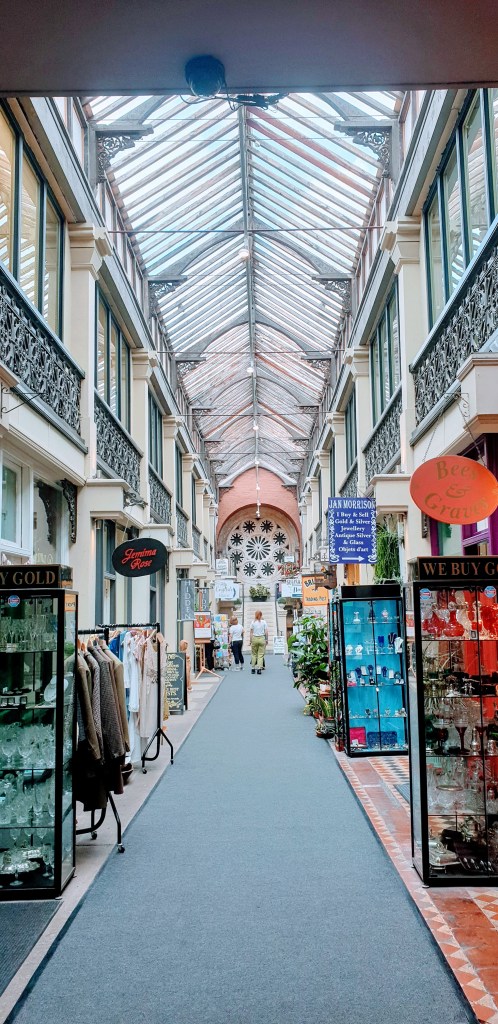
Unsurprisingly, we think, as it is rather fetching with streets and crescents of handsome Georgian townhouses, quirky shops and arcades and cosy little pubs and restaurants. The husband starts to look in estate agent windows, which usually means he’s impressed.
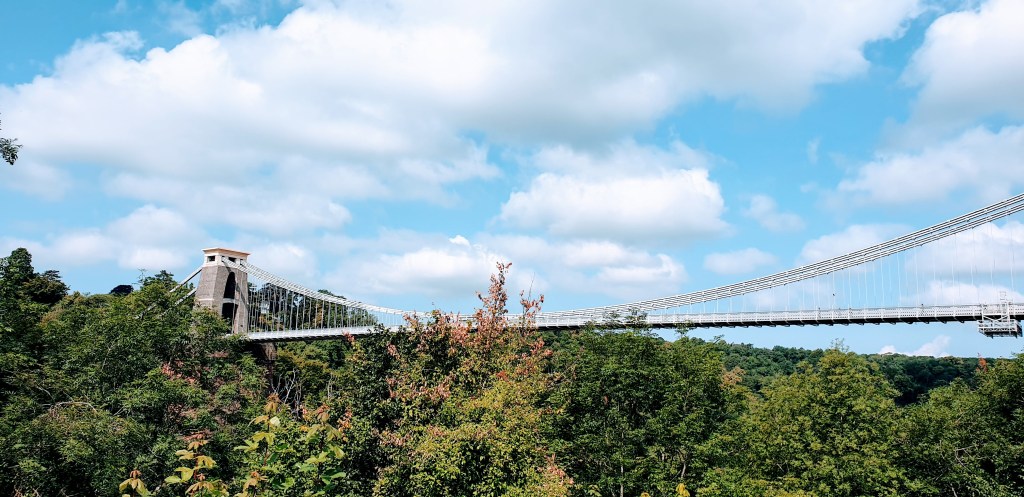
And then there’s the crowning glory – Brunel’s Clifton Suspension Bridge is Bristol’s most recognisable landmark. Completed in 1864 and spanning the Avon Gorge for over 2 kilometres, this was the site of the first modern bungee jump in 1979. It’s also been the site of many suicide jumps, although in 1885 one lady was saved by her petticoats, which billowed out like a parachute. She subsequently lived into her 80s. Bring back voluminous skirts, I say!
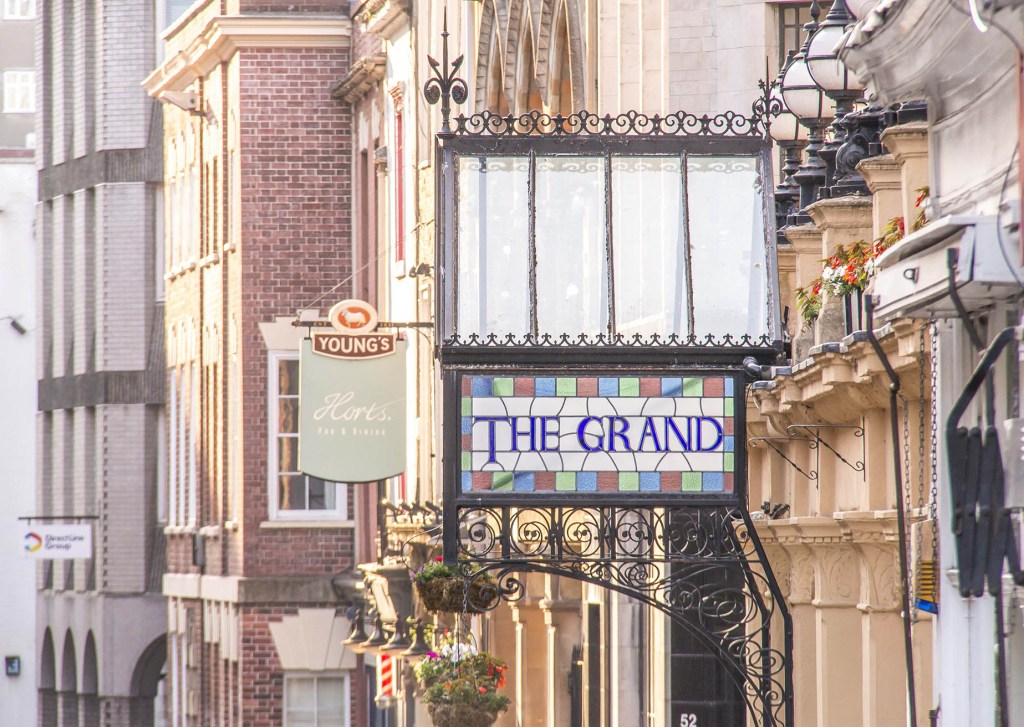
Back in the town centre, there’s just time for lunch before our train departs. Horts on historic Broad Street in the Old City looks promising from the outside, and they’re serving Sunday roasts – who are we to resist? In the end we’re lucky to make it to the station on time – huge Yorkshire puddings and copious amounts of veg (oh, and a few vinos to celebrate another successful trip) mean that we struggle to get out of our chairs, never mind cart our luggage a mile up the road. Collapsing into our train seats, a nap may be in order…it’s been an energetic and satisfying weekend.
My favourite places: The Loire Valley

After losing our beloved Golden Retriever, Henry, just before Christmas, I wanted to write about somewhere we travelled with him. He enjoyed the Loire Valley as much as us, because it’s just so dog friendly – yet another reason to love this part of France. You’ve also got the wines, the landscapes, the chateaux, the food. Even the French see this region as a cut above – the French accent here is the purest and it has a long tradition of royal patronage. It’s got something for everyone.

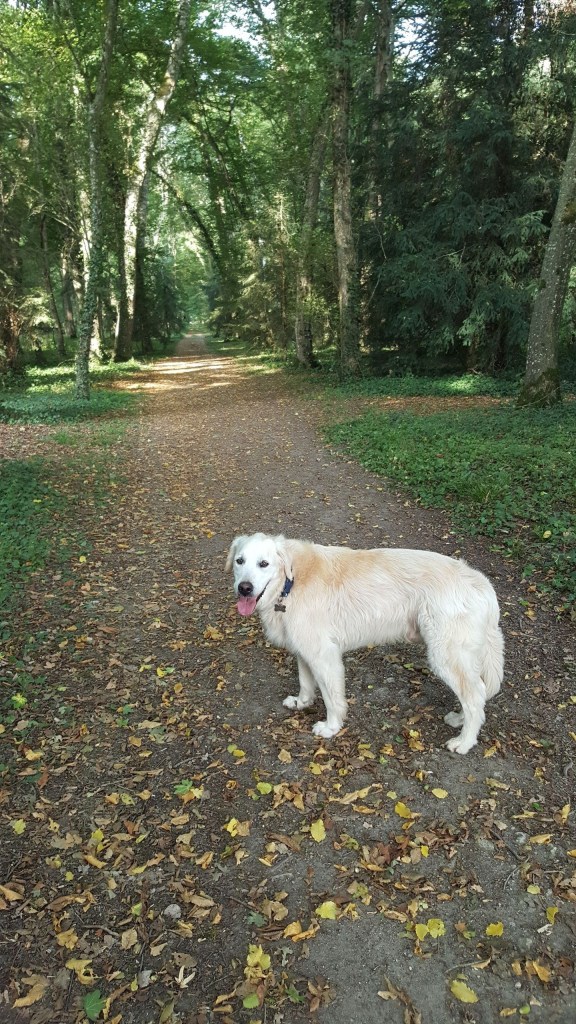
Henry en route to the Loire and pretty happy about it.

As you may know, I’m a huge Francophile, despite the fact that we Brits are often made to feel just a tad unwelcome. It gives us something to laugh about. I’ve always loved that you can just jump in the car, hop across the Channel, and emerge somewhere so completely different to the UK. It’s always felt like an adventure, even when my sister and I slept in sleeping bags under the ferry stairwells (too skint for a recliner) and drove for hours on the routes nationales (ditto the motorway tolls).

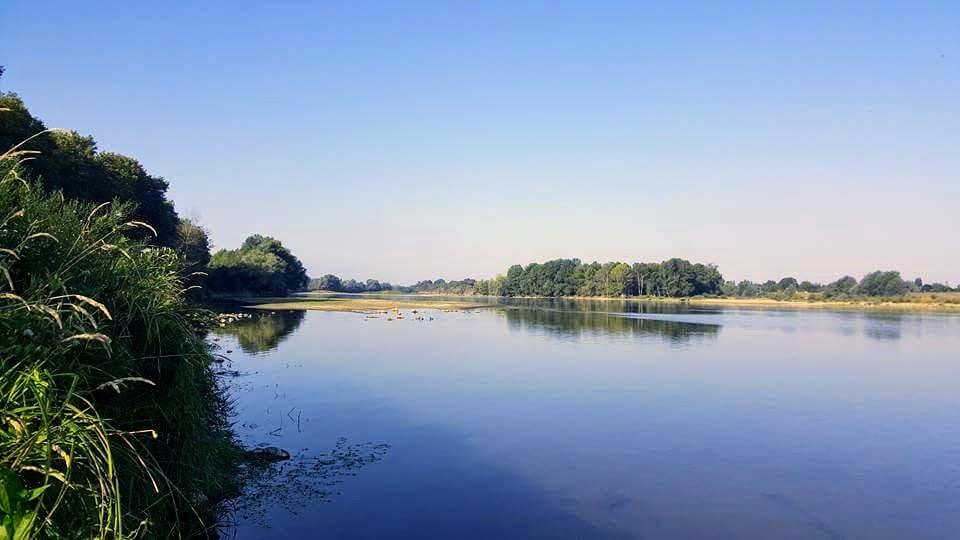
The Loire River winds its way through the centre of this region.

Heading south through France, the Loire is the perfect place to stop, whether for lunch or a few days. There’s loads to see, and it’s where the weather starts to get warmer. The many castles are beautiful and full of history, although that doesn’t cut it for some philistines (including the husband sadly). The food is French, what more do I need to say? And did I mention that Cointreau comes from Angers? No matter how many times you go, there’s always more to discover.

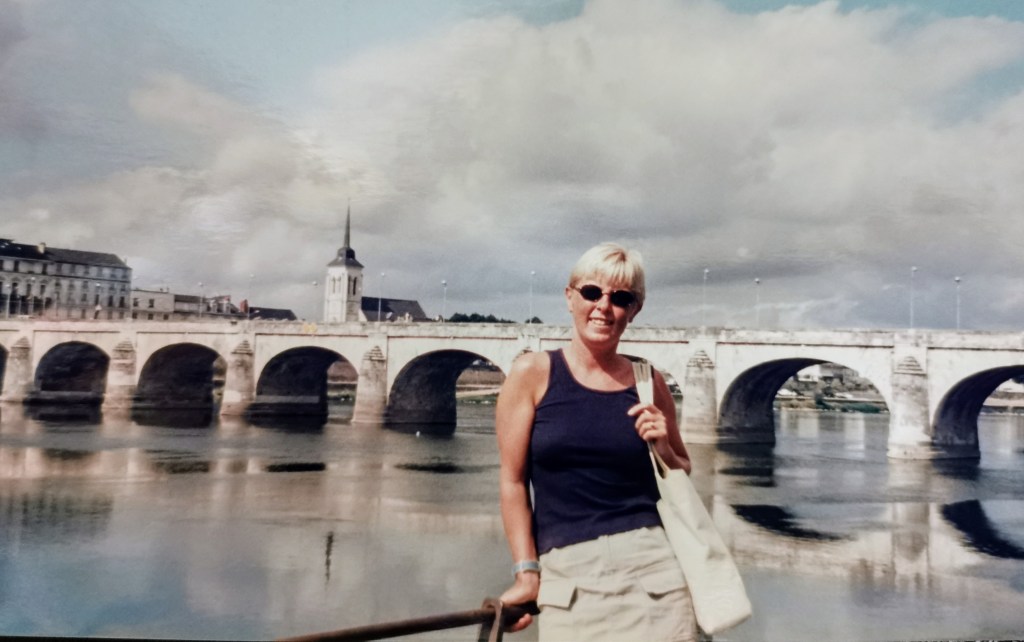
By the Loire in Saumur, 1999

Years ago, when I taught languages to reluctant teenagers, we were studying a book about Joan of Arc. On holiday in the Loire, I thought a photo of me in the castle at Chinon where Joan first met the Dauphin would really bring the story to life. In Chinon, I cantered up the steep approach to the castle, desperate to buy tickets before the husband objected to the price. ‘I can see perfectly well from outside’ was a bit of a catchphrase. Needless to say, my students were underwhelmed – teaching was sometimes a great disappointment to me.

Inside the Chateau de Chinon – that’s a rueful smile, he didn’t want to be there!

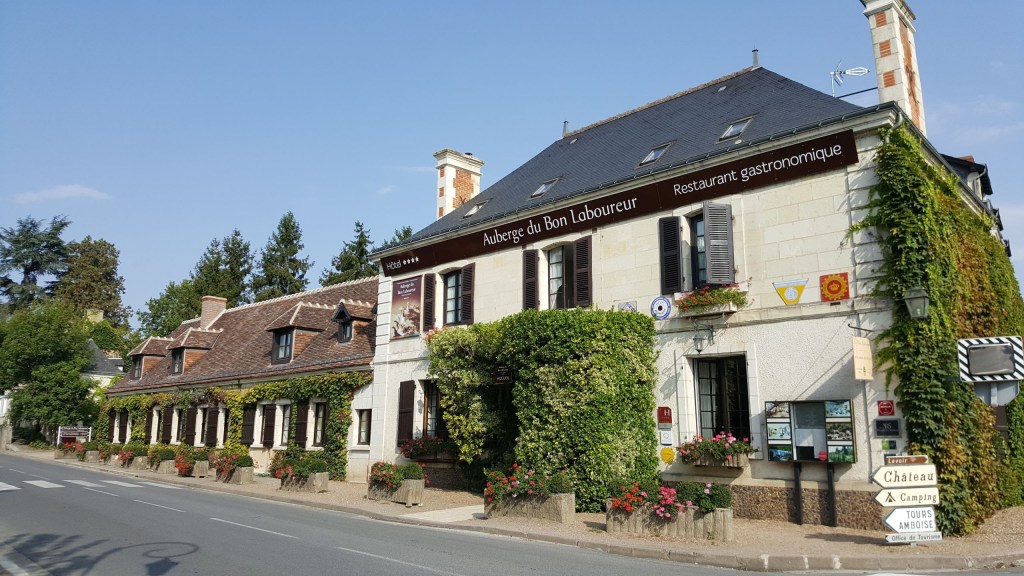
But the Loire really comes into its own for us when we get Henry his pet passport. The Eurotunnel is a breeze and 5 hours sees us in the heart of the valley. In Chenonceaux we stay in a Michelin-starred hotel-restaurant, the Auberge du Bon Laboureur. No slumming it required here for dog lovers, and the owners are quite happy to have pooches in the dining room. Providing they are well behaved like Henry, of course.

Hotel restaurant l’Auberge du Bon Laboureur.
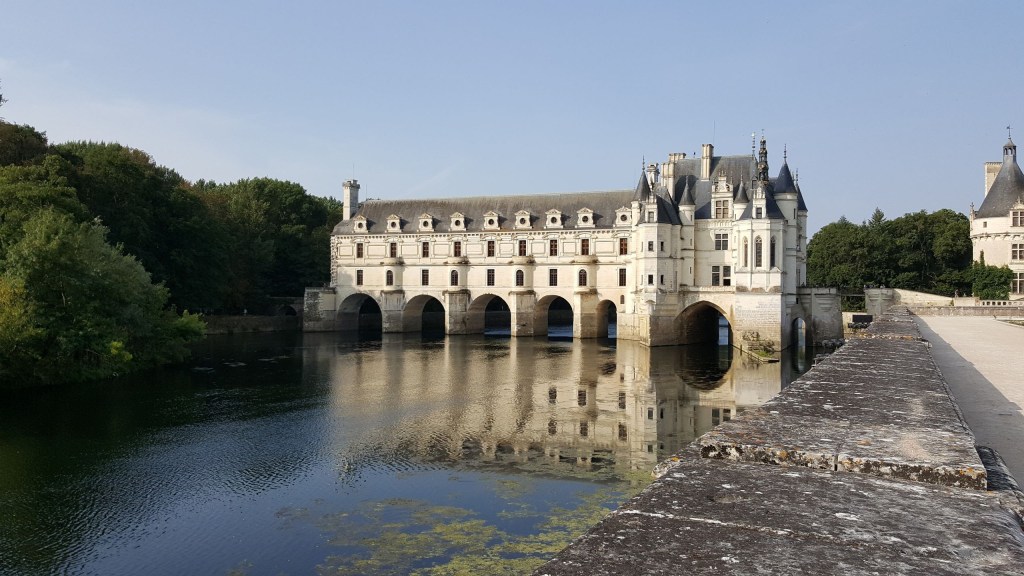
The Chateau de Chenonceau on the River Cher.

Chenonceaux is best known for its chateau, which is considered one of the Loire’s finest. It’s just a five minute stroll from our hotel and I’m keen to see it. Unimpressed, the husband nips off on his bike and leaves me to explore with the dog for company. We can’t go inside the castle, unfortunately. You can take dogs in if they fit in a carry bag, but Golden Retrievers are fairly bulky, so we have to make do with the grounds. Not a problem, as they are extensive and absolutely gorgeous. You can walk here for hours, admiring the river and garden views.

Exploring the castle grounds with my trusty pal.

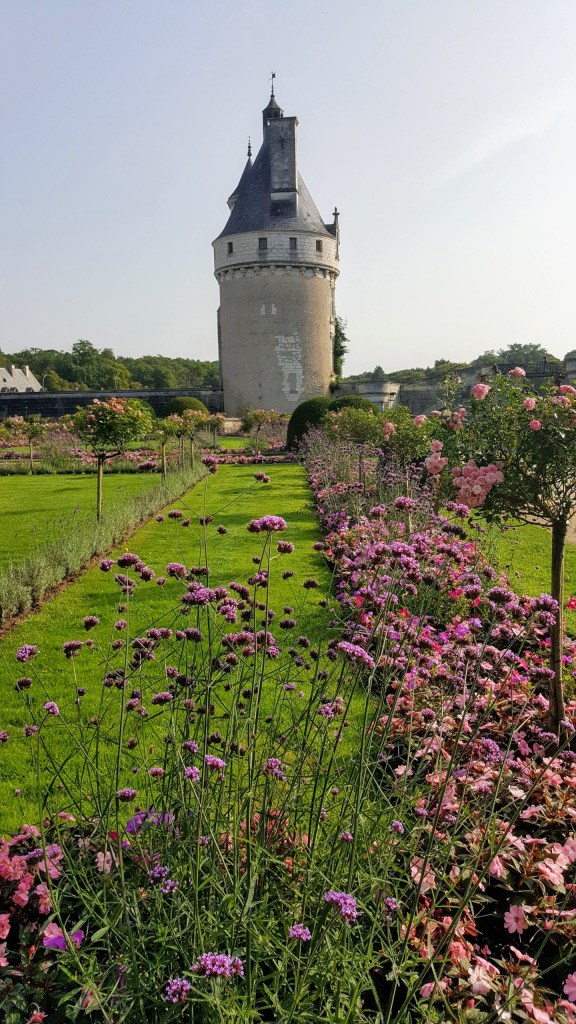
The chateau of Chenonceau (the x was dropped during the French Revolution to show Republican spirit, apparently) was built in the 16th century on the banks of the river Cher, a tributary of the Loire. Its most famous owner was Diane du Poitiers, the mistress of King Henri II. Diane commissioned the bridge spanning the river and set out the formal gardens, before being turfed out by the King’s widow after he died. Don’t feel too sorry for her though, she was given another chateau at Chaumont in exchange.

Diane’s gardens are still looking good.

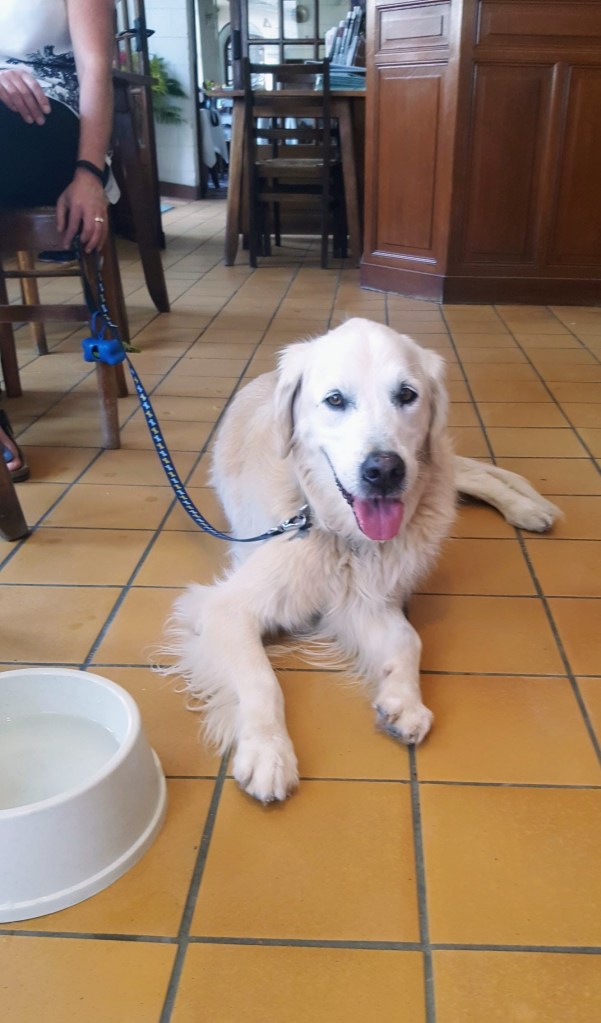
Compared to the enormous expanse of the chateau, the village of Chenonceaux is tiny (400 people live here) but perfectly formed and it’s blessed with three dog friendly restaurants. Of course, we try them all. Henry particularly enjoys chilling out in the bar at the Hostel du Roy. Just don’t try to enter the local shop with your canine friend – I get shouted at, reminding me that I’m a Brit in France after all!

Lots of choice for refreshments with your furry companion.

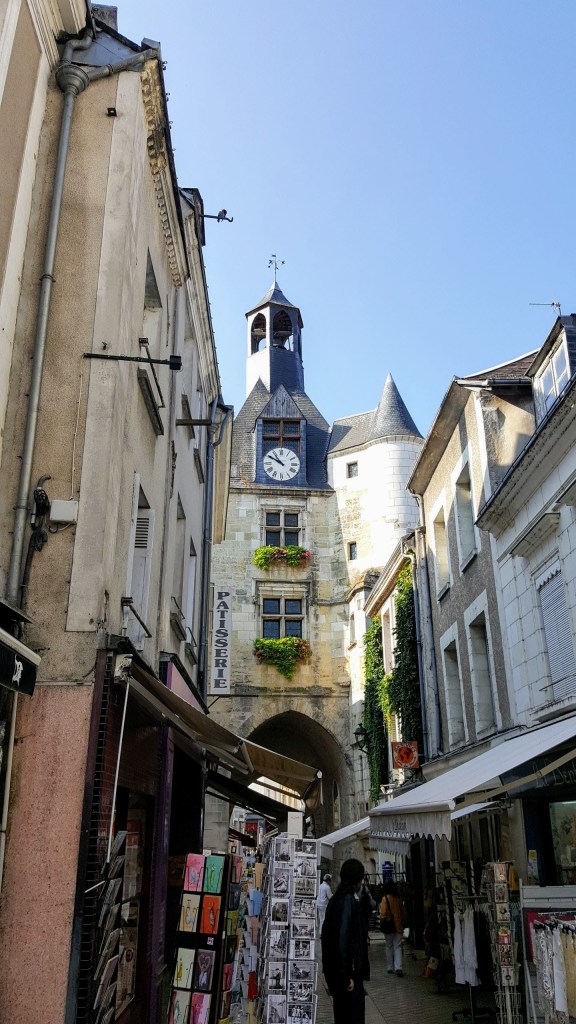
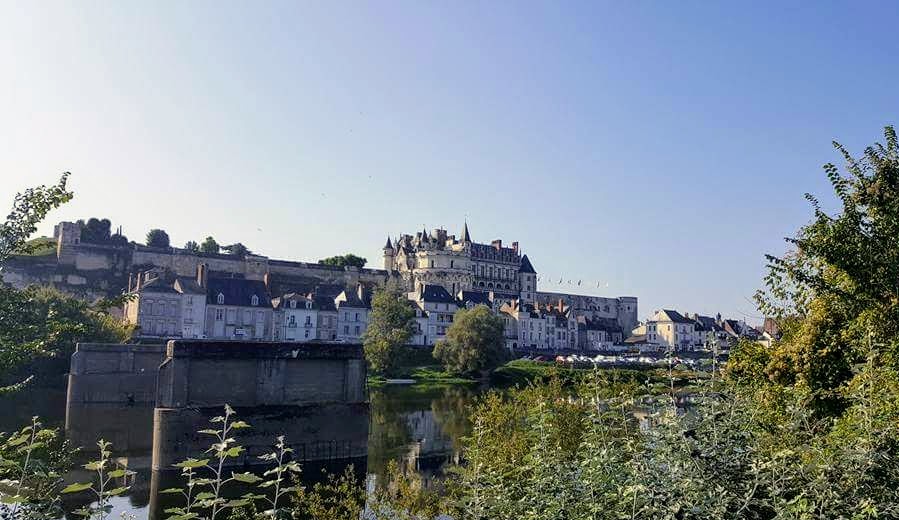
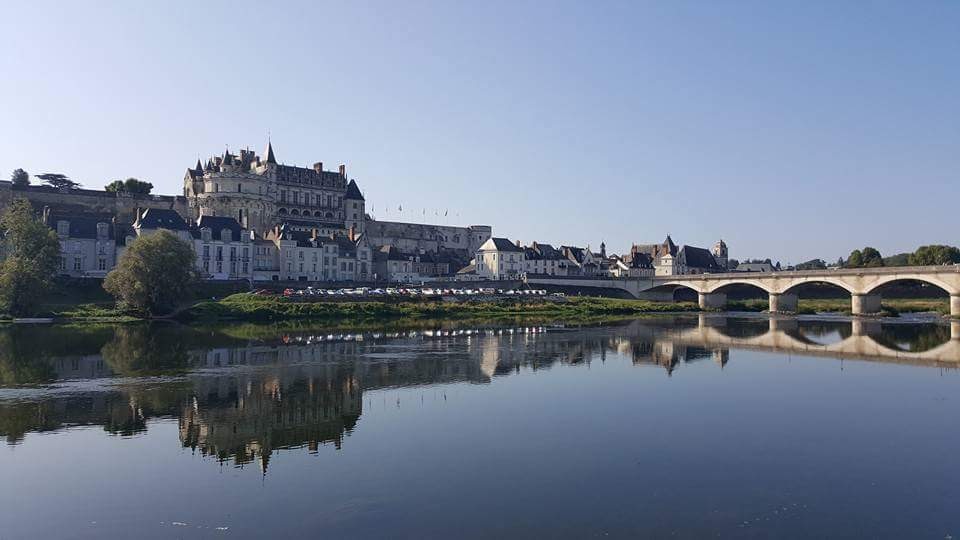
Amboise, just to the northwest, is a bustling little market town right on the Loire itself, boasting not one but two chateaux. There’s been a castle here since medieval times, but the current Chateau d’Amboise dates mostly from the 15th century, when it became a royal residence. In the 16th century it was the home of the French Royal Court. Mary Queen of Scots spent her childhood here and Leonardo da Vinci was a regular guest. The King was such a fan of the artist that he gave him the Royal ‘summer house’ – the Chateau de Clos Luce on the outskirts of town. It’s great to have friends in high places!

The atmospheric narrow streets of Amboise.

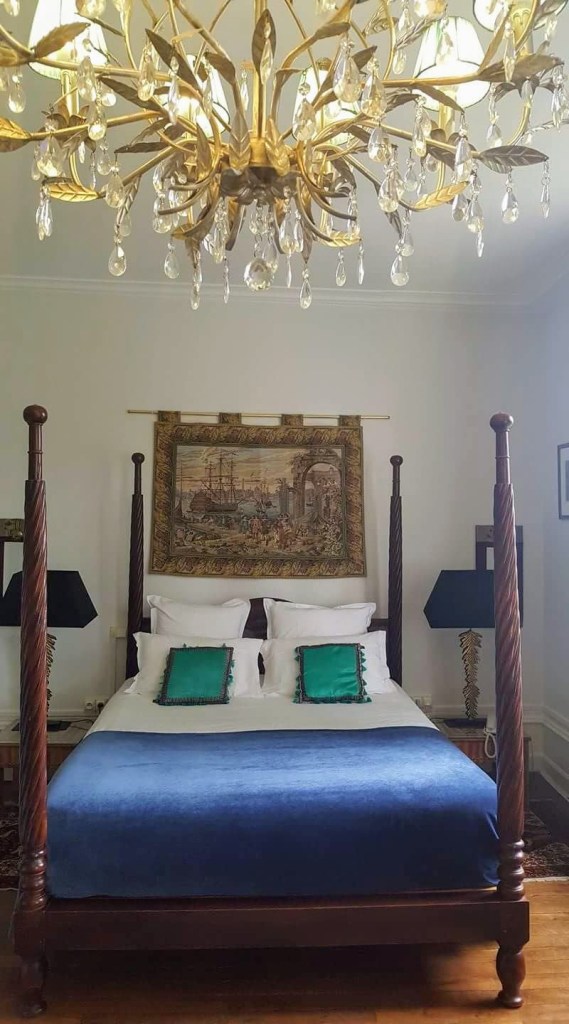
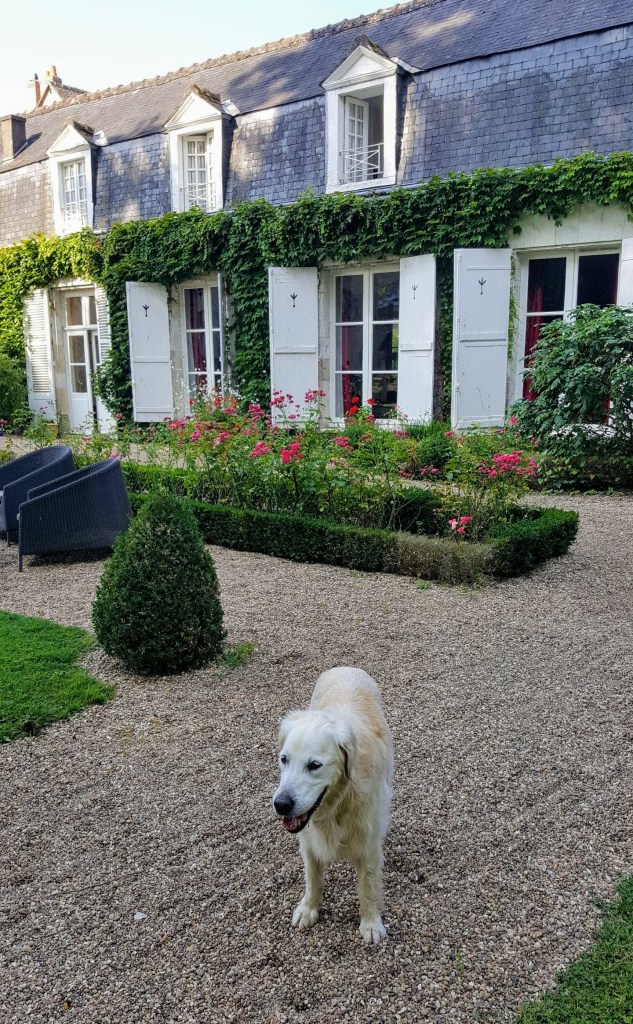
Again, there’s no need to lower your accommodation standards with furry friends in tow. We stay at Hotel Le Clos D’Amboise, a 17th century mansion in a quiet street. Our luxurious, traditional room overlooks the immaculate gardens and the swimming pool. Henry certainly likes this place.

Just like being at home!
Yes, I approve.

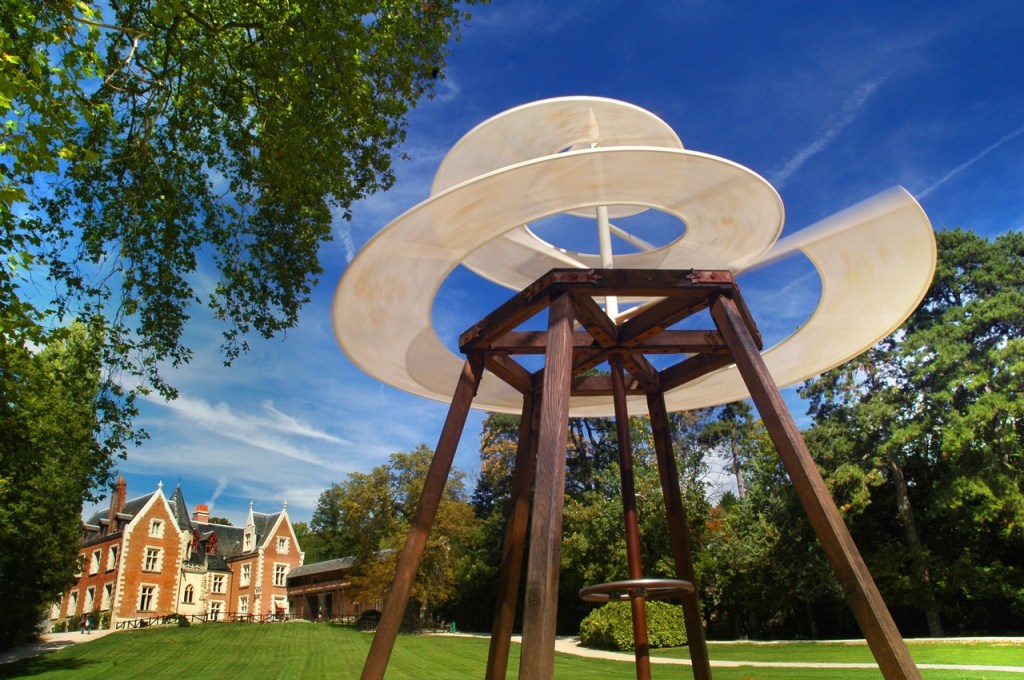
There are stunning walks on footpaths beside the river, only limited by the amount of time and energy you have. Henry and I pass a happy few hours ambling along the banks while the husband escapes on his bike again. We also head along the quiet streets to the east of town and explore the grounds of Leonardo’s Manor House, where there are fascinating full size models of his inventions. Even standing in the queue for tickets is fun – Henry is the only canine visitor and gets lots of attention.

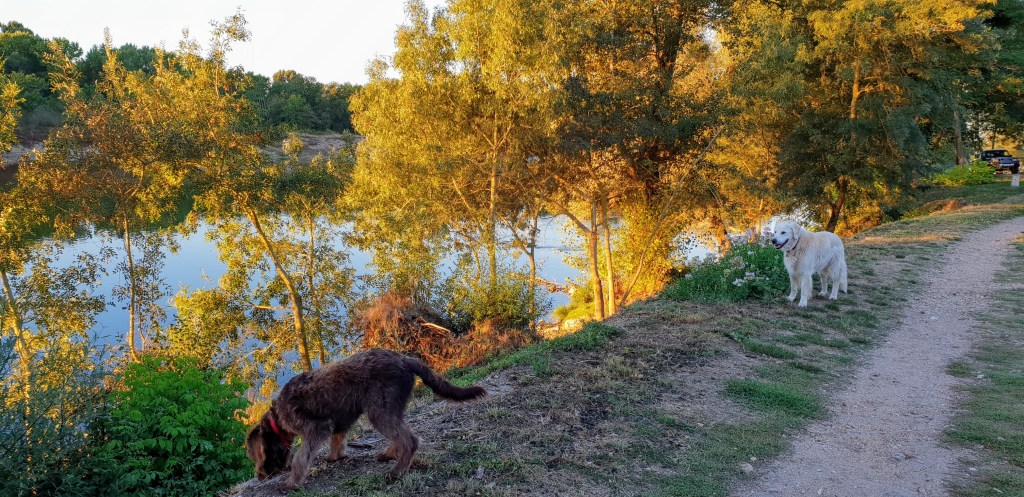
Walking along the Loire with my dog is my idea of heaven.
Immersed in the strange world of Da Vinci.

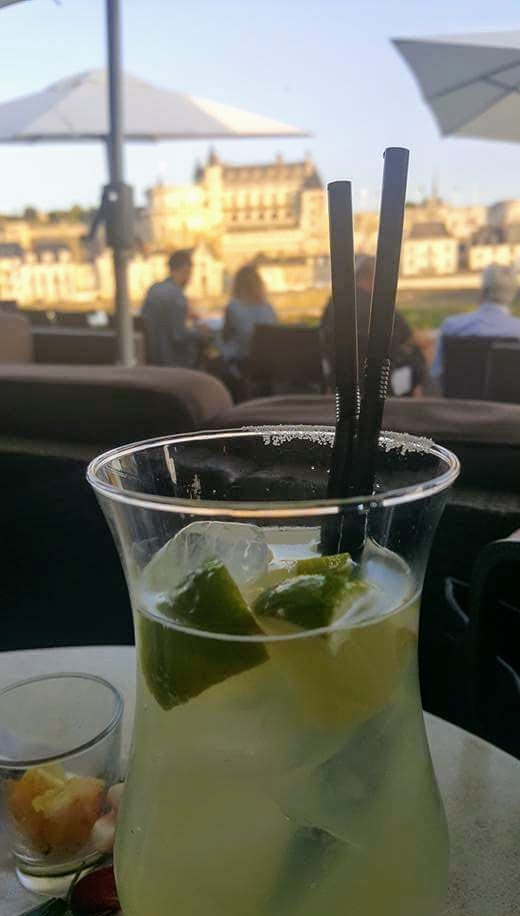
Now for the food! At La Fourchette, hidden away down a backstreet, there are just a handful of tables and the owner doesn’t speak any English. The menu is limited but the food is local and amazing. If you can’t translate just take pot luck! The restaurant Anne de Bretagne on the main pedestrian street does fantastic savoury crepes. I’m not a fan of pancakes but somehow the French versions are much more appealing! The charming waiter (obviously a dog lover) introduces Henry to our fellow diners, ‘Il s’appelle Henri’. And to top it all off there’s a dog friendly cocktail bar, Le Shaker, on an island in the river overlooking the main chateau. Bliss!

Margarita with a view, don’t mind if I do.

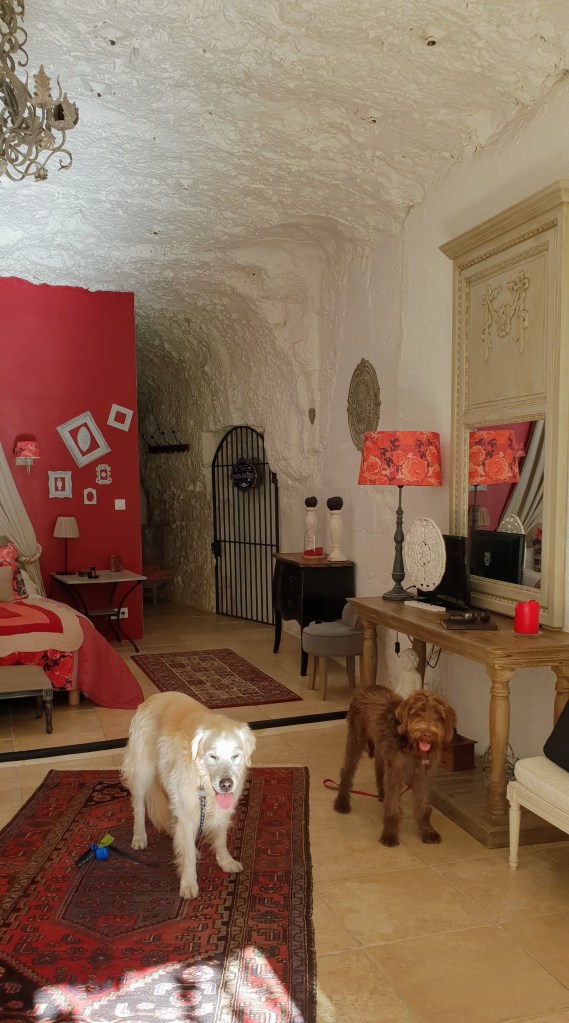
Not to be left out, Lizzie the Labradoodle has also stayed in the Loire. The village of Rochecarbon, near Tours, is famous for its cave residences. Les Troglos de la Tufoliere has cosy dog friendly cave rooms with sunny terraces perfect for a leisurely breakfast. Almost nextdoor, La Table de Joseph offers delicious meals in a romantically lit garden. We have the place almost to ourselves, apart from the dogs of course.

Henry and Lizzie seem to approve of cave living.

Just across the road, the lazy Loire flows past and more scenic walks beckon, perhaps just a couple of kilometers upstream to the vineyards of Vouvray. The white wines here are considered some of the best in the area – no mean feat. A million cases of wine are produced each year. Dry, sweet, sparkling, there’s something for everyone.

The Loire River in the early morning.

Ever the optimist, I hope to get back to the Loire in 2021 (last year’s trip was cancelled, obviously). I’m already imagining myself outside a bar with river views, enjoying a glass of the local Rose d’Anjou in the summer sunshine. Lizzie will be there, of course, but we’ll miss our old mate Henry. Fingers crossed…

Behind the turrets of Tallinn

After the non-event that was Christmas, missing out on our annual end of December trip away was a bitter pill to swallow. With no prospect of travel for some time to come, it’s back to the archives again if I want to blog at all. So today I’m heading back to December 2018 and the fairytale capital of Estonia. Well, on the surface at least…

On arrival at the airport, a quick 4km tram ride takes us to the city centre and drops us right outside our hotel. Perfect. The Hotel Palace is on the southern edge of the Old Town, right opposite St John’s Church and Freedom Square, renamed after the country left the Soviet Union in 1991. It’s late afternoon, the Christmas lights are on, and there’s a sprinkling of snow on the ground. It’s feeling very festive and we can’t wait to explore.

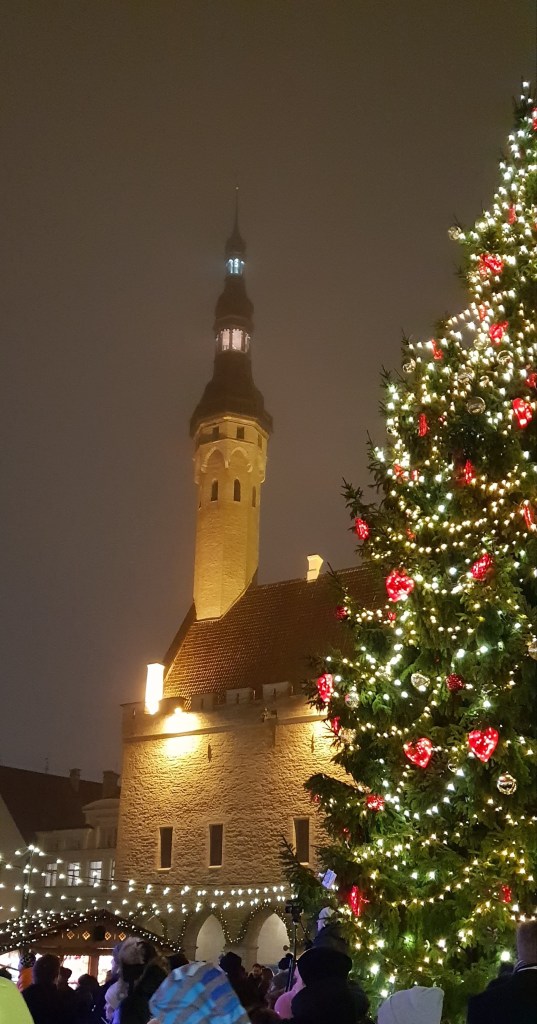
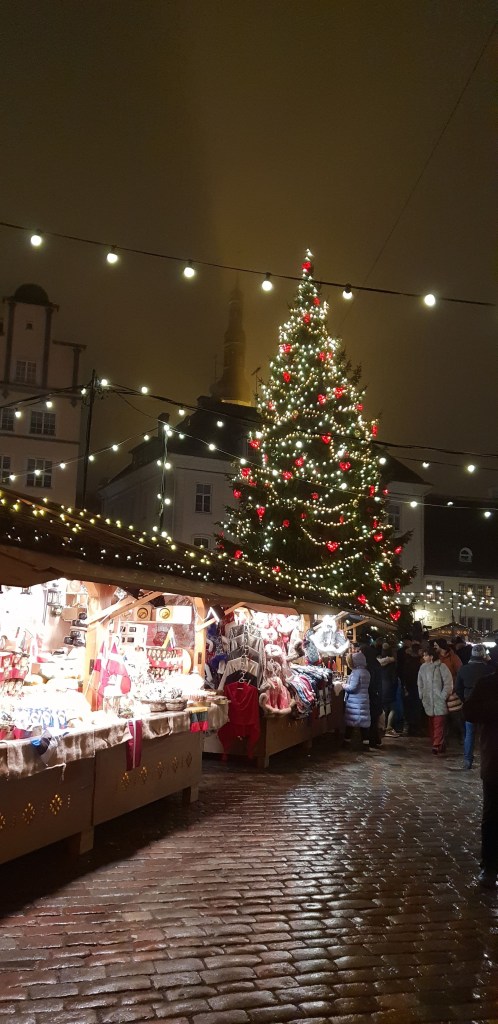
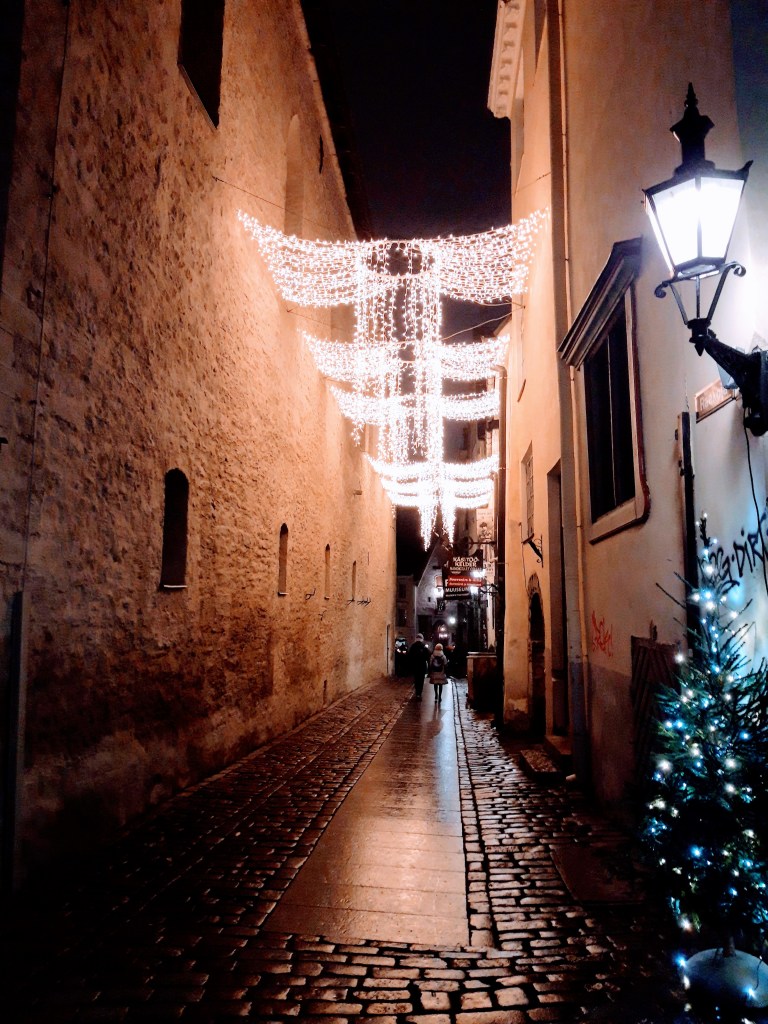
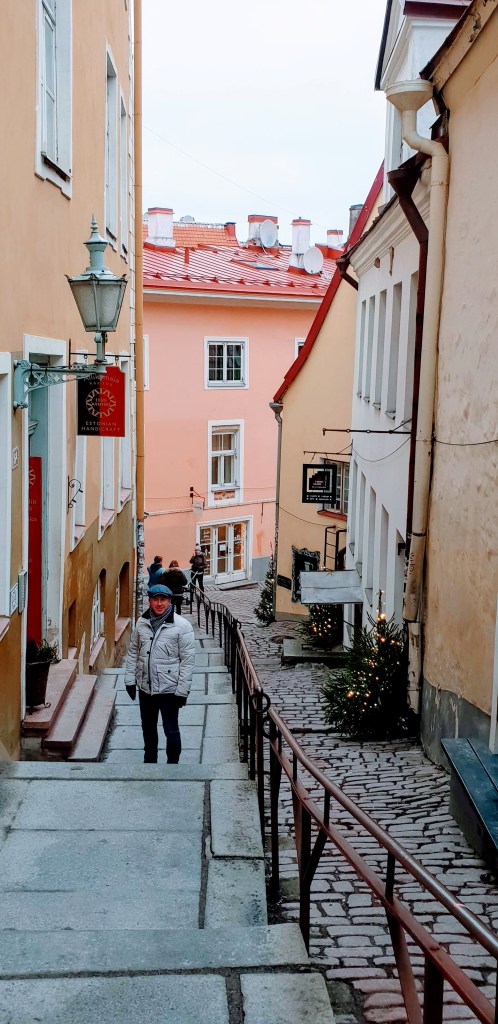
Our first evening’s perambulations tell us a few things about the locals here. They take Christmas very seriously – aside from the bustling festive market in the Old Town Square, there are lights and trees down every alleyway. They also do a mean mulled wine, or glogi as they call it here – I tried a few just to make sure, I’m a slave to research! And most importantly for the greedy traveller, they love their food. There are restaurants everywhere, and when we finally decide which one to try, we’re blown away. This is looking promising.

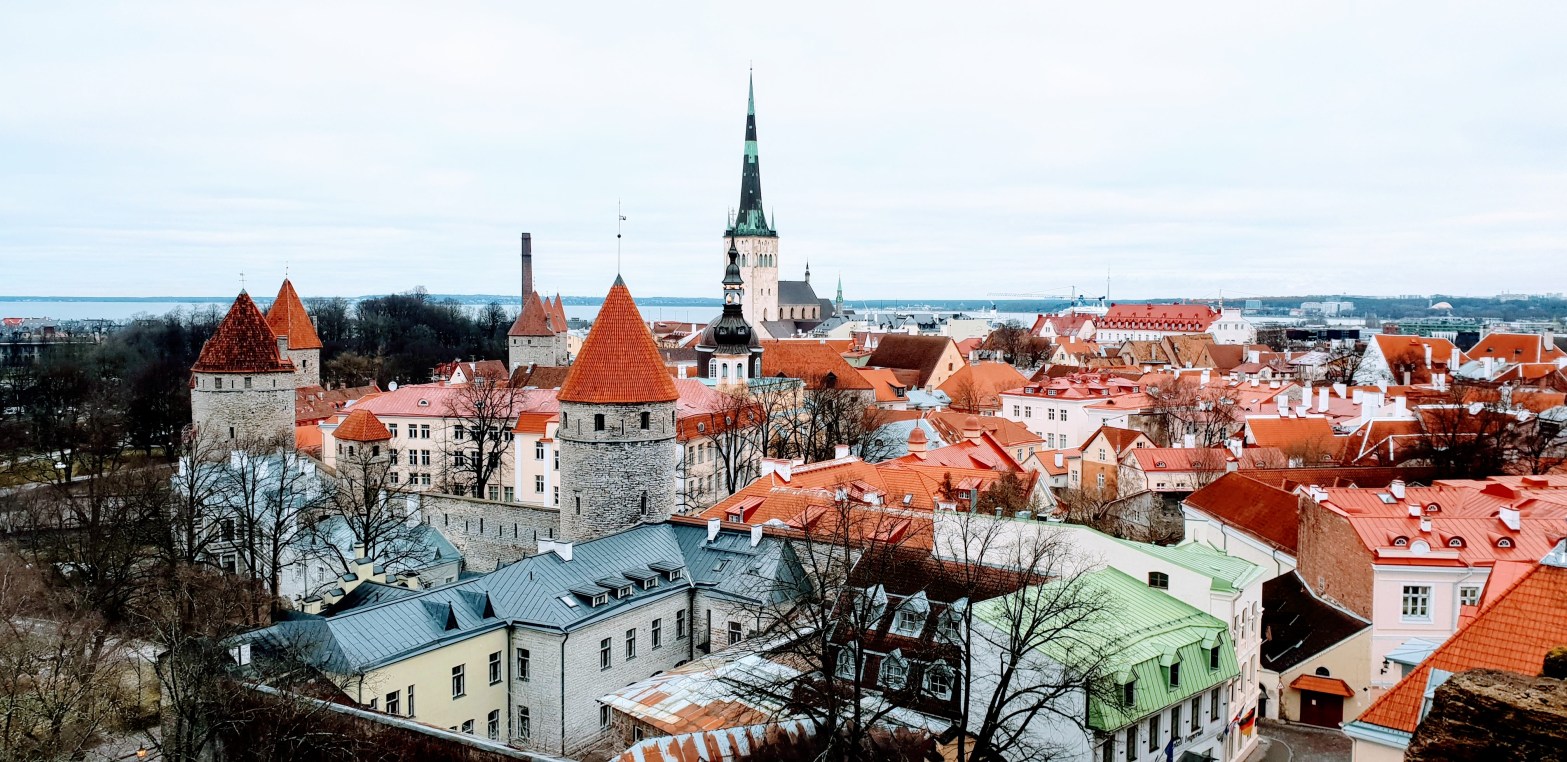
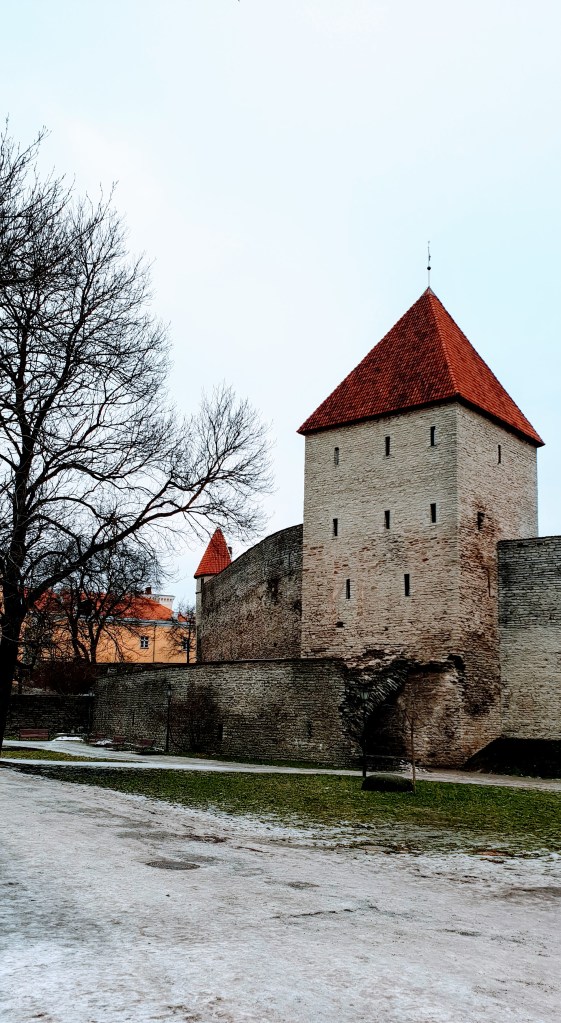
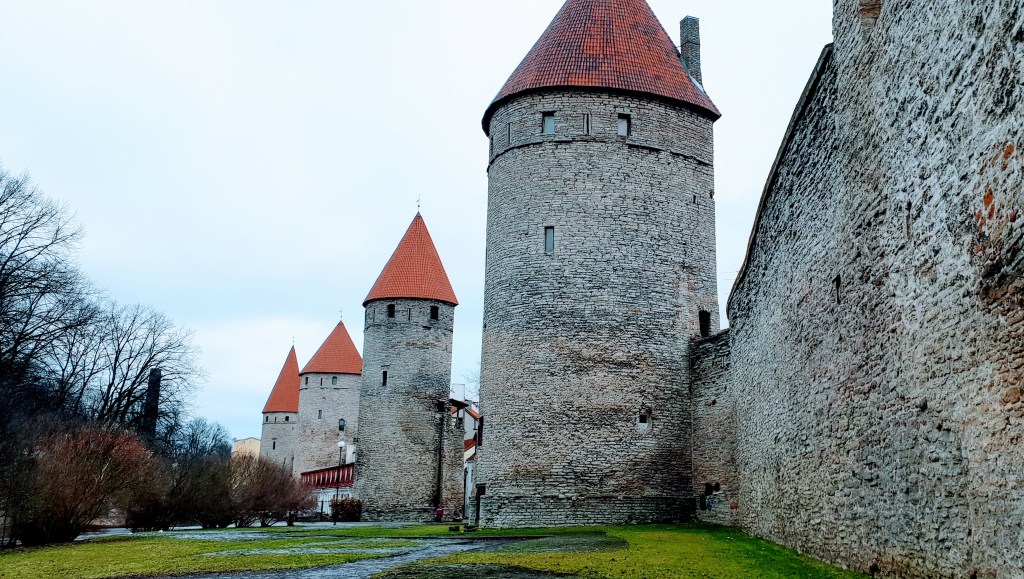
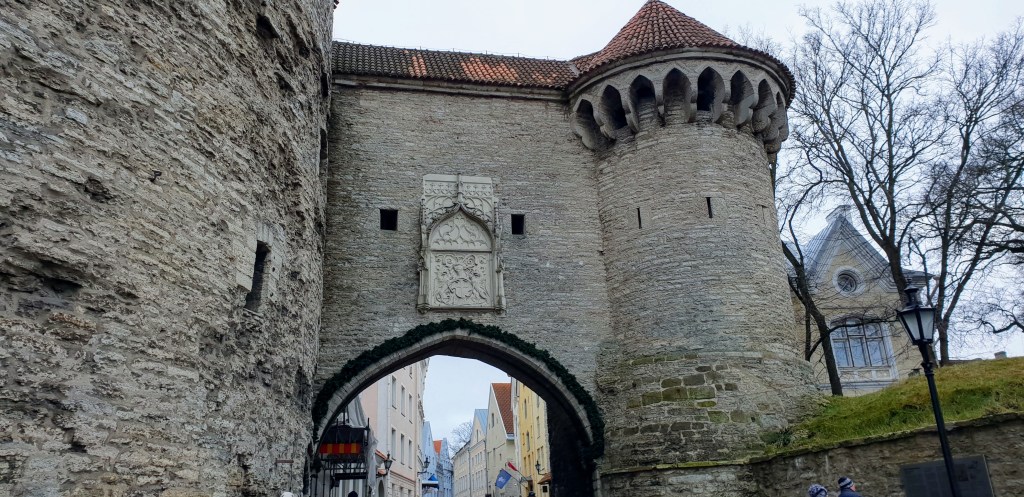
Exploring Tallinn, it makes sense to start with the well-preserved medieval Old Town with its cobblestoned narrow streets, surrounded by walls with pepper pot towers. It’s like being transported to Vulgaria in Chitty Chitty Bang Bang, it’s so implausibly pretty. Since 1997 this whole area has been a UNESCO World Heritage Site.

Tallinn is a compact capital, with less than half a million inhabitants. Founded in the 12th century, Tallinn was known as Reval until 1918, when Estonia became an independant country after centuries of domination by Denmark, Sweden and then Imperial Russia. Unfortunately independance was shortlived, as WWII led to Nazi occupation followed by Soviet authority. There’s a price to pay for being strategically located on the Baltic Sea…

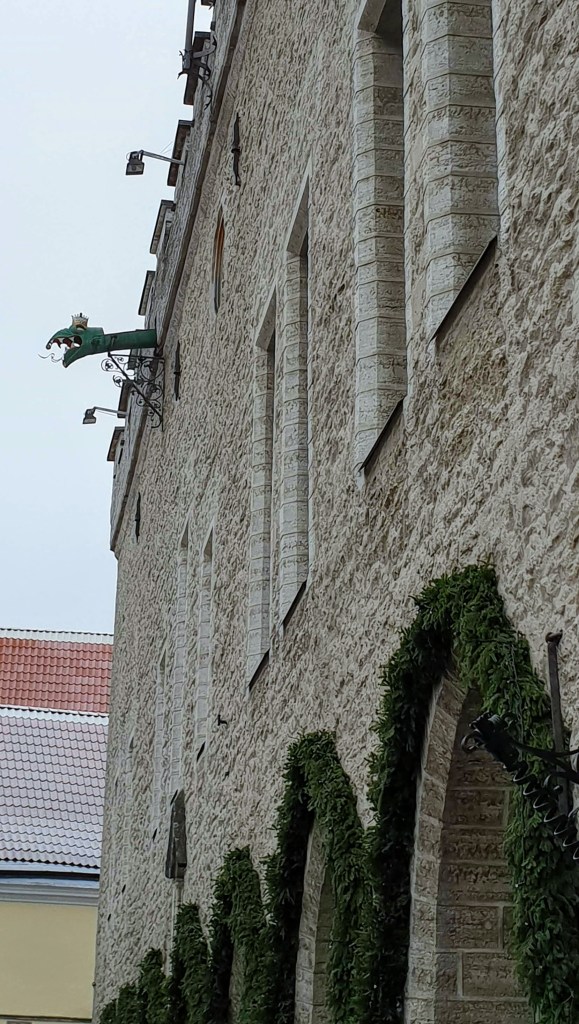
On the surface, there’s little to see of Tallinn’s chequered history. Inside the Old Town walls everything is pristine and pastel coloured and a joy to wander around. The lower town has always been the commercial area, clustered around the Town Hall Square and the 13th century Tallinna Raekoda, jauntily decorated with green dragons wearing golden crowns. This is the oldest Town Hall in Scandinavia and surely the most whimsical.

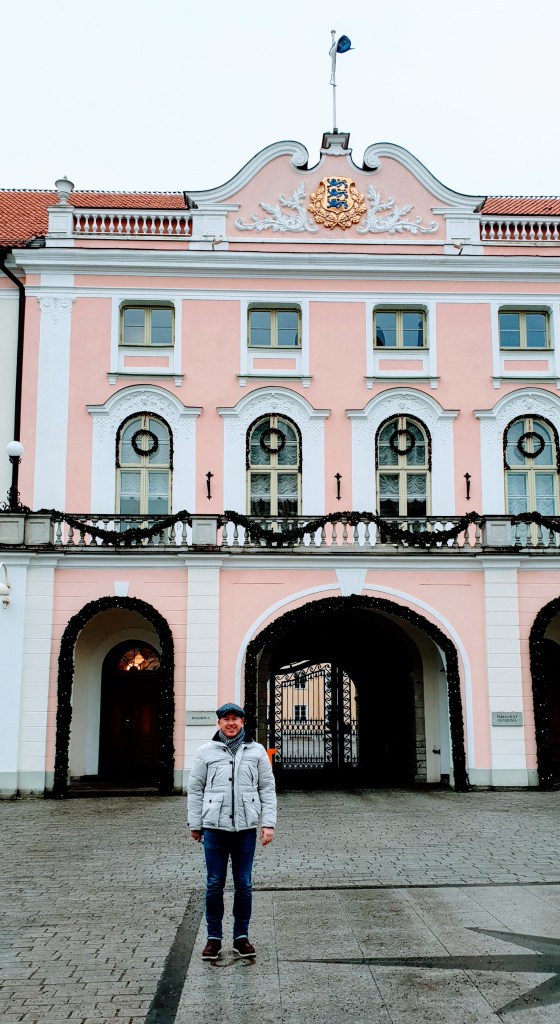
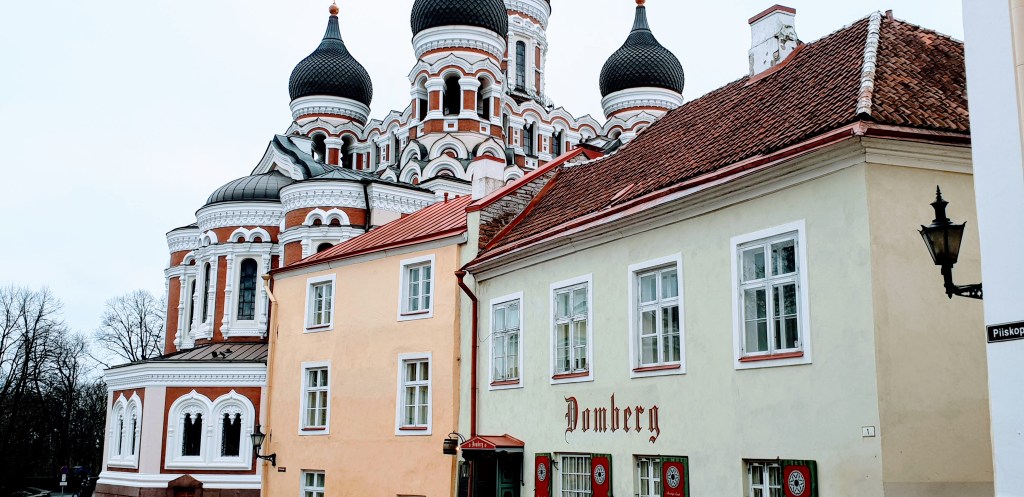
Staircases lead to the upper town, centre of political and religious power, where the very pink Toompea Castle (home to the Estonian Parliament) and the onion-domed Russian Orthodox Cathedral sit opposite each other at the top of the hill. You can get a great view over the city and out towards the Baltic from the various observation platforms up here.

Outside of the Old Town, things get a bit more sinister, if you know where to look. Opposite the 14th century Viru Gate is the Hotel Viru, built by the Soviets in the 1970s. People always suspected that the hotel was used for KGB surveillance, but the Soviets denied it, and no-one was ever allowed to visit the 23rd floor to find out for sure. After the 1991 revolution, when the KGB fled, a James-Bond-esque set up of elaborate listening equipment was discovered. It’s now a museum, if you’re interested in vintage spying paraphernalia.

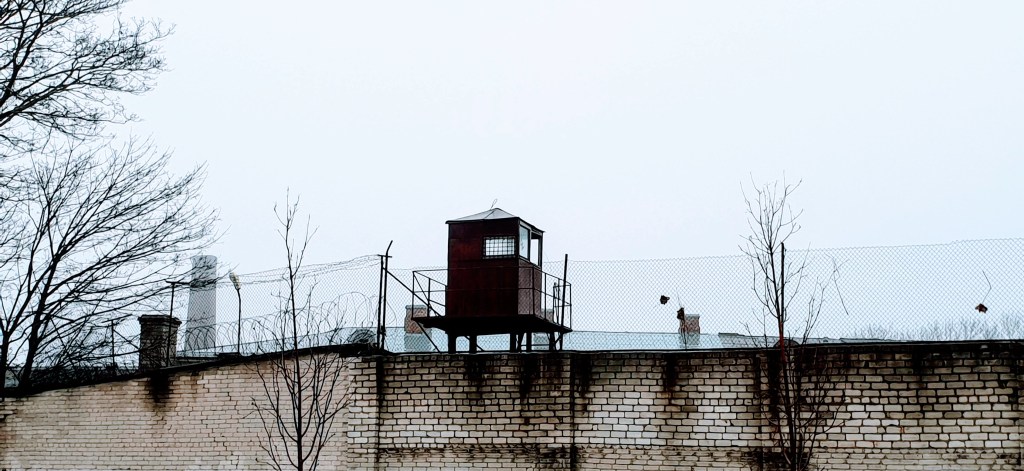
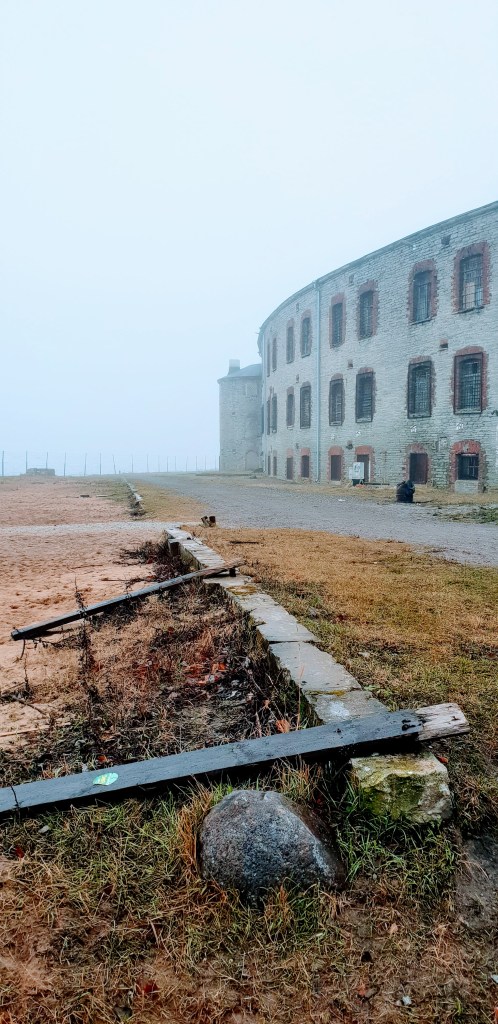
A bit further afield, if you’ve brought your walking shoes, is the creepy Patarei Prison, located to the north of the city on the Baltic coast. Originally a sea fortress built for Tsar Nicholas I to protect the shipping route to St Petersburg, it became a prison after WWI and held up to 4600 prisoners until it was abandoned early this century. It’s been untouched ever since, and gives an atmospheric impression of how it felt to be a Soviet prisoner. This place is eerie, even though it’s now mostly used by locals walking their dogs.

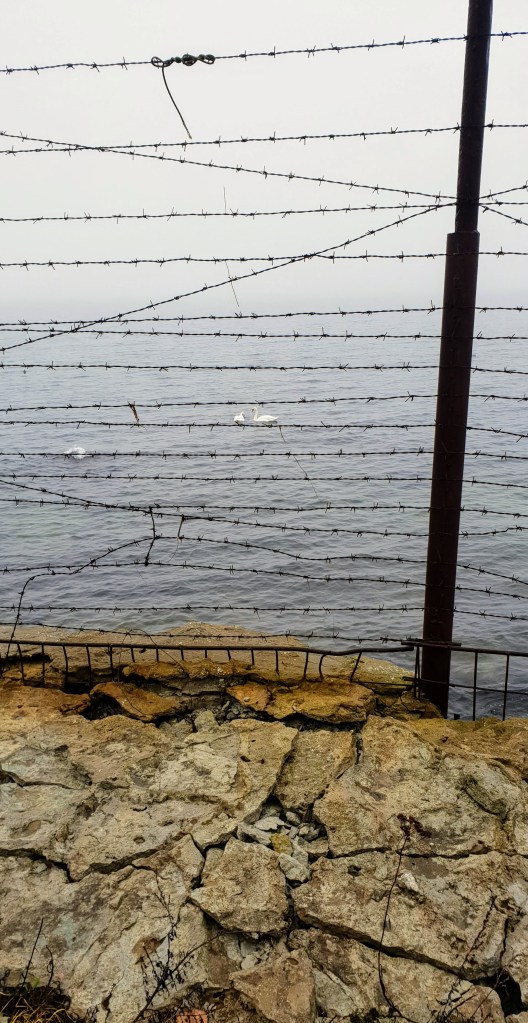
On a clear day you can see Helsinki from here, just 50 miles away across the Gulf of Finland, but more often than not the conditions are hazy like today, making the ruins feel even more godforsaken. You can just imagine the type of things that happened here – the KGB were not renowned for leniency towards dissidents. It’s a relief to head back along the harbour to candy coloured civilisation.

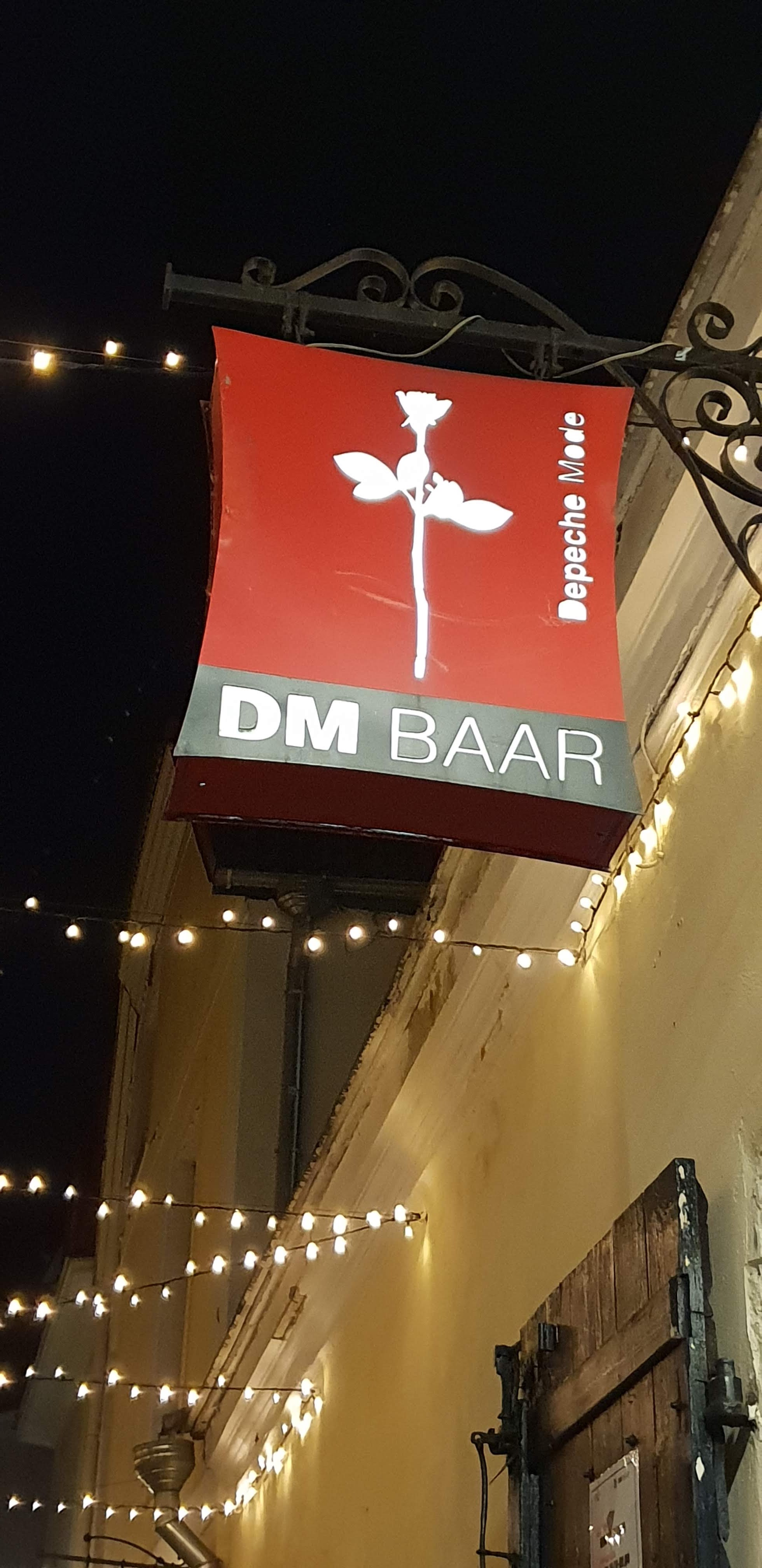
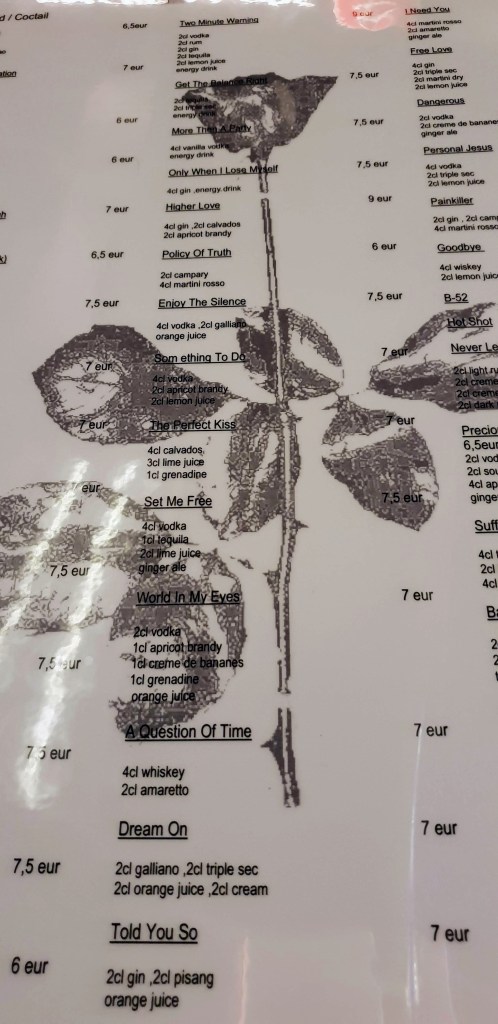
It’s after dark that things really get interesting around in the Old Town. Those twee exteriors hide some great bars, many downstairs at basement level. I’m absolutely thrilled to discover an establishment devoted to the music of Depeche Mode, one of my favourite bands. The walls are covered in DM posters, the music is uniquely DM, even the cocktails are named after DM songs – ‘I’ll have a Policy of Truth, please’. I love this place! If you’re not a fan, don’t worry, alternative music is available in Tallinn.

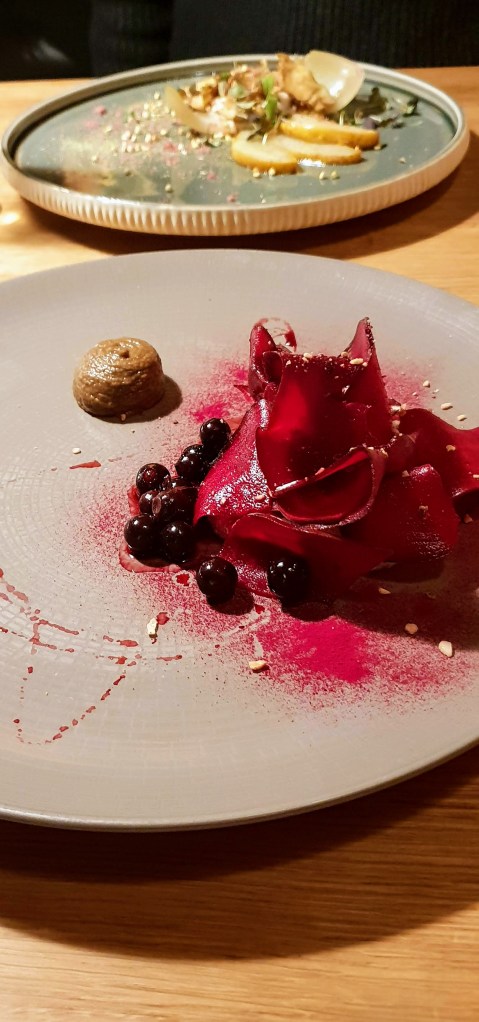
And after a great bar crawl (remember them?) there’s the fabulous food! Since I was a little girl back in Yorkshire I’ve loved beetroot and rhubarb, and at Von Krahli Aed restaurant I get both of them in one meal. I’m not talking pickled or stewed here, my beetroot starter is a work of art, and it’s washed down nicely with sparkling rhubarb wine. I think I’m in heaven.

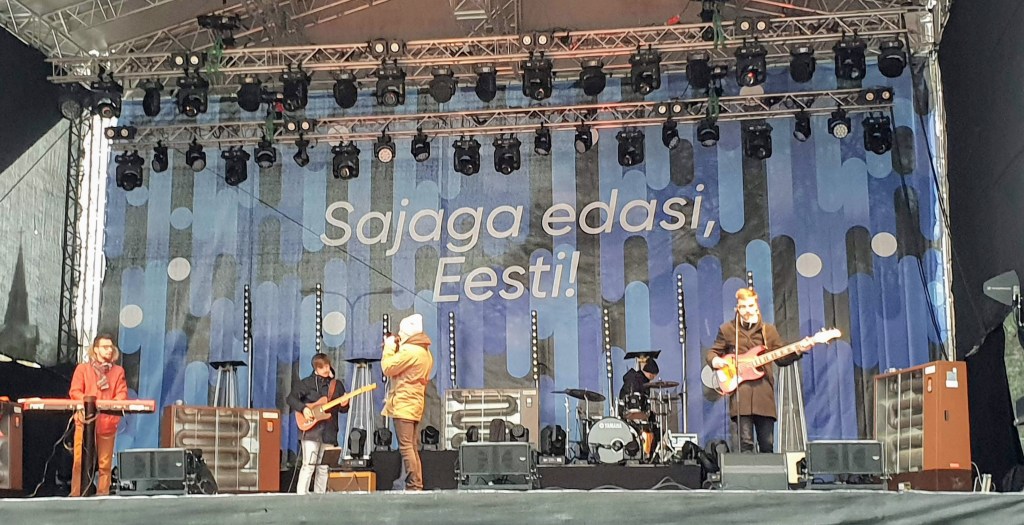
We leave Tallinn on New Year’s Eve, which is a pity, as this does feel like a place that would put on a good party. In fact, as we cross Freedom Square for the final time, a stage is ready for a big open air concert and the band is just about to rehearse. We linger in the hope of hearing some decent live music, but what we get is pure Eurovision. Maybe it’s a good thing we’re going home after all. I just wish I had hold luggage so I could take back some rhubarb wine.

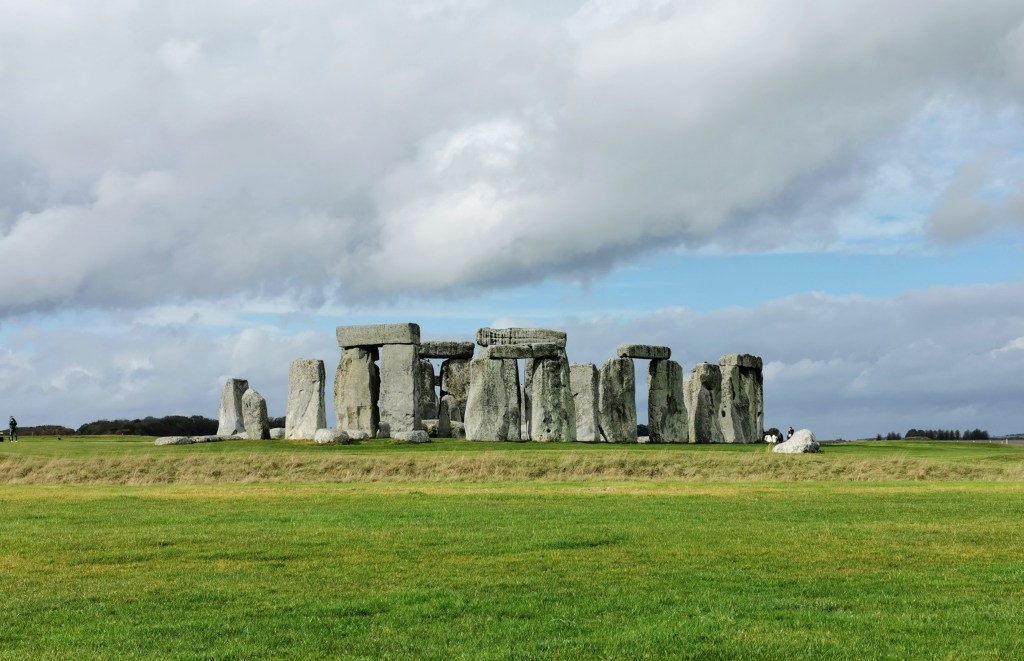
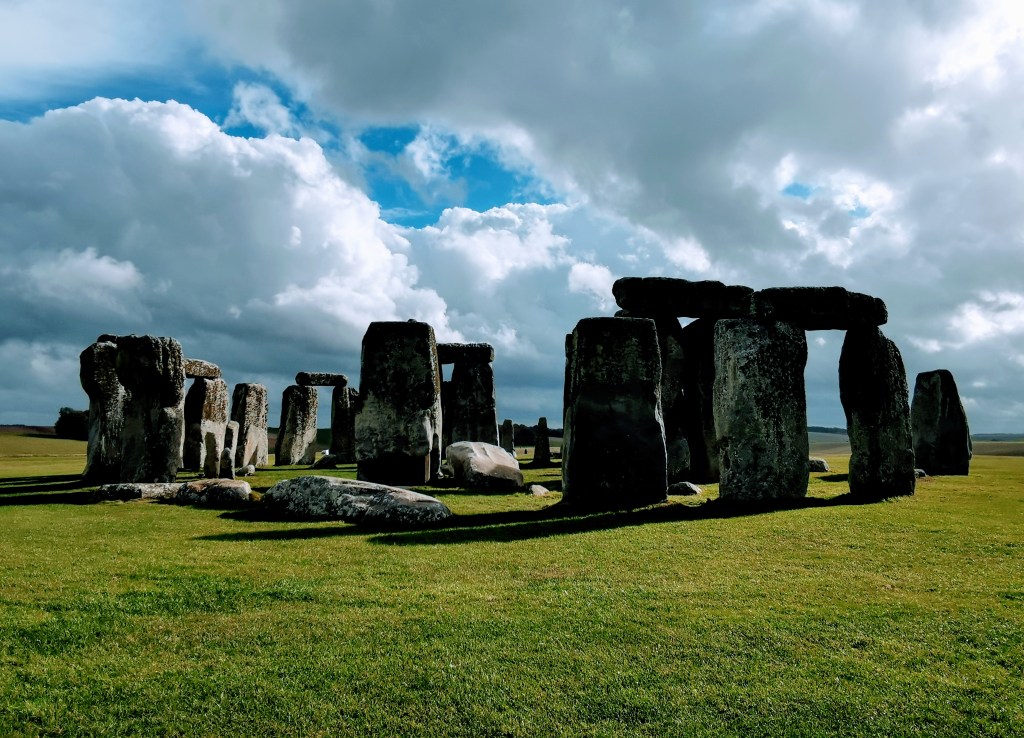
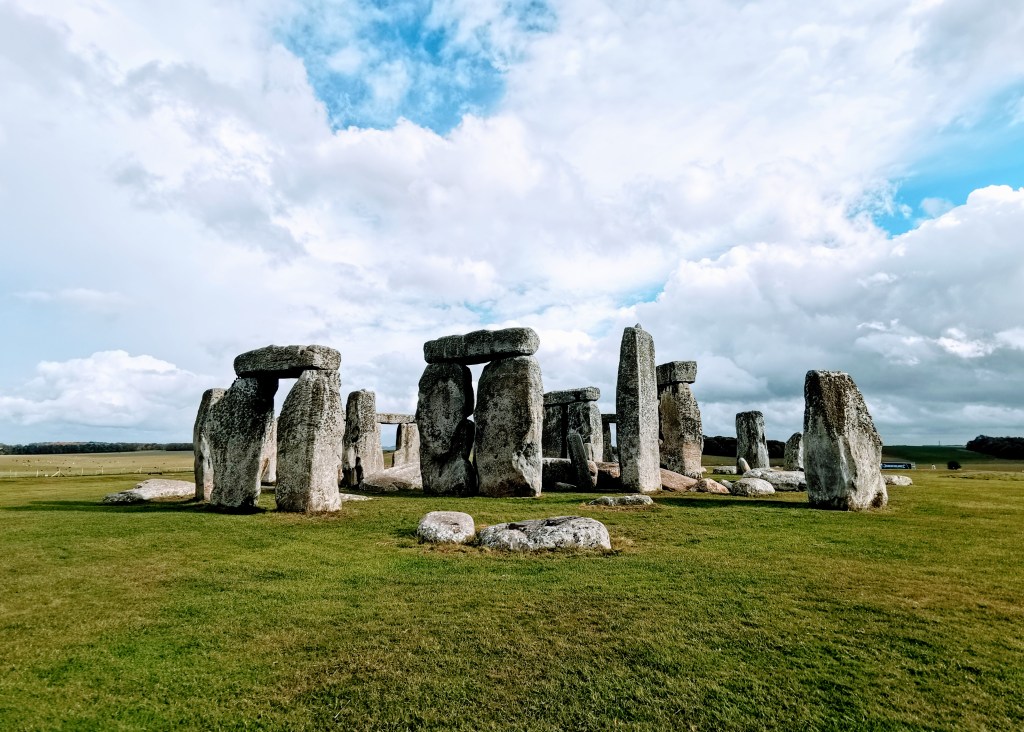
Stonehenge – the most famous circle in the world

Today I’m travelling in both space and time. A mere seventy miles west of home in the car, but a momentous 5,000 years back into our history. A few miles on foot too. Anyone who thinks they can park up at Stonehenge and do a quick loop around the circle is in for a shock.

Stonehenge in Wiltshire is probably one of the world’s most recognisable sights. Obviously, I’ve seen a million photos of it over the years, but I really need to see it for myself and find out what all the fuss is about. What’s so special about a bunch of old stones?

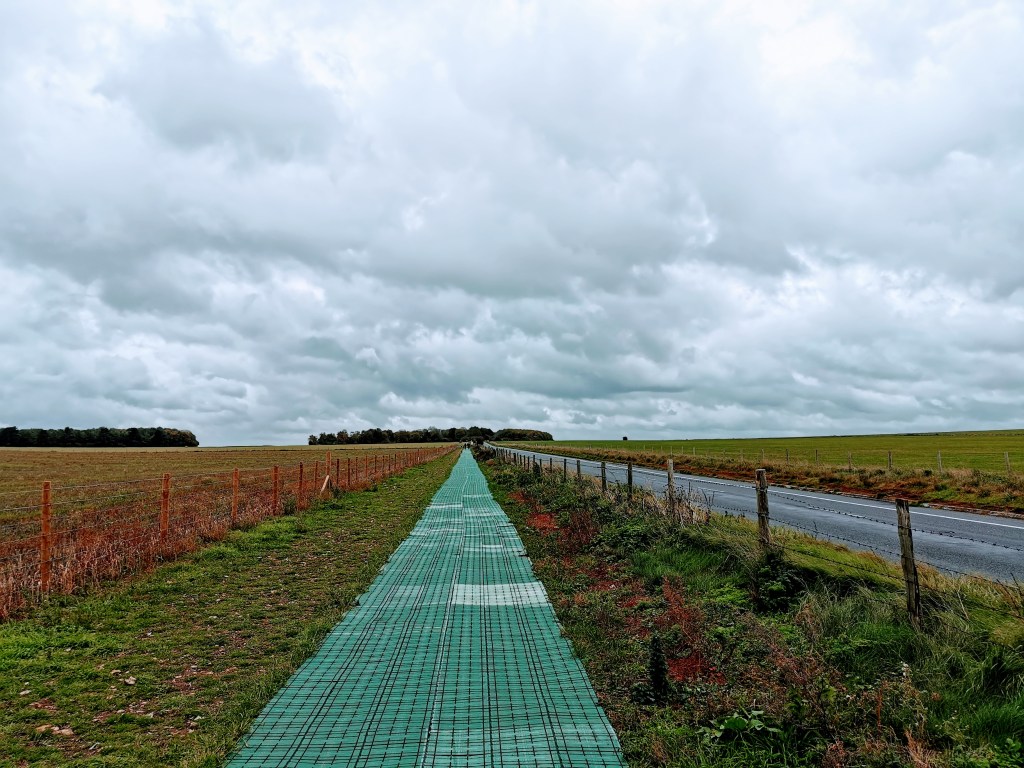
Arriving at the rather swish visitor centre, opened in 2013, I receive a cheery welcome and am directed towards a pathway stretching away into the distance. No stones to be seen, for the very good reason that they are well over a mile away. Panic not, there is a shuttle bus for those of a lazy disposition. Not me, I stomp off happily down the track, pretty much on my own. It’s 2020, and once again I seem to have a major monument to myself.

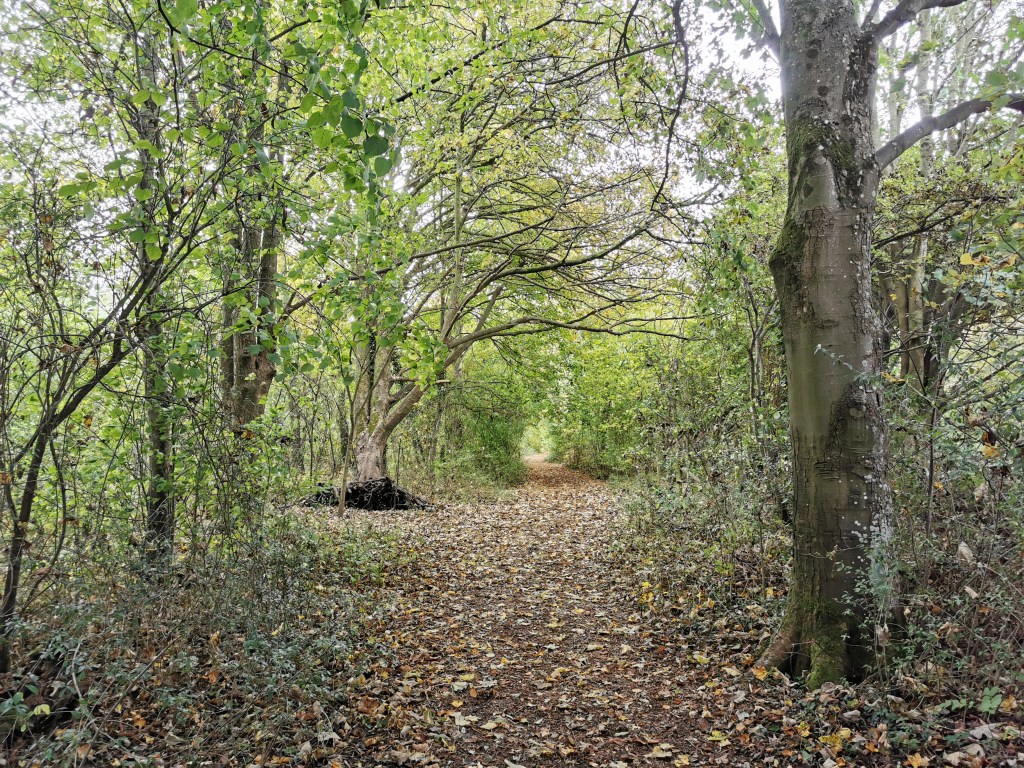
It’s a nice walk anyway, through countryside that’s been considered sacred by humans for around 10,000 years. There are monuments here that date back to 8,000 years BC. Why this area was so special is a mystery – there are no written records to enlighten us – but it could have been chosen initially because the chalk plateau of Salisbury Plain stood out amongst the woodlands surrounding it.

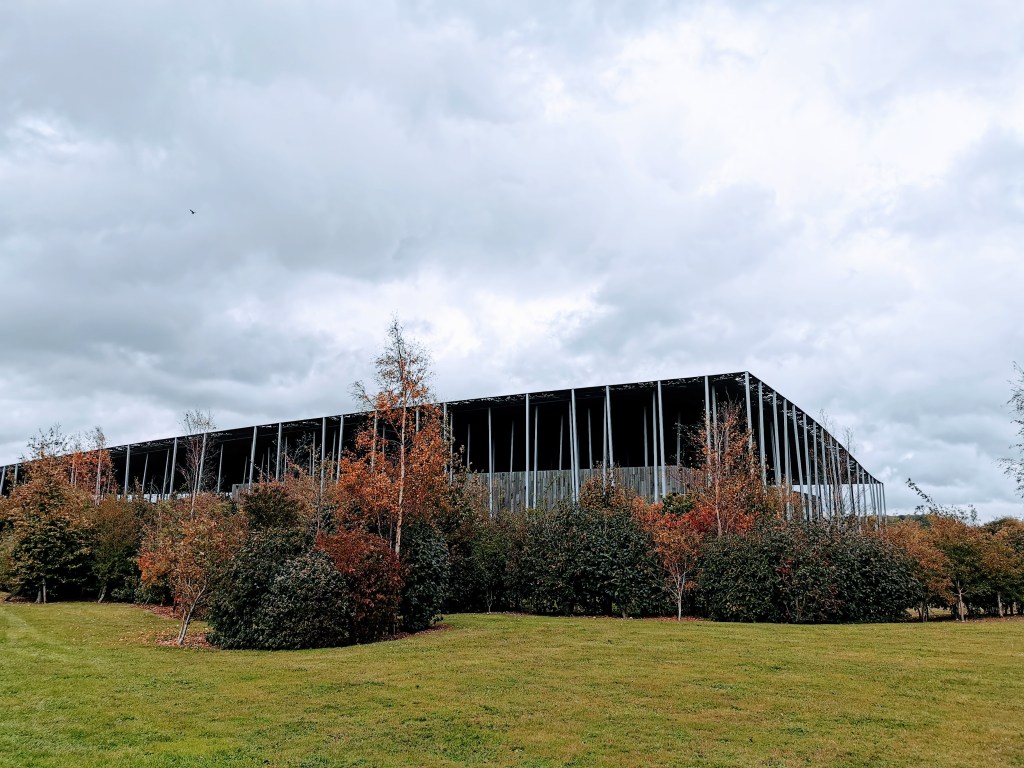
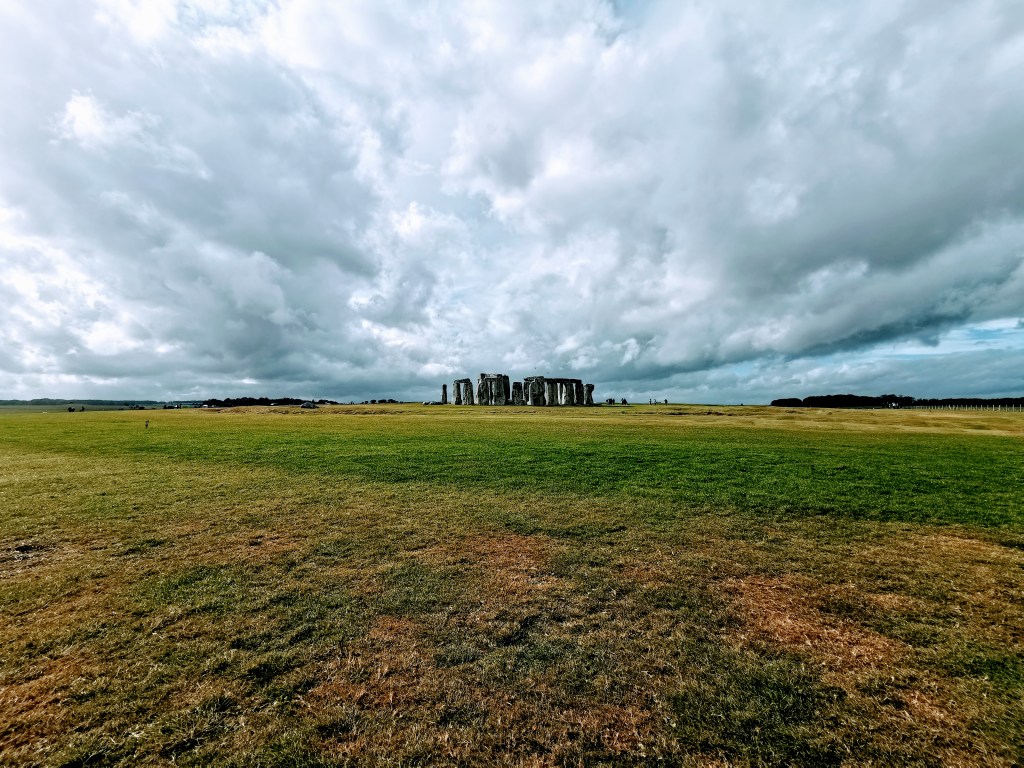
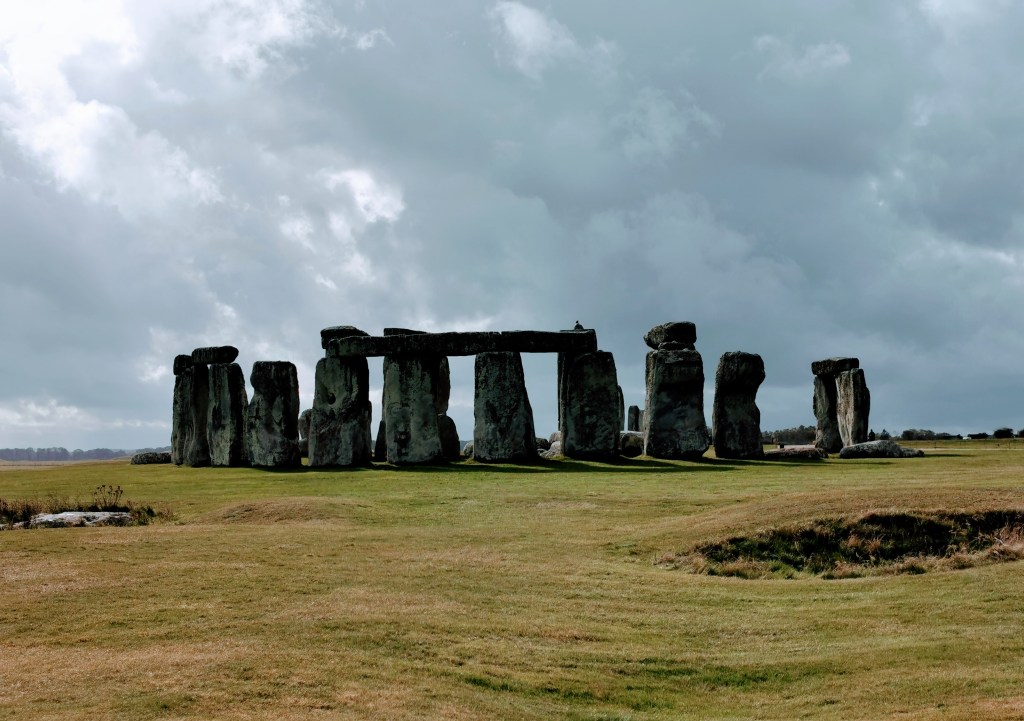
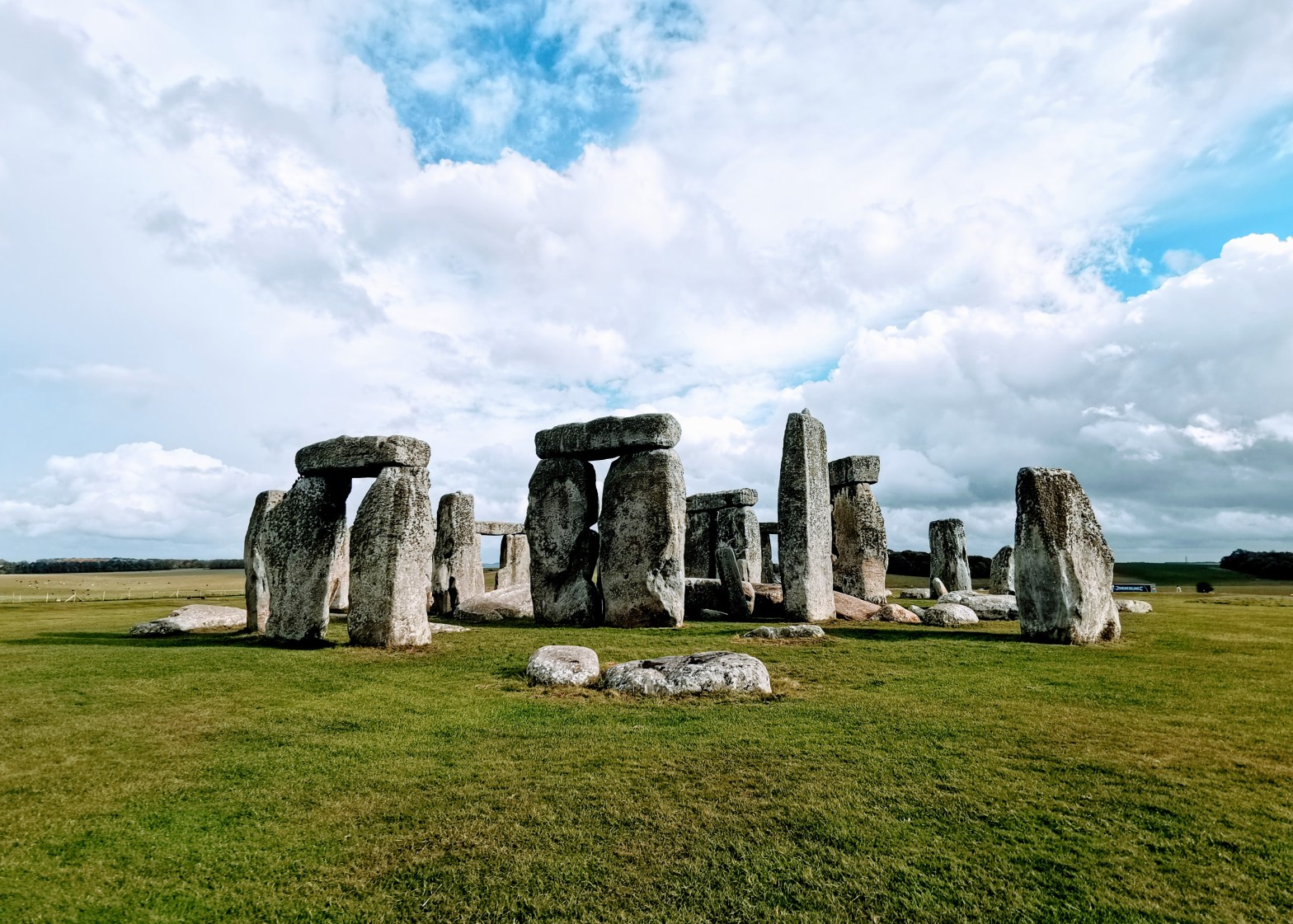
As Stonehenge comes into view I can’t help feeling a frisson of excitement. The mean and moody weather just makes it all the more atmospheric. It’s such an iconic sight, and yet we know so little about it despite many years of study. Who built it? We don’t know. Why was it built? There are various hypotheses, but no-one knows for sure. How was it used? Again, mystery surrounds the site and what happened here.

By the time construction of Stonehenge began in 3100 BC, the surrounding area had been used for ceremonies and burials for thousands of years. The monument itself was built over several centuries, becoming more complex with time. It started as a simple set of earthworks – a henge consisting of a circular ditch and raised banks with an entrance at each side. Within the circle, pits were then dug, probably for wooden posts supporting some sort of structure. At this time, burials occurred here of adult males, so it seems to have been a place where the ruling elite were interred.

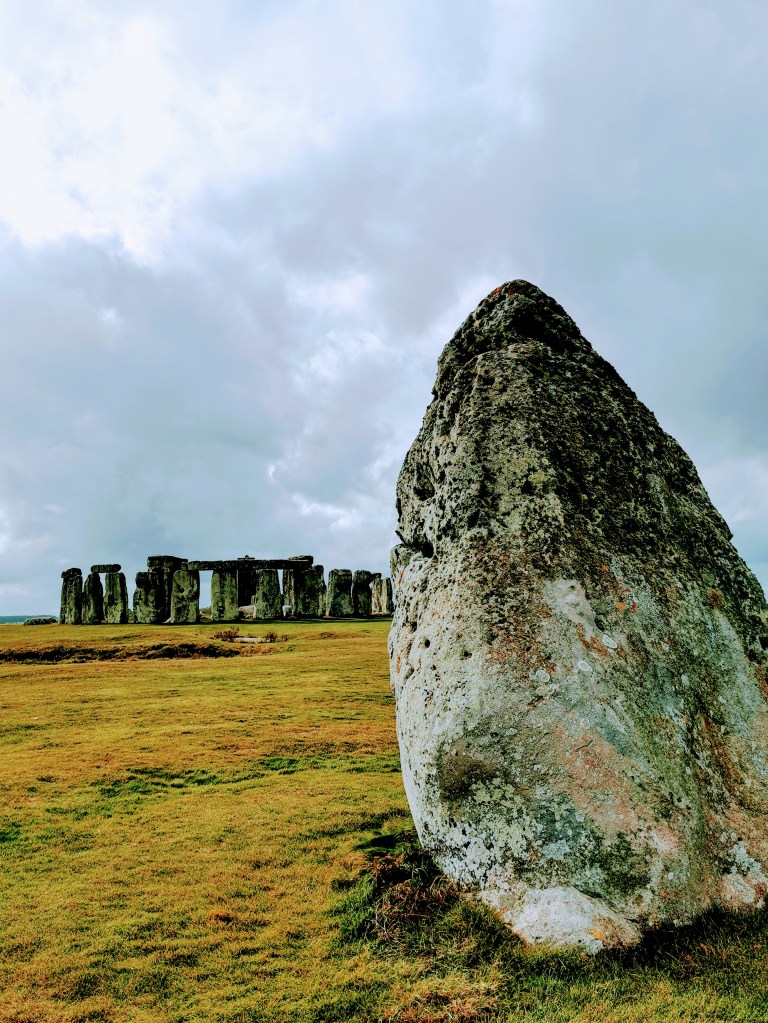
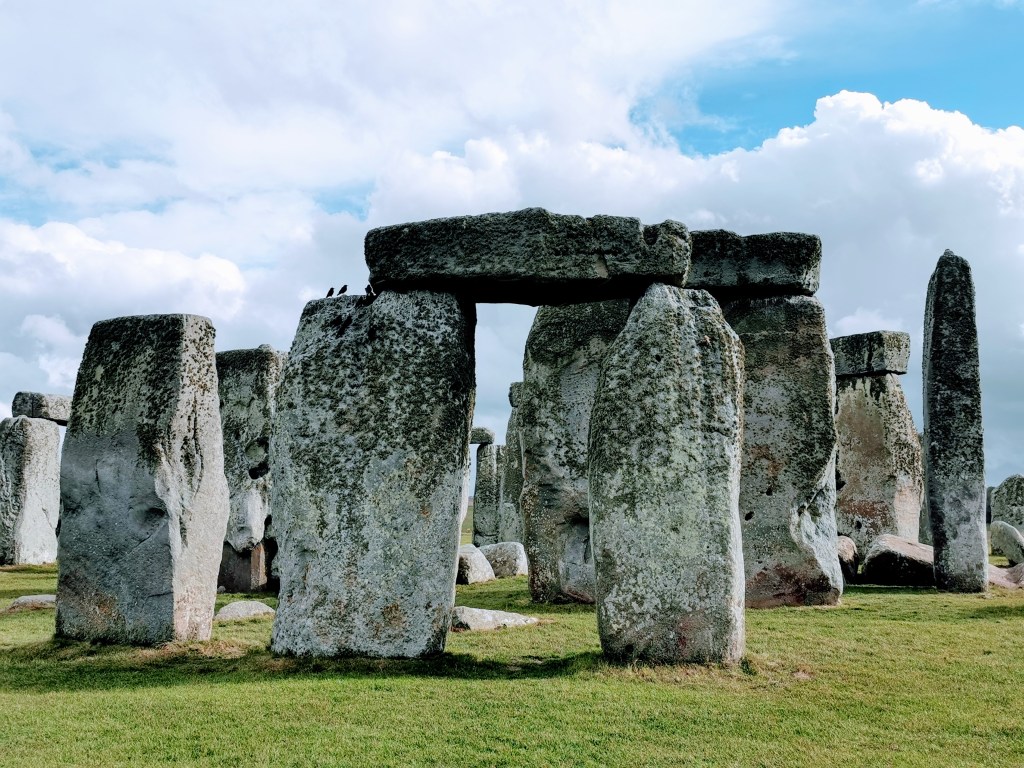
Around 2500 BC the henge entered another phase when someone (no, we don’t know who) decided that it required a complex arrangement of standing stones. Now, bear in mind that each of the stones in the Stonehenge circle weighs around 25 to 50 tons, and they weren’t exactly sitting around nearby waiting to be used. Some of them came from Wales, 240 kilometres away.

So let’s think about this. Imagine you’re prehistoric man living on Salisbury Plain. All communication is verbal. How on earth do you find out that there are some really good monumental stones going spare in Wales? The only way to travel is on foot, so how do you get there to check them out for yourself? The wheel hasn’t yet reached Britain, so how do you transport the massive stones back home? And when, unbelievably, the stones arrive on Salisbury Plain, how the heck do you get them to stand up in a sophisticated configuration of circles aligned to the movement of the sun??????

No, I can’t work it out either. This was a mammoth task, requiring huge amounts of planning and organisation. Getting them in place was clearly of vital importance to the people who directed and carried out this work. If only we knew why! Religious site, astronomical observatory, festival location, place of healing, funerary monument – perhaps Stonehenge was all of these things. The effort that went into its construction shows that it was supremely important. It’s really quite miraculous. I’m starting to understand the fascination it has for 1.6 million annual visitors (although not this year of course).

Most visitors to Stonehenge seem to walk around the circle and then head back to the exhibition at the visitor centre. They’re missing out. Over time, the National Trust has acquired the land around the henge and allowed it to revert to chalk grasslands. There are around 400 ancient monuments sprinkled around the fields here and you can simply walk around them, getting a feel for how important this whole area is. It’s not just about one stone circle, astounding though that may be.

The number of burial mounds sprouting up from the ground gives this place an otherworldly atmosphere, particularly when there’s not a soul to be seen. Unless you count the cows. I keep a wary eye on them. Cows may look placid and even cute, but in the UK they do have a tenancy to crush unsuspecting walkers with worrying frequency.

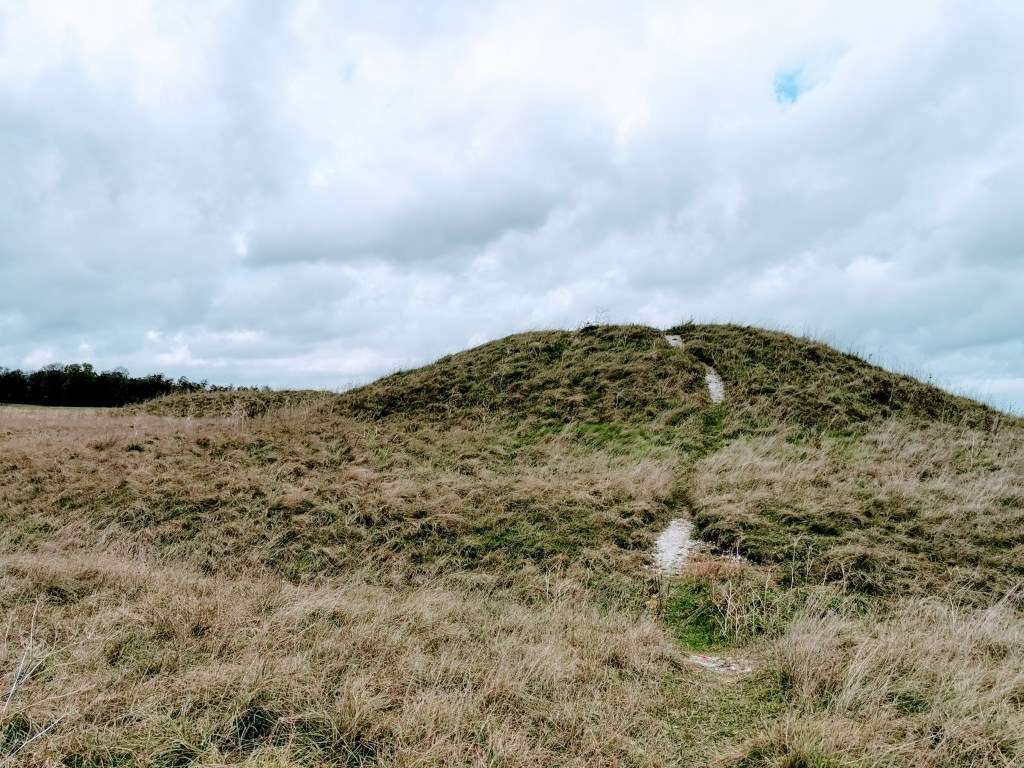
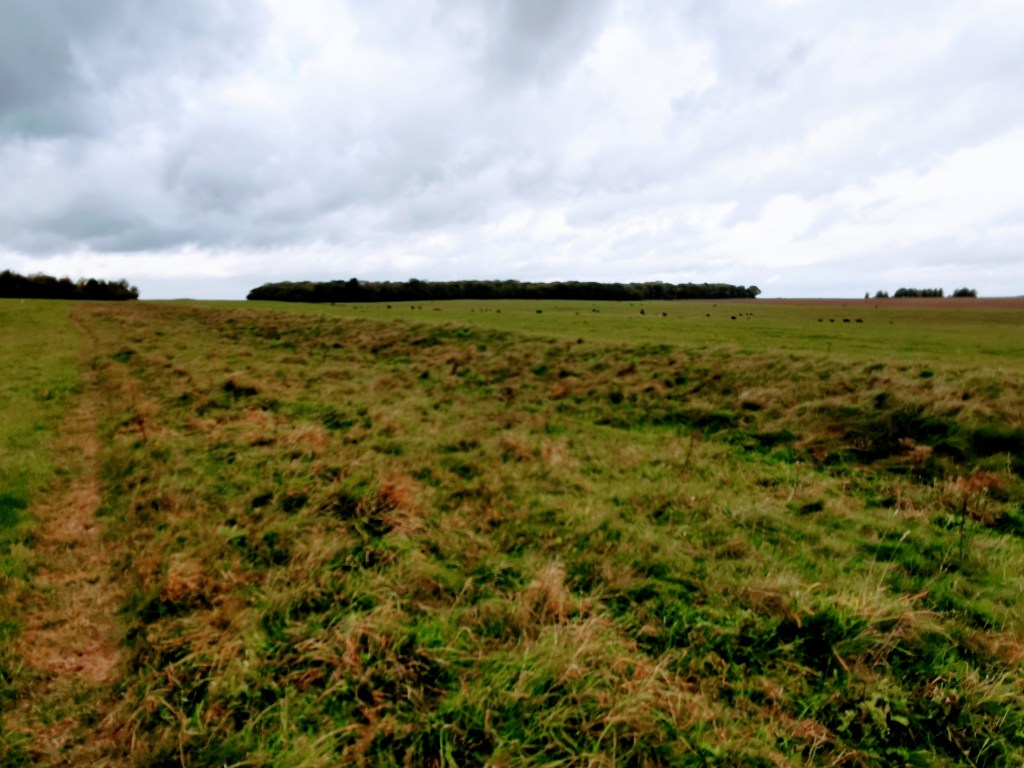
I walk along the Stonehenge Cursus, ancient earthworks following the route of a processional pathway. It’s 3km long and up to 150m wide, but we’re not sure what it connected nor exactly how it was used. No surprises there then! The cows are still innocently chewing the grass as they survey my explorations, but I walk quickly. There’s no-one here to hear me if I scream…

I’m pleased to report that I make it back to the car park without the slightest bit of bovine molestation. So, there we go, another ‘must-see’ ticked off my list, and I’m not at all disappointed – Stonehenge and its surroundings are astonishing. 2020 hasn’t been a complete write-off – I doubt if I would have got around the country so much in an ordinary year. And even if I had, I would have been fighting the crowds. As it is, I had the privilege of experiencing the magic of this sacred site in peace and quiet. As it should be seen. Lucky old me!

Escape to Burley – puddles, ponies and pigs.

It’s the end of lockdown (again) and we desperately need a change of scenery. But can we actually go on the New Forest trip we booked in long ago pre-covid times? Yes, we’re allowed to travel. Yes, the hotel is re-opening. The weather forecast isn’t great, but this is December in the UK after all. Who’s afraid of a bit of mud?Yahoo, wellies packed and off we go!

The New Forest is not new, nor is it actually a forest. Established as a royal hunting ground by William the Conqueror in 1079, this area of more than 70,000 acres does have some trees, but much of it is open heath. It was subject to the Forest Law, which reserved all animals within it for the King. Legend has it that William evicted the inhabitants of several settlements, and was later punished for this when two of his sons and his grandson all perished in separate accidents inside the ‘forest’.

We’re staying at The White Buck Inn near the village of Burley. It’s dog friendly and has a nice menu. Yes, of course I checked – I already know what I’m having for dinner! We’re too early to check in, but we have a lunch booking at a local pub, so we park up and set off happily down a footpath next to the hotel towards the village.

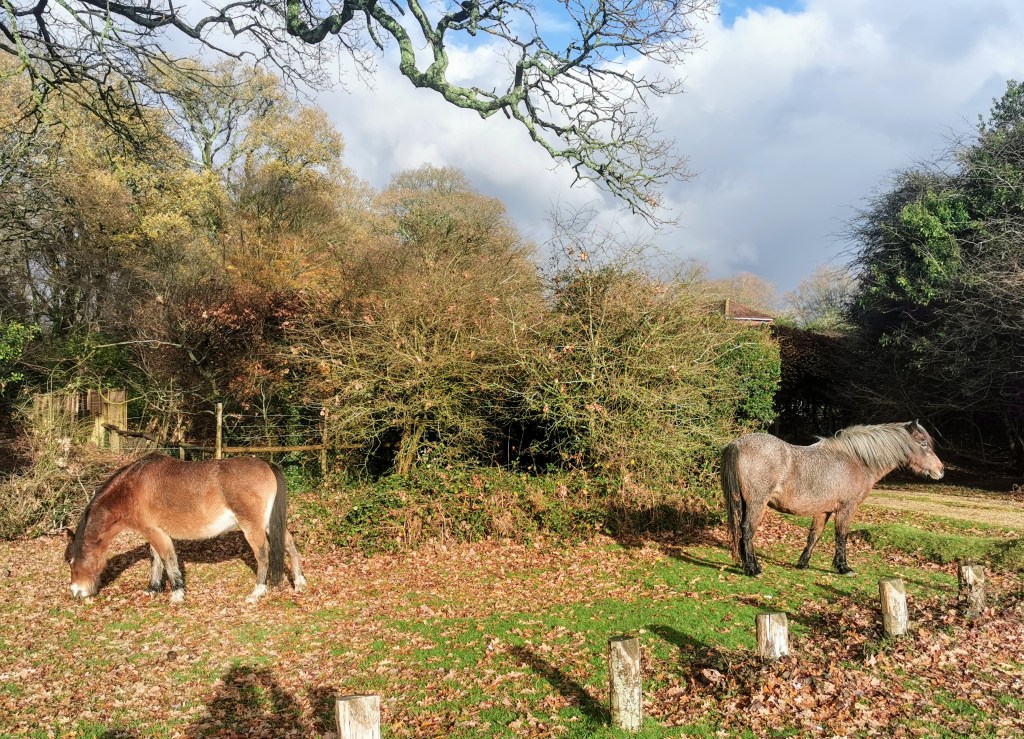
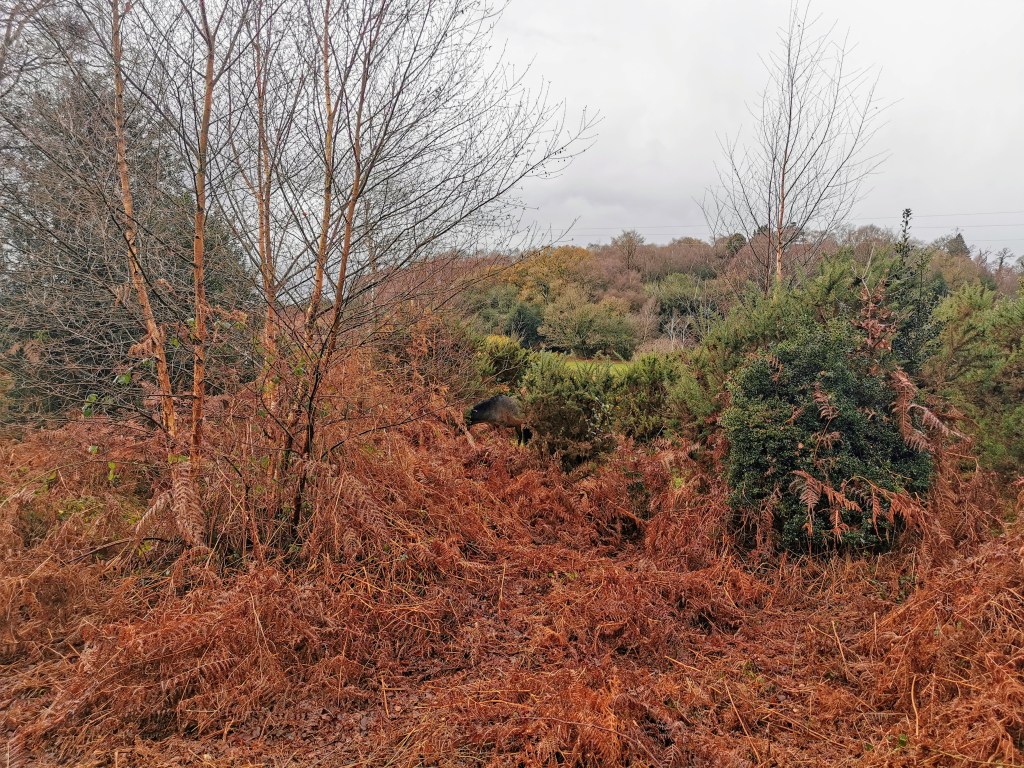
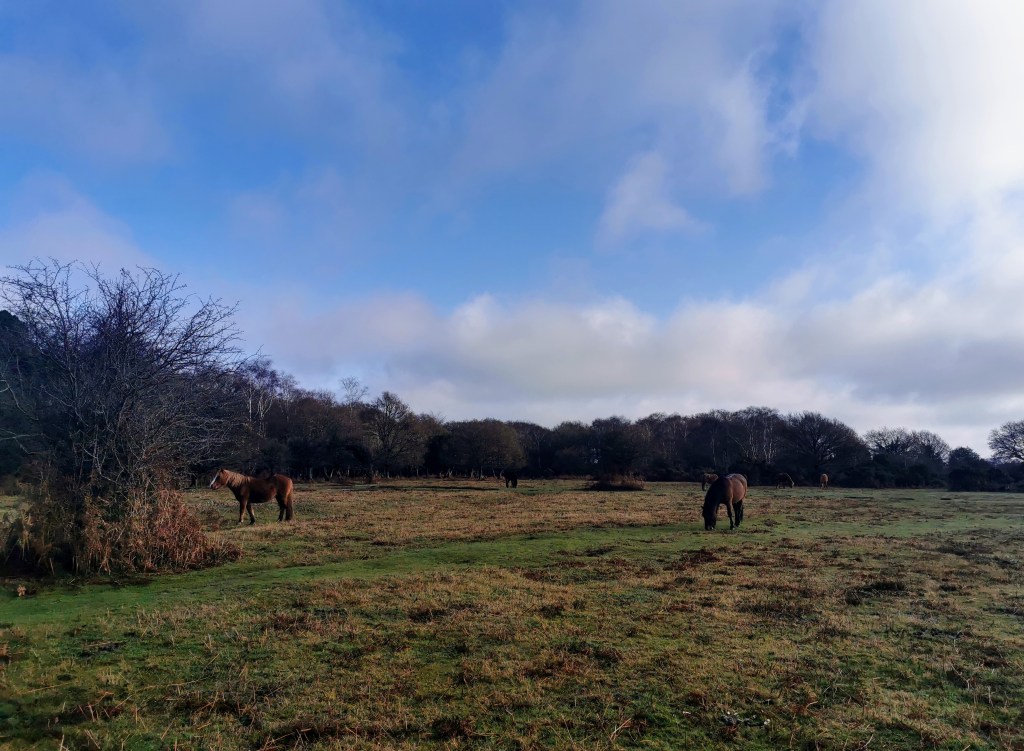
It’s not long before we spot some of the most famous New Forest dwellers, the ponies. There are thousands of indigenous New Forest ponies running wild in this area, owned by local people who have rights of common pasture. There’s an annual fee for each pony turned out to graze, and they are rounded up each year for a health check. You see them everywhere – last time we visited there were ponies in the carpark of Tesco in Brockenhurst. There are also lots of deer and cattle – there’s a cow on the golf course as we pass. And…

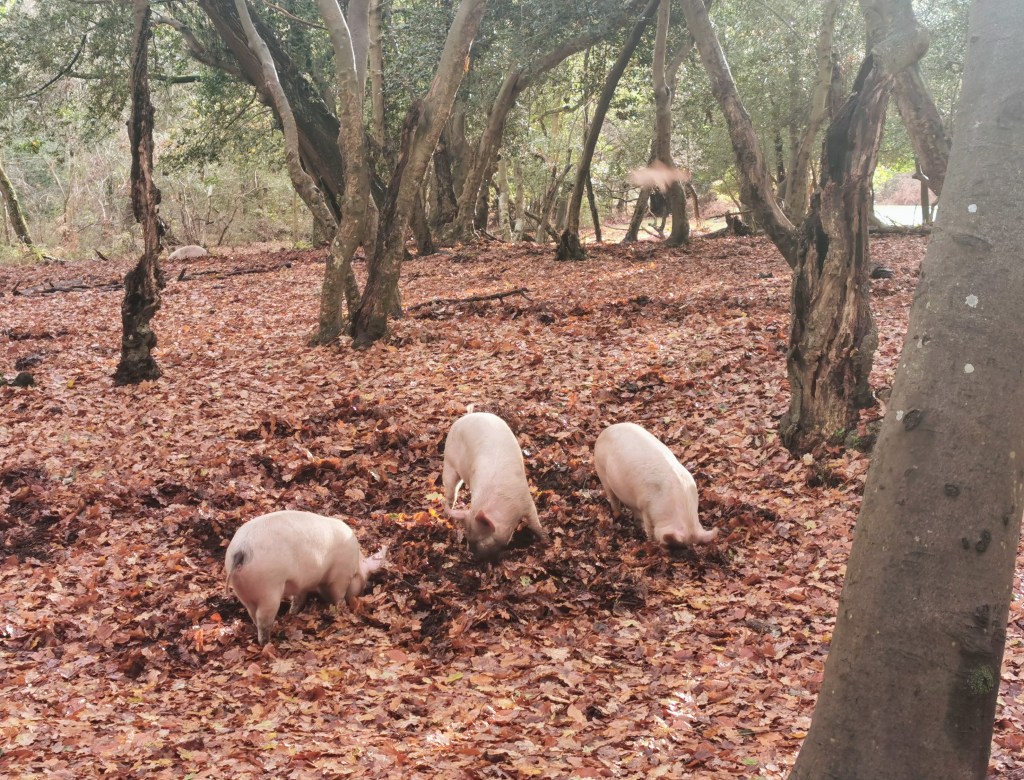
Yes, those are pigs. At first we think we’re seeing things, but no, there’s definitely a herd of pink porkers snuffling around in the leaves, and a lot of enthusiastic grunting going on. There’s obviously food down there in the mud. Lizzie the Labradoodle is transfixed, she would happily stand here watching the piggies all day, but lunch at the Burley Inn is calling.

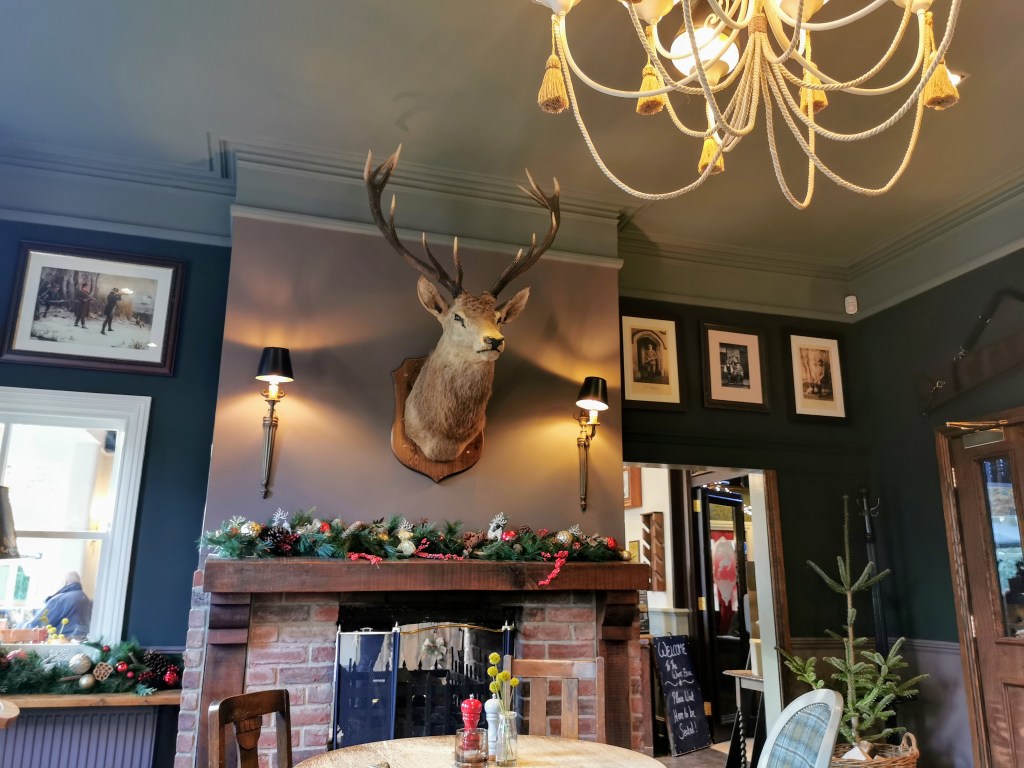
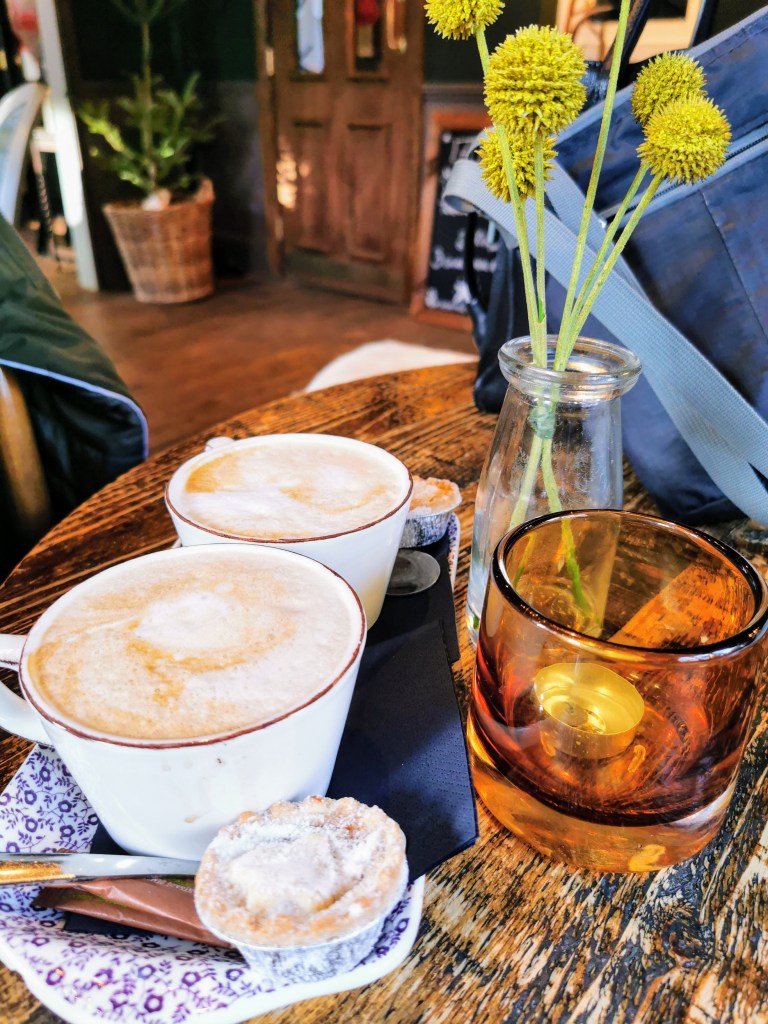
Inside the pub, the Christmas tree is up and the fire is burning. It’s hard to feel festive with coronavirus restrictions still in place, but we’re eating ‘substantial’ meals (prawn salad for him, Ploughman’s for me) so we’re allowed a drink or two, which helps. Ho, ho, ho! Back at our hotel, we have a coffee in the Gun Room, and it comes with mini mince pies. It’s beginning to feel a bit like Christmas.

Our room is called Rufus, after William the Conqueror’s red-headed son, who was shot and killed with an arrow whilst hunting nearby. Rufus is Latin for ‘the Red’ apparently. His morals were a bit dubious, it seems, as he was known for lust and sodomy. But the room itself is big and comfy, if not particularly luxurious. There’s a Nespresso machine, free bottles of water and hair conditioner supplied. Big ticks from me. But we’re here for the food and the walks. How do they measure up?

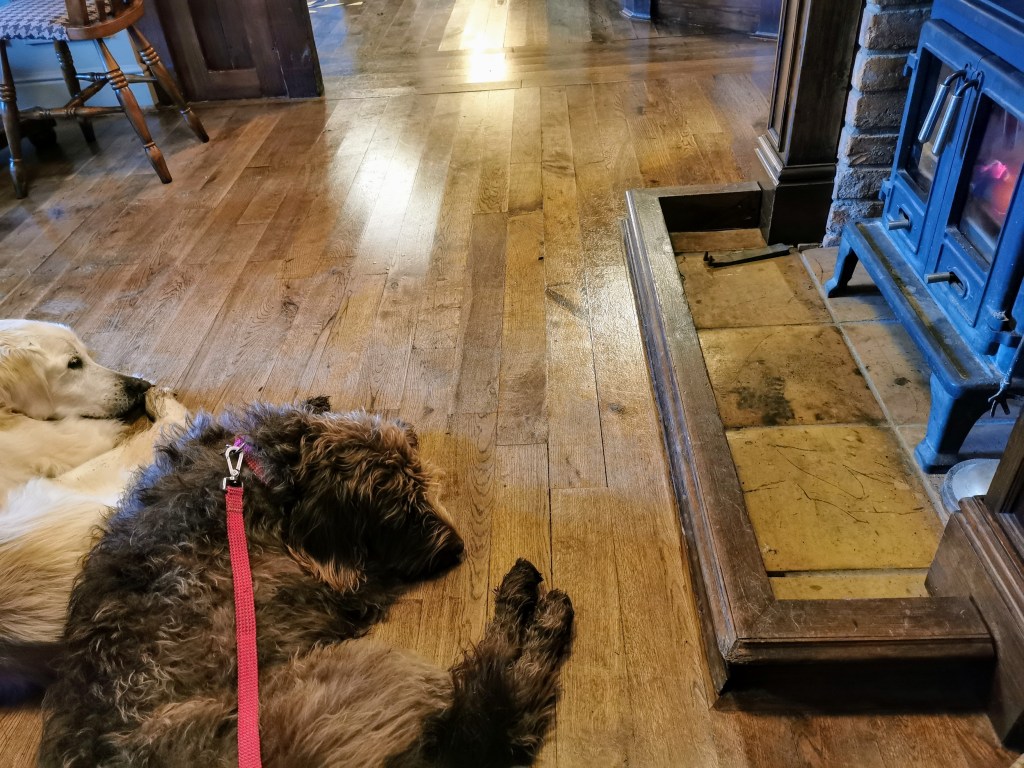
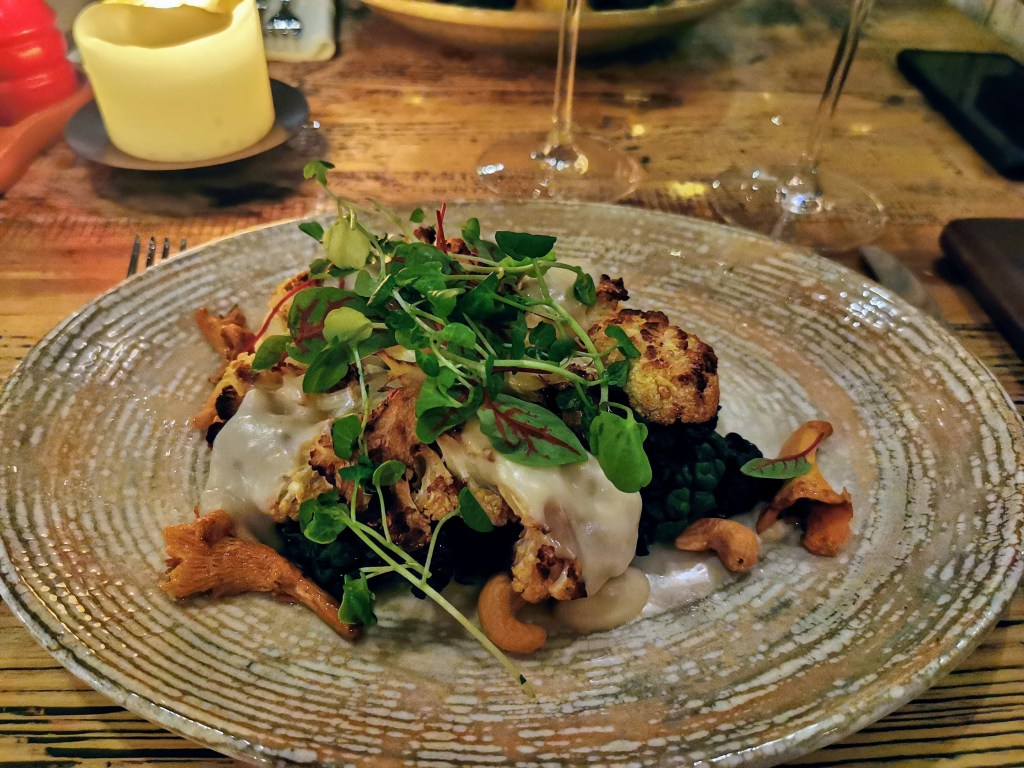
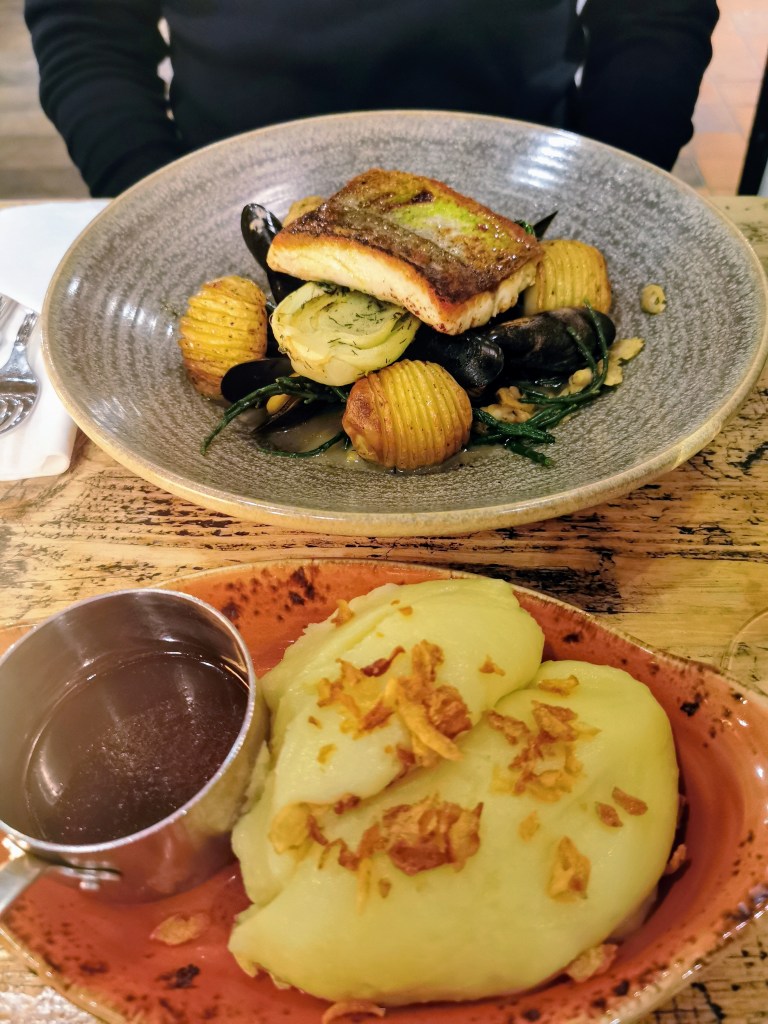
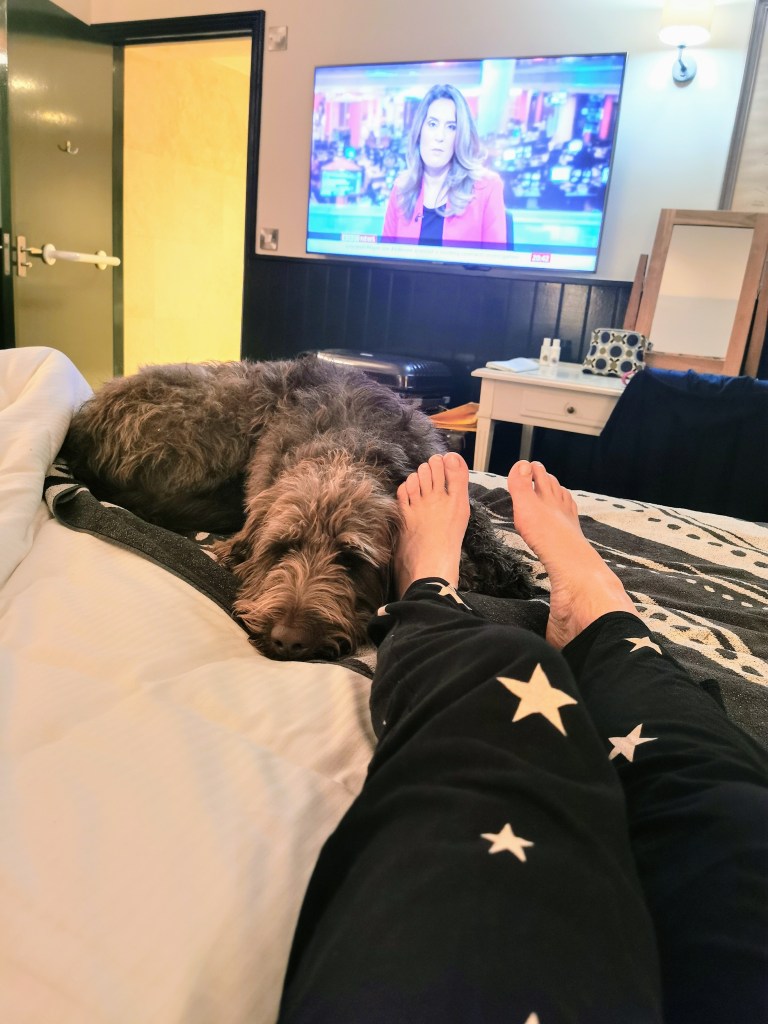
Ah, the food! It tastes as good as it sounds on the menu. Clearly there is a bit of talent in the kitchen, even the dogs stand up and sniff the air like the Bisto kids every time a plate comes out. I have prawns followed by cauliflower mornay. The husband goes for soup and hake. Yummy! After cheese and port we stagger back to our room and collapse on the bed. Luckily it’s big enough to accommodate a sleepy Labradoodle. Henry, at 16 years old, is happy to stay on the floor.

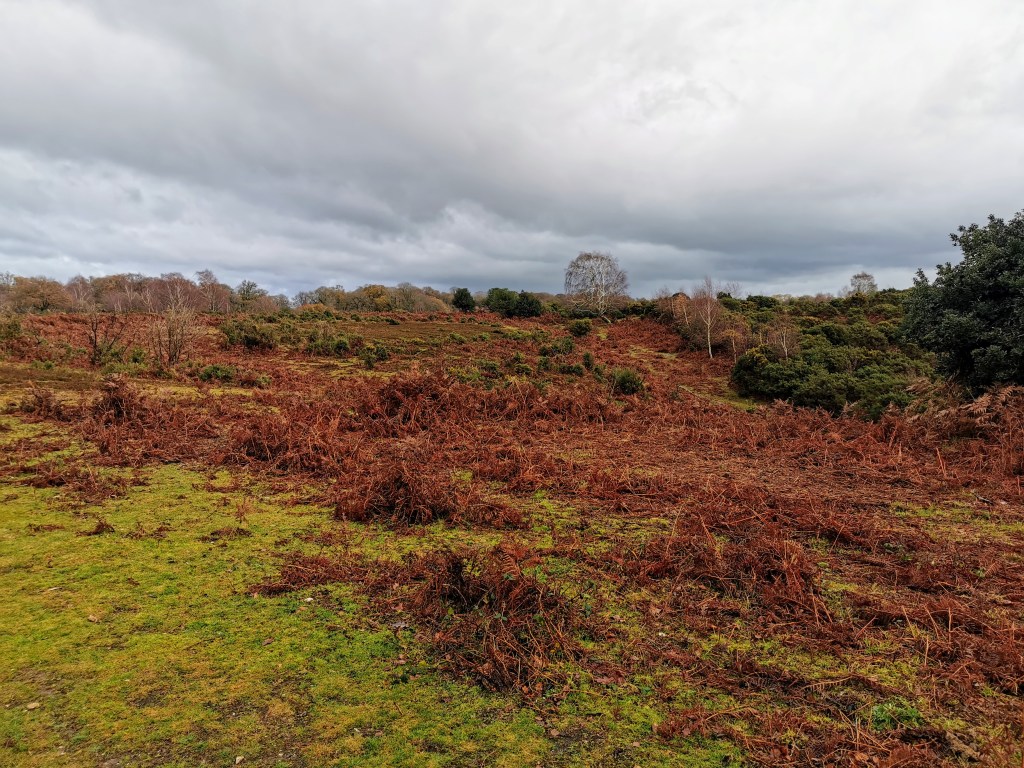
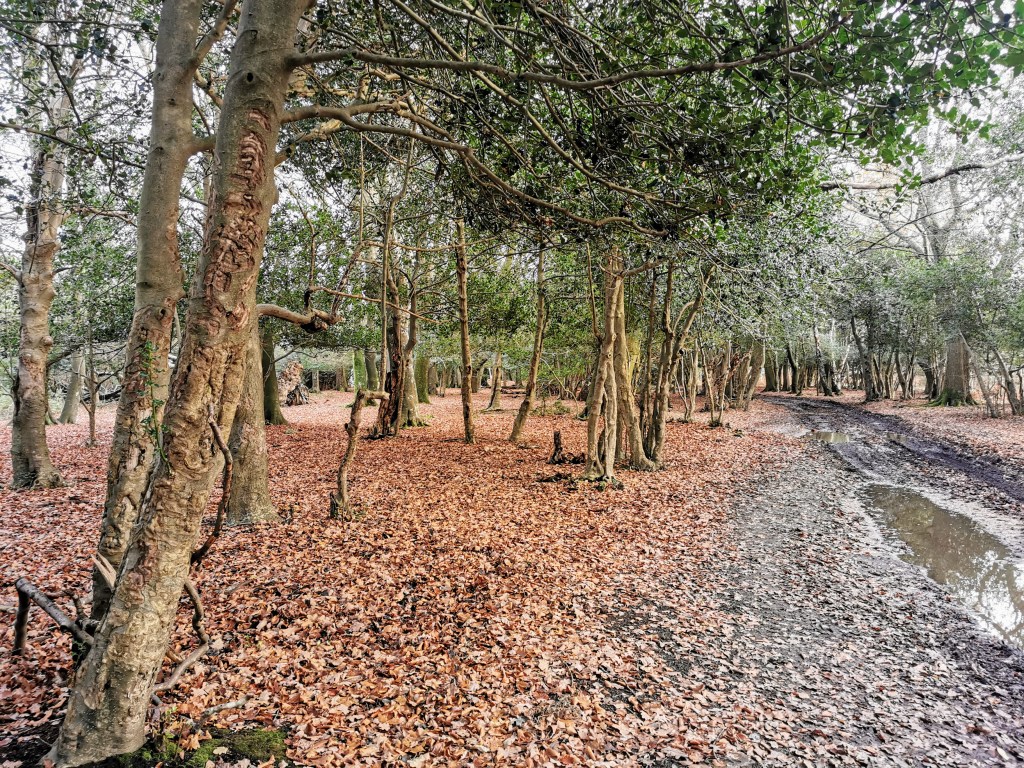
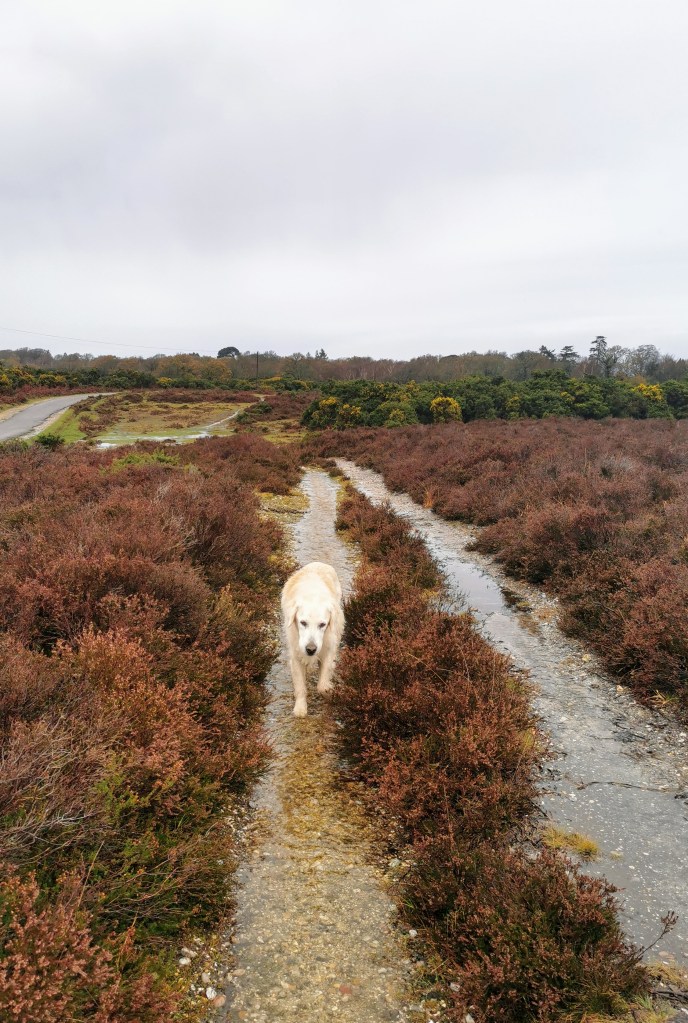
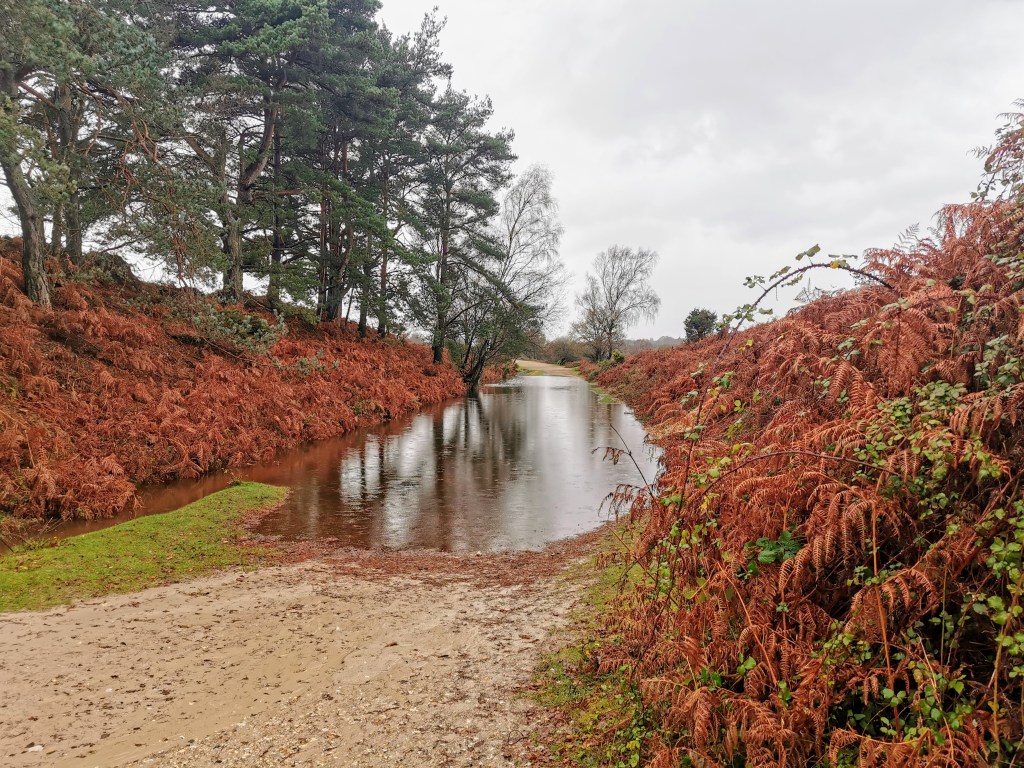
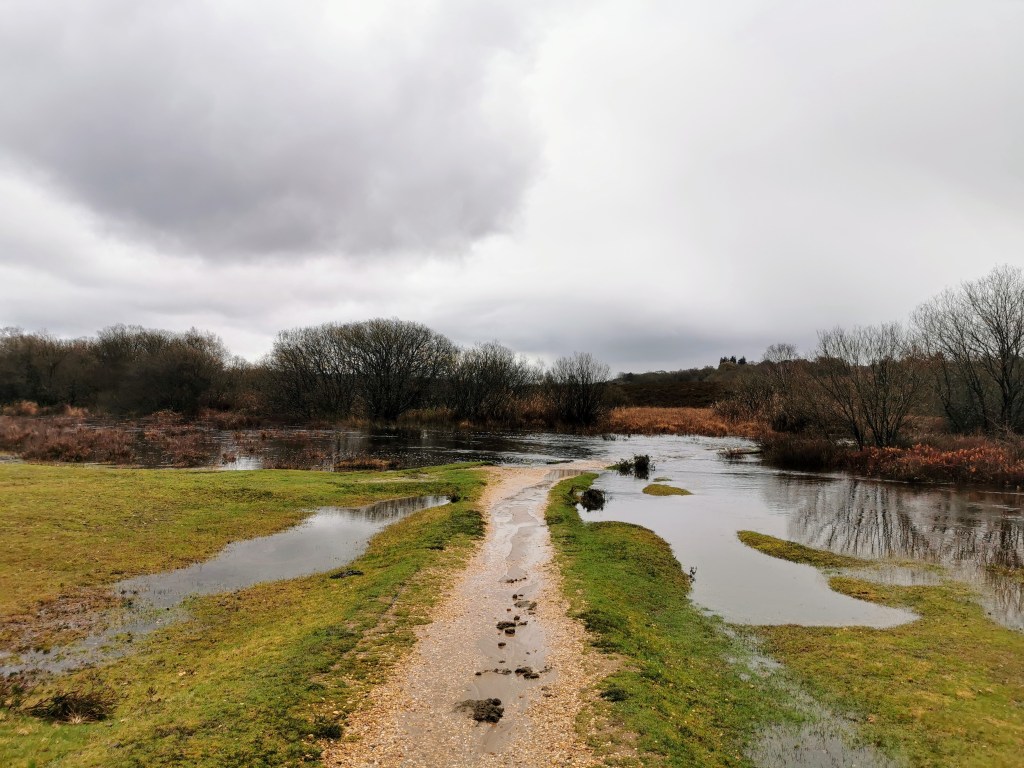
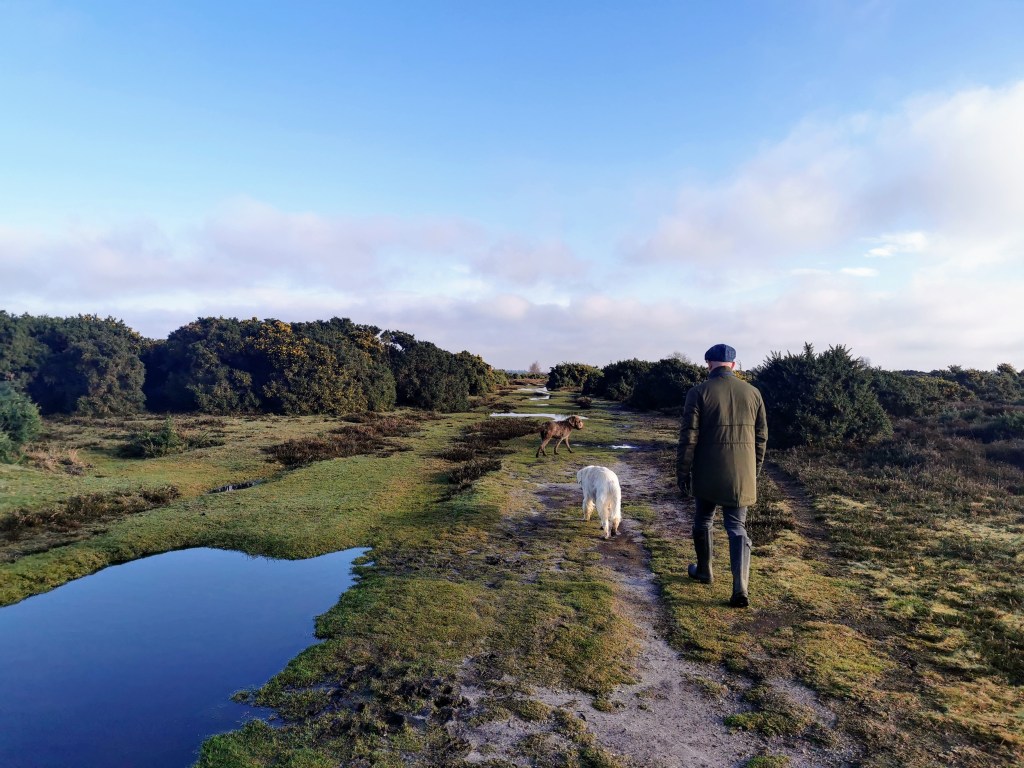
Now for the walks. The Inn is pretty much surrounded by open heathland whichever direction you choose. On day one we take the advice of a hotel waiter and head south along the Holmsley Passage towards the old abandoned railway, now a walking track. It’s rainy and there are massive puddles everywhere, but we’re wrapped up well and the dogs love splashing through the water. No dramas.

That is, until we need to cross a small river that has unfortunately burst its banks. The path is nowhere to be seen, so we wade in carefully. The husband discovers he has a leak in one welly, while mine don’t seem to reach high enough, the water is going over the tops. Lizzie is in front, and the current in the middle of the torrent takes her by surprise and washes her away. There’s a moment of panic, but this is a dog who’s used to swimming in the River Thames. She takes it all in her stride and we’re all soon safely back on dry (ish) land at the other side.

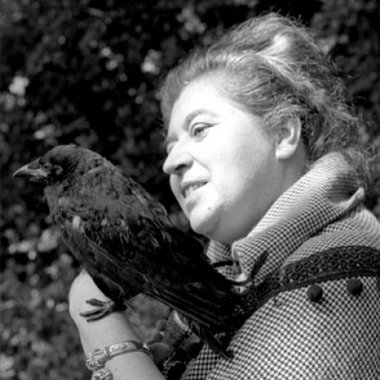
It’s uphill back to the village and we have soggy feet, but another pub lunch awaits, so we persevere. Even under grey skies, the scenery is lovely. We hardly see another soul. In a normal year, the New Forest gets around 14 million visitors, but I imagine that number is way down in 2020. Arriving in the centre of Burley, we ponder the number of shops devoted to magic and witchcraft. In the 1950s a famous ‘white witch’ called Sybil Leek lived here, and used to walk around the village with her pet jackdaw on her shoulder.

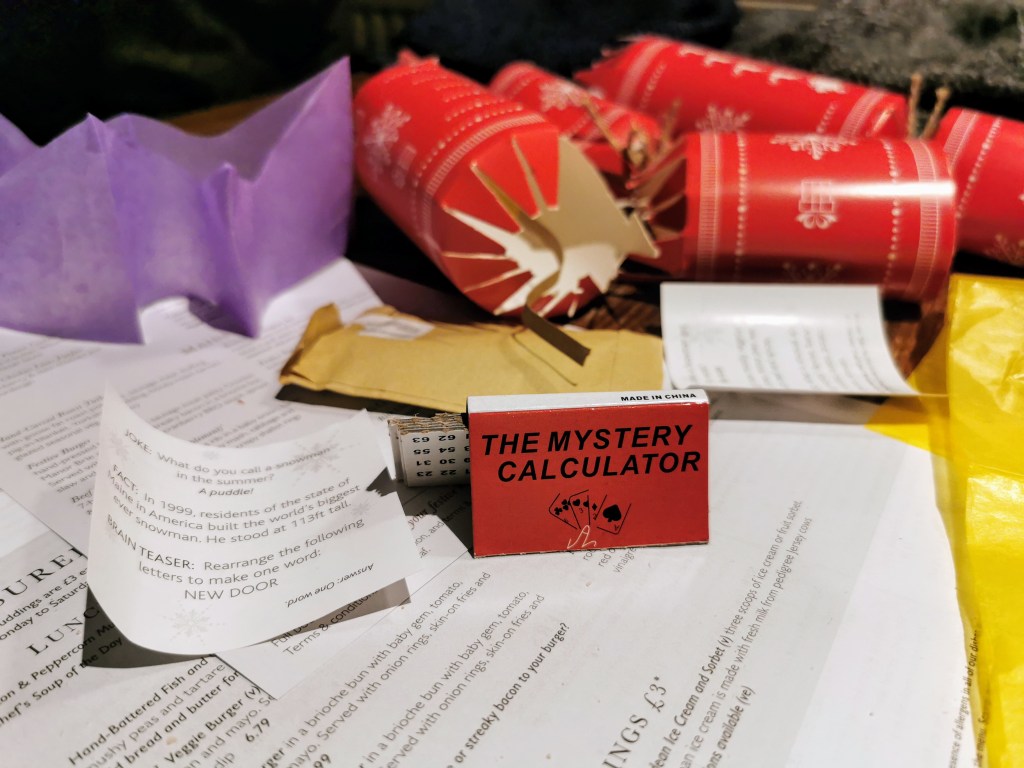
Unfortunately the villagers didn’t approve of Sybil, and she ended up moving to America. It seems they are happy to cash in on her legacy nowadays! At the Queen’s Head, there’s an enthusiastic welcome and our first Christmas crackers of the year. The husband doesn’t let me pull the bangers, and cheats when I try out the Mystery Calculator gift that pops out of mine. He’s such a Grinch!

For our second day of walking, the world is transformed. Cold, yes, but with glorious sunshine. This time we head east along Bisterne Close and happen upon a busy car park where lots of tracks converge. This is where the locals bring their dogs to walk, so Lizzie is in pooch heaven. ‘It’s beautiful out there’ a cheery dog walker tells us. The husband looks unconvinced – his extremities are freezing.

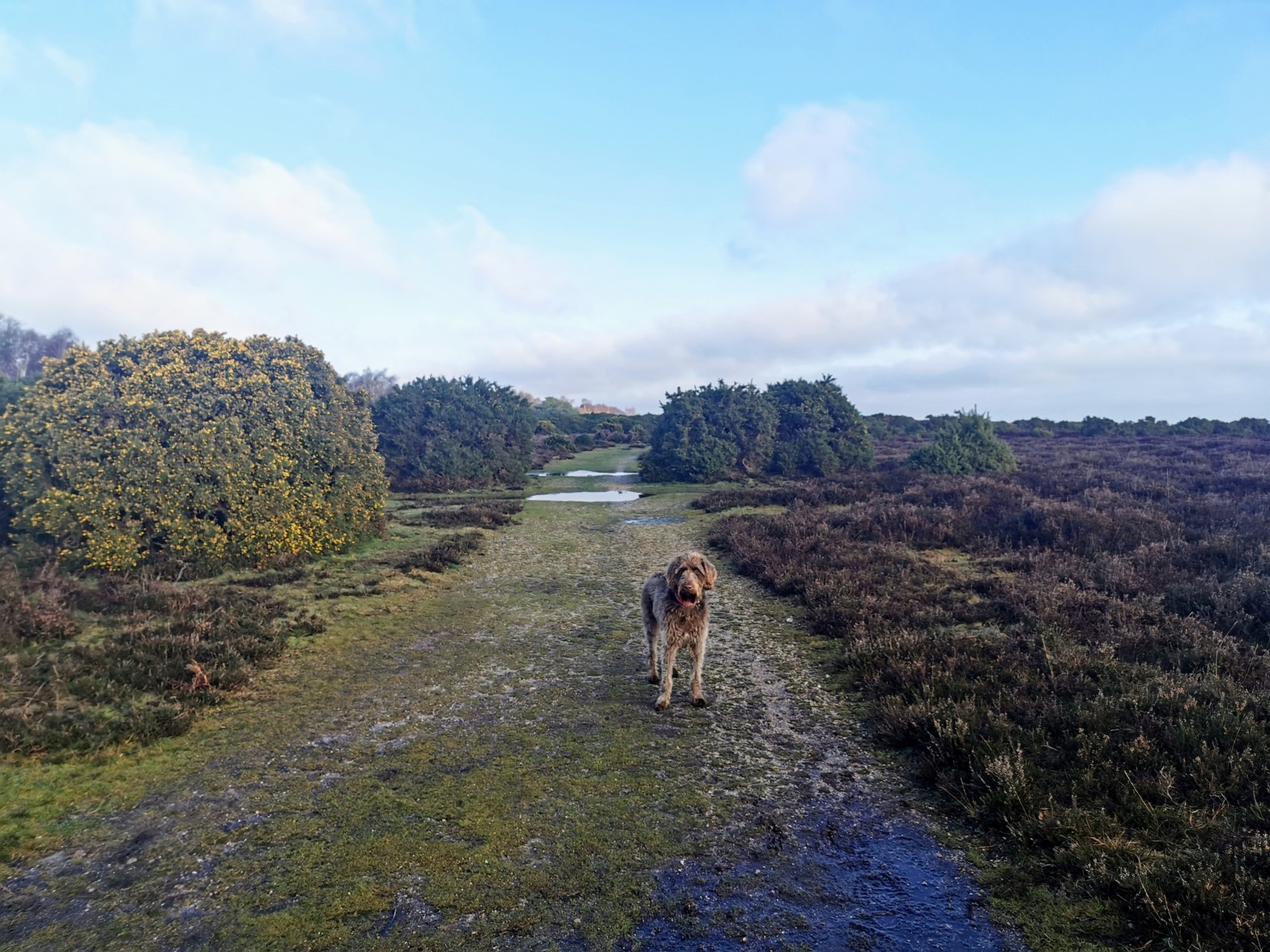
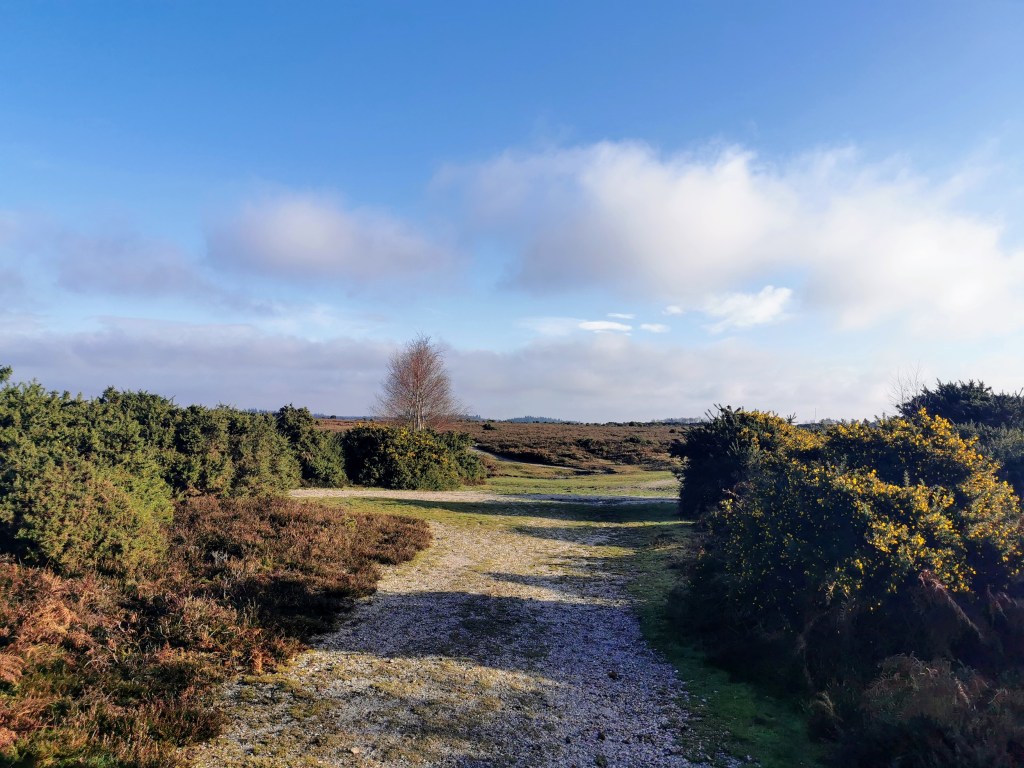
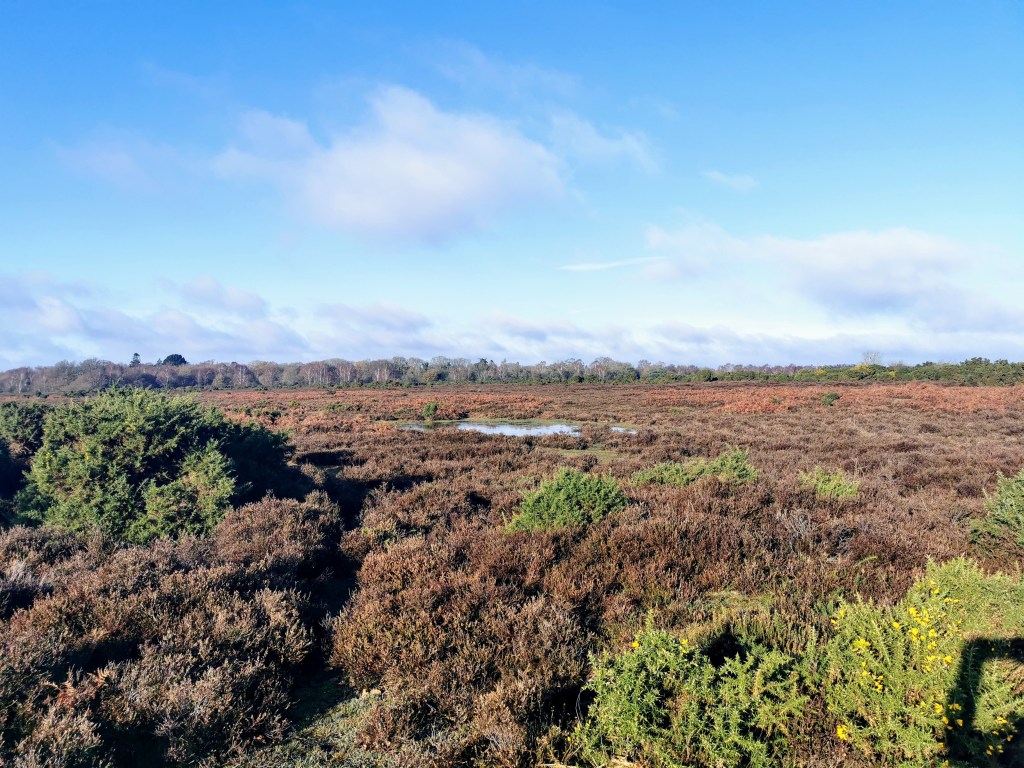
This is my favourite type of weather, bright and crisp. If you’re not enjoying it then your clothing is inappropriate, that’s all there is to it. The vistas stretch out around us, brightened up by the purple heather and yellow gorse. The ponies graze peacefully, as well they might – they live in a lovely part of the world. Every so often we meet a prancing dog with a smiling owner. We exchange greetings and Lizzie dashes around in the undergrowth with yet another new friend. Henry just plods along smiling. I can’t think of a better way to spend a morning.
It’s time for home. The dogs are tired and we’ve eaten way too much (as usual). But we’re all happy, and, dare I say it, feeling much more festive and ready for the run up to Christmas. Actually, that might be just me – the husband probably needs a bit more encouragement.

A walking circuit around Corfu Town

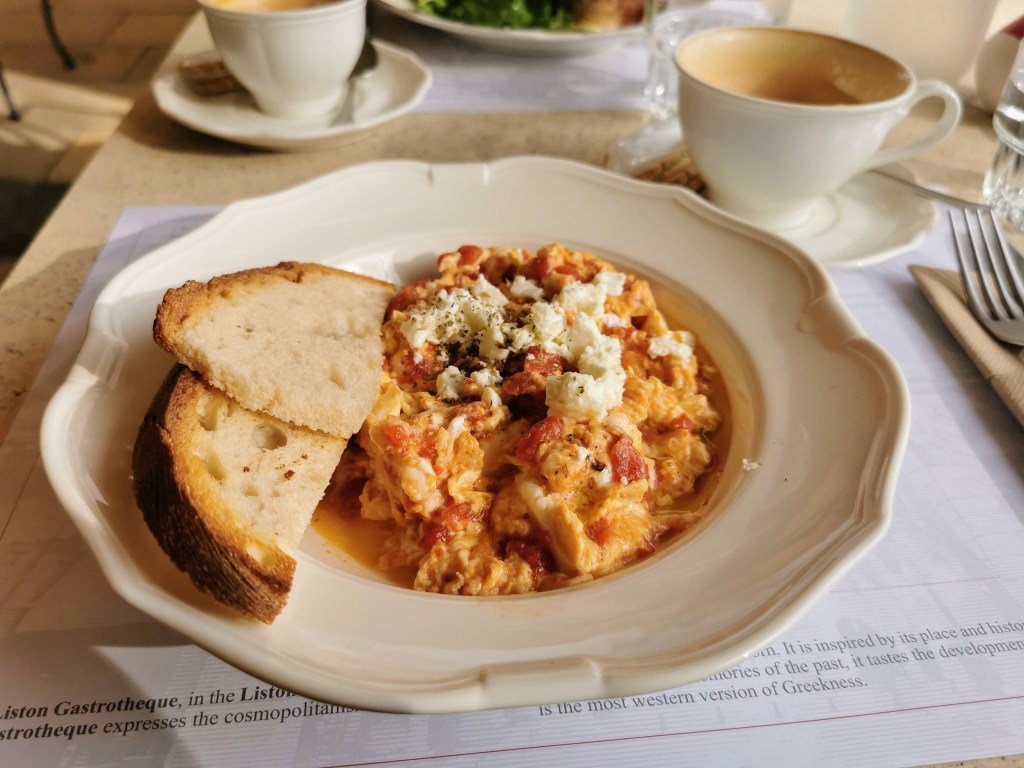
I’m back in Corfu Town to finish off our trip. Waking up to another beautiful day, the husband would be quite happy to sit outside a taverna soaking up the sun and people watching. It’s not going to happen, obviously. I have a list of things to see, so we’d better get walking. After breakfast, of course – scrambled eggs with feta anyone?

The husband understands the need for exercise, as we munch our way through huge mounds of food on any trip away. The history he tolerates, as long as I don’t take too long over it. I’ve learnt to gallop my way through castles, museums and stately homes, stopping only when absolutely necessary. You may like to take things more steadily, but here is my brief round-up of highlights both historical and culinary, all easily accessible on foot, as long as you’ve brought those all-important sensible shoes.

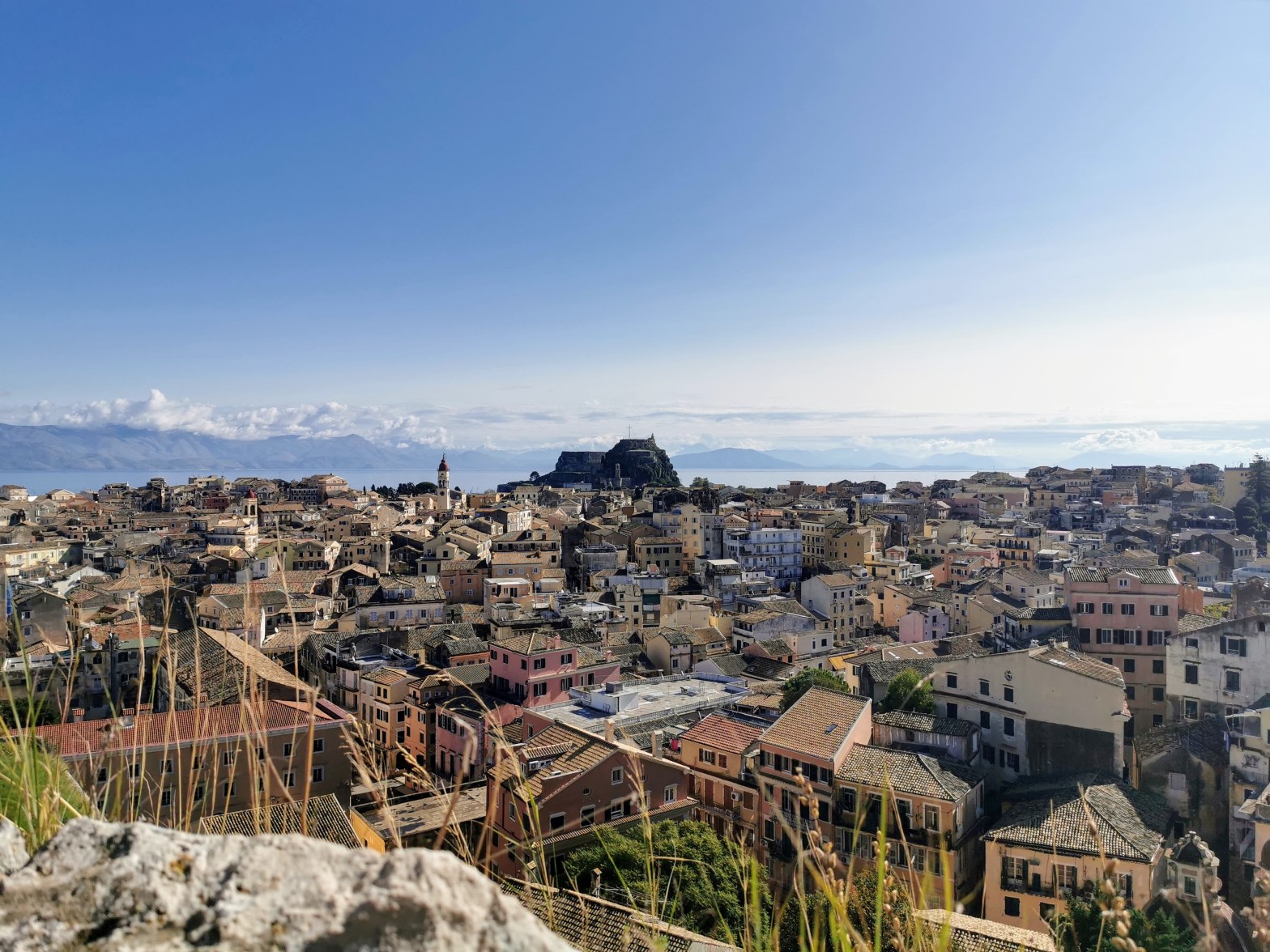
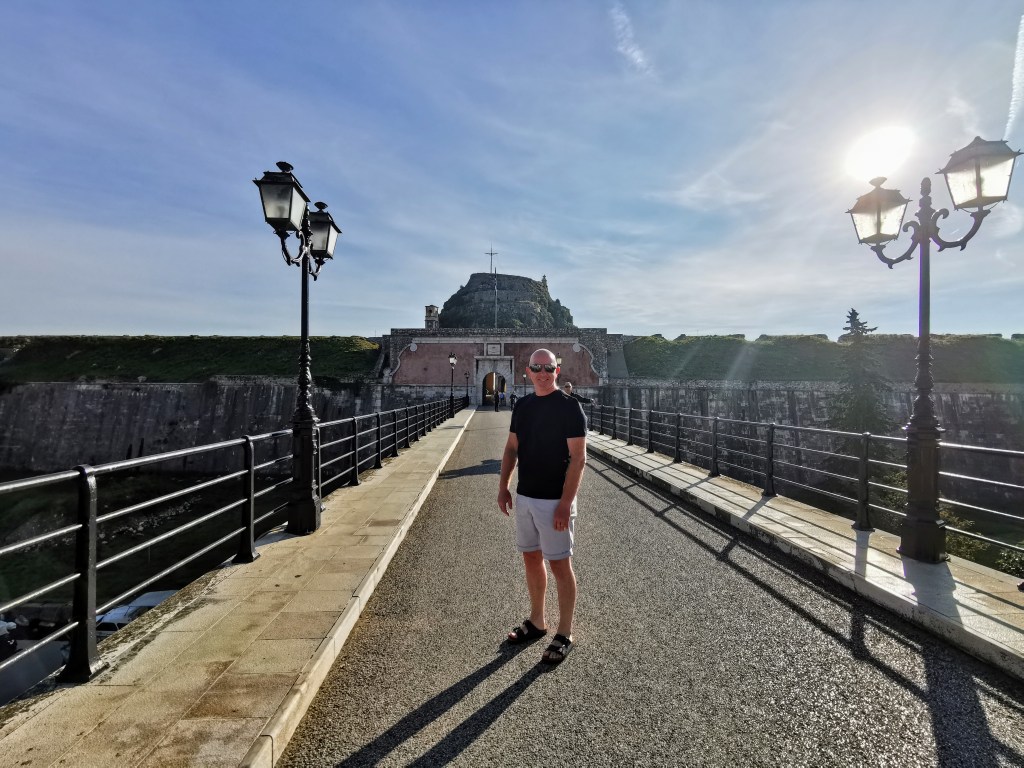
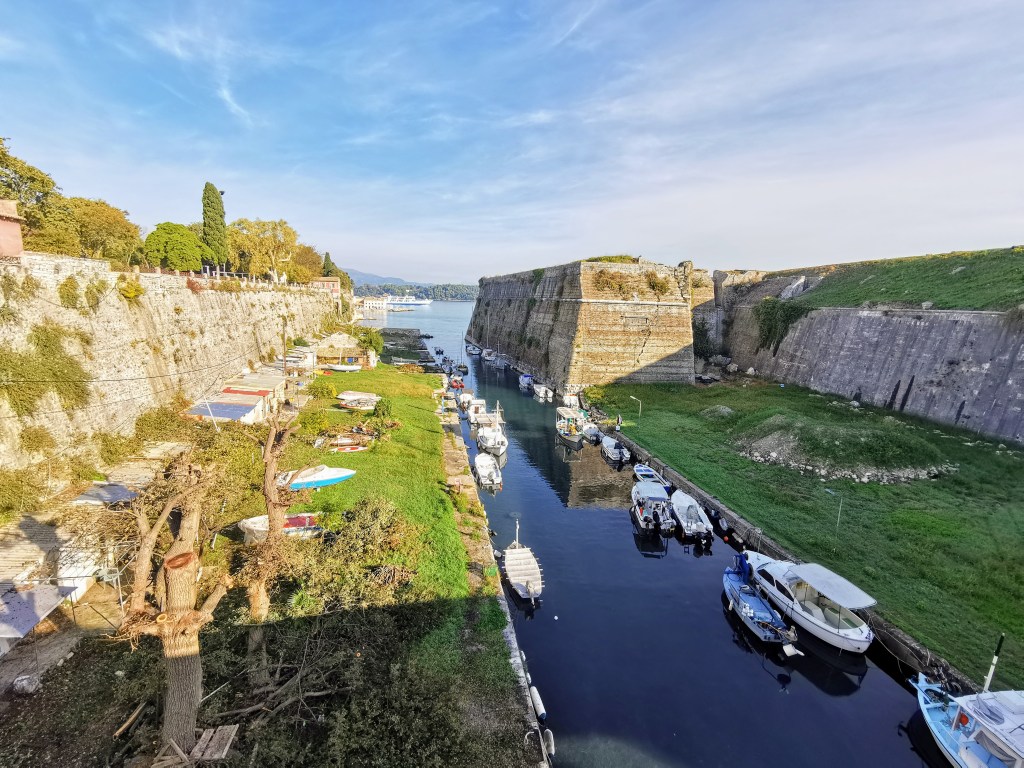
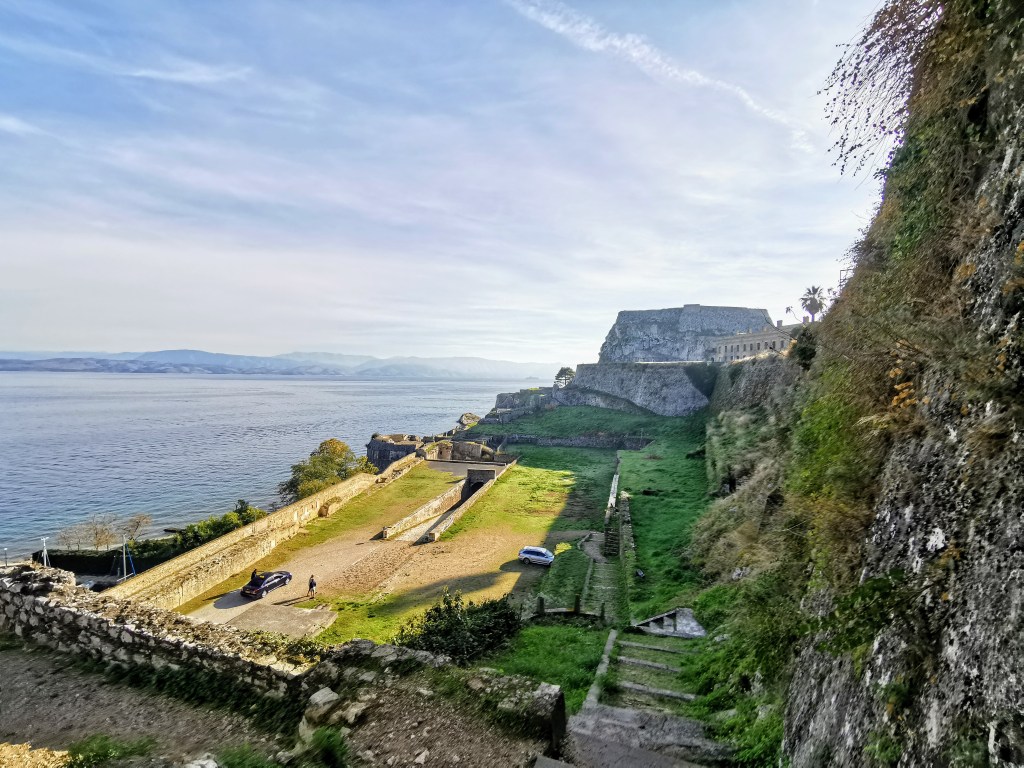
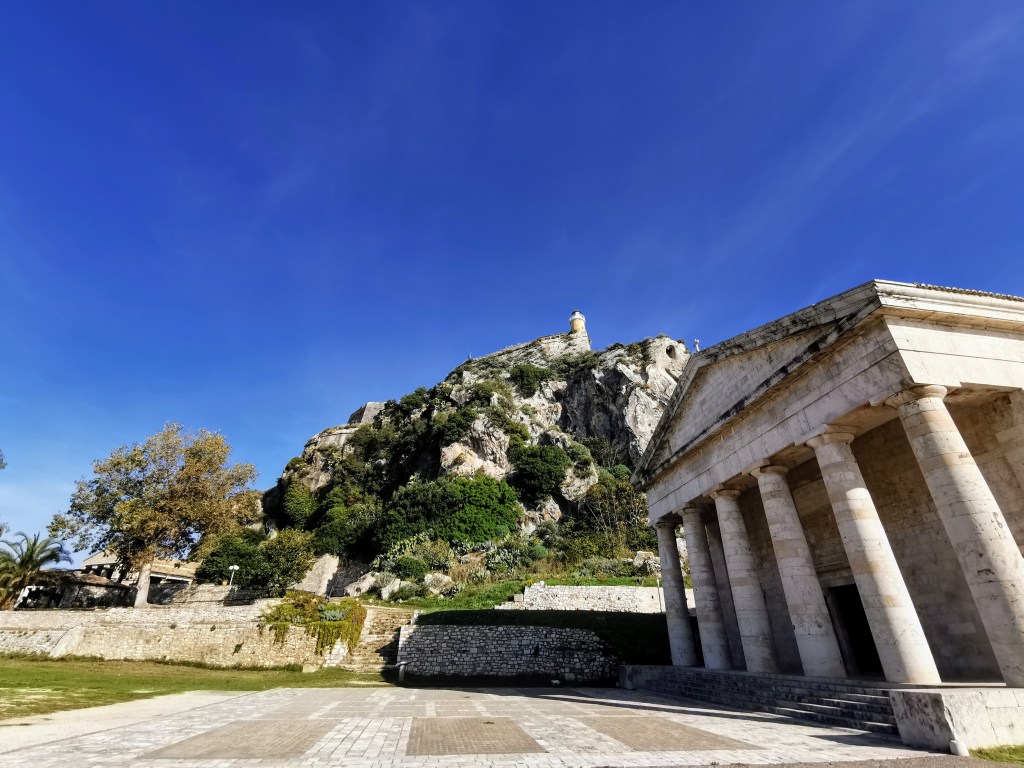
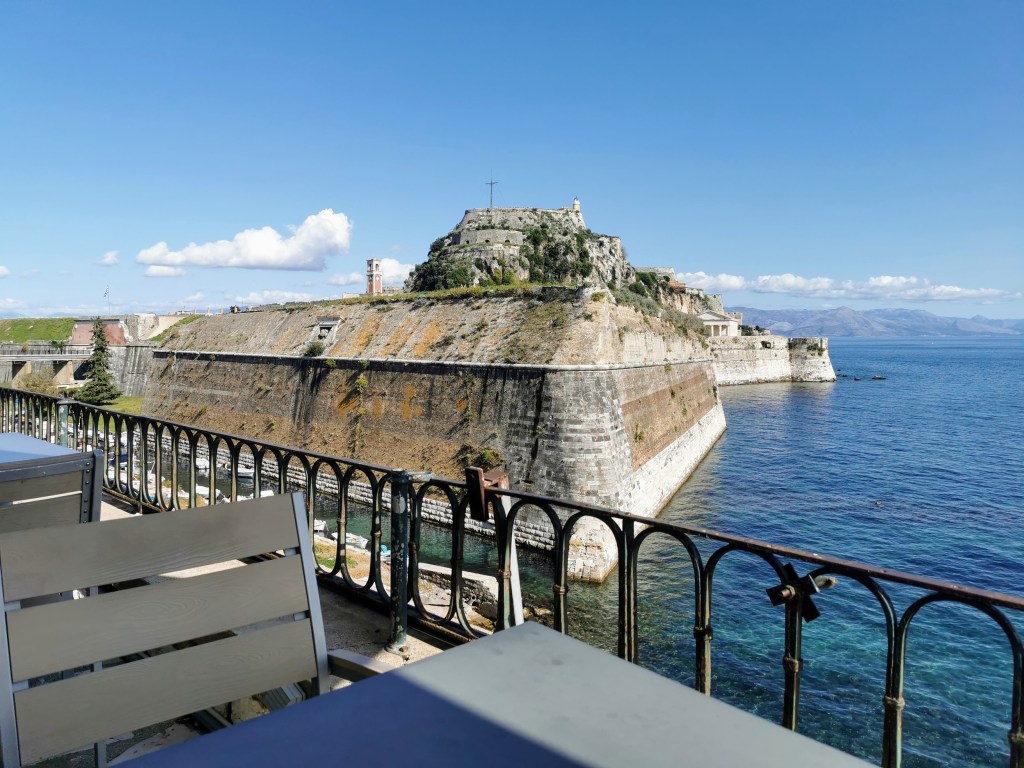
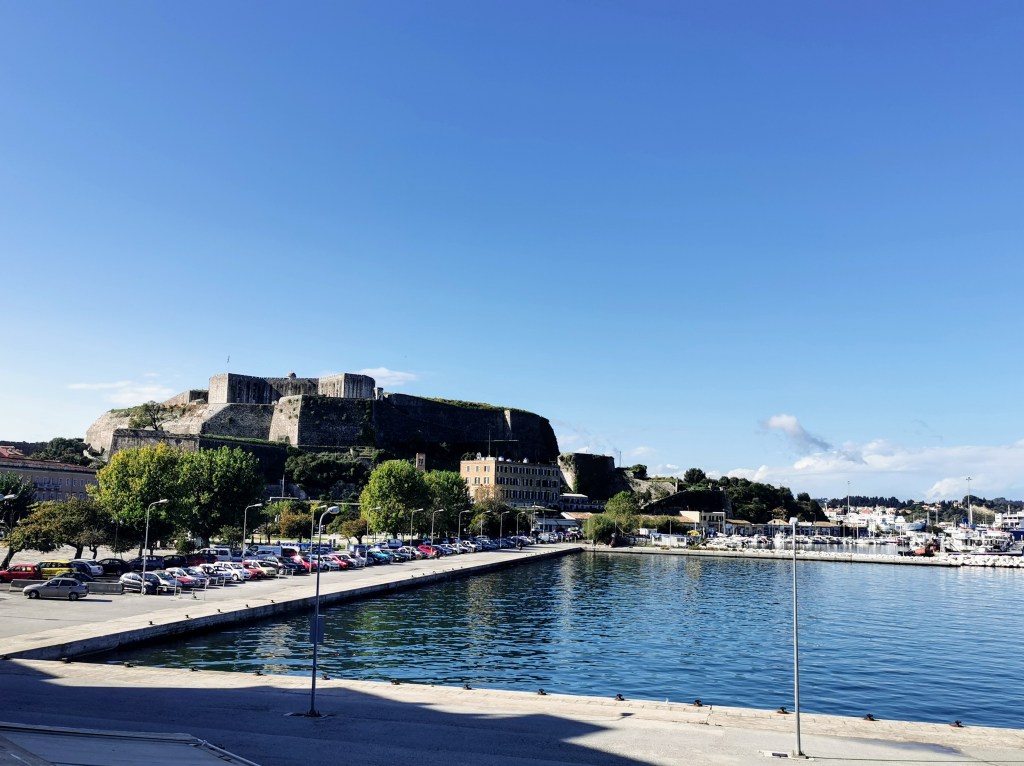
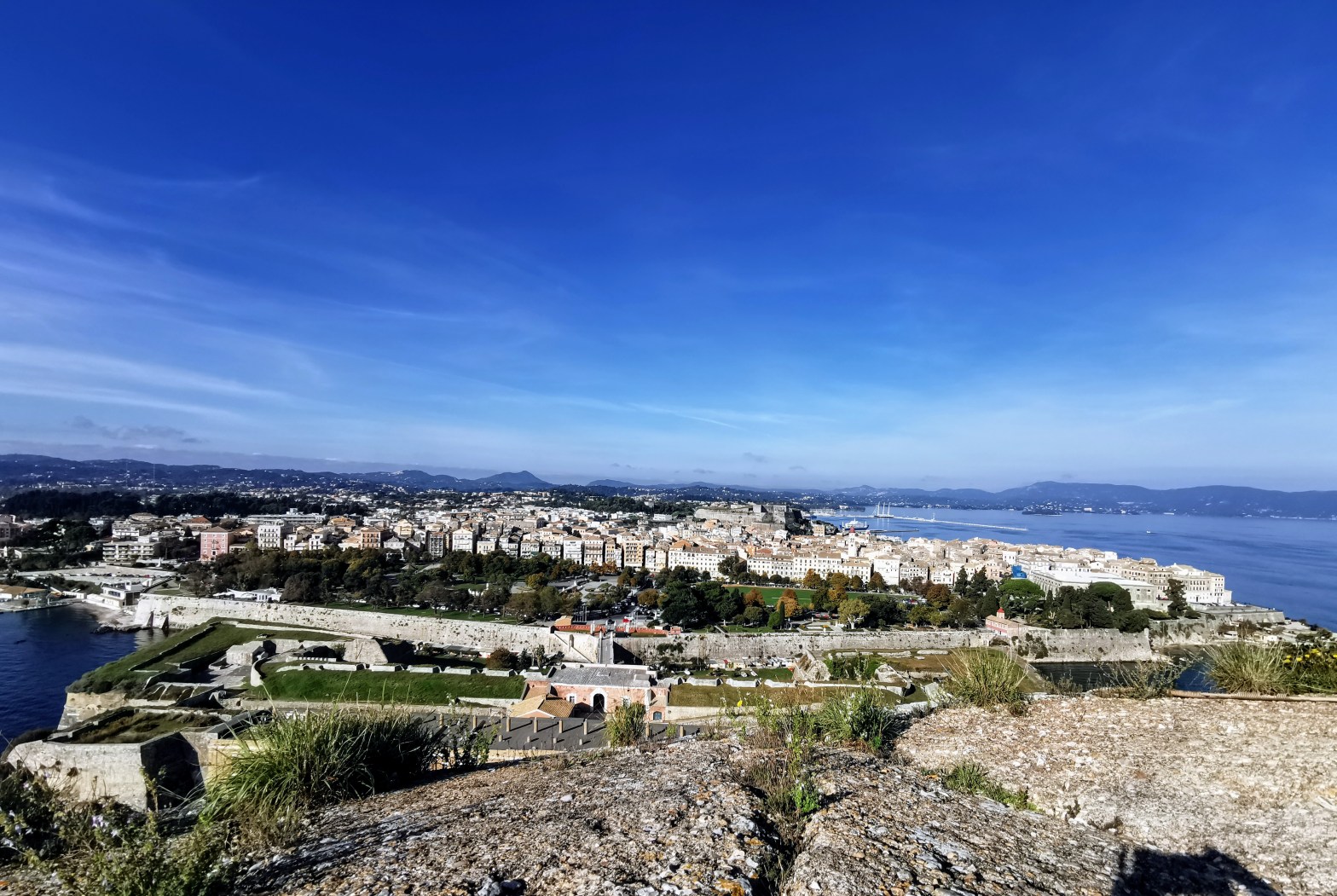
Number one port of call, and situated just a stone’s throw from the Old Town is the Old Venetian Fortress. There have been fortifications here since the 6th century, but these were replaced by Venetian engineers in the 15th and 16th centuries. A bridge leads to this huge edifice, which is separated from the mainland by a manmade channel.

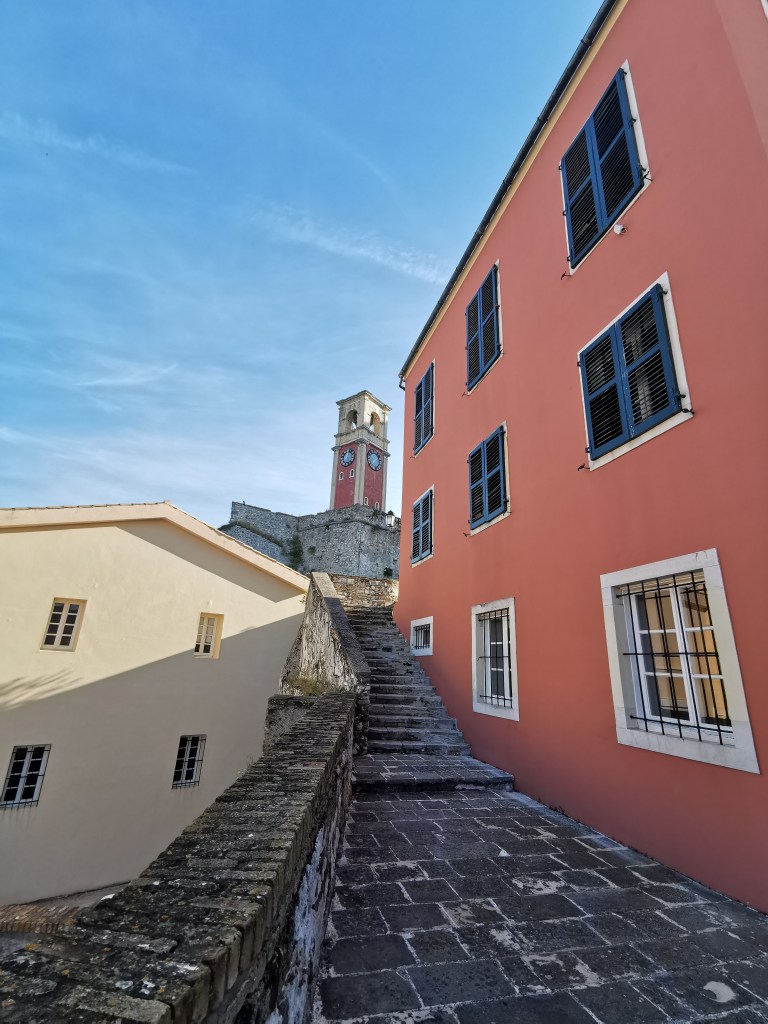
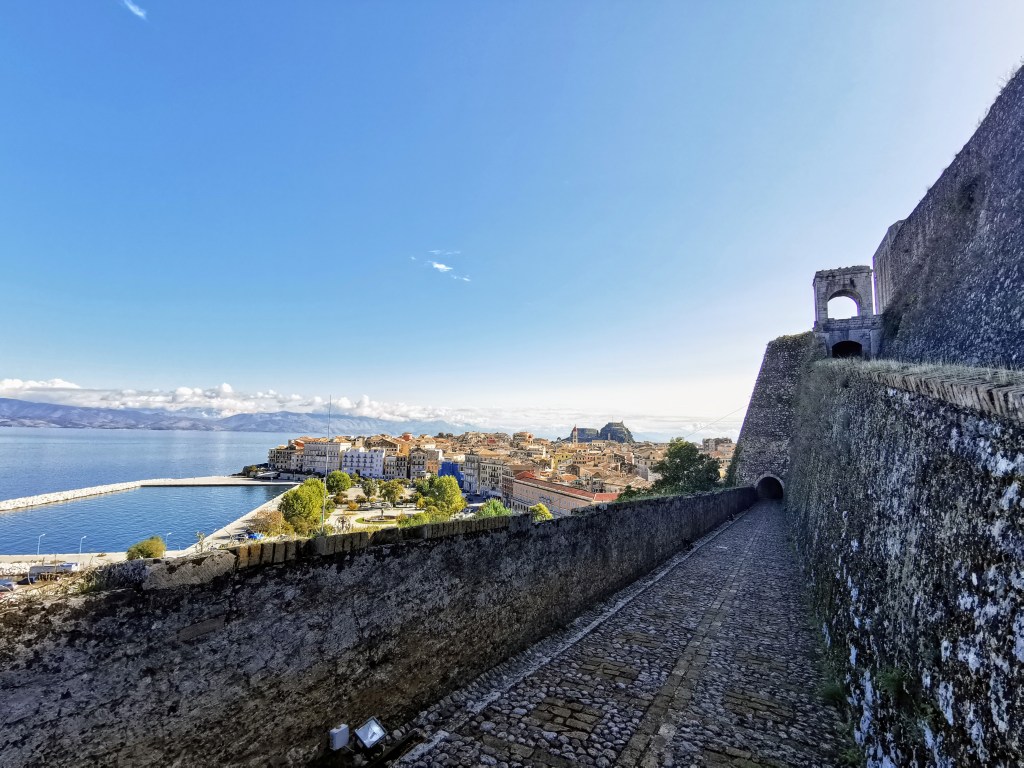
You can easily spend a few hours exploring the fort – even with the husband in tow I managed to last more than the usual 10 minutes! Steep pathways and staircases lead upwards to the lighthouse and downwards to Corfu’s sailing club. You cannot take a bad photo here – the vistas are stupendous whichever way you look.

If you’re in need of some refreshment there’s even a restaurant inside the fortress, but we plump for Cafe Azur instead, which sits atop the cliffs opposite with amazing views to accompany a nice glass of rose. I polish off a deconstructed spanakopita and feel ready to walk a few miles more.

A wide seafront promenade runs around the bay to the south of town, perfect for stretching your legs. Alternatively, the Garitsa Grove Park provides a shadier route, and you can watch the locals catching up over coffee at the many pavement cafés along the way. It’s a good half an hour’s walk to the windmill on the headland, where you can take a breather at the popular Nautilus restaurant right on the water’s edge.

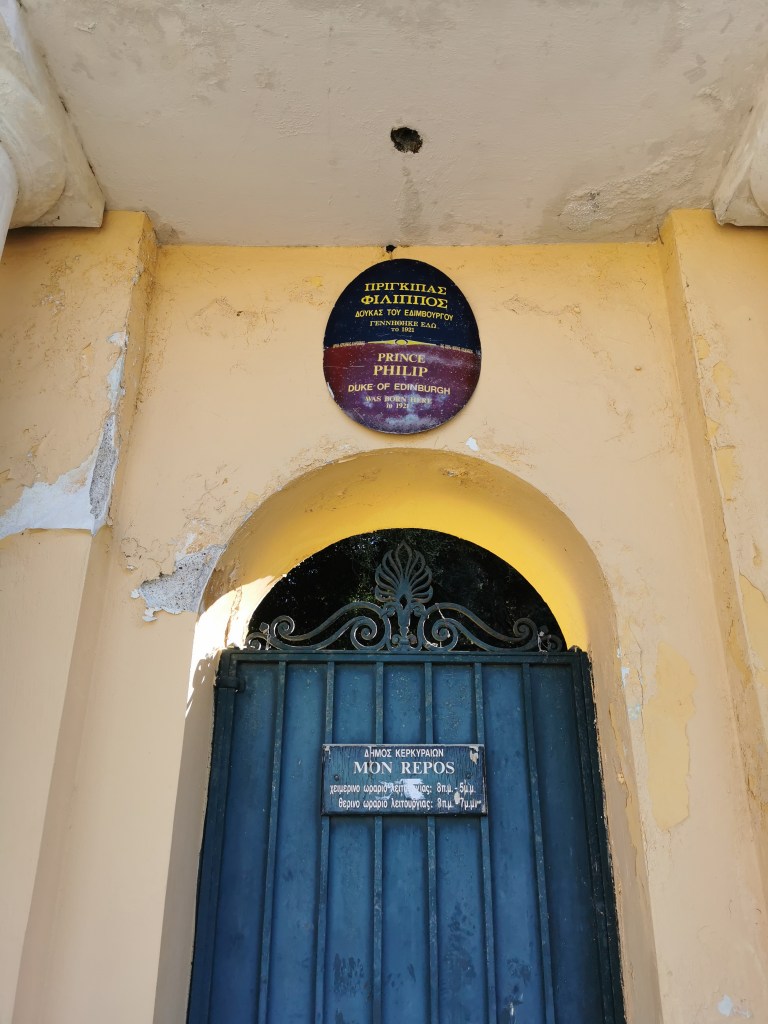
A quick plunge through the backstreets here, and you’ll arrive at the gates to Mon Repos. Built by the British in 1828, the villa became the summer residence of the Greek Royal Family. Our very own Prince Philip, Duke of Edinburgh, was born here in 1921 but left Greece as a baby when his father was forced to flee in fear of his life. The story goes that Philip was smuggled out of the country in a fruit crate. Philip never learned to speak Greek and considered himself to be Danish. He probably isn’t too keen on being called Phil the Greek. Just a hunch!

Inexplicably, the lady on the front desk asks me if I speak French? Well actually, yes I do, and I’m happy to have a bit of a chat. The husband is impressed, I’ve saved us an entry fee with my language skills. Just to clarify, this doesn’t happen often, he generally thinks I’m a bit of a div.

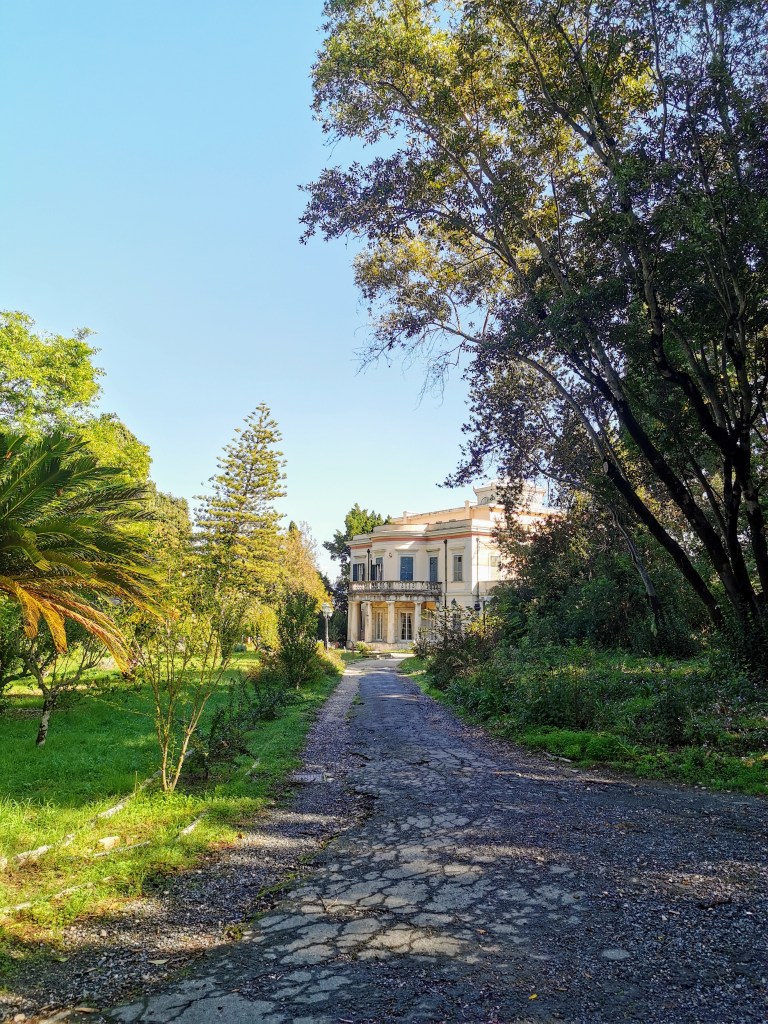
We make our way up the long driveway. Although it’s quite delapidated nowadays, this was clearly once a magical spot overlooking the sea and surrounded by woodland. The villa was the focus of a long dispute between the Greek Government and the ex-King about who owned it. Eventually the authorities had to pay out several million in compensation, but in the meantime the place had sadly fallen into disrepair.
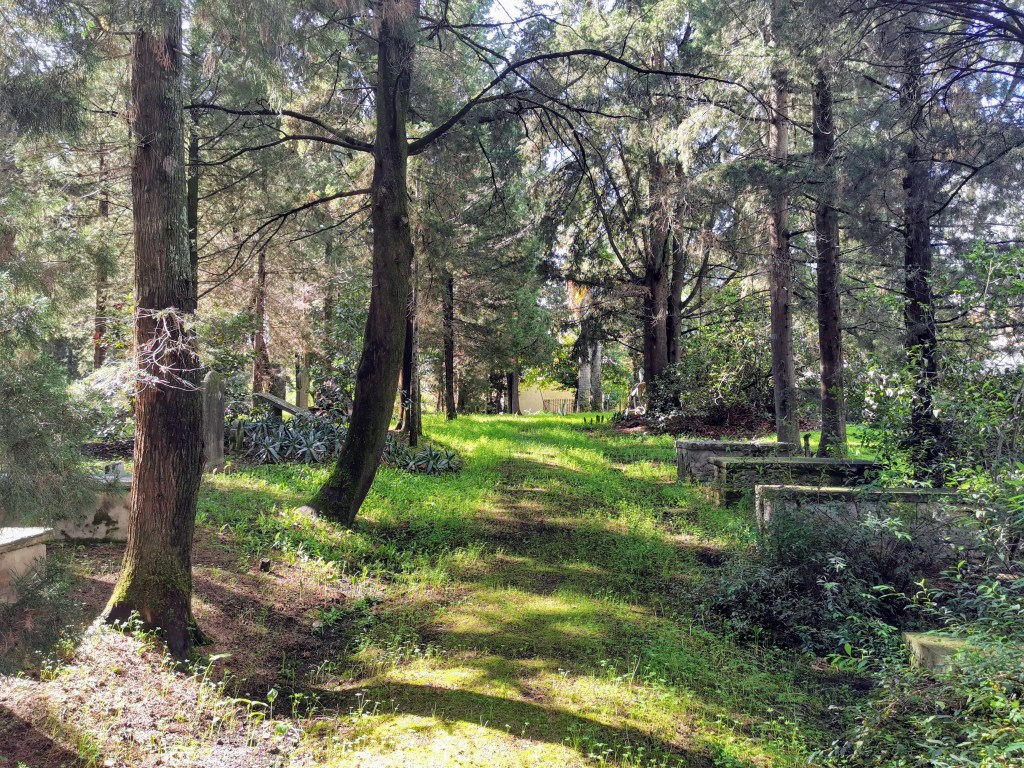
The grounds of Mon Repos are extensive, with lots to see. A pathway meanders amongst the trees, passing an old church and the ancient ruins of a temple and sanctuary. There’s just one problem. Mosquitoes – huge grey monstrous ones. We’ve been warned about them but this is where we realise that they are truly nasty beasts – ouch. We decide to abandon our tour and head back to the road, but not before being well and truly feasted upon. The rest of our walk will be an itchy one!

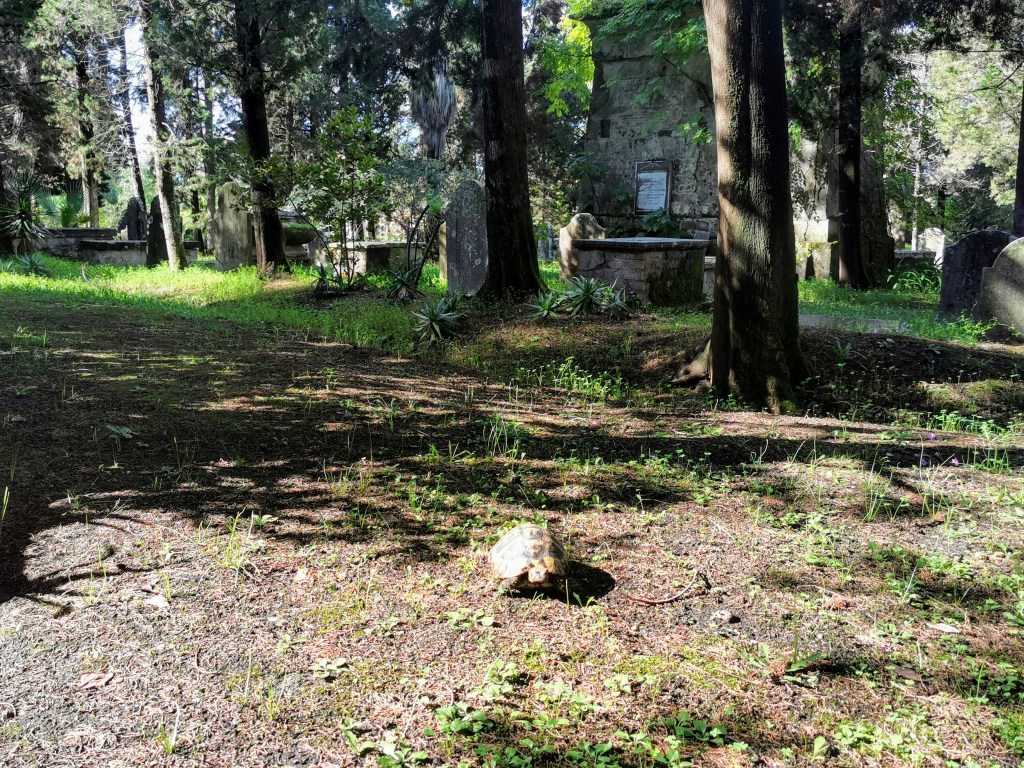
On the south western side of town lies my next must-see destination. The British cemetery is a peaceful, shady spot for a contemplative saunter. No mosquitoes here, thank goodness. As we arrive and open the gate, a bell wakes the ancient caretaker who is snoozing in the sunshine outside his cottage. He bids us welcome and waves us on.

Opened in 1855, the cemetery contains casualties from both World Wars, but also the graves of civilian settlers on the island, with over 500 monuments in total spread around what feels like a secret garden. Just watch where you’re walking, as there are resident tortoises hanging out amongst the tombstones, munching on the grass. No lawnmowers required here.

Curving round to the western side of town, we arrive at my final recommendation, the New Venetian Fortress. So called because it’s slightly less old than the Old Venetian Fortress, of course! This particular fortification was built in the 16th century, practically yesterday in Corfiot terms.

The wily Venetians took their defenses seriously – once both fortresses were complete they elected a separate governor for each one, and the two men were banned from any form of communication with each other to prevent them plotting against the Republic.

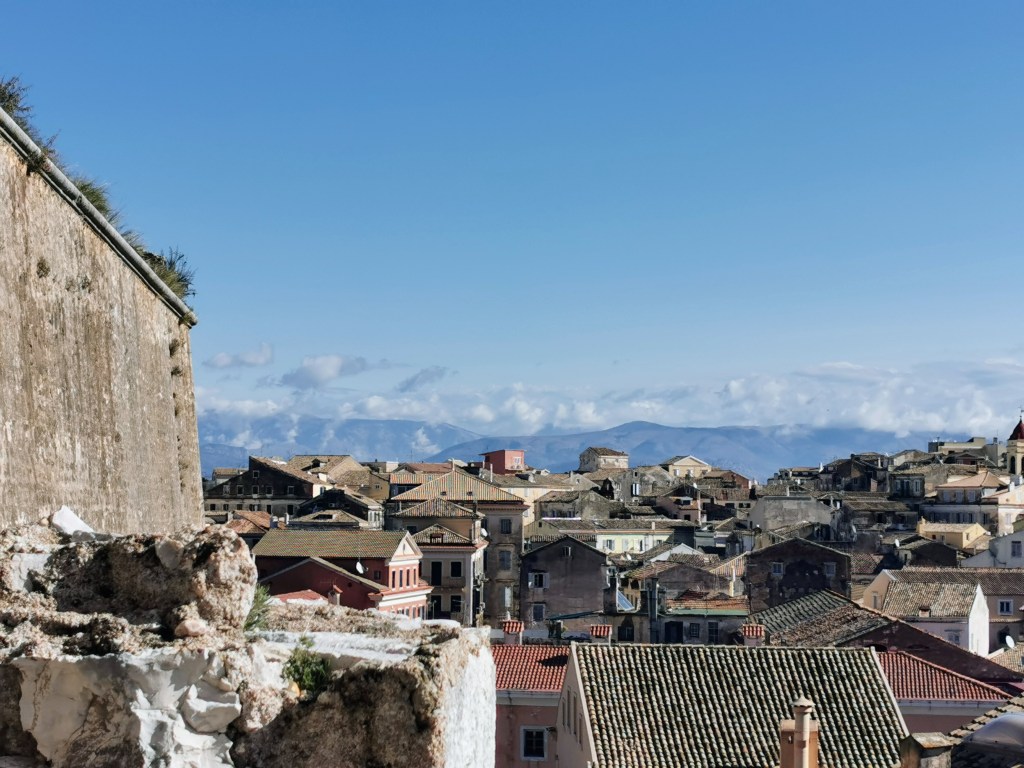
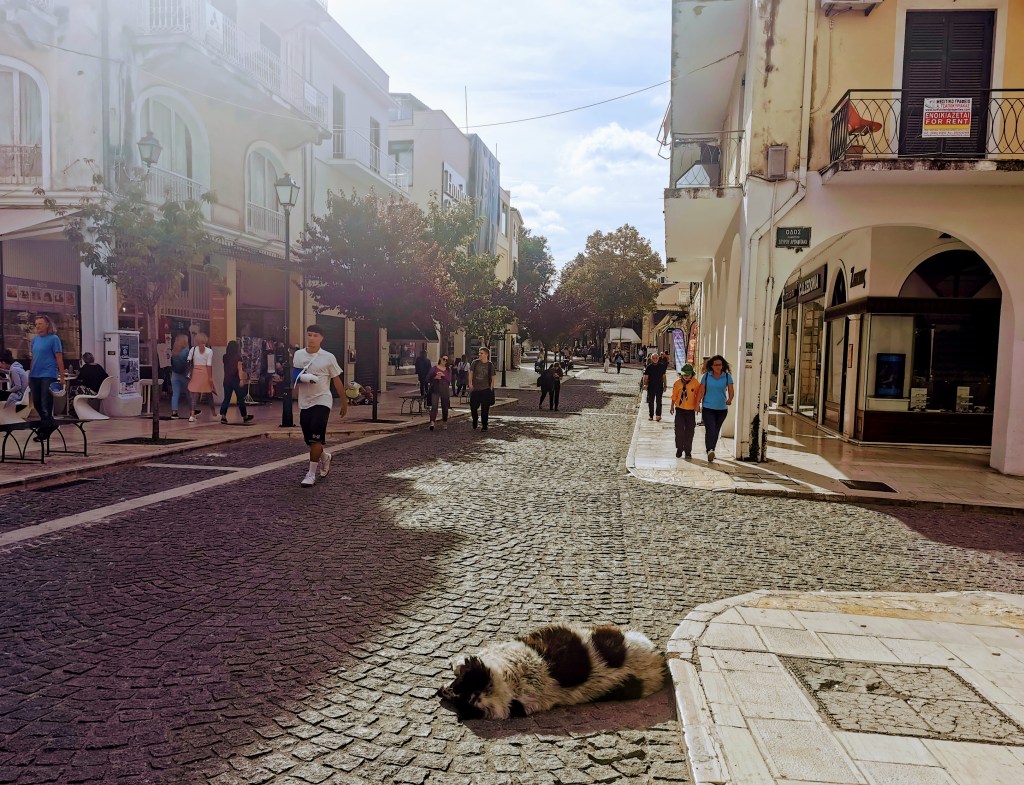
Once again, it’s all about the views, over the town and out to sea. The New Fortress towers 55 metres above the port and the outlook is fantastic from all viewpoints. But the husband has had all the history he can stomach for one trip now, it’s back to town for some shopping and people watching, or even dog watching. We particularly liked the furry fellow below, who took up his favourite sunbathing spot every day and refused to move an inch.

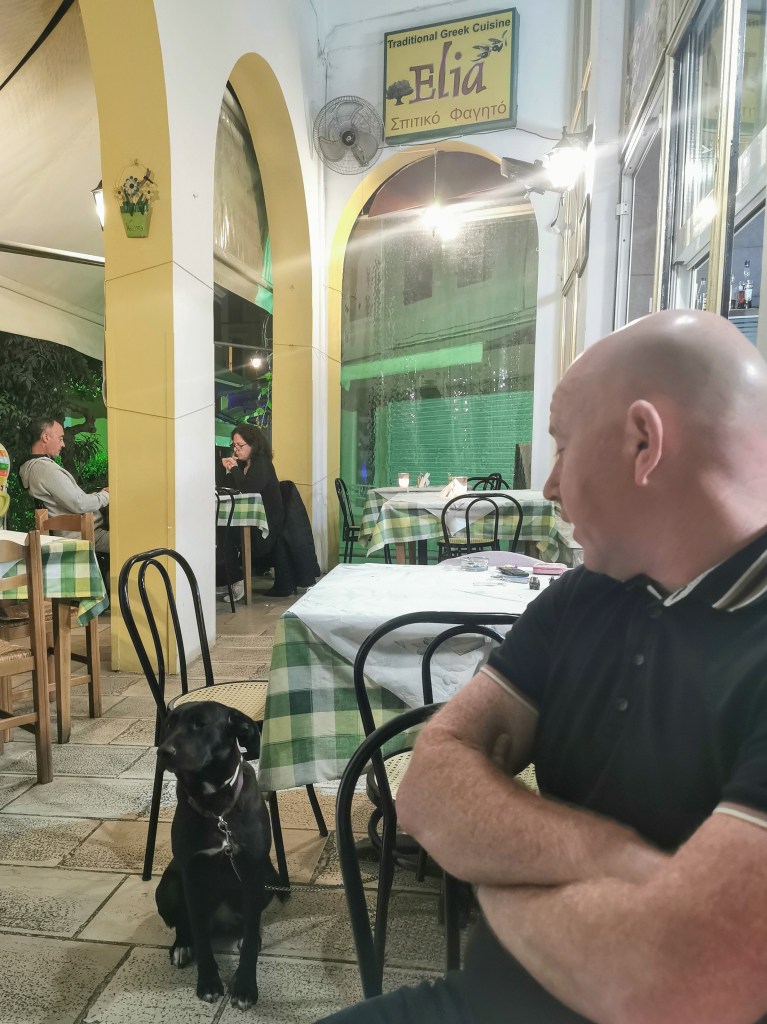
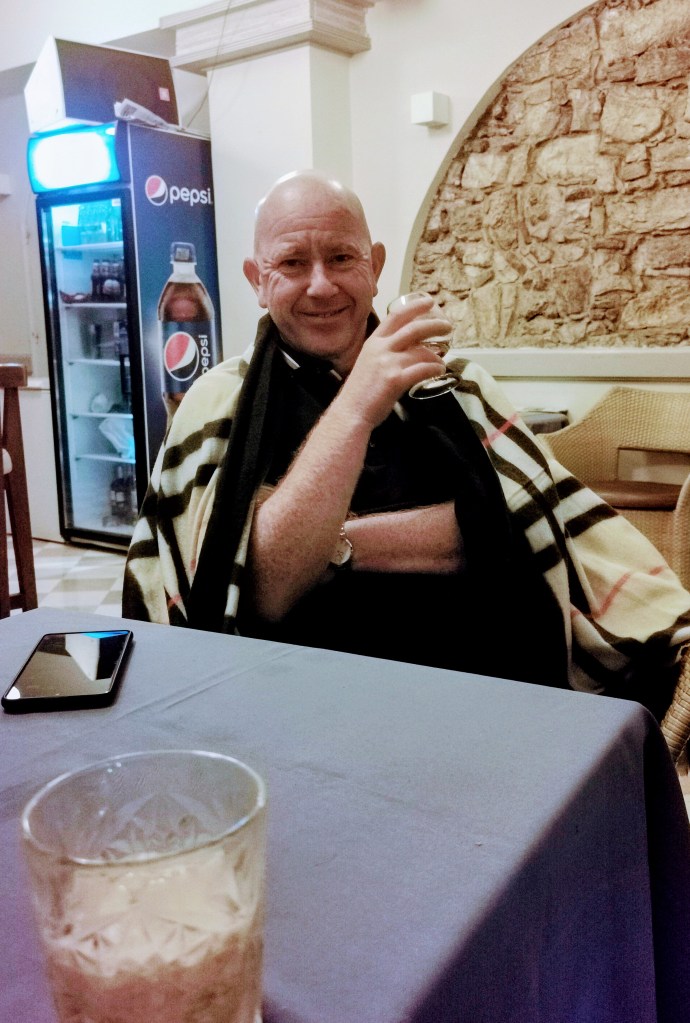
After a day spent wandering, there’s the reward of another evening eating and drinking in the myriad bars and tavernas of the Old Town. Take your pick! You’re guaranteed service with a smile. At Elia Taverna, hidden away in a quiet courtyard, we meet the whole family including their pet pooch. Mum is cooking, Son is waiting tables, Dad is supervising, obviously. Stopping for a nightcap at Bar Cofinetta, the owner notices the husband shivering and drapes him in her pashmina. These people sure know how to make you feel welcome.

A few days of sunshine, glorious views, tasty food and most of all the friendliness of the Corfiot people and you may feel tempted, like the Durrells, to move to a villa overlooking olive groves and the distant hills of Albania. Faced with returning to a British Winter of even more than the usual discontent, we seriously consider it. Yamas!

Come walk with me in Wallingford

Heard of Wallingford? Probably not, but in the Domesday Book of 1085 it was named as one of only 18 towns in the country with more than 2,000 inhabitants. Wallingford was BIG in the middle ages. Founded in the 9th century at the lowest point of the Thames, a natural fording place, it still has the same medieval layout.

‘I’m going to see a castle built by William the Conqueror’ , I announce. ‘Want to come?’ The husband’s face glazes over – that’s a no then. Just 20 miles from home, this market town sits between Oxford and Reading. It’s a short drive along country roads swirling with falling leaves. The whole world is orange right now, which brightens up the short, dark Autumn days.

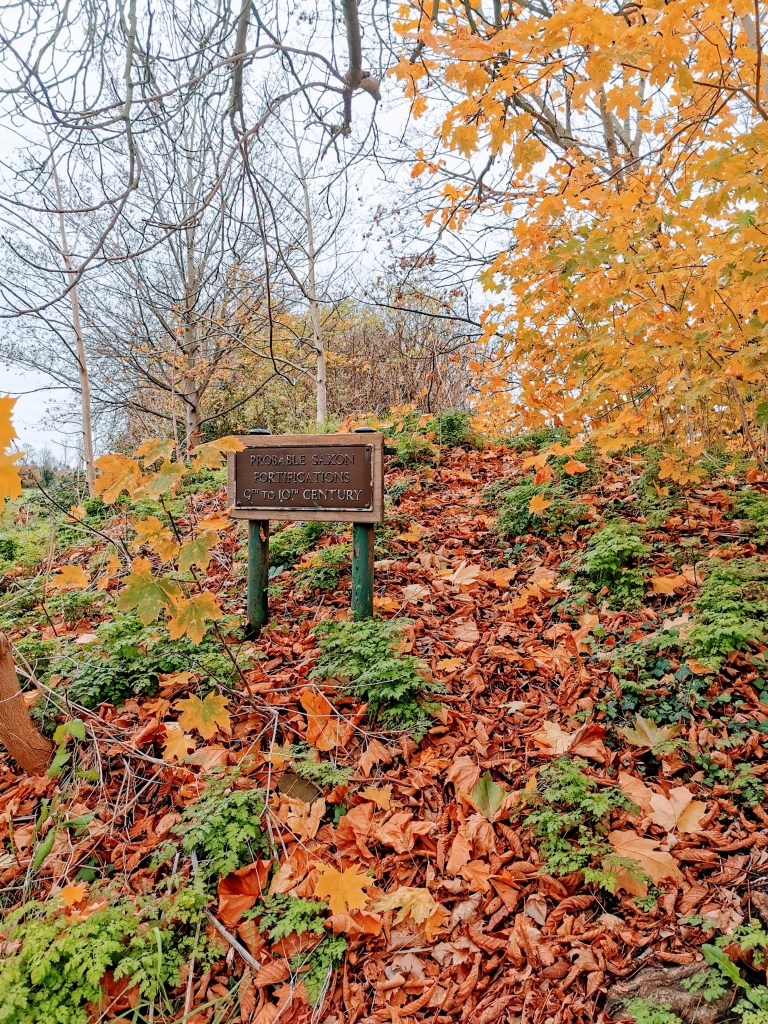
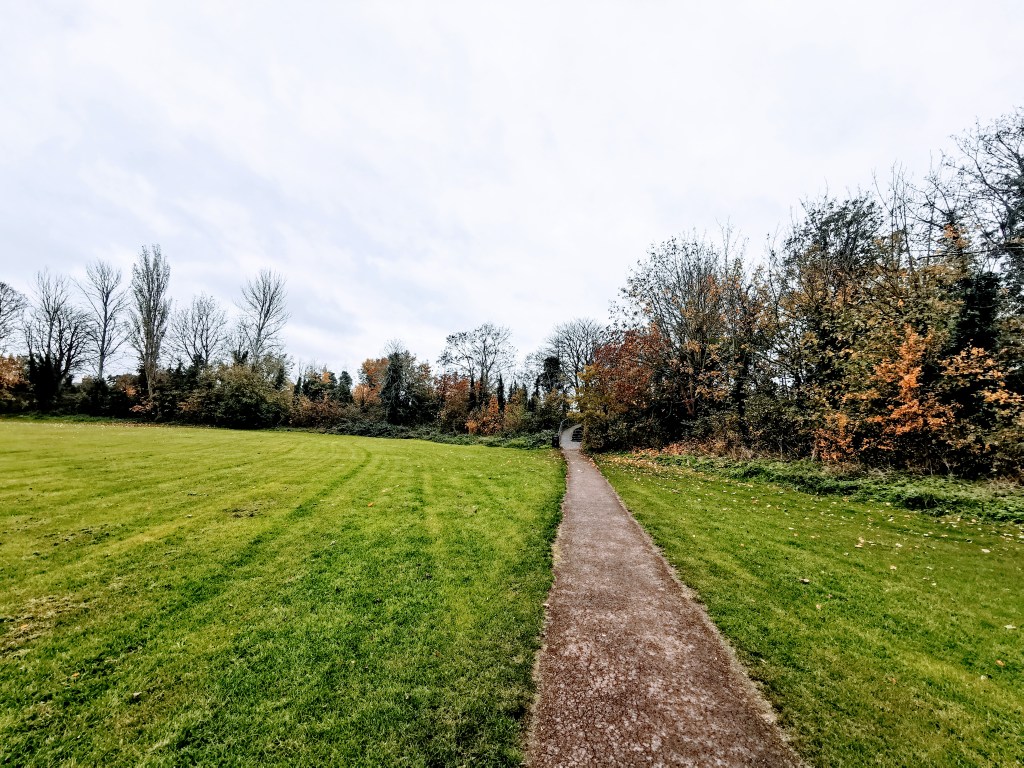
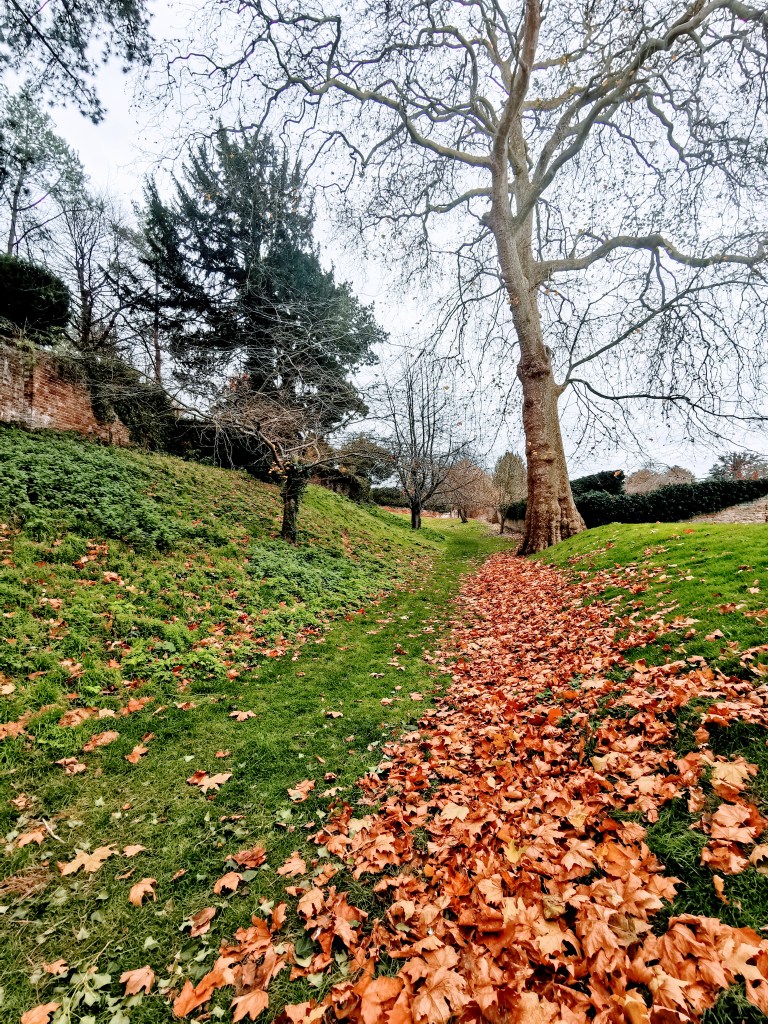
With a population of around 12,000, Wallingford is clearly not as significant as it was in the 11th century, and since 1141 it does have a bridge, so no more wading across the Thames is necessary. Good news, as it looks quite deep to me… After parking the car, I start by walking along the old Saxon earthworks that once fortified the town on three sides. The town once filled this whole area, but now there are two large parks, the Kine Croft and the Bull Croft.

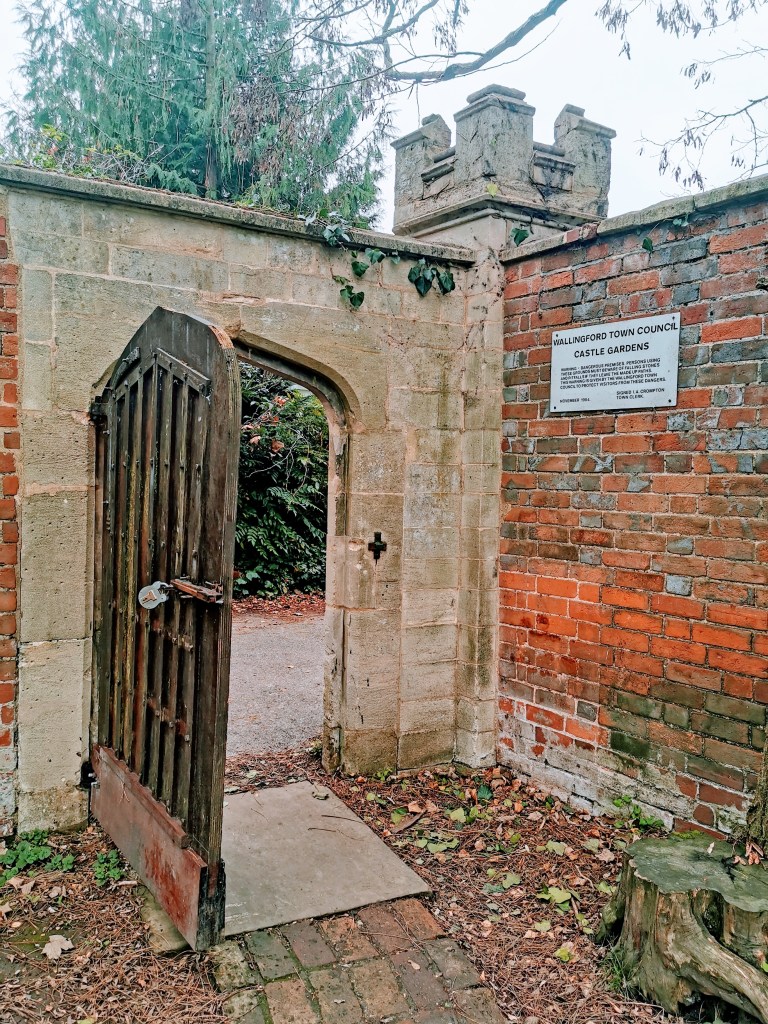
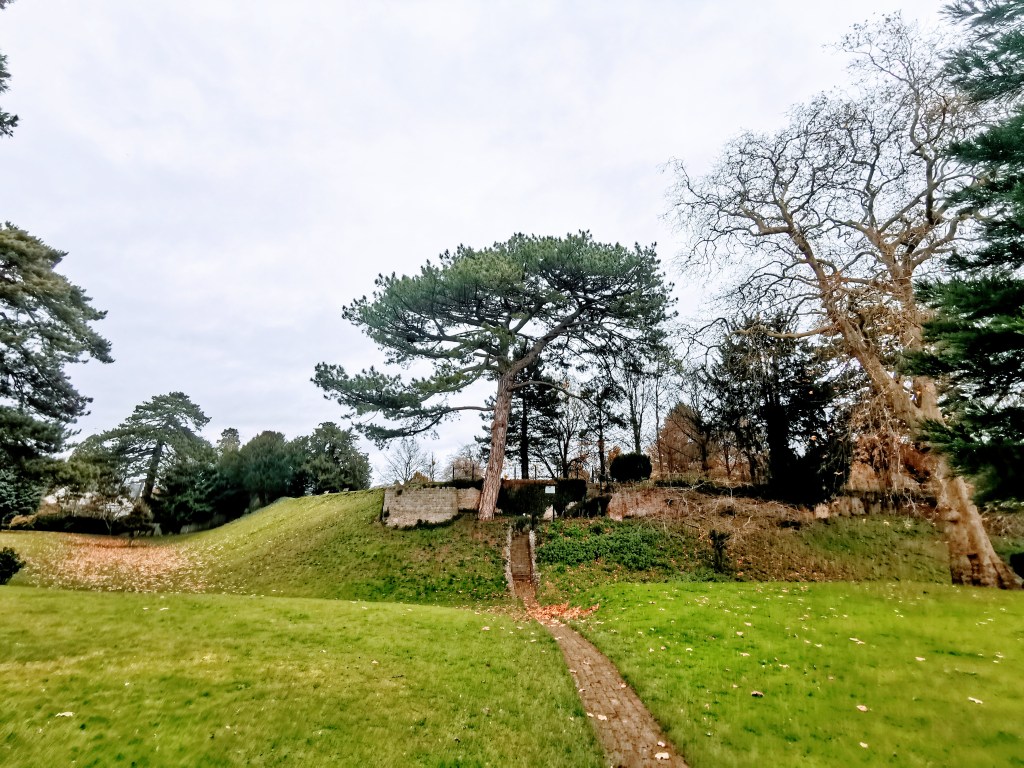
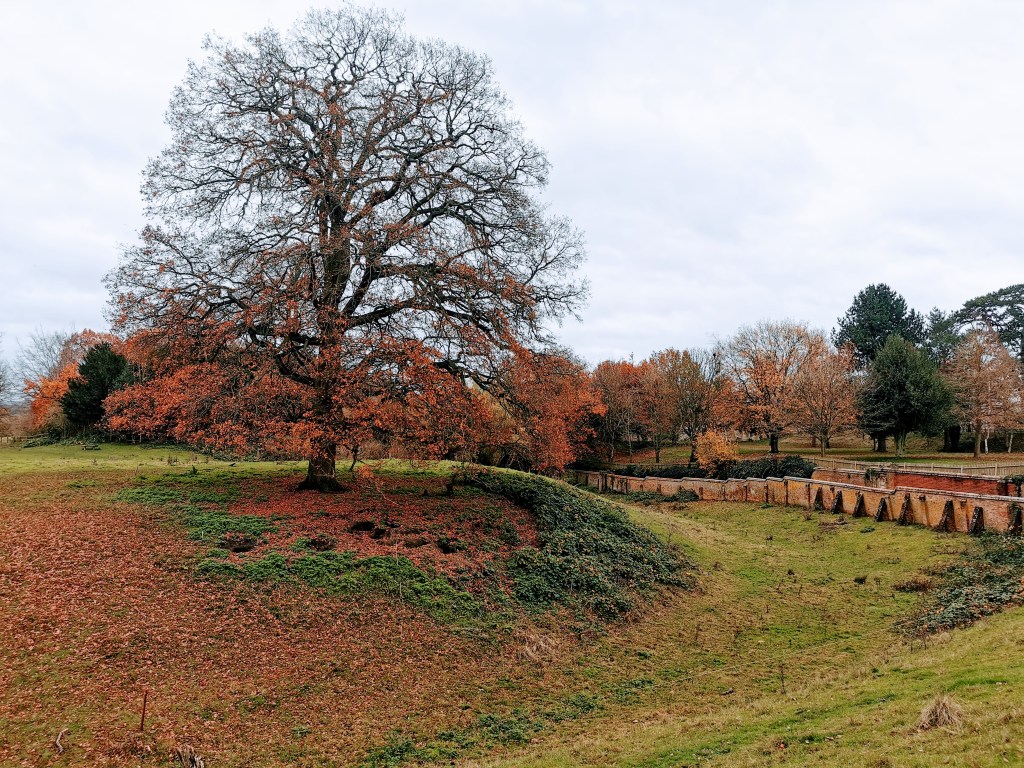
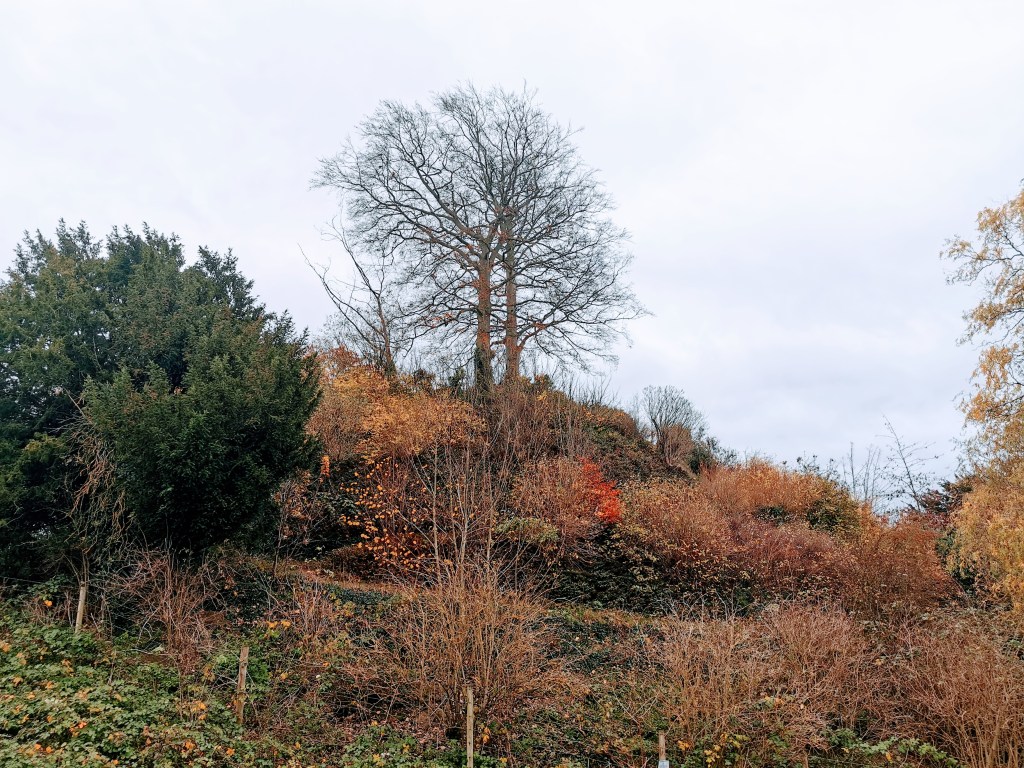
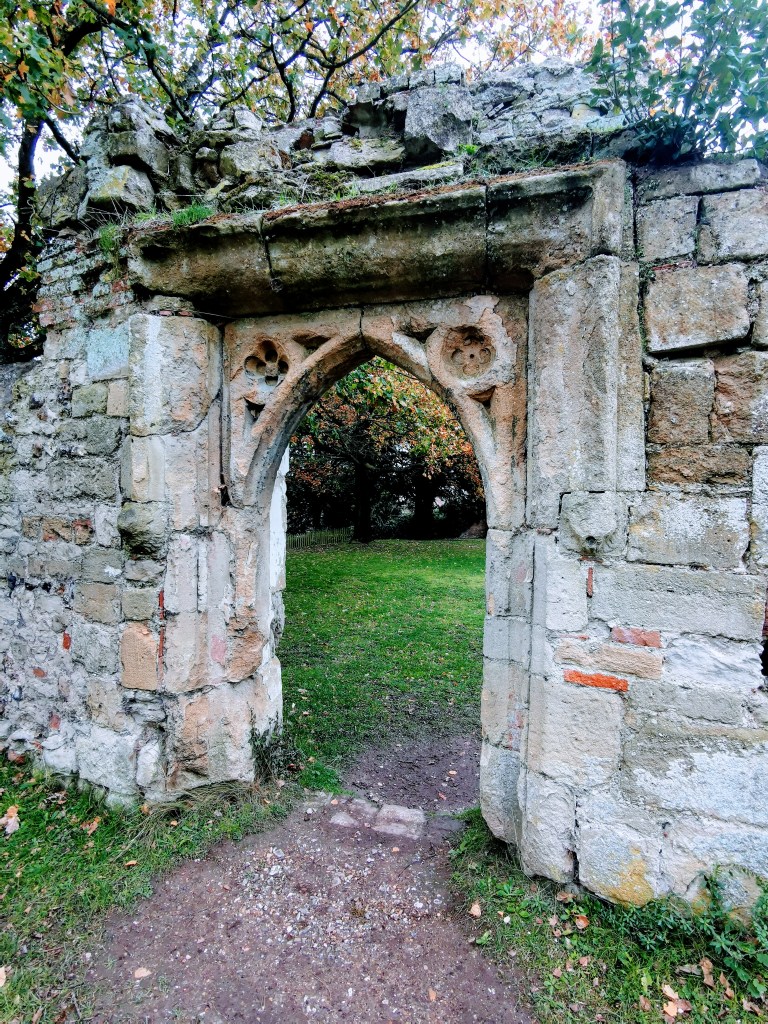
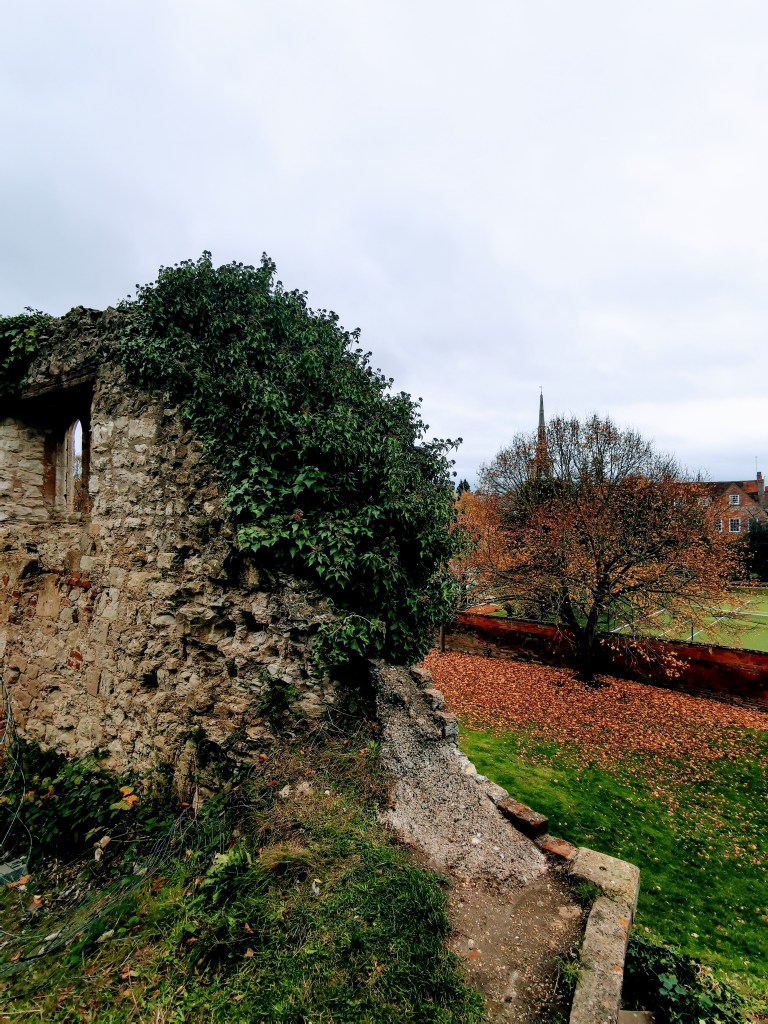
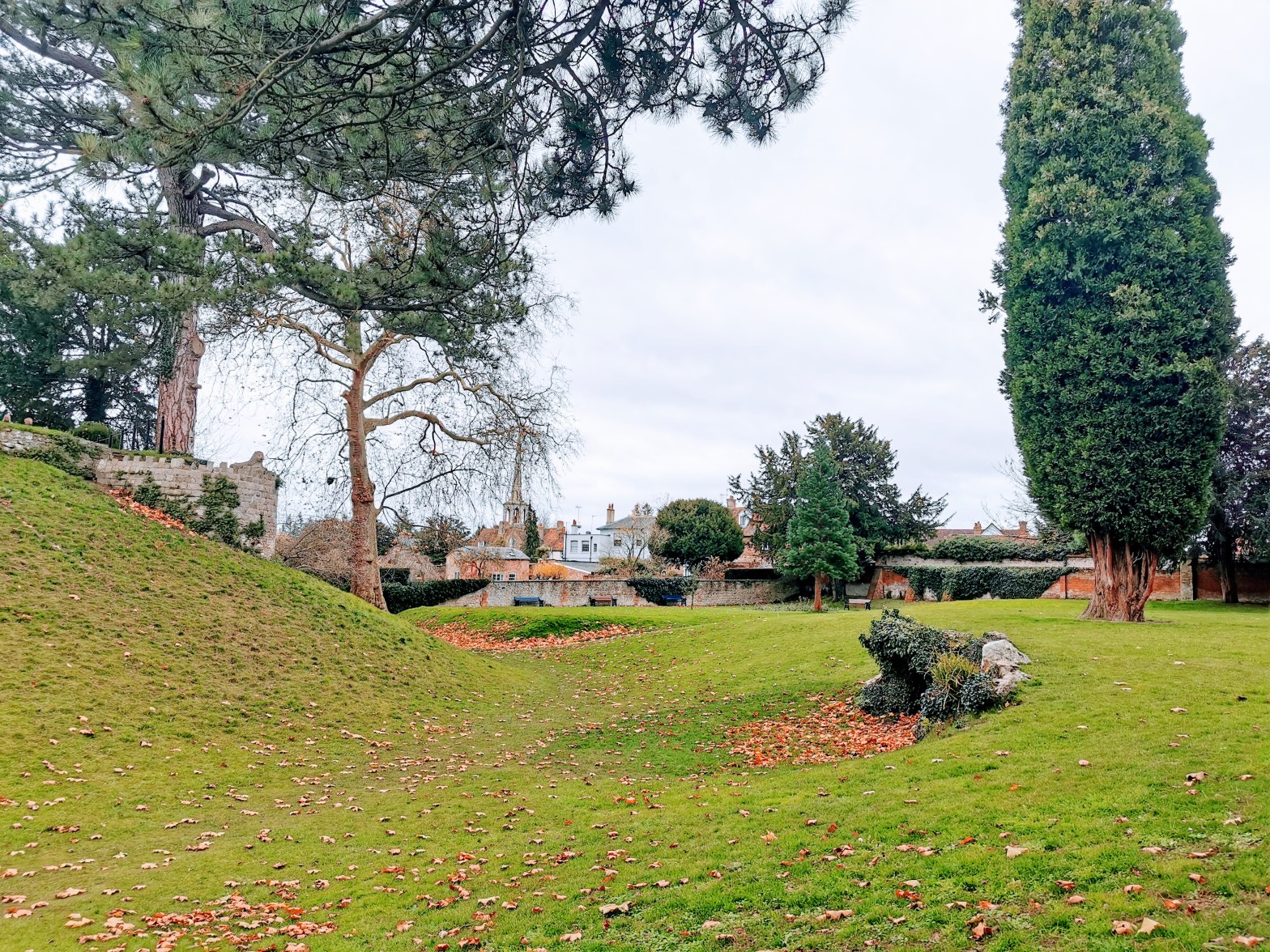
Next, I head for the Castle Gardens. This walled enclosure surrounds the old moat, empty now except on the very wettest days. On the other side of the channel are the earthworks where William’s castle once stood. Only a few remnants remain now of the structure that was begun in 1067. I’m quite relieved I didn’t bring the husband now- he would probably be quite scathing, ‘Not much of a castle!’.
Fresh from the Battle of Hastings, the Conqueror was made welcome in the important town of Wallingford, and he rewarded the citizens with a mighty fortress and an extra hour before curfew. The lucky locals were allowed to stay out until 9pm rather than the usual 8pm. Woohoo! Restrictions are nothing new, you see.

Today the Castle Meadows are peaceful, but in the past they were anything but. Wallingford Castle was a royal residence for almost 600 years and it saw plenty of drama during that time. In the 12th century a fierce civil war, known as The Anarchy, broke out over whether the throne should go to the King’s daughter, Matilda, or her cousin Stephen.

Wallingford was loyal to Matilda, even though it wasn’t common for a woman to inherit in those days. I’m liking this place already – very forward thinking. Unfortunately, Matilda didn’t become Queen, but thanks to the support and refuge provided by the town, the Treaty of Wallingford ensured that her son would become King after Stephen. Oh well, it’s better than nothing!

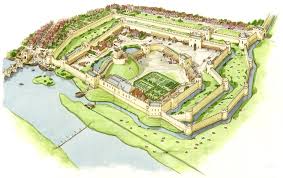
In the 13th century, dastardly old King John used Wallingford Castle in his battle against the Barons prior to the Magna Carta. Thanks to him, it became even more fearsome as a fortification, one of the largest and most impressive in England. Hard to believe now, but it once looked like this…
The Castle was next involved in uproar in the 14th century, when Edward II contraversially gave it to his closest friend, and perhaps lover, Piers Galveston. Galveston and the King held a tournament at the castle in 1307, where Piers made the mistake of winning against members of the nobility. They never forgave him for his arrogance, and this led to his murder in 1312.

Moving on to the 15th century, the Tudor dynasty began right here at Wallingford Castle when a wily Welshman named Owen Tudor managed to seduce the widow of Henry V. Their grandson would go on to take the throne, but ironically their great-grandson would prove the downfall of Wallingford Castle. Henry VIII didn’t like the place, and to add insult to injury he started to take away stone from the buildings to extend his home at Windsor, just along the Thames.

The Castle finally met its end in the 17th century, when the town was faithful to the Royalist cause of Charles I, who was holed up in Oxford. Wallingford was the last stronghold to surrender to the Roundheads – seriously, these people are amazing! Oliver Cromwell decided that Wallingford was too much of a risk, and ordered the total demolition of the fortress.
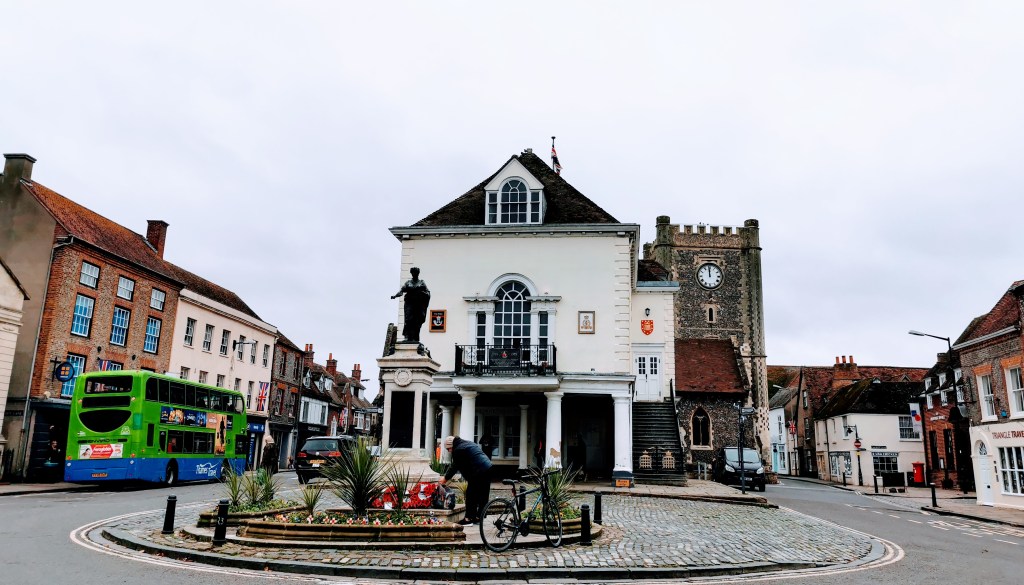
Since the demise of the castle, the most illustrious residents of the town have been Agatha Christie and Detective Chief Inspector Barnaby in Midsomer Murders (Causton is actually Wallingford). On a grey day in lockdown you can certainly imagine dark deeds taking place here (there are a few alleys to skulk along) but I’m sure it looks quite different in the sunshine.

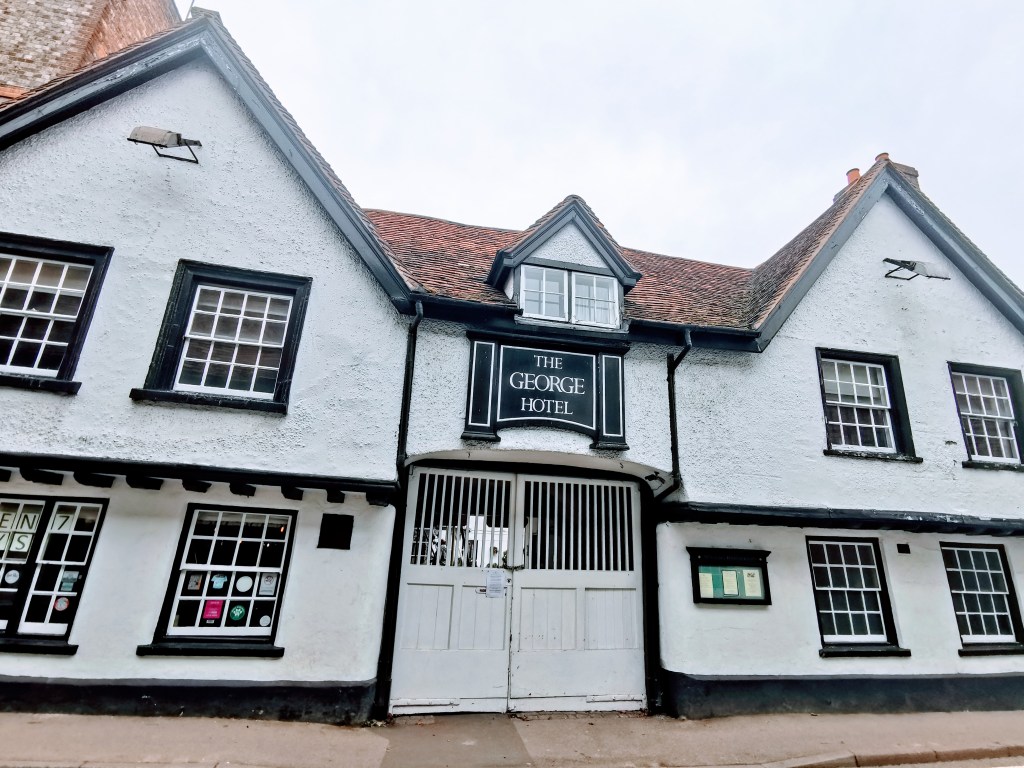
The town itself is made up of just a few narrow streets allowing one way traffic only. There were once 14 churches here, of which just three remain. It does still have a large number of old pubs and coaching inns, the oldest of which, The George, opened in 1517. More evidence of the good taste of the Wallingfordians.

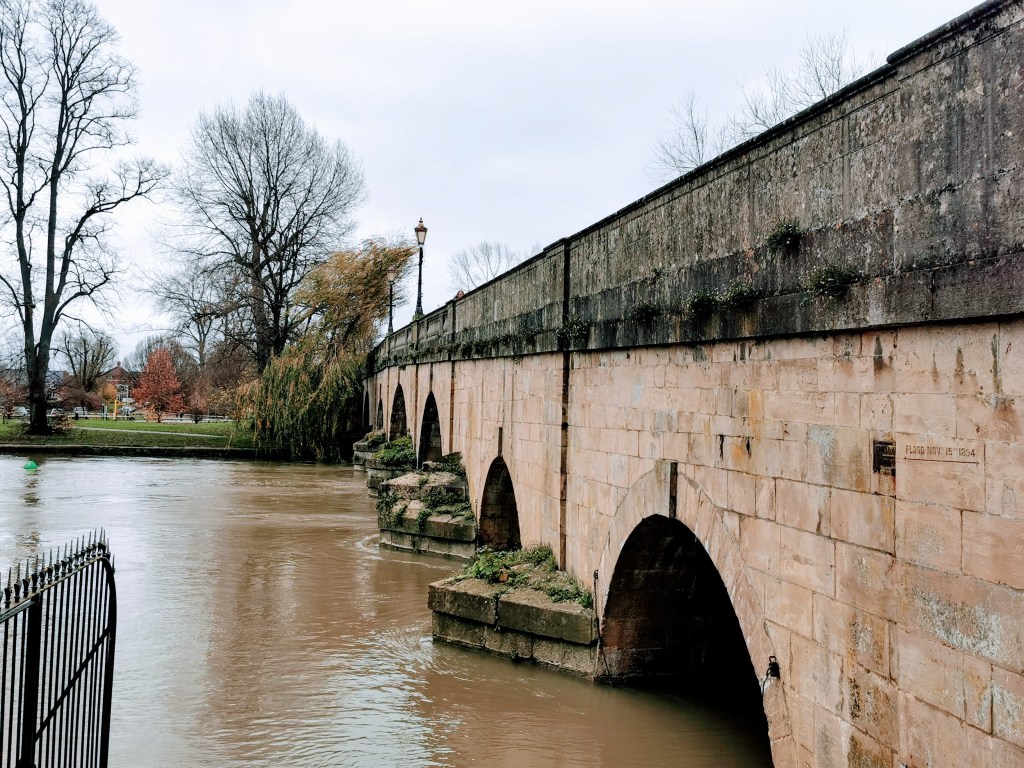
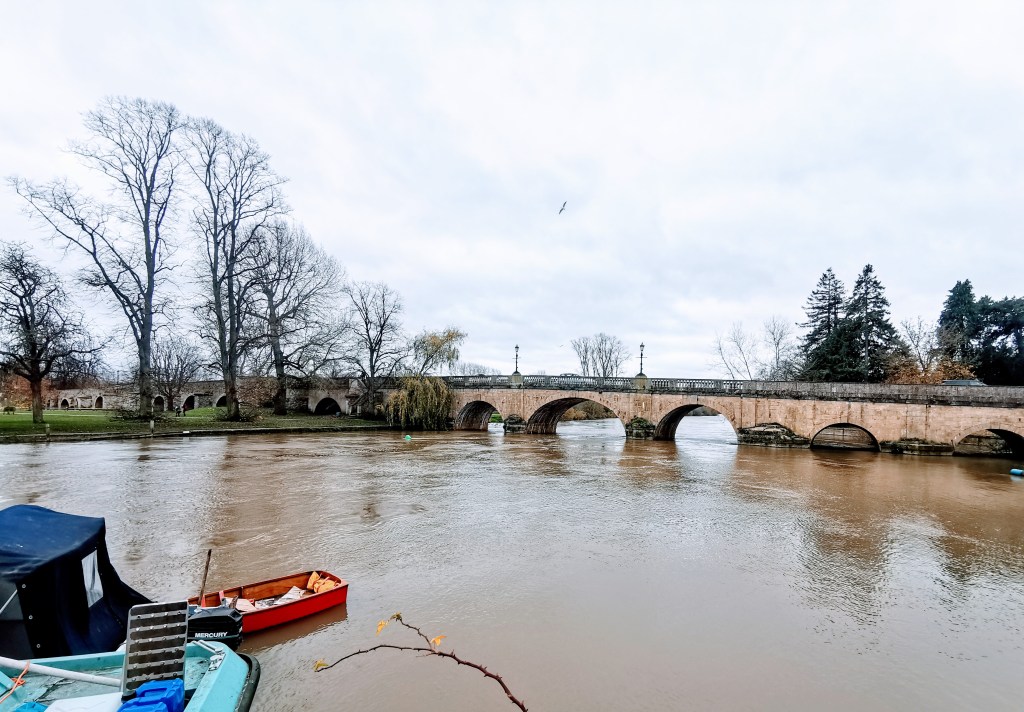
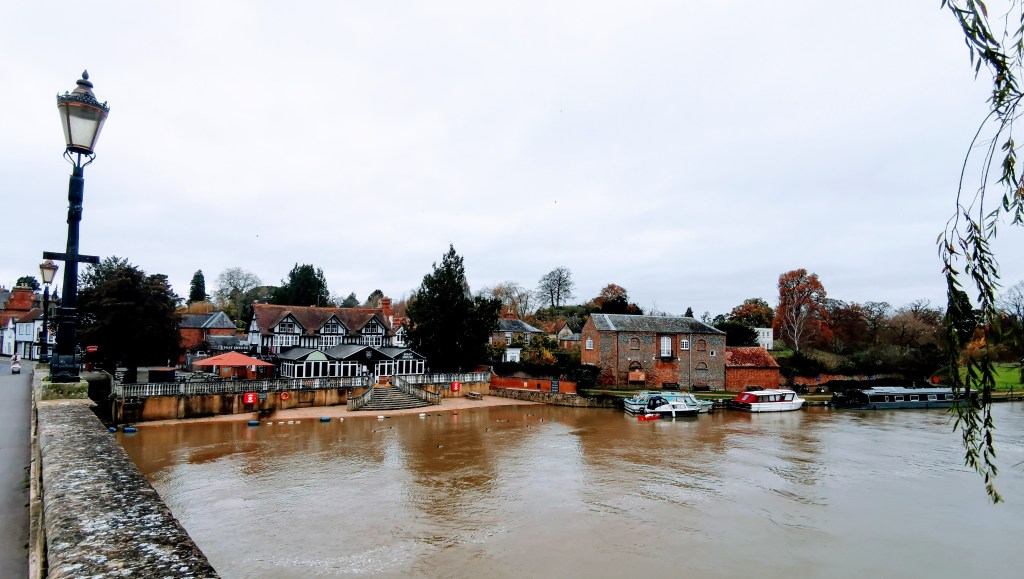
The last part of my walk takes me along the river on the Thames Path, my favourite route, although it’s not at its most beautiful today, a brown, muddy-looking torrent. Another successful venture into the past to keep me entertained during lockdown. Where next?

Corfu – as good as Gerald said it was

We’re heading to Greece, hurrah! This is a sneaky extra trip, just because. It’s been a rubbish year and we’re desperate for some Autumn sunshine and cheer. And why Corfu? Haven’t you read Gerald Durrell’s books, about his island childhood? My Family & Other Animals is such a great title, especially if you were brought up in a large, mad tribe like I was. If not, then maybe you’ve watched the BBC series based on his work? Either way, I defy you not to be seduced, and feel like jumping on a plane right this minute.

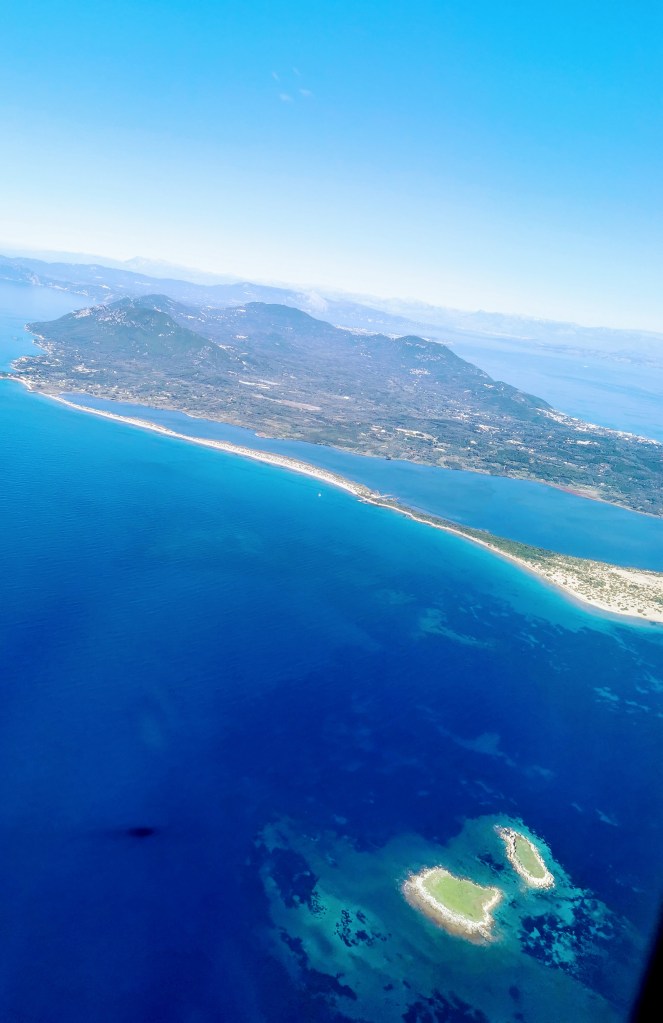
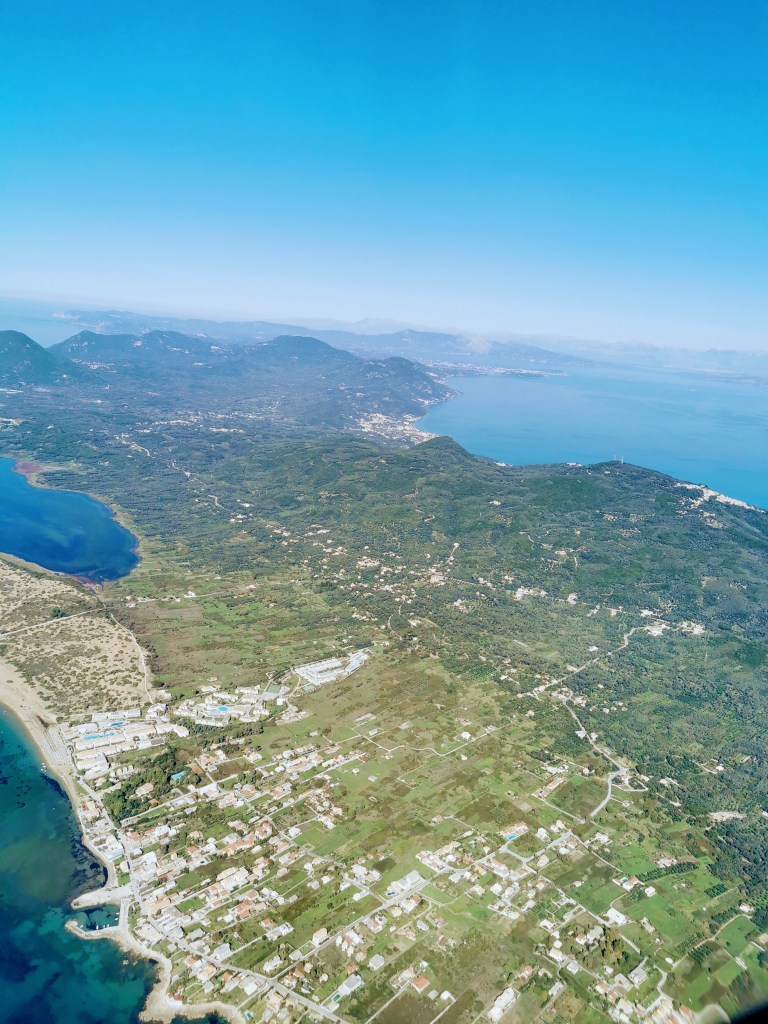
The Durrell family made a spontaneous decision to move to Corfu in August 1934, due to financial difficulties and the appalling British weather. Yes, in August! That made me smile too. Arriving in April 1935, they lived on the island for four years. It’s described in Gerald’s books as an earthly paradise, with endless blue skies, welcoming people and an endless variety of fascinating flora and fauna. The view from my window seat already has me convinced.

The tiny airport is packed. A flight has arrived before us from Doncaster, just a day ahead of a South Yorkshire travel ban. A young couple ahead of us have their masks around their necks, well, I think they’re young but it’s hard to tell through the botox. They are showing off lots of flesh too. Why do people think that’s attractive? A moment later, they are rummaging frantically in their bags – oh dear, a passport is missing. Now I can use my favourite German word – schadenfroh – I’m definitely feeling pleased about the misfortune of others in this case!

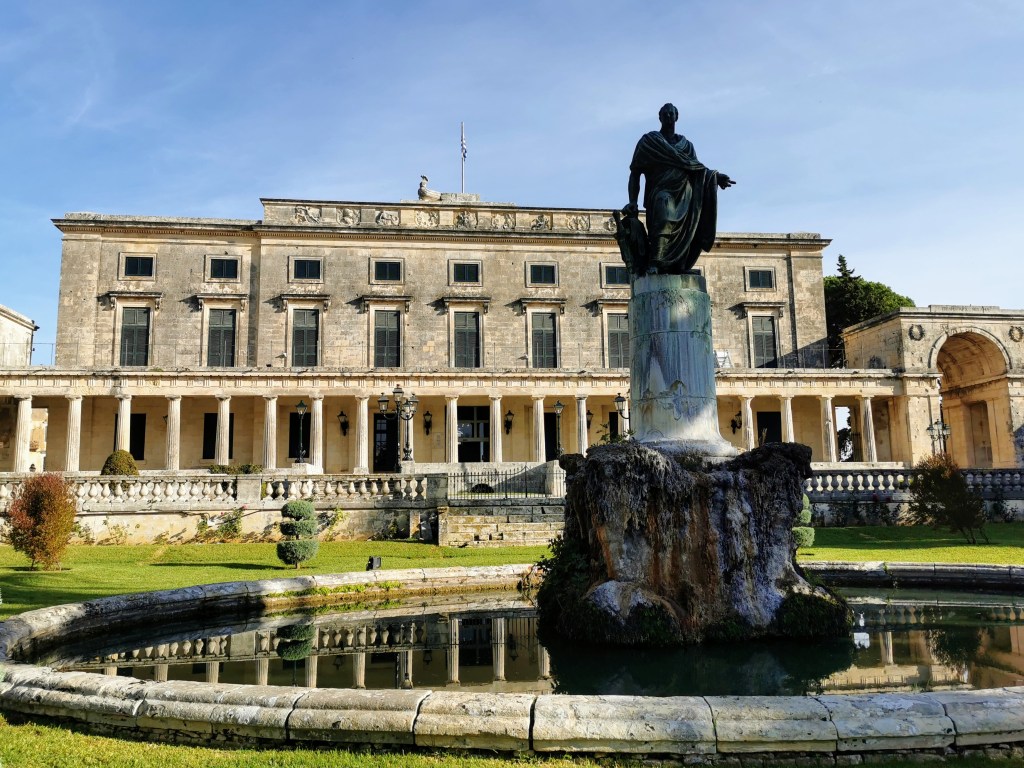
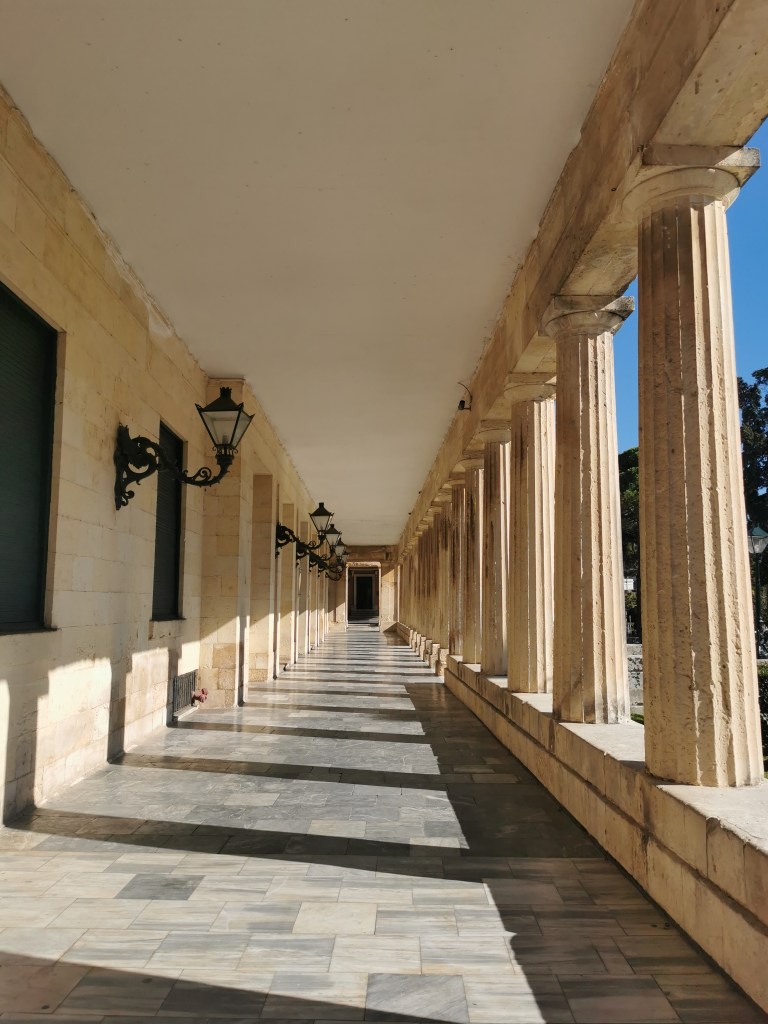
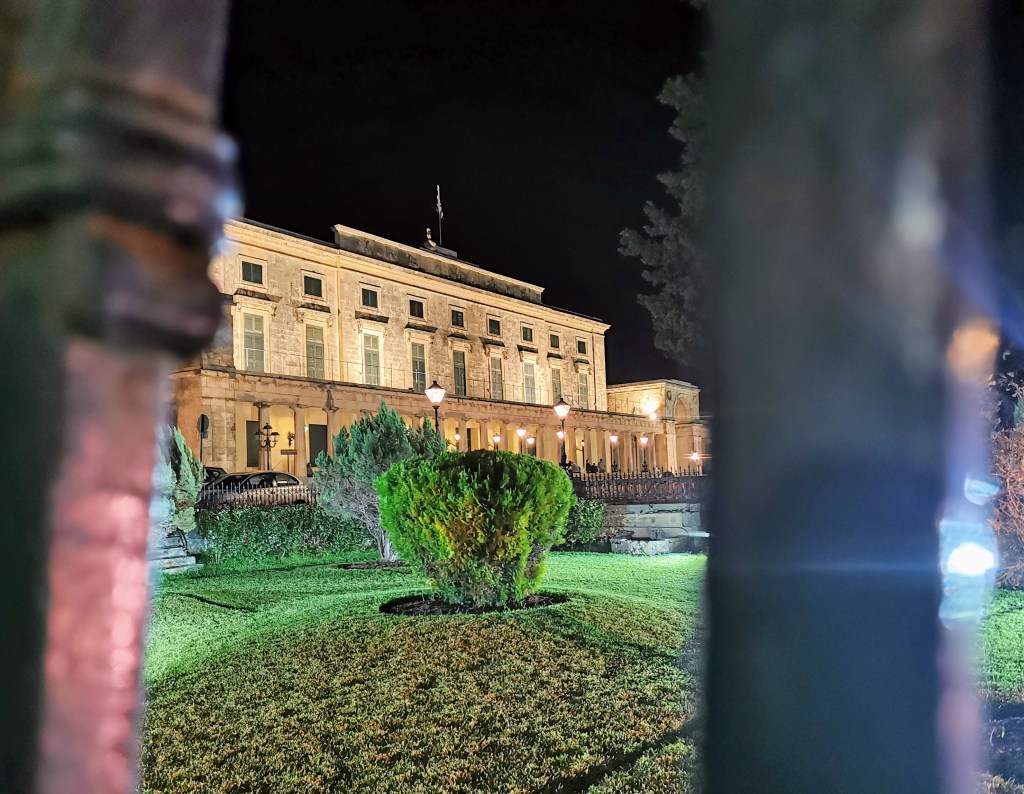
Having dodged the random covid testing (Phew! The husband would not be happy about having swabs shoved up his nose) we’re soon in a taxi for the 10 minute ride into the main square of Corfu Town, the Spianada. We pull up outside the beautiful old Palace of the British High Commissioner, now the Museum of Asian Art. We’ve rented an apartment near here and our landlady is waiting for us outside Aubergine Cafe with a wide smile, ready to give us a quick tour and hand over the key.

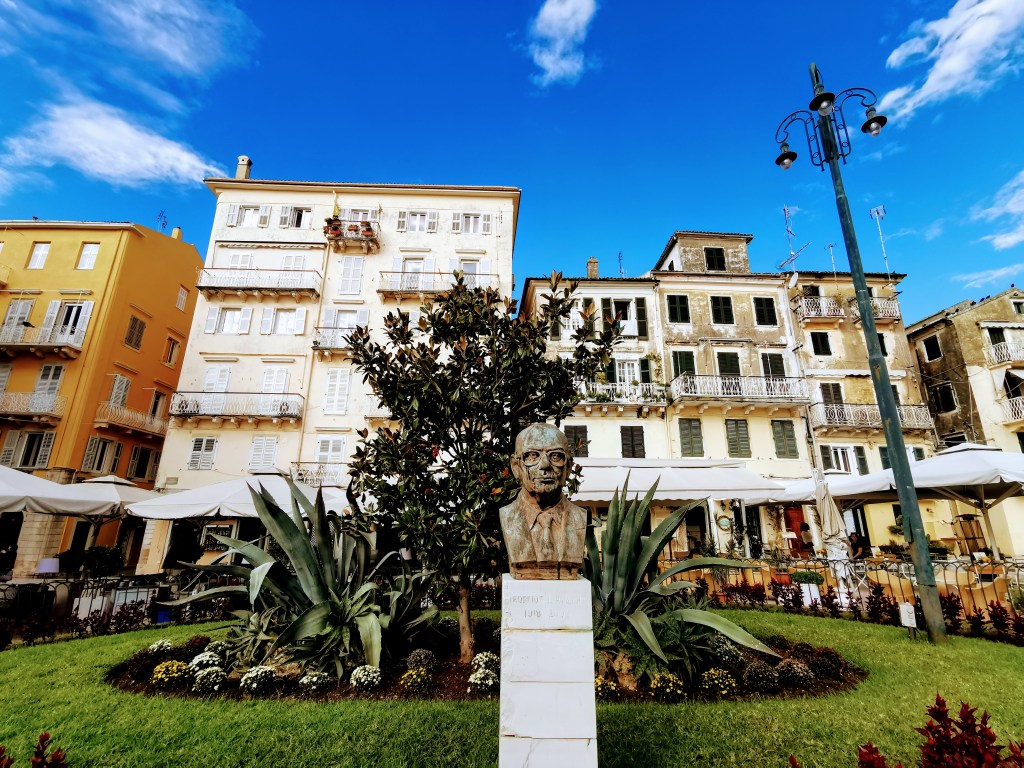
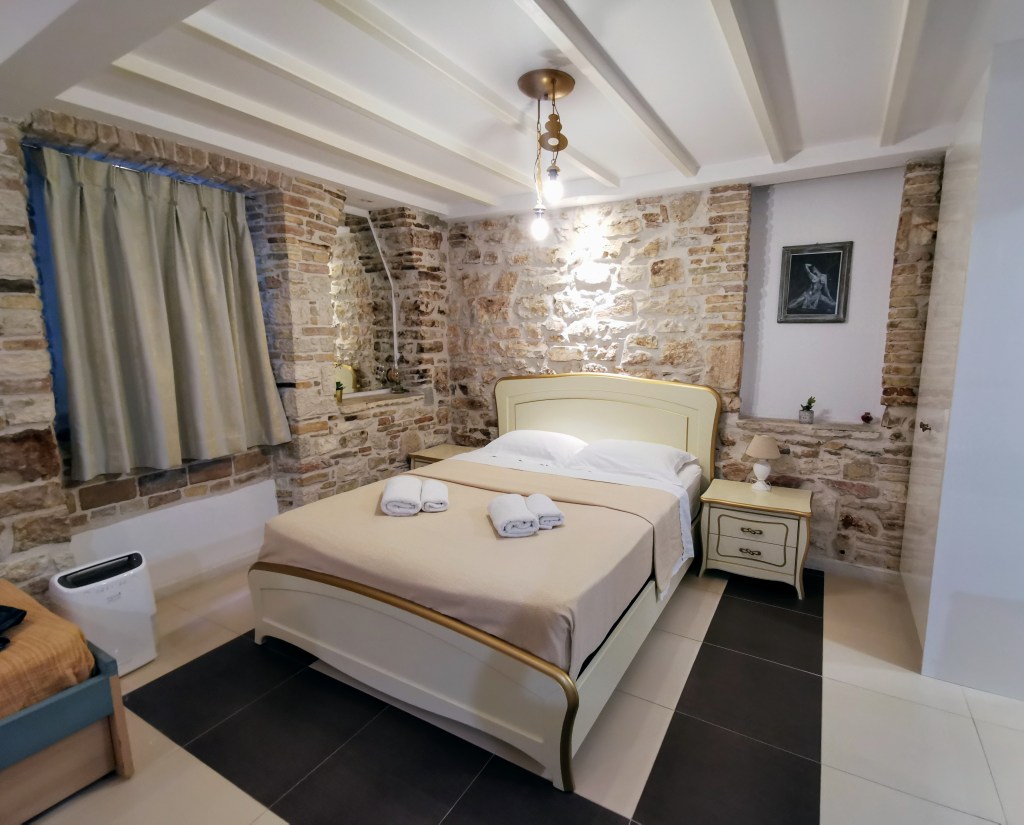
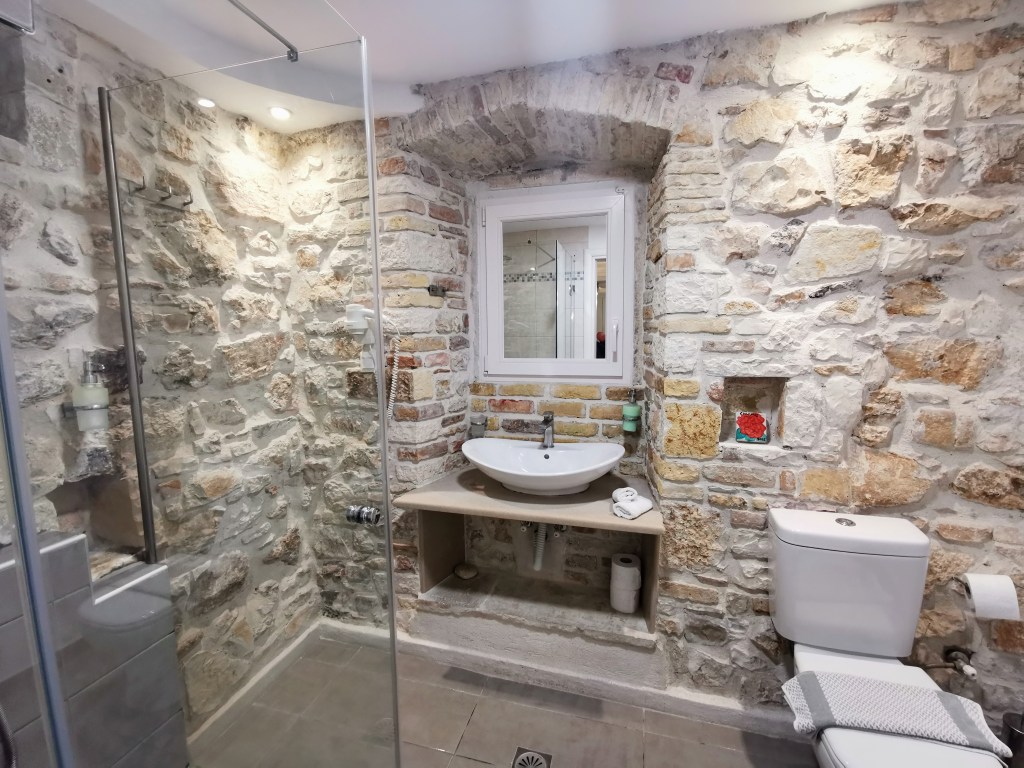
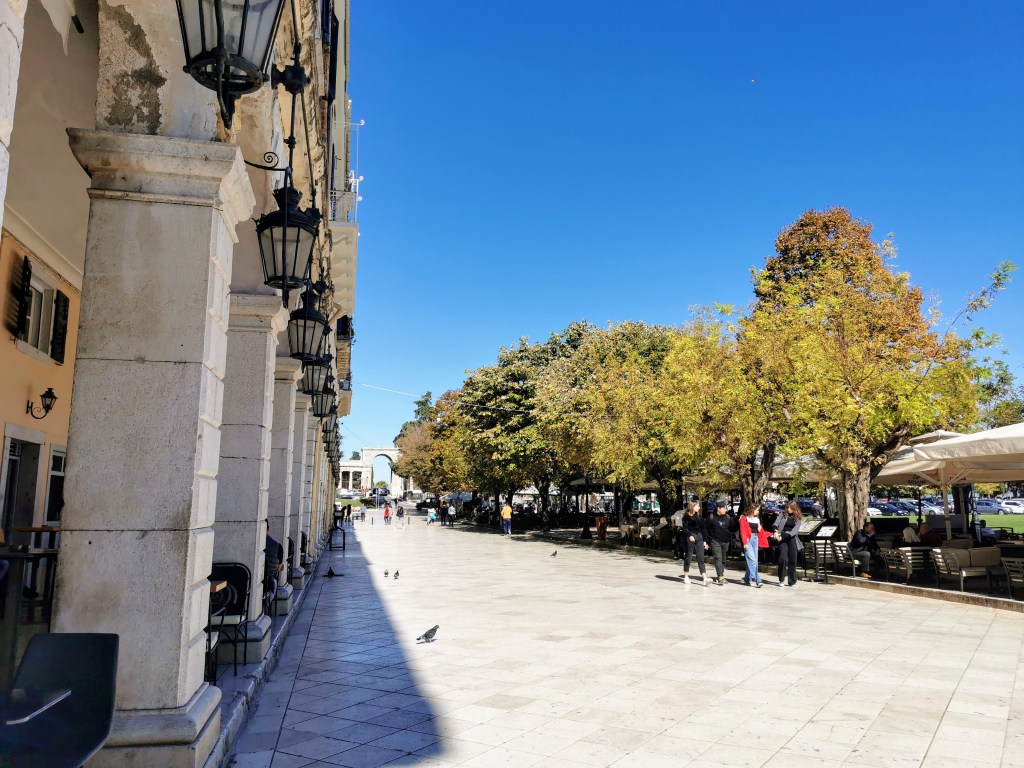
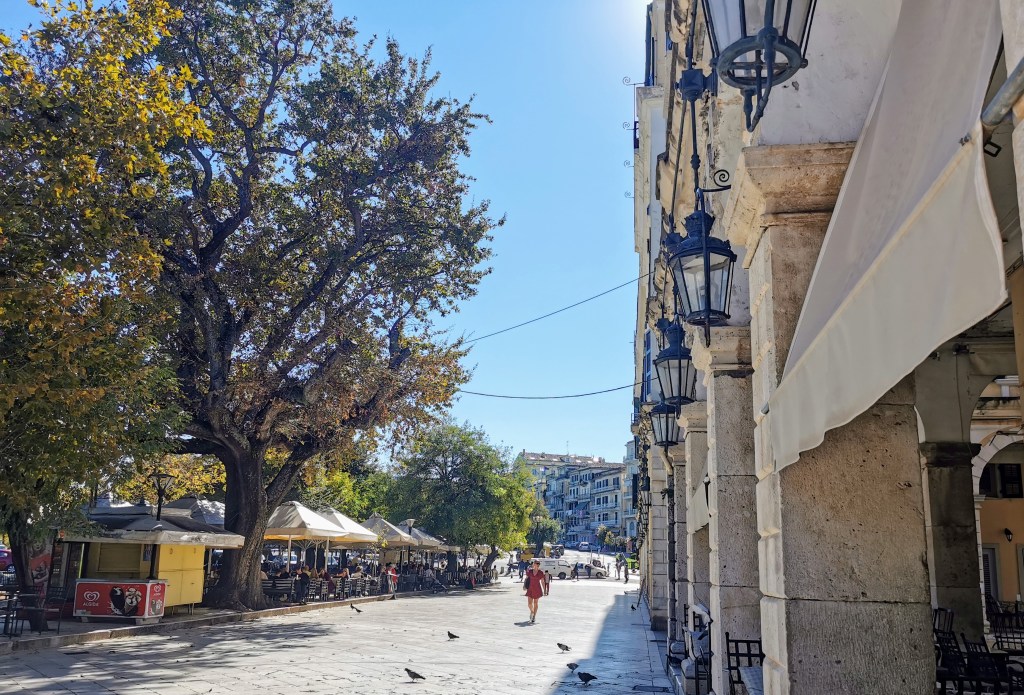
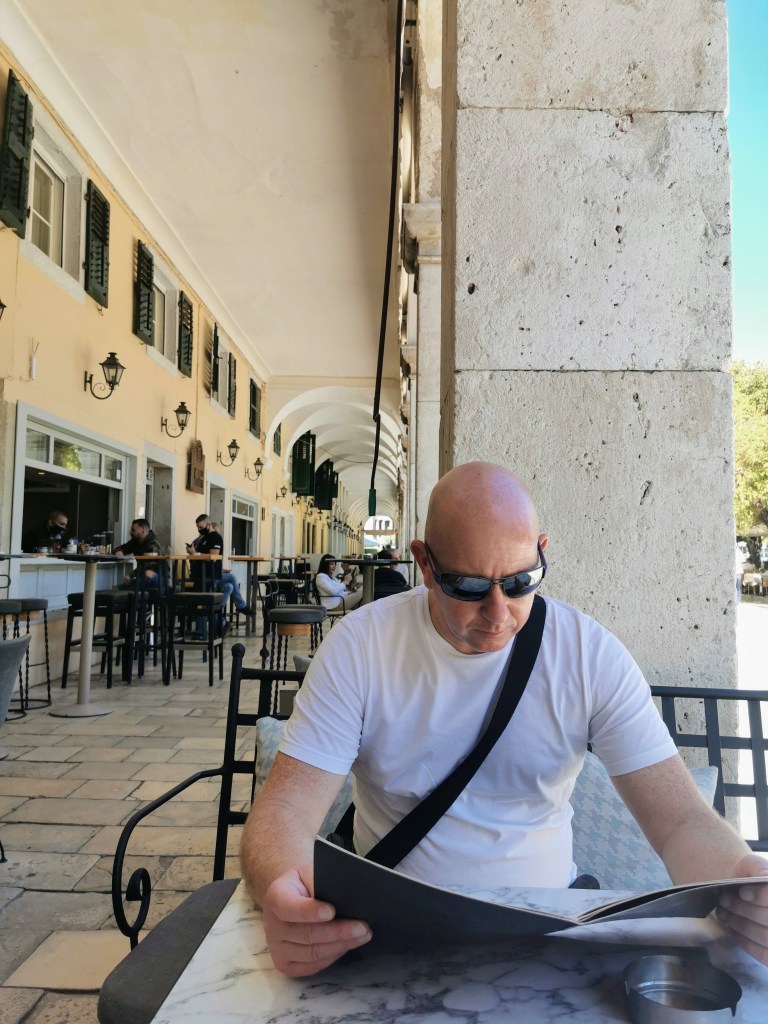
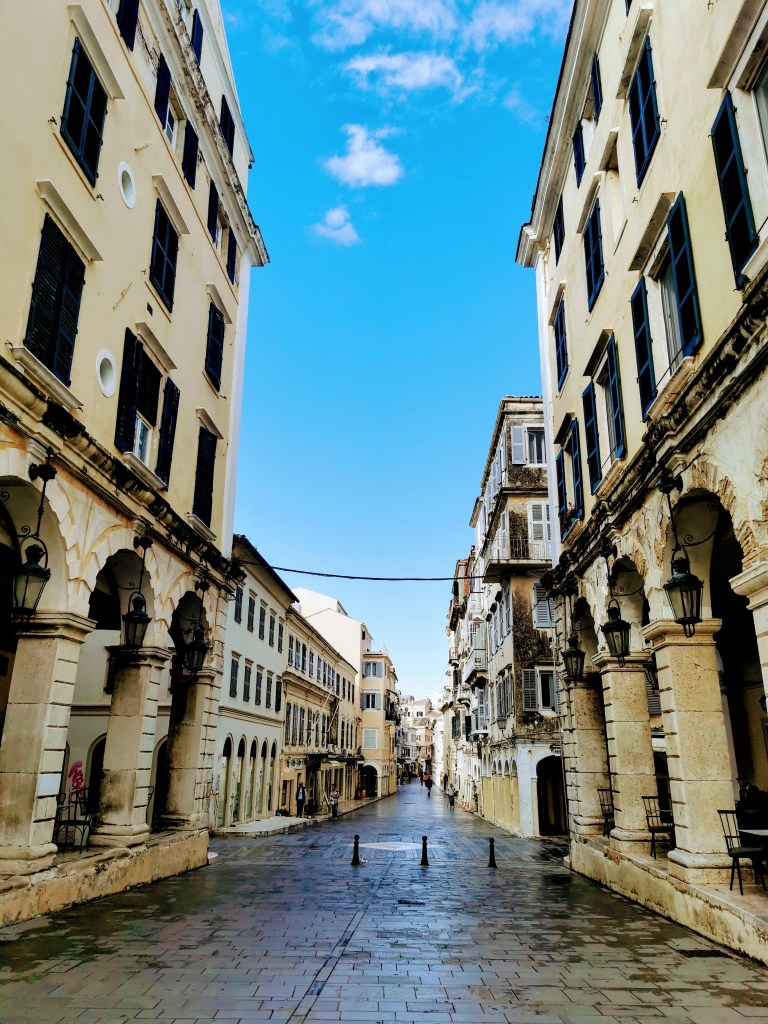
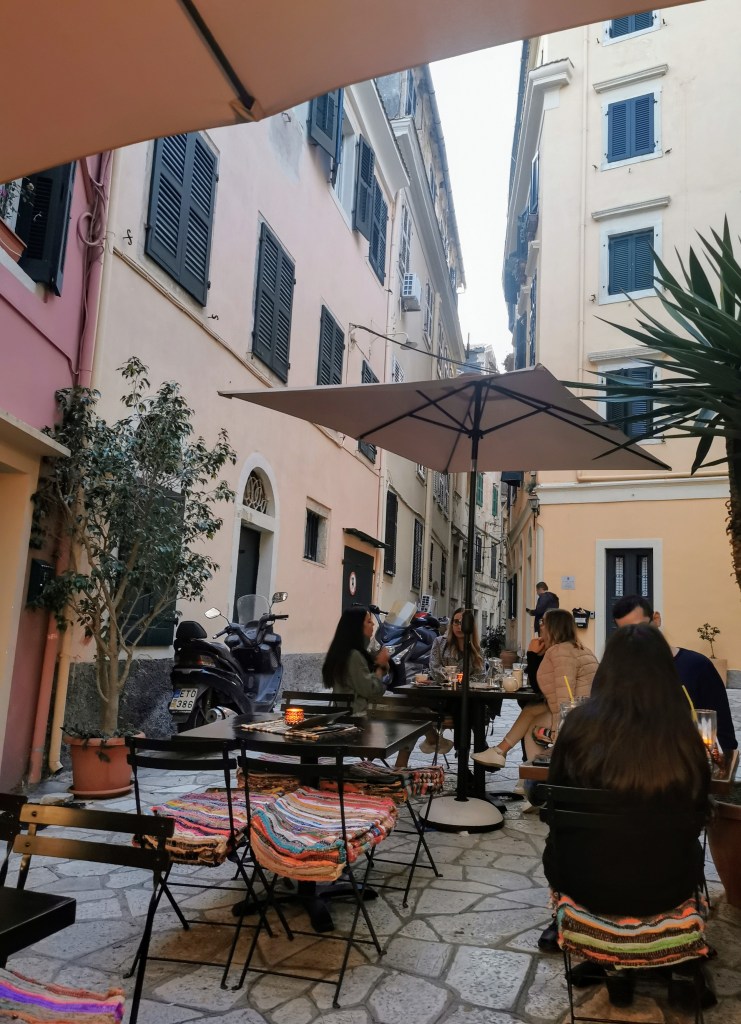
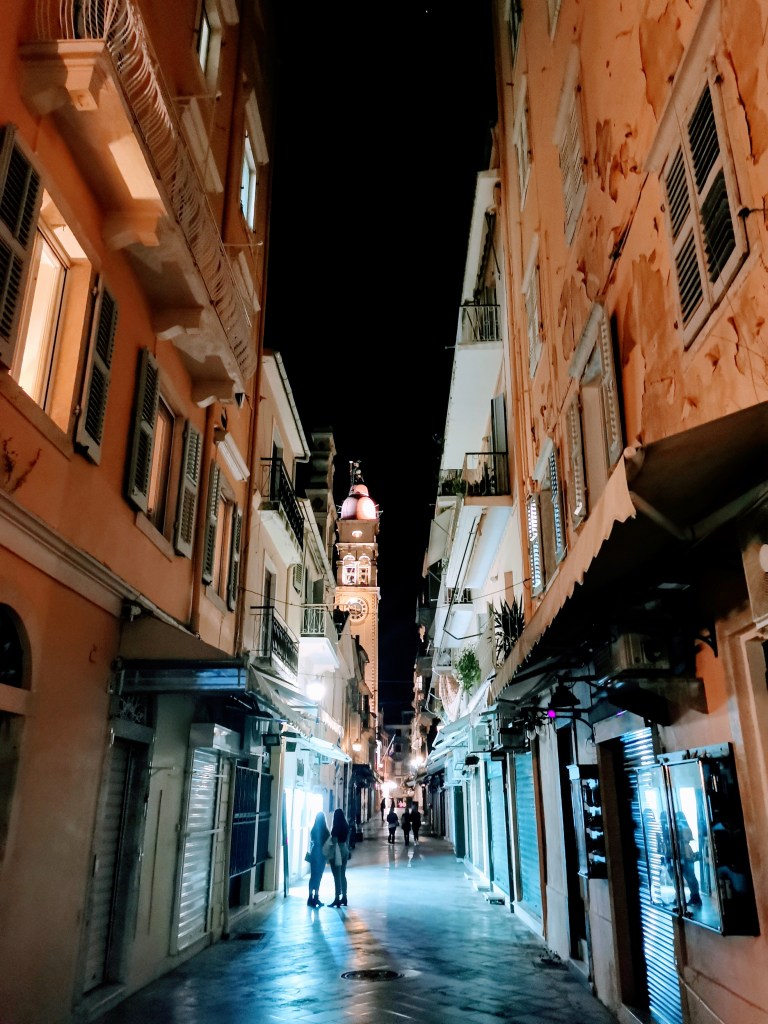
It’s a gorgeous space with exposed 500 year old walls, but the best attribute of our home from home is the location. Walk down a narrow alley and turn right for the Liston, Corfu Town’s famous pedestrian street, modelled on Paris’s rue de Rivoli. It’s a beautiful expanse of marble slabs lined by elegant colonnaded buildings filled with street cafes facing out over the gardens of the Spianada.

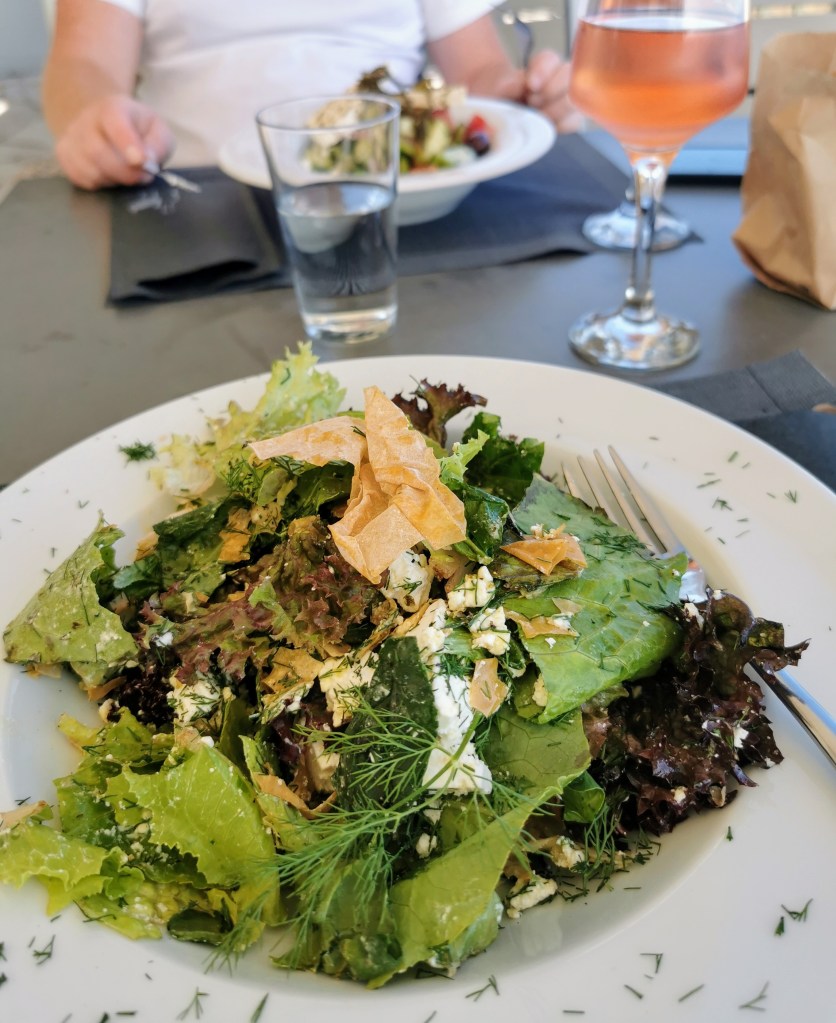
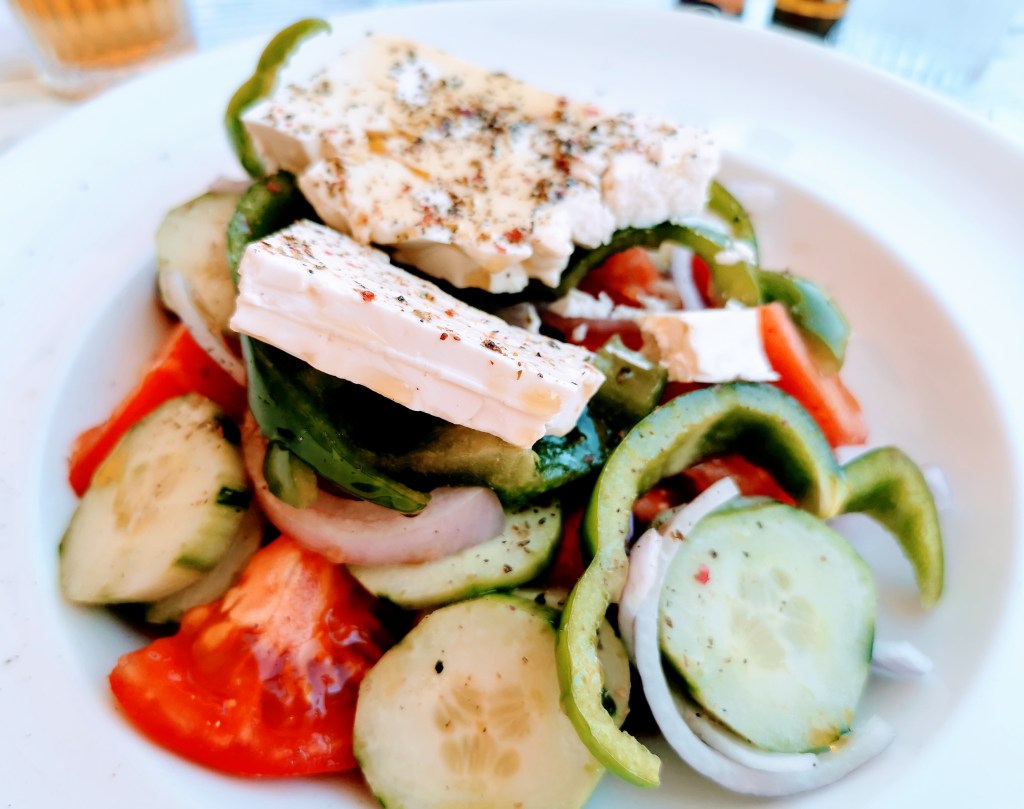
Guess what? It’s time for lunch. And what could be better to start off with than a classic Greek salad with huge salty slabs of feta? I’m poured a large glass of local rose, and I sit happily watching a couple of dogs gambolling around the sunny square. I think I’m in heaven. We are officially in Greece.

Once fortified with food and wine (I’m very clear on my priorities) we’re ready to explore. Corfu, or Kerkyra to the Greeks, has a rich history. In Greek mythology, it was visited by Odysseus on his journey home after the Trojan War, and then by Jason and his Argonauts on their hunt for the golden fleece. What can I say? Clash of the Titans was a childhood favourite. It doesn’t get much better than this.

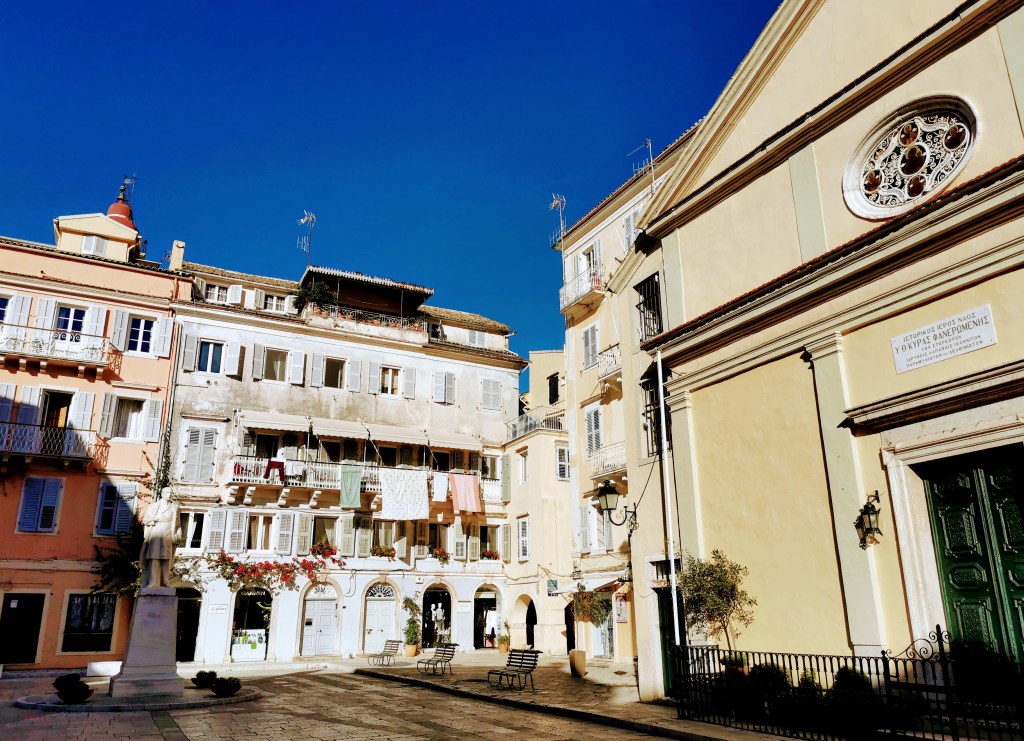
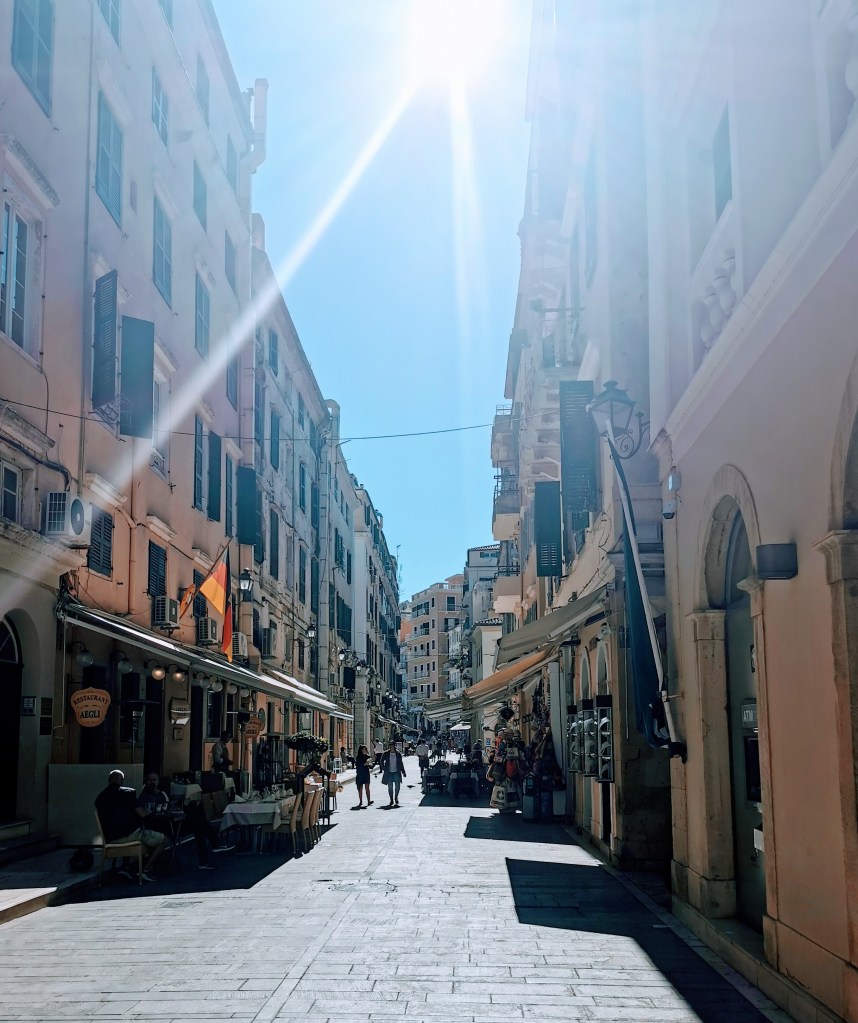
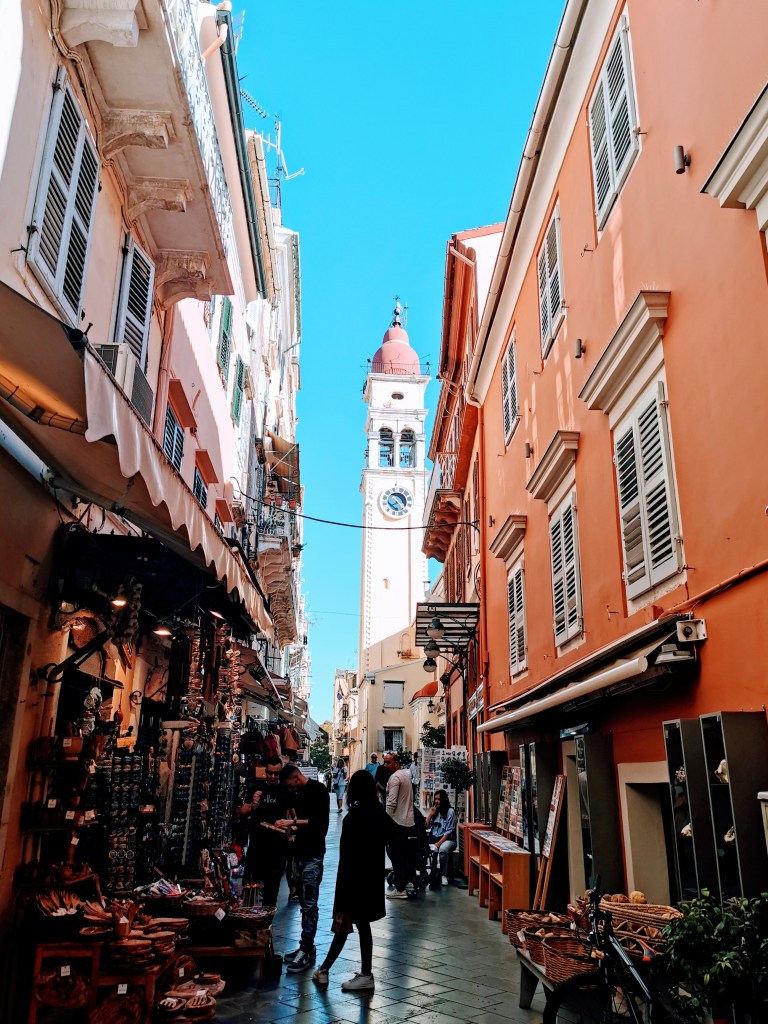
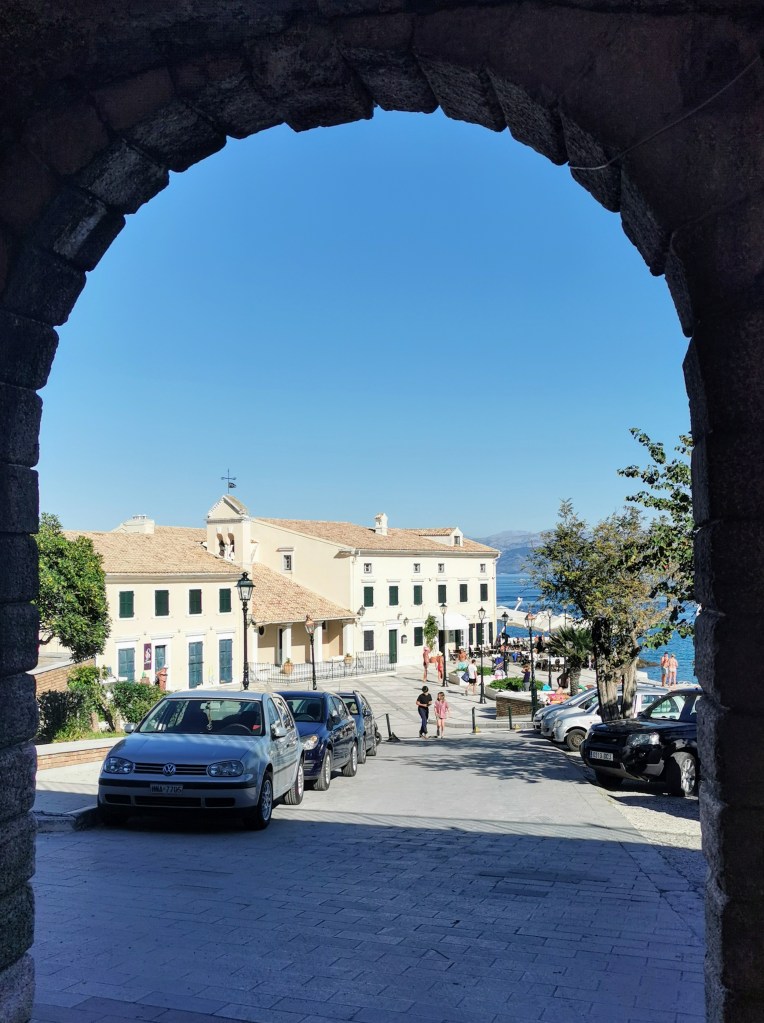
The island, and particularly the capital, is a product of its strategic location. Seen for centuries as a bulwark of Europe against the Ottoman Empire, it was heavily fortified and coveted as a rich prize – seized by the Romans, the Venetians, the French and then the British before eventually uniting with Greece in 1864. The influence of successive occupiers can be seen in the architecture of the old town. Amongst the maze of medieval laneways or kantounia are arcades, squares, palaces and churches left behind by different cultures. The whole area is a UNESCO World Heritage Site.

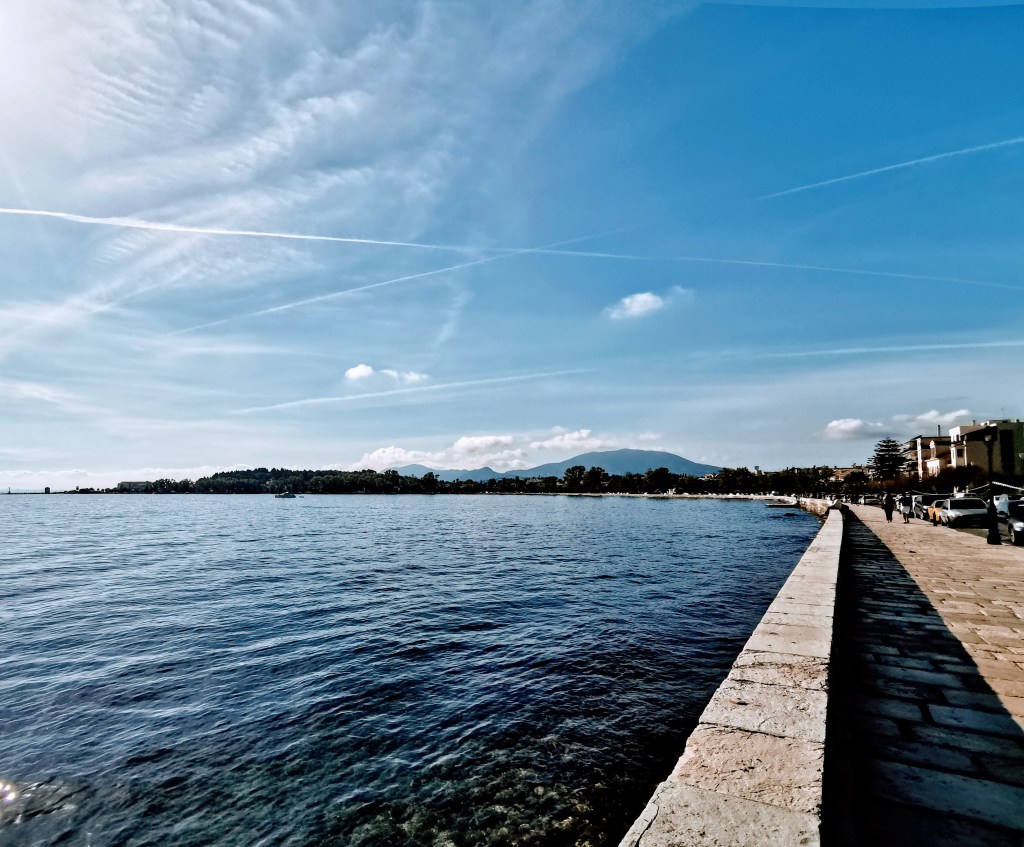
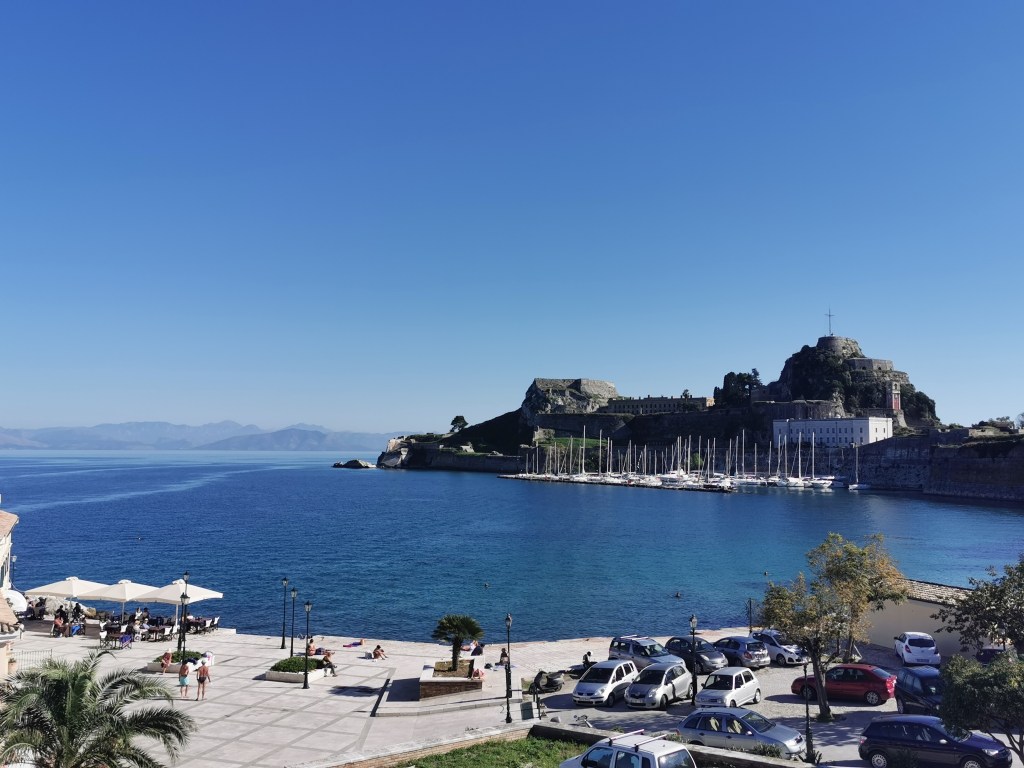
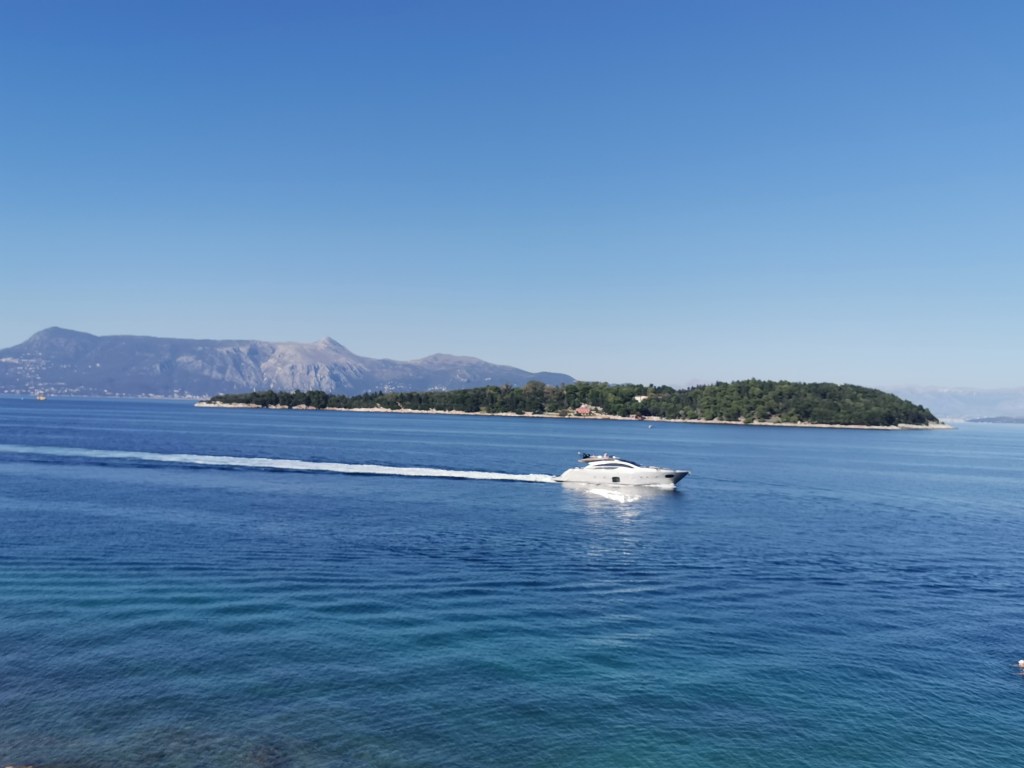
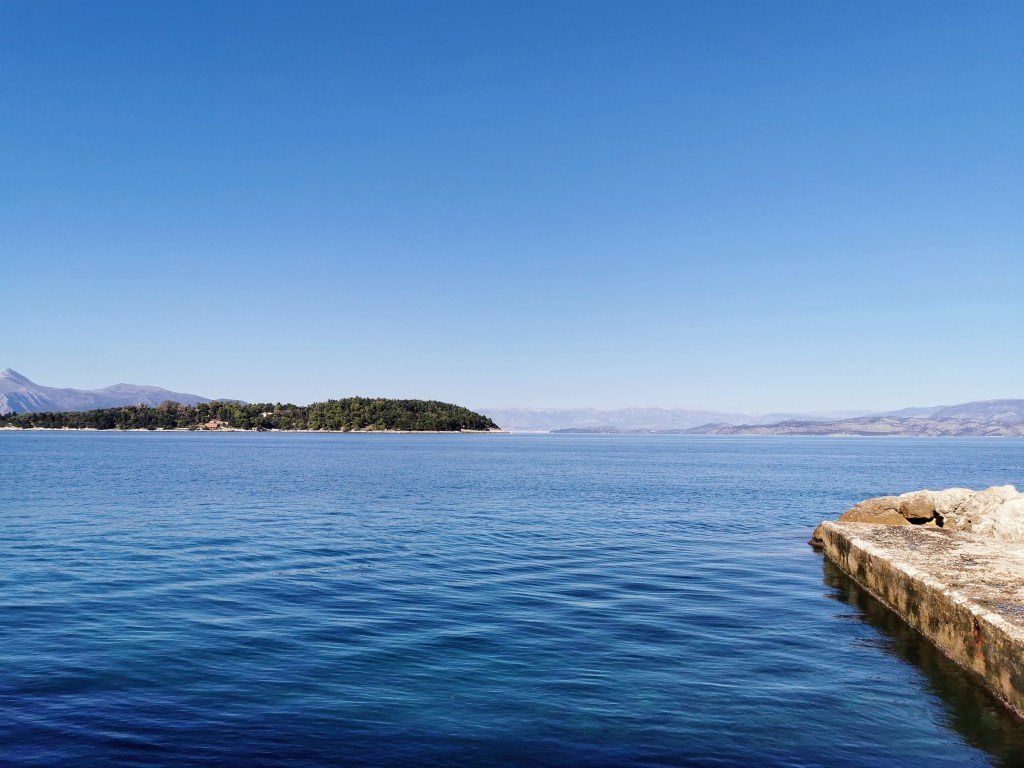
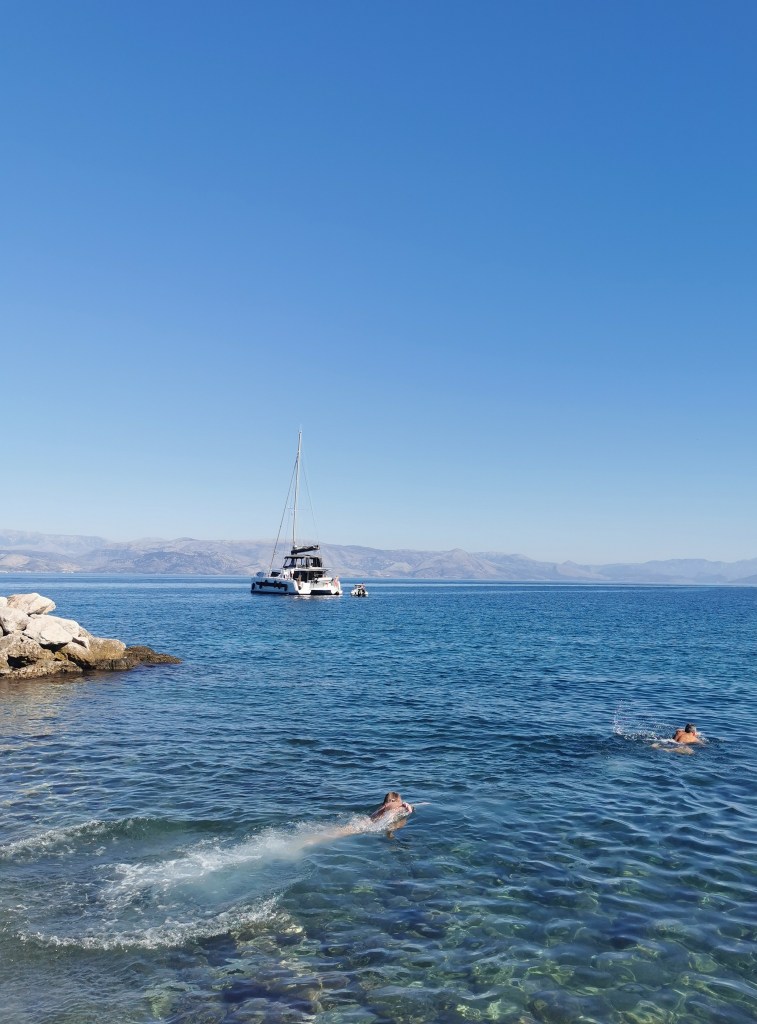
Our landlady has recommended that we visit the ‘beach’ just beyond the Palace at the northern end of town, so we head there for late afternoon drinks. There’s no sand, but that doesn’t stop the locals from diving in and enjoying the clear water. And the views… I’m speechless, I can’t think of anywhere more stunning I’ve been lately.

As we follow a tunnel down to the sea, ahead of us is the forbidding bulk of the Old Venetian Fortress. To the north the coastline of the island curves around to Kalami Bay, where the Durrells made their home. The hills of Albania across the water blend into the Greek mainland to the east. And above it all is a brilliant blue sky. I can’t think of anywhere else I’d rather be right now, certainly not Maidenhead!

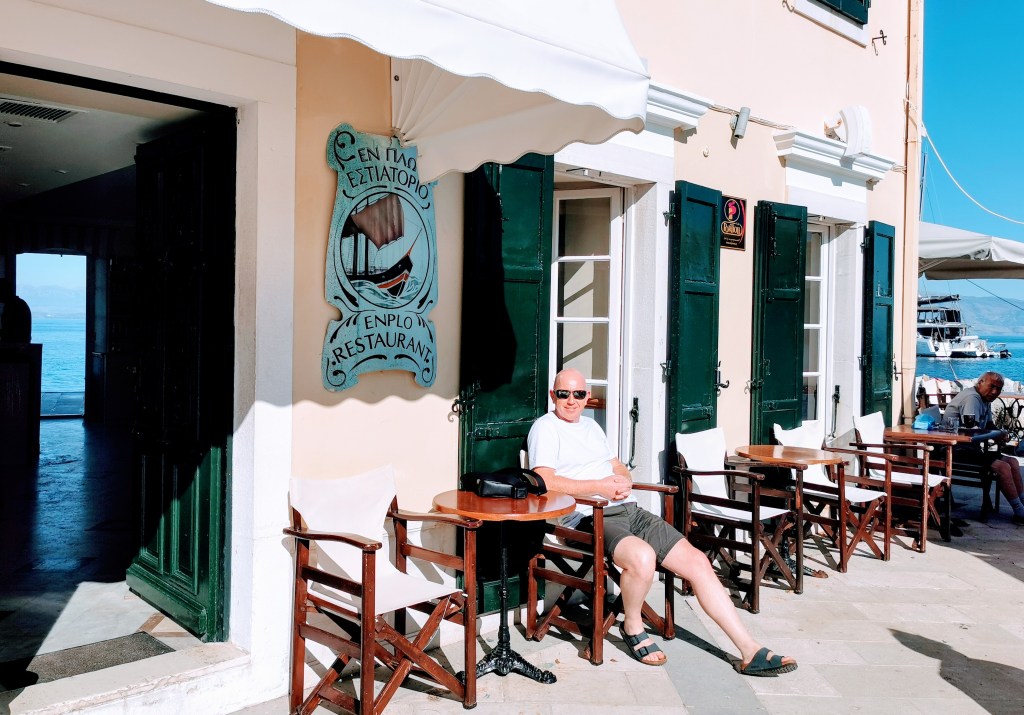
We take a seat in the sun outside the Enplo cafe and watch the Corfiots young and old at play – eating, drinking, swimming, sunbathing, there’s even a bit of flirting going on. It’s easy to while away an hour or so here with a carafe of local wine before heading back for a pre-dinner snooze.

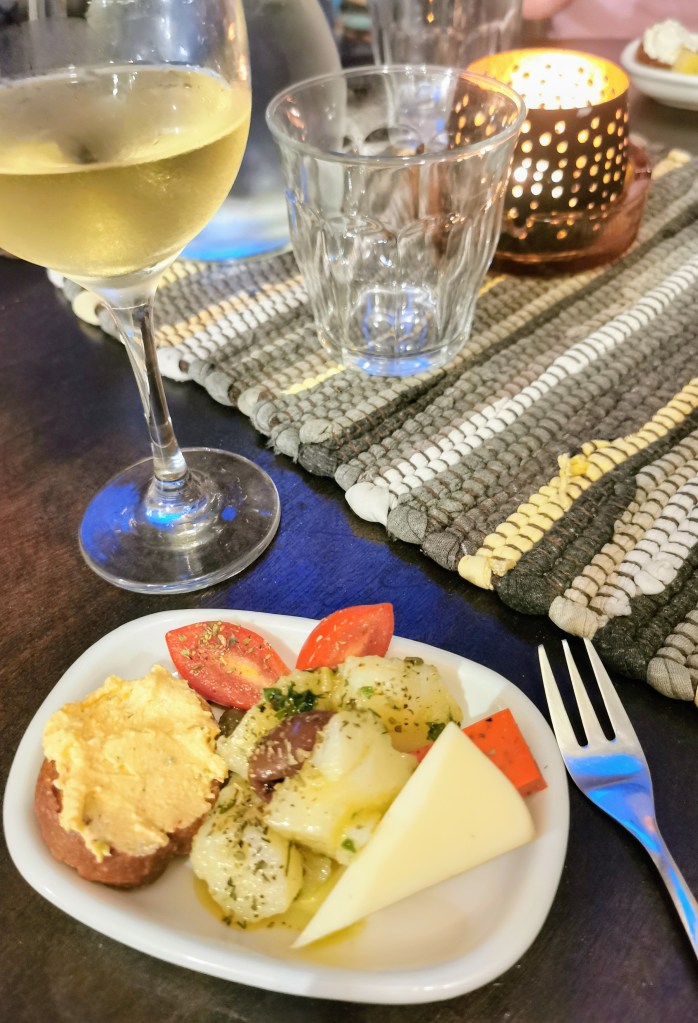
In the evening, we head up the alleyway outside our apartment into the warren of streets and immediately stumble upon the delightful Arthaus Wine Bar. A pre-dinner drink comes with a plateful of nibbles, but the owner checks if we want any – she doesn’t want to spoil our dinner. As if she could! We don’t travel with any hope of losing weight, just bring it on.

As darkness falls, we stop at Achilleus Taverna for dinner. The tzatziki is super strong, and our waiter sternly informs how to make it properly. You must never buy garlic from the supermarket, he says. I may never buy garlic again after this, I feel like I’m breathing fire! Every dish arrives with a yamas, yamas, yamas (Cheers), encouraging us to drink more local wine. As if we need any motivation. A second carafe is ordered. I share a huge piece of swordfish with the taverna cat, who sniffs each morsel delicately before accepting it. The food is simple but delicious, just as you’d expect.

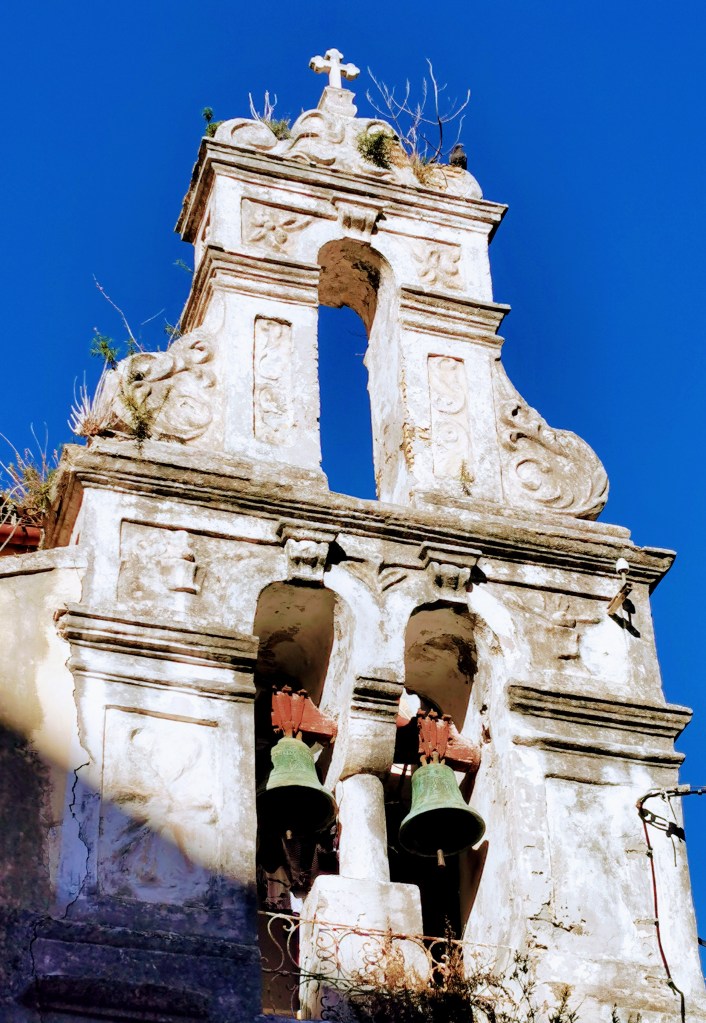
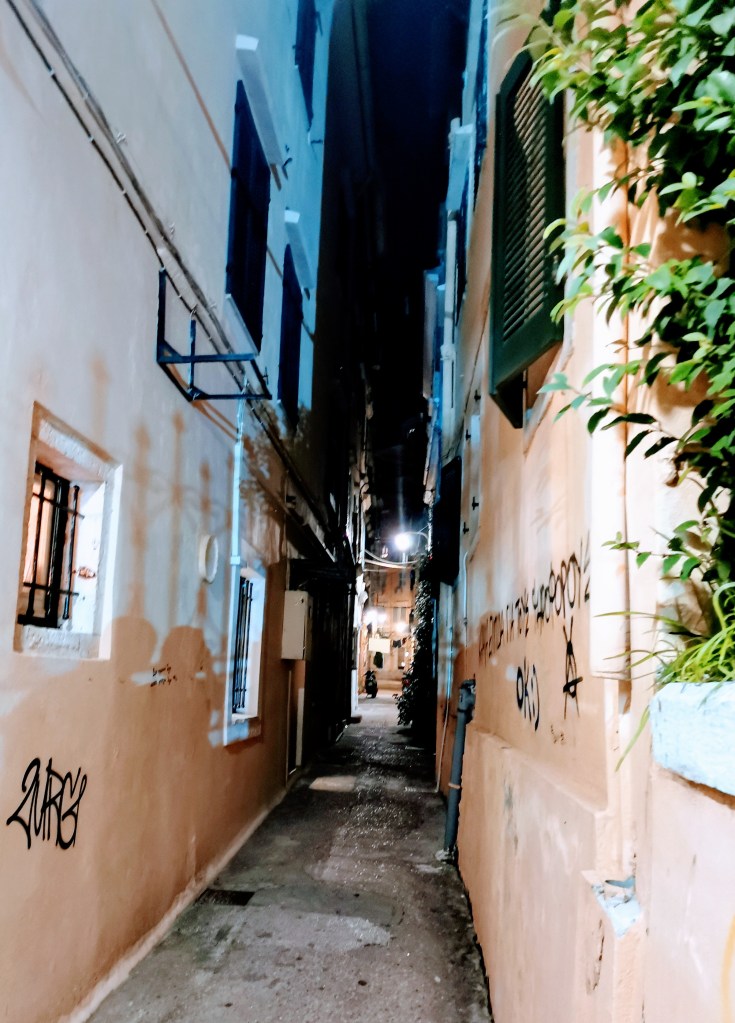
The Old Town is even more photogenic at night as we weave our way home to bed. I can’t say I have a great night’s sleep though. I can hear singing until 3am, so clearly nothing closes down early here. Church bells from the many nearby churches ring out early next morning, so no hope of a lie-in either. There are some drawbacks to staying in the heart of town. Never mind, I’m keen to get out and see more of this wonderful place. Thank you Gerry for the recommendation!

Salisbury loves Lizzie

Today I’m heading to Wiltshire, to the medieval cathedral city of Salisbury. Believed by many to be the loveliest town in Britain, it hit the headlines for all the wrong reasons in September 2018, with the Novichok poisonings of Sergei and Yulia Skripal. Are you sure it’s safe? asks the husband, proof that mud sticks even two years later. He doesn’t ask about the cathedral!

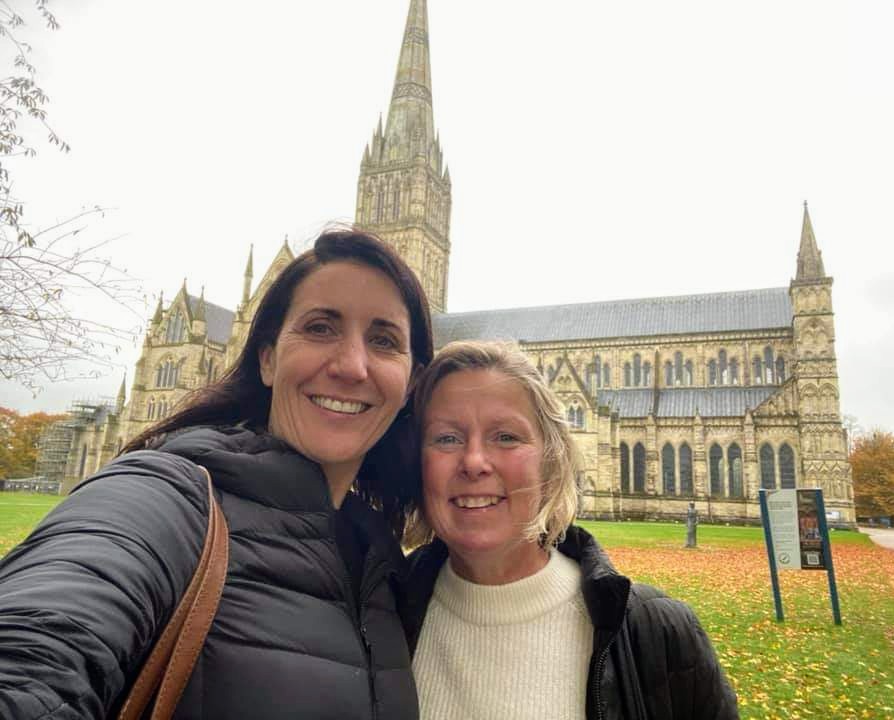
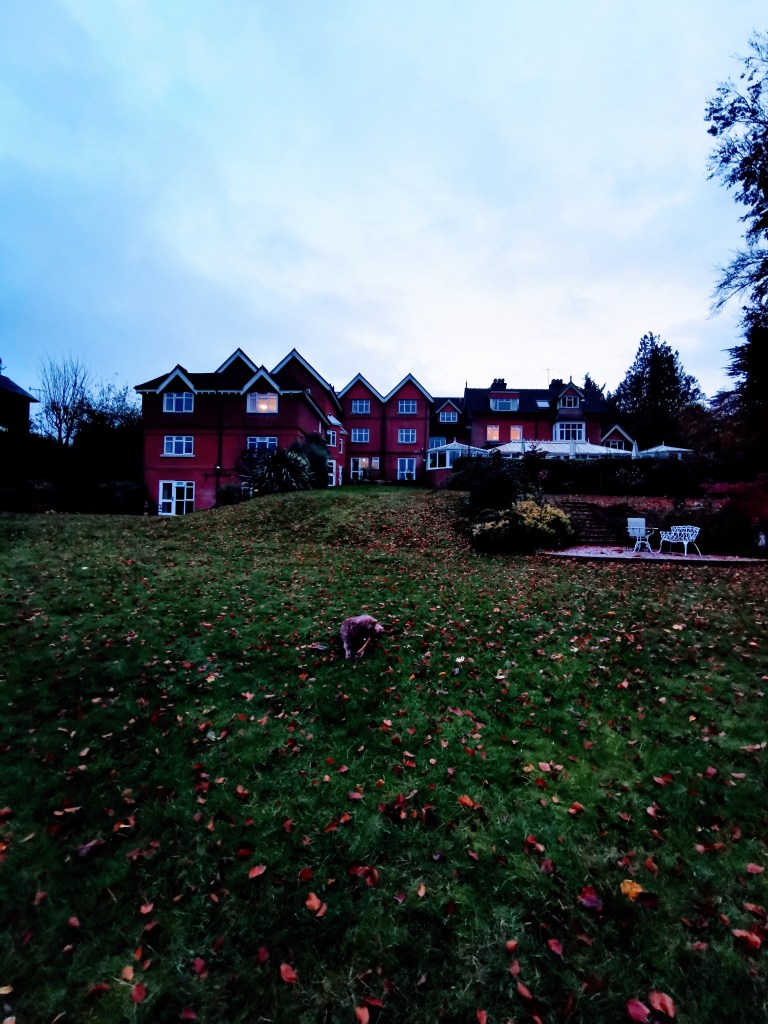
This should have been a girls trip with three old Uni friends, but Boris’s Tiers got in the way, so it’s just Sally and I, with Lizzie the Labradoodle as stand in for Jane and Fiona, admittedly much quieter but she’ll have to do! We’re staying at the Grasmere House Hotel, overlooking the river and water meadows on the southern edge of town. It’s only three stars, but it’s dog-friendly and in a great location. Fingers crossed!

I arrive early to a warm welcome from a nice man at reception, but my room isn’t ready yet. Never mind, is the bar open? Yes, it’s just down the corridor. I walk into a darkened room and wonder what’s going on, but reception guy is running after me. He turns the lights on and zooms behind the bar. What can I get you, Madame? I realise I’m staying at Fawlty Towers! What fun!

I take my drink through to the lounge, where the carpet is definitely not helping Lizzie to get over her car sickness. However, our room is soon ready and it opens up onto the gardens with lovely views across the River Nadder to the town. There’s even another dog in the room nextdoor for a spot of stick chasing. It’s not flash, but it will do nicely.

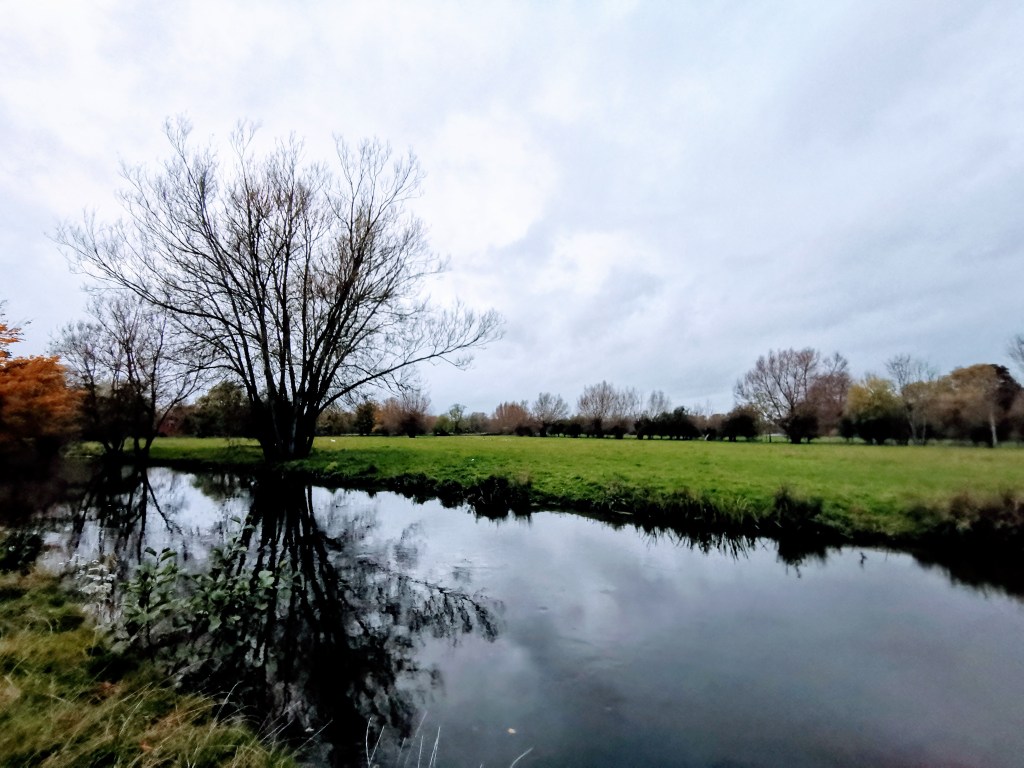
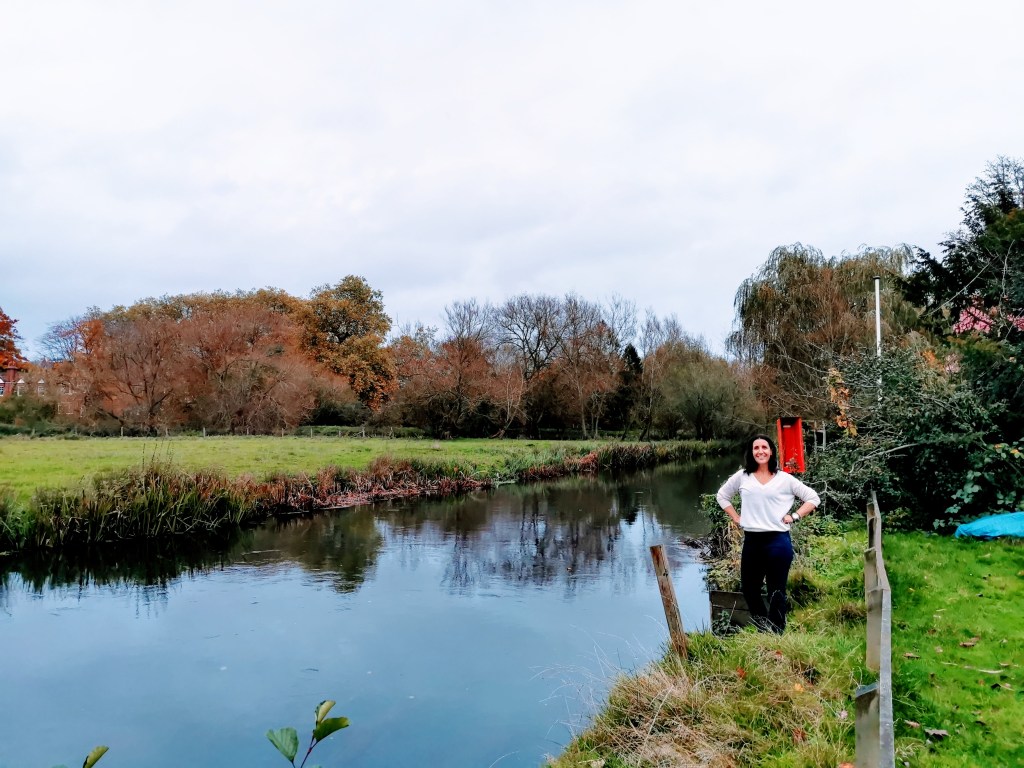
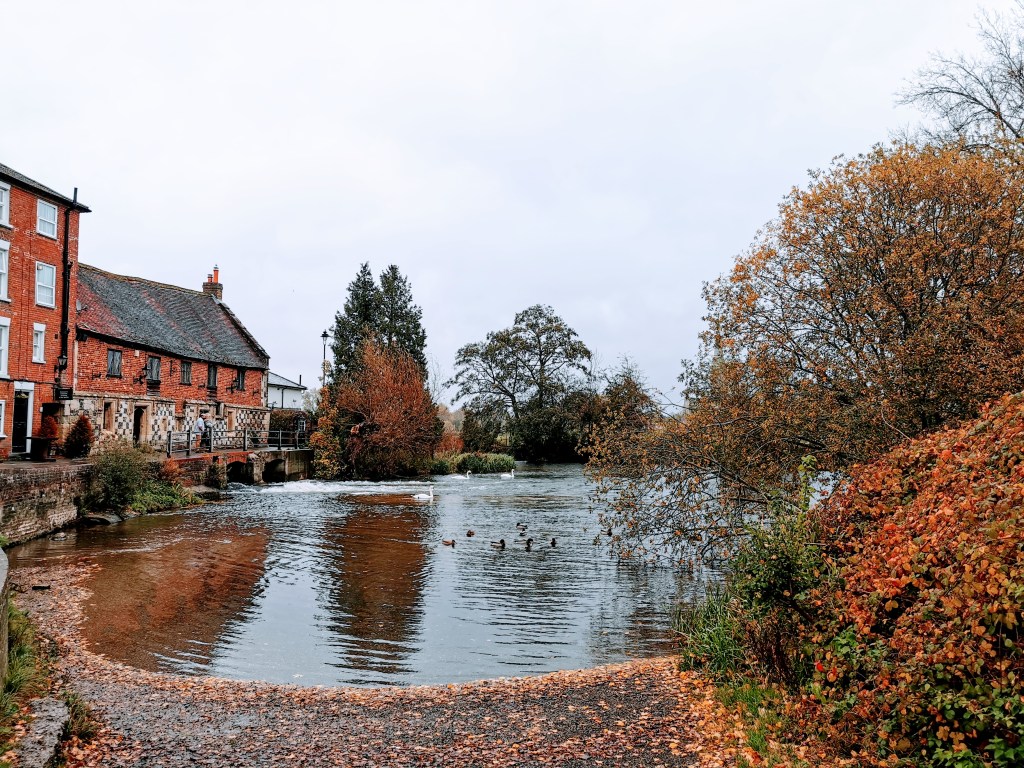
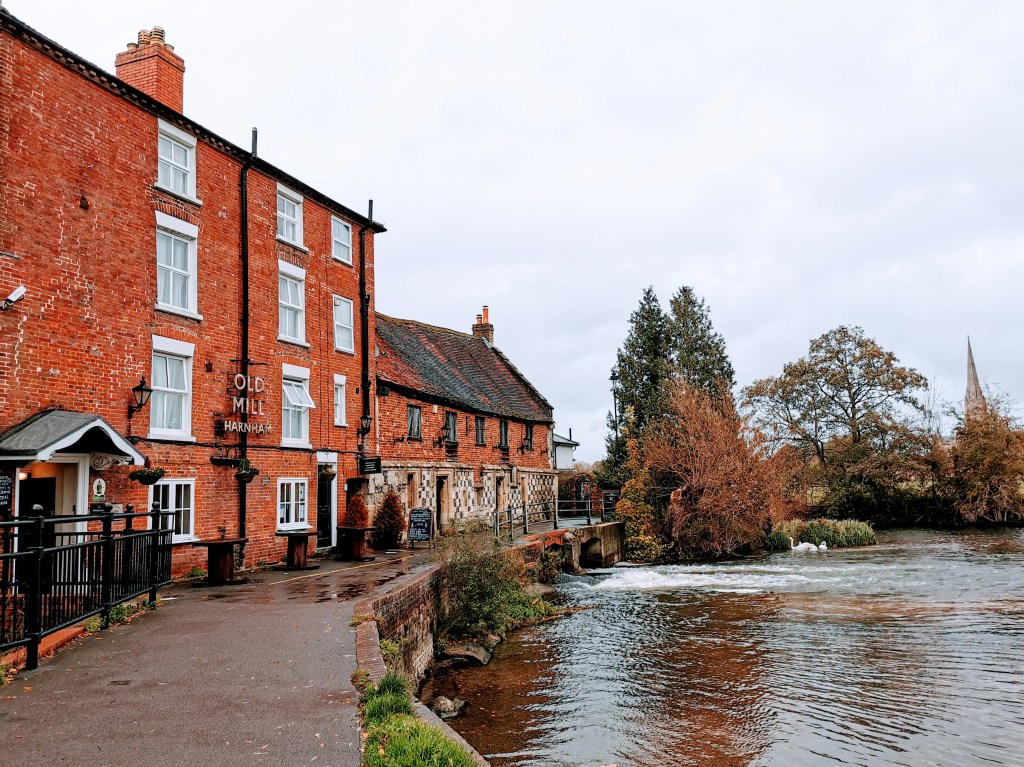
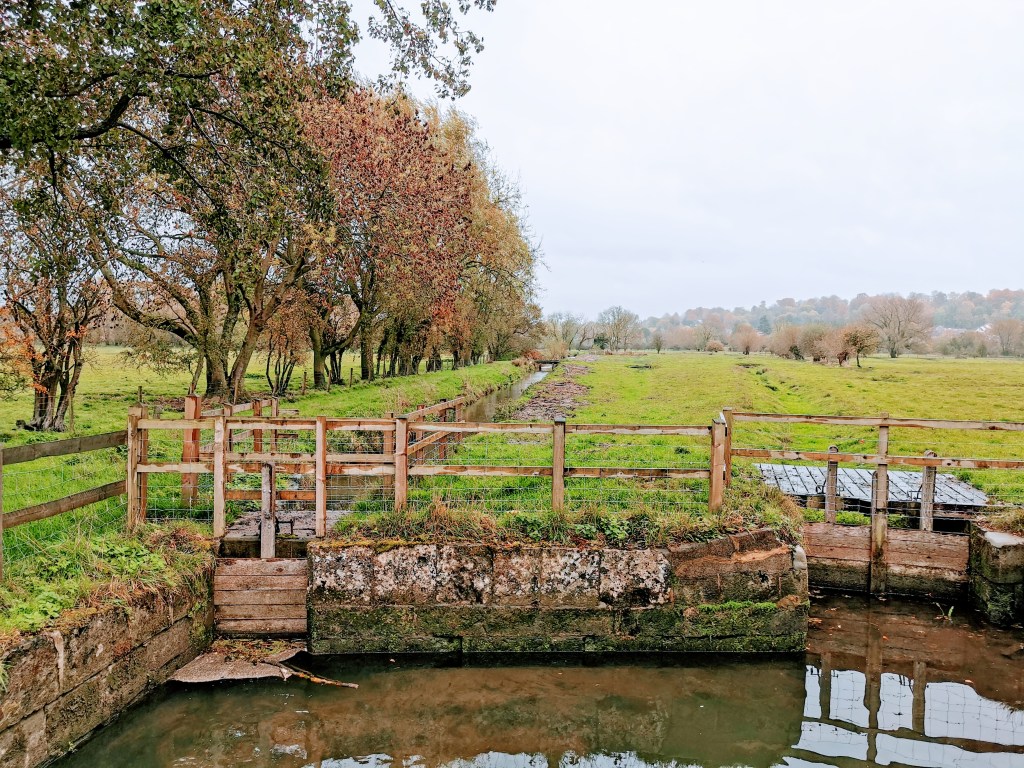
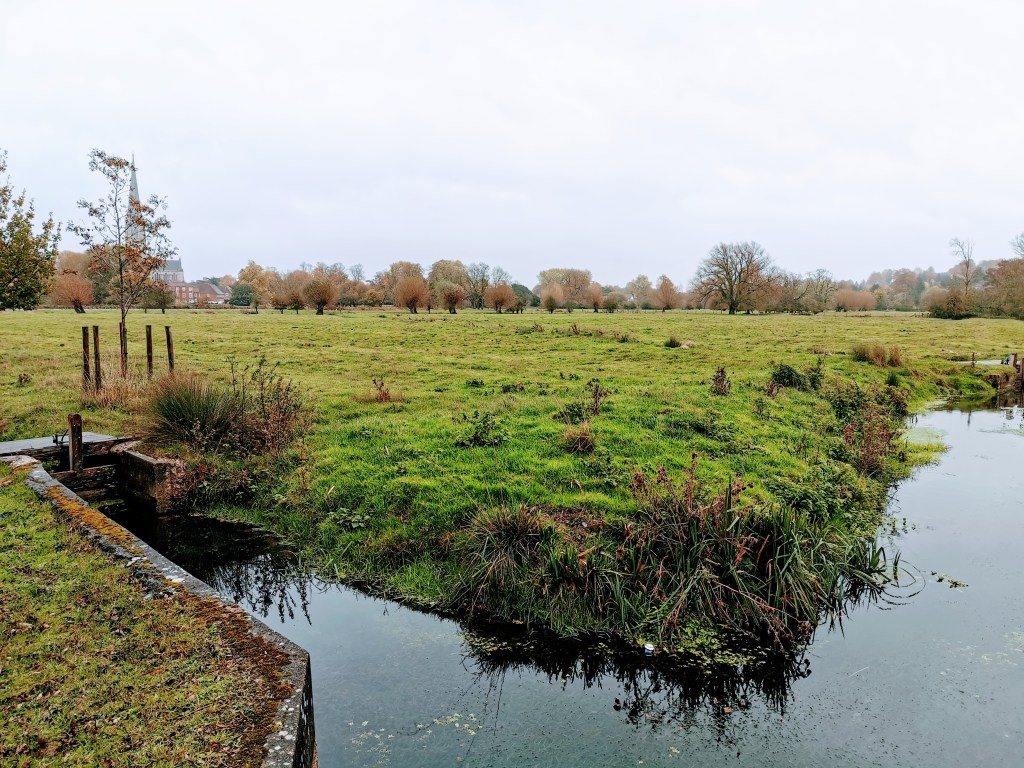
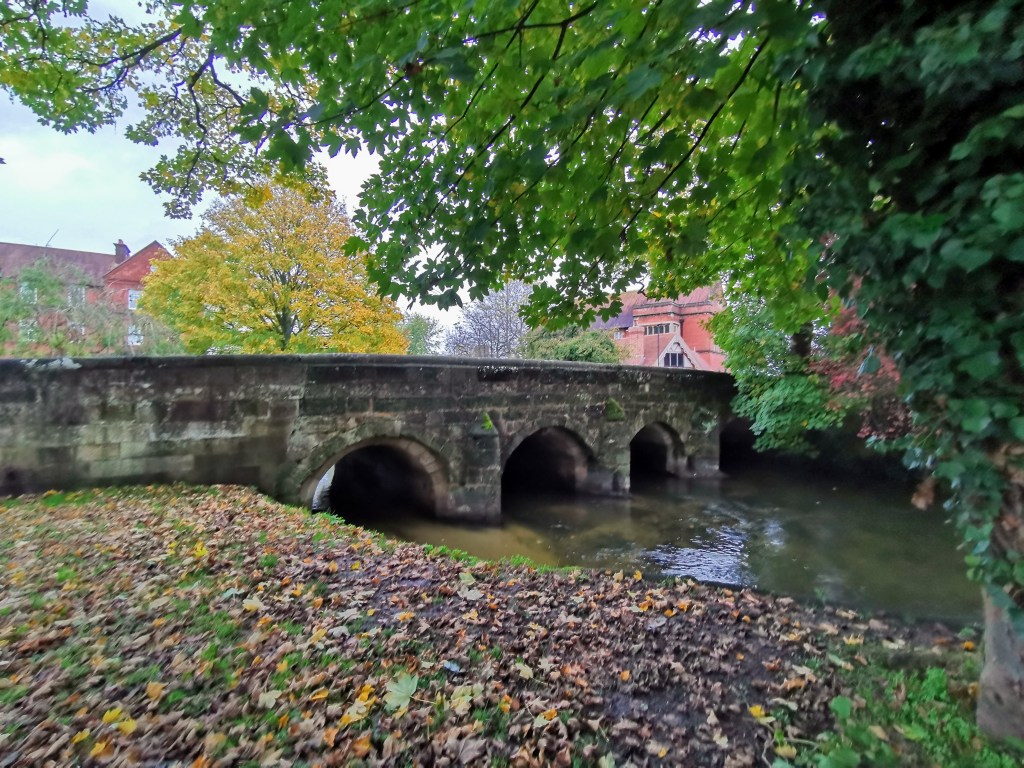
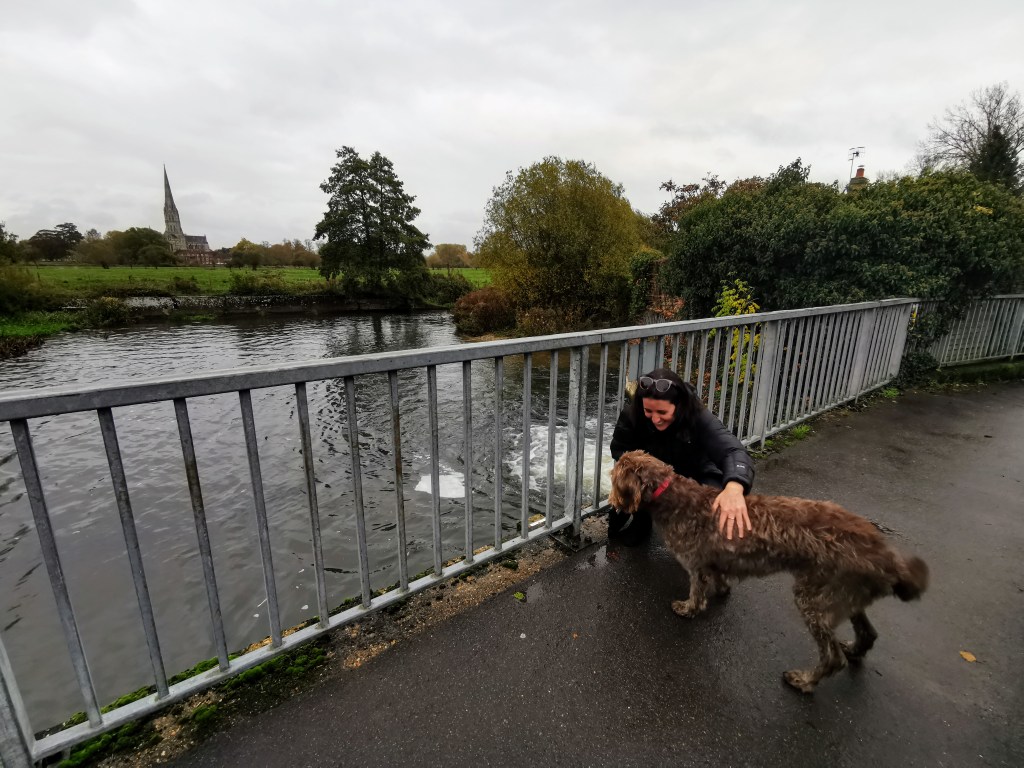
From the hotel, we can walk west along the Nadder and join the Town Path as it cuts north across the river, past the Old Mill and through the water meadows to the centre of town. The 15th century Harnham Mill is now a pub, and it would be hard to find a more scenic spot. Hurrah, it’s dog-friendly too, so we nip inside for a bite to eat and are soon chatting away to some locals with a huge Malamute.

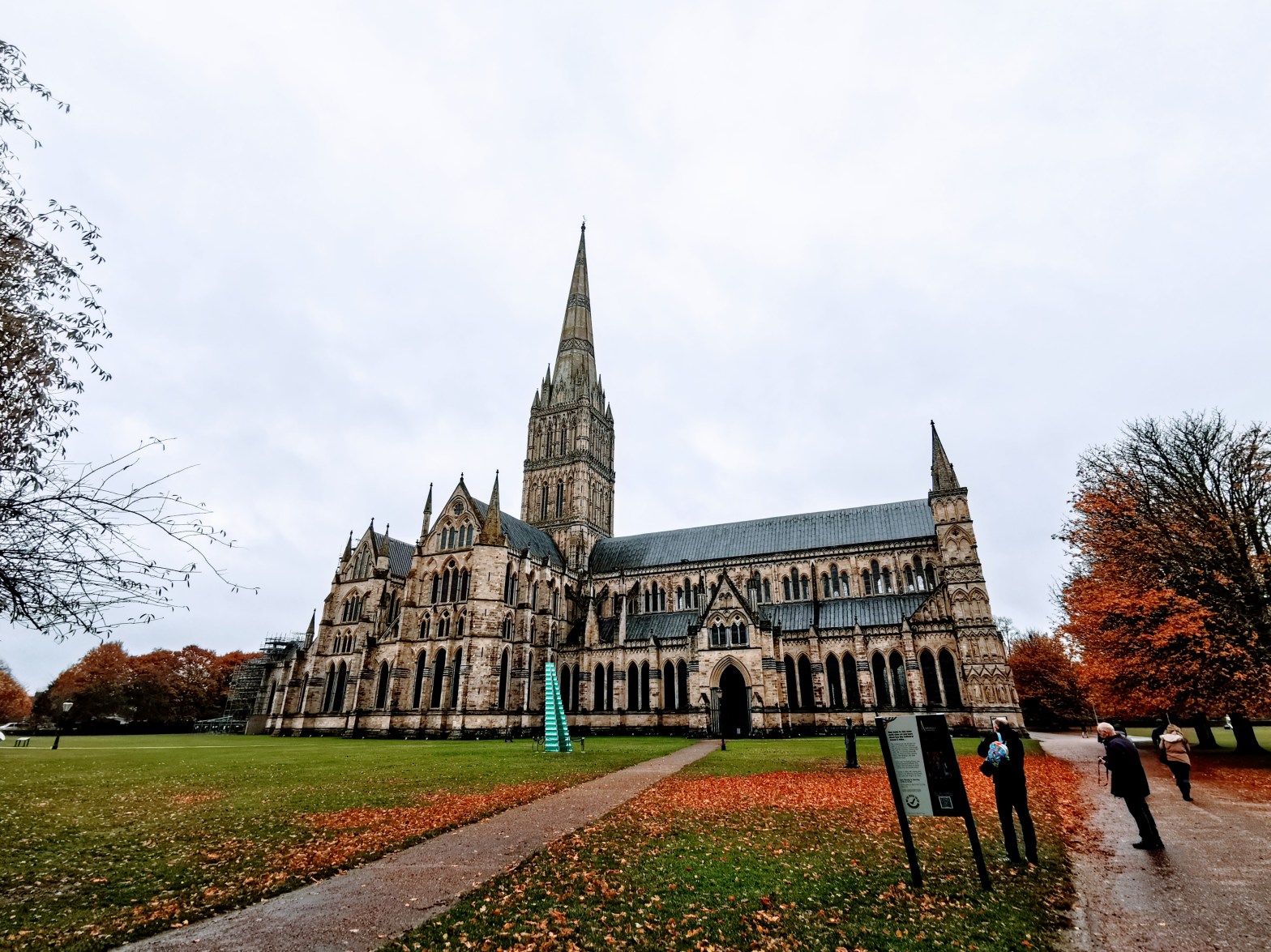
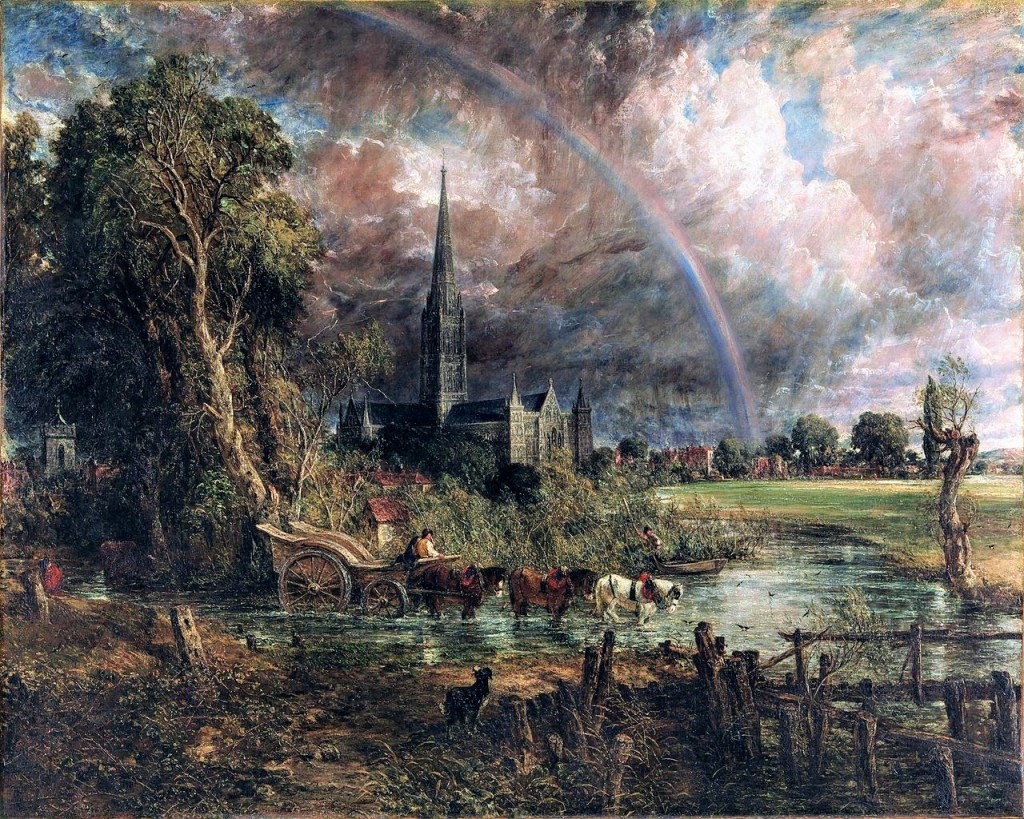
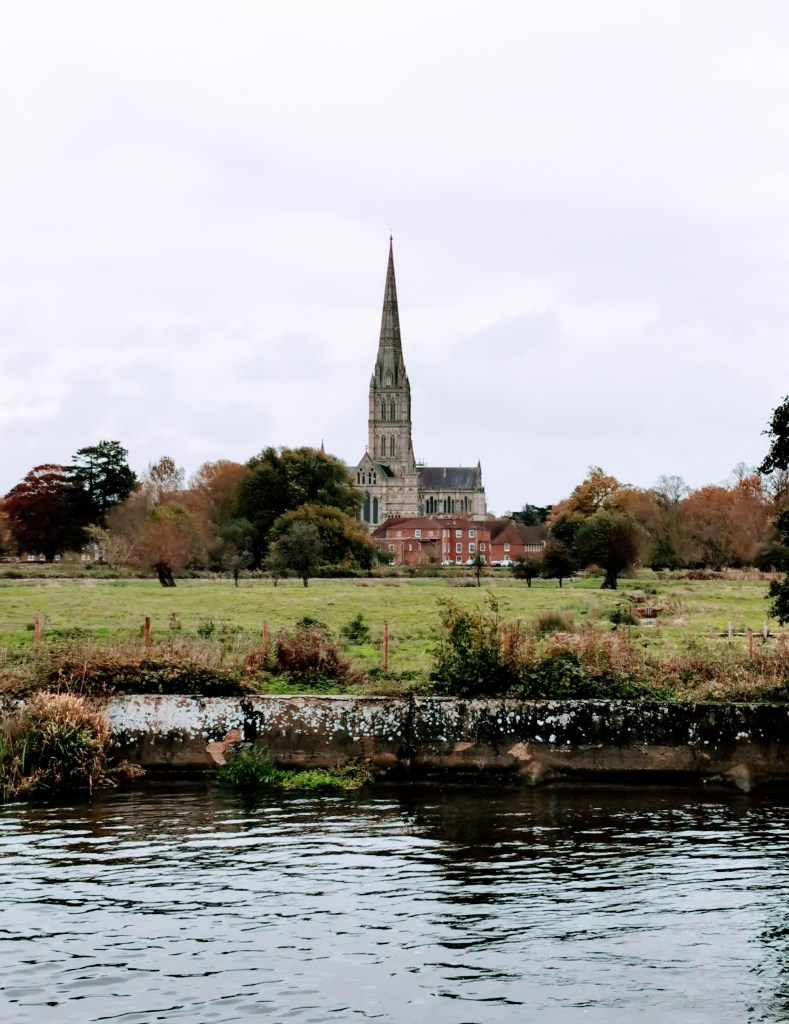
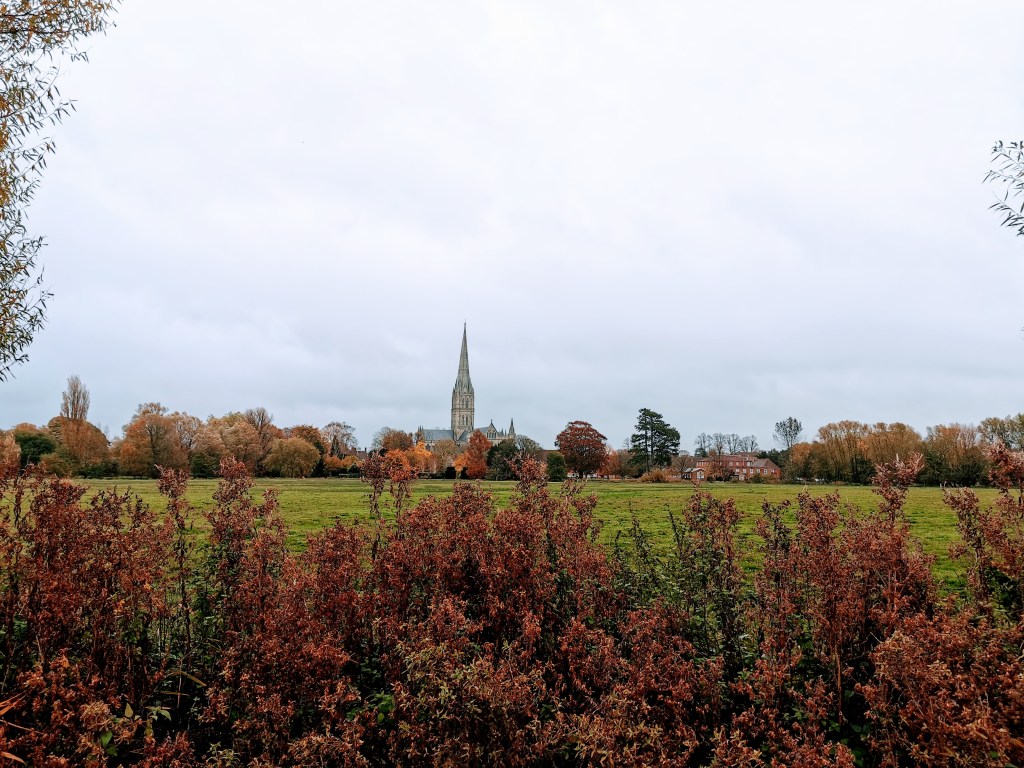
The views of Salisbury Cathedral across the meadows were made famous by Constable’s painting of 1831, now in the Tate Britain gallery in London. Amazingly, the vistas are almost the same today. We’re so close to the city centre, but all is green. The cathedral spire, the tallest in the UK at 123 metres high, is visible from miles away.

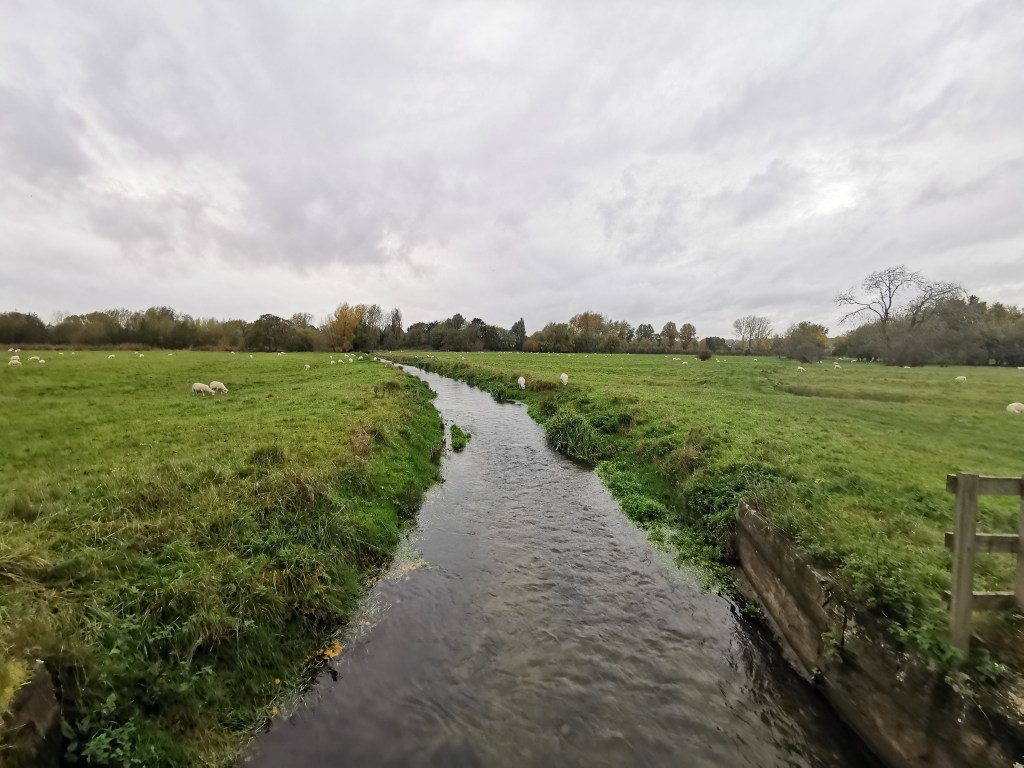
The water meadows here are such a luminous green, it almost hurts your eyes. The network of ridges, ditches channels and sluices dates back to the 17th century, and was used to circulate water around the fields to keep the grass frost free, so that animals could be fed through the winter. Pretty ingenious. The man in charge of keeping the system going was known as The Drowner. That could make for interesting conversation, ‘So what do you do for a living?’

Following the Town Path you can absolutely forget that you are anywhere near to a city centre. There are even sheep! Sal and I are both enchanted with this place. Lizzie, meanwhile, is scampering around making friends and receiving treats from all and sundry. Salisbury dog walkers are clearly very generous. She’s impressed too.

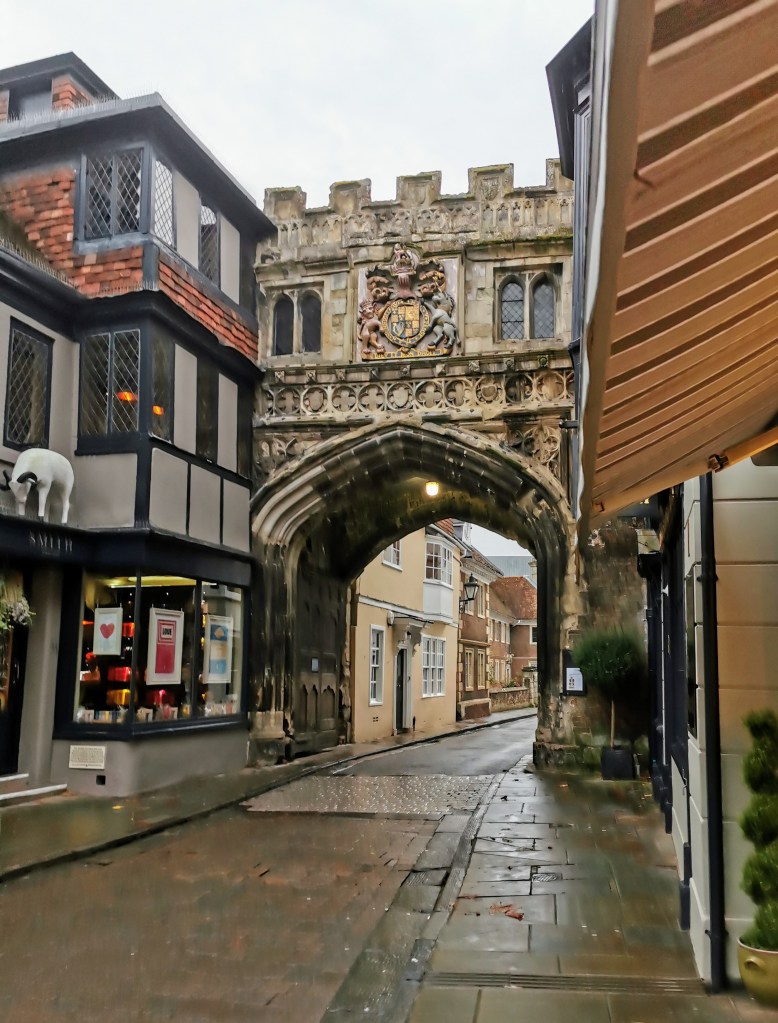
We eventually arrive in the medieval city centre. Salisbury was originally known as New Sarum, to distinguish it from the nearby Neolithic settlement of Old Sarum (on my must-visit list). The town grew up around the cathedral in the 13th century and soon became the largest conurbation in Wiltshire.

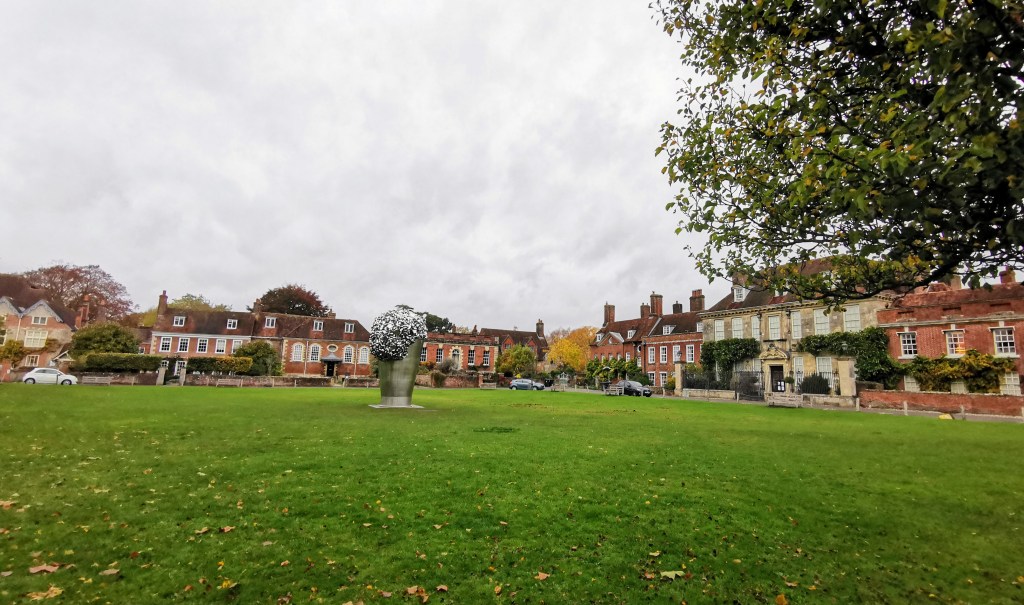
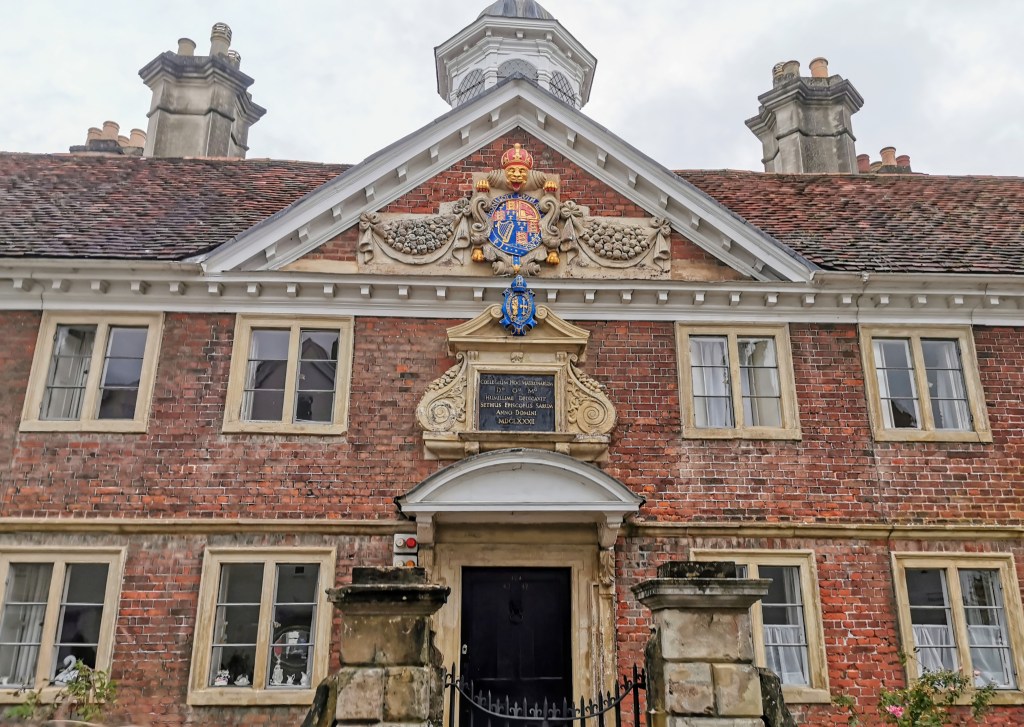
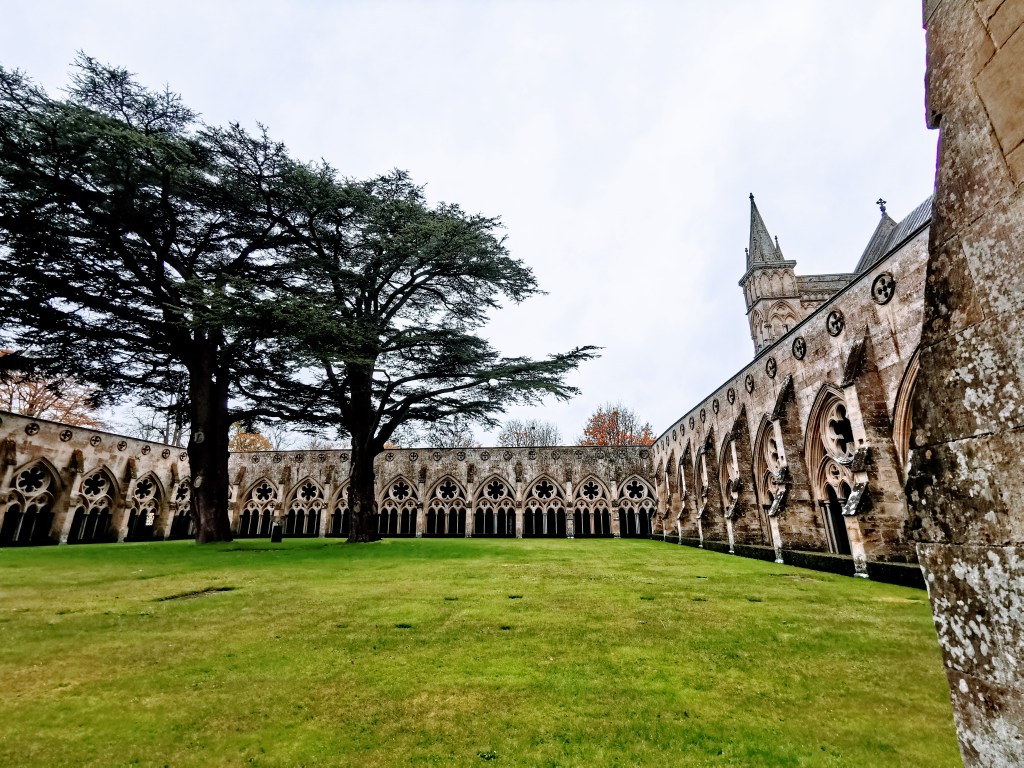
Despite being quite small population-wise, with only around 45,000 inhabitants, Salisbury qualifies as a city due to a charter granted by King Henry III in 1227. Geography has helped to keep it compact and charming – there are rivers on three sides, the Avon, Nadder and Bourne. Plus, the cathedral is surrounded by a Close of 80 hectares, made up of open lawns, historic buildings and gardens. It really does feel quite village-like even in the centre.

Salisbury is known for having lots of boutique shops and great dining opportunities, including a plethora of pubs and inns set in characterful old buildings. Most are dog-friendly, which means we’re spoilt for choice. No wonder that in 2019, The Sunday Times named Salisbury the best place to live in the UK, calling it ‘divinely attractive and welcoming’.

At the time, the city had just emerged from a year-long decontamination programme. Of all the unlikely places for an international intrigue! The locals must have been gobsmacked to hear about Russian spies sneaking along their cobbled streets, depositing deadly poison in a perfume bottle. Reading about the incident, I’m saddened to learn that there were animal casualties as well as the five people who were hospitalised. The Skripals had a cat and two Guinea pigs, which didn’t survive their exposure to Novichok.

I’m pleased to report that nothing untoward is happening today. Salisbury is back to its picture perfect and rather sleepy best. Everyone talks to us, and while it’s true that most places are friendlier with a pooch in tow, this takes the biscuit. Literally – Lizzie has cadged about half a dozen. Our wanderings are followed by a lovely dinner at The Pheasant Inn accompanied by lots of wine. We’re enjoying ourselves so much we forget about the pesky curfew and have to be asked to leave just before 10pm.

Next morning, we’re in Basil Fawlty territory again, as we’re served breakfast by an elderly gentleman who is only just moving. Lifting each leg and propelling it forwards seems to require a mammoth effort. Entrusting him with a heavy tray seems quite foolhardy to me. I’m very worried about him falling over the dog as it’s unlikely he would get up again. What is it? he asks, pointing at Lizzie. Obviously not an enthusiast, but still making an effort. Breakfast is very good, with extra marks for comedy value.

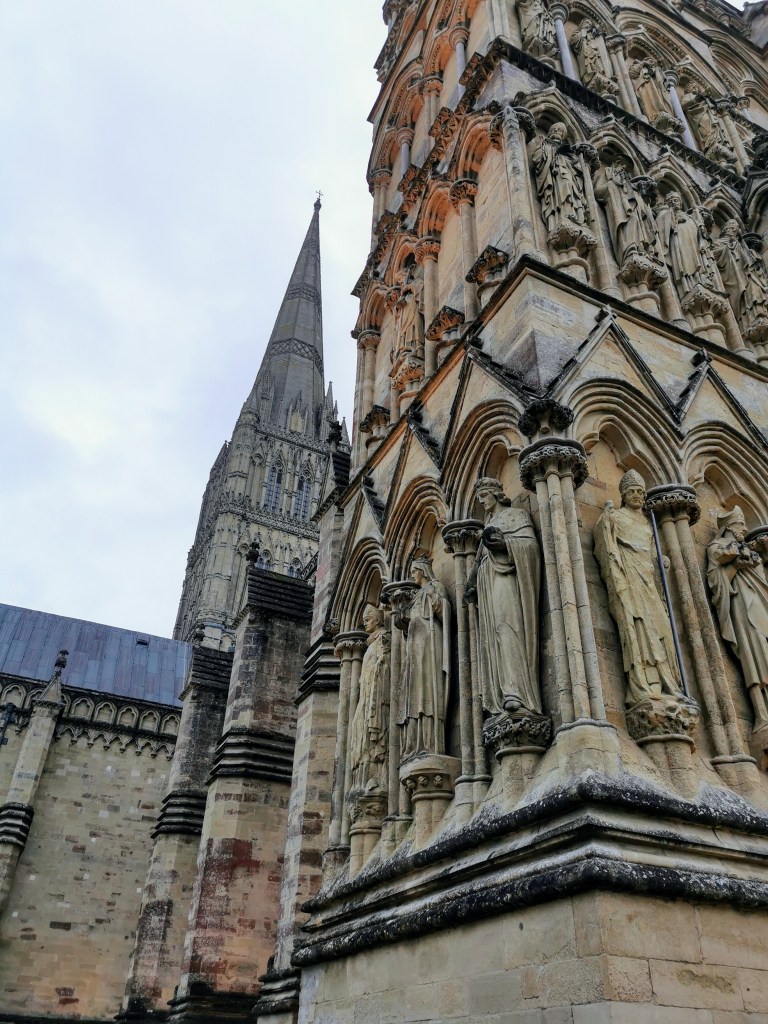
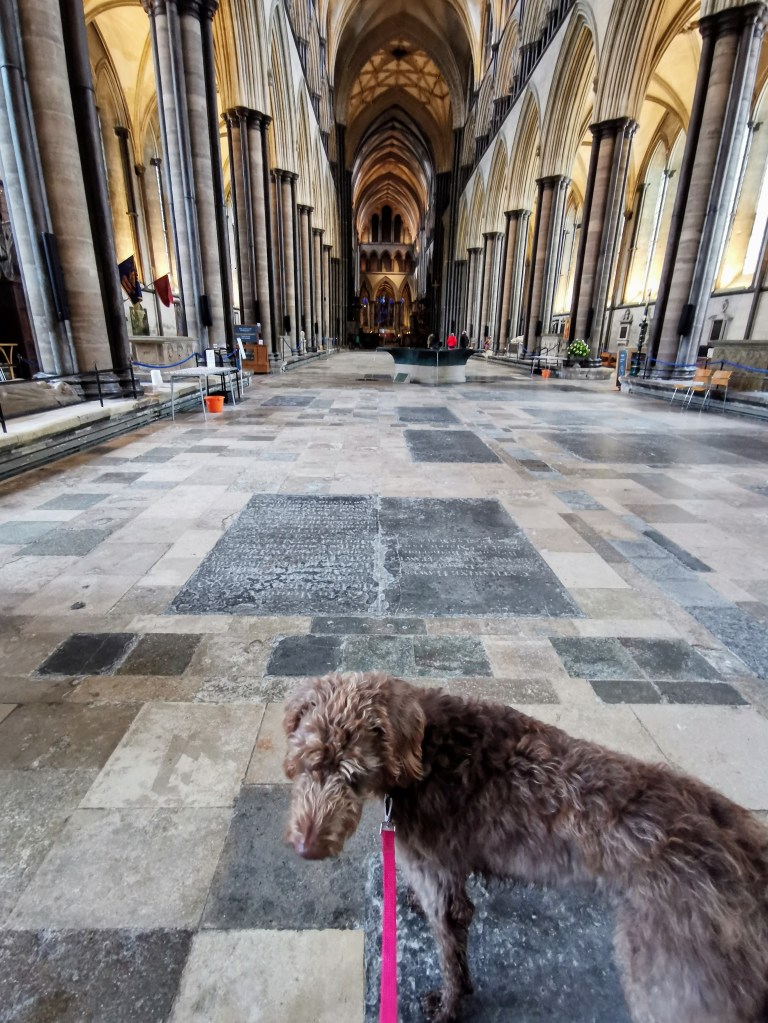
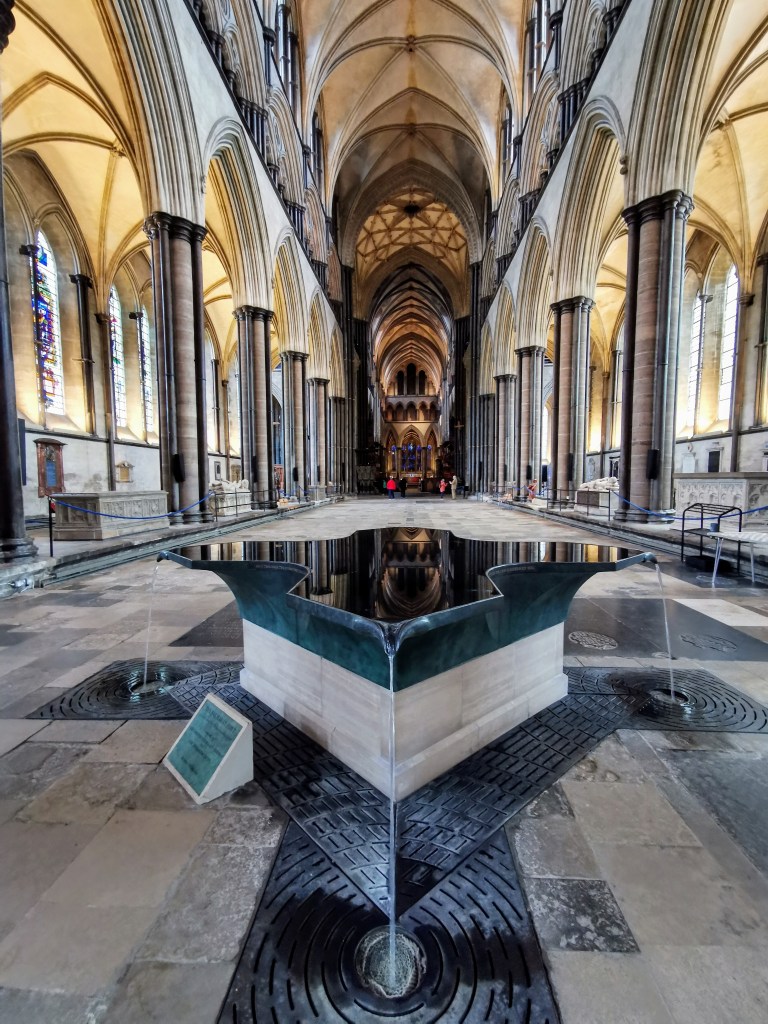
We’ve saved the best till last – this morning we’re visiting the cathedral. Yes, all of us, as just like the rest of town, this building welcomes pets. How good is that? I can’t help feeling slightly naughty though, I’ve never taken a dog to church before, and I keep expecting to get told off, especially when Lizzie drinks the water from the font!

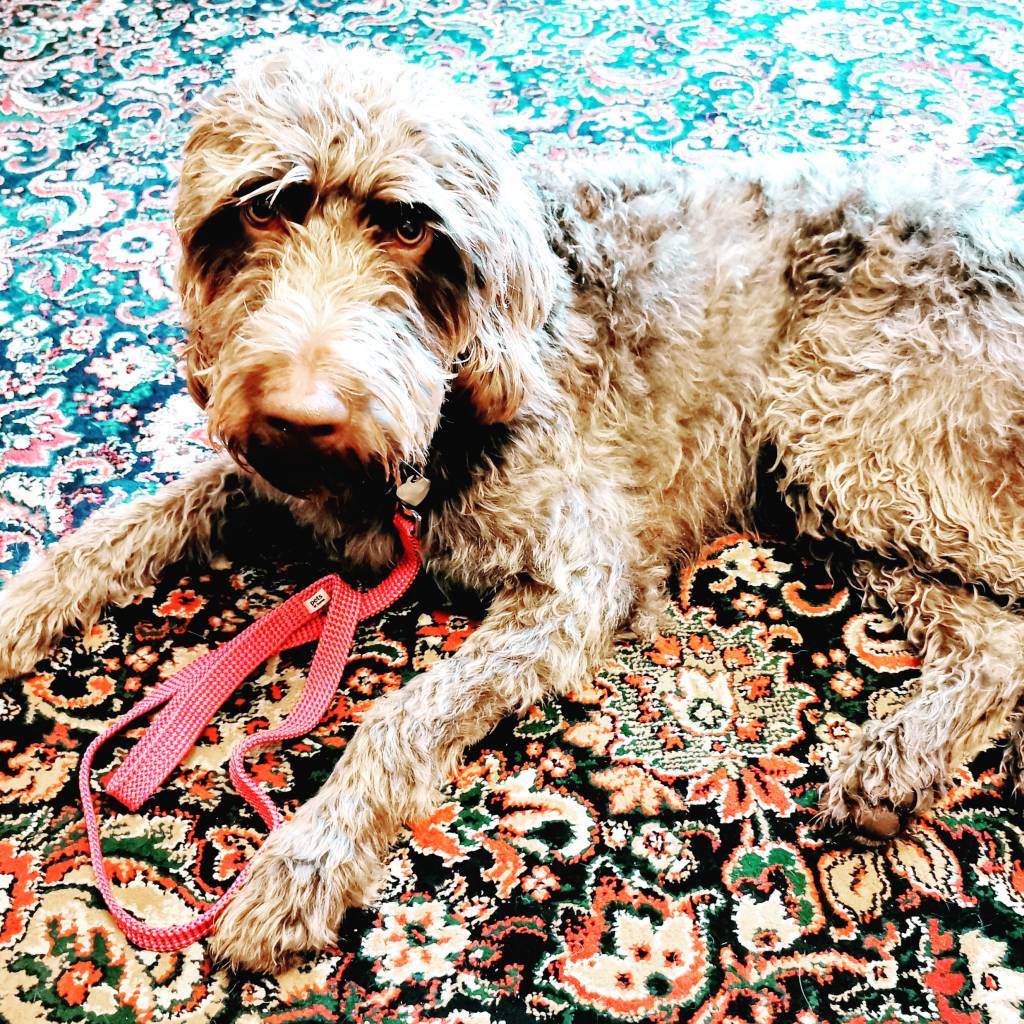
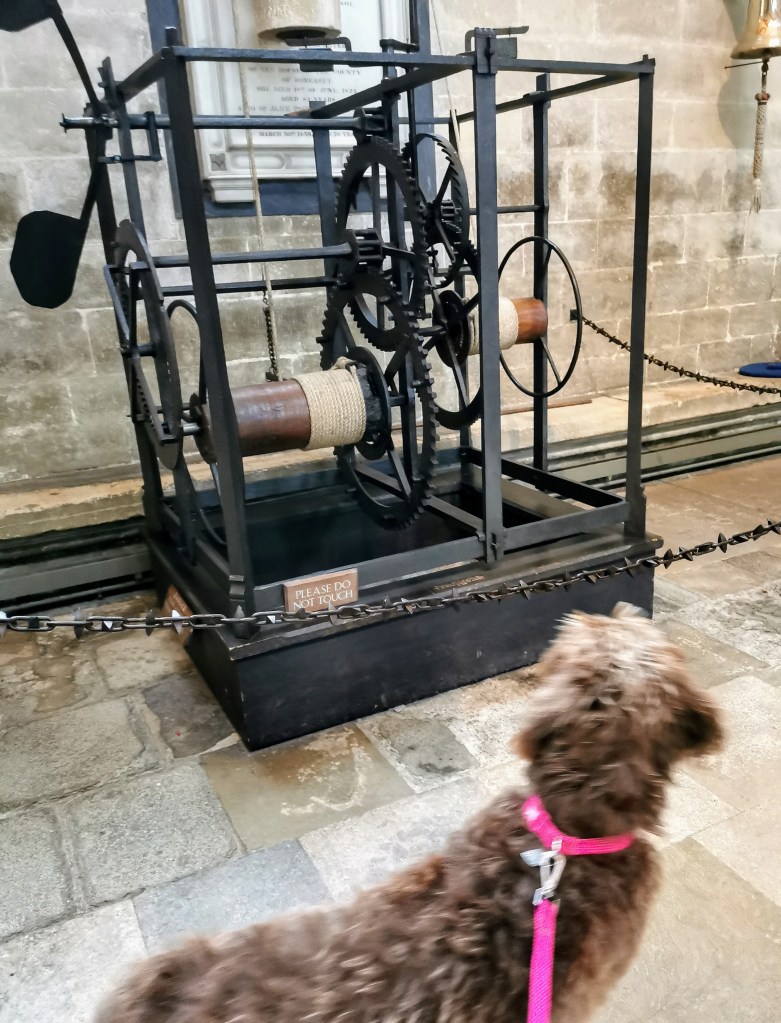
This amazing building was constructed between 1220 and 1258. It’s famous for its spire, which became the tallest in the UK after Lincoln Cathedral’s spire collapsed in 1549. It also houses the oldest working clock in the world, dating from 1386. The ticking is particularly loud, causing poor Lizzie to jump several times, hence the blurry photo below. What’s really impressive though, is the friendliness of the volunteers here – they all say hello and pat the dog.

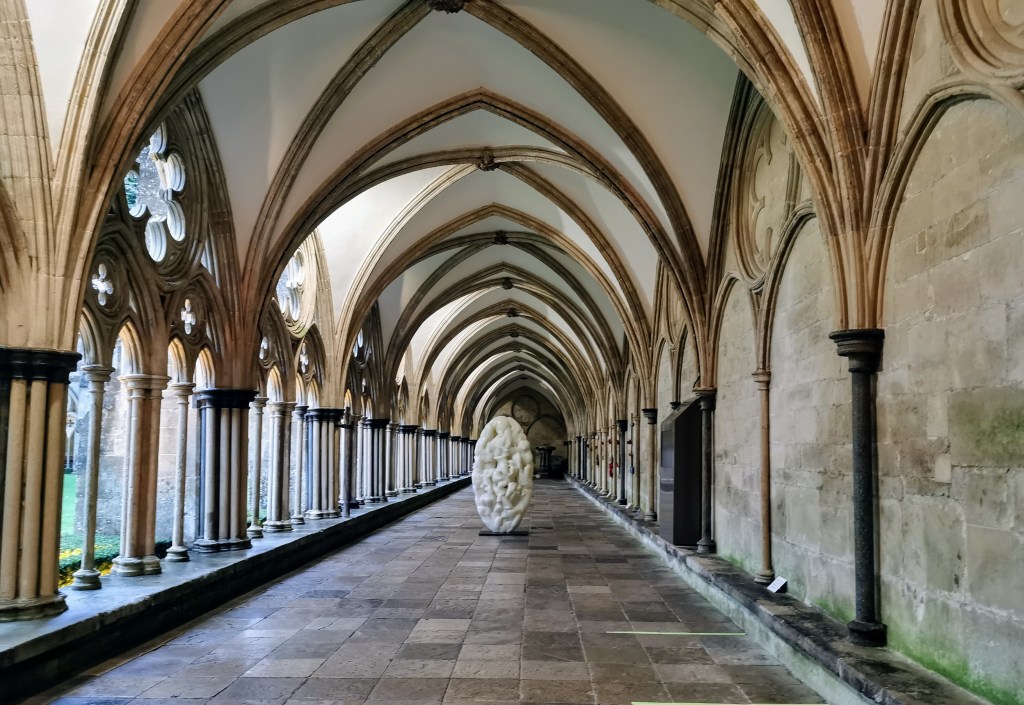
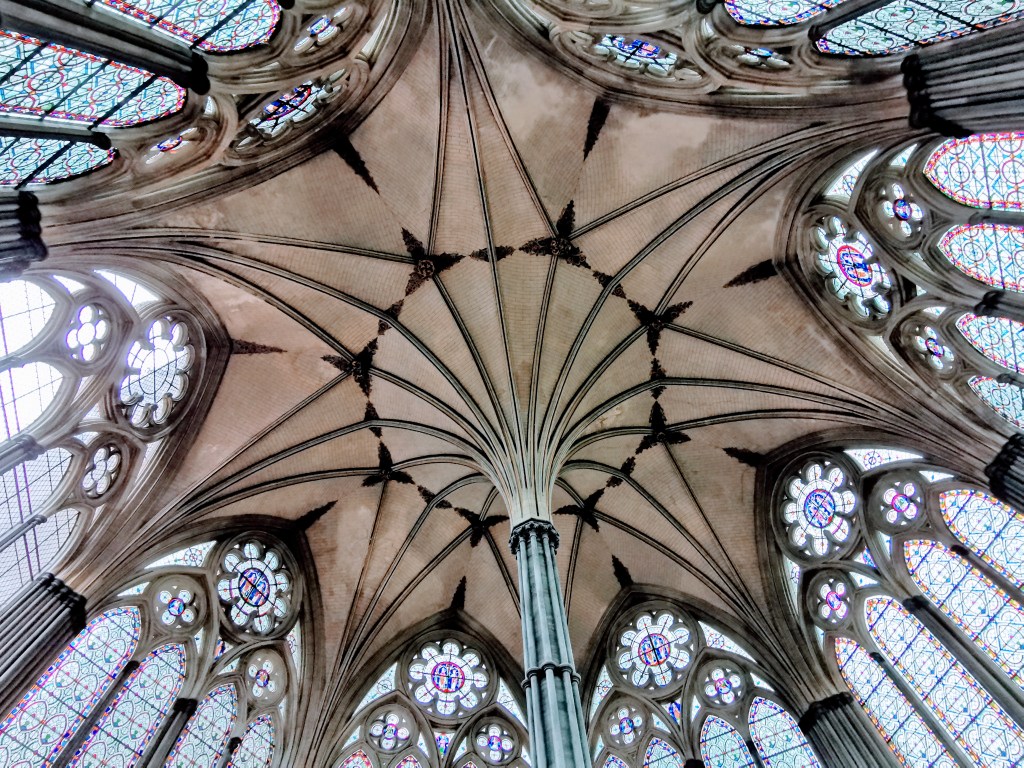
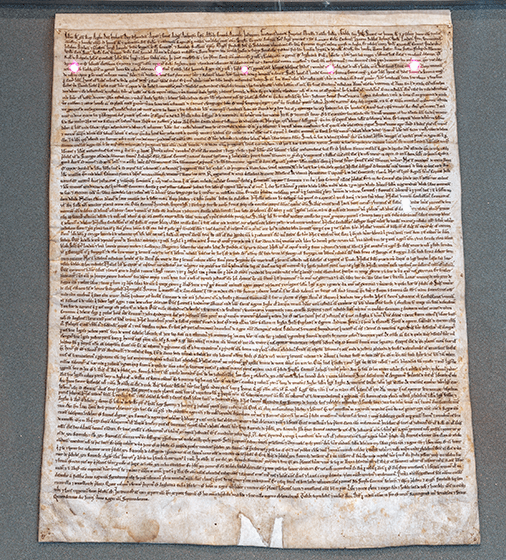
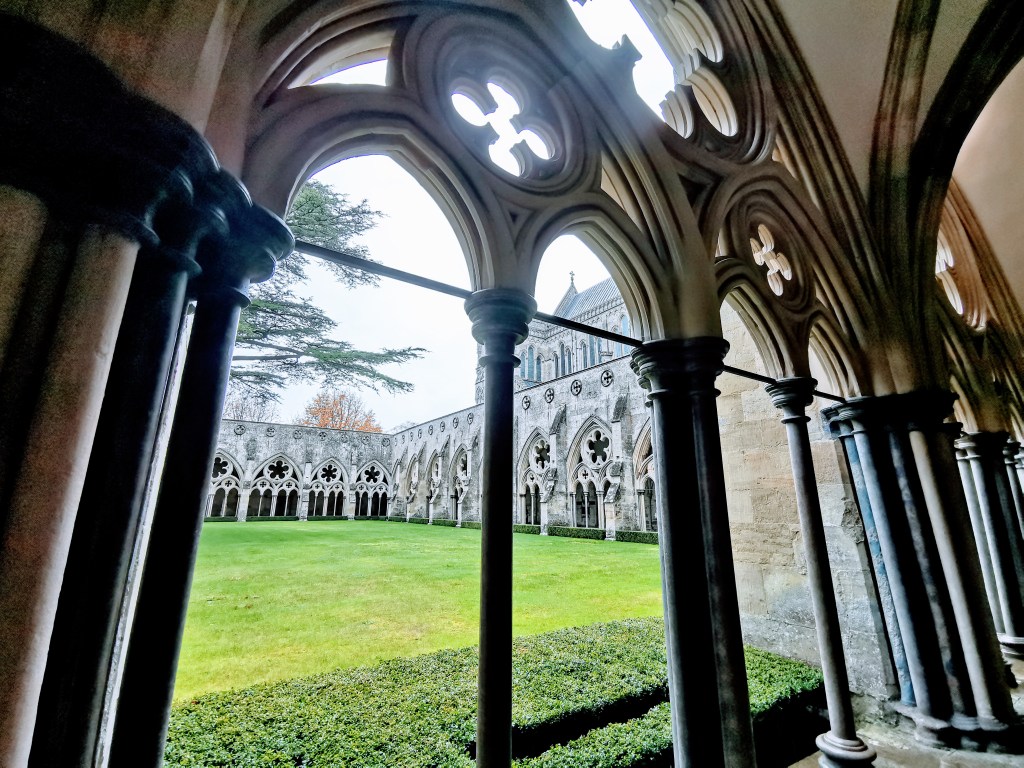
Out through the peaceful cloisters and into the chapter house with its amazing ceiling – here, for me, is the piece de resistance, the Magna Carta. One of the originals from 1215, it’s kept in a special darkened cube. It’s written in Latin, but you can hardly tell, the writing is so tiny. This is because the parchment (sheepskin) on which it’s written was so expensive so the 63 clauses had to be squashed up as much as possible.

I’m surprised that there are no signatures on this most important of charters, but that’s because hardly anyone could write back then, including the King. The parties who were witness to the agreement attached their seal in wax instead. In case you think this is just a mouldy old document, Magna Carta is widely believed to provide the bedrock of our parliamentary democracy. It guarantees the rights of individuals, and has been used recently by business owners protesting the closure of their premises due to coronavirus. Yes, they quoted Magna Carta. This is an amazing piece of paper, sorry, parchment!

We finish our visit to Salisbury with a coffee in another of the many dog-friendly establishments. The Cosy Corner is a lovely space with a menu that has us licking our lips. If only we hadn’t eaten so much breakfast! Lizzie likes the look of the sofa, but I think that might be pushing it a bit, even in this most canine-welcoming of towns. She goes and sulks under the table, but I’m pretty sure she’s had as much fun as Sal and I.

Great walking, superb scenery, lots of history, plenty of pubs. Salisbury ticks all the boxes. And I need to visit Old Sarum. I’ll be back, with the dog of course.

Continue reading “Salisbury loves Lizzie”

The ancient marvels of Avebury

Today is a big one for me – it’s been on my list for a while. Avebury village sits at the heart of a World Heritage Site with the largest prehistoric stone circle in Britain and the highest neolithic structure in Europe. But it just isn’t very well known. Jeez, what do you need to get famous around here? It’s one of life’s great mysteries. World-renowned Stonehenge gets all the limelight, and I’m going there soon, so perhaps I’ll figure it out.

Driving west I pass through the charming market towns of Hungerford and Marlborough, the journey enlivened by lovely Autumn foliage and the crazy pheasants that launch themselves into my path. Happily, I manage to dodge them all, but it certainly makes for interesting driving, the daft birds!

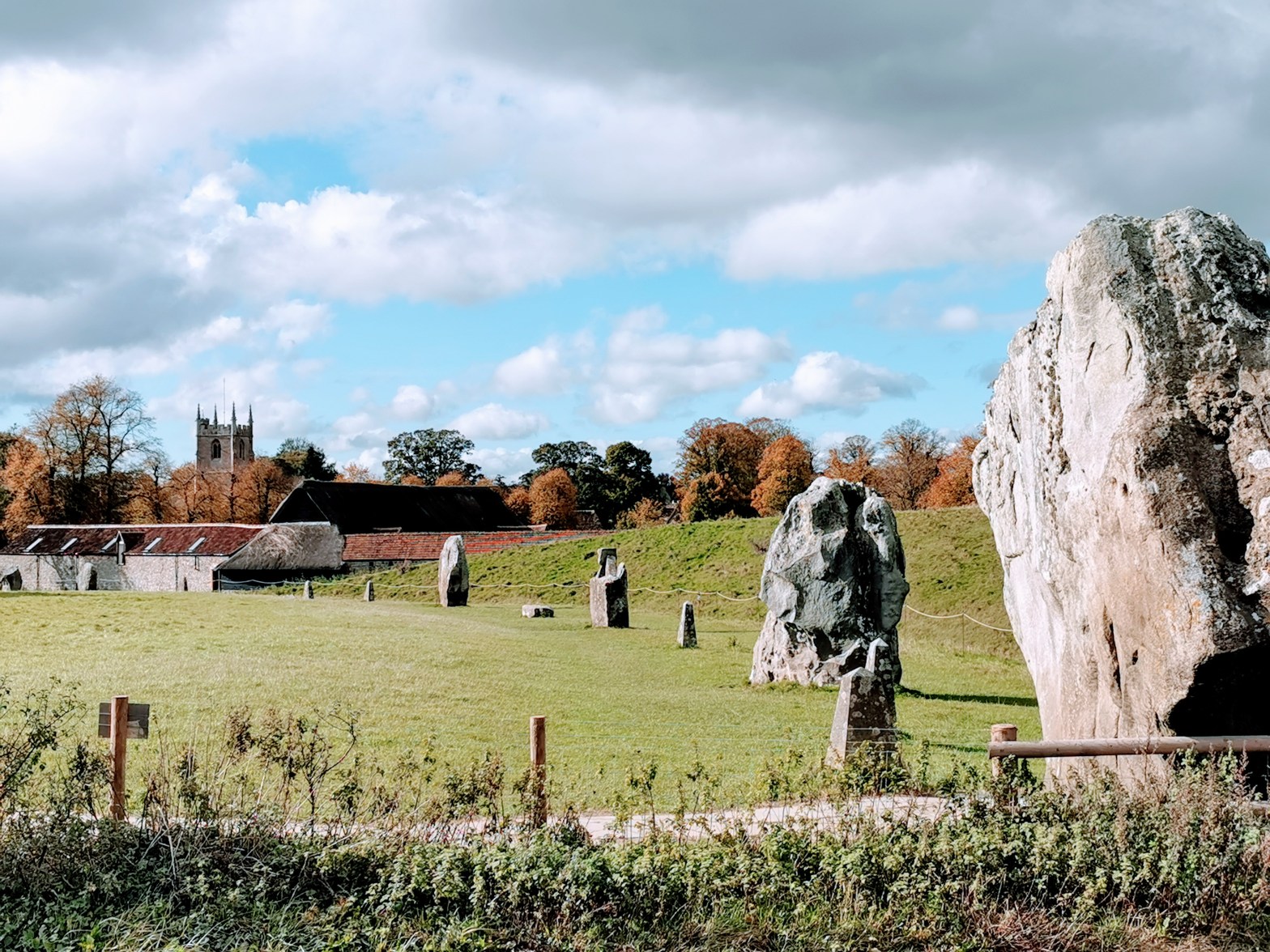
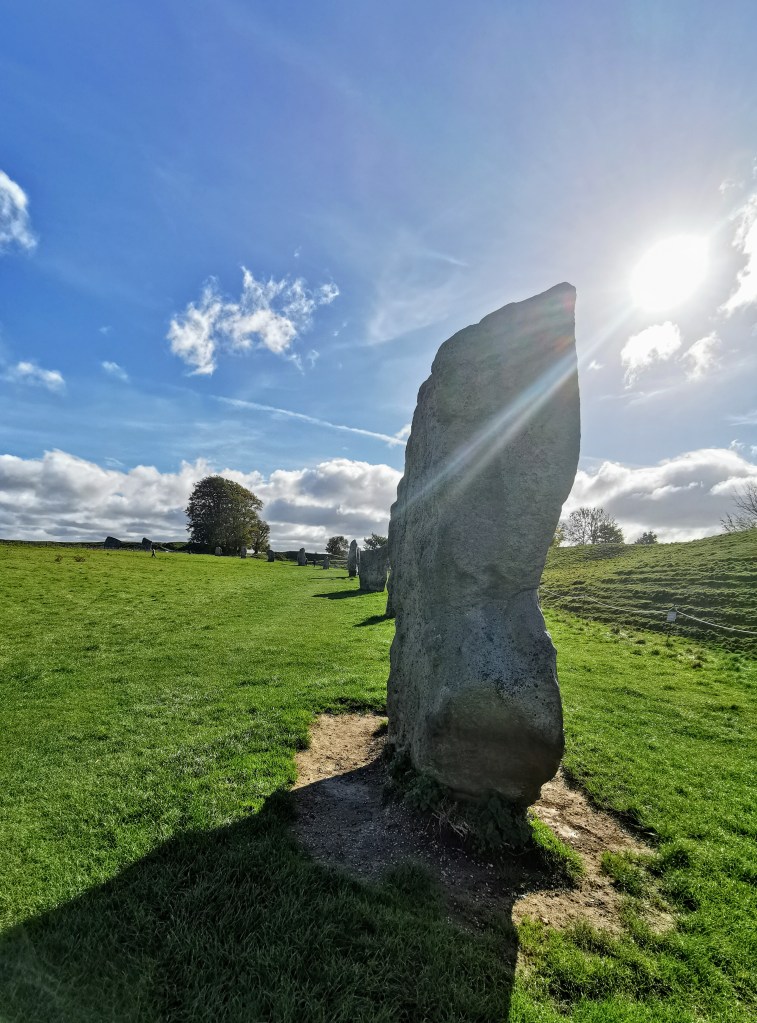
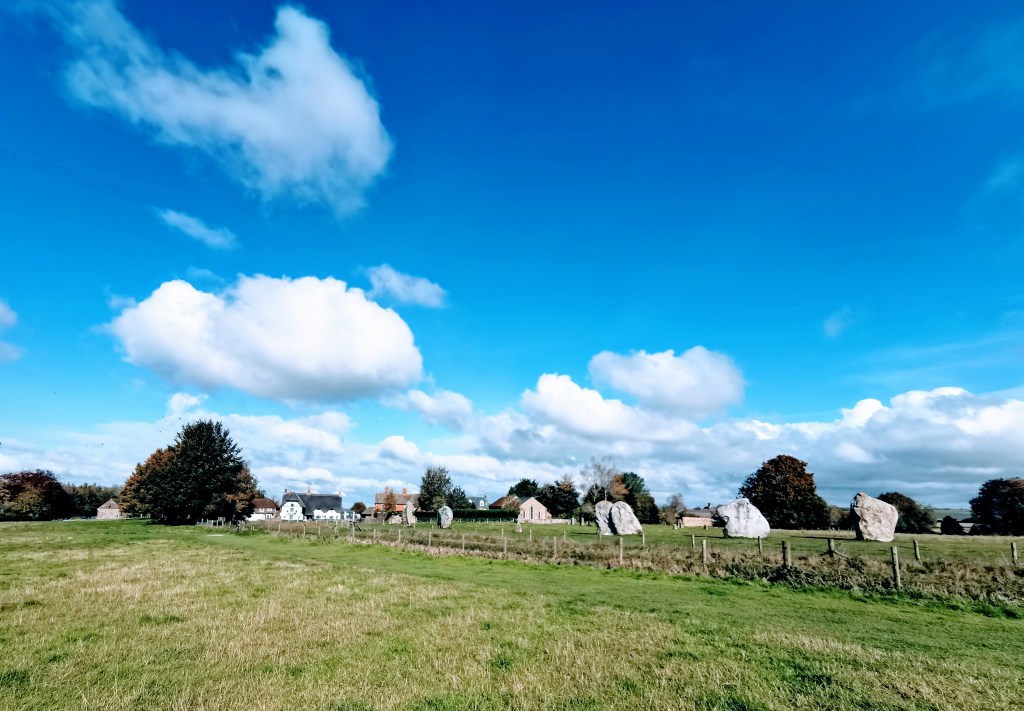
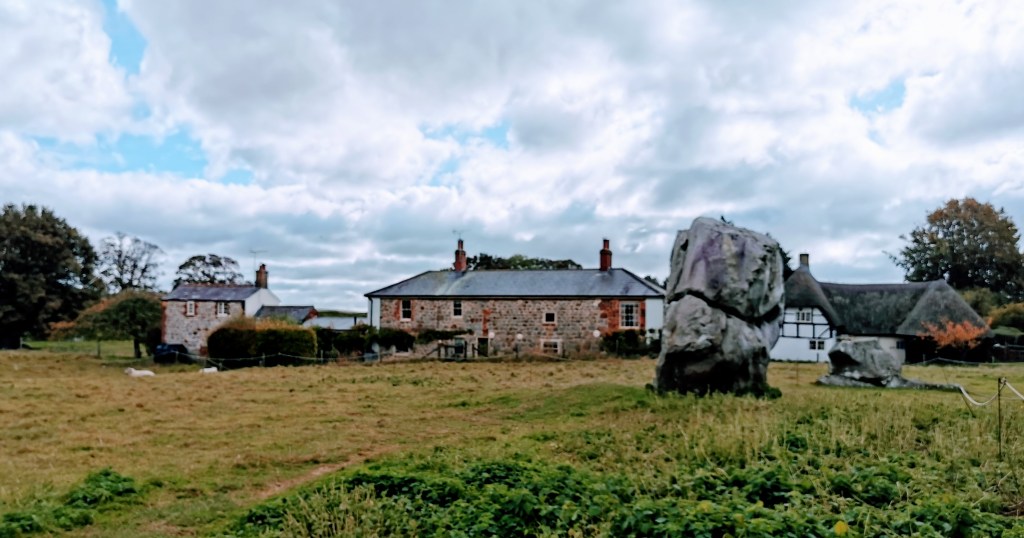
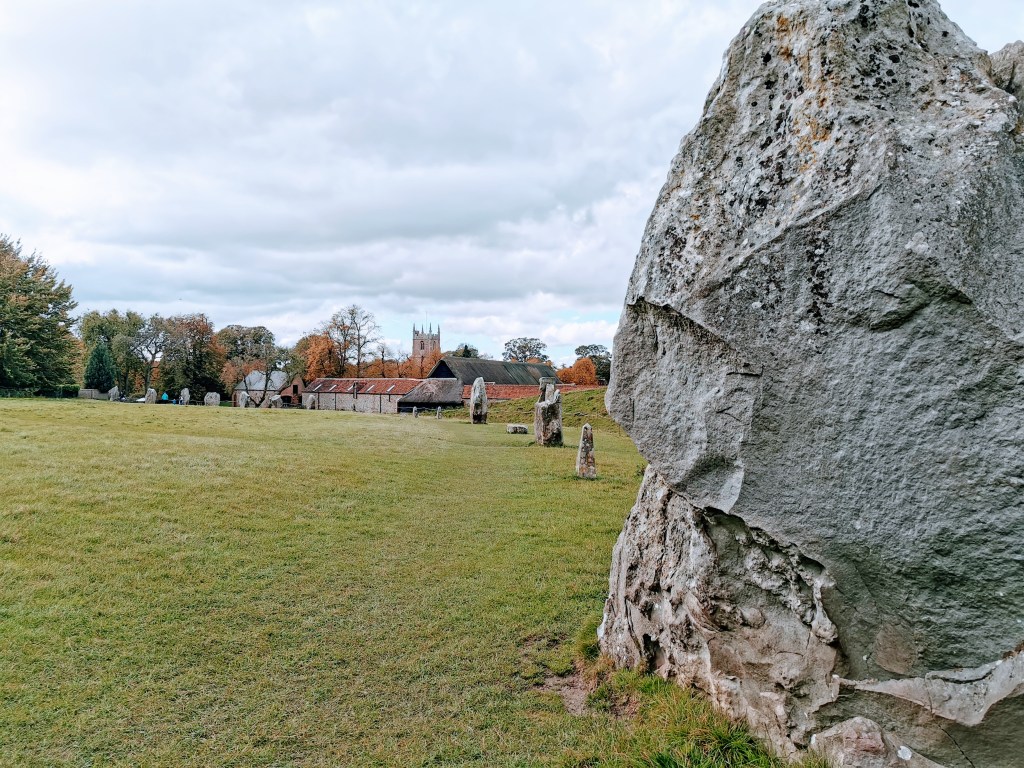
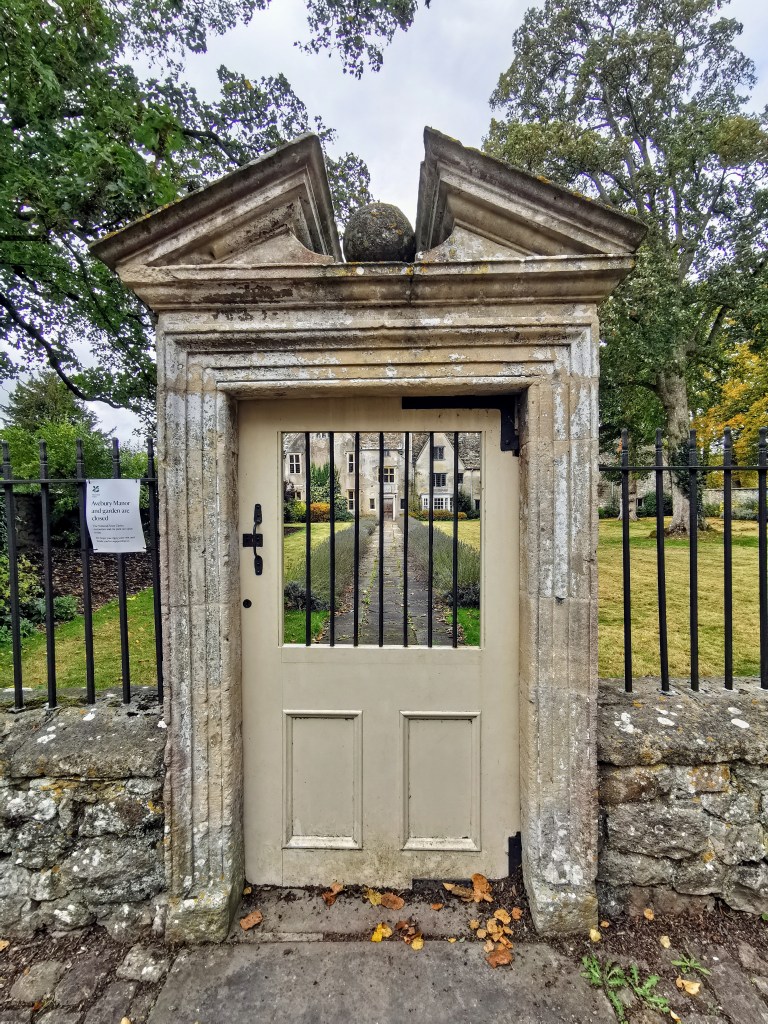
I arrive at the car park just outside Avebury village and follow the footpath towards the centre. A small settlement of around 600 inhabitants, the village came much later than the stones that surround it. People started to live here in the early Middle Ages, when the stone circle was already several thousand years old. I wonder what they thought of the mysterious monument, and why they decided to live within it?

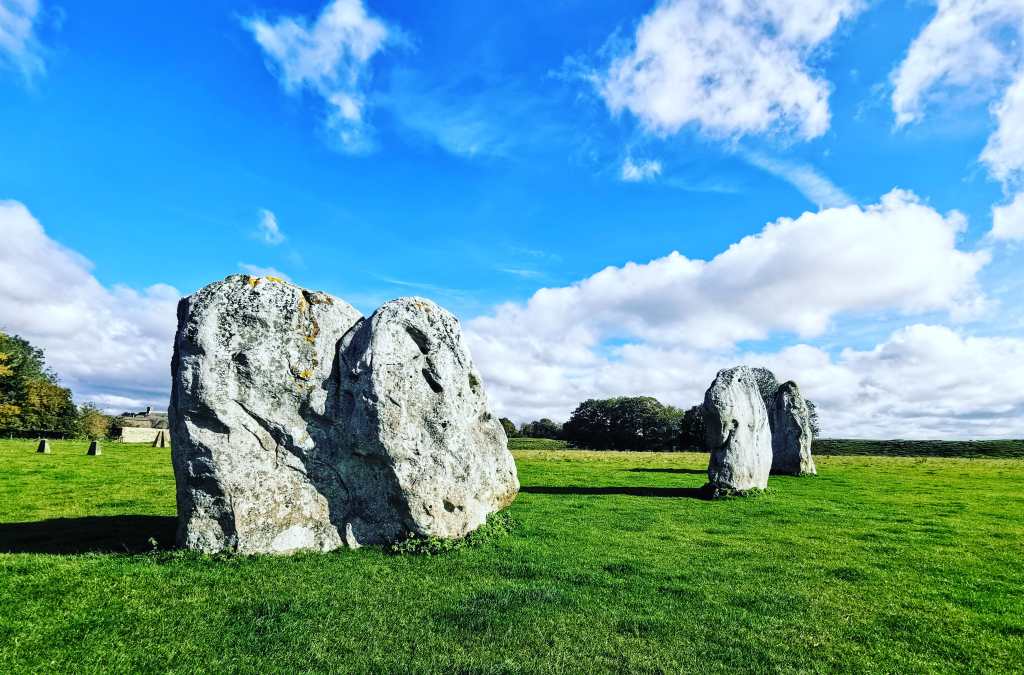
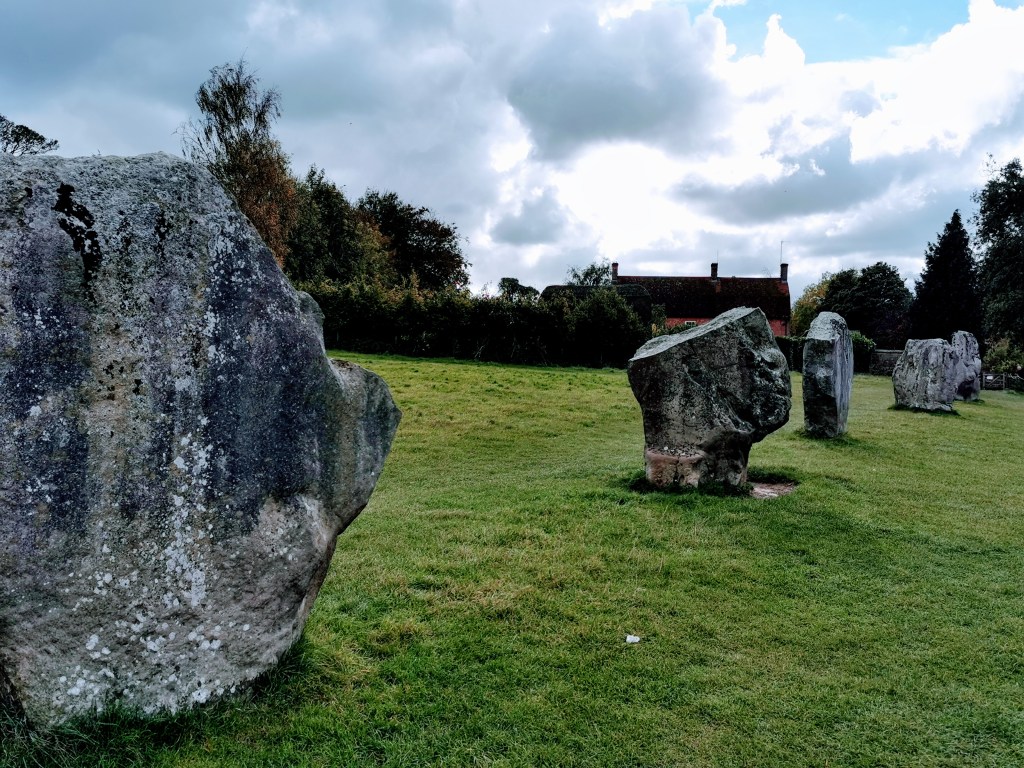
Even today, the idea of living within a prehistoric stone circle is quite bizarre. As I approach, it’s clear that the stones are everywhere. It must be quite spooky to live your everyday life surrounded by an ancient structure like this, especially when no-one really knows what it signifies. Why was it built? Five thousand years ago, nobody was keeping any records.

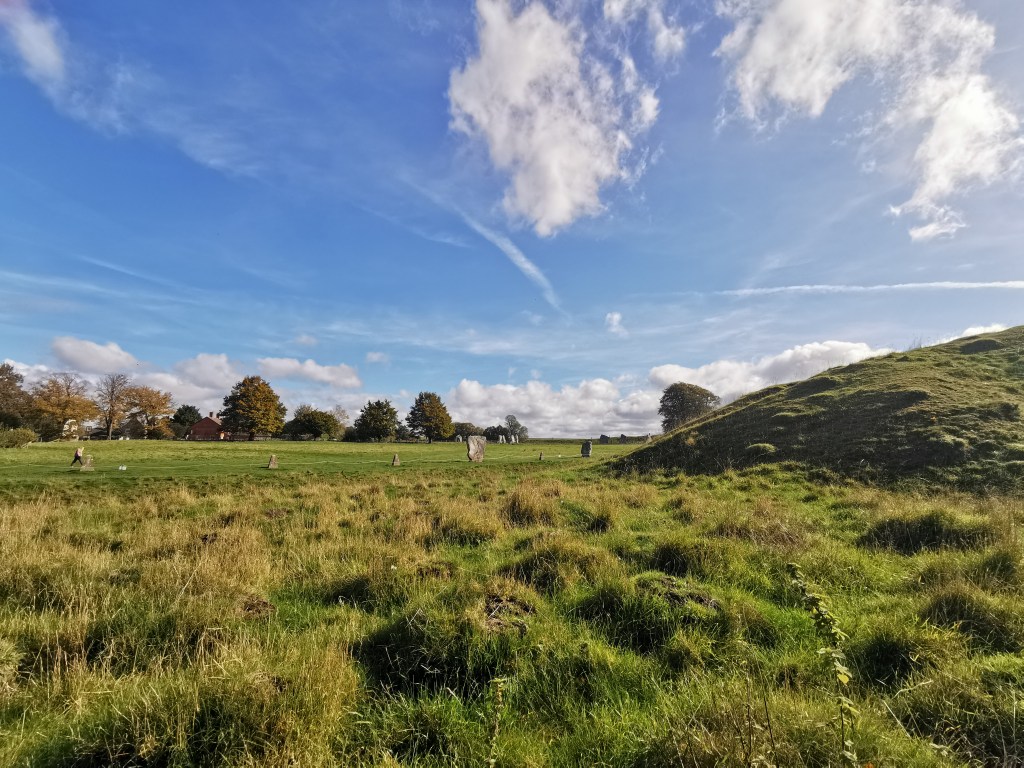
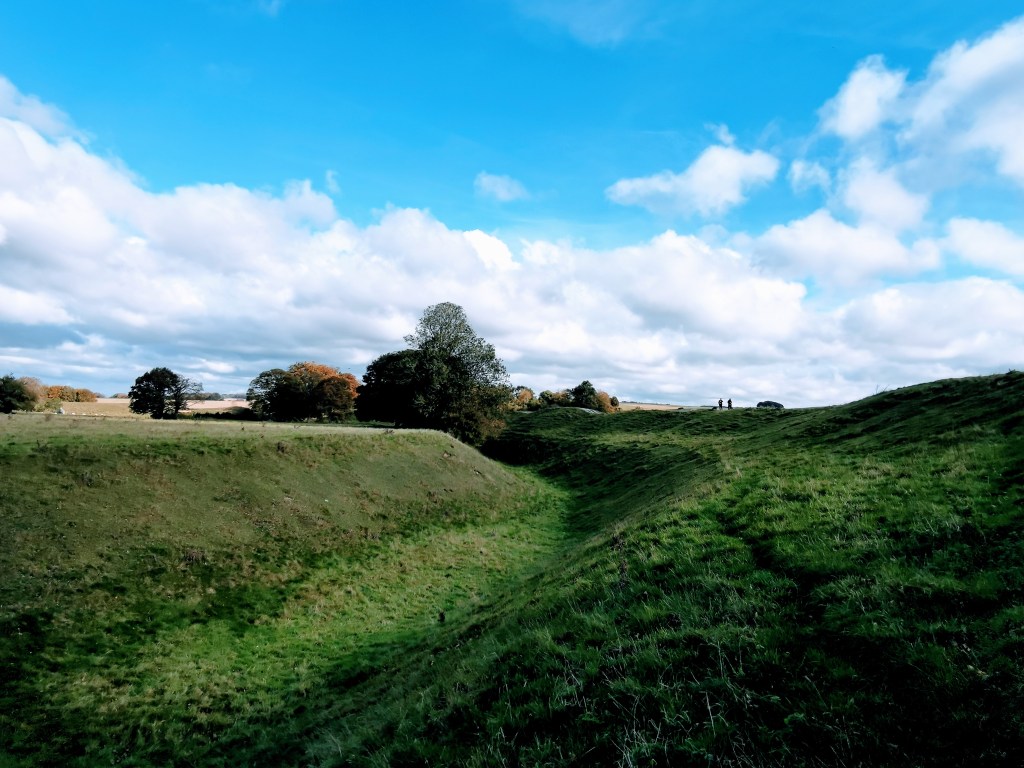
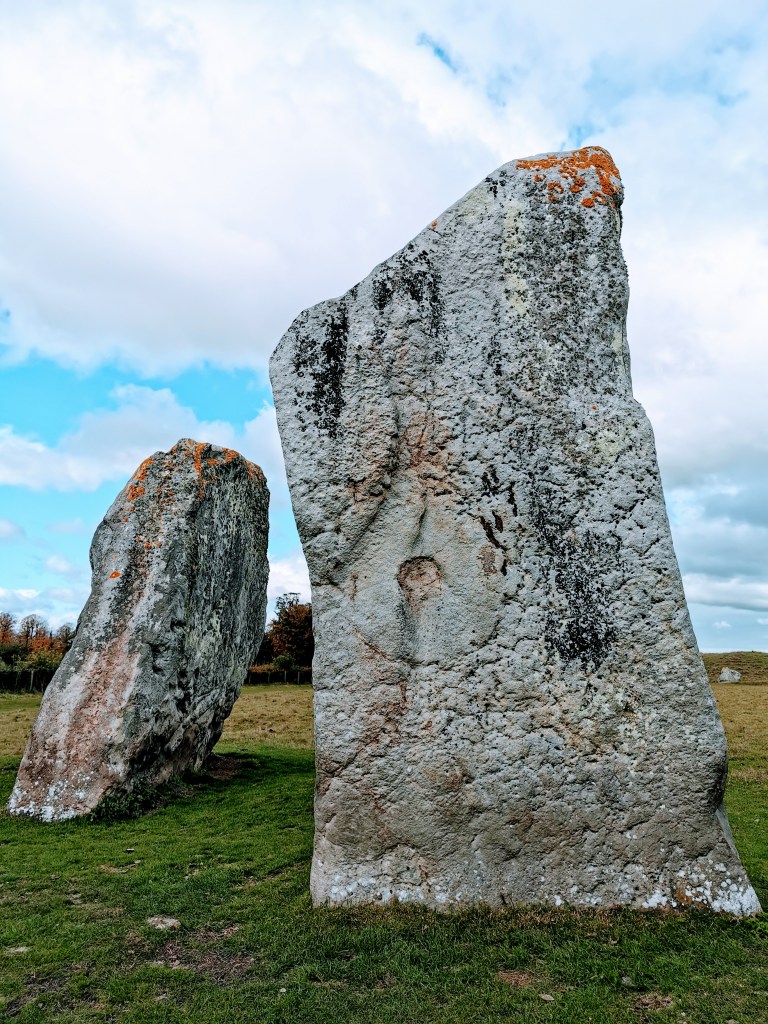
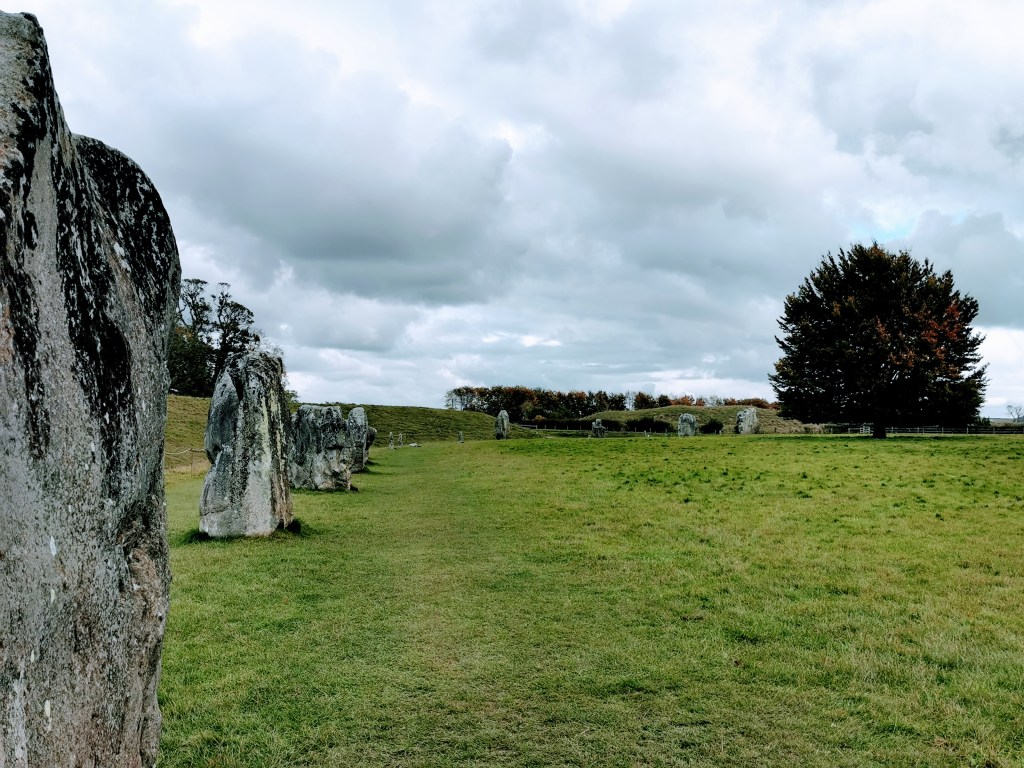
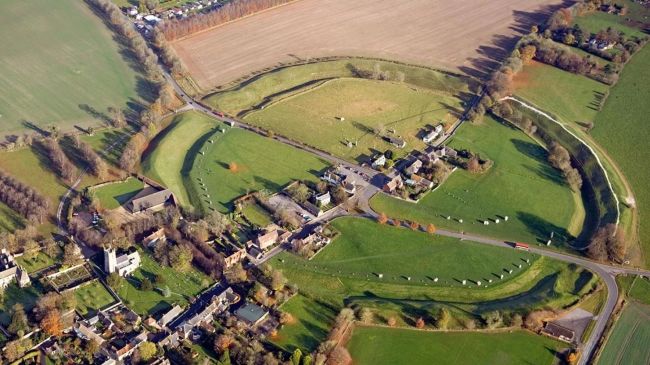
What we do know is that construction of the site commenced in 3000 BC and continued over several hundred years. Wow! That’s pretty old by anyone’s standards. First came the cove, a central group of four large stones like a box. Next were two inner stone circles. The huge outer stone circle and henge (surrounding circular bank and ditch) date from around 2600 BC. Finally, the avenues of stones leading out from the monument were built in 2400 BC.

Most people agree that the most likely use for monuments like Avebury was for rituals, gatherings, feasts and other events linked to the religious beliefs of the time. They didn’t have churches or pubs back then, remember. There’s still speculation about the details of construction. The stones are different sizes – did they represent male and female? Are they specifically positioned for astronomical reasons? There’s a lot that we will never know.

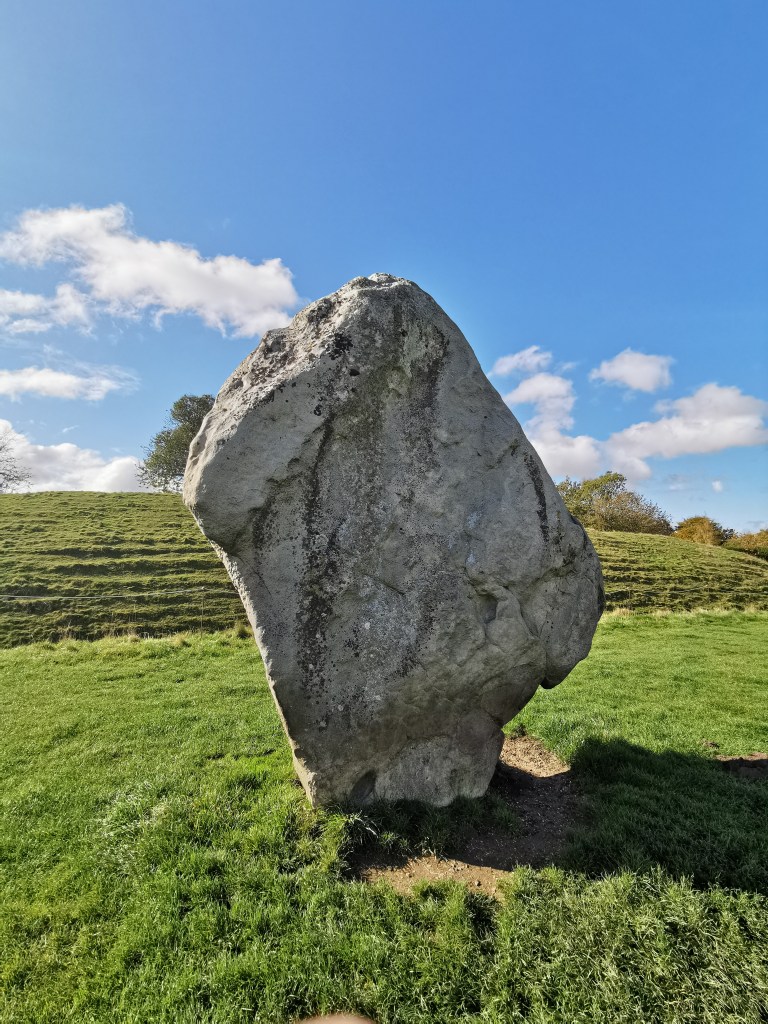
The amount of work carried out to build the site using rudimentary tools proves that it had tremendous importance. The henge has a circumference of 1,000 metres. The outer stone circle originally consisted of 98 stones with a diameter of 330 metres. Some of the stones weigh more than 40 tonnes. Our prehistoric ancestors were evidently strong, and determined to get this monument built.

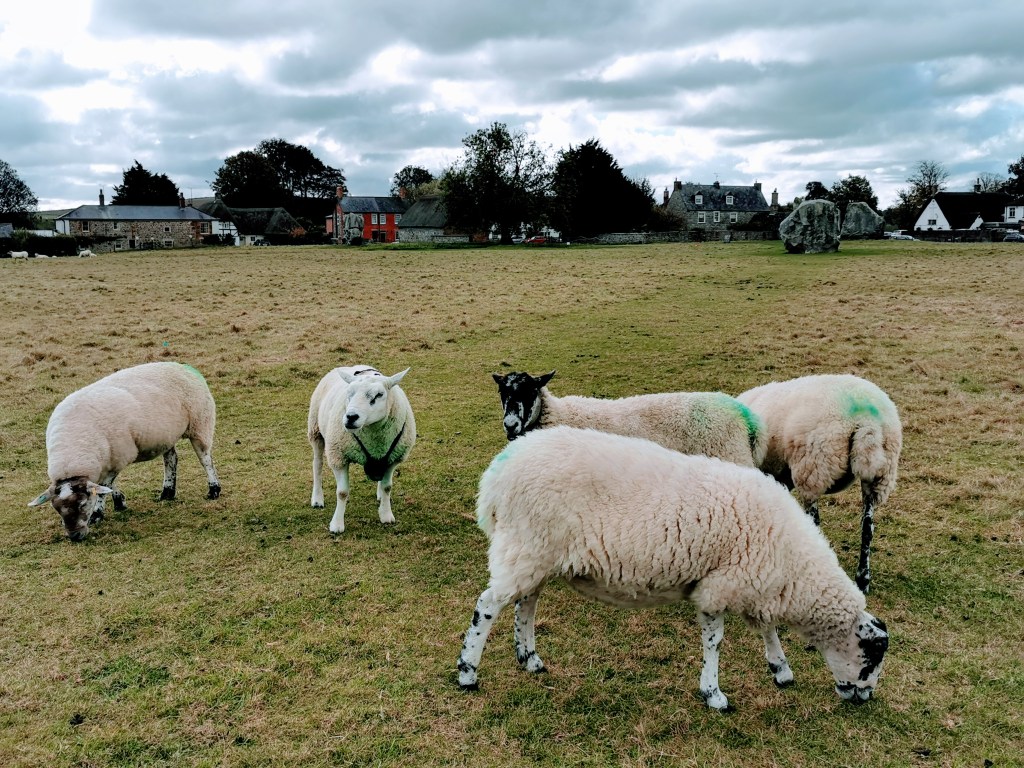
Nowadays, the sheep that graze here don’t seem to be too intimidated by the historical significance of what surrounds them. Unfortunately, villagers in the 14th century were equally unimpressed. The stones were seen as a pagan insult to Christian beliefs, and many were toppled over and even buried.

The wanton destruction continued for many years, with the stones seen as an insult or at best an inconvenience. Some of the huge standing stones were smashed up and used as building materials. I often wonder how the human race has thrived despite unbelievable stupidity and ignorance, but there you go…miracles happen. It wasn’t until the 18th century that serious attempts were made to protect the ancient structures.

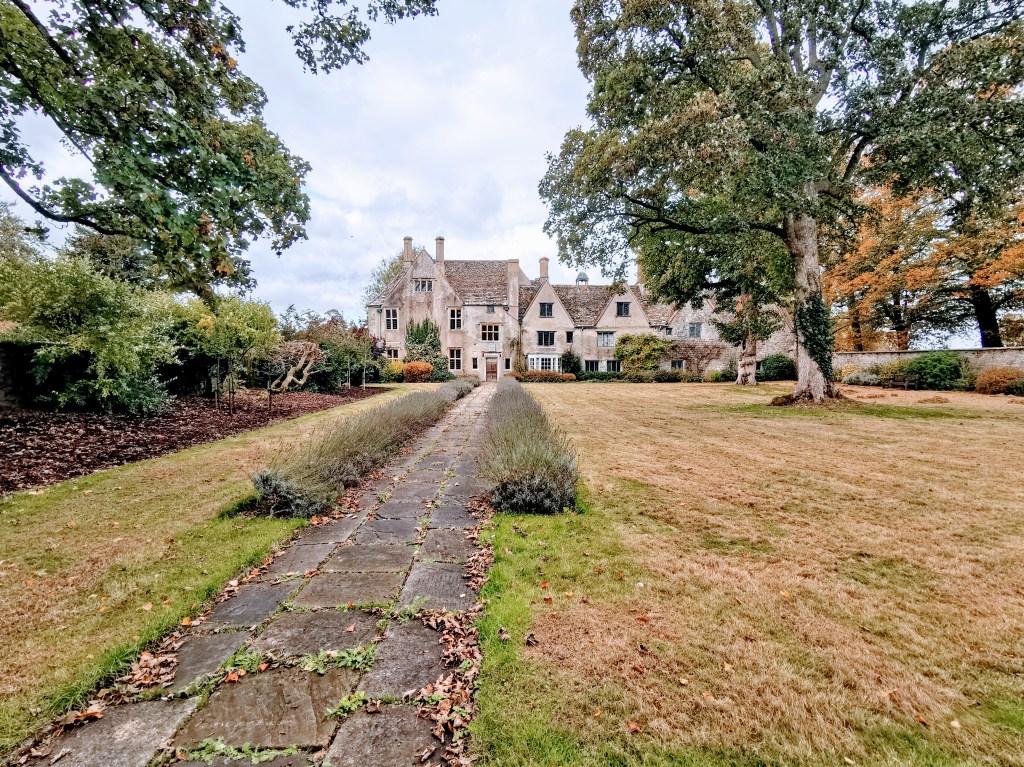
Luckily, in the early 20th century, a permanent solution was found. Alexander Keiller, of the famous marmalade family, stepped in to save the site for posterity by buying the whole area – 930 acres. He carried out excavations, re-erected the stones and took aerial photos to educate others about the monuments. He then sold everything to the National Trust at agricultural value only. I’ve said it before, but thank goodness for the Victorians! Keiller lived at Avebury Manor for the rest of his life, and the museum he founded about Avebury and its environs is named after him. What a guy!

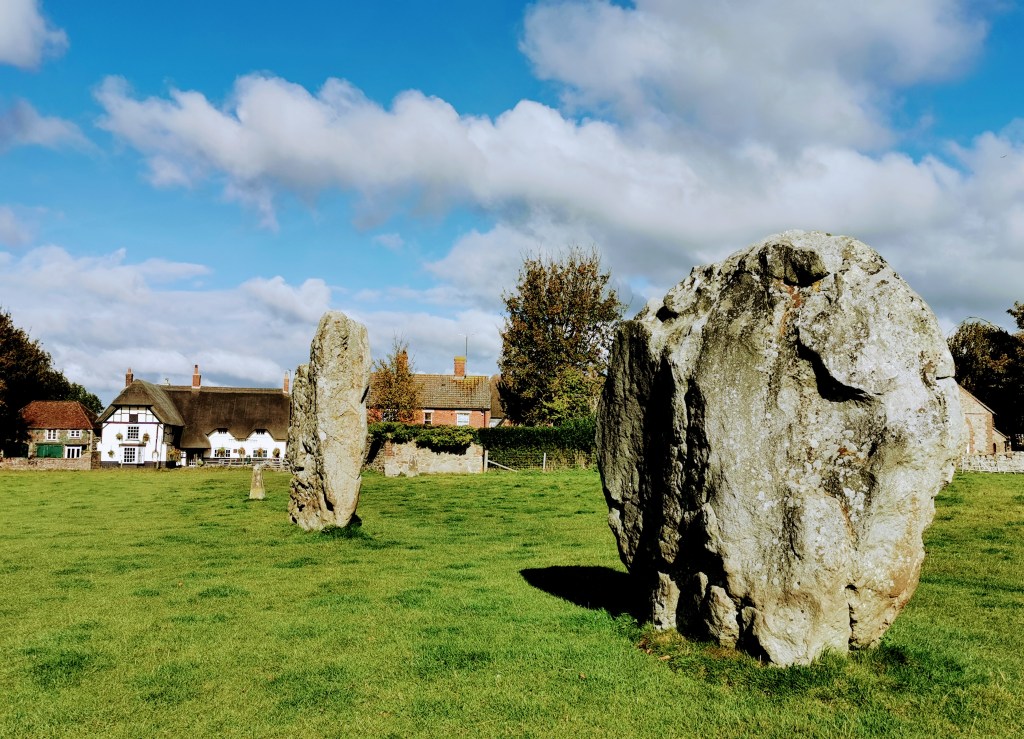
Avebury holds the distinction (not inconsiderable in my opinion) of having the only pub in the world that’s surrounded by a prehistoric stone circle. Unfortunately I’m in a bit of a hurry today, there are so many things to see here, so I don’t get to enjoy a drink at the Red Lion. What a shame! I’m following the West Kennet Avenue towards The Sanctuary. Yes, some things are more important than wine!

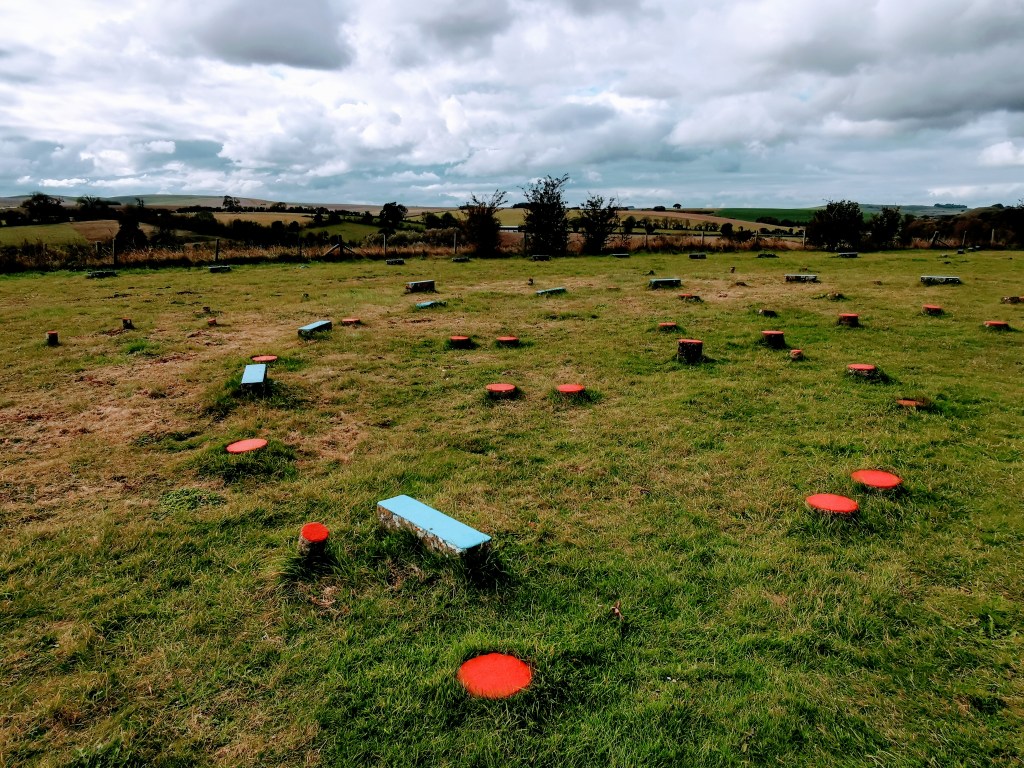
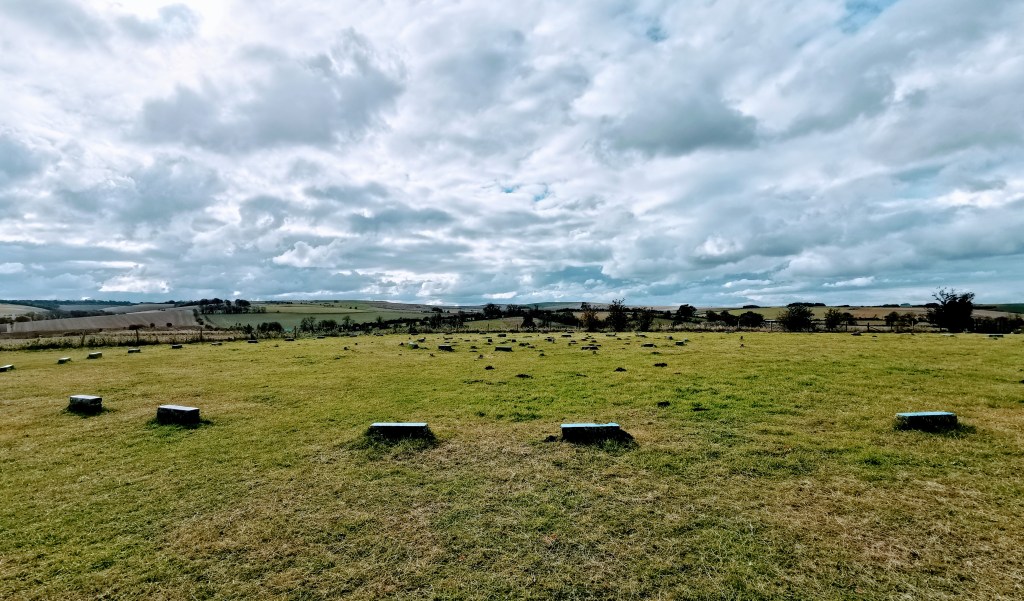
Sadly, there’s not much to see here today, apart from coloured markers and lovely views, but on this spot in 3000 BC there was another important circular arrangement, first made of wood and then stone. Due to the number of human bones found here, it was clearly a sacred place where important rites were performed. But it’s so long ago, we will never know exactly what took place.

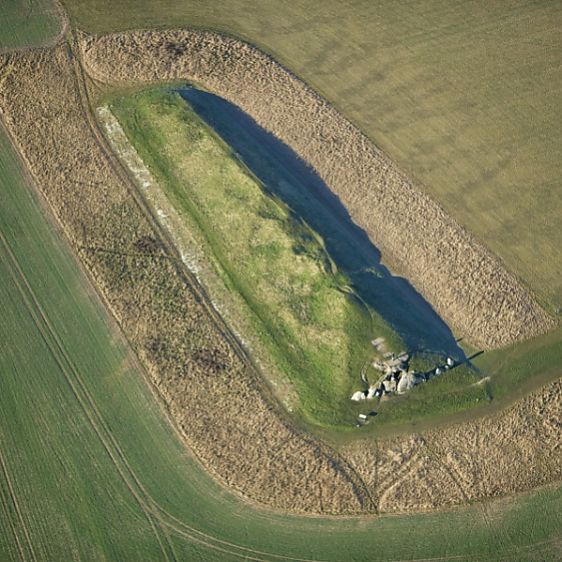
Believe it or not, there’s a monument nearby that’s even older than the Avebury stones. The West Kennett Barrow, just down the road from The Sanctuary, dates from 3650 BC, and it’s my next stop on this tour back through the millennia.

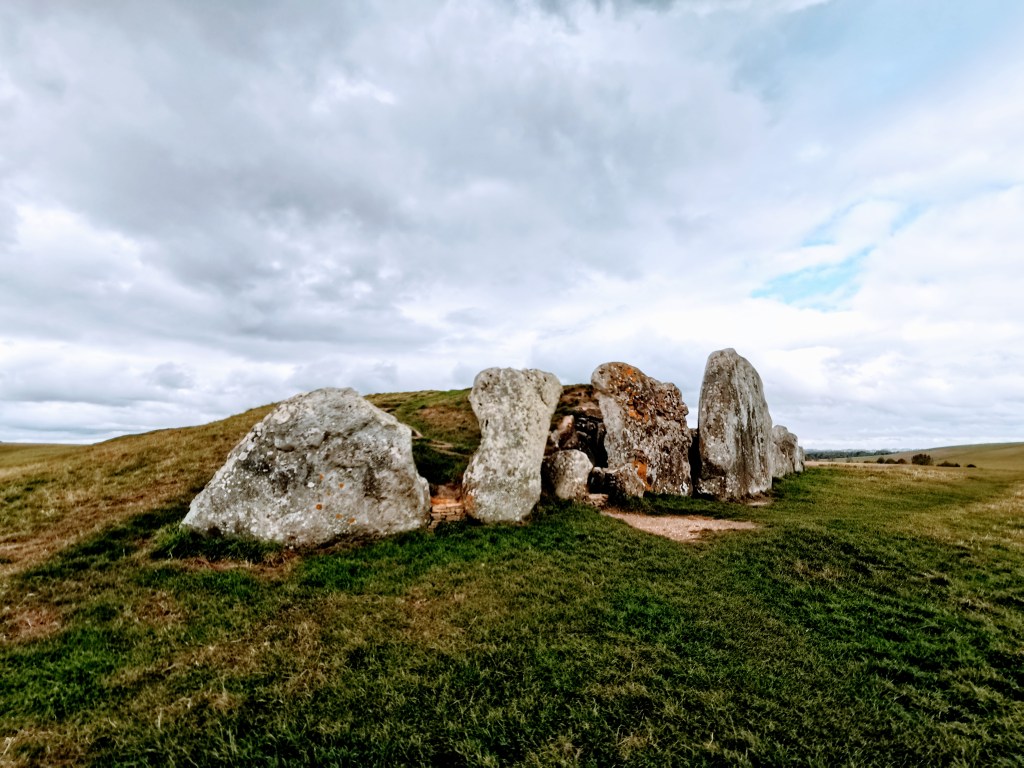
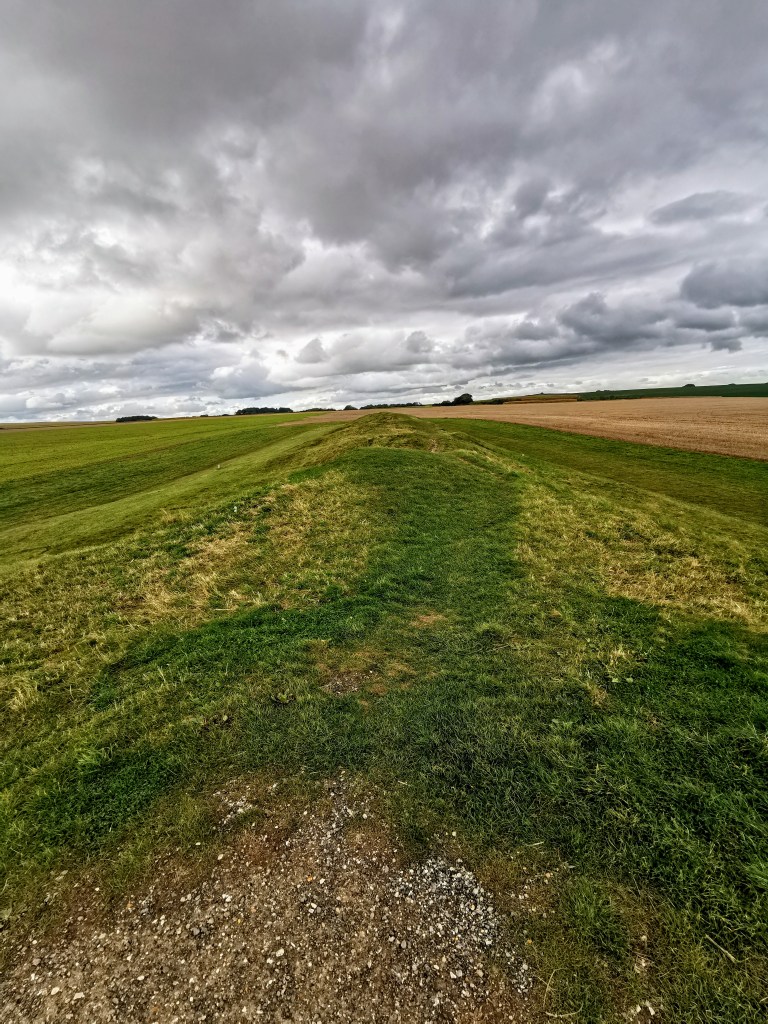
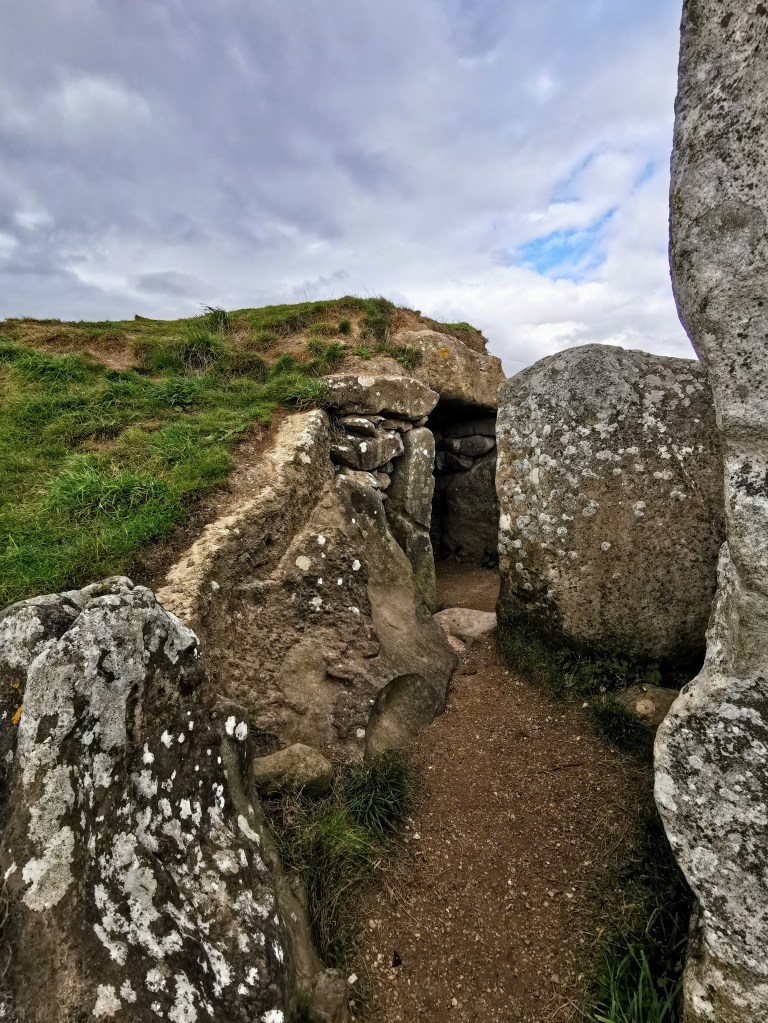
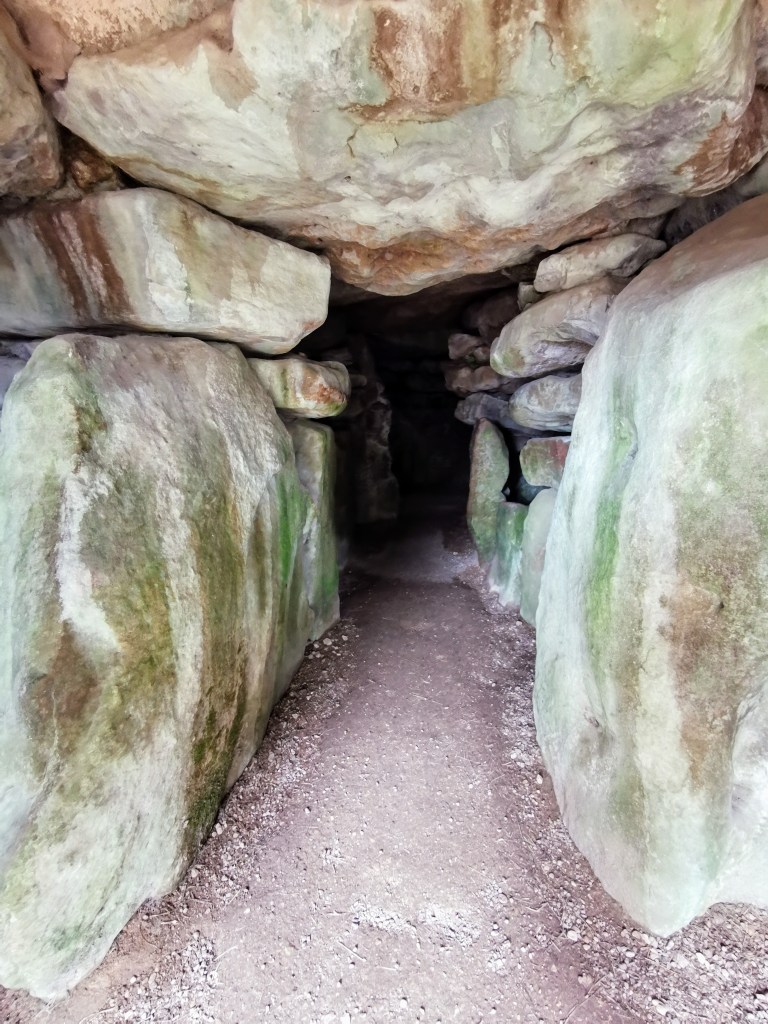
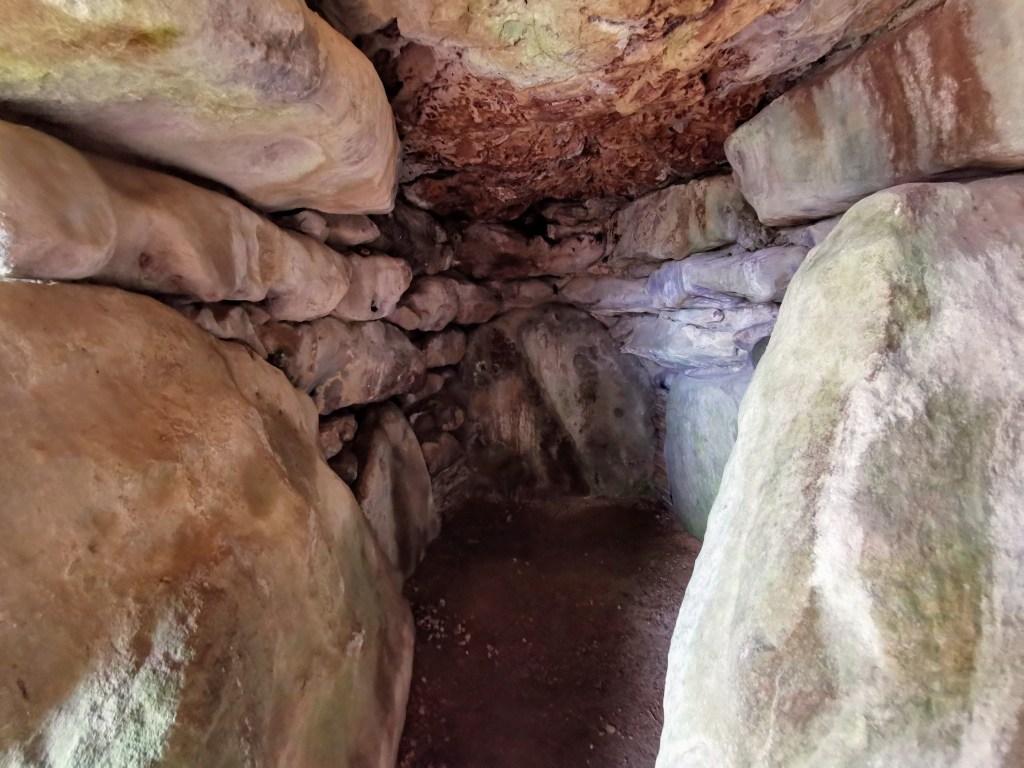
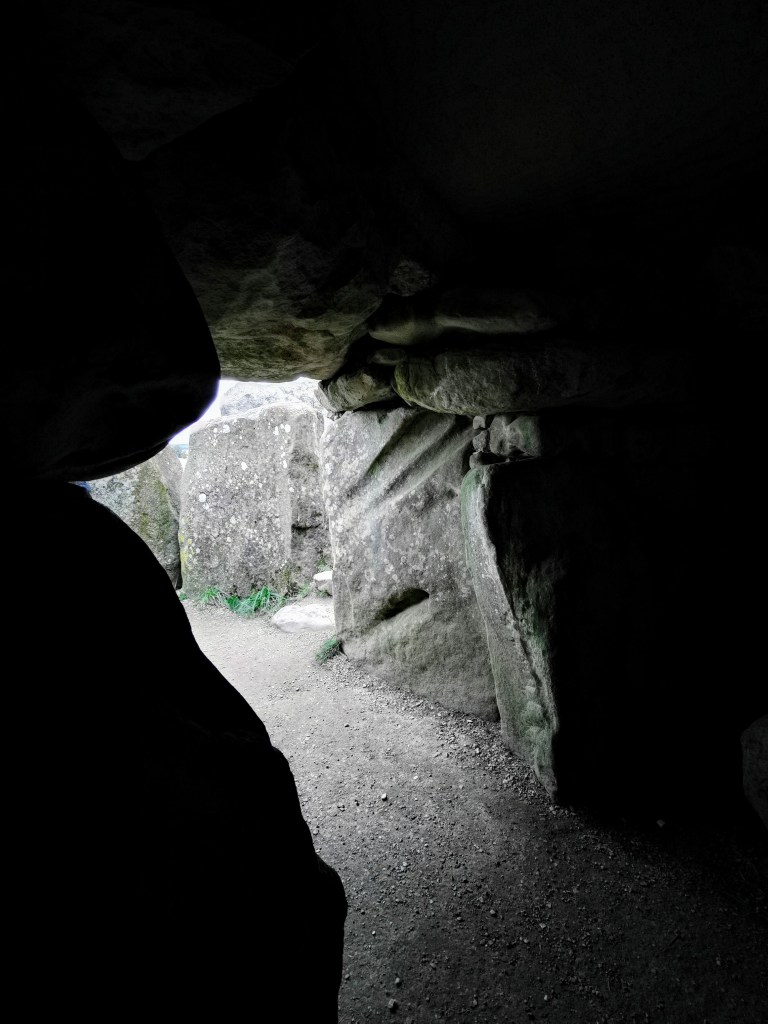
The Barrow is perched up on a hillside, a long burial chamber dug out and lined with sarsen stones – local sandstone blocks. Used for around 1,000 years before it was blocked up, remains of around 50 individuals were found here, together with pottery, beads and a dagger, which were buried with their owners. The countryside around Avebury contains around 30 burial barrows, but this one is particularly big – around 100 metres long and 20 metres wide.

But the best thing about this barrow is that you can go inside and explore the burial chambers. What’s more, I have the place all to myself. It’s hard to find positives about the events of 2020, but it’s a rare privilege to visit treasures like this without the crowds. I text my Dad and he’s very envious. Hanging out in a neolithic crypt isn’t something you get to do every day. I don’t spend too much time inside though, it’s a little bit creepy, even though the human remains are long gone.

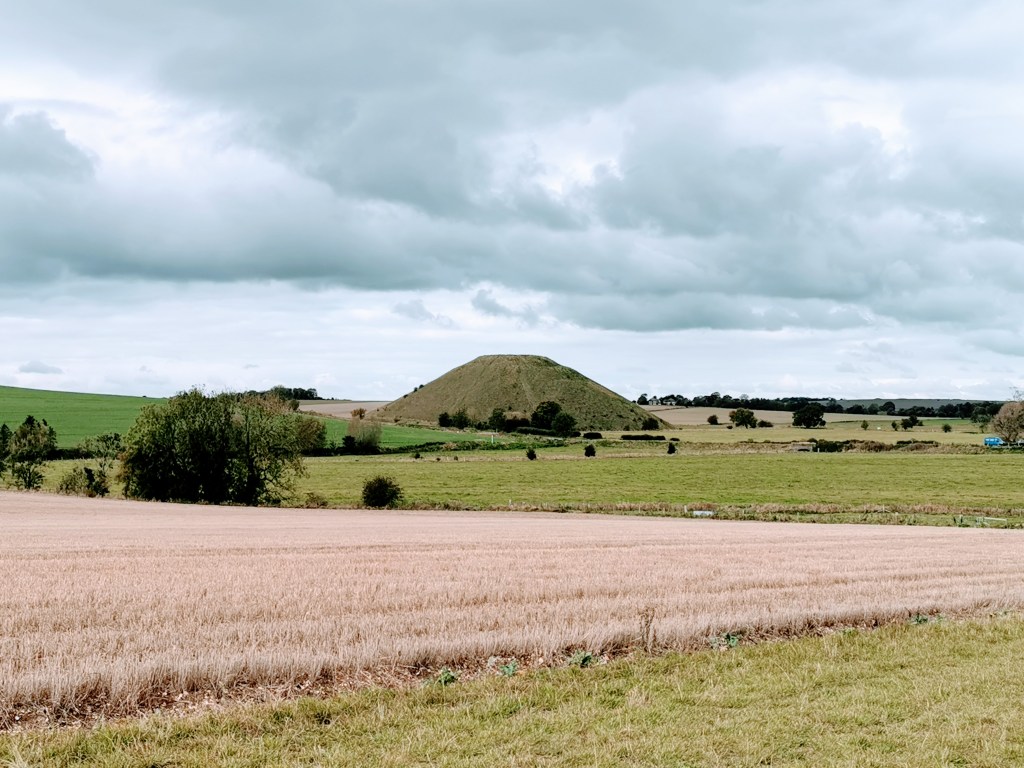
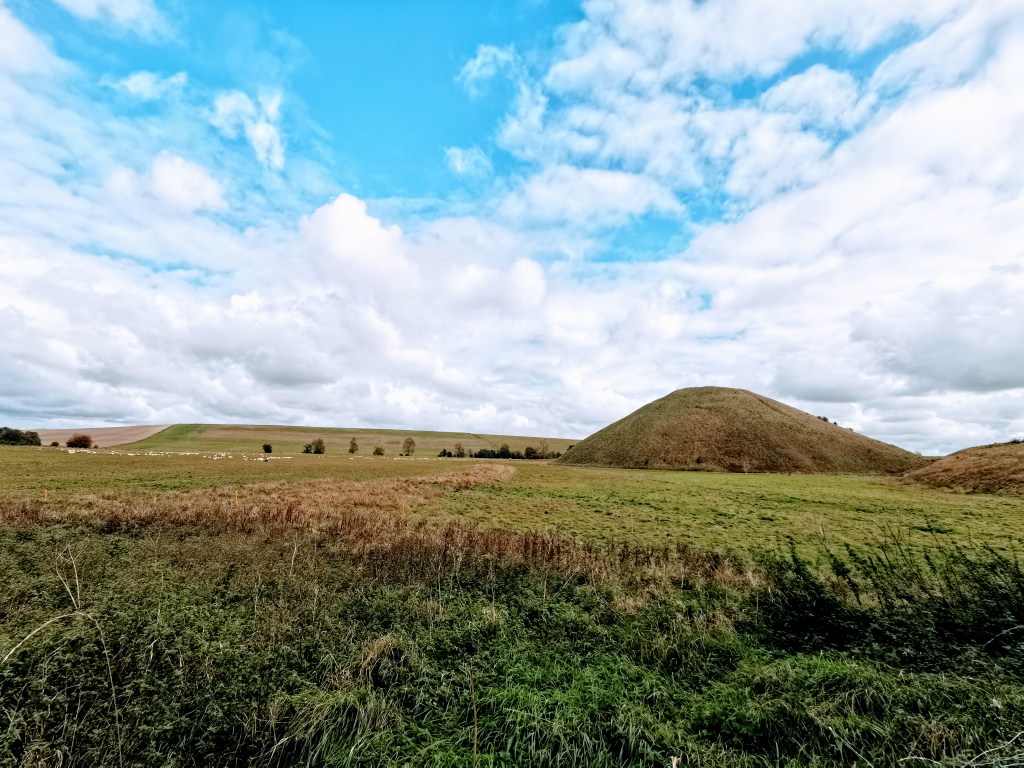
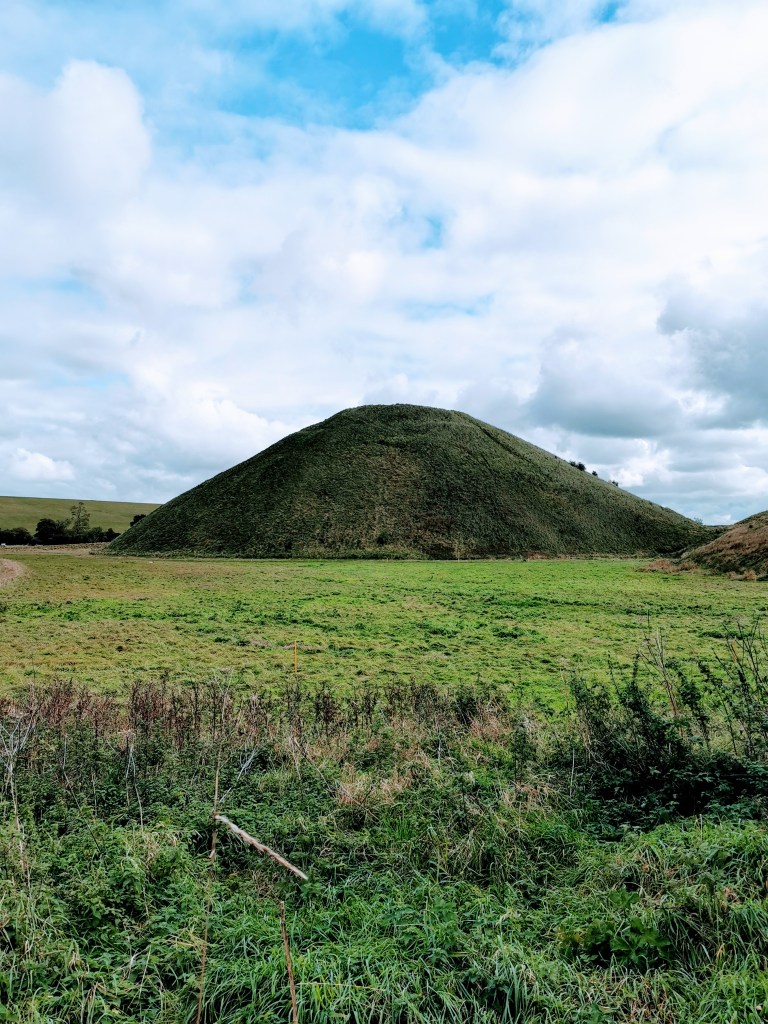
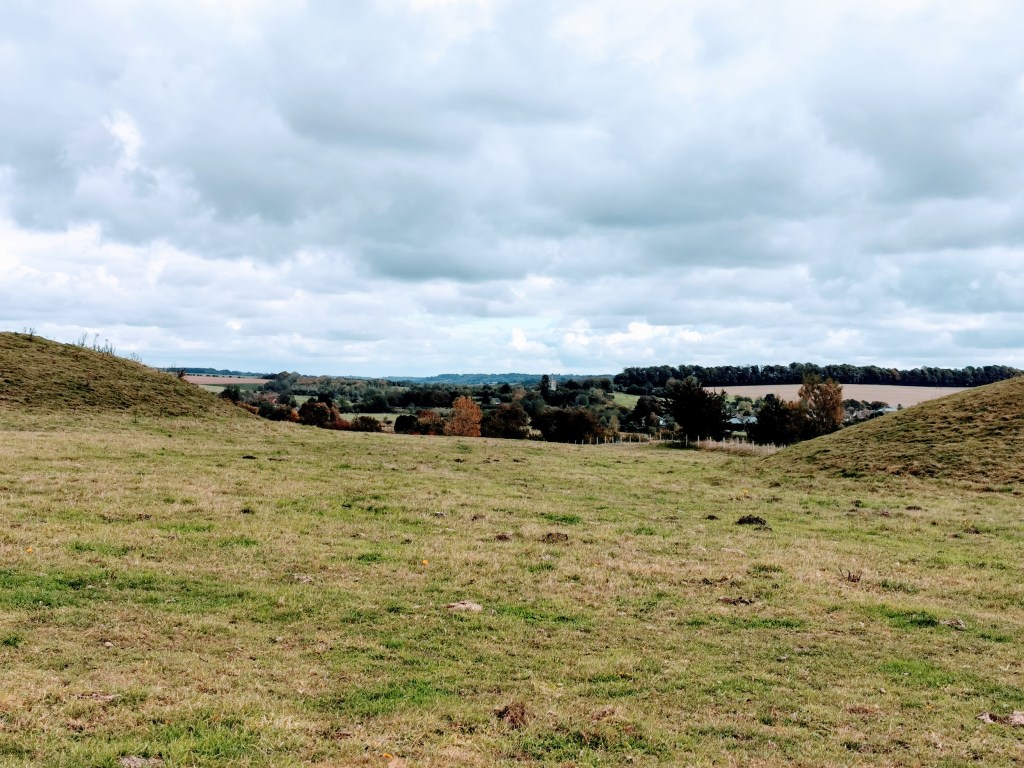
My final stop for the day is visible from up on the hilltop. Silbury Hill is another enigmatic but impressive landmark that was built 5,000 years ago for some unknown reason that we can’t fathom today. To be fair, our prehistoric ancestors would no doubt scratch their heads at some of our actions too. This man made structure is the largest in Europe at 40 metres high, as tall as the smaller pyramids.

It’s estimated that it would have taken an astounding 18 million man hours to build the hill. Seriously, what were these people eating? This was all done manually. Their dedication and commitment to whatever it was they were trying to achieve were astounding. Our predecessors put us to shame. Meanwhile, Crossrail languishes – three years late and counting.

I’ve had an amazing day in a mind-boggling landscape. Going back to my initial question about why Avebury is relatively unknown in comparison to Stonehenge, I think it must have something to do with visual impact. There’s so much here, but equally so much is missing and the monuments are dispersed over a large area. It’s therefore difficult to interpret at ground level. Seen from above, the monuments of Avebury make more sense but that’s not how we see them.

Anyway, I’ve had a fascinating time poking around in England’s ancient past. I make my way back to the car past more burial mounds dating back thousands of years, but my mind is on current survival…of pheasants. Please let me not kill any on the way home! That would really spoil my mood.

Design a site like this with WordPress.com
Get started