Monkey business on The Rock

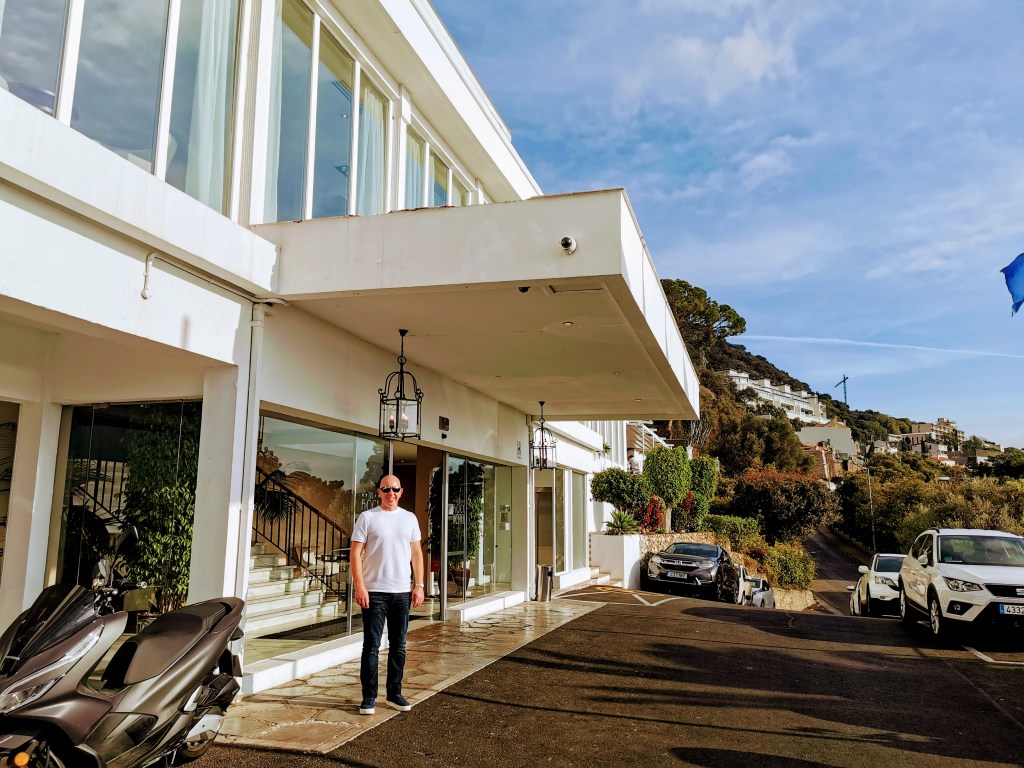
No, I’m not blogging about Dwayne Johnson. It’s day two of our Gibraltar trip and I’m just itching to see those monkeys who’ve made their home up on the Rock! Even from our perch high above the town it’s obviously going to be a long hike to the top. We fuel up on nice, creamy scrambled eggs on the outdoor terrace at The Rock Hotel and prepare for a proper trek.
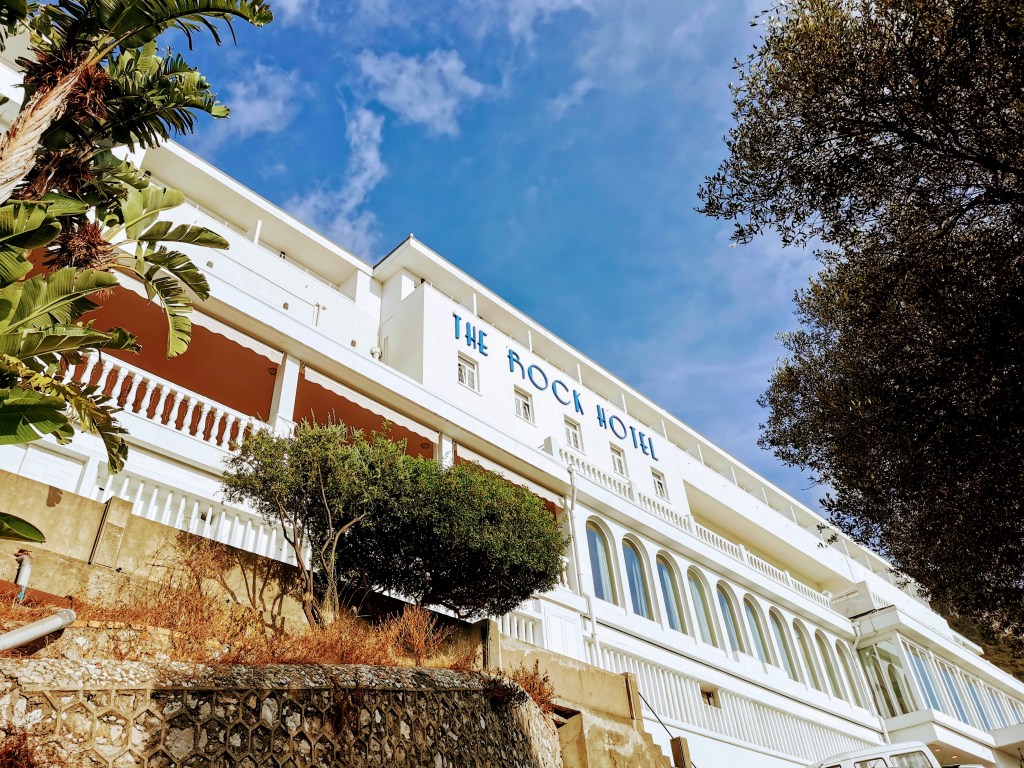
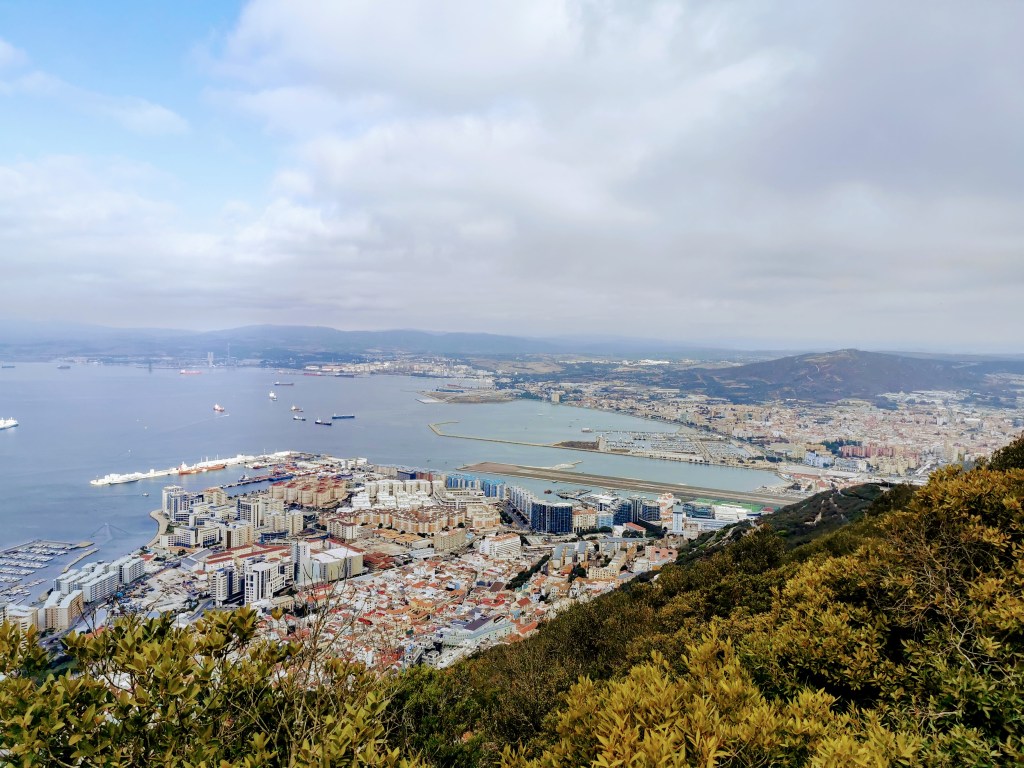
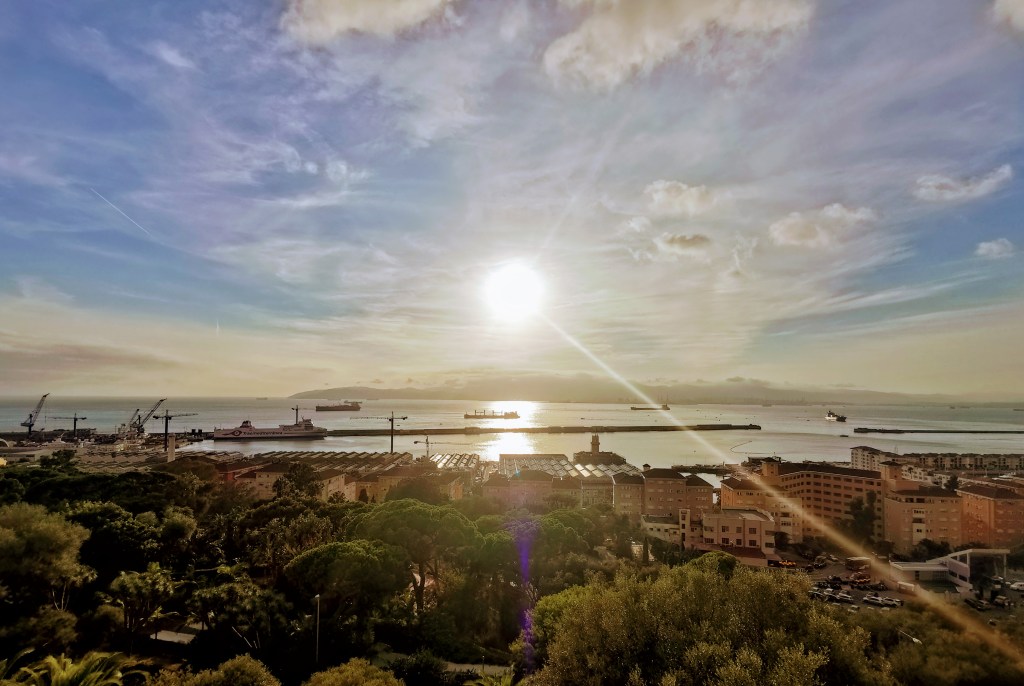
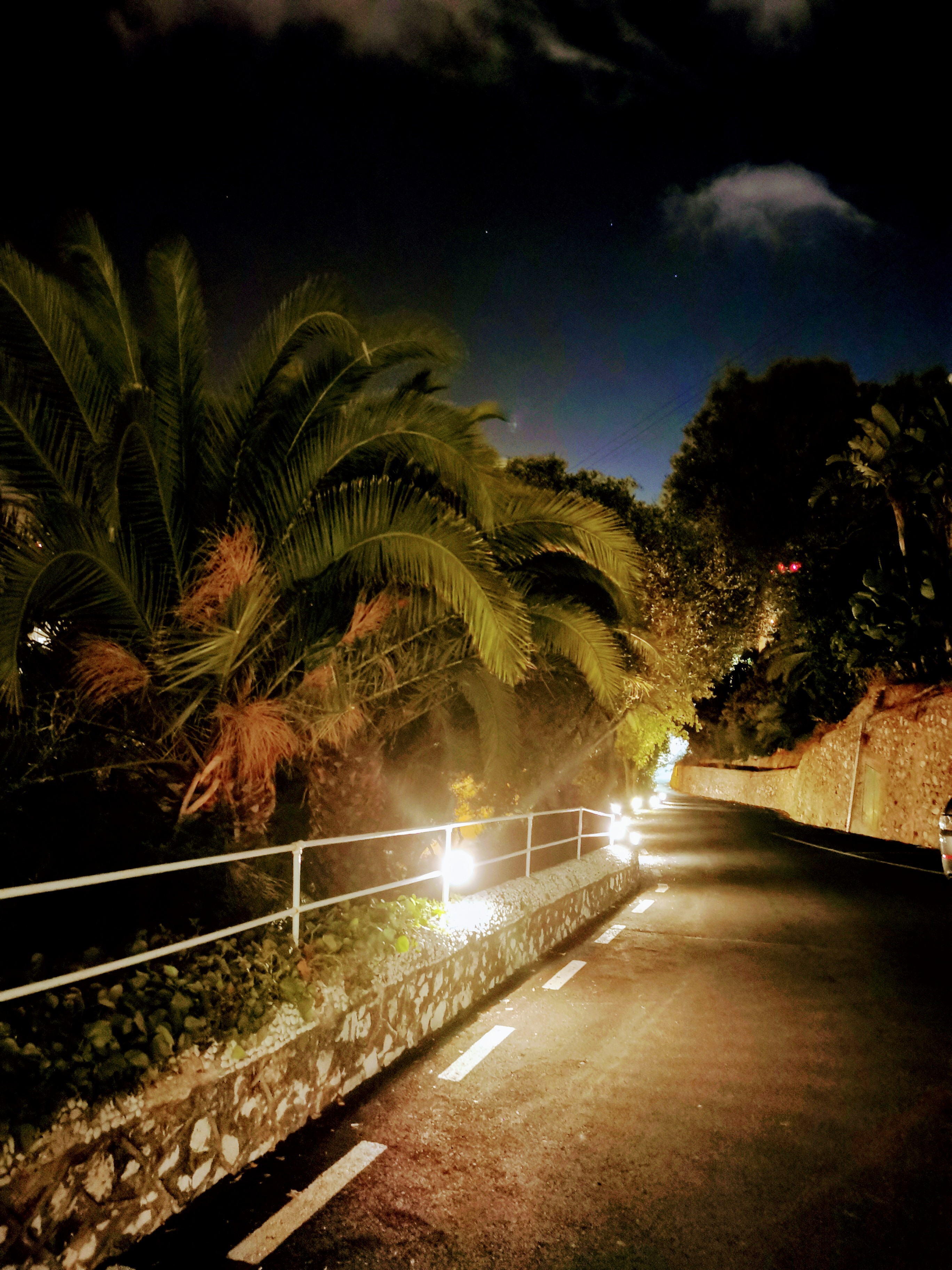
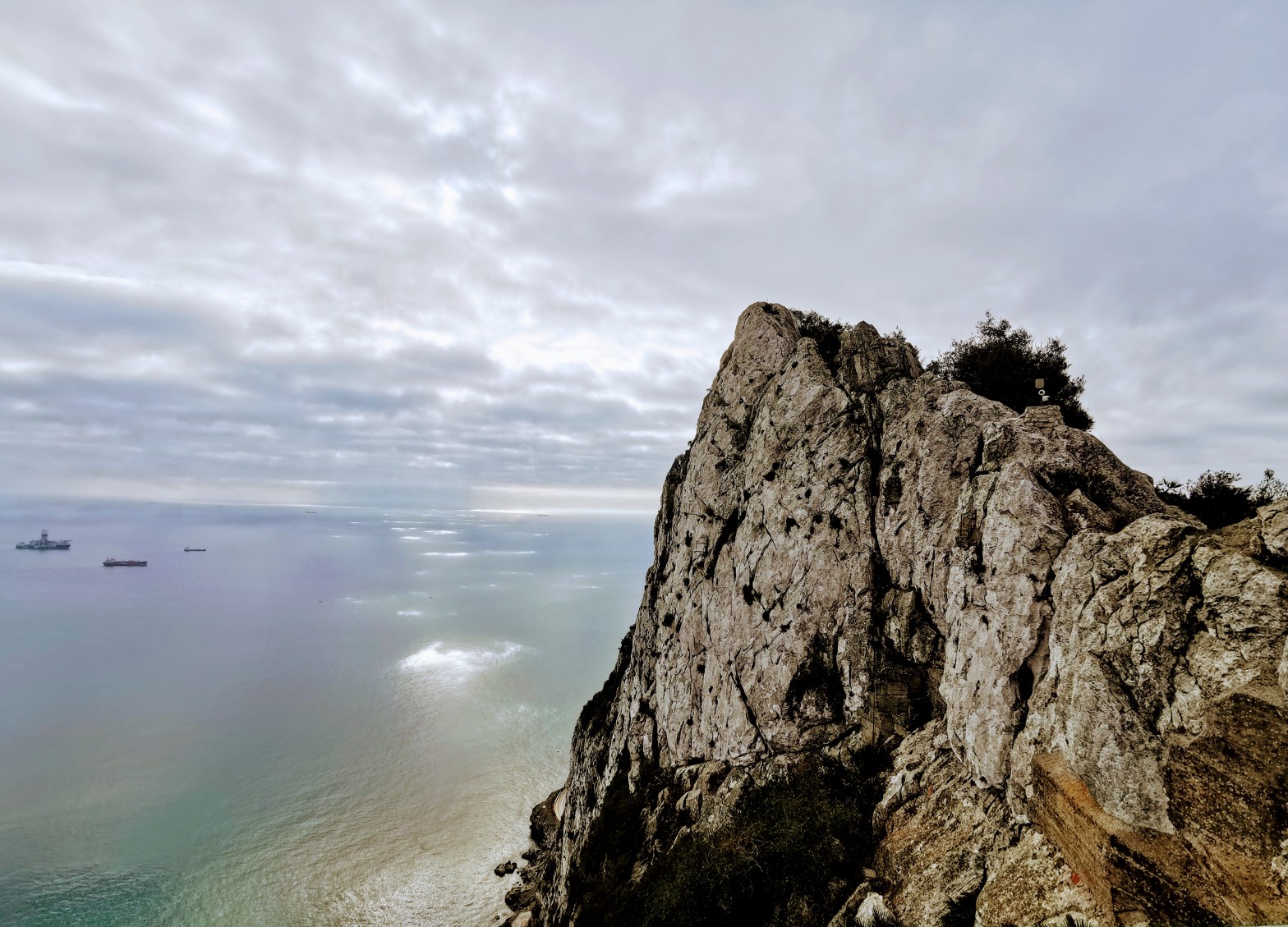
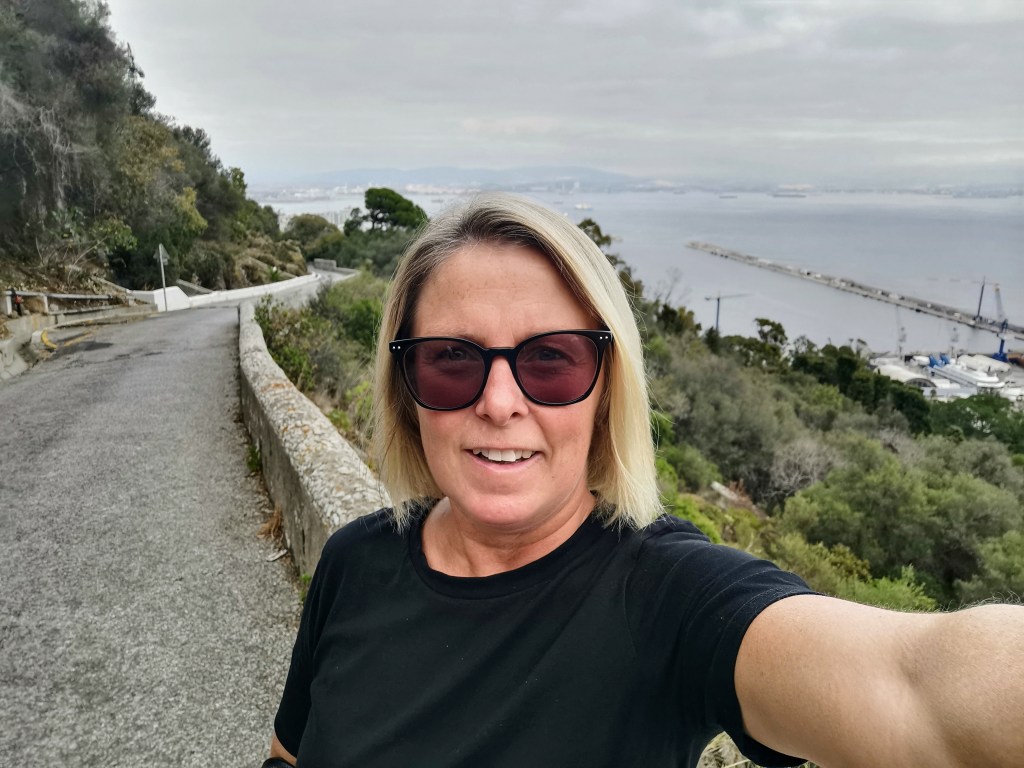
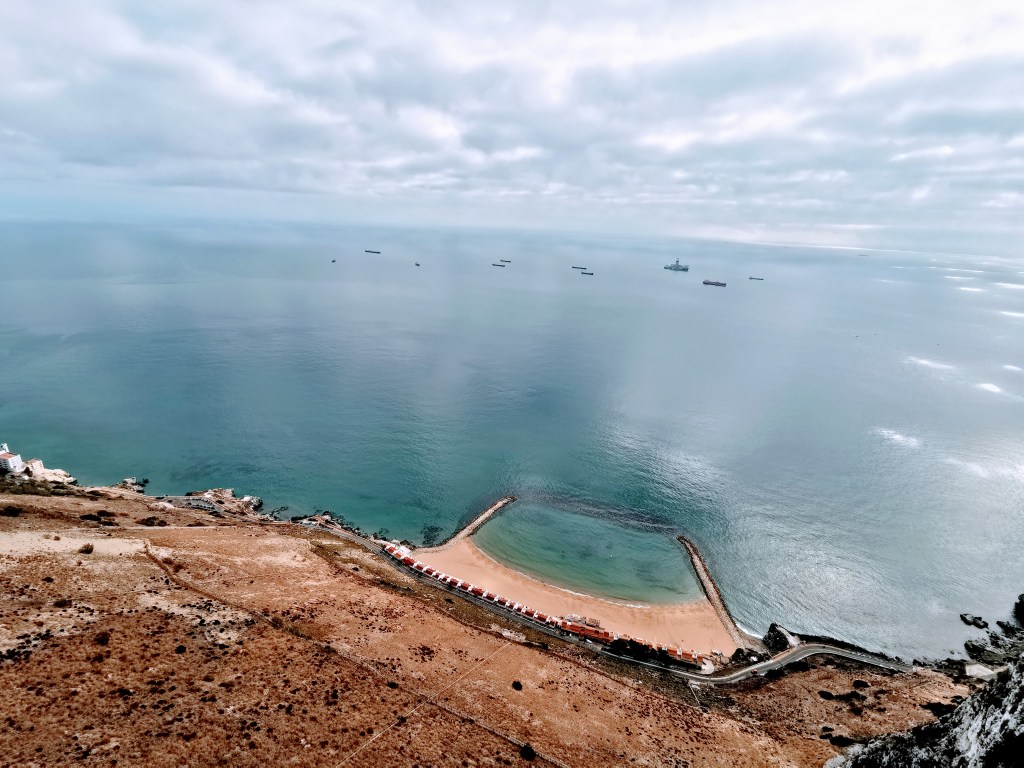
Turning left outside the lobby, the road starts off steep…and just keeps getting steeper. It’s a cloudy morning, quite humid, so we quickly become rather hot and sticky. The views from the road are great, and no doubt even better on a clear day. The whole of Gibraltar and the port of Algeciras in Spain are spread out below us.
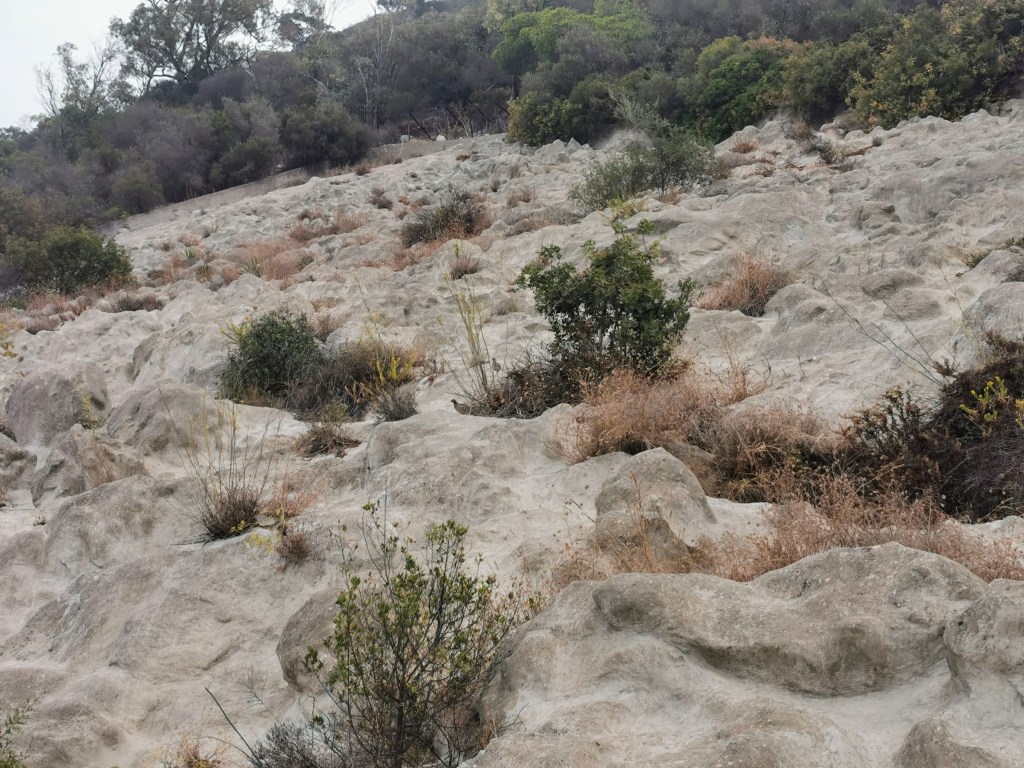
As we enter the Nature Reserve, the landscape around us becomes almost lunar in its barrenness. But look closely and there’s activity here. Little birds are scurrying around, hiding behind the rocks. There are snakes too, but sadly I can’t spot any.

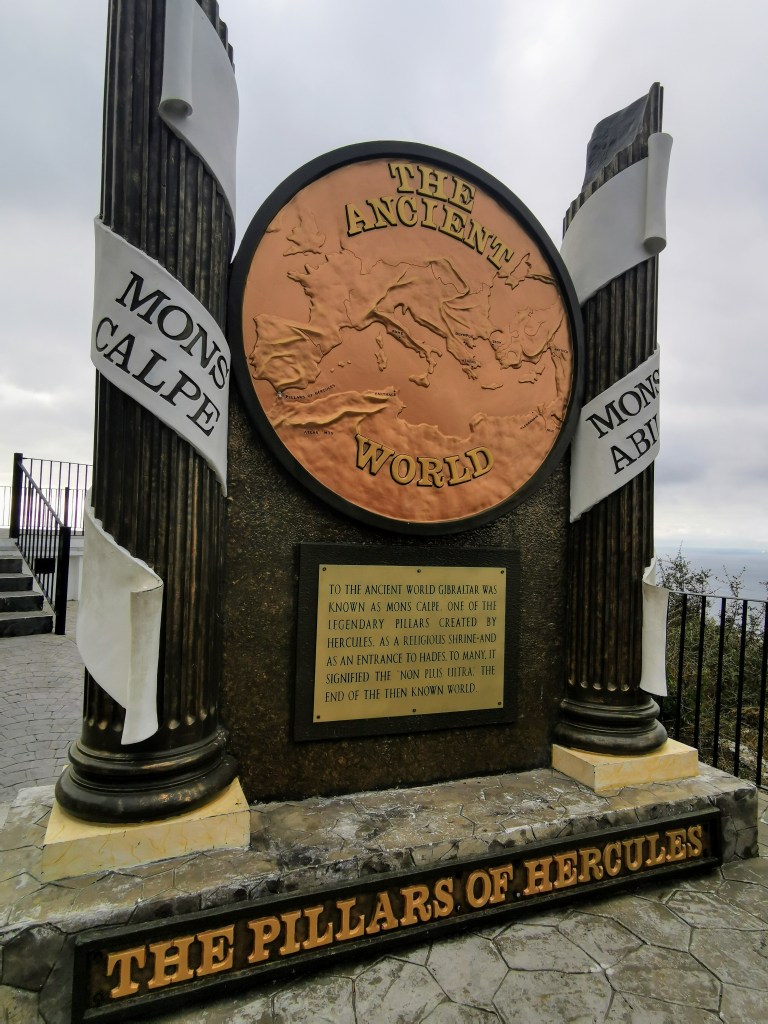
At the park’s Visitor Centre, we pay £14 each and receive a wristband giving us access all areas. Straight ahead of us is the Pillars of Hercules monument. In Greek mythology, Hercules smashed through a mountain to create the Straits of Gibraltar linking the Mediterranean with the Atlantic, leaving rocky remnants at each side. The Rock is the northern pillar. In ancient times, the Pillars were considered to be the edge of the known world.
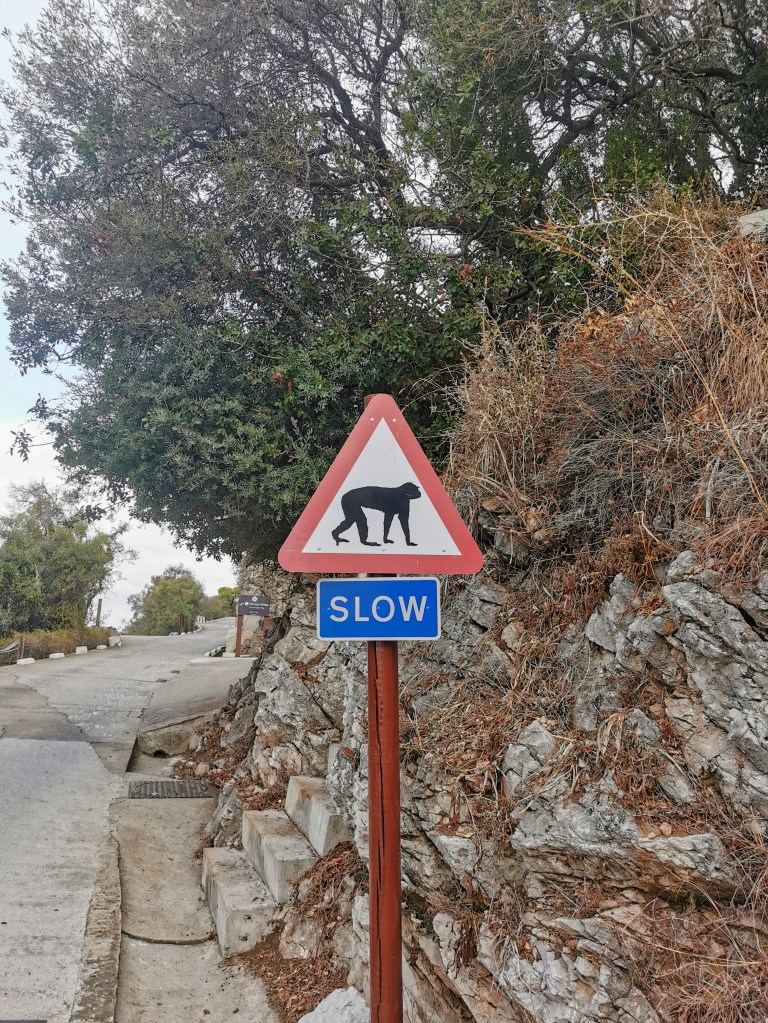
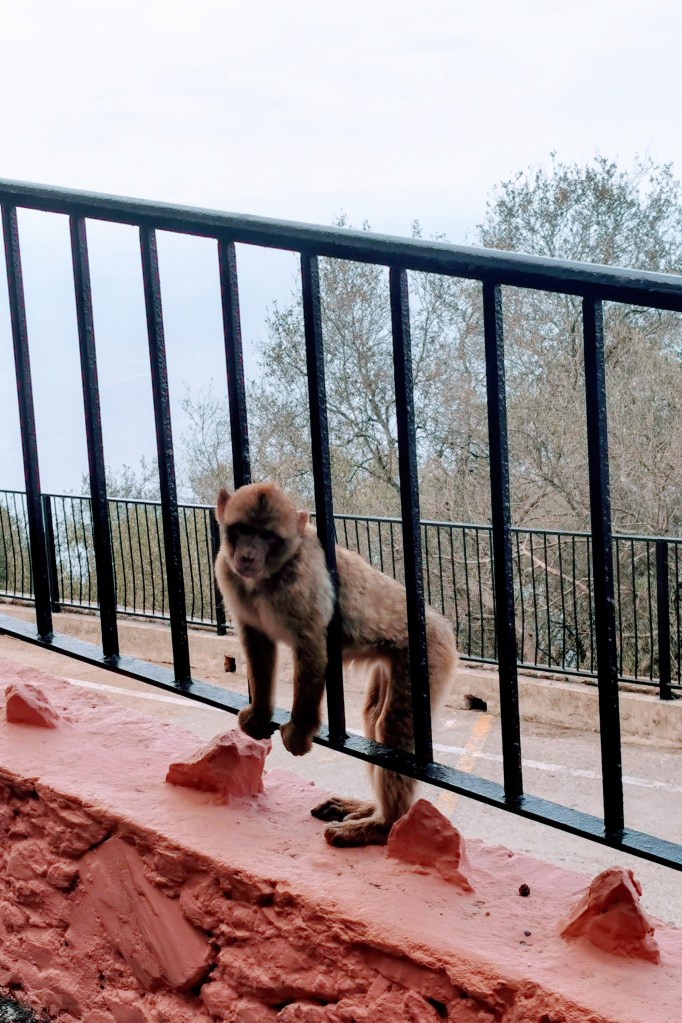
Climbing uphill towards St Michael’s Cave, it’s clear that there are primates not too far away. Suddenly, there they are, my first European monkeys, or more accurately Barbary macaques. Originally from the Atlas Mountains just across the sea, they have been in residence here for several hundred years at least. Currently there are around 300 in total, belonging to five different troops. I’m amazed by how quickly they move, one of the sneaking up behind the husband just to see if he has any food. As per instructions, we’ve tucked everything out of sight. These animals are cute, but notoriously light-fingered!
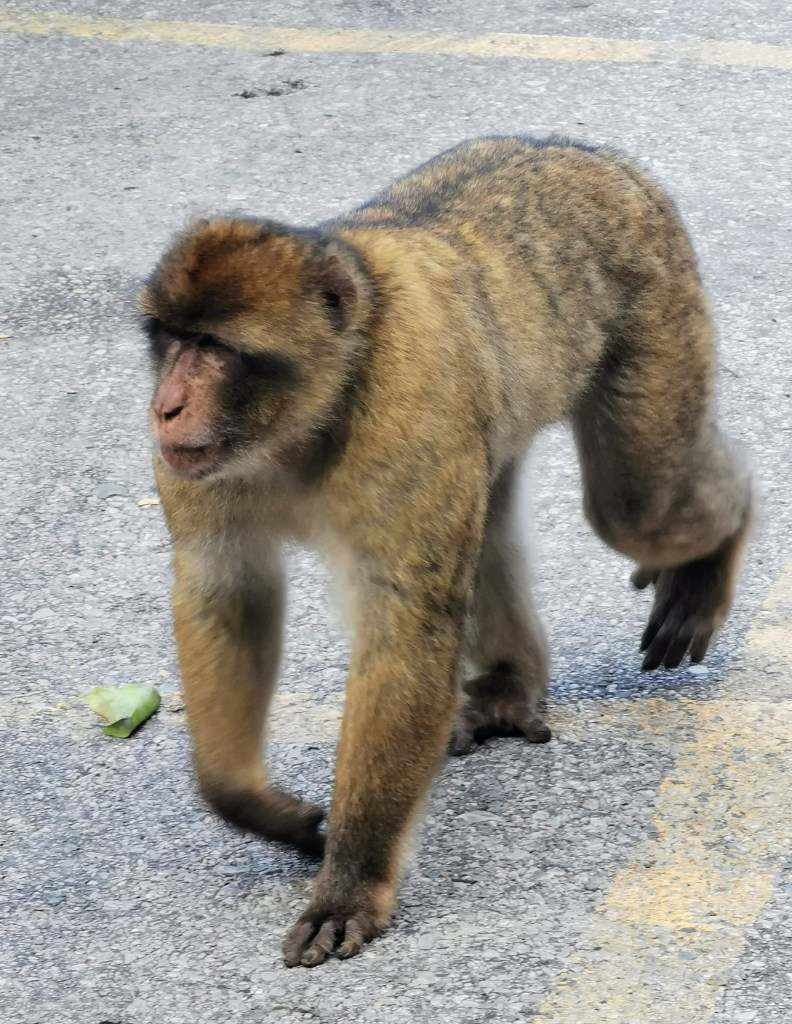
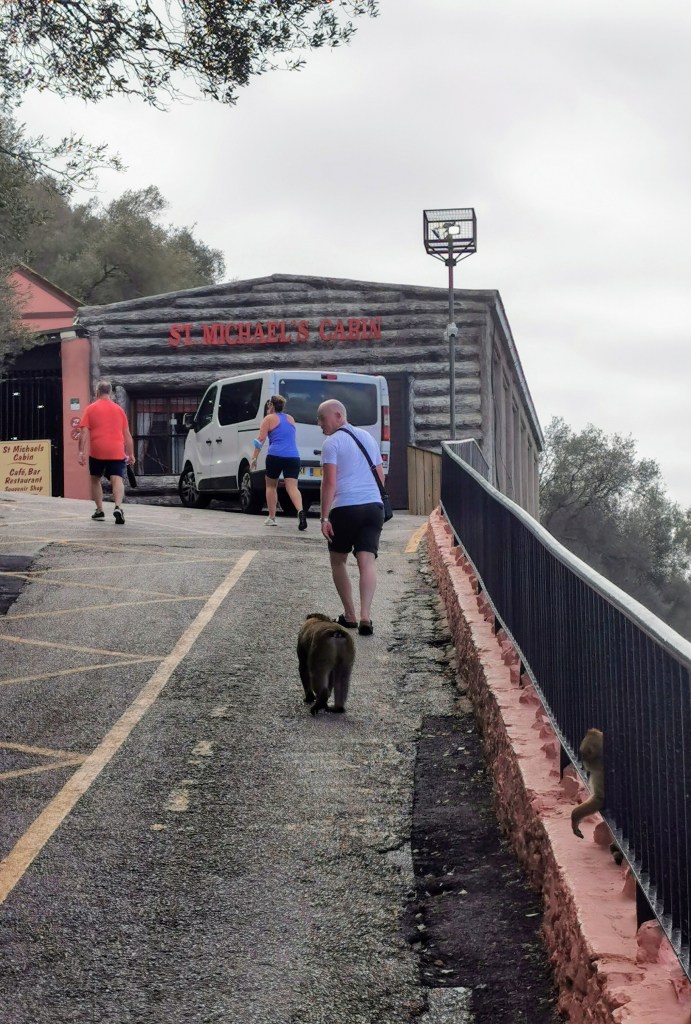
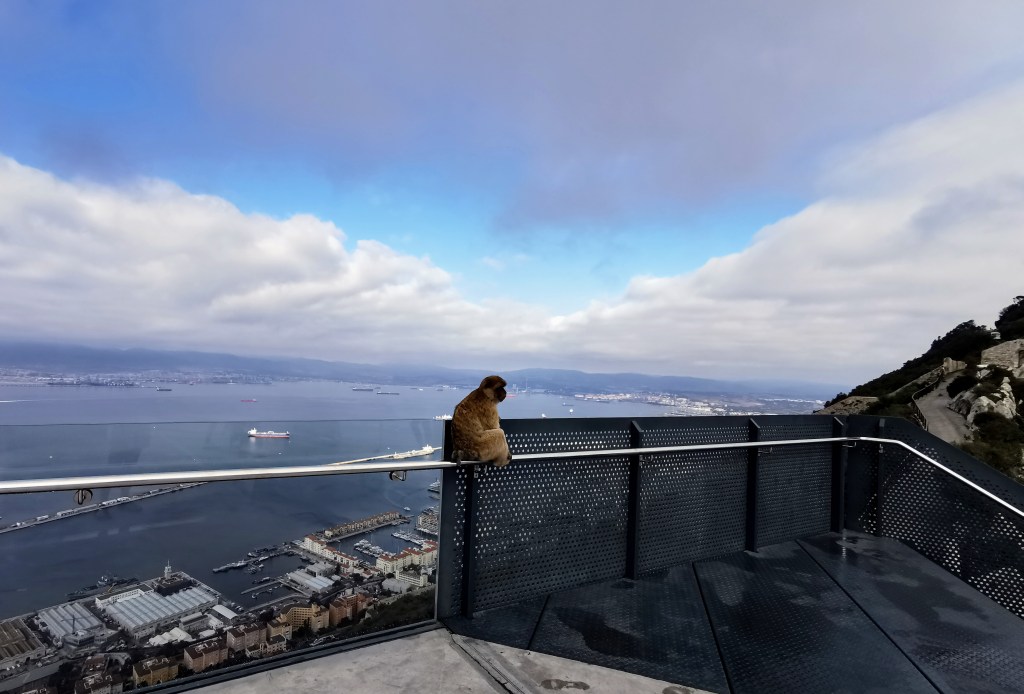
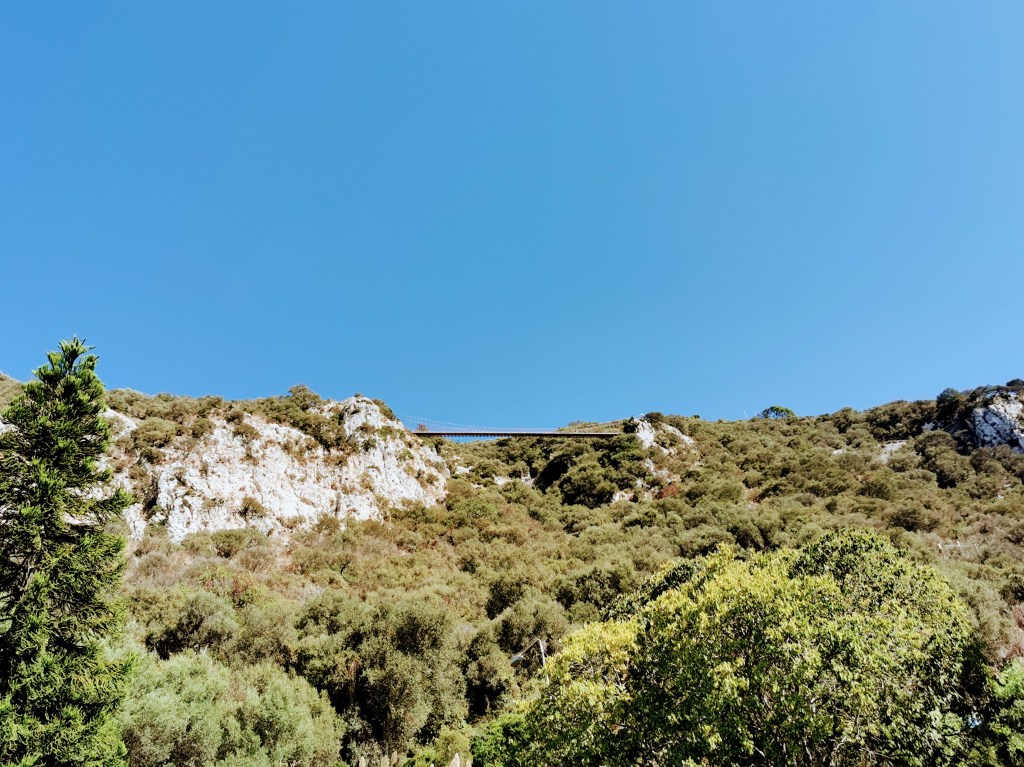
Further up the road, close to the summit, more monkeys observe us as we step out onto the Skywalk, a glass platform with vertiginous views. It’s amazing up here, although the husband doesn’t linger, I think the glass floor makes him nervous.
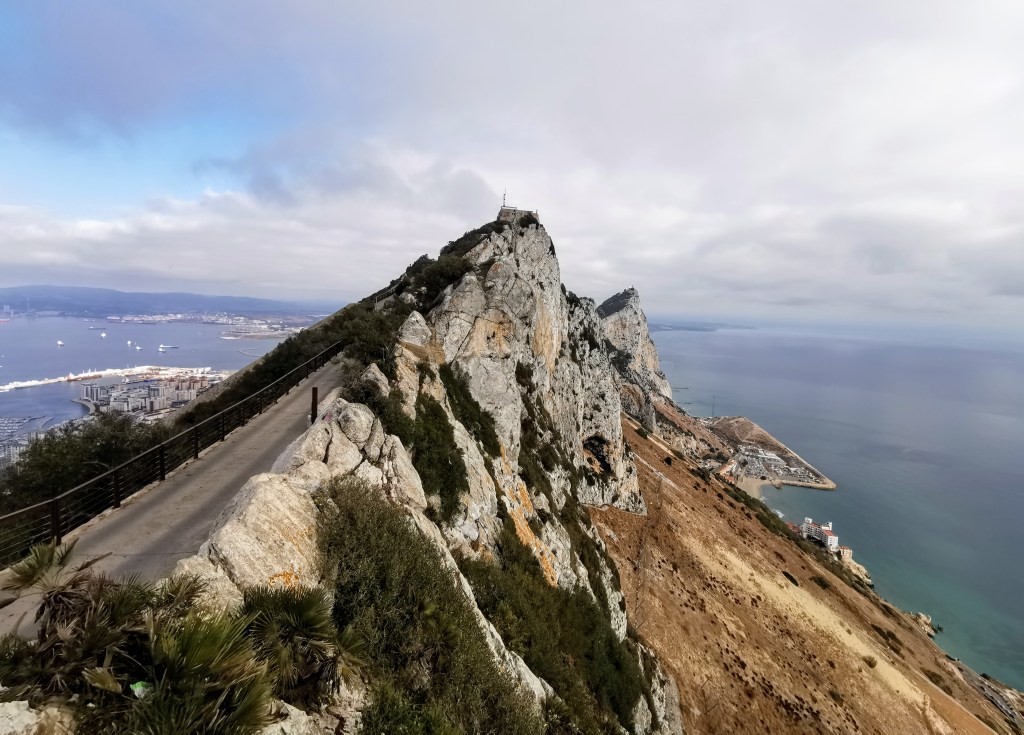
It seems the primates are a bit bored, and decide some fun is in order. A Spanish jogger nearby has taken off her running top and left it unattended. Bad move! One of the monkeys grabs it and scampers off, with a park employee in hot pursuit. Monkey number 2 then feels left out and wonders how he can get some attention… Luckily I realise he has my bag in his sights, and grab hold tightly as he hurtles towards me. A tug of war ensues, but I’m not letting go.
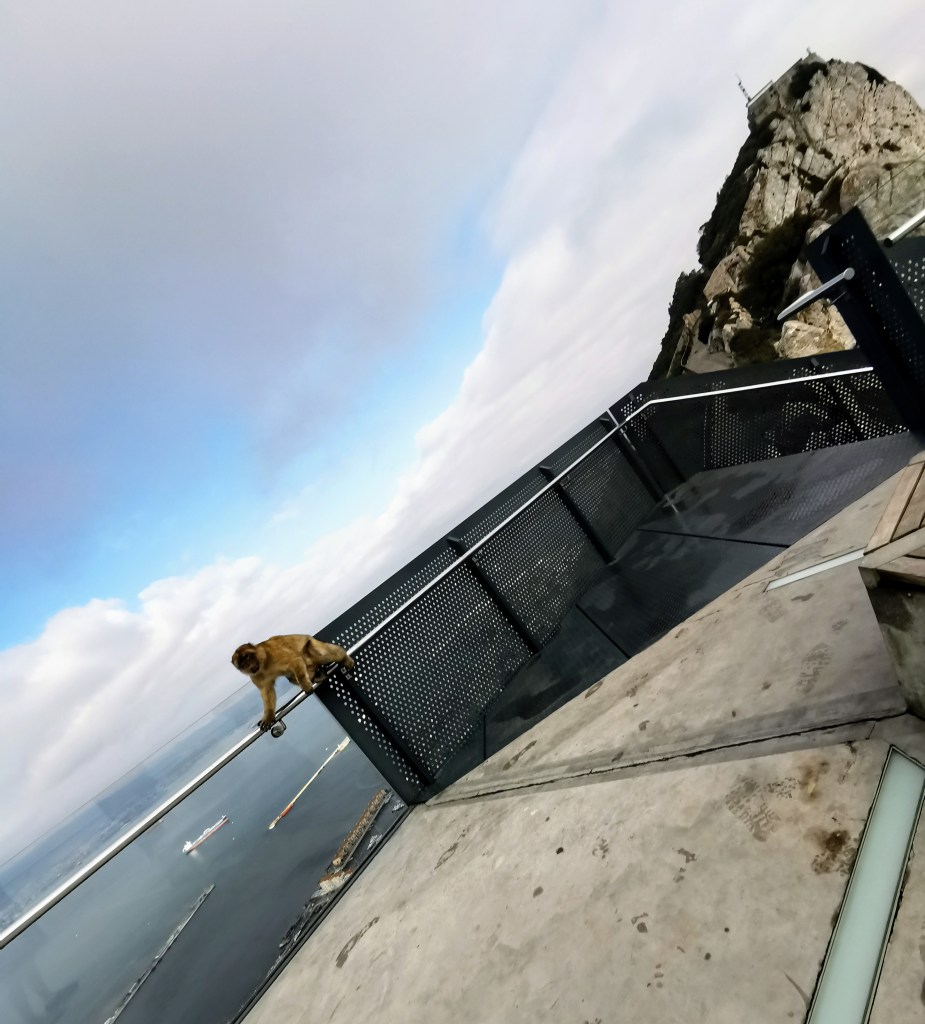
The husband hears me scream and sighs, knowing I’m having some sort of monkey confrontation. Note that he does not come back to rescue me! In the hotel handbook it warns that monkeys sometimes pay visits, so you should keep windows closed. Surely they wouldn’t come in your room, I thought as I read it, but now I’m not so sure. They are fearless and clearly love human interaction. It must have been a long and boring lockdown for them, just like us!
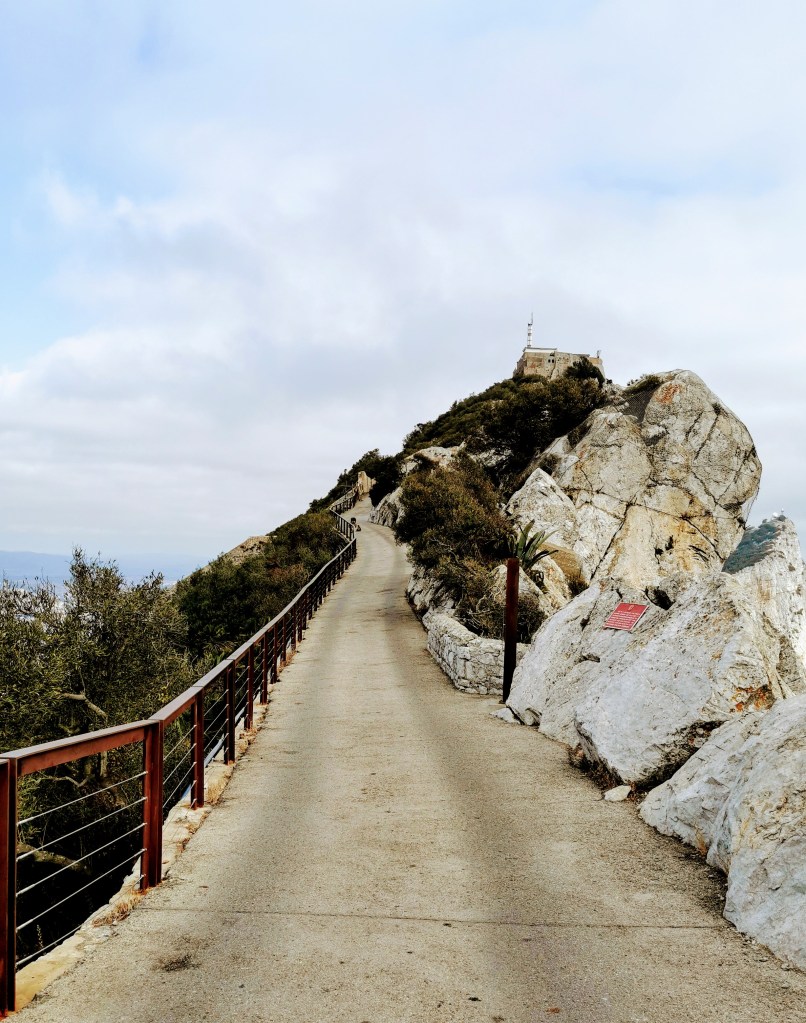
We’re nearly at the top now, but towards us come a gang of around 8 monkeys, rolling around on the road. They look very amusing but I’m also now a little bit scared, and cling on to my bag as we walk on. The trick is not to have eye contact. I’d love to take photos of them playing just like little kids, but I’d prefer to keep my phone thank you.
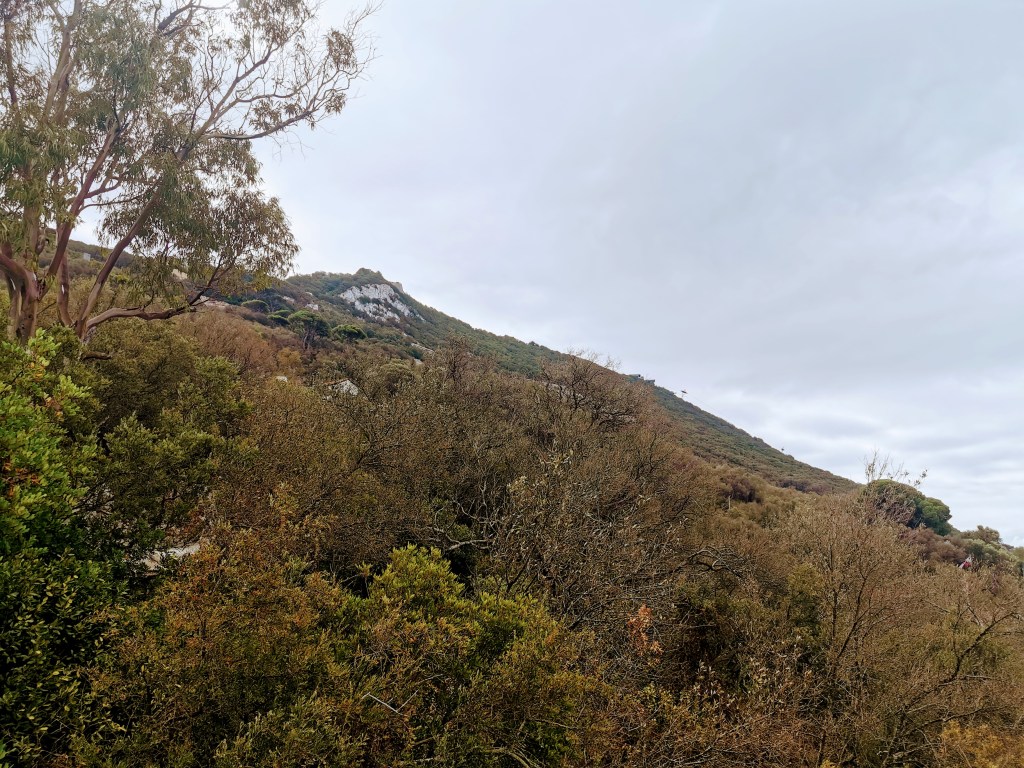
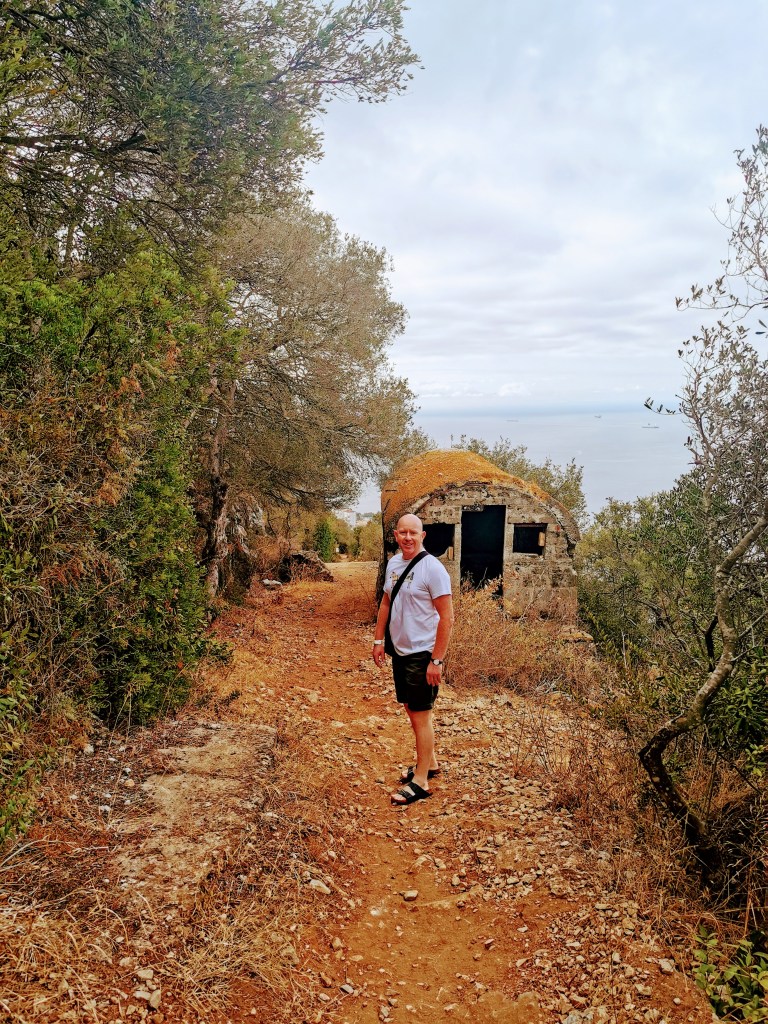
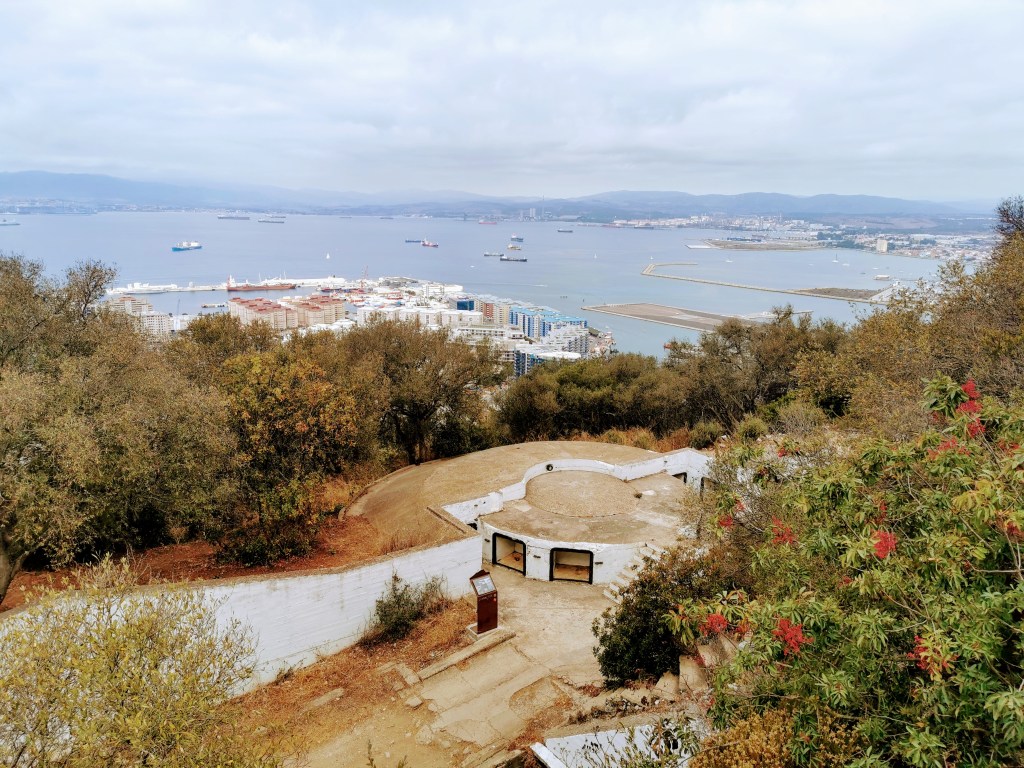
Going up was hard, but coming down again is no easier, especially when we do a bit of off-roading, and all the while I’m scanning for apes and clutching my bag. Luckily there’s lots to see – more evidence of the long fight to defend Gibraltar. Gun emplacements, old shelters, cannons. Oh, and more monkeys of course. Luckily the ones we meet on the descent seem to be from a more chilled out family.
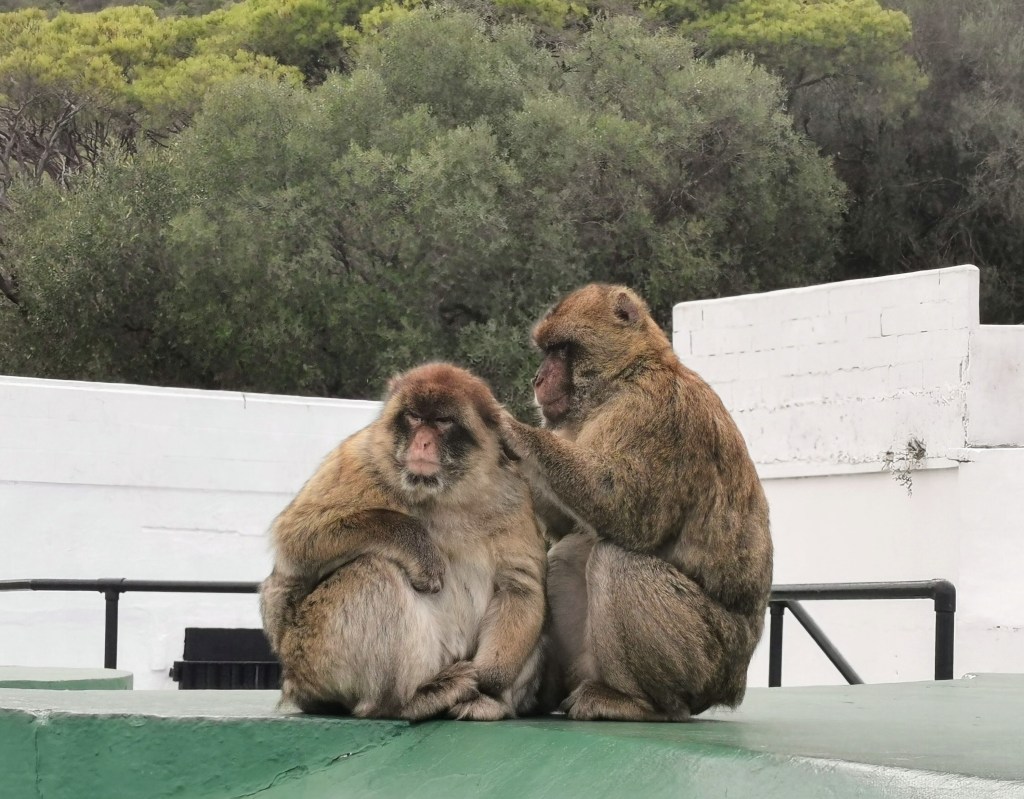
I don’t trust the little scamps though. They may look calm but I’ve seen how quickly they can shift. We see two tourists feeling nuts to one of the monkeys so he will sit still for a photo, and of course he does – he’s not stupid. I can’t say the same about the humans though. Feeding the apes is illegal and there are signs everywhere. I despair sometimes about how dumb we humans are!
Down, down we go, past the Moorish castle. Dating from the early 8th century, the castle was built after the Moors conquered Gibraltar and then used it as a stepping stone to invade first Spain and then parts of France. The Moors held the Rock for over 700 years and the castle fortifications were a vital defence. The imposing Tower of Homage is visible all over the town. There are some very sweet turtles in the pond there too.
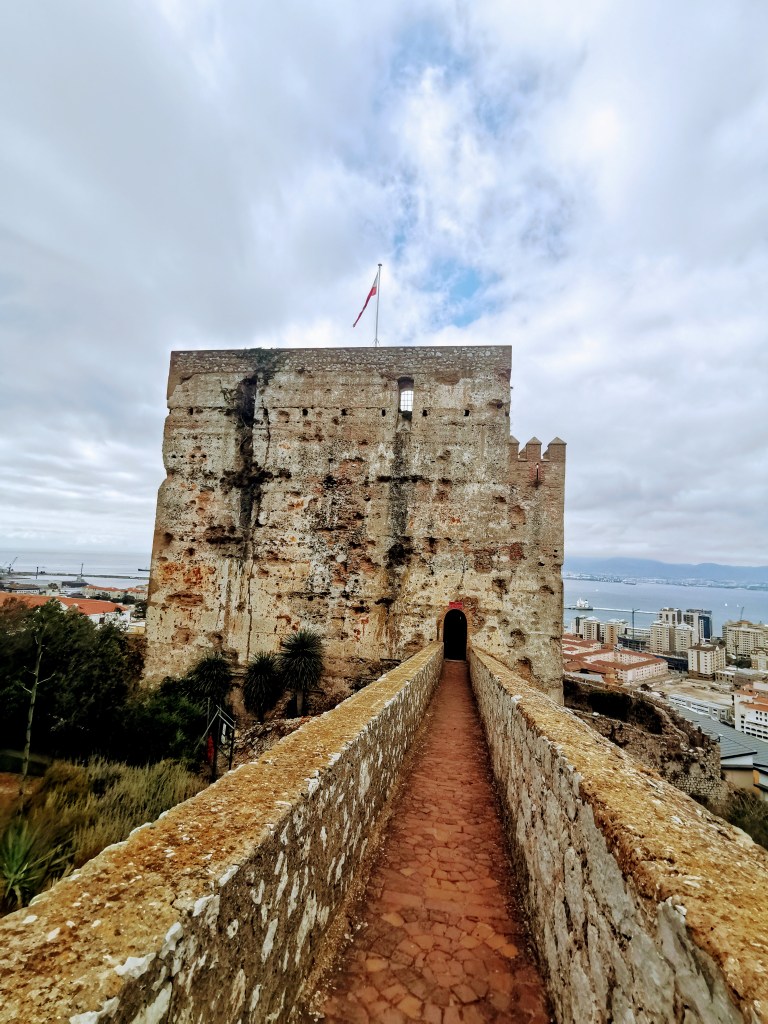
Still going down…what seem like endless staircases take us back into the centre. The people here must be fit, that’s for sure. Imagine bringing your shopping up here!
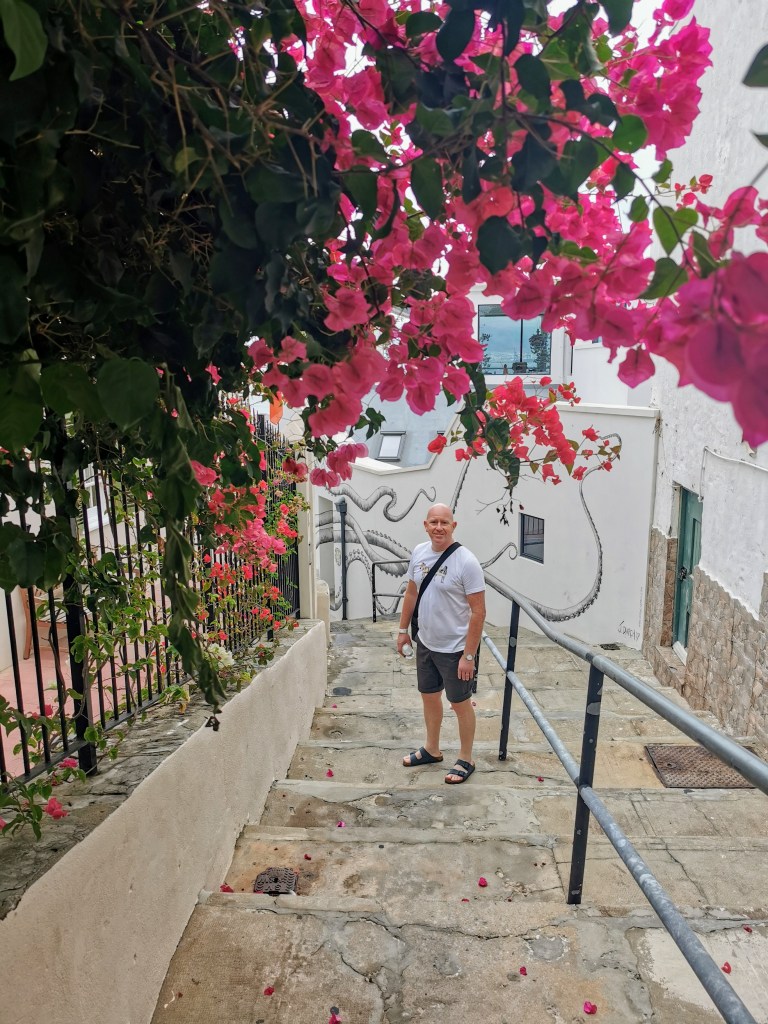
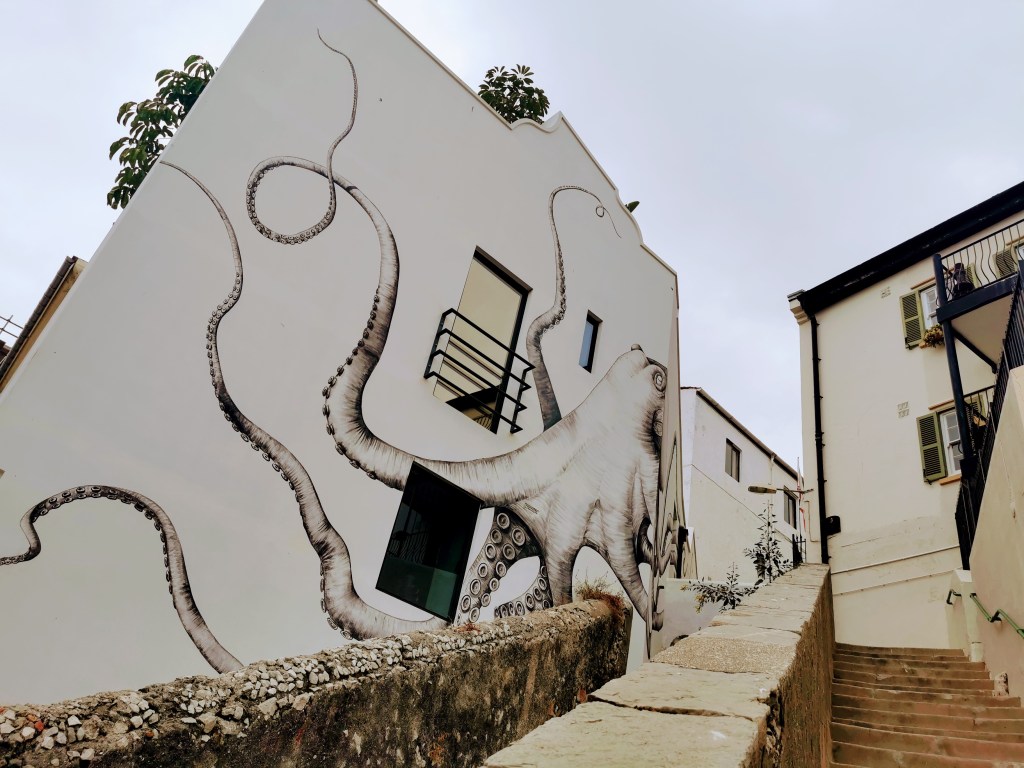
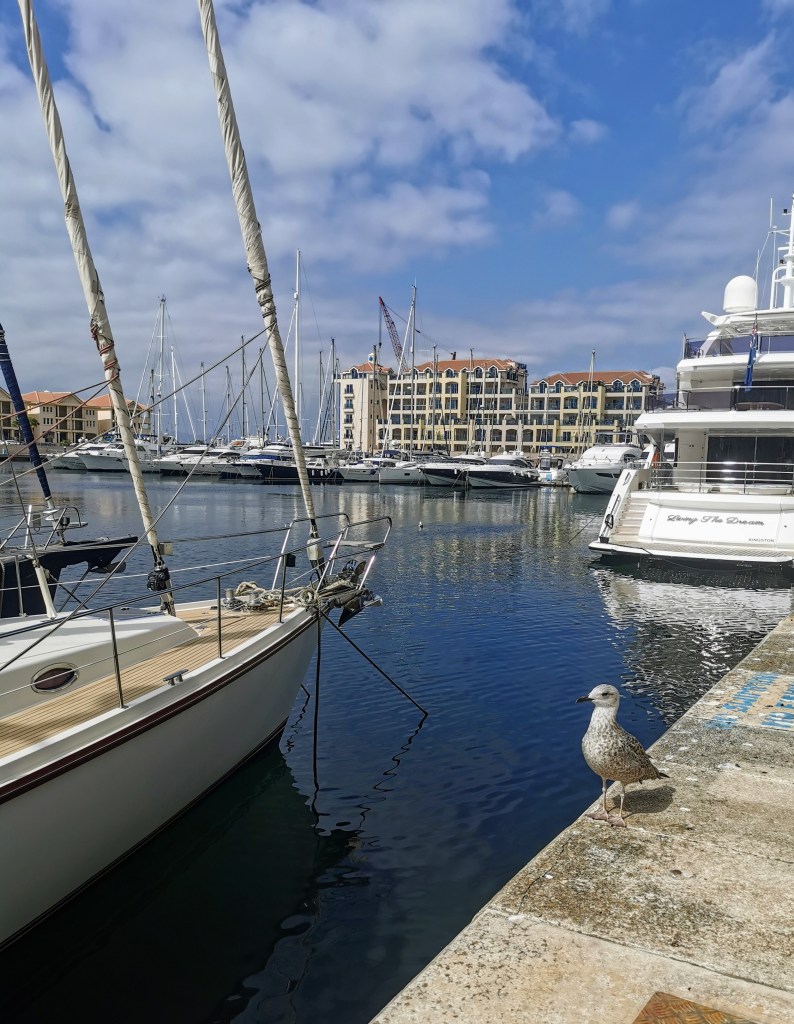
After our morning exertions, a late lunch at the marina is in order. The sun’s come out and it’s a glorious afternoon. I’ve booked The Lounge at Queensway Quay, and it’s a good job as it’s very busy and several groups, are turned away. We have a prime position on the waterfront, with a friendly young gull for company.
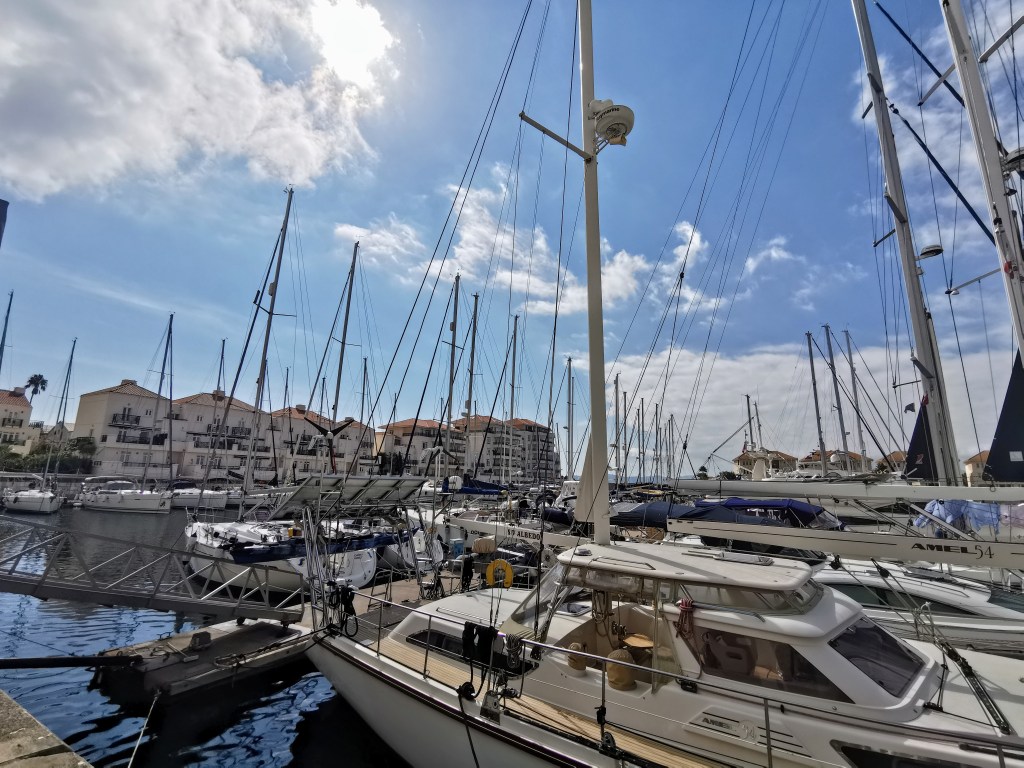
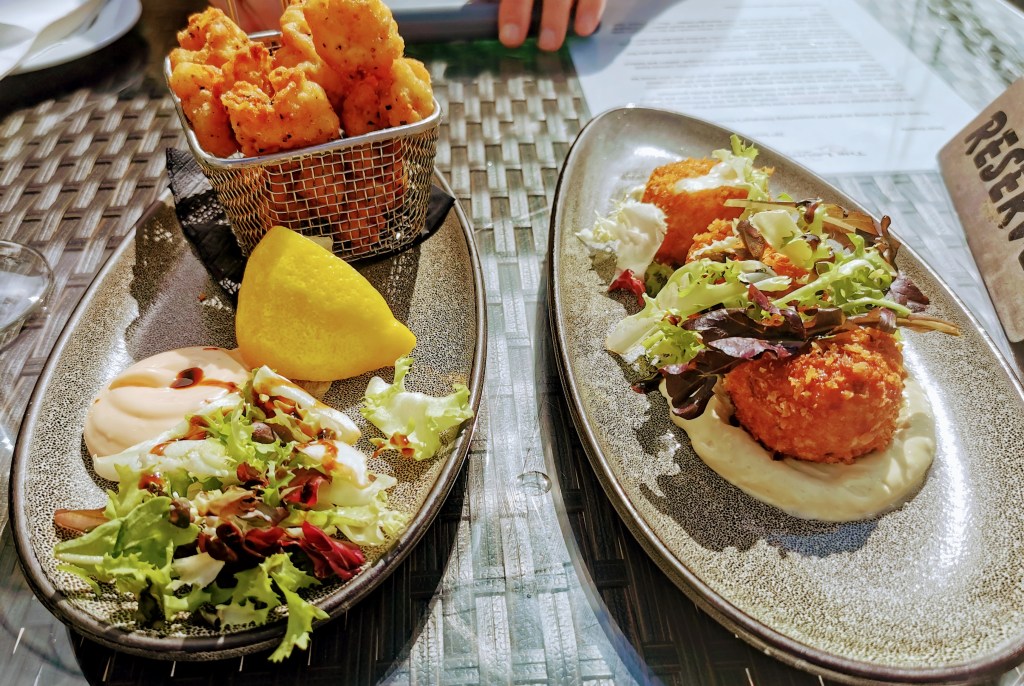
If you’re a regular reader, you’ll know that I am very partial to fishcakes, and the ones I have here are to die for! It was worth the trip for that one dish, although everything else is very tasty. The husband has calamari followed by fish pie, while I pretend to be virtuous by ordering a salad for my main course…with a great big chunk of warm goats cheese in the middle. A light lunch!
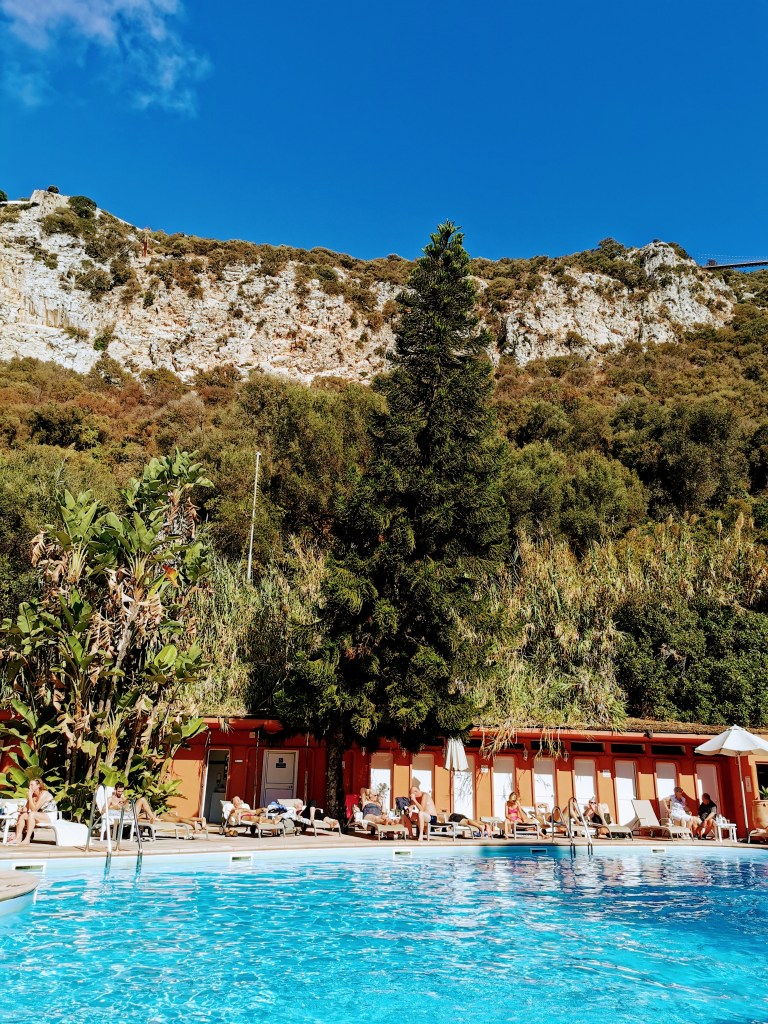
Tired and full, we decide to spend the rest of the afternoon beside the hotel pool, apparently the largest in Gibraltar. It’s certainly scenic, and as it’s situated next to the Botanic Gardens, there’s a constant symphony of birdsong going on. One bird is actually wolf whistling at the mostly 60-something bathers, which makes the husband giggle. The views up towards the Rock tell us exactly why our calves are aching right now.
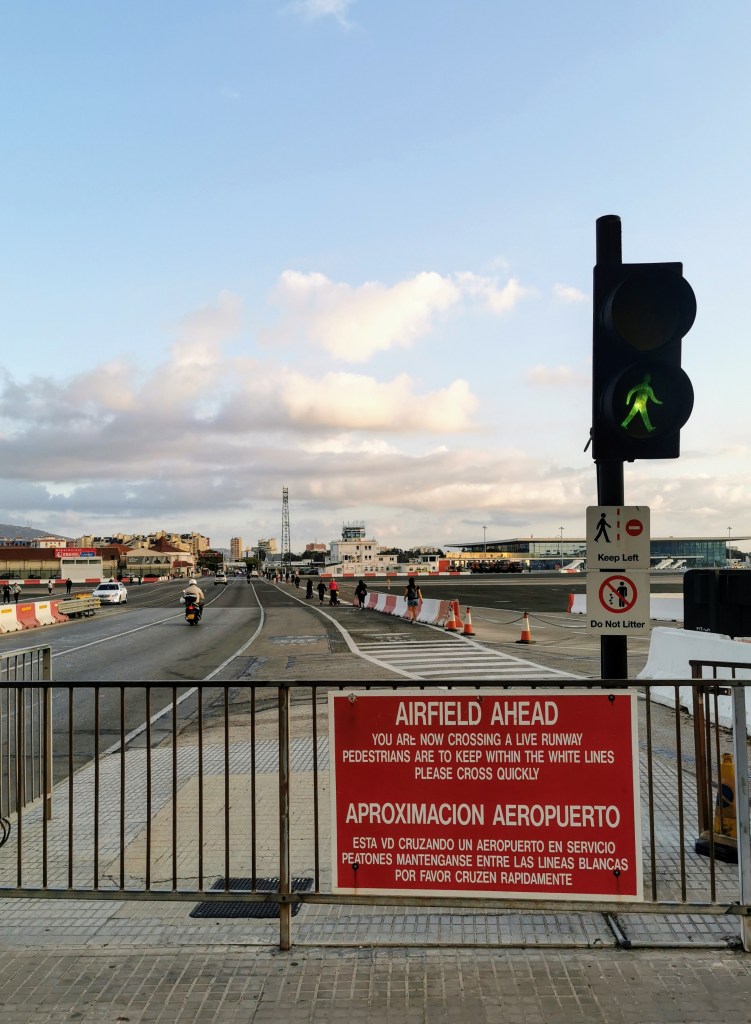
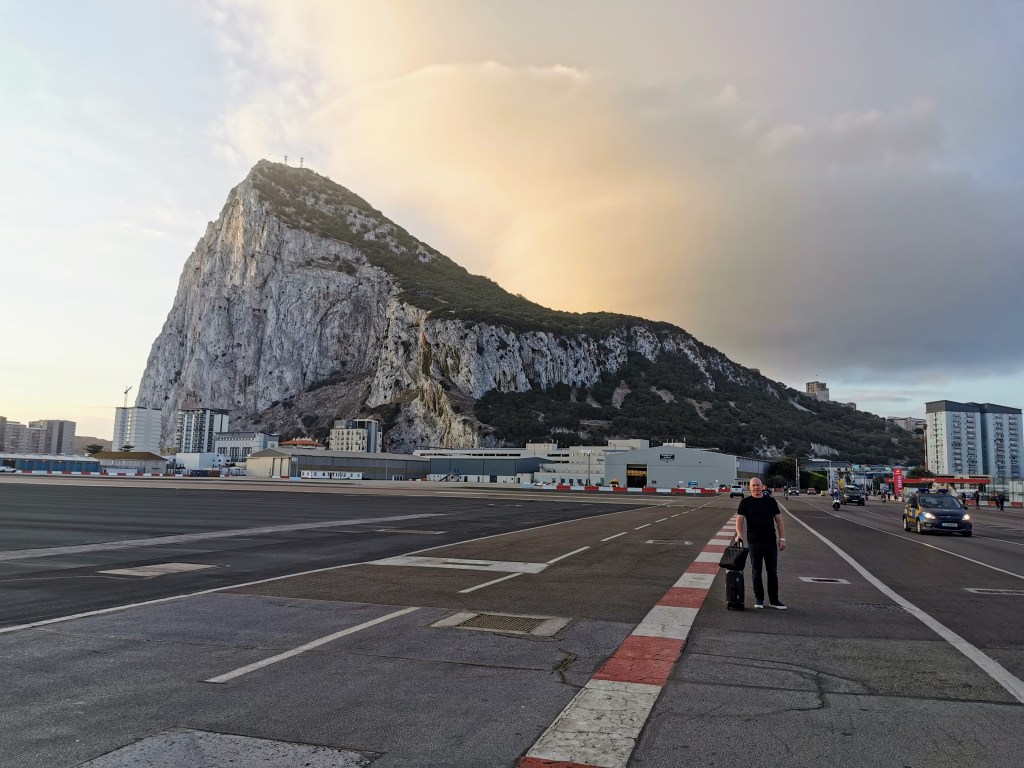
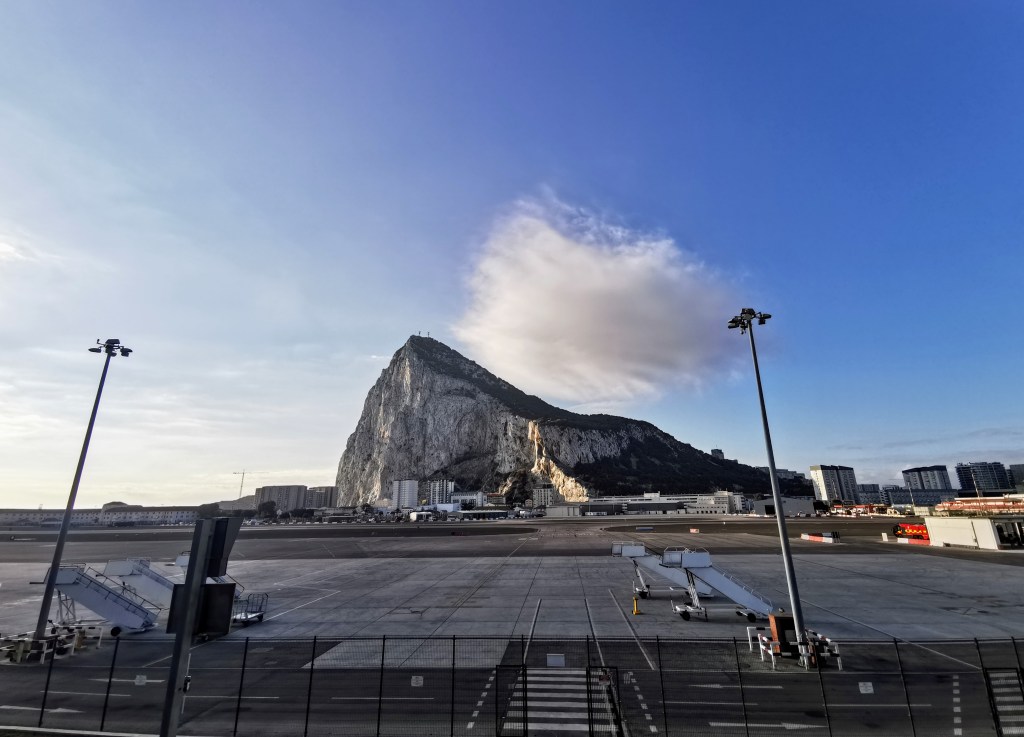
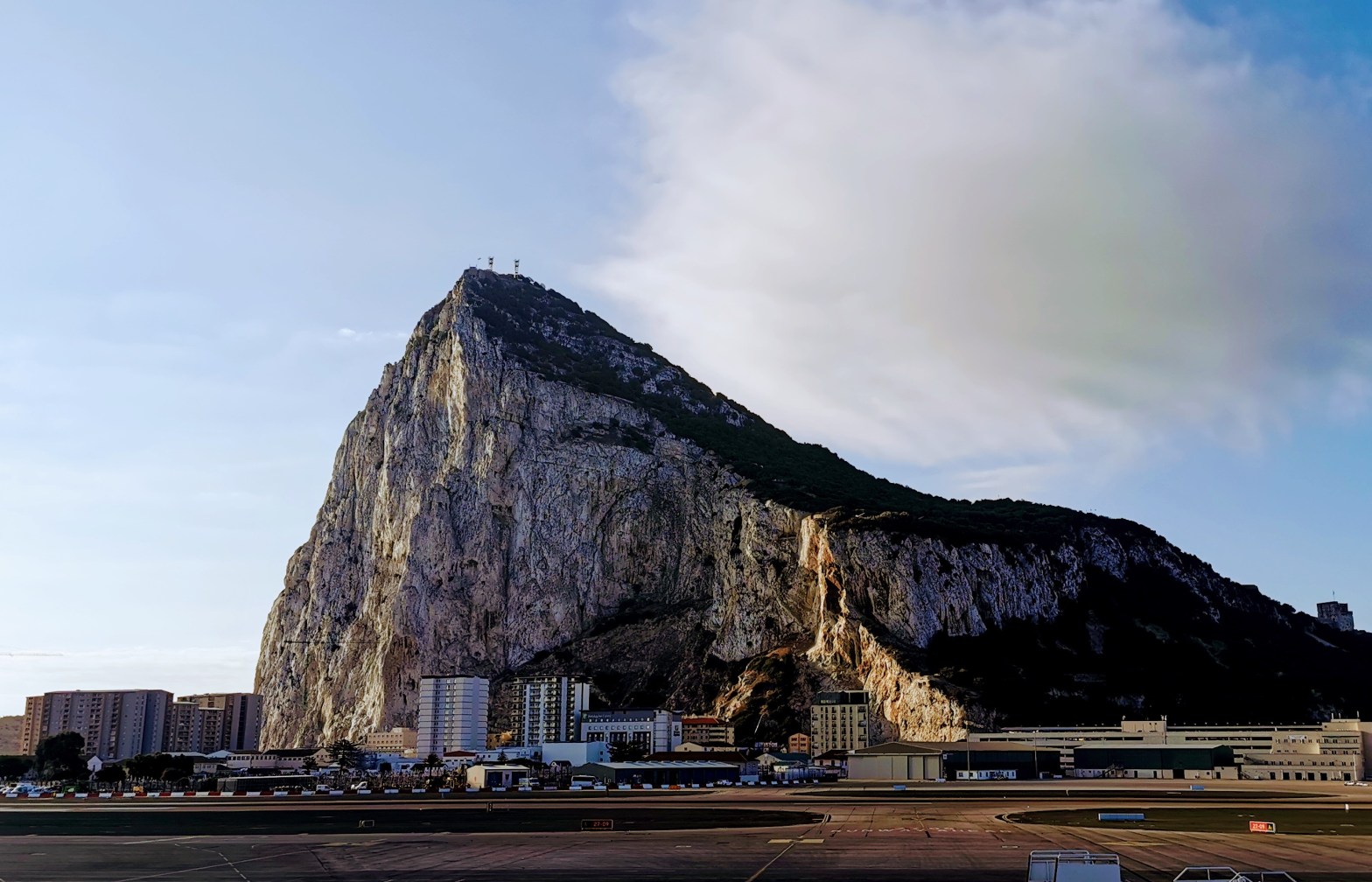
Next day, Gibraltar has one last unexpected treat in store for us. We decide to walk to the airport – it’s a lovely fresh morning and it’s mostly downhill, along Main Street and though Casemates Square and the Landport Tunnel. Then we realise that we actually have to cross the runway, how exciting! I have been on a runway before, as a runner in a Heathrow staff event in the dead of night. This is different though, everyone is just nonchalantly strolling across. Hopefully there aren’t many flights scheduled today, at least not in the next 10 minutes!
Our trip to Gibraltar has been just what the doctor ordered. It may not have been high on my list of must-visit places, but as an antidote to the relentless gloom of the UK media, I highly recommend the Rock for a few days of walking, eating and exploring in the sunshine. What more do you want?
The curious case of Gibraltar

Time for the holiday shuffle again. We originally booked an October trip to the Paris Motor Show but that went down the plughole months ago. A short break in Sardinia was the next option, and then Italy introduced testing for UK visitors – too much hassle. Just take me anywhere in Europe, says the husband, no more staycations – life at home is so depressing right now. A bit of sunshine won’t go amiss either. That’s a big ask in 2020.

Gibraltar is one of the very few restriction-free destinations for Brits right now and I have to say I’m intrigued. A little chunk of England tacked onto southern Spain – it’s so unlikely, and so contraversial. Plus it has the only wild monkeys in Europe, October temps in the mid twenties and lots of reward flights available. At a grand cost of £1 each for BA Club Europe – let’s go!

It’s amazing how the novel quickly becomes routine. Masks in the taxi, the terminal, the plane, whatever. Ordering through an app, totally normal. We have a smooth BA travel experience, with a particularly cheery flight attendant. I suppose he’s happy to still have a job, hence he’s dishing out the champagne with wild abandon. Arriving in Gibraltar, we grab a cab to take us through town to our hotel. It’s not far, but it’s all uphill.

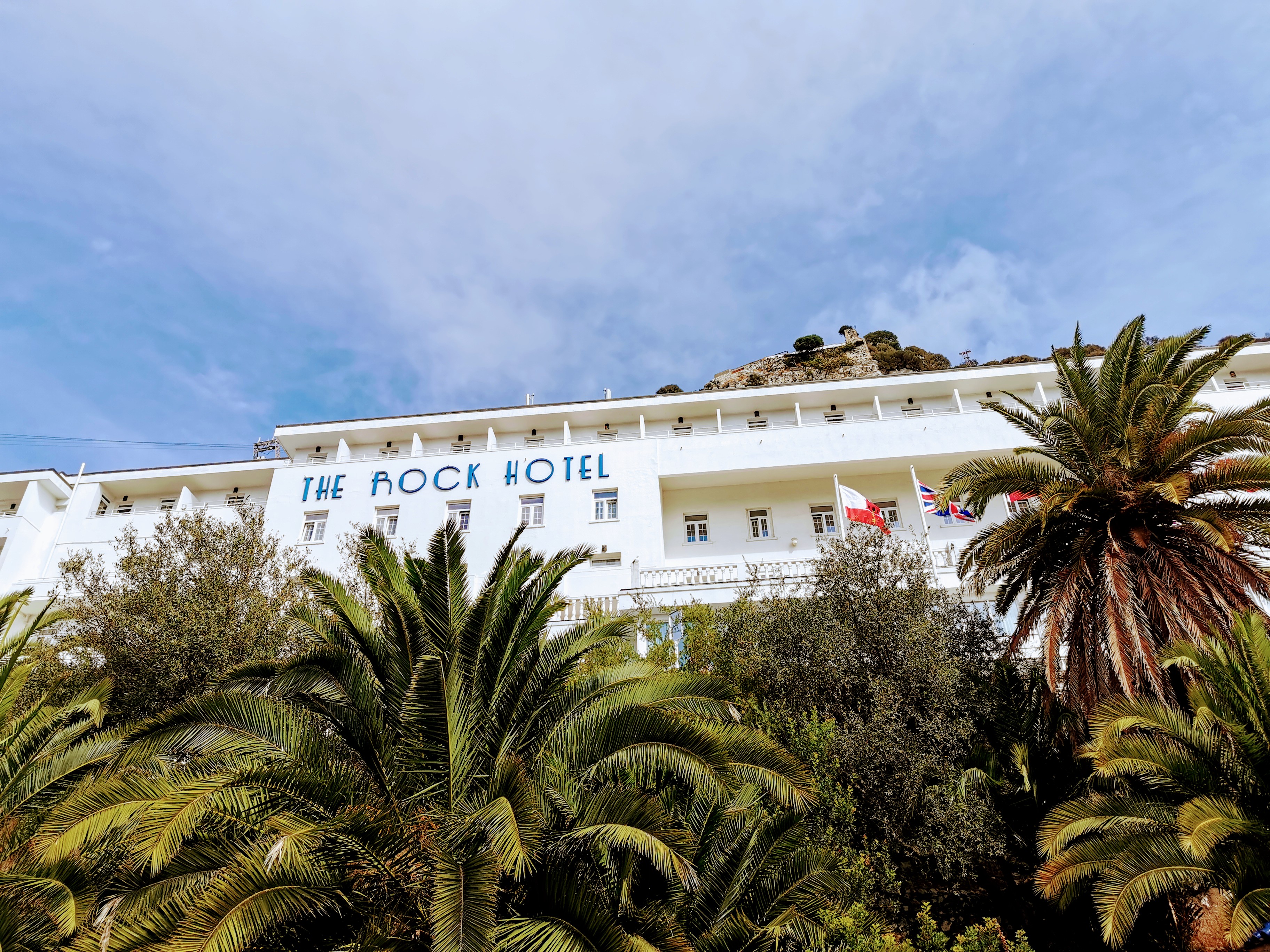
The Rock Hotel high in the Upper Town is a Gibraltar institution. Built in 1932 in Art Deco style, it quickly became a magnet for the rich and famous, and is considered to be one of Europe’s most iconic hotels. From Winston Churchill and Errol Flynn to the Two Ronnies, everyone has stayed here. John and Yoko got married at The Rock, and Sean Connery stayed at the hotel on his wedding night.

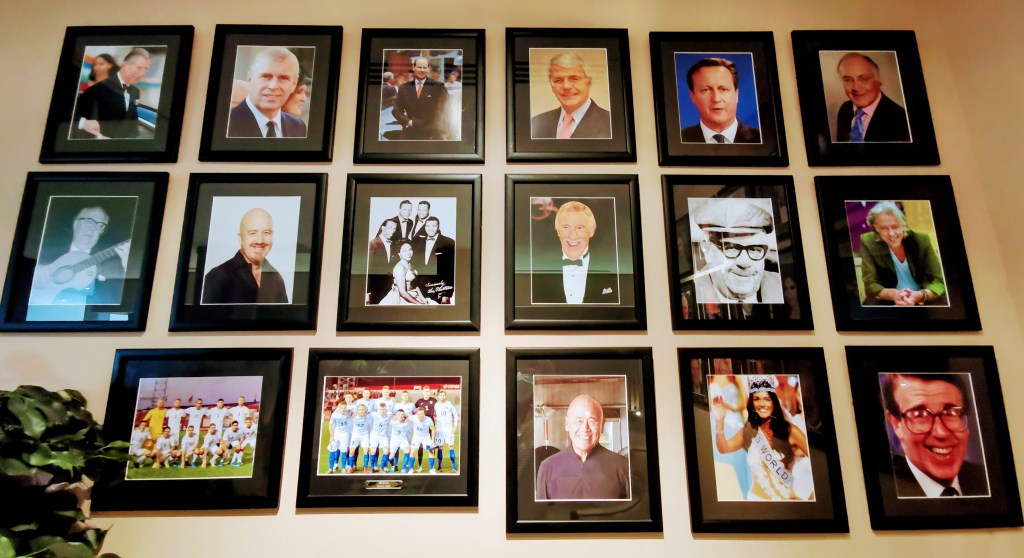
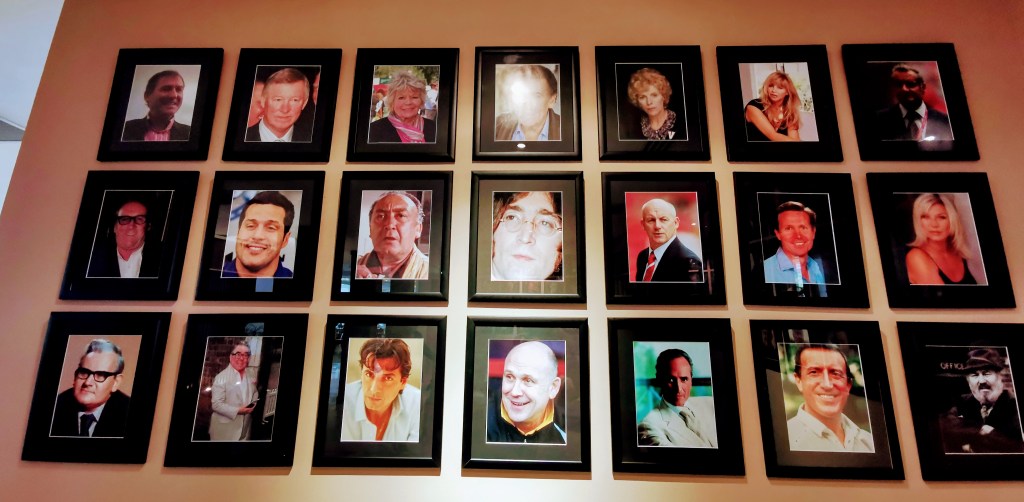
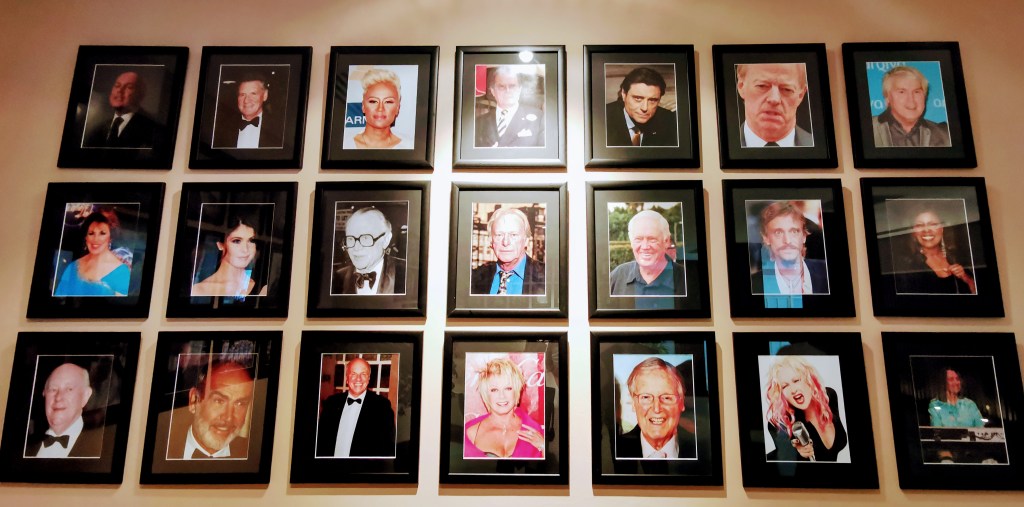
Upon arrival, you can have great fun playing Guess Who? The lift lobby has become a Hall of Fame of celebrity guests. Cyndi Lauper, Bob Geldof, Brucie, Alex Ferguson, Judith Chalmers, Elaine Paige. There’s someone for every taste! We’re usually in a hurry to get up to our room and unpacked, but not here.

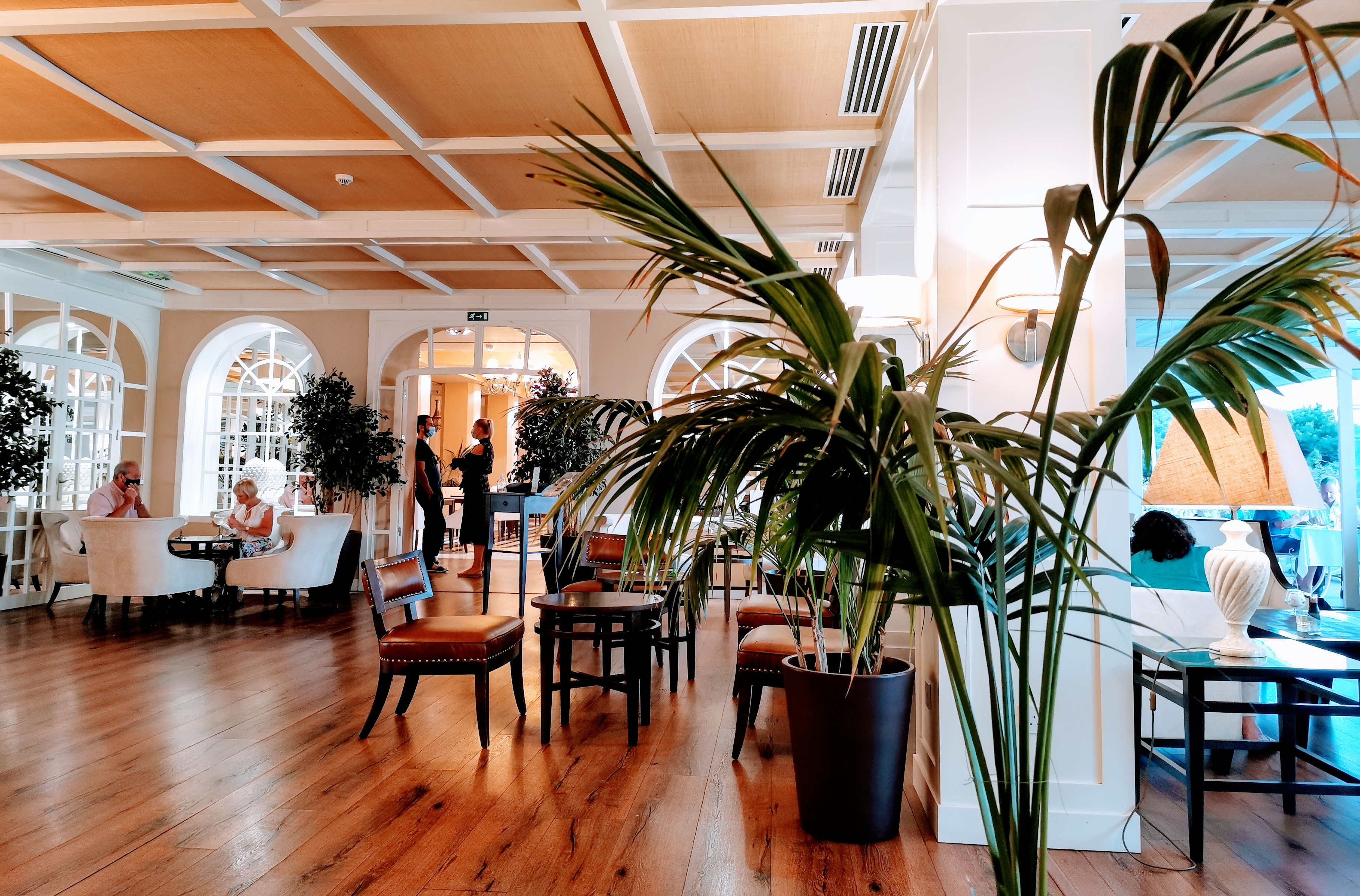
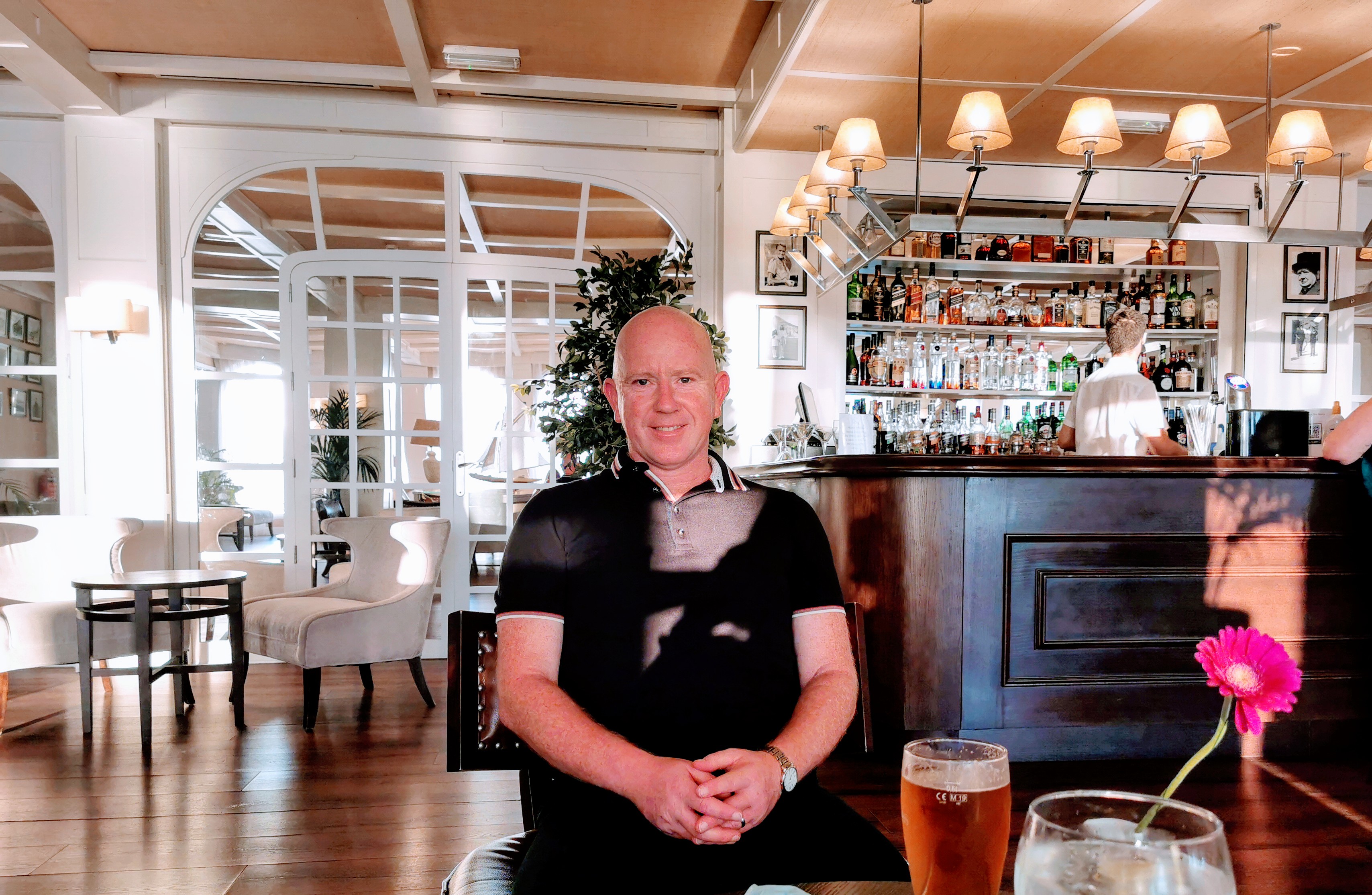
The hotel may have lost a bit of its sparkle nowadays – the decor is looking quite tired – but it still has atmosphere galore. Personally, I prefer to stay somewhere with a bit of history and character than the most immaculate and snazzy chain hotel. In the bar, I’m wondering if Ernest Hemingway once sat in my seat. I ask for a G&T. I only do doubles, warns the barman. This place is perfect!

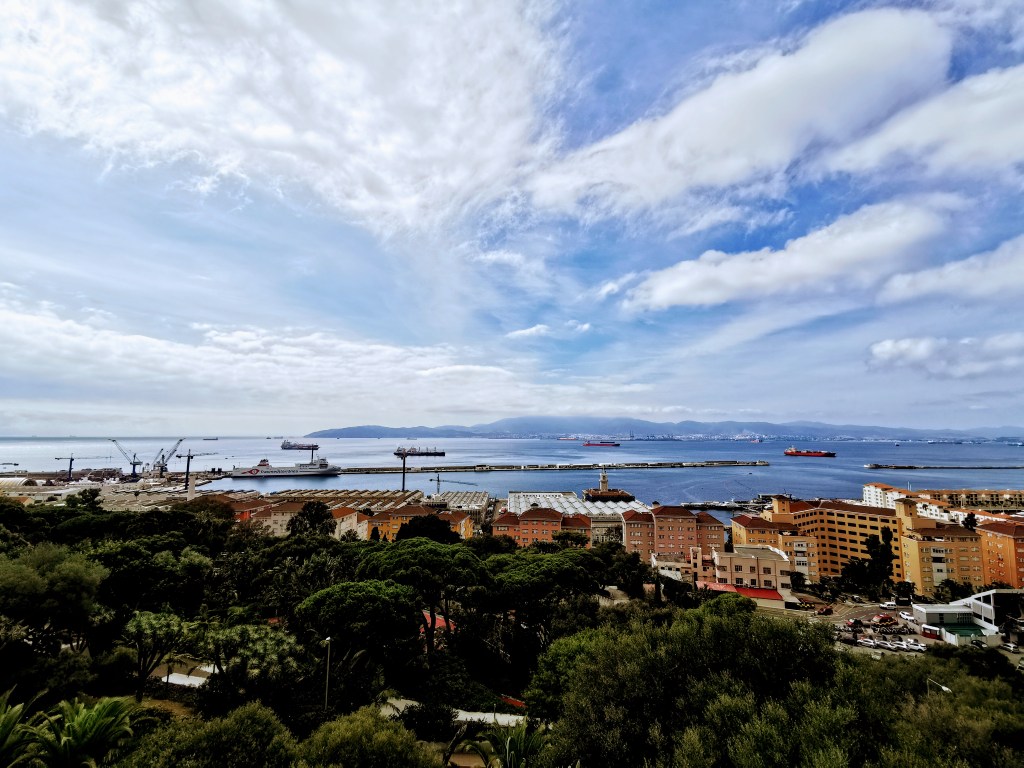
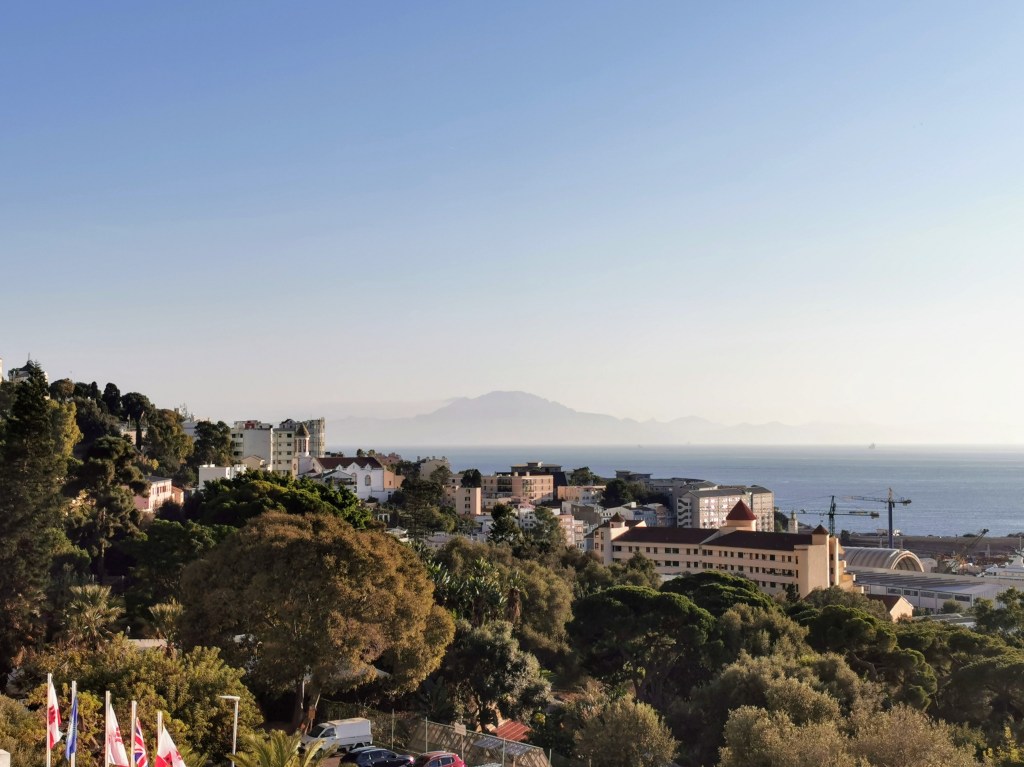
Our room is simple but huge, with a canopied bed, and a lovely big balcony. Plenty of hangers too, hurrah! I’ll never understand why many places think two per person is adequate. From our balcony, the views go on forever. Straight ahead is Spain, over to the left is Morocco. I could sit out here all day.

But no, there’s serious exploring to be done. I’m dying to experience the town – is it Spanish, is it English, or something in between? Gibraltar has changed hands many times over the centuries, it was Mons Calpe to the Phoenicians and Jabal Tariq to the Moors before becoming part of the Kingdom of Spain. When the Spanish throne fell vacant in 1700, the War of the Spanish Succession broke out in Europe over who would take power. Gibraltar was the price of Britain’s withdrawal in 1704. I think we got a good bargain!

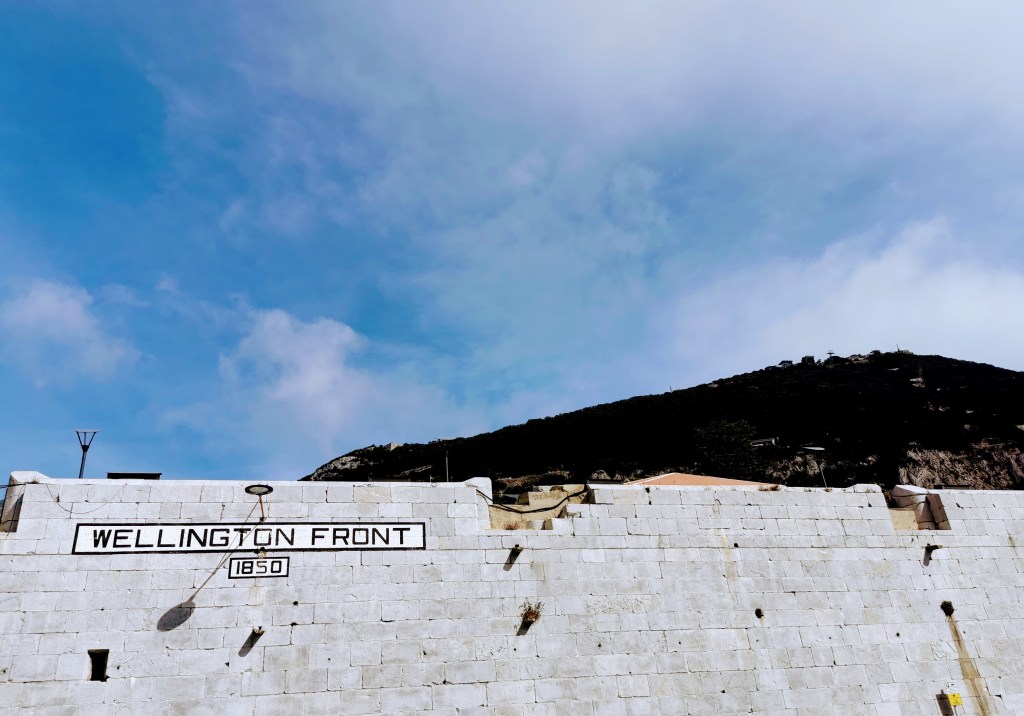
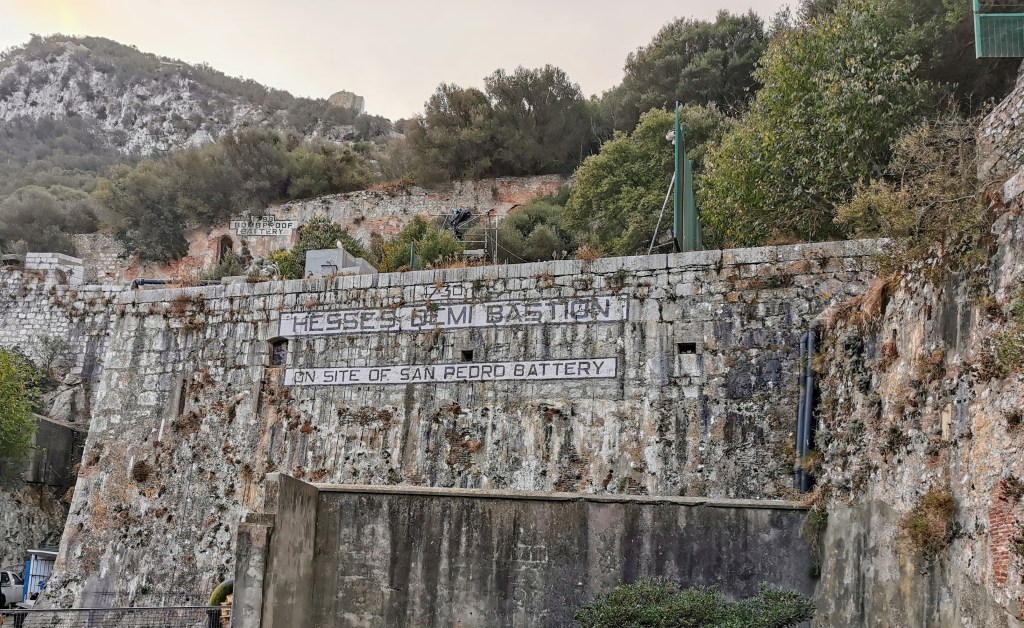
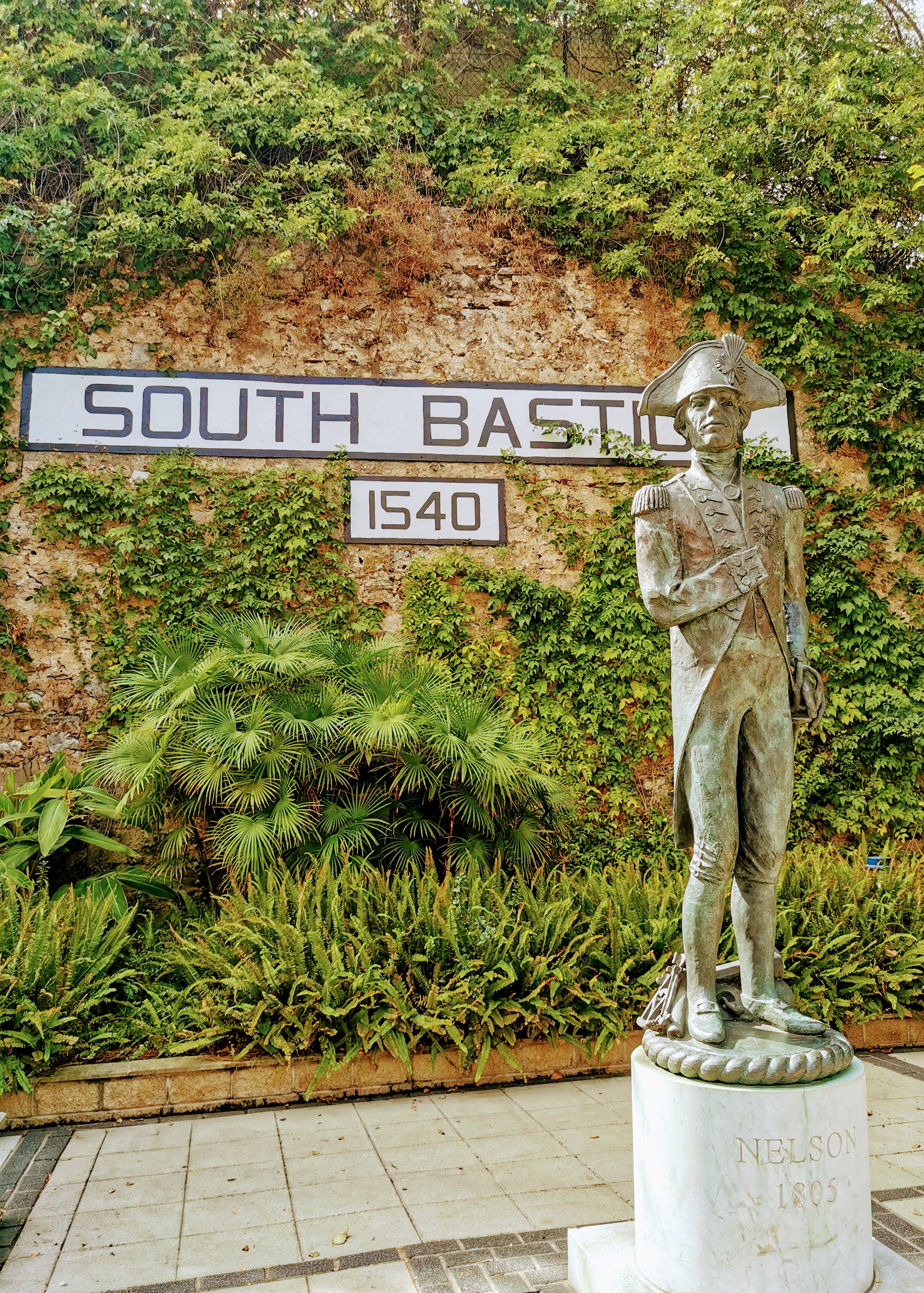
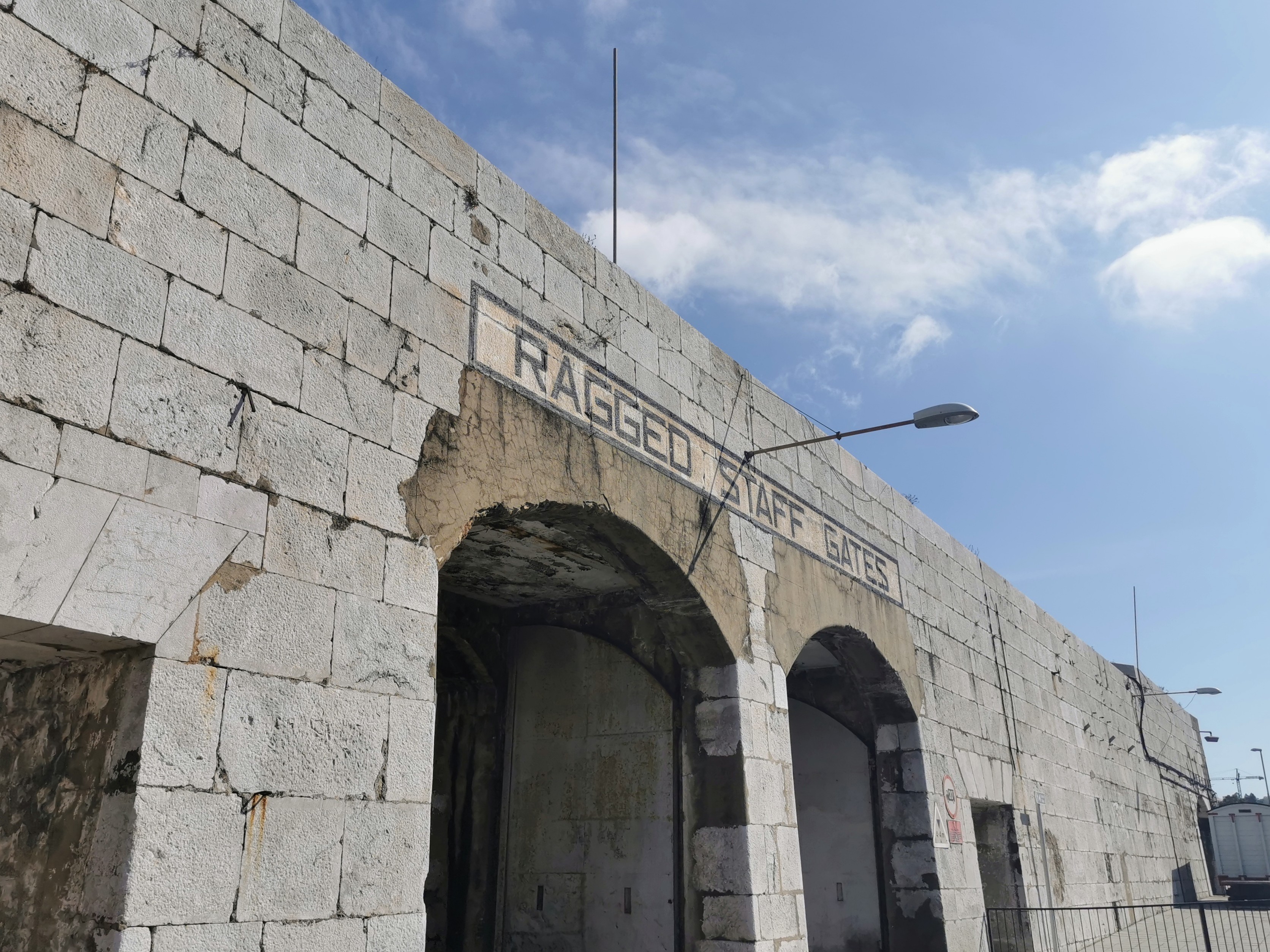
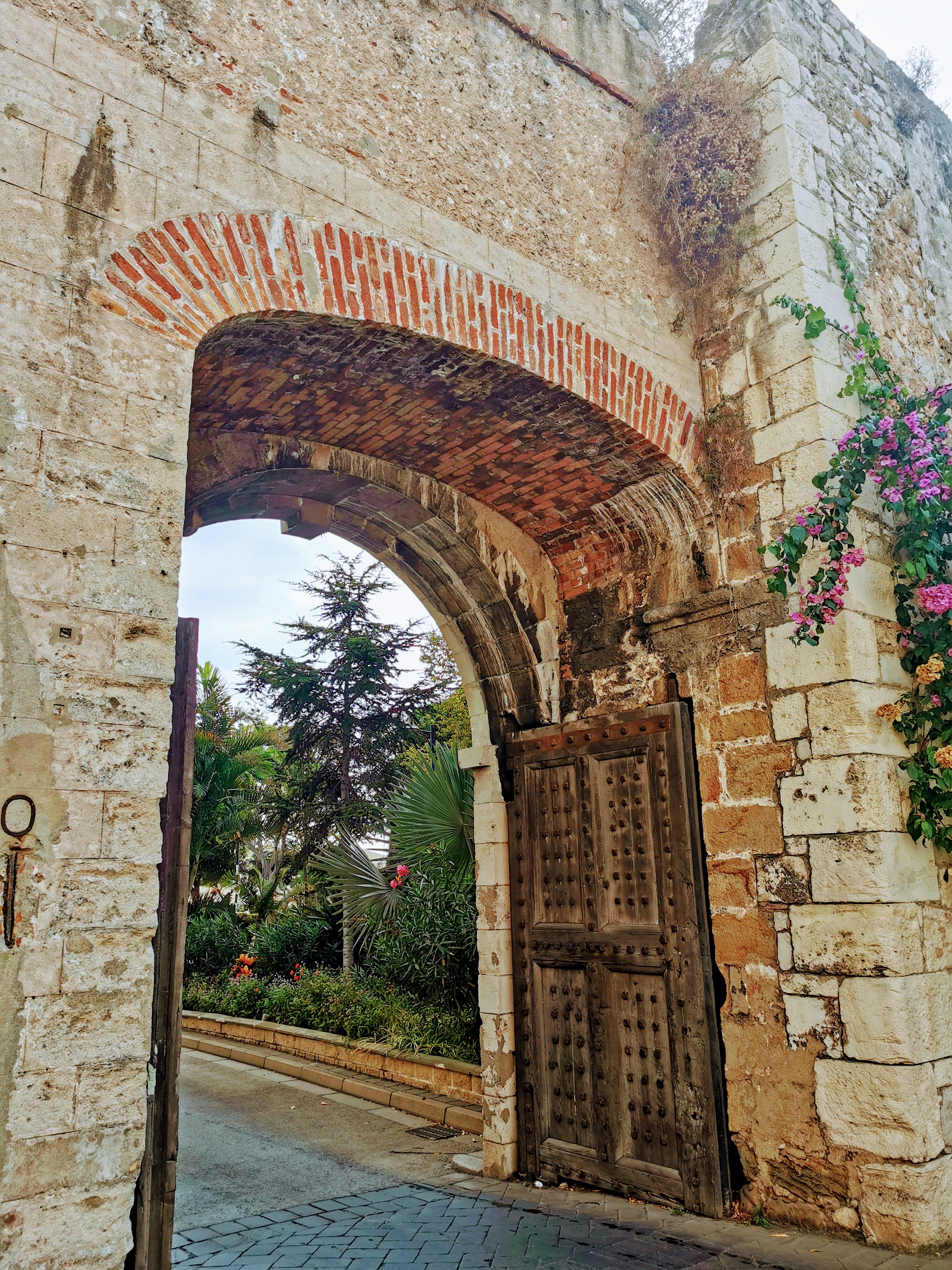
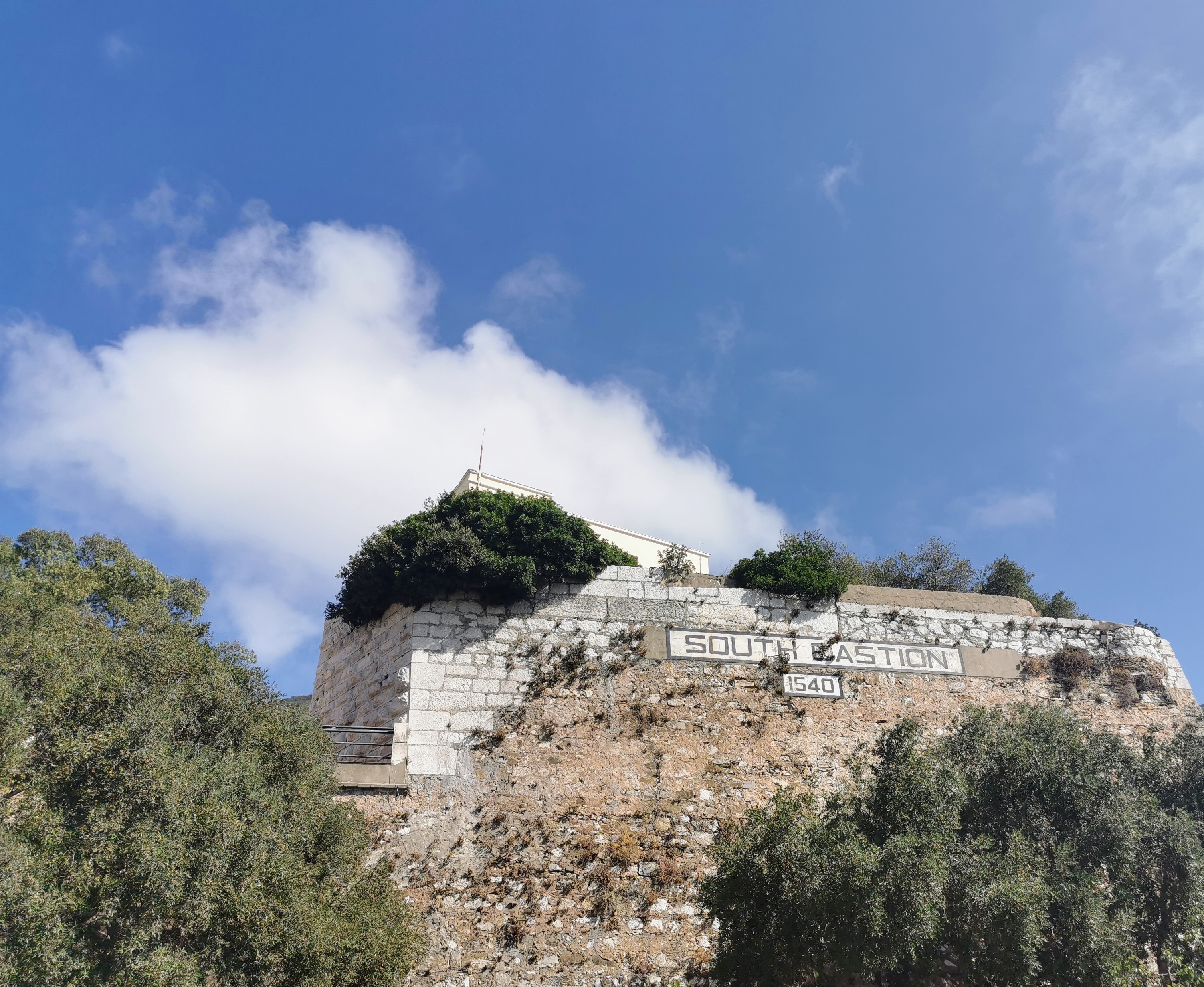
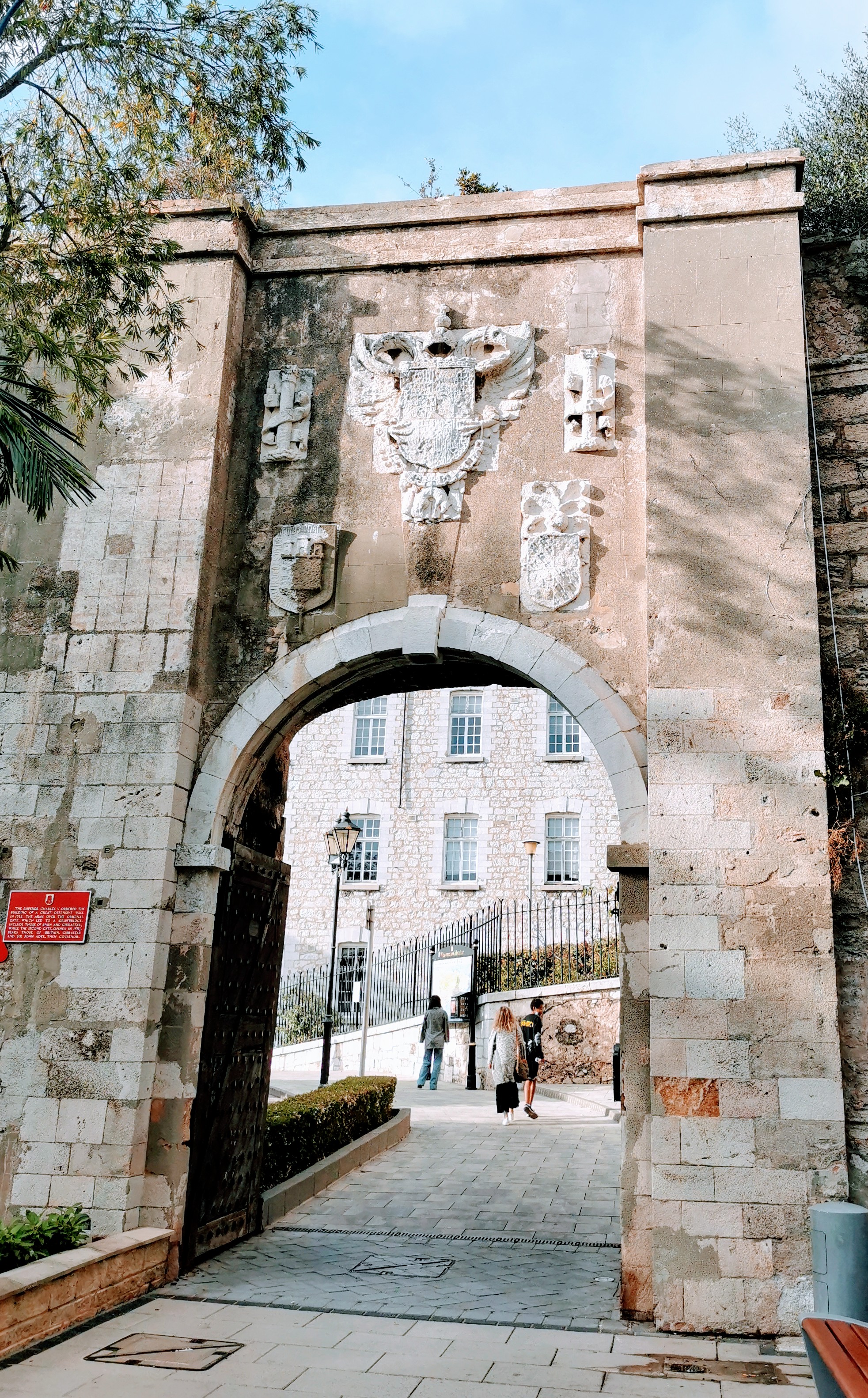
Since then, the Spanish have been trying to regain the Rock, and you can’t blame them. Gibraltar’s strategic location at the entry to the Mediterranean makes it a valuable asset for whoever holds it, and it has long been fortified to ward off aggressors. Old bastions, tunnels, gates and gun batteries are evident all over town. They’re all neatly labelled too, so helpful!

Spain fought hard to take back Gibraltar over the course of the 18th century. The Great Seige of Gibraltar in 1779 lasted for more than three years and was so destructive that the whole town had to be rebuilt, but the territory remained British. We don’t give up that easily.

In 1969, the Spanish tried the less overtly aggressive approach of closing the border, only opening it fully again in 1985 to gain entry into the EEC (now the EU). But the British are loath to give up what has long been an important Royal Navy base and the people of Gibraltar have always voted to remain British. Hands off our Rock, España.

It’s still a contraversial issue between the two countries, complicated now by Brexit – the population of Gibraltar voted overwhelmingly to remain in the EU. The territory needs Spanish workers, with around 15,000 crossing the border on a normal day. With only one entry point, you can see why any delays would cause massive headaches for all concerned. At present, there appears to be an uneasy truce in place, but for how long?

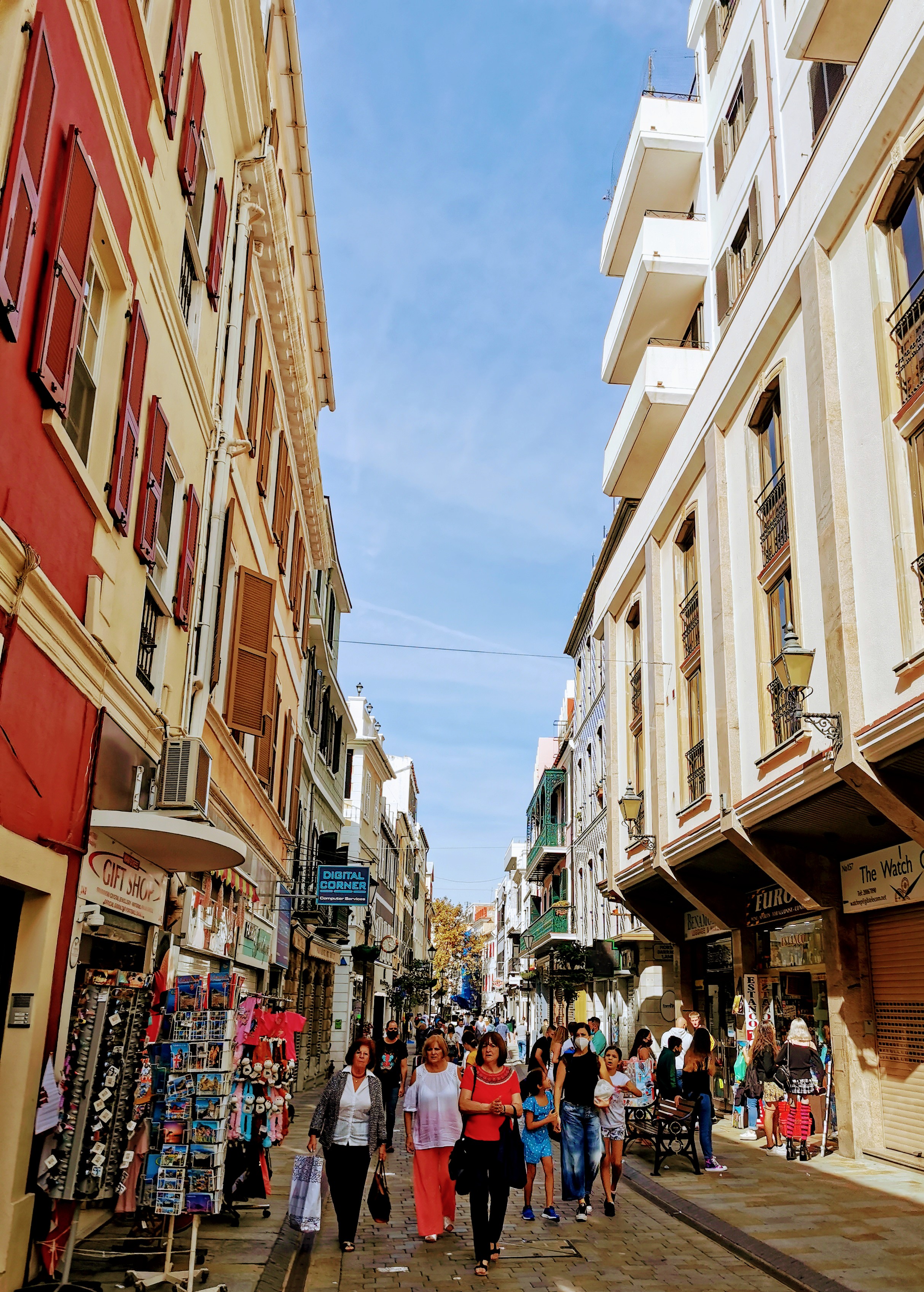
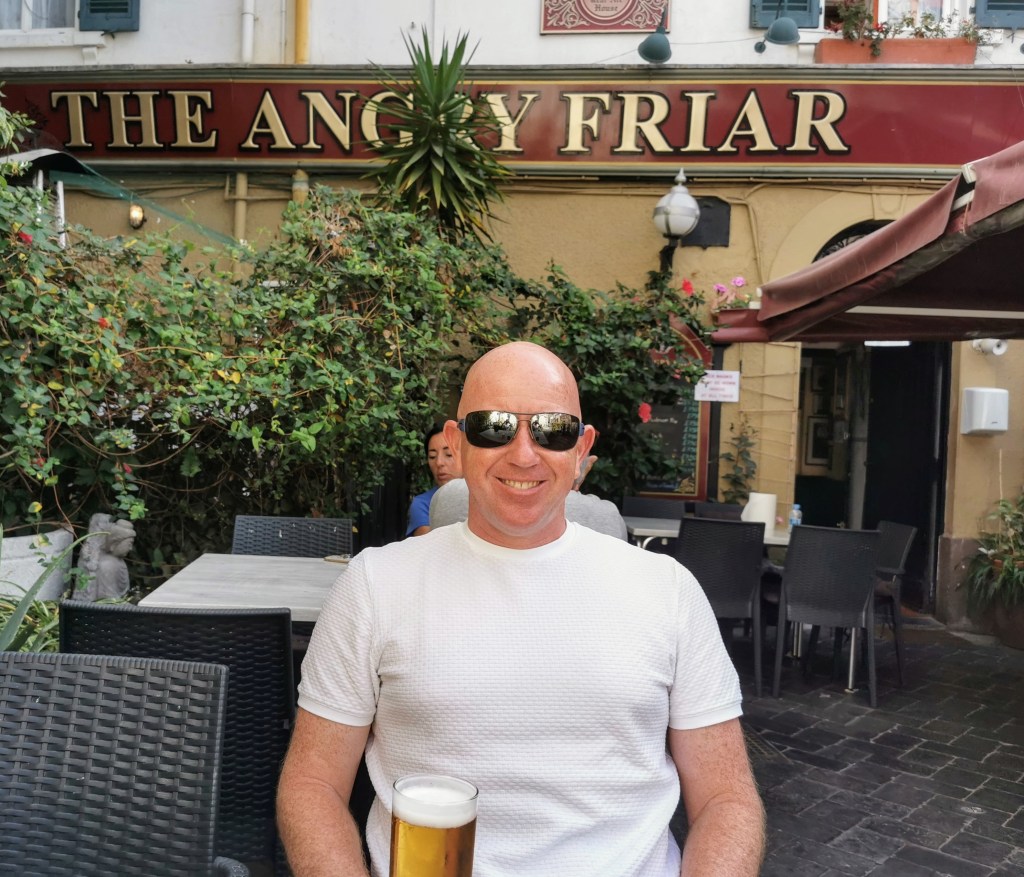
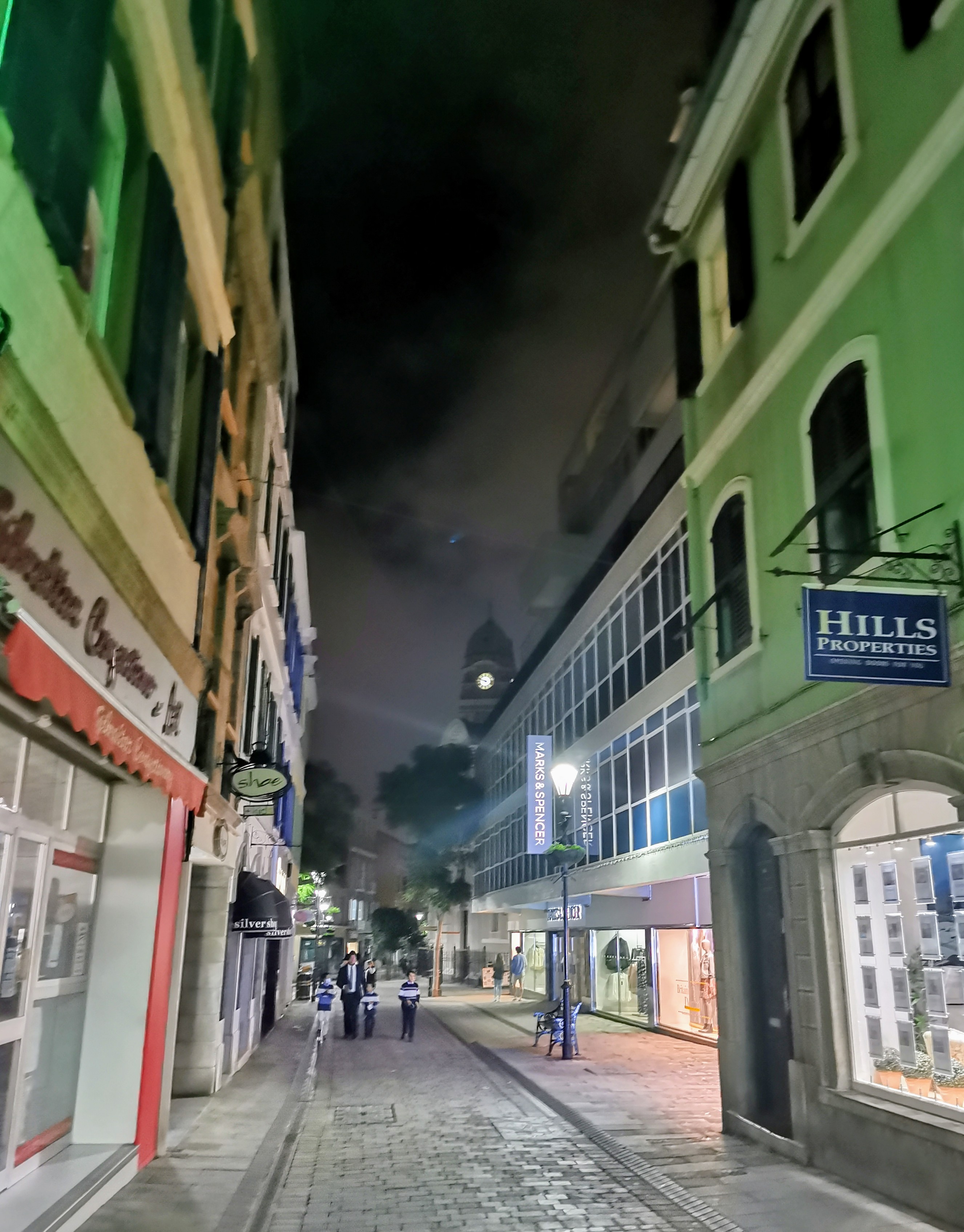
Strolling along the pedestrianised Main Street, I’m expecting to see lots of familiar retailers. I’ve heard that expats in Spain usually flock over the border to get British goods they just can’t do without. In reality, I’m surprised at how Spanish it feels here. Yes, there’s M&S and Debenhams but there are also many small independant stores. There are British style pubs, but mixed in with tapas bars and pavement cafés. Besides, it’s too warm to feel British.

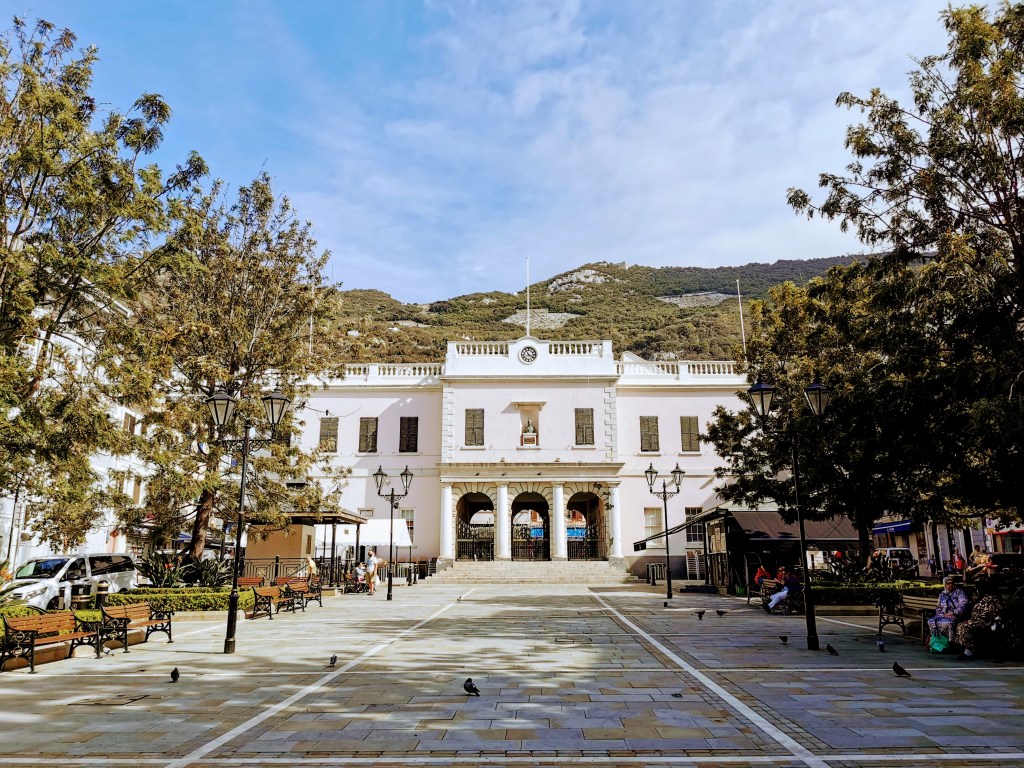
Also strung out along Main Street are some of Gibraltar’s most impressive civic buildings – the Governor’s Residence, the Cathedral, the Law Courts, Parliament House and City Hall. It’s clearly the place to join in that favourite European pastime, aimlessly sauntering. Whole families walk together, and people call out to one another across the street. It feels like a tight knit and friendly place to live. Around 33,000 people live here, so it’s only a medium sized town by UK standards.

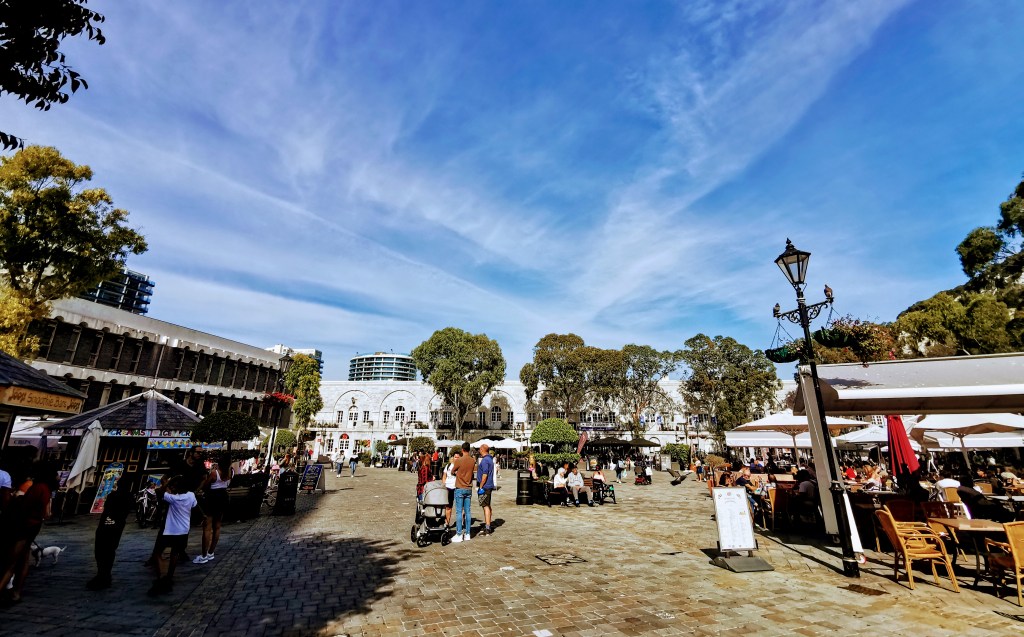
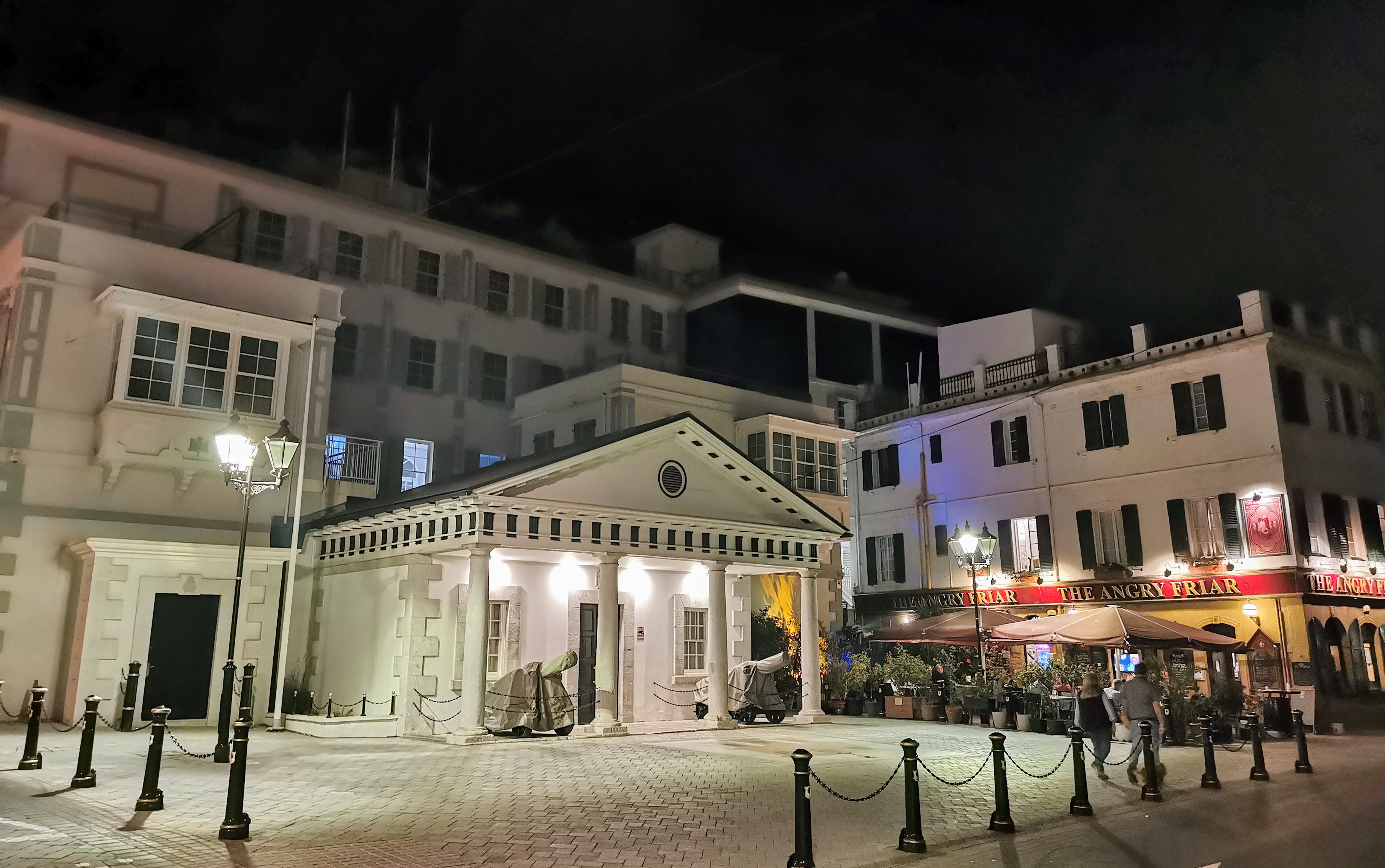
Main Street eventually takes us to Casemates Square, a central gathering spot dominated by the old military barracks, now converted into cafés, bars and shops. I can say with conviction that it’s a good place to order a drink and people watch. I recommend the white sangria at Café Solo. The sacrifices I make for research!

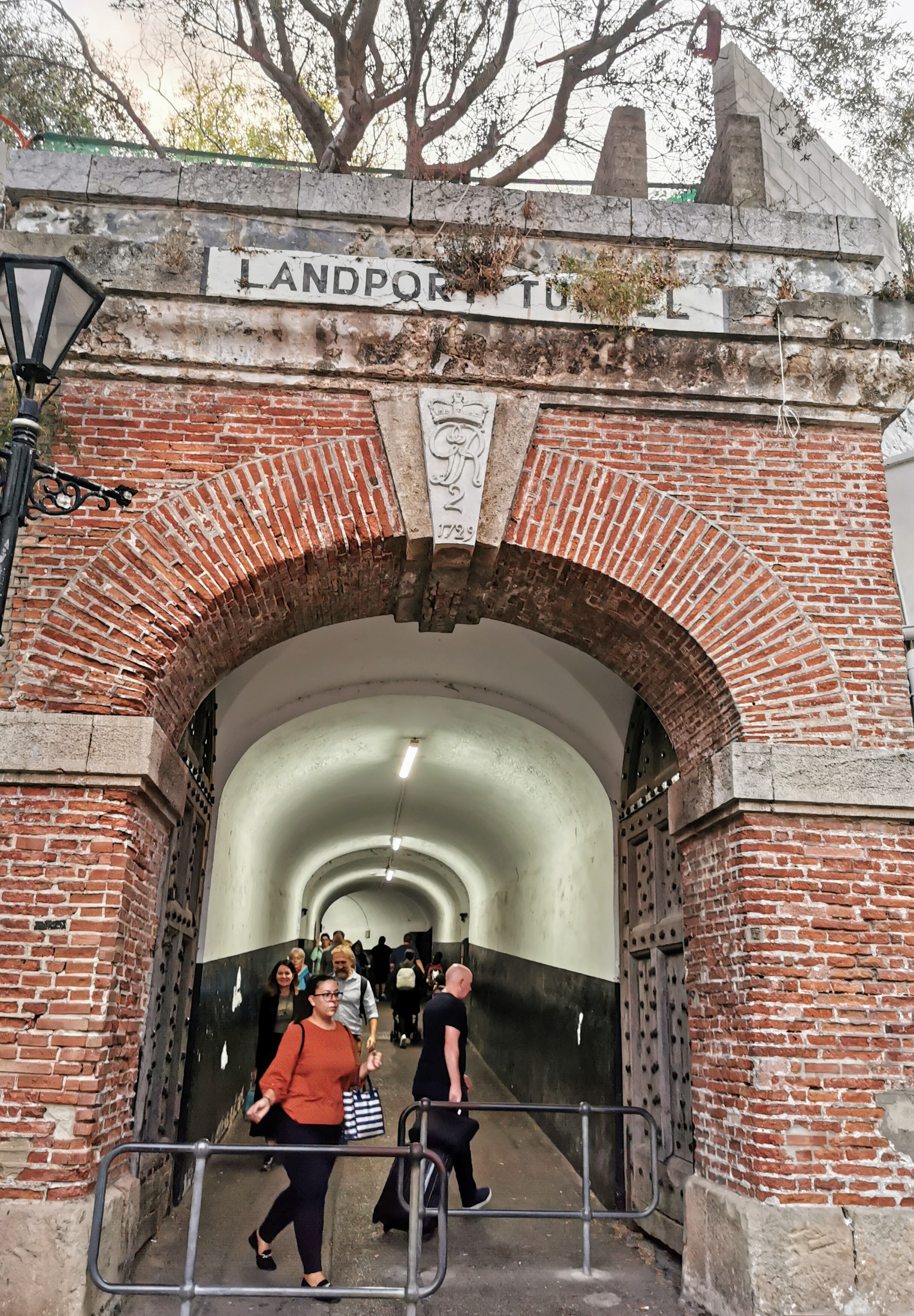
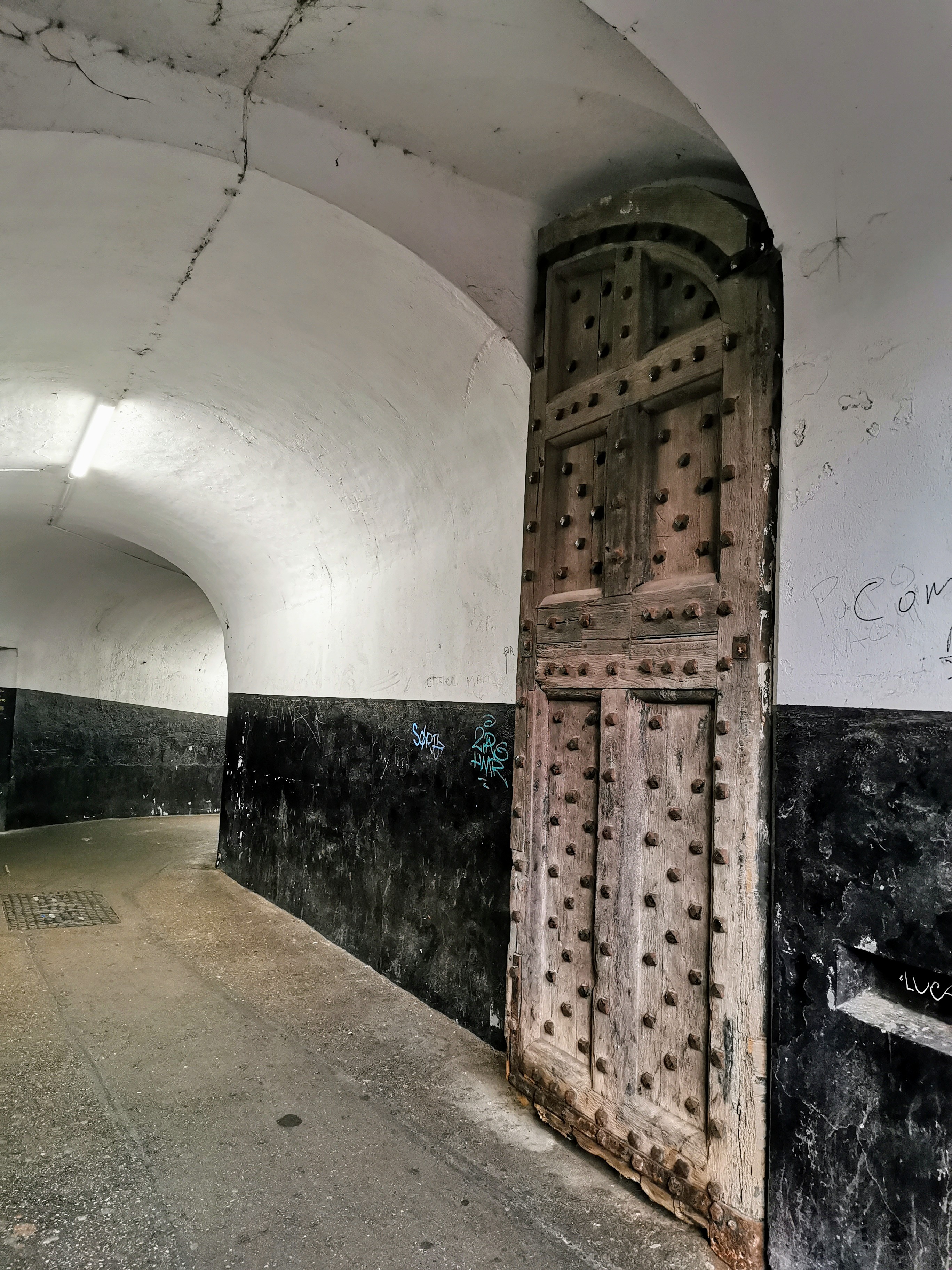
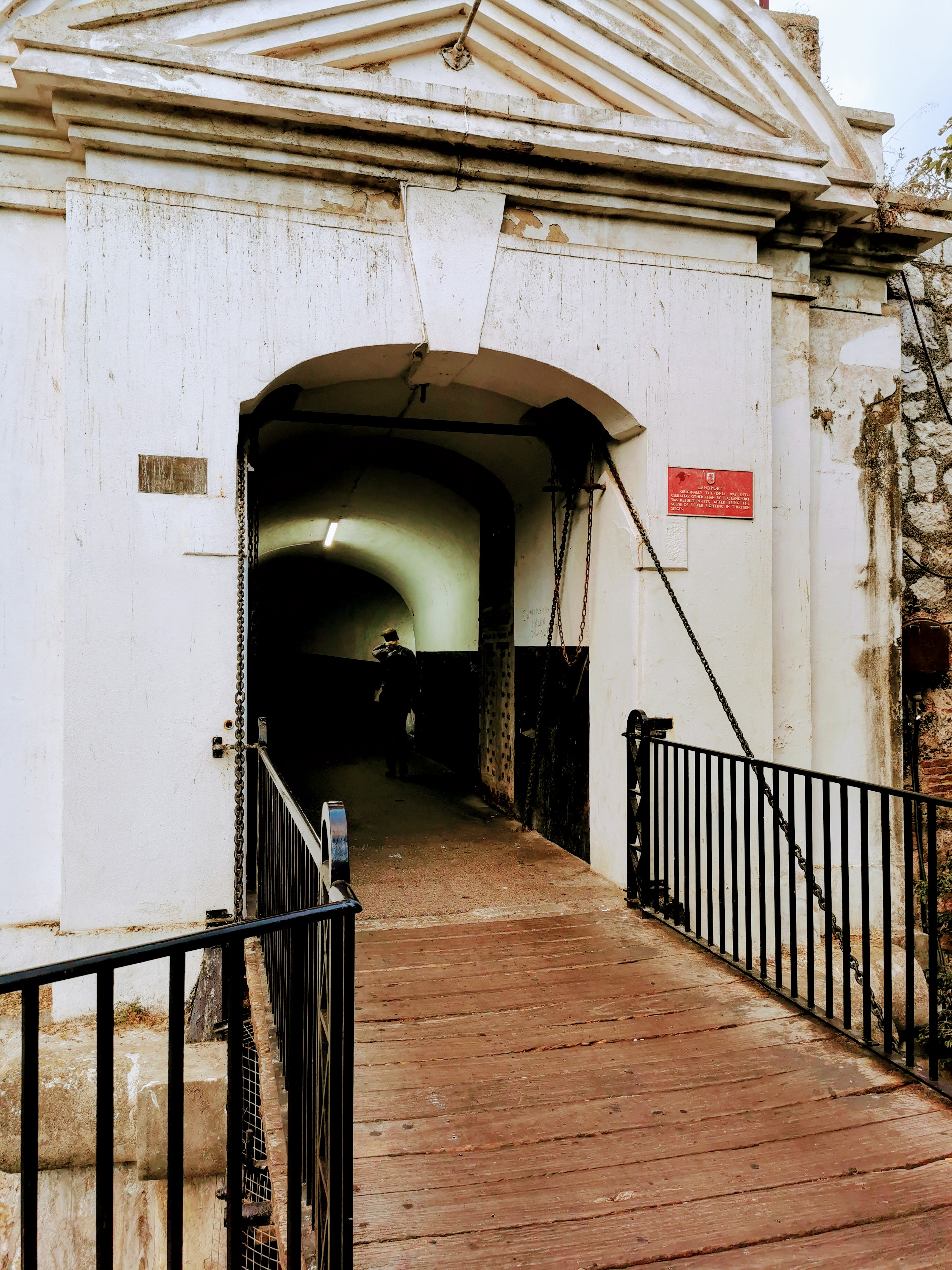
Just behind the Casemates barracks is the fascinating Landport Tunnel. This was originally the only way in or out of Gibraltar, apart from by boat. It was closed every night by pulling up the drawbridge and closing the gate at the Spanish end. The Landport was heavily guarded, with a moat, iron spikes and a gunpowder mine, to say nothing of the 20 guns ready to fire from above on anyone getting too close. Nowadays it’s more of a commuter route, with people going in and out of the walled city to work.

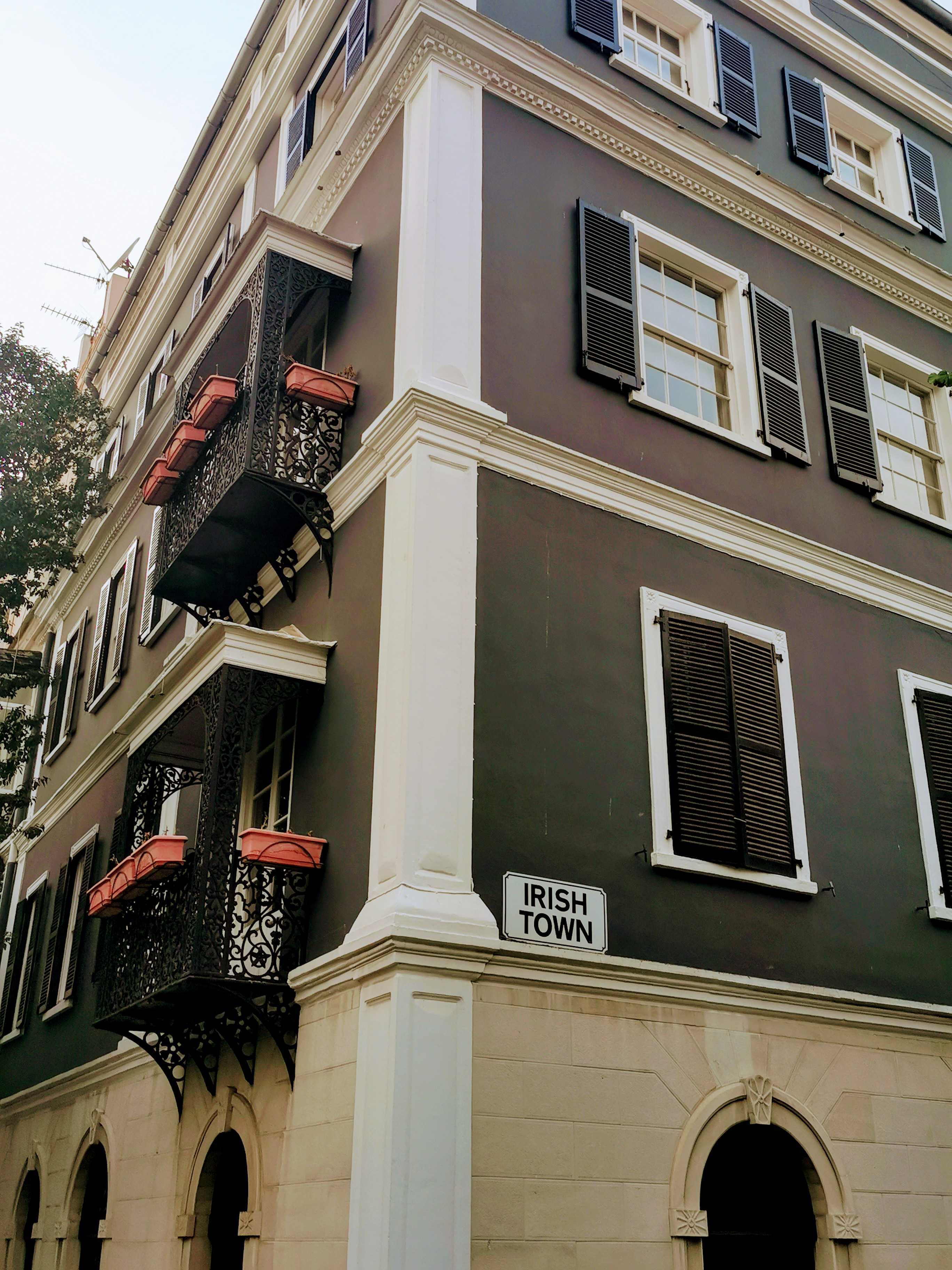
Going out in Gibraltar is a casual affair – as the weather is so good most people sit outdoors to eat and drink right into the evening. We have dinner at Cafe Rojo in Irish Town which has a menu full of interesting options. They taste as good as they sound too. The origins of the street name are a bit of a mystery, as no-one Irish appears to have ever lived here. Back in the day, it was referred to as an area of ill repute, but it feels perfectly safe and respectable now.

When we emerge at about 10pm, we’re surprised by how quiet the streets are. Entertainment venues can stay open until midnight in Gibraltar, but obviously coronavirus is still keeping people at home. Luckily we’re not night owls, although I have a strange urge to stay up late just because I can!

The uphill climb to our hotel is even more strenuous after much food and wine, with the increased gradient of the driveway nearly finishing us off. Time to get some rest, as there’s a bigger climb to face tomorrow – the Rock itself. I want to meet some monkeys!

Come walk with me at Sandal Castle

If you’re anything like me, you probably take for granted the place you grew up. Everything is so familiar that you just stop being curious about it. When you were younger you couldn’t wait to escape to somewhere more glamorous. Well, the phrase familiarity breeds contempt dates back to the works of Chaucer in 1386, so I’m not the first!

In 2020 I’ve been spending a bit more time in Wakefield with my family and friends, as and when coronavirus restrictions have allowed. It’s that kind of year isn’t it? We’ve realised the things that are most important to us. And as it’s 200 miles from Maidenhead to West Yorkshire, a rather dull 3 hour drive mostly on motorways, I may as well do some exploring while I’m here and make the most of it. Maybe I’ll even write a blog…
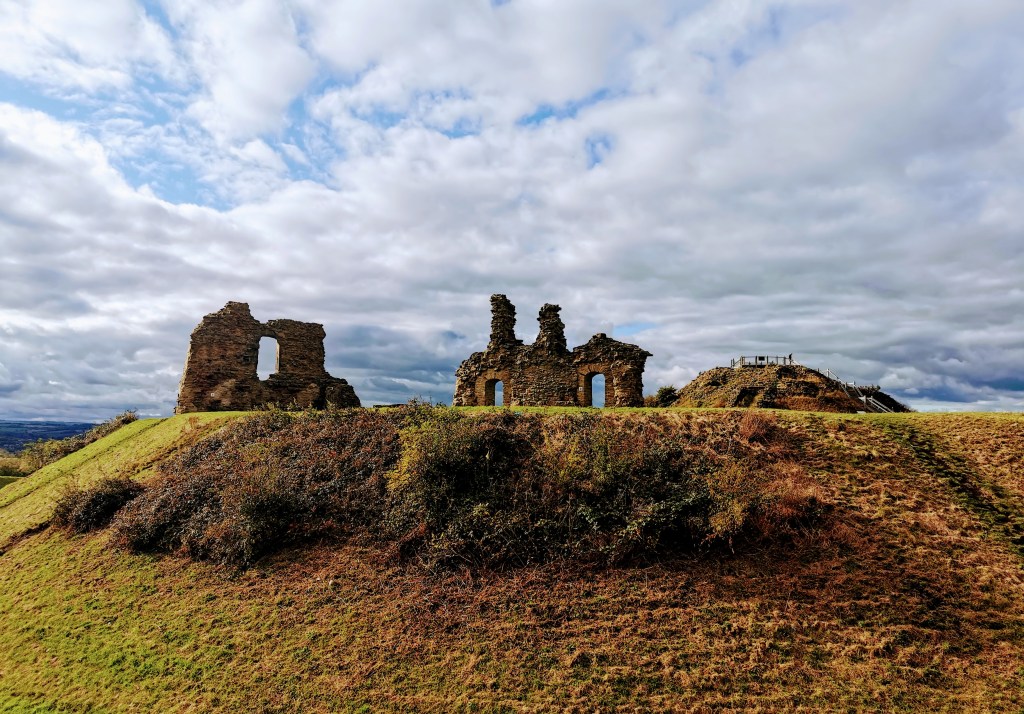
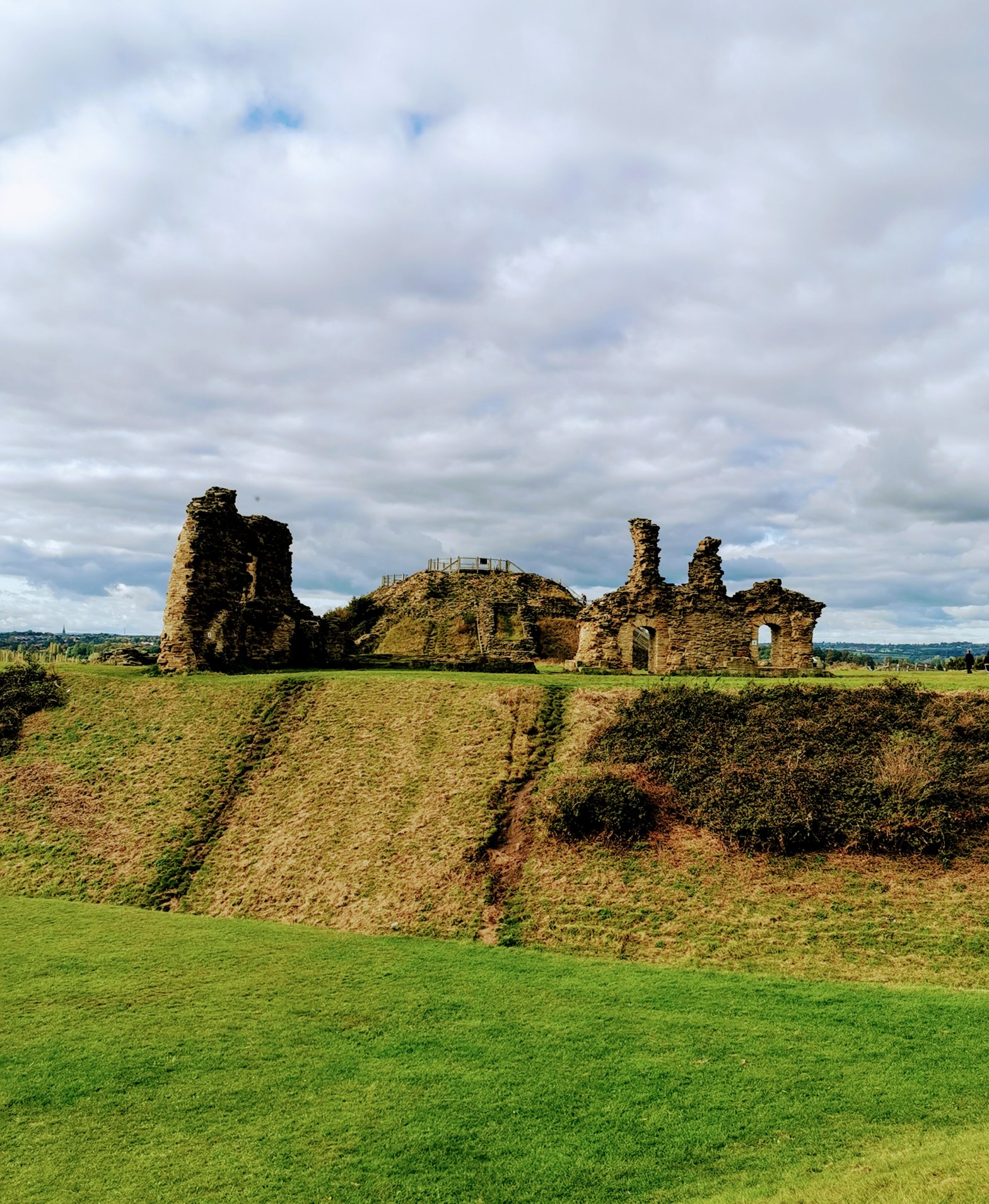
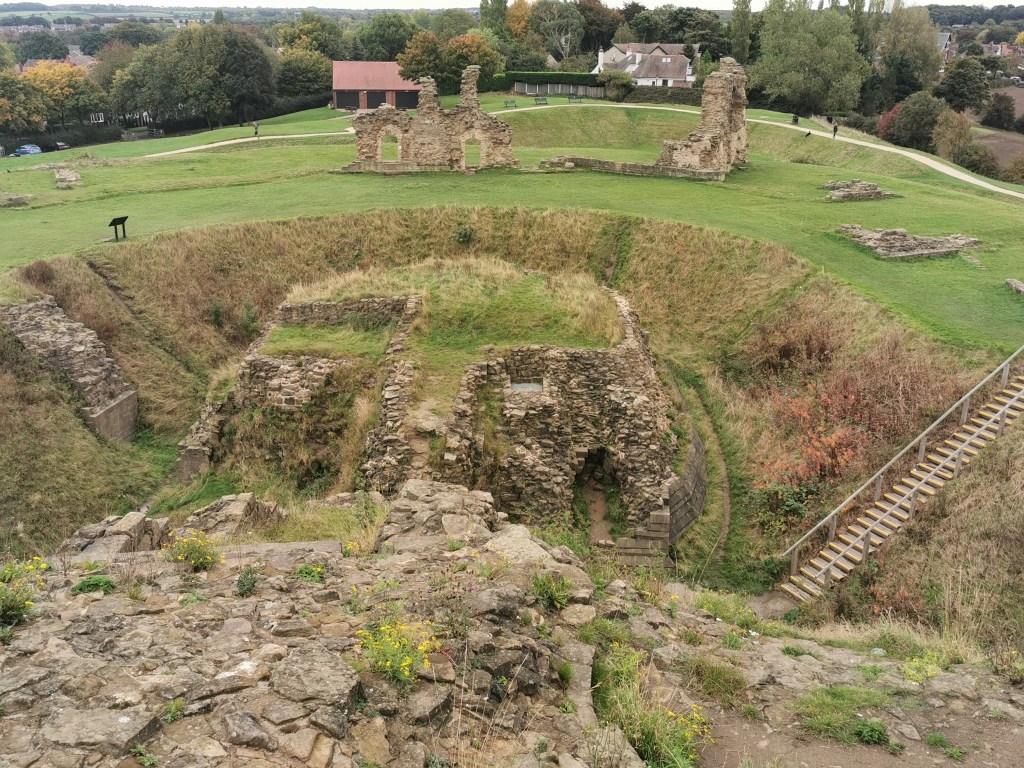
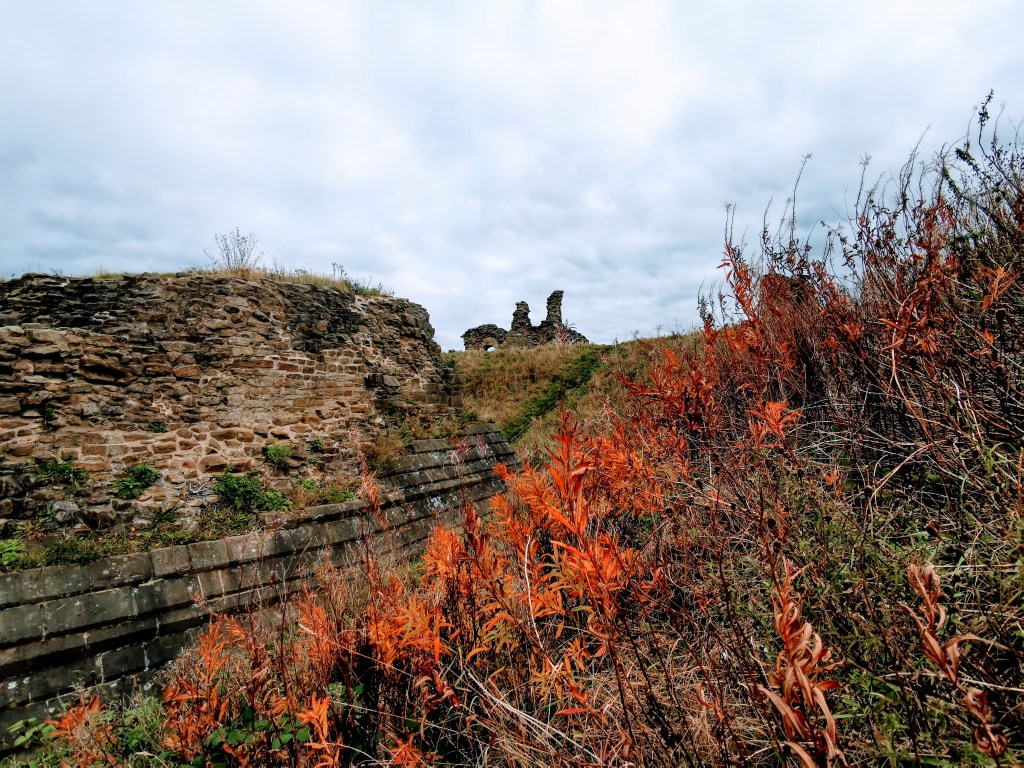
Today I’m visiting Sandal Castle for the first time in about 35 years. It’s just a ruin, but it has some pretty enthralling history. It’s just a couple of miles from where I grew up, and my Mum, AKA the fount of all local knowledge, is coming with me to make sure I don’t miss anything important!

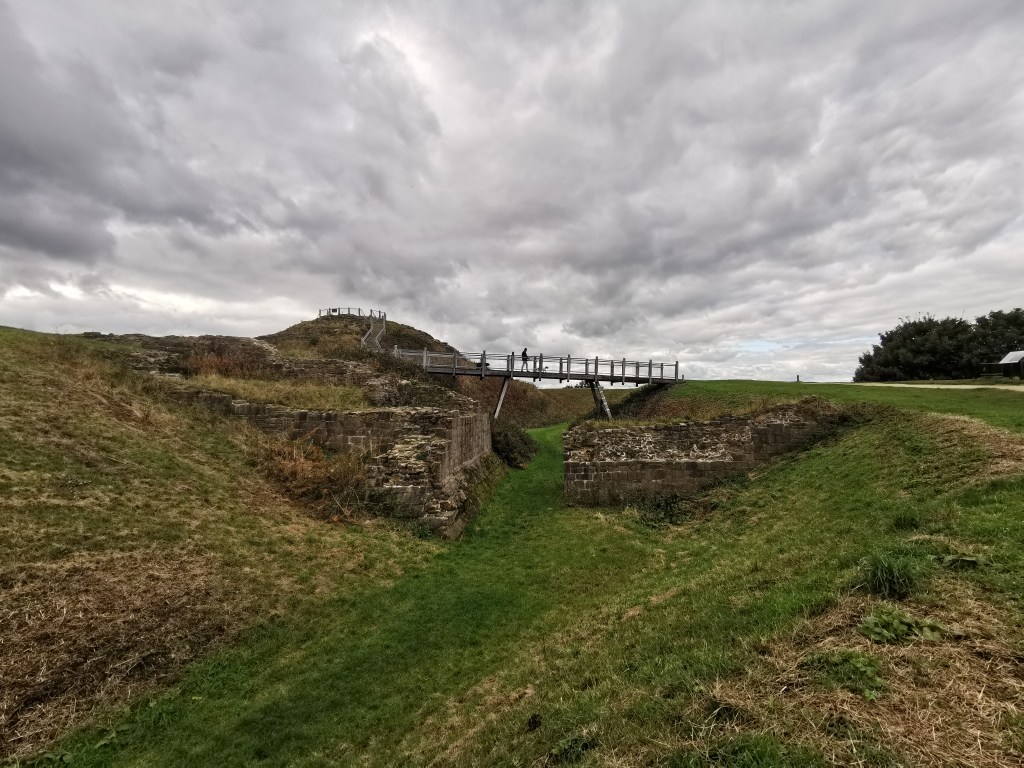
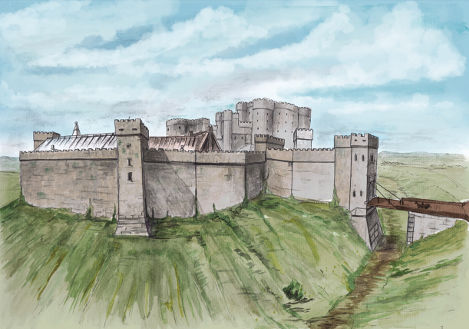
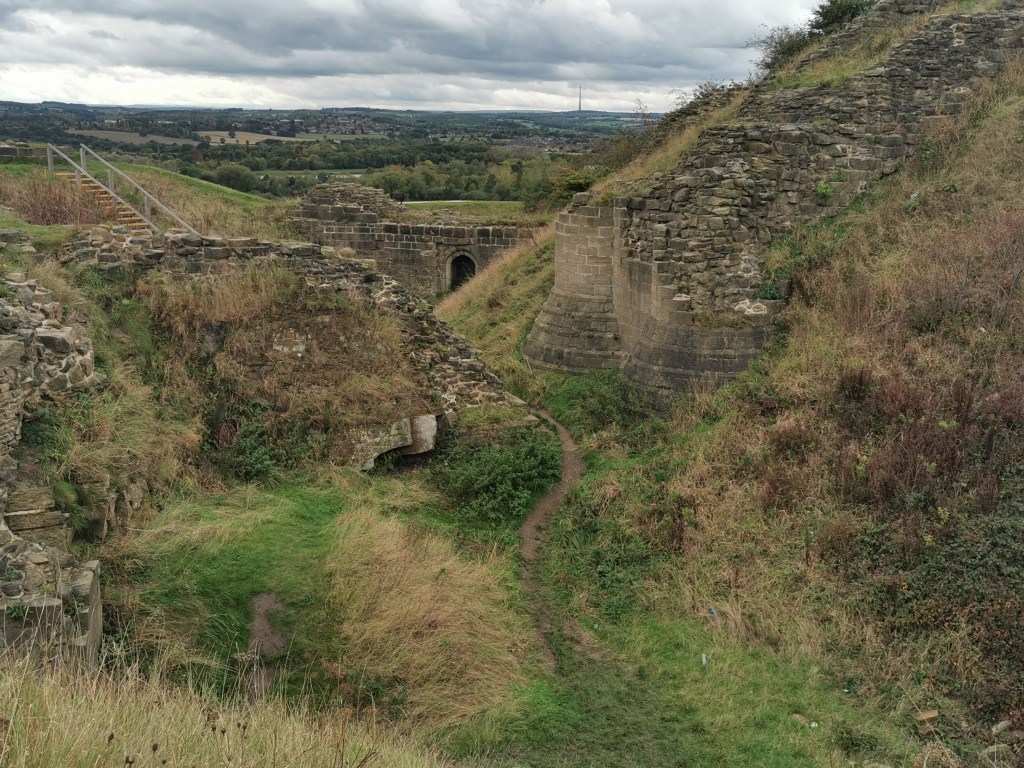
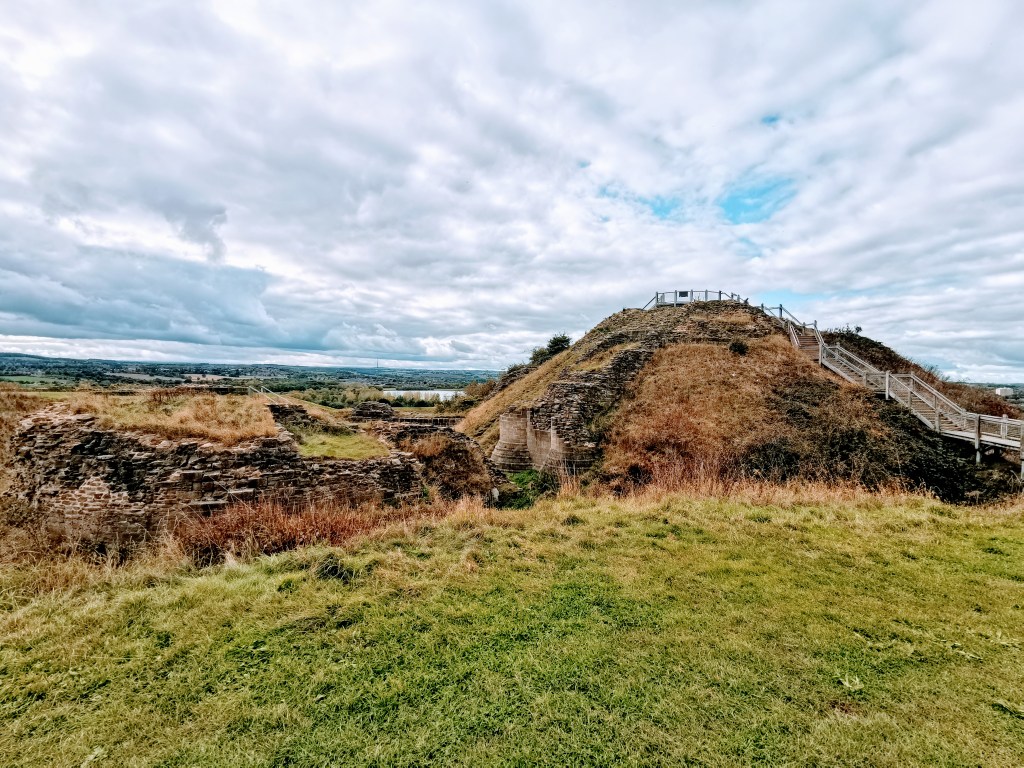
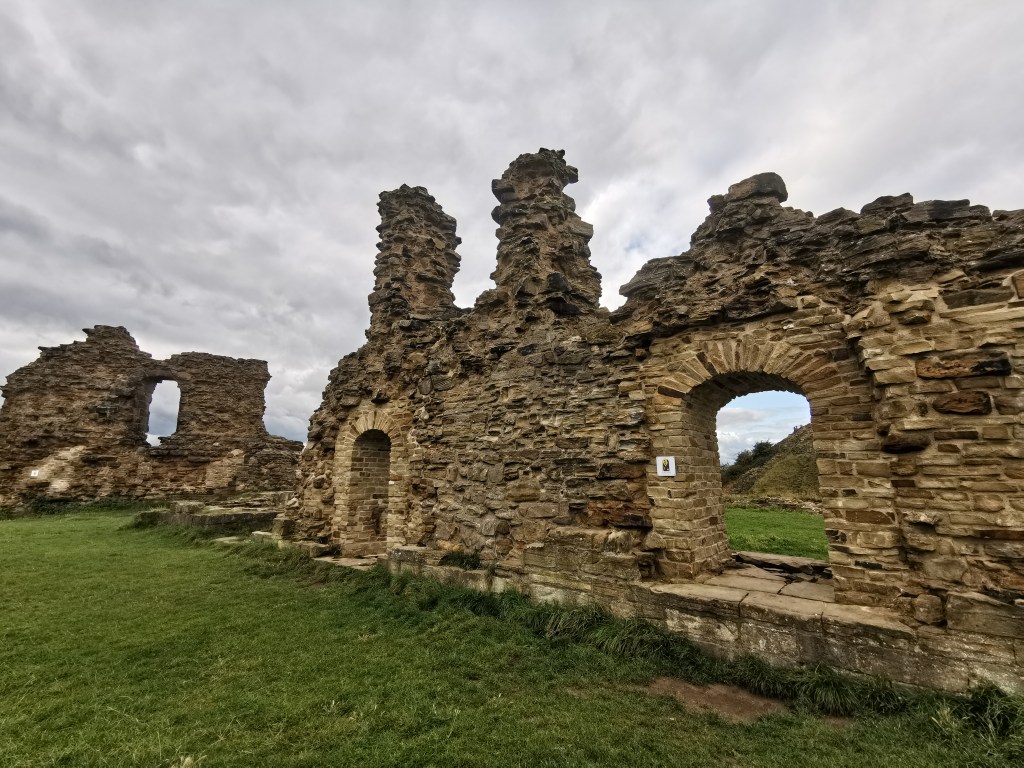
Sandal Castle was built in the 12th century by the Warenne family, the Earls of Surrey, and passed down through the family for 250 years. The name of the 5th Earl appears on the Magna Carta in support of King John so this was a prominent family. What started out as a simple timber structure was eventually a forbidding stone edifice. In the 14th century the Warenne name died out and the castle became the property of King Edward III, who gave it to his son Edmund, the 1st Duke of York. But it’s in the 15th century that things get really exciting.

When I first mention visiting Sandal Castle, Mum immediately starts jigging about and singing an old nursery rhyme, I think, oh dear, she’s finally lost the plot! But, as is often the case, the words we were taught to chant in childhood were based on historical events. Oh, the Grand Old Duke of York, he had ten thousand men, he marched them up to the top of the hill and he marched them down again – the rhyme was inspired by what happened here in Sandal in 1460.

The Duke in question was Richard Plantagenet, 3rd Duke of York, who owned Sandal Castle. Richard was cousin to King Henry VI, also Duke of Lancaster. When Henry began to show signs of mental illness in 1455, Richard decided that the throne should pass to him. Naturally, the King’s wife and supporters did not agree. Civil War broke out in England, known as the Wars of the Roses due to the heraldic badges of each royal house – a red rose for Lancaster and a white rose for Yorkshire. As with all civil wars, families and neighbours were set against each other according to their loyalties, and it all got very nasty.

I don’t know about you, but when I studied history at school it was Chinese medicine and coal mining. Not the most exciting of subjects, and quite inexplicable choices when you consider all the amazing stuff they could have taught us. The Wars of the Roses would have had much more relevance. You may think this is all ancient history, but if so you’re obviously not from the North of England. The age-old rivalry between the counties of Yorkshire and Lancashire is still very much in evidence. Think Pulp (from Sheffield) versus Oasis (from Manchester). The Roses Match is still played by Yorkshire and Lancashire cricket teams.

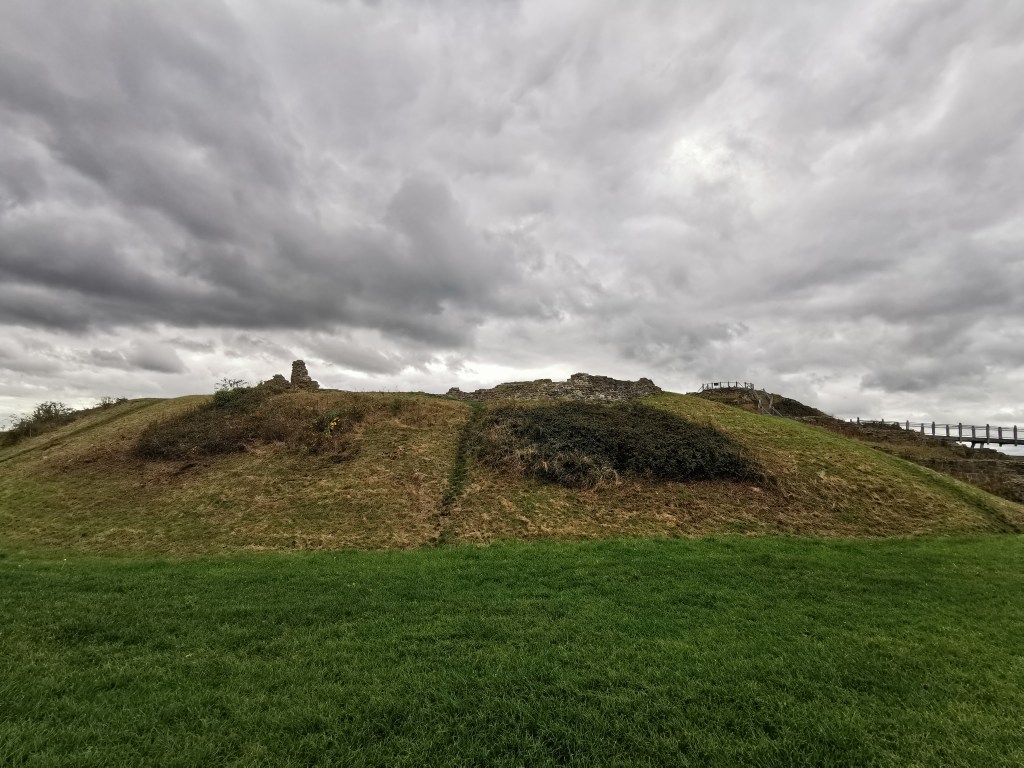
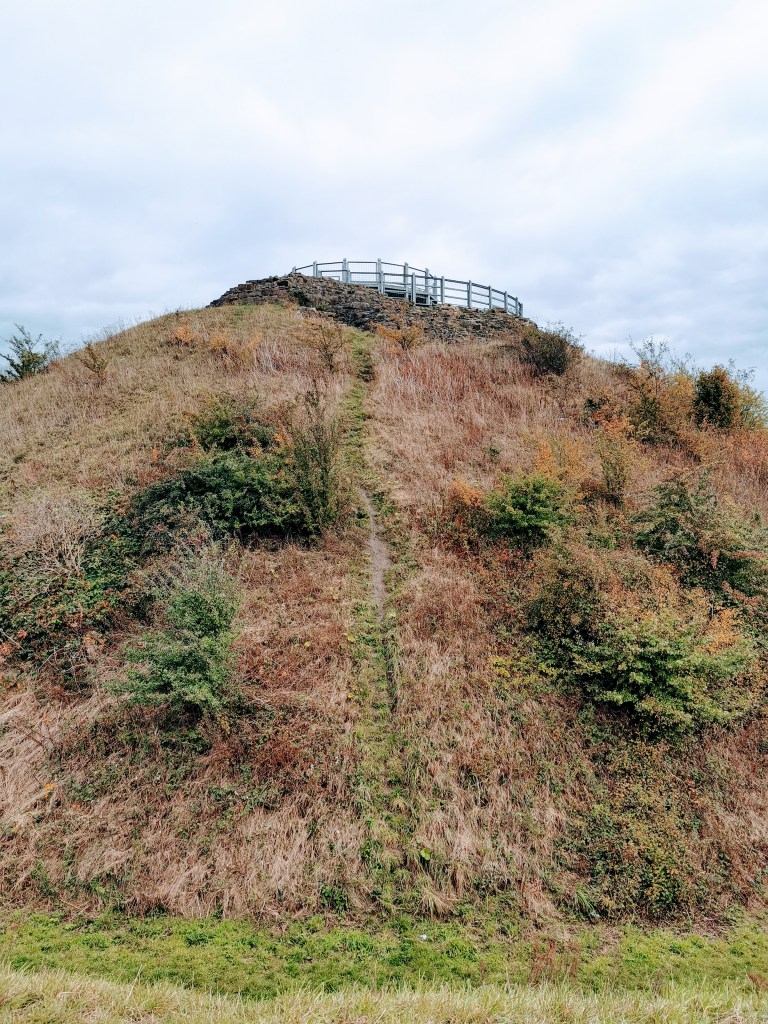
So back to December 1460. Richard has King Henry as his prisoner in London, and rules England as Lord Protector and heir to the throne but Lancastrians rebels are massing in the north, and are particularly troublesome in Pontefract. Richard marches his forces to Yorkshire to deal with them. Safely ensconced on a hilltop in his castle at Sandal, with views across the surrounding countryside, he contemplates his next move.

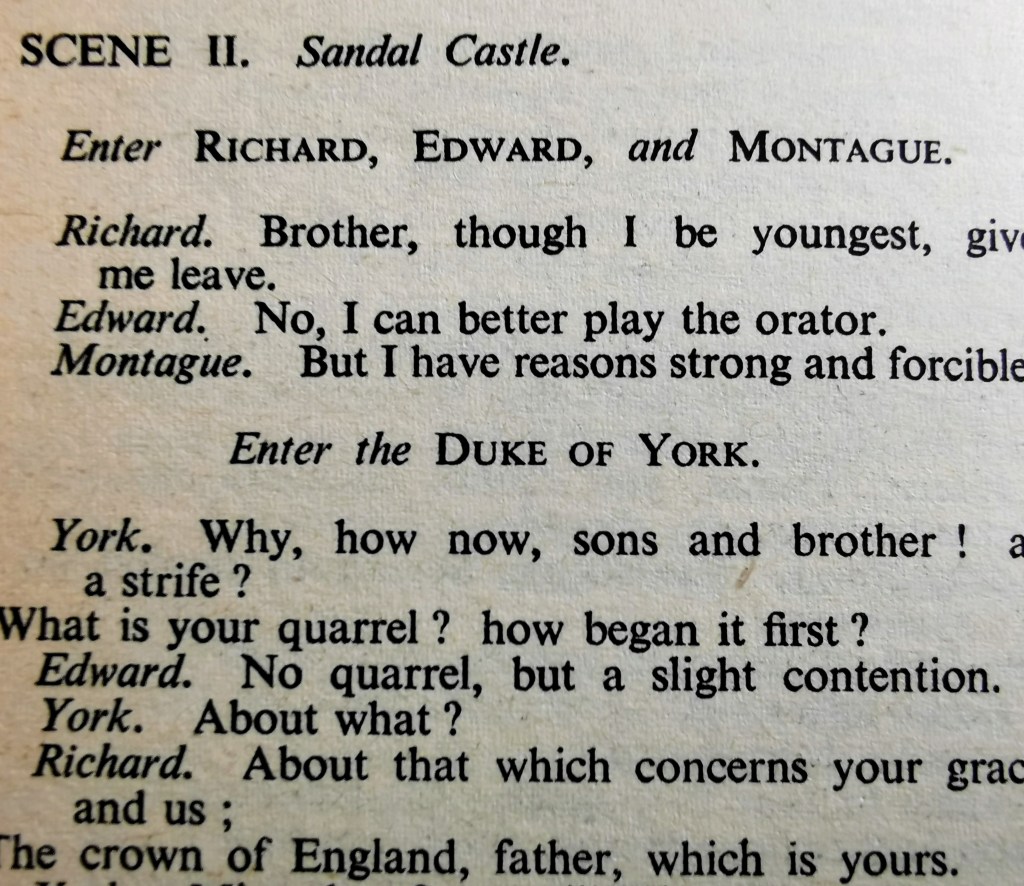
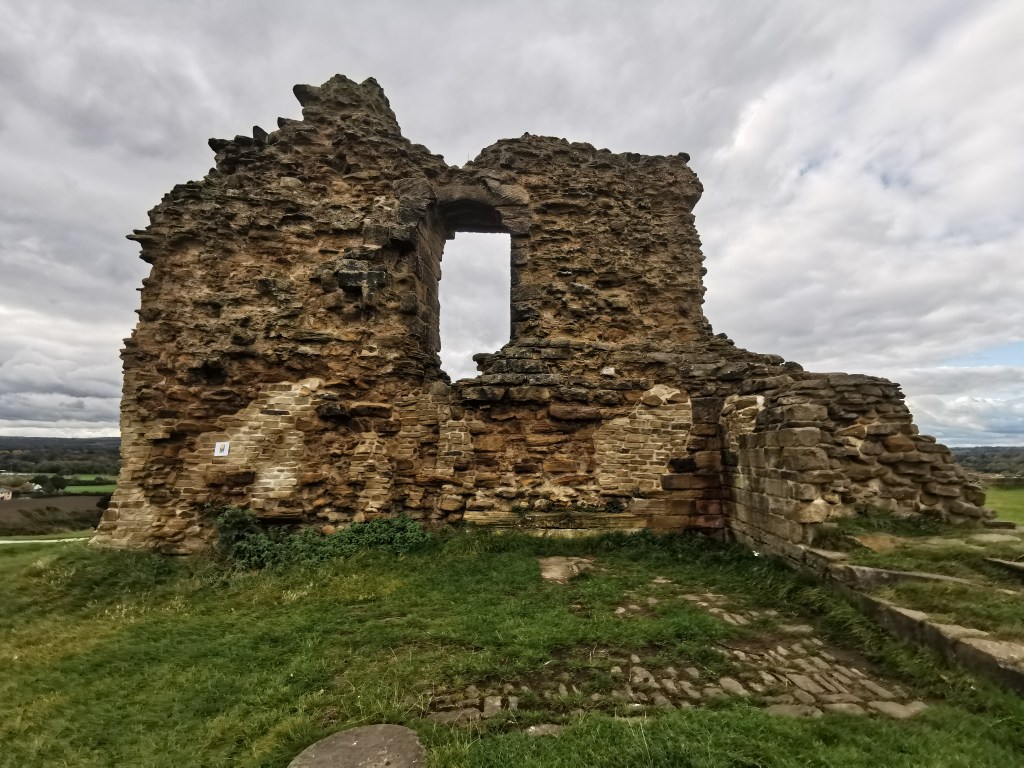
Even my old friend Shakespeare was enthralled by the intrigue and in-fighting of the Wars of the Roses, and no less than four of his plays deal with the story of the Plantagenet family conflict. In Henry VI Part 3 Richard is shown here at Sandal Castle with his brother and sons, debating what to do next. The ruins of the Great Hall still stand, and the play is sometimes performed here. I need to come and see it, if it ever happens again.

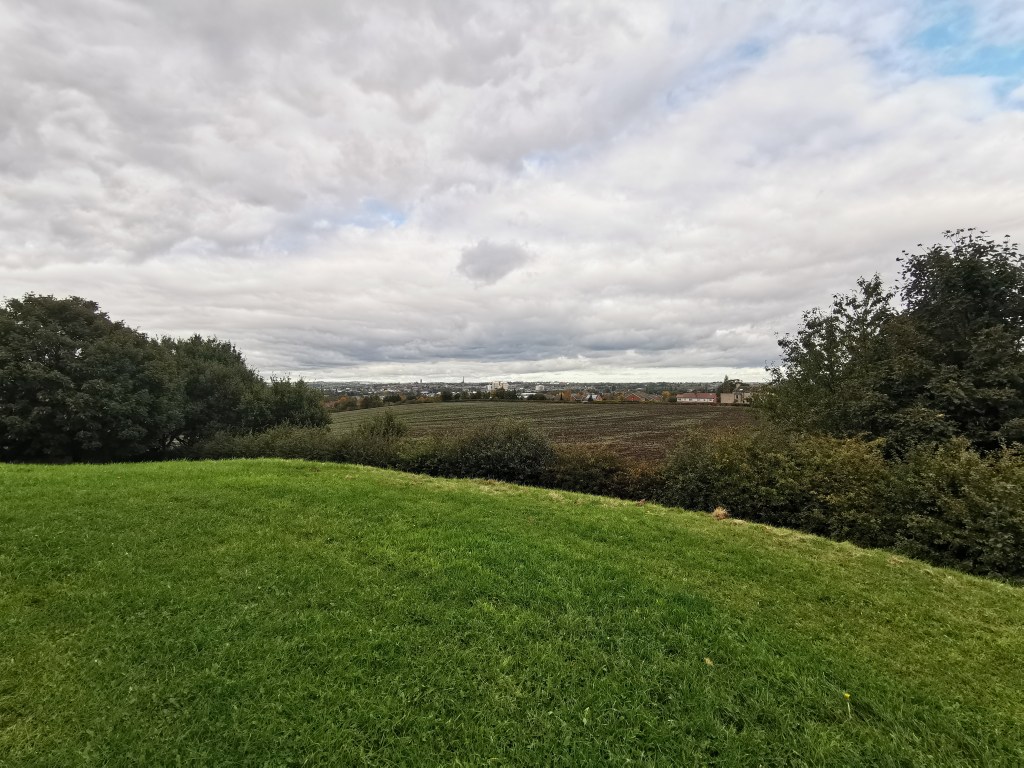
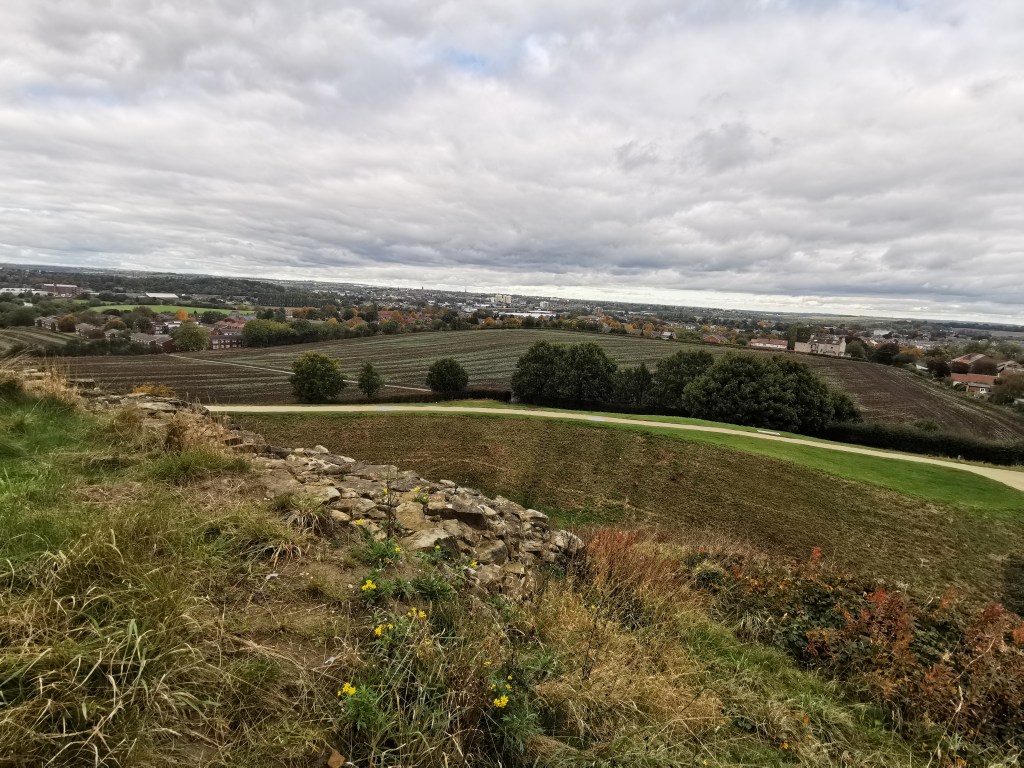
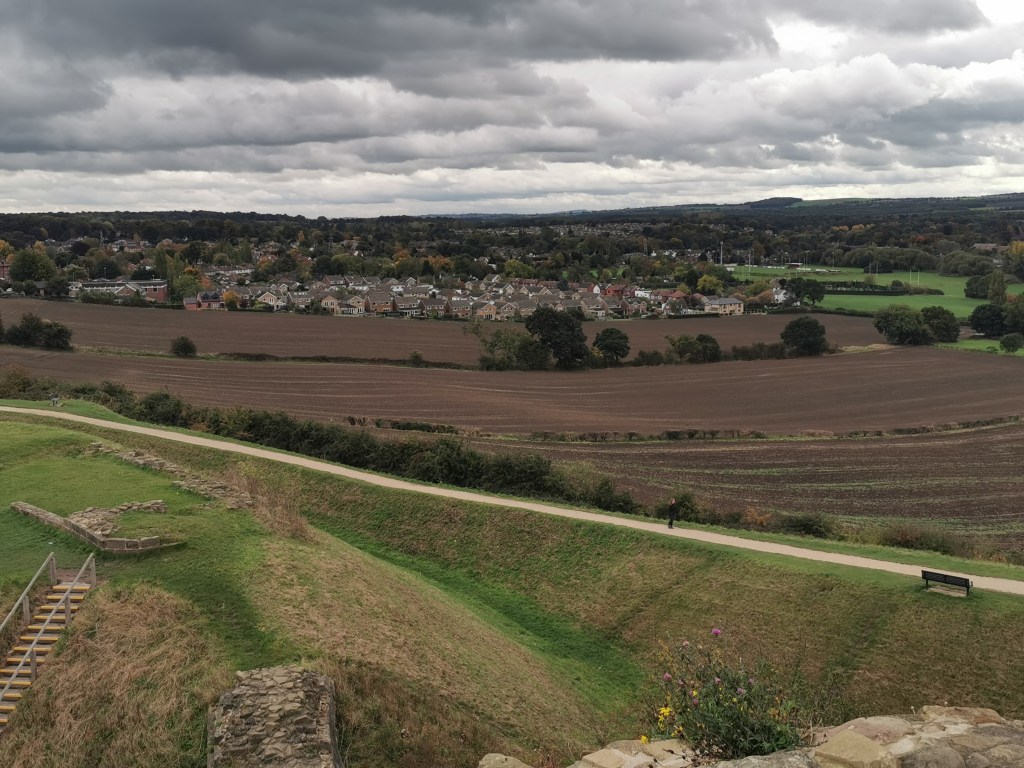
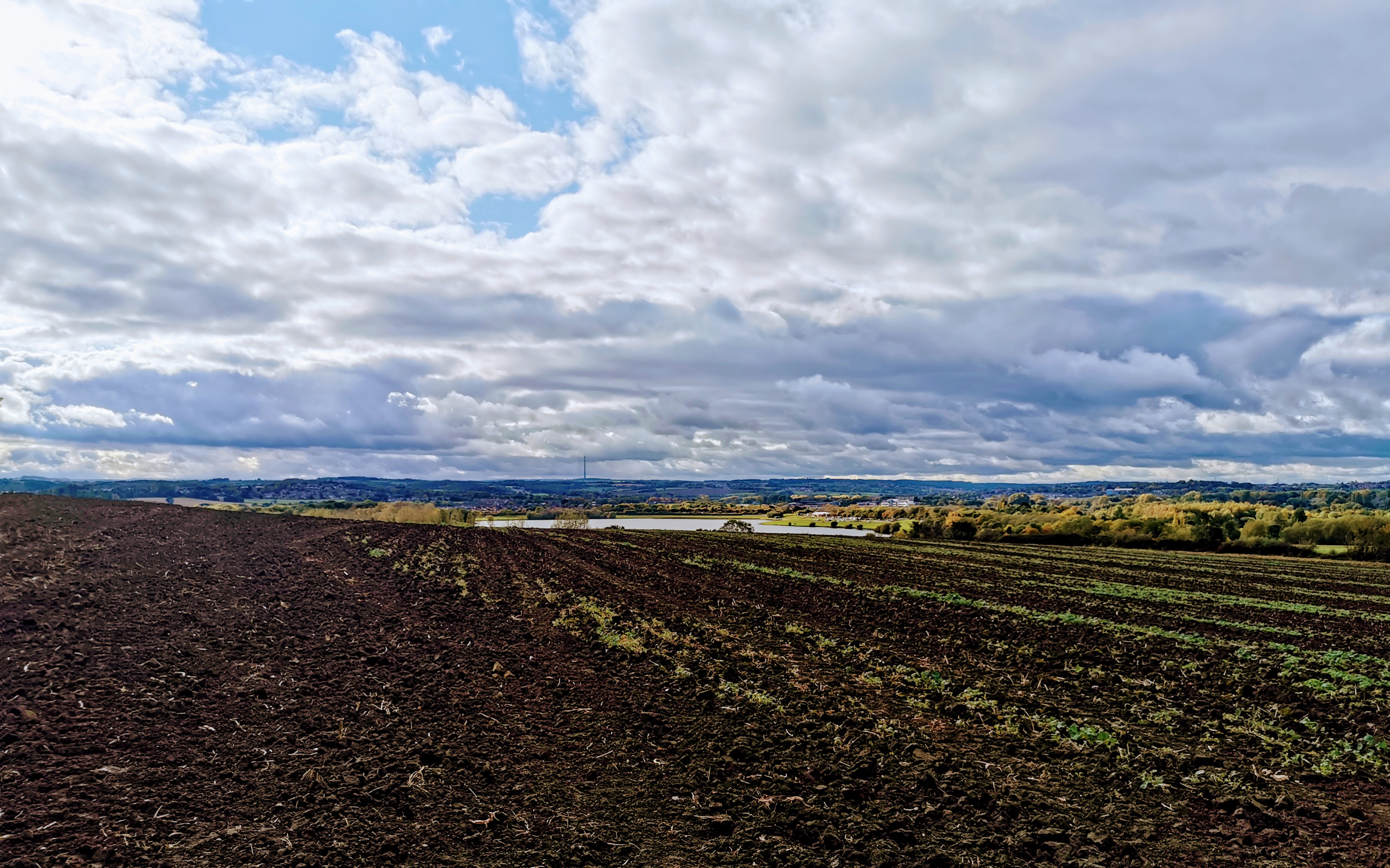
Walking around this site, I’m really amazed by how far you can see, even on a rather grey October day. Right across Wakefield in one direction and as far as Emley Moor Tower in the other. It’s a great spot for keeping your eye on nearby enemies, so why did Richard leave? Shakespeare suggests that the Lancastrians were about to attack the castle, so he had no choice but to sally forth, despite being outnumbered four to one. But there’s no evidence that this was the case.
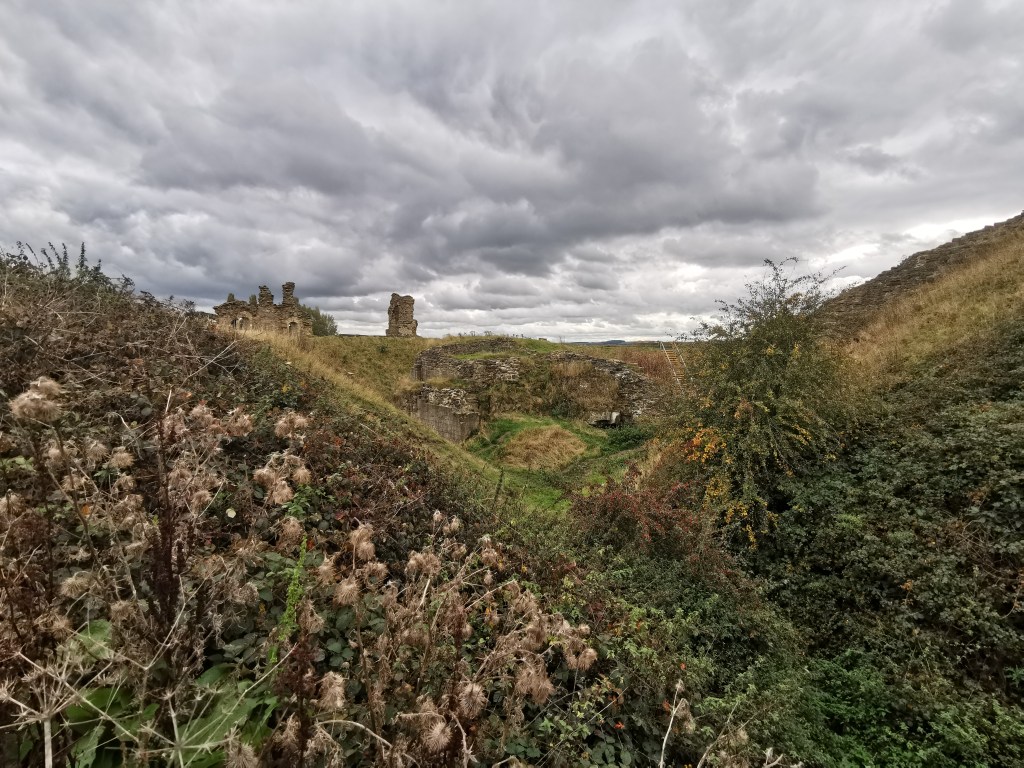
No-one really knows why Richard decided to leave the security of his vantage point and march his forces down the hill towards Wakefield on 30 December 1460. Contrary to the nursery rhyme, he didn’t have 10,000 men, but perhaps only 8,000 or even fewer, so he was certainly outnumbered by the Lancastrian army of 15,000 or more. Maybe it was treachery in his own camp? Maybe he thought reinforcements were coming? Perhaps the castle had run out of provisions? It’s a mystery, but the Battle of Wakefield was about to take place.

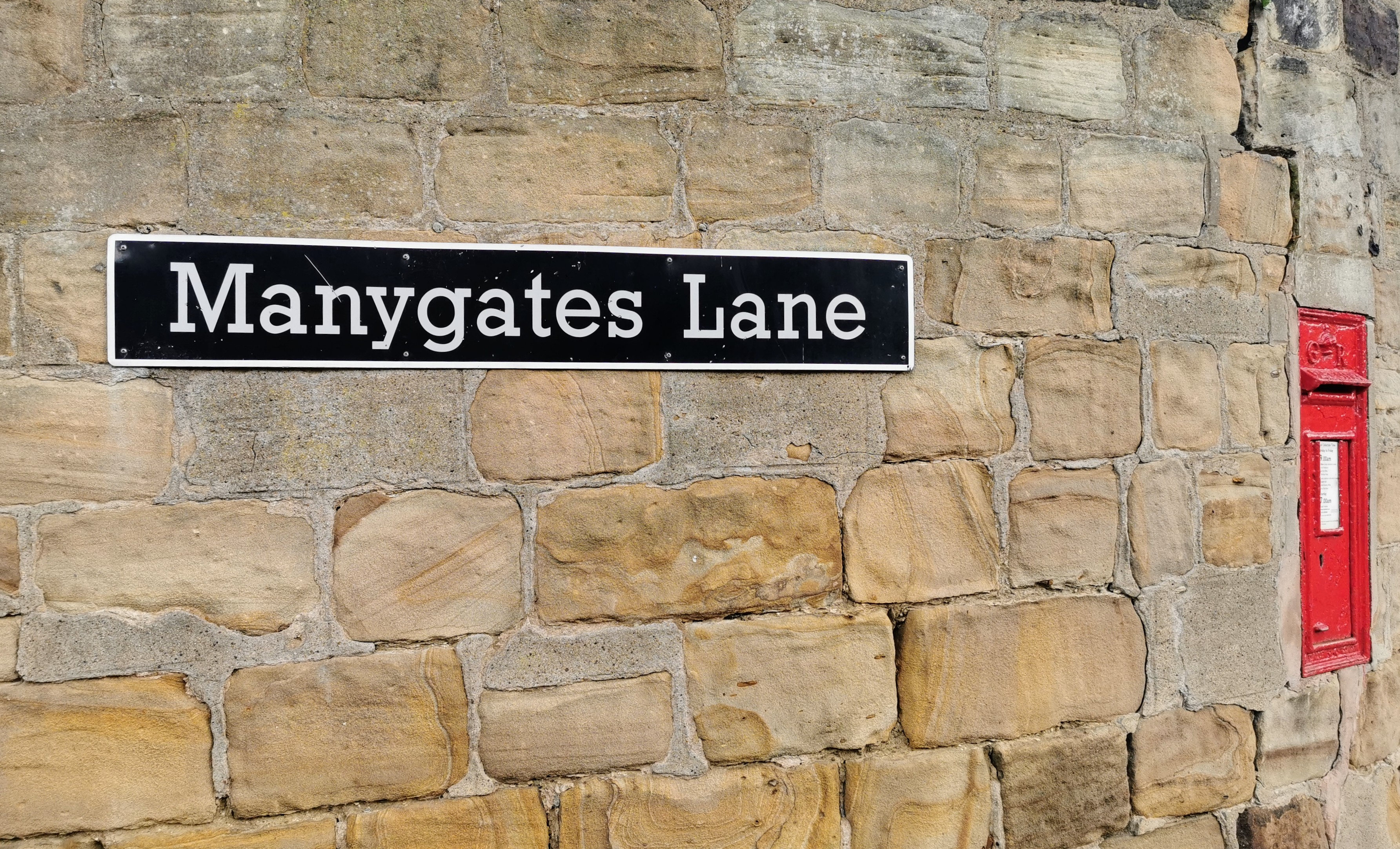
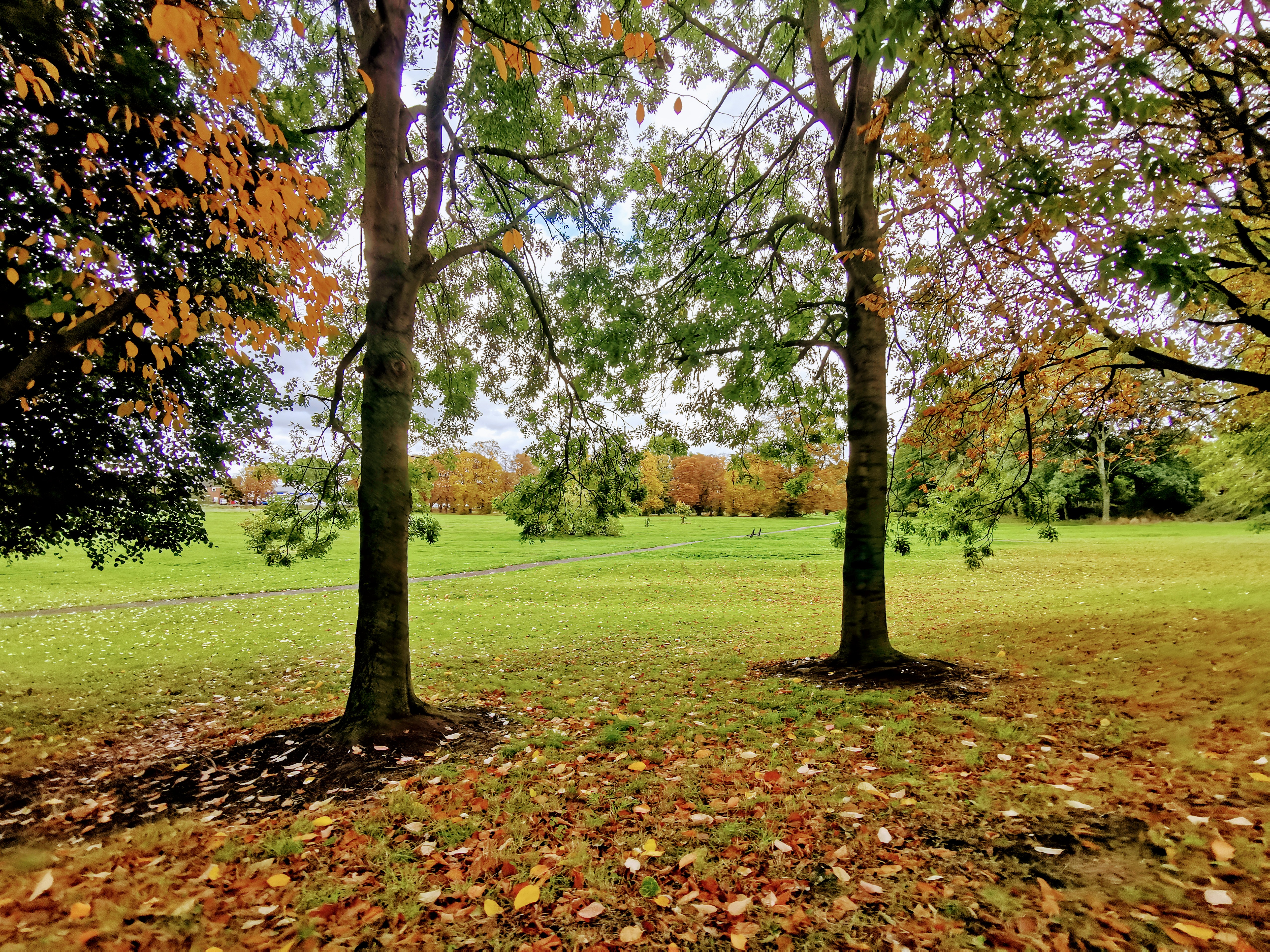
What we do know is that the Yorkist forces followed the route of today’s Manygates Lane and met with their enemies on the site of Castle Grove Park. Mum and I follow the same route downhill. All is peaceful, with hardly a soul around. It’s almost impossible to imagine the scene back then with thousands of soldiers pouring along this route. How did they feel? I know the day ends in blood and disaster but maybe they thought they could win. Richard Of York Gave Battle In Vain is the mnemonic we use to remember the colours of the rainbow – it doesn’t bode well does it?
Richard’s forces were crushed by the Lancastrians. Richard himself was killed along with an estimated 2,500 of his men. According to Shakespeare, Henry’s wife Margaret stabs him herself, but the Bard never lets truth get in the way of a good story – she was probably far away. Richard’s eldest son escaped the battleground but was caught and executed on the Chantry Bridge near Wakefield. The Yorkist leaders were decapitated and their heads displayed over the Micklegate Bar in the city of York with a sign stating Let York overlook the town of York. Richard was given a paper crown to wear, to ridicule his ambitions. Things were a bit grisly back then.

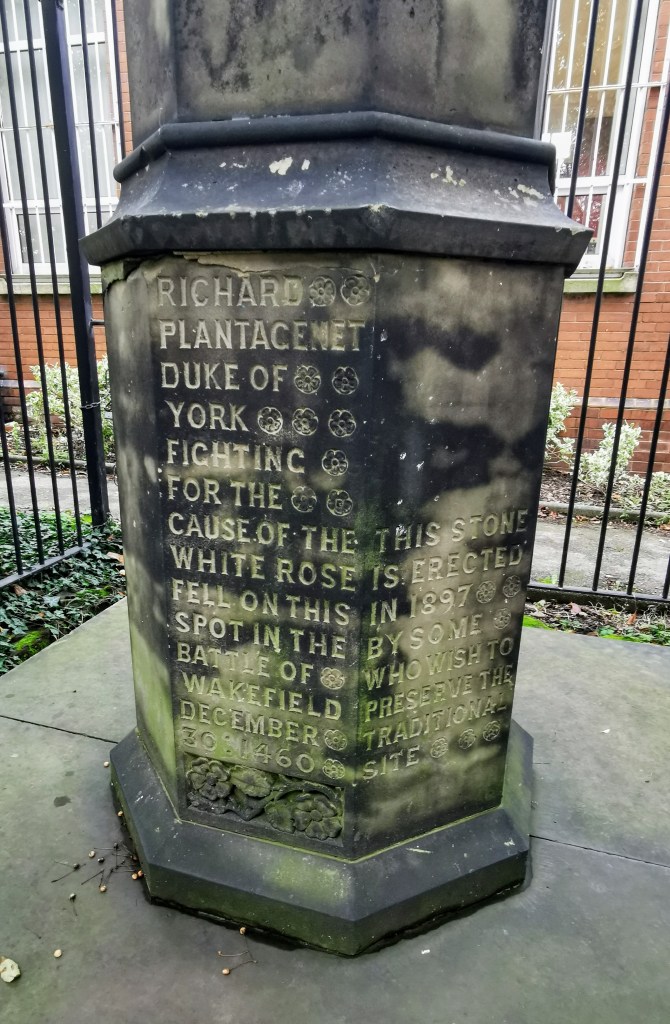
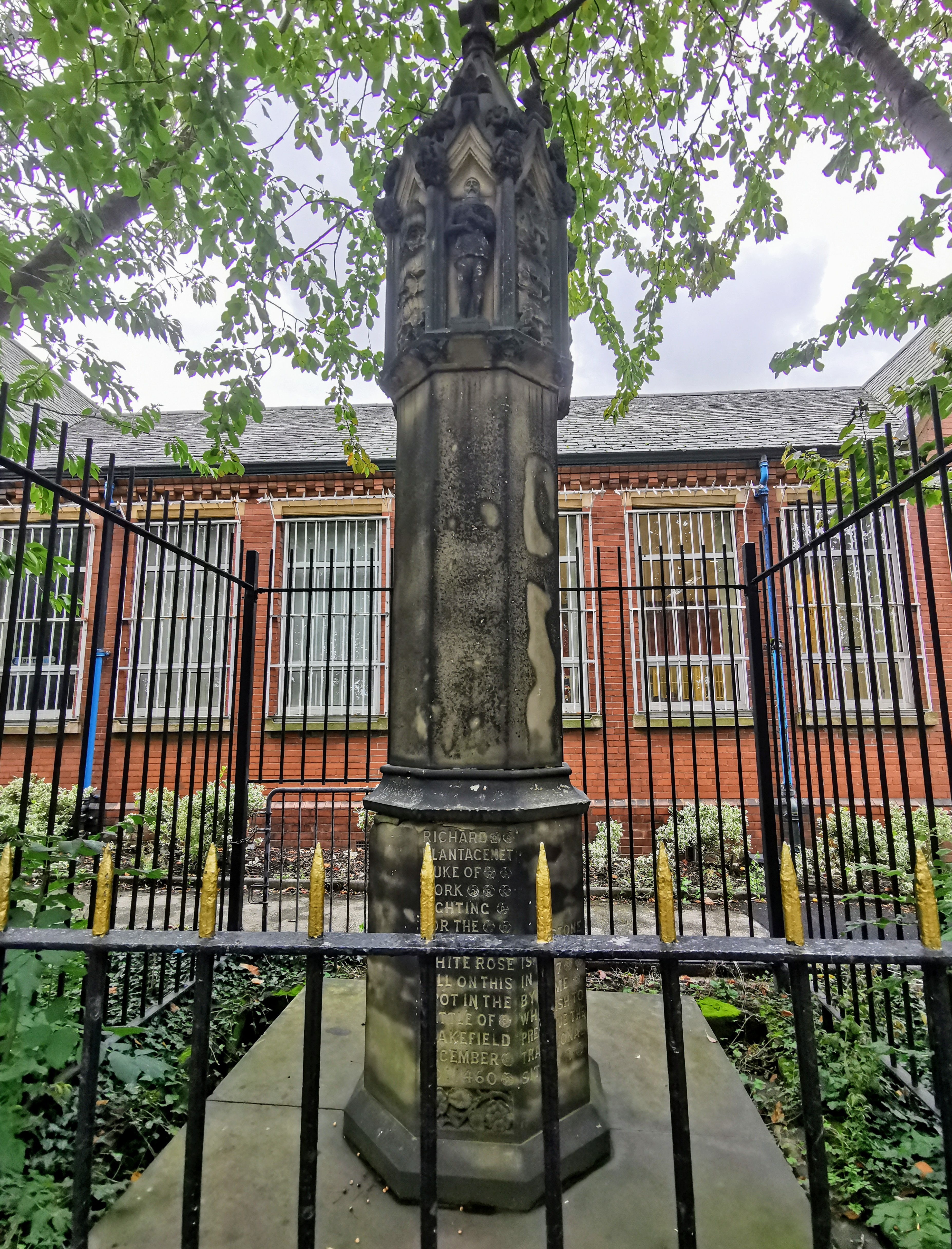
A memorial on Manygates Lane states that Richard died fighting for the cause of the White Rose. In 1897 someone felt strongly enough about the Yorkist cause to put up a statue. In 2020 there’s a ‘friendly’ rivalry around anything from sport (Leeds Utd – white kit, Manchester Utd – red kit) to who serves up the best fish and chips or who gets the worst weather. It’s always raining on the other side of the Pennines, you know. The past is with us still, make no mistake.

1460 is not the end of the story for the York / Lancaster conflict – as Mum gleefully points out, the Yorkist forces led by Richard’s son Edward trounced the Lancastrians at the Battle of Towton in 1461. It was the bloodiest battle ever fought on English soil, with up to 30,000 casualties in mostly hand-to-hand combat. The Yorkist Edward IV took the throne. As I told you, this story is still taken very personally today by ordinary Yorkshire folk. Mum is not normally quite so vindictive.

To finish off today, I’ll just say, look a bit closer at the places you take for granted, ask questions, and you could end up learning something fascinating about where you come from. And maybe make your mother happy too!

Silchester – city of my dreams

Oh dear, I’m really getting obsessed with this blogging lark. Recently, I had a dream about a Roman city close to home. I had no idea where it was but it was vital that I go there. Obviously, when I woke up I frantically Googled to see if my dream had any substance, and there it was. Silchester, just south of Reading. How bizarre. I’m thinking about the past so much, it’s permeating my subconscious!

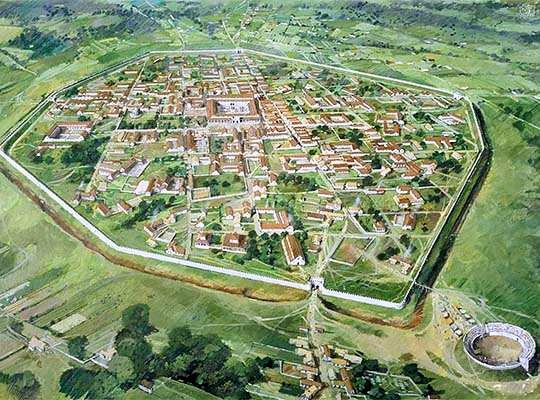
Silchester is actually the name of a nearby village. The place I want to see was called Calleva Atrebatum. Established in the first century BC as an Iron Age settlement, it was developed into a major town and trading centre by the Romans, but unusually it was deserted in the 7th century and reclaimed by nature. How intriguing!

Thank heaven for satnav, as this place is along tiny single track lanes, with not a sign in sight until the very last mile. Despite a dismal weather forecast, it’s a fresh but sunny October afternoon. So here I am, ready to explore the city I dreamed about.

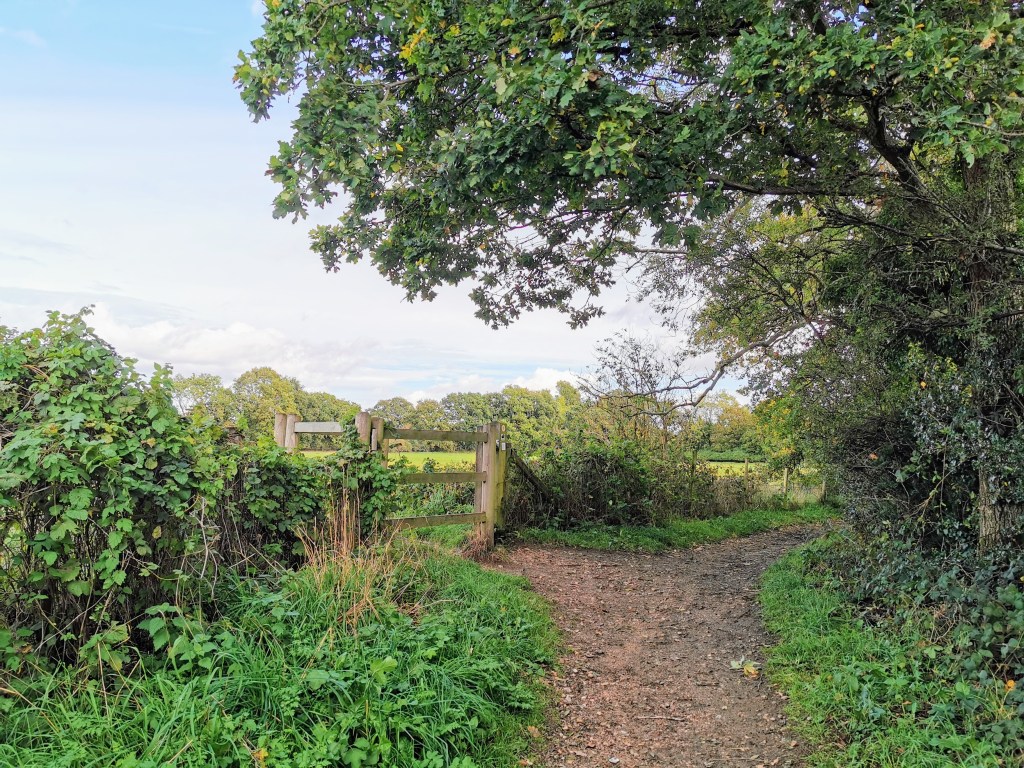
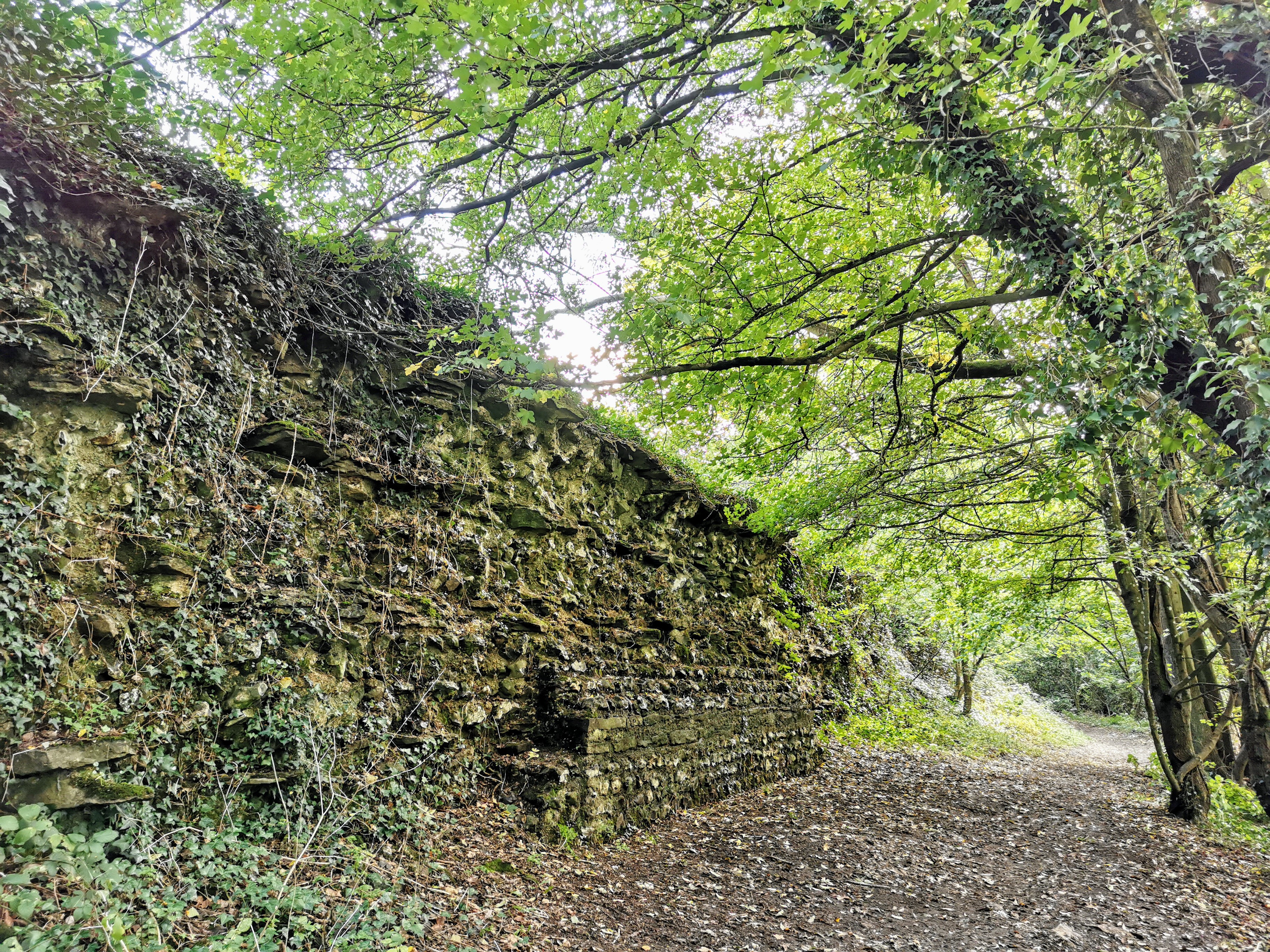
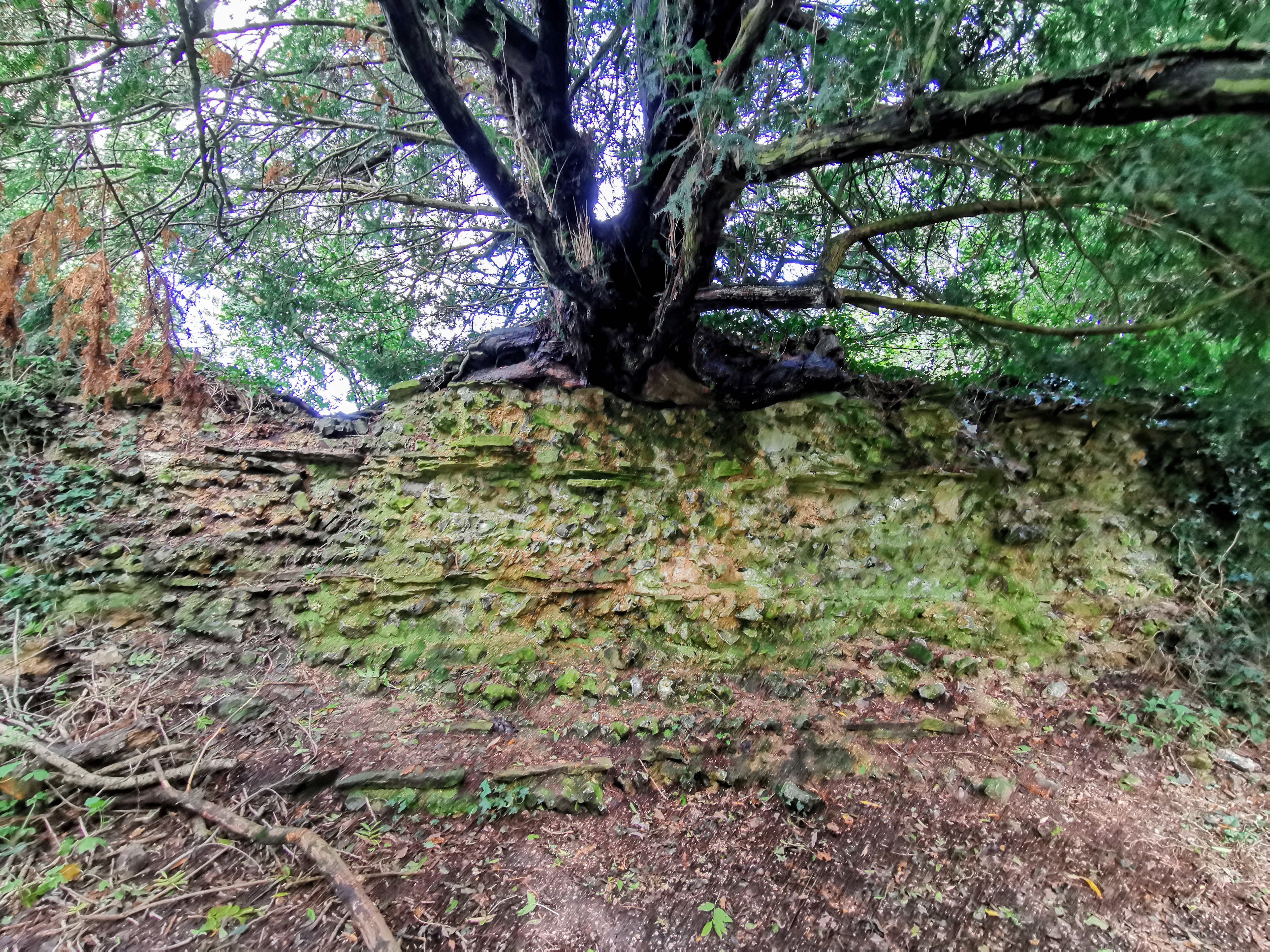
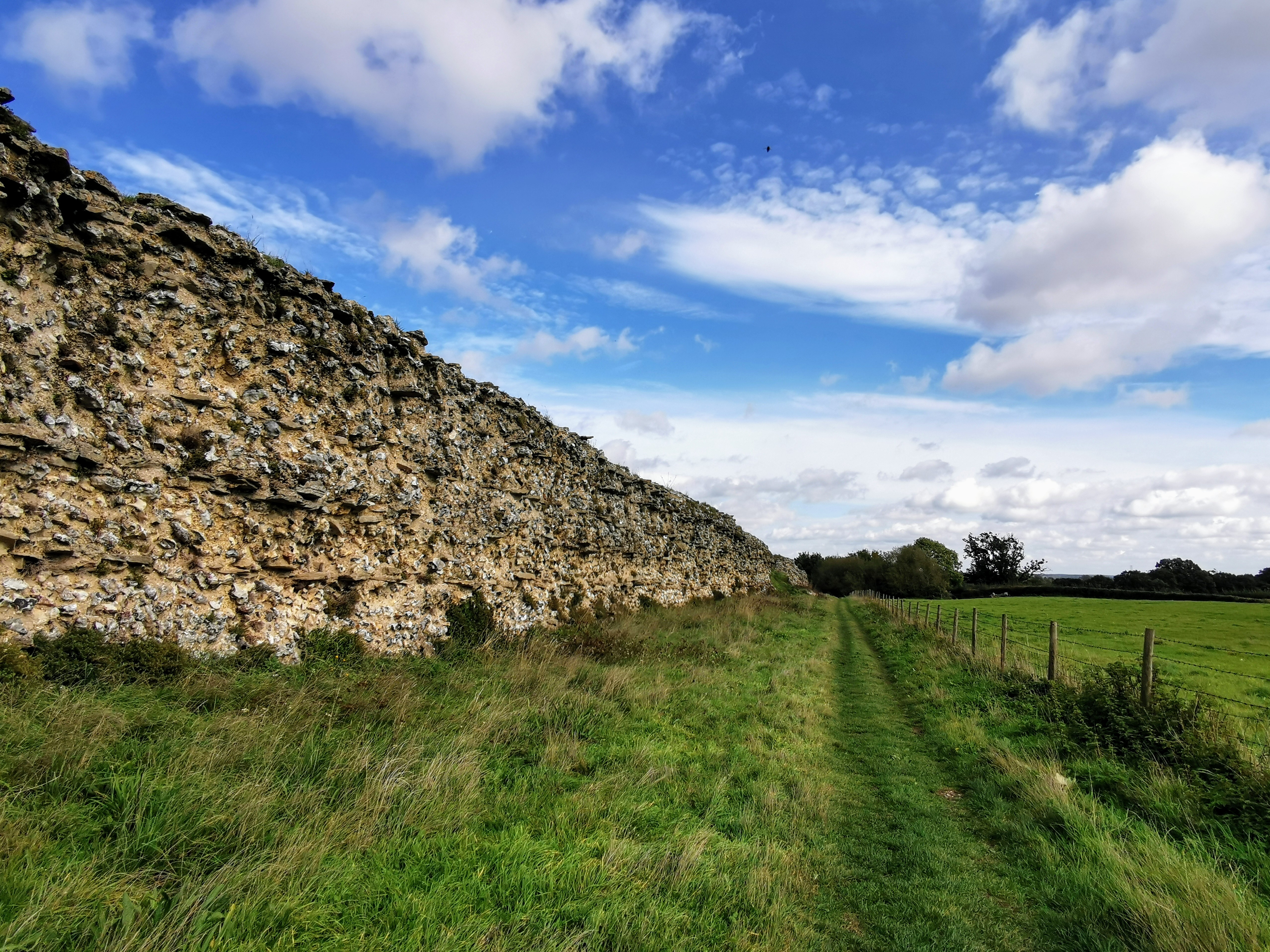
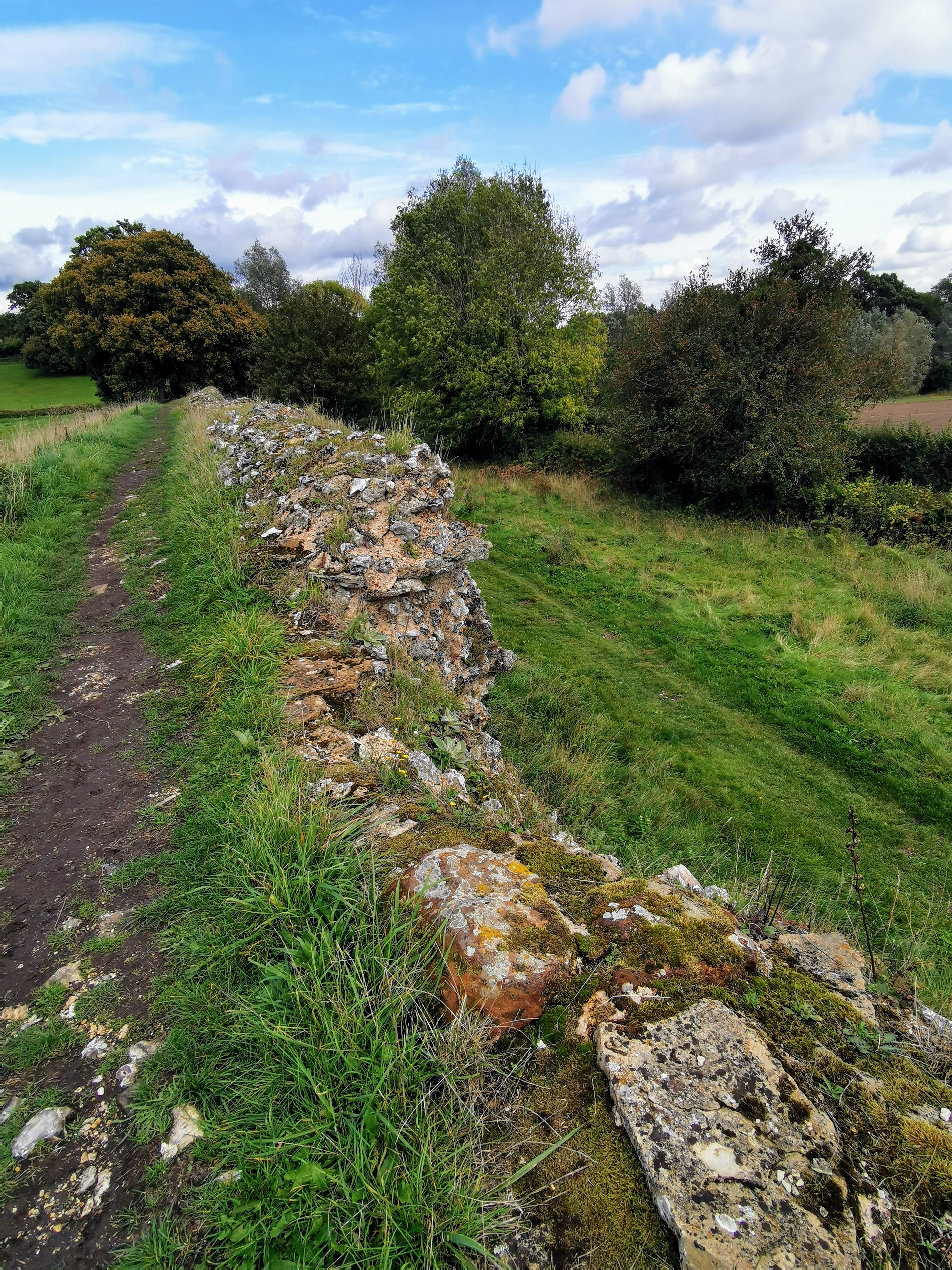
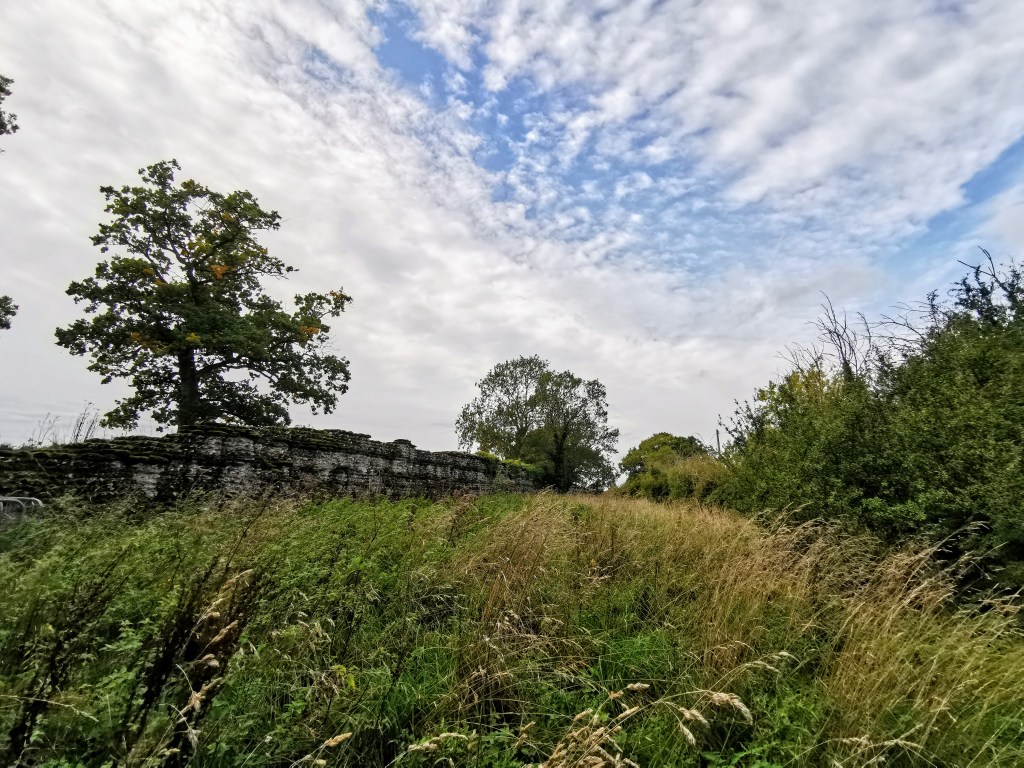
A footpath leads from the free car park to the city walls, which run right around the site. Arriving at the site of the old West Gate, I decide to head south and circumnavigate the town in an anti-clockwise direction. The first section of walls, between the East and South Gates, is an eerie introduction to this ancient place. The canopy is thick overhead and all kinds of plants and tree roots have made their homes in the ruins. Strangely, it makes me think of the temples hidden in the Cambodian jungle. Very Tomb Raider!

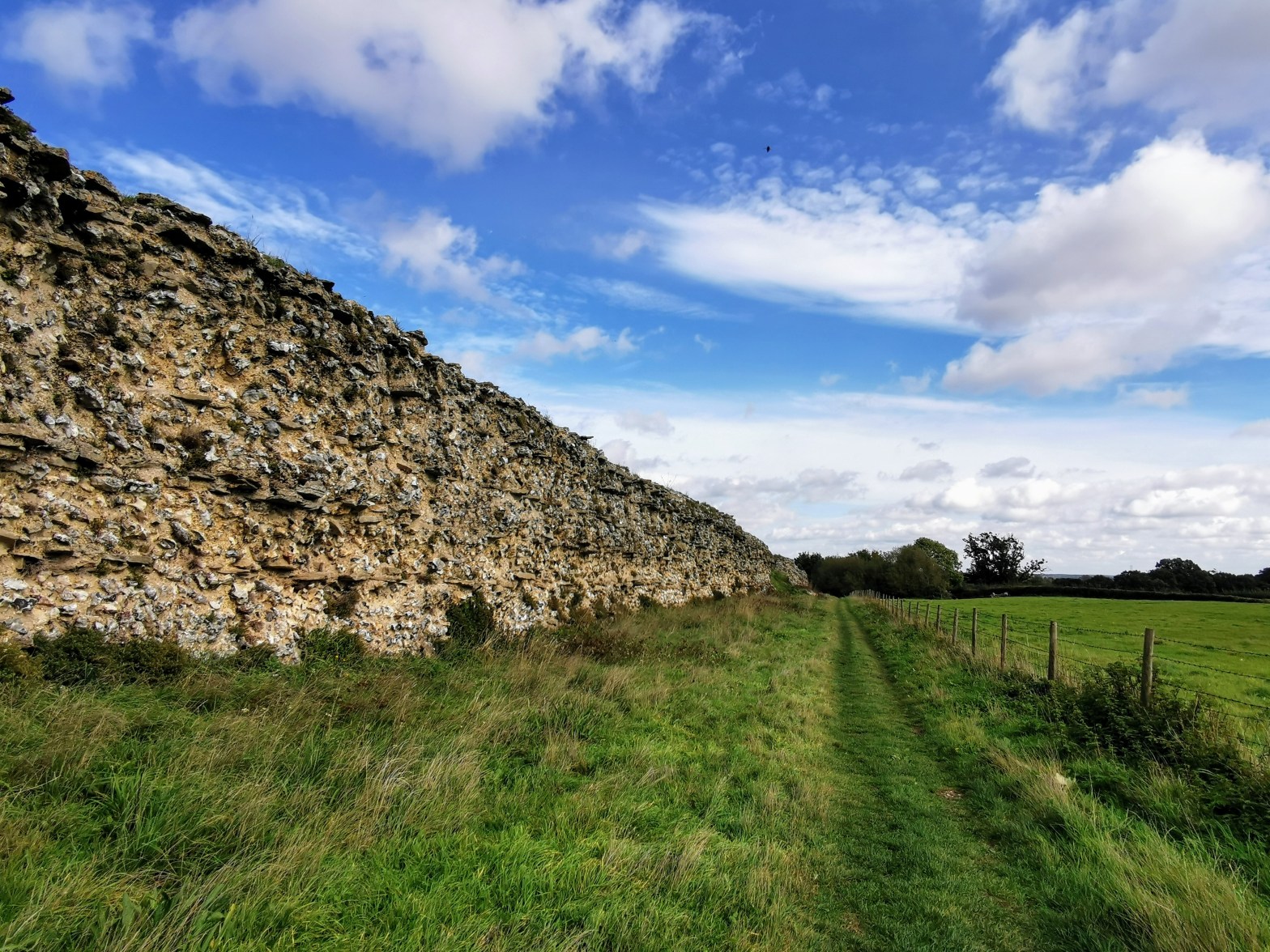
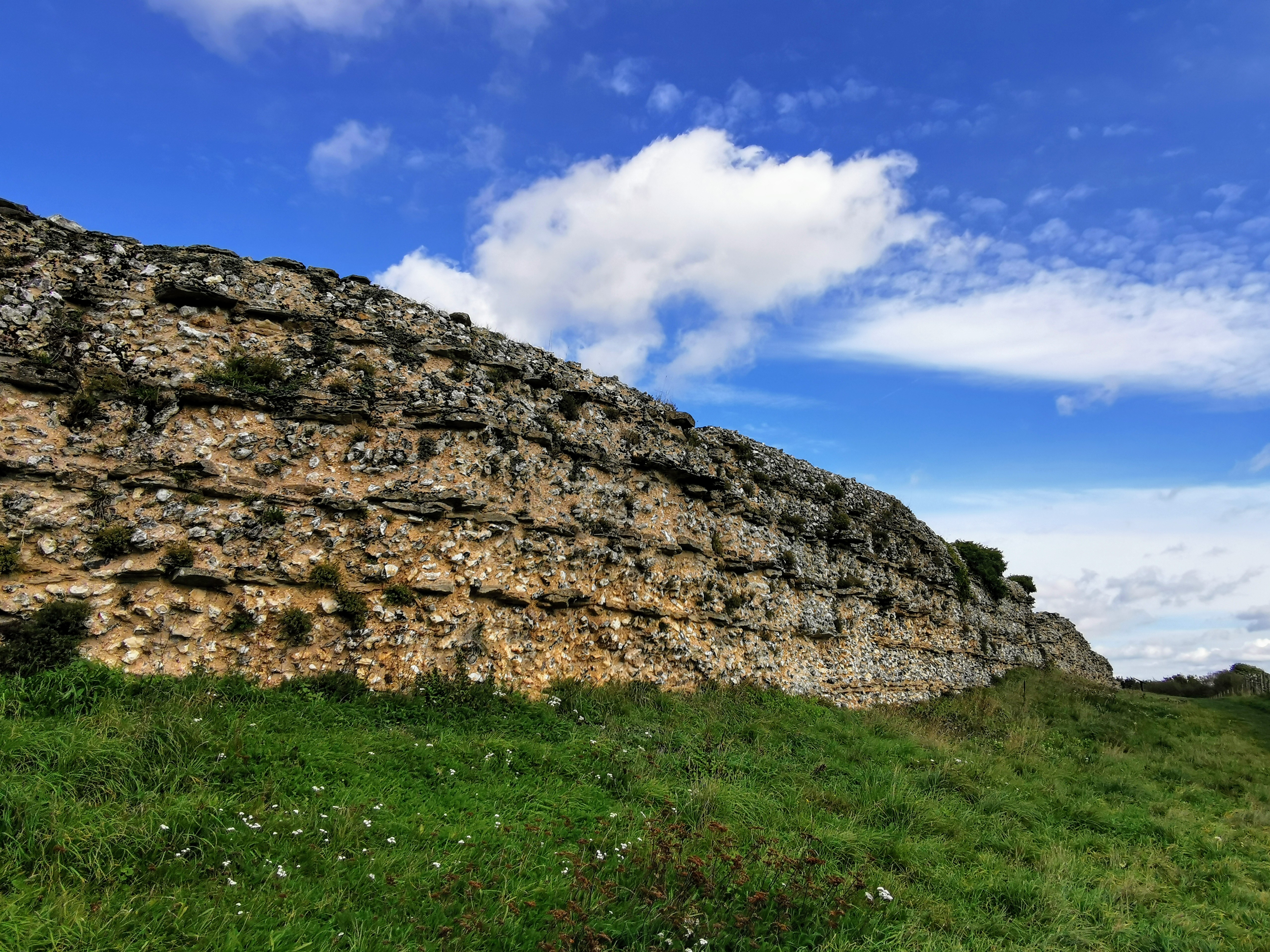
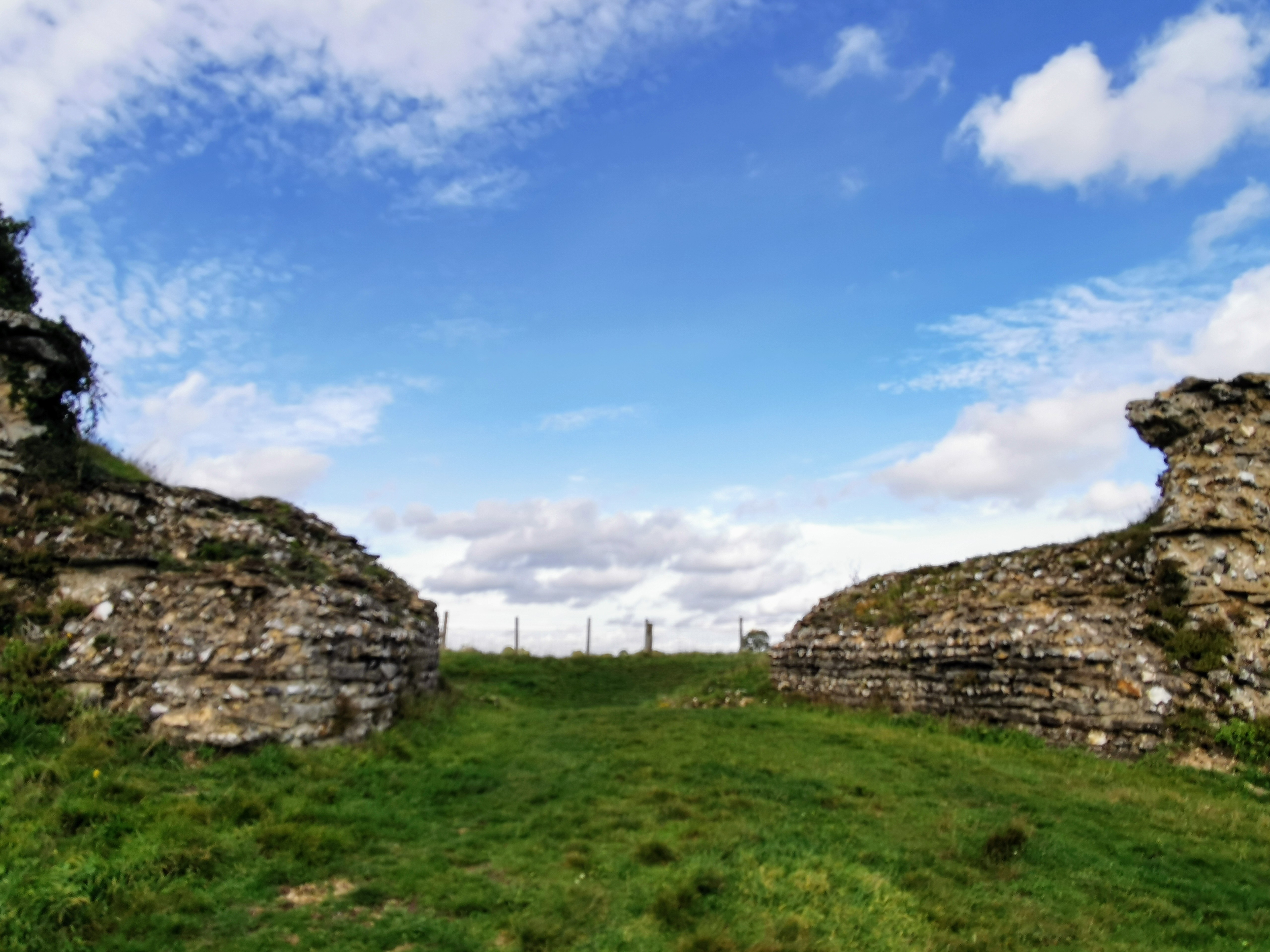
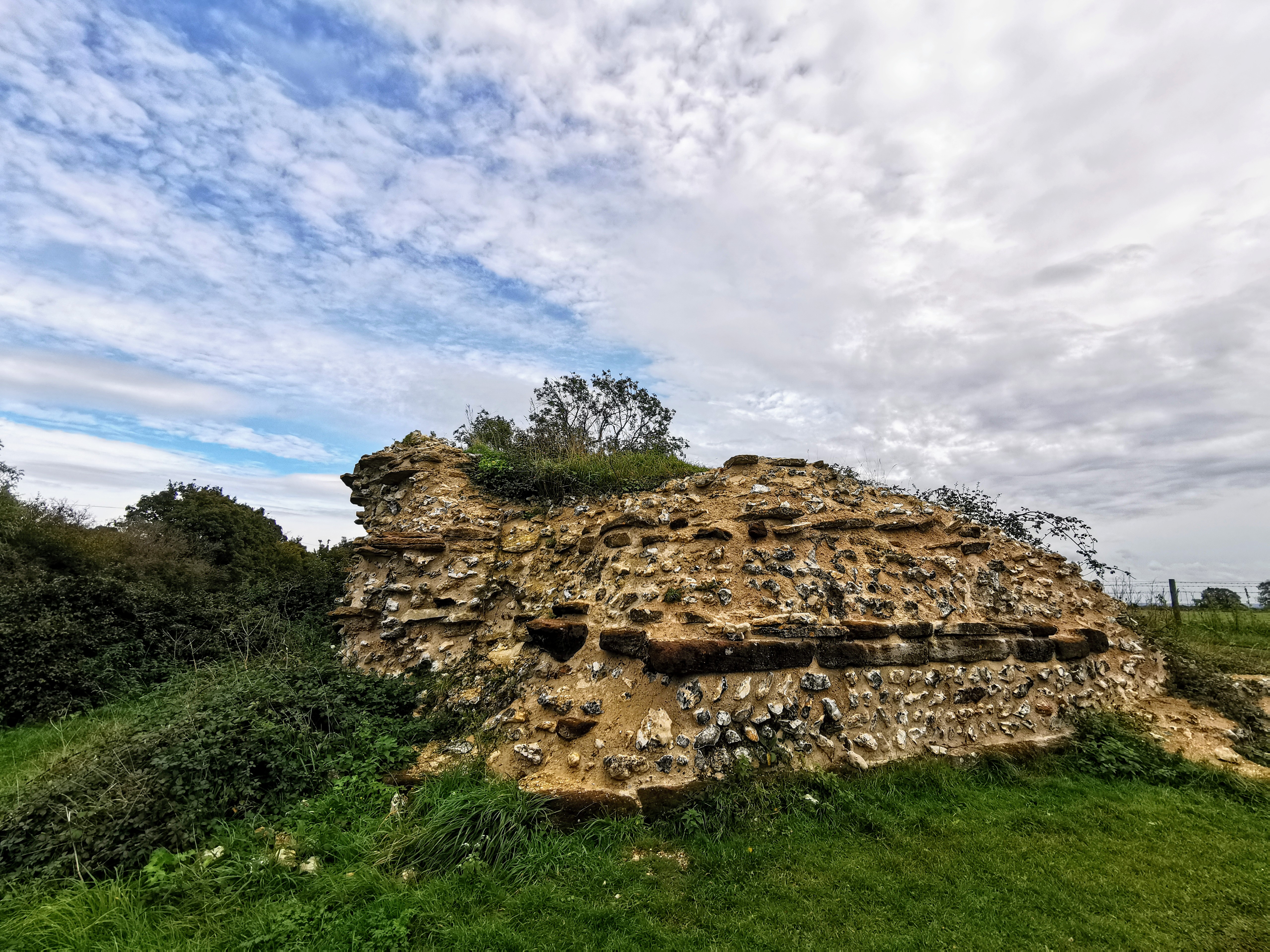
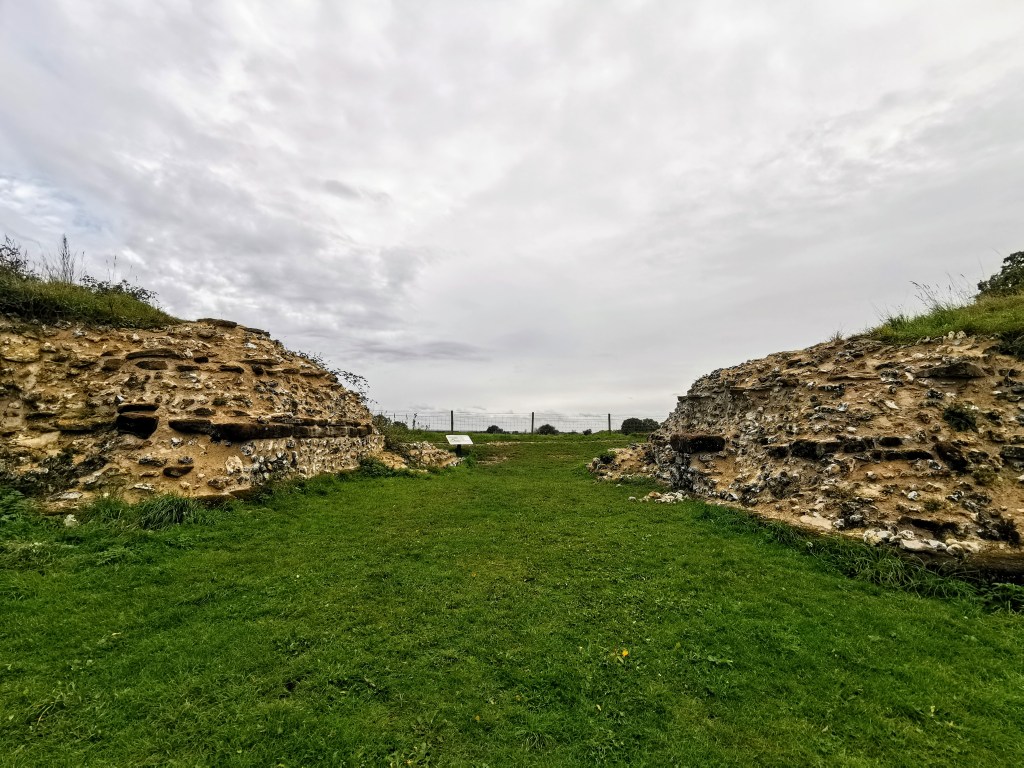
As I approach the South Gate, the trees and bushes clear and the walls appear in their full glory. Built in the first century AD, the walls were 3 metres wide and almost 8 metres high. With a total length of 2.4 kilometres, they enclosed an area of 40 hectares. Inside, the town was constructed on a grid pattern, like modern North American cities. Four main gates, one at each point of the compass, led out from the town to major roads across the country, with the East Gate leading to London.

The South Gate, where I now stand, led out to the Winchester Road. The road outside the town would have been crowded with stalls and merchants vying for the attention and money of wealthy travellers going to and from Calleva – quite similar to a modern duty free shop on the way through departures or arrivals. Some things never change, we love to shop.

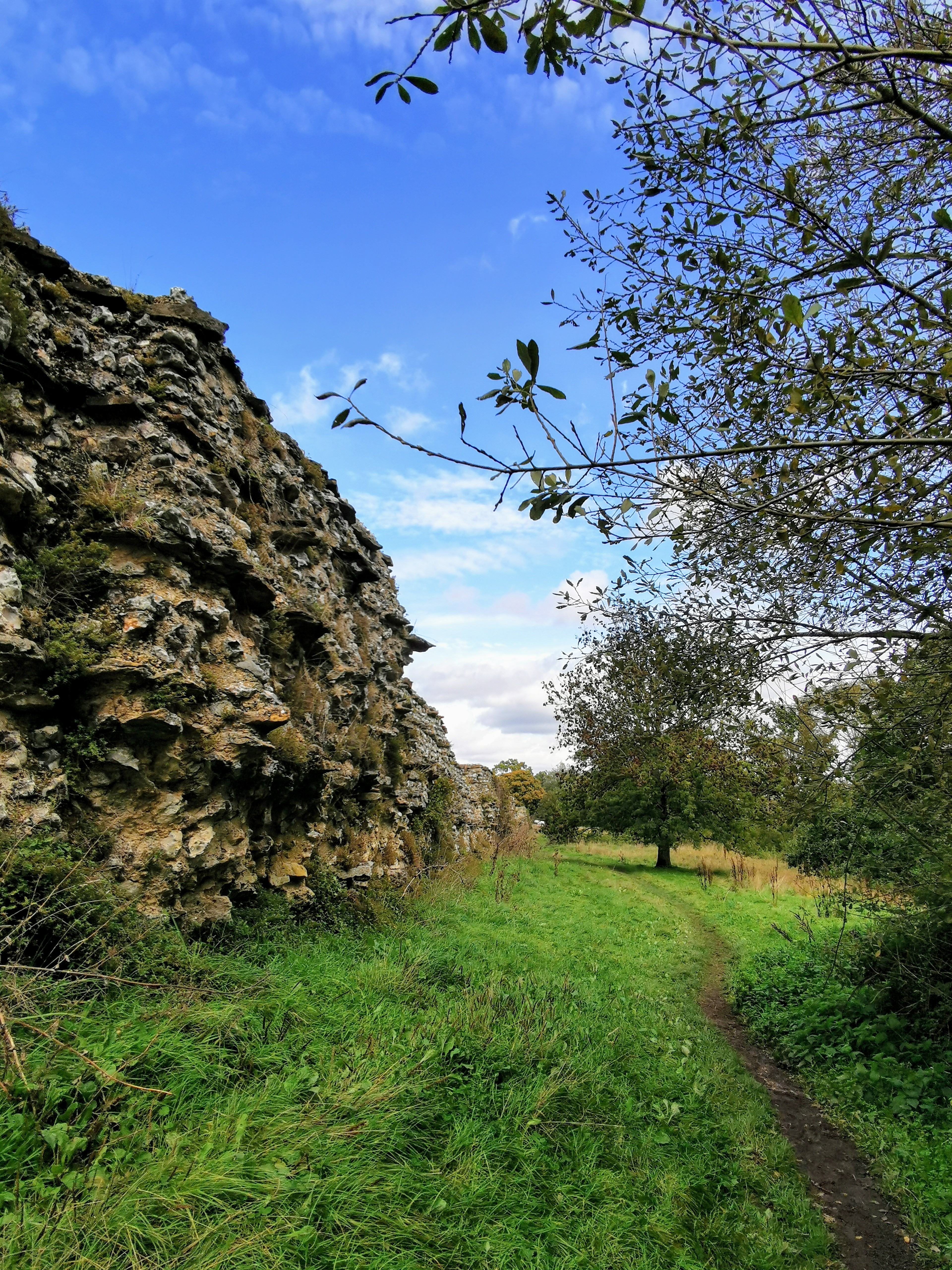
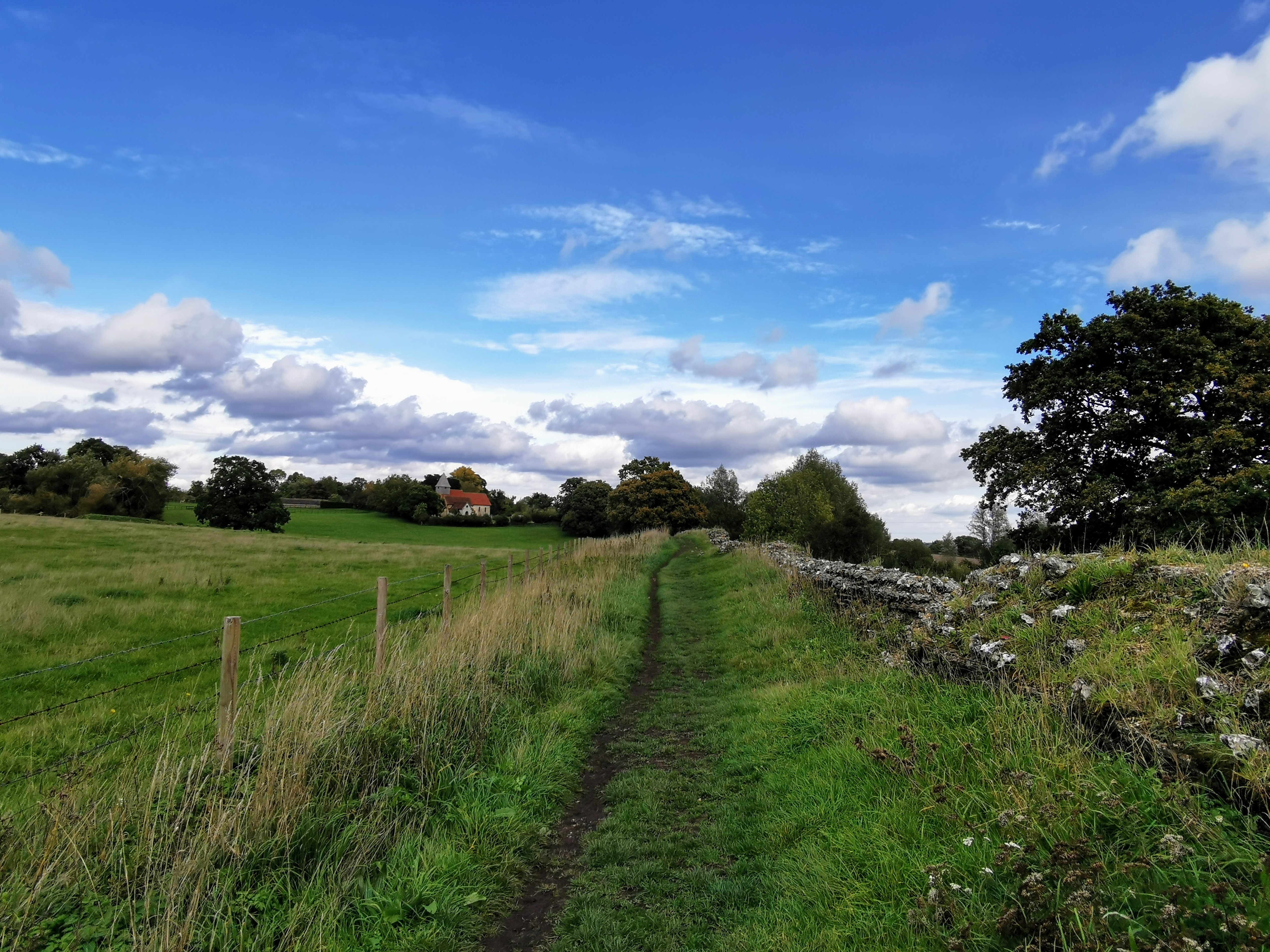
I follow the walls as they curve around northeastwards, with footpaths both outside and on top of the fortifications allowing a completely different perspective. From the exterior, the walls still rear up impressively almost 3 metres into the air. What lies inside, you can’t help but wonder…

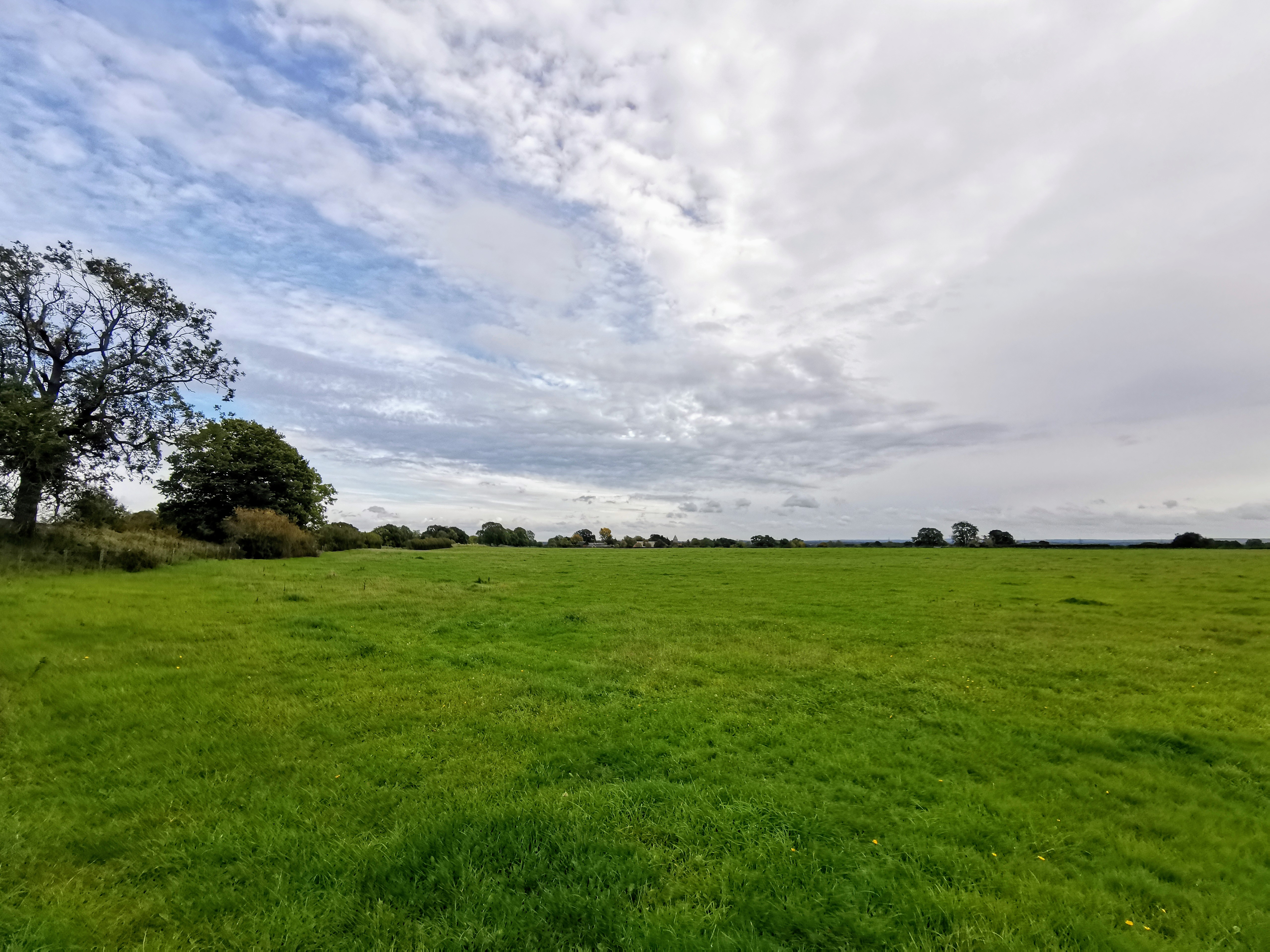
From up high, it’s clear that very little remains to be seen of the town itself inside the walls. Farmland covers the area now, although the lines of the Roman roads and major edifaces can still be seen in aerial photos. Calleva was first excavated in the late 19th century by those energetic Victorians, who famously found a decorative bronze eagle, now in the Reading Museum.

A team from Reading University went back to the site from 1997 onwards and made further discoveries, including the grave of a small poodle and an olive stone. The town obviously had some wealthy inhabitants who enjoyed Mediterranean food and pet company just like we do nowadays. Excavations continue each summer, but not this year. In 2020 the site lies green and quiet and only the walls are visible.

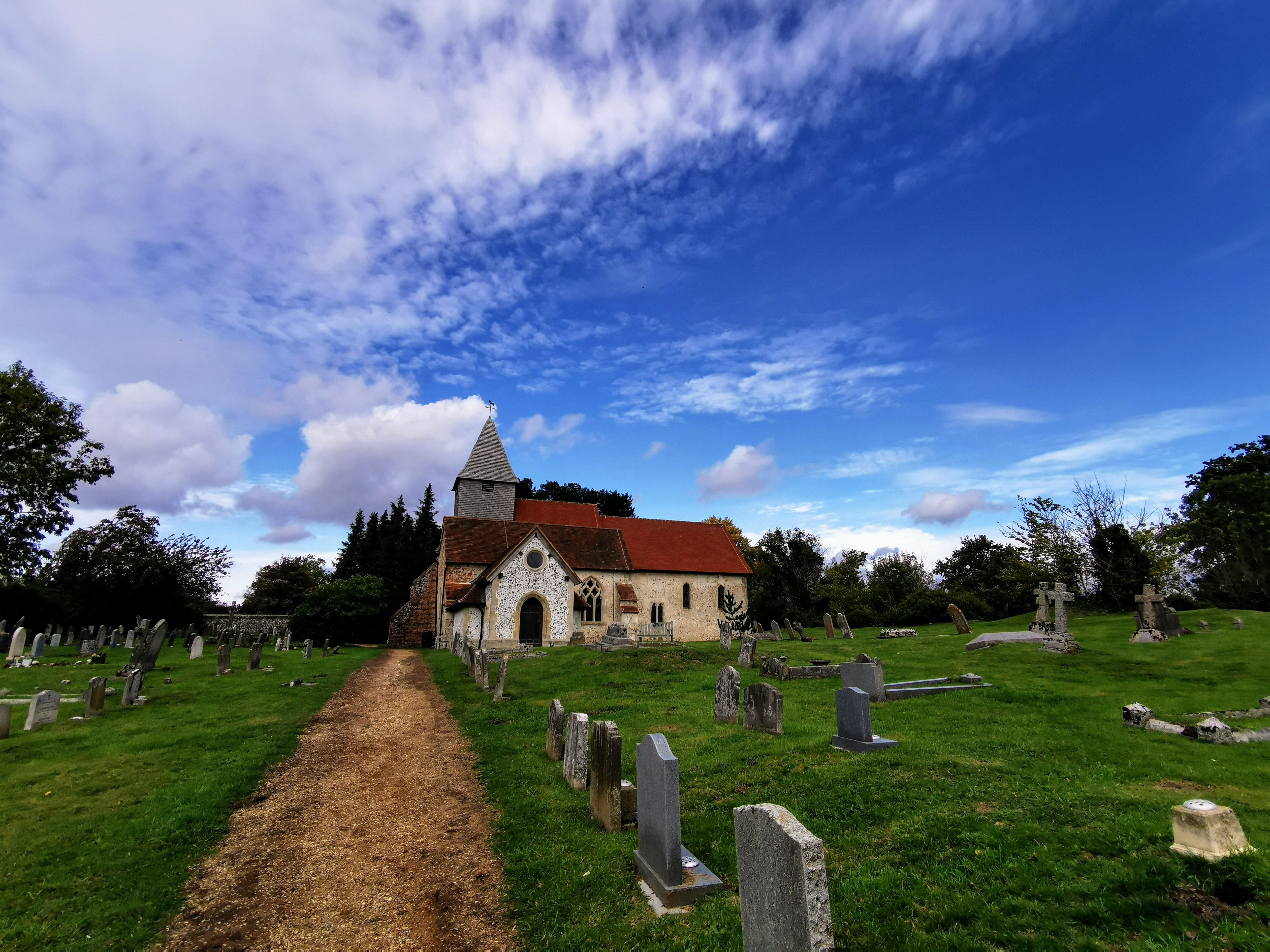
Heading towards the East Gate, the ridiculously picturesque church of Saint Mary the Virgin slowly comes into view. It was built in the 12th century near the site of the Roman temples of Calleva to serve the village of Silchester that grew up a mile away in the 11th century. It seems almost modern compared to the surrounding walls – everything is relative!

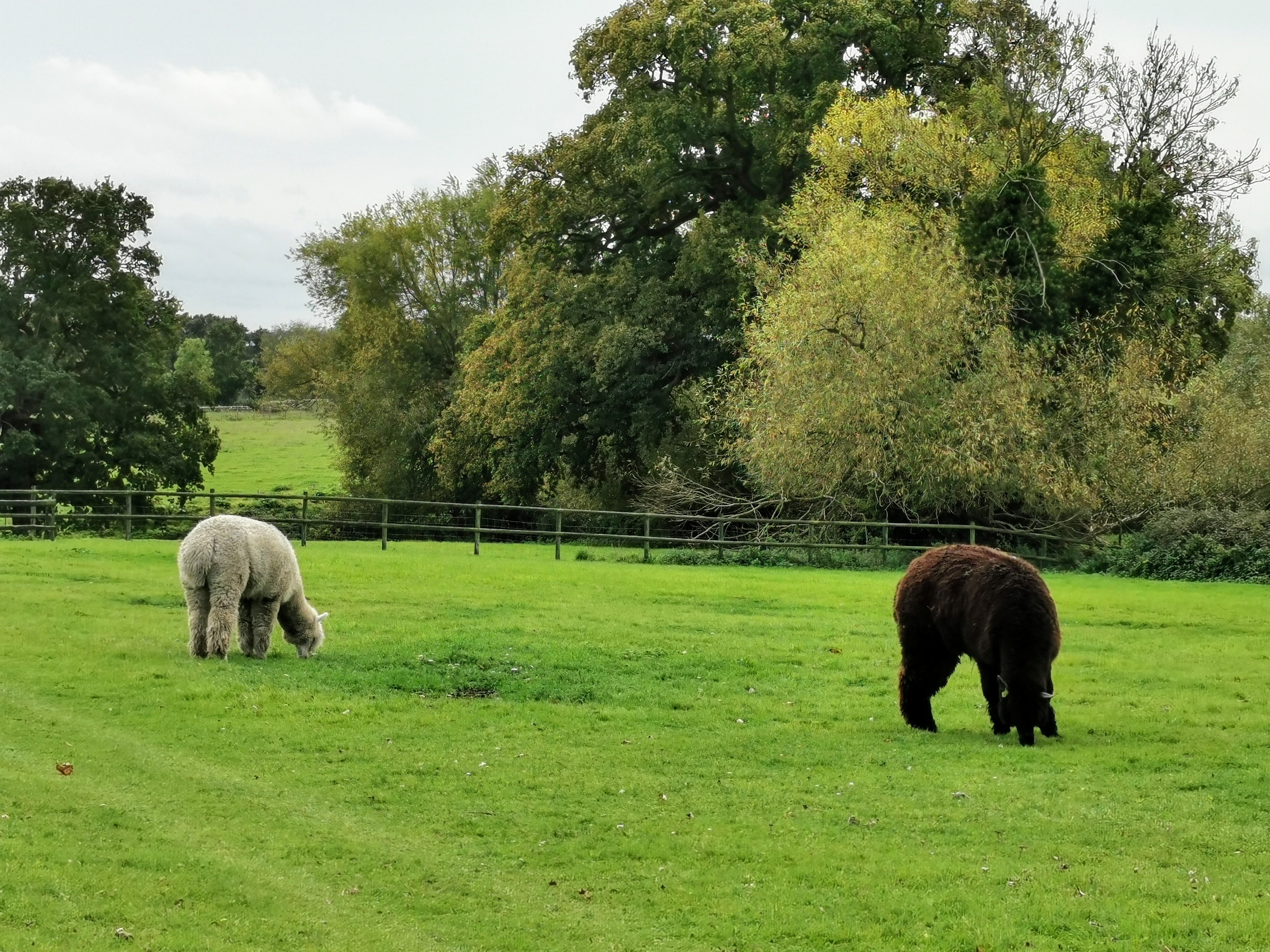
Just to make the whole scene even more idyllic, I pass from the churchyard into a field of cute and cuddly alpacas. Not that they are the slightest bit interested in me, they’re busy eating grass.

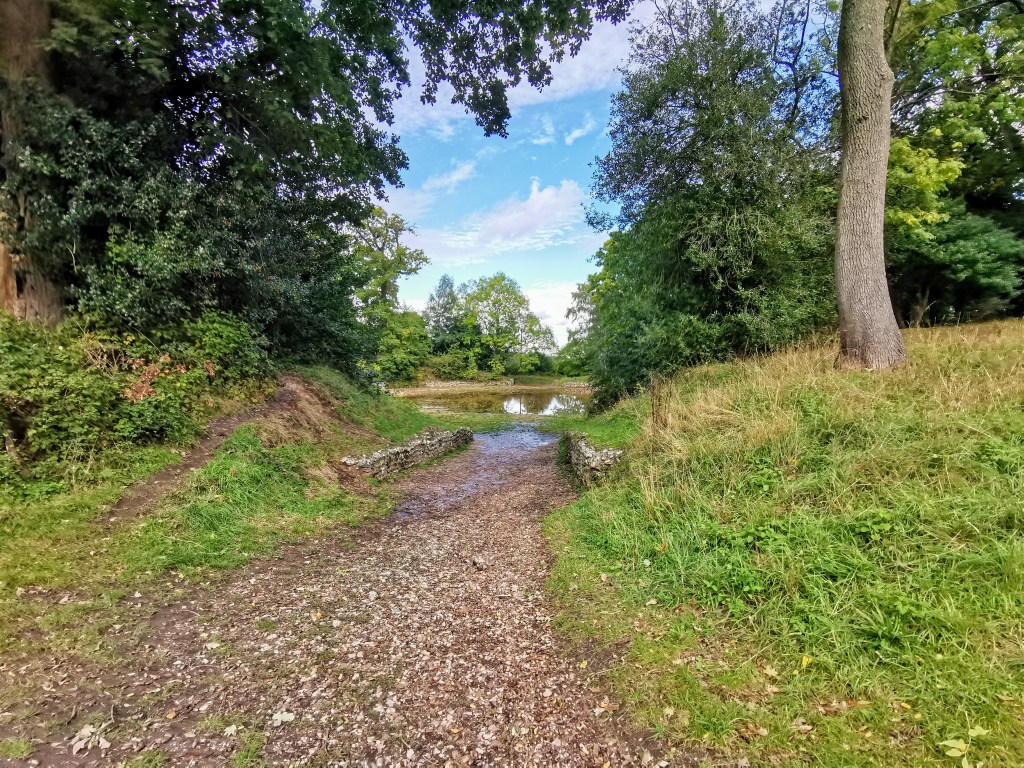
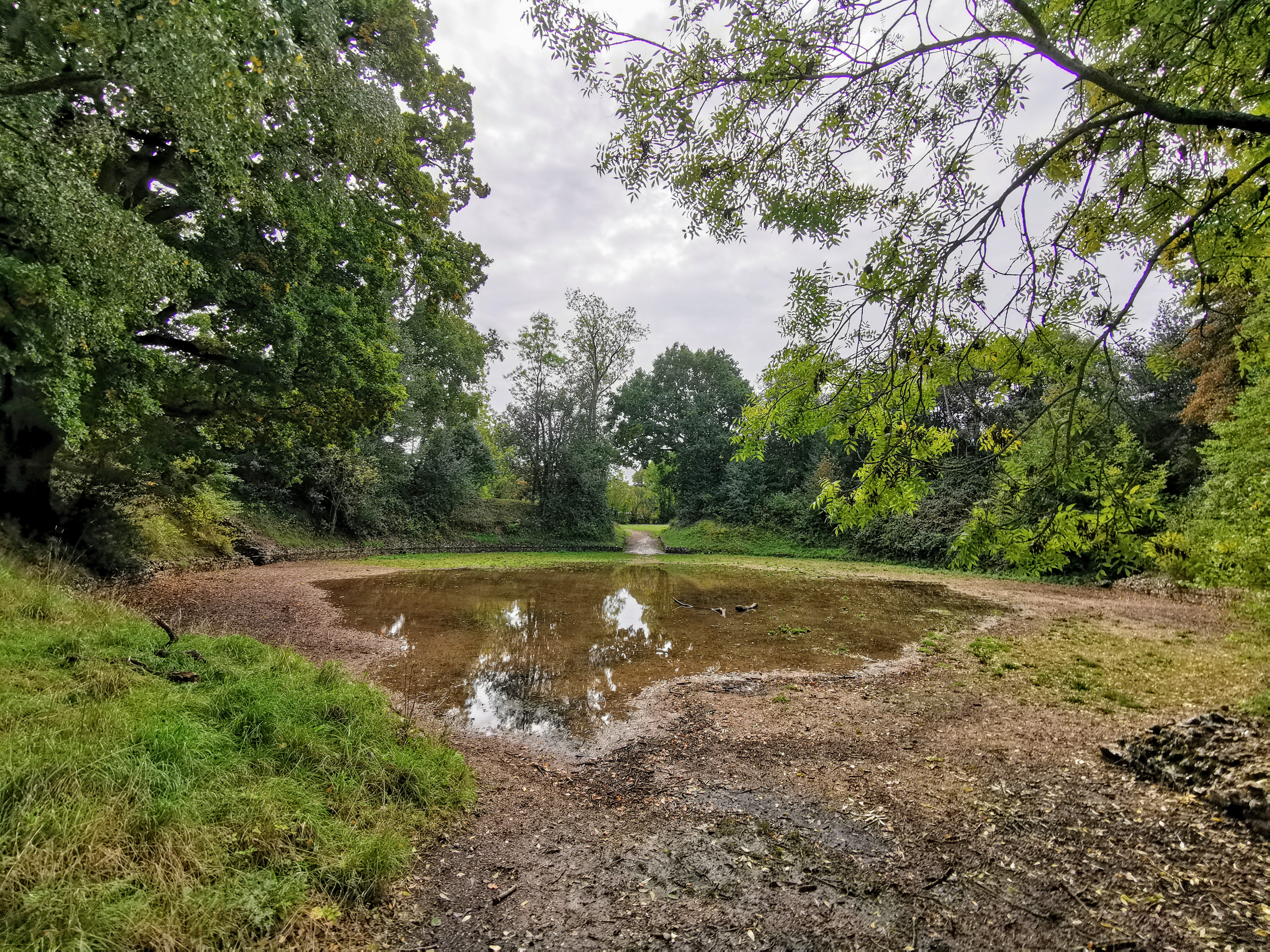
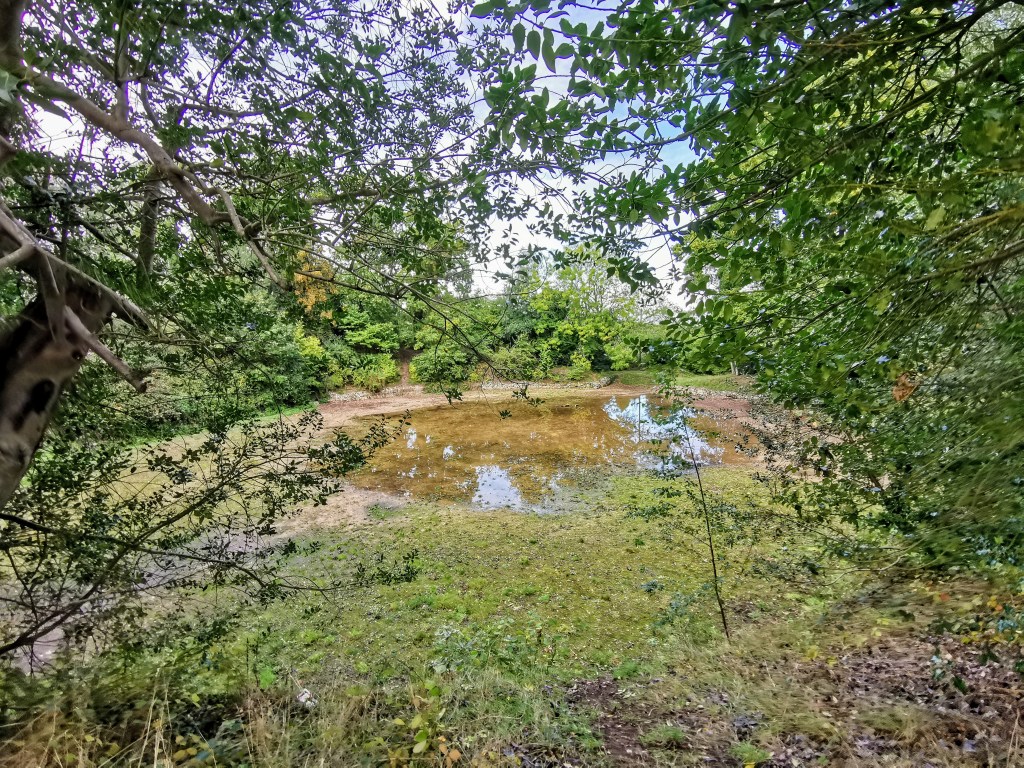
Just past the church, I make a detour outside the walls and across the nearby lane to visit the Roman Amphitheater. Not much more than a large puddle today, this space seated up to 7,000 spectators cheering on gladiators, gory contests involving animals, and public executions. Nice! I think I prefer it how it is now.

There’s a path around the rop of the amphitheatre, but it’s not for the faint hearted, and probably not advisable if you’re clumsy like me! It’s steep and muddy; brambles and tree branches add to the fun. I’m relieved to make it round with just a few wobbles.

We’re so lucky to have places like this just waiting to be explored. Besides the historical significance, I’m struck by how beautiful and peaceful it is here. I have the place almost to myself, the only sounds are birdsong and the rustling of squirrels in the trees. If I’d brought Lizzie the Labradoodle she would have been in her element, staring intently up into the branches.

The last stop on my circular walk is the North Gate, from where the road set out for Dorchester on Thames, a place I wrote about just a few weeks ago. Another erstwhile metropolis now sunk into anonymity just like Calleva. Time is the greatest leveller, as in the poem Ozymandias – everything is impermanent and fated to decay at some point.

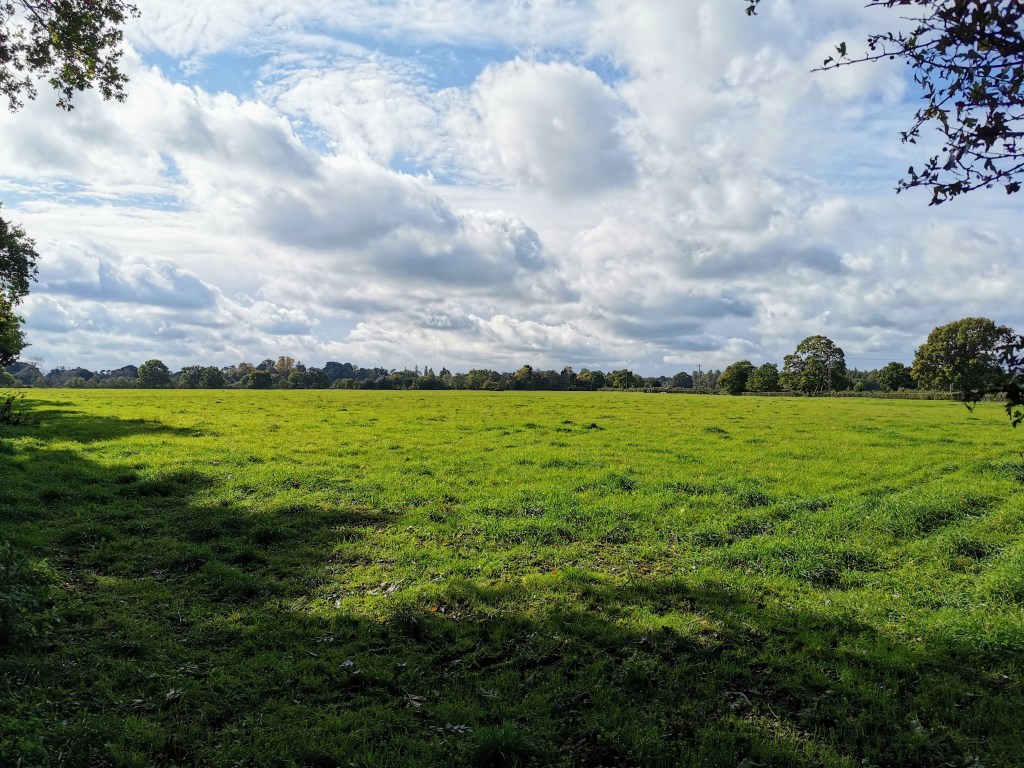
Before I leave, I look back over the quiet fields. For 700 years, this was a bustling settlement full of people going about their daily business, just as we all do. They never imagined that their town would disappear, leaving just crumbling walls, and lines in the fields. Puts things into perspective doesn’t it? Our small lives are pretty insignificant in the grand scheme of things.
That’s enough philosophising for one day I think. I told you this blogging was getting under my skin. Time to head back to the car.

More than just bikes in Girona

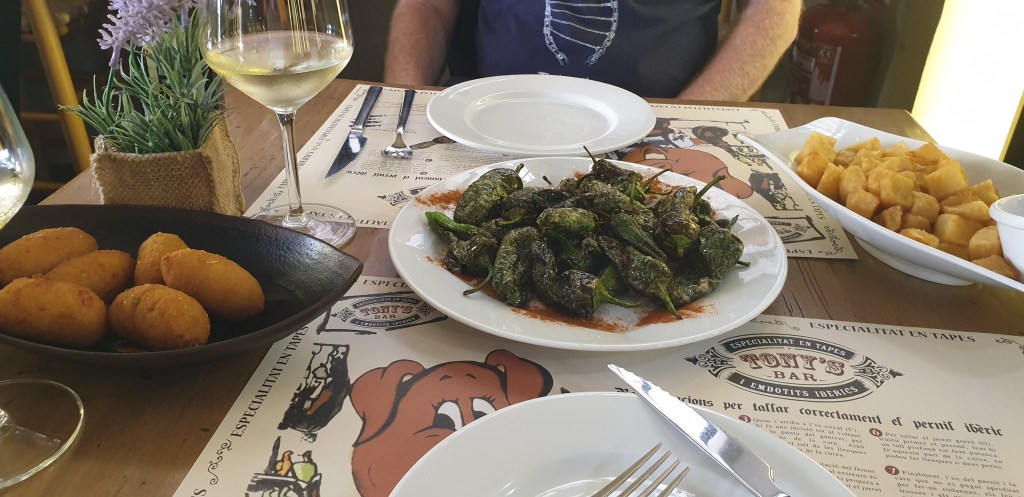
We went to a Spanish restaurant this week and it made me long for the currently forbidden pleasure of nibbling tapas with sangria in the Spanish sun. As the days get shorter it’s a perfect time to visit España and feast on padron peppers. Let’s go back to the golden days of Autumn 2019 when we could actually do that.

The husband has wanted to visit Girona, otherwise known as cycle nirvana, for a while now. When several hundred professional cyclists and triathletes base themselves in one place, you know there must be bike magic up every hill and round every corner. As you know, I believe in something for everyone when travelling. Girona also has an amazing medieval heritage. Bikes for him, history for me, and food for both of us – perfect.

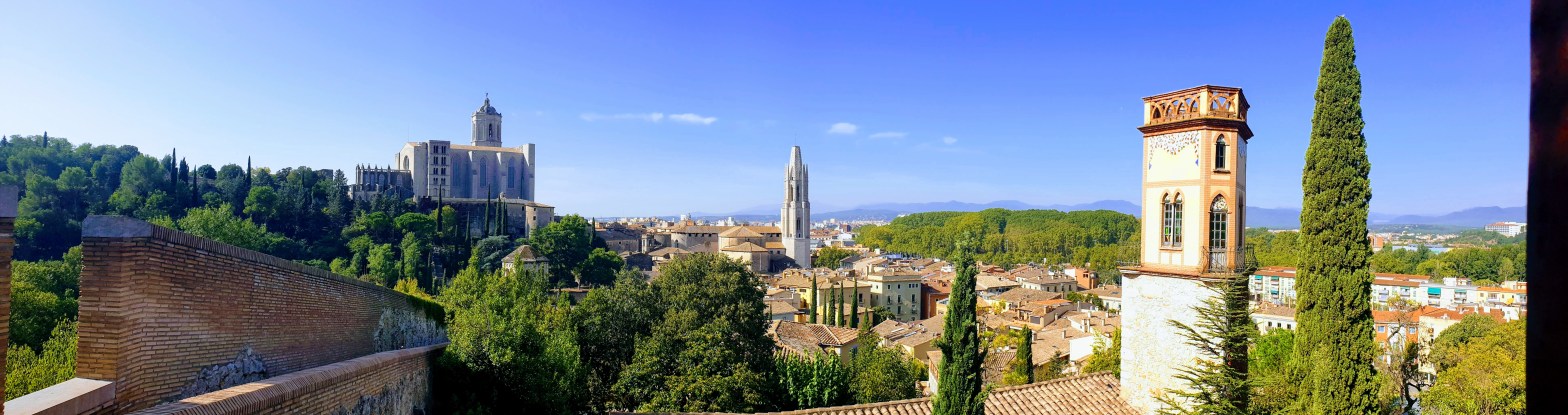
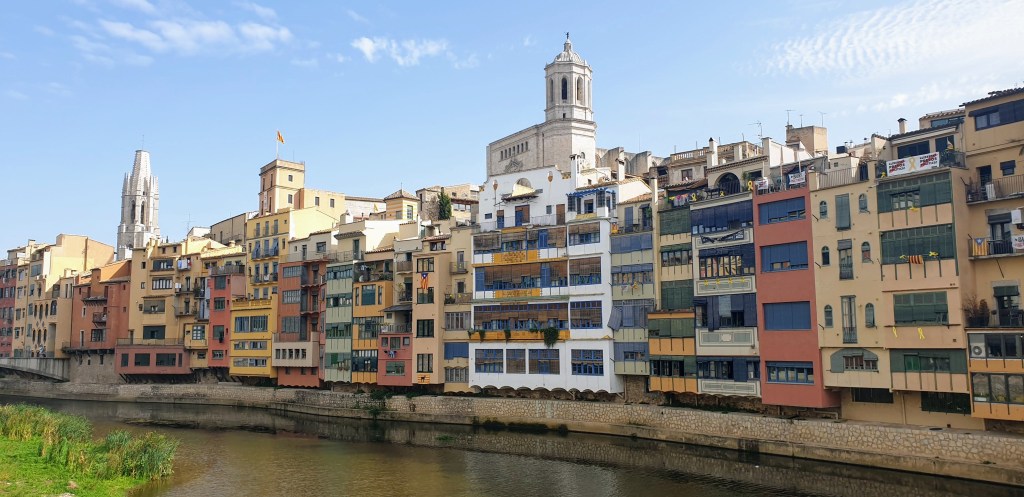
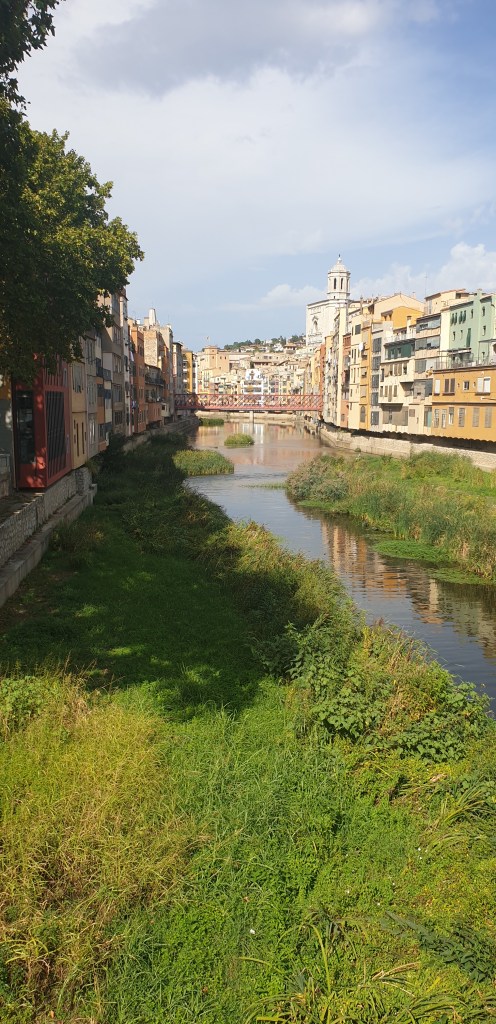
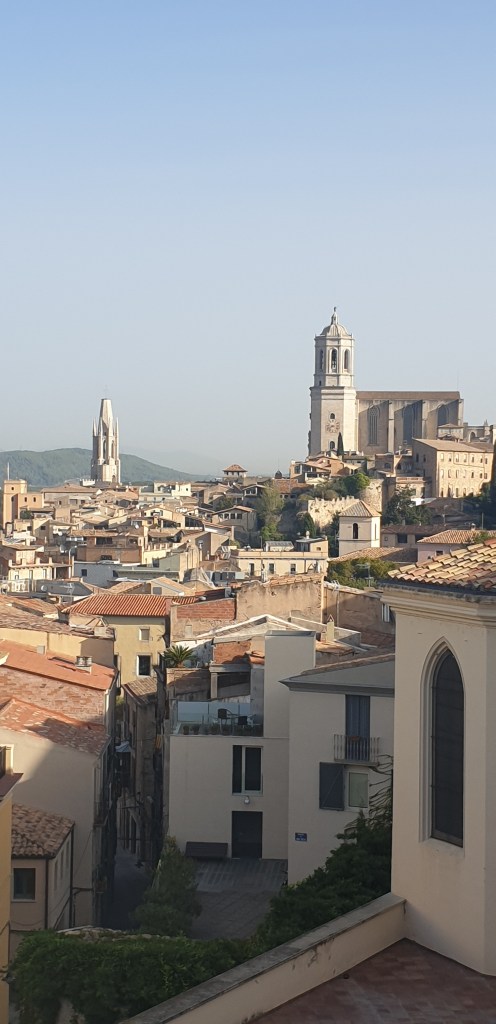
Located about 100km north of Barcelona in the region of Catalonia, Girona has a population of around 100,000 people, so it’s not a huge place. The River Onyar flows through the middle of the city, with the medieval Old Town to the east and the modern commercial centre to the west. The most well-known views of Girona focus on the colourful facades of the buildings along the river, admittedly very photogenic, but there’s much more on offer here…

This trip is a bit different for us in that there are no direct flights from Heathrow, so we’re leaving the dogs with my parents in Yorkshire and flying with Jet2 from Leeds Bradford Airport. This means, gulp, flying economy. How will the husband cope with no frills? First of all, though, we have to get from the car park to the terminal, which is proving difficult. It’s 4am, pitch black, and there’s no lighting or signage to be seen anywhere. This is not a great start. By the time we get to departures I need a drink, regardless of the hour!

Aside from complaining about back ache from the very hard and upright seats, and turning his nose up at the breakfast bap I’ve pre-ordered for him, the husband copes pretty well with the flight. Everything goes to plan and we’re soon in a cab on the way to our hotel. Phew! We’re staying at the Hotel Museu Llegendes de Girona, which is really not a particularly snappy name for a hotel, but it’s very pleasant without being stand-out.

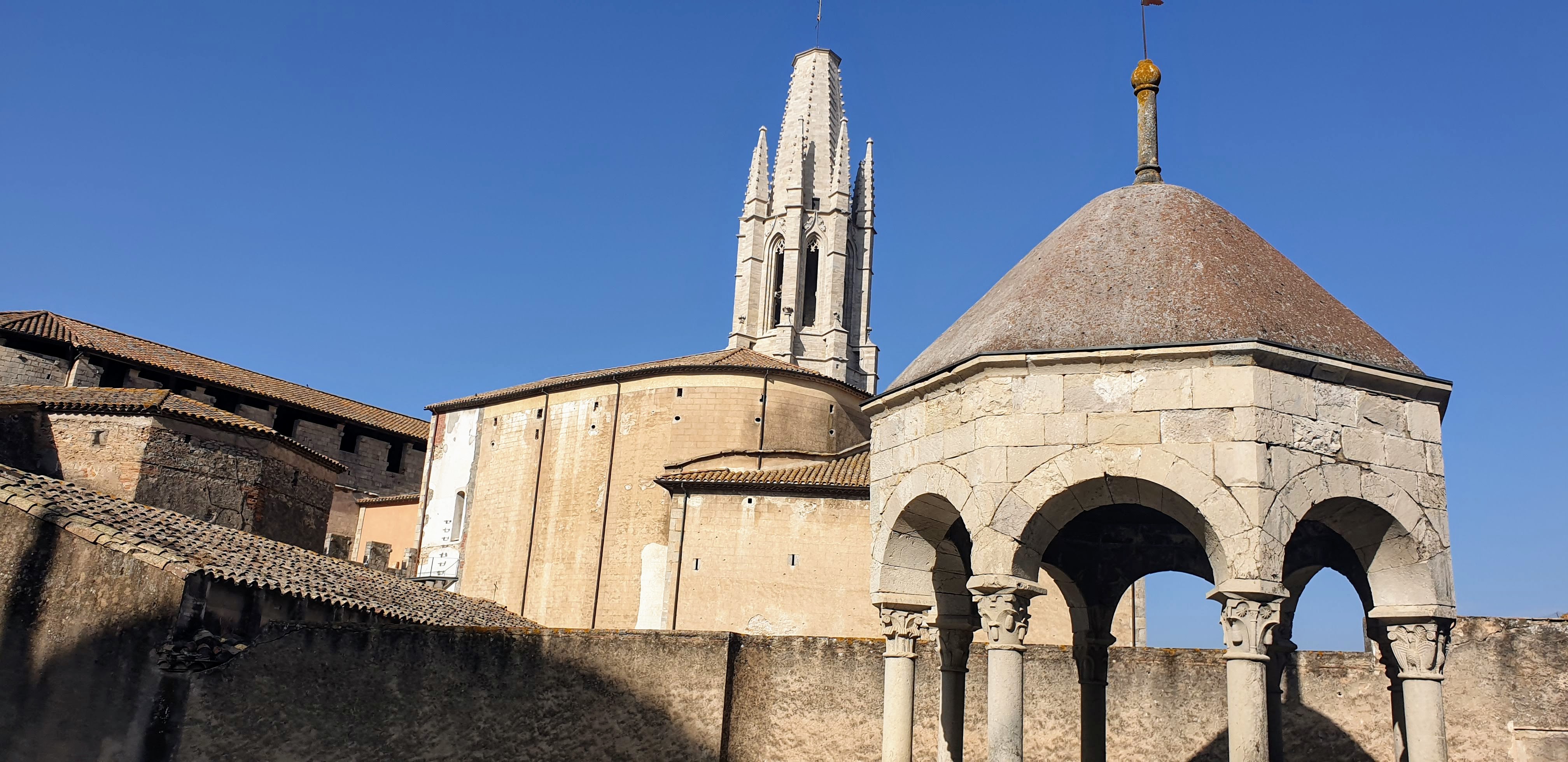
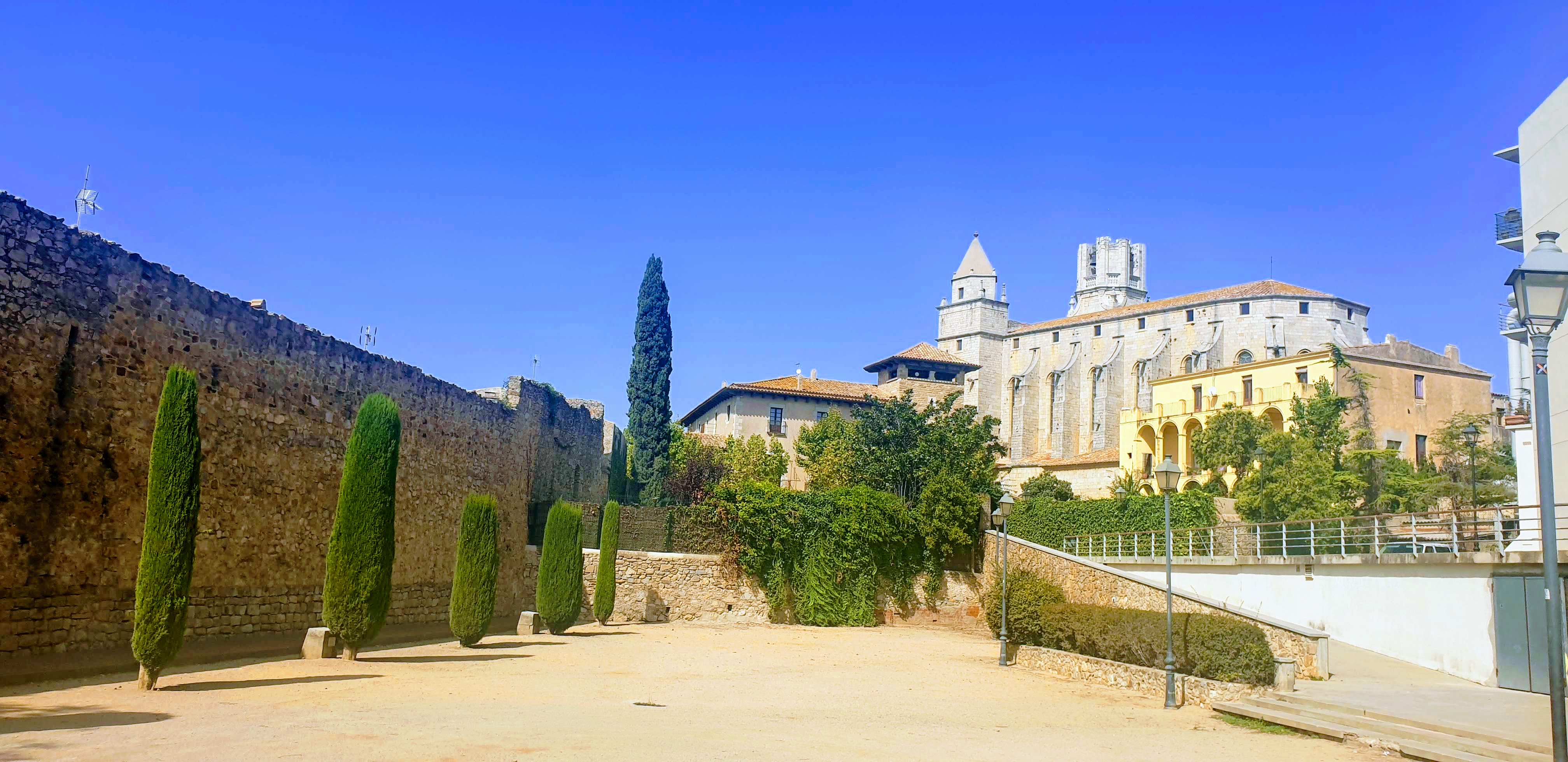
Location-wise, we are on the edge of the Old Town, and I’m keen to get out and explore, while the husband is intent upon some famous cyclist spotting. I’m not sure how he expects to recognise people wearing helmets and glasses but he’s happy so I keep quiet. Just steps away from our hotel we pass the impressive Basilica de Sant Feliu, which dates from the 12th century.

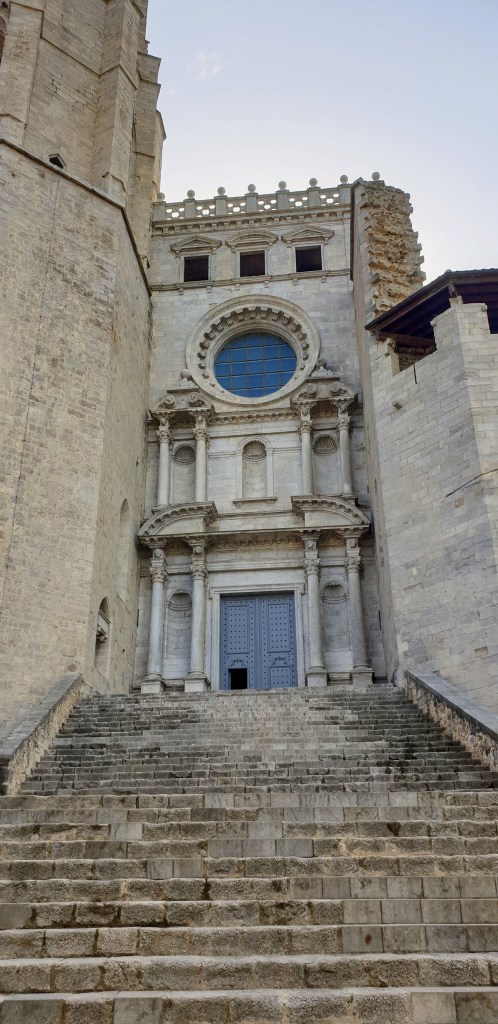
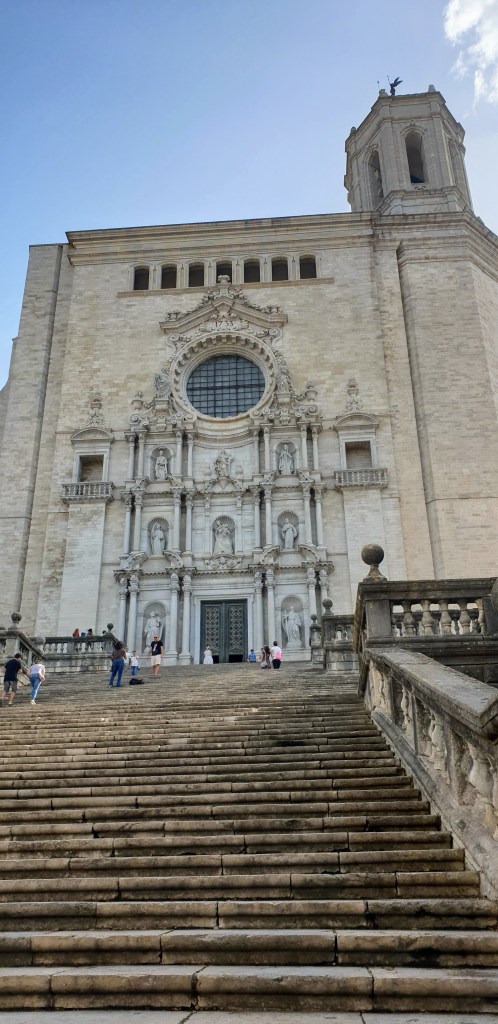
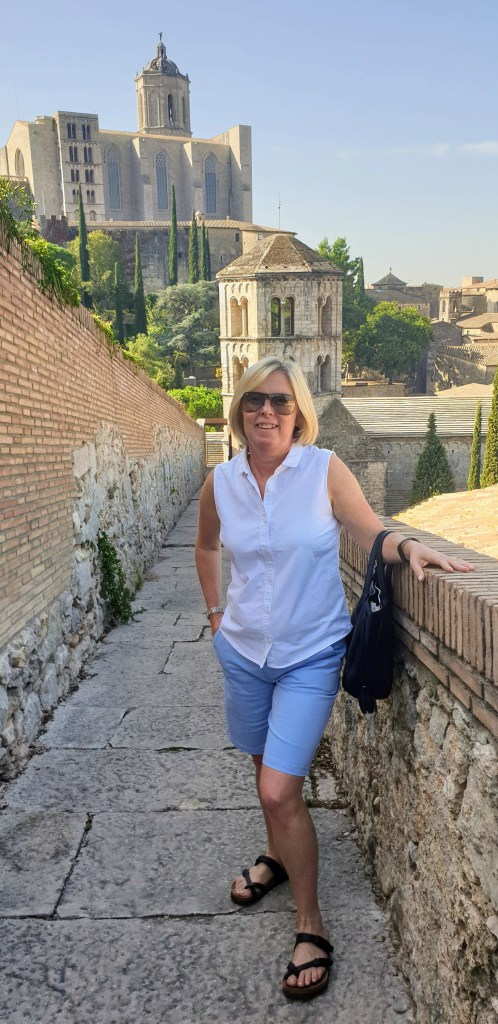
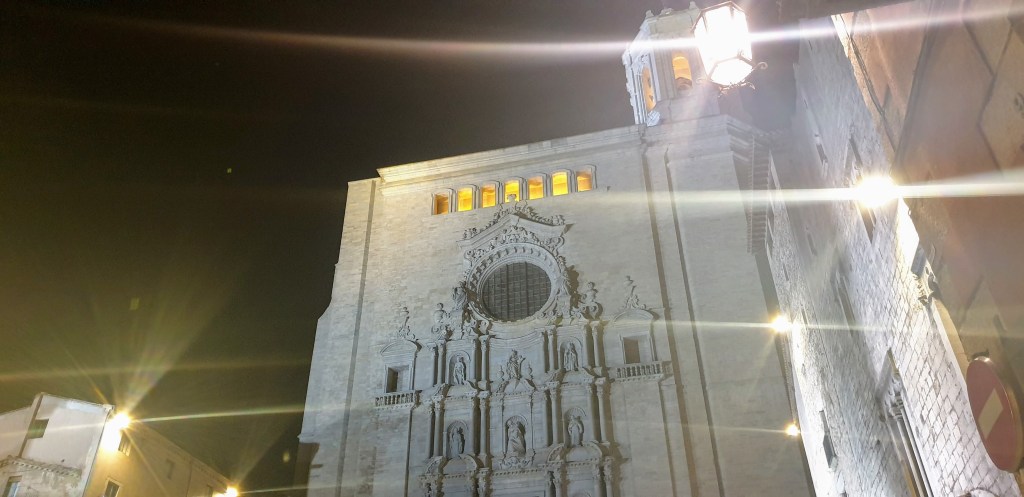
Further along the street, though, the monumental Cathedral overshadows everything. Construction of this huge building began in the 11th century. With a nave measuring 23 metres, it’s second in size only to St Peter’s in Rome. It towers above the city and can be seen wherever you go.

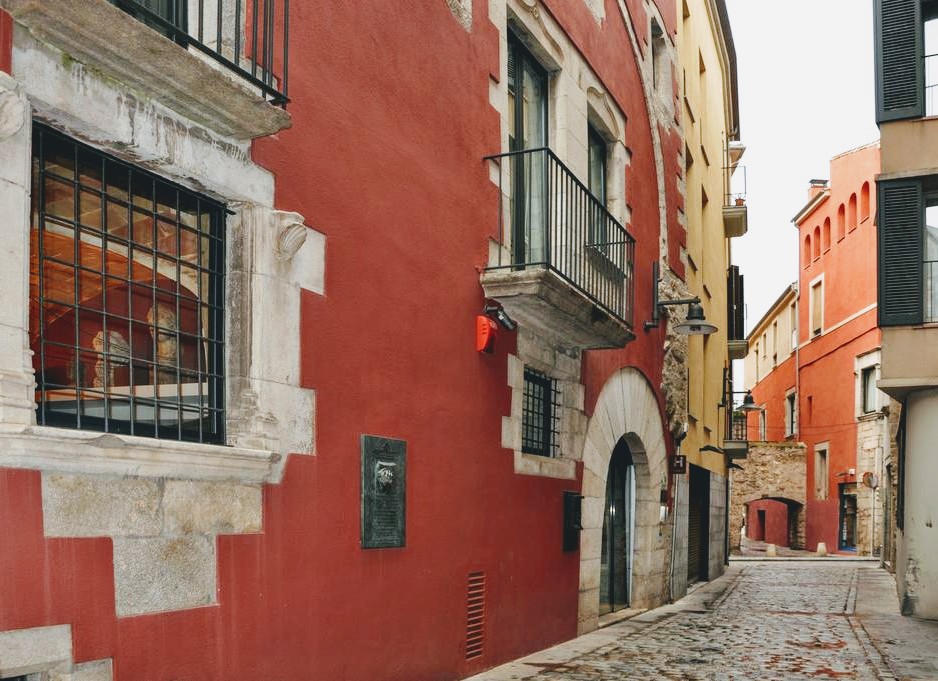
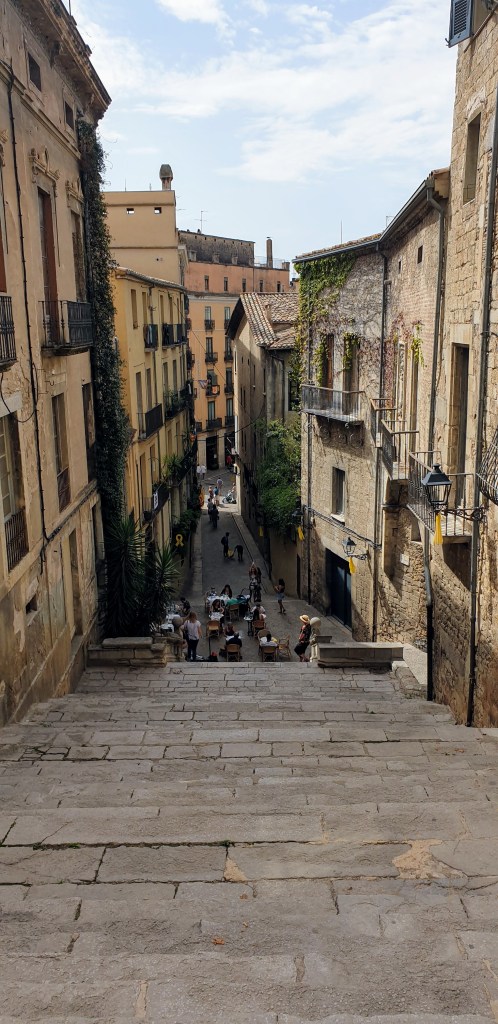
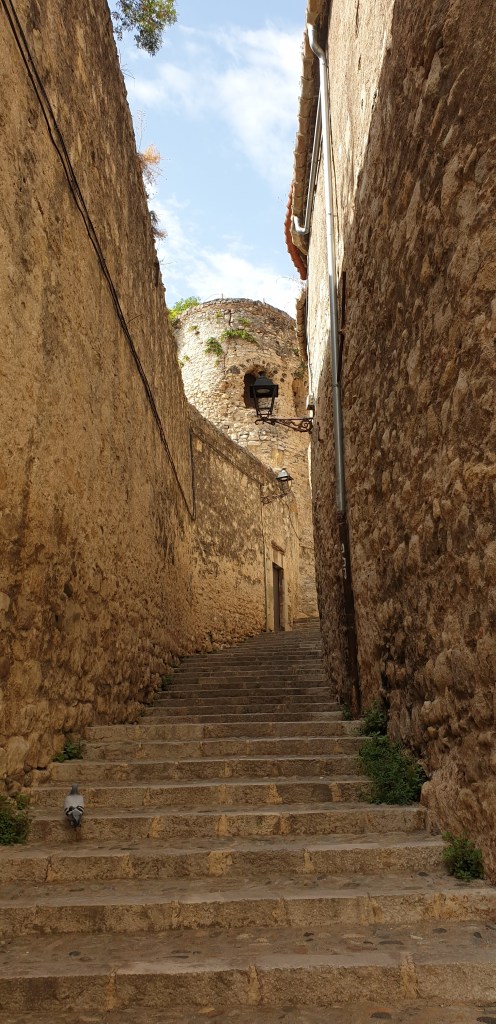
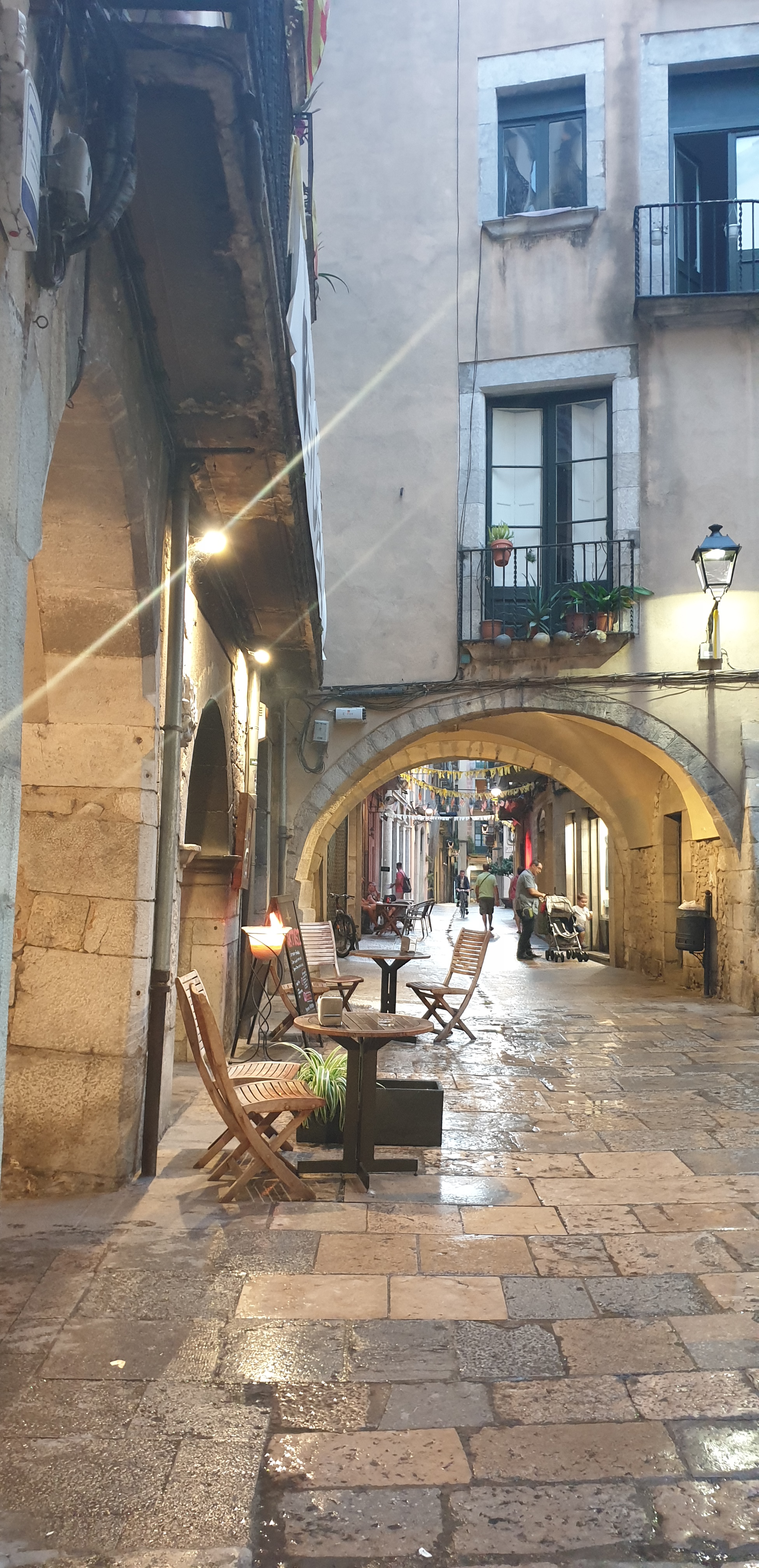
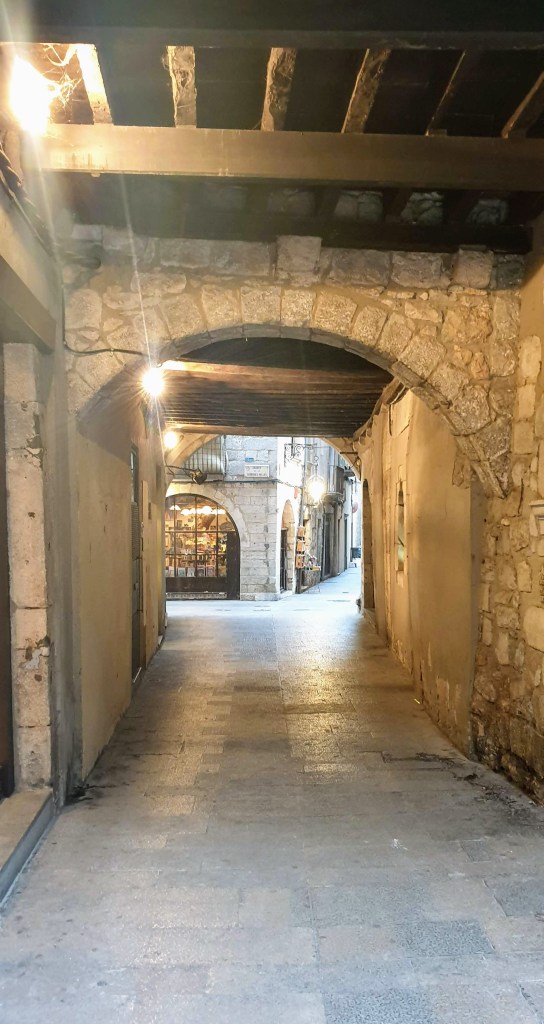
The Old Town is, as you’d expect, a wonderful warren of winding streets and staircases, full of shady squares with pavement cafes and unusual shops. Just my kind of place. We sit under a tree to have a drink and watch the world go by. Alas, there’s some huge bird in there just waiting for the husband to sit down before it empties its bowels all over him. I try not to laugh at the absolute horror on his face. It’s good luck, after all, and bodes well for the rest of our trip…once he’s recovered and changed his clothes!

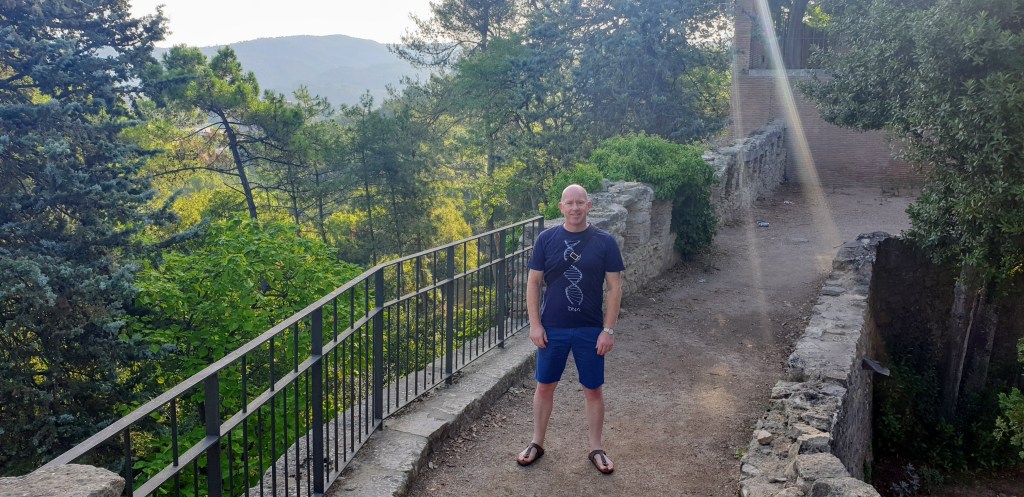
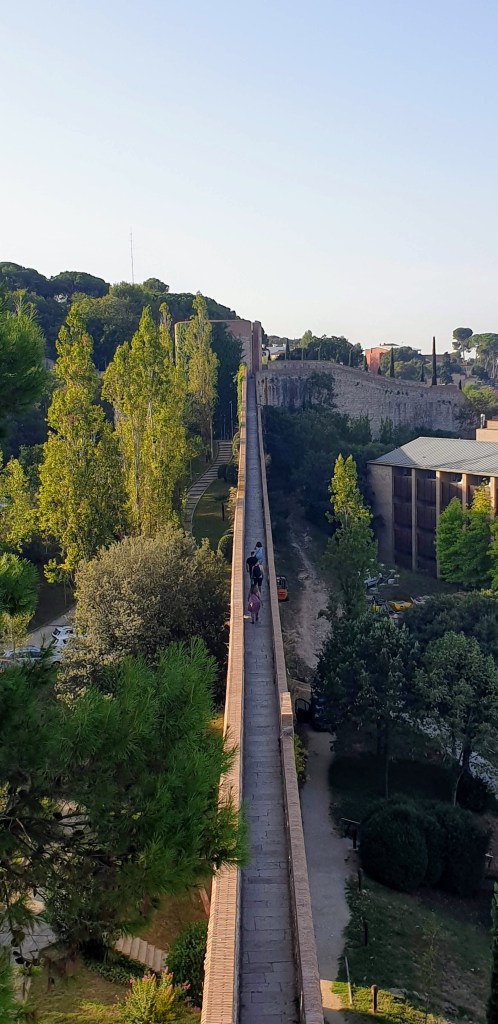
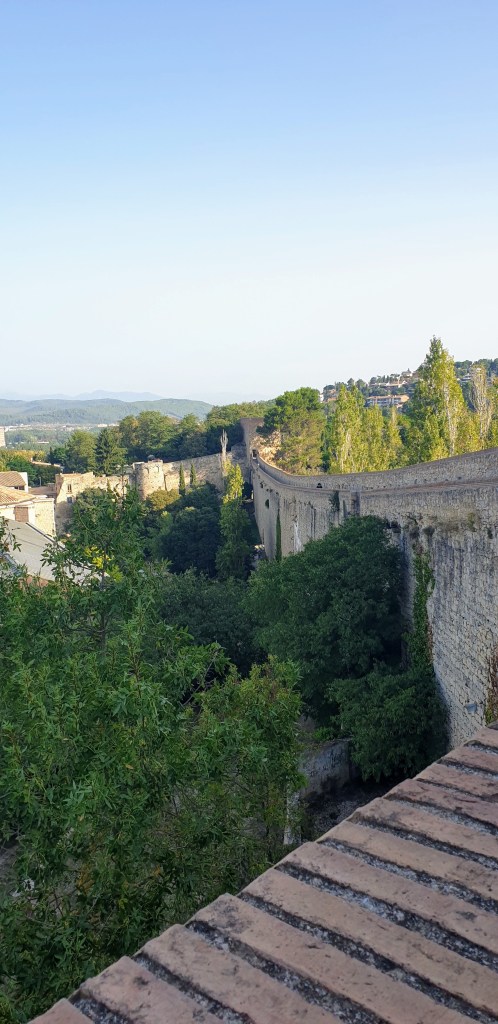
An absolute must-do when in Girona is walking along the remarkably preserved medieval city walls. Now, I love an old wall. The husband has pretty much resigned himself to the fact that any old wall must be climbed on, walked along, admired, photographed. To him, it’s just mouldy old stones. But the ancient city walls of Girona are in the premier league of centuries-old fortifications. You will be impressed, whether or not you’re a wall fan.

They’re high, they have amazing views, they march off into the distance as far as the eye can see. I’m totally in my element here, happily wandering along the pathway on top of the walls – the Passeig de la Muralla – taking in this gorgeous city from the best possible vantage point. Originally built by the Romans in the 1st century BC, the walls have been extended and renewed over the years. They’re spectacular.

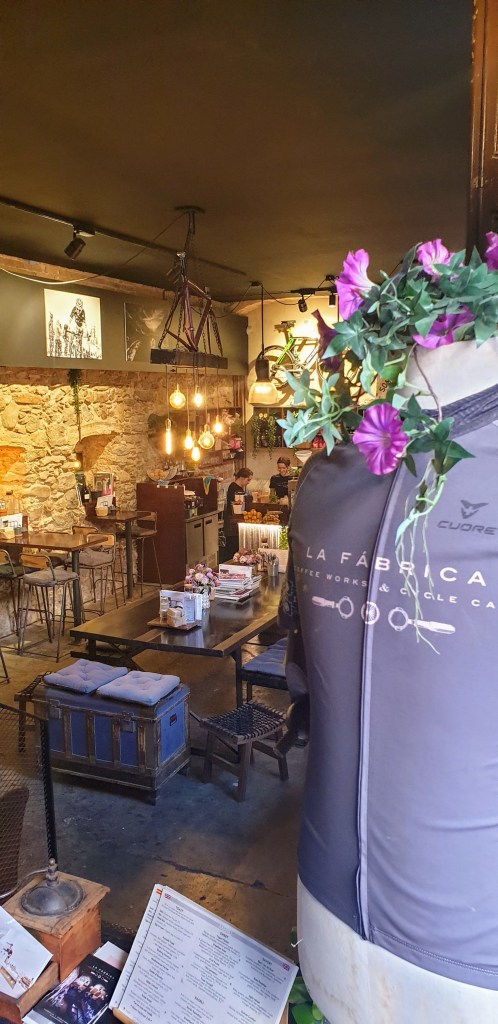
The husband gets his reward for indulging me in my wall passion – a visit to La Fabrica cafe. Run by an ex-pro, it’s a celebrated cyclist hang out with famously good coffee. We sit outside in the sunshine in St Joseph’s Square and sample a roast. Now we’re both beaming with satisfaction. Full marks, Girona!

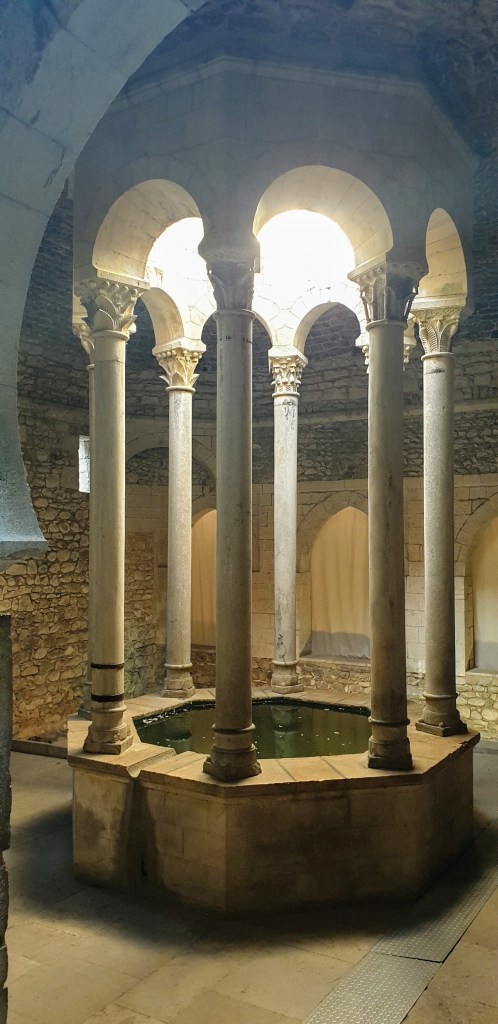
The Arab Baths aren’t quite as old as the fortifications – they were built in 1194 though, so they’re fairly venerable! Hidden away in the backstreets they’re a cool and calm place to while away half an hour admiring the graceful architecture inside and out. The entry fee is just a few euros too, so the husband doesn’t complain.

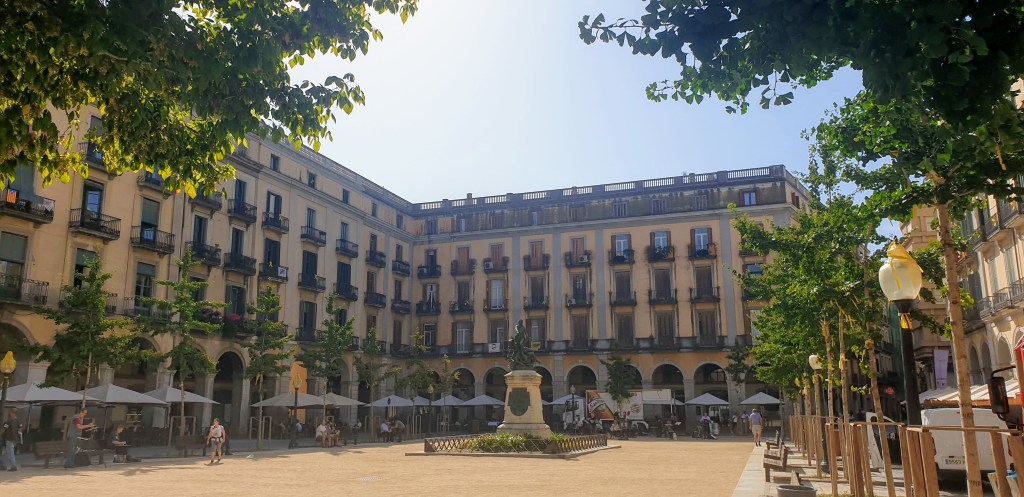
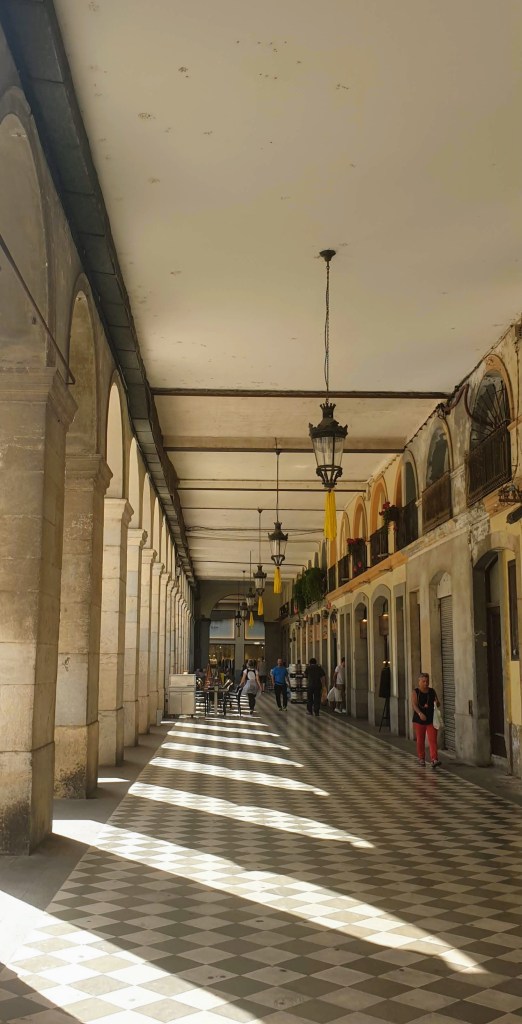
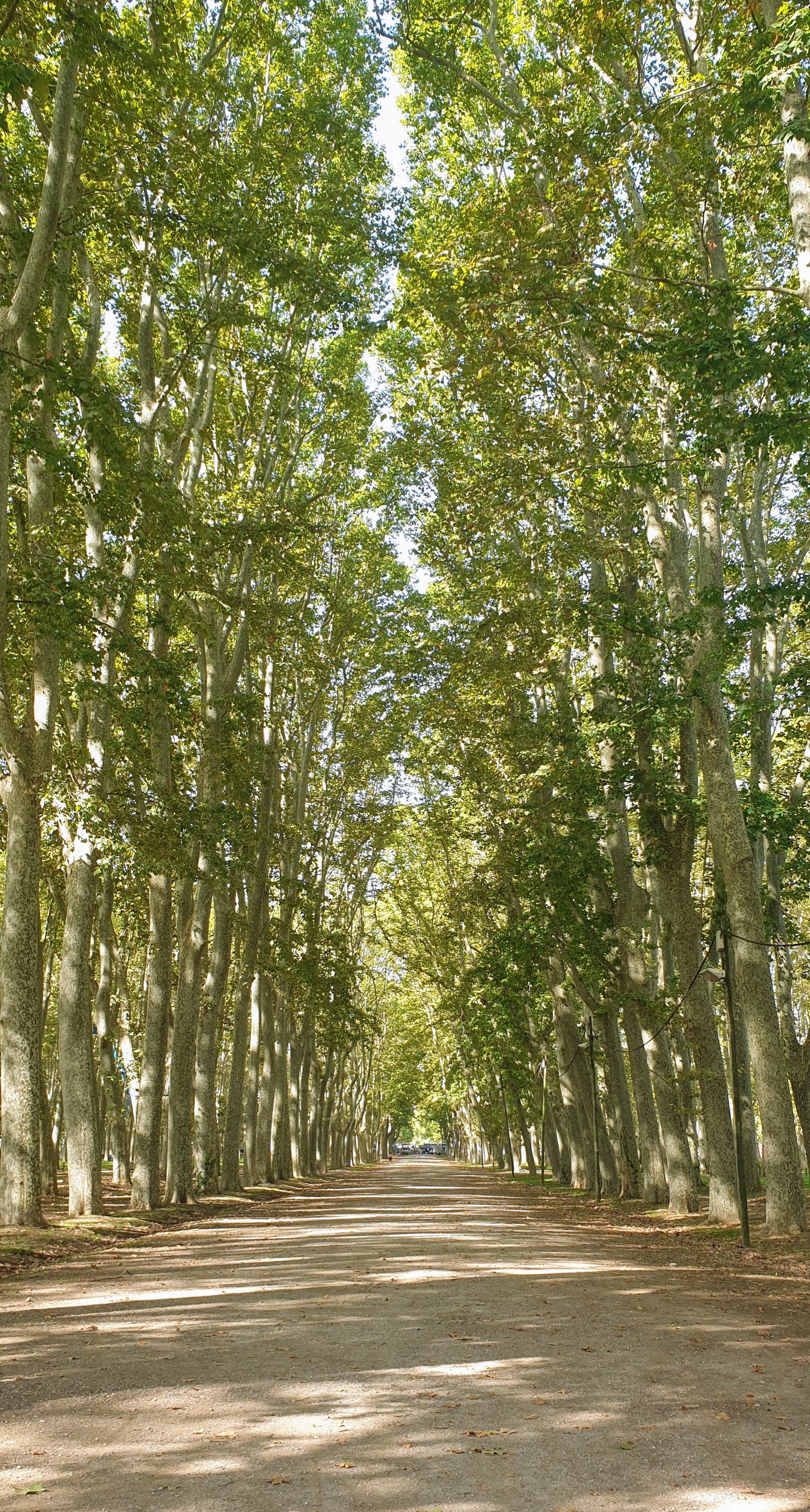
Across the River Onyar in the newer part of town you’ll find the main commercial district. The elegant Placa de la Independencia is a great place to stop for a breather, with galleried walkways containing bars, restaurants and independent shops. The huge Parc de la Devesa is perfect for a shady stroll, particularly when the twice weekly outdoor market is in full swing.

Also on this side of town are the adjoining and extremely user-friendly train and bus stations, if you want to use Girona as a base to see more of fascinating Catalonia. We did a couple of day trips on the bus, firstly to the attractive inland town of Torroella de Montgri. Much as I would love to tell you about the place, we were visiting friends so we spent our time there mostly drinking wine. Thanks again Jayne and Paul for your hospitality!

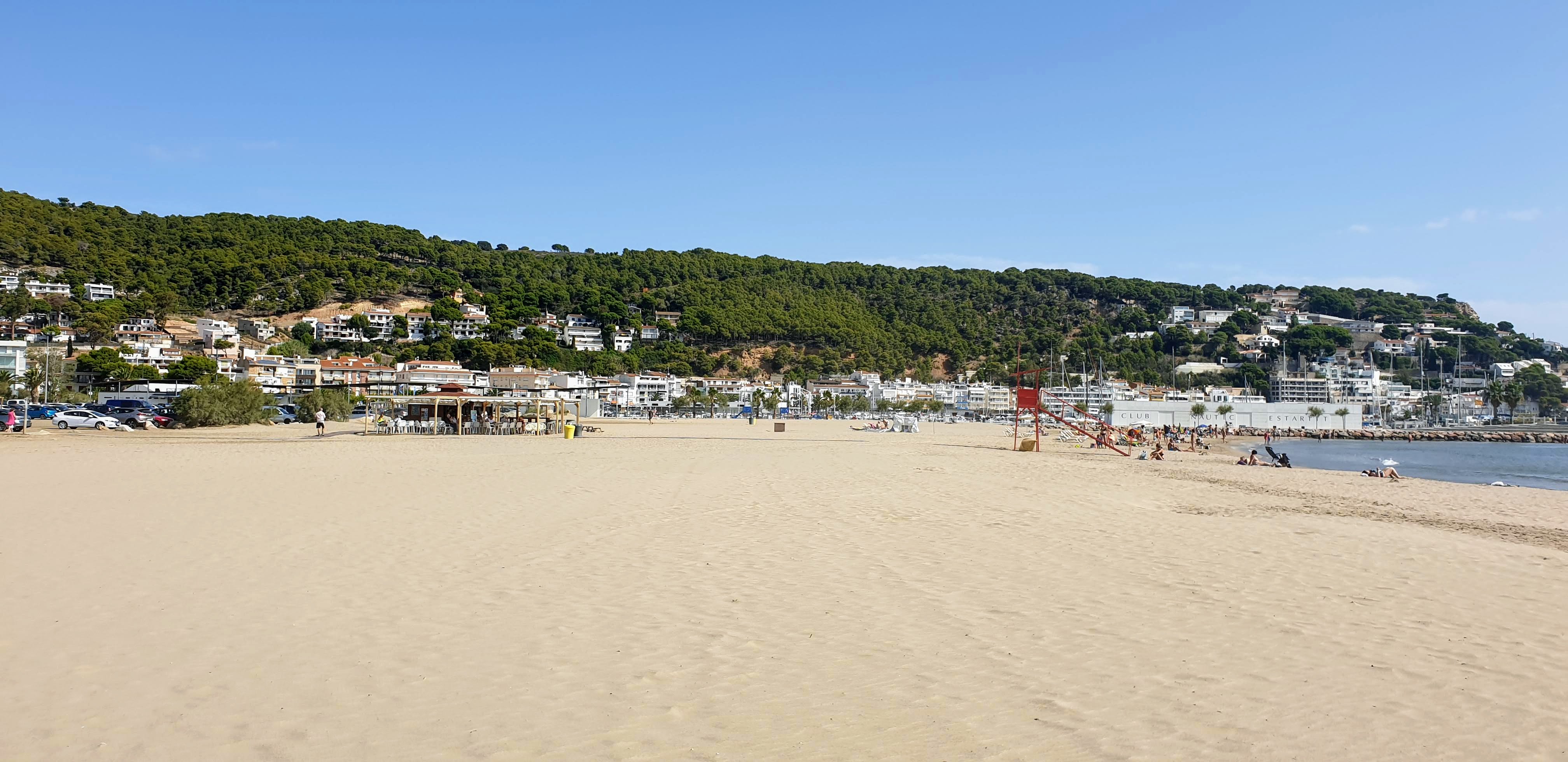
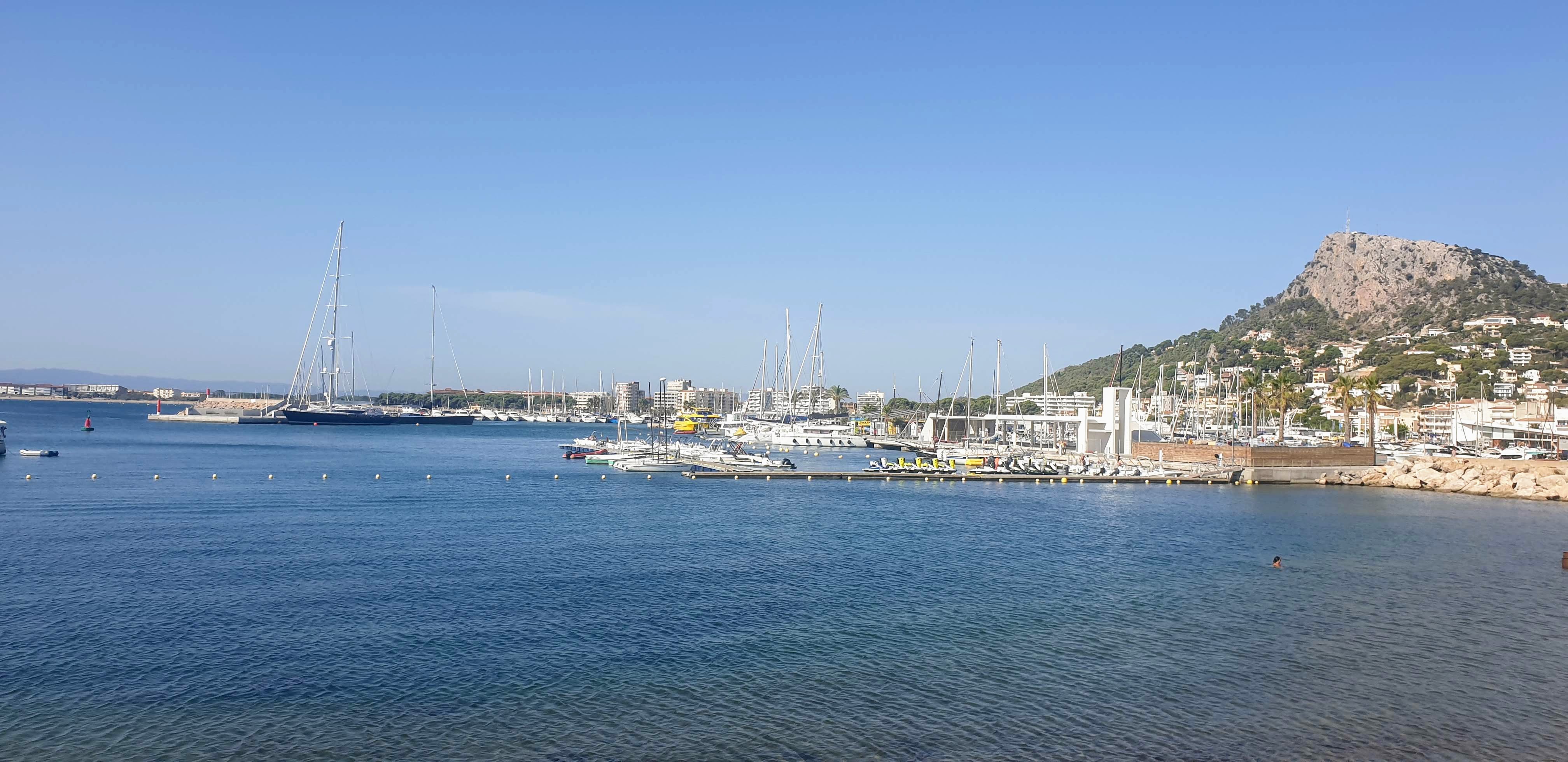
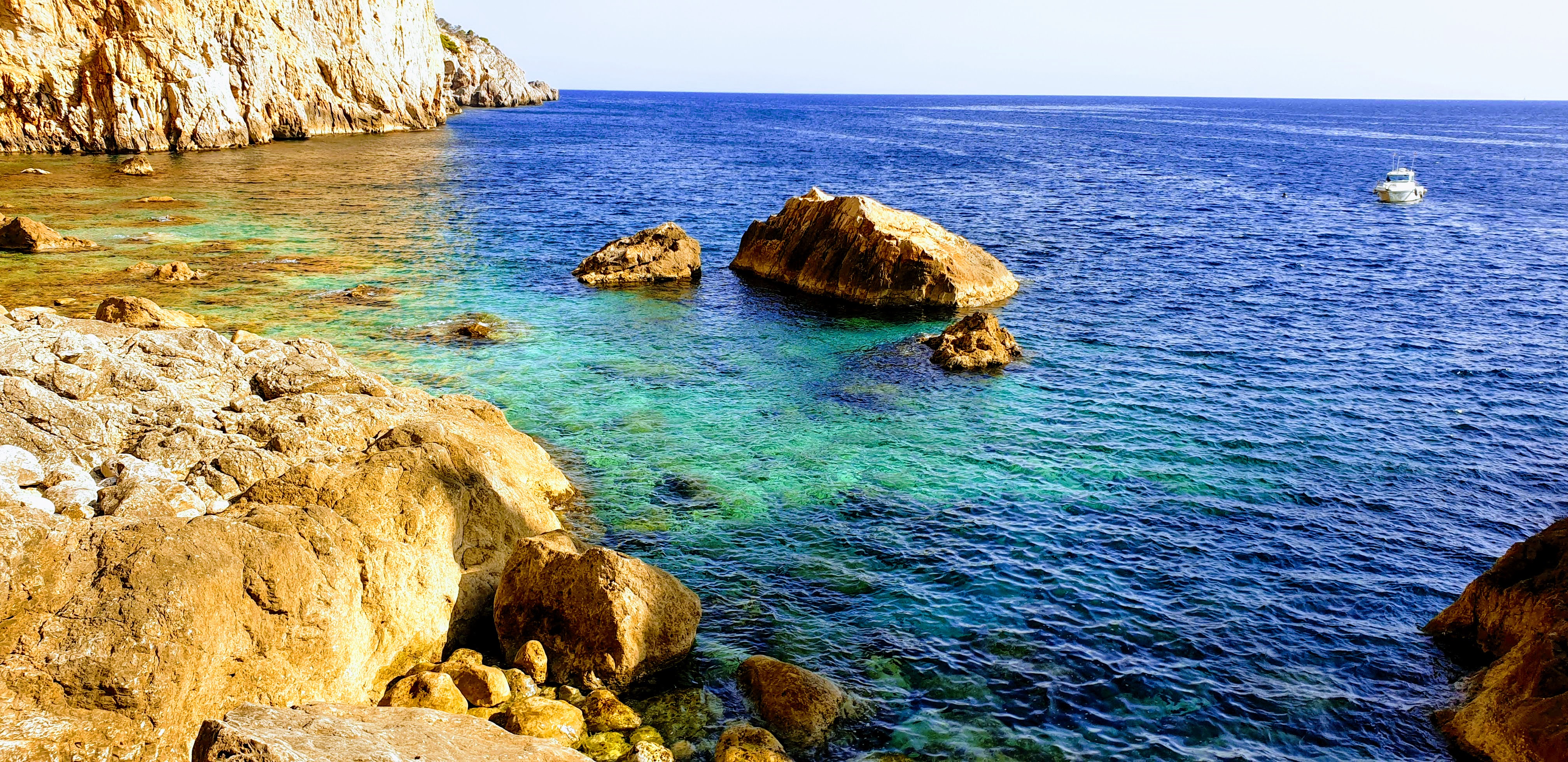
We also visited L’Estartit on the coast, a lovely little resort with the most ginormous stretch of beach. This was a fishing village until the Costa Brava tourism boom of the 60s. Nowadays it’s popular with divers because of the abundant marine life just offshore around the Illes Medeas. The views from the waterfront pathway, the Passeig Molinet which runs east below the cliffs, are spectacular.

Girona by night is a magical maze of softly lit alleyways and staircases with the cathedral still resplendent above everything. It’s great for strolling and people watching, like so many places in southern Europe where the climate is still kind towards the end of the year. Meanwhile we northerners are forced to hide away indoors by the fire at this time of year. Being able to wander around without a jacket seems such a luxury!

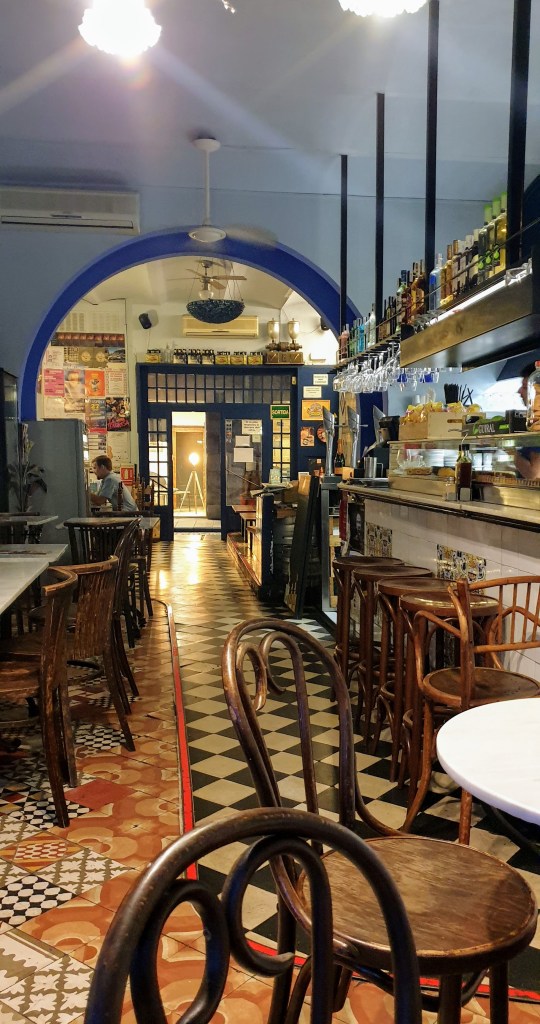
There are some great bars in Girona, both traditional tiled places and more sleek, modern establishments. We like the River Cafe and La Terra in the Old Town but the choices are endless. Many restaurants offer local delicacies, but you can also get pizza or curry should you get tired of tapas. Is that even possible? At Zanpanzar we’re lucky enough to get a table near the kitchen door, which means we get first dibs on the fresh tapas heading out. A good move!

Having dinner one night, there’s a group of very thin young men at the neighbouring table. They’re pro cyclists, hisses the husband. His whispering skills are non-existent. I squint at them, I don’t recognise anyone, but I’m not wearing my glasses (vanity!). So who are they? Oh I’ve no idea, he says airily, but they are definitely pros, look at their physiques. So much for being an expert!

In summary, we may have seen some celebrity cyclists, but we’re not quite sure. We’ve (or rather, I’ve) admired some great architecture. We’ve eaten some delicious food, but that was always a given in Spain. Girona is an absolute gem and there’s plenty of scope to explore further afield if you’re so inclined. A successful trip. Hopefully our positive mood will last through another flight on hard seats with bad food.

A Victorian break on the Isle of Wight – Part 2

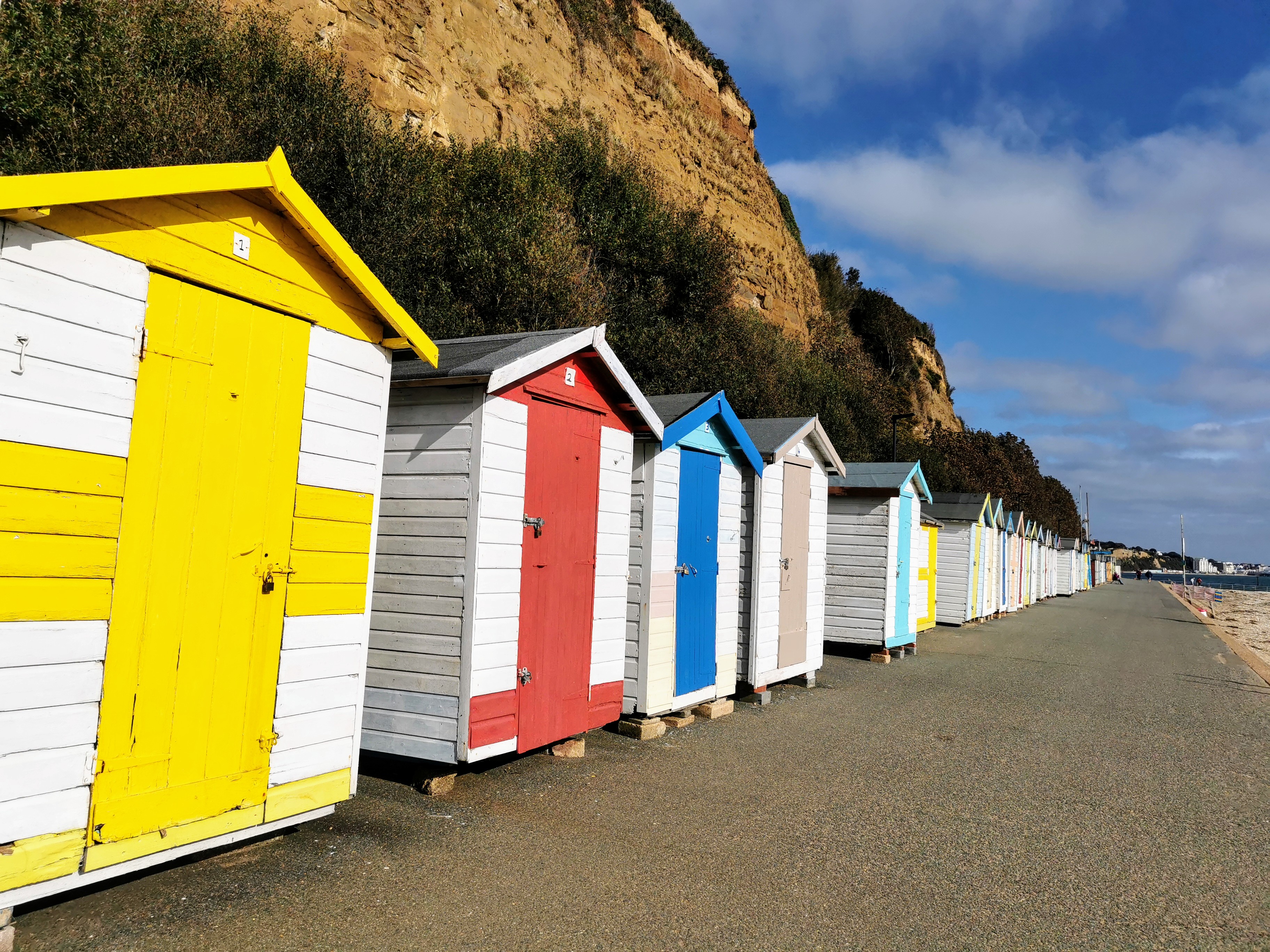
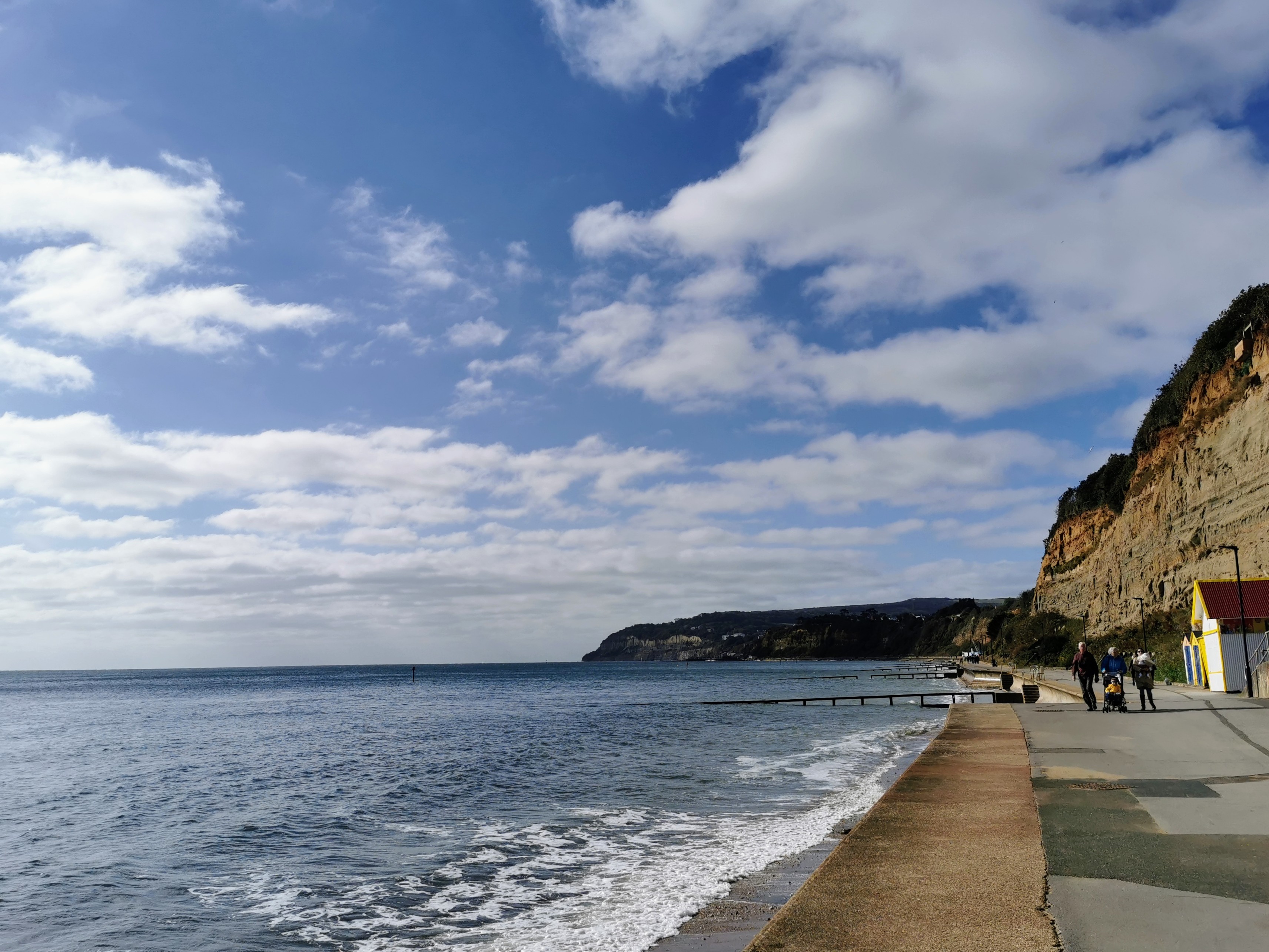
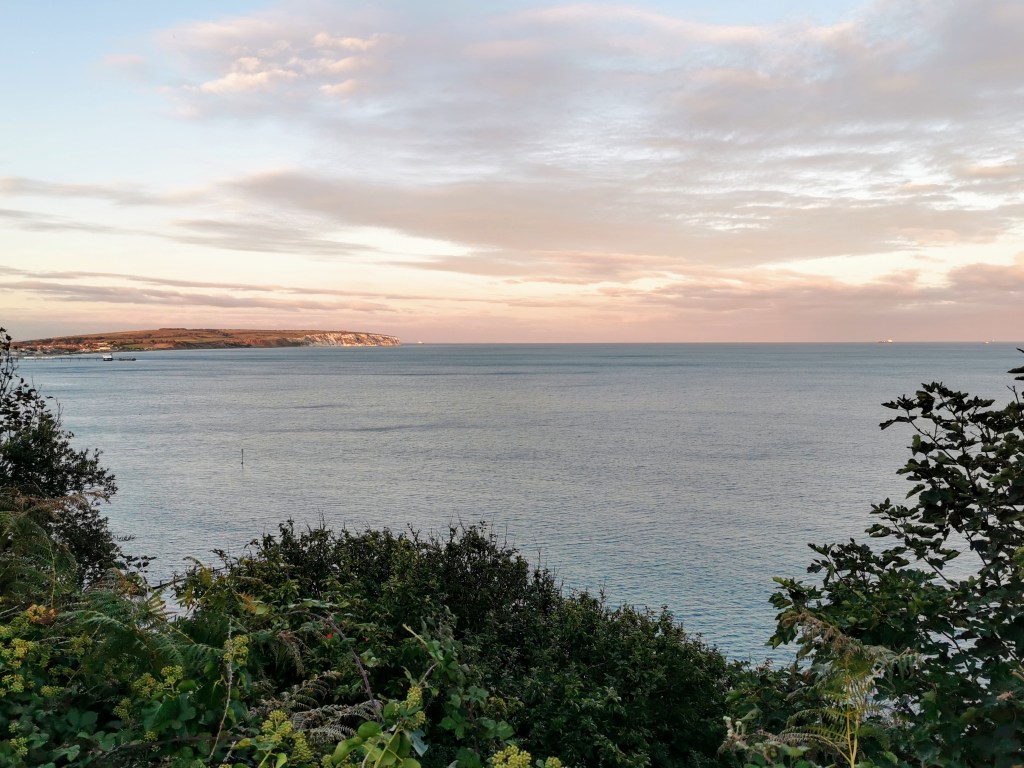
The Coastal Path is calling me. I love the romance of setting off on a long walk and not knowing what you’ll encounter along the way. As Bilbo Baggins said, it’s a dangerous business going out your door, you never know where you’ll be swept off to. But I doubt we’ll hit much danger today, just a few miles down the coast from Shanklin is the resort town of Sandown. So off we go, following the line of colourful beach huts along the water.

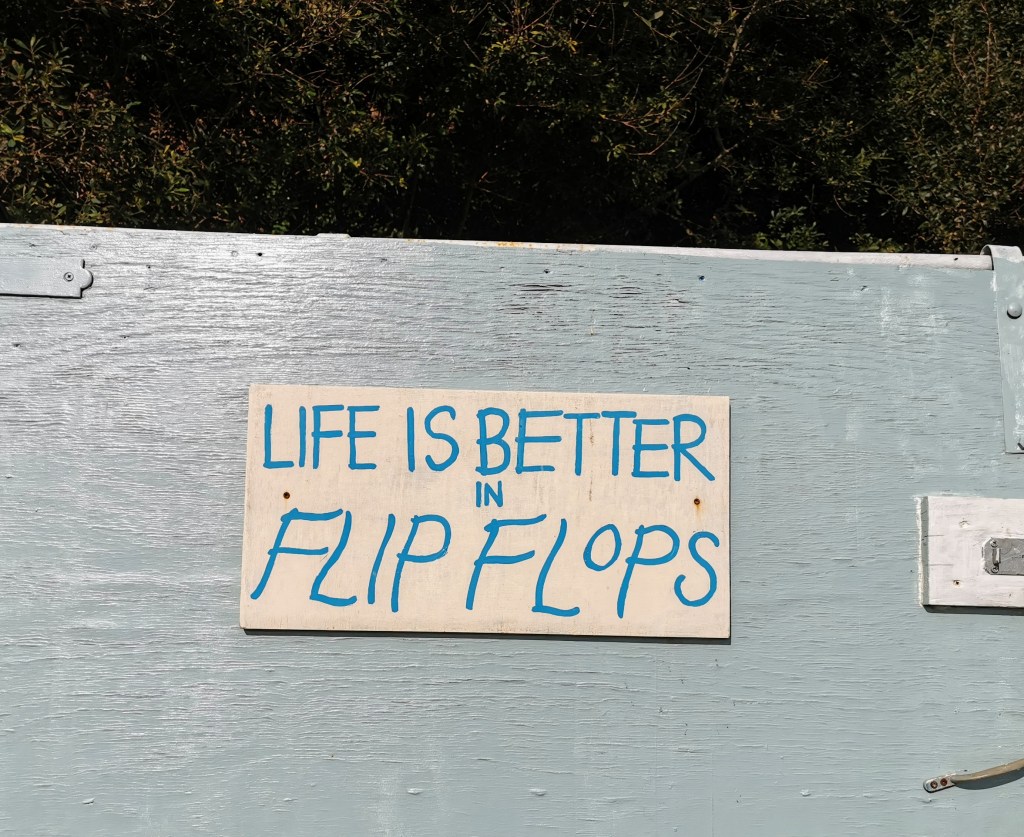
It’s another lovely day here on the Isle of Wight, but it’s late September and this is England, so a bit of wrapping up is required. Generally speaking, I agree with the sentiment we spot on a nearby gate, but trainers are the order of the day right now. No-one likes having cold toes!

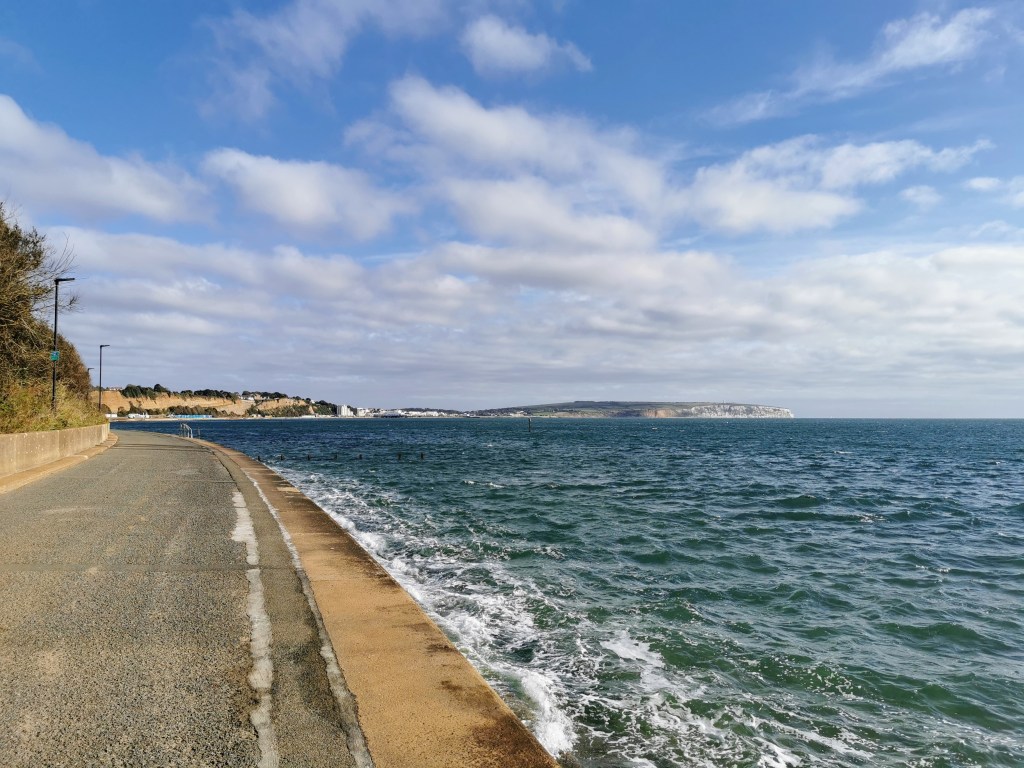
Unfortunately the tide is well and truly in this morning, and the water looks pretty rough, so no beach time for doggies. It’s a great waterside walk though, taking about an hour with stunning vistas in either direction. There are only a few other people on the route, so we assume everyone else is playing mini golf again!

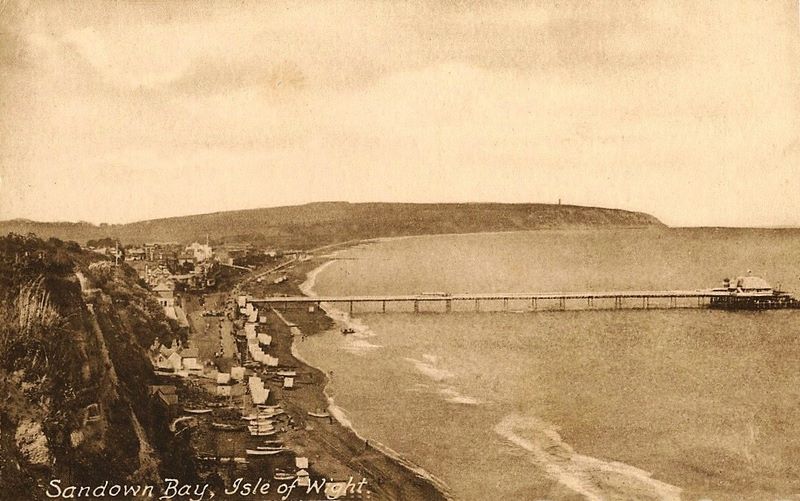
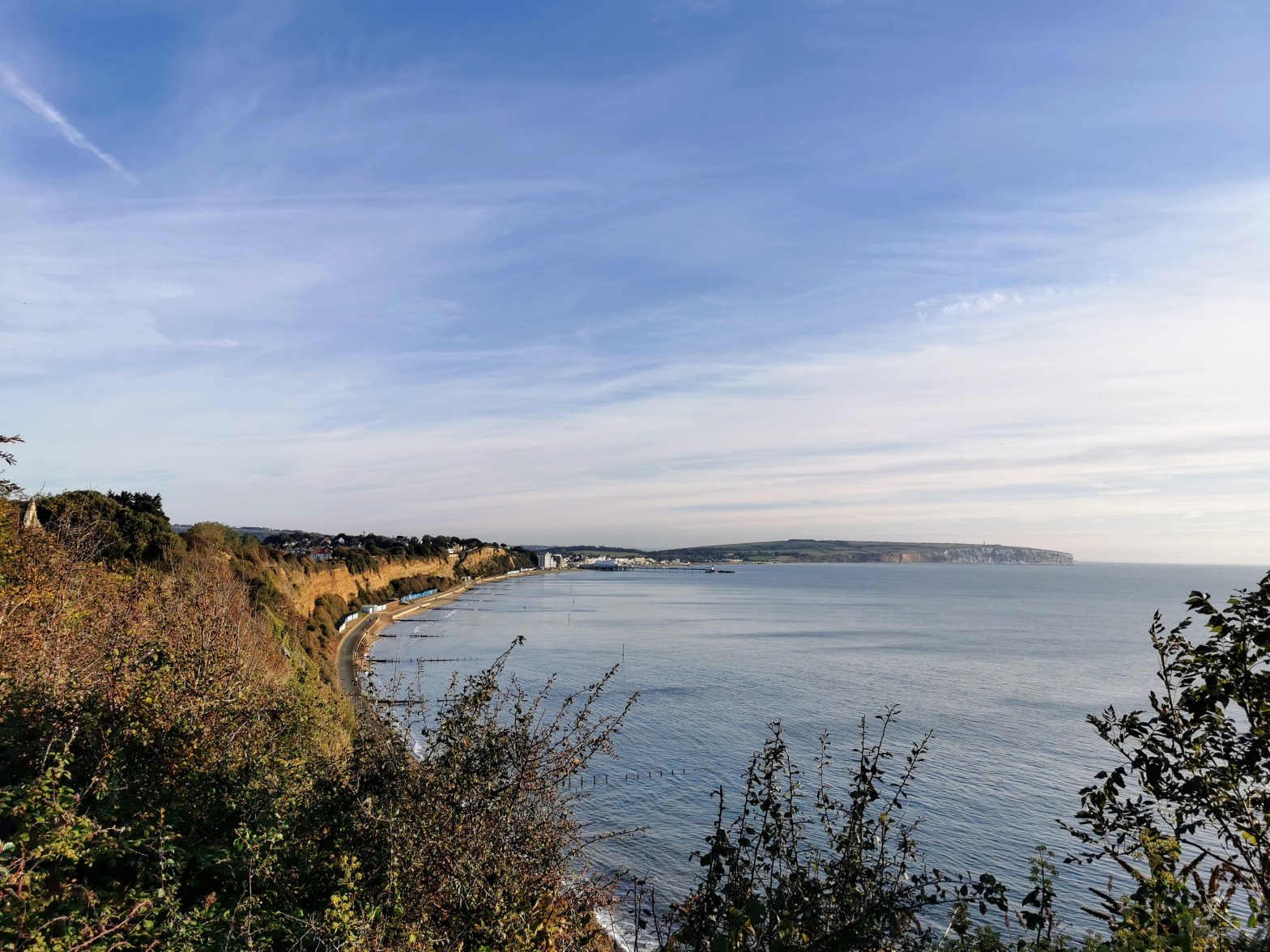
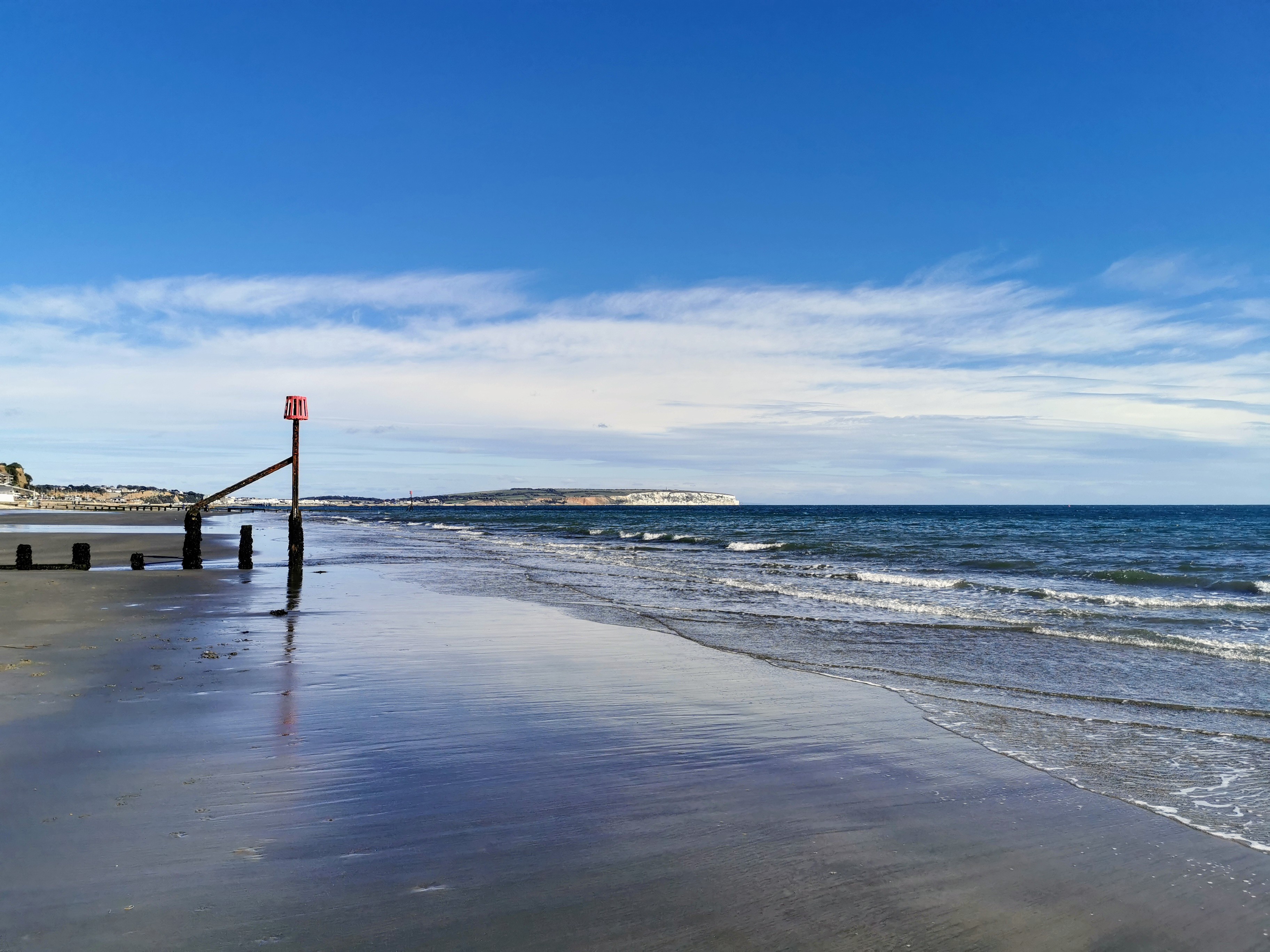
Sandown itself, hmmm, how shall I put it? It’s seen better days I’m afraid. You can see why the Victorians chose it as a holiday spot – Sandown Bay has one of the longest unbroken stretches of beach in the whole country, backed by chalk cliffs. It was fortified for many years before being developed as a resort, as the swathes of sand were considered an easy landing place for hostile invaders. Once all the tourists arrived I suppose the threat receded – who would dare come between the Brits and their hols?

The safe bathing, Royal patronage and opening of Sandown Pier meant that the town became increasingly popular in the second half of the 19th century. Writers George Elliott and Lewis Carroll spent their holidays here along with crowds of less illustrious Victorians. We have a wander around, but alas, things are looking decidedly shabby now. Maybe it’s down to coronavirus and end of the season combined, but there are many empty shopfronts and derelict buildings. The husband announces loudly that the high street is the most depressing he’s ever seen. Not for the first time, I marvel that he doesn’t get punched.

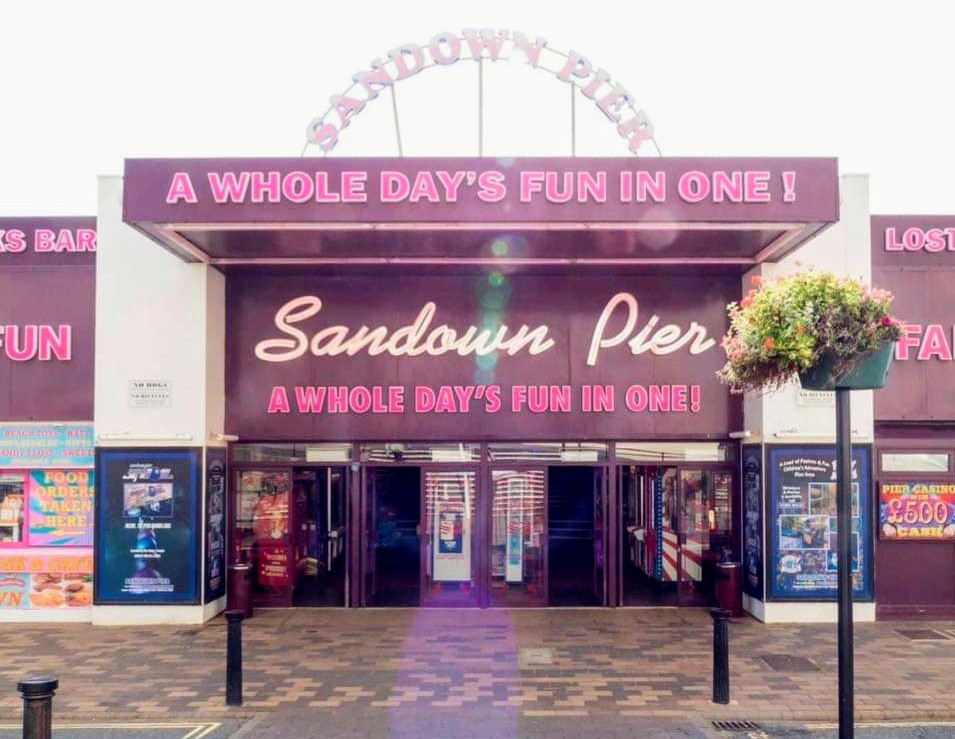
Back on the seafront things are a bit more lively, although the pier looks deserted. Back in 1876 it put Sandown on the map with Victorian holidaymakers. Cilla Black, Jimmy Tarbuck, Petula Clark and Tommy Cooper all performed here in more recent times when it was a hot spot on the seaside circuit. Now it’s just crazy golf and amusements like everywhere else. What a shame! Locals agree with me – many feel that the island’s entertainment scene never recovered from the closure of the pier theatre.

The Beach Shack is a great spot for drinks overlooking the sand whether it’s coffee or wine you’re after (no prizes for guessing which I’m having), and the menu looks interesting too with lots of fresh seafood. Reading menus at any time of day is a hobby of mine, you just never know when hunger will strike and you need to be prepared. Unfortunately I’m not eating now, the tide’s gone out so it’s time for some doggie fun on the beach as we make our way back to Shanklin.

We’ve explored our immediate surroundings, so we decide to get in the car and go further afield. Easy, you may think, it’s a small island after all. But it also has narrow, windy roads, meaning that you get nowhere fast. Just relax and go with the flow, I tell the husband, but he’s still in M4 commuter mode! Let’s just say there’s a bit of colourful language as he gets stuck behind tootling locals and tractors.

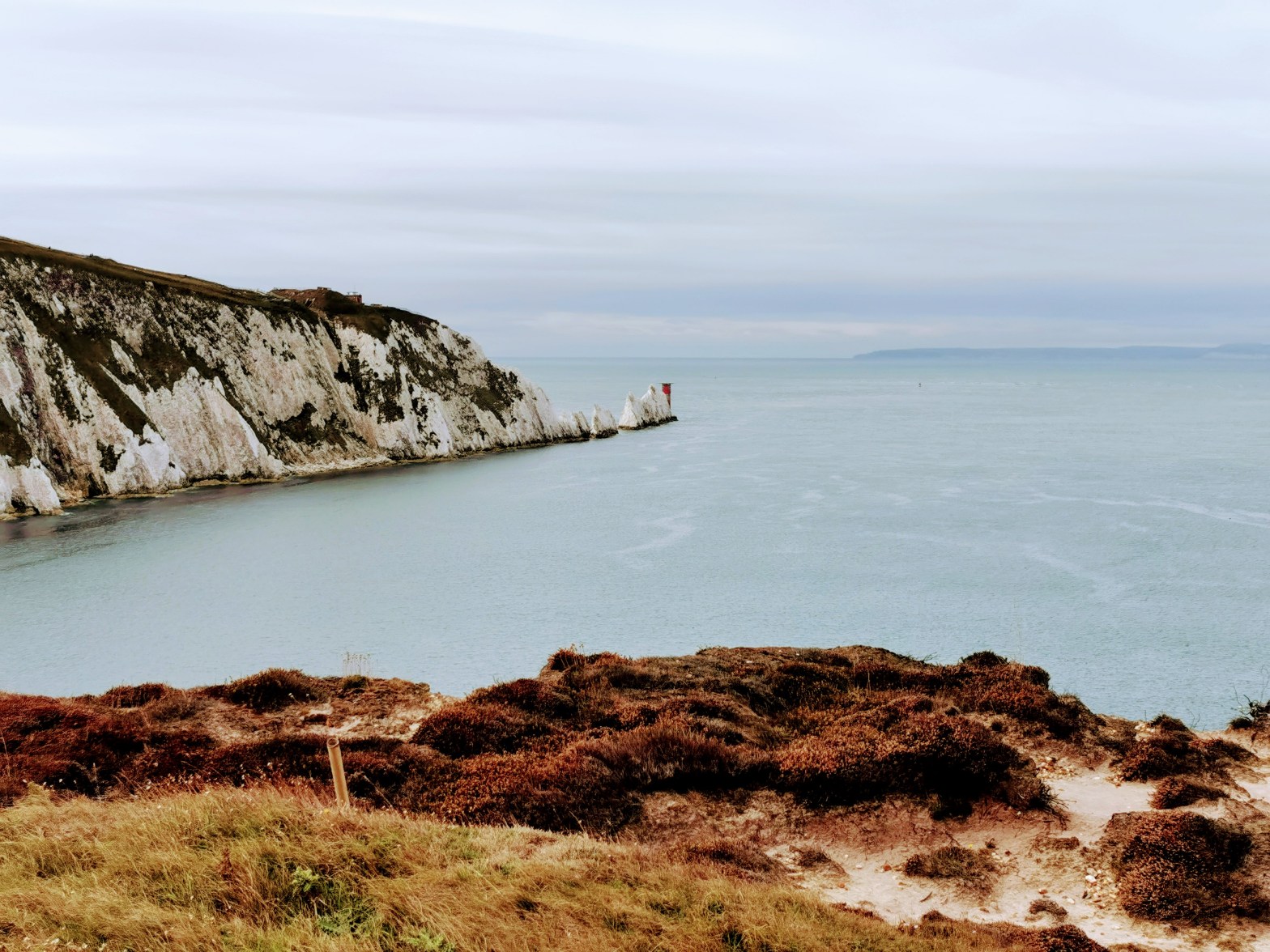
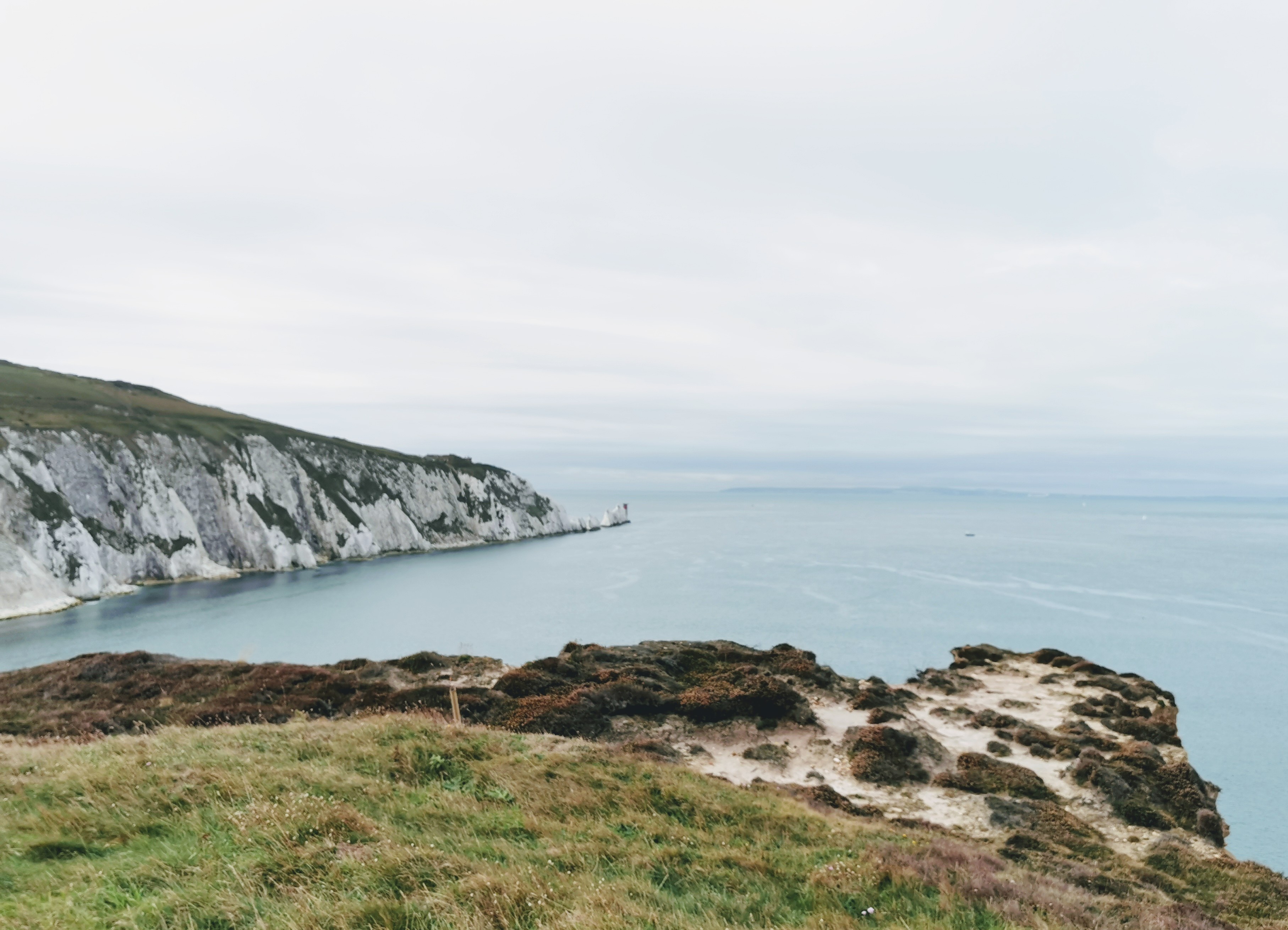
First we head to The Needles. Of course we do, this is by far the most celebrated attraction on the island. Three chalk stacks rising 30 metres out of the sea – only in England would they form the basis of a pleasure park featuring dinosaurs and a miniature erupting volcano. The husband looks bemused but it seems to appeal to most visitors. We head in the opposite direction, along a footpath towards the end of the cliffs.

It’s a nice flat walk with some amazing vistas back to the mainland and the coloured cliffs of Alum Bay, but when we get to the end, we’re dismayed to find there’s no view of The Needles from here. We know they’re down there somewhere, but it seems the best viewpoint is back in the carpark. Typical!

When we finally spot them, The Needles are a little bit underwhelming if I’m honest. There were originally four rocks until one collapsed spectacularly in a storm in 1764. Ironically, the missing stack is the one that actually looked like a needle, while the remaining three bear no resemblance whatsoever to sewing implements. If you want a closer look you can head down to the bay by chairlift and take a boat trip around the rocks. The husband doesn’t need a closer look, he says. No surprises there!

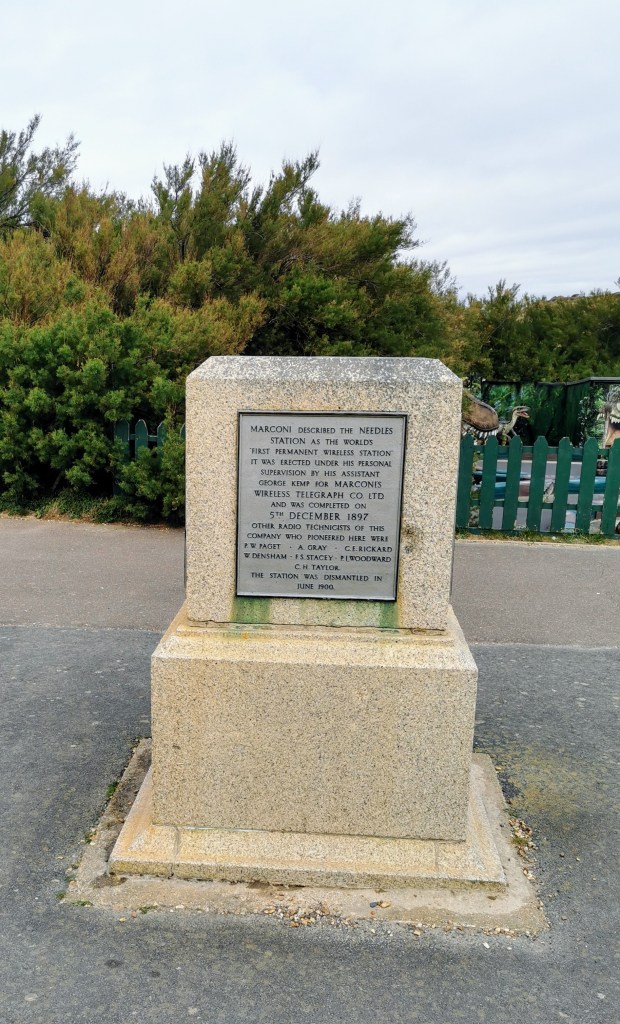
Back in Victorian times, there was more serious work than sightseeing going on here. The nearby Marconi Monument commemorates the very first wireless communication sent from this spot back in 1897. Marconi set up a huge mast on the cliffs above Alum Bay and carried out experiments over several years which laid the foundations of modern communications. Those Victorians were pretty useful, as well as being expert vacationers.

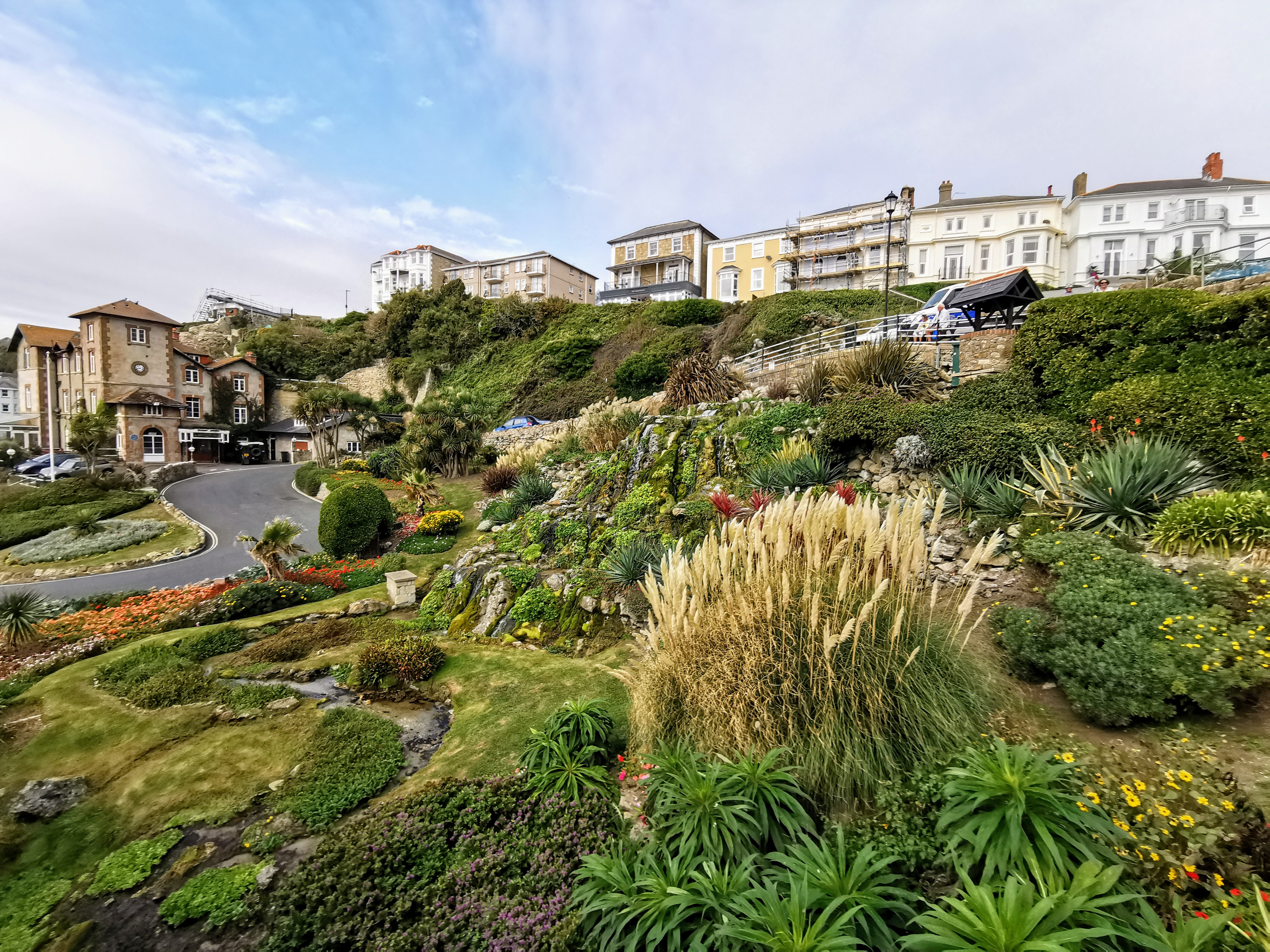
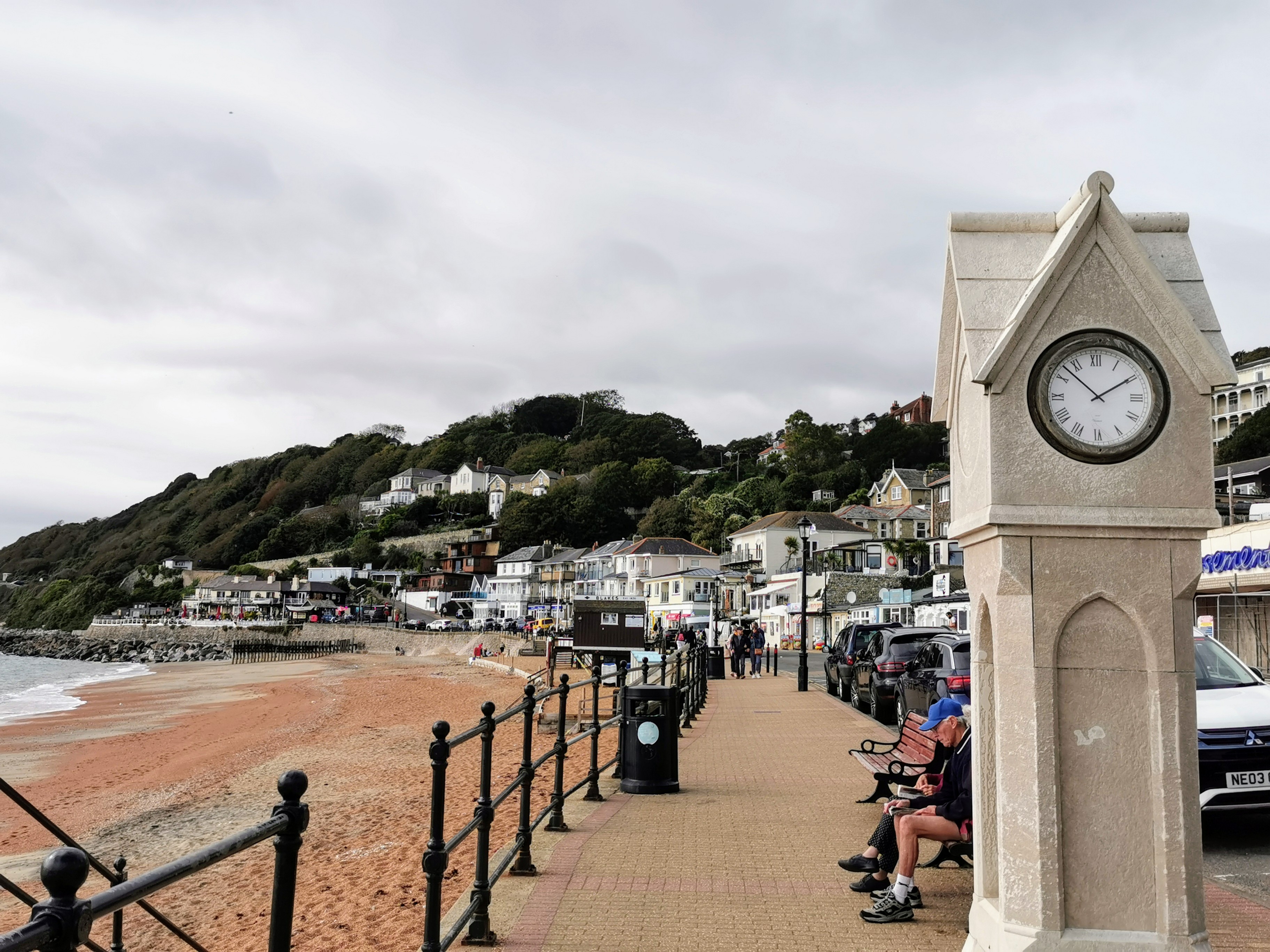
Our final outing is to Ventnor, the southernmost beach on the island, and the resort most beloved by the 19th century tourists for its health giving properties. It was known as ‘the English Mediterranean’ or ‘Mayfair by the Sea’. Allegedly there’s a microclimate here that’s ideal for anyone suffering a chest complaint, so I’m amazed it’s not the busiest place in the UK right now. Maybe we don’t need to wait for that vaccine after all…

With Victorian villas perched up on the hill, and the waterfalls of the Ventnor Cascade tumbling down through gardens towards the seafront, this is a really attractive little town. It doesn’t appear to have changed too much since the Victorians were here and it definitely seems to have held its allure better than poor old Sandown.

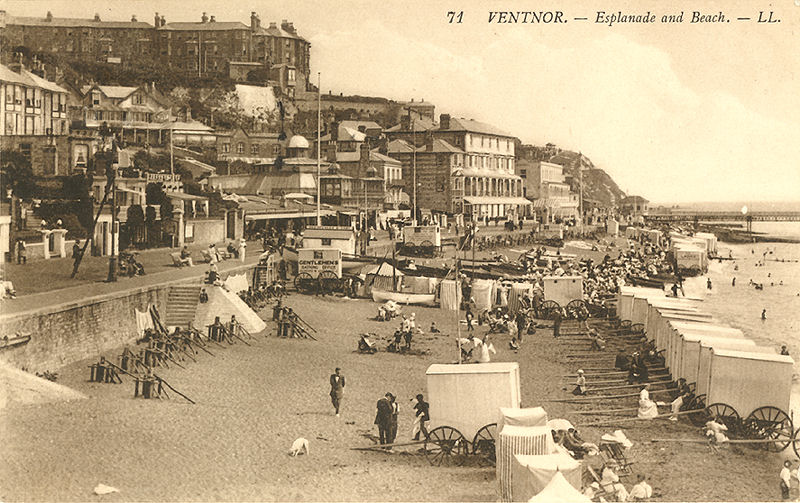
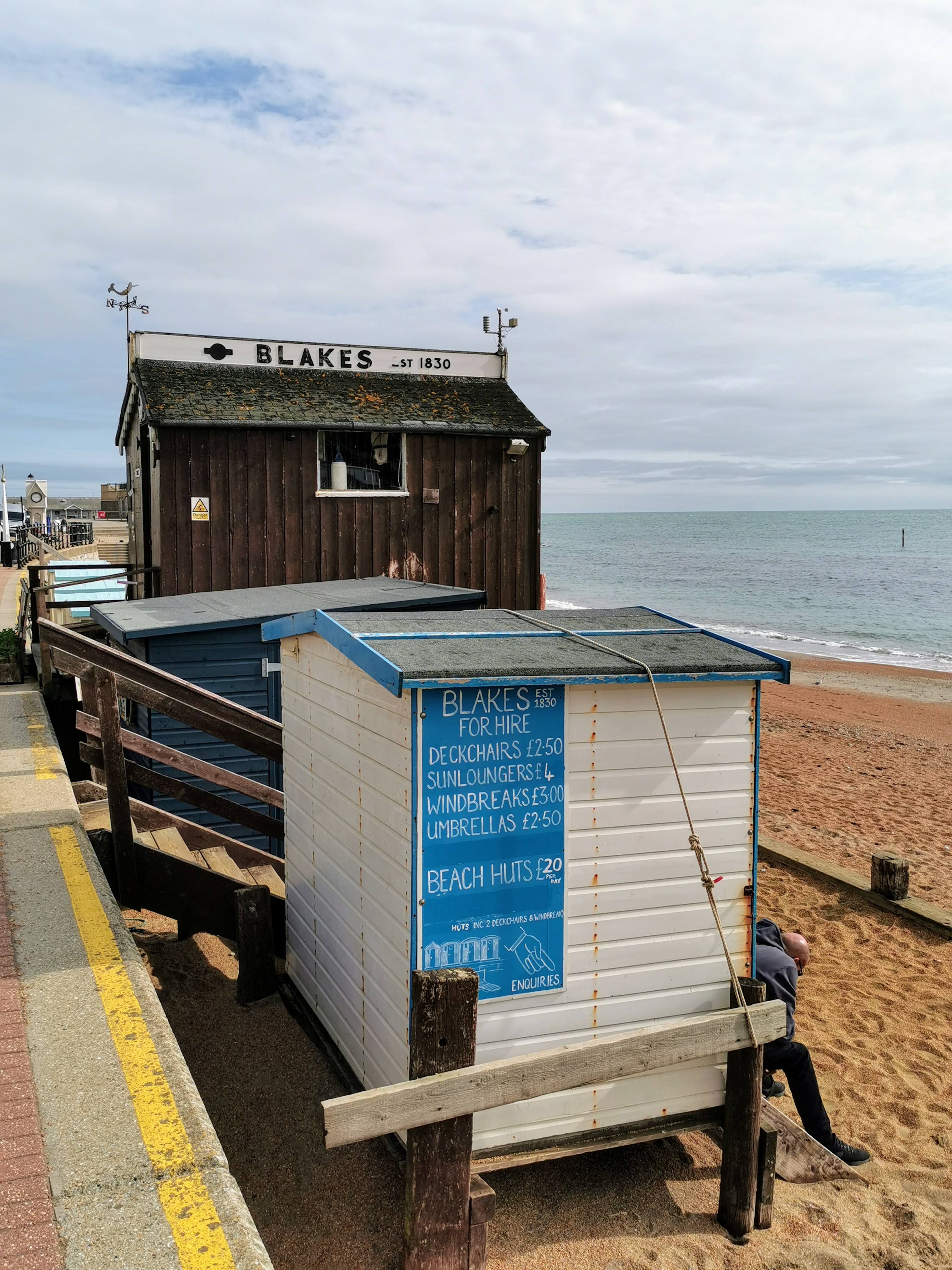
Some of the original bathing machines still exist, designed to save the modesty of bathers who didn’t want anyone to see them in their swimwear, although Victorian bathing suits covered up so much that you wonder why they worried. It’s surprising they didn’t drown, burdened with all that fabric. They certainly couldn’t have swum very far or very fast.

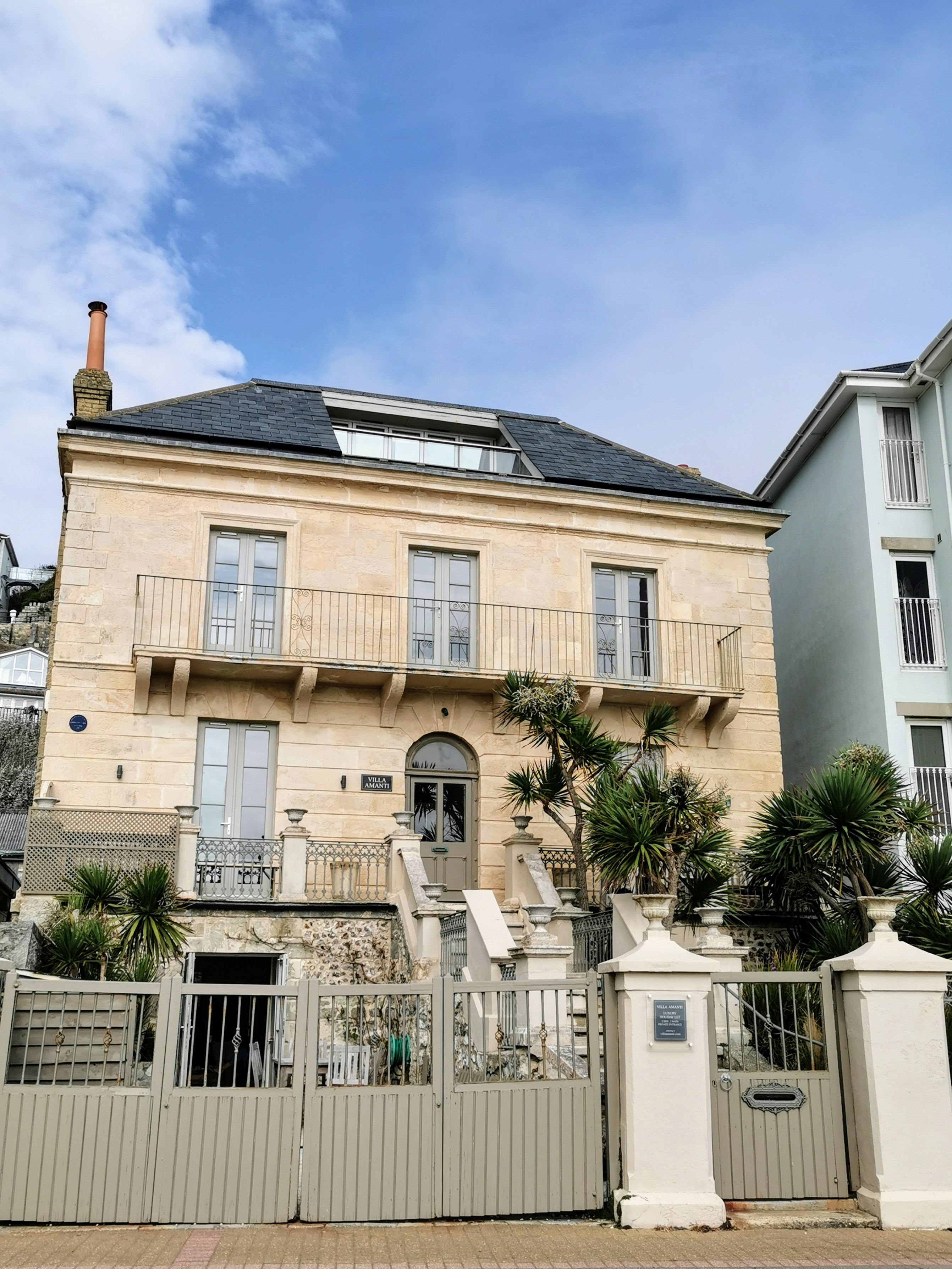
Queen Victoria and her husband Prince Albert compared the views from the Isle of Wight to the Bay of Naples, and accordingly they built their island home in the Italianate style. Naturally, wealthy Victorians followed suit. In those days, the Royals were the arbiters of style and taste. Villa Amanti on the Ventnor esplanade is a prime example of this, and it’s been gorgeously restored to its full glory. I can’t say I’m getting much of a Sorrento vibe, no matter how I scrunch up my eyes, but it has a charm all its own. Even the husband wants to live here.

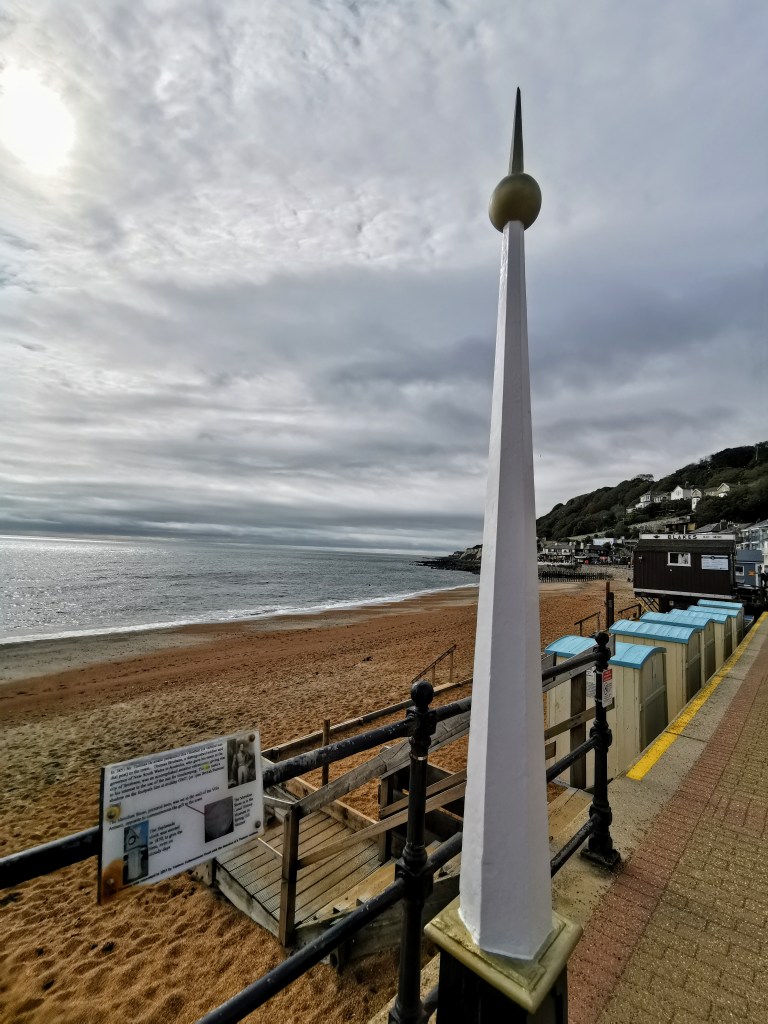
We unexpectedly find a link in Ventnor to our erstwhile hometown of Brisbane. A gnoman (type of sundial) on the promenade was presented to the town in 1851 by Sir Thomas Brisbane himself, former Governor of New South Wales and amateur astronomer, after his daughter Eleanor died on the island aged 29. A sad story, but at least the memorial is still standing. On a more cheerful note, Charles Dickens wrote David Copperfield in Ventnor, whilst staying in a cottage overlooking the Channel.

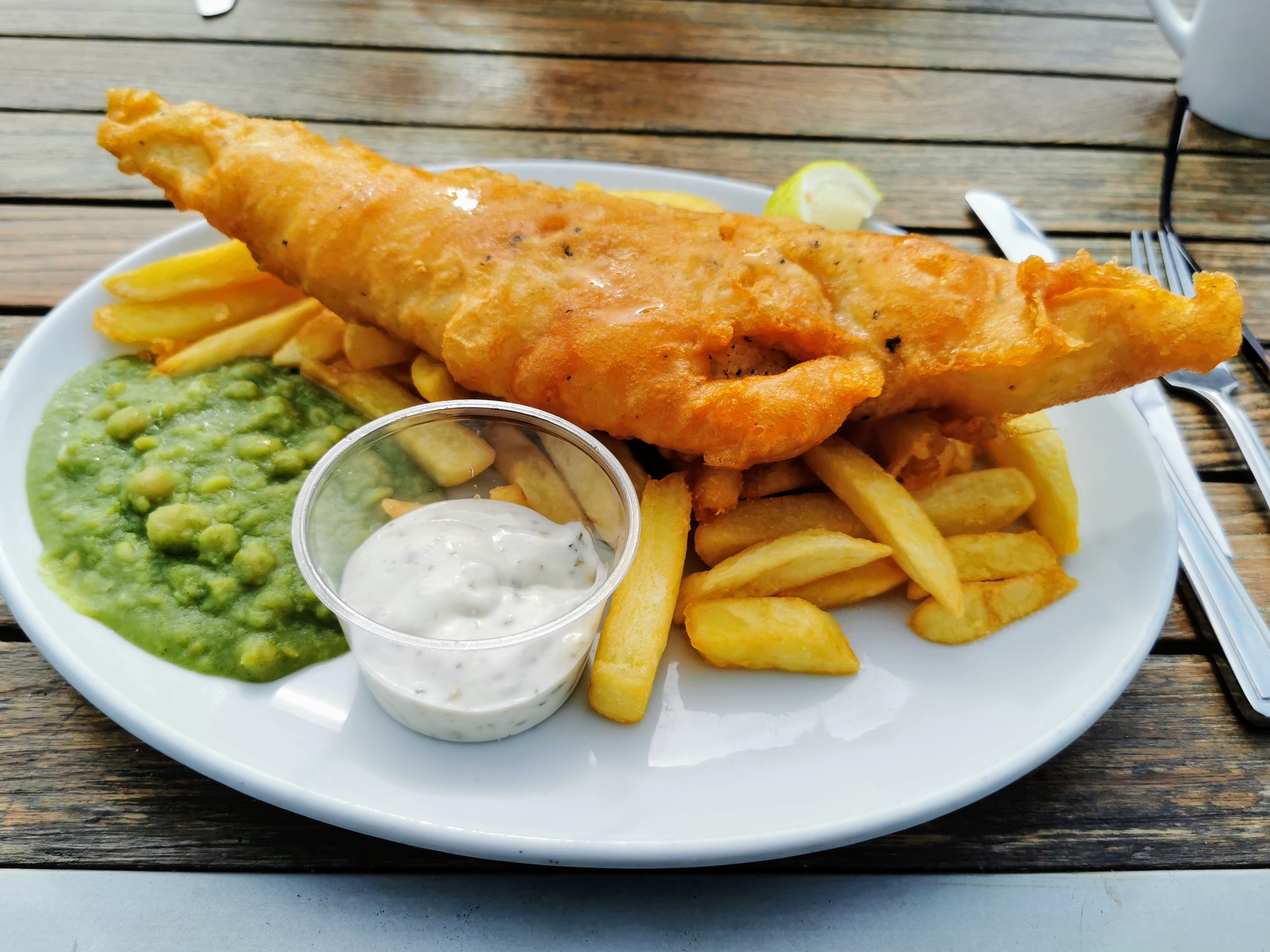
We stop on the seafront for fish and chips. You have to really, don’t you? It’s an integral part of the English seaside experience. Mmm, the fish is extremely good. And big, so the dogs get to share too. Even my Dad is impressed when I WhatsApp him the photo, and he fancies himself as a bit of an aficionado (excuse the pun).

To walk off all those lovely calories, we follow the Coastal Path around the headland, and then realise that the route back to town is a virtiginous staircase. Henry, our 15 year old Retriever, will never make it! How wrong we are, he goes up like a slightly wobbly gazelle. It’s clear the Victorians were on to something – the air here is truly restorative.

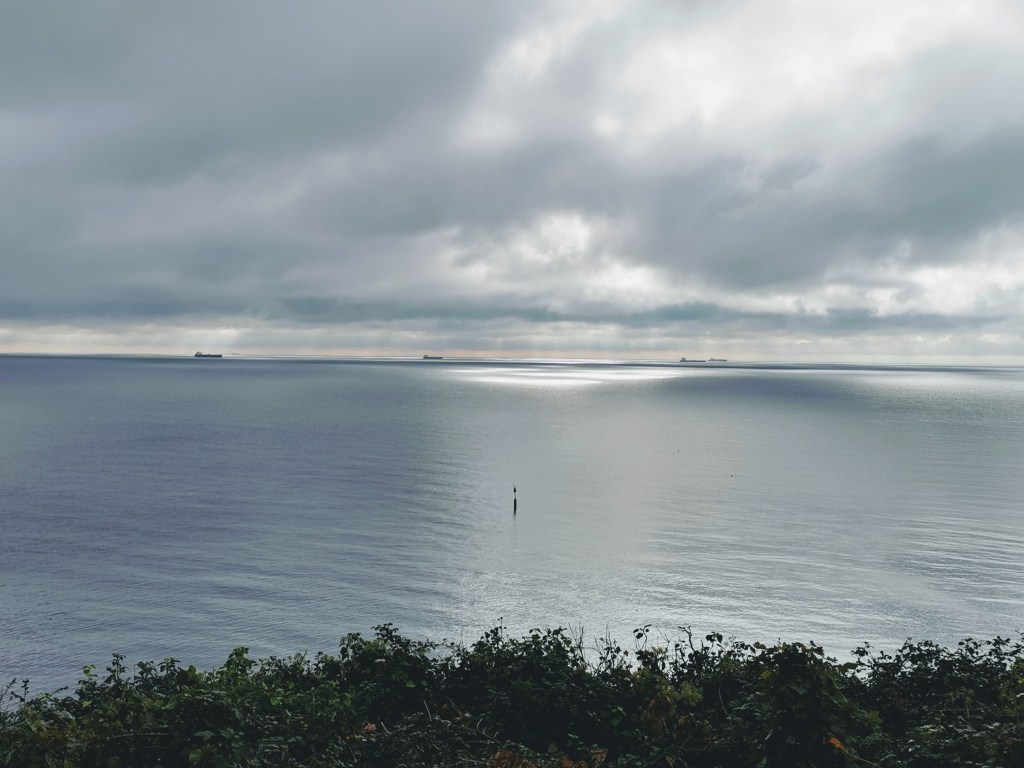
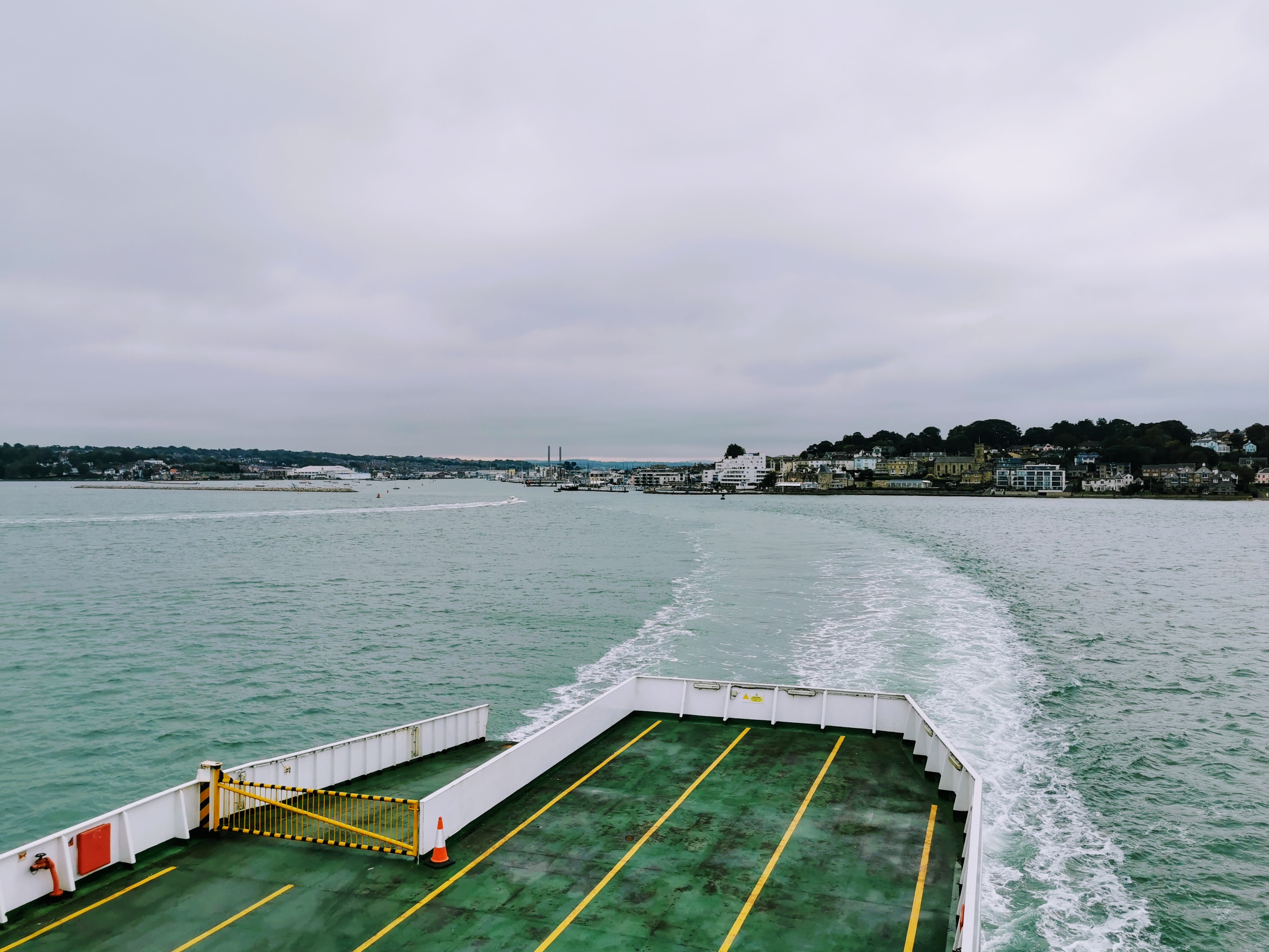
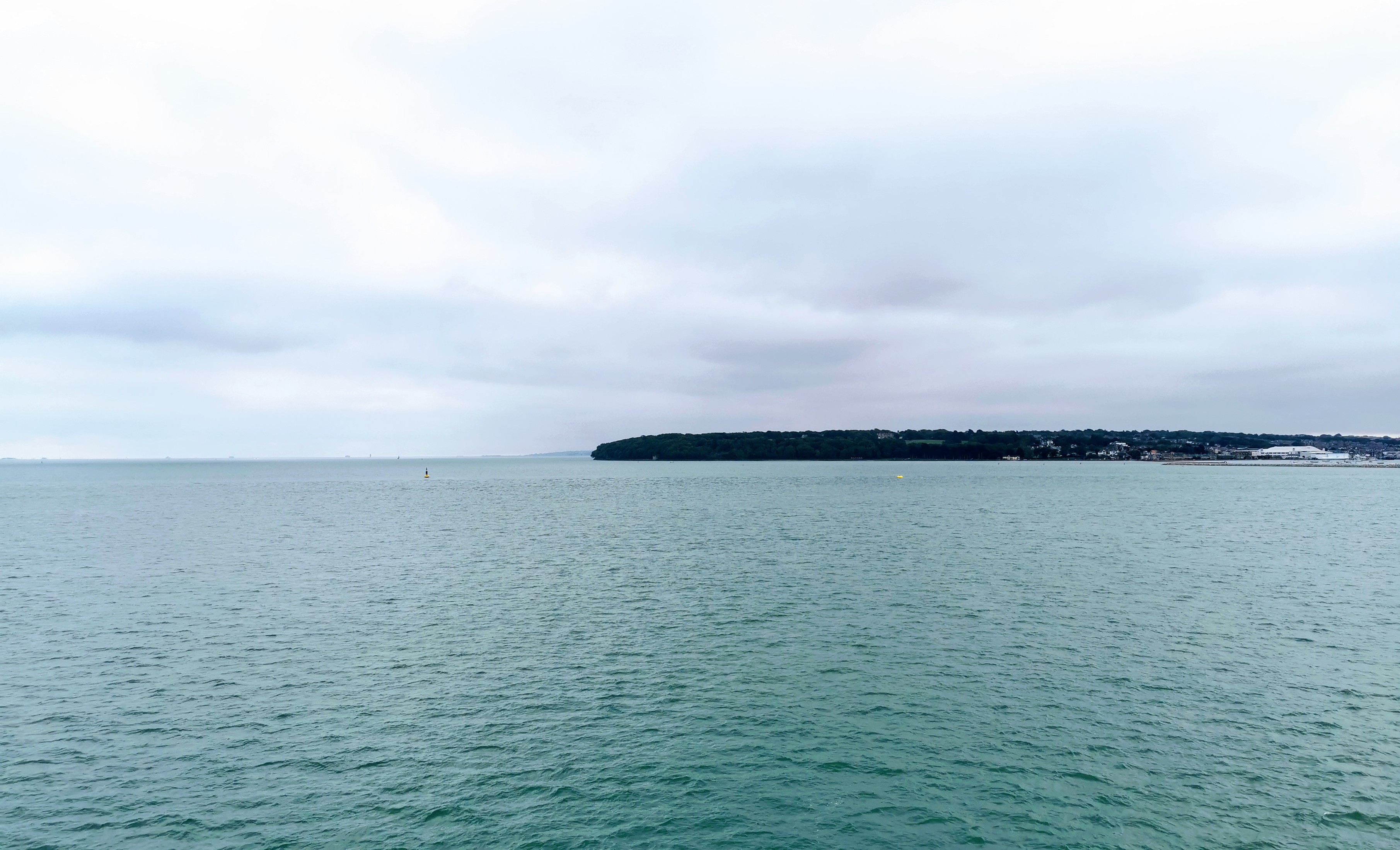
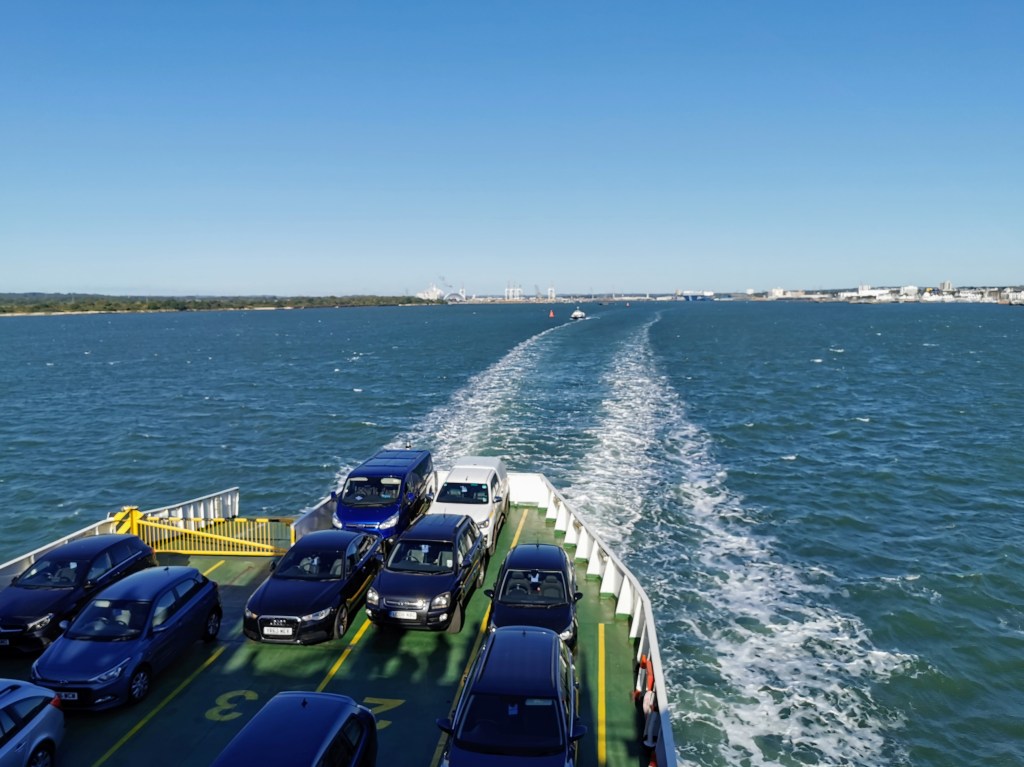
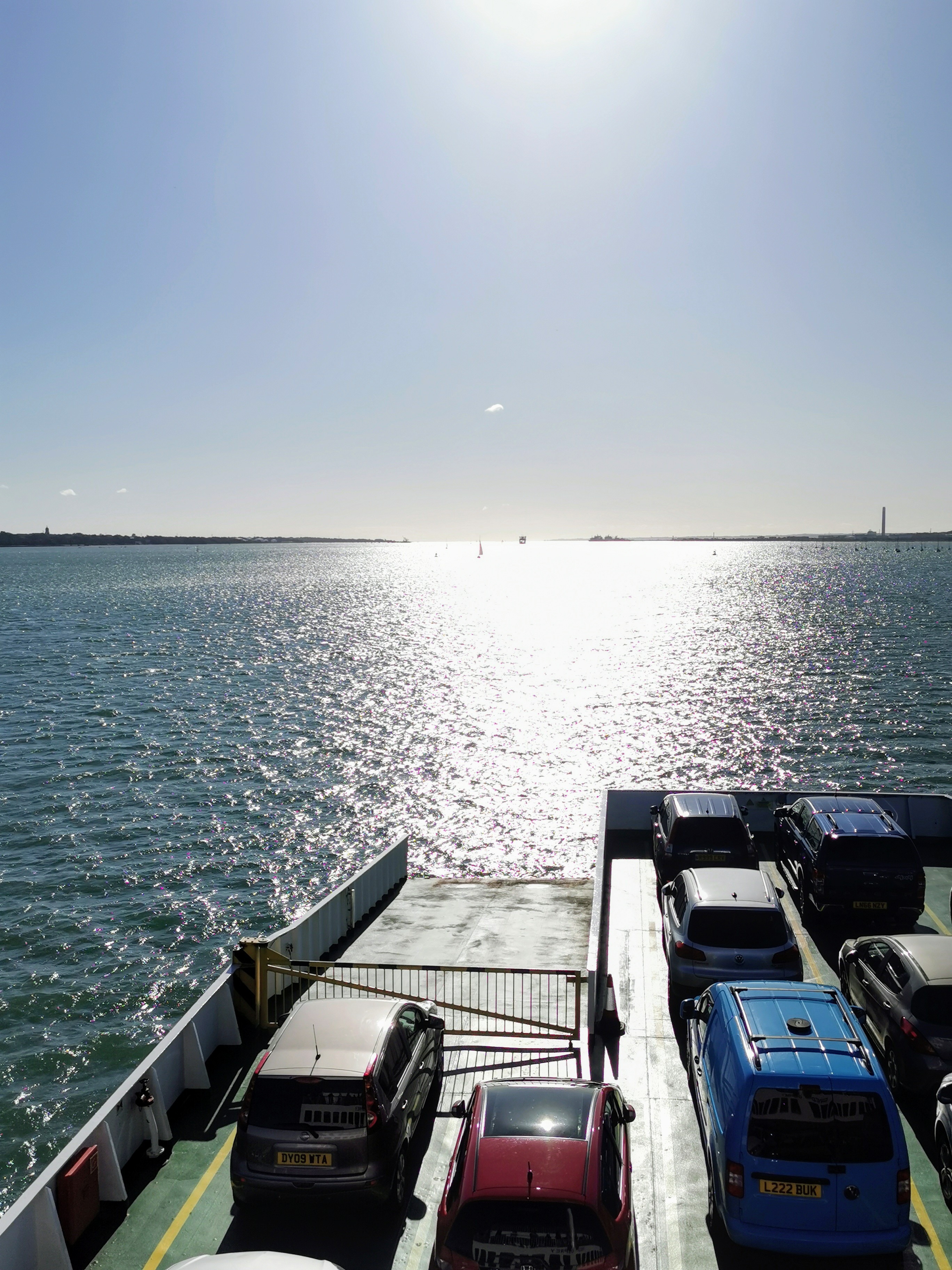
Our island time is done – time to head for home. As usual Lizzie does her ‘don’t want to go home’ sulky teenager act and has to be wrestled into the car. Who said dogs were easy? We’re early for our ferry again, no surprises there, but sneak on the next boat behind the lorries. I’m sure you can’t do this in August, but we’re jubilant. Travel is hardly ever this seamless. The crossing is much quieter on Tuesday than Saturday, as you’d expect, so it’s quite relaxing this time around.

As we wave goodbye to the island, I reflect that we have a lot to thank those clever Victorians for. They invented the whole concept of escaping a rather grey existence by heading to the seaside for a healthy, fun break. In 2020, with overseas trips becoming a more stressful and difficult undertaking, many of us are fleeing the general gloom to coastal resorts created by the Victorians. There’s no other choice. Coronavirus may have sent us back to the 19th century but at least our forebears got everything ready for us!

A Victorian break on the Isle of Wight – Part 1

The Isle of Wight became a fashionable holiday destination back in the 19th century. Queen Victoria had happy memories of childhood breaks, so she built a home in East Cowes, Osborne House, and started to take her own family there. The travelling public followed – if it was good enough for Her Majesty… We’ve never been before, but 2020 is definitely the year for discovering new parts of the UK, so we’re following in the footsteps of the Victorians.

We take a morning Red Funnel ferry with the dogs in tow. We’re early of course, the husband treats all holidays like military campaigns, but luckily we drive straight onto the next boat with five minutes to spare. A positive start. We’re off early. Unfortunately, I can’t say the crossing is a great experience. We’re not allowed to stay in the car, which would be so much easier with our old boy Henry, plus safer surely? The decks are packed, masks to be worn everywhere, no eating or drinking in the restaurant, it’s all a bit uncomfortable and wierd.

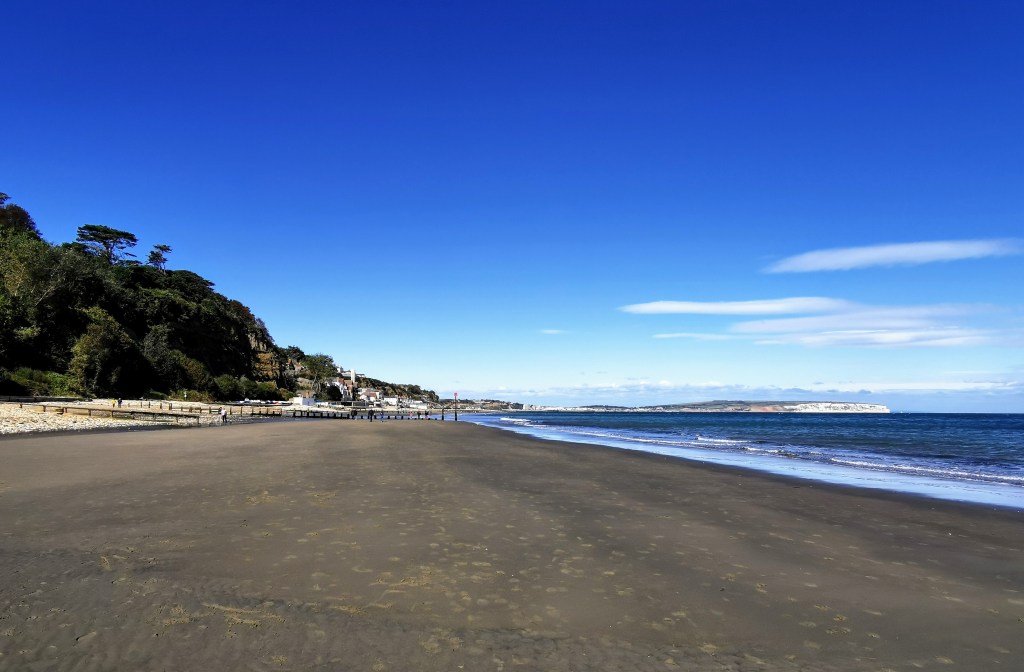
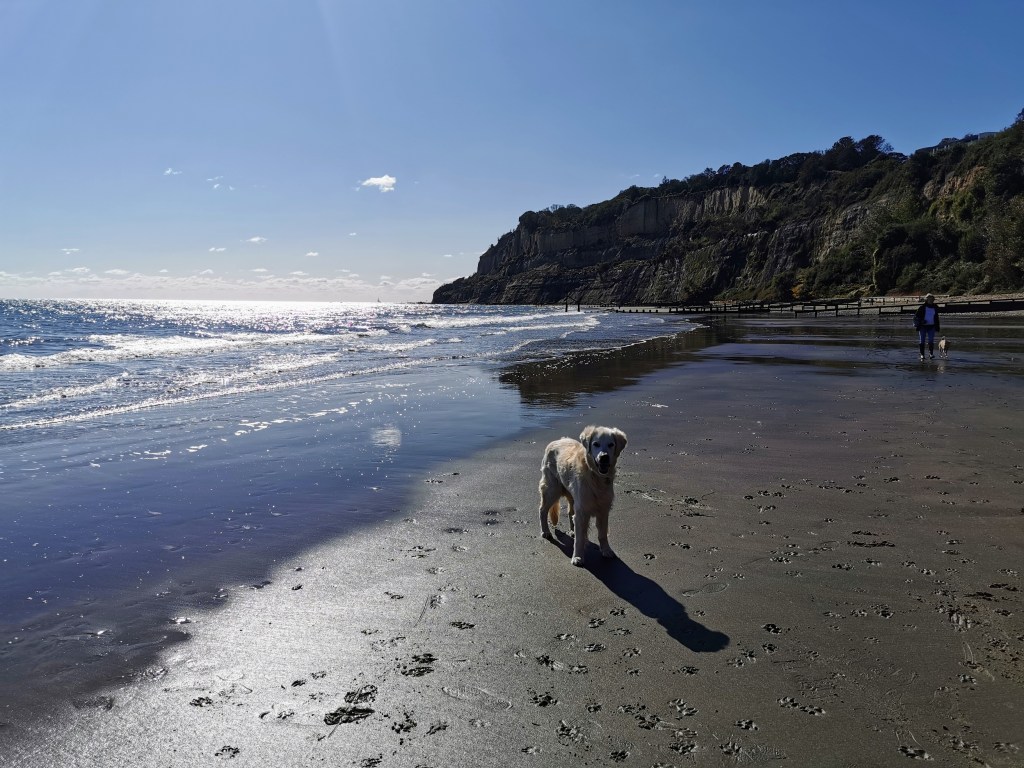
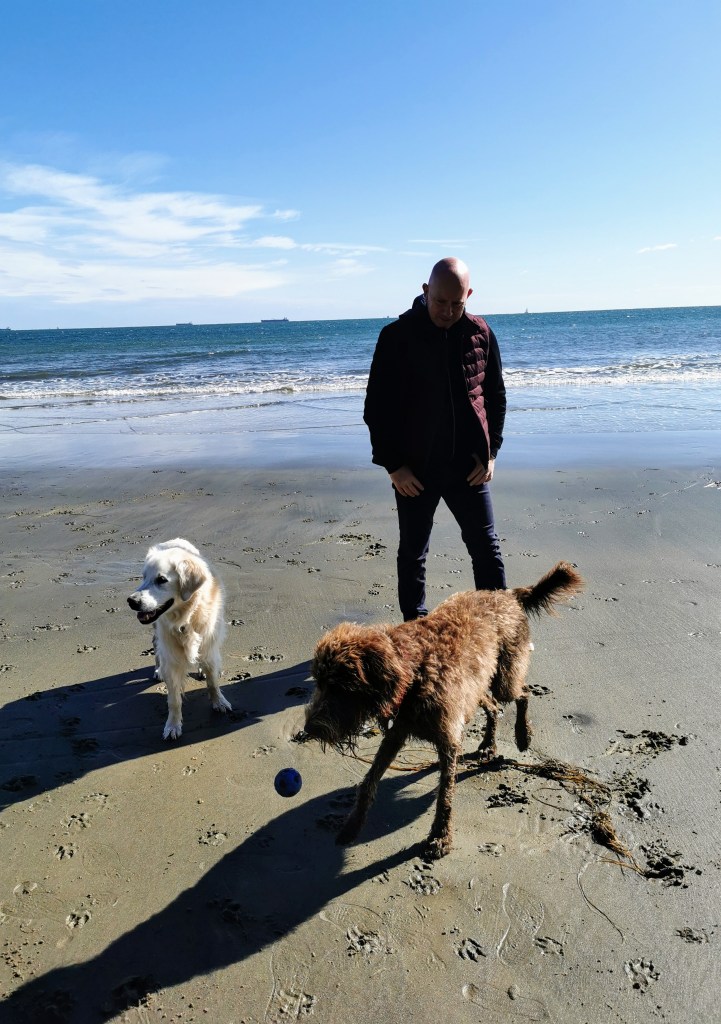
Fortunately, after less than an hour we arrive and set off on country roads towards Shanklin, our base for the next few days. First stop, the beach of course – Lizzie the Labradoodle needs to let off some steam. Shanklin has a lovely long stretch of sand, Hope Beach, backed by once grand Victorian villas, now mostly hotels and restaurants. However, most of the beach is off limits to dogs between June and September. We didn’t time that very well, did we? There’s still plenty of room for doggie play at the southernmost end, it’s just a bit of a trek to reach it.

So what brought the Victorians here in their droves? Their newly industrialised towns were sooty and smelly. Here, they could breathe in the healthy sea air and bathe in the clean water, away from the smog and grime. Yes, I can see the attraction.

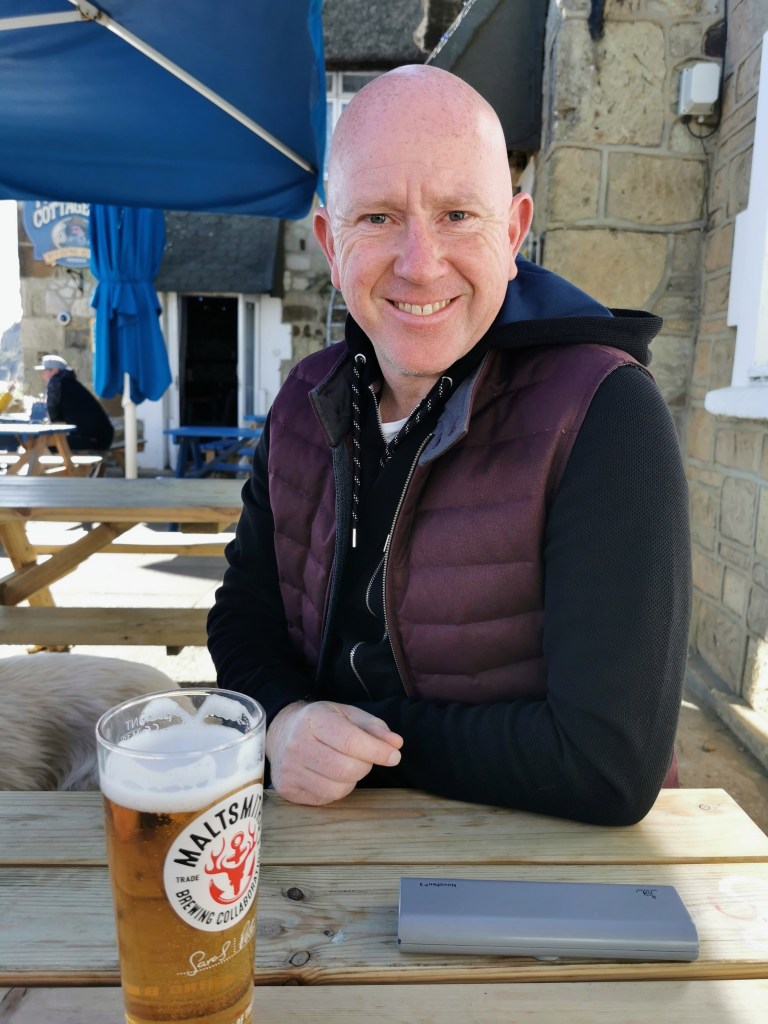
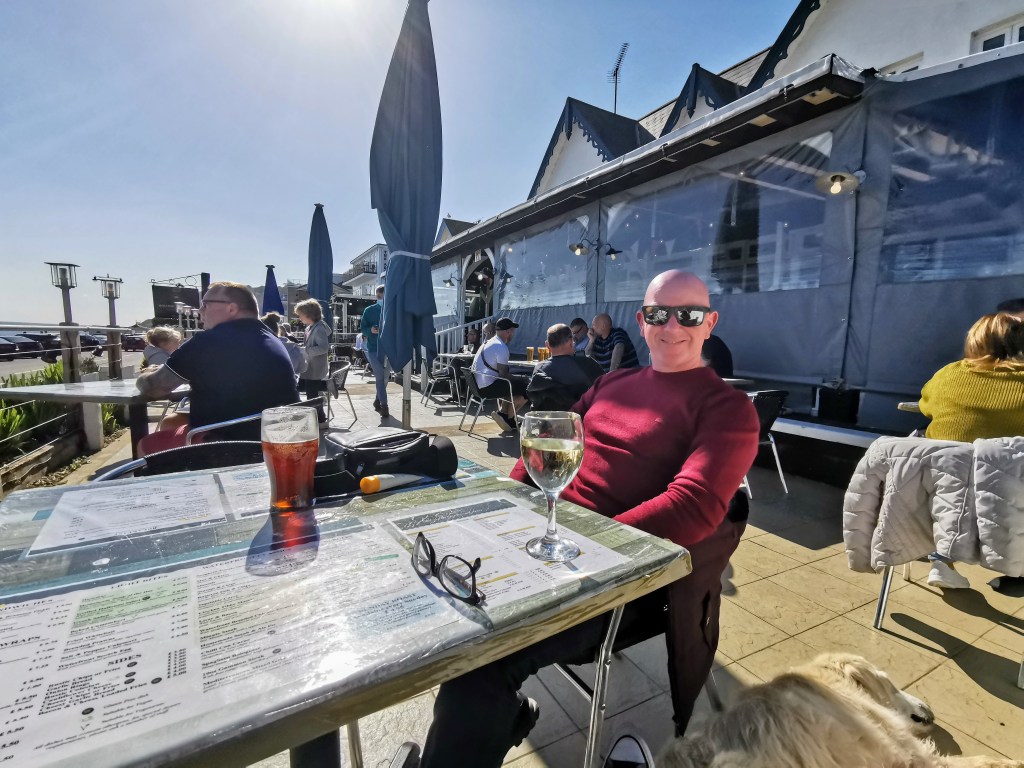
Next stop is obviously the pub. The husband is ready for a pint and some grub after being on driving duties. The Fisherman’s Cottage is a cute little place right on the sand. After a bit of delay due to covid restrictions (oh for the good old days when you could just walk up to the bar!) we’re ensconced at an outdoor table perusing the menu. Yes, that’s an outdoor table, in late September. Oh lucky us, the sun in shining.

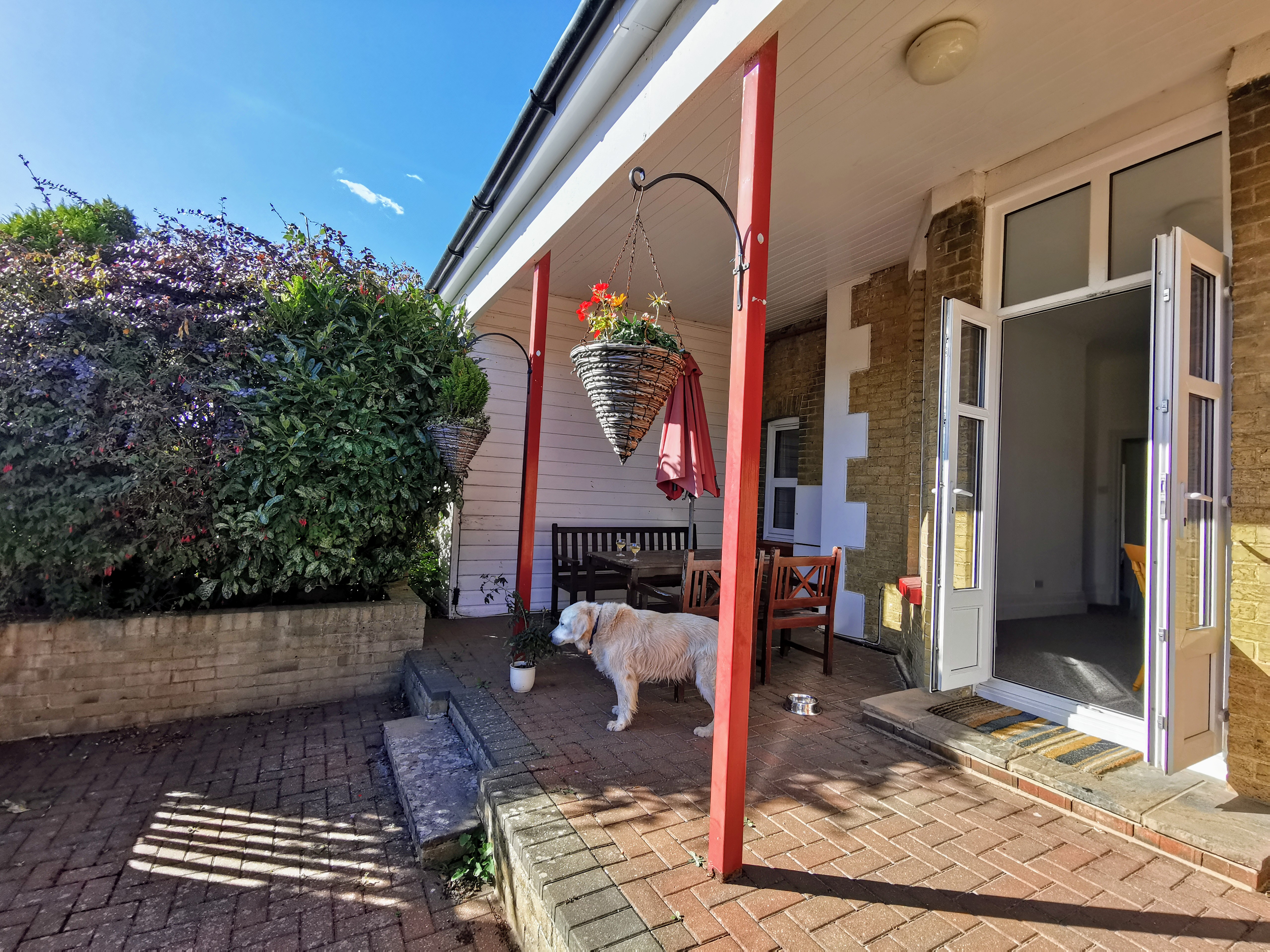
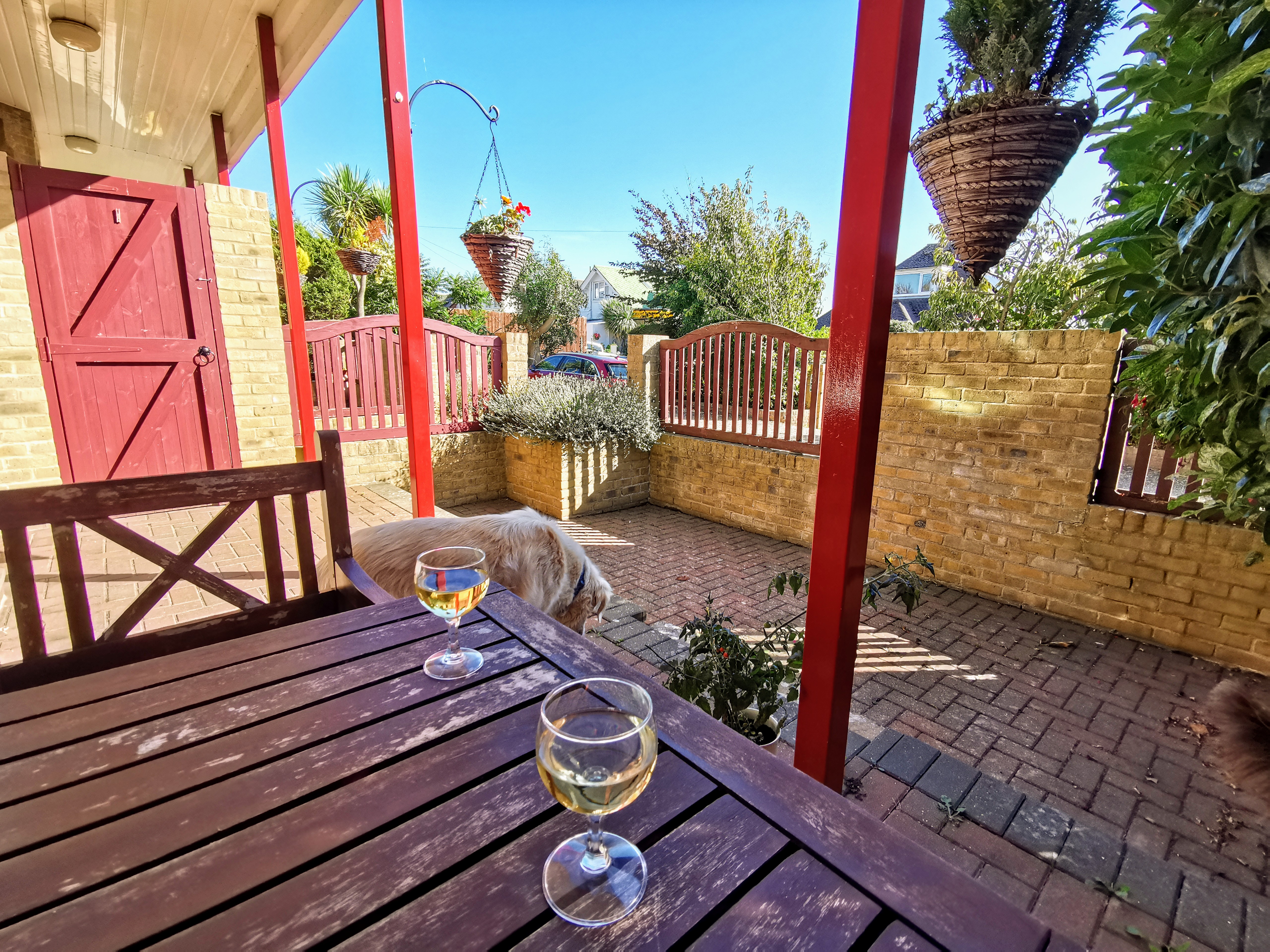
Our accommodation for this trip is the Summerhill Apartments just outside Shanklin town centre. We’ve booked a two-bedroom ground floor place with a courtyard – the needs of an elderly dog come first and Henry doesn’t like stairs. It’s nothing flash, but it’s clean and comfy, with milk and dog treats thoughtfully provided. The sunny courtyard is larger than expected, perfect for our furry friends. OK, so it’s quite nice for a sneaky afternoon vino too!

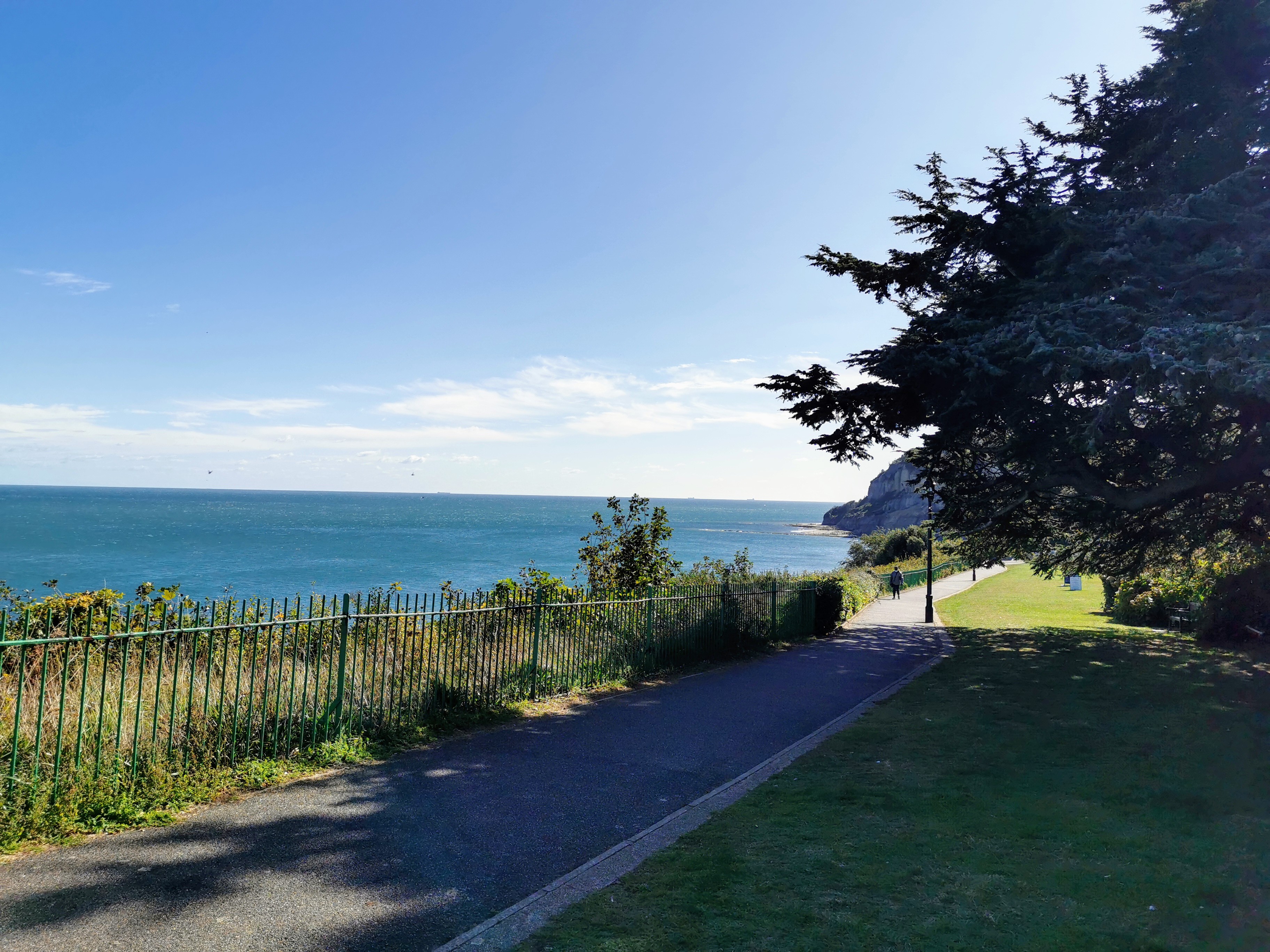
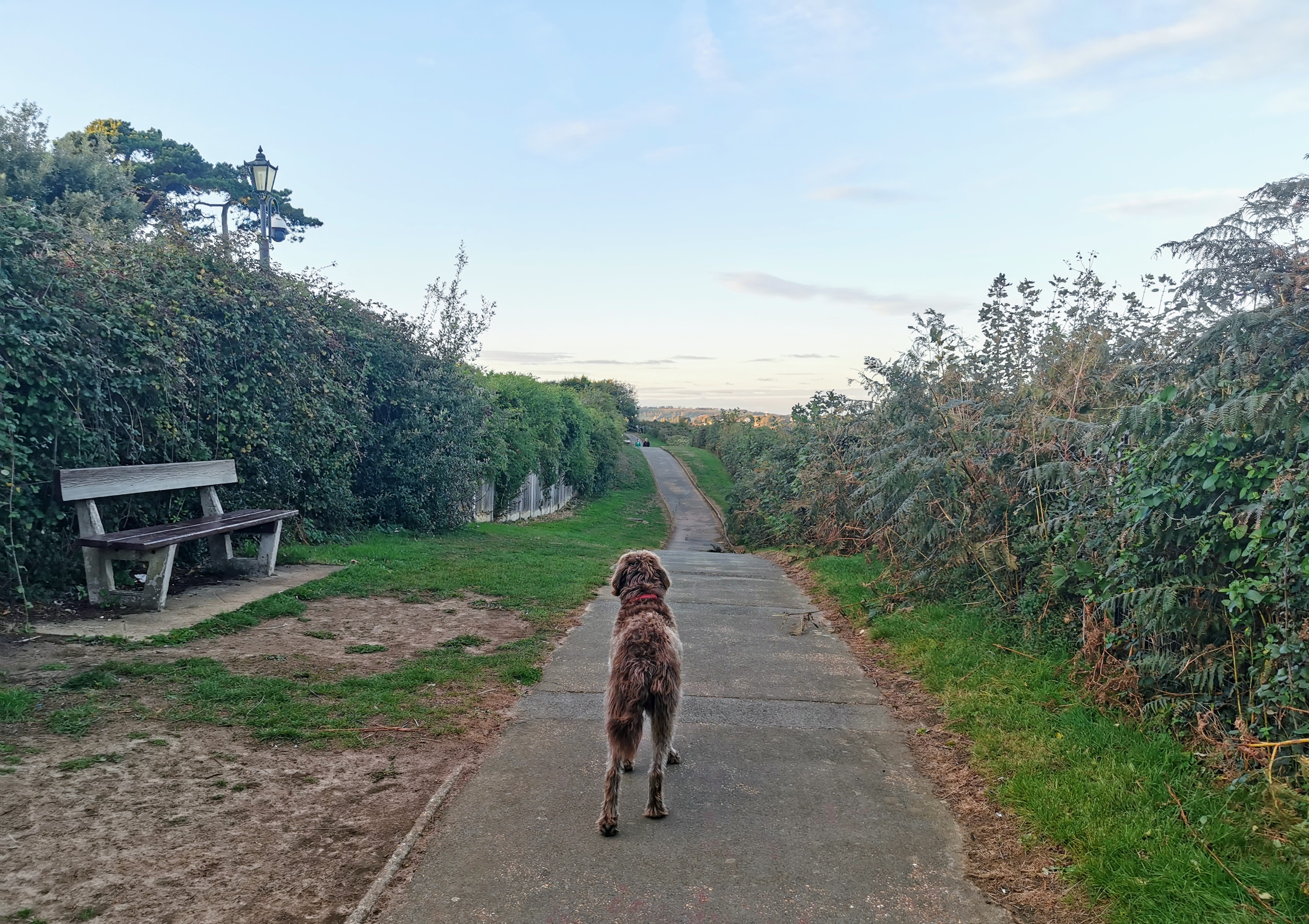
The location is fabulous. Just at the end of the street is direct access to the Coastal Path, a circular walk that goes right around the island for 70 miles, mostly on footpaths. We have no intention of walking it all on our short break, but easy dog walks with great views are on tap. If I lived here I would definitely set out to cover the whole thing.

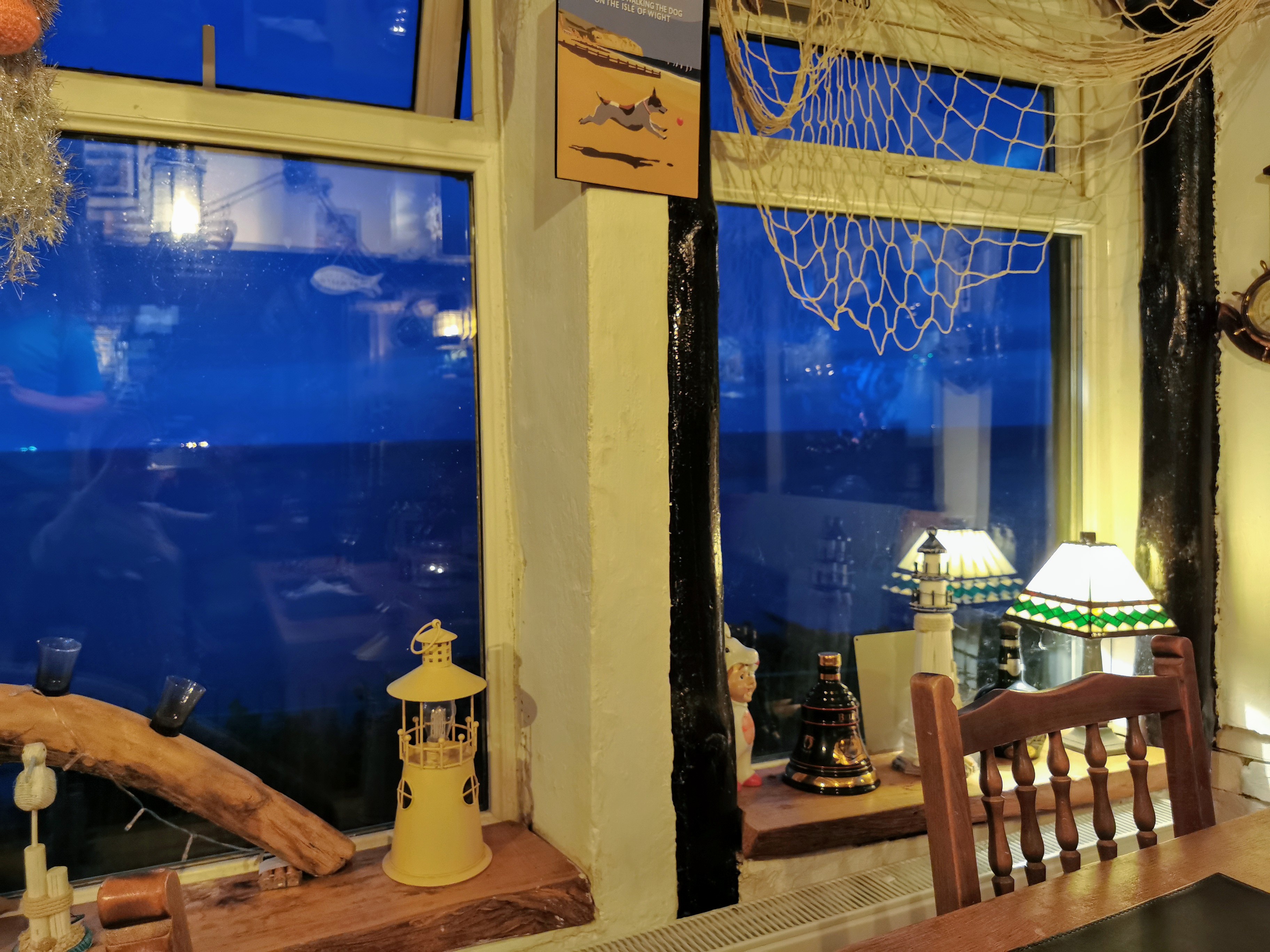
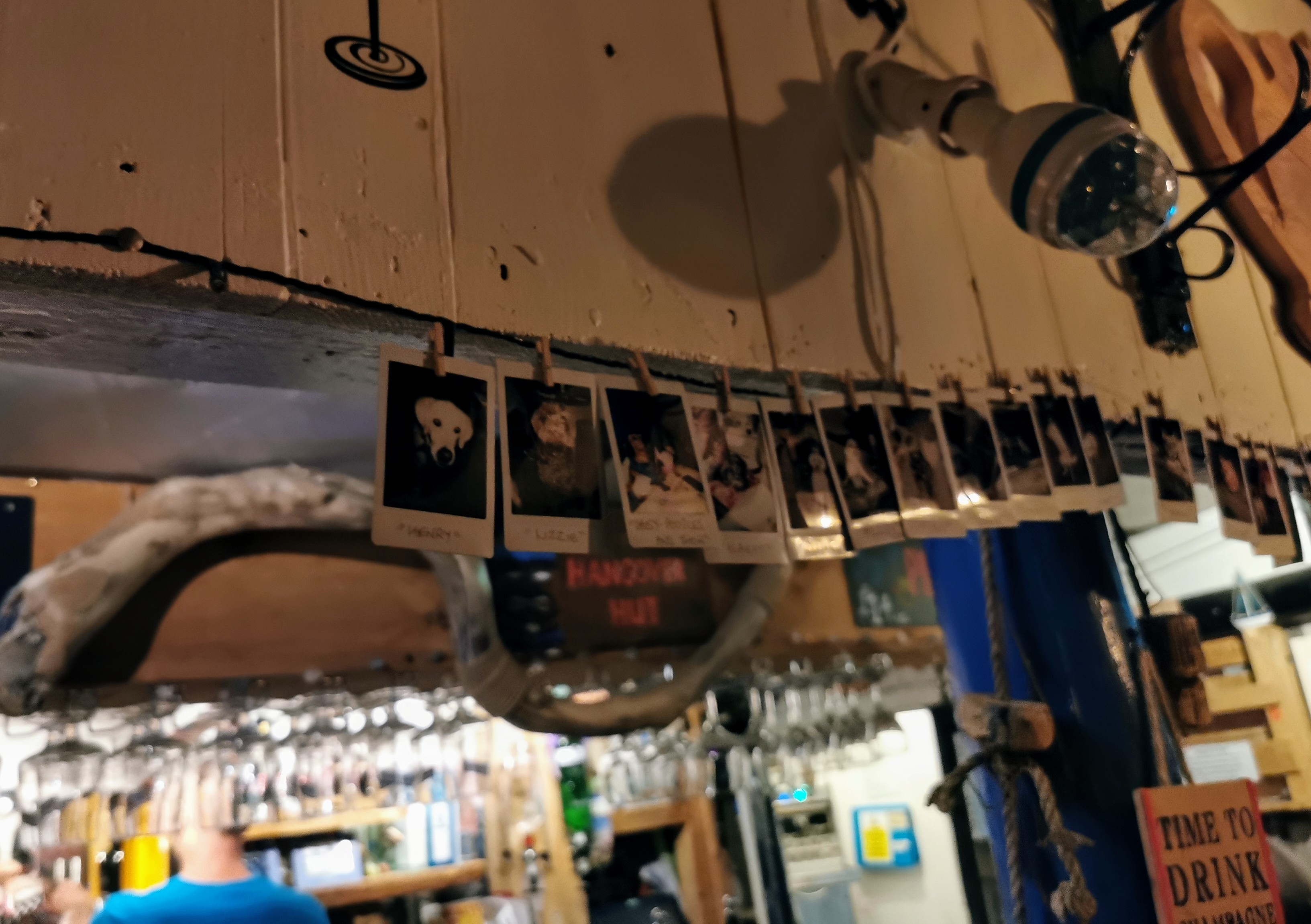
There’s a great place to eat up here on the path too. The Hideaway gets the best reviews in town, and we loved it. The views from the windows go straight out to sea, staff are super friendly and the food is excellent. If you go, be sure to check out the Doggie Hall of Fame over the bar – Henry and Lizzie are both up there!

Shanklin itself is in many ways a typical English seaside resort. The long beach is lined by a busy promenade of hotels, restaurants and B&Bs. There’s a massive amusement arcade on ‘the front’ and lots of families eating fish and chips or huge ice creams. The husband is highly amused about the popularity of the dinosaur and pirate-themed mini golf courses. Not really his thing! The development of seaside ‘attractions’ again goes back to the Victorians, who liked to be entertained whilst on holidays.

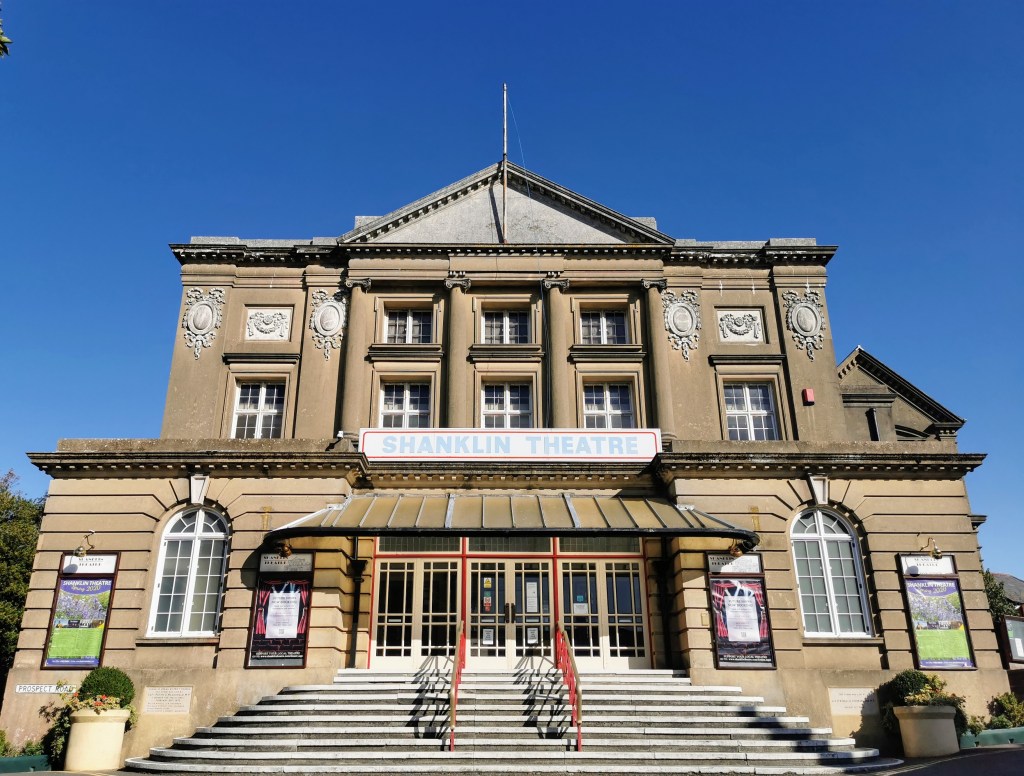
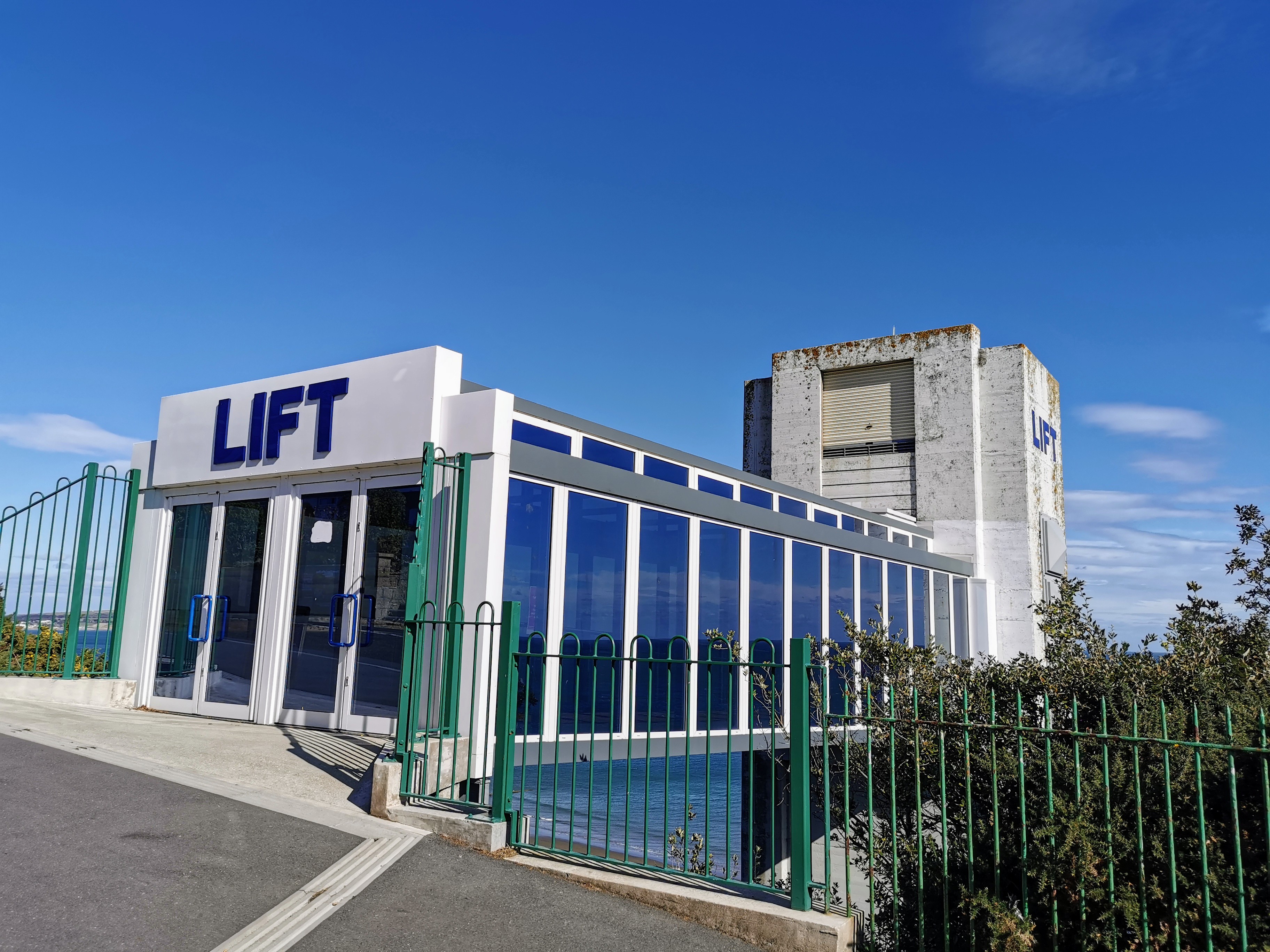
The Shanklin Theatre opened in 1879 to cater to the Victorian love of entertainment, and I’m glad to say it’s still going strong. Reading the events schedule makes me smile – alongside a long list of tribute evenings (from Elvis to ABBA and everything in between) are performances by Leo Sayer and Showaddywaddy! Brilliant! I also love the lift that whisks you from the beach up to the cliffs above. It’s so retro. This is not the Victorian original, sadly, but it exists because of the ingenuity of the time, and the desire to make life easier.

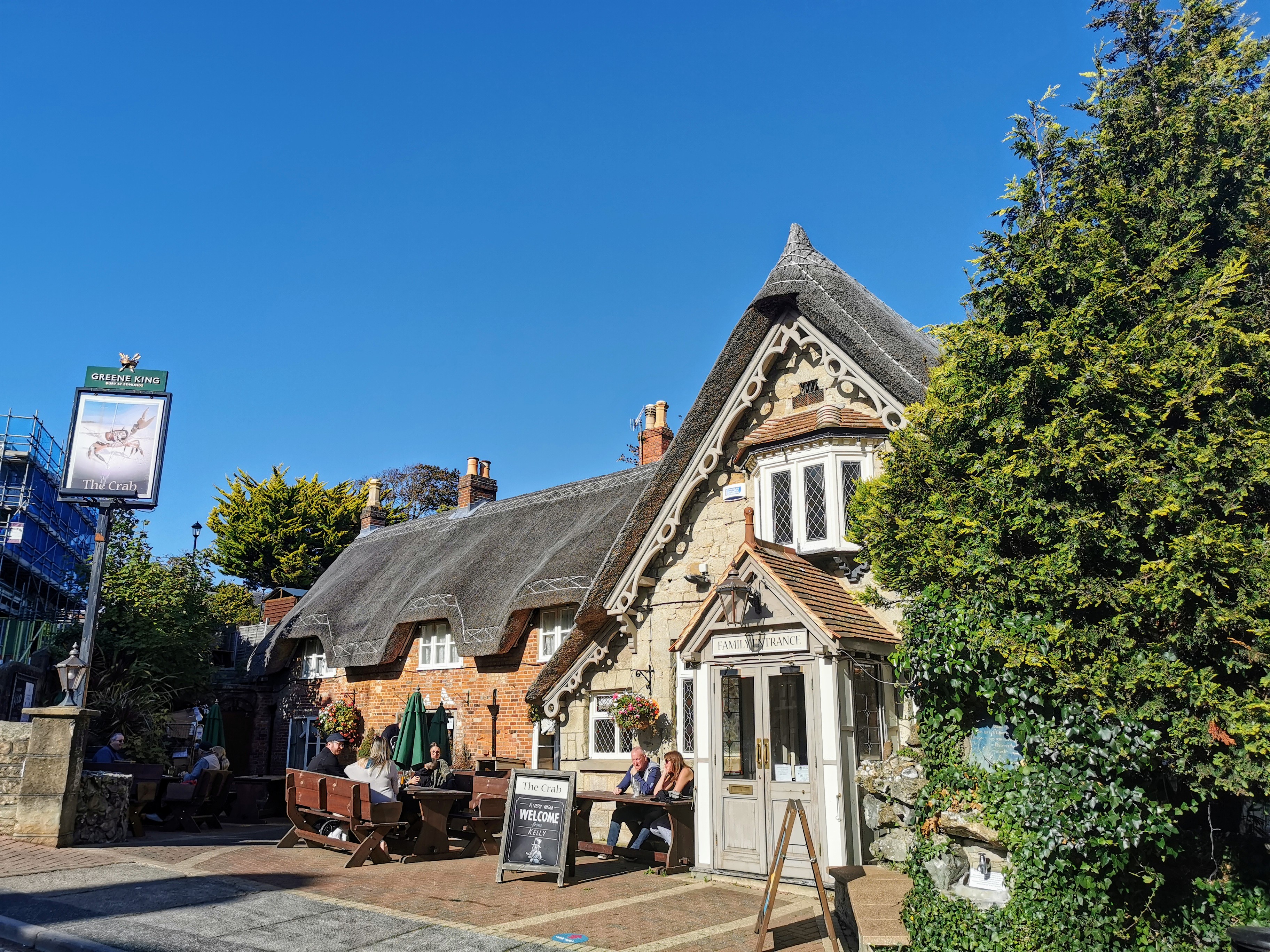
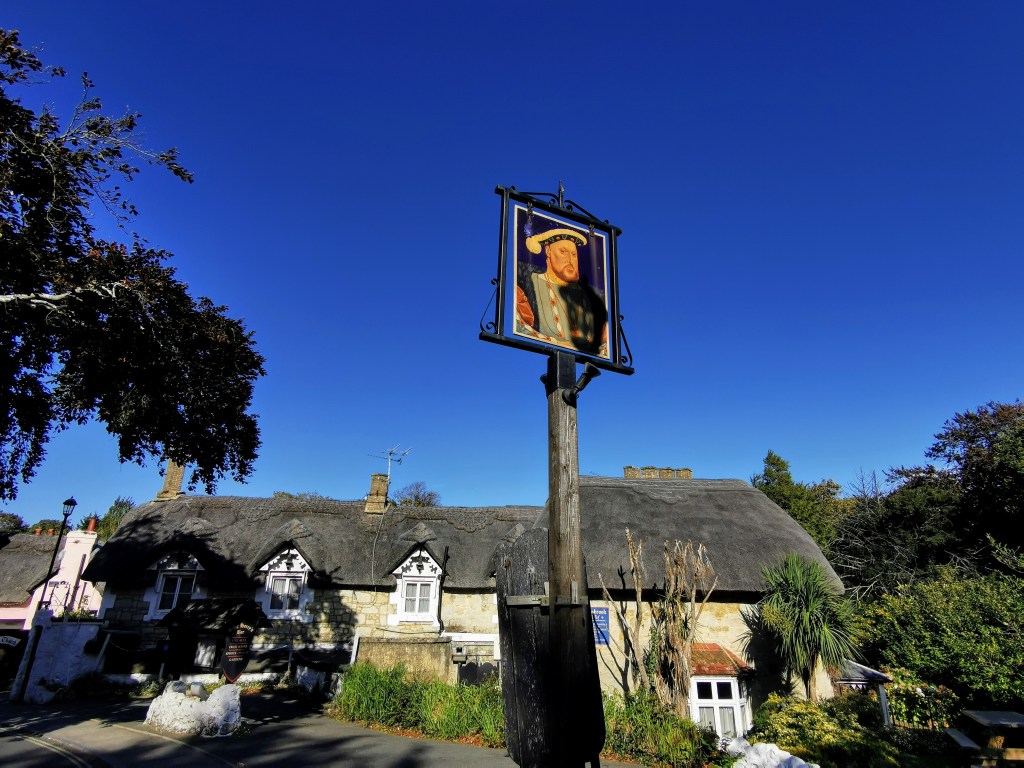
In the Old Village are a plethora of thatched inns and tea rooms clustered around the entrance to the Shanklin Chine, a lush gorge leading down to the beach, with walking paths and fairy lights. It’s all very olde worlde, if you like that kind of thing. The Victorian certainly did, even the famous ones. The poet Keats stayed at The Crab in Shanklin’s Victorian heyday and it still looks very much as it would have done then.

Charles Darwin preferred a seafront location when he came here to write his Origin of Species. He stayed at the Norfolk House Hotel, which is now the Waterfront Inn. I can report that it’s a very pleasant (and dog friendly) spot for lunch even now. The menu is far from Victorian, I’m glad to say, and I can recommend the felafel.

A date with Shakespeare in Stratford

One of the great things about middle age is that it’s no longer necessary make any attempt towards coolness. I can happily admit that I’m a Shakespeare fan – it’s quite OK to be a geek at my age. To celebrate this situation, I’m heading to Stratford-upon-Avon for the first time today to indulge myself in all things Bard-related.

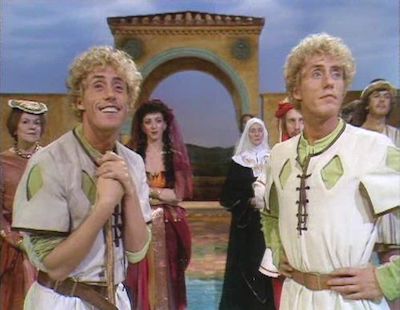
My first memories of Shakespeare date back to teenage years, when my only experience of theatre was going to the pantomime. At ‘O’ Level we watched Roger Daltrey on TV in The Comedy of Errors. So far so good. At ‘A’ Level we studied Macbeth – murder and mayhem, treachery and treason. Brilliant!

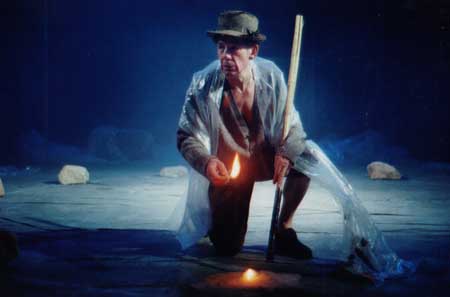
But then we moved onto The Tempest. Challenging – it’s a bit out there. A ship is wrecked upon an enchanted island inhabited by a magician, his daughter, a monster and a fairy. Who on earth thought that would appeal to hormonal teenagers? Come on, Othello or Hamlet please! It wasn’t until I saw Ian McKellen play Prospero the magician at the West Yorkshire Playhouse that it all made sense. Well, if you need a wizard, who are you going to call? I still prefer Macbeth though.

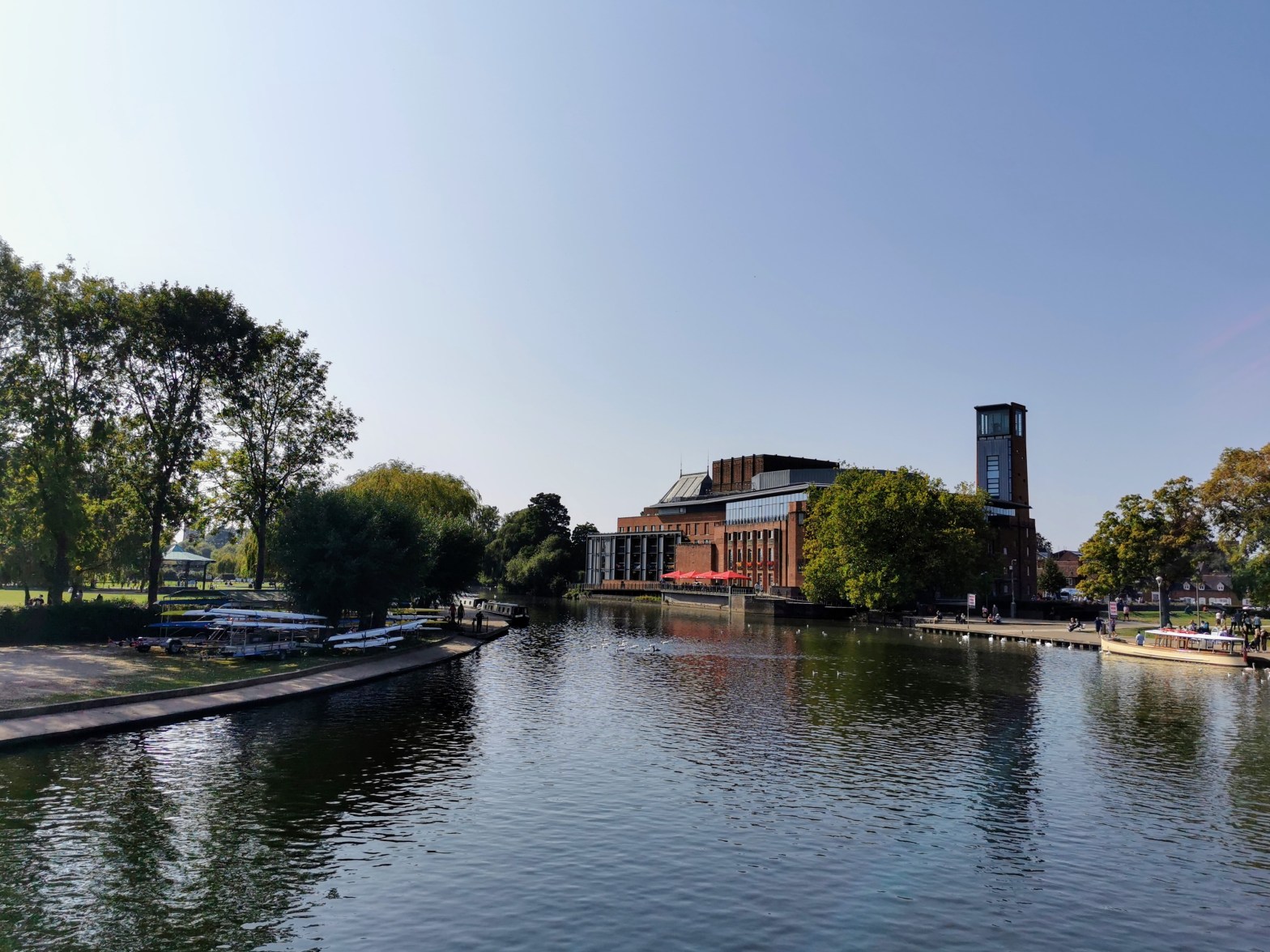
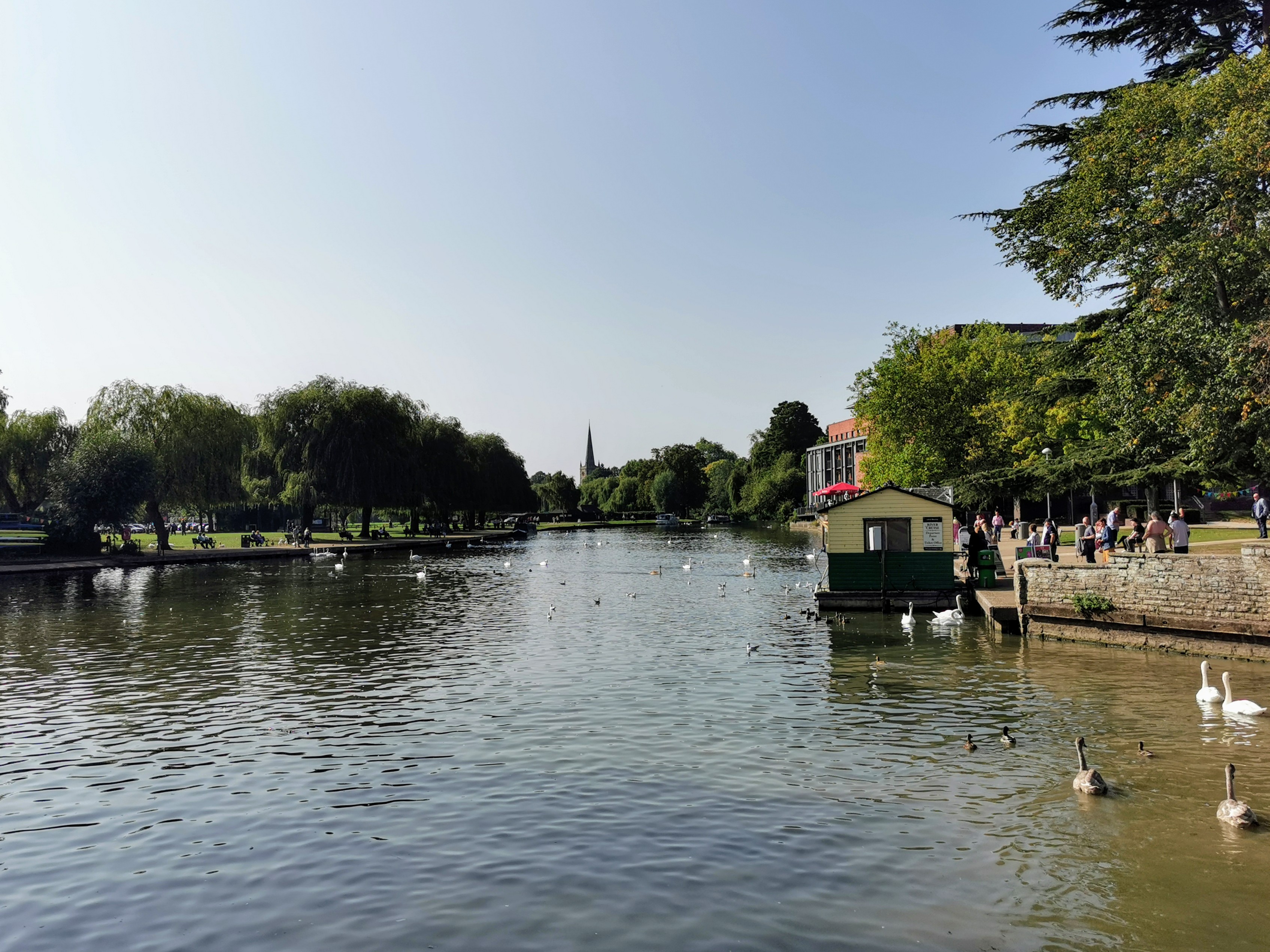
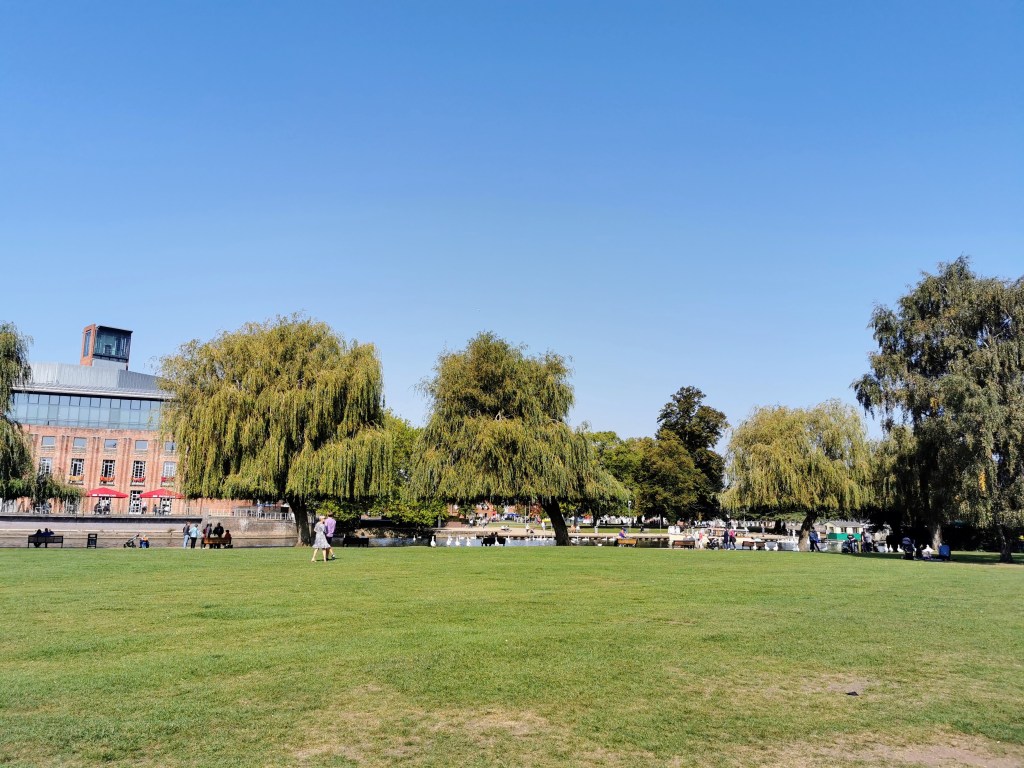
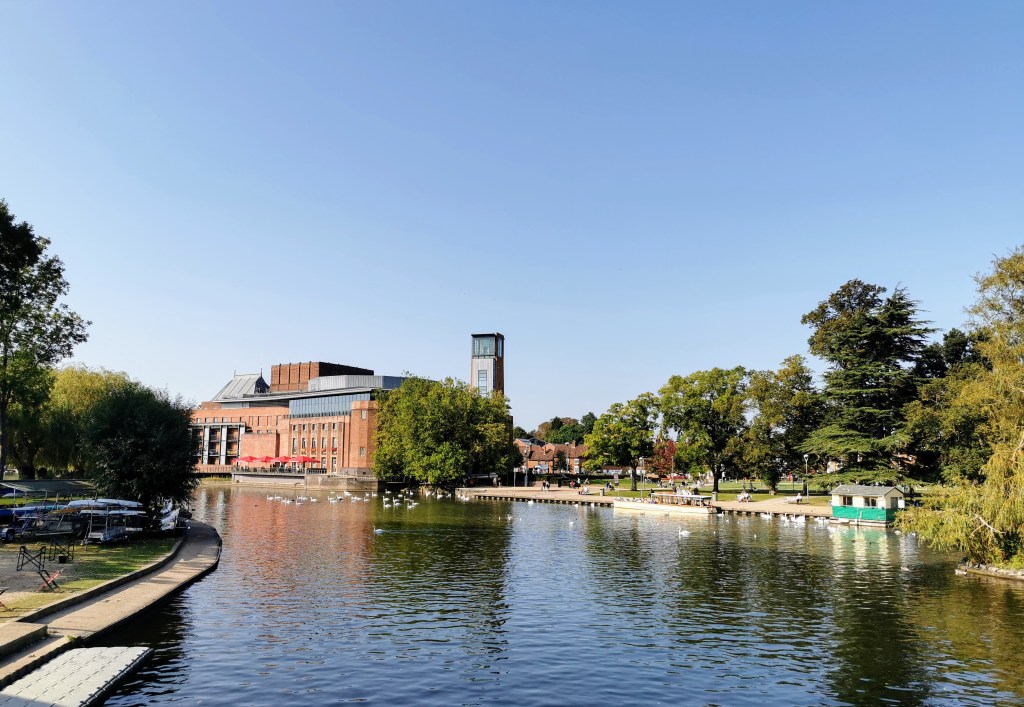
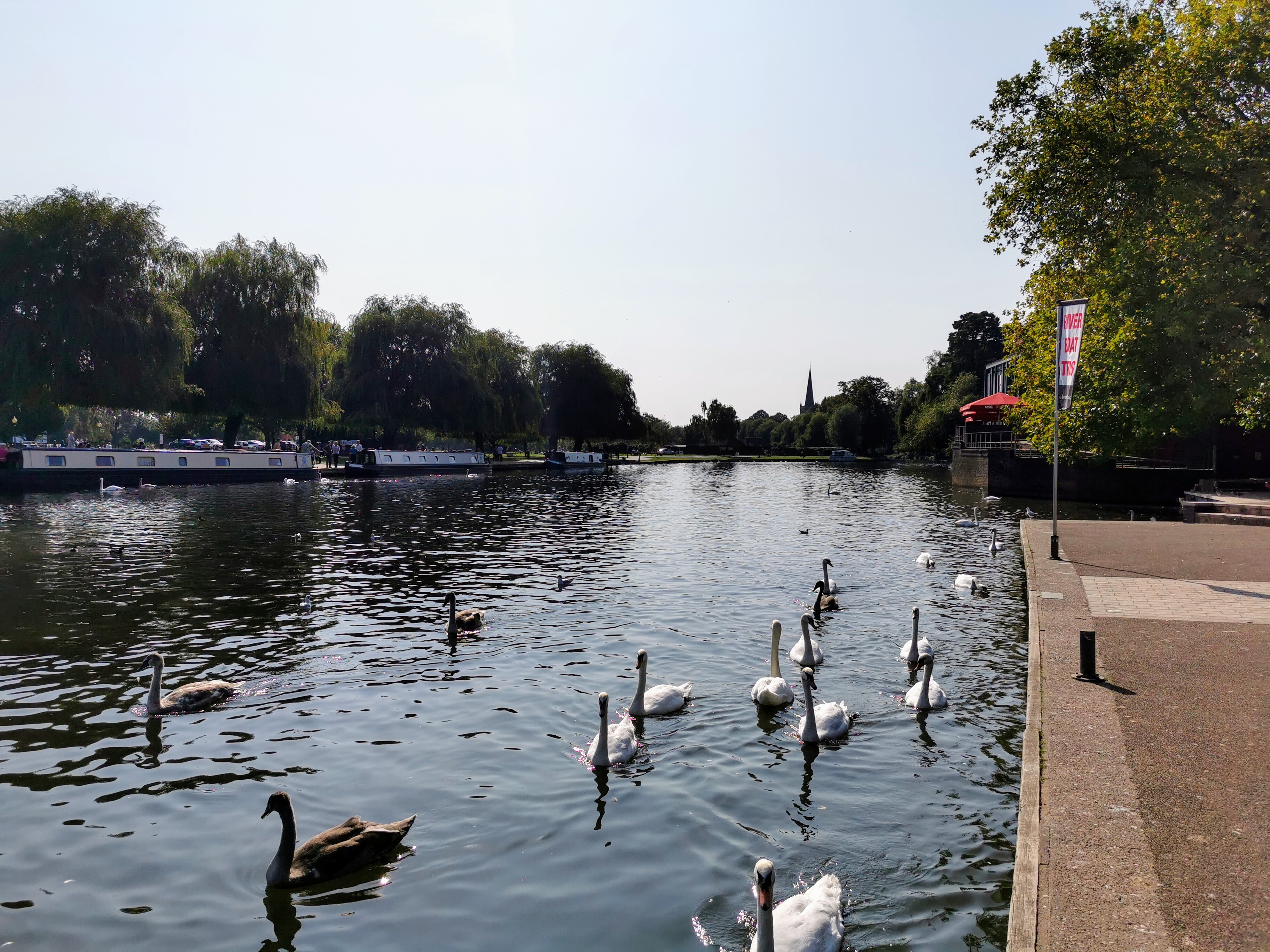
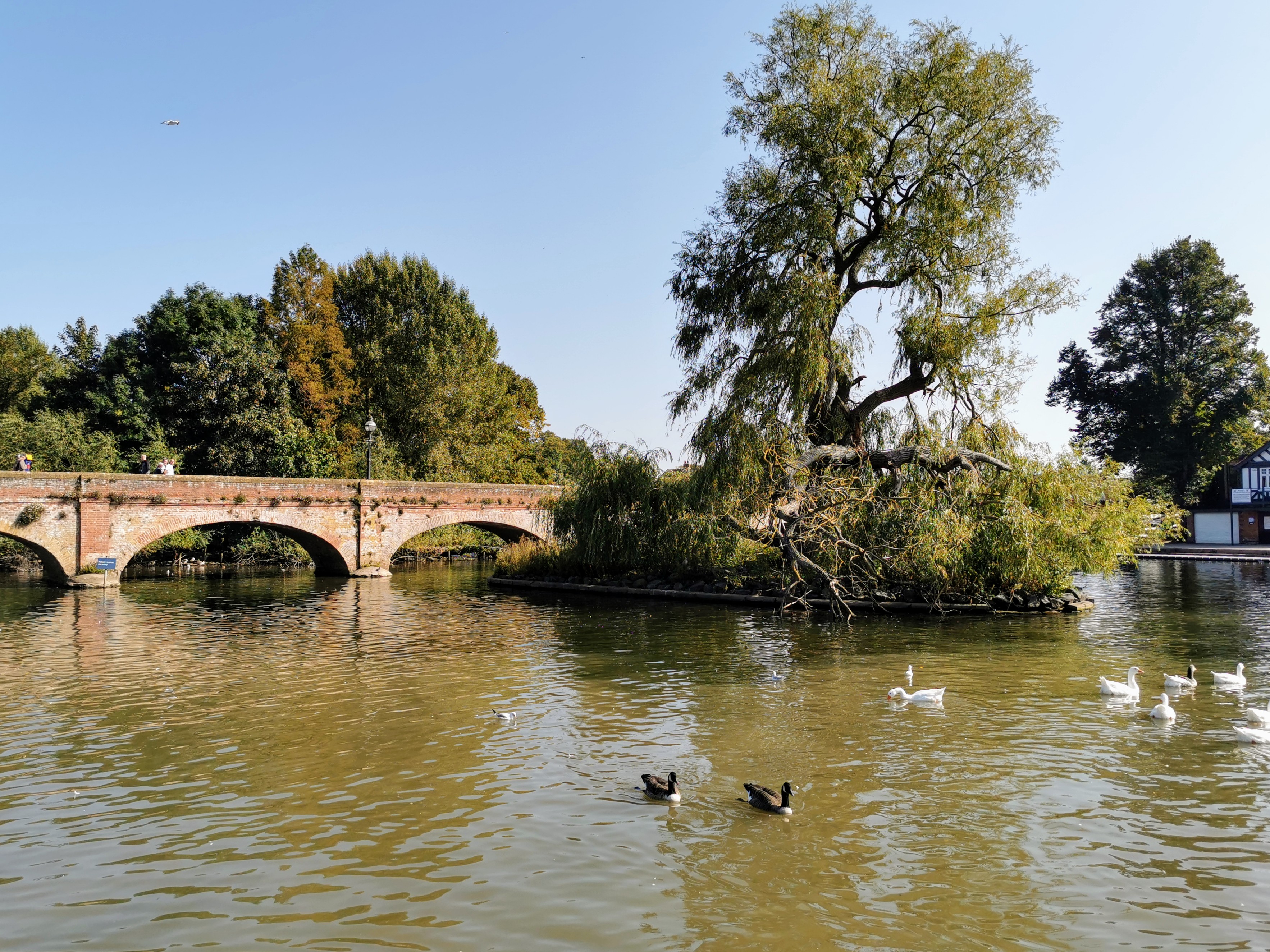
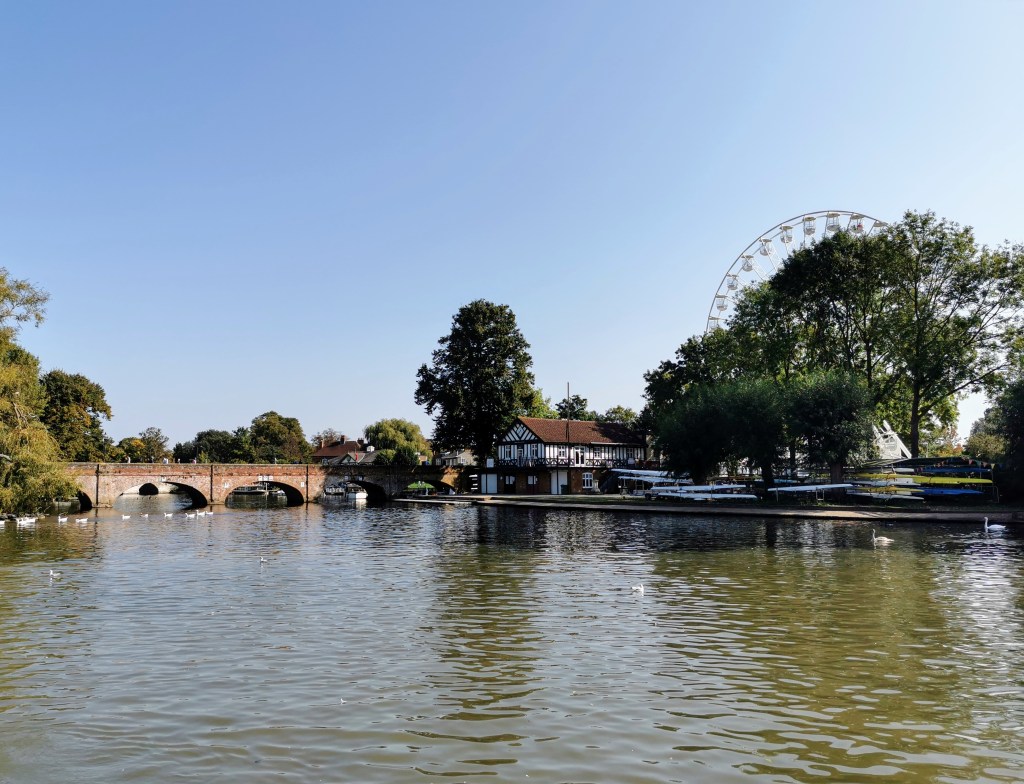
It’s a dull drive of an hour and a bit down the M40 but hopefully it will be worth it. As I enter into Warwickshire a sign welcomes me to ‘Shakespeare country’ – Will is a big deal around here. I park by the River Avon at the Recreation Ground where a swathe of parkland stretches along the opposite bank to the town proper. First impressions are (1) it’s very pretty (2) it’s busy, inevitable with 25 degrees, sunshine and imminent further covid restrictions, and (3) the Royal Shakespeare Theatre is huge.

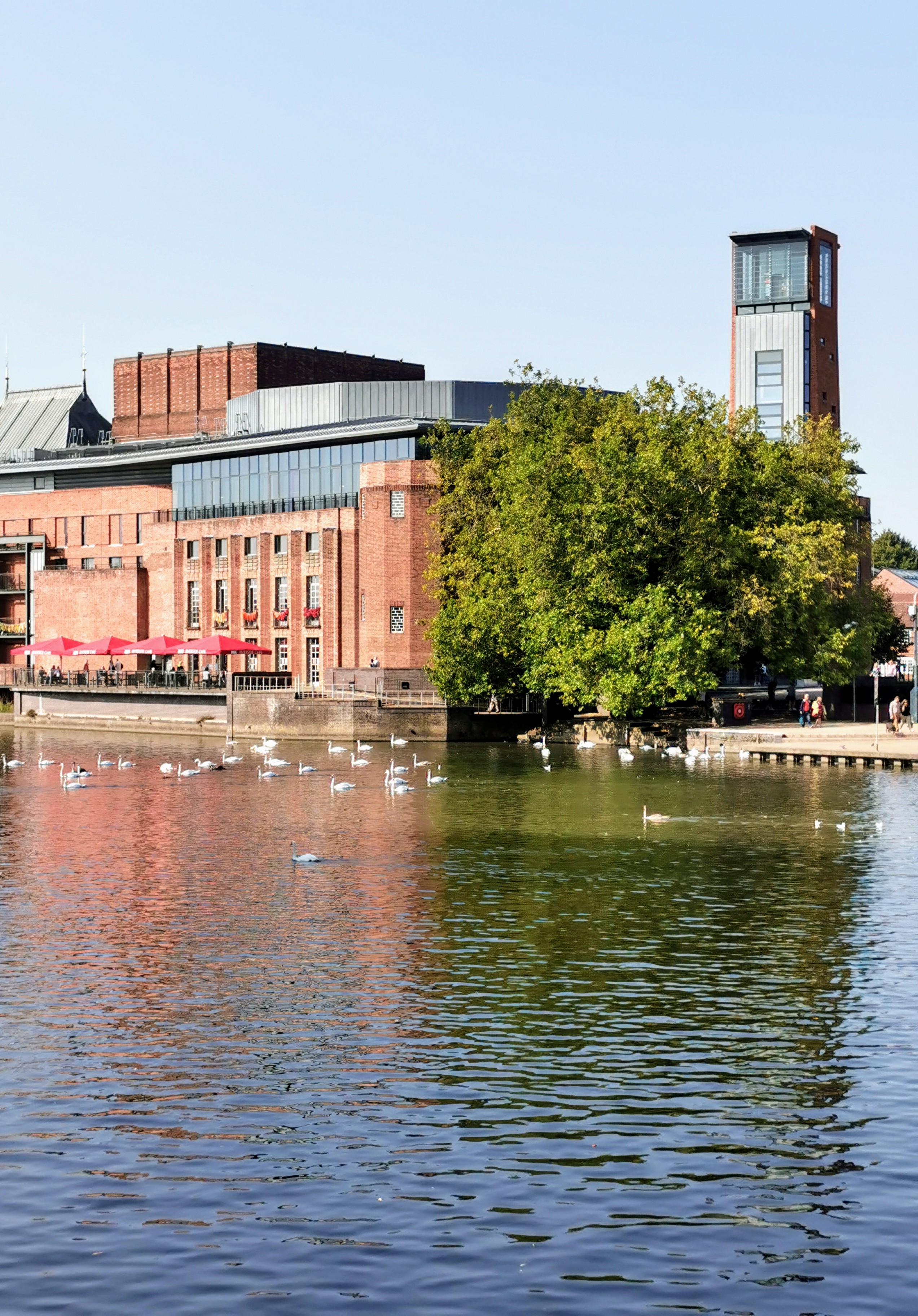
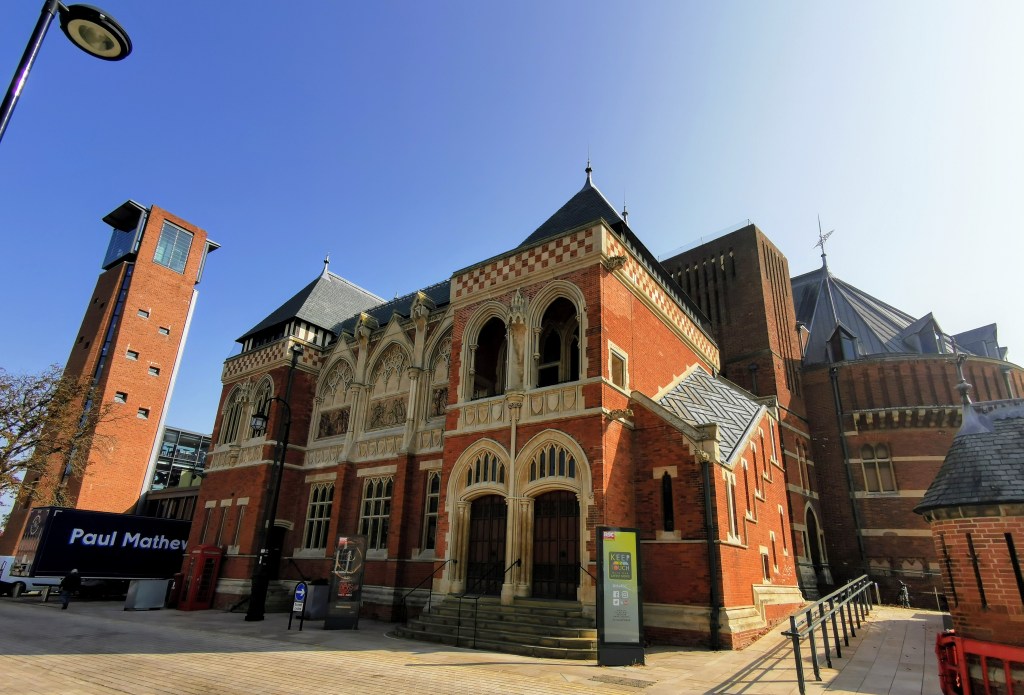
Home of the Royal Shakespeare Company, the theatre was originally built in 1875 as the Shakespeare Memorial Theatre. Rebuilt in 1932 after a fire, the building was then totally transformed in 2010 to become the behemoth it is now, dominating the western bank of the River. Naturally, the first play to be performed after the grand reopening was Macbeth. Just like me, the general public loves a bit of murder and mayhem!

The original building, on a much more human scale, still survives and has been incorporated at the rear, now called The Swan Theatre. Any way you look at it, this is a statement building. It makes it quite clear – around here the Bard is King.

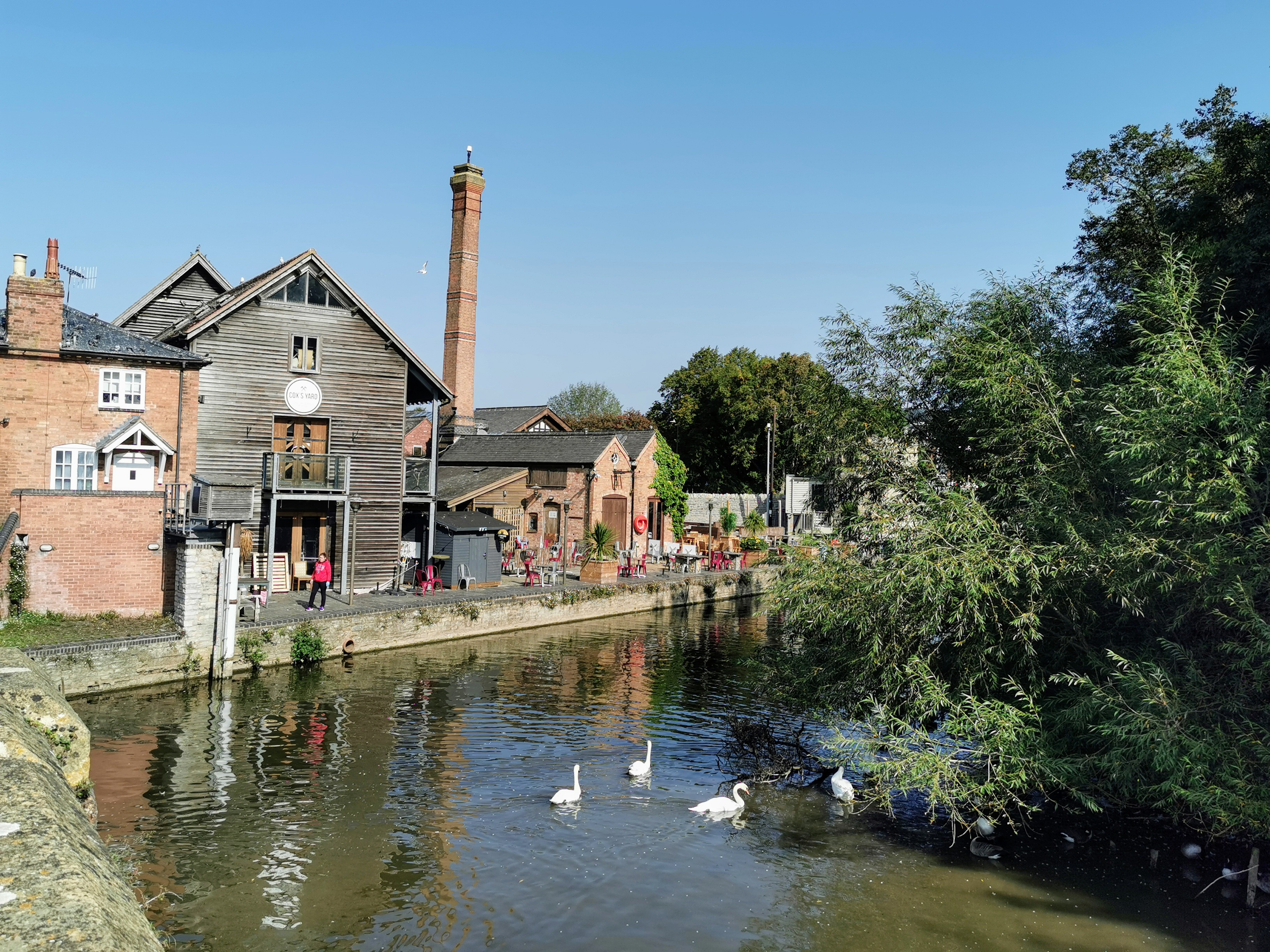
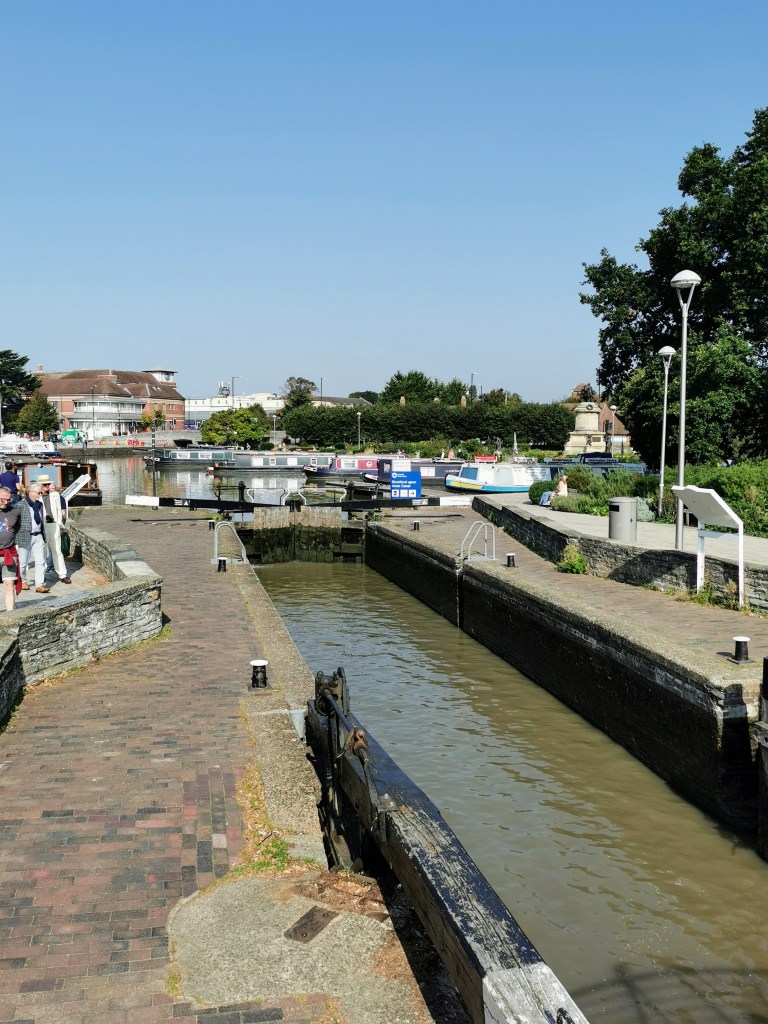
To reach the centre of town, I cross the pedestrian bridges over first the Avon River, and then the Stratford Canal, passing Cox’s Yard. An old timber merchants warehouse converted into a bar and restaurant, it looks a great spot for a leisurely lunch. However, I’m not here for frivolities, I have my mind on higher things – history, literature and theatre. Wine will have to wait.

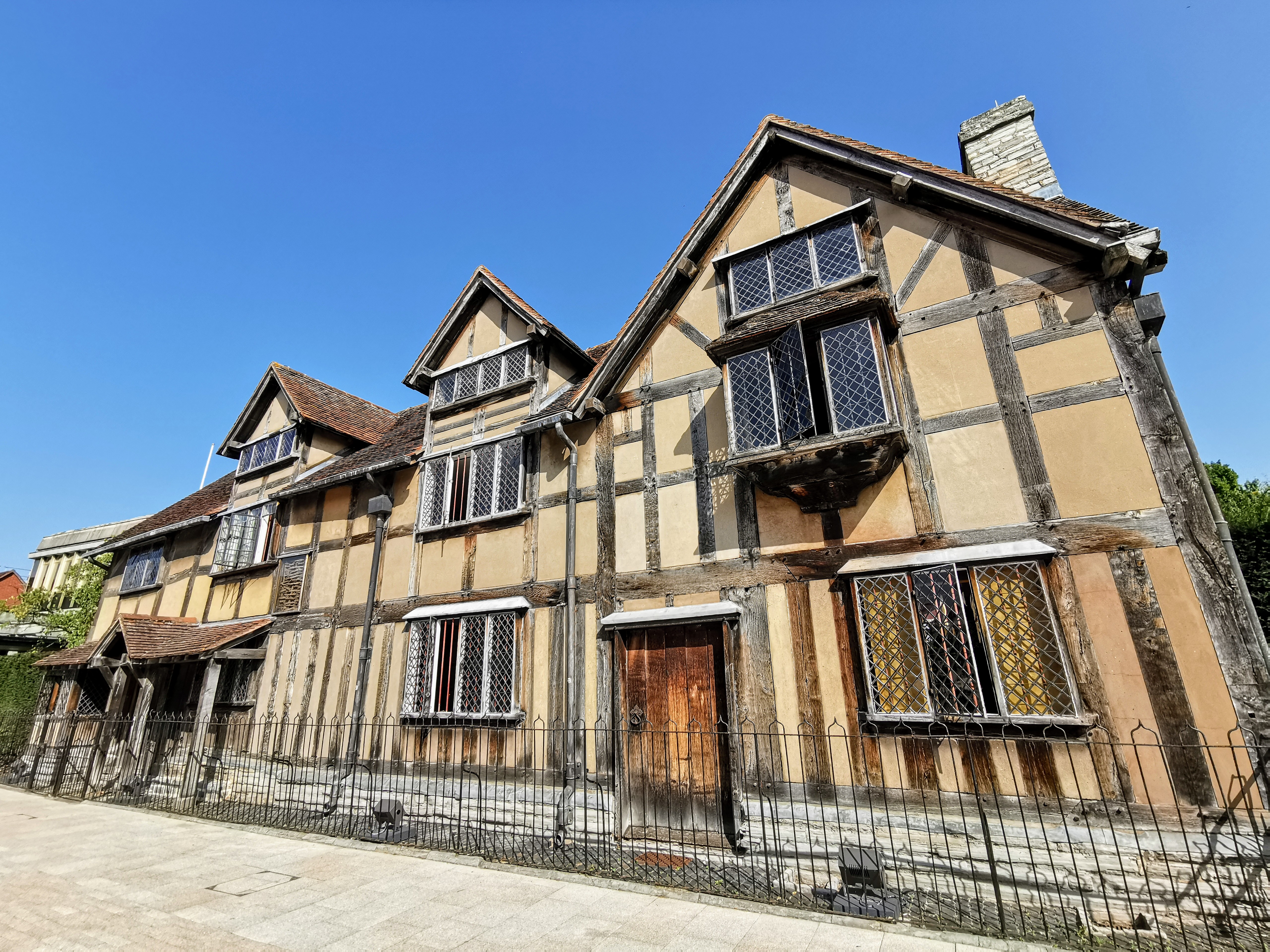
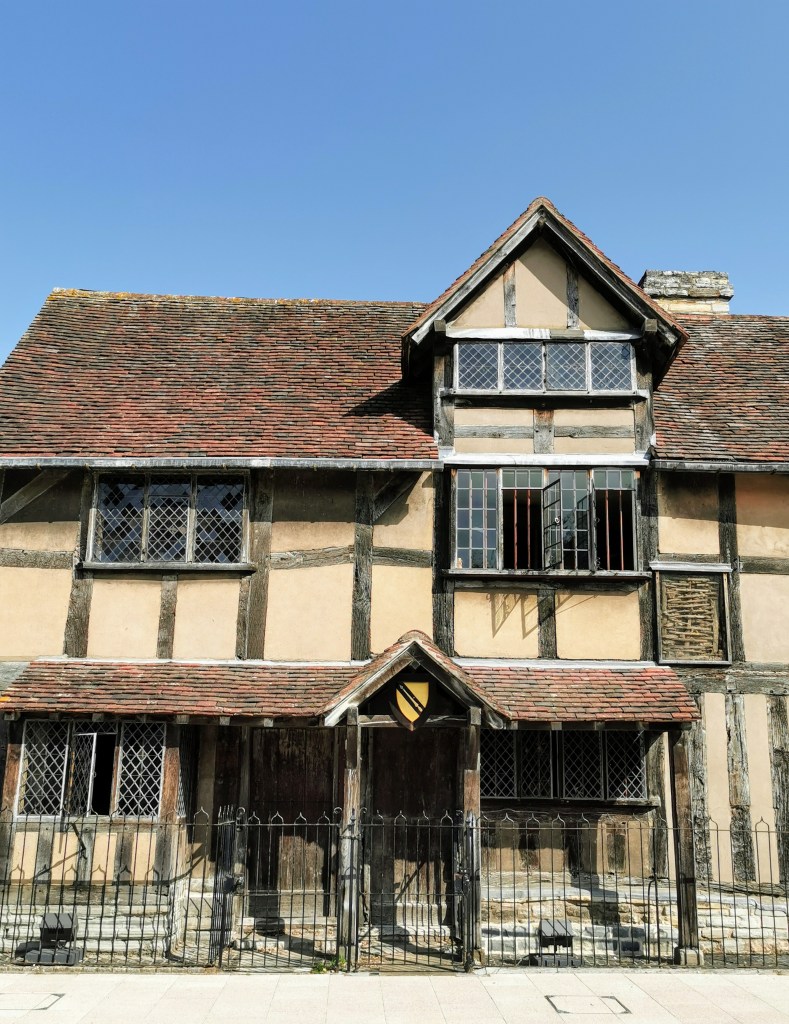
Let’s start at the very beginning, as Julie Andrews suggests. Shakespeare’s birthplace is on Henley Street in the middle of this ancient market town. Stratford has been inhabited since the 7th century due to its location on a Roman road at a convenient fording point of the river. King Richard I granted a market charter in 1196 which led to the village becoming a town and centre of trade. But it’s not until 1564 that things get really interesting, with the birth of the town’s most famous inhabitant (apart from Gordon Ramsey maybe…I’m joking!).

What’s really amazing about Shakespeare is that even now, 400 years after his death, he’s considered to be England’s greatest writer, with 39 plays and more than 150 poems to his name, performed more often than any other dramatist, and translated into every language in the world. It’s quite mind-blowing if you think about it, whether you like his works or not. And this is where it all began…

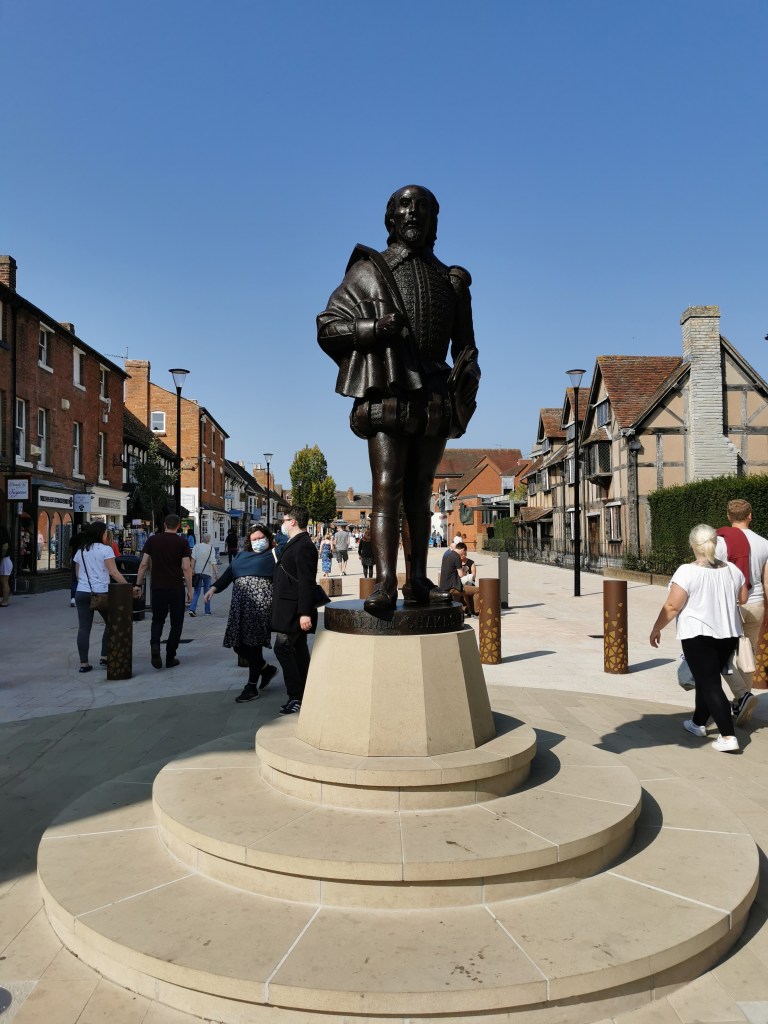
Fittingly, a rather smug looking statue of the Bard stands just outside his childhood home. This whole town revolves around him, so he has good reason to be pleased with himself. The son of a glove maker, with only a basic education, he became the leading playwright in London and his company was sponsored by King James I. He did pretty well didn’t he?

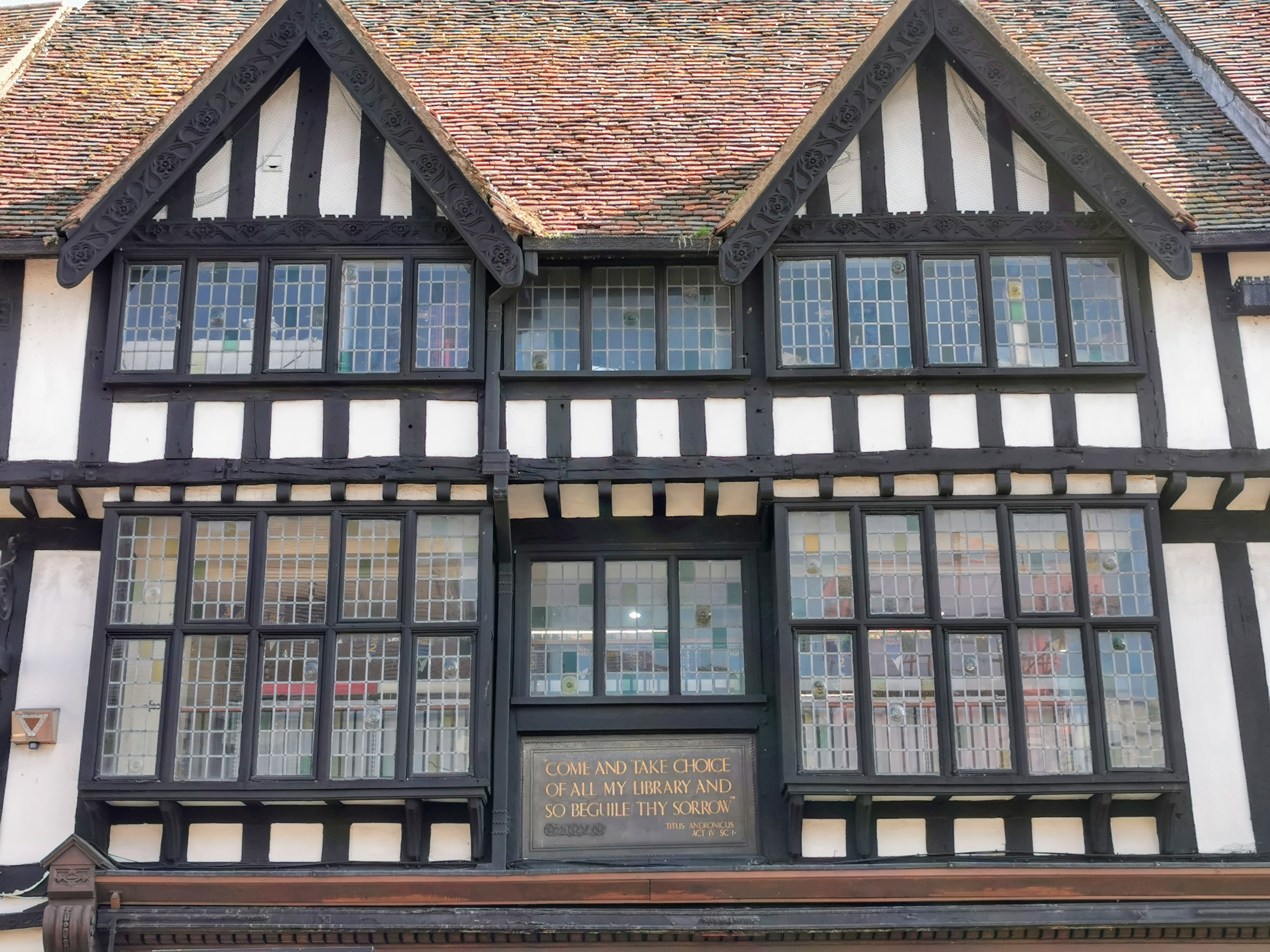
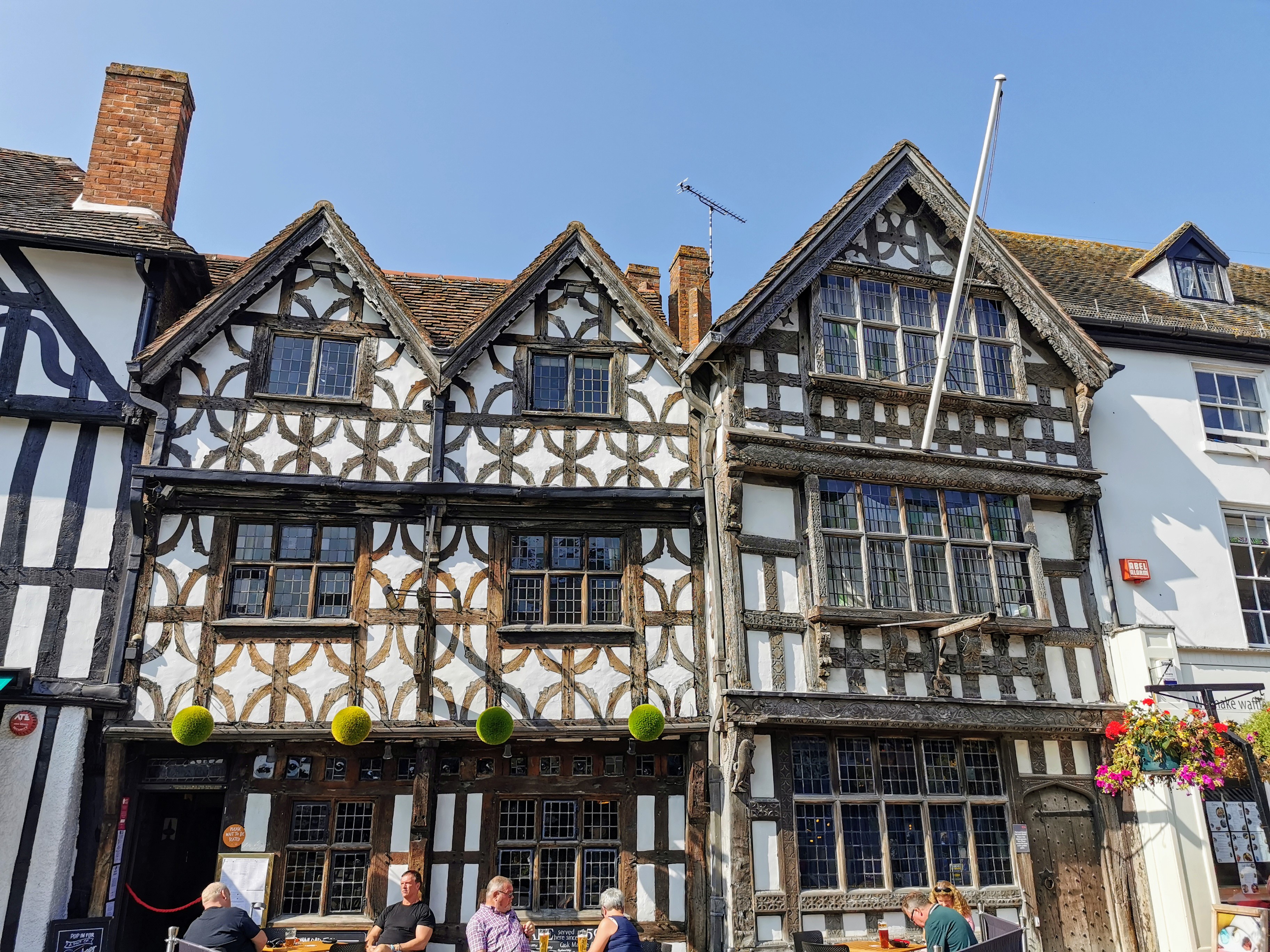
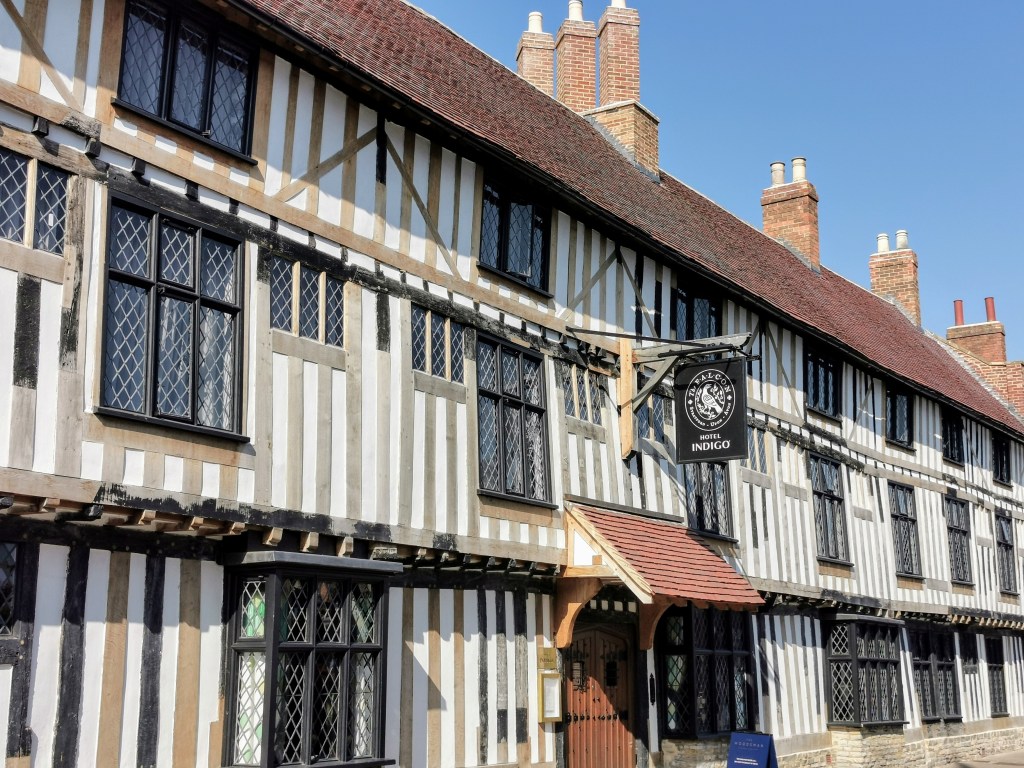
I’m following the Stratford Spine, which will take me through the life of Shakespeare from birth to death. Along the High Street I admire some of the well-preserved Elizabethan buildings of the town and notice that Shakespeare quotes pop up in the most prosaic of places, as below on the facade of W H Smith. I’m sure he would approve – he was all about making money.

Shakespeare married Anne Hathaway in 1582 and they had two daughters together. Next stop on my tour is Shakespeare’s New Place on Chapel Street. When he bought this property as his family home in 1597 it was the second largest house in the district, showing how wealthy he had become. It had at least 20 rooms and cost around £120 at the time which Sadly, it no longer survives, but the original gates have been preserved, and a garden has been established on the site.

The neighbouring house, which has survived, belonged to Thomas Nash, who married Shakespeare’s only granddaughter Elizabeth. They didn’t have children so the family of the Bard died out with her. Someone here is obviously a bigger fan of The Tempest than I am.

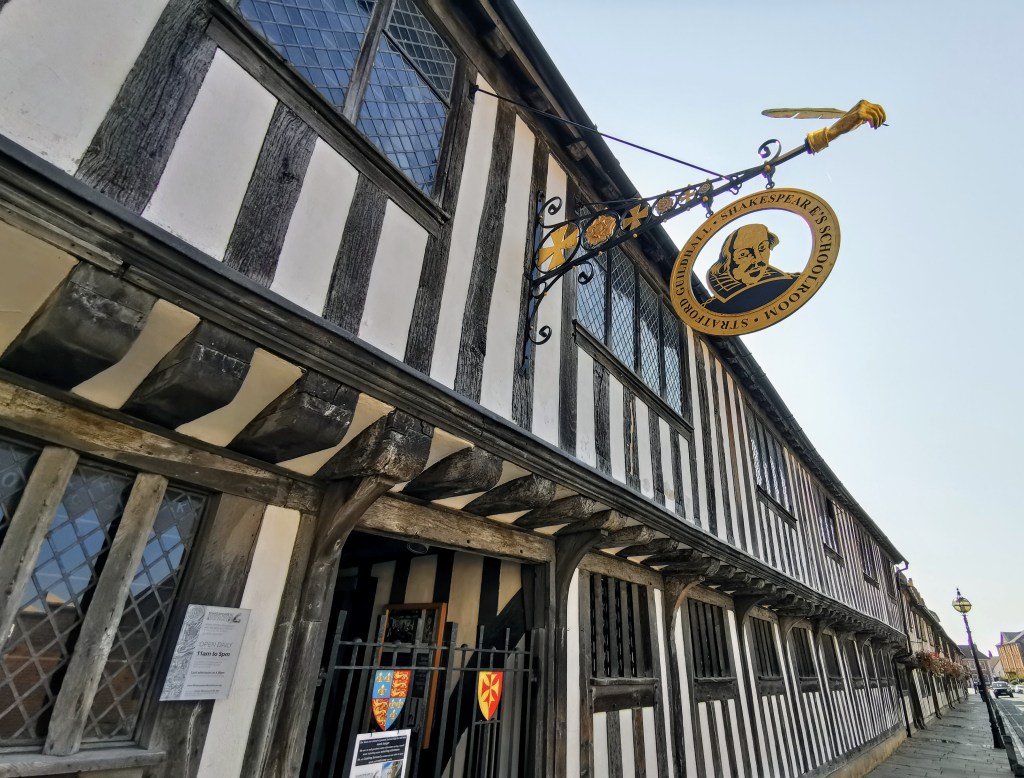
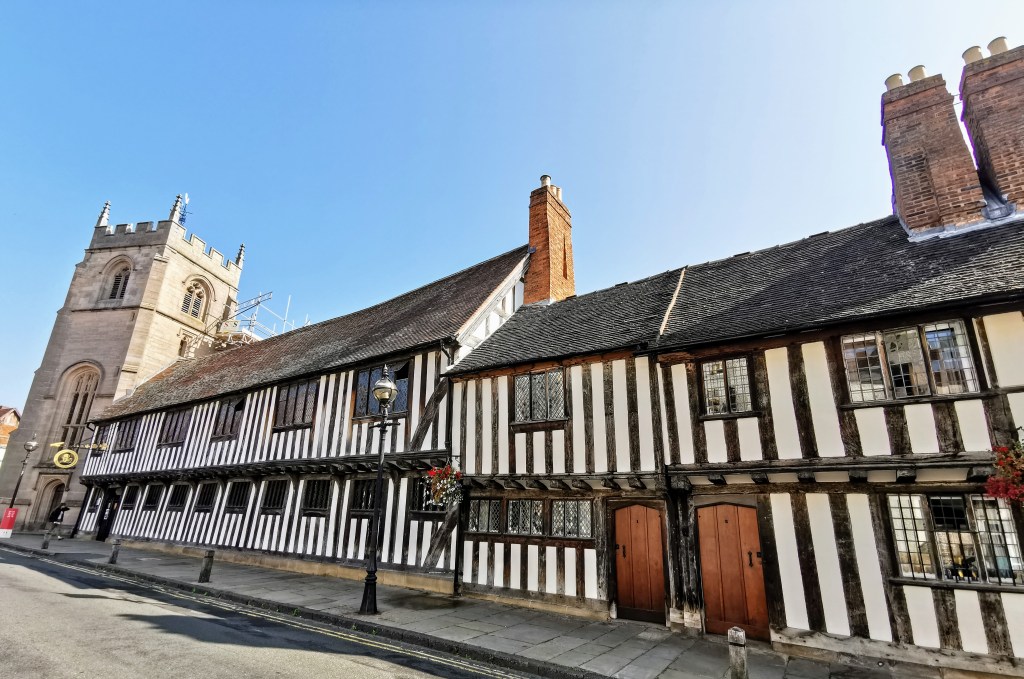
Directly opposite New Place is my next point of interest, the Guildhall. It’s here that Will was educated between the ages of 7 and 14, at the Guild School established in 1295. Students studied English, Classics, Religion and Music. Maths and Science were clearly not considered very important for Tudor schoolboys. Lucky them, no cutting up eyeballs or simultaneous equations!

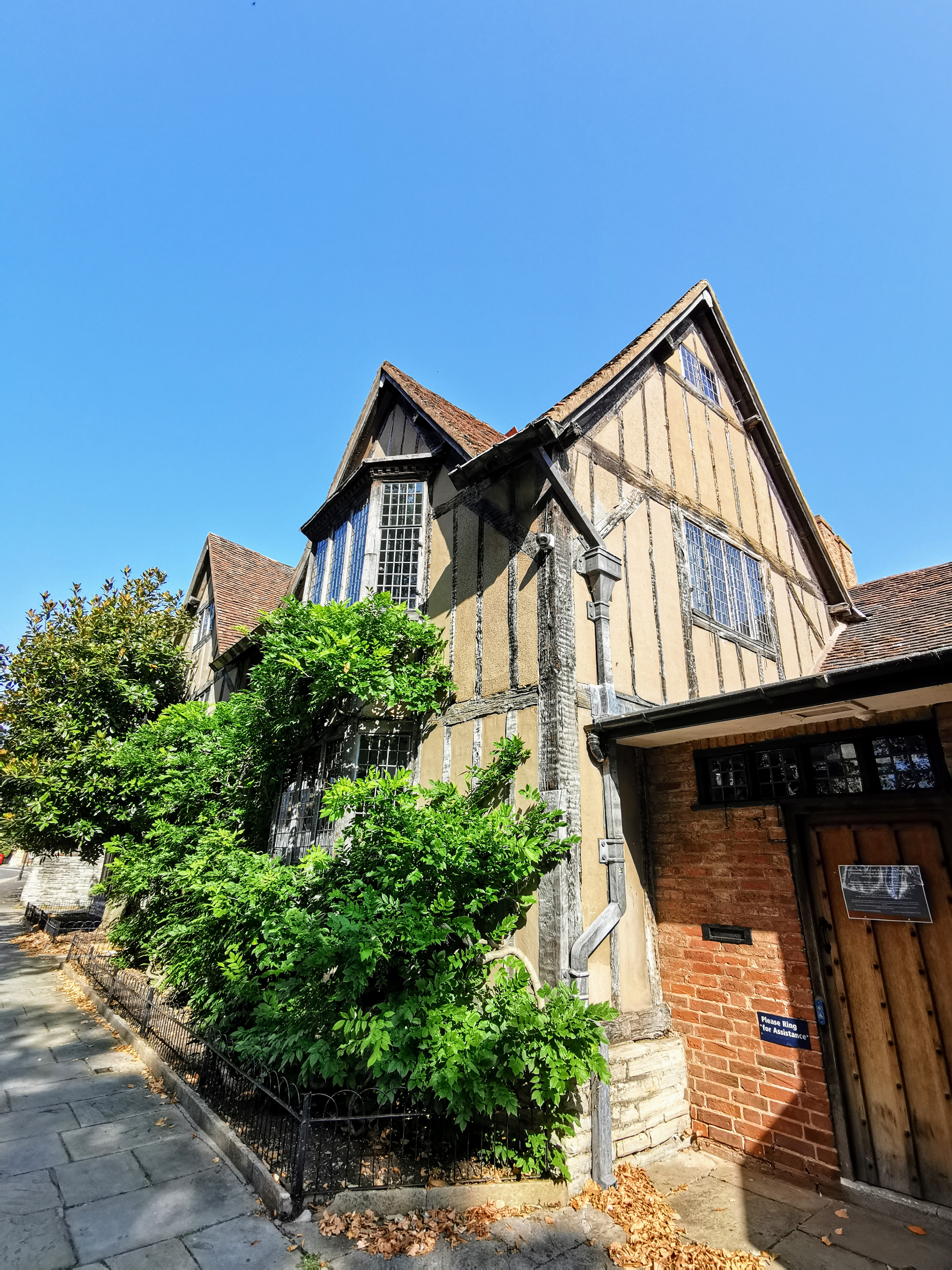
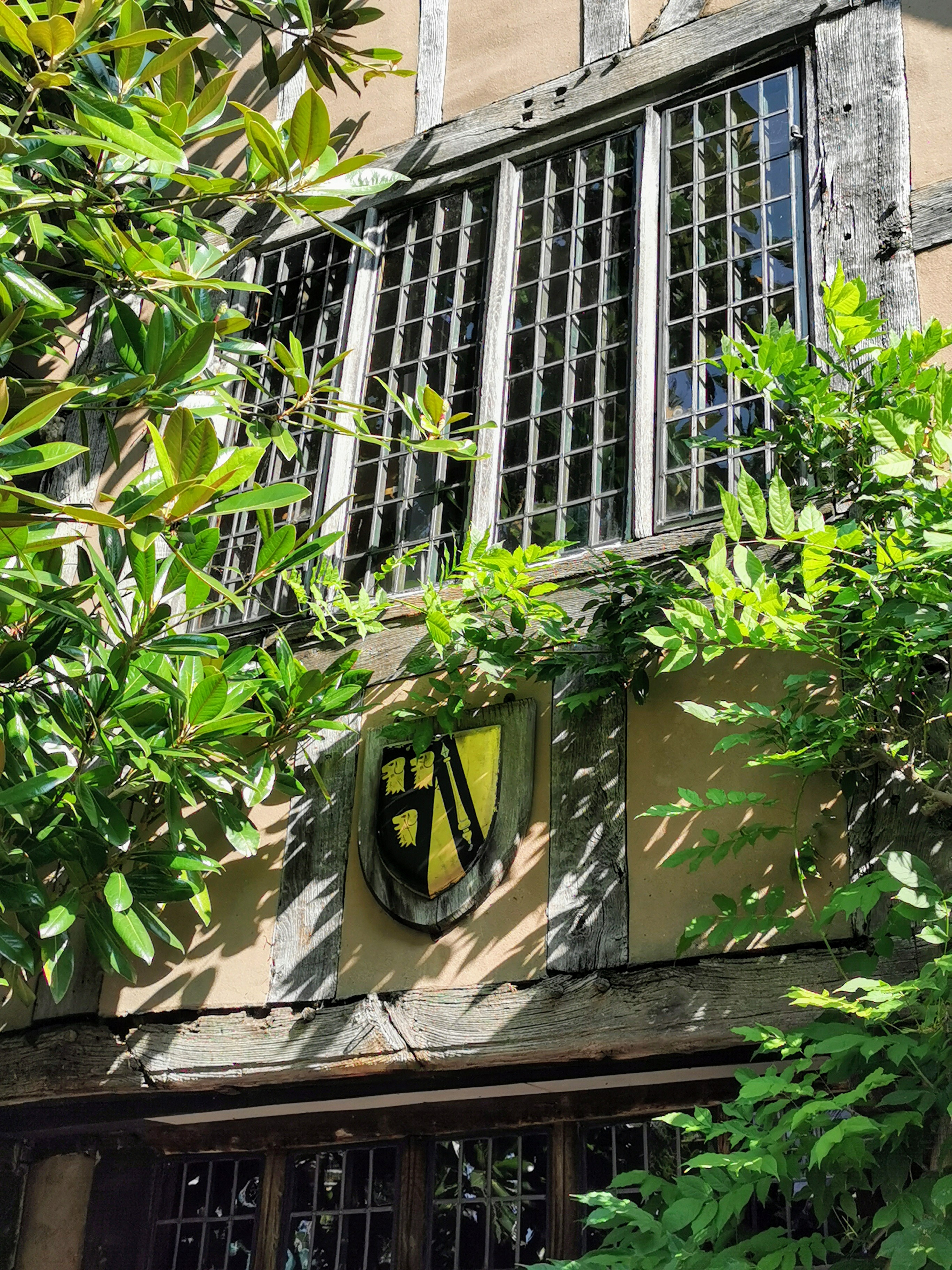
Turning into Chestnut Walk, the next stop on our tour is Hall’s Croft. Built in 1613, it was the home of Shakespeare’s eldest daughter Susanna and her husband, the well known doctor John Hall. Ahead of his time, Hall used plants and herbs in his medicines, rather than relying on astrology and blood letting like some of his contemporaries. Fascinating as it sounds, I’m very glad I wasn’t born in Shakespeare’s time.

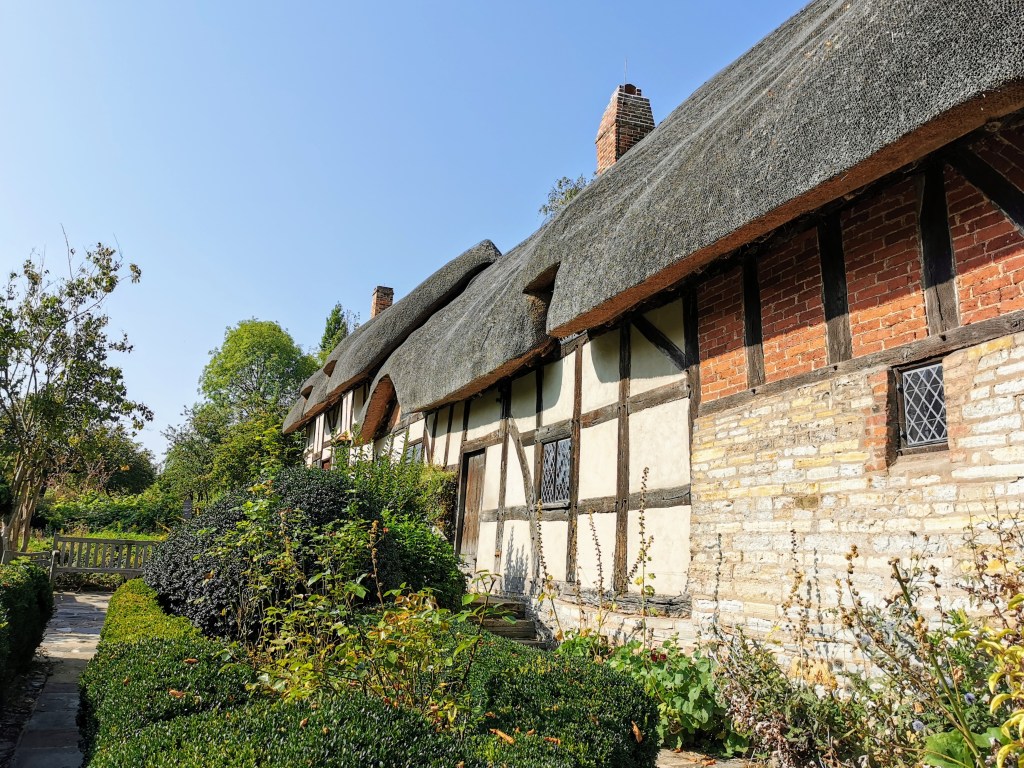
At this point, a detour of about a mile outside of town, mostly along well signposted public footpaths, takes me to the village of Shottery, where Shakespeare’s wife was born and bought up. The property is now known as Anne Hathaway’s Cottage although it’s actually quite a large farmhouse. From 1463 the family farmed sheep here for almost 400 years, but it’s Anne who put them on the map.

In Shakespeare’s will, he left his wife his ‘second best bed’ while his daughter Susanna inherited his house and most of his money. This seems like an insult now, but in fact was quite normal at the time. Anne lived with her daughter at New Place until she died, so evidently there was no bad blood between them. I wonder where the best bed ended up?

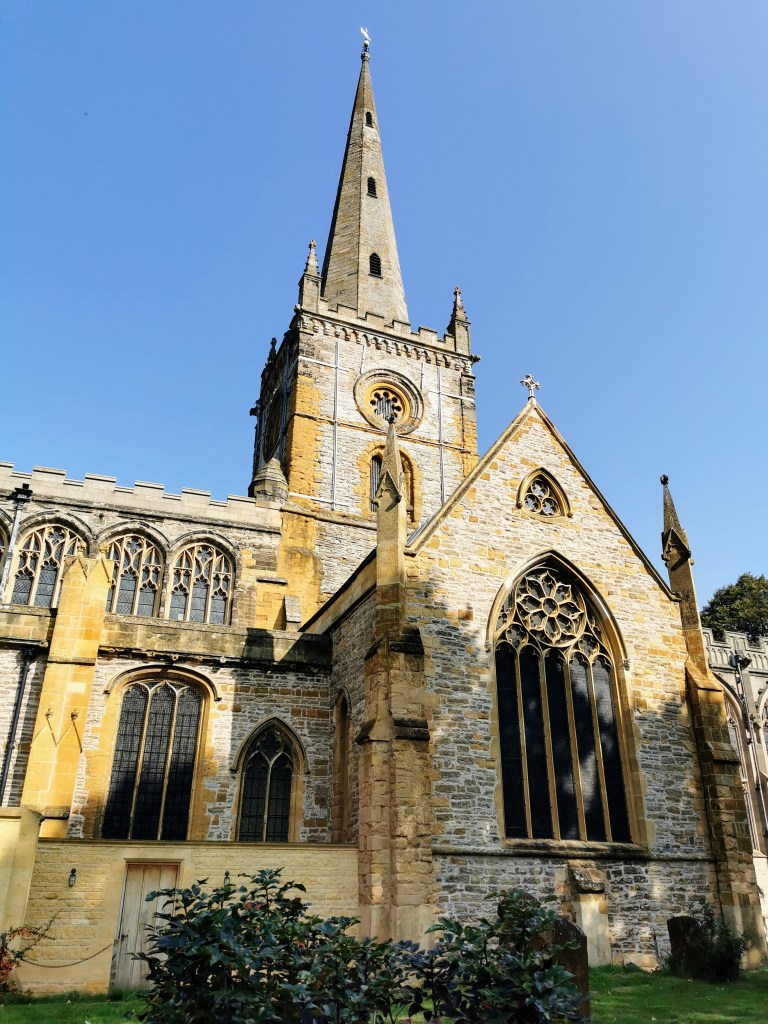
Retracing my steps, I finally arrive at Will’s final resting place. In fact, he was baptised here at the Holy Trinity Church, as well as being buried on this spot. Shakespeare died unexpectedly in 1616 at the age of 52, despite describing himself as in perfect health shortly before. No-one knows for sure how he died, but there is a rumour that he became ill after attending a particularly boozy party with his friends. Well, if you have to go, at least go out having fun!

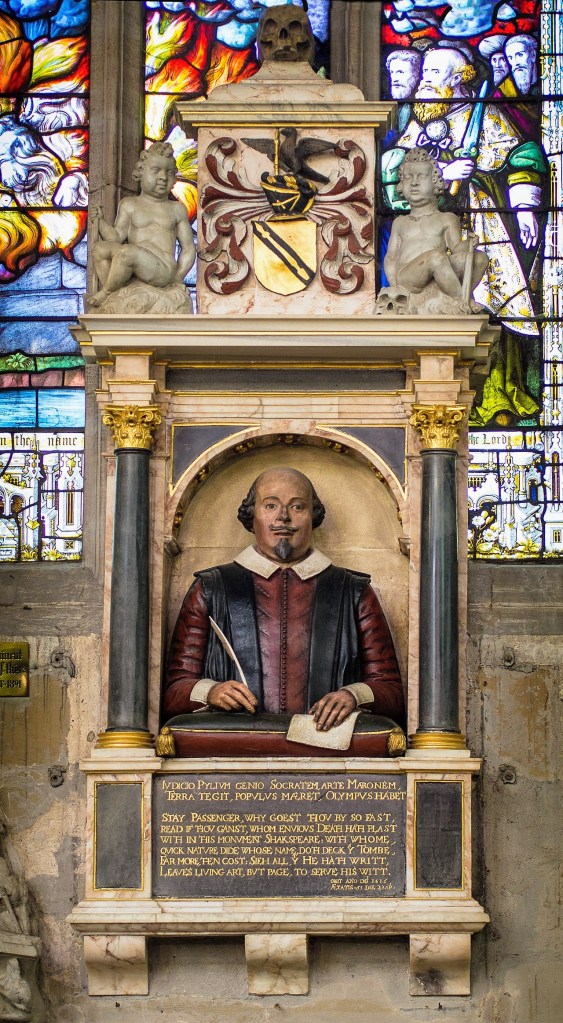
The monument to Shakespeare inside the church is not particularly flattering. My image of the Bard is not chubby and middle aged – he should look younger and a bit more dashing. Apparently it is a good likeness of him though, how disappointing!

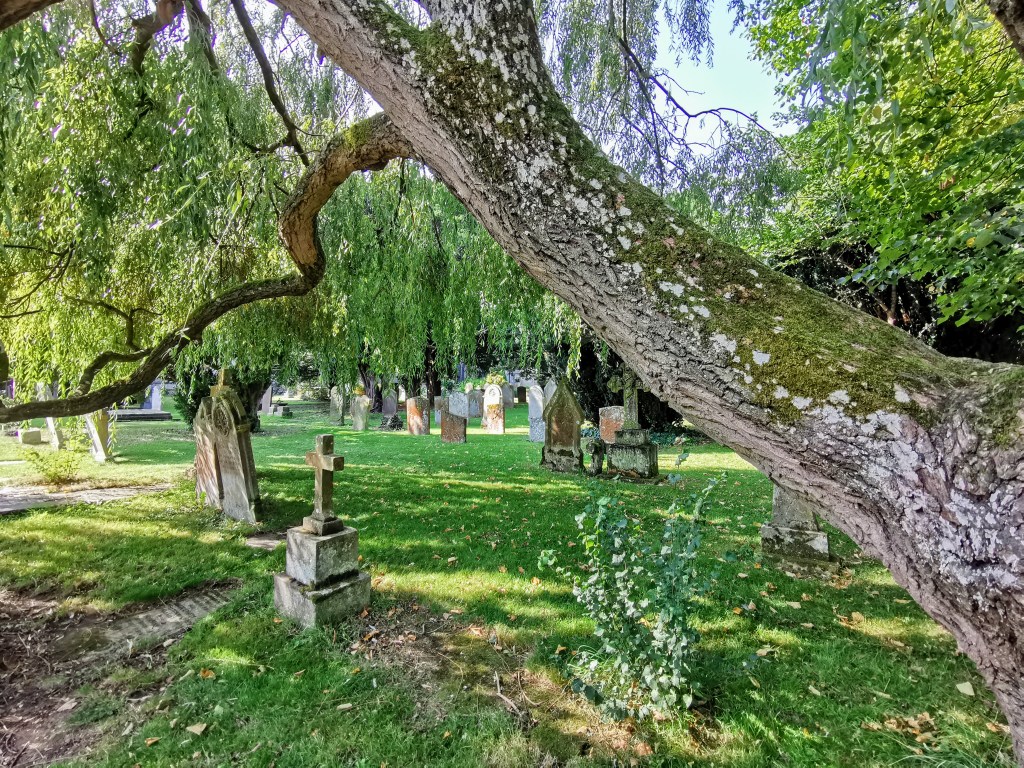
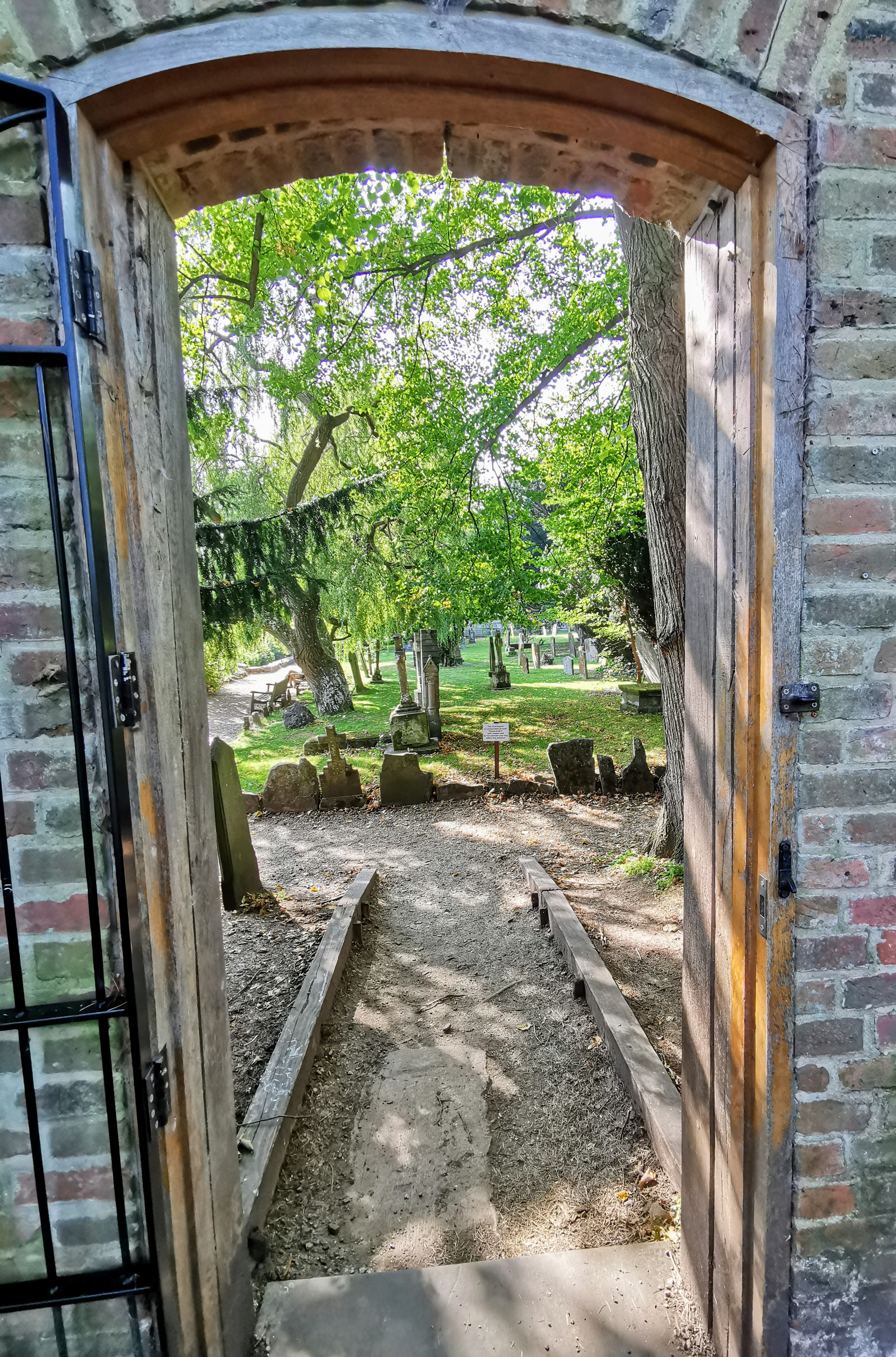
Outside the church, there’s a path around the perimeter of the lovely, tranquil churchyard. I go through a gate and follow the pathway along the banks of the Avon back into town. Finally, my tour ends where it began, at the Royal Shakespeare Theatre.

After seeing how this town is devoted to all things Shakespeare, and how many people are fascinated by his legacy (during a pandemic too) it’s strange to think that all this could have drifted into obscurity but for one man. David Garrick was an 18th century actor who loved Shakespeare and was determined to bring him back to prominence.

In 1769 Garrick staged a Shakespeare Jubilee here in Stratford to promote the Bard as England’s national poet. Despite atrocious weather (no surprises there), the event was a huge success, and cemented the popularity of both the man and his birthplace. So Stratford owes a lot to Garrick, but there’s no statue of him anywhere in town. There is a pub called The Garrick though. I’d be happy with that.

Heading South…as far as West Sussex

We’re on our way to the coast, doggy friends in tow. This wasn’t what we planned, but flexibility is key in 2020. First we booked Ibiza, then Crete, then Porto, I’d started to lose track. Last week our hotel closed due to COVID and our dog sitter went into isolation for two weeks. I accepted the inevitable even before Boris dealt the coup de grace by extending quarantine yet again. We’re simply not destined to leave the country this week!

South Coast it is then. I’ve heard great things about the dog friendly beach at West Wittering, so we pack our furry pals in the car and set off. Ah, if only it were that easy! The pandemic means you need to book everything – parking, lunch, overnight stay. I feel sorry for anyone who likes a bit of spontaneity – going anywhere right now needs regimental planning. I think I’ve covered everything, no random choices for us.

It’s less than two hours to the coast, so we arrive late morning, and are totally astounded at how many people are already here. The place is packed – does no-one work anymore in this country? Numbers are capped, and you must pre-book parking at a flat fee of £8, but it’s definitely busy. Many seem to have set up camp in the sandy carpark behind the dunes – tents, barbecues, chairs, tables, the lot! Where did you go for your hols in 2020? Oh, I found this amazing car park near the coast.

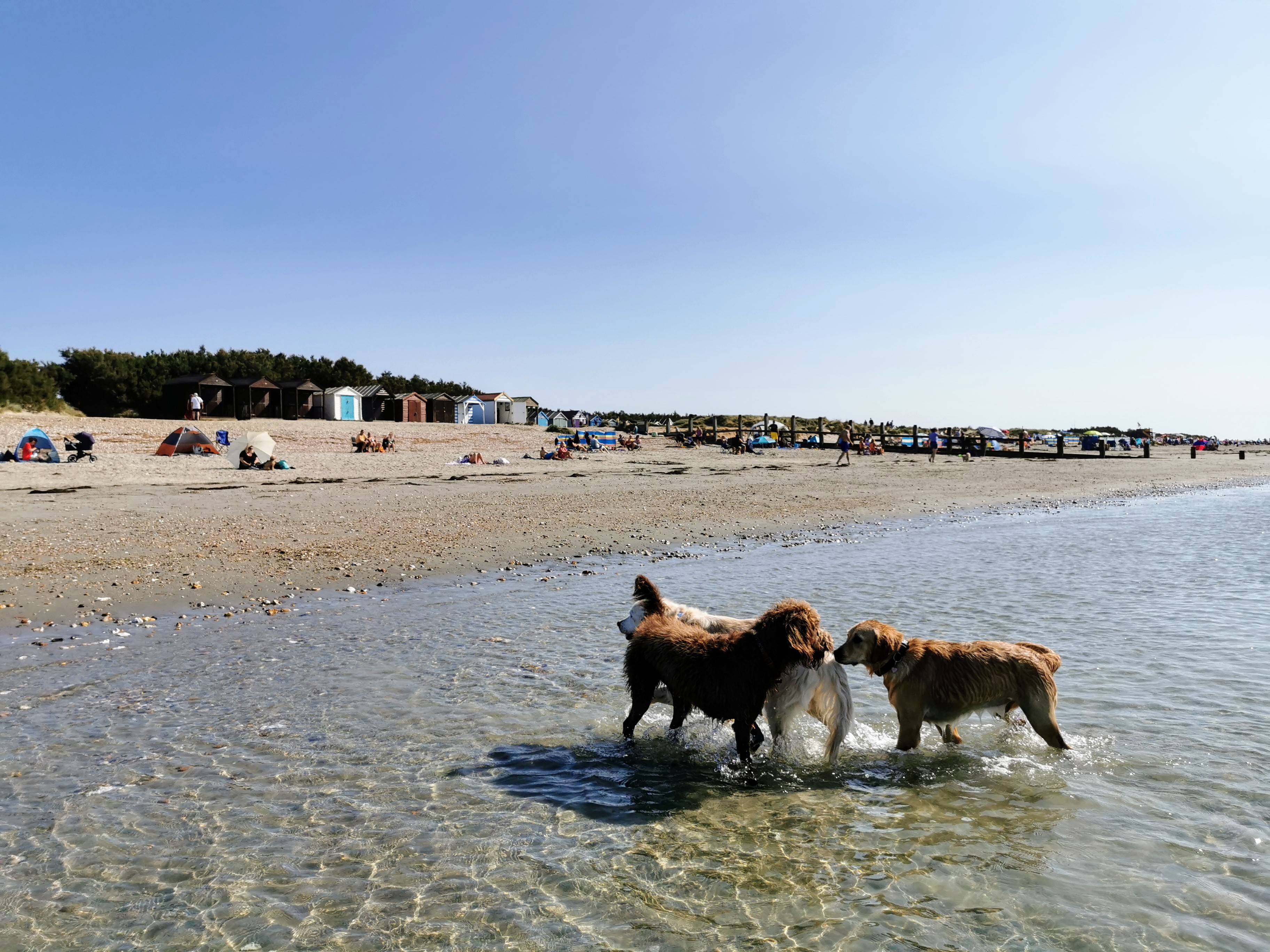
West Wittering is situated on the western edge of the Selsey Peninsula in the county of West Sussex. The beach is Blue Flag accredited with views of Portsmouth and the Isle of Wight. It’s even got colourful beach huts, it’s picture perfect. It’s believed that this is where the invading Saxons first arrived in the 5th century, after Roman power had dwindled in Britain. No wonder they decided to stay! Today, it’s just staycationers who are invading in their hordes.

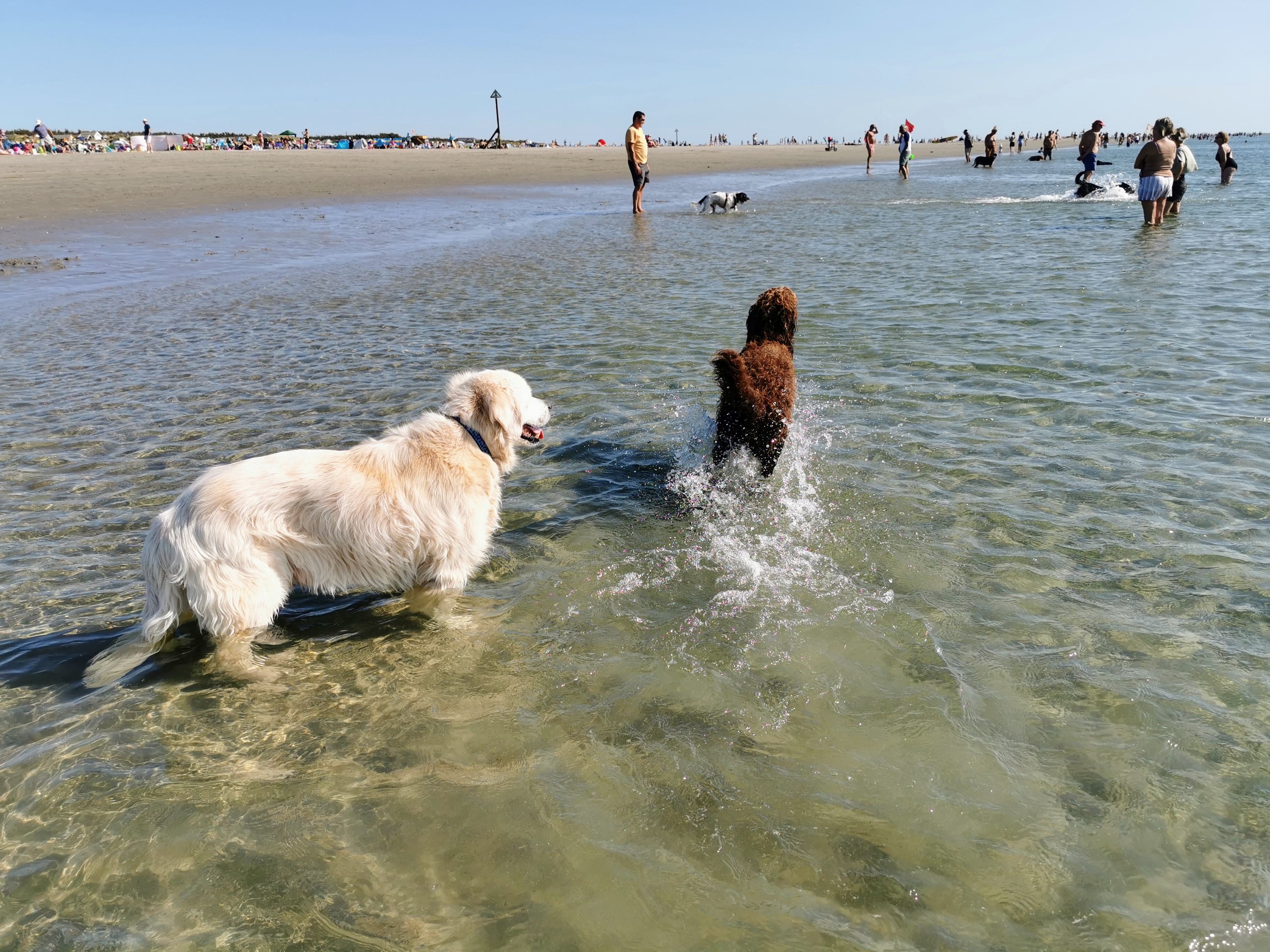
Amazingly unspoilt in this day and age, there’s no development in sight on this stretch of coast. But there are dogs…lots of them. In the Summer months the area between groyne 14a and groyne 18 is off limits to canines, but there’s still plenty of space for them to run and swim. Lizzie the Labradoodle is in heaven, and our old boy Henry sprints down to the water as quickly as he ever has in nearly 16 years of existence. By the way, isn’t groyne a great word? It’s a low barrier built from the beach to the sea to prevent erosion, in case you’re wondering.

For lunch, we walk a mile back to the village of West Wittering, where the dog friendly Old House at Home pub gets great write-ups. It’s the kind of place you’d like for your local, light and modern, with a big garden, prompt service and an interesting menu. The dogs get water before we get our drinks, as is right and proper. My cauliflower steak is tasty, and the husband enjoys his pizza, although Lizzie rejects a piece of crust, which is highly unusual.

The village itself is tiny – a church, a school, a pub – but amazingly has attracted celebrity residents such as Kate Winslet, Michael Ball, Nicholas Lyndhurst and Keith Richards. Where on earth did ‘Keef’ go to party in this quiet little place? Obviously it was everyone round to his house!

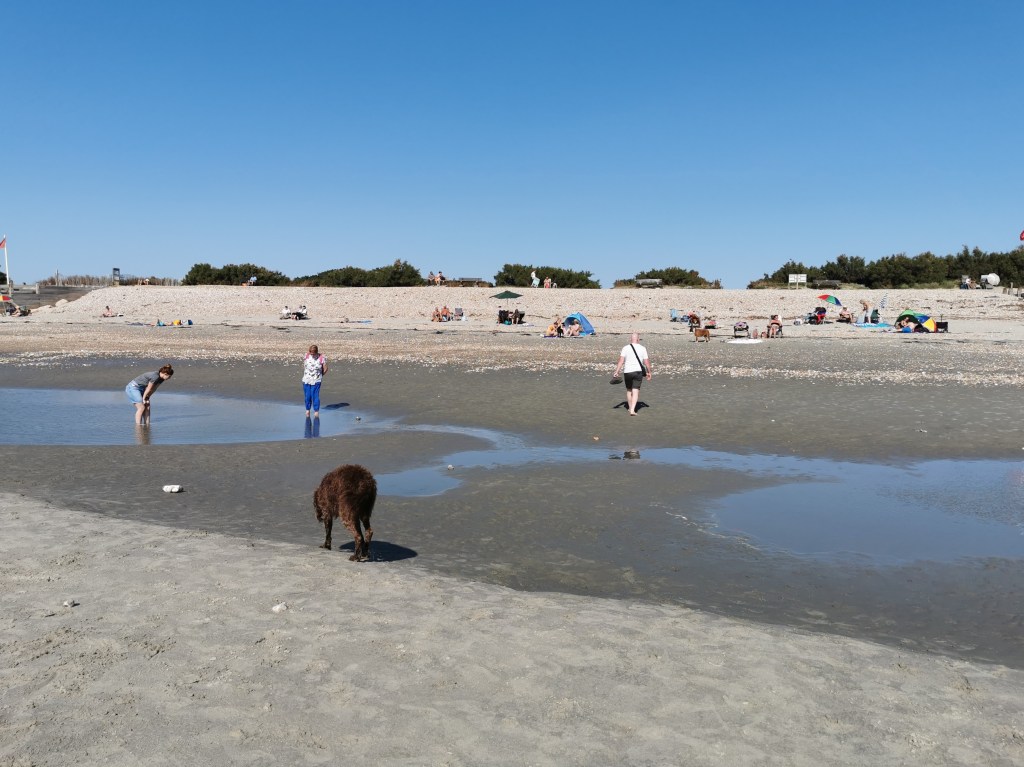
Back at the beach, the tide has gone out but the visitors keep arriving. There’s a huge queue outside the beach cafe, which makes me feel very smug about my pre-trip planning. Obviously some people do still try to be off the cuff, but I don’t recommend it. Not unless you enjoy queuing?

More paddling, the dogs are ecstatic. I’m now feeling very virtuous about staying in the UK this week, not only am I supporting our economy but I’m making our two doggies very happy. It helps that we’re having a mini-heatwave in mid-September. It’s always pot luck with the weather – if it were raining we would be having a lot less fun.

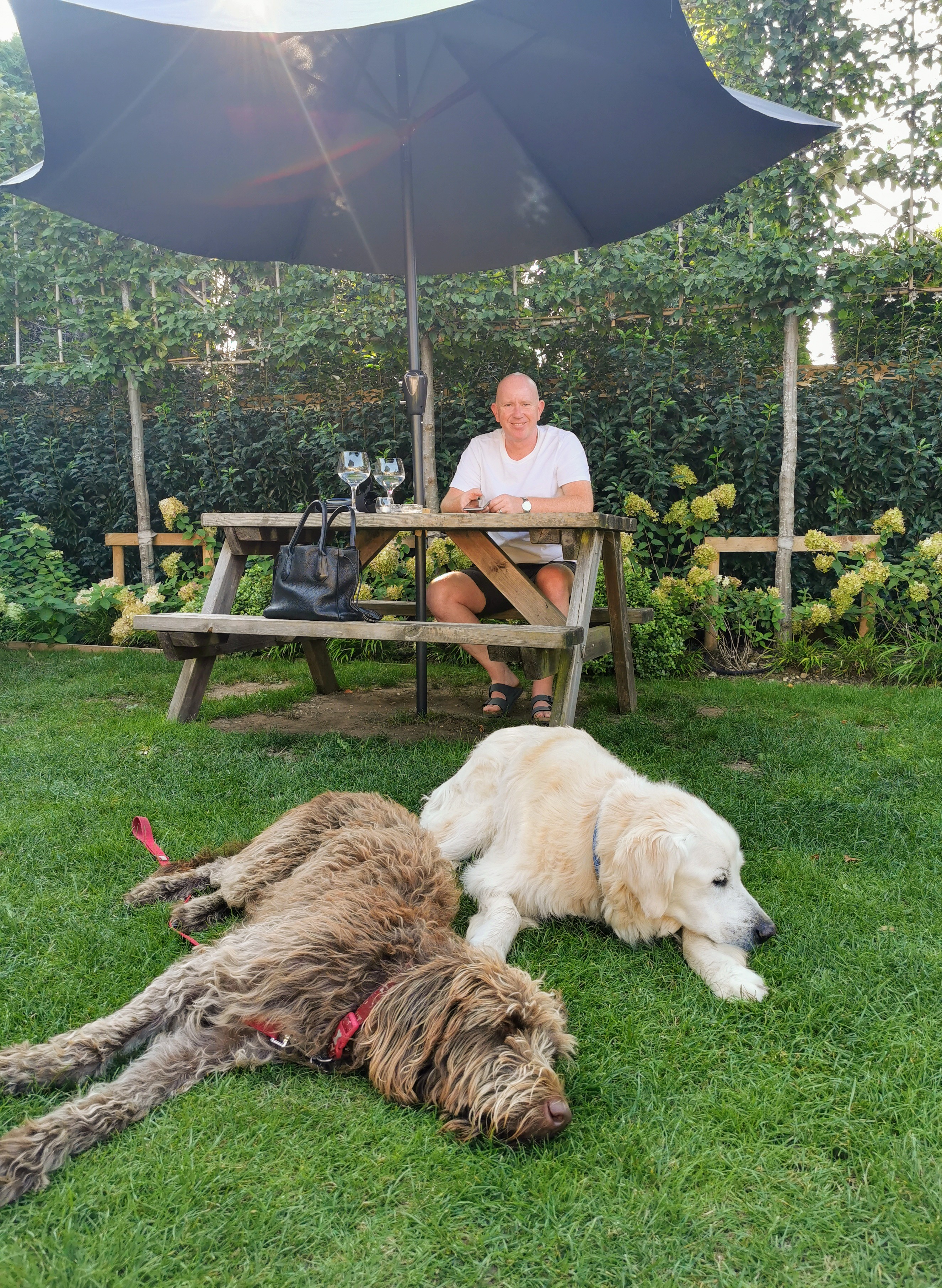
We’re staying overnight at The Horse and Groom in East Ashling, just outside the South Downs National Park. Dogs are welcome and food is a big focus, hurrah! Sounds perfect, and it very nearly is. We’re warmly welcomed and shown to our newly decorated ground floor room (easy access for the elderly pooch), then we make ourselves comfy in the lovely garden for a few drinks while the dogs roll around on the grass.

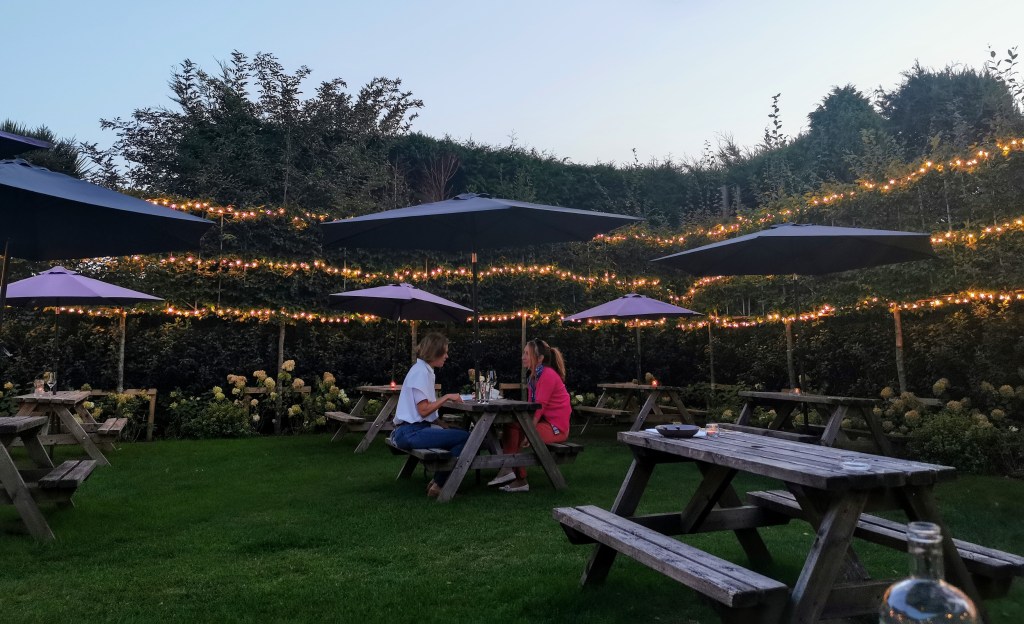
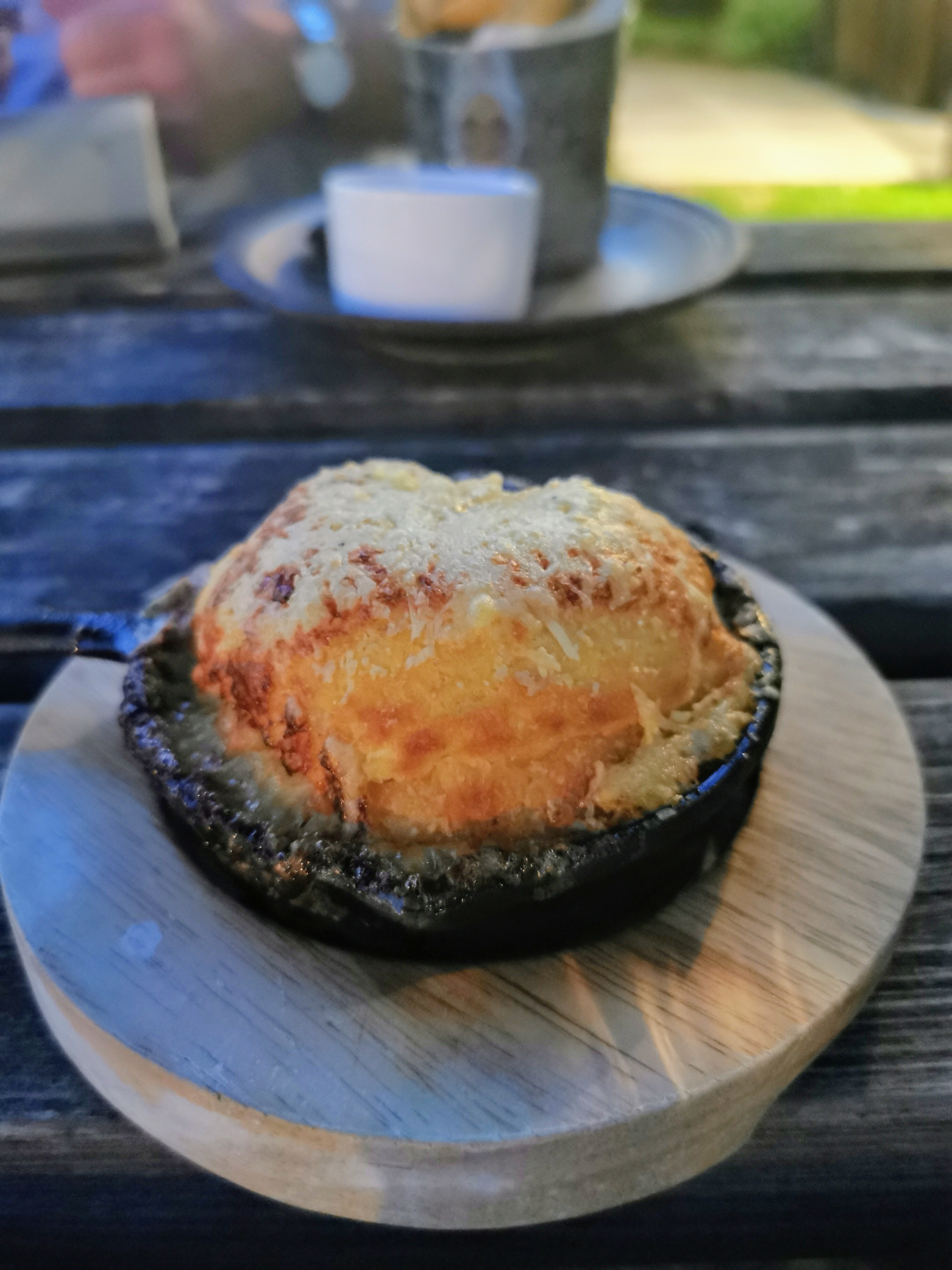
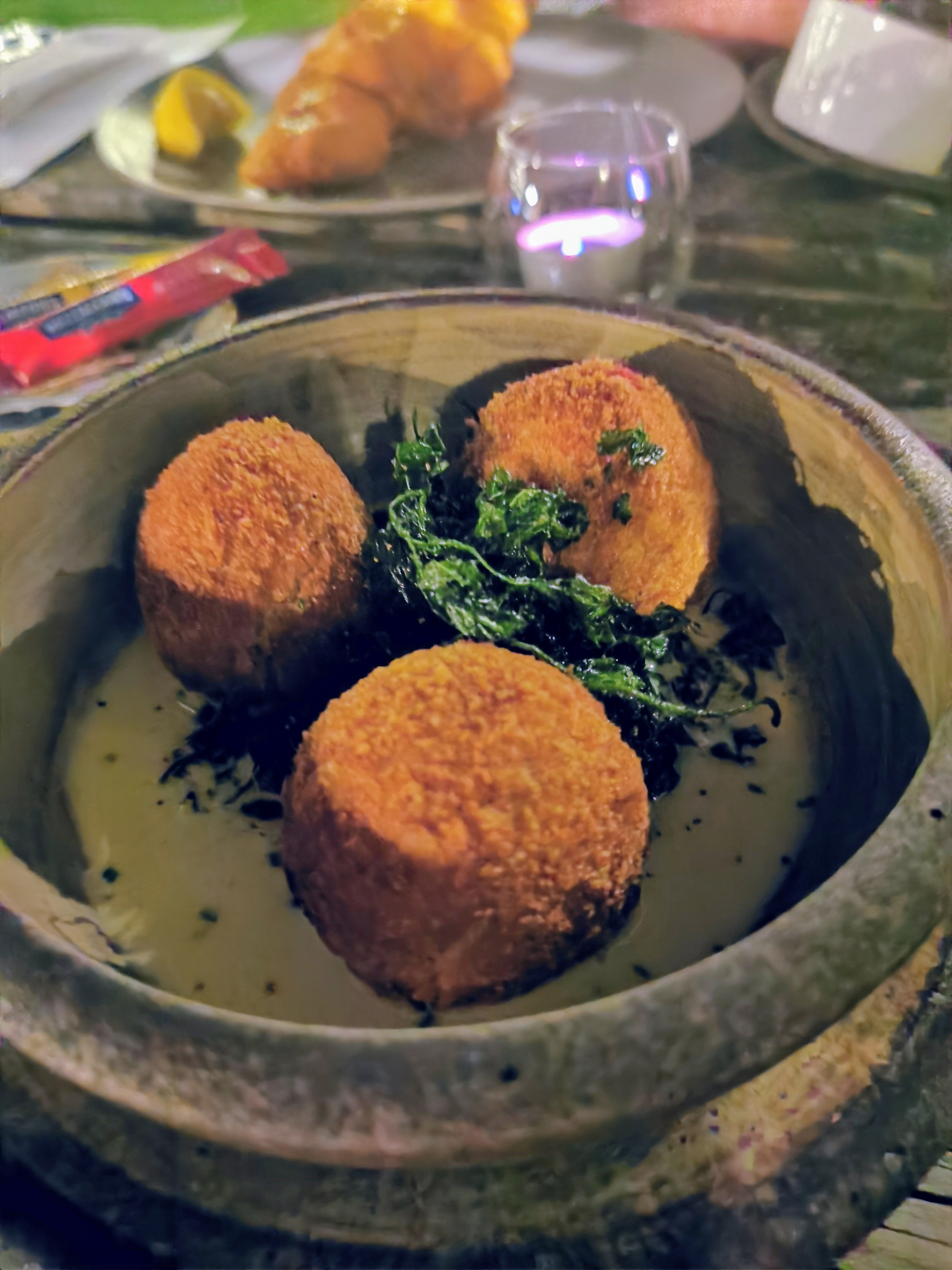
In the evening, the garden is really quite magical with fairy lights in the trees. It’s still warm enough to eat outside too, a huge bonus in September. Even better, the menu has us scratching our heads. What to choose when it all sounds so yummy…? I opt for cheese soufflé and fishcakes, and actually manage to hold off long enough to take photos before greedily devouring the lot. Very good indeed.

So what stops this place being perfect? Our bathroom is tiny, and I mean really small. Other than that, if I’m being picky, there’s limited choice for breakfast, but that does seem to be the norm due to coronavirus. My smoked salmon and scrambled eggs is delicious anyway. Our waitress brings treats for the dogs too, so everyone’s happy.

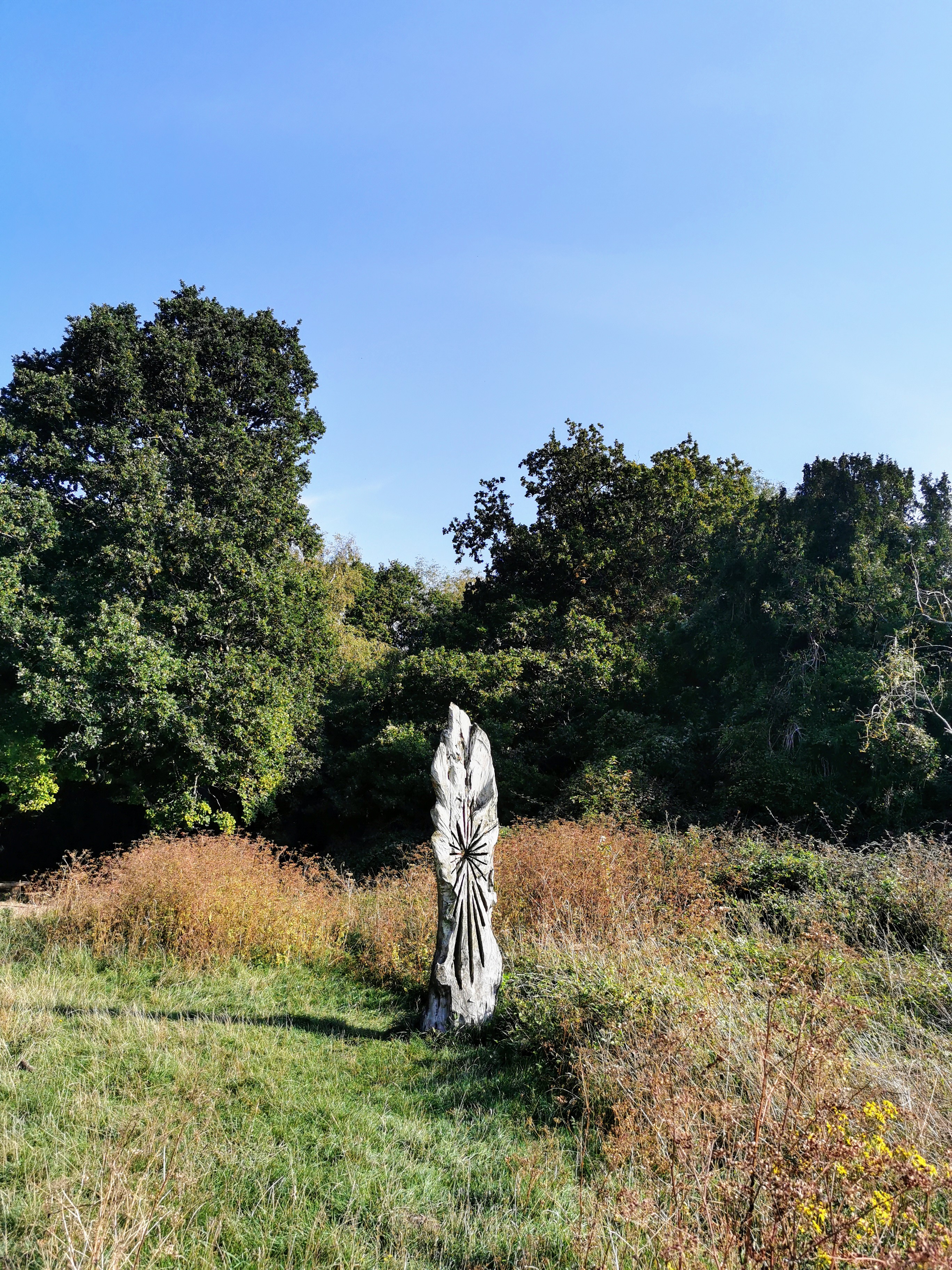
A five minute drive to the Village of West Stoke is next on the agenda. From the car park here we can walk into the Kingsley Vale National Nature Reserve, one of the first designated reserves back in 1952. Some of the ancient Yew trees here are 500 years old – among the oldest living things in the country.

As well as abundant wildlife, the reserve contains Bronze Age barrows, the remains of an Iron Age fort and old WWII training base – unexploded munitions are still found today so best to keep to the paths! By all accounts there are amazing views of the coast from the top of Bow Hill, but our old boy’s hill climbing days are over. No, I don’t mean the husband, he’s still pretty sprightly.

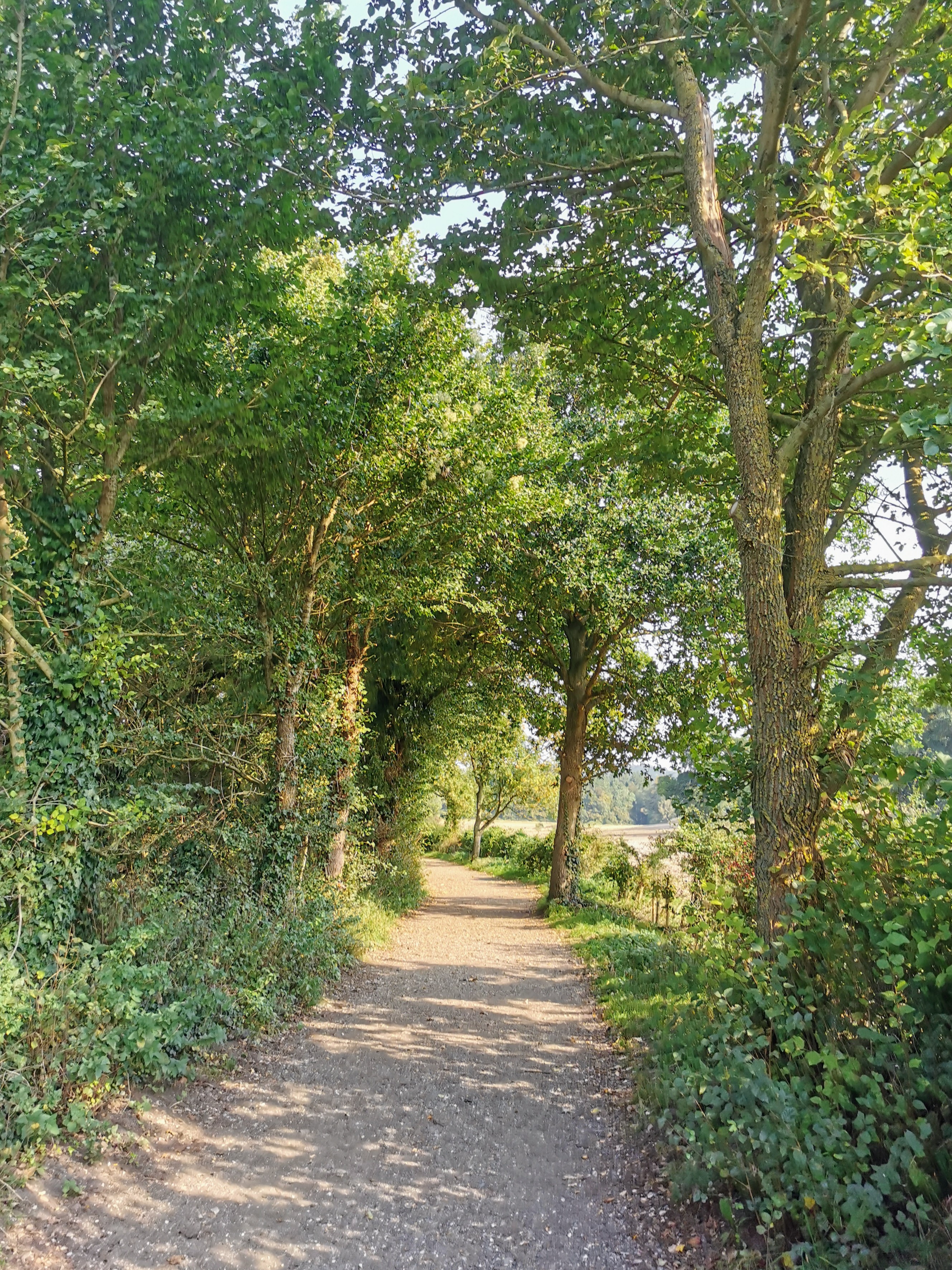
After a delightful (albeit slow) stroll through the rolling woods and fields of the South Downs, it’s time to head for home. We’ve all had a great trip, but Henry needs a rest now.

Spending the day as a Chelsea Girl

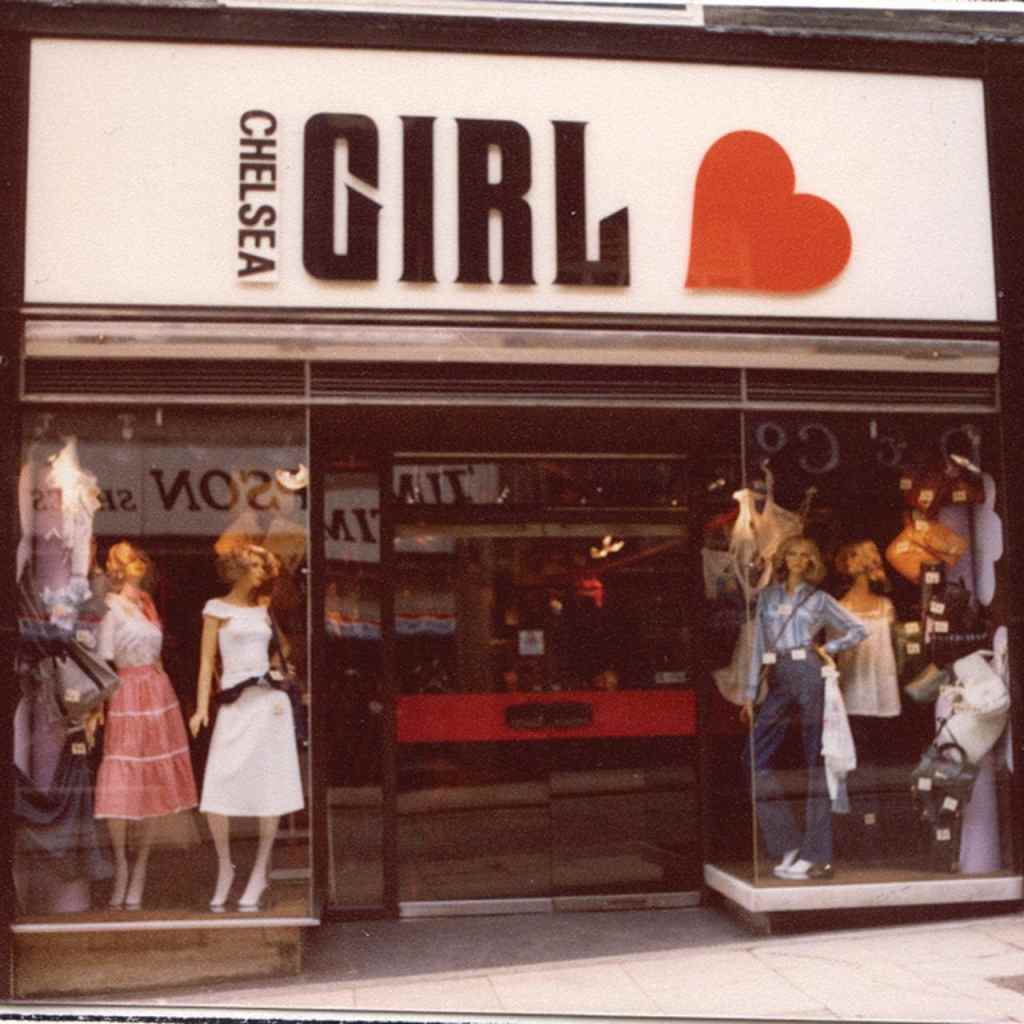
Who remembers Chelsea Girl? Growing up in Yorkshire in the 80s, it was the place to shop for fashion conscious teenagers. The first UK boutique chain was launched in 1965 by the Lewis brothers, four Eastenders who were building an empire of shops called Lewis Separates, but realised they needed a name with more pizazz if they wanted to achieve their goal of expanding across the country. Yep, they definitely had a point!

In the mid-sixties, the King’s Road in Chelsea was the hub of pop culture, conjuring up images of sophistication and exclusivity. So Chelsea Girl was born. In 1988 the name was changed again, to River Island but somehow it was never quite the same.

As you know, I love a trip to London. There’s just something about the Big Smoke, especially now when it’s devoid of all those irritating tourists. There’s always something new to discover, and so today I’m dragging the husband off to explore the streets of Chelsea. Actually, there are still plenty of shops along the King’s Road, so he doesn’t need much persuasion.

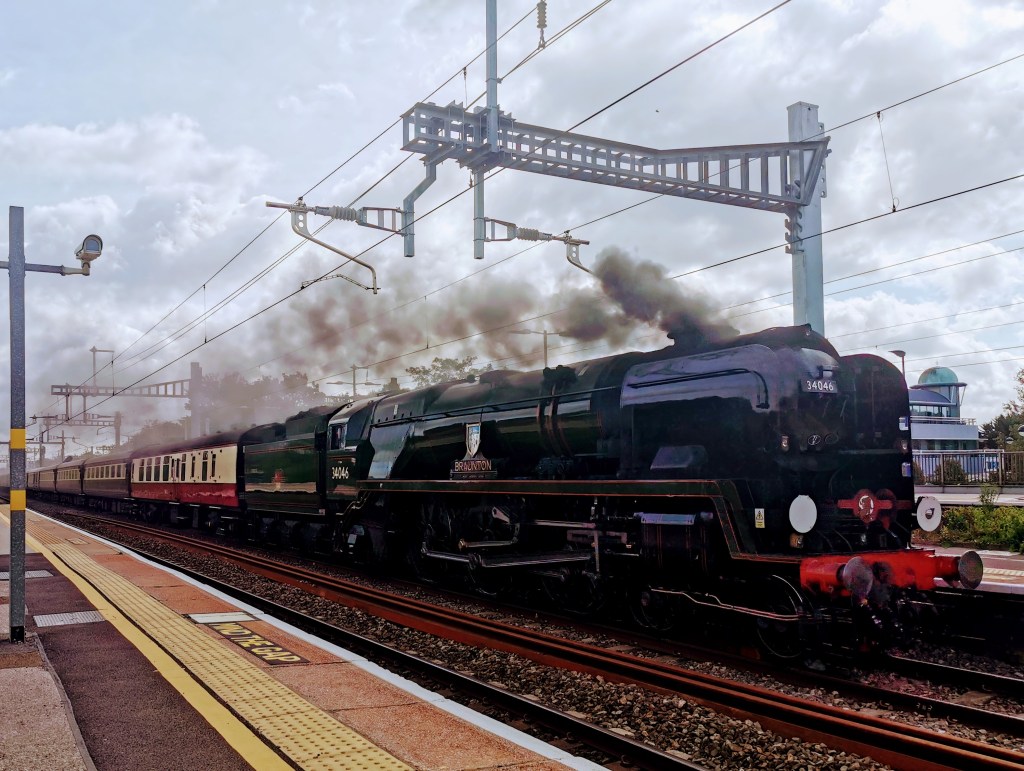
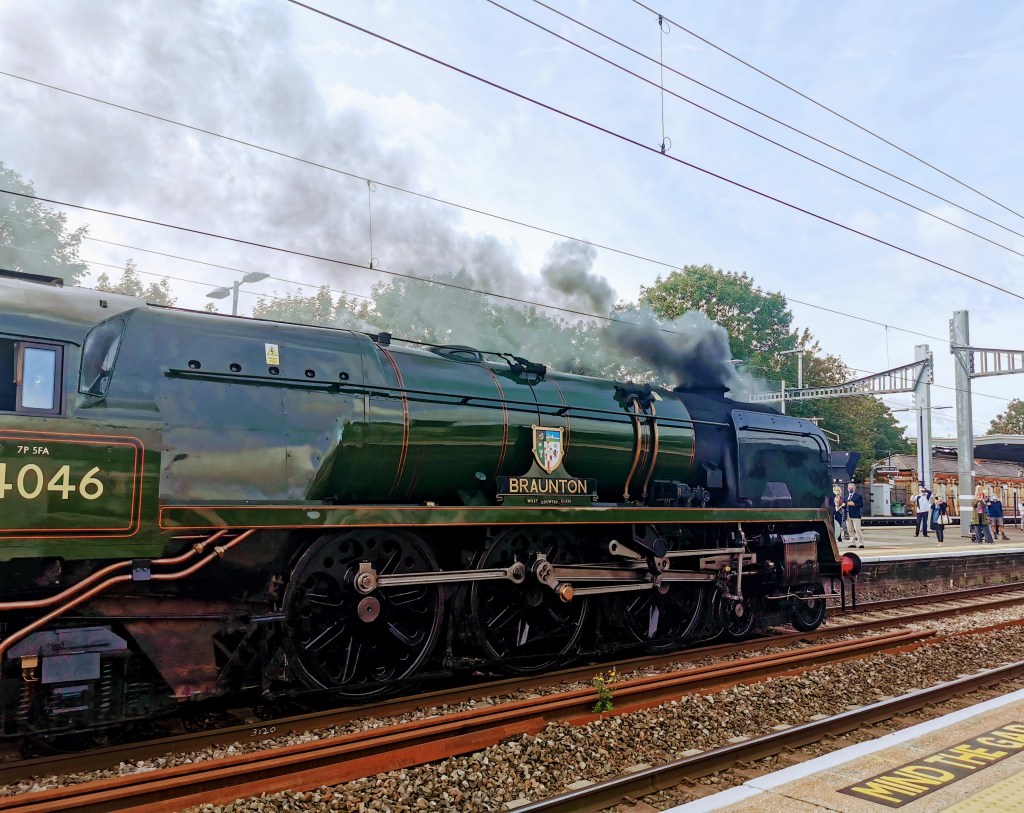
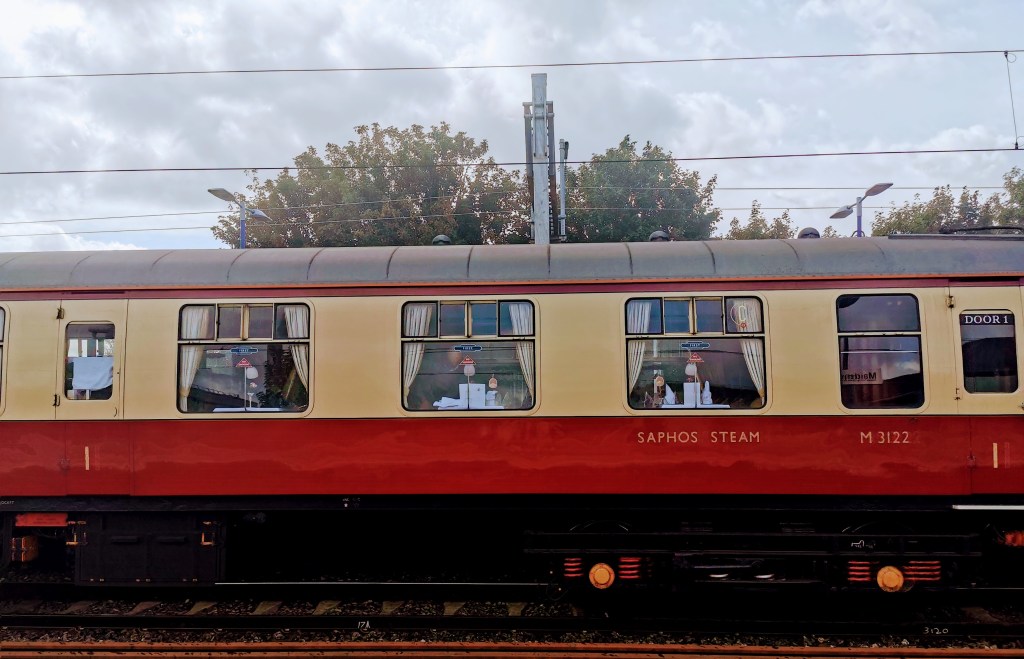
There’s a bit of excitement before we even get on our Paddington-bound train. We’re wondering why there are lots of dressed-up sexagenarians on the opposite platform, well it turns out they’re going on a classic steam tour of the Cotswolds. Lucky them! The smoky air is probably something we could do without but the swanky dining car looks very nice.

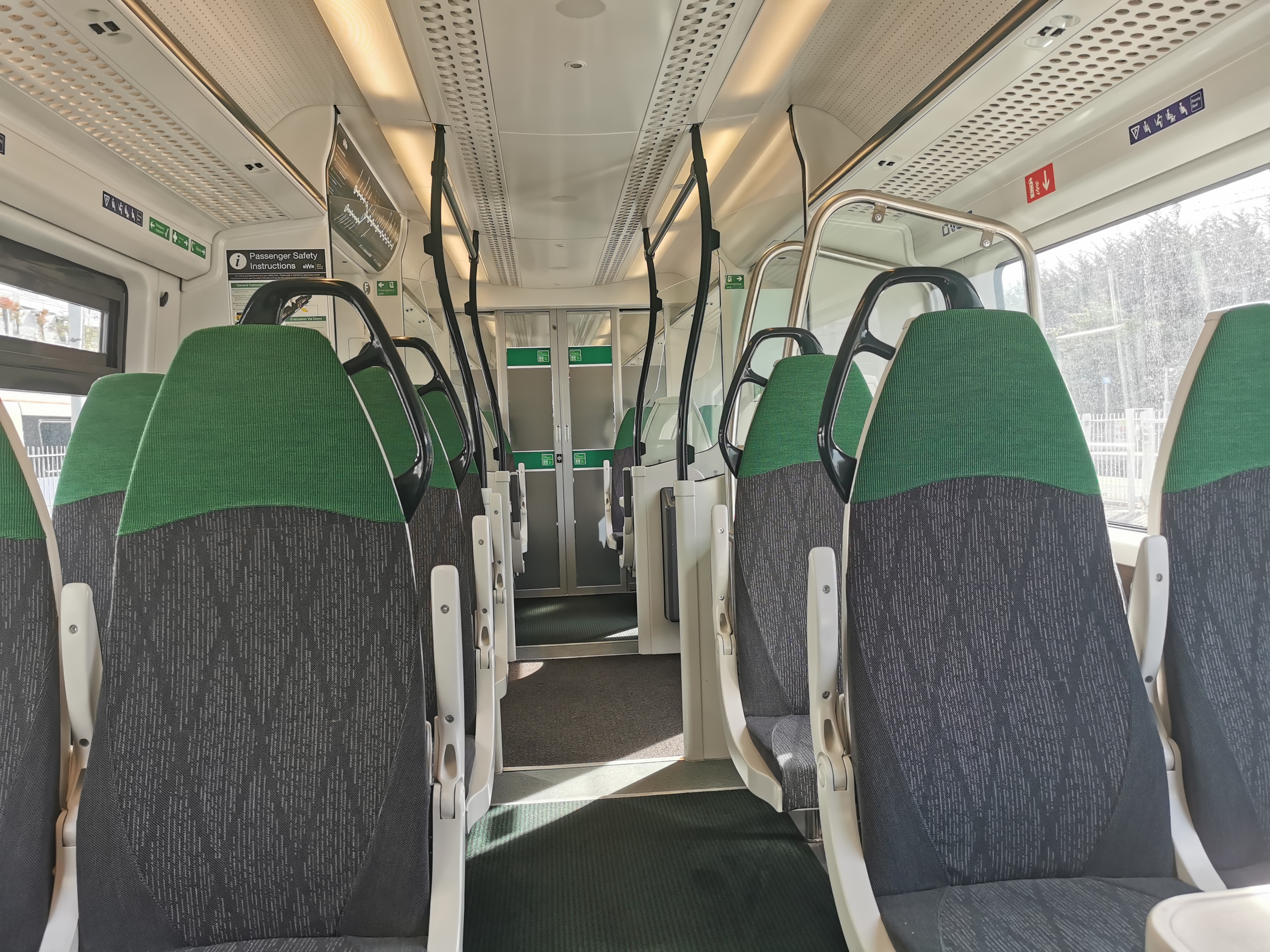
We jump on our rather less exciting but much emptier train, once again wondering if masks are really necessary when you’re the only passengers in a carriage. Apparently we can’t be trusted to use our common sense…

Chelsea always had a certain cachet even before the Swinging Sixties. King Henry VIII (yes, him again) acquired the manor of Chelsea in 1536 and ever since then it’s been a popular location for the wealthy. Property is eye-wateringly expensive here, even by London standards.

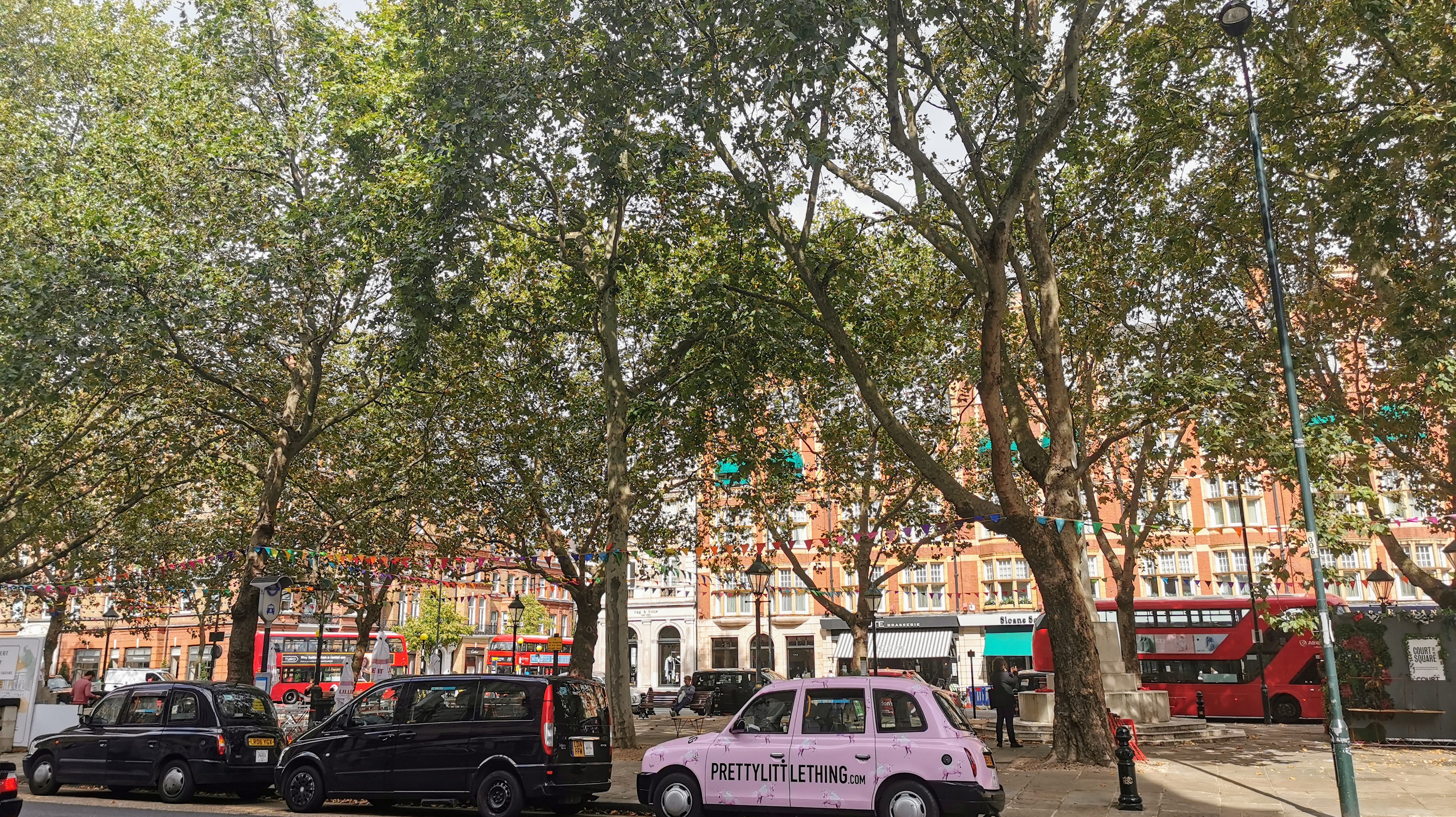
Energing from the tube at Sloane Square on the eastern border of the district, there’s immediately a bit of a buzz in the air. It feels a bit more ‘normal’ than other parts of London we’ve visited, i.e. busy, like pre-covid days. The first shop we see is Hugo Boss, which sets the scene perfectly. The second is the behemoth of Peter Jones, which has been here since 1877. It’s now owned by John Lewis, but I like the fact that it’s kept the name of the original founder. Still, it’s an exceptionally ugly building, even though it’s Grade II listed.

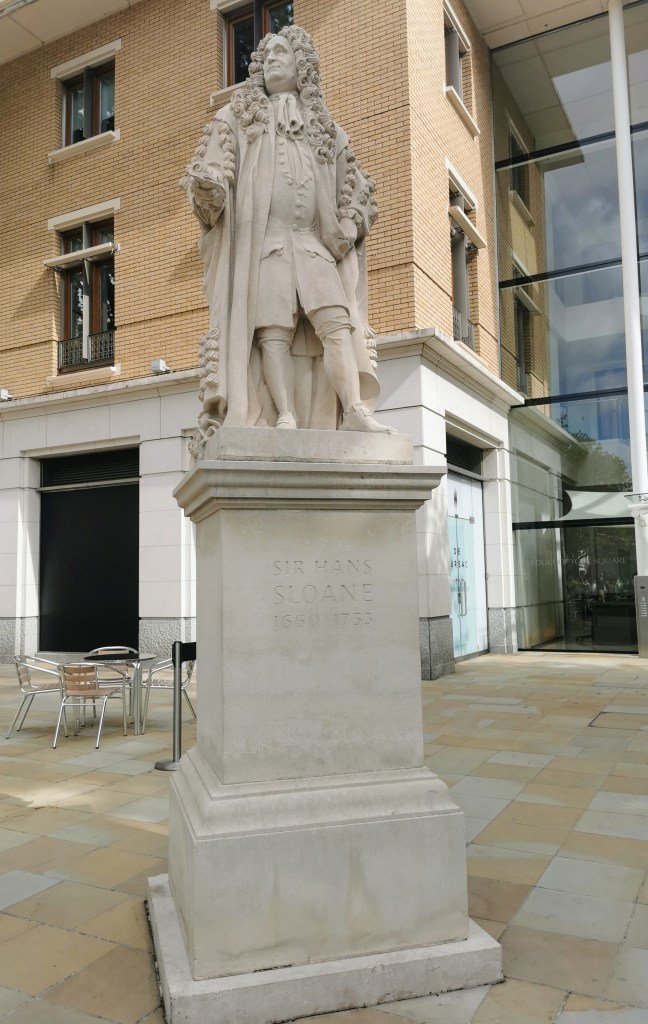
Sloane Square was named after Sir Hans Sloane, whose statue stands just nearby. A doctor and avid naturalist and collector, his bequest of 71,000 items formed the basis of the national collections at the British Museum, the British Library and the National History Museum. He also invented drinking chocolate, which will be much more of a vital achievement for some readers, I’m sure.

More recently, in the 80s and 90s, Sloane Square was associated with ‘Sloane Rangers’ – posh young women who strode around Chelsea wearing designer clothes and tossing their hair. The ultimate Sloane was Princess Diana, but not that much has changed – Kate Middleton lived in a flat in Chelsea before marrying Prince William, and the stereotype has been perpetuated by the TV series Made In Chelsea. I find it hard to believe that viewers have sat through 19 series of this tosh, but apparently some people enjoy watching totally vacuous idiots pretending to live glamorous lives. Takes all sorts…

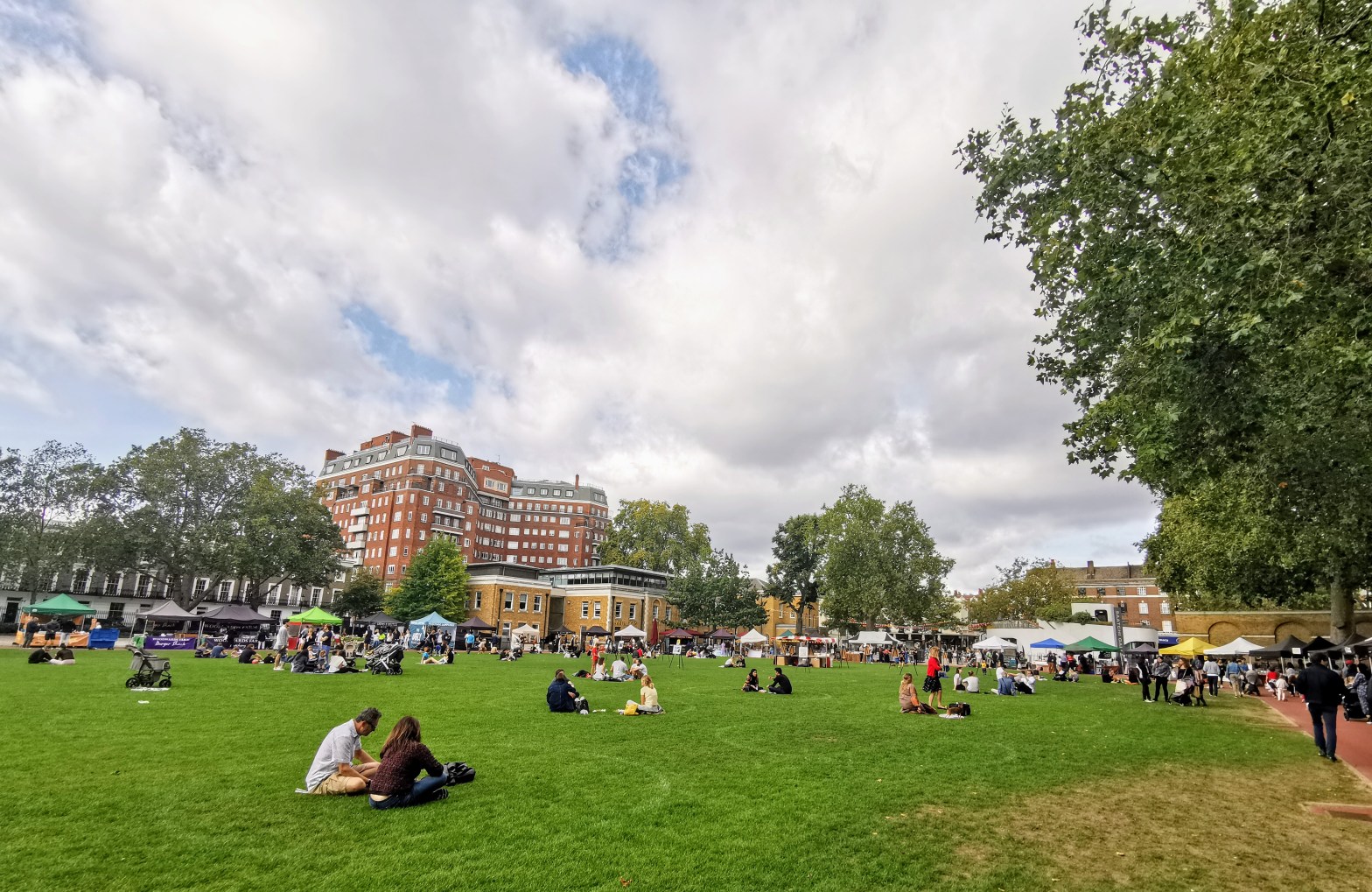
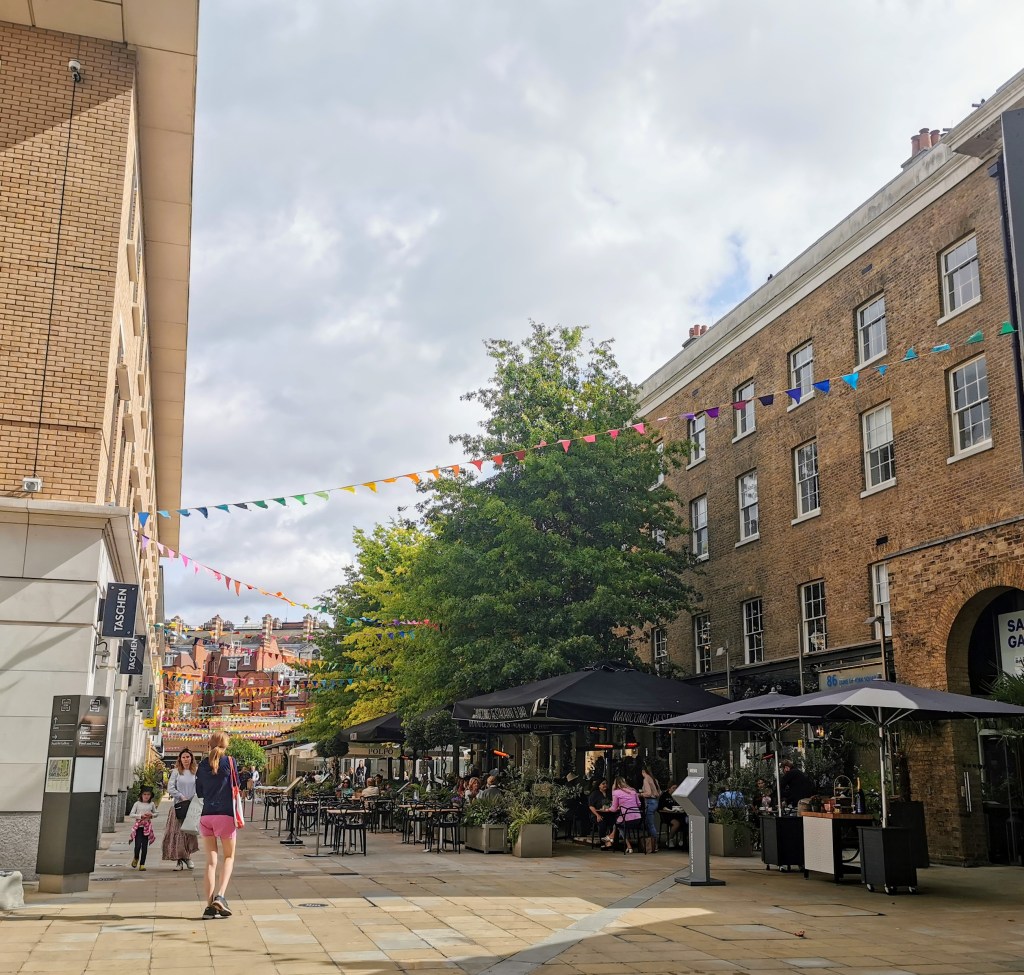
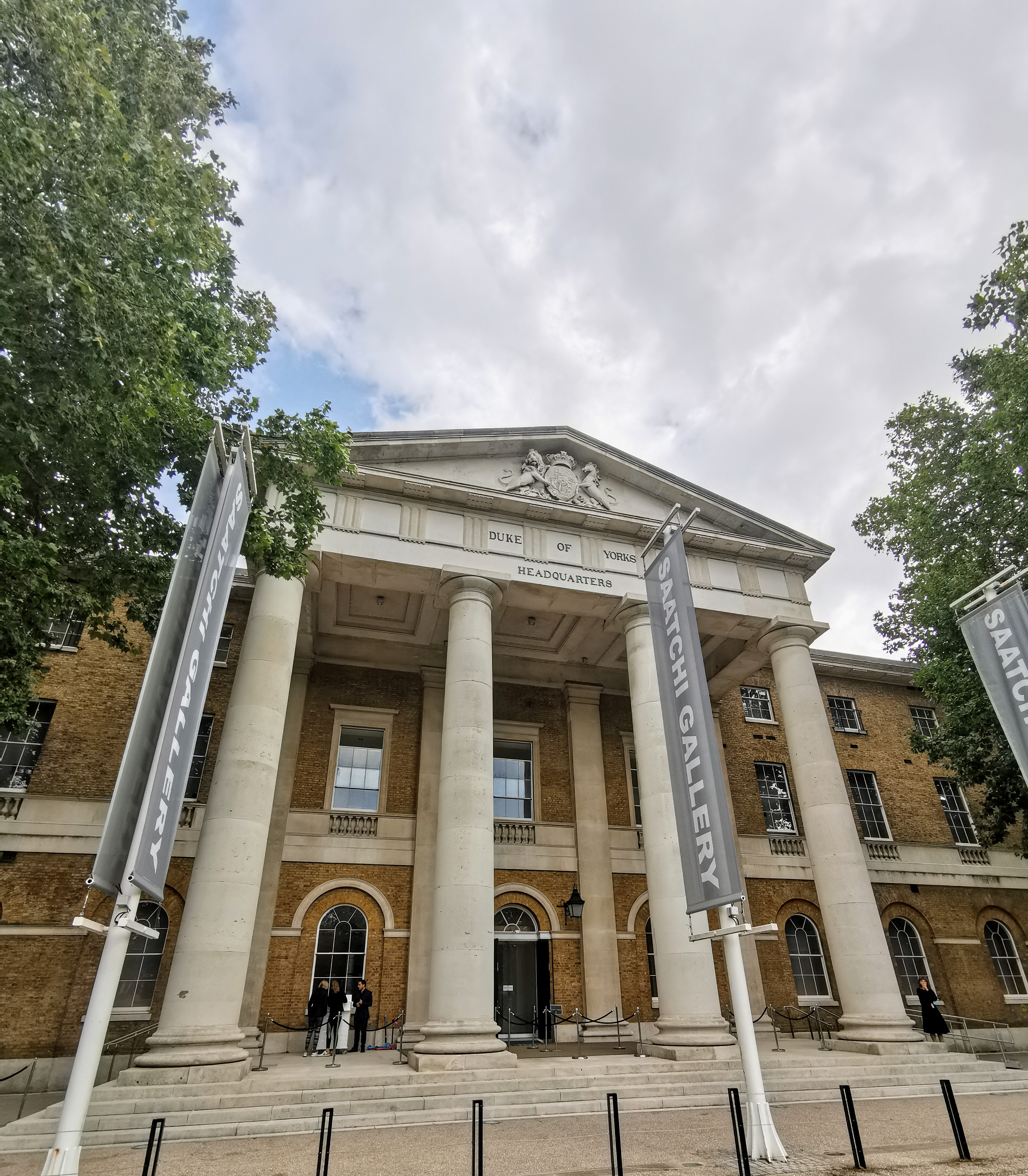
Round the corner from the square, the Duke of York’s Barracks, built in 1801, have been redeveloped as a shopping and eating destination, with a farmers market and the Saatchi Gallery taking pride of place. It’s a busy and attractive place, with lots of shops and cafes full of shiny, happy people. What coronavirus?

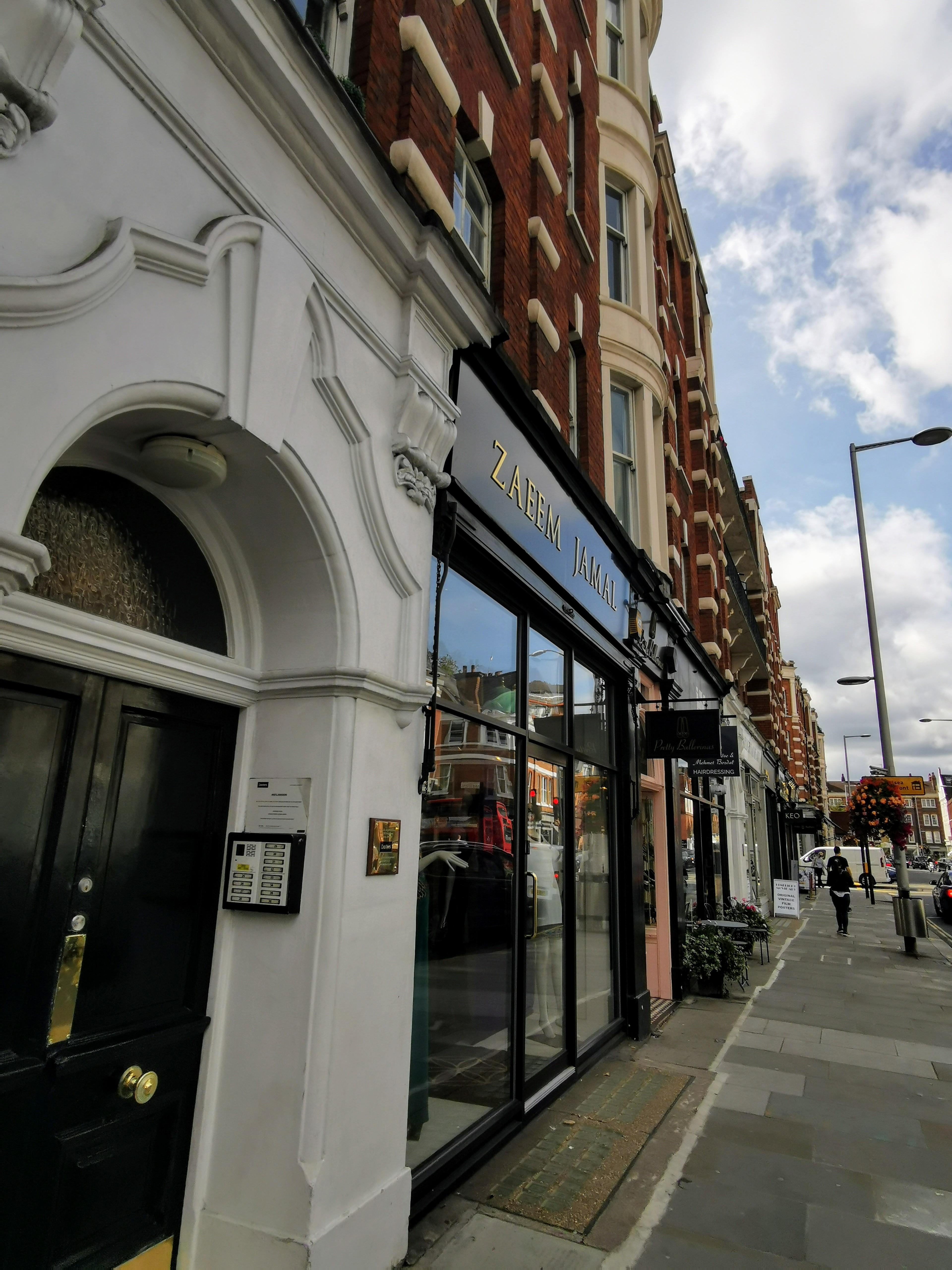
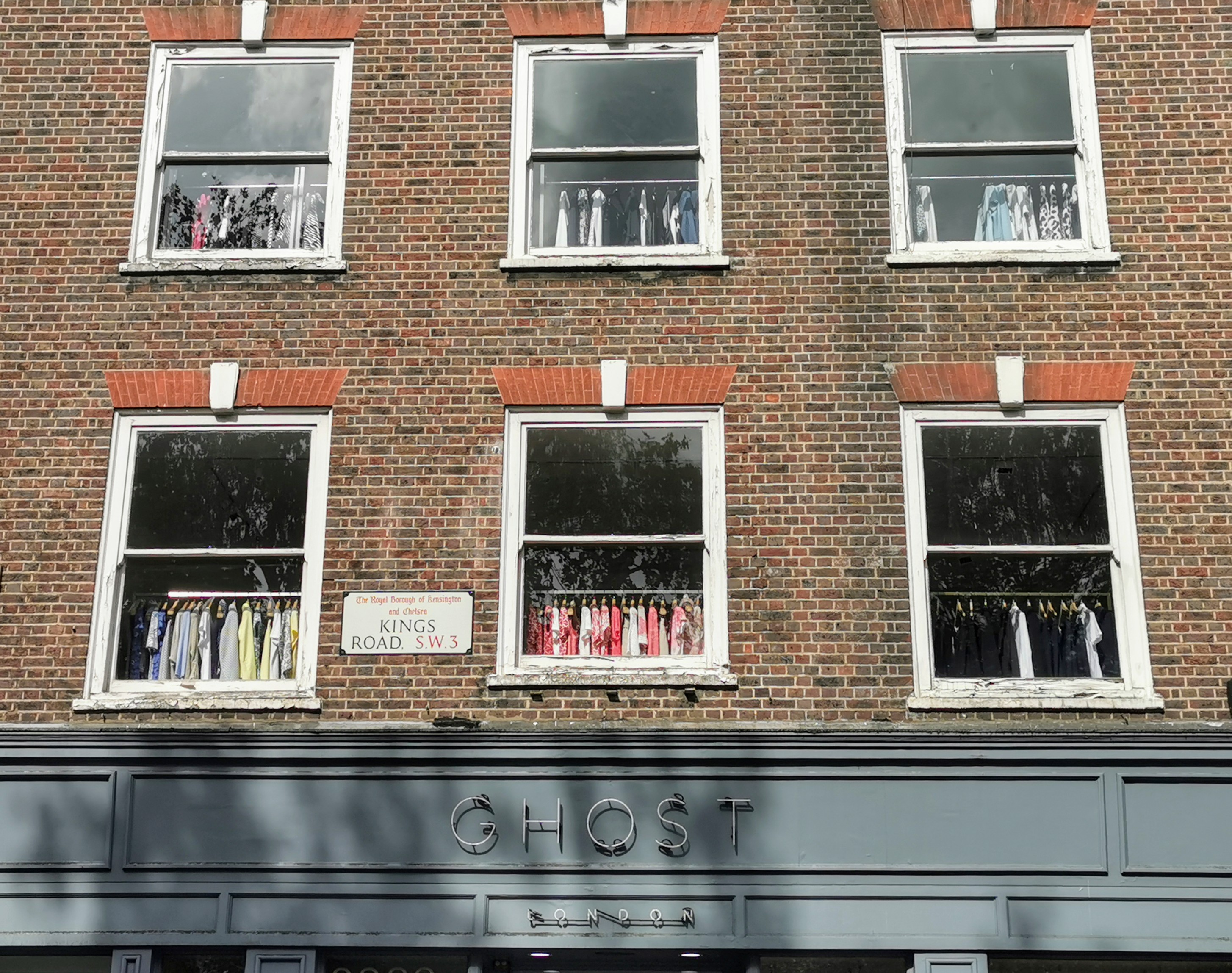
Walking west along the King’s Road, Chelsea’s main shopping strip, there are a lot of well-honed twenty somethings wearing sports gear and carrying designer bags, but equal numbers of alternative 40 and 50 somethings with bizarre hairdos and Boho outfits. It’s an interesting mix. We like the vibe, but feel like it would be hard work to live here. Maidenhead is much more forgiving!

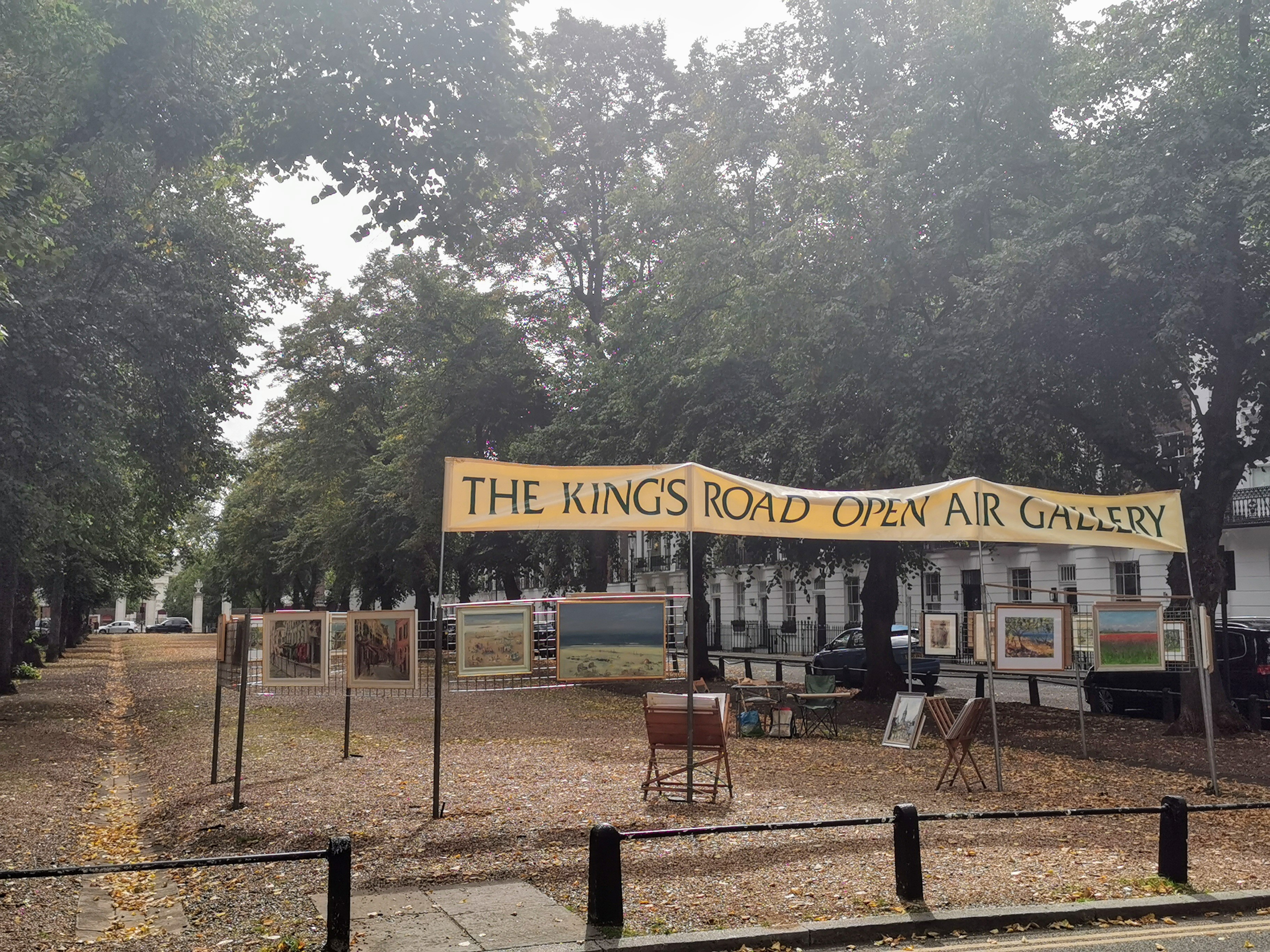
The King’s Road was in fact a private road built in 1694 for the sole use of the monarch at the time, Charles II, so that he could get to Kew with no hold up due to mere plebs getting in the way. Can you believe it remained private until 1830? Unless you were well connected that is. It beggers belief doesn’t it? Today it’s a varied mix of designer boutiques, upscale restaurants and quirky independant venues of all kinds.

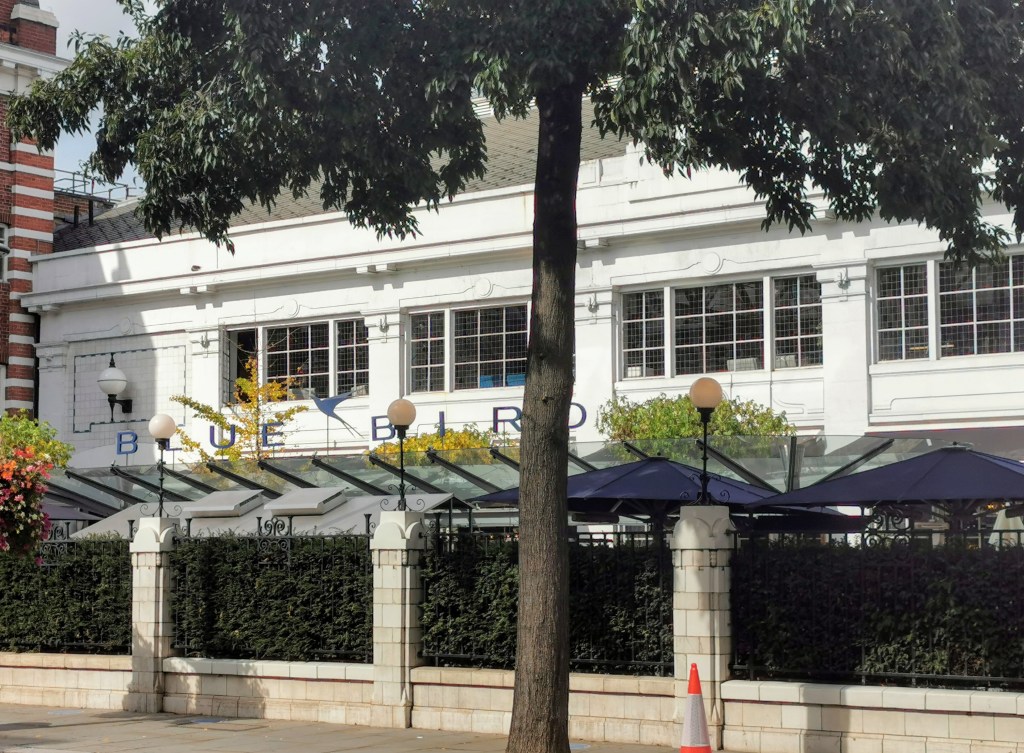
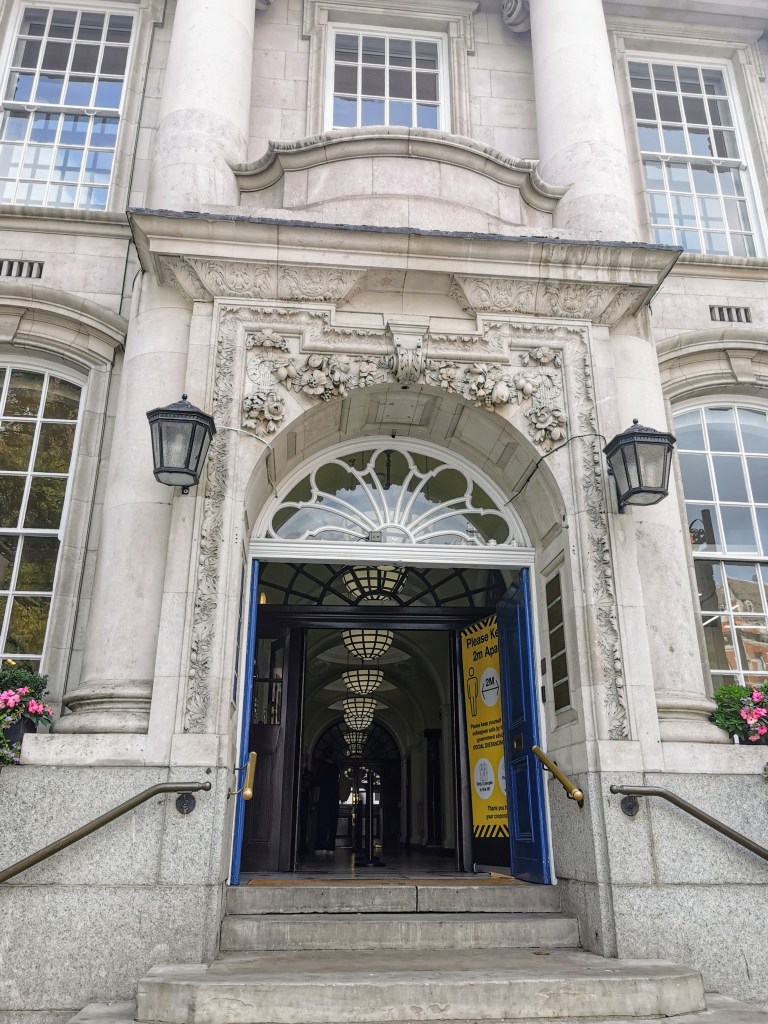
We pass the distinctive art deco facade of the famous Bluebird restaurant, which Sir Terence Conran developed from an old garage and made into a Chelsea landmark. At the Old Town Hall there’s a wedding taking place, but we don’t recognise anyone. Lots of stars have tied the knot here – Judy Garland, Marc Bolan, Pierce Brosnan, Hugh Grant, the list goes on…

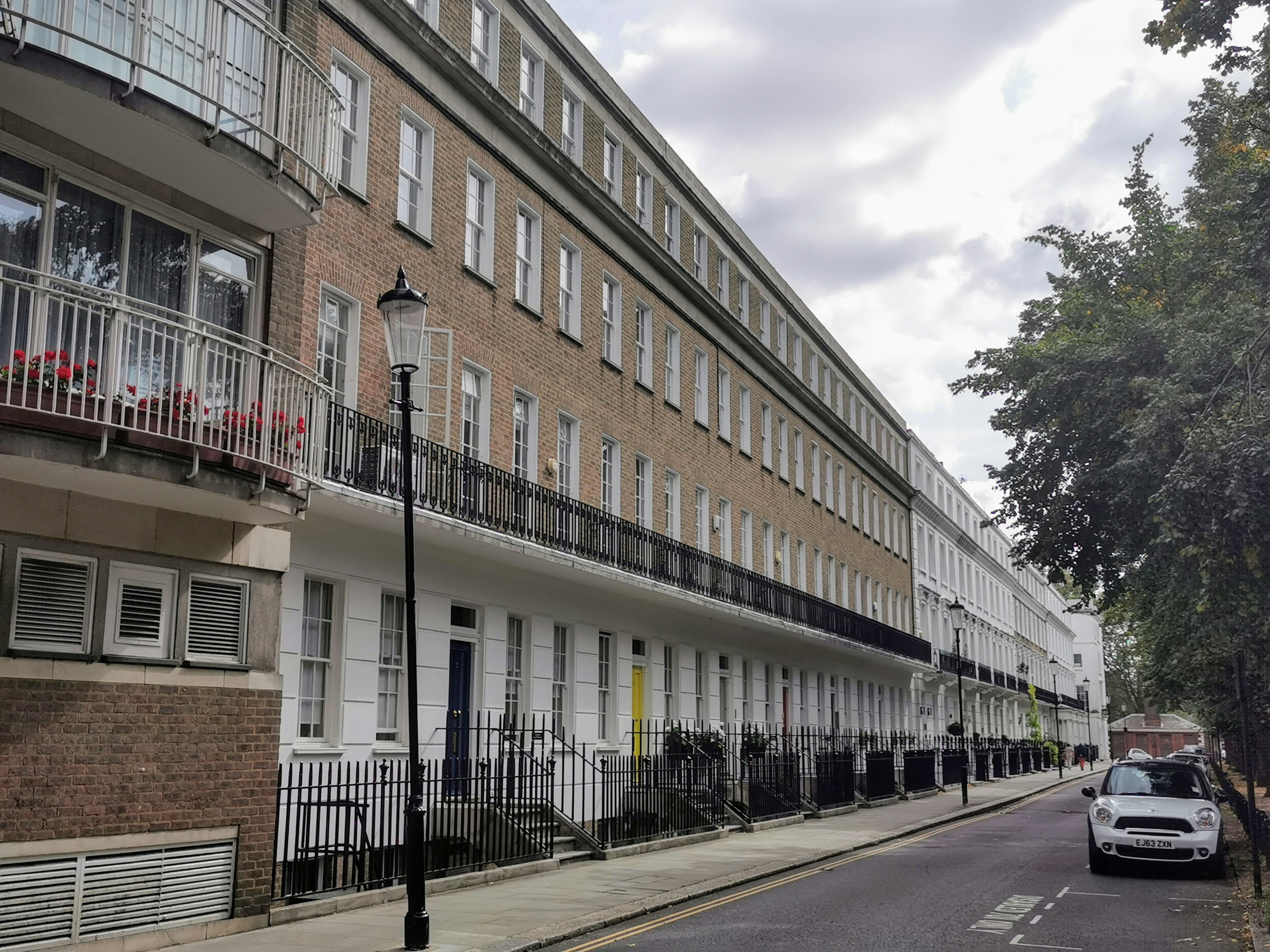
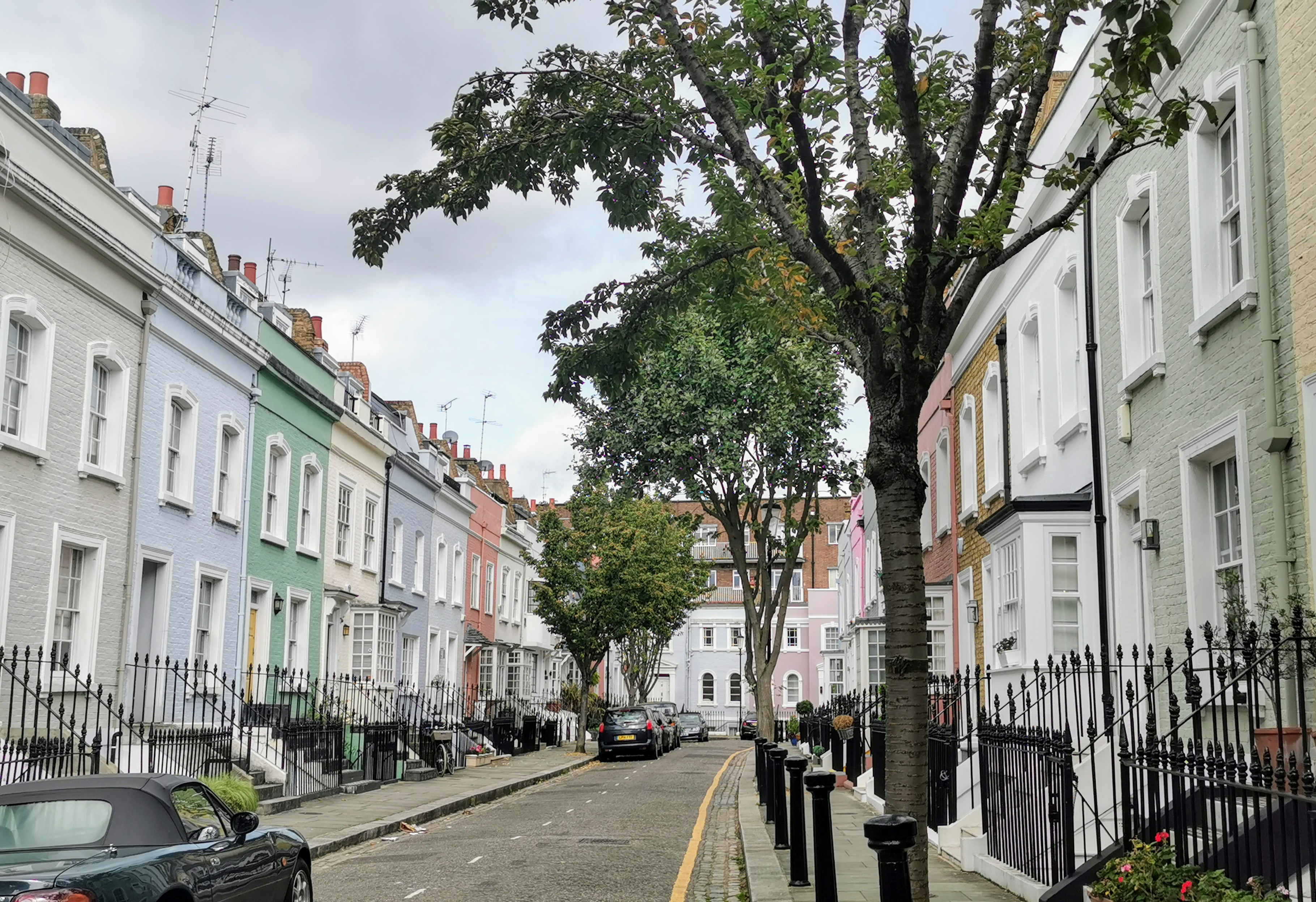
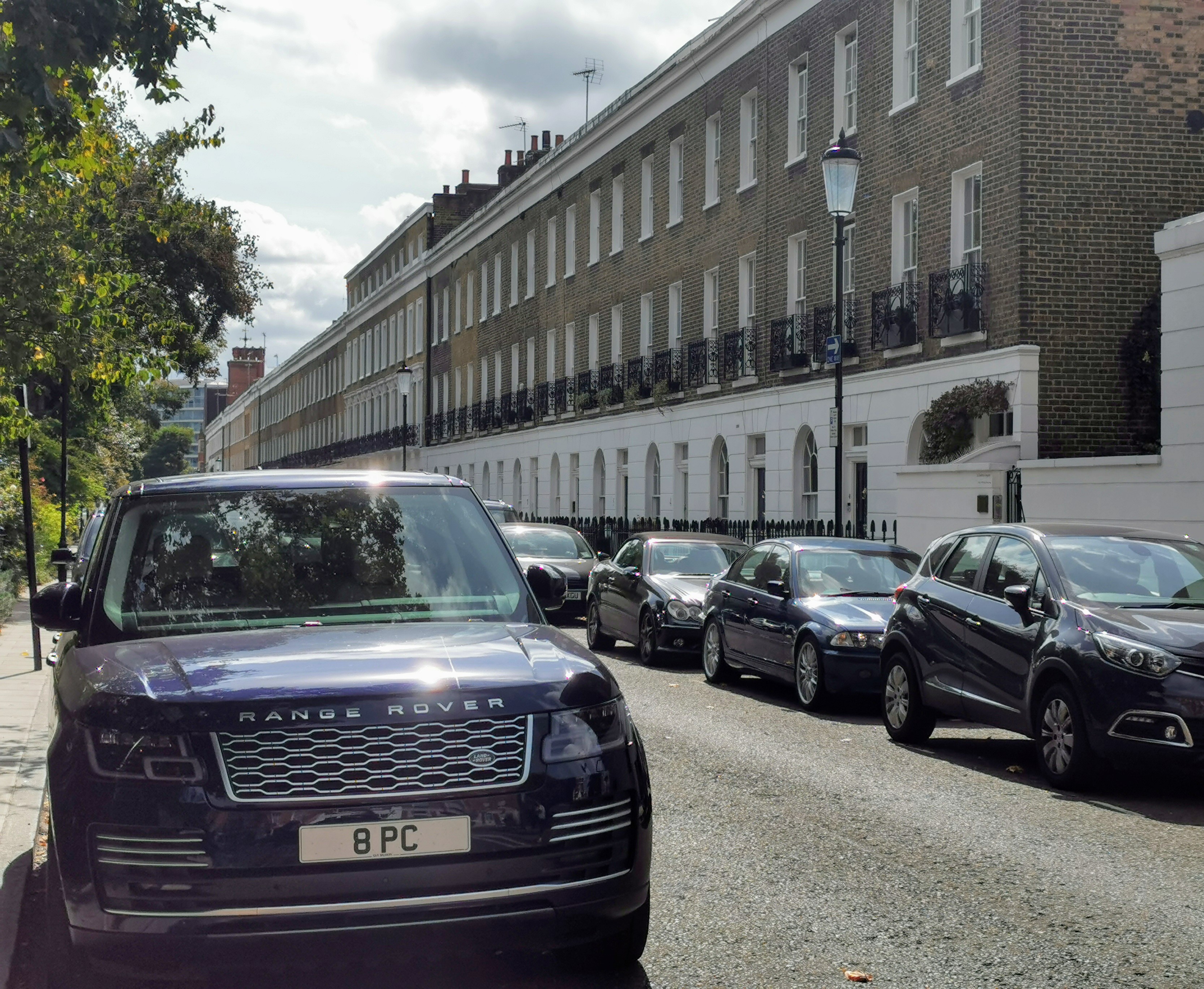
Branching off to both sides of the road are streets of beautiful terraced houses, both formal and slightly more cottage-like. The husband is getting serious house envy! Dream on, the average price for a property here is a cool £2.2 million.

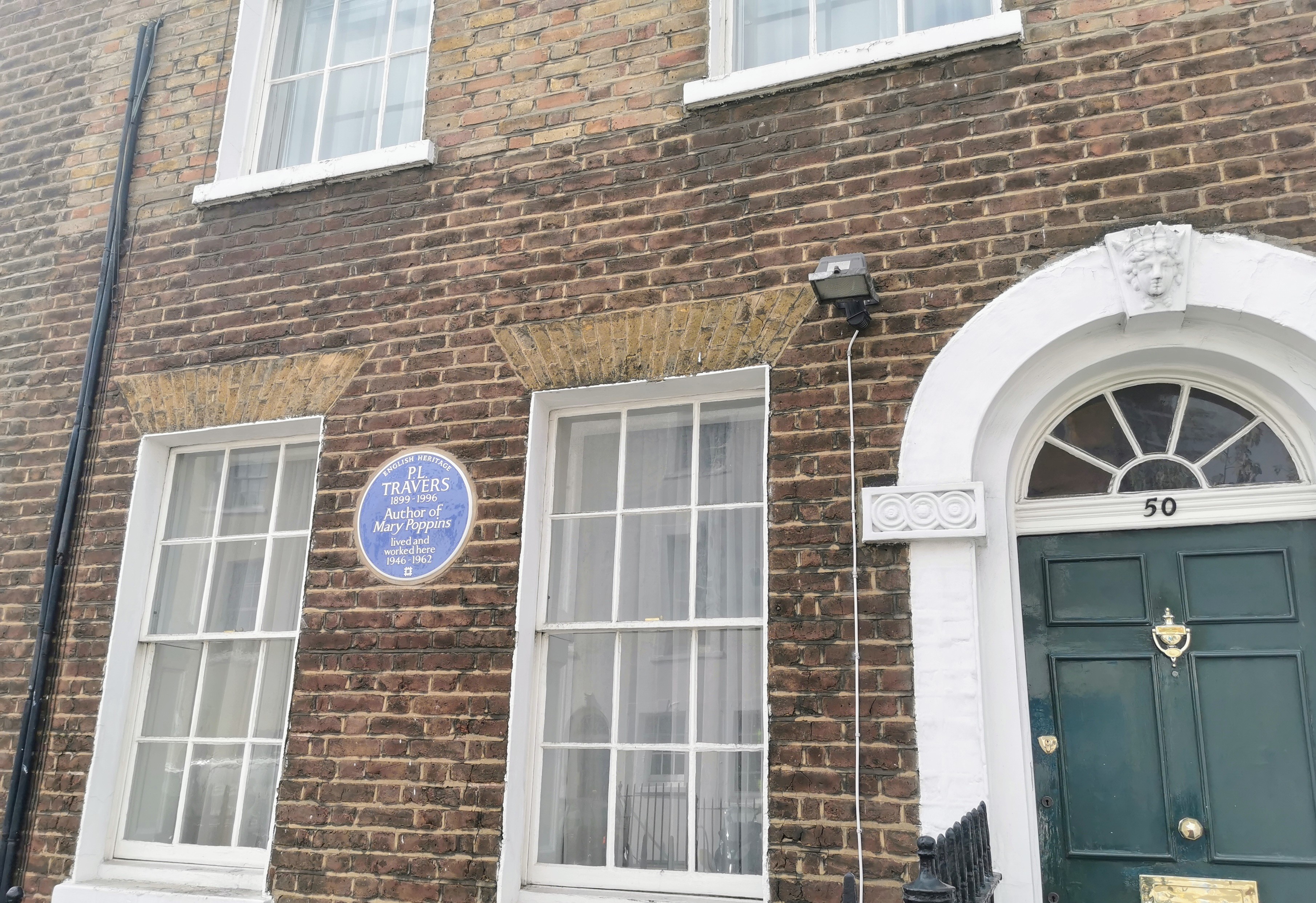
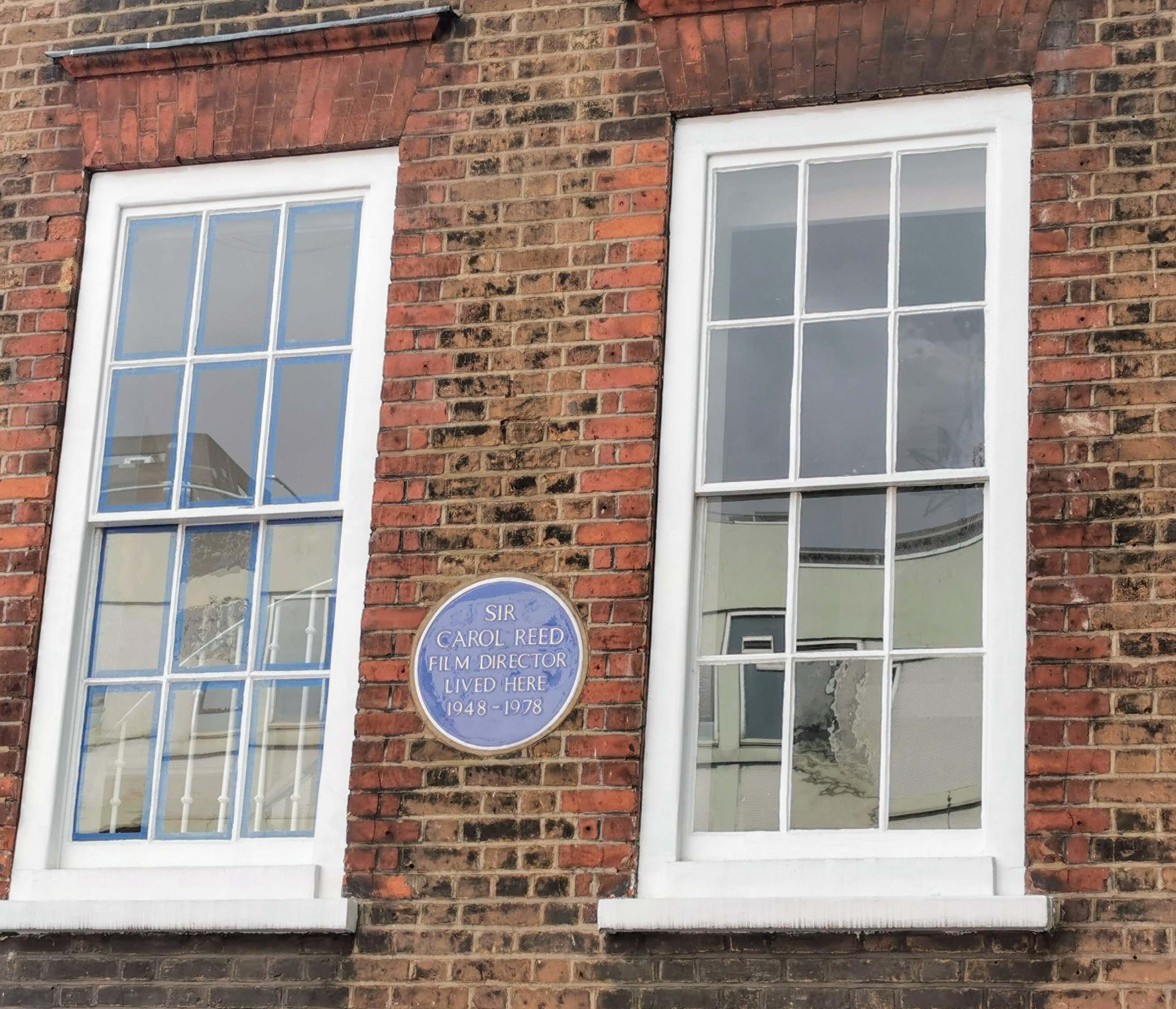
We may not be able to afford to live here, but famous names have always abounded in Chelsea. In the past, this was an area that attracted writers, artists, musicians and bohemians from Enid Blyton and Agatha Christie to Mick Jagger and Eric Clapton. There are blue plaques galore here, although as usual some of them are a tad obscure. We notice PJ Travers, who wrote Mary Poppins and Carol Reed, director of The Third Man and Oliver! Every other building can boast of a famous resident, it seems.

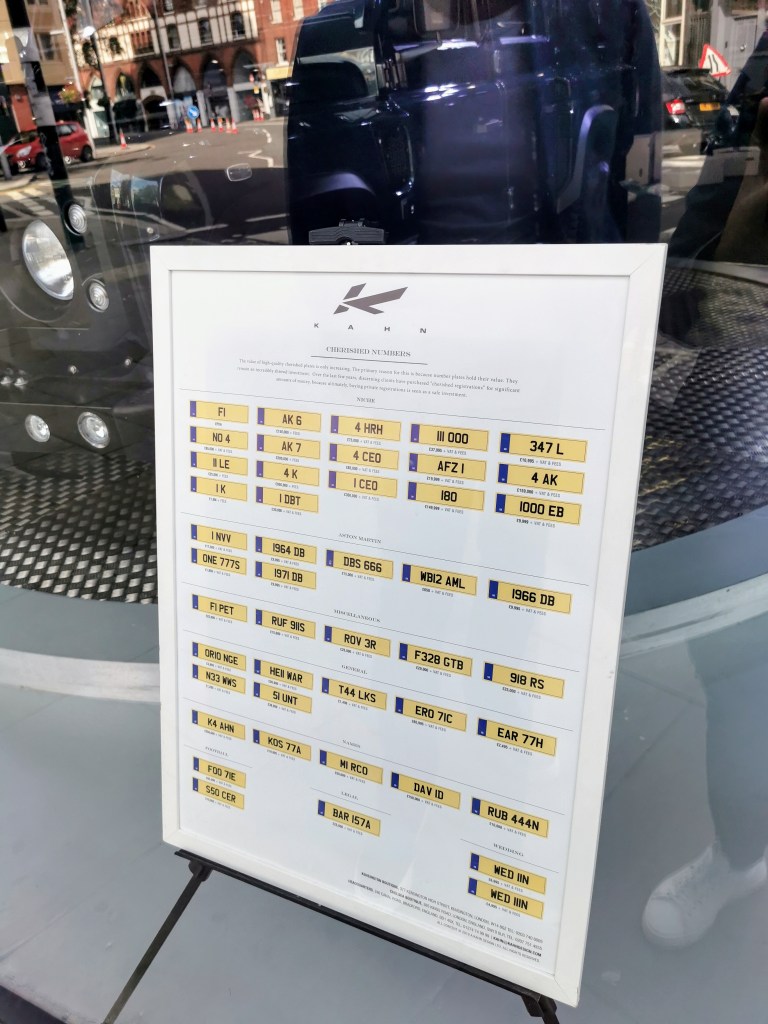
Nowadays, I think it’s mostly big money around here and perhaps not so much class. Personalised plates abound, and we notice a price list for these in the window of the Chelsea Truck Company which makes us gasp. You can buy a baby pink jeep here if you really think that’s a good idea, and also pay up to £1.4 million for a number plate. No, that’s not a typo! This place is nuts!

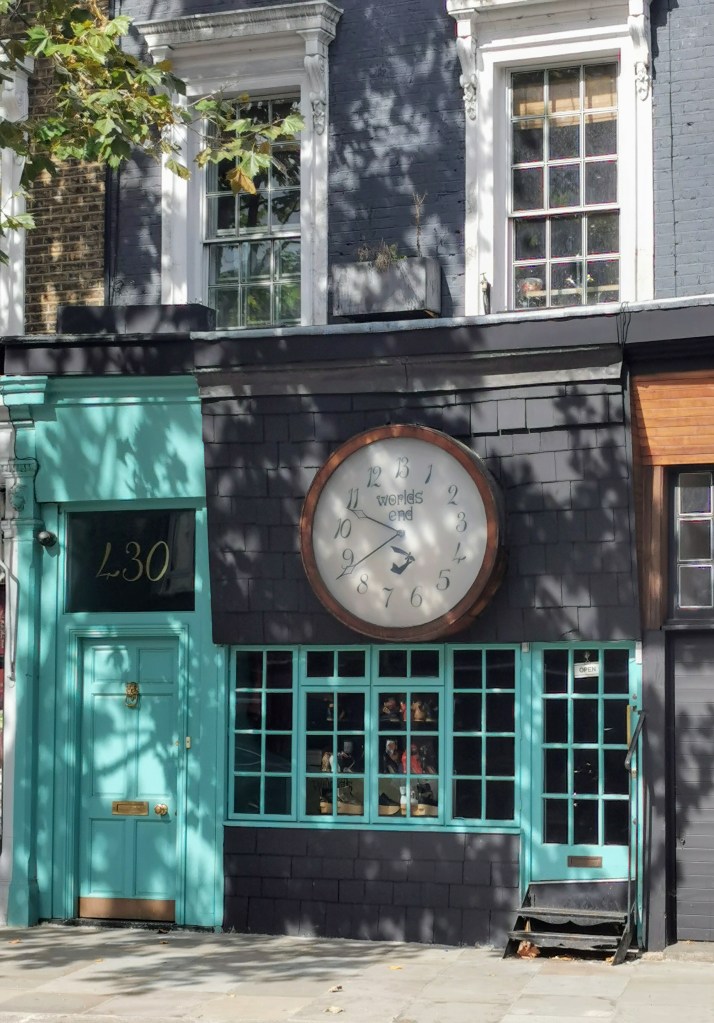
As you walk along the King’s Road towards Fulham the shops become less high end and more bohemian. One of the most well-known is the World’s End, where Vivienne Westwood and Malcolm McLaren introduced punk to Britain from 1970 onwards (she still owns it today). The Pretenders’ Chrissie Hynde worked here, as did Sid Vicious, and big name clients were the norm rather than the exception – Adam Ant, Siouxsie Sioux and Billy Idol were all regulars.

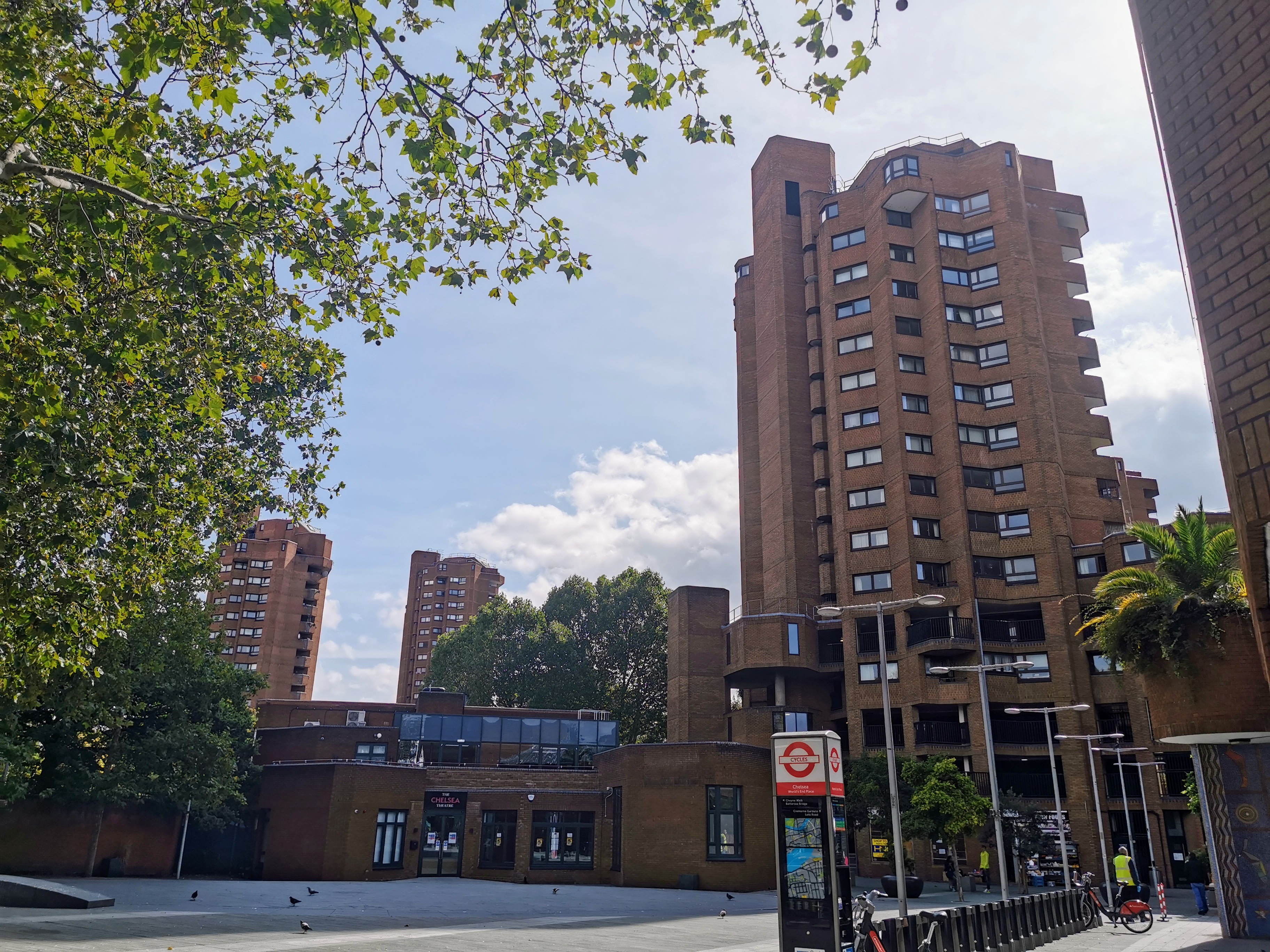
In this slightly less desirable part of Chelsea, large areas of council housing were built between the King’s Road and the River Thames in the 60s (Cremorne Estate) and 70s (World’s End Estate). This Brutalist architecture is a real contrast with the elegant terraces elsewhere in Chelsea. I know which I prefer!

The name World’s End gives this area a slight undertone of Armageddon, but in fact goes back to when Chelsea was undeveloped fields miles away from the capital, with only dangerous roads to connect it. Still, Joe Strummer of The Clash lived in a flat in one of these towers, and wrote London Calling during his time here – not exactly uplifting. Christine Keeler also lived here, and we know how her story panned out. The average income here today is increased seven-fold if you cross the road to the more salubrious terraced streets.

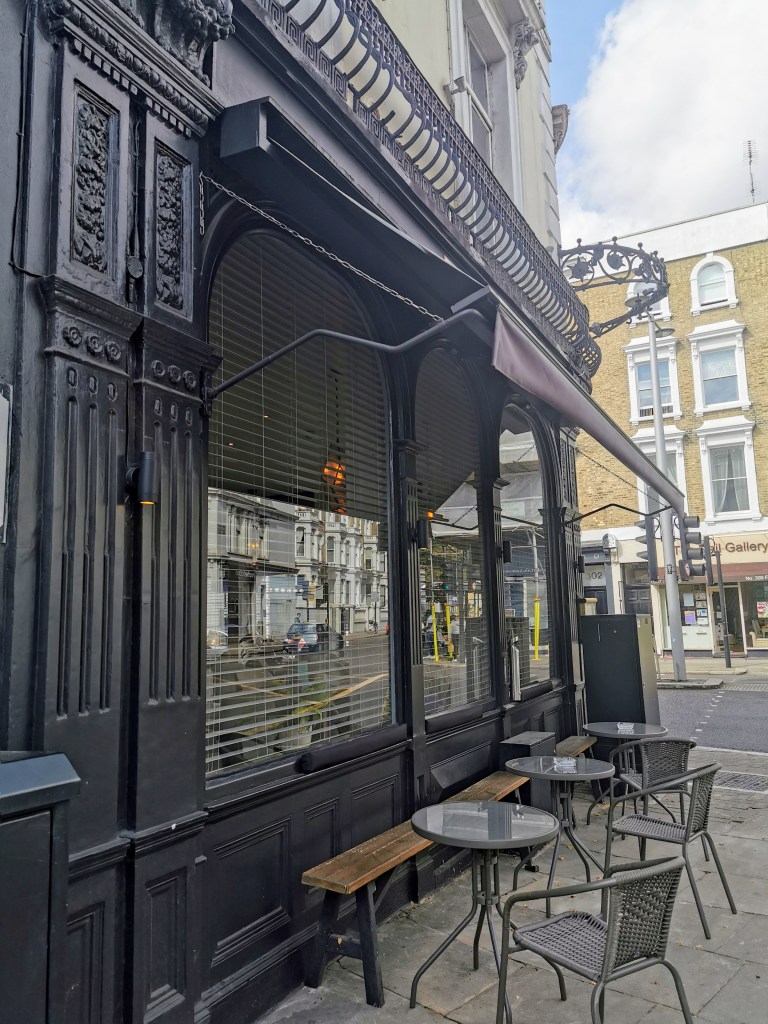
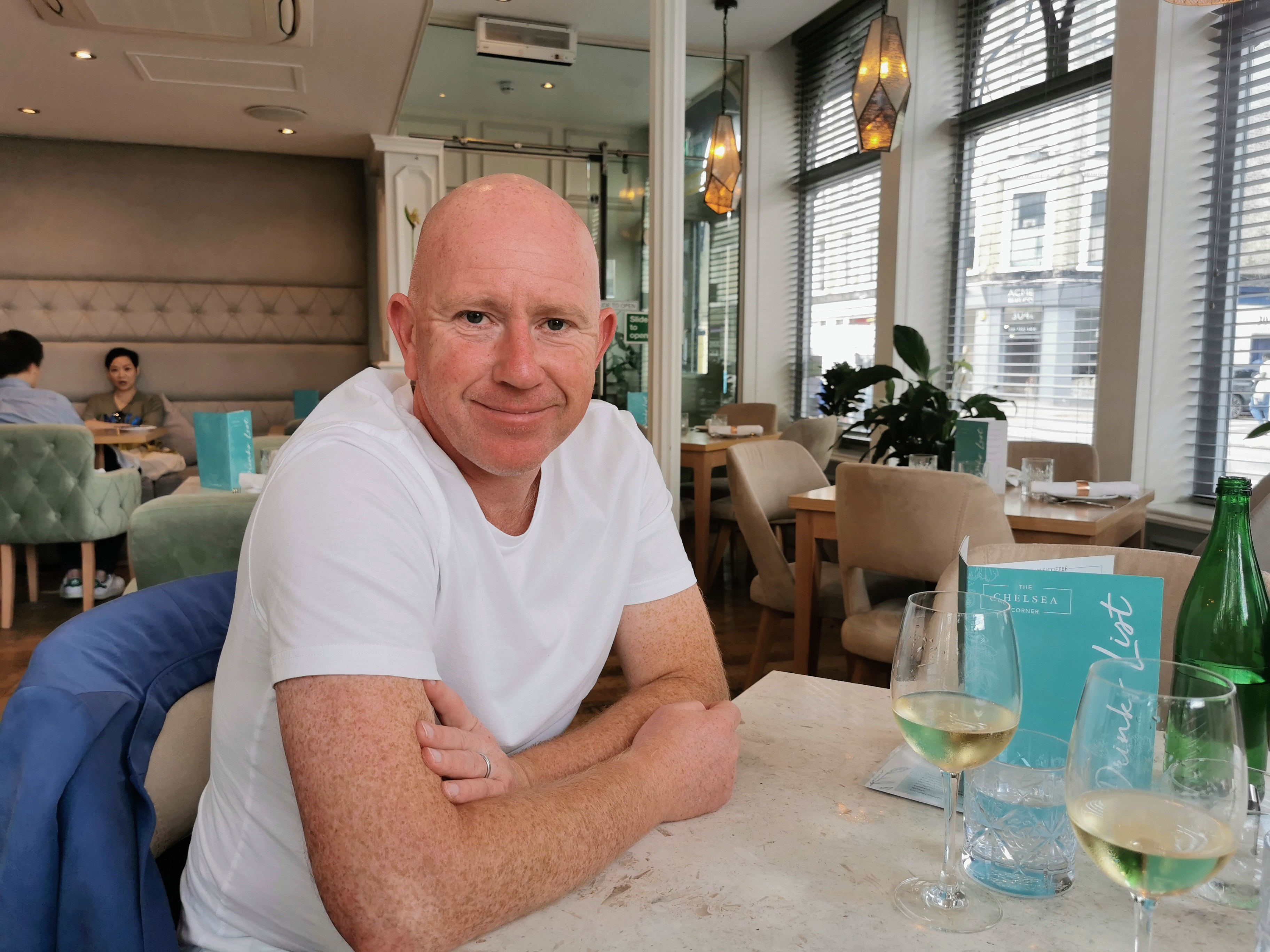
Right at the very end of the King’s Road, where Chelsea ends and Fulham begins, we stop for lunch at The Chelsea Corner. Due to great Trip Advisor reviews, our expectations are high, and happily they are met. This place does fantastic Italian food in refined surroundings with super, smiley service. I would love to show some photos of what I ate (burrata followed by penne pesto) but it looked and tasted so good I totally forgot to take any pics. Sorry!

After finishing a bottle of very quaffable house white, we had off again towards Earl’s Court to catch the tube. It’s been an interesting day in an area full of contrasts. That’s London for you!

Design a site like this with WordPress.com
Get started