Today’s walk has a bit of a James Bond theme to it. Not, I hasten to add, because of any secret agent actions on my part. You know how clumsy I am, give me a gun and a license to kill and there would be a bloodbath, if I didn’t shoot myself first. No, I’m just here to walk on this sunny afternoon in a quiet corner of Buckinghamshire.
The area has played host to 007 on many occasions due to the fact that Pinewood Studios is just a few miles down the road. Yes, the James Bond films are known for their exotic locations, but the crew also popped out to not-so-glamourous Stoke Poges on occasion, as you will hear.
I park my car near the Memorial Gardens and head off down the road. I’ll be back to explore them later, but for now I’m heading cross country past the Wexham Park Hospital. I have to politely ask some nurses to move, as they’re sitting on my stile. Hope they’ve washed their hands, I think, as I grab the timber and hoist myself over, down the pathway towards Bell Farm.
I turn left into the rather grandly named Gallions Lane, which is actually just a bridle path through some woodland. It’s quite lovely today with the dappled sunlight coming through the canopy above.
Left over a footbridge and I walk out onto the Wexham Park golf course, rather to the surprise of two golfers. I think I may have ruined a shot there by emerging unexpectedly from the trees. Sorry gents! As golf has just been reintroduced onto the list of permitted pastimes, the course is busy with middle-aged men who’ve gleefully grasped the opportunity to get away from home schooling for a while.
The course is beautifully landscaped and full of smiling faces. I’m enjoying this walk so far.
Out on the road, I pass yet another of those pubs I could have visited were times more auspicious. It’s a hot day, and the Plough looks like a great spot for refreshment as I trudge past and head along the lane instead. The building is Grade II listed, so it’s been serving drinks to the locals for many years. Let’s hope it continues to do so after the current lockdown is over.
If only…
The footpath at the end of the lane runs behind the grounds of Sefton Park, an 18th century manor house. Originally a ferme ornée, or ornamental farm, it’s now unfortunately offices. How very mundane.
Far too nice for offices.
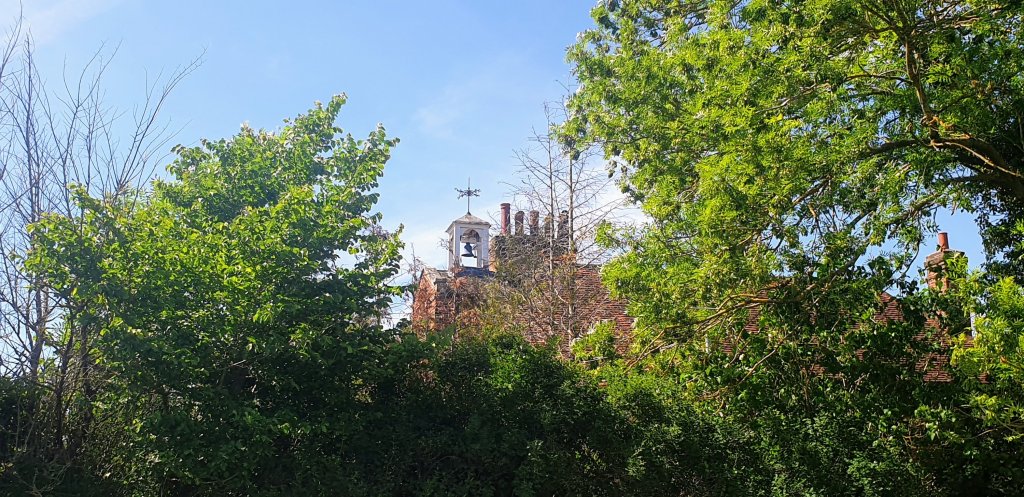
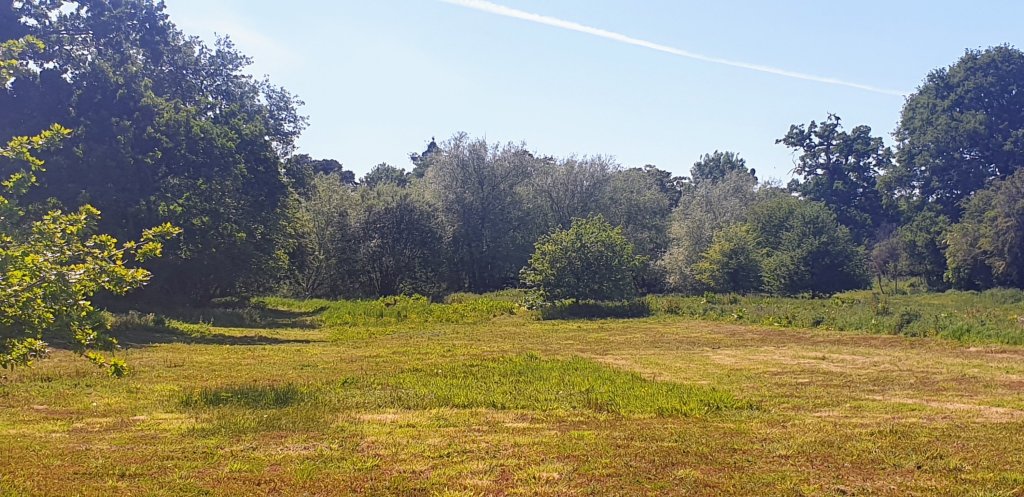
Hitting the road, I turn left and head back towards Stoke Poges on a footpath towards the Clock House, a manor with adjoining chapel and almshouses built in 1765. The helipad is a more recent addition. It’s only just visible through the trees, but I’m more interested in a lone deer happily grazing over to my right. I can’t get close enough for a decent photo, sadly, but wildlife sightings always make me feel good.
You can just about see the Clock House.
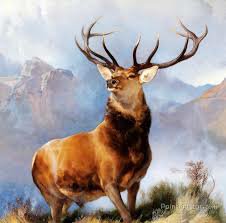
I reflect on the fact that this very deer could be a descendant of the model for Sir Edwin Landseer’s The Monarch of the Glen. Landseer was a frequent visitor to the Manor House at Stoke Park and is said to have used the deer in the park to create his famous image of Scotland. Sneaky!
You can almost see the deer too.The Monarch.
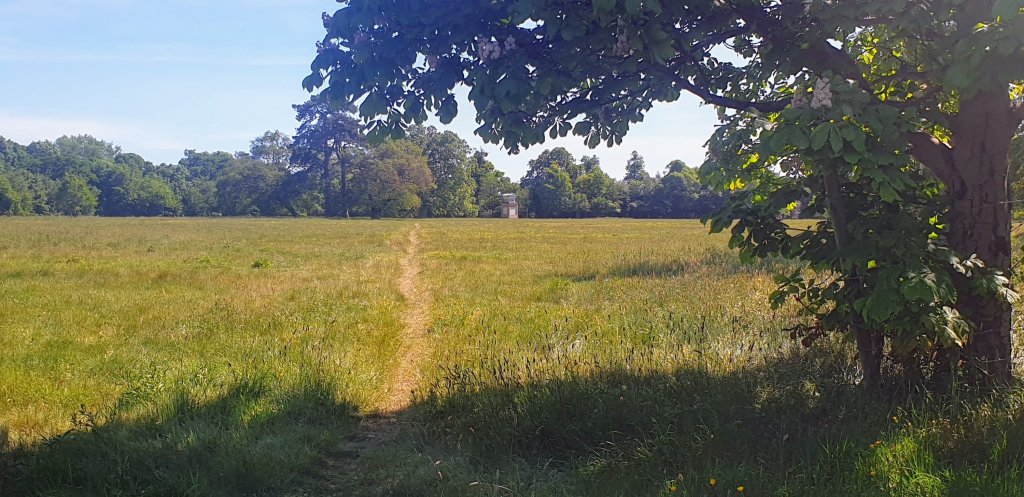
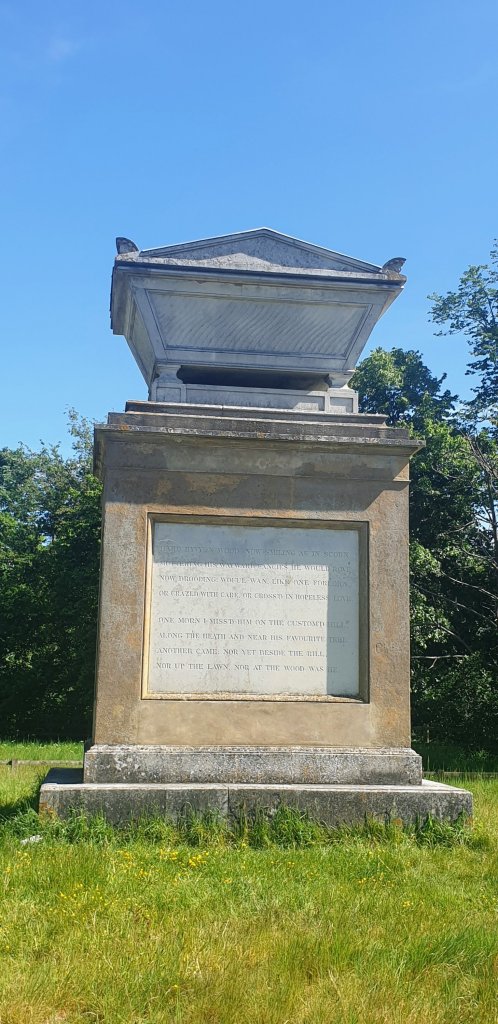
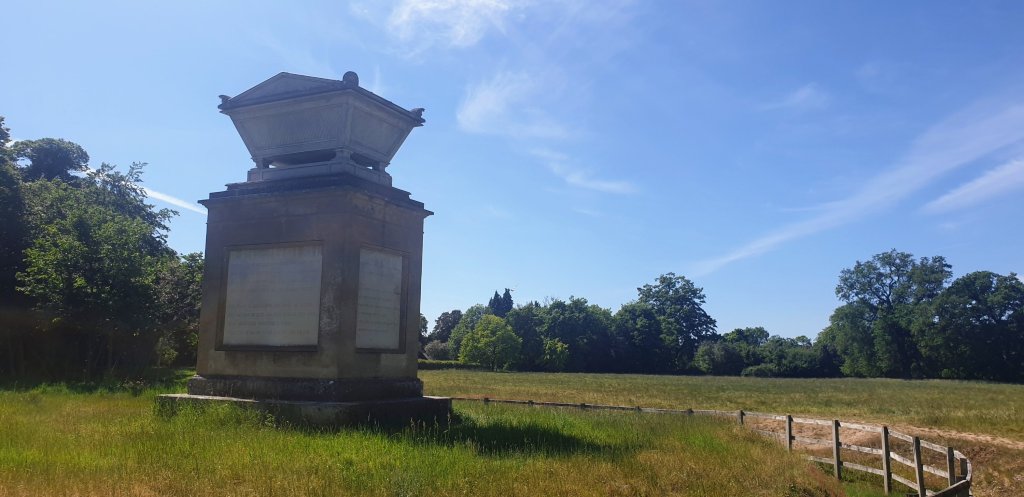
On the next stage of my walk I enter land owned by the National Trust – Gray’s Field. It’s named after the poet Thomas Gray who composed his famous poem Elegy Written in a Country Churchyard here in Stoke Poges. A rather impressive monument to him stands in one corner of the field.
Gray’s Field.Gray’s Monument.
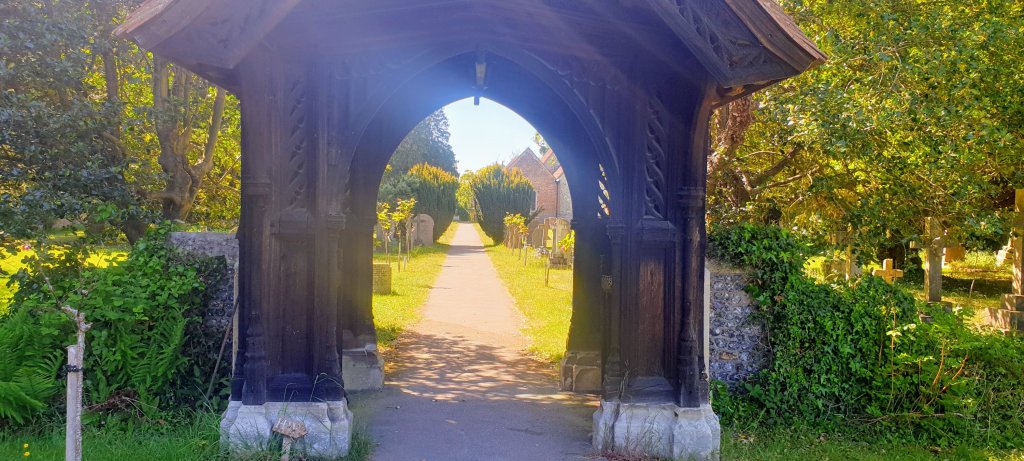
You’ve been very patient, so I’m pleased to say that we’ve reached our first James Bond location, in the churchyard of St Giles’ Church where Gray wrote his most famous lines.
St Giles’ Church.
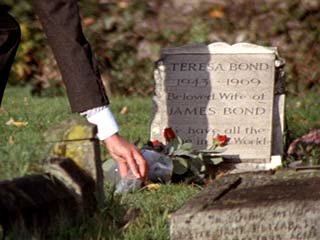
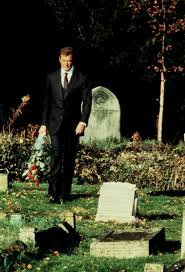
It was here that James Bond (Roger Moore) placed flowers on his wife’s Tracy’s grave in For Your Eyes Only in 1981.
Obviously, the grave was just a prop, but the church itself is lovely and has a useful gateway leading through the Memorial Gardens to the Manor House and lake beyond.
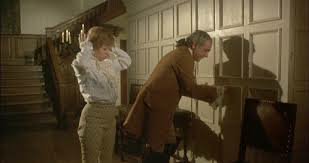
The Manor House dates back to the 11th century, and was mentioned in the DomesdayBook. Elizabeth I visited here in 1601, and Charles I was imprisoned here in 1647, shortly before he was executed, so it’s witnessed the highs and lows of the monarchy. It was also the scene of Carry On Dick so it’s witnessed some pretty dodgy acting by Sid James and Barbara Windsor.
Royalty stayed here……and so did Babs and Sid.
In the 18th century the Manor came into the possession of the Penn family, who founded the US state of Pennsylvania. They used much of the £130,000 compensation paid by the US government in return for their 26 million acres of land to purchase and improve the estate, including building a new mansion across the lake.
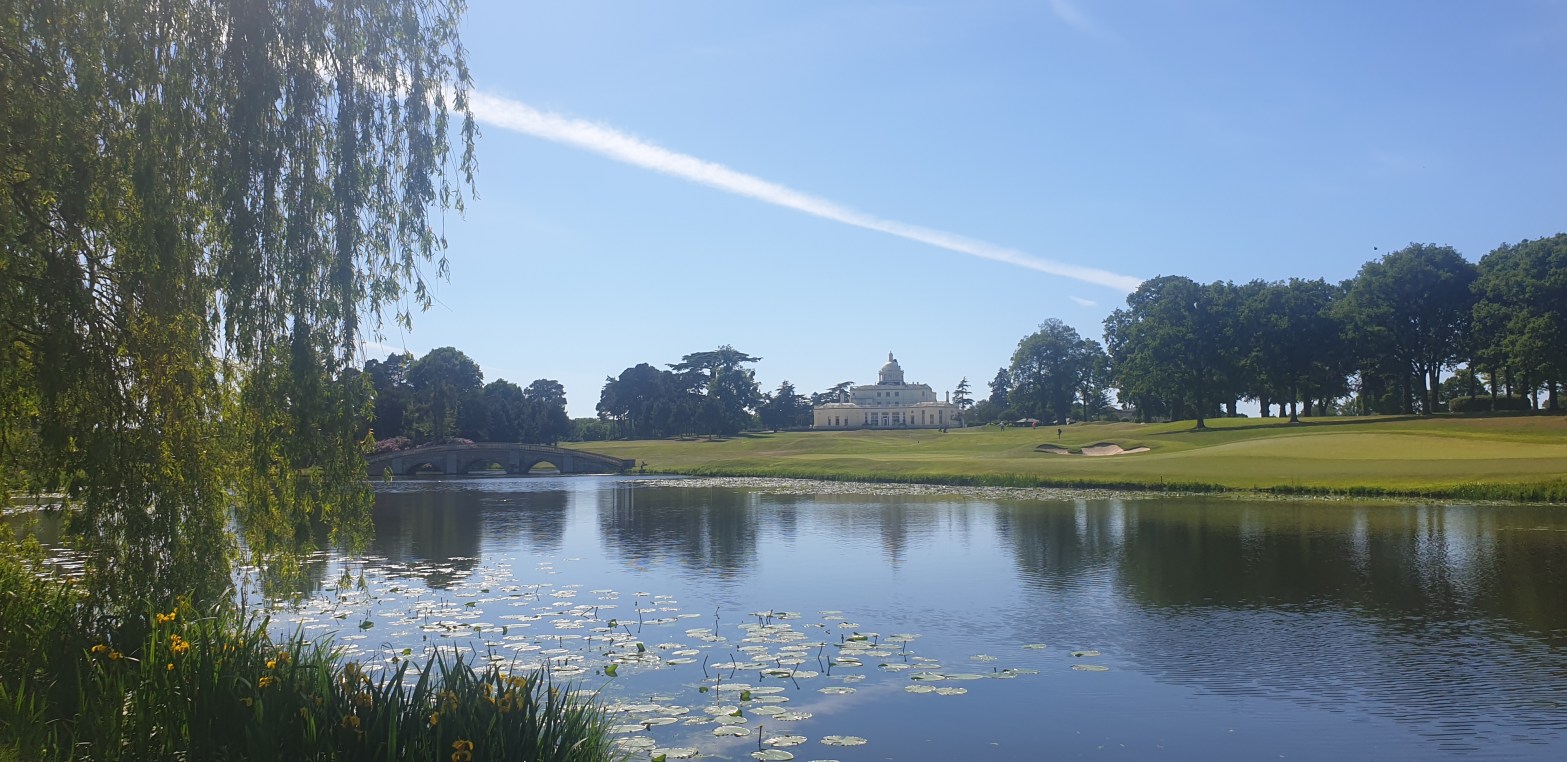
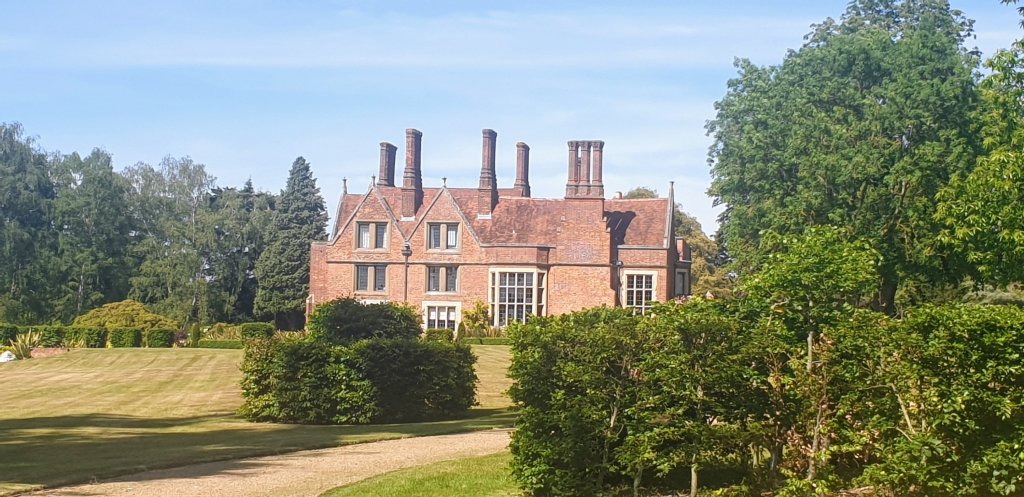
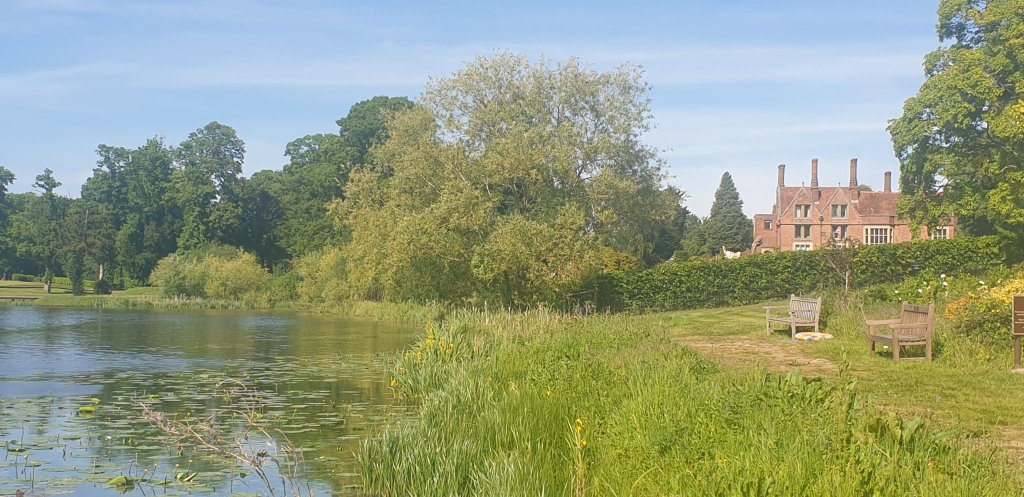
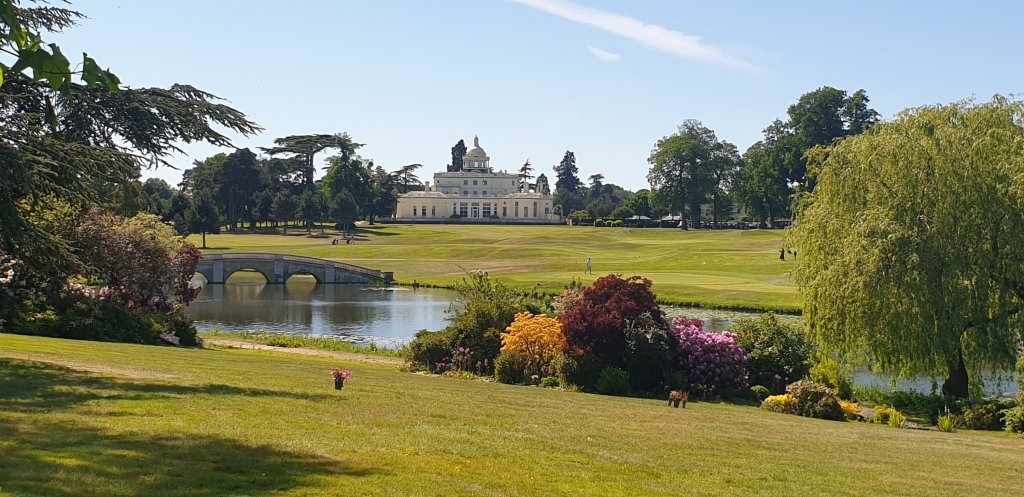
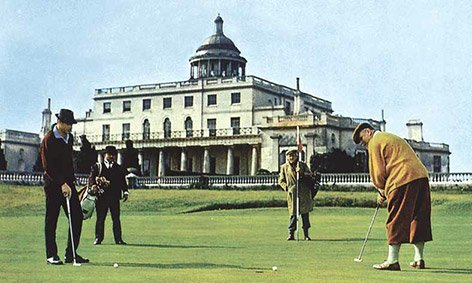
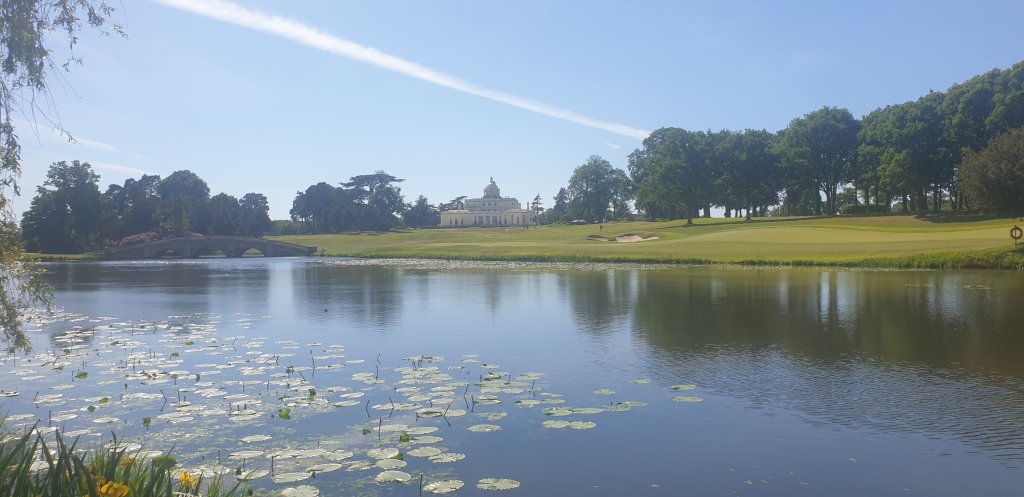
Turning around, the view across the lake to Stoke Park is stunning, and provided the setting for a classic Bond scene – 007 versus Goldfinger on the golf course. Inside the mansion, now the Clubhouse, the ballroom also appears in Tomorrow Never Dies.
Stoke Park.
Daniel Craig visited to film Layer Cake in his pre-Bond days and Bridget Jones’ Diary was also filmed here. Built in 1788, Stoke Park is now one of the UK’s premier country clubs, so you can follow in the footsteps of Sean Connery and Renee Zellweger and stay here in the lap of luxury if you so wish. Not a bad idea, is it?
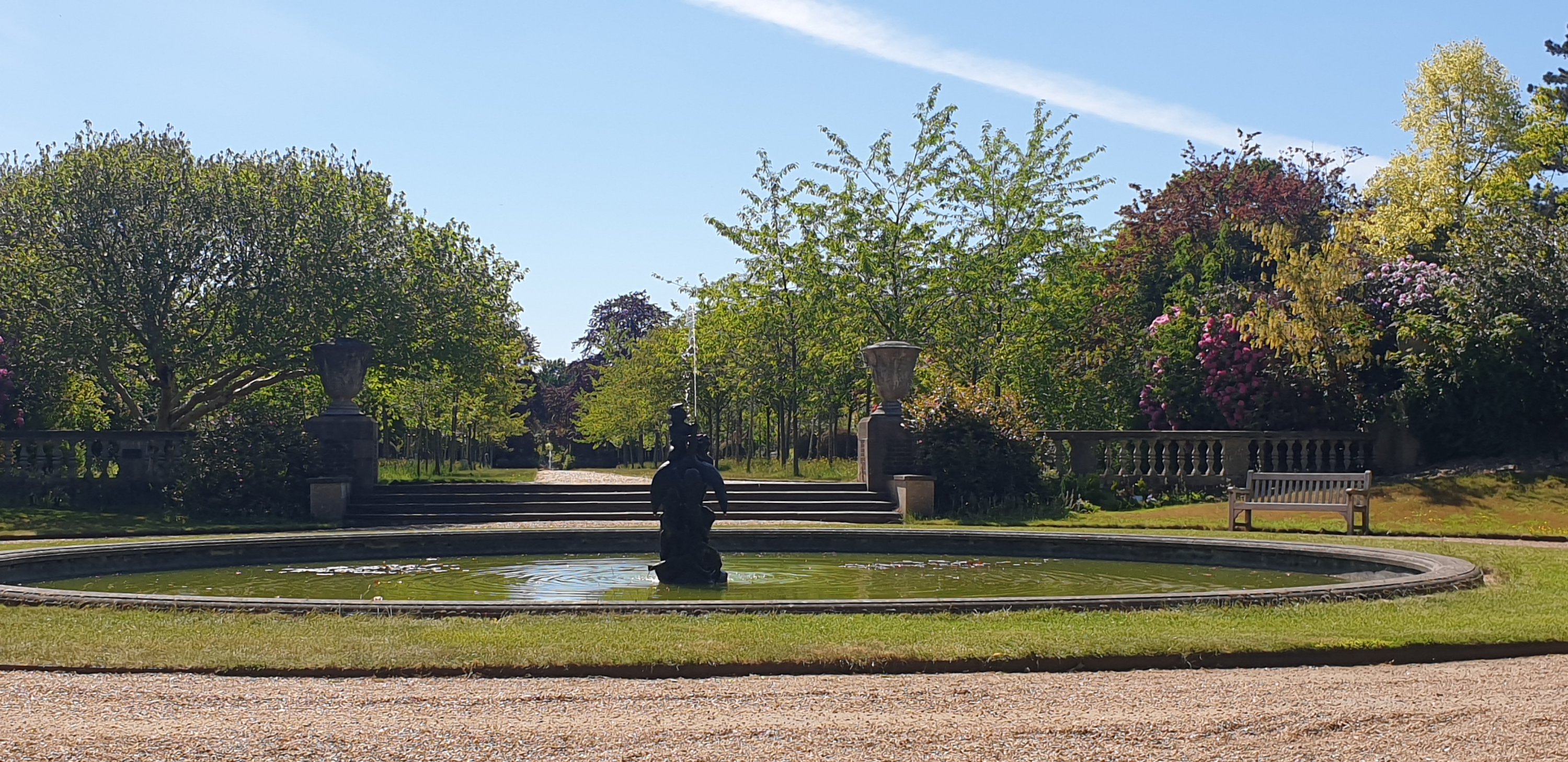
I walk back through the beautifully serene Memorial Gardens to my car. Another afternoon of discovery, proving that you don’t have to travel far to escape the norm.
Flying has been on my mind a lot lately. As in, when can I? And what will flying be like in a world with COVID19?
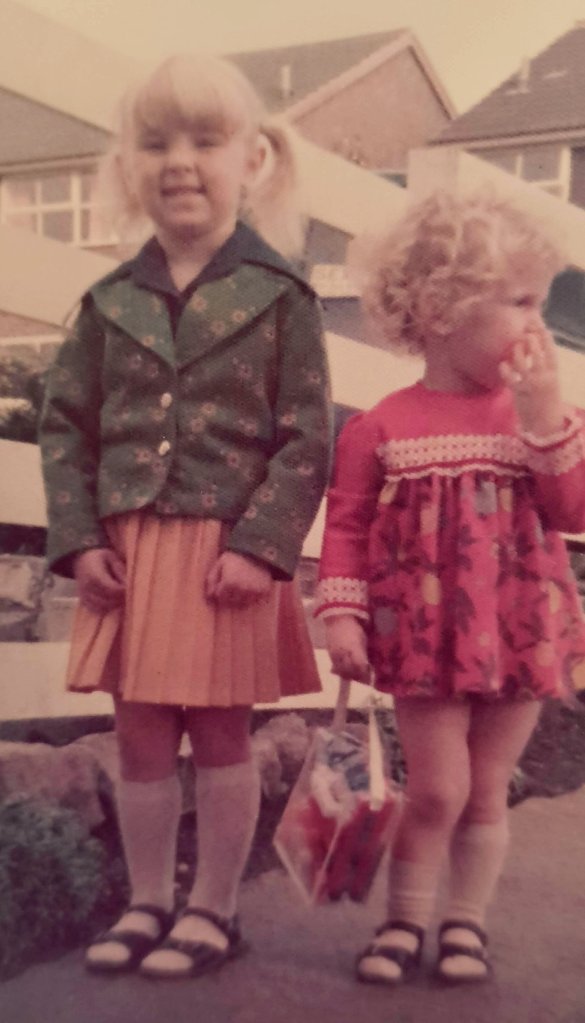
I’ve always loved flying. When I was younger, we’d fly to Mallorca or Malta every year, and the whole thing felt like a huge adventure. In reality, it must have been quite stressful – Mum and Dad had four kids after all – but I have no memory of that, just the excitement. I set my heart on becoming an ‘air hostess’ and spending my life in the sky.
Spot the wannabe flight attendant!
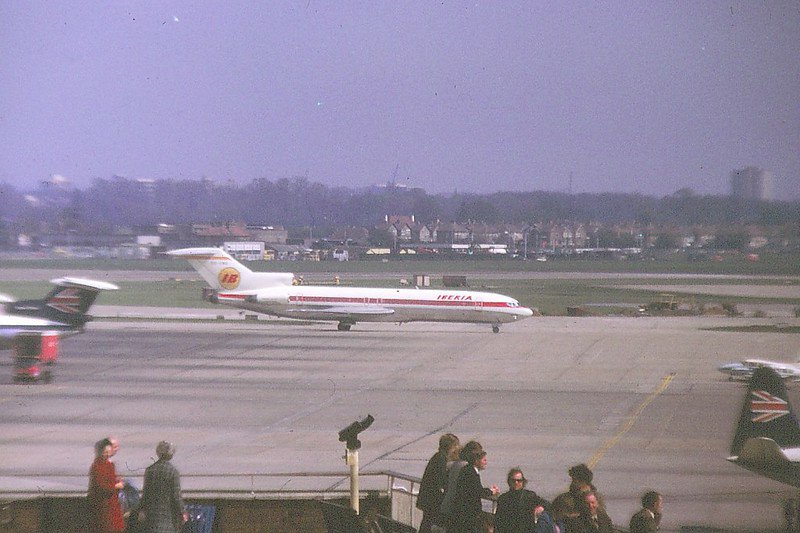
Flying back then was a much simpler process. Security wasn’t really a top priority – screening of passengers wasn’t introduced until the mid 70s, and I remember rooftop viewing areas where you could go and watch planes even if you weren’t flying. There wasn’t much else to do in those days of 3 TV channels, remember!
Watching the planes at Heathrow in the 70s.
In a post-coronavirus world we’re hearing a lot about how different flying might be – price hikes, temperature checks, longer queues, face masks. It all sounds pretty dismal and not exactly designed to get your hols off to a jolly start. We may soon be feeling nostalgic about simply having to take our shoes off and put our liquids in a bag.
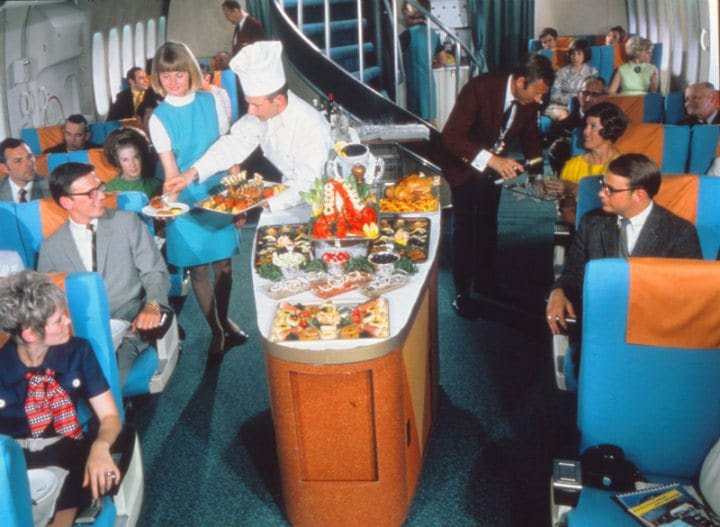
If could go back in time, I’d get on a flight during the ‘golden age’ of travel in the 1950s and 60s. On board you had half the number of seats, double the aisle space, sumptuous buffets, bottomless cocktails, luxurious powder rooms. Sounds amazing! You also had noisy planes, smoking in the cabins, more accidents, regular hijackings, but we won’t dwell on the negatives!
If only…take me back to the good old days.
Nowadays, you need your own private plane if you want this level of in-flight luxury, so unless you are great mates with Lewis Hamilton or John Travolta you are going to have to lower your expectations. But if, like me, you like to savour the journey as much as the destination, you could always upgrade and get a little bit more comfort and convenience. After COVID19, will this even be possible?
Oh, go on then, John, I’ll come for a spin with you!
Firstly, zipping through security in the priority lane. I work at an airport, so I’m always well prepared, unlike those people who wait until they get to the front of the line, then look totally flabbergasted that they have to take their coat or belt off. Have they never travelled before? The less time spent in the security lanes, the better. I’ve said before, the husband is not the most patient man…
In furure, if we all have to join one, socially-distanced queue snaking around the terminal for hours then I fear our flying days may be over.
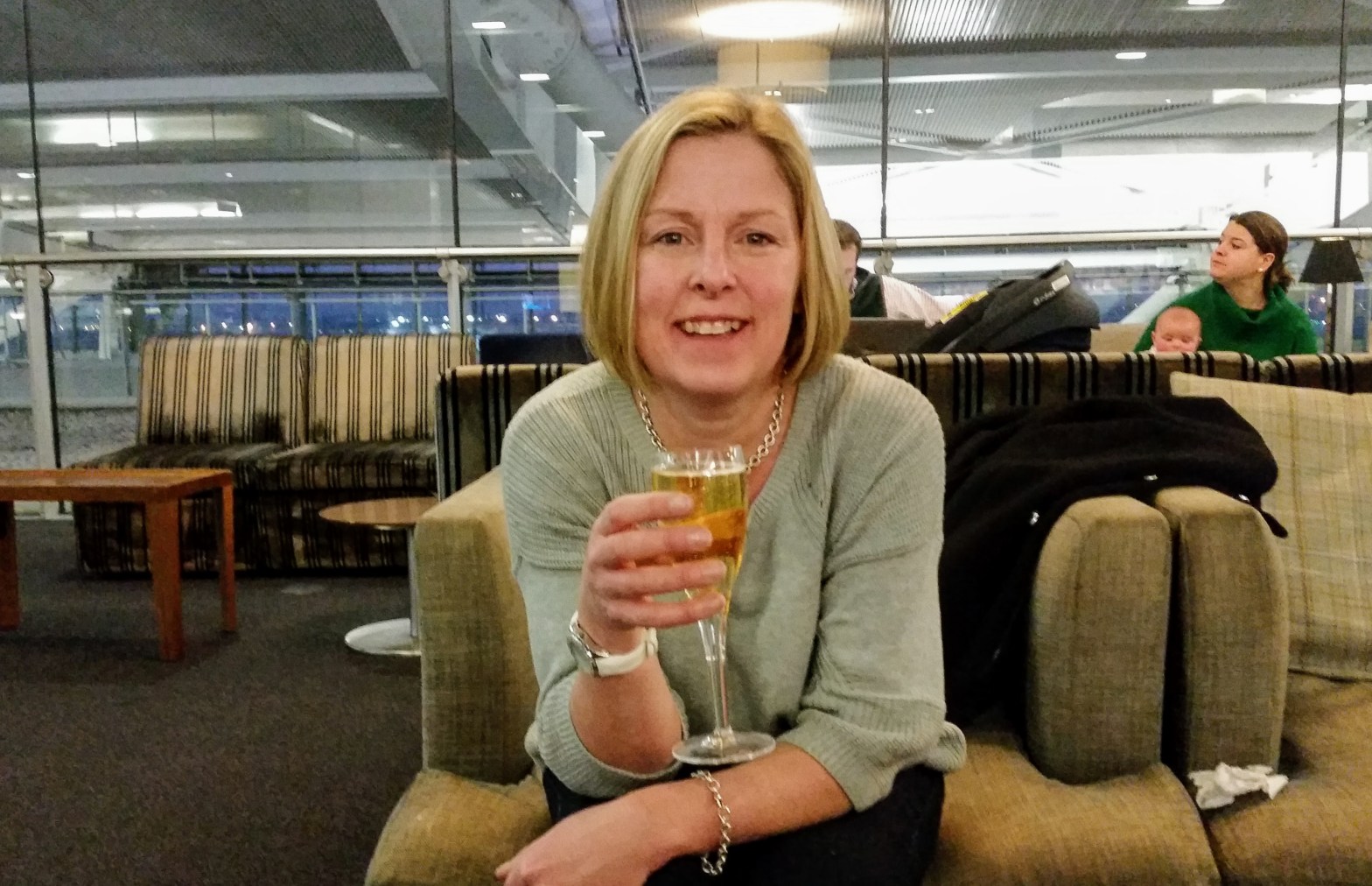
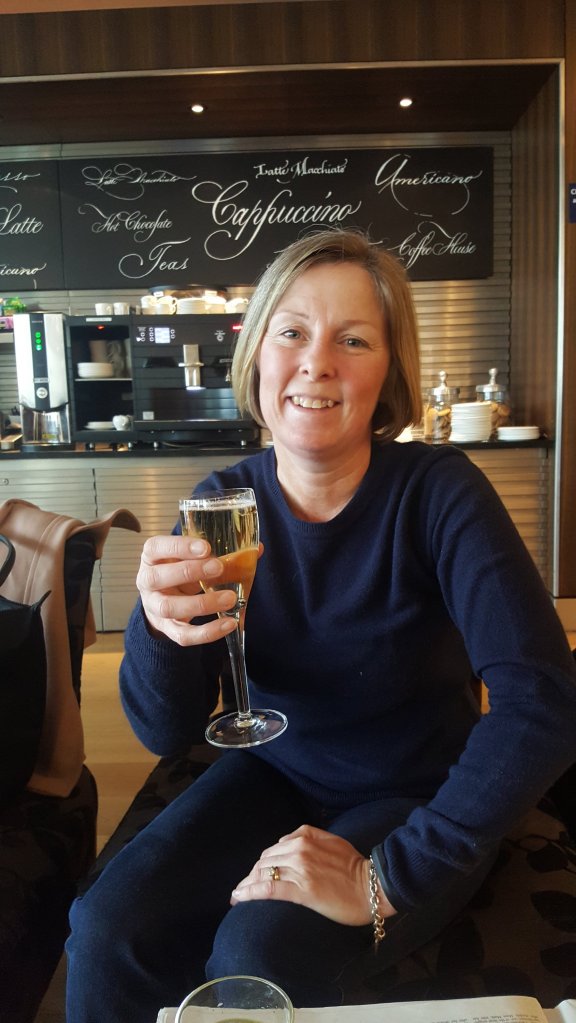
In the BA lounge at Heathrow Terminal 5. Holiday rules state that champagne is perfectly acceptable at breakfast time!
Then you have the airline lounge. After a quick hop around the shops, I like to get comfy with the papers and a glass of fizz, usually with a great view of the runway. And maybe a few snacks. Ah, the holiday’s really beginning.
Right now, all lounges are closed, with no news about when they will re-open, presumably with restricted numbers and no buffet facilities. No joy there then.
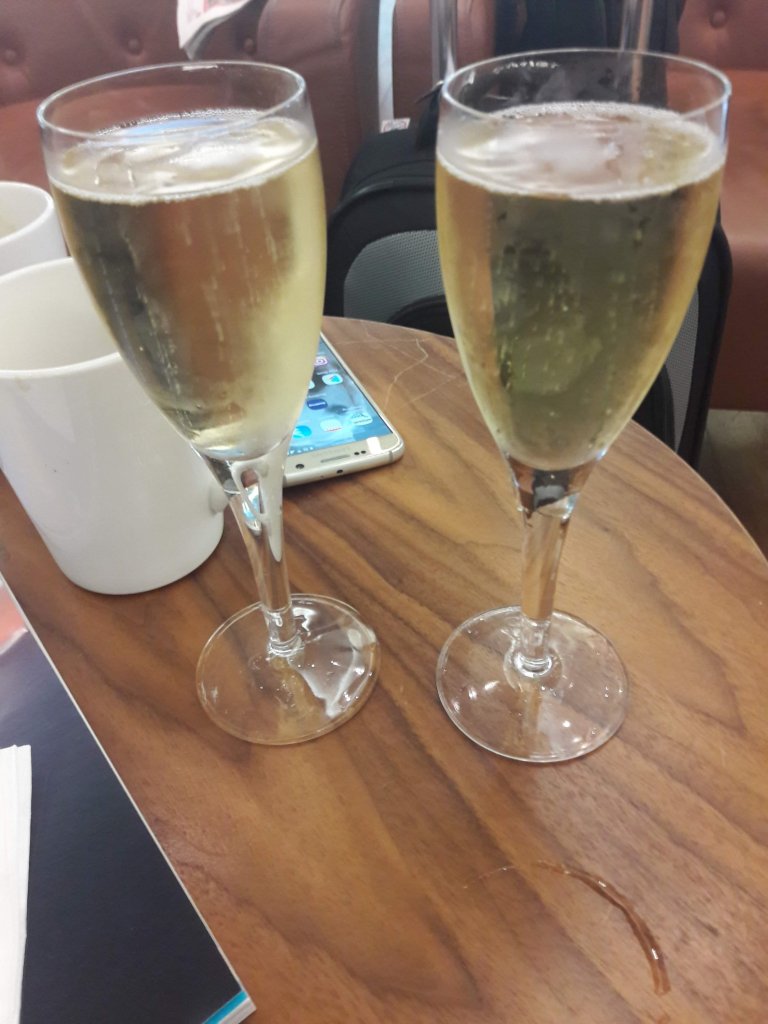
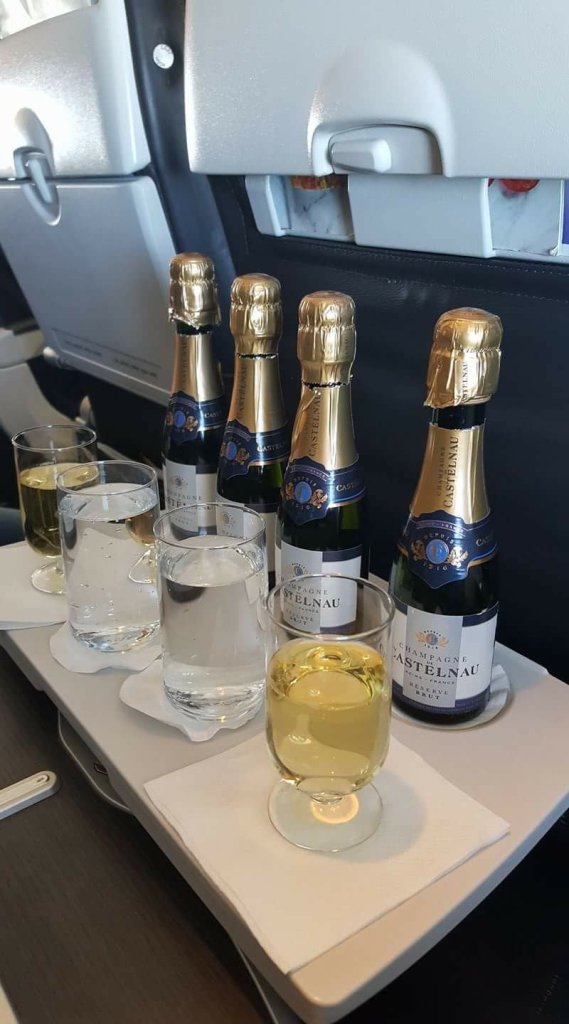
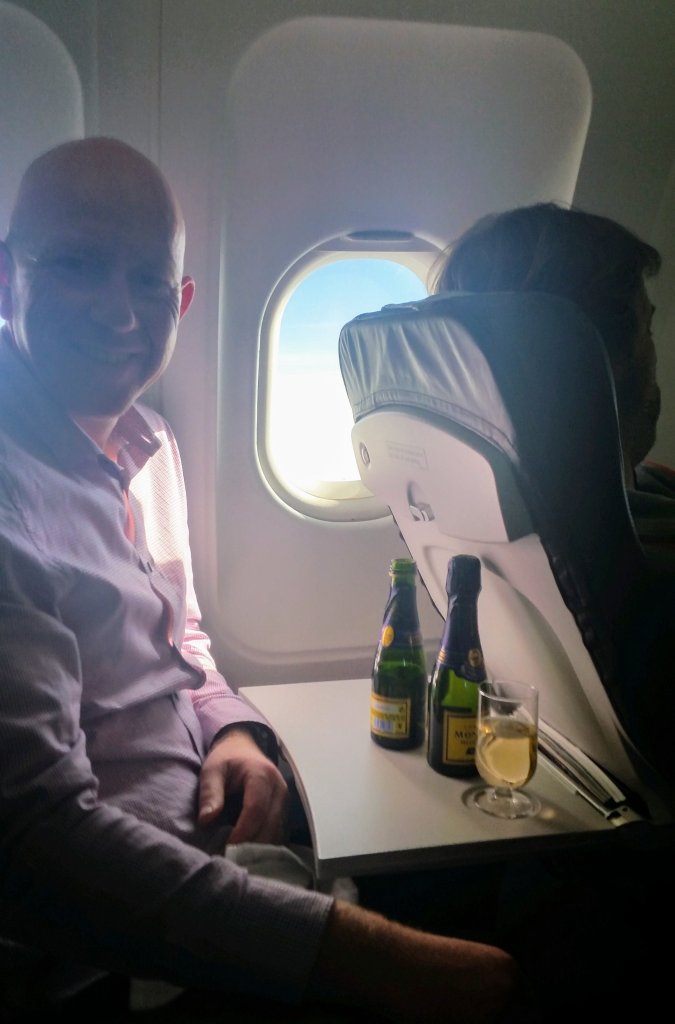
More champagne please! To think I took this for granted…
Next perk, priority boarding. No standing in a line, sometimes you are the very first person on board. There’s always room for your bag in the overhead locker. Hot towel and a menu, thanks very much. I’m ready to fly!
Currently, the word is that all planes will board from rear to front. So if I upgrade, I’m actually last to get on and there will no room for my bag. Assuming that I’m even allowed carry-on luggage. Hmm, not much of a privilege, is it?
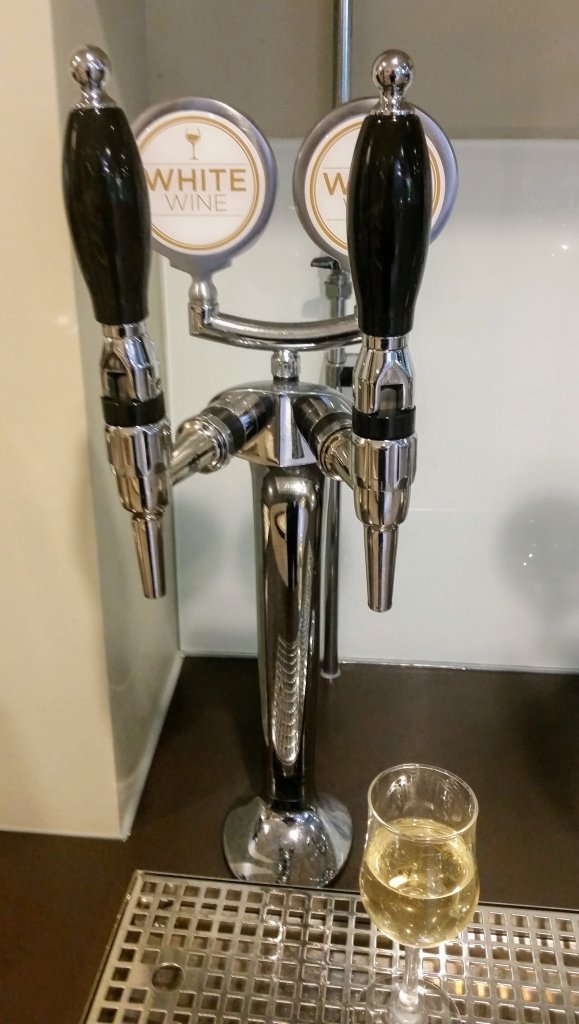
Draught wine in the lounge Stockholm. Now there’s an idea.
Extra room – the joy of not having your personal space invaded by a total stranger cannot be underestimated. I’ve had some nightmares in the past involving personal hygiene (or lack thereof) and over-friendliness. Upgrading means I sit between a table and the window. Not even the husband gets close. I can stretch out, relax, read, and get ready for more champagne. Bliss.
Current thinking is that all middle seats will be taken out of action. So everyone gets more space. One of the few occasions where social distancing creates a win. Unless we all have to pay for those empty seats, of course, which seems likely!
It’s all about the space. I just don’t like getting up close with total strangers.
The food. I think airline food is a bit like Marmite, you love it or hate it. I can’t stand Marmite, but I just love the trays you get on a plane with lots of mysterious packages of food. What’s in here? What about this one? It’s like Christmas! I order a veggie meal as it’s reliably good, if sometimes a bit bland, and even comes out first if you’re lucky.
What do you mean no food on planes from now on? And even worse, no champagne? The suggestion is to take your own snacks, and bottled water will be handed out by the crew. No surprise packages, no booze, where’s the fun in that?
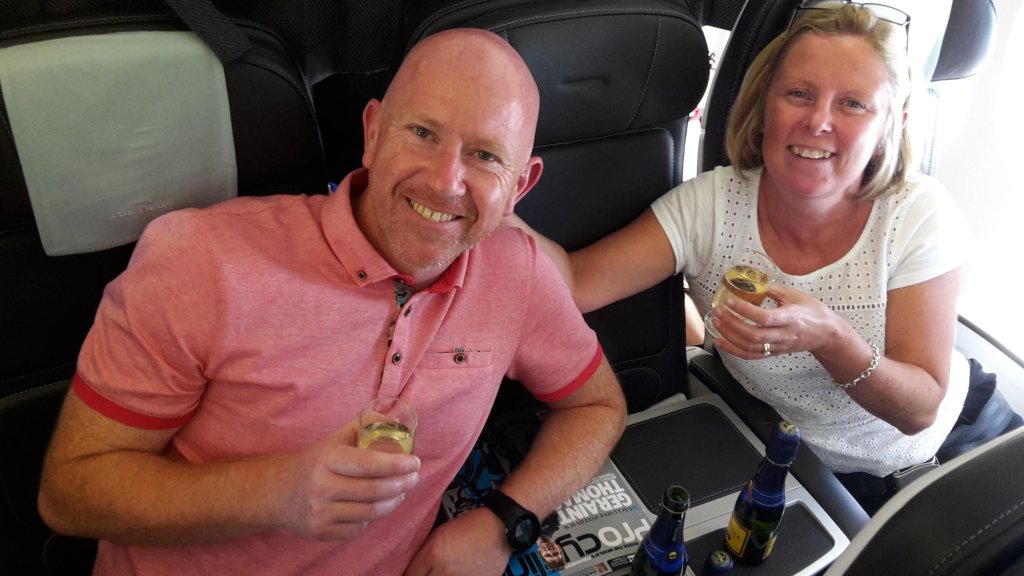
Our attendant was doing a sterling job on this particular flight.
Finally, if you sit at the front of the plane, there’s always the chance you might be near someone exciting. Jamiroquai are one of Tony’s favourite bands, so sitting behind Jay Kaye and listening to his showbiz gossip all the way to Dubrovnic was was quite a thrill. We also sat behind the police escort for either Princess Beatrice or Eugenie. We weren’t sure which, obviously that wasn’t a particular thrill for us.
If we all have to wear face coverings onboard then we won’t have a clue who we’re sitting near, will we? We’ll all just look slightly sinister. I defy even George Clooney or Jennifer Aniston to look good in a mask.
Tony behind a sleeping Jay Kaye. I was trying to be subtle.
So in summary, it’s looking like wherever you sit on the plane, the post-virus experience will be equally joyless. I will still fly, of course I will, as soon as I can, but I’m not expecting to enjoy it very much. Let’s hope I’m wrong…
I’m not one to name drop, but I do live just down the road from Her Majesty the Queen. In the Royal County of Berkshire. In the Royal Borough of Windsor and Maidenhead. Lucky old me! Hopefully I’m not lowering the tone too much.
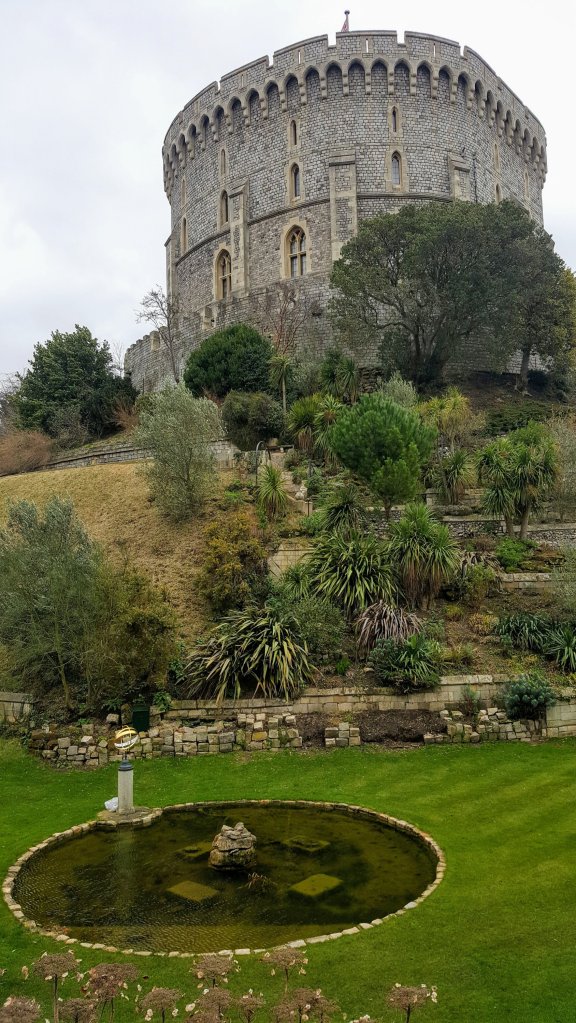
You’ll know about Her Majesty’s home at Windsor, it’s quite impressive. The oldest and largest inhabited castle in the world, in fact. Founded in the 11th century by William the Conqueror, it’s been home to 39 monarchs, and the Queen spends most weekends here. Little known fact – our dog Lizzie is actually named after her. Yes, we’re secret royalists (not so secret now) and name all of our dogs after British monarchs.
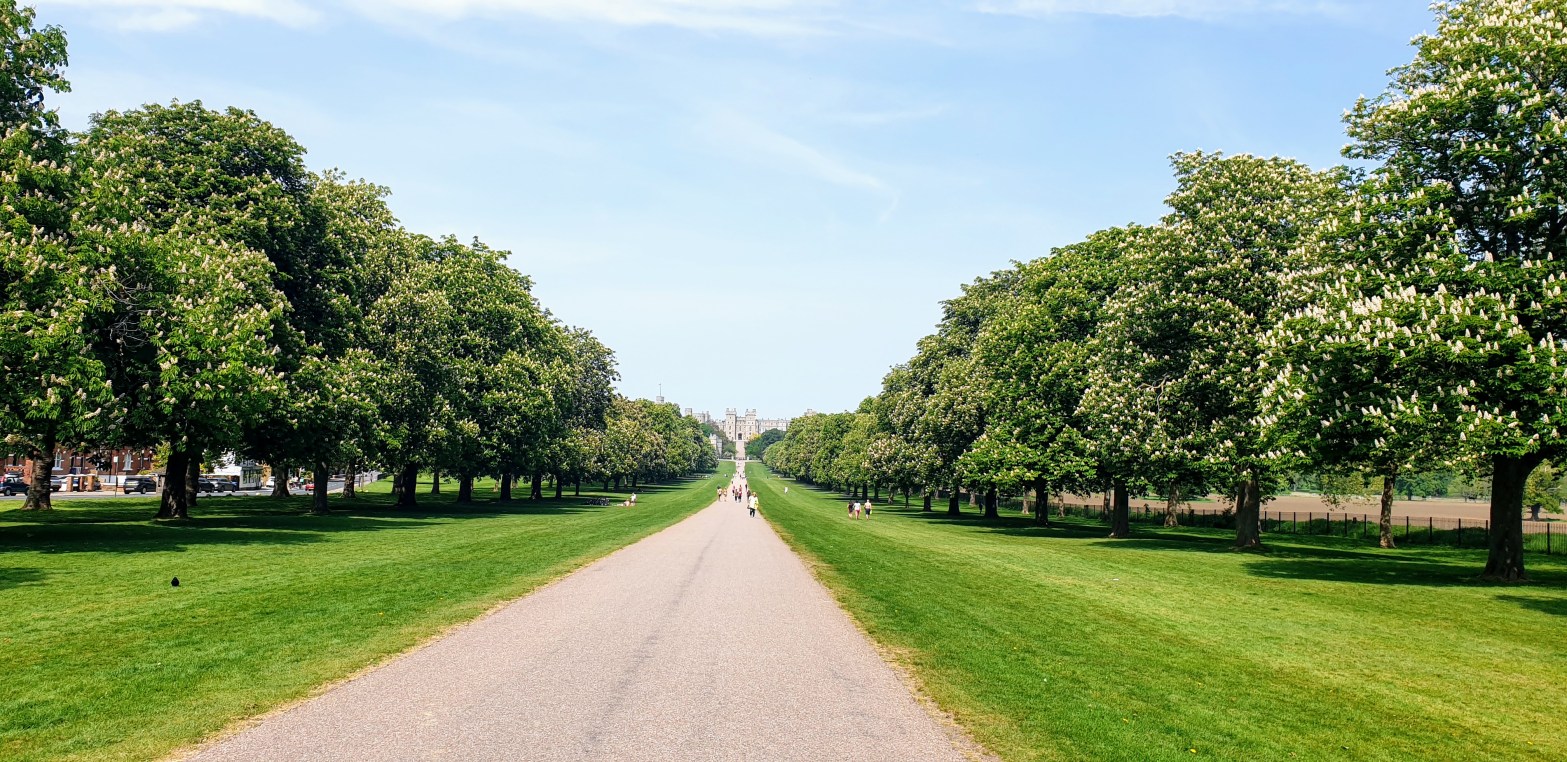
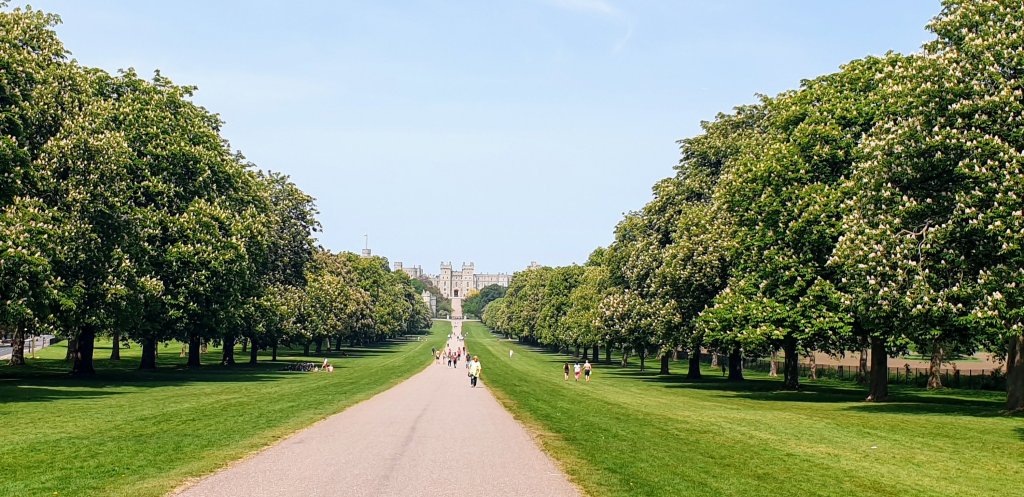
Looking down the Long Walk to Windsor Castle.
But did you know that the Castle sits within the Great Park? 4,000 acres of countryside stretching from Windsor town to Runnymede, where Magna Carta was signed by King John in 1215, giving away much of the authority of the Crown. That’s probably not Her Majesty’s favourite part of the park!
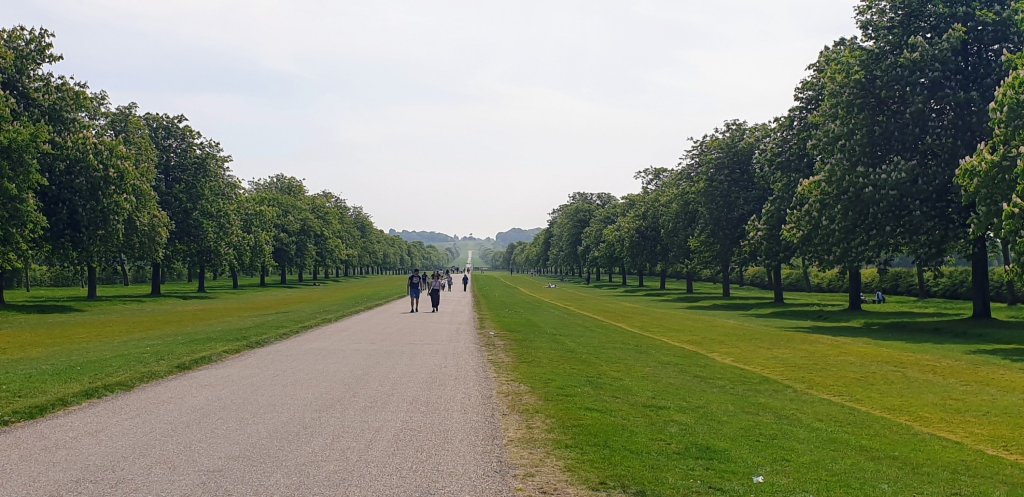
There’s a reason it’s called the Long Walk.
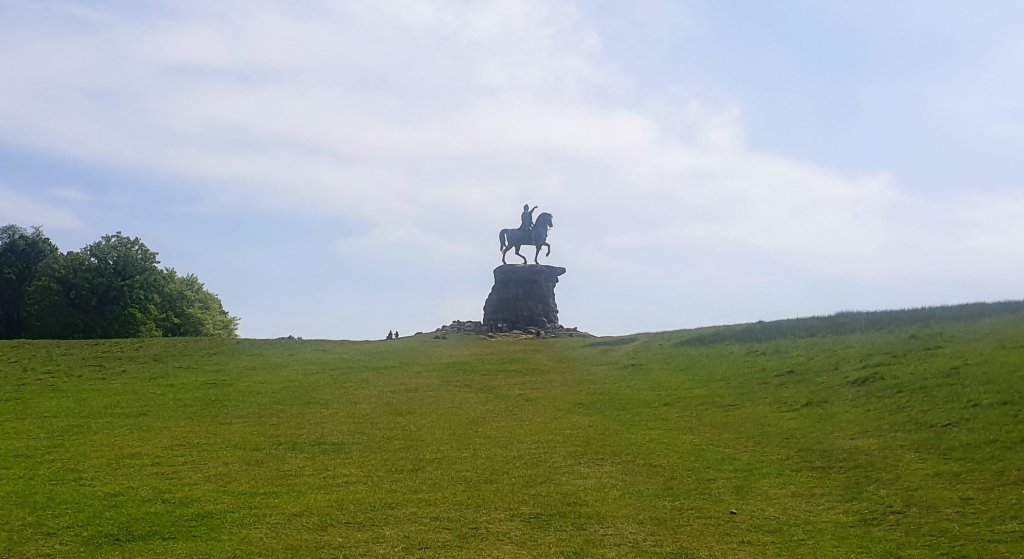
Windsor Great Park is our walking destination today. We start on the Long Walk which leads from the Castle to the famous ‘Copper Horse’ statue. It’s 2.65 miles and it feels even longer on a very warm day when you foolishly set off without water.
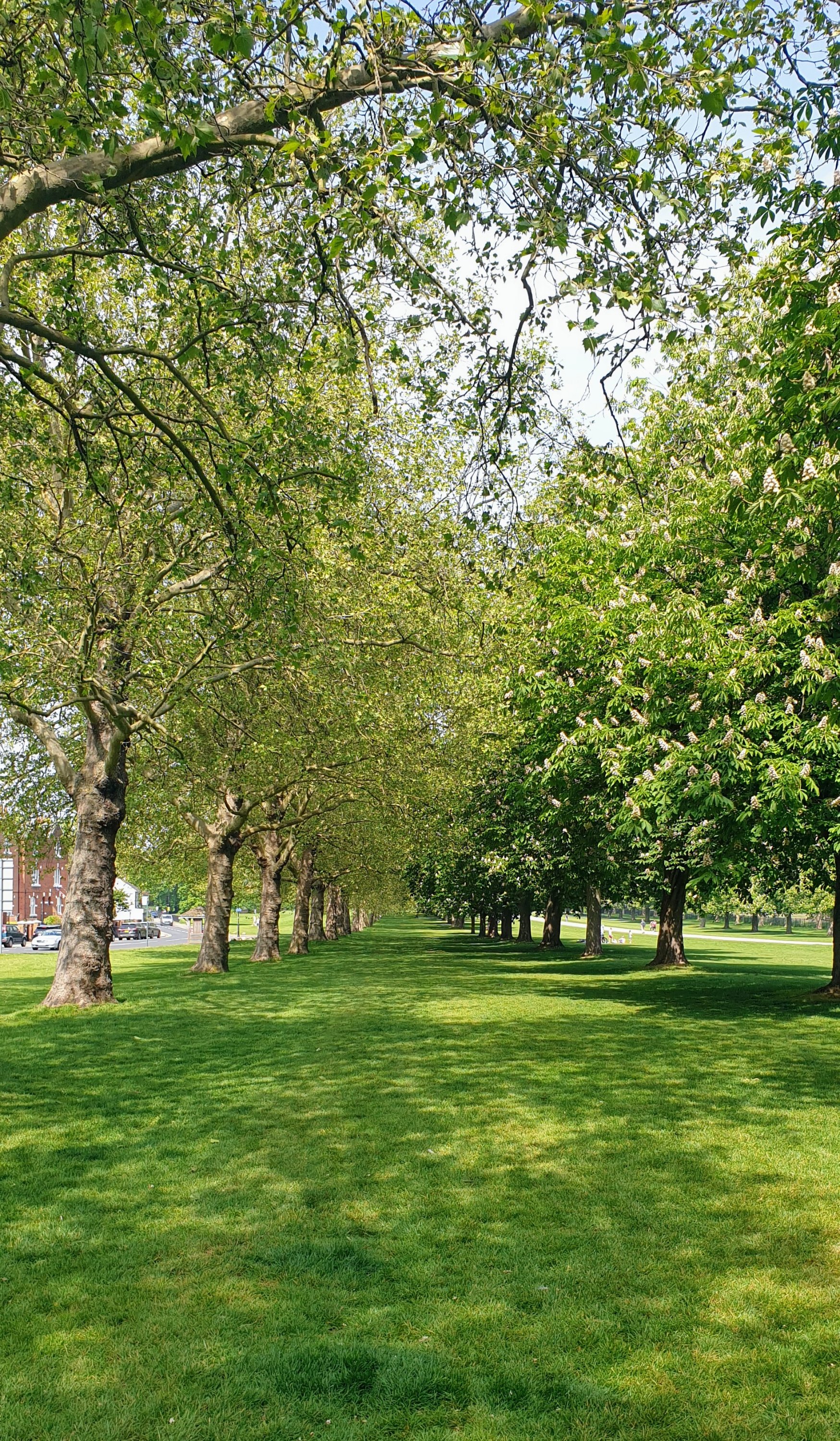
The Long Walk is basically a tree lined avenue, originally planted by Charles II in the 17th century, as he wanted to add a bit of French style to the estate. If you see anyone driving along the Walk, it’s either a Park Ranger or the Queen herself – no-one else is allowed. We saw a car approaching and hoped for once we would strike it lucky, but it was just a ranger. Tant pis, as our French friends would say.
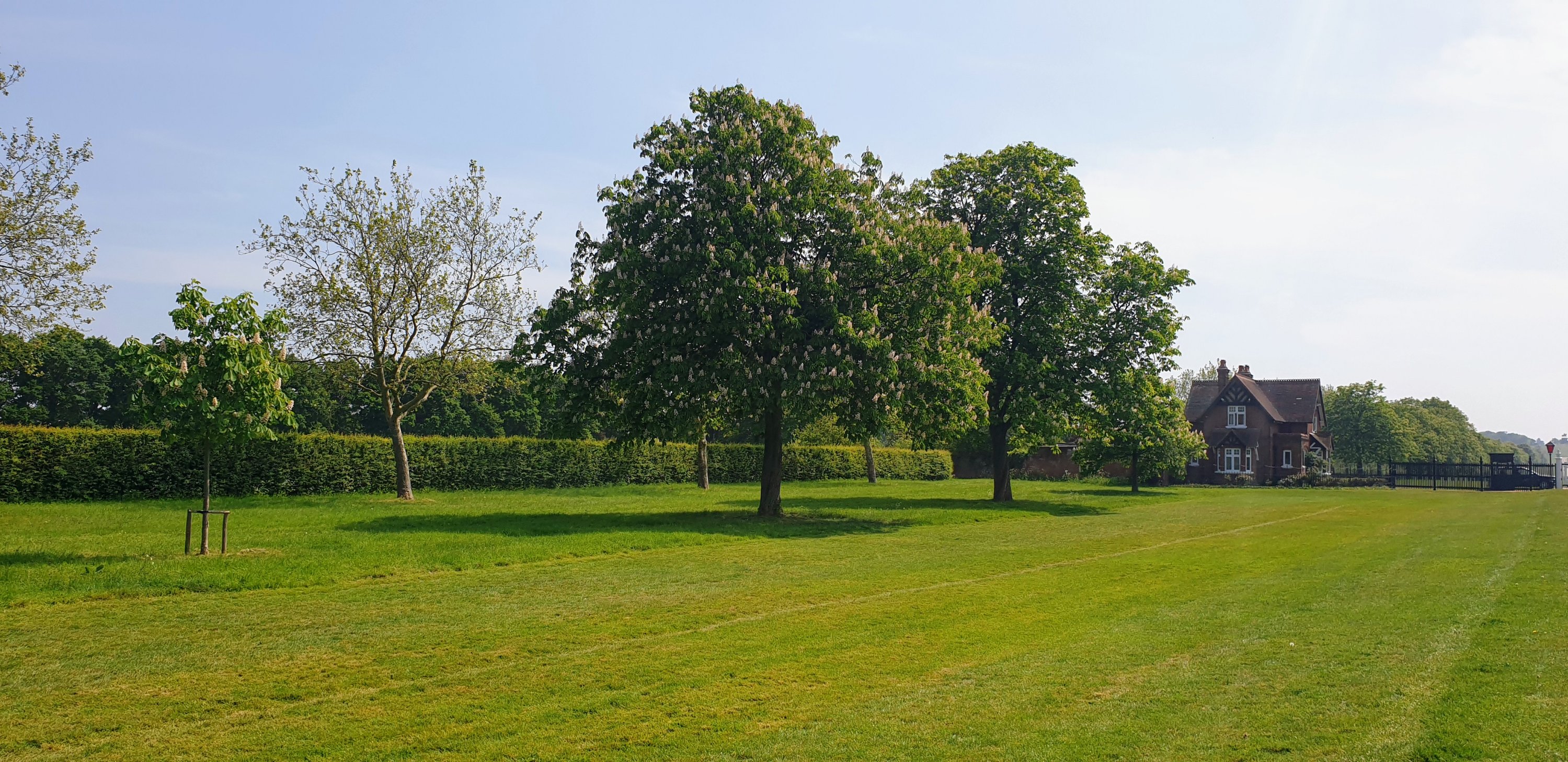
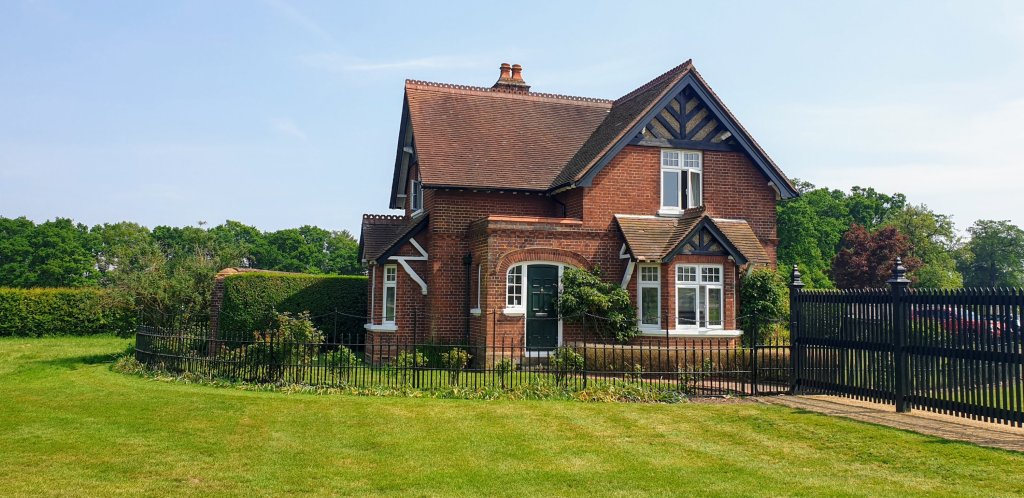
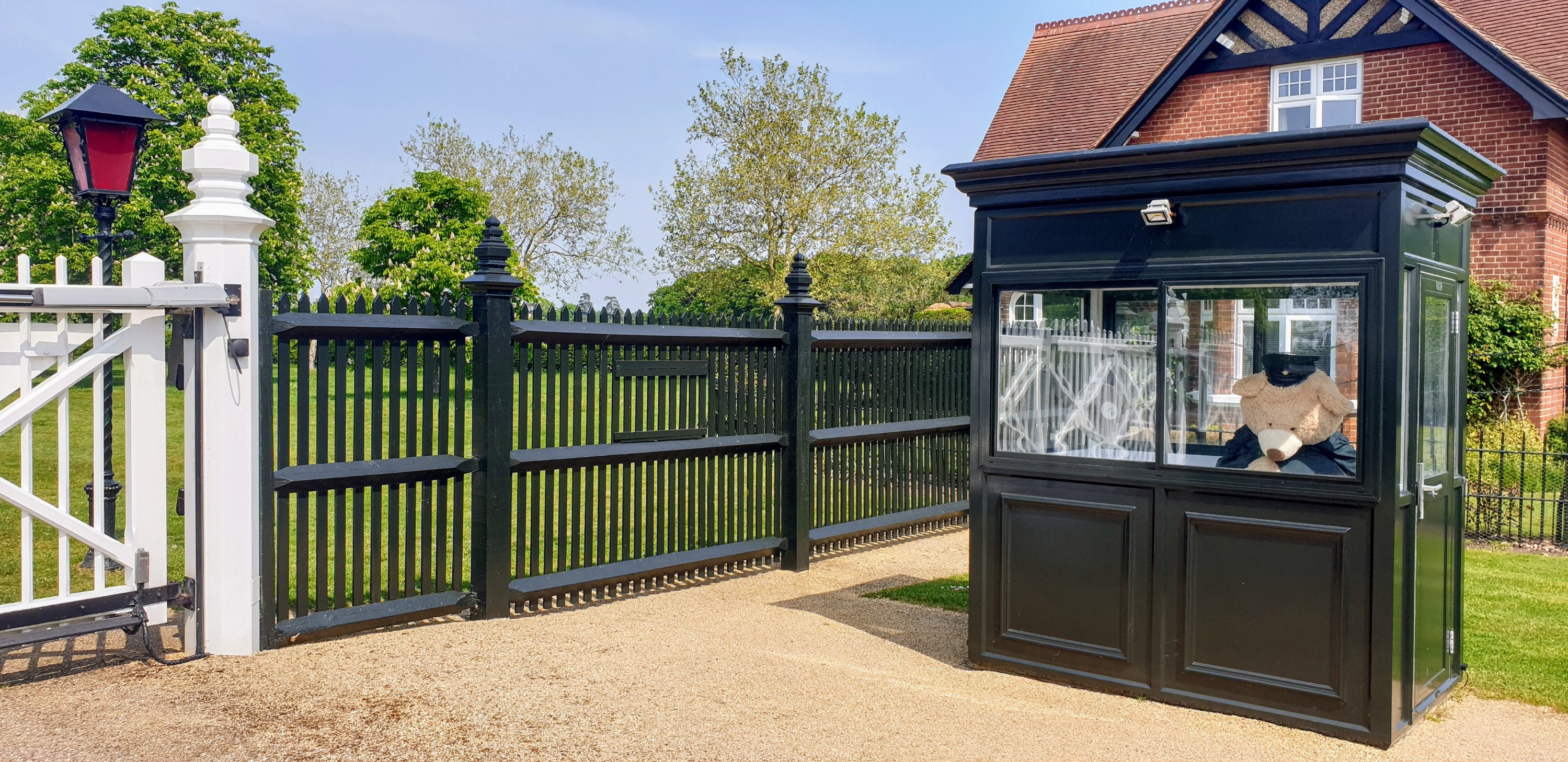
At about the 1 mile mark, gates and a lodge mark the entry to the Deer Park, as well as preventing rogue vehicles from entering. You can’t even ride a bike along here. A large teddy is currently manning the post – it’s nice to see that even the Royals have joined in the lockdown bear hunt, although I’m not convinced about security standards.
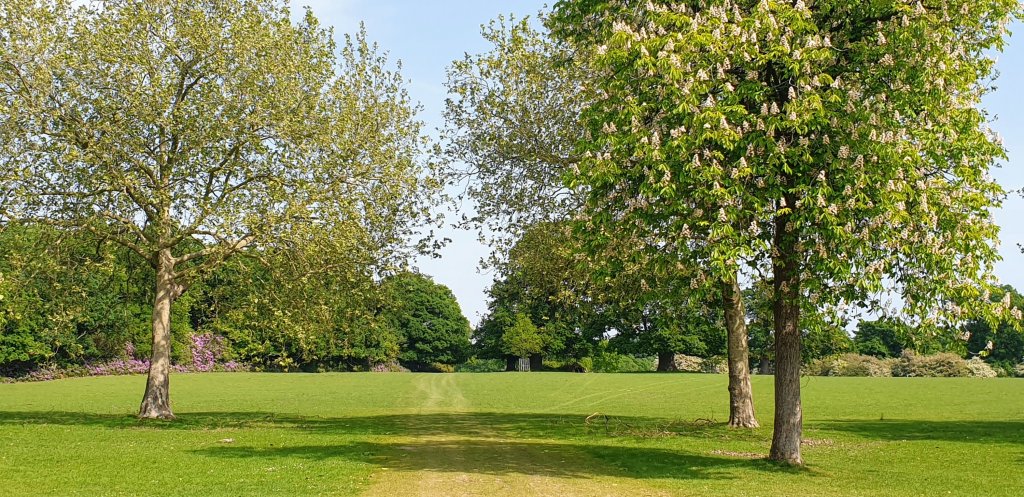
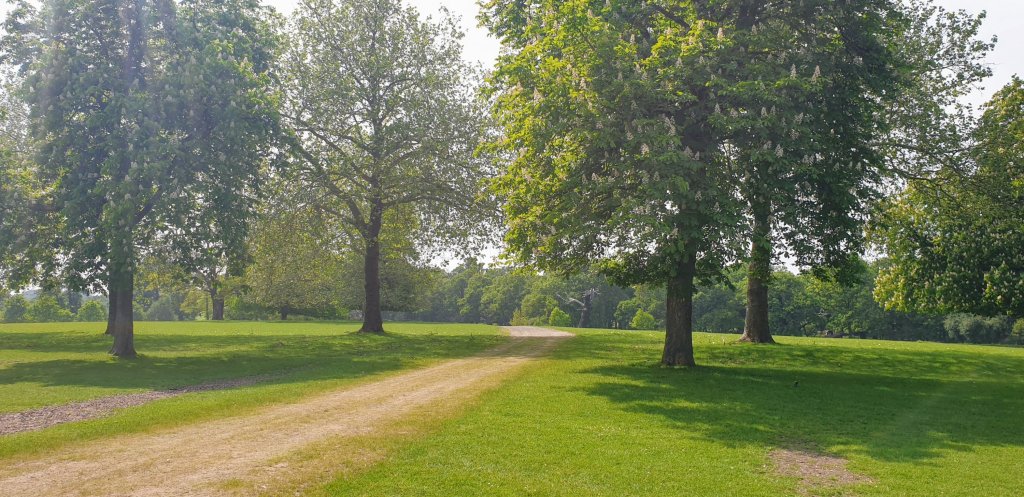
The Deer Park is home to around 500 free roaming red deer, who are apparently ‘easily spotted’ according to the website. Do you think we could spot any? Not a single one, even though I nearly got whiplash turning my head at every movement. Geese, and more geese. Very disappointing. But it is a lovely expanse of countryside, pretty much unchanged in hundreds of years.
The Deer Park, minus deer.No deer in this direction either.
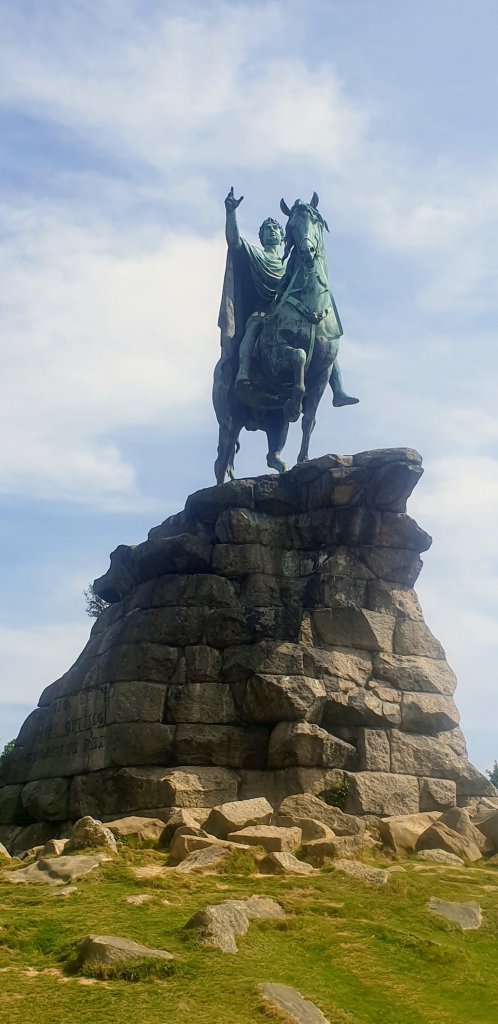
I think the Copper Horse may be like a mirage in the desert for a while, but the statue very gradually changes from being a speck in the distance to actually looking like a man on a horse. It’s King George III, who famously went ‘mad’, although in current times we may have been slightly more understanding about his mental illness. In the late 1700s his family and doctors hid him away and performed some fairly primitive treatments on him – blistering his skin and strapping him into tight waistcoats, poor man.
Almost there…
His son George IV commissioned the statue, and had him depicted as a Roman Emperor, perhaps trying to regain some dignity for his dead father. But rumour says they hated each other, so maybe he was more concerned about enhancing his own reputation. A cunning ploy!
…finally at the end of the very, very Long Walk.
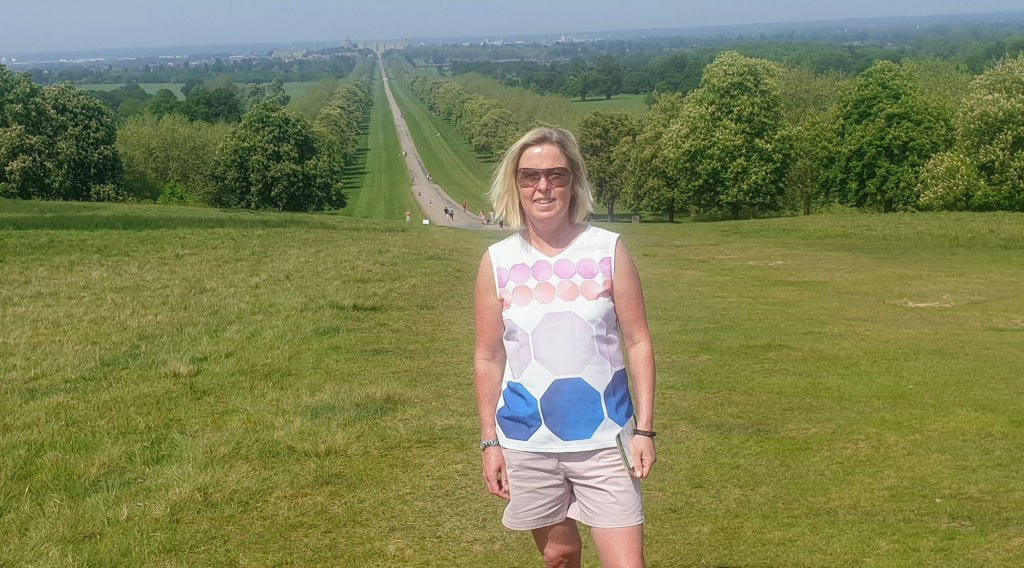
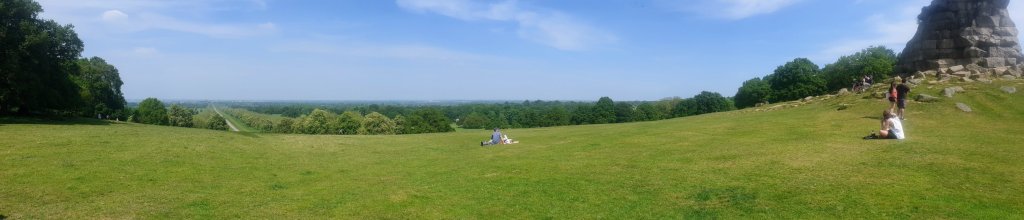
By the time we reach the statue on the top of Snow Hill we are almost too hot and sweaty to appreciate the view, which stretches back towards the castle and beyond. It’s a bit hazy today, which means we can’t quite see Slough in the distance – not a bad thing! Apparently the Queen Mother was unimpressed when the urban blight of Slough spoiled the view from her castle. I can’t say I blame her.
View from the Copper Horse. Note the rather unkempt ‘lockdown hair’.
Legend says that Henry VIII sat at the top of Snow Hill and waited to hear confirmation that Anne Boleyn’s head had parted company with her body. Today there are just a few tired walkers having a breather.
Behind the statue and through the trees we can just make out the Royal Lodge, where the young Queen spent many happy holidays with her parents and sister at their country retreat. The Queen Mother died here in 2002. Prince Andrew moved into the Lodge in 2004 and spent £7.5 million on refurbishments. He’s not known for his good temper – he allegedly rammed open some gates to the Park in his Range Rover a few years ago as he wanted a short cut home – so we head in the opposite direction.
Anyone feel like visiting Prince Andrew? No, thought not.
Snow Hill is a Site of Special Scientific Interest, due to its acid grassland and veteran trees, which are home to over 2,000 species of beetle, some of which are found nowhere else in Britain. I have to admit, we don’t spot any of those either. Today’s walk really isn’t coming up trumps in the wildlife stakes, is it?
Snow Hill woodland. Can you see any beetles? Me neither.
We head back towards Windsor via a different route – The Gallop. You can buy a permit to ride your horse in the park, and until recently you may have bumped into the Queen on her daily pony trek around her extensive ‘garden’ Apparently the coronavirus pandemic has stopped her from getting out recently, nothing to do with being 94! She is one tough lady.
Looking along The Gallop back to Windsor. This park is seriously huge.
Like the Long Walk, it’s a rather extended ‘gallop’ back to town, broken up by a few trickling streams and some mighty impressive trees. The park has some of the most ancient oak trees anywhere in northern Europe. Some are even classed as ‘Monumental’ with individual names.
The Signing Oak. Very old indeed.Who lives in a tree like this?
By this point, I wish I had a pony myself and could actually do a bit of a canter, rather than trudging along in the heat. We marvel at a young couple who pass us chatting animatedly. We just don’t have the energy to talk, we’re too dehydrated!
Are we there yet? Clearly not.
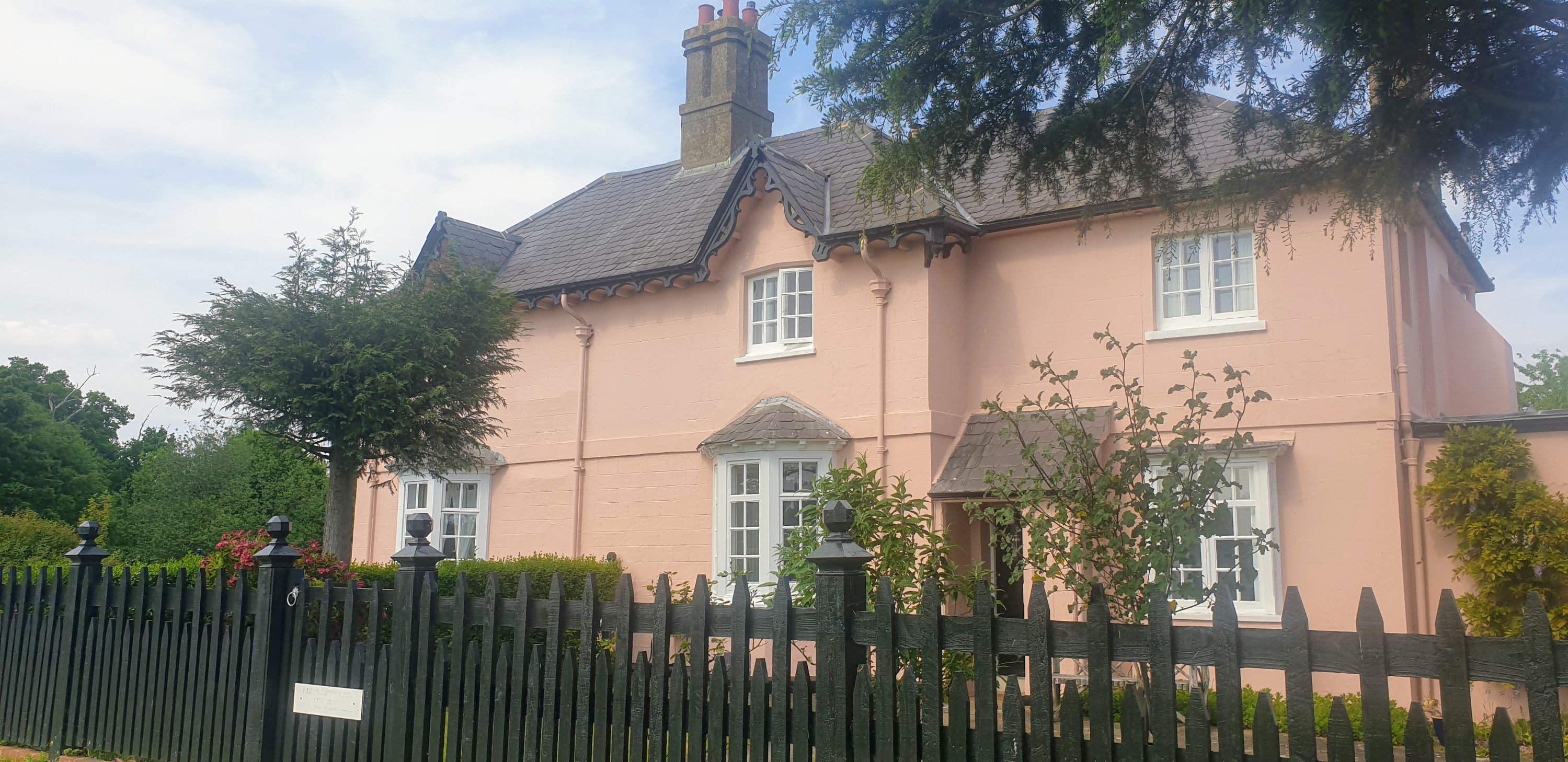
We exit the park (eventually) by Queen Anne’s Gate and admire the pink lodge which dates from 1830. But mostly we’re just glad to be heading back to our car. It’s been great hanging out with royalty, but it seems we just don’t have the stamina of our nonagenarian monarch – we’re knackered.
See you next time, for now I’m going home for a nap.
For today’s walk I’m driving out into the Buckinghamshire countryside about 13 miles from home. Just a short drive, but an adventure in itself, as these country lanes were not built for two cars to pass. Winding along with high hedges either side there’s no chance of seeing what’s ahead. I just hold my breath and hope for the best.
No wonder Caractacus Potts ran Truly Scrumptious off the road here! Yes, today I’m walking around Turville, scene of one of my favourite childhood films, Chitty Chitty Bang Bang.
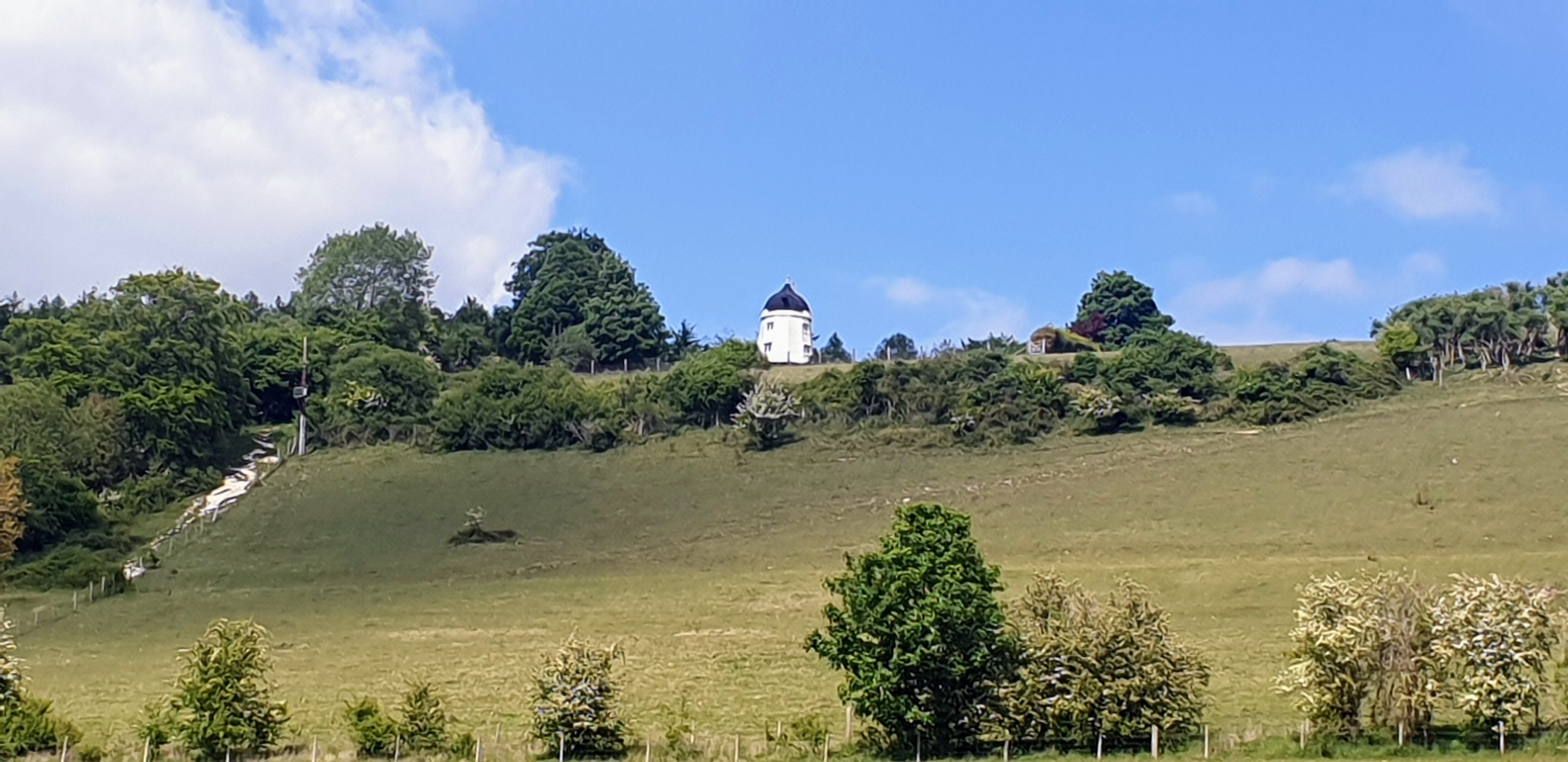
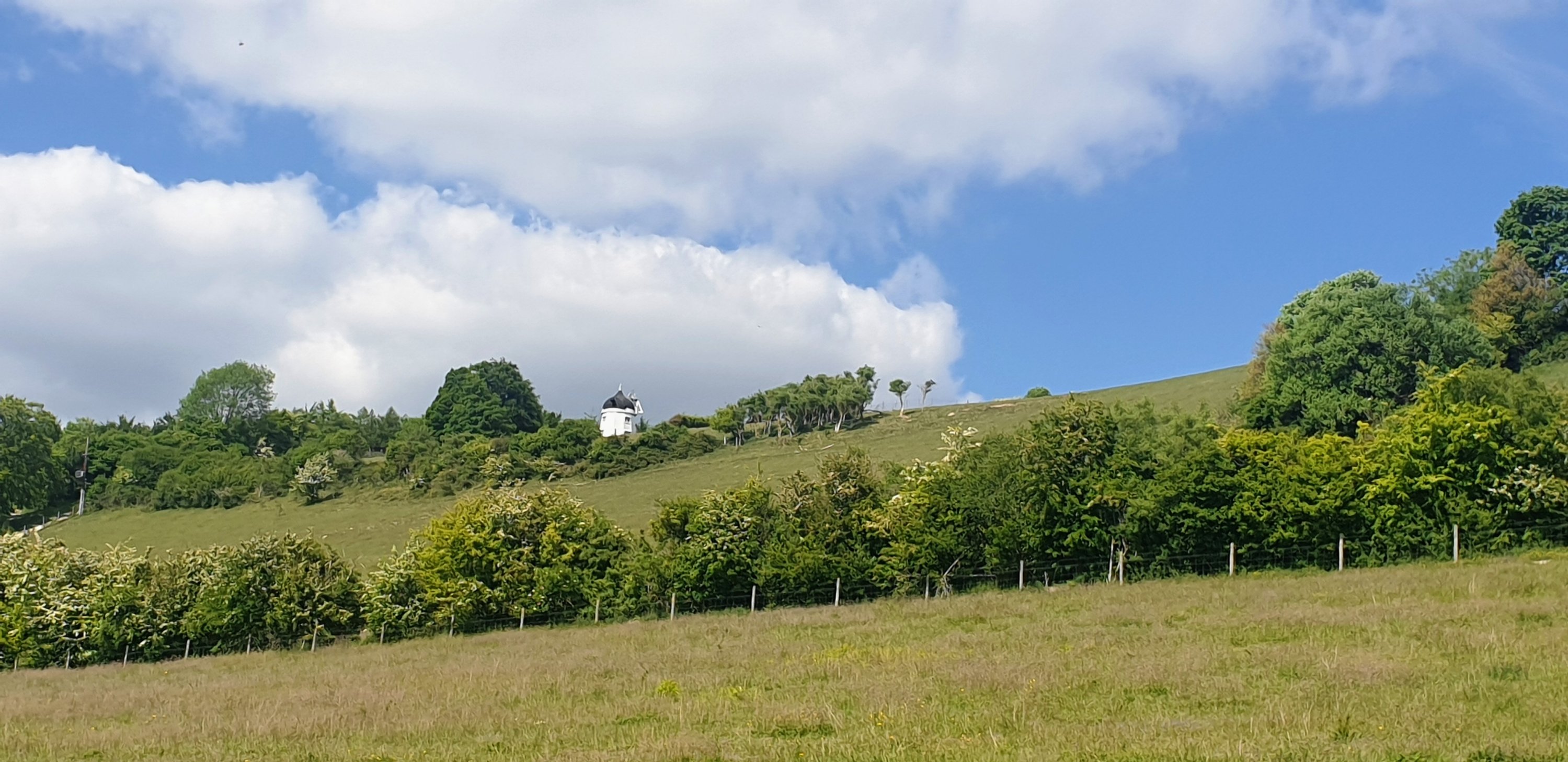
The famous windmill where Grandpa Potts had his workshop sits up on the hill above the village. It’s actually called Cobstone Mill and was built in 1816 to grind cereals. It dominates the landscape for miles around. Just looking up at it makes me want to sing…’Oh, you, chitty chitty bang, pretty chitty bang bang, we love you…’
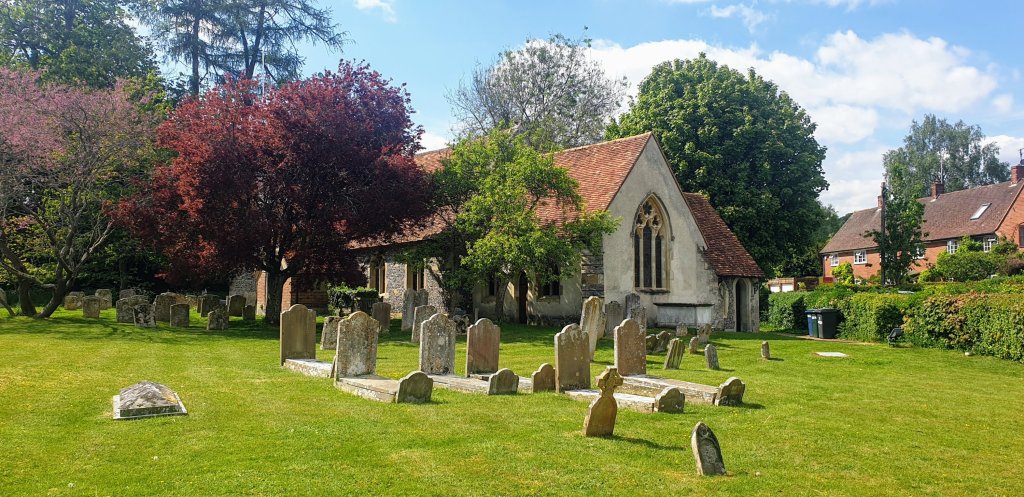
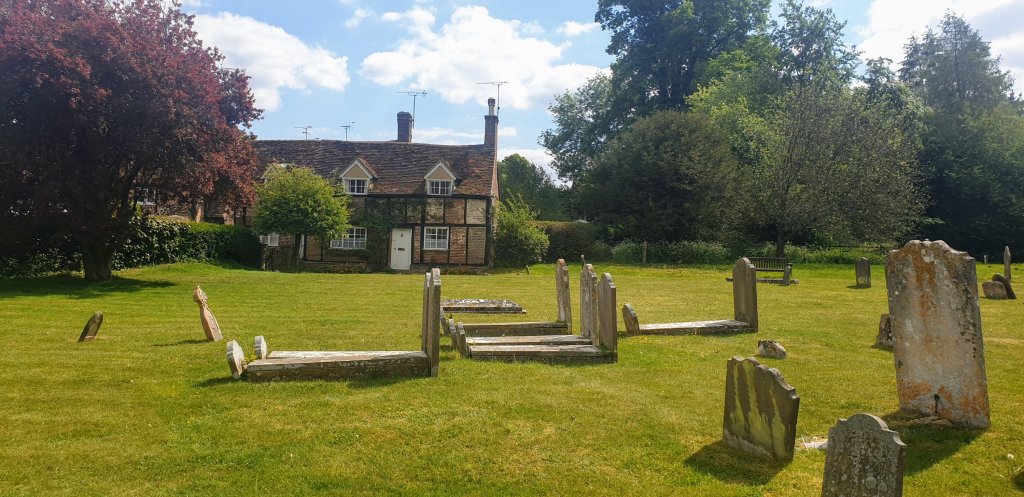
You may not have heard of Turville or the surrounding villages, but chances are you’ve seen them on the telly at some point. The lovely old Church of St Mary the Virgin was renamed St Barnabus in The Vicar of Dibley.
Miss Marple has been filmed here, as has Lewis, and more recently Killing Eve. The scenes of Little Britain featuring barman Daffyd Thomas were shot here – he was the only gay in the village, this village!
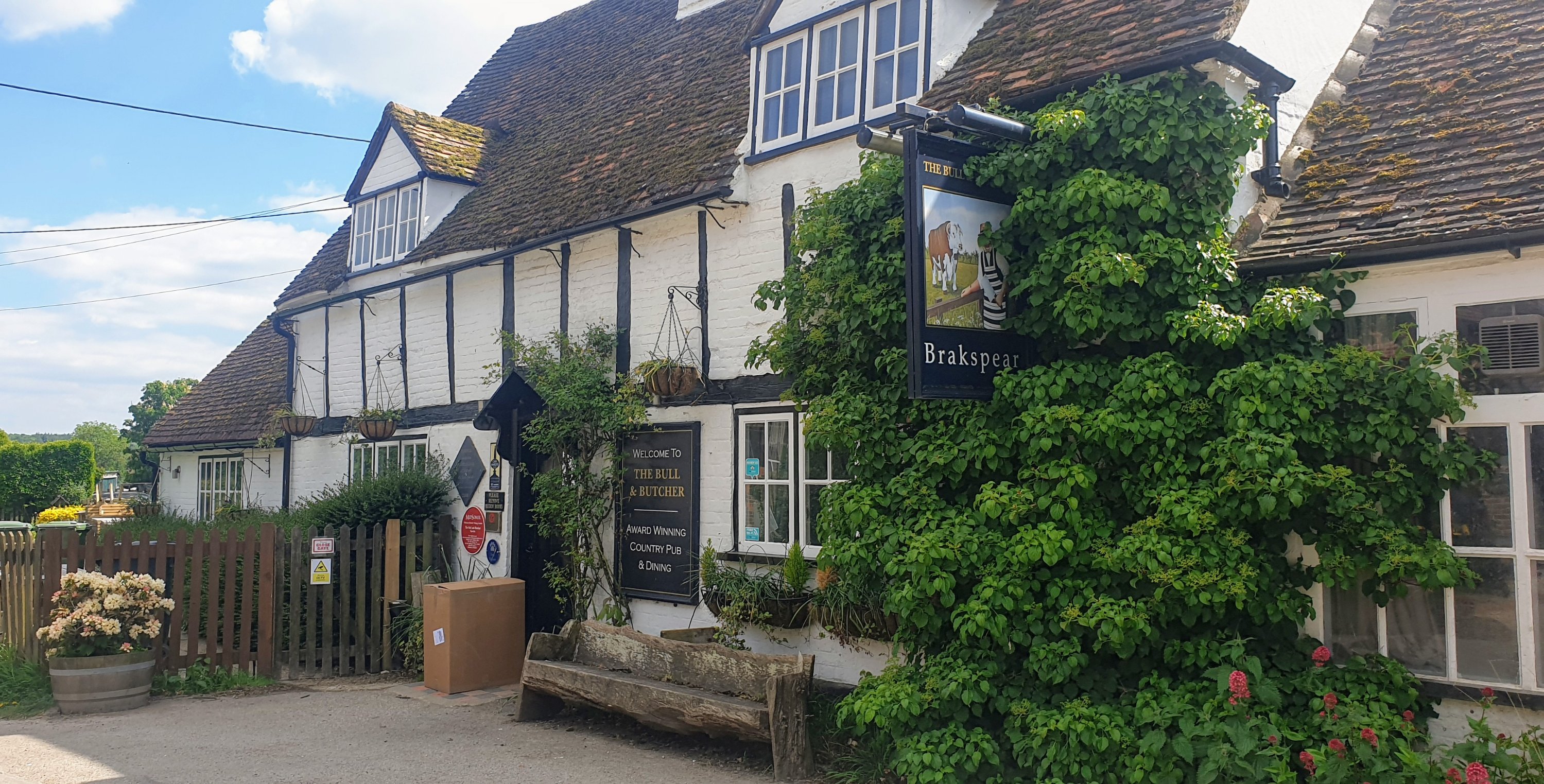
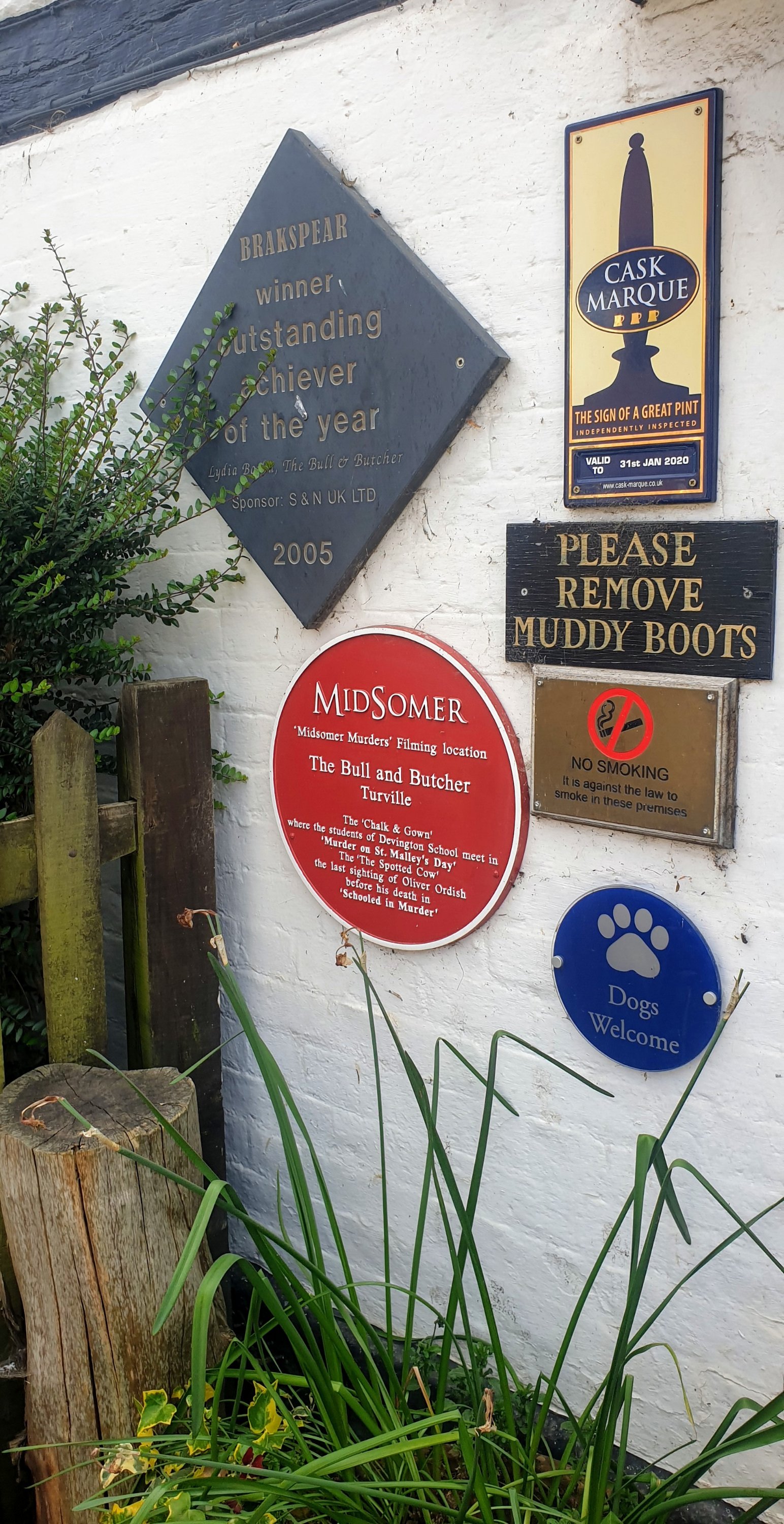
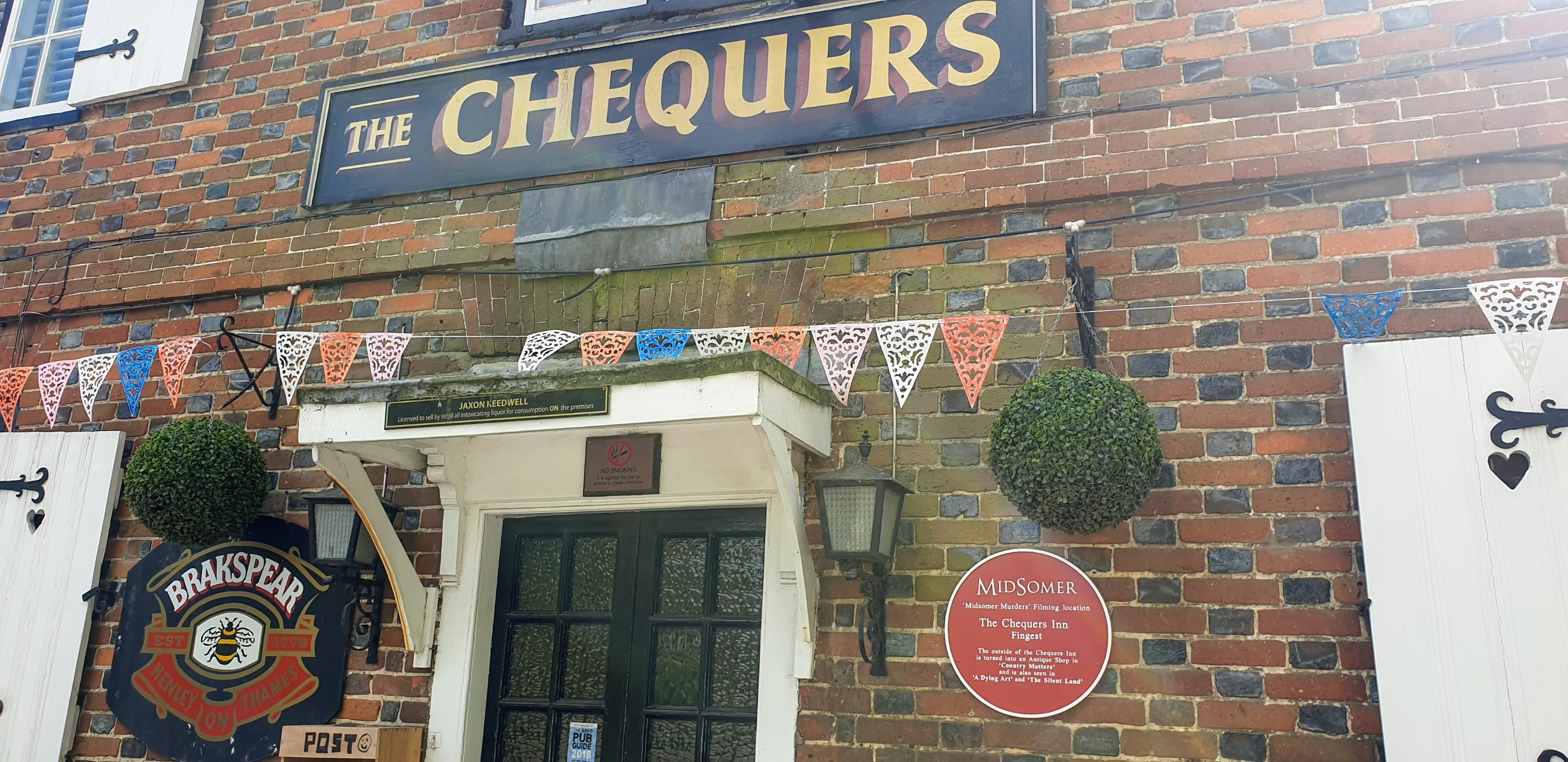
The Bull and Butcher is the village pub. Yes, it’s closed. This is getting very tedious now, a thirsty walker needs public houses to be open. A bottle of wine is a bit too heavy for the backpack! A plaque outside the door proclaims the fact that the pub has starred in various episodes of Midsomer Murders. I bet my Mum recognises it.
Cute as the village is, I’m not here to hang around. My walk starts just by the entrance to the churchyard, along a lane and onto the Chiltern Way through a tunnel of green.
Looking back, the windmill stands proud above the lush countryside. I can feel another song coming on, maybe ‘Hushabye Mountain’ this time? I wish my sister Gill was with me, she’d sing along, and she knows all the words, we must have watched that film 100 times!
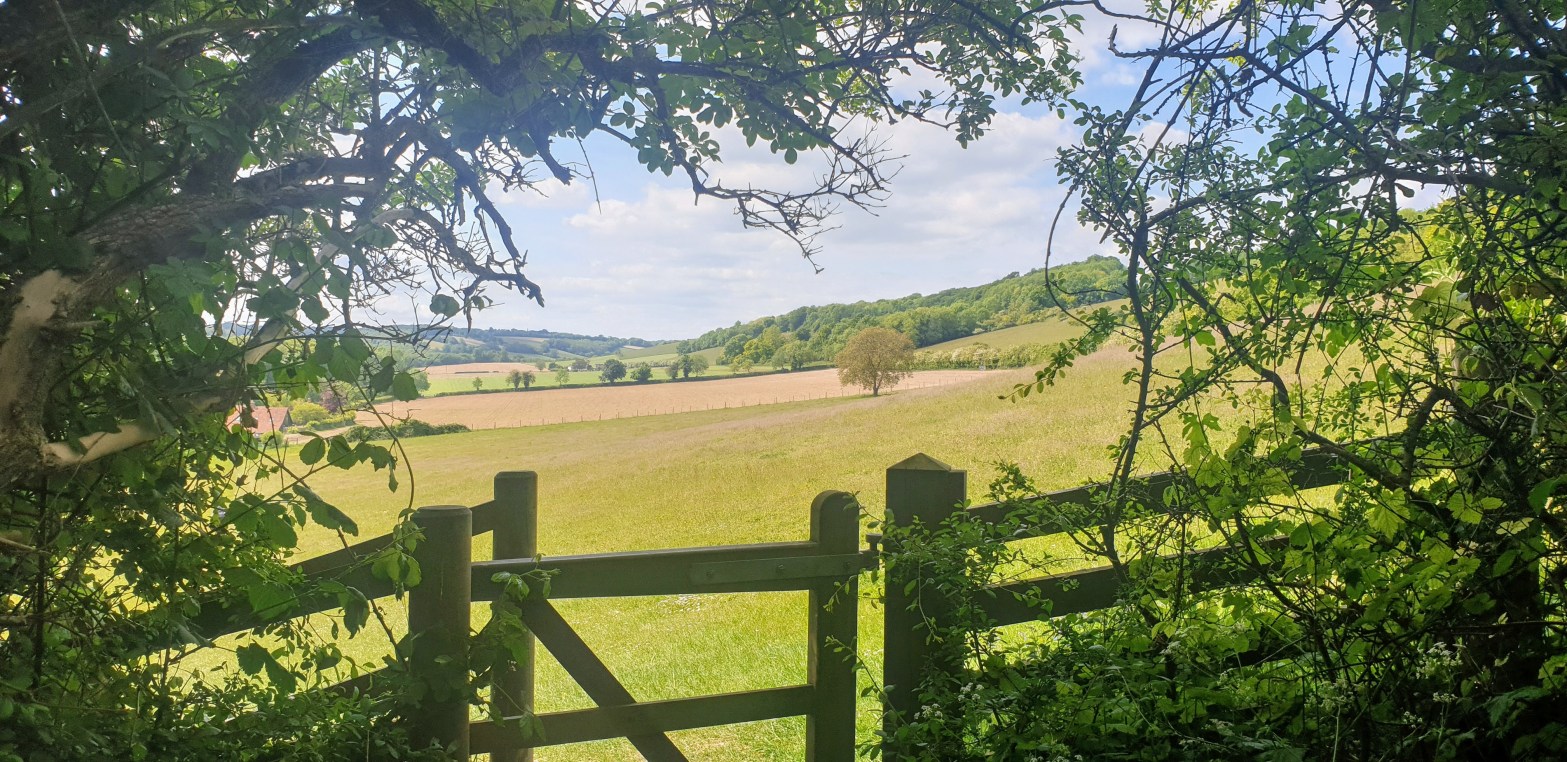
The paths climbs up through woodland and fields full of sheep. It’s lambing time, so all you can hear is bleating. And me singing, of course. Luckily there are very few people around to object, and the sheep don’t seem to mind.
I pause at the top of the hill to catch my breath – it’s quite a steep climb. Sure enough, there’s the windmill again, gleaming in the distance. Not for the first time, I feel really thankful to have such amazing countryside to explore. Don’t get me wrong, I’m still looking forward to my next flight out of here, but for the moment these walks are satisfying my need to explore. On we go, back into the trees.
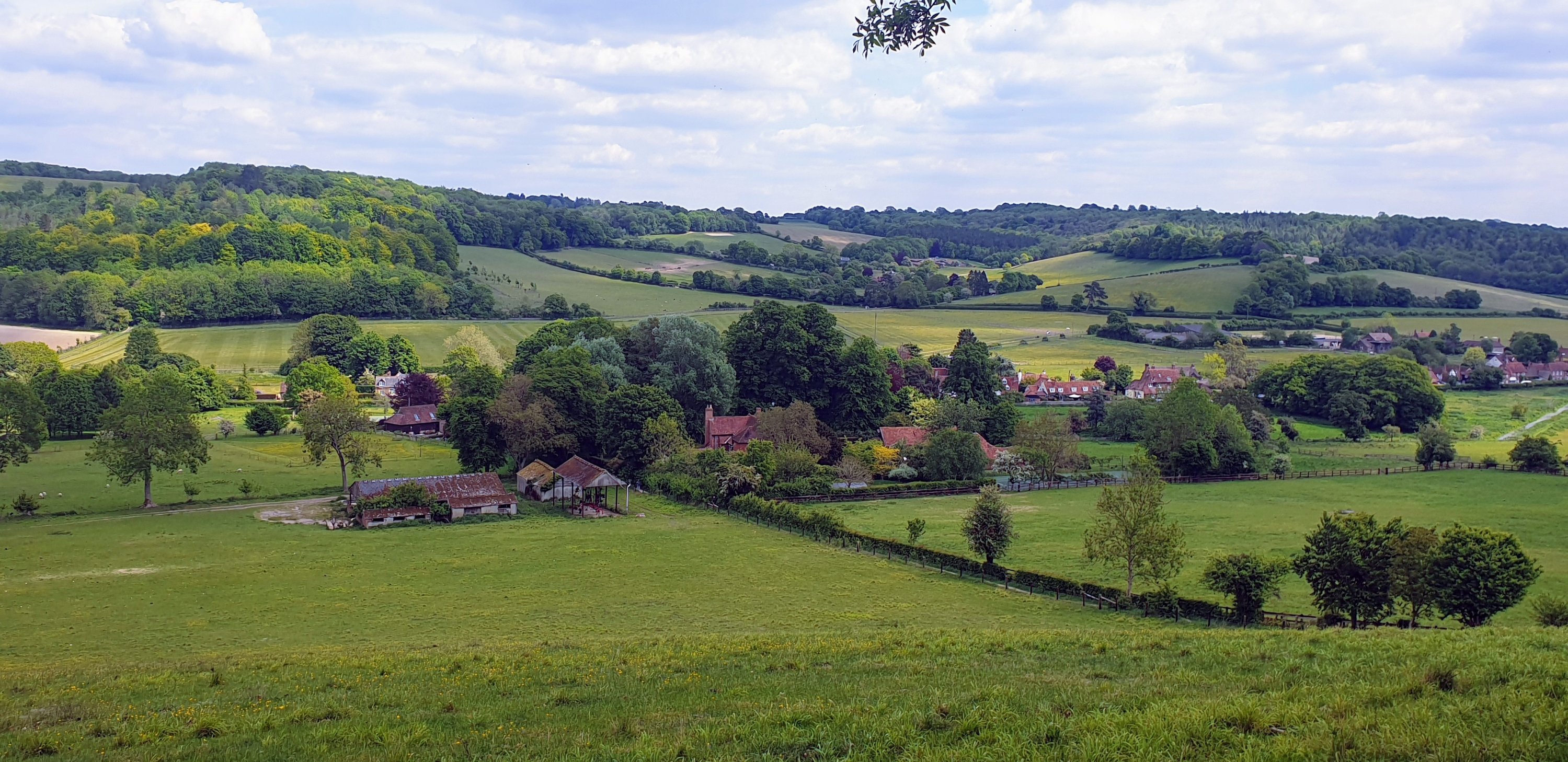
The pathway turns downhill towards the next village of Skirmett, which looks pretty idyllic down in the valley.
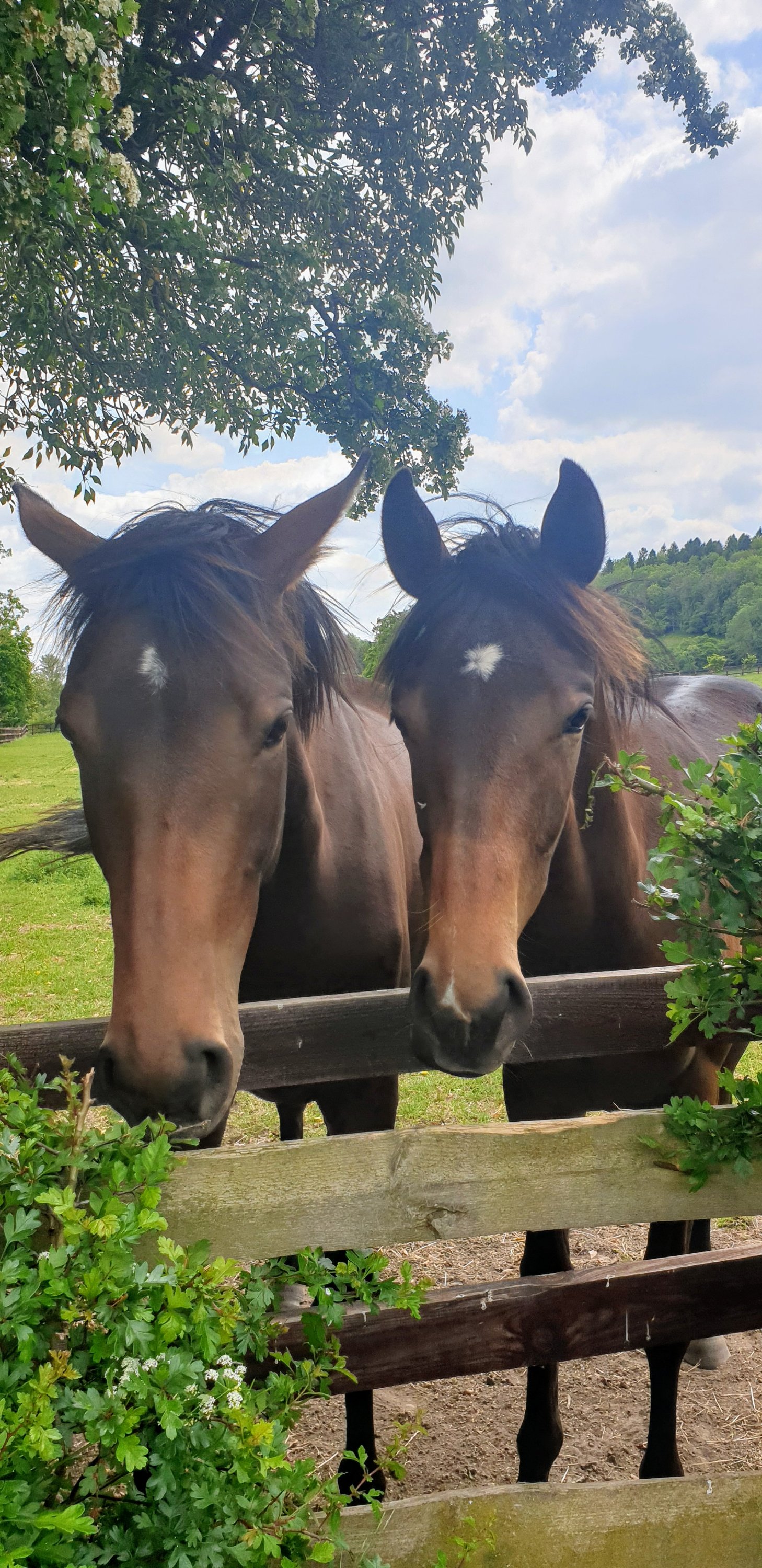
I’m startled by something moving behind a fence, but it’s only two very friendly horses, who come up close to check me out.
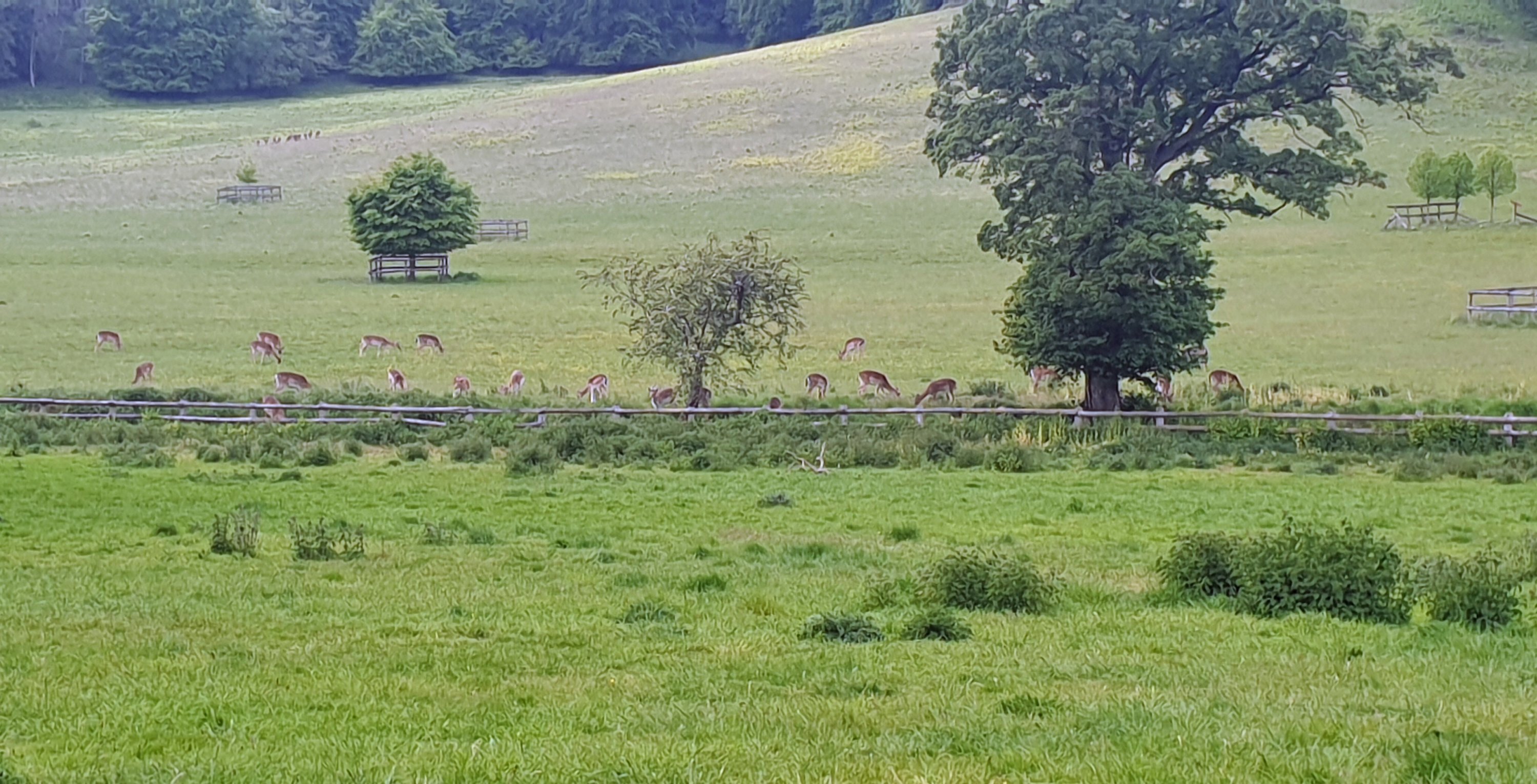
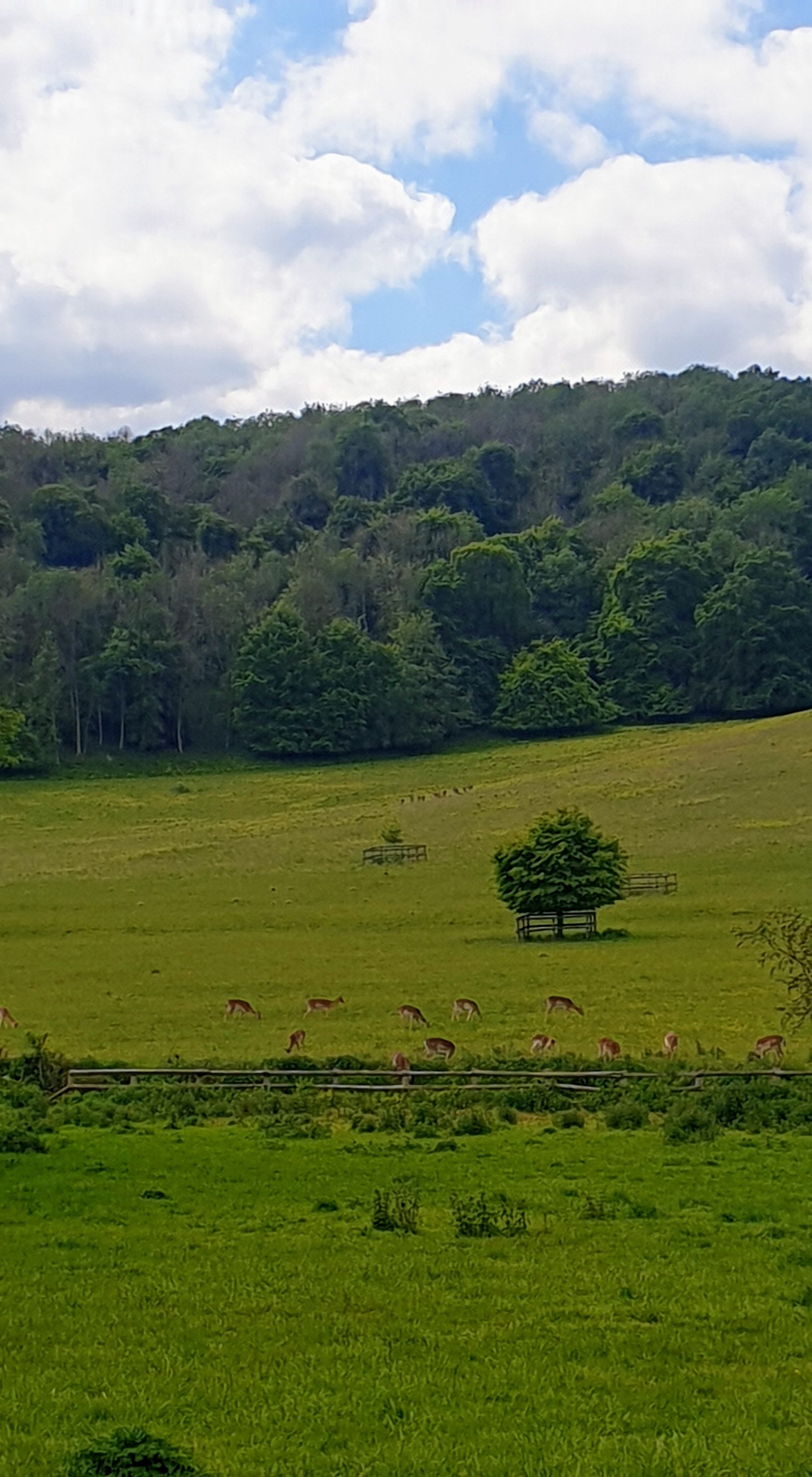
In the next field, I spot a large herd of very content looking deer and stand to watch them for a while, it’s quite relaxing.
Skirmett itself is just one street beside a stream, with lots of chocolate box cottages and a pub, of course. It’s quiet, but a few locals shout ‘hello’ as I stroll past.
My route circles back across fields behind the village and past the very aptly named Watery Lane. At this point I begin to question the appropriateness of my Birkenstocks – comfy they are, waterproof they are not. Damp feet it is then!
I’m heading across open fields now to my final destination of Fingest. Just me, with a soundtrack of baas and birdsong and ‘It’s the posh, posh travelling life, the travelling life for me’. Wishful thinking…
Fingest was the location of The Monuments Men but unfortunately I can report that neither George Clooney nor Matt Damon was anywhere to be seen on the day of my visit.
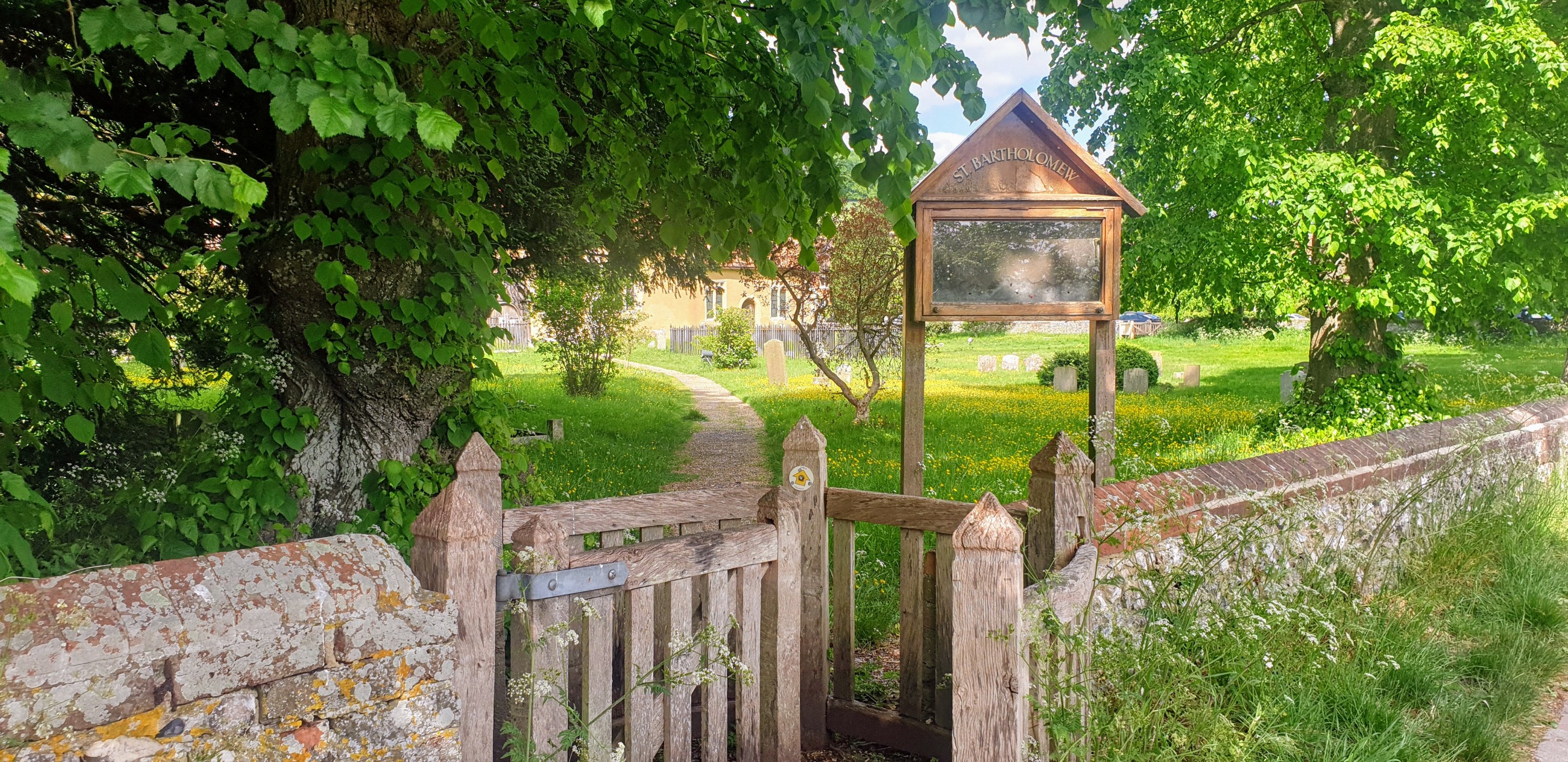
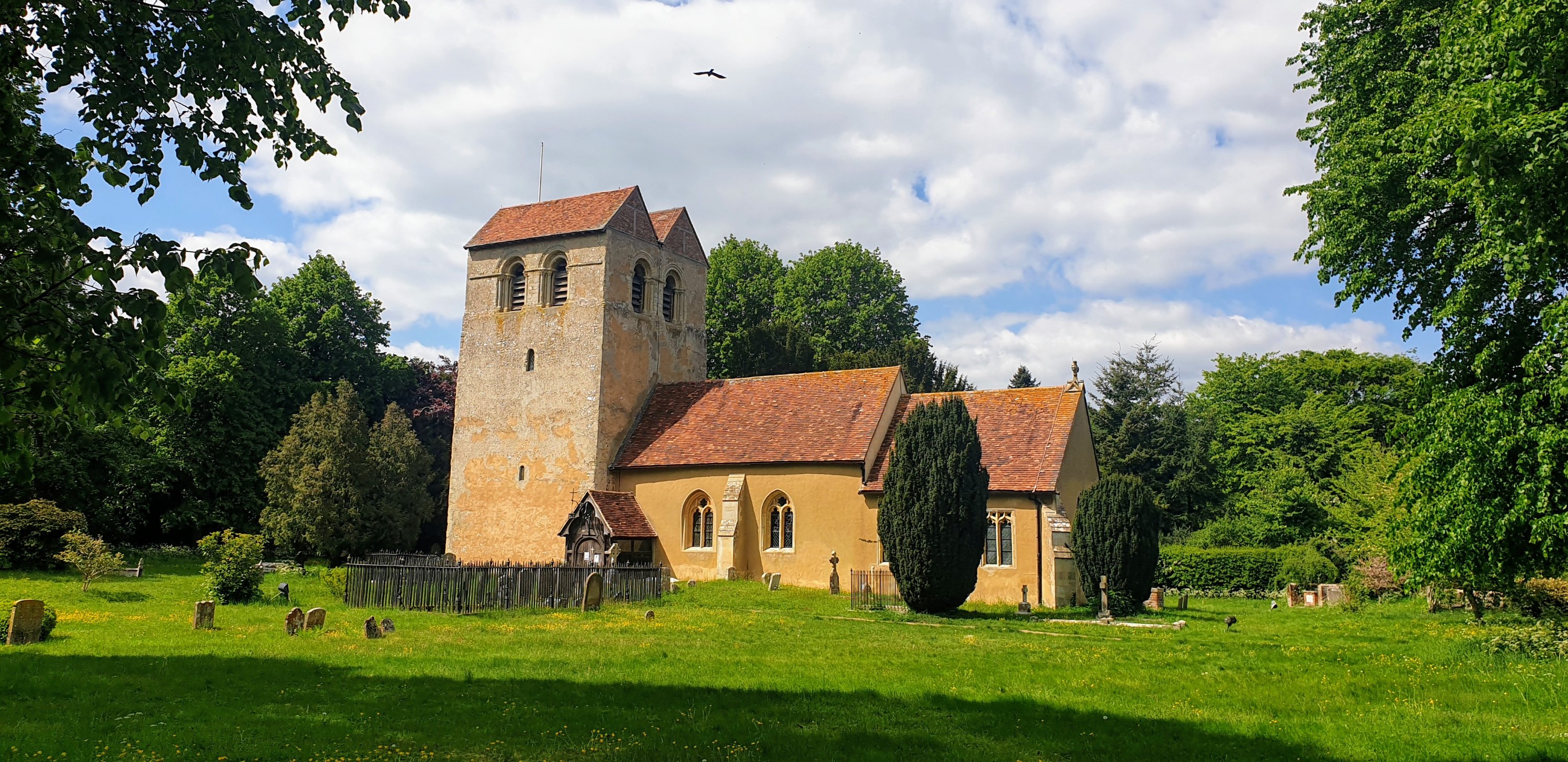
The village church of St Bartholomew is worth seeing though. It dates from early Norman times and is absolutely beautiful. My Mum would love it, in fact this walk could have been designed for her.
Outside the Chequers pub, another plaque proudly announces that Midsomer Murders has been here too, several times. He likes his pubs, that Chief Inspector Barnaby. Mind you, there have been 21 seasons since 1997, so I guess he’s had plenty of time to get around.
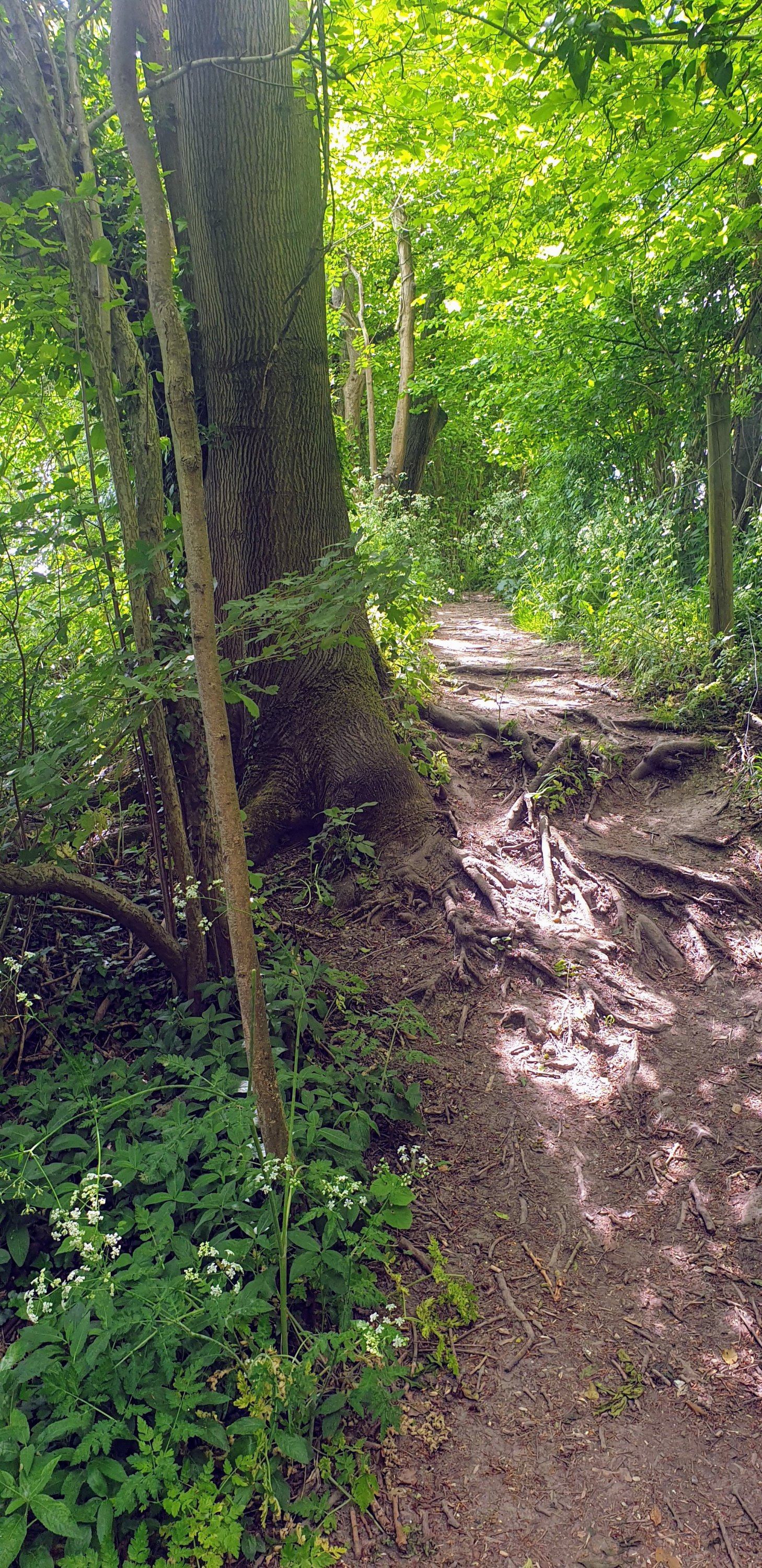
Back towards Turville we go, along a path which seems designed to trip up a clumsy walker like me. Tree roots everywhere, just lying in wait… I decide to stop singing and concentrate. The husband will not be impressed if I go home covered in cuts and bruises (it’s been known to happen in the past).
Emerging from the trees, there’s that windmill once again overseeing the landscape. I cross a meadow and down a lane back into strangely-familiar Turville. Another walk done and dusted, and very lovely it was too. As I keep saying, get out there.
Back in the car, I realise I have to face those hair raising roads once more. Yikes! Maybe another song will help? Something upbeat. ‘Toot Sweets’ it is then. If you haven’t seen Chitty Chitty Bang Bang, then you must.
Today we’re really staying close to home in accordance with those good old coronavirus guidelines. Taplow is literally across the river from Maidenhead. Cross the Thames and you are in fact in another county – Buckinghamshire.
Berkshire to your left, Buckinghamshire to your right.
Bucks is famous for being posh. It’s the third most expensive place to live in the UK after London and Surrey. The PM has his country residence here, Chequers. The county is also home to the Chiltern Hills, Silverstone Racetrack and Pinewood Studios.
Boulters bar and restaurant, in normal times a great place to while away a sunny afternoon.
We start today’s ramble on Ray Mill Island. There are more than 80 islands in the Thames, many of which you can visit. The largest is the Isle of Sheppey in the estuary at the river’s mouth. This is just a small one, with a few houses and a restaurant which has gorgeous views from the first floor balcony bar. Not today, alas.
Ray Mill Island.
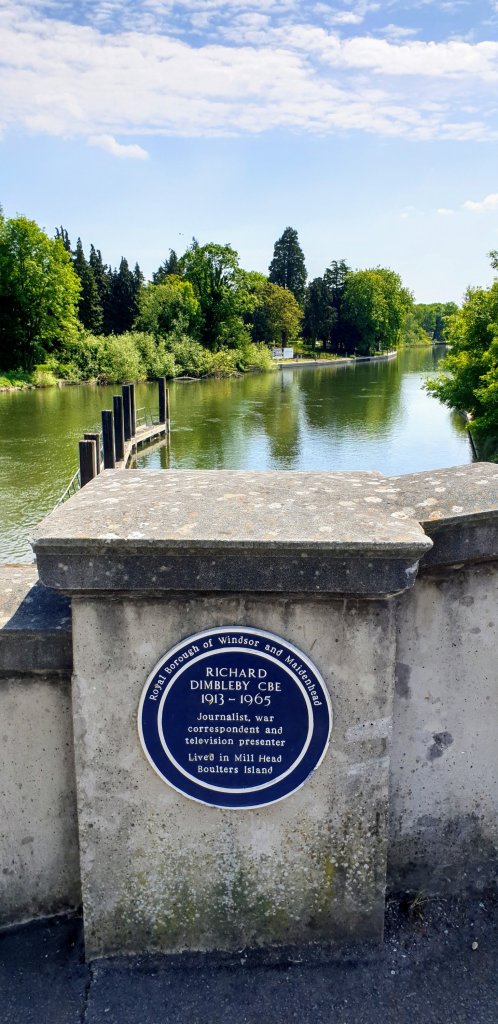
We’re celebrity spotting again here, although the pickings are slim – broadcaster Richard Dimbleby lived here, and an episode of Mr Bean was filmed next to the lock. Wow. Did I tell you I cannot stand Mr Bean?
Someone was obviously a big fan.
A bridge was built in 2018 to connect the island with the opposite bank of the river Thames, so across we go to Taplow. Easy peasy.
The new bridge – enabling us to hop across to a different county.
I’ve written before about the tendancy of the Thames to flood. The Jubilee River is a hydraulic channel that was constructed in the late 1990s to protect Maidenhead, Windsor and Eton from the river. It runs parallel to the Thames for 11.5 miles and cost £110 million to build. It basically takes excess water and dumps it downstream on the poor residents of Datchet! As unsuspecting newcomers to the area, we thought about buying a house in Datchet, only to see the actual purchaser crying on the news, with their home under several feet of water. Lucky escape for us!
The Jubilee River – great for Maidenhead, not so great for Datchet.
The Bucks riverbank has been developed over the last few years, with new parks and pathways around a very expensive housing development. It’s greening over nicely now, but at some points in the last few years, I wanted to cry looking across and seeing bulldozers instead of trees. Taplow Riverside is very tastefully landscaped, and some lovely old derelict buildings have been saved and spruced up, so it could be much worse.
Taplow Riverside.
Taplow is Anglo Saxon for Taeppa’s barrow, an ancient burial mound that was excavated many years ago. Old Taeppa was obviously a weathy man – the contents were important enough to end up in the British Museum.
Taplow village green.
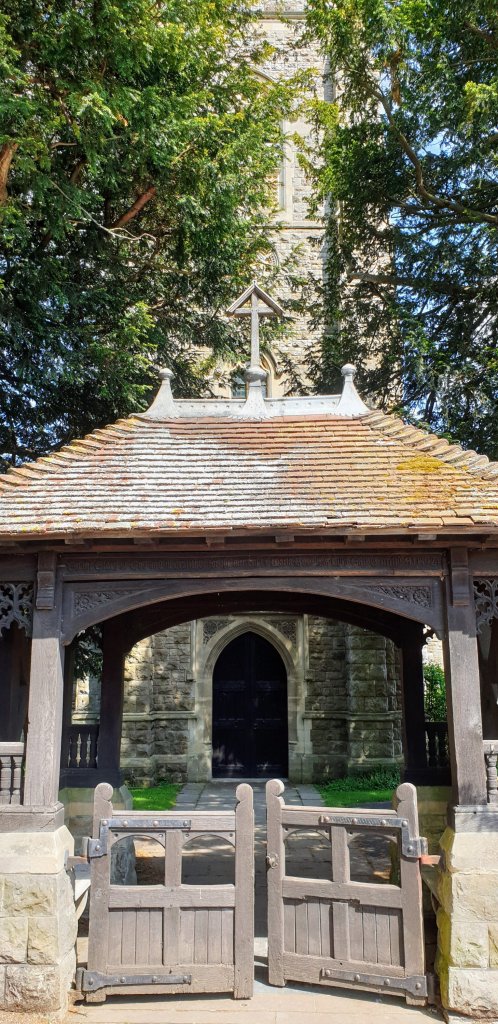
Like all the best English villages, Taplow has an attractive green, a lovely old church and a decent pub. Oh, and a sprinkling of celebrity gold dust – Dusty Springfield and Sir Terry Wogan both lived here during their lives. Ant Mcpartlin got married here in St Nicholas’ Church before nipping a few miles up the road to Cliveden for his reception. I’m pretty sure Dec was here too, and I bet that party was a proper knees up!
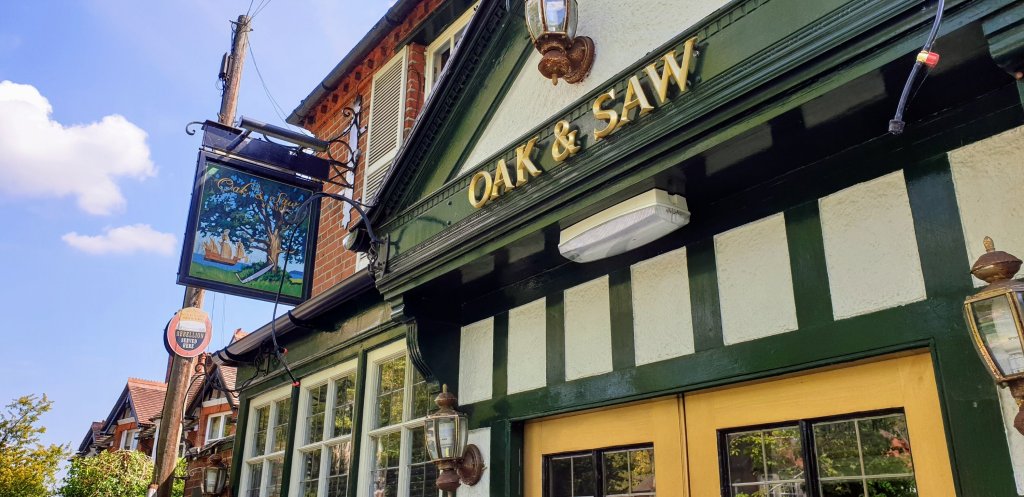
St Nicholas’ ChurchThe Oak and Saw.
The Oak and Saw pub dates back to 1870 and gets its name from the fact that old wooden warships used to sail up the Thames to be decommissioned here. It was voted Best Pub in Maidenhead in 2017. Yes, we’ve had a snifter here in happier times. Today we walk on by and head along a footpath to the right.
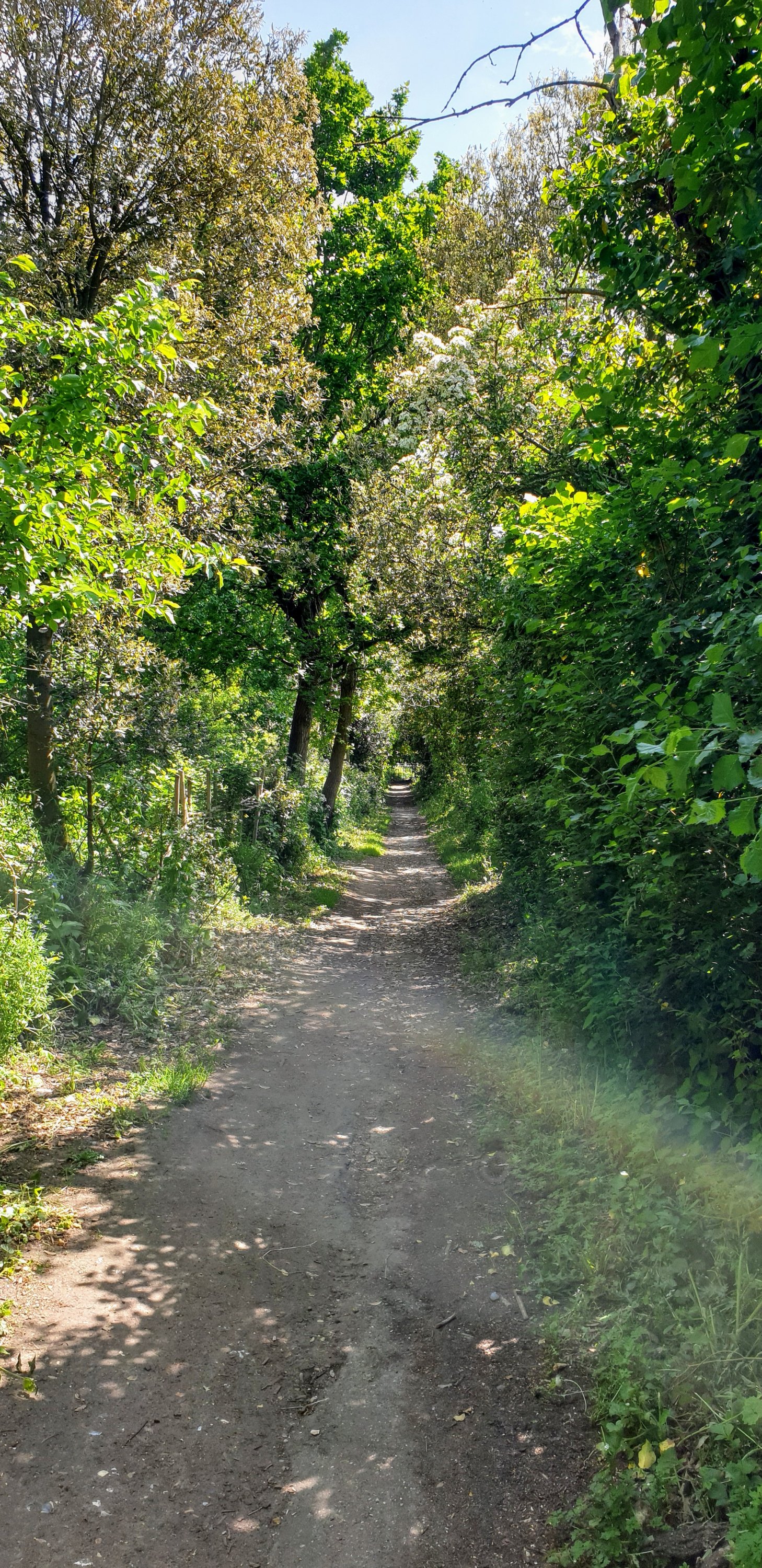
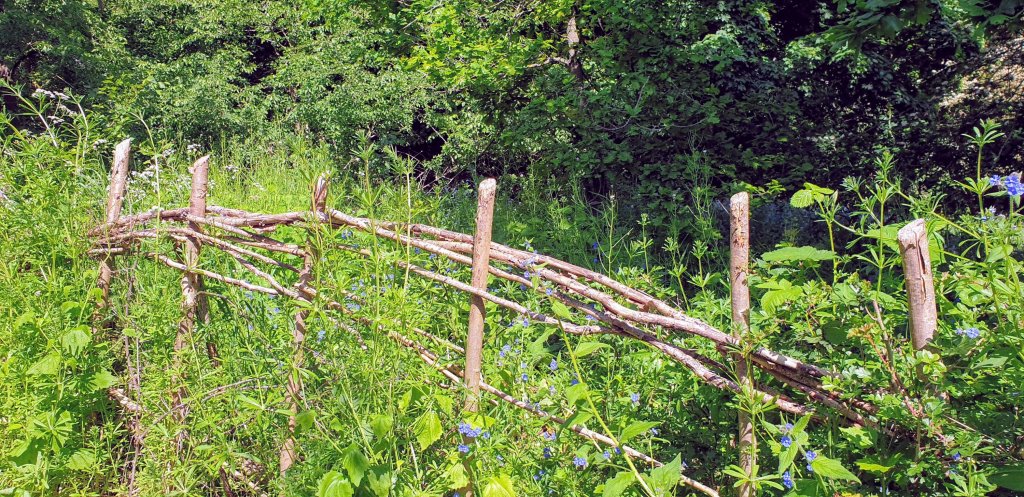
The husband, who prides himself on his eye for detail, points out the traditional style of the fencing along the pathway. Apparently he saw Price Charles doing some fence building on the telly and it looked just the same. I’m not convinced that the person who did this particular fence is an expert, Price Charles could do better I’m sure!
An attempt at traditional hazel fencing – looks like they got fed up and never finished it.
We walk across fields and past some old farm buildings until we reach the A4, or Bath Road, once known as the Great West Road. In the 17th century Charles I ordered the building of six ‘Great Roads’ to aid postal deliveries. At the time, it took about 17 hours to travel between Bristol and London. Nowadays the M4 is a quicker route, unless you hit a traffic jam, when you might feel that nothing much has changed.
Turning right here along the road, we meet the Jubilee River again and meander back upstream along its banks.
Jubilee River.
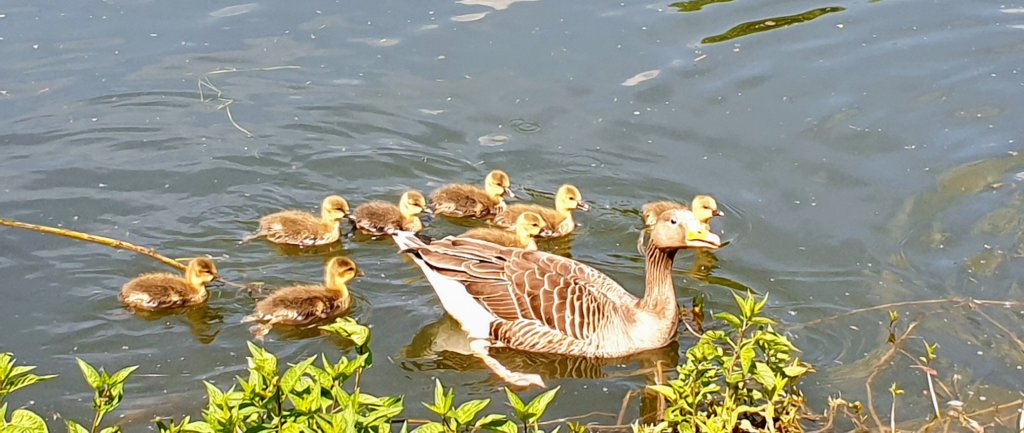
The Thames is a haven for birds, despite being quite a popular place to walk. Here along the Jubilee it’s really tranquil, which is probably why we see a lot of babies – goslings and ducklings paddling along madly behind Mum.
Up on a hill to our right sits Taplow Court, a manor house that used to belong to the Earls of Orkney. It’s now owned by a Buddhist society which aims to contribute to a more harmonious world through cultural and educational activity. Good for them. It’s a beautiful building, I’m sure that helps to develop harmony.
The Buddhist retreat of Taplow Court.
We’ve circled back around to Taplow Riverside, and wonder through the parkland back to the Thames. Families, cyclists and runners are all making the most of the open space on a lovely sunny day. We applaud a boy who’s just learnt to ride his bike without stabilisers. What a moment that is for any kid. His mum looks delighted. It could be any normal day, that’s the beauty of walking, it lets you forget the bad stuff. Get out there everyone.
Here we go again on our coronavirus travels around our home town of Maidenhead. Today’s walk takes us on a circuit around the idyllic village of Littlewick Green. What a great name. We’ve actually never been here before, but it’s rather lovely.
As the name suggests, there’s a very lush village green, ringed with substantial houses – this is the Home Counties after all. There’s an old church, a cricket club, and a pub, The Cricketers. Closed of course right now, but might be worth a visit in happier times!
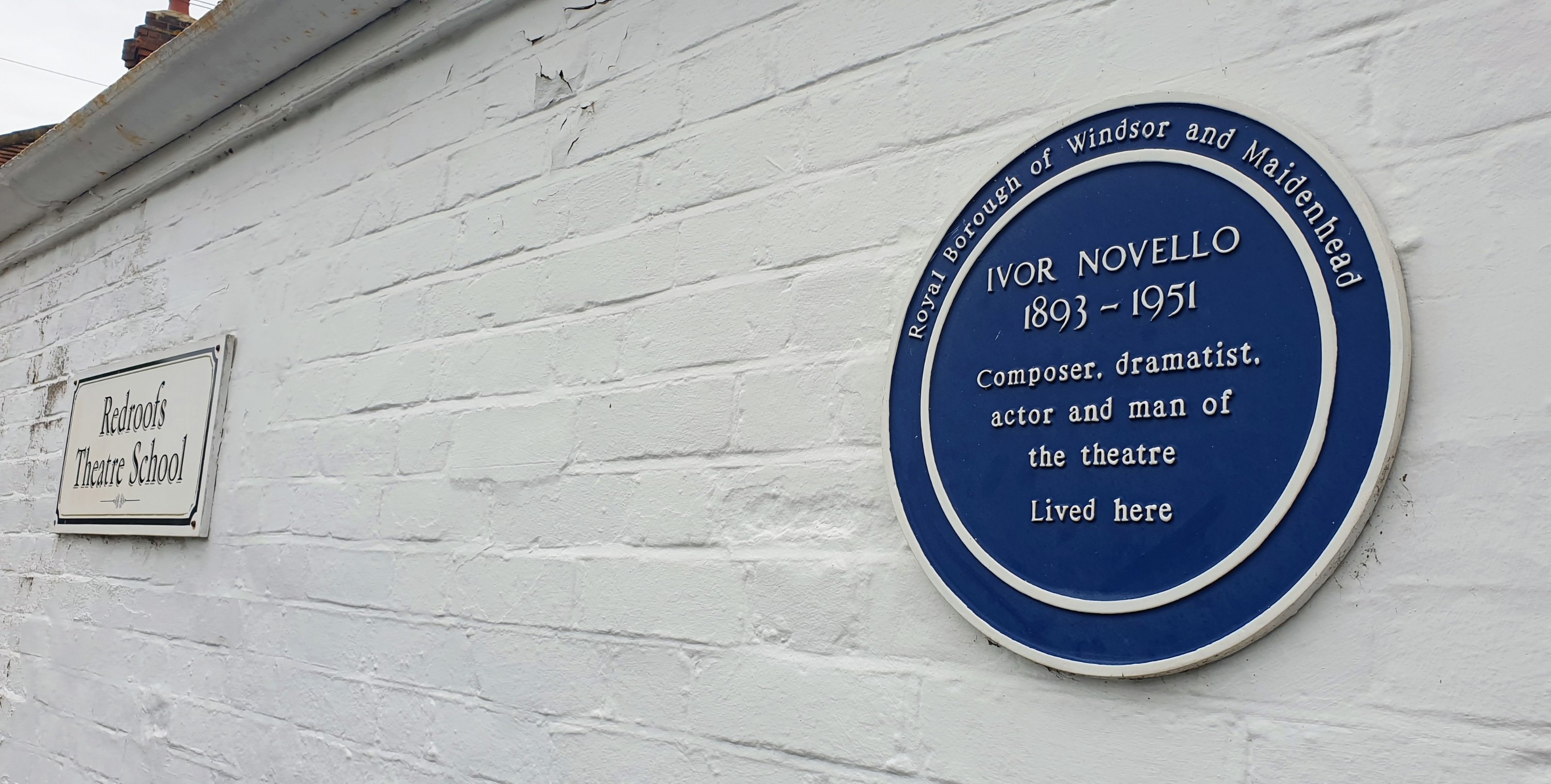
We set out from the south-east side of the green, passing Redroofs, former home of Ivor Novello. Born Ivor Davies, he is best remembered for his wartime anthem ‘Keep the Home Fires Burning’ and for the award established in his honour for songwriting. It started off well with Lennon and McCartney…but the Spice Girls are amongst the recipients…standards have slipped then.
His former abode is now a theatre school. I read through the list of alumni, which starts off promisingly with Kate Winslet, but next in line is Lucy Benjamin (Lisa from Eastenders) and then some bloke from Death in Paradise. A tad underwhelming I agree.
Off we saunter, accompanied by a friendly neighbourhood cat, along a lane and through farmland towards Woolley Green. It’s flat as far as the eye can see – this is the Thames Valley and hills are in short supply.
We turn left and head towards the A4. At the other side is the evocatively named Maidenhead Thicket, a wooded common owned by the National Trust with trees up to 400 years old. We plunge in, intrigued by alleged links to Robin Hood. Did he really venture this far south?
The Thicket was known to be the hideout of highwaymen from the Middle Ages right up to the 18th century. The Great West Road was a magnet for thieves due to the rich noblemen and merchants who used it. Was Robin Hood one of them? Locals seemed to think so – giving the name ‘Robin Hood’s Arbour’ to iron age earthworks they found here.
Unfortunately there is no evidence that Robin Hood ever came to Maidenhead. Just legends that tell of him right across the country from Yorkshire to Berkshire. To cover a distance of 250 miles robbing the rich to give to the poor, he would have been extremely busy! Seems it may have just been local crims who hung out here and they weren’t famous enough to lend their name to a local landmark. Why let the truth spoil a good story hey?
RH woz ere, or maybe not.
We hang a left at the Arbour and walk towards the lodge at the gates of Stubbings House, an 18th century mansion which now houses a garden centre in its grounds. The estate has been used as a location for filming The Professionals and the Benny Hill Show. Oh dear, it’s all rather low- brow around here isn’t it? I expected better.
To the left of the lodge we leave the woods and head out across the open fields again.We briefly join the Chiltern Way, a 125-mile-long circular route. No, we have no intention of walking that far. Lockdown hasn’t sent us totally crazy…yet.
We turn left on the outskirts of Burchetts Green, along Burchett’s Green Road, which was built by Lord Salisbury to avoid the nasty robbers in the Maidenhead Thicket as he journeyed from Hatfield to Bath. He obviously had a lot to lose! There are some beautiful houses here, along with a Michelin starred gastropub, The Crown. Sigh, another one for the future maybe.
Back across the (relatively quiet) A4 and along Jubilee Road, we are on the way back to our starting point of Littlewick Green.
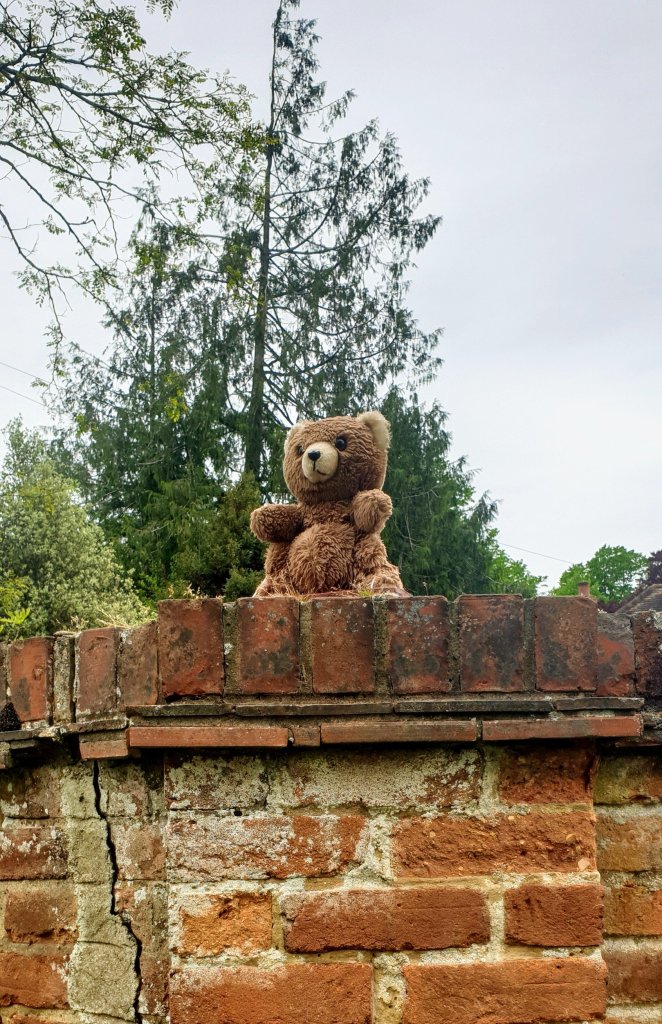
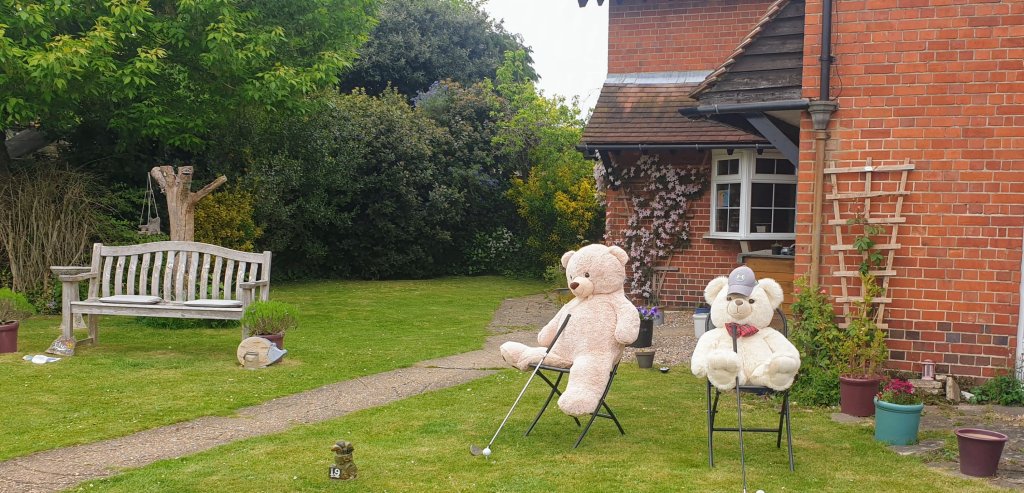
One thing is puzzling us – what’s with all the teddy bears? We’ve seen several along our walk today – on walls, tucked behind signs, lounging in deck chairs. We don’t have children, so we’ve missed the memo about the international bear hunt. Thank goodness for google, reassuring us that there isn’t some strange cuddly toy sect on the outskirts of Maidenhead.
We get back into our car, parked right outside the pub, as we like to torture ourselves. Home time, but we’ll be walking again soon. Did you know it’s National Walking Month?
Today I’m continuing my strategy of blogging about what’s close to home. What else can you do during lockdown? We’re back on The Green Way, but heading south this time, towards the village of Bray. You might have heard of it – it’s otherwise known as Heston’s Kingdom!
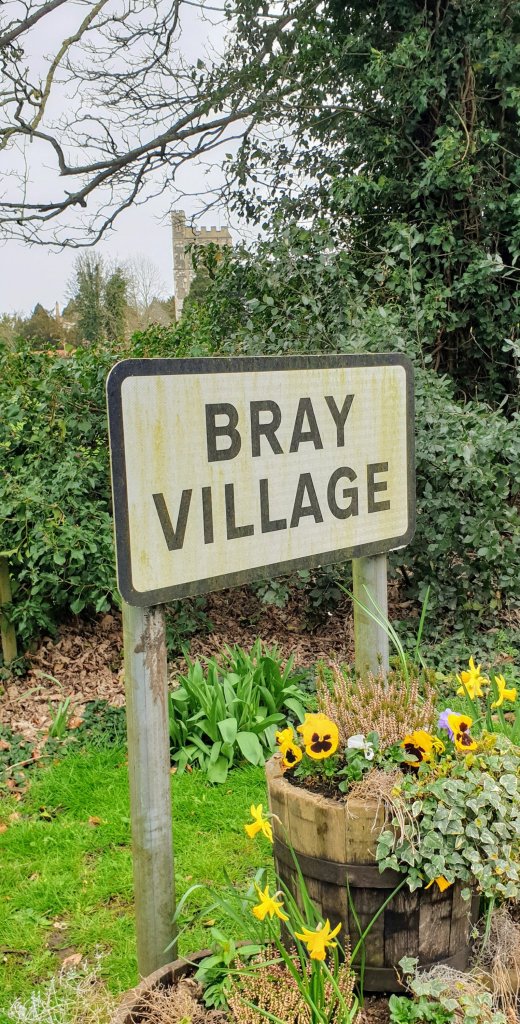
Welcome to Bray.
Bray is not the kind of place you’d expect to be world renowned. It’s a pretty, sleepy, tiny corner of Berkshire. But, strangely, it has some of the best restaurants in Britain. Of the 137 Michelin-3-starred restaurants globally, 5 are in the UK and 2 of these are in Bray. The rest are in London. Seems strange doesn’t it? Why this particular village? Let’s take a walk and check it out.
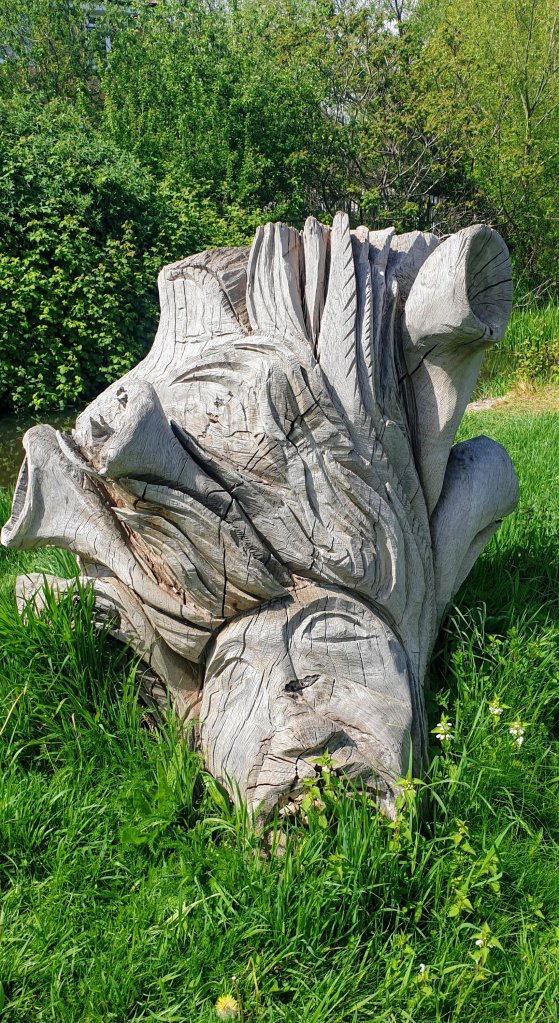
The Green Way runs pretty much past the end of our street, and it’s only a couple of miles to Bray, through the centre of Maidenhead. We start by passing one of Neil Garnett’s Guardians of the Green Way. There are 8 in total and they definitely add a bit of interest to the route, whether you like them or not.
This particular Guardian seems to be having a bad hair dayOn the Green Way again.
The section of the path that runs through town has been regenerated over the last few years. There is still work to be done, but the opening up of the waterways has been a huge improvement to what was a bit of a drab centre.
Maidenhead town centre.Even the Guardian sculpture here has a bit of an urban vibe to it!
The new weir, opened by our local MP, Theresa May, just this year, is designed to keep water levels constant throughout the town waterways. I’ve seen artist’s impressions involving gondolas, which seems a bit over the top, but you never know. Look out Venice, Maidenhead could soon be snapping at your heels!
Not exactly a lagoon!
On the other side of town, we enter Braywick Park, a local nature reserve. The Green Way takes us all the way through, with a few more Guardians to admire along the way.
At the end of the Green Way, we emerge in the village of Bray, foodie paradise extraordinaire. It’s also very picturesque, just how Americans imagine all English villages are, with a village green, an old church and some beautiful almshouses.
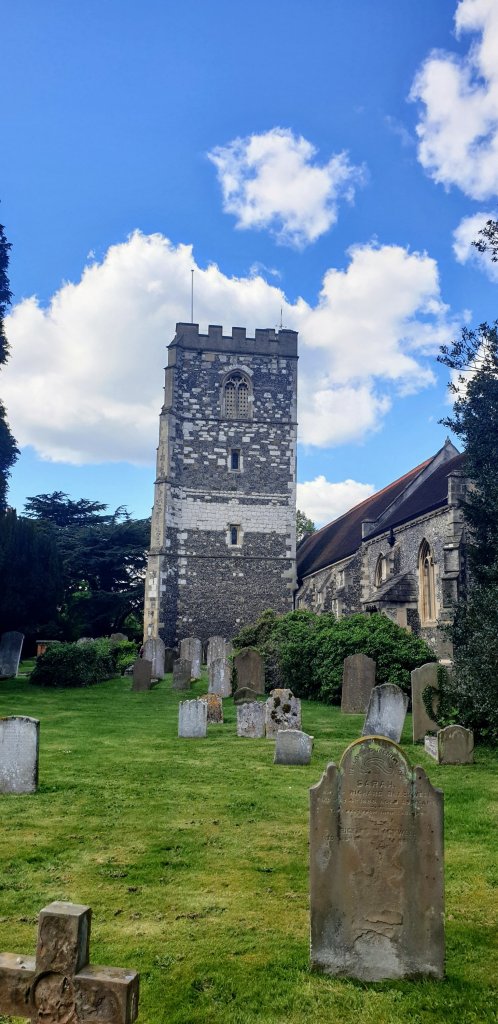
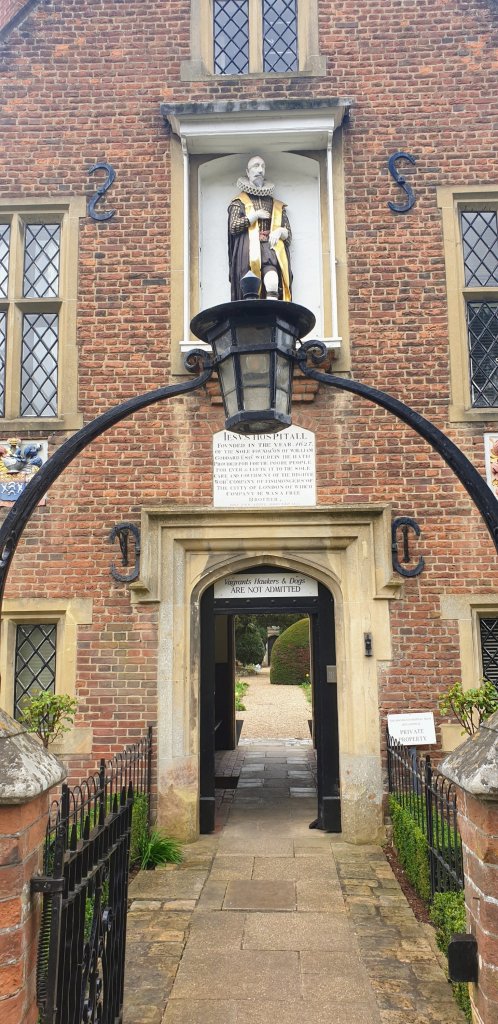
St Michael’s parish church at Bray.The Jesus Hospital almshouses, dating from 1609.
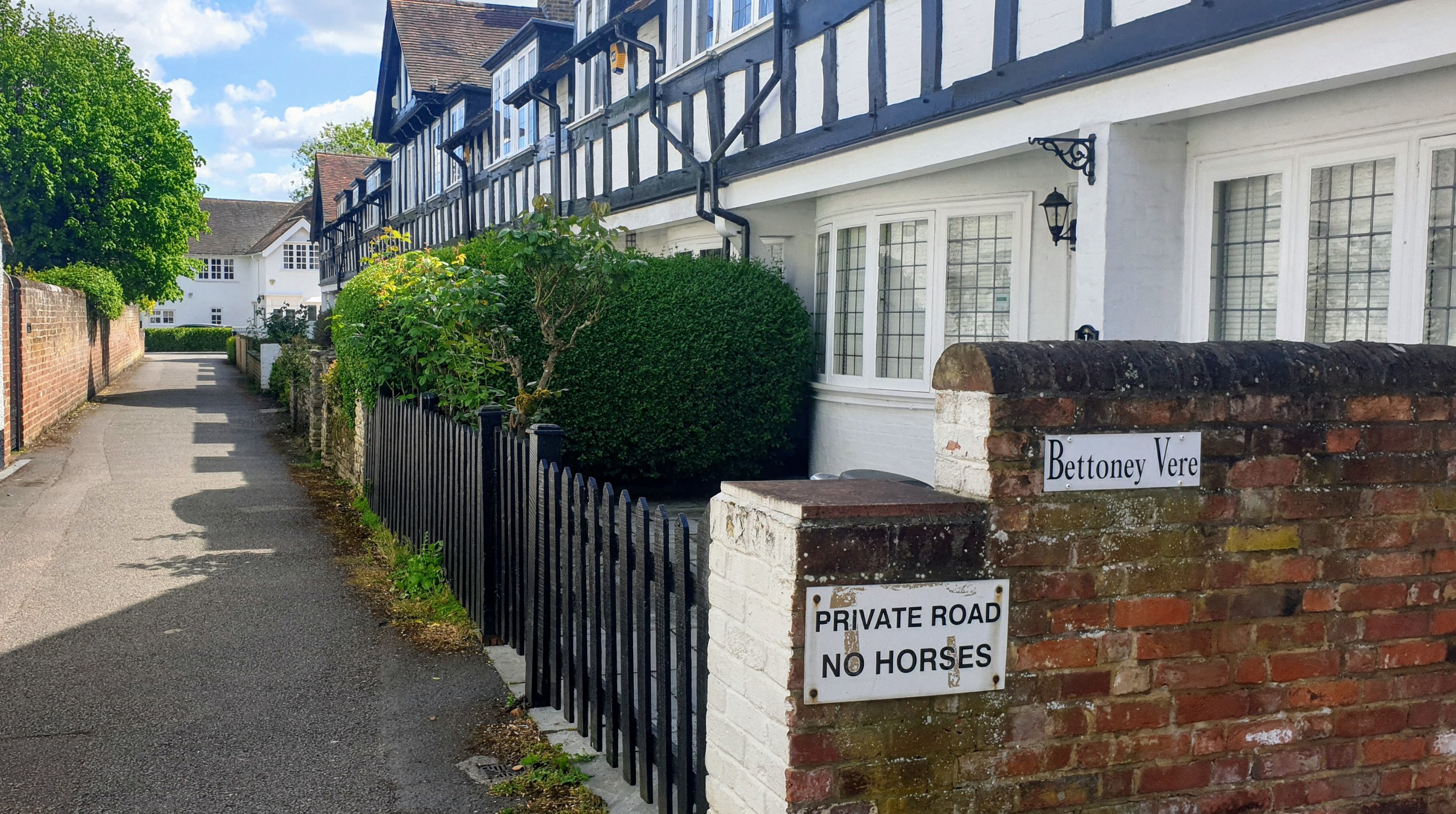
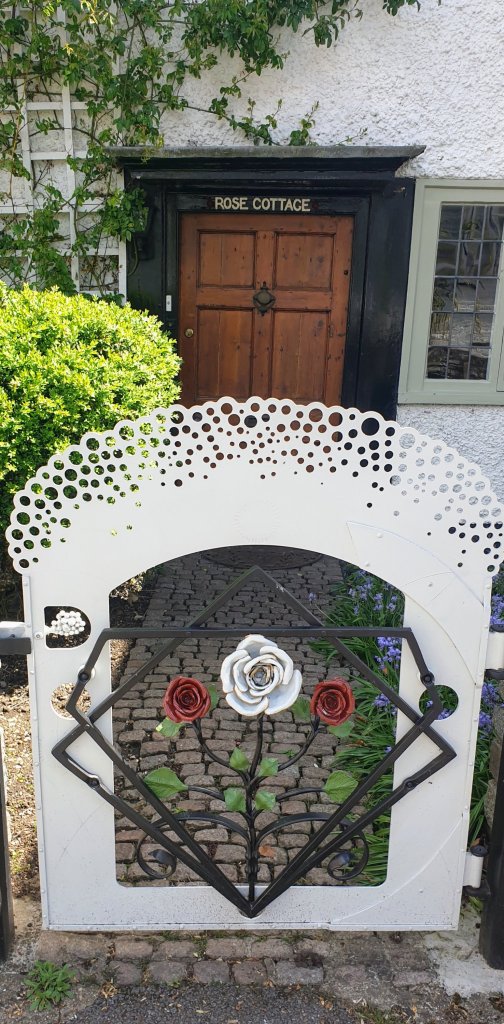
It’s the little quirky details that I love when visiting somewhere like this – an unexpected sign, an ornate gate. The things that give a place real character.
There’s also a more sinister side to the village. It’s here, at Bray Studios, that the original Hammer Horror films were made. Scary! Bray also seems to have a surfeit of mysterious old doorways that you would just love to go through. What’s on the other side?
But most people come here for top notch food. The Roux family have been in business on the Thames at Bray since 1972.
Heston has three restaurants in Bray, pretty much taking over the tiny High Street. Apparently, locals were a bit miffed when he siezed control of the Crown, their last traditional pub, and started serving gourmet food and Dom Perignon there in 2010. When we’ve been in, it’s always been bustling, and there’s usually a dog or two around, so it does still feel like a local pub, albeit a pricey one.
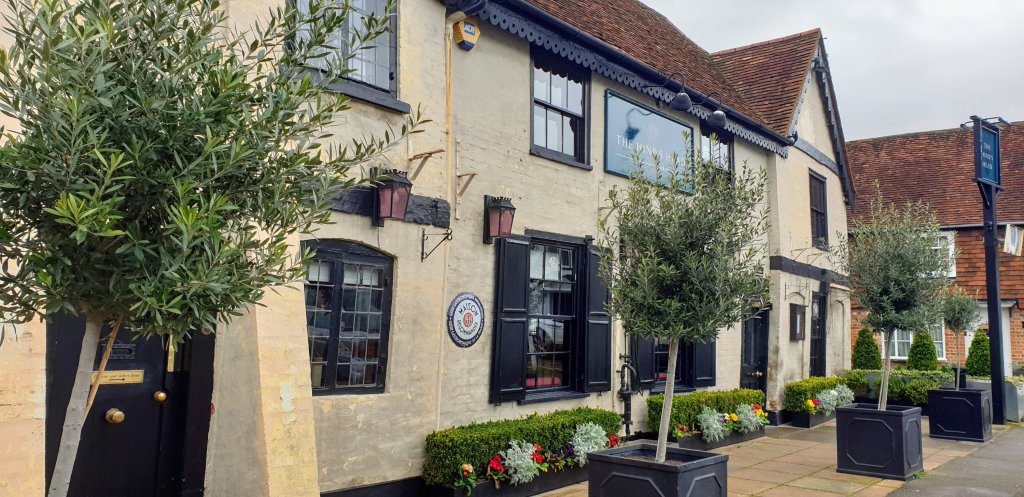
The Hind’s Head is a former 15th century coaching inn. It’s no longer a pub, although you can go into the comfy upstairs bar for a drink. The restaurant is our favourite place for anniversaries, as the food and service are excellent but it doesn’t break the bank.
And finally, you have the Fat Duck itself, so famous it doesn’t even have a sign outside. Possibly the most celebrated restaurant in the country. I managed to snaffle a table, no mean feat I assure you, but then coronavirus struck and they closed. Typical!
After strolling through the village we head out the other side and towards the M4, where we cross the River Thames alongside what is usually a torrent of cars…now more of a trickle due to current travel restrictions. The view from the bridge is much better than looking at the traffic, I’m sure you’ll agree.
Down a flight of stairs at the other side and we’re back on our old faithful Thames Path, heading north along the banks of the river towards Bray Lock.
As we pass Bray on the opposite bank, the husband can indulge in his favourite pastime of evaluating the homes of the rich and famous. He’s quite disappointed that I can’t remember which one belongs to Michael Parkinson. Presumably he would have really enjoyed dissecting it!
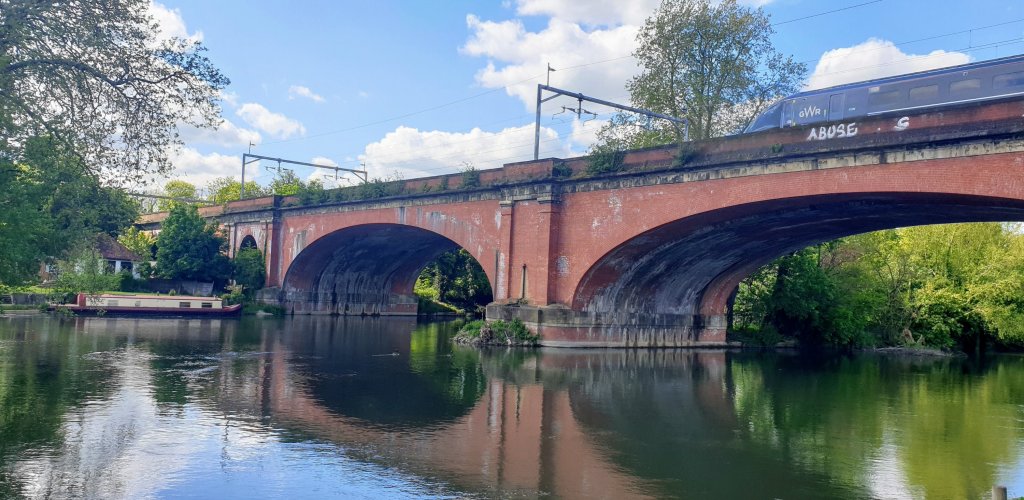
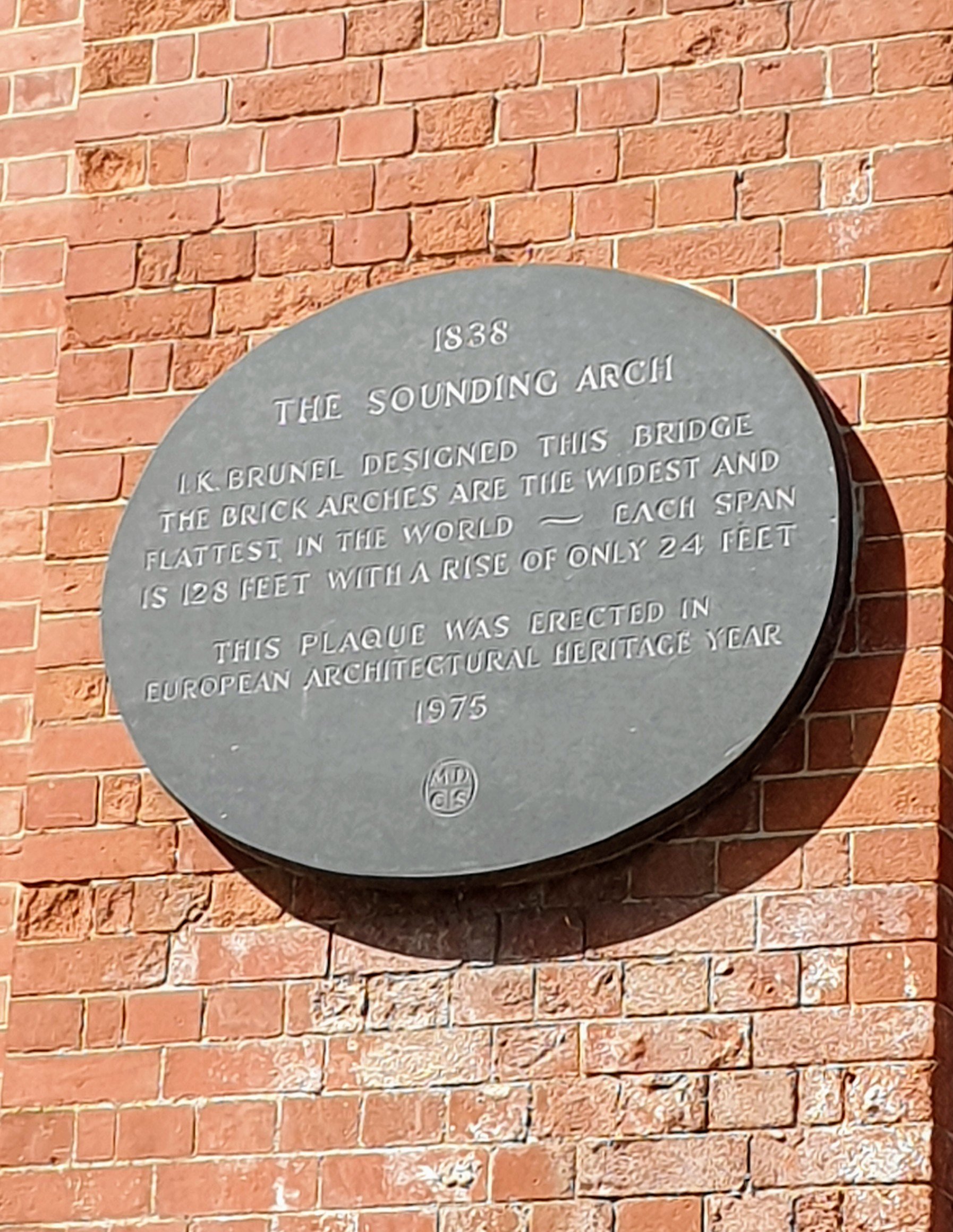
We’re approaching Maidenhead now and the town’s famous bridges come into view. First is the Maidenhead Railway Bridge, which was designed by the great engineer Isambard Kingdom Brunel, and opened in 1839.
The bridge’s two brick arches are the widest and flattest in the world, but don’t take my word for it, read the plaque for yourself.
Maidenhead Railway Bridge.
The bridge was immortalised in 1844 in Turner’s painting of the Great Western Railway, which now hangs in the National Gallery.
Rain, Steam and Speed by J M W Turner
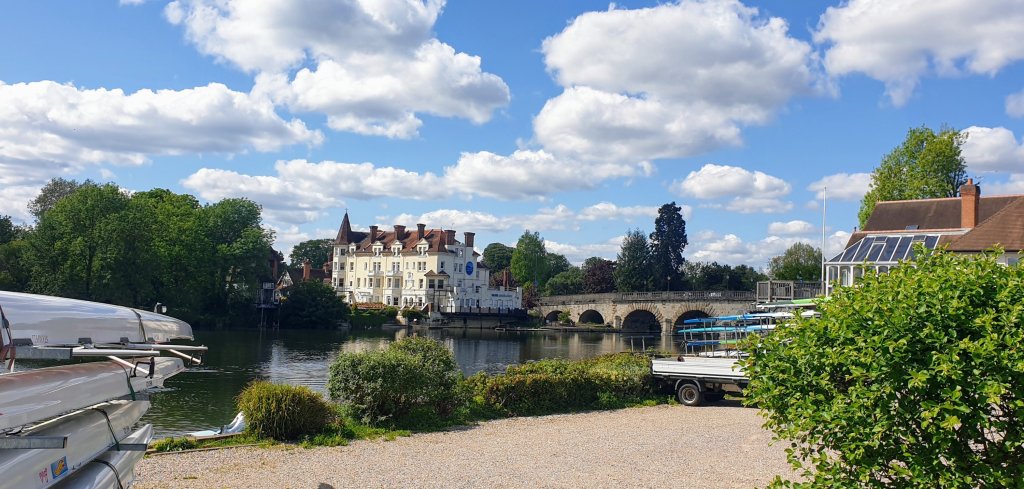
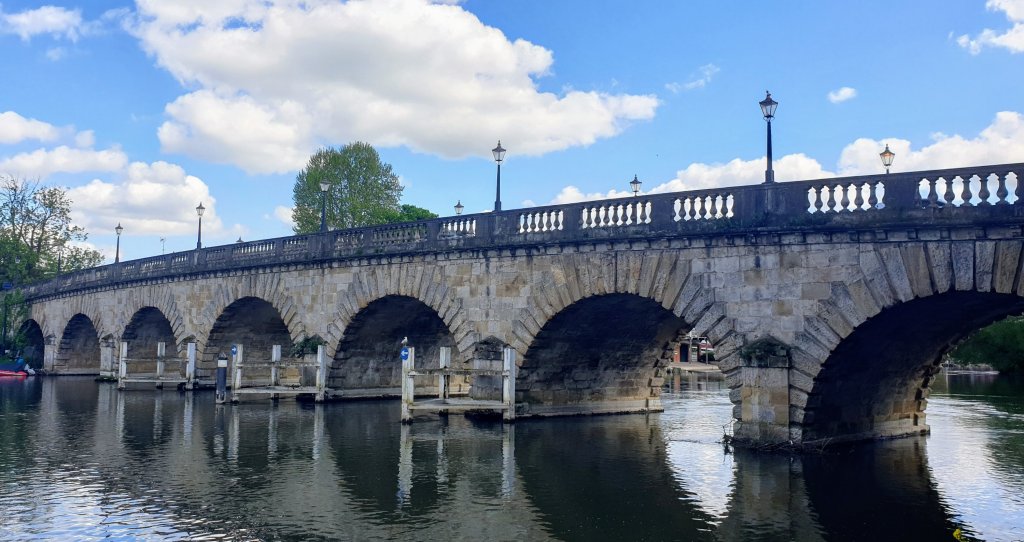
Maidenhead’s other bridge, just a short walk further upstream, also appears in the painting. The current bridge dates from 1777 but there’s been a bridge here since 1280, taking the Great West Road from London to Bristol, hence medieval Maidenhead was established.
The view from Maidenhead Sailing Club to the Thames Riviera Hotel.Maidenhead Bridge.
We’re nearly home now, but there’s just one last landmark to point out. The Skindles nightclub was voted the best in the country in the late 70s and 80s and attracted stars like John Lennon and the Stones. Thin Lizzy played there. Richard Nixon visited. It had an indoor swimming pool and a dancefloor that lit up in squares like the one from Saturday Night Fever. Wet t-shirt competitions were de rigueur! Ah, the glamour!
Unfortunately the hotel closed, the building was demolished, and the site was redeveloped. Now we have a shiny new Roux Brothers restaurant. Nice, but not quite so much fun.
The Roux at Skindles restaurant, built on the site of a once infamous nightclub
I’m trying very hard to keep on blogging throughout lockdown. My strategy is to share with you some of the glorious countryside close to where I live in Berkshire, which makes walking and running a joy regardless of what’s going on in the news.
Ahhh, I feel better already!
For today’s walk, we’re starting at Cookham Moor and heading through the meadows along the river Thames northwards to the village of Bourne End, enjoying a game of ‘I want that house’ as we go.
Our starting point, Marsh Meadow.
The name Marsh Meadow gives a big clue to why this area is so lush – it’s a flood plain. The history of this whole district has involved regular inundations when the Thames bursts its banks. Today, thanks to a month of great weather (yes, a month! In England!), we won’t get wet feet, unless we fancy a paddle in the river.
Marsh Meadow is the scene of many happy memories. It’s here that the original Let’s Rock the Moor retro festival took place back in 2009. I’ve been attending every May since 2014. There’s nothing quite like a field full of middle aged fun-seekers singing along to Chesney Hawkes’ ‘I am the one and only’. Well, it works for me anyway. Sadly, this year it’s been postponed, and may still be cancelled.
At the end of Marsh Meadow is the river. This side is parkland, but over on the opposite bank there are huge houses, with boats, statues, sundecks, studios, basically every appendage you can think of scattered around Wembley-grade lawns. It must get annoying having a constant stream of walkers gawking at you as you sit in your garden though? Particularly the really irritating ones like me who take photos!
Some of the houses are amazing, some a bit vulgar. Some just don’t have that indoor, oudoor flow that you’d want living on the river. Such are the meaningful discussions we have during lockdown, when there’s not much to talk about! The husband can be a bit loud when pointing out the shortcomings of other people’s homes. Thankfully, the river is wide.
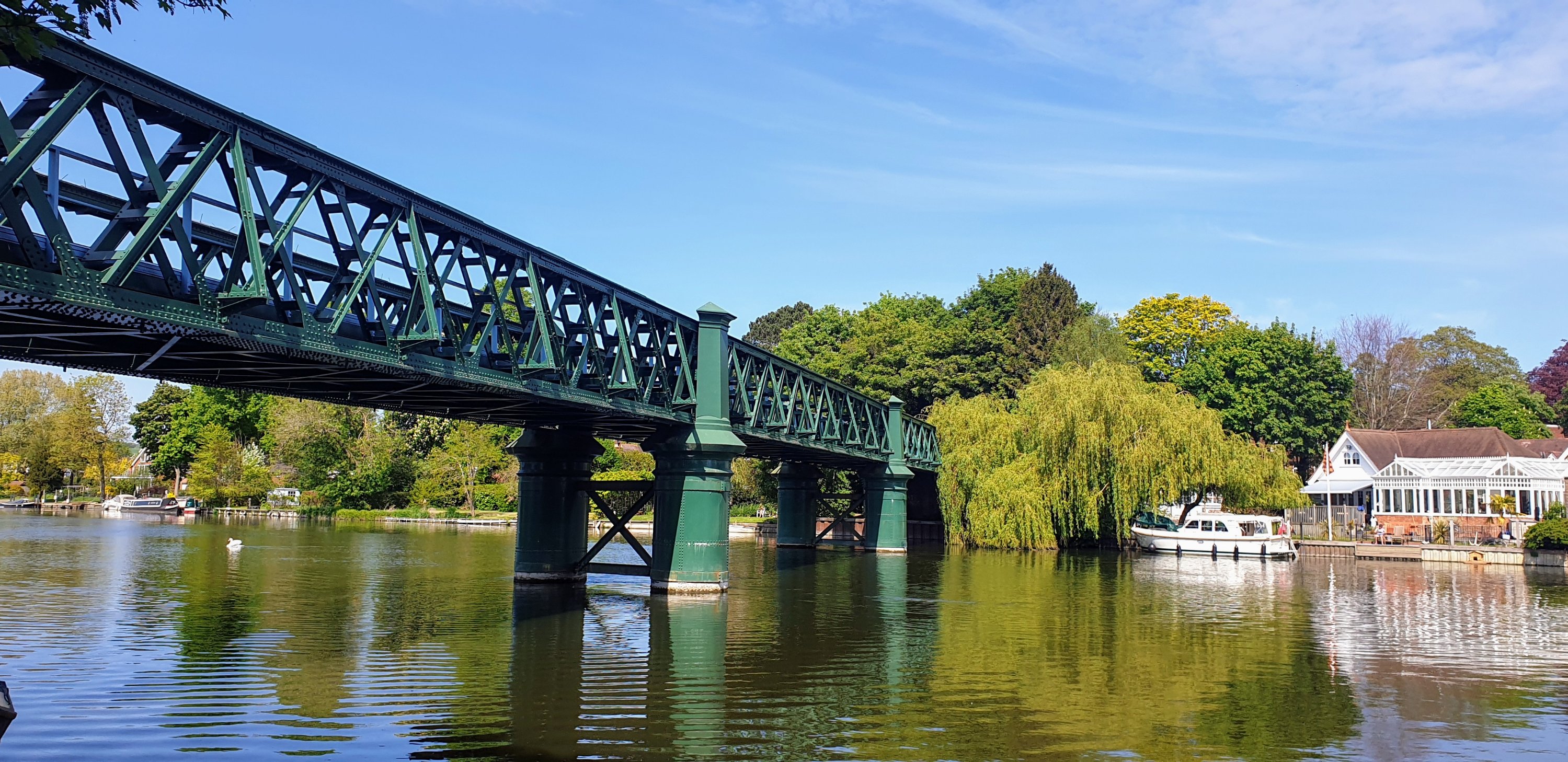
We follow the path along the river until we reach the railway bridge, which doubles as a footbridge across to the village of Bourne End. The branch line from Maidenhead to Marlow crosses here, a single track railway affectionately known as ‘The Marlow Donkey’. Only in England! Bourne End railway station is a dead end, so the train pulls in and then reverses back out, with the driver swapping ends, to continue the journey. It’s so old-fashioned, I love it. The bridge dates from 1895 when it replaced a rickety old wooden structure – what a shame!
Bourne End (meaning ‘end of the stream’) is where the river Wye flows into the Thames. Enid Blyton lived in the village from the 1920s, as did the ‘King of Thrillers’ Edgar Wallace, who used to drive around in a yellow Rolls Royce wearing a trilby hat. He wouldn’t look out of place now in this part of the world, which has more than its fair share of eccentrics.
We saunter along this bank as far as Bourne End marina. There’s not much going on, just people walking their dogs or sitting out in their gardens, but it’s always nice to watch the boats bobbing around in the sunshine.
We cross back over the bridge and carry on along the western bank, past The Bounty, a pub renowned for dog-friendliness – in normal times there would be as many canine as human punters on a sunny weekend. Alas, it’s closed today, although the publican is rather smugly sitting in the garden with a jug of beer. ‘That’s not fair’ Tony tells him. He laughs. So would I!
Veering left away from the river, we walk across Cock Marsh, which is designated as a Site of Special Scientific Interest due to having diverse meadow habitats in a small area. The flooding that happens periodically helps to maintain this biological richness. No wonder the cows look content.
Up ahead on the ridge is the Winter Hill golf course, owned by the John Lewis Partnership and apparently rather lovely, but we have no intention of climbing up a big hill in this heat, so we turn left and stay on the flat.
The path takes us underneath the railway line this time and we emerge blinking back onto the bright expanse of Marsh Meadow.
We cut through the middle of the horse paddocks and along a public footpath around the back of my favourite house, which is up for sale. It’s huge, it’s next door to the pub and it overlooks the meadow. I could sit on my balcony and watch Tony Hadley, Midge Ure and friends rocking the moor. It’s a snip at £2.8 million.
The path takes us back to Cookham Moor and harsh reality. Thank goodness we still have walks and we can still dream. Till next time…
It’s been harder than I thought, keeping up a travel blog in lockdown. Writing about past holidays whilst being forced to cancel future overseas trips (three so far, sob!), is just a bit depressing if I’m honest. But I don’t want to give up on blogging. Surely it won’t be long before we get back our freedom of movement. In the meantime, what to do…?
Get out and follow the signs.
Like many people, I’m feeling lucky to live in a beautiful part of the world, with some gorgeous countryside not far from my front door. Spending time in the great outdoors is making the lockdown a bit more bearable. So I thought I might just take you on some on my favourite run / walk routes close to home. It’s not exotic, but it’s the best I can do right now. Come along and enjoy the Spring scenery!
Walk this way…
So, first up, we’re doing my absolute favourite 10km circuit from Maidenhead to Cookham and back. In the sunshine, it’s stunning. We start on North Town Moor, just around the corner from our house, and follow the Green Way northwards. This path runs across parks, fields and along the Maidenhead Waterways from Bray to Cookham, so we’re joining it halfway. Immediately, we come face to face with one of the ‘Guardians of the Green Way’.
Standing sentinel to protect all walkers.
The Guardians were carved by local artist Nick Garnett and installed along the Way in 2012. There’s something quite nice about public money being spent on things that aren’t essential, but make the place look more interesting. Don’t you think? I love a bit of whimsy.
Side view, are those wings?
The Green Way runs straight on over the fields for 2 miles or so. It’s a lovely flat route through what is currently an ocean of green (hence the name), with several different pathways branching off so you can mix it up a bit. They all end up in the same place. In the mornings or at dusk when it’s quiet, I quite often bump into a fox or deer here.
Spoilt for choice – one of the many paths that crisscross the fields.
A wide stream known as the Strand Water (and various offshoots) meanders alongside the path, with cute wooden bridges where it crosses the route. It’s quintessential English countryside, at its best in the Spring sunshine.
Strand Water, never too far away if you need to cool down your feet.Just keep heading northwards.
As you get close to Cookham, looking up on a ridge to the east is Cliveden, home of the Astor family in the 19th century. Visitors included Queen Victoria and Charlie Chaplin. It’s known chiefly as the scene of the infamous Profumo affair in 1961, which nearly brought down the Government. Nowadays it’s a luxury hotel but the gounds are owned by the National Trust. I’m ashamed to say I’ve never visited, but I’ll take you there as soon as I’m allowed!
Scandalous Cliveden up on the hill.
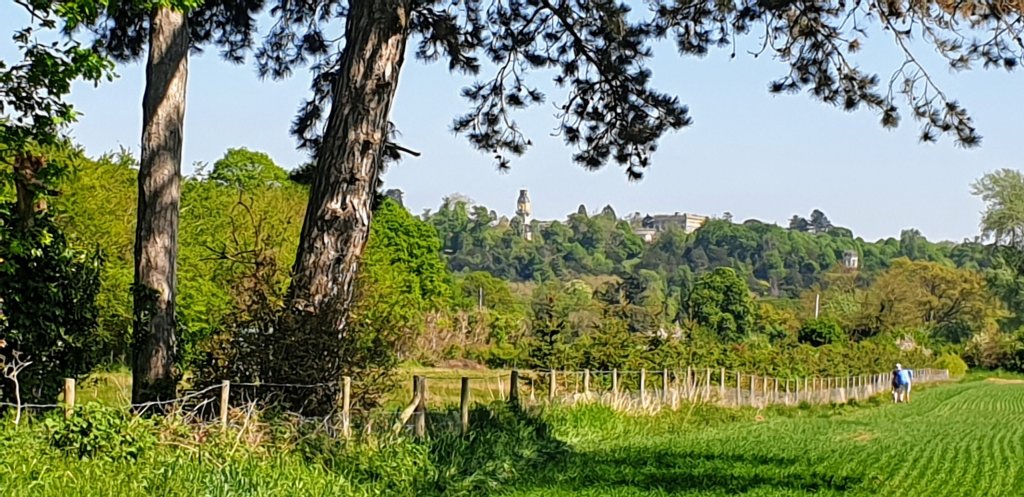
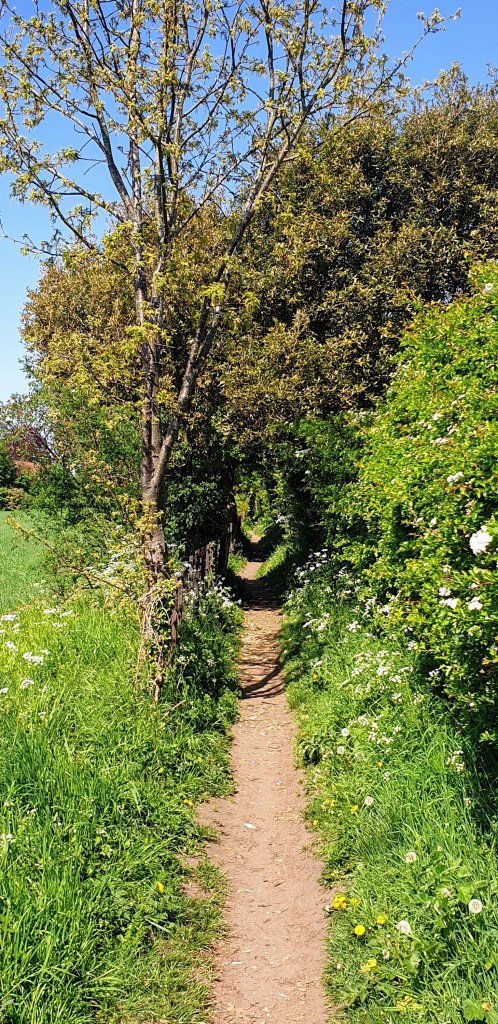
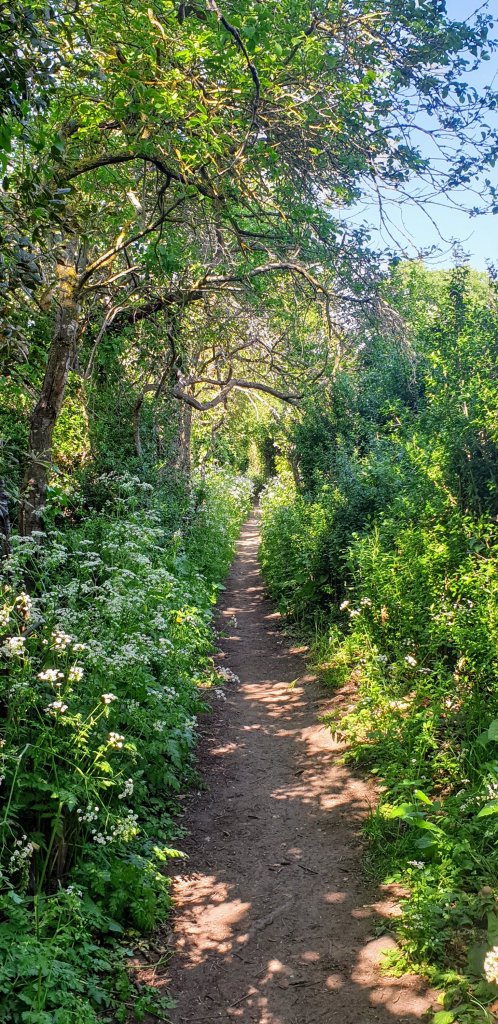
Finally, we pass through a long and narrow tunnel of greenery alongside the Chartered Institute of Marketing at Moor Hall, a 19th century manor house, and emerge in the village of Cookham.
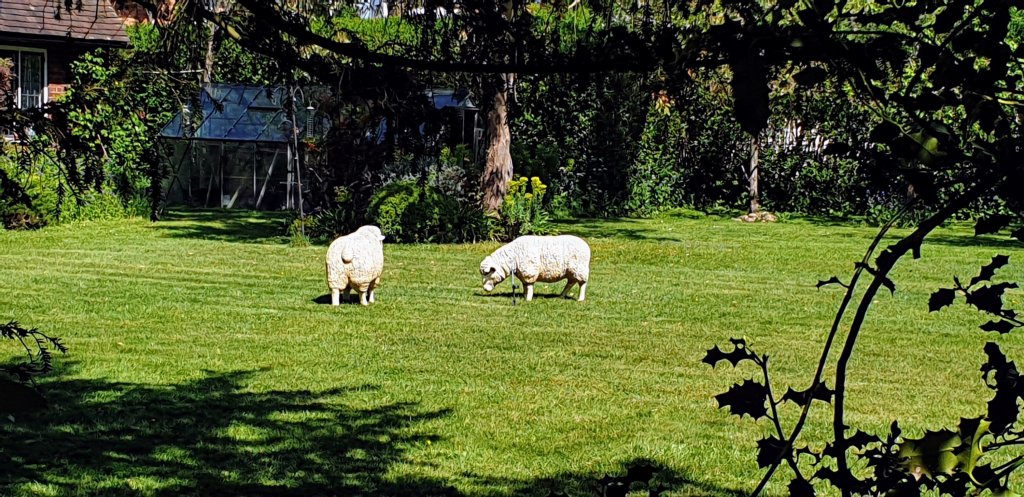
We’ve done this route so many times, but still sometimes do a double take at the sheep statues in a nearby garden. Lizzie, my dog, has been known to bark at them. I had to include a photo.
They’re not real, but they are cute.
In normal circumstances, this walk would involve a refreshment stop at the Crown, an 18th century pub overlooking the green at Cookham. Today, we just gaze wistfully as we walk past…if only. Many happy hours have been spent outside this pub. Obviously, if I’m running this route, it does not involve a stop at the pub – I’m clumsy enough sober.
The Crown, hopefully to open again soon.
We walk past the pub (sigh!) and along a lane to the right which is lined with some very nice (and super expensive) houses to reach the River Thames. We admire some boathouses that are probably bigger than our home. This is a prosperous part of the world. It’s hard not to feel envious.
I’d happily live in a boathouse for this view.
Next, the path veers right away from the river and takes us through the graveyard of the 12th century Holy Trinity Church. It’s immaculately manicured, as you would expect here in one of the UK’s richest villages.
Someone spends time clipping this to within an inch of its life.
We walk past the Stanley Spencer Gallery (closed, of course). Spencer was a local artist who painted scenes of the village but was most famous as a war artist in both World Wars and for his works about shipbuilding on the Clyde.
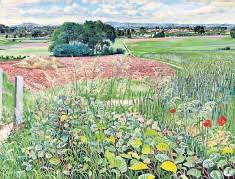
Bridle Path by Stanley Spencer, not that much has changed since 1938.
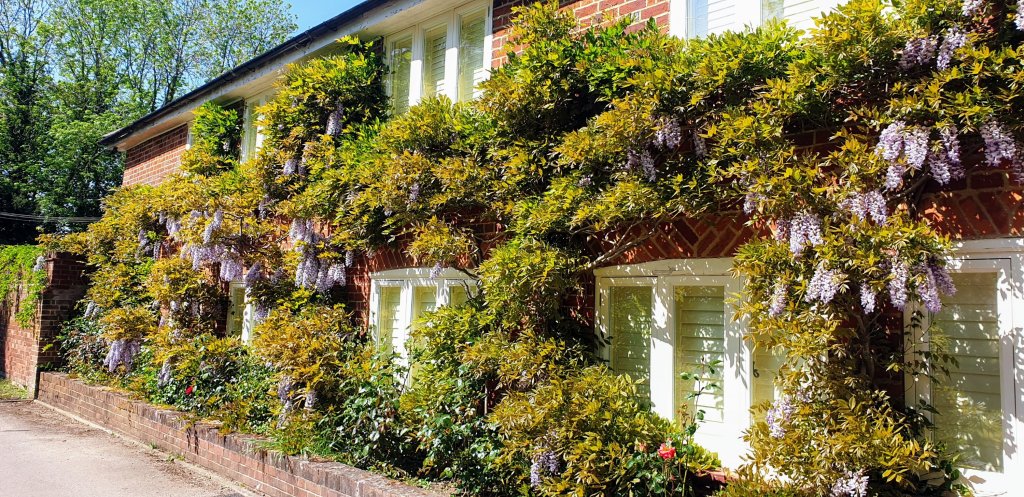
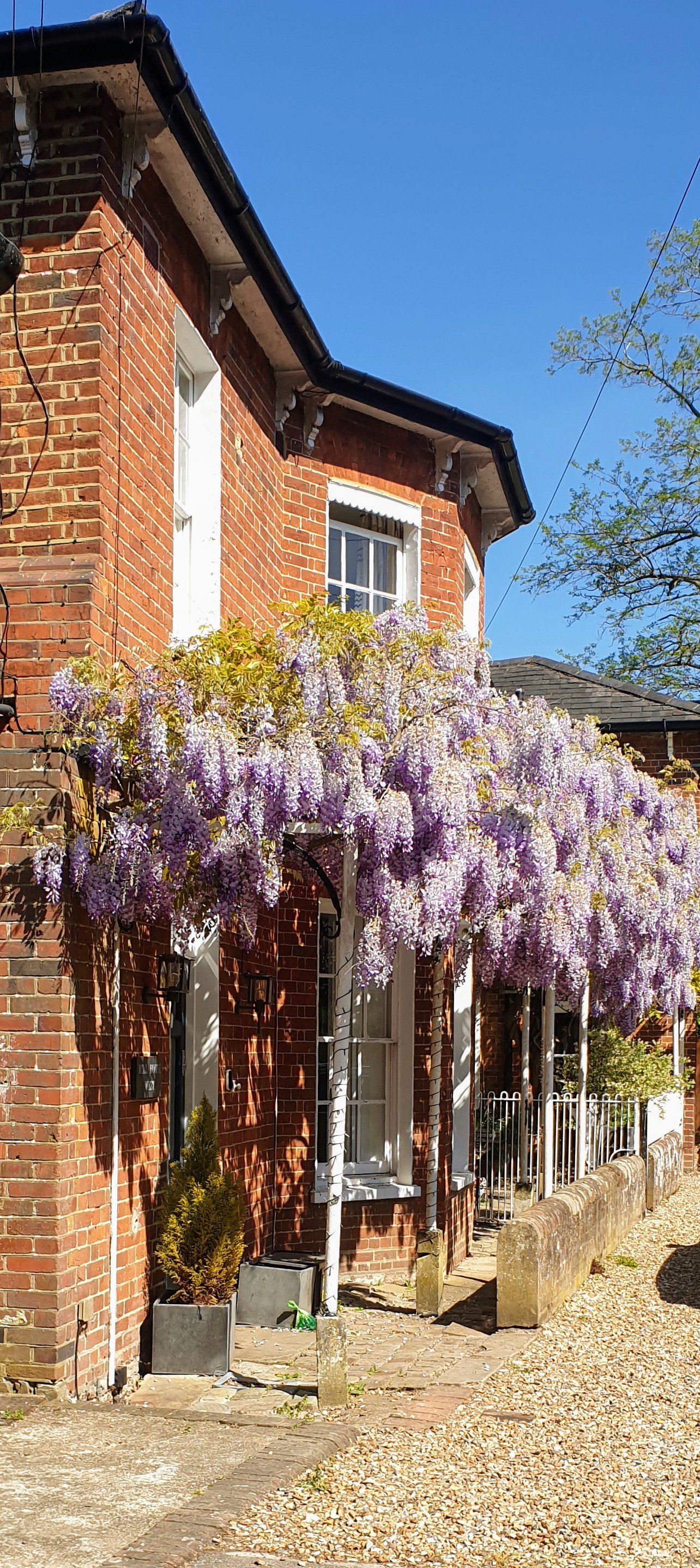
We follow the signs for the Thames Path to the left along a shady lane flanked by more lovely houses and some pretty impressive wisteria.
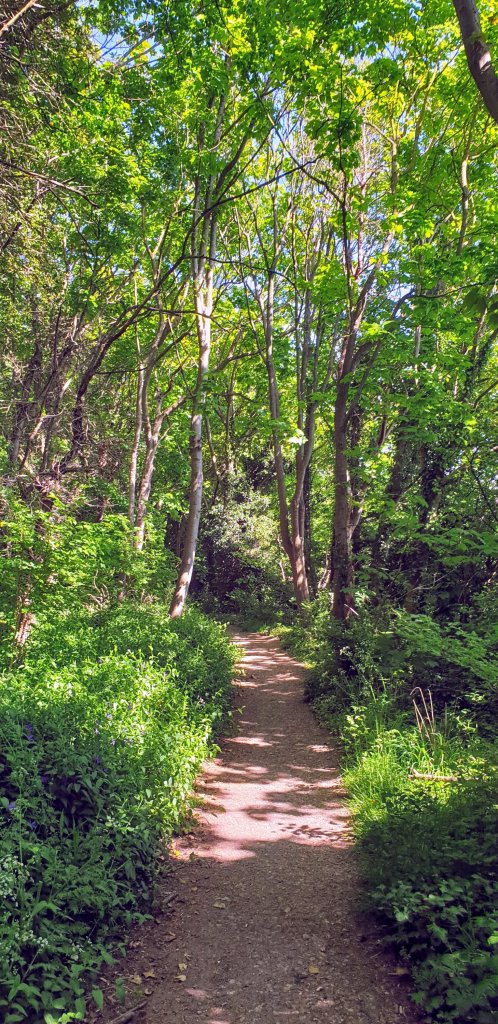
We plunge back into the trees towards the river, taking care as tree roots have known to attack along this part of the route. Well, that’s my excuse for falling over anyway.
Watch out for vicious roots!
Look to the right and lush farmland stretches into the distance with horses, sheep and cows grazing contentedly. You could be in the middle of nowhere, but this is prime commuter belt.
By this point, I have to say, lockdown has vanished from our minds, along with all the gloom and doom of the media right now. When your surroundings are this lovely, it’s hard to feel miserable.
Yep, still smiling through a global pandemic.
Back on the riverbanks, the grounds of the Cliveden estate are directly opposite, looking very respectable these days- no showgirls swimming naked in the pool I’m sure! A cottage by the river is allegedly where John Profumo and Christine Keeler carried on their liaison. There’s nothing like that going on now, what a shame!
All quiet at Cliveden.
This walk is great for twitchers, as birds outnumber people by far. The honking of geese is constant, as they gather is huge numbers, but there are also swans, ducks, herons and egrets to be spotted.
As we get close to Maidenhead, the fields give way to some pretty impressive waterside mansions. We get house envy again! Life is so unfair.
Who lives in a house like this? Someone with lots of cash!
Let’s look at the river instead. There just isn’t a bad view, regardless of how indifferent your photography skills are.
As the weir and the northern end of Ray Mill Island come into view, we know we’re reaching the end of our walk today.
We finish our stroll at Boulters Lock, which is usually bustling with boats on a sunny weekend, much as it has been since the late 19th century, when Maidenhead was known as Mayfair on Thames. Apparently it was the place to be for the wealthy and famous after Royal Ascot, as shown in the painting by Edward John Gregory below. Unfortunately, it’s not quite so glamorous now. Maidenhead is a pretty sleepy kind of town these days.
Boulters Lock in its heyday.
Today, it’s just us. Boulters bar on the island here would be a great place to stop for final refreshments. Unfortunately, that’s not an option right now during lockdown, so off we go to that trusty venue – The Back Garden.
Looking towards the Lock, and the end of our walk.
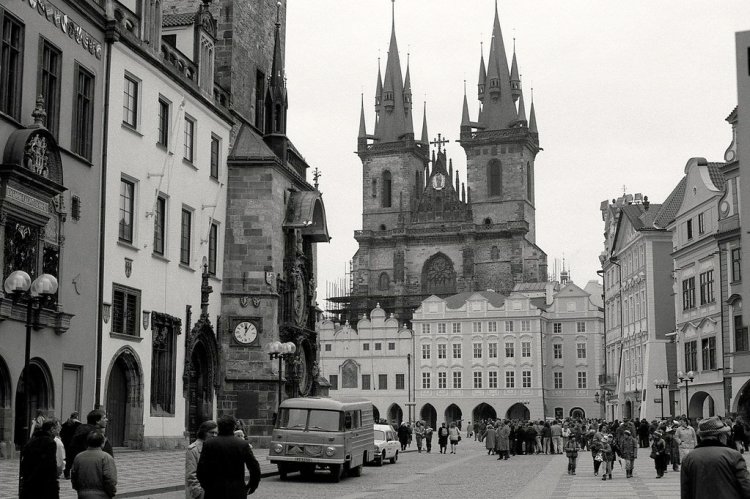
It’s the Easter long weekend and we usually go away, but this year we won’t be going anywhere more exotic than The Back Yard. So I’m thinking wistfully of last Easter’s trip to Prague. I first visited Prague back in 1991 when I was living in Vienna. The Velvet Revolution which overthrew Communist rule had taken place at the end of 1989 so it was early days for visitors being allowed entry, but it was just a few hours by train, so why not give it a go? It was a bit of a strange city back then. There weren’t many shops, actually there wasn’t anything decent to buy – although I did get my Dad a packet of ‘Disco’ cigarettes for 5p as a joke and I think he quite enjoyed them. Although the buildings were beautiful, I remember it being a bit of a grey and dirty place, and full of pickpockets. It felt drab and depressing, and I was quite glad to get back to blingy Vienna.
The Old Town Square in 1991.
As students, my friend Rachel and I were in cost-cutting mode, so we jumped off the train from Vienna and accepted the offer of a cheap room from a random bloke at the station. It was the done thing back then, but my Mum would have had a fit had I told her. Our evenings were spent in empty restaurants eating unmemorable food, and when we went back to the flat, our host would be watching porn and offering us very strong Czech spirits. Being British, we politely sat down, prayed the drinks weren’t spiked, and counted the minutes until we could withdraw and barricade our door! Ah, what fun we had back then…
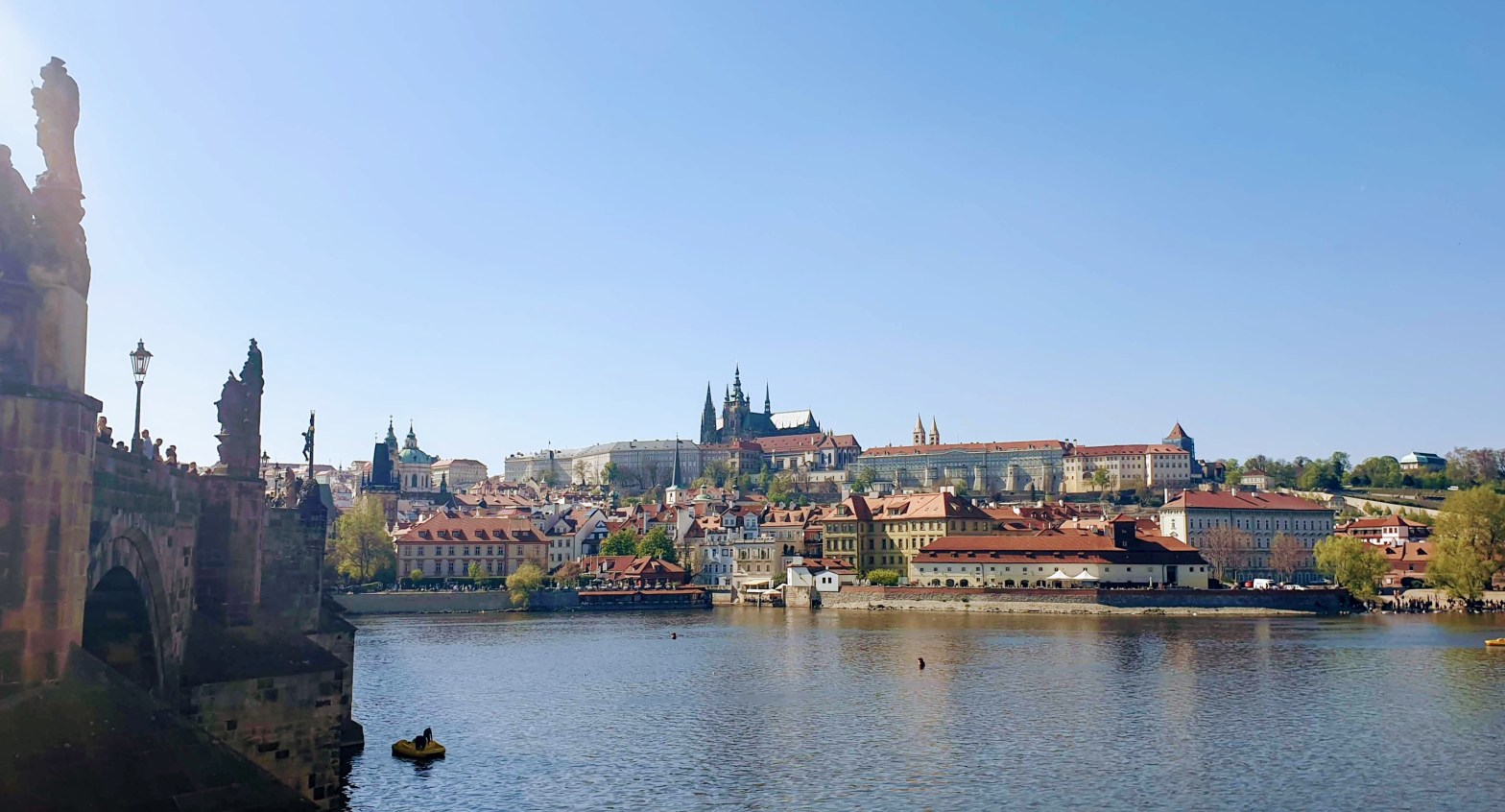
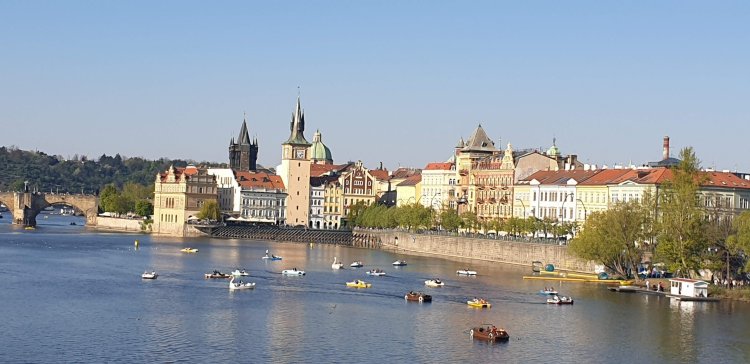
View of the city in 2019.
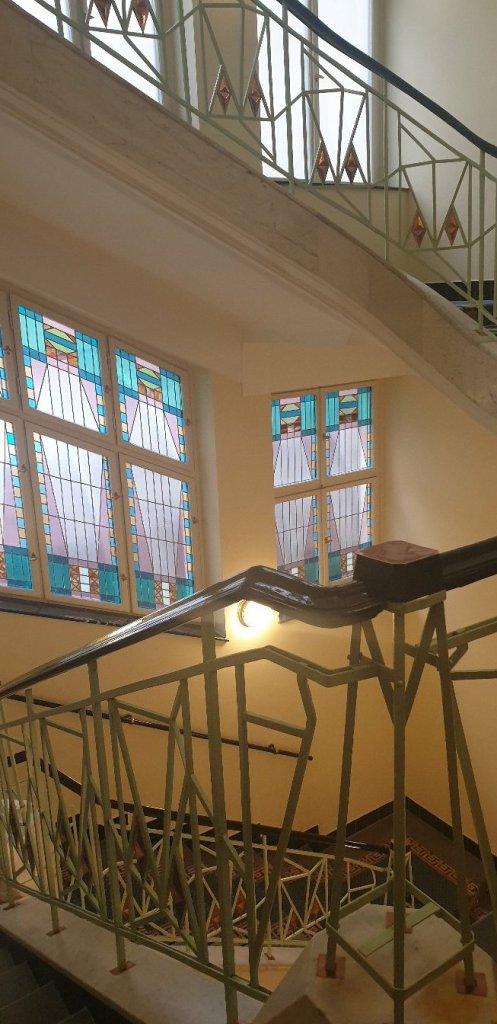
Fast forward to 2019 and Prague is now classed as an ‘alpha global city’ with more than 8 million visitors annually. Tony has never been. I decide to give it a second chance – all those people can’t be wrong, and surely they’ve cleaned it up a bit by now. This time, we will not be renting a room from a dodgy stranger. We’ll be staying at the swish Art Deco Imperial Hotel in the New Town. Thank goodness for that.
The gorgeous Art Deco staircase at the Imperial Hotel.
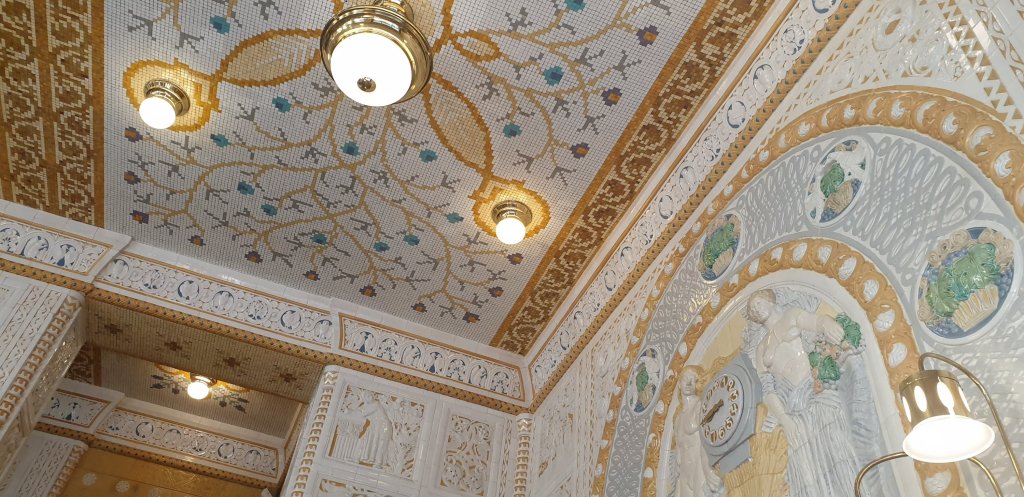
As usual in Europe the terms new and old are relative – the New Town was founded in 1348! The hotel itself could be seen as new in Prague terms, it dates from 1914. The Imperial Cafe on the ground floor is famous for its amazing ceramic tiles and for being a hangout of the intelligentsia back in Communist times. Franz Kafka used to come here, and now the head chef, Zdenĕk Pohlreich, is the Czech equivalent of Gordon Ramsay. There are definitely worse places to have breakfast.
Ornate tiled ceiling at the Cafe Imperial.
So, you arrive in Prague, and the natural thing to do is stroll along the gorgeous cobbled streets of the Royal Way that runs from the Gothic Powder Gate on Republic Square to the Old Town Square with its Astronomical Clock, then across 14th century Charles Bridge and up to Prague Castle. All the highlights of this medieval city in one lovely walk, sounds perfect. Er, no, don’t do it! Basically all the thousands of tourists who are in Prague at any time are all doing this identical walk, which make it a squishy nightmare. As it was a Bank Holiday, all of the locals were out too – you literally couldn’t move. Halfway through the walk, we looked at each other in panic and thought ‘why did we come here again?’
The Old Town Square now, it’s a fair bit busier.
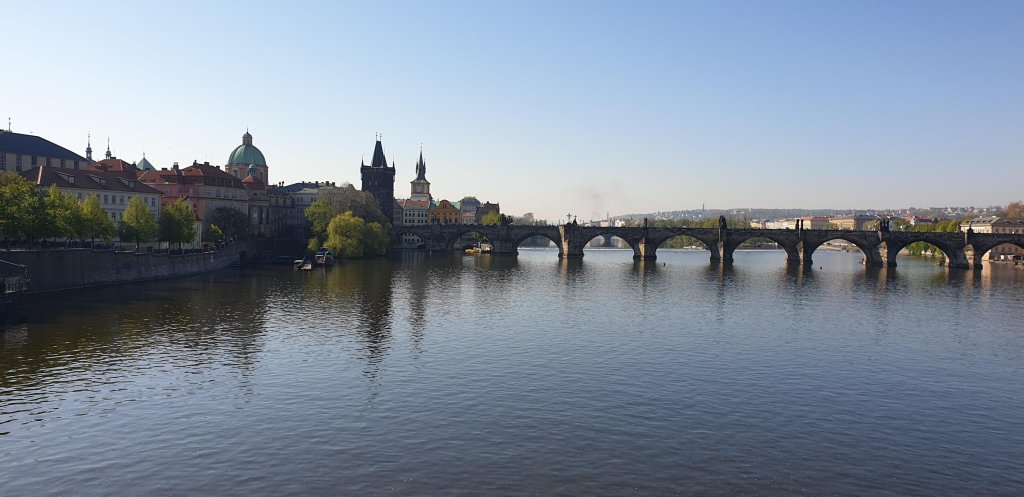
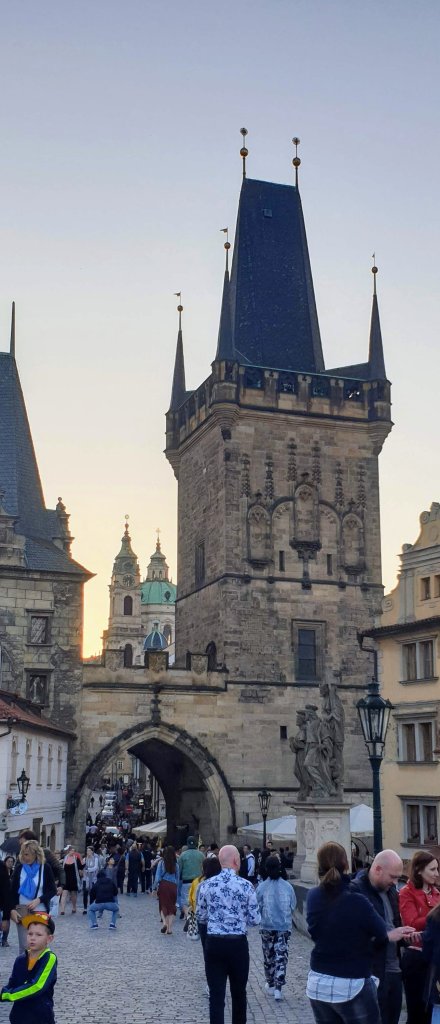
Walking across the (admittedly lovely) Charles Bridge on a sunny afternoon reminded me of trying to get to the bar in a Wakefield nightclub back in the late 80s. It was rammed from end to end with buskers, stalls selling tourist tat, tourists stopping every few minutes without warning to pose in front of their selfie sticks. Not my idea of fun, in other words, and Tony was starting to turn purple! The bridge was built in 1390 and the statues that line the parapets were gradually added over the years, but you just can’t appreciate the beauty of the bridge itself or the lovely views to either side when you are in the middle of a heaving throng. Maybe get up early and you could have the bridge to yourself?
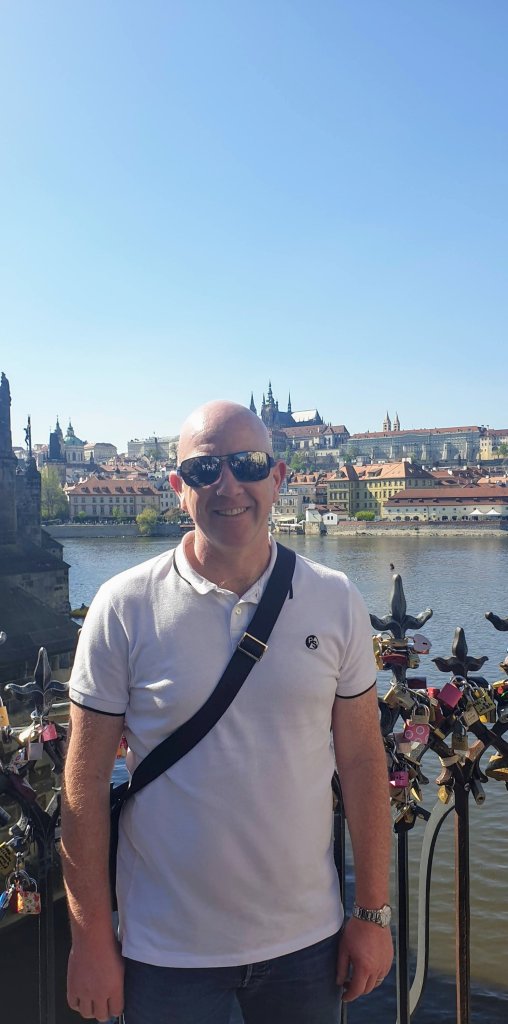
Managing to look cheerful, but this was before the onslaught of the Charles Bridge mid-afternoon.
Luckily (and I’ve said this before) most tourists seem to be quite lazy and lacking in imagination. It never ceases to amaze me how many people spend their precious holidays being herded around in huge crowds, never really seeing anything different because they don’t want to walk any further than is strictly necessary. I am prepared to walk for miles to get away from tour groups following people carrying umbrellas and shouting very loudly. Just as I was starting to lose the will to live on Charles Bridge, I spotted a staircase to the left and we headed down to find ourselves in a gorgeous square full of outdoor tables, where we could actually breathe. The crowds disappeared. Oh, and we could get a drink, even better.
Hurrah, we escaped the crush!
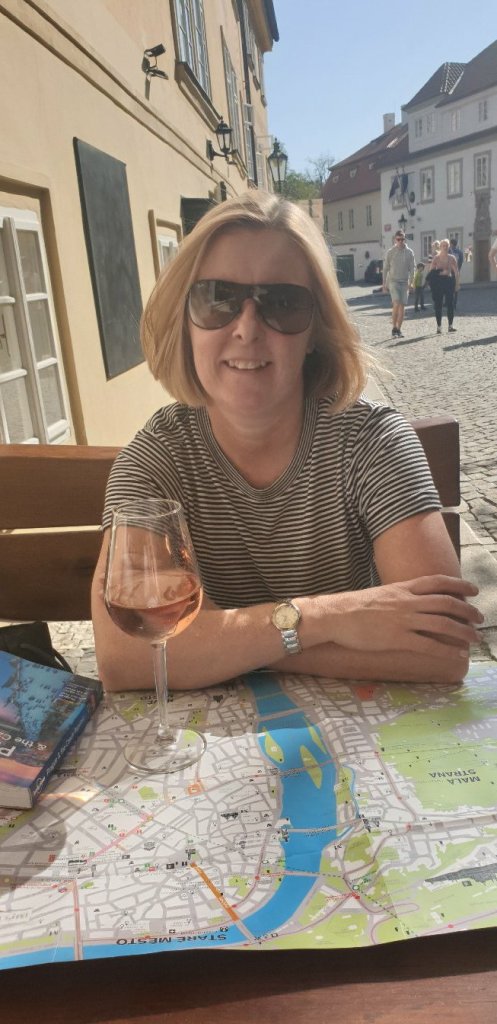
We were in Mala Strana, which is a very pretty and quite peaceful area of Prague that runs along the river below the Castle, full of gardens, squares, bridges and alleyways. Amazing though it seems, walk just a few hundred yards and you find a completely different city where you can relax and walk at a normal pace. Phew! The weekend wasn’t a total wash-out then.
Exploring Mala Strana’s quiet backstreets.
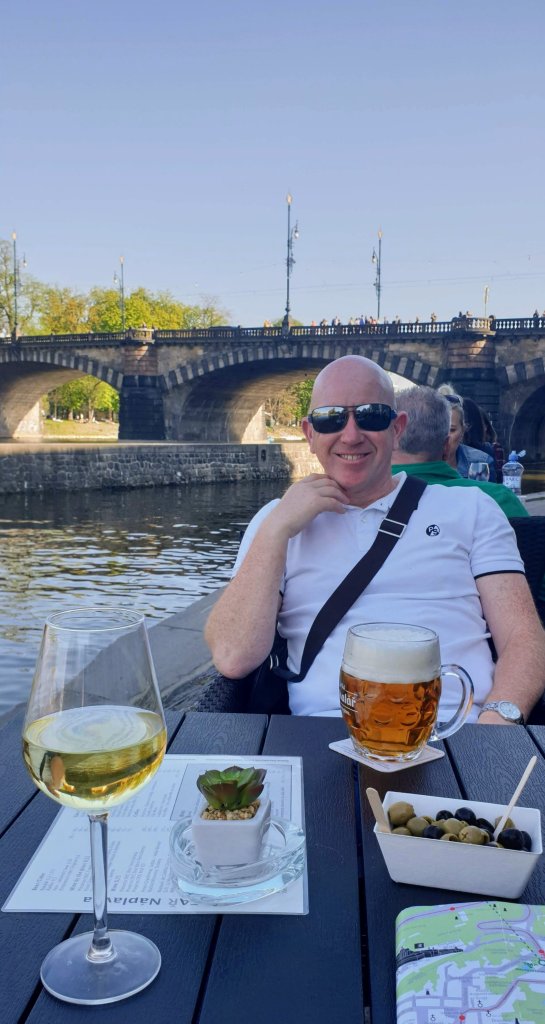
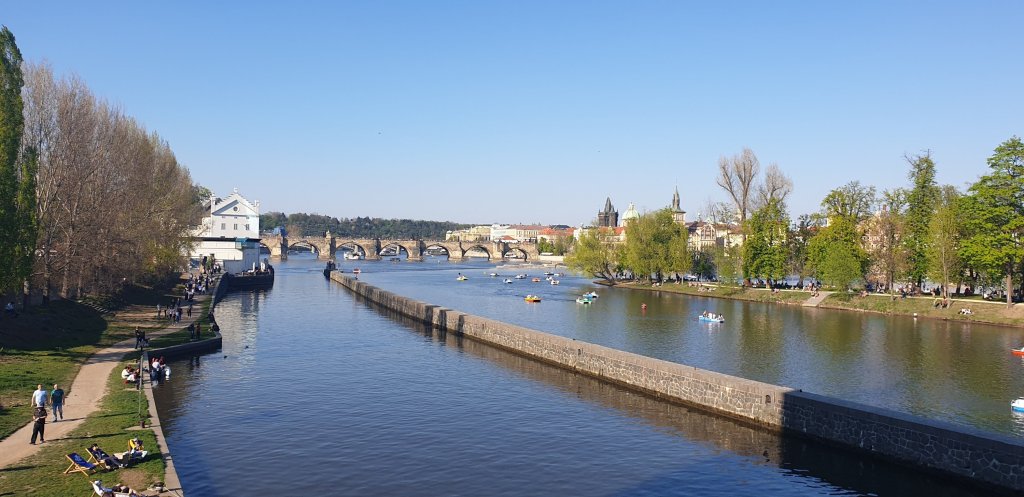
We happily strolled around the Kampa park towards the Legion Bridge, where we found a great pop-up cafe bar perched on the river’s edge – the perfect spot to while away a few hours watching the world go by. The River Vlatava is one of Prague’s best assets, with impressive architecture and fantastic views along the banks, as well as some lovely green islands.
View of the Old Town from Mala Strana.
By the way, the Legion Bridge (or alternatively the Manes Bridge further north) is very useful if you want to cross the river at normal speed rather than shuffling! In fact, provided you stay away from the Royal Way, Prague is perfect for exploring on foot, as you never know what’s around the next corner. The city wasn’t planned, it grew organically from its medieval beginnings, and it’s full of unexpected nooks and crannies – courtyards, arcades and passageways.
Tony enjoying the view. Legion Bridge behind with pedestrians able to move freely!
If you want to go to Prague Castle (and I do recommend it, it’s very impressive) go as early as you can and head there via the very steep set of steps to the Eastern Gate, which has great views over the city. It won’t be too crowded – see my comments before on lazy tourists – whereas the Main Gate via the souvenir shops of Nerudova will be a slow crawl at most times of day.
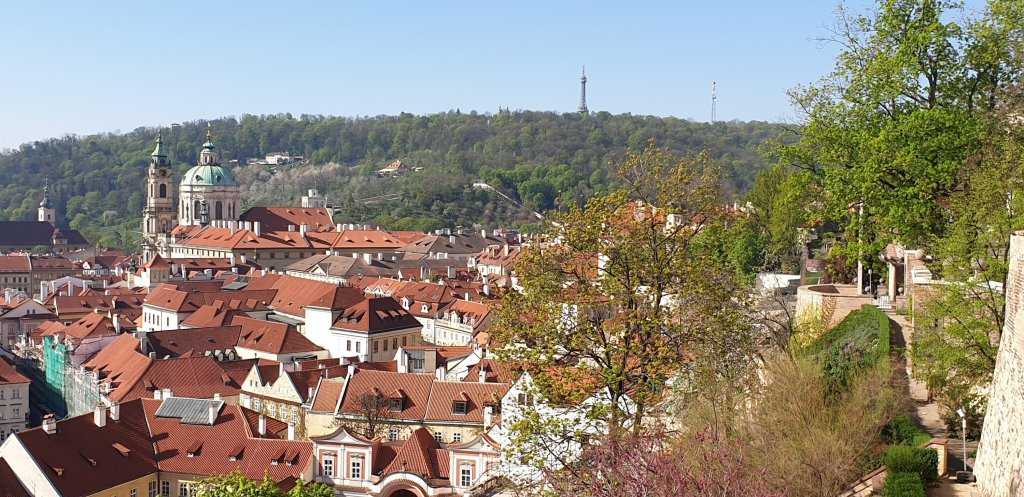
View from the Eastern Gate.
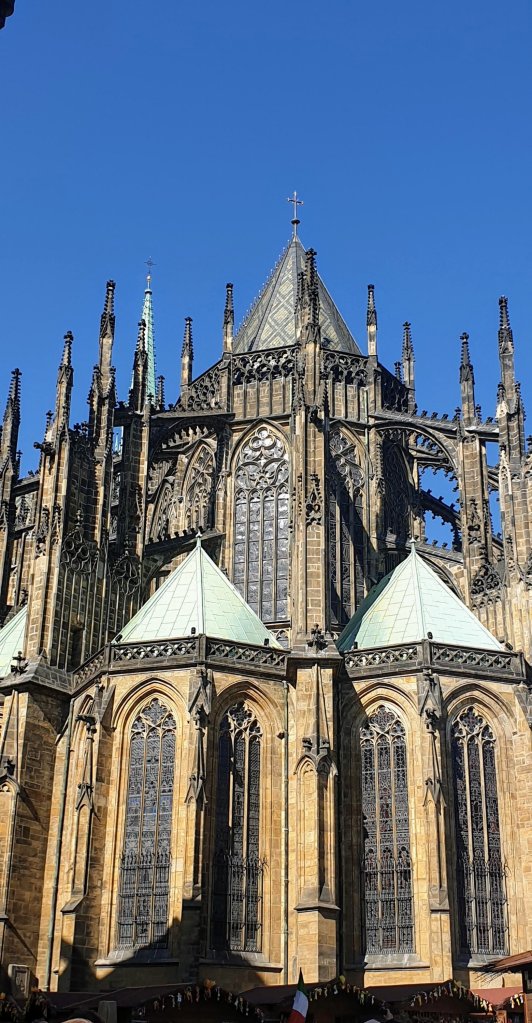
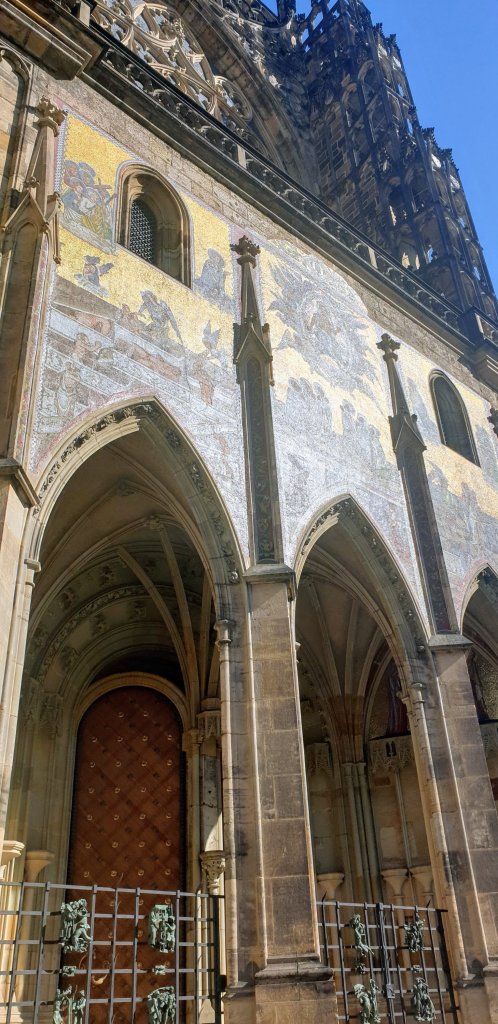
The Castle, in the Hradcany district, is Prague’s most popular attraction. Sitting up on a hill above Mala Strana, it dominates the skyline with its halo of towers and spires. It’s the largest ancient castle in the world and the walls contain a collection of palaces, courtyards, gardens, bridges and towers, together with the Cathedral of St Vitus, which holds tombs of saints and rulers, and the Bohemian crown jewels. The Cathedral was founded in 1344 but took almost 600 years to finish.
The imposing St Vitus Cathedral. Yes it’s intricate, but even so, they took their time to complete it.
We managed a circuit of the main sights in the morning before the umbrella-touting, shouty-voiced tour guides turned up with their dutiful crocodiles of followers and we had to flee.
The Golden Gate showing the good being lifted to Heaven, the sinners cast down into Hell. Cheery!
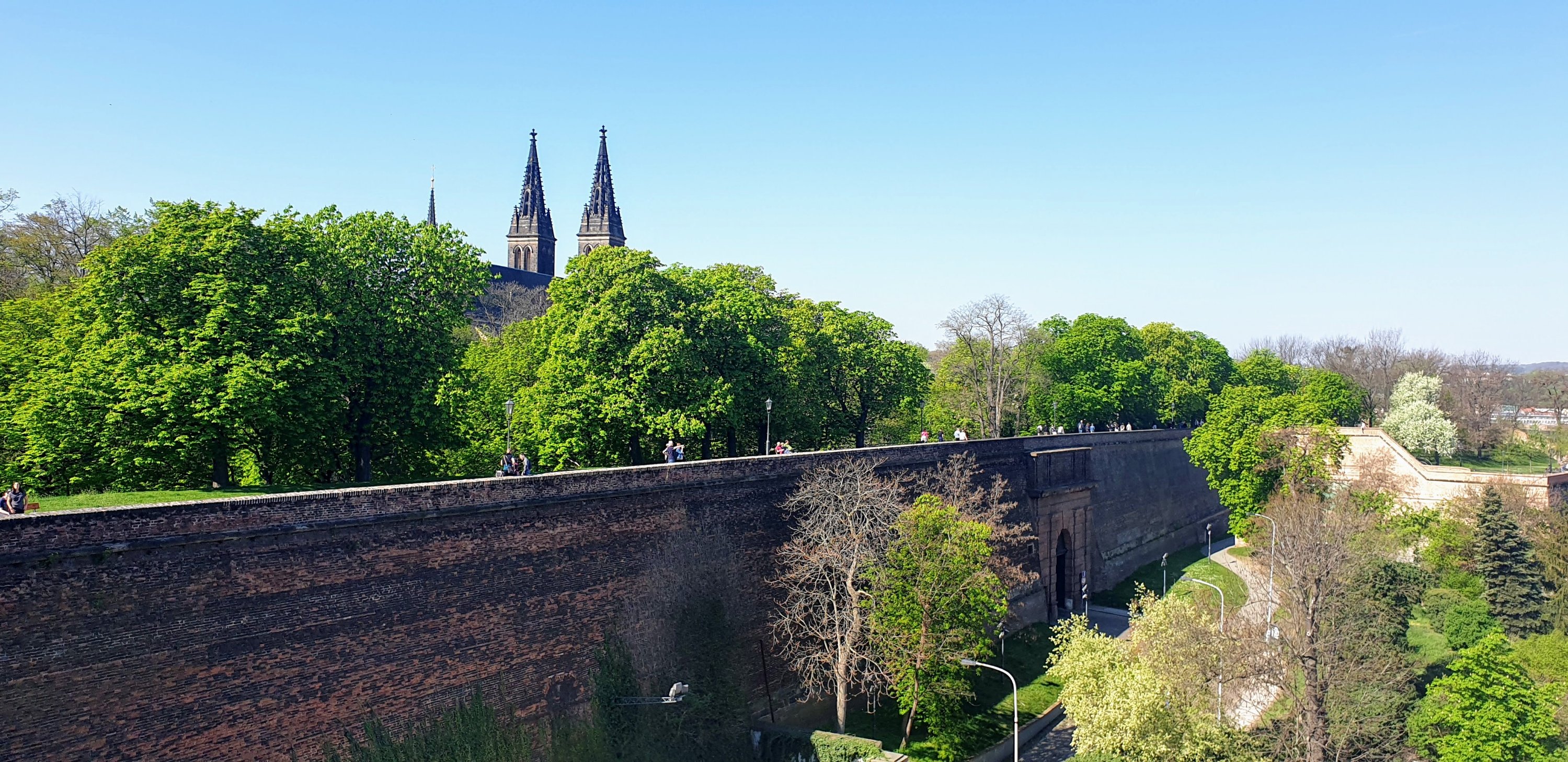
Even nicer than the Castle in my humble opinion, is a trip south along the Vltava River to Yysehrad Citadel. This abandoned hilltop fortress is where Prague was founded in the 7th century, or so legend says. Amazingly, it seems to be off the radar, despite being hugely atmospheric with lots of old buildings and amazing views from the walls.
The 11th century Rotunda of St Martin.
Take your time and wander for a few hours underneath the trees in peace and quiet just soaking up the ambience. You can get the tram there, but if you fancy a bit of a hike it’s a pleasant hour’s flat walk along the riverbanks, which you’ll mostly have to yourself.
Walking along the ramparts of the fortress.
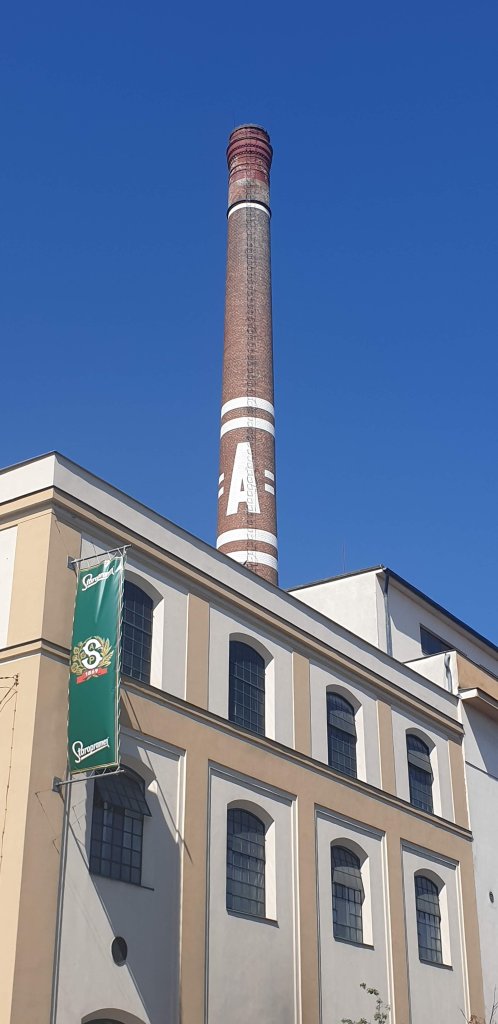
We made a day of it by crossing over the river to the Smichov neighbourhood on our way back towards the city and visiting the Staropramen brewery which has been refreshing the folk of Prague for over 100 years.
Starapramen brewery – a welcome sight for thirsty walkers.
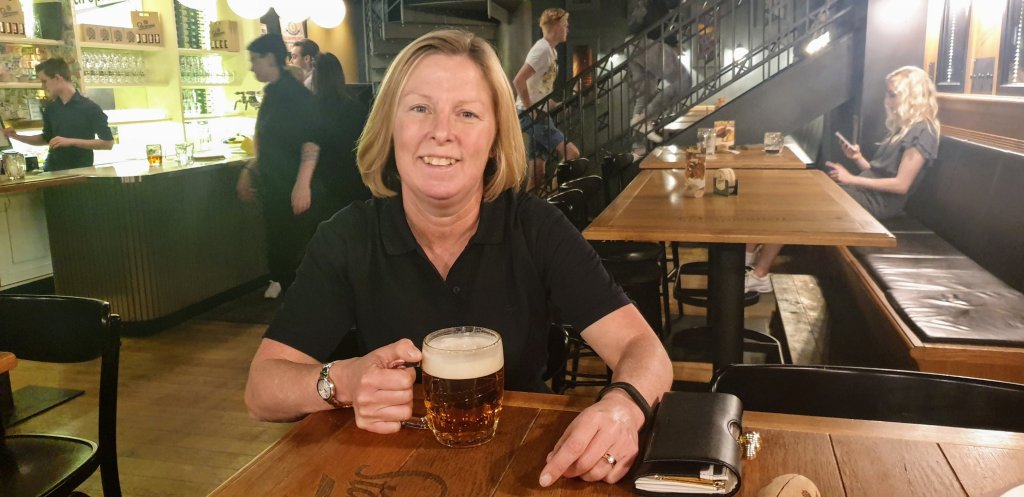
It was almost deserted, so we could sit in the lovely cool bar (it was a hot day so this was very welcome) and enjoy a nice cold beer – don’t ask for anything else, it’s beer or beer I’m afraid.
The only time I ever drink beer – when there’s no wine on offer!
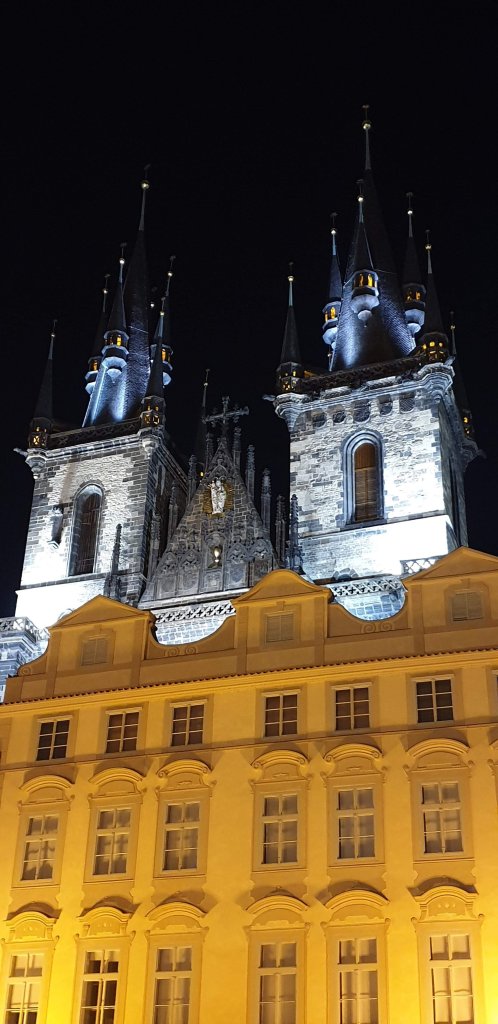
Prague city centre in the evenings is much less frenetic than by day, I’m pleased to report. After dark is the time to wonder along the Royal Way and across the famous bridge, when there are fewer people about and the ancient buildings are floodlit and spectacular.
A walk across Charles Bridge in the evening is surprisingly relaxing
We were expecting the nightlife to be a bit rowdy, given Prague’s reputation now as a stag-and-hen-do hot spot, but we were pleasantly surprised. Yes, there were a few large groups swigging beers during the day, but no riotous behaviour – it was all very civilised. And I’ve no idea where they went in the evenings, it was all very civilised.
The lights come on at night……turning Prague into fairyland.
The restaurants were full, so we were glad we’d booked ahead for dinner. Everywhere we tried was good quality and service was friendly – no complaints at all. We had traditional Czech at Pod Vezi, tucked away at the western end of Charles Bridge. Despite being right in the heart of tourist territory, the food was delicious and the outdoor terrace was great for people watching. As always, there was a curry in the mix. We tried “K” – the Two Brothers just a short walk from our hotel in the New Town. The rave reviews were accurate – it was full of locals and the food was amazing. We also had a tasty Italian meal at Green Tomato near Wenceslas Square.
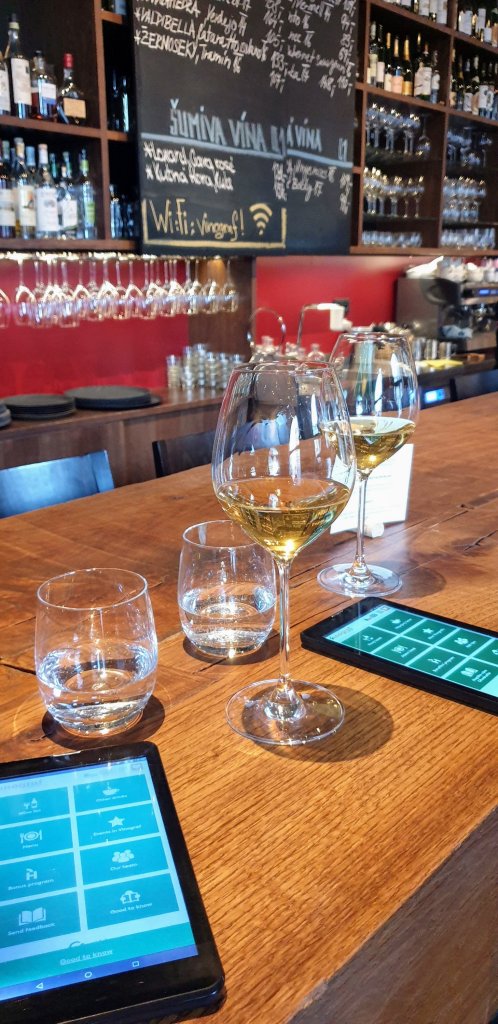
Ordering more wine at Vinograf.
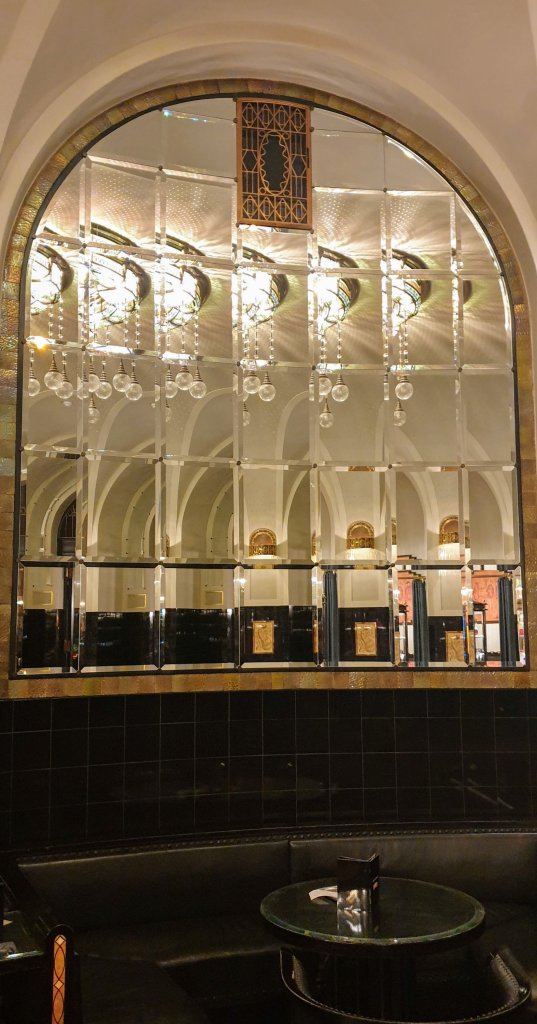
My recommendations for an atmospheric drink or two: Vinograf wine bar in the New Town is modern and fun, with a dizzying selections of wine (hence the name) which you order using an I-pad. Ordering could take some time if you’re (a) indecisive or (b) a technophobe! The American Bar in the Municipal House on Republic Square is said to be the oldest bar in Prague and the interior is stunning with lots of glass and chandeliers – perfect for cocktails in old-world style.
The chic interior of the American Bar. Mine’s a Negroni please!
If you like somewhere dark and cosy, try the Hemingway Bar, hidden down a backstreet near the river in the Old Town. Dim lighting is atmospheric, I know, but they take it to extremes here – I needed both my glasses and the torch on my phone to read the cocktail menu! Oh well, I’ve never claimed to be cool…The Old Town also has lots of vaulted beer cellars which provide some welcome shade if the weather is as hot as we had it. Anyway, Prague has many watering holes, so I’m sure you’ll be able to find whatever kind of venue you prefer.
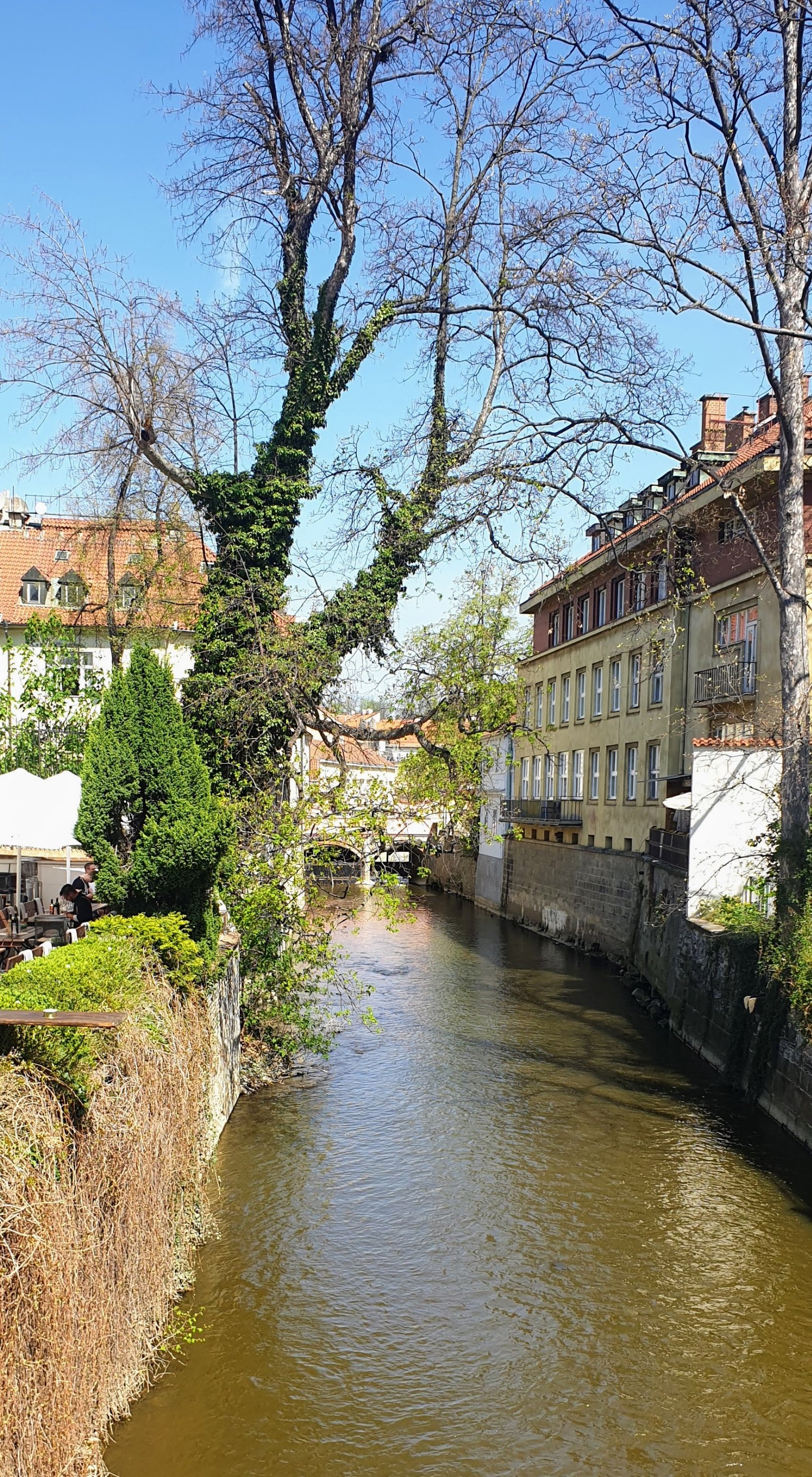
One last view of the river.
That brings me to the end of my latest coronavirus escape, after a difficult week when I didn’t really have the heart to write about travel at all. I tried, but it made the forced confinement feel worse – I’m just not one of those people who likes staying at home. Hopefully next Easter I’ll be able to tell you about a trip I’m actually doing, but for now, another voyage to The Back Garden it is!











 Steph's Travels