If you haven’t been to Edinburgh yet, why not? It’s gorgeous. A beautiful city brimming with history, atmosphere and fun-loving locals. But you may not be aware that it actually feels like two separate towns facing each other across the green ravine of the Princes Street Gardens.
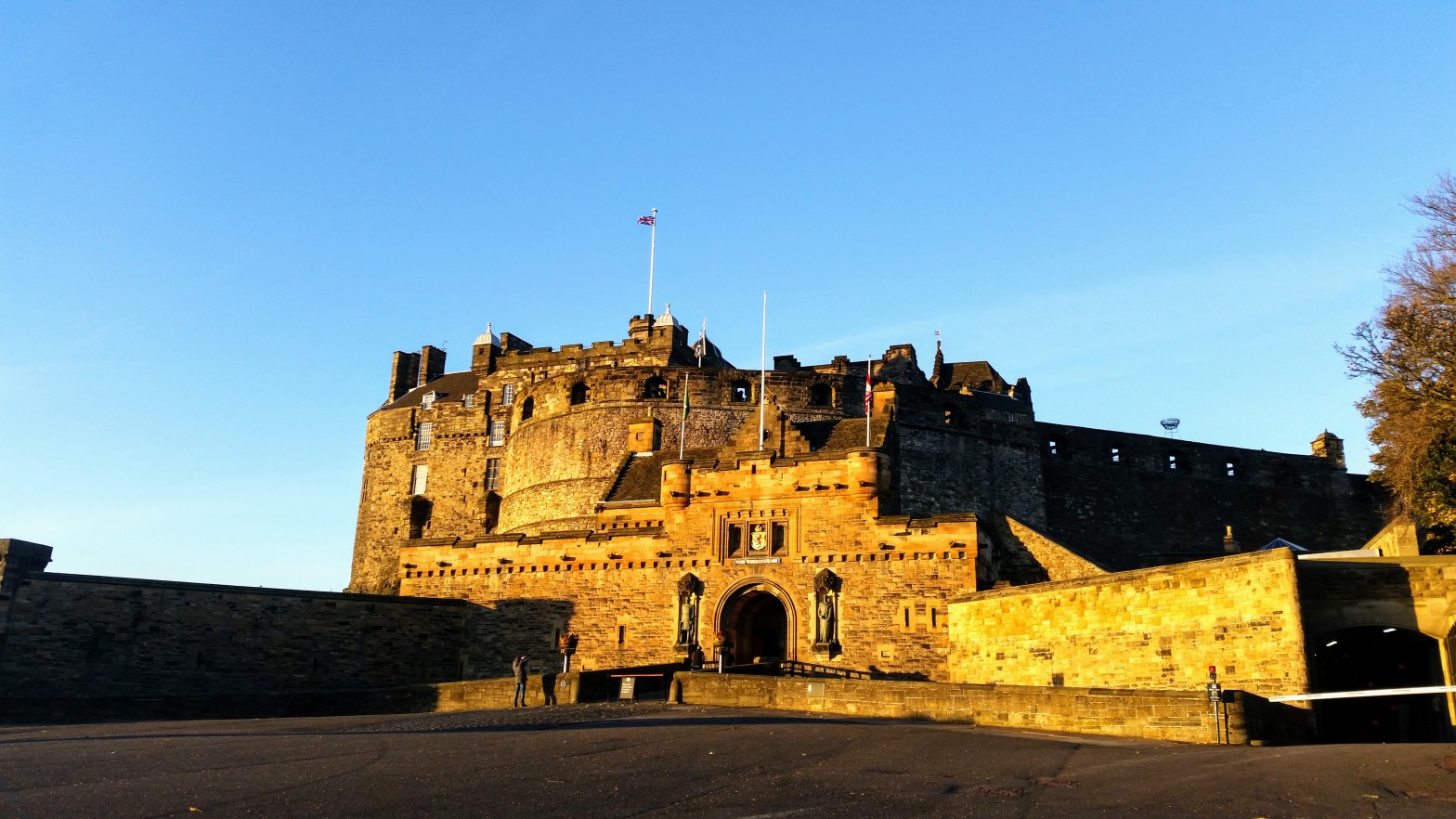
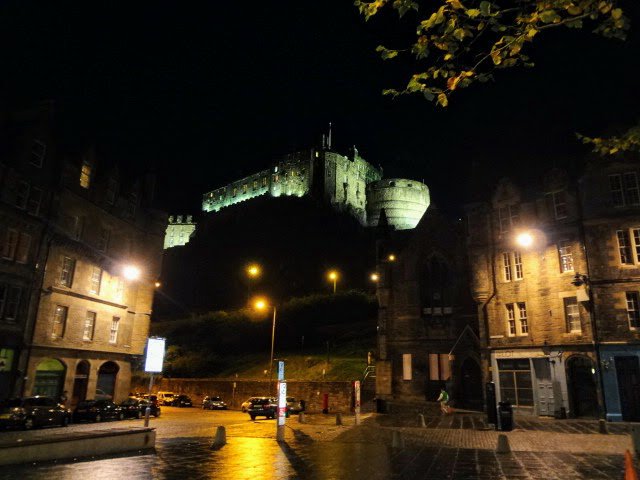
Looking up towards the Castle, which dominates most views.
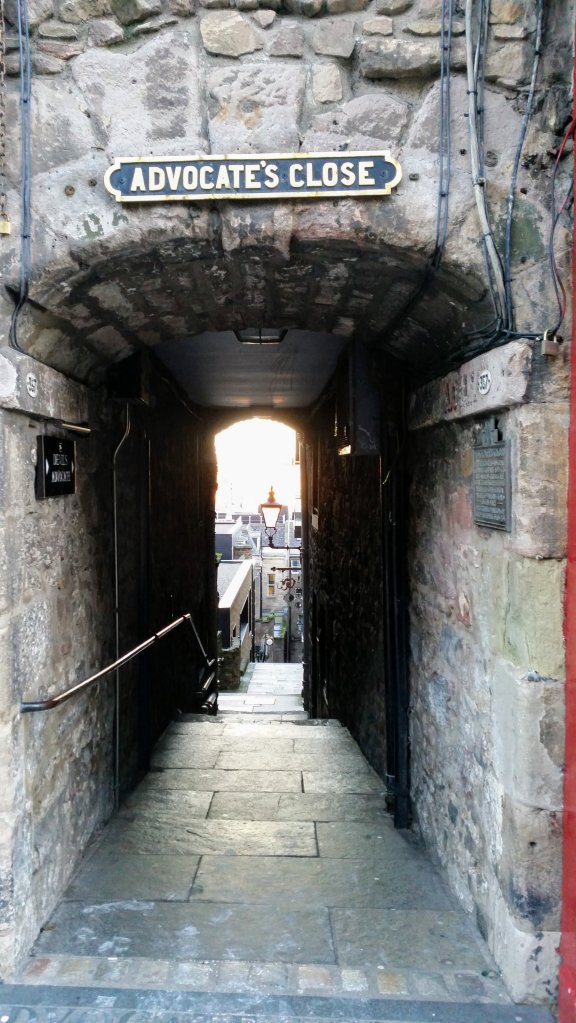
The Old Town to the south is a maze of steep and winding streets, staircases, alleyways and courtyards, known as ‘closes’ or ‘wynds’. Originally, the city walls meant that the population was packed into a small area, so the stone buildings rise high on either side. This gives an atmosphere of obscurity, bleakness and gloom, particularly on a cloudy day (there are a few of these).
One of those dark and mysterious alleyways waiting to be explored.
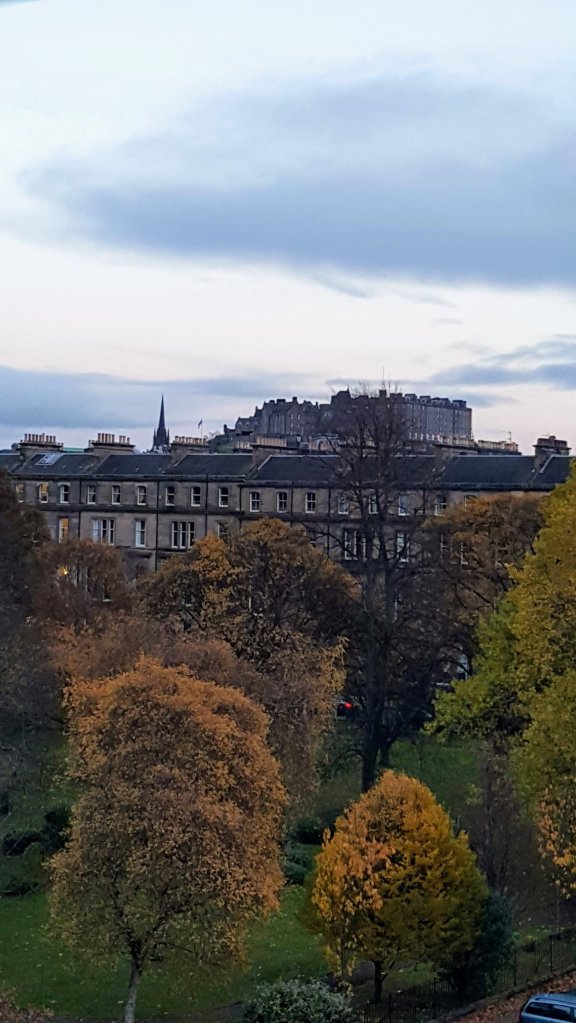
The New Town to the north is totally different, built in the Georgian style with elegant townhouses, broad avenues and open squares. It’s not that new – construction started in the late 1700s! Rather than developing organically, this area was masterplanned and it shows.
Rows of Georgian townhouses make up the New Town and West End. And there’s that Castle again.
If that wasn’t enough variety, Edinburgh is also a coastal city, and the seaside suburb of Leith has its own lively character. As a historic port, it has a dubious history, but is now undergoing gentrification, with some great waterfront pubs, bars and restaurants. The Royal Yacht Brittania is here, if you want to get an insight into how the Queen likes to travel. A walk along the shore to the Ocean Terminal is, shall we say, bracing!
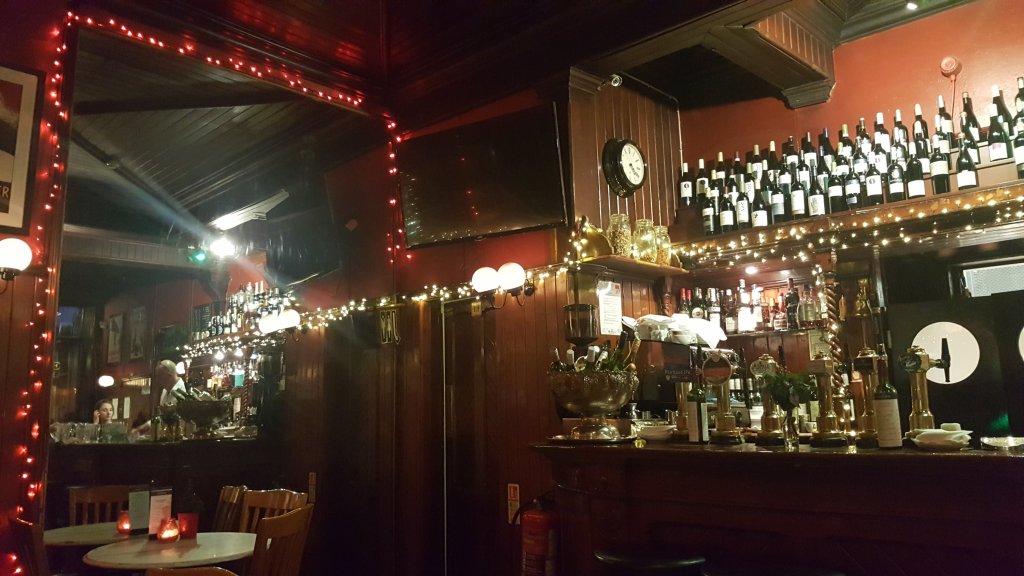
The cosy bar at The Shore in Leith.
I’ve been to the capital of Scotland seven times in person, but hundreds more in my imagination. Two of my favourite writers live and write there, and the city is their favourite subject. They illustrate perfectly the dichotomy of this complex city.
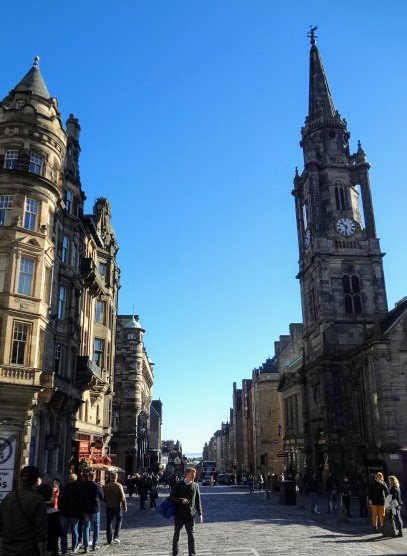
The Royal Mile looking east towards the sea.
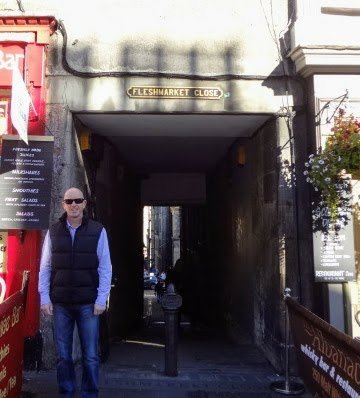
Ian Rankin’s grumpy policeman, John Rebus, shows us the seedier side of the city, using the alleyways and secret hidey holes of the Old Town and the rowdy waterfront pubs of Leith to build an atmosphere of danger and mystery.
Fleshmarket Close – skeletons were found here in Ian Rankin’s book of the same name, and it does look a bit dodgy!
Alexander McCall Smith, on the other hand, sets his novels in the altogether more genteel neighbourhoods of Edinburgh – Bruntsfield and Morningside – and the bistros and galleries of the New Town. He depicts Edinburgh as the ultimate in civilised living.
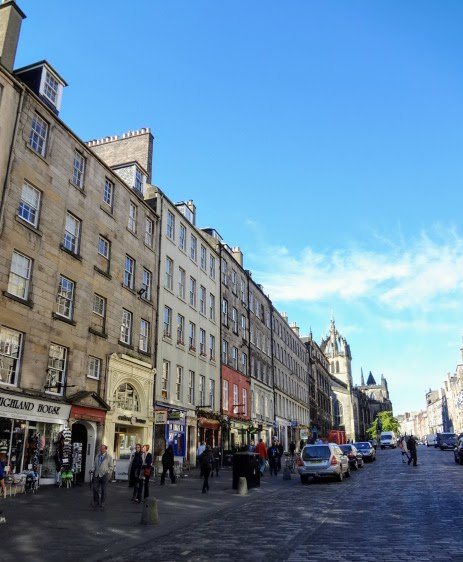
The Royal Mile looking West, up towards the Castle.
First impressions count with the places we visit, and my first trip to Edinburgh was with my sisters on a sunny Summer’s day during the festival. It was buzzing. The streets were full and the pubs were bustling. Gill, as the youngest, had been named designated driver that day. Apparently we’ve always been mean to her. I have great memories of that trip, even if Gill doesn’t.
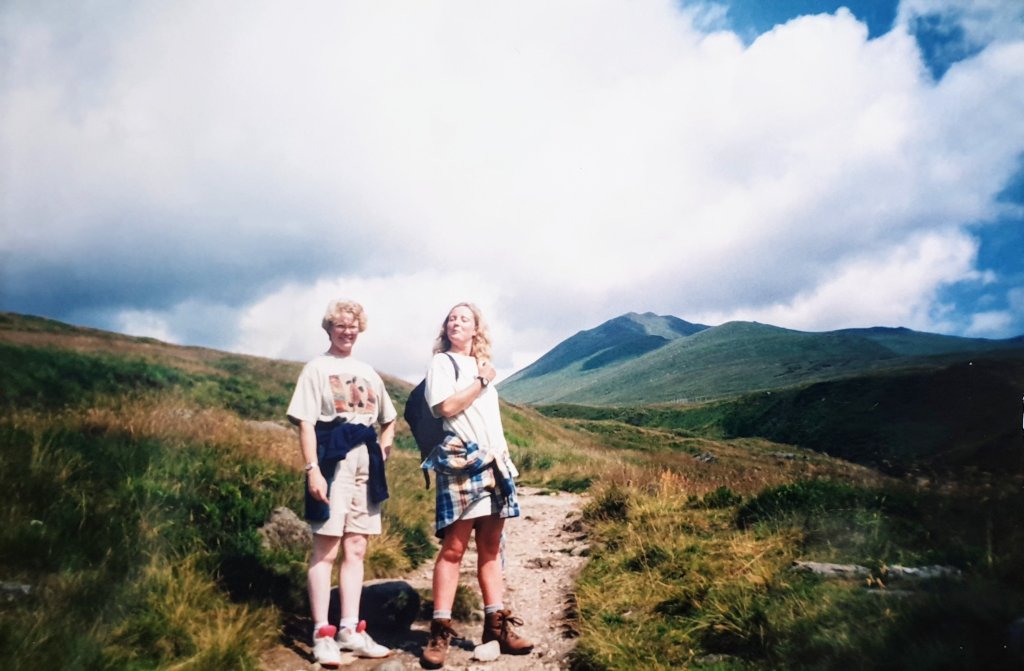
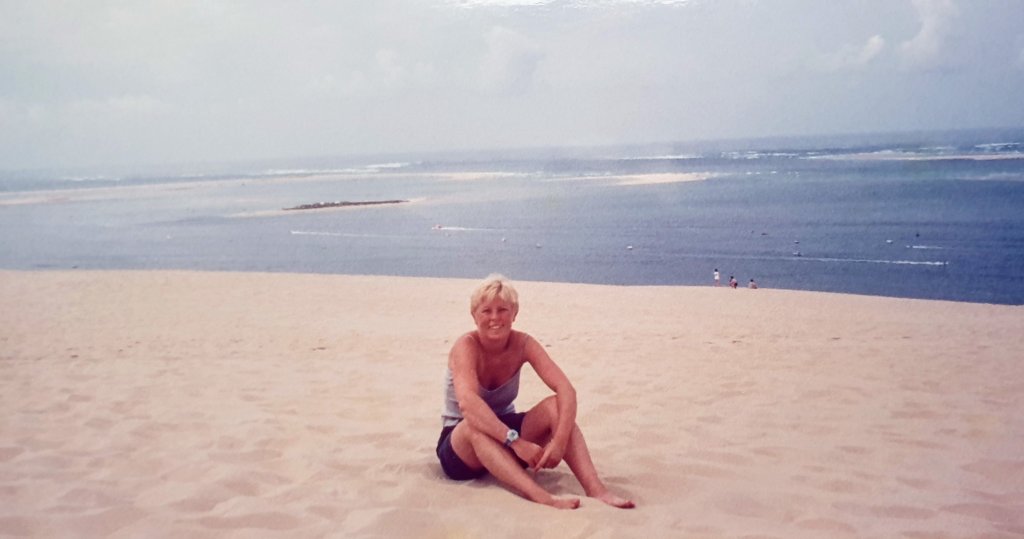
Gill and Vick on our Scottish trip, 1996.
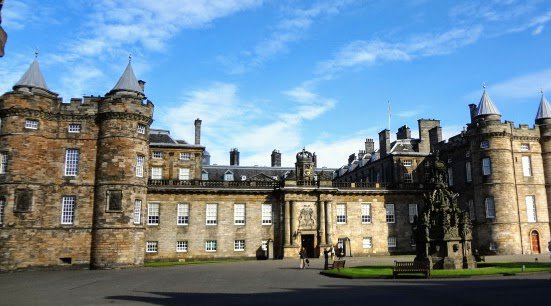
So, why do I love this place? Well, Edinburgh has history emanating from every pore. The site of the city was chosen as this was the most easily defensible hilltop in the borderlands with England. The Castle is a brooding presence at the highest point of the Royal Mile, a cobbled road running downhill towards the Palace of Holyroodhouse and the Scottish Parliament. The city has been the royal and political centre of Scotland since the mid 15th century.
Palace of Holyroodhouse.
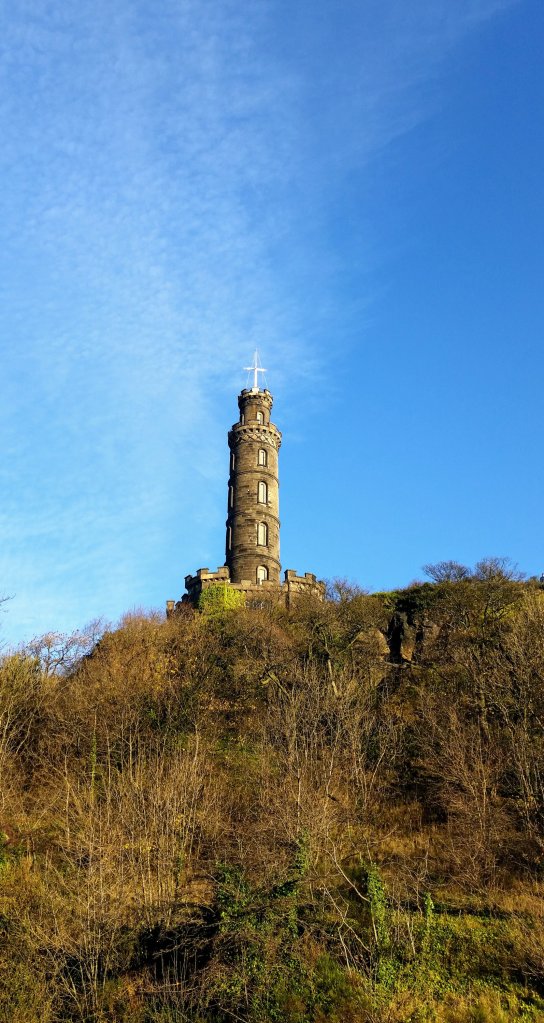
Edinburgh is also great to explore on foot, and I love to pound the paths and pavements. The city is not large for a capital, less than half a million people live here, and it has plenty of green spaces and coastline nearby for walking. Parks and gardens abound – you can take a flat stroll along the Water of Leith which snakes north of the city towards the coast, a brisk walk up to the classical monuments of Calton Hill which have led to the city being called ‘the Athens of the North’. You can even do a proper hike to Arthur’s Seat depending on your fitness levels and whether you remembered to bring sensible shoes.
The Nelson Monument on Calton Hill, home to several monuments, but I’m not convinced about comparisons with the Acropolis…
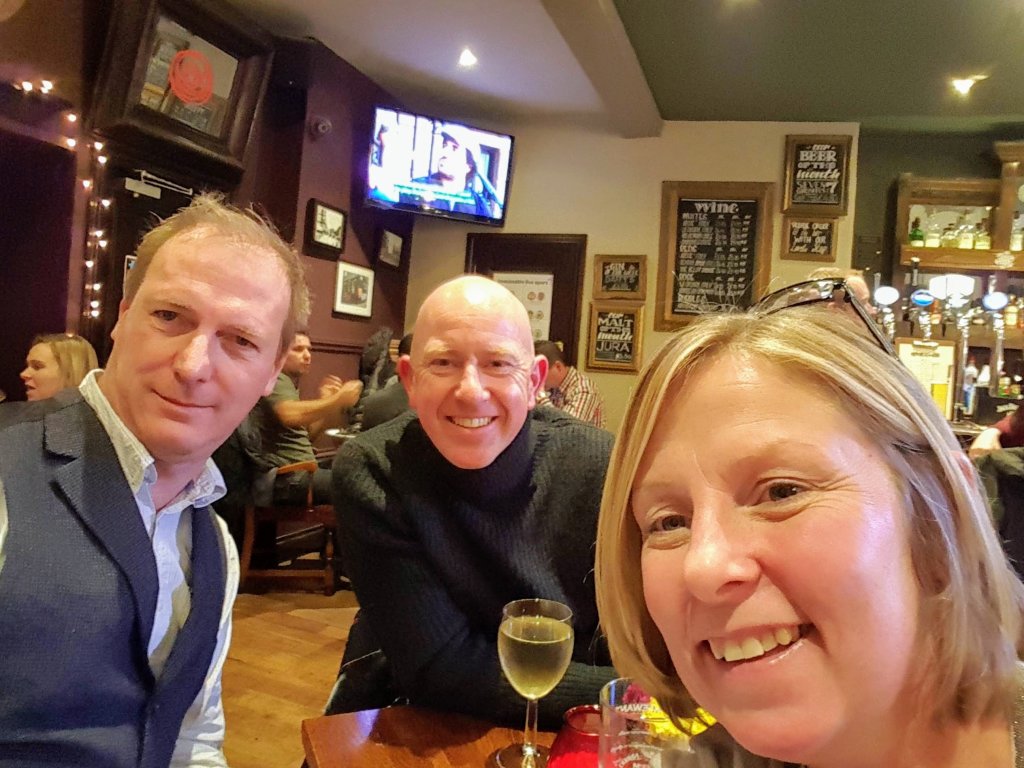
Inevitably, I have to write about the pubs. Edinburgh has some fantastic watering holes, and we have sampled quite a few of them, in the Old Town, New Town and in Leith. The convivial atmosphere makes it hard to leave – those Scots are a bad influence! Along Rose Street is a favourite hang-out, and we may have been lucky, but we’ve sat outside in the sunshine in November.
In The Shoogly Peg, Rose Street. Apparently if something’s on a shoogly peg it’s precarious or insecure. Quite apt when you’ve had a few!
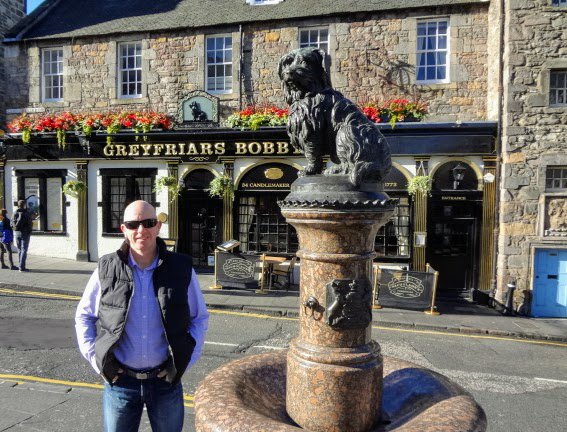
And finally, I have to mention Greyfriars Bobby, the terrier who, according to local legend, sat by his owner’s grave for 14 years. The city erected a statue of him in 1873 and it’s now a landmark. A city that commemorates a loyal pet dog can’t go far wrong in my opinion.
The devoted pooch Bobby has his own ststue and pub. Who cares if the story’s not true?
No doubt we will head across the border again soon. Having great friends in the city, there’s always an excuse to visit…again. But you don’t need any particular reason, just go.
Watching Rick Stein’s Long Weekends (we love him, Padstow is on the wishlist), he raved about the seafood in Lisbon. ‘Why haven’t we been there?’ we wondered. In fact, I’d never been to mainland Portugal, horror!Better book something quick.
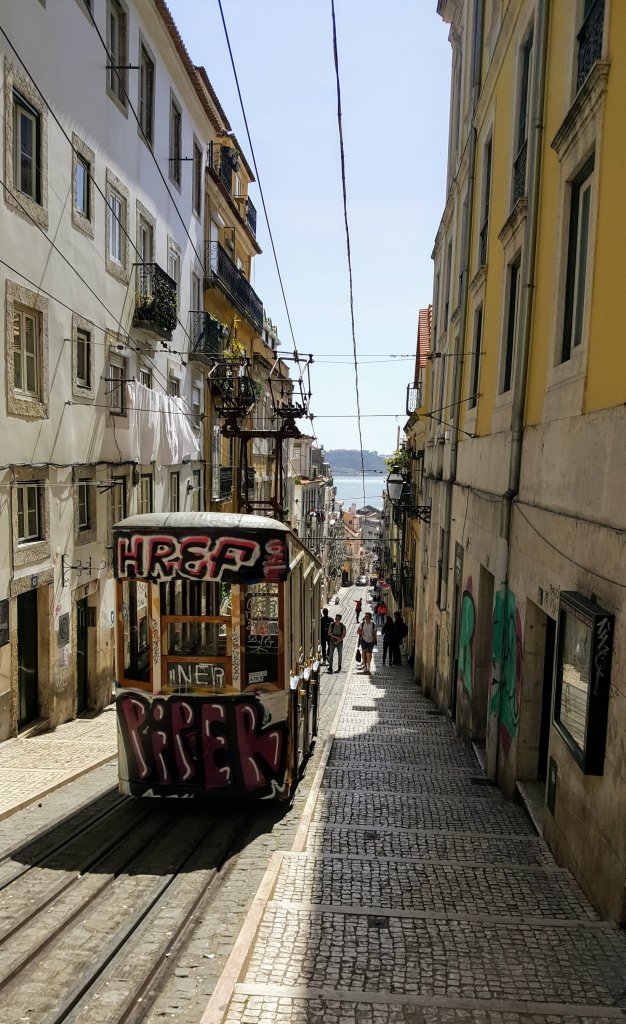
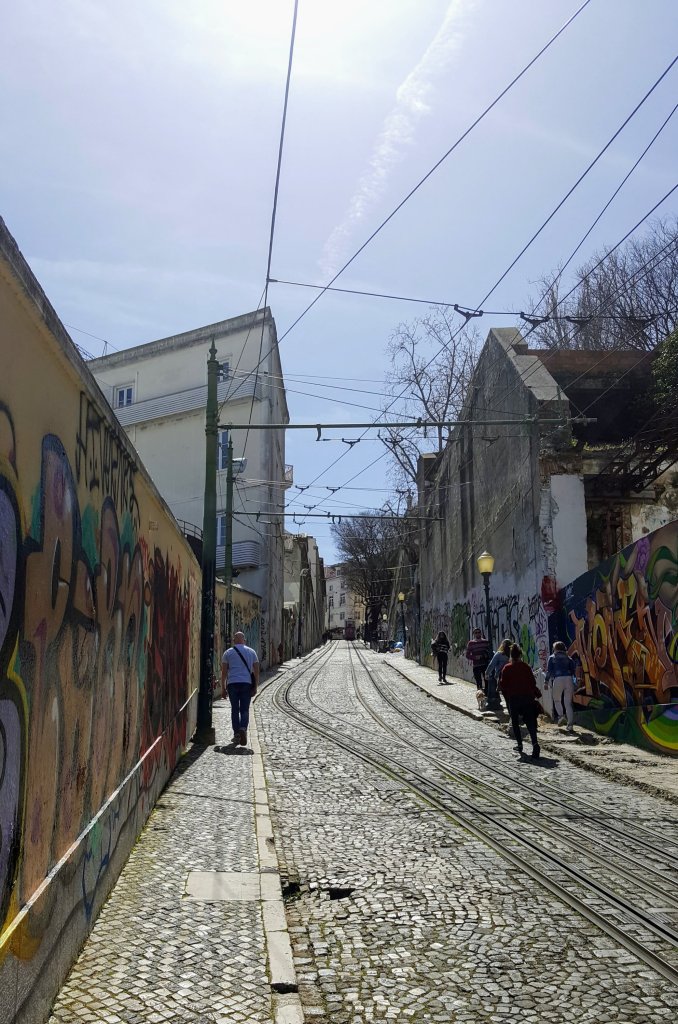
Trams rumble down many of Lisbon’s streets, so keep your wits about you.
Lisbon is definitely a bit underrated. Nowhere near the top 10 of European capitals despite the stunning location and great food. But sometimes it’s fabulous to go somewhere with few expectations and be blown away. And under the radar means fewer pesky tourists, hurrah!
Look, no crowds. Miradouro de Graça.
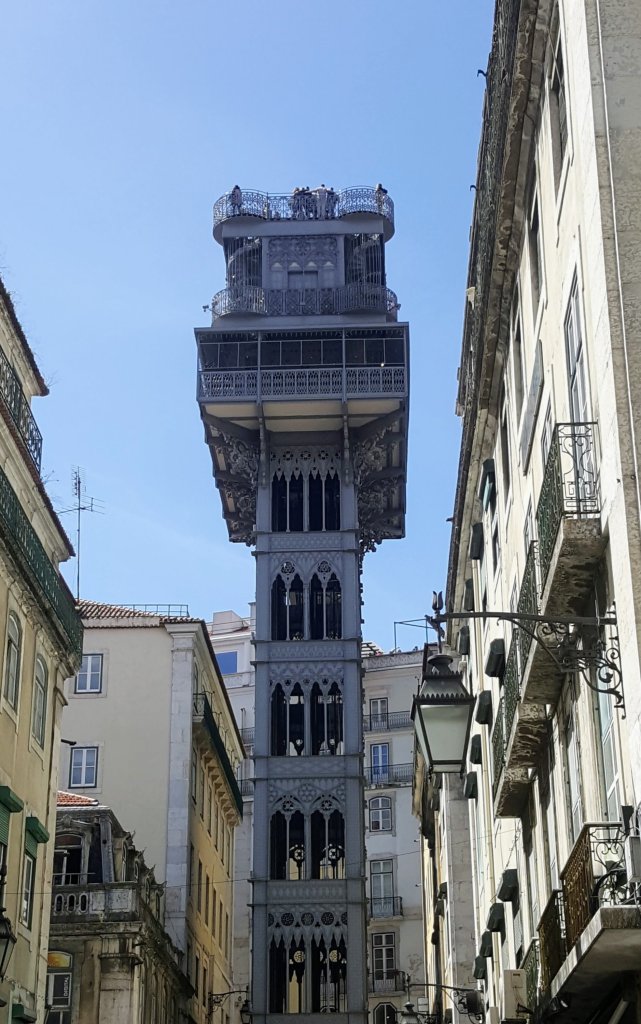
Lisbon city centre, or Baixa, is nestled between some pretty steep hills, so if you really want to get to know the city, be prepared for some lung-busting walks. Or you could cheat and jump on a tram. Another option for reaching the suburb of Chiado up on the cliffs is Lisbon’s famous street elevator, built by Eiffel’s apprentice. Come early or be prepared to queue.
Elevador de Santa Justa. The alternative is many stairs!
You can spend many happy hours exploring the pedestrianised streets, arcades and laneways of Baixa, from Rossio square down to Praça do Comércio overlooking the river. This is shopping heaven. But you are putting off the inevitable – you will have to tackle those hills at some point!
No cheating for us, we did it the hard way.
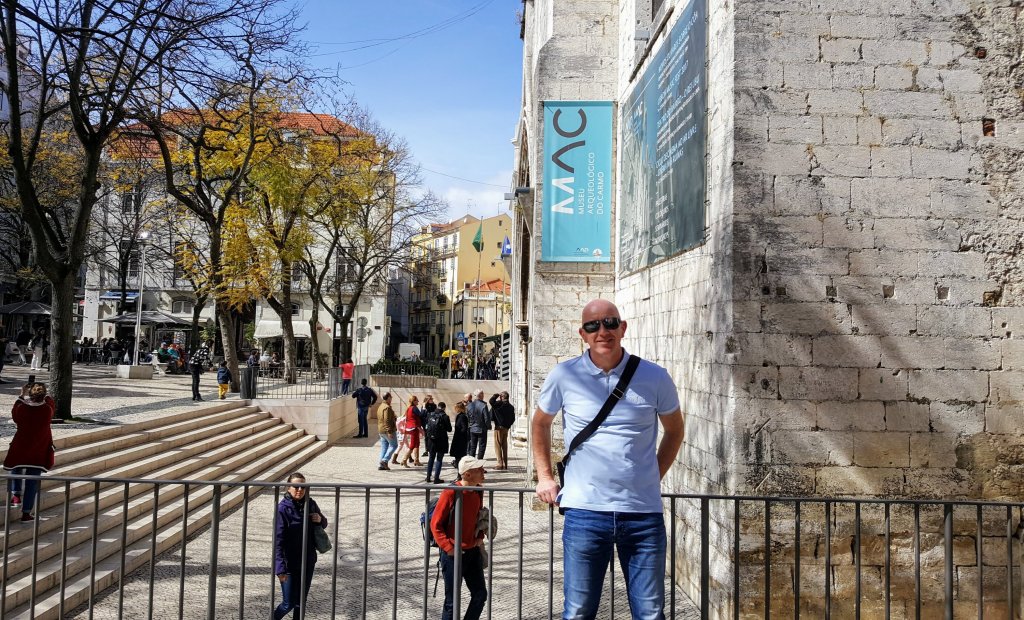
To the west of the city centre is Chiado with bustling shopping streets and the ruins of the Convento de Carmo, which collapsed in the 1755 earthquake that devastated the city. Up to one third of Lisbon’s population was killed and whole neighbourhoods were flattened.
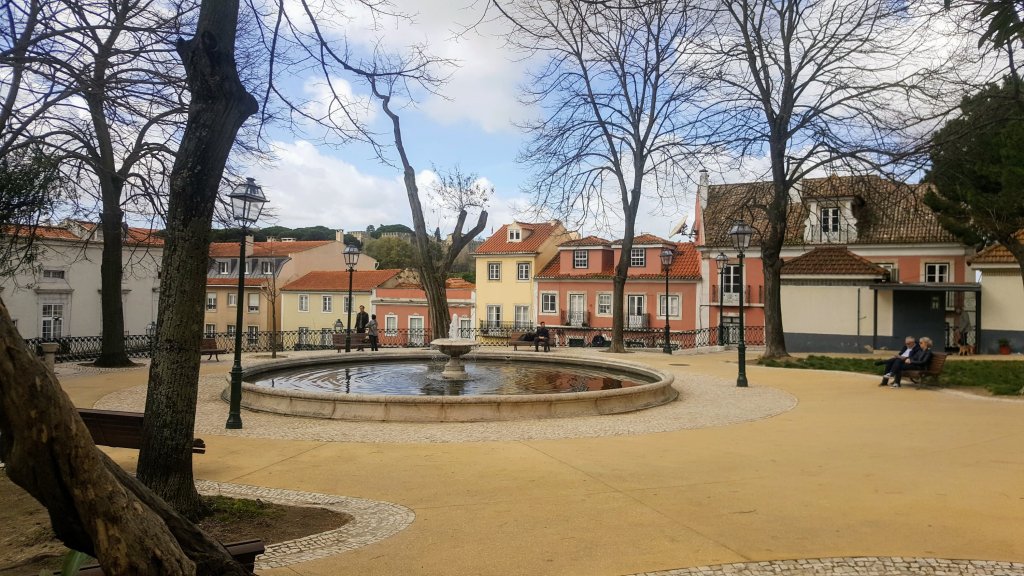
One of Chiado’s sun-filled squares.
Adjoining Bairro Alto and Santa Caterina are the places to come for amazing views during the day, and Lisbon’s best bars at night. Apparently things really get going around midnight, by which time we were tucked up in bed, but luckily things were pretty lively even early doors. We were a bit taken aback to find some bars still allowed smoking inside, which is pretty much unheard of now. It took me right back to the 80s and the joys of your hair and clothes smelling like an ashtray after a night out. Seems like another lifetime!
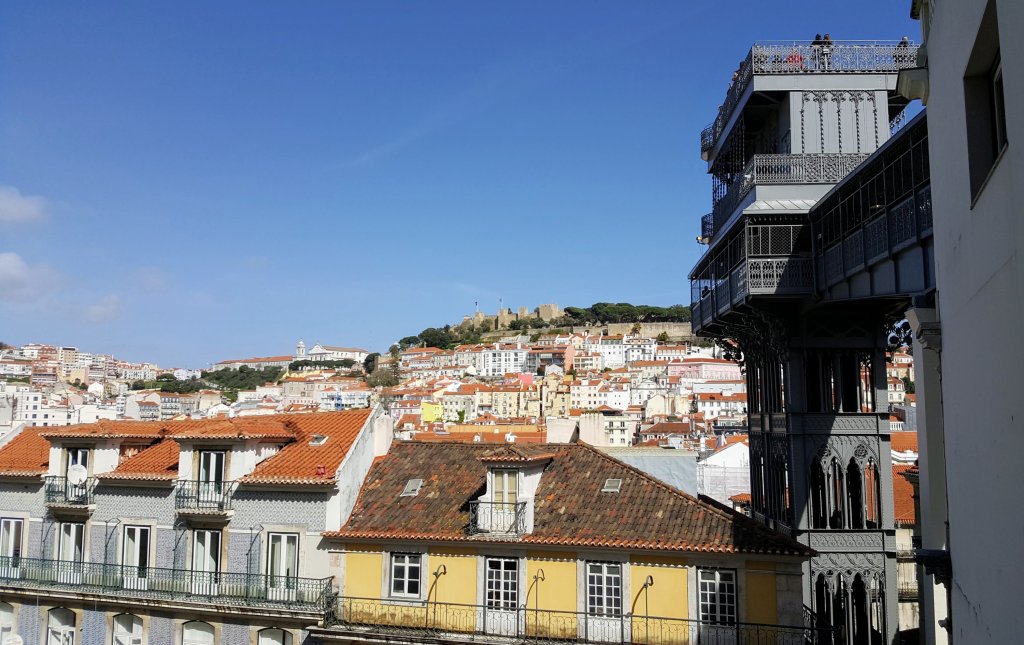
Looking out from the heights of Chiado towards the castle on the opposite side of town.
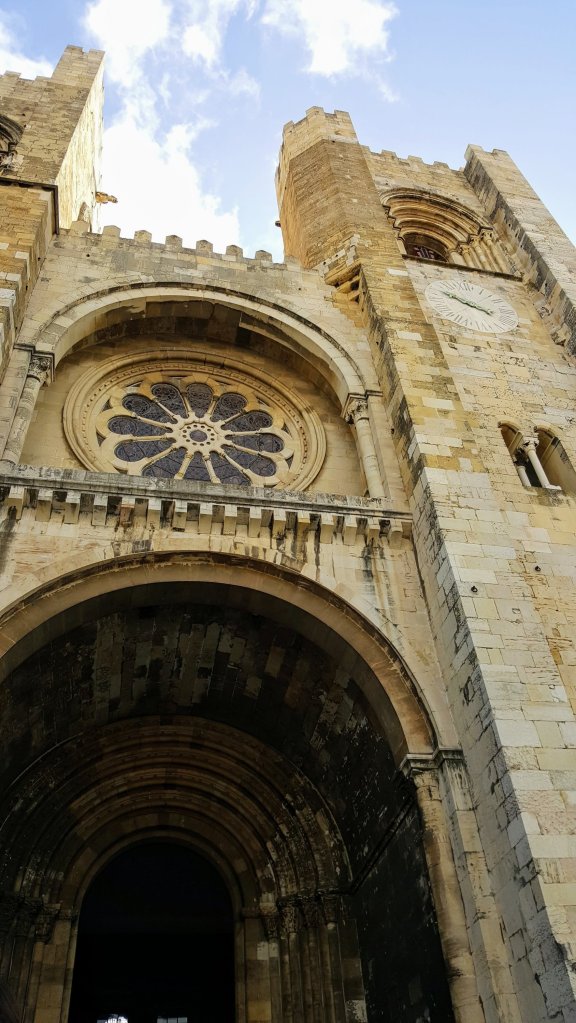
Next, head east of the centre to the Alfama, the city’s oldest neighbourhood, past the Sé (cathedral) and up the winding streets towards Castelo and Graça. These areas are perfect for strolling, full of staircases and alleyways. Let yourself get lost – difficult if you’re a map addict like me. The gradients can be quite challenging, so stop every now and then to enjoy the views and have a breather.
The brooding cathedral, which survived the earthquake.
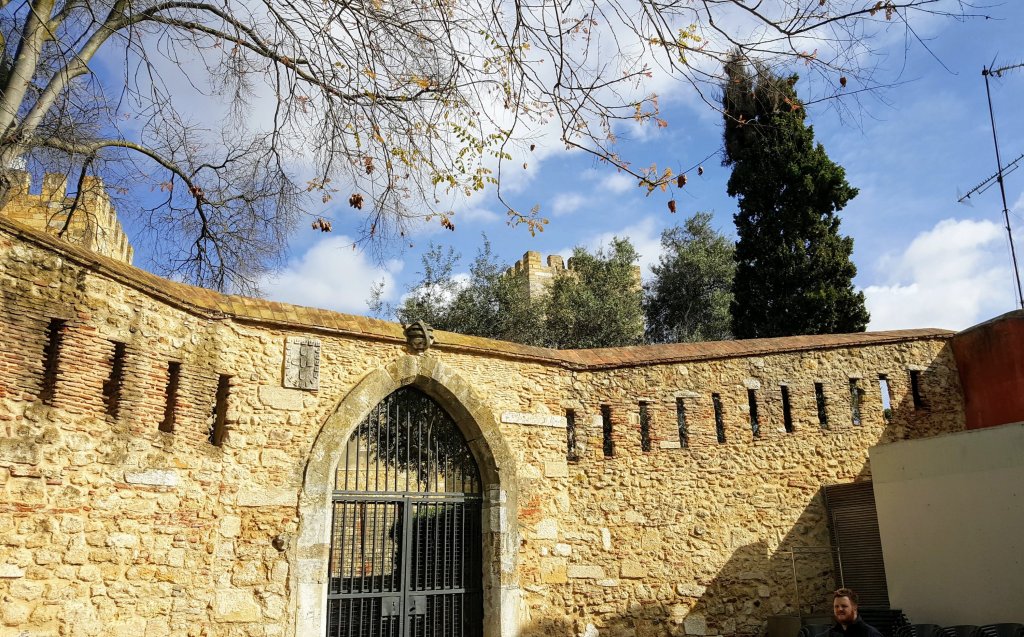
The Castelo de São Jorge dates from the middle of 11th century when it was built as a Moorish stronghold. Only the walls survive, inside are mainly gardens with resident cats and peacocks, but the views from up here are lovely, and the atmospheric streets outside the walls beg to be explored.
The old Moorish walls of the Castelo.
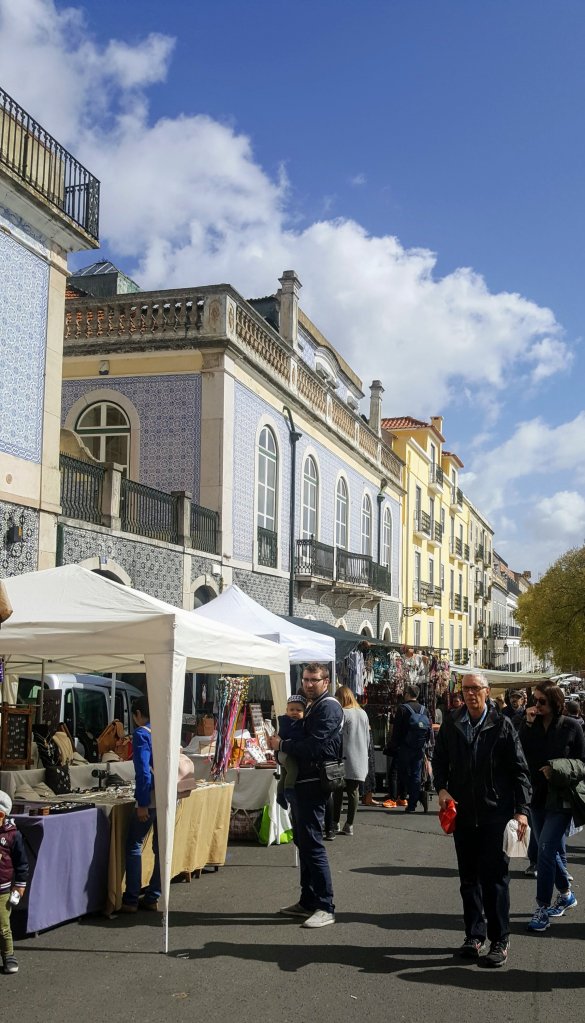
If you’re in Graça at the weekend, take a walk along Campo de Santa Clara, where every man and his dog come out to buy and sell their trinkets, treasures and sometimes trash at a huge flea market. It goes on and on, some with stalls piled high and others with just a few items lined up neatly at the side of the road. We didn’t find anything we’d want to buy, but it was certainly interesting…
Someone obviously buys this stuff, just not us!
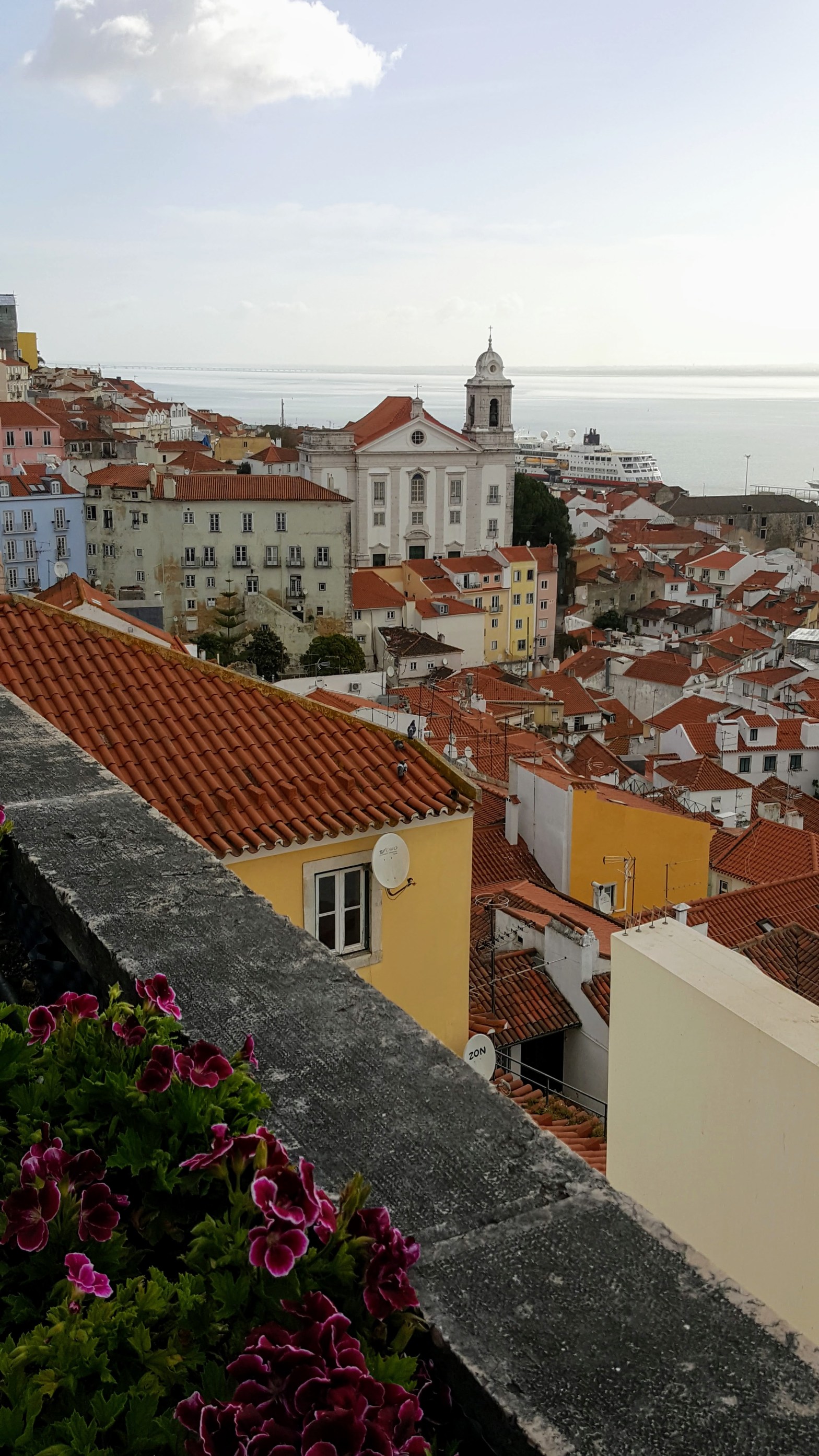
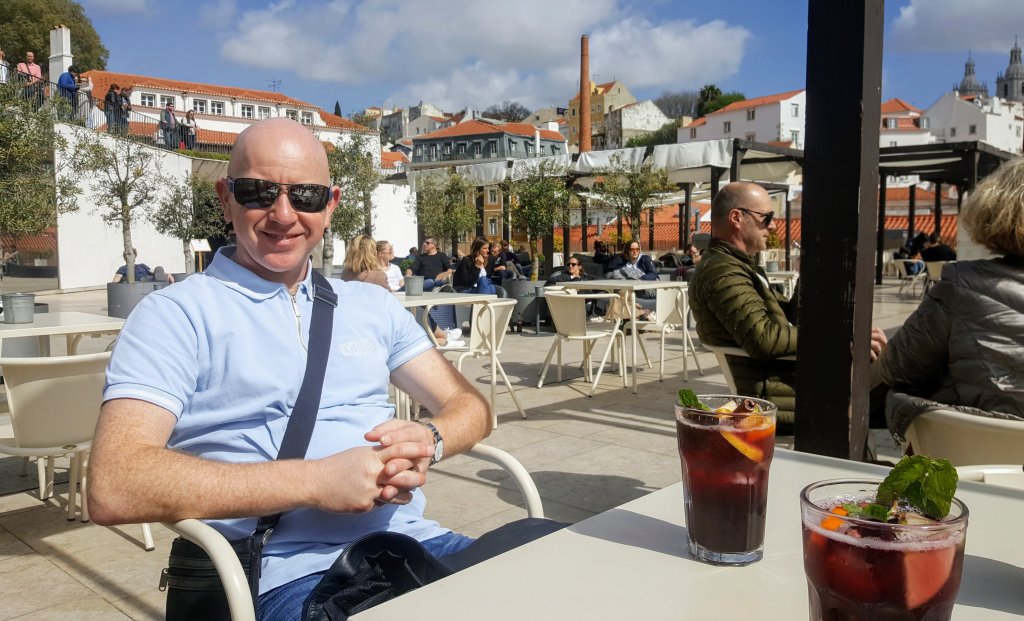
After all that walking, you deserve a drink, and where better than Largo das Portas do Sol, with a view across the red rooftops of Lisbon? Lisbon specialises in lovely squares where you can gaze out over the city, glass in hand, and this is one of the nicest.
Sangria in the sun? Don’t mind if I do.
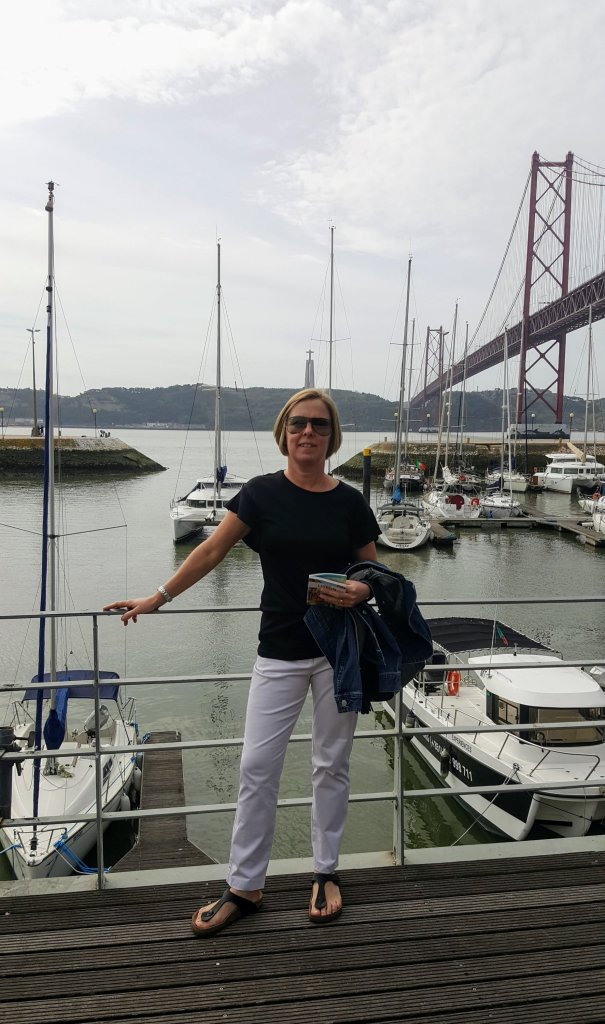
Most visitors head out to Belém, famous for delicious custard tarts, but they tend to take the tram west along the Rio Téjo. We decided to walk along the riverside path. It’s not for the faint hearted, at 8.5km, but at least it’s flat. There are some lovely marinas along the route, and the old warehouses are being converted into shops and cafes. You pass underneath the huge Ponte 25 de Abril, looking across to the impressive statue of Christ the King on the southern bank of the river.
Under the bridge in my trusty Birkenstocks, the most comfy walking shoes.
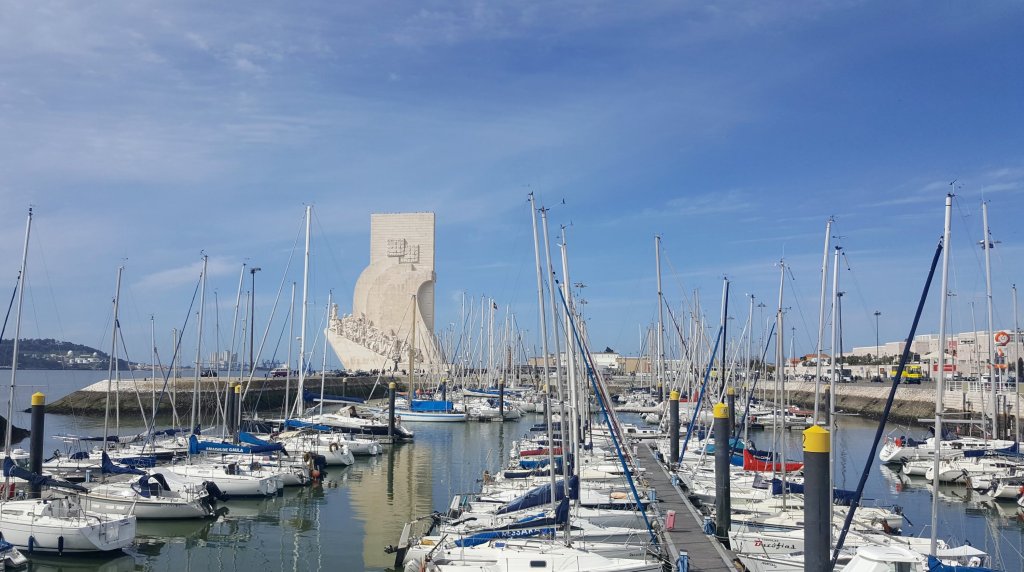
You know when you’re getting close to Belém as the Discoveries Monument comes into view. It’s 52 metres high and commemorates the Portuguese Age of Discovery in the 15th and 16th centuries, depicting Henry the Navigator, Vasco de Gama and other famous Portuguese mariners.
We’re nearly there! The Padrão de Descobrimentos.
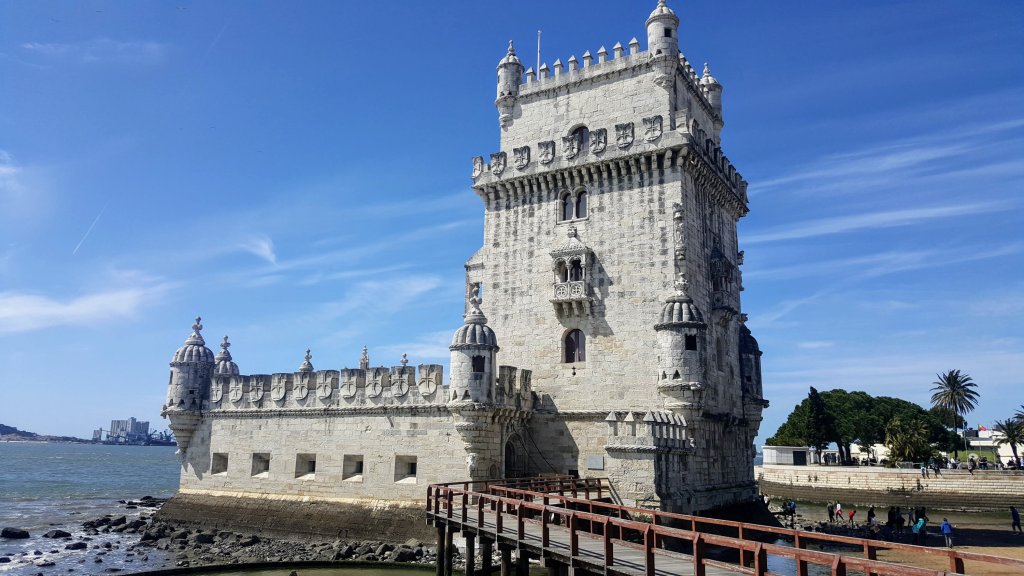
When you finally reach Belém there’s lots to see, from the iconic Torre de Belém guarding the mouth of the river to the massive Jerónimos monastery which was built to celebrate Vasco de Gama’s discovery of India – the spices he brought back were so valuable they more than paid for the building work. There are also lots of places to eat, mostly clustered along the main street – always a good thing in my book. Obviously, finish off with one of those famous custard tarts, ‘pastel de nata’, you’ve earned it if you walked this far. I recommend taking the tram back to the city!
The Torre de Belém, looking very much like a giant chess piece.
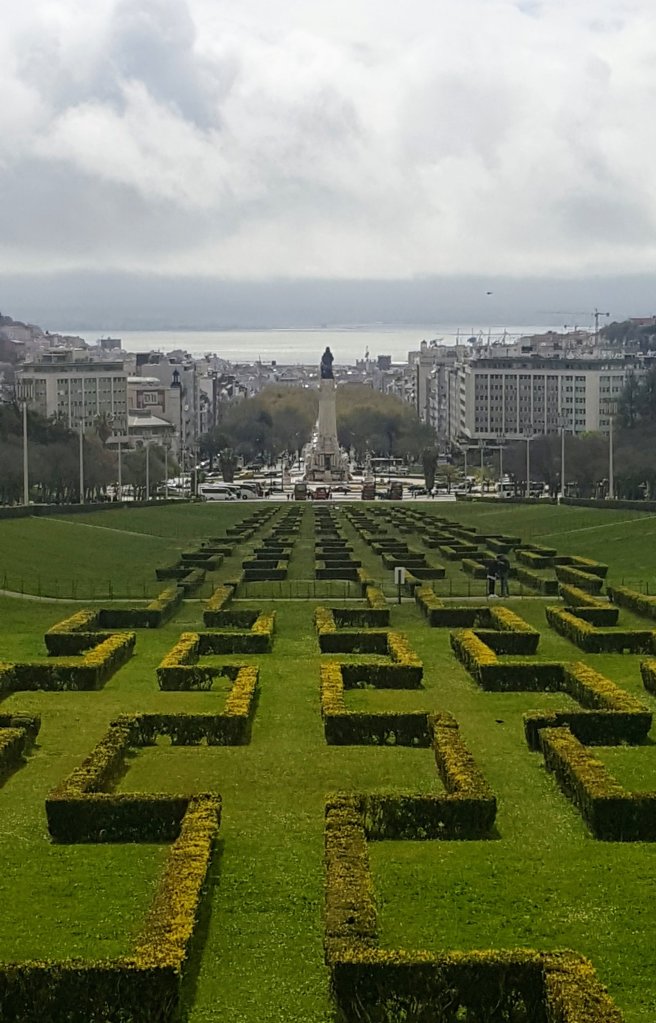
Our final walk took us north of the city centre. Uphill again I’m afraid along the regal Avenida de Liberdade which was modelled on the Champs Elysées, to the Parque Eduardo VII which has great views back through the city to the river. It was named after the British king, who visited in 1903. Then heading west through the suburb of Rato, where Mãe d’Água (Mother of Water) marks the end of the aqueduct that supplies the city with water.
View from the park to the river.
Our last stop, the Príncipe Real district, is known as being a bit arty, beloved of artists and designers and home of the gay scene. It’s full of interesting galleries and boutiques and cute little restaurants. On a glorious April day it was busy with locals out and about, browsing the shops and meeting for drinks. The atmosphere here is great. We were sitting outside a bar watching the world go by when Tony noticed the waiter struggling with a barrel. He got up to help, being an obliging kind of guy (sometimes). A few minutes later, the waiter came out with two glasses of wine on the house. That wouldn’t happen in Paris or London!
Free drink = big smile.
A big food tip – book a table for dinner at BA Wine Bar in the Bairro Alto. The concept is ‘keep it simple’, just local wines, cheeses, meats, tinned fish. Yes, tins of fish or ‘conservos’ are a gourmet treat here. We’re not talking John West, this is high quality. Take your time and enjoy – the owners love to talk about food and wine so they will recommend combinations. It a tiny place with about 5 tables, so if you don’t book you’ll be turned away. While we were there, a steady stream of people peered hopefully around the door and then went away disappointed. Meanwhile, we happily coiffed our wine and munched our fish. Smug is definitely the word.
Bar tip, well if you’re a lover of port like I am, you’re in for a treat at Tábuas Porto Wine Tavern in Baixa. The lovely waitress was actually from Porto and encouraged us to get a boat along the Douro River to do some tastings – it’s on the list along with Rick’s place.
In port heaven…
We stayed at the Hotel Avenida Palace, built in 1892, and absolutely loved the Belle Epoque atmosphere. The location, at the bottom end of the Avenida de Liberdade, is brilliant – slap bang in the middle of everything. Our room was huge, with a separate sitting area and an amazing sculpture sitting on the window ledge outside.
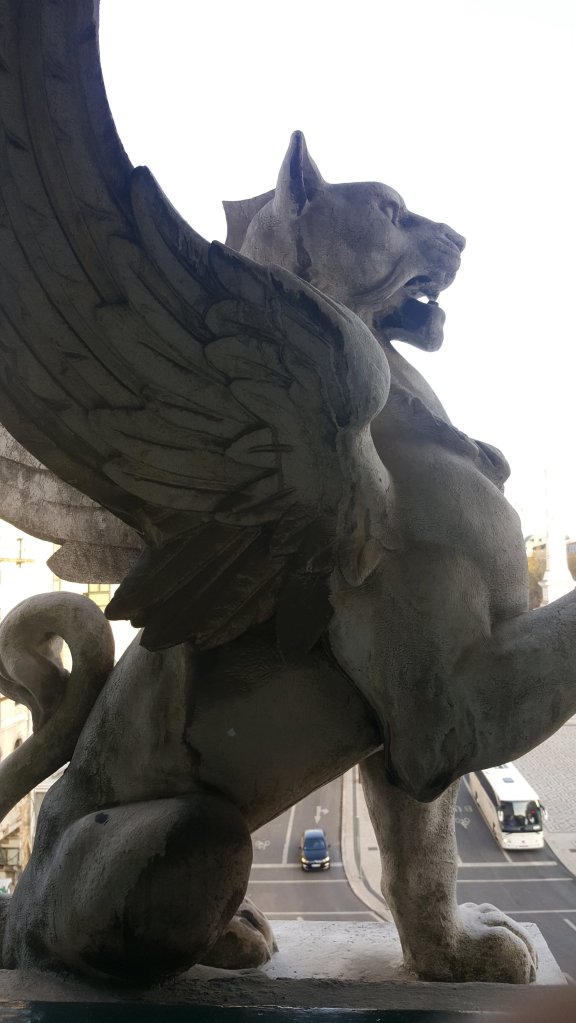
I’m not quite sure what he is. But I love him!
Every day, we’d come back from our wonderings to find gifts left in our room, from chocolates and strawberries to rain hats and shopping bags. I still keep my rain hat in my handbag much to Tony’s amusement. Well, I was a Brownie long ago and I still like to be prepared!
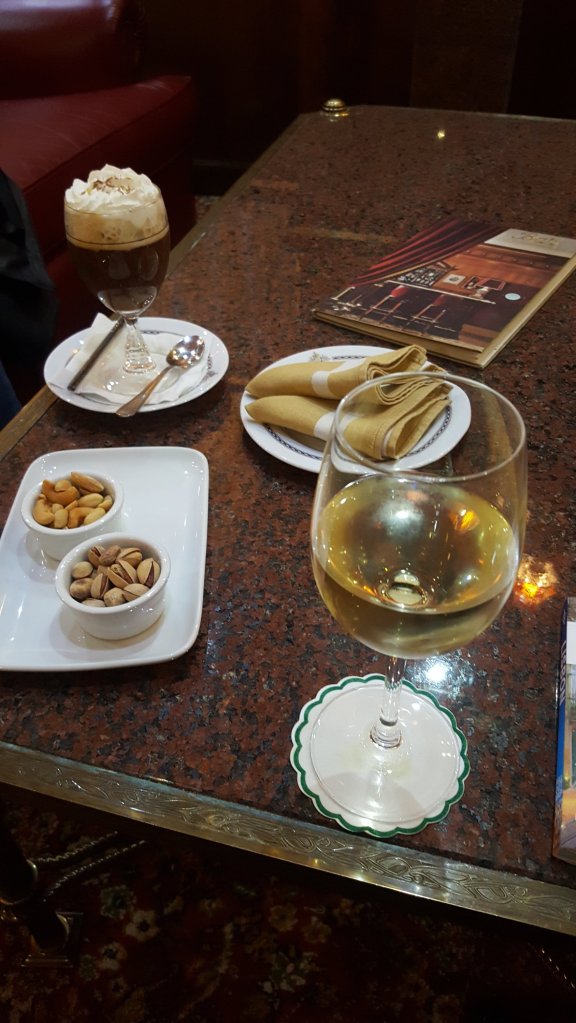
In the hotel bar. Why do you never get free snacks with your drinks in the UK? It should be compulsary!
So, have I persuaded you to go? I’ve certainly whetted my own appetite for more Portuguese adventures, when we’re allowed to travel again…
While we’re all in this strange situation of being confined to a small geographical area, I’m going to indulge myself every week by thinking, ‘Where do I want to revisit today?’ And then writing about it.
It will be a great test of my memory, and almost as good as actually going there in the first place. No, that’s rubbish, it won’t be anything like as good. But it will have to do. So, off to Bruges we go…
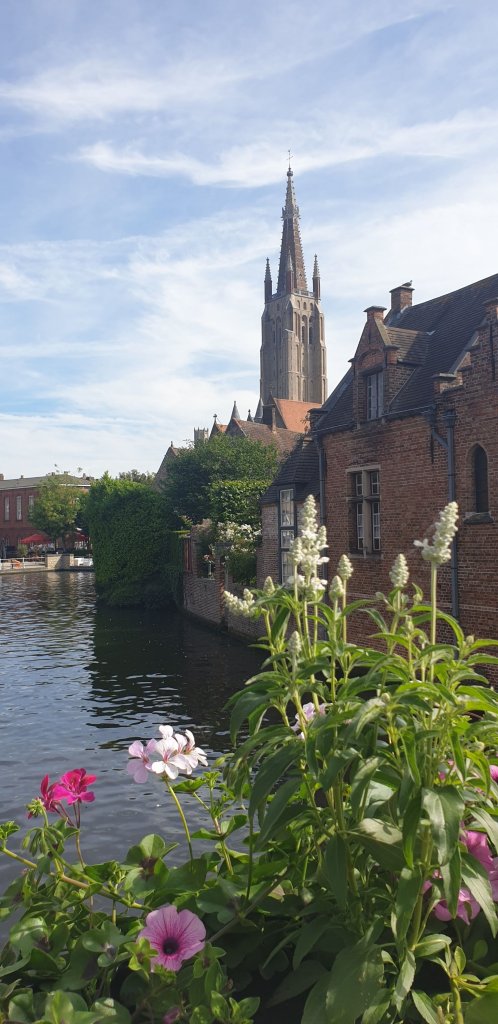
The classic view of Bruges from the Rozenhoedkaai
Bruges has everything going for it. It’s close by if you live in the UK, it’s amazingly pretty, it’s compact and walkable, it specialises in beer and chocolate, it has some great bars and restaurants, the list goes on and on. It’s my parents’ absolute favourite place, pushing York into second position.
Looking along the Spiegelrei to Jan Van Eykplein and the Poortersloge.
We used to laugh at them, ‘Oh, Bruges again is it?’ But after visiting three times and liking it more and more, I can now see us having many more happy visits. I’m officially turning into my Mum!
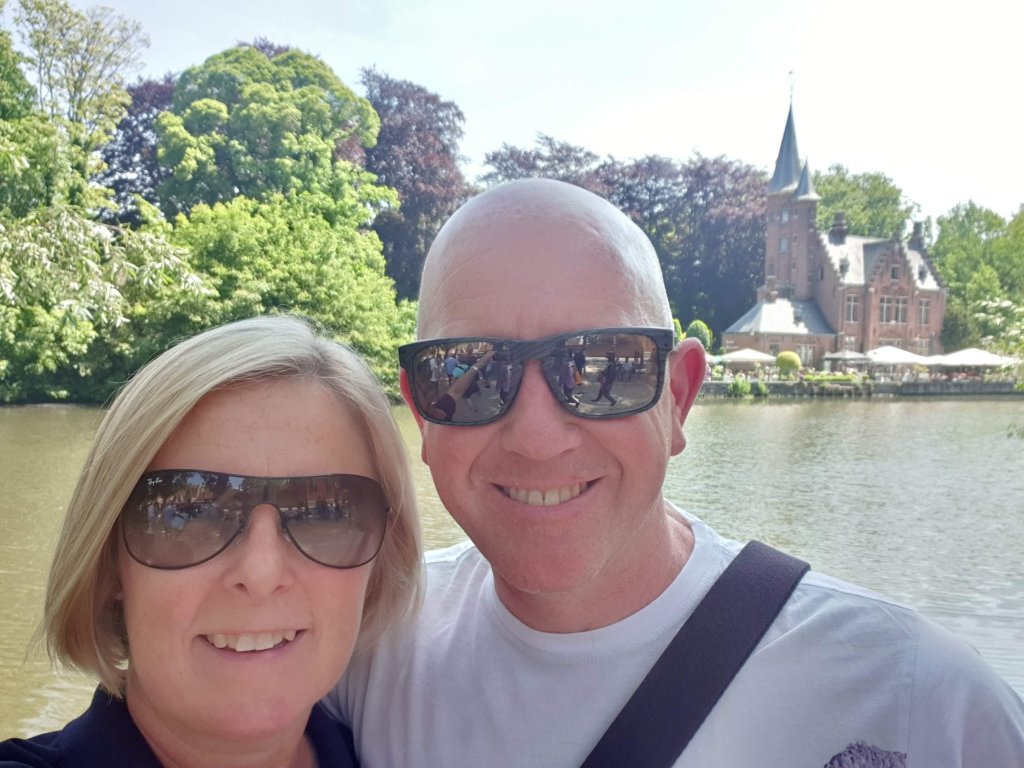
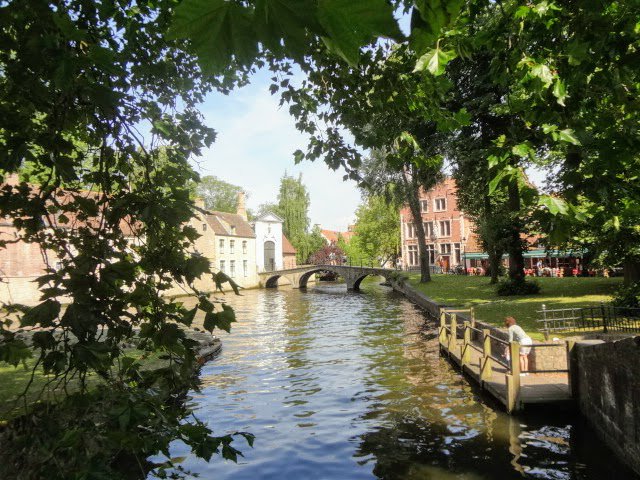
Enjoying life at the Minnewater.
Bruges is often referred to as ‘the Venice of the North’ due to its network of canals. Forget that – they bear no resemblance to one another. Venice is grand and dramatic, like an operatic performance. Bruges is more human in scale, like wandering around a fairytale.
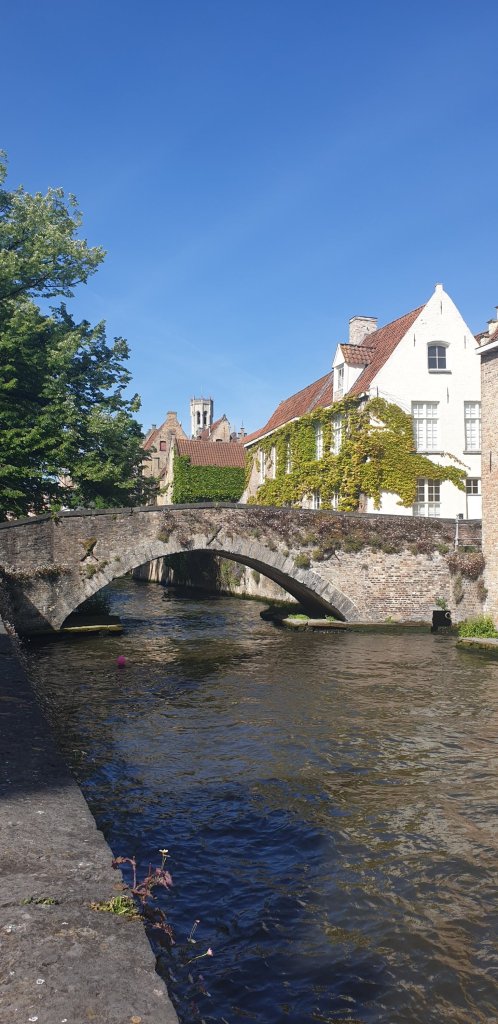
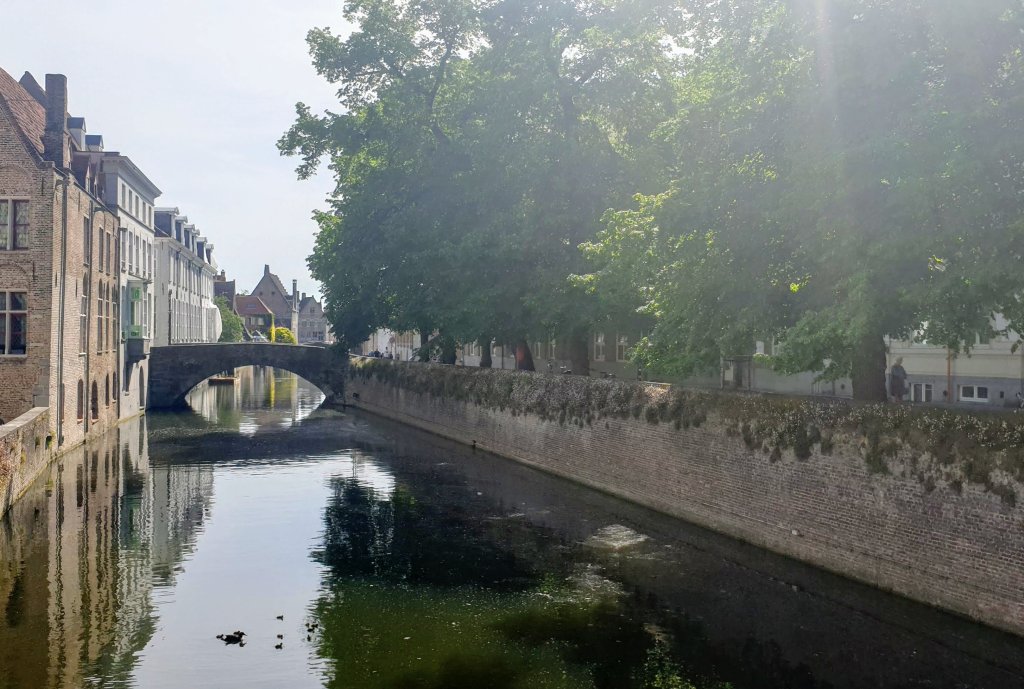
A tranquil corner of the city, complete with canal, of course.
There’s no doubt that Bruges is popular, and you will inevitably find crowds on the two main squares, the Markt and the Burg.
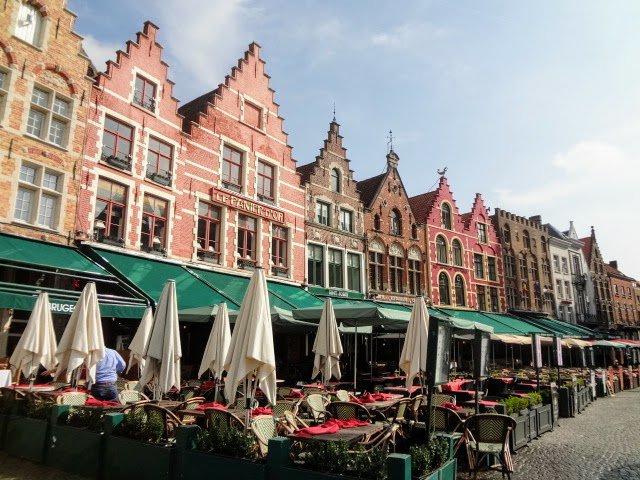
The Markt, I seem to have captured it at a quiet time. It does get busy, don’t be fooled!
But I always find that most tourists don’t actually walk very far, so you can experience the town in total tranquility if you explore the back streets. Bruges is totally flat, so you don’t even need to exert yourself very much.
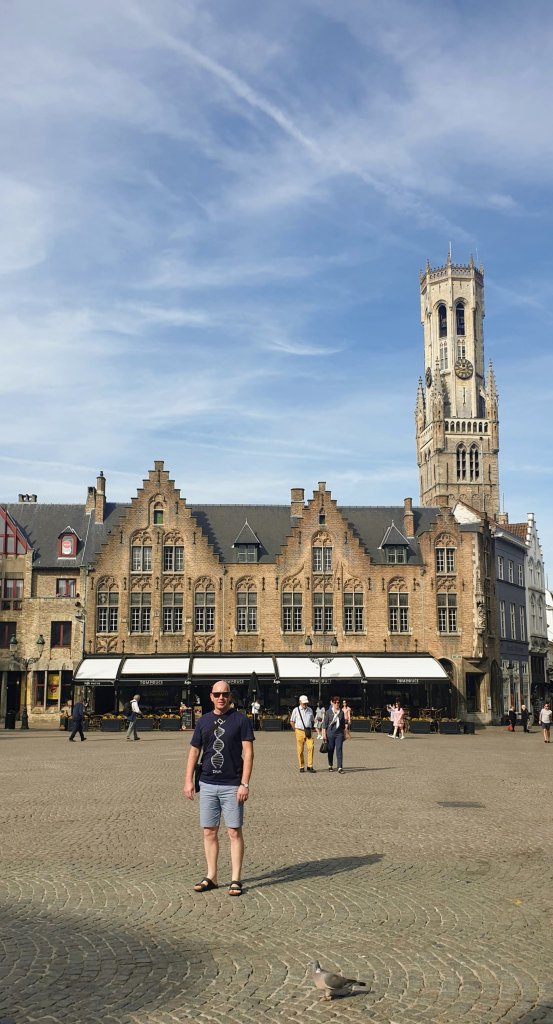
Looks like we crossed the Burg square at a quiet time too. I can’t guarantee it will always look like this!
Bruges was once one of the world’s great commercial cities, with a golden age the lasted from the 12th to the 15th century. But from 1500 the ‘Golden Inlet’ connecting it to the sea silted up, leaving Bruges stranded. Happily for all of us, this resulted in the city being perfectly preserved in all its medieval glory.
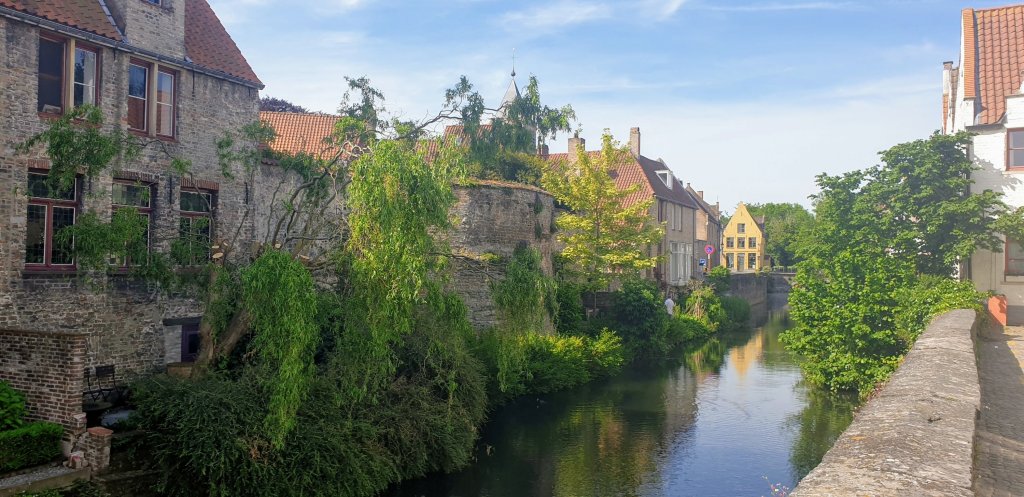
There isn’t really a bad view of this place.
One of my favourite authors, Dorothy Dunnett, set her ‘House of Niccolo’ series in Bruges in the 1460s, when the city was at its zenith, trading goods from all around the world, including wool from the UK. But it was only rediscovered in the late 1800s, becoming one of Europe’s first tourist destinations. Now, the city of 20,000 inhabitants gets around 9 million visitors each year. Or it did, should I say! Like everywhere else, it will be eerily quiet right now.
Avoiding the hordes – pretty easy really even in June.
For a more modern (and not entirely positive) take on the city, the 2008 black comedy ‘In Bruges’ is about two hitmen hiding out in Bruges. Colin Farrell’s Ray does not like the city at all. ‘That’s what hell is, the rest of eternity spent in effing Bruges.’ I would disagree. You can judge for yourself.
Does this look like purgatory to you?
Where to stay in Bruges? I have two recommendations. The Hotel Navarra is a 17th century mansion 5 minutes walk northwest of the Markt. It’s a beautiful building with easily accessible parking and a lively bar.
Just another dreamy view…
The Grand Hotel Casselbergh is a few minutes stroll eastwards from the Burg. Three 18th century residences have been joined together to become one great hotel. Parking is a bit tricky as you drive into a car lift at street level and get transported down below the building. Luckily we had my Mini so it wasn’t too stressful for Tony (I held my breath though). Some of the rooms have lovely canal views, which is what you want when in Bruges…
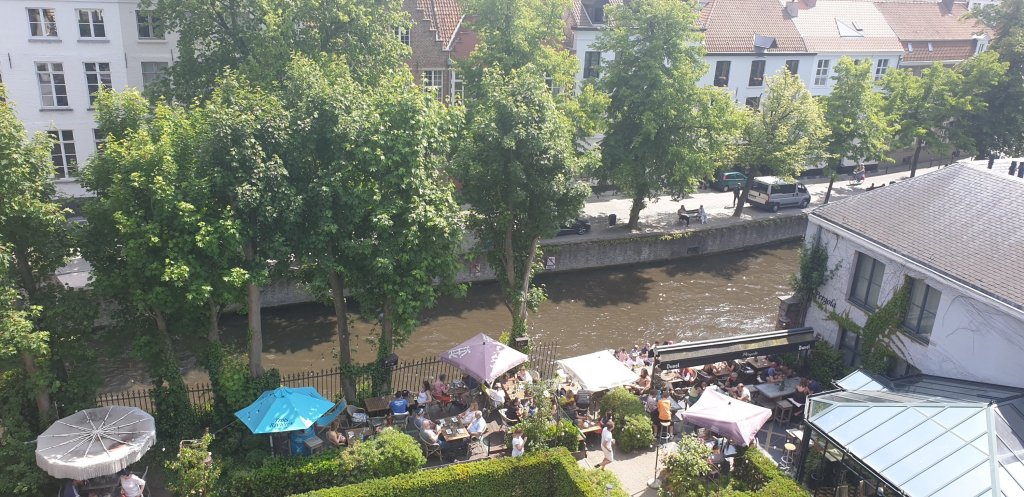
The view from our window at the Grand Hotel Casselbergh.
What to eat in Bruges? The moules-frites are legendary, but unfortunately no longer something I can look forward to. I’ve been violently ill after eating mussels, not just once but several times. I was so upset at the thought of having to give them up that I kept on trying but I’ve had to bow to the inevitable. Thank goodness I’m not allergic to the lovely crispy chips with mayo!
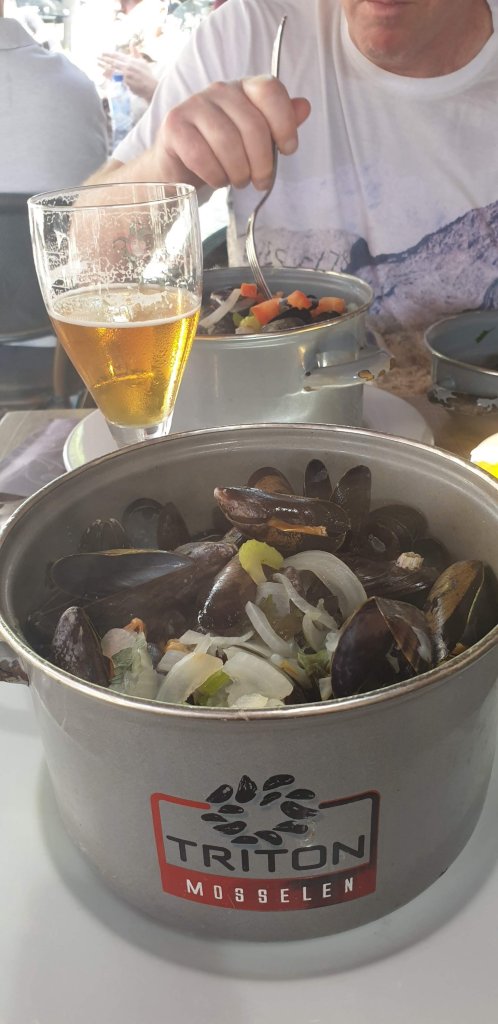
Probably my very last pot of mussels ever (sob!).
Finally, where to have a drink and watch the world go by? My personal favourite spots are Punta Est on the Predikherenrei or anywhere on the Eiermarkt – no eggs for sale nowadays but great for people watching. But every time we go, we find little bars tucked away down side streets. ‘We’ll have to try there next time…’
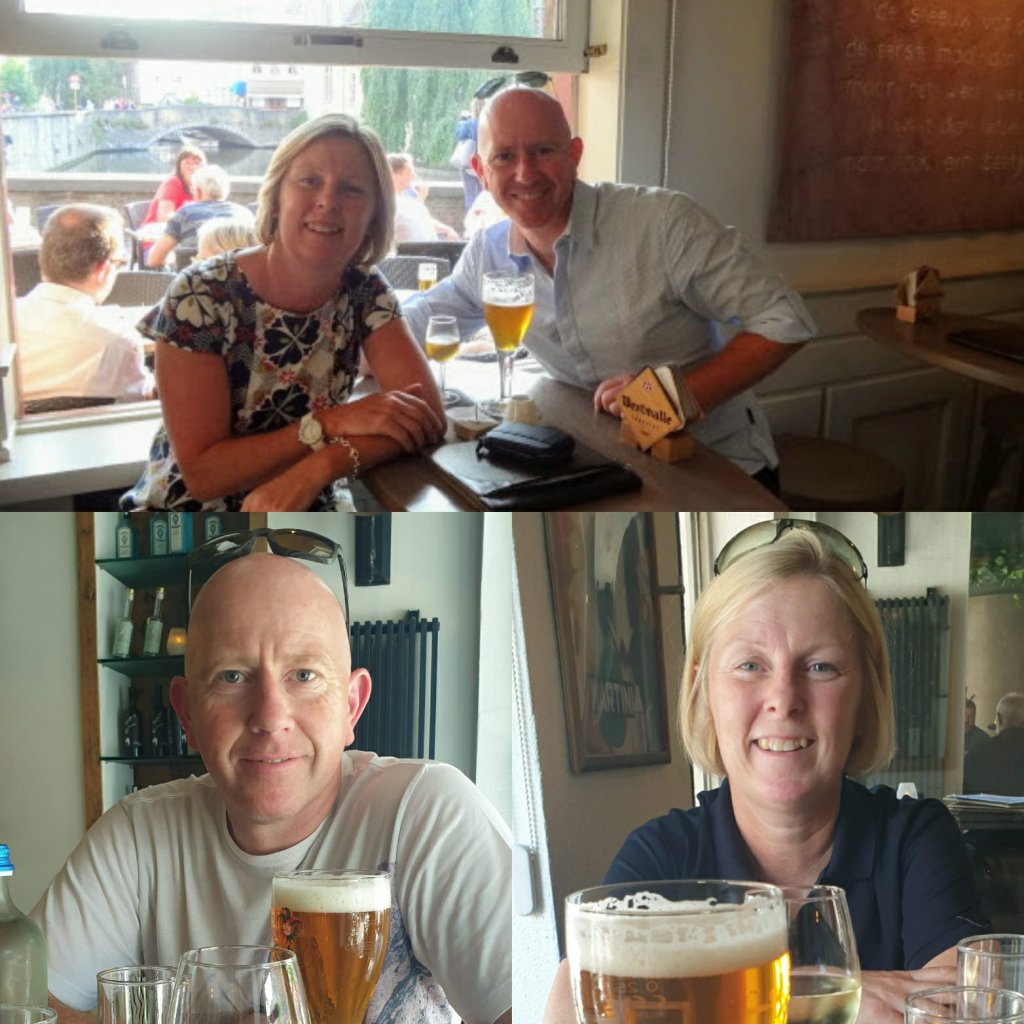
At Punta Est in 2014 and 2019. Next trip…
Well, this has actually cheered me up a bit during confinement (I’m an outdoors person). Hopefully it has you too. Where next, I wonder?
It’s going to be tricky writing a travel blog when travel in or out of the country is banned right now. A chance to talk about what’s close at hand? You bet! This is my opportunity to show that I can still be a great travel blogger without going very far.
Adventure is nearby…
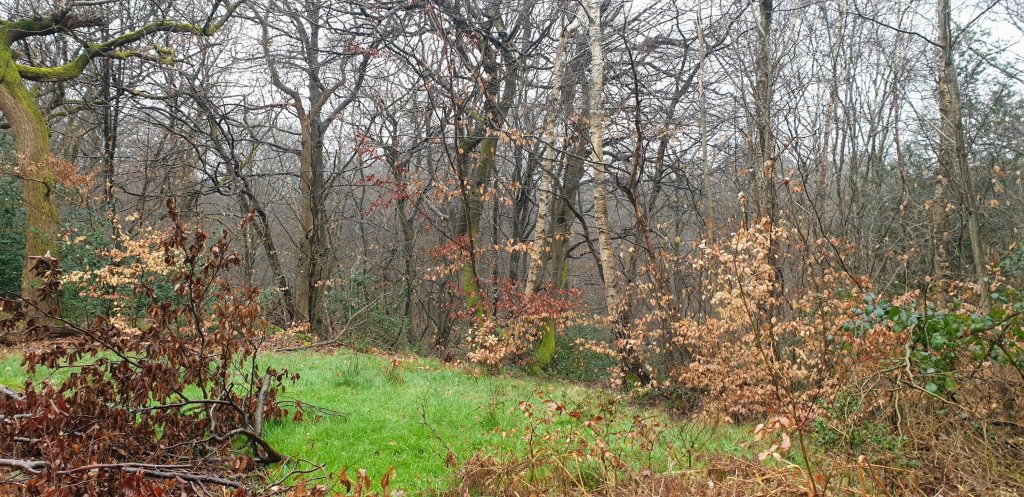
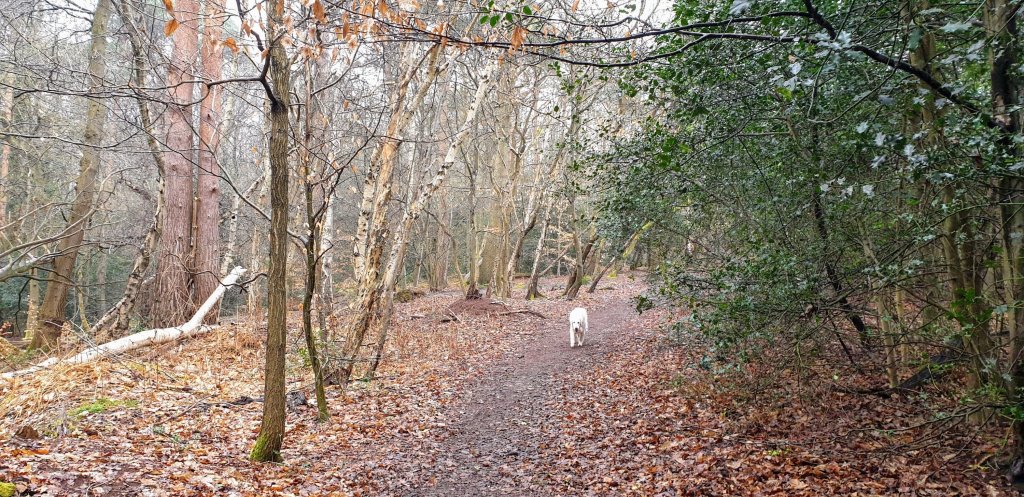
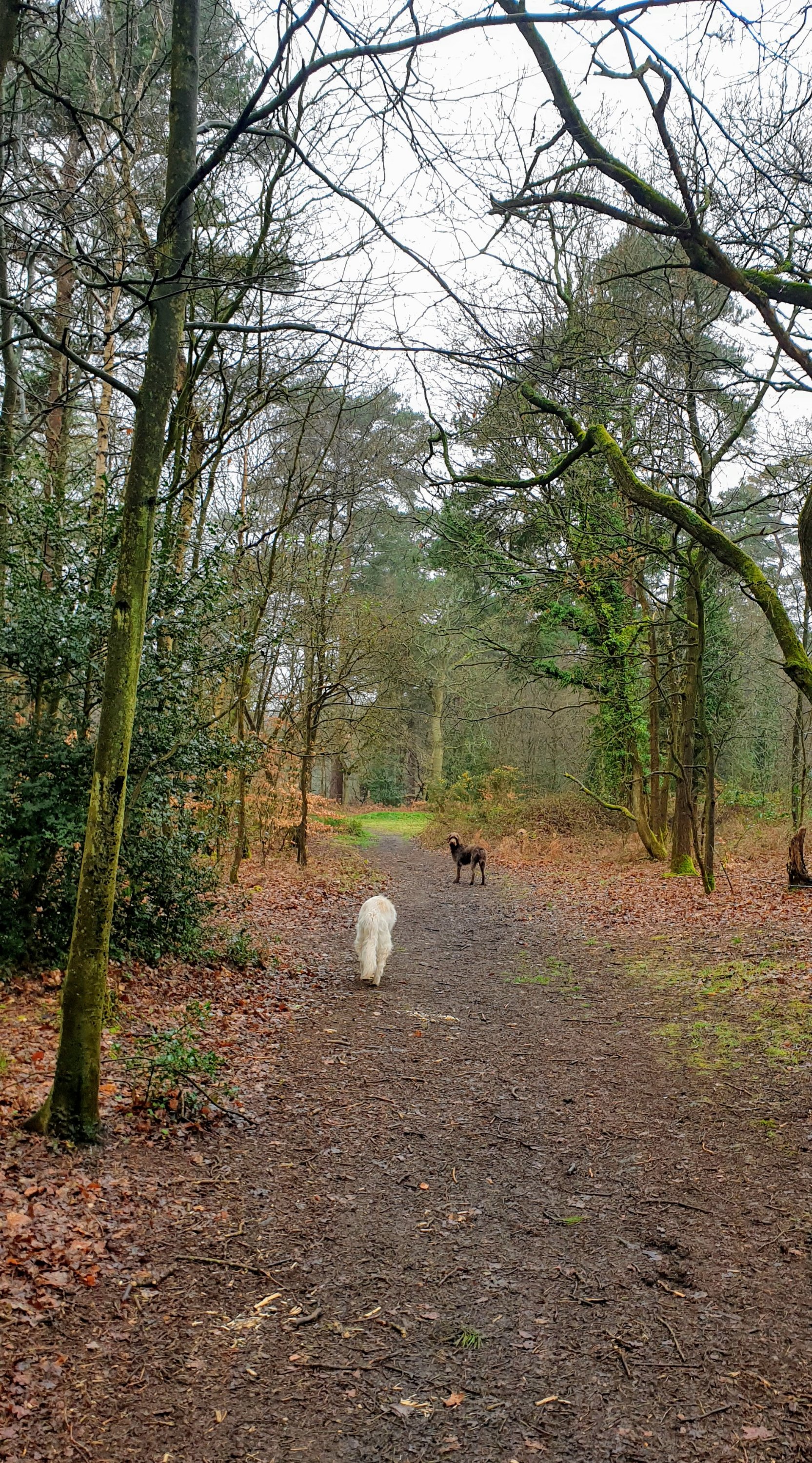
In today’s blog, I’m discovering one of the most ancient tracts of woodland in the UK, the Burnham Beeches. It’s approximately 5 miles from home, and I’ve brought my trusty fellow adventurers, Henry and Lizzie, with me to check it out.
Spot the dog. Lizzie in her natural habitat.
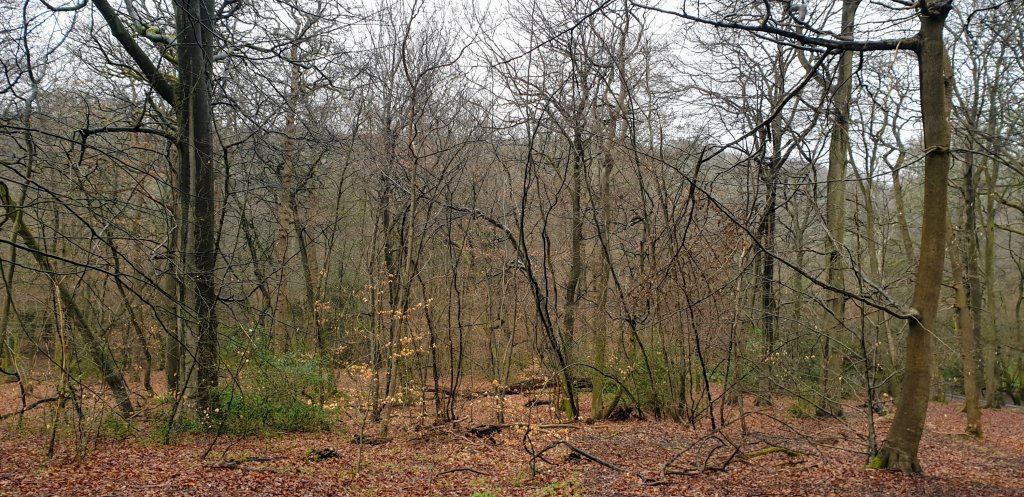
The Burnham Beeches are a remnant of a vast forest that once covered almost the whole of Buckinghamshire. The woods are situated just north of the village of Burnham, which got a mention in the Domesday Book in 1086, and the average age of the trees is well over 400 years old. Wow, they would have seen out a few pandemics then.
Henry is suitably impressed by some very old trees.
Some of the trees at Burnham are unusual because of the pollarding done to stop them from getting too tall, encouraging fresh growth closer to the ground. It helps the trees to live longer. Pollard is my Mum’s maiden name, so presumably we had some expertise in this practice at some point in time. Not any more, I can assure you.
This is how it looks when you’re pollarded.
The Burnham Beeches may look vaguely familiar to you if you’re a film lover. Pinewood Studios are just down the road, and this area has been used in many blockbusters over the years.
Seen these trees before?
Kevin Costner strode through these woods (not the real Sherwood Forest) in Robin Hood, Prince of Thieves. The brilliant Princess Bride was filmed here, as were some of the scenes from various Harry Potter films.
Sorry no superstars around today. Not Daniel Radcliffe or Cary Elwes, just Henry.
Filming is limited, as it’s so popular. I’m glad to hear that there are some things that can’t be computer generated. Does that mean I’m old?
Anyone in there?
This area has always been famous, or perhaps infamous. Back in the day it was a hang-out for dangerous criminals. On the route between London, Oxford and Bath, there were rich pickings for highwaymen. You entered these woods at your peril. Now though, the only people you’ll meet are dog walkers. It’s not nearly so perilous.
Nowadays, it’s simply a very peaceful and lovely place to take a long walk. In normal circumstances, there’s a cafe near the car park, and several nearby pubs if you need to take a break and have some liquid refreshment. At the moment, you’ll have to take a flask.
Crossing the Nile. You may have to use your imagination.
For those of us who are missing foreign travel, some creative place names can help you to pretend you’re somewhere more exotic than Slough. In the Burnham Beeches, you can cross the River Nile into Egypt Woods. Quite how the names came about is lost in the mists of time, but I like it!
It’s a cold and damp March day when I start writing this. Yes, again. So I decided to write about one of my favourite places, Vietnam, in a bid to transport myself somewhere hot and vibrant. Hopefully it will work! No chance of actually getting on a plane right now…
Take me here please…now.
Everyone knows about Vietnam for all the wrong reasons, the long and bitter war from 1955 to 1975 has appeared on our screens so many times, always from a Hollywood perspective, often showing the Vietnamese people in a far from complimentary light. The country really only opened up to travellers in 1997, but since then visitors have been discovering the gorgeous scenery, temples, beaches and food, along with the friendly and welcoming locals. It’s not like the war films!
OK, so there is some war stuff if you like that kind of thing. Tony obviously does!
Tourism is growing fast now in Vietnam. When I visited in 2008 there were just over 4 million overseas visitors. In 2019 the number had increased to 18 million. So if you want to go, do it soon. After the coronavirus has subsided they will probably really appreciate visitors.
I’m not sure that the beaches will be this quiet now. In Hoi An.
We started our trip up in the north, flying in to the capital, Hanoi. As everyone says, the first thing you notice is the traffic, with scooters whizzing everywhere, horns blaring, and seemingly no chance whatsoever of being able to cross the road. It’s scary, but you just have to walk out into it, and somehow, as if by magic, the traffic parts around you. Miraculously, you don’t die a violent death. There are some more tranquil parts of town though. Walking around the gorgeous grounds of the Temple of Literature, built as a university way back in 1070, you feel like you’ve gone back in time.
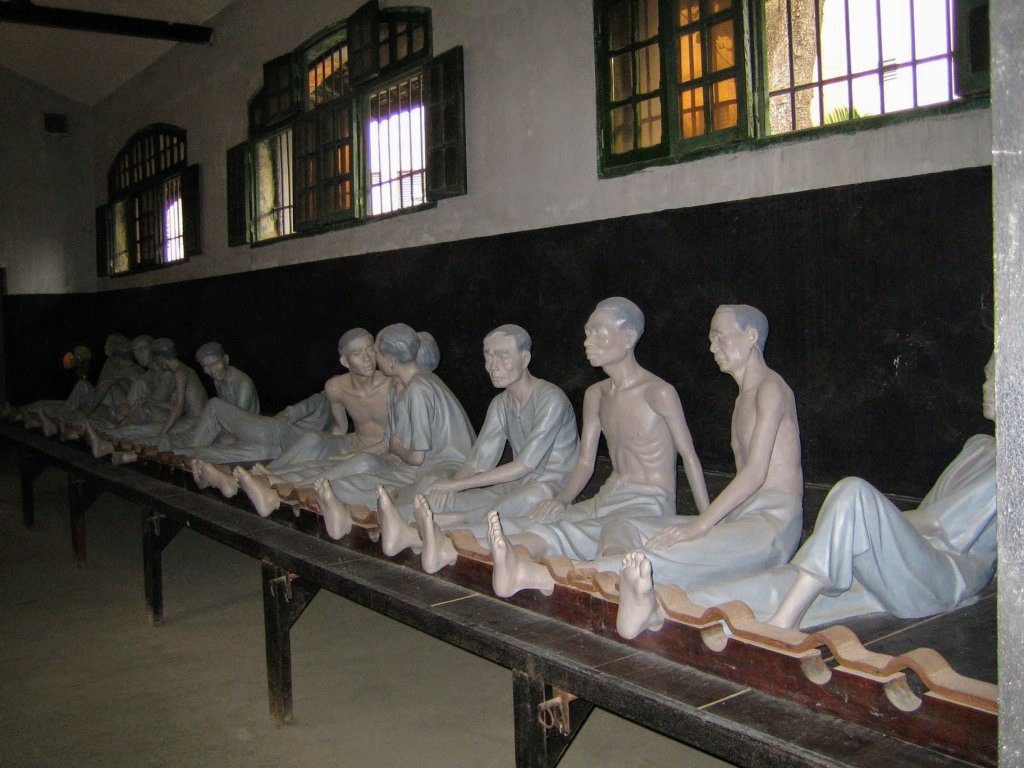
Equally quiet, but in a more sinister way, is the notorious Hòa Lò prison, also known as the Hanoi Hilton. Originally used by the French colonists for political prisoners, then by the North Vietnamese for POWs, it’s a grim old place. Some extreme torture methods were used here over the years and you can feel that in the creepy atmosphere as you walk around.
Reconstruction showing the overcrowding of the prison, built to hold 600 but at one point containing 2000 men.
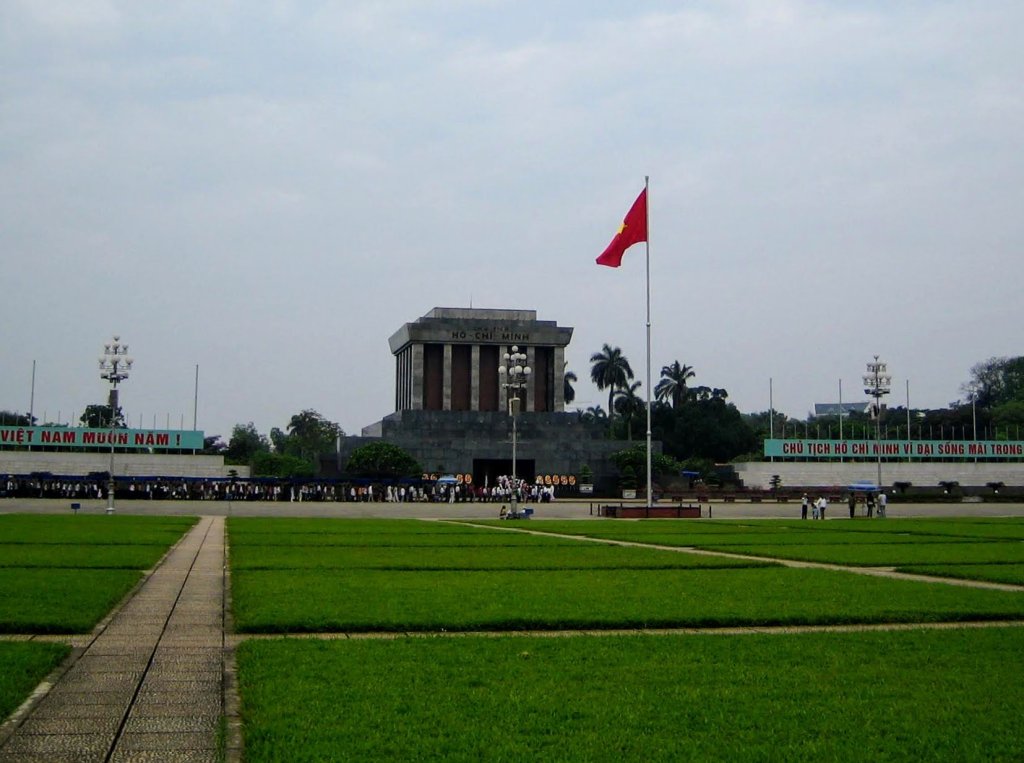
One thing we didn’t see whilst in Hanoi was Ho Chi Min’s mausoleum. The founder of Vietnam’s nationalist movement is a hero to many so the queues were huge. He died of heart failure back in 1972, and I’m not sure gawking at a body that was embalmed 50 years ago is really my thing…so we gave it a miss.
Huge queues wait to pay their respects to ‘Uncle Ho’.
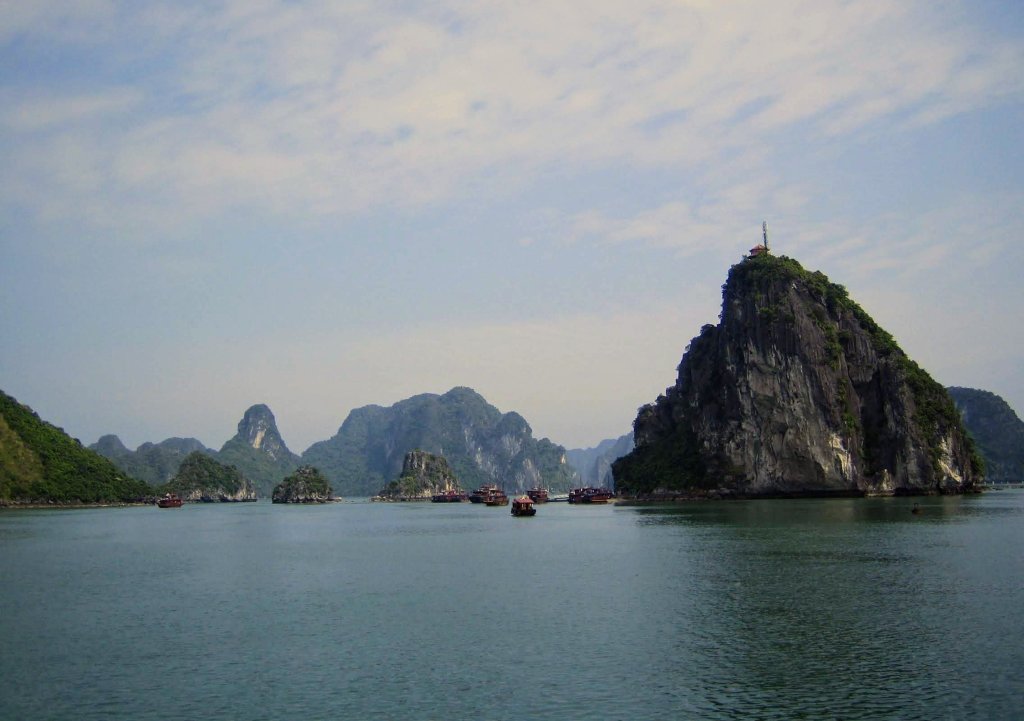
After a few days in Hanoi, we had booked a private transfer to take us up to Halong Bay, where we were boarding an old junk for a couple of days cruising around the emerald green waters of the UNESCO heritage area. Now, when I say cruising I don’t mean being crammed in with 2000 other people. My husband vetoed that kind of trip many years ago. There were around 20 of us on the boat. It was select. Tony approved.
Our ‘cruise ship’ in Halong Bay.
Halong Bay is beautiful. Limestone crags tower above the green water. There are islands, bays, caves, floating villages all waiting to be explored. Unfortunately, there are now also lots of tourists, so choose your boat carefully. Paying more may be preferable to ending up on an all night karaoke kind of tour. Or maybe you like that kind of thing?
Every view of Halong Bay is spectacular!
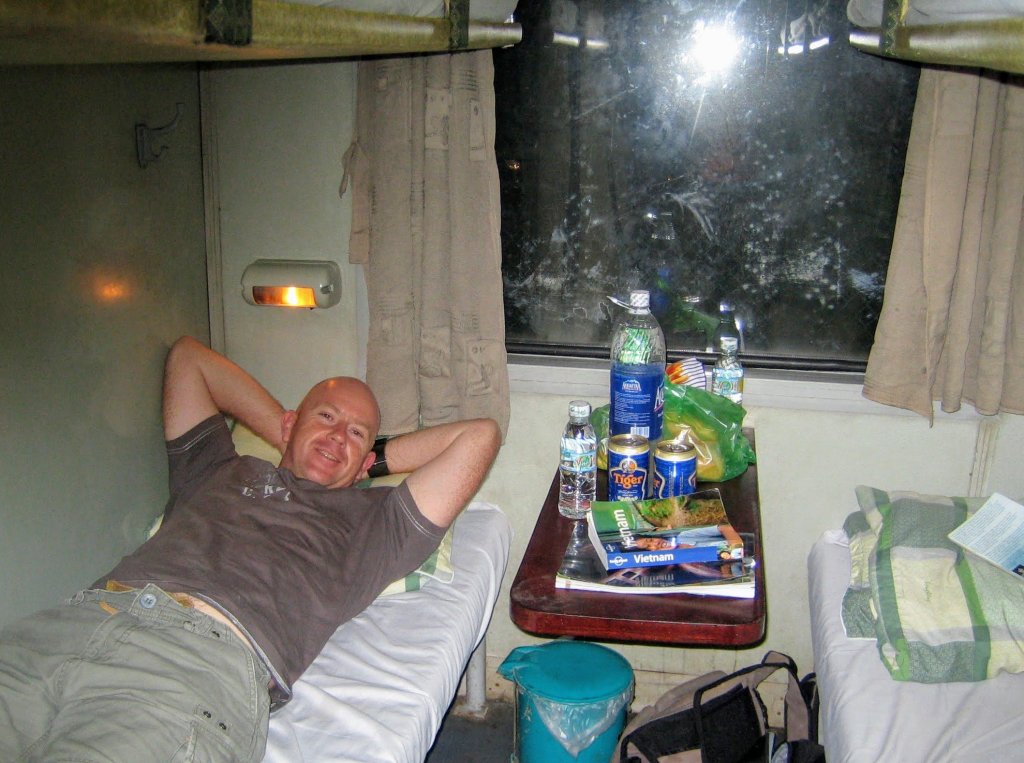
To get from the north of the country to the middle, we headed back to Hanoi and boarded the Reunification Express for an overnight journey to Hué. Originally built by the French but devastated during the war, the rail link between North and South became a symbol of the two halves of the country coming back together, and so a mammoth effort was made to get the line back in action after the war ended – over 1300 bridges and 150 stations had to be brought back into action. Unfortunately it’s not a luxury train, although I had reserved a whole sleeping compartment so we didn’t have to put up with any snoring or other dubious noises from complete strangers.
Not exactly flash accommodation on the Reunification Express, but hey it was an adventure!
We were lucky, we managed to sleep quite well after happily consuming the beer and crisps we’d bought at the station (no dining car) while watching Vietnam slide by. Friends of ours who took the same train woke to find a rat on the table rifling through their bags. But I won’t talk about the toilet. Tony refused to use it, let’s just say that.
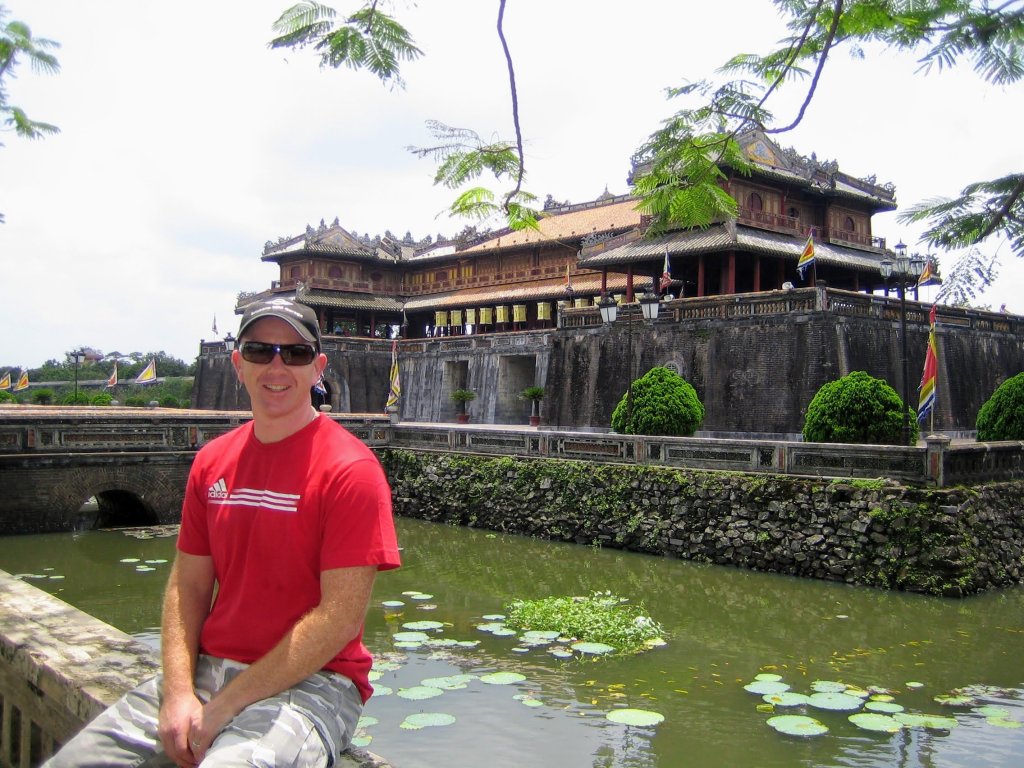
The citadel in Hué.
We jumped off the train in Hué, the old imperial capital. Located on the romantically named Perfume River, the city has a huge 19th century citadel, complete with moat, temples, palaces, gardens. It’s an evocative place to wander around.
The moat around the imperial citadel.
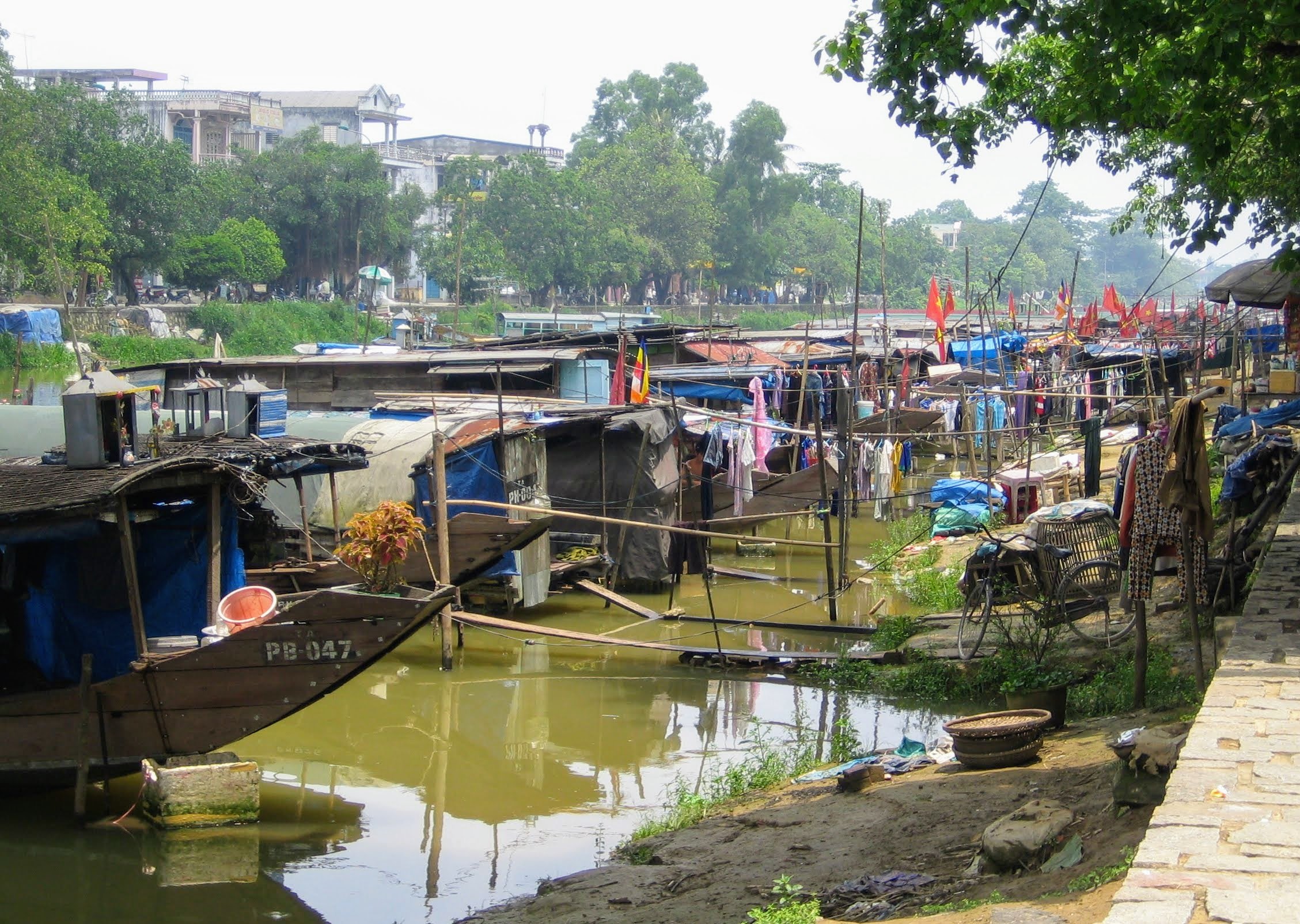
We stayed at the Hotel Saigon Morin, which was glorious luxury after our night on the train. Our room was vast, and breakfast out in the internal courtyard was superb. More about food later. Hué is a city of contrasts, with riverside traders and restaurants specialising in ‘royal’ cuisine. And if you eat too much, or get lost, grab a ‘cyclo’ to take you home.
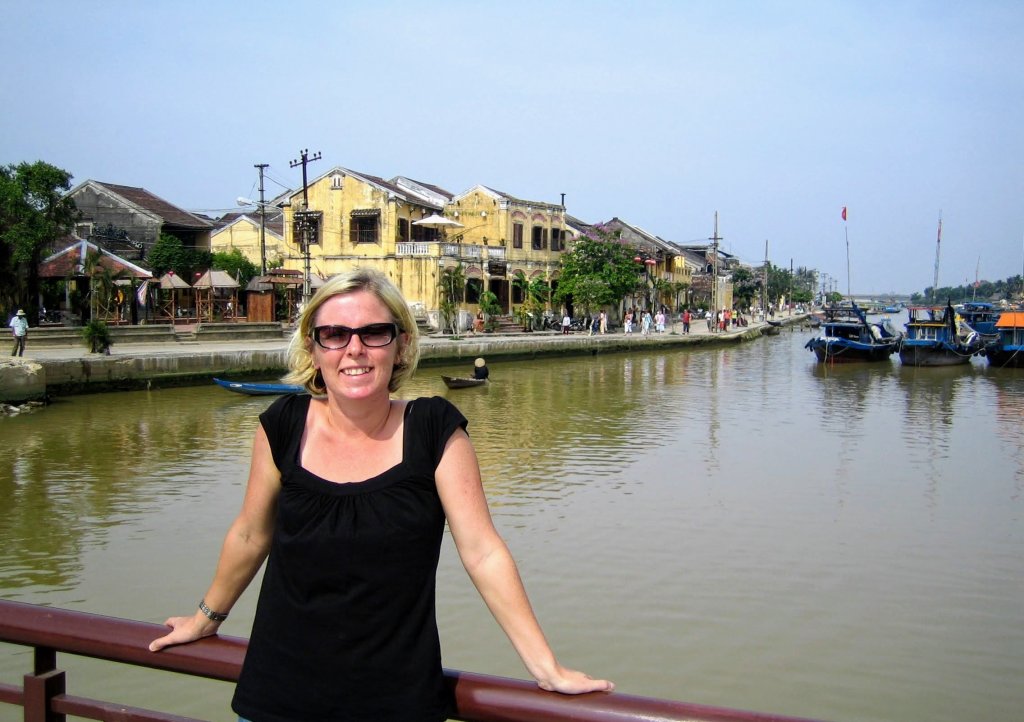
Hoi An was the next stop on our trek down the country. The town is famous for its tailors, who can copy any garment, in any fabric or colour. You know that favourite skirt of yours? Take it along and get three new ones in assorted fabrics in around 24 hours. For a bargain price too.
The lazy Thu Bôn river, which silted up in the 19th century, killing river trade and helping to preserve Hoi An from US bombing.
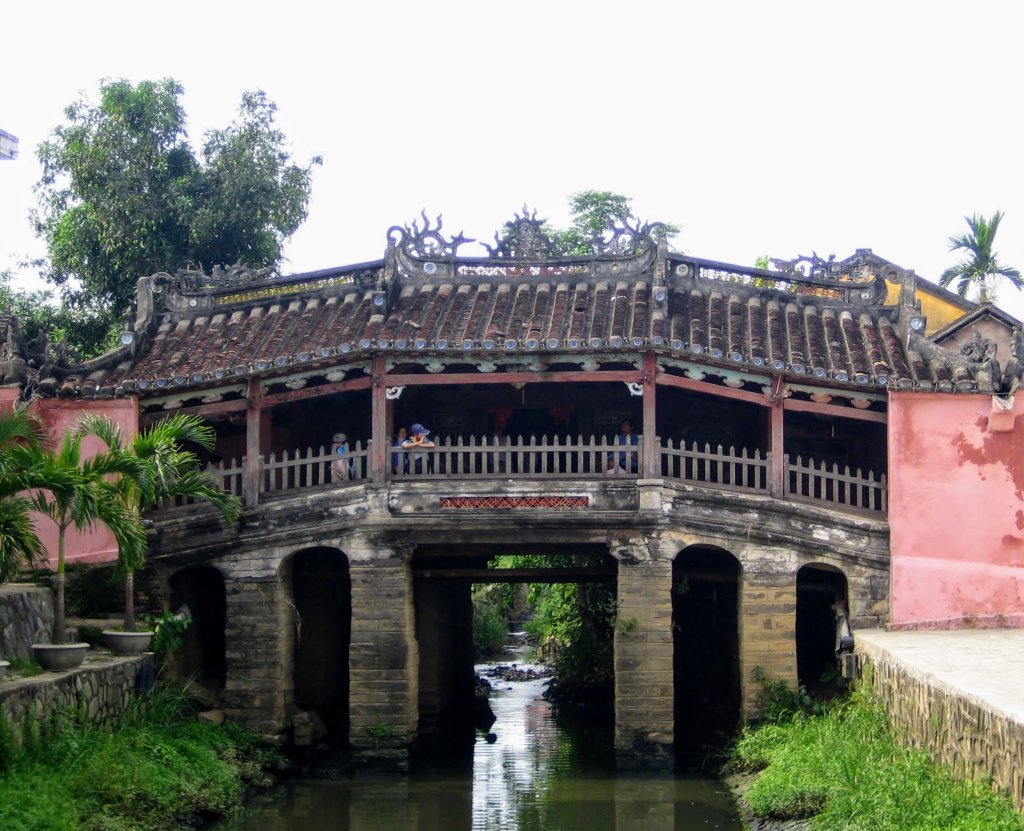
Hoi An was my favourite place in Vietnam. It’s charming, laid back, walkable, with great bars and restaurants. One thing you need to be aware of is that food just comes as and when it’s ready. Just dig in and share. It’s all delicious. A Hoi An speciality is Cao Lau noodles, made with water from local springs. Yum!
Amazing ancient architecture in Hoi An.
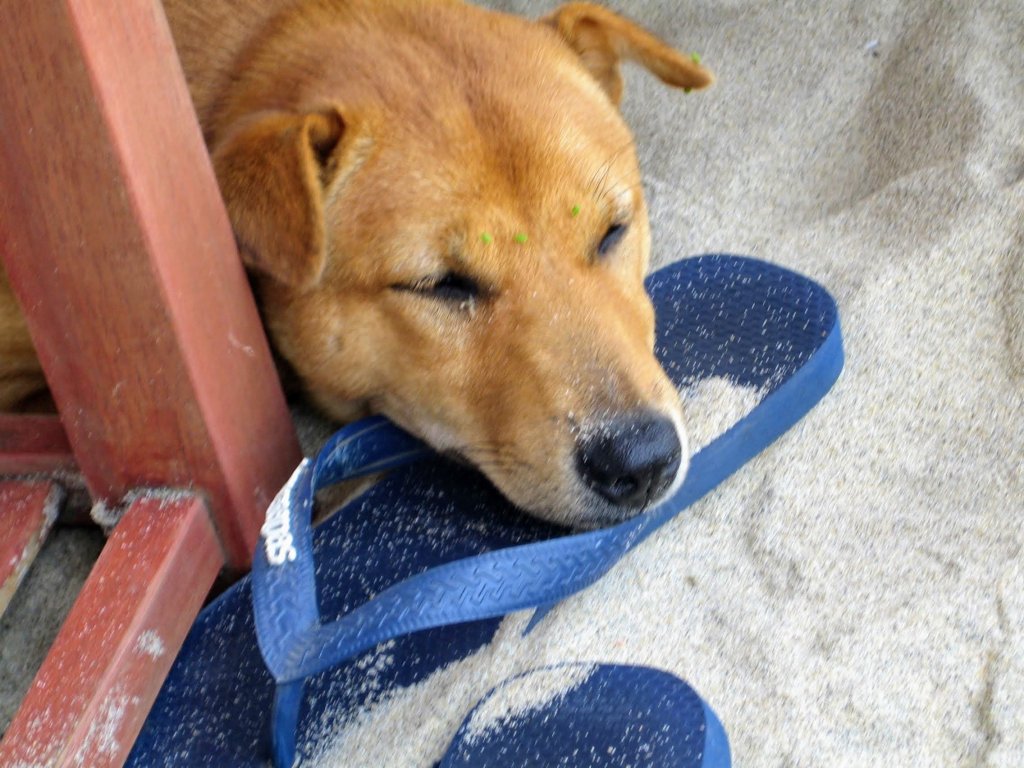
Again, we stayed in a fabulous hotel here, the Hoi An Riverside Resort, just on the outskirts of town but feeling like a rural retreat. And with a beach club too, so we had a very relaxing day by the sea. We usually make new canine friends wherever we go, and this was no exception. A stray dog decided to hang out with us and look after Tony’s flip flops.
Our lovely colonial style hotel in Hoi An. How could you not relax here?
I think it’s necessary here to warn fellow dog owners that the Vietnamese consume (yes, eat) around 3 million dogs every year. It can be quite a shock to walk past a restaurant and see pictures of regal German Shepherds in the window. Avert your eyes! I haven’t eaten any meat for 30 years, I think cows and pigs are lovely animals, but this is on a different level – I share my home with dogs. Consider yourself warned.
A new furry friend at the beach club, Hoi An. Clever street dogs can spot a pushover a mile away.
Finally we arrived in Saigon, or Ho Chi Min City as it’s now called in homage to Uncle Ho. It’s a thriving metropolis with lots going on. The Independance Palace was the seat of the South Vietnamese authorities, and it’s here a tank came crashing through the gates in 1975 to signify the fall of Saigon to North Vietnam.
The Independance Palace in Ho Chi Minh City.
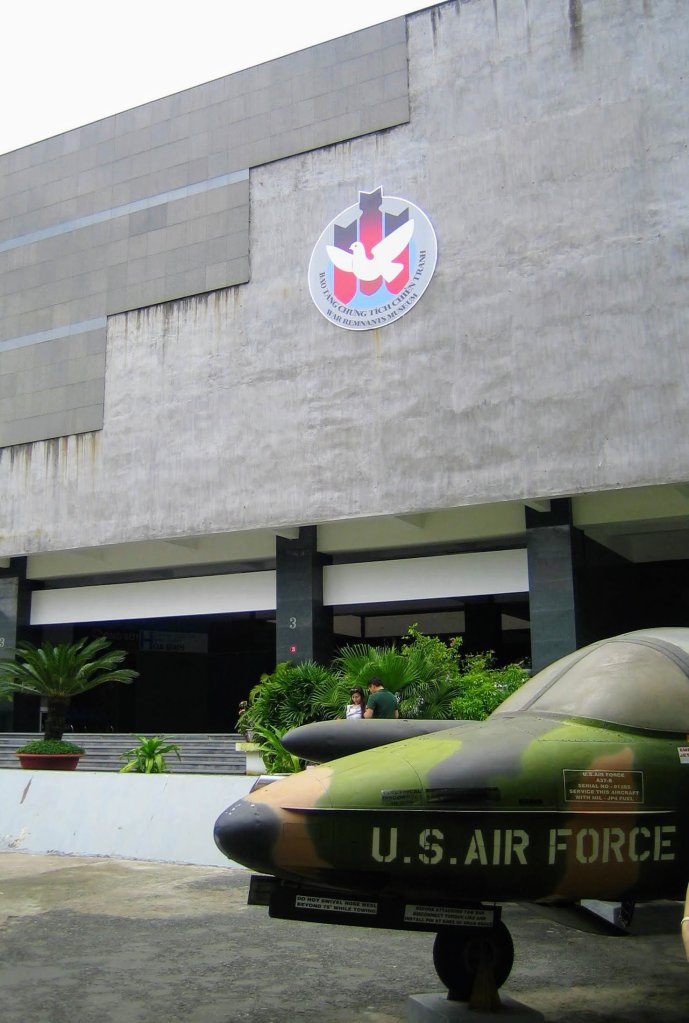
The other must-see site is the War Remnants Museum, previously known as the Exhibition House for Crimes of War and Aggression, until diplomatic relations with the US resumed in 1995, and the name was tactfully changed. I was genuinely moved to tears by some of the galleries. The Vietnam War, or American War as it’s known here of course, was horrific.
Outside the War Remnants Museum. It really makes you think.
Outside of the museum, I was shocked to see how many people on the streets of Saigon were missing limbs, a legacy of the land mines liberally sprinkled around Vietnam and neighbouring Cambodia by the US air force. Watching amputees getting around by skate board, and quite often begging for food, was a sobering reminder that the consequences of war can last for decades.
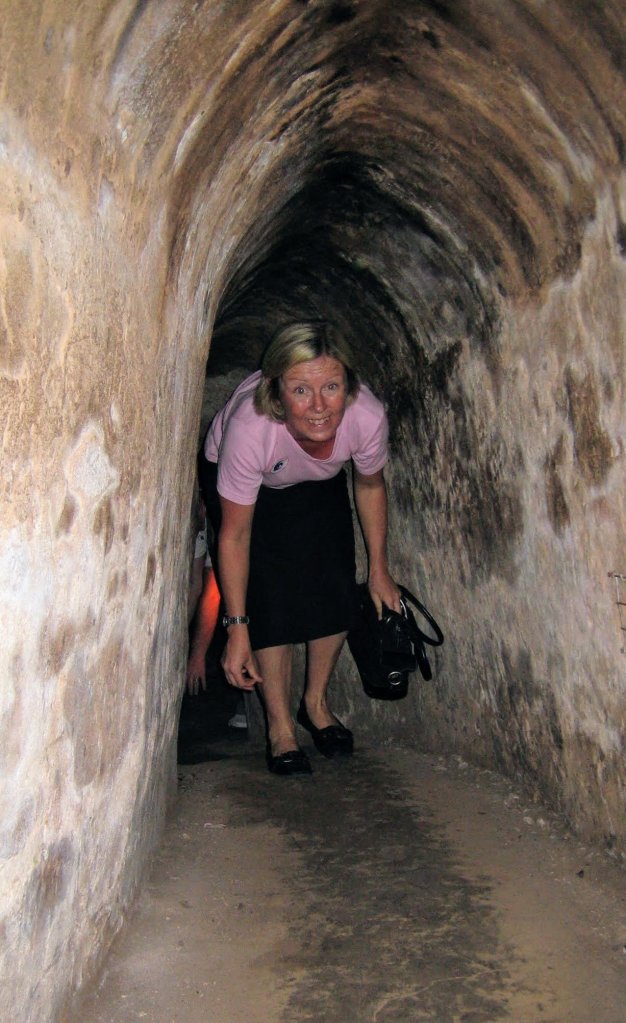
A tight fit – those Viet Kong were small.
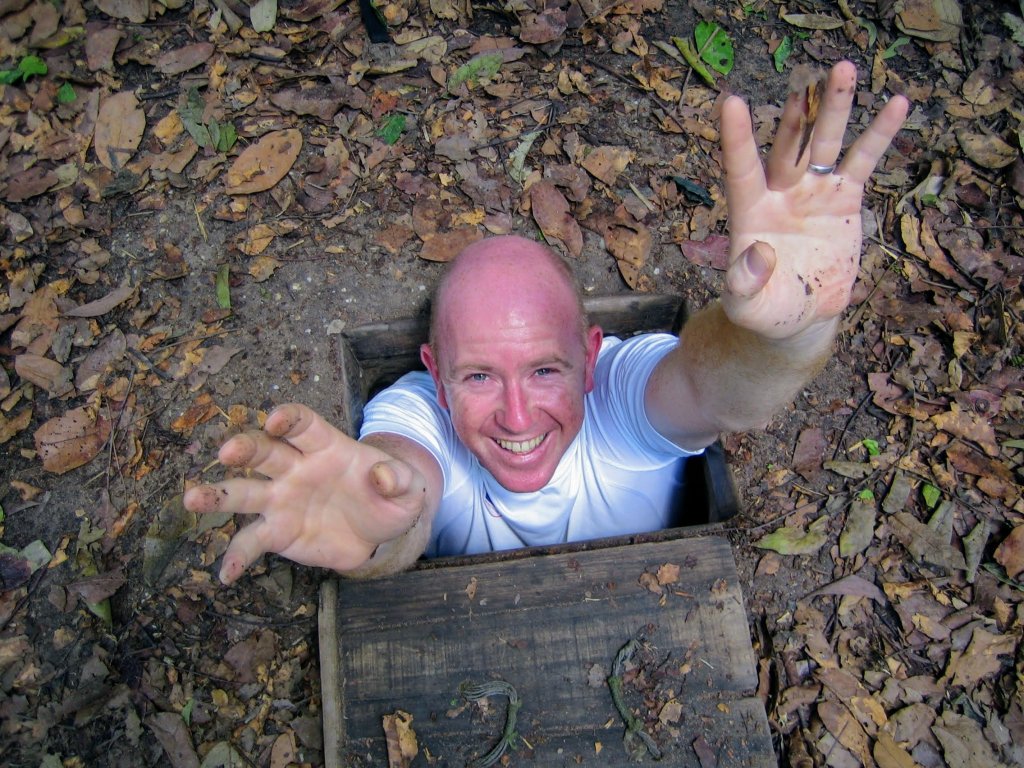
We had to visit the Cu Chi tunnels while we were in this part of Vietnam. Underground tunnels exist throughout Vietnam, but this section measures about 120km. Credited with winning the war for the North Vietnamese, they were actually built as part of an earlier resistance against the French. Exploring them now is claustrophobic, but during the war they were crawling with rats, spiders, ants, scorpions, you name it. And the Viet Kong spent their lives down there for months on end. Persistence wins the war!
In the tunnels. And I’m not tall!
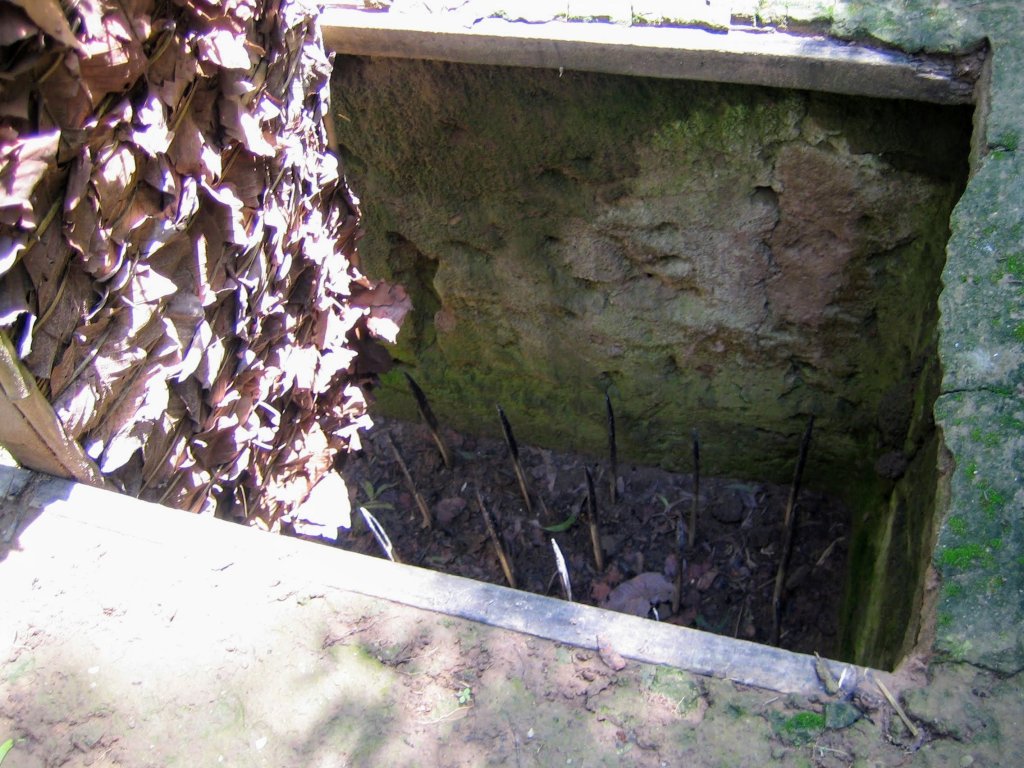
In addition to the tunnels, there are some pretty horrific booby traps spread around the area, complete with spikes and spears. The guides explained gleefully how these would be tripped by unsuspecting US soldiers. I remember feeling very glad I wasn’t American! They were rather vindictive in tone about the whole thing, despite the passing of time. Who can blame them?
“And the spikes went right through his body” – not suitable for the squeamish.
I’ve travelled a lot, but Vietnam has a special place in my heart. It seems amazing that somewhere should have such an awful, tragic history and yet bounce back to be so beautiful, interesting and hospitable. Highly recommended. Just avoid the dog meat and the booby traps.
The worst part about a holiday is always coming home.
Back in the day, Tony and I would drive home to Yorkshire from a sunshine-and-wine-drenched holiday in France, griping all the way. You could guarantee the sky would turn grey somewhere in the middle of the Channel. And why was it that French motorway service stops sold lovely crusty baguettes, while the best ours could do was a tuna pasta bake with not a vestige of tuna in the bloody thing? I searched, believe me!
In south-west France Summer 1999 – please don’t make me go home!!
Once, we turned off the motorway in despair. Surely there was a nice country pub somewhere nearby? There was, with a big sign outside saying ‘chef needed’. Back to the M1 then. In the rain, no doubt.
Having your next trip in the pipeline always helps. Having a whole series of them booked and in the diary is even better. But even I can’t justify going away every week. So you need something warm, waggy and welcoming to make coming home worthwhile. You may even look forward to getting back!
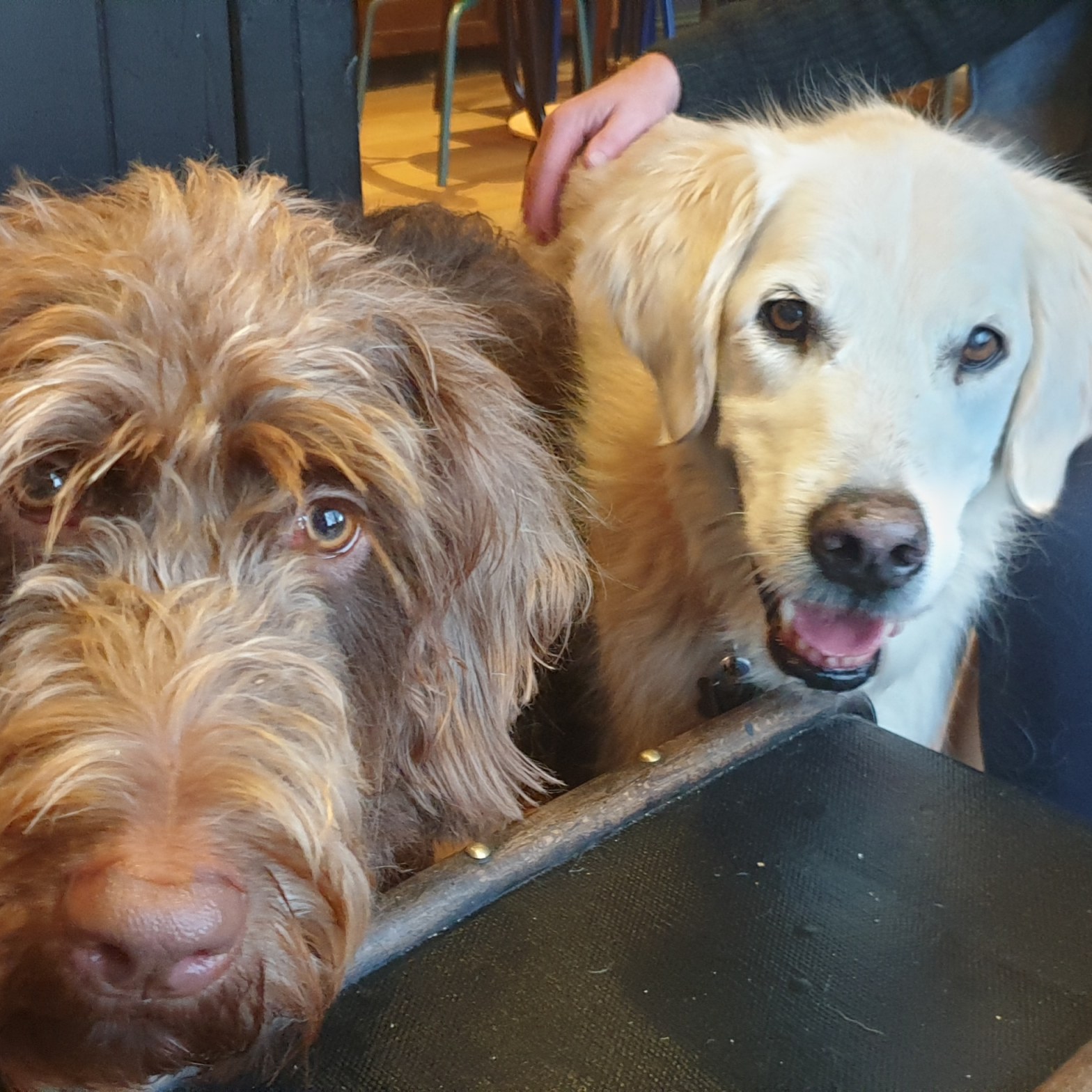
Reunited with Henry! I love coming home to that happy face.
Now, let’s be clear, when I say coming home, I don’t mean staying at home. Oh no, one of the great things about dogs is that they can be easily trained to like the things that you like. Hence 15 year-old Henry is never happier than when he’s lording it in a nice country pub, graciously accepting treats and pats from all and sundry. Almost 2 year-old Lizzie is growing out of her car sickness and will soon be the perfect traveller, hurrah!
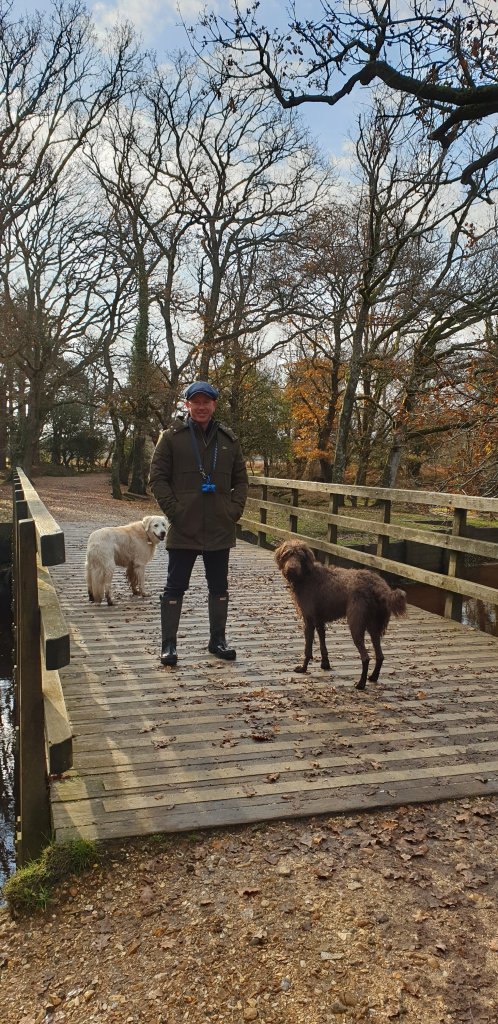
In the New Forest. Perfect for your furry friends, lots of walks, lots of pubs.
‘We should really take the dogs somewhere nice’ actually works in situations where ‘I really need a weekend away’ would elicit a grunt or a sarcastic comment. Resulting in more travel opportunities. We’ve done doggy breaks in Devon, Somerset, Dorset, Wales, Sussex, Wiltshire, Hampshire and Shropshire, to say nothing of France (a whole other blog). Did I say how much I love my dogs?
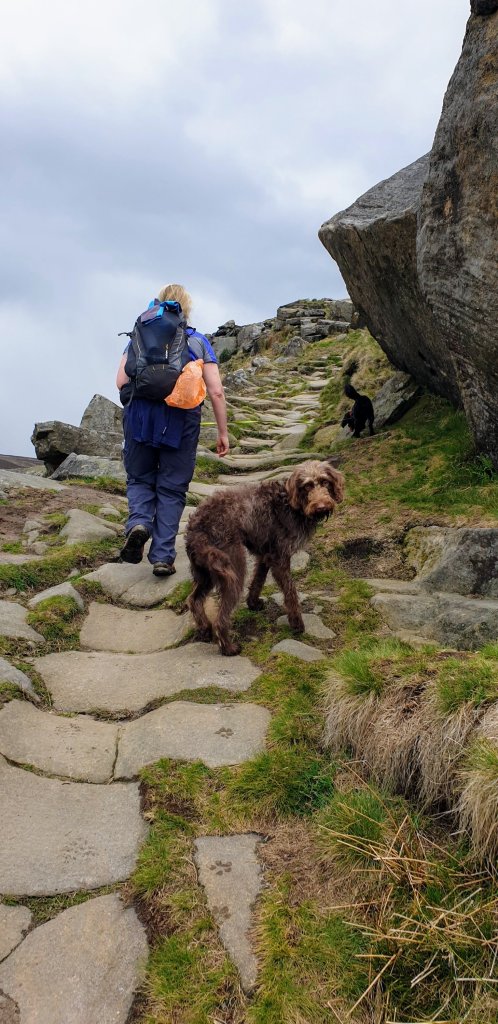
Walking with Lizzie in the Peak District.
The UK is really accommodating to our furry friends. Having lived for a long time in Australia, where dogs generally aren’t welcomed in hotels and restaurants, I appreciate the many options we have. My personal favourite is the dog-friendly pub with rooms. Preferably an upmarket one. With a good gin selection. There are lots of them around, happily.
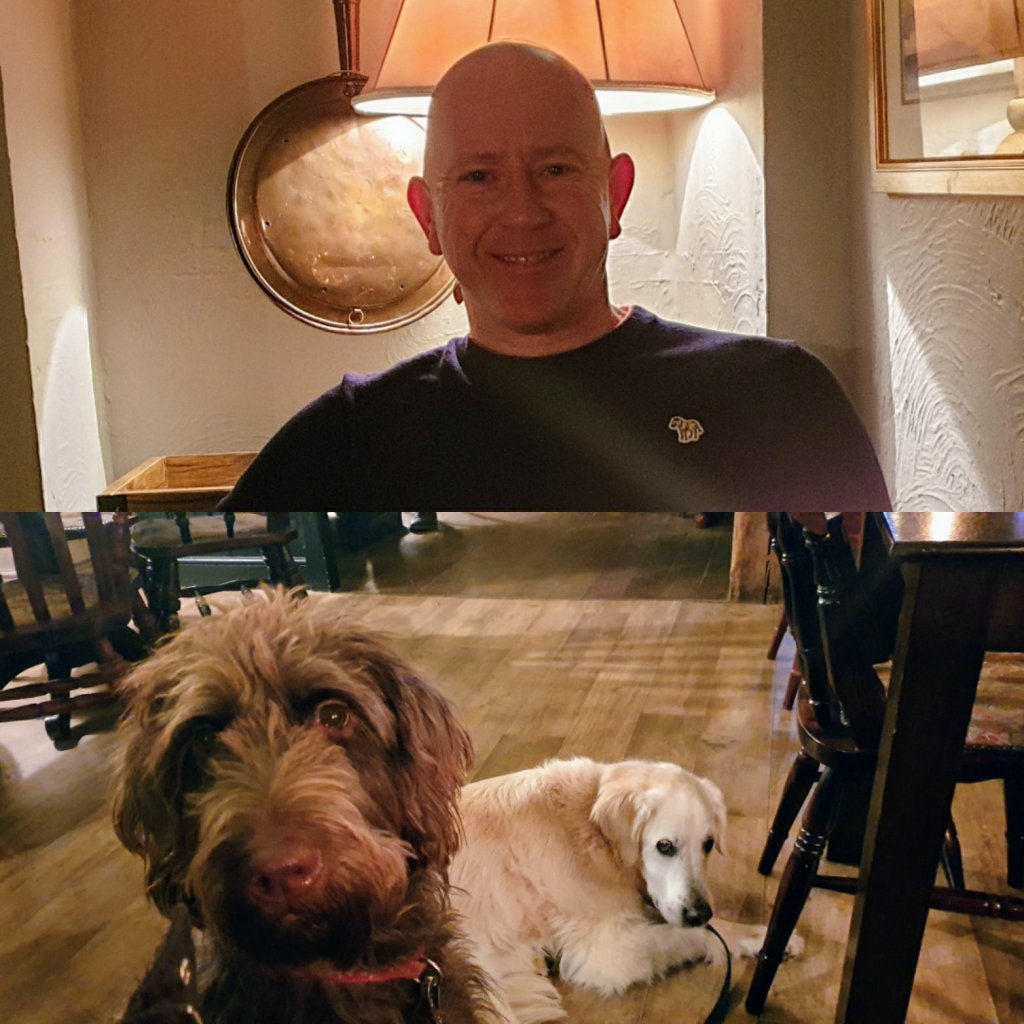
The whole family loves a cosy pub on a Winter evening. In Chepstow.
Where to find the perfect dog-friendly venue? I often start with booking.com (there’s a pet-friendly filter), but always check the individual website and sometimes call before booking, just to make sure I get the right room. Ground floor preferred, with separate entry if possible (easier for midnight toilet breaks – for the dogs, not me!) Extras like bowls, towels, treats are often provided. Maybe even sausages for breakfast.
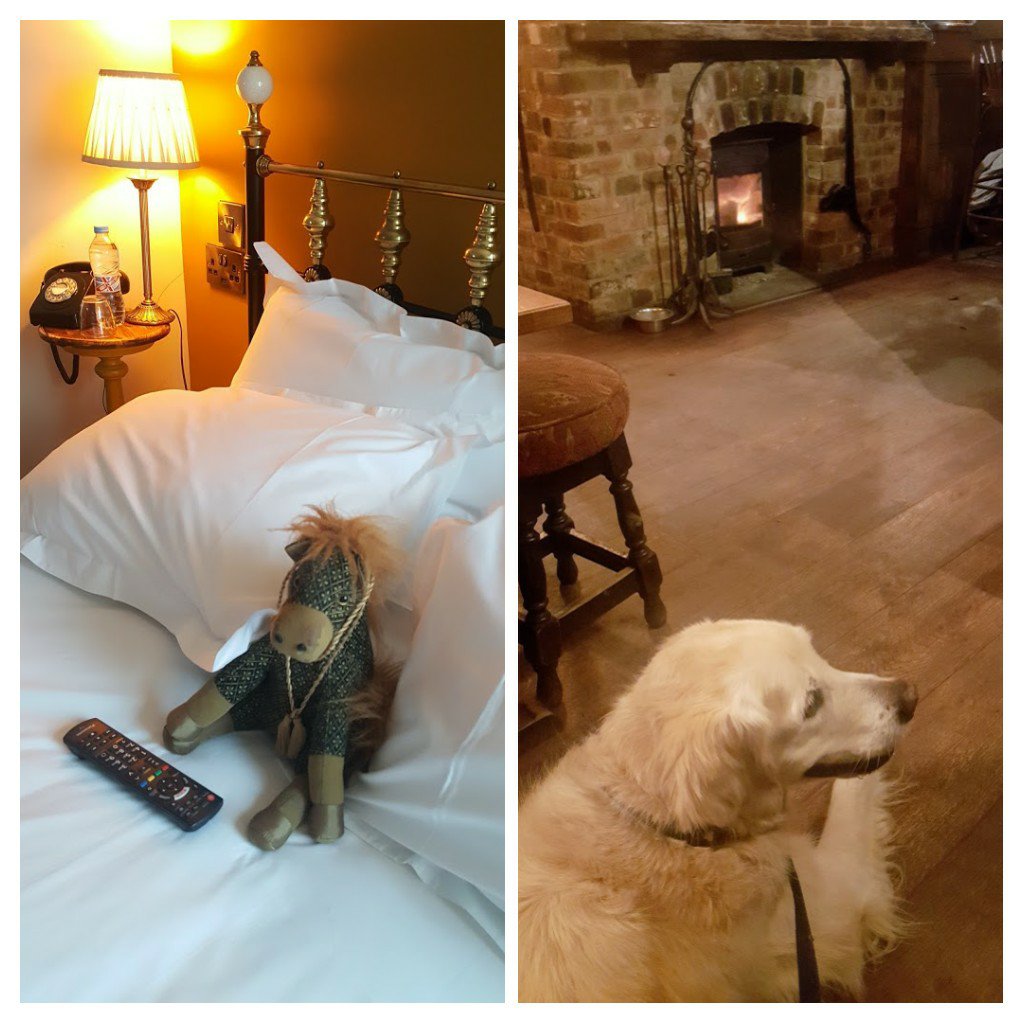
A toy dog on the bed is usually a good sign. In Milford-on-Sea.
Quite often when travelling with a dog, you will be the most popular person in the whole venue, as a stream of staff and customers arrive bearing treats or offering pats. If there are other dog owners present, you have something in common. It’s very sociable, sometimes a bit too much so for Tony – he’s wary of dog bores! We have stayed in places where there’s been a dog in every room. It can get a bit much when they all start woofing.
I think that’s a toy horse, but still promising. Happy Henry in Blandford Forum.
There are some places that claim to be dog friendly but actually aren’t very. In Bournemouth, I didn’t appreciate Tony and I having to eat breakfast separately as dogs weren’t allowed in the dining room. False advertising in my book and I let them know about it. Best to phone ahead if the website is less than effusive about pets. It saves falling out with the hotel owner!
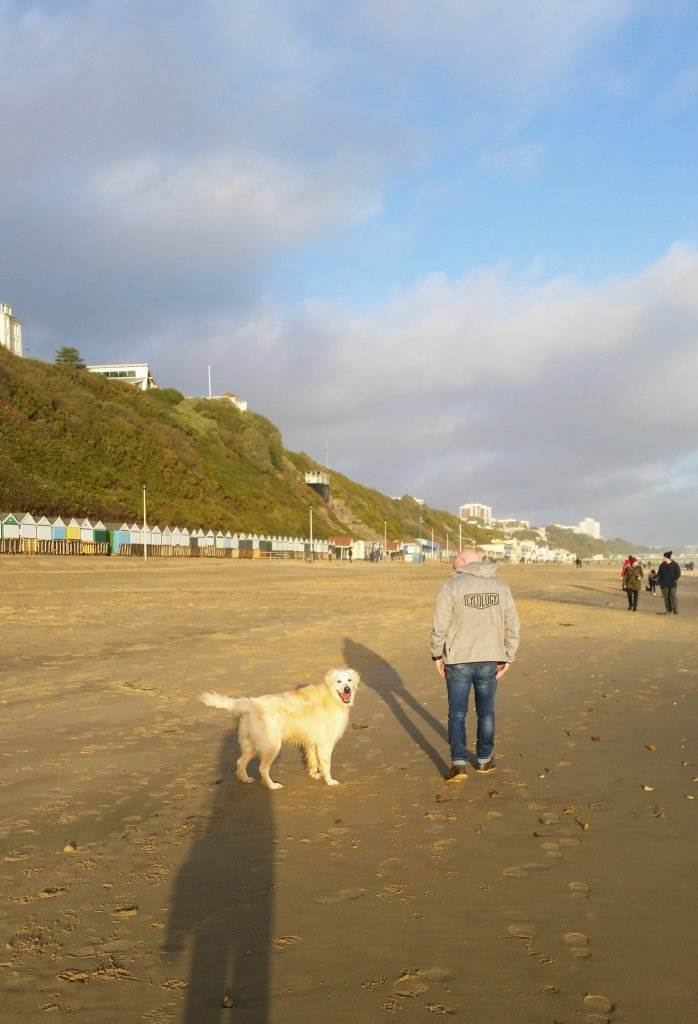
Enjoying the sands at Bournemouth. We loved the beach, just not the hotelier.
On the whole though, our experiences of doggy weekends have been fabulous. So, fellow travellers, my advice is to get a dog as soon as you can. Home will become more appealing, and you’ll probably see more of your own country too. And then start hunting for (a) some amazing dog-friendly venues and (b) a great dog-sitter for when you just have to go further afield! The food at UK motorway services is still rubbish but you can’t fix everything.
Another joyful reunion pic, just to prove my point.
We’d booked a weekend in the Icelandic capital last Summer, and I was looking for ideas on what to do there. Go horse riding. See the waterfalls. Ride a snowmobile through the countryside. Everything suggested was well outside the city, and involved a few hours of transportation and joining groups of other tourists. Hmmm…
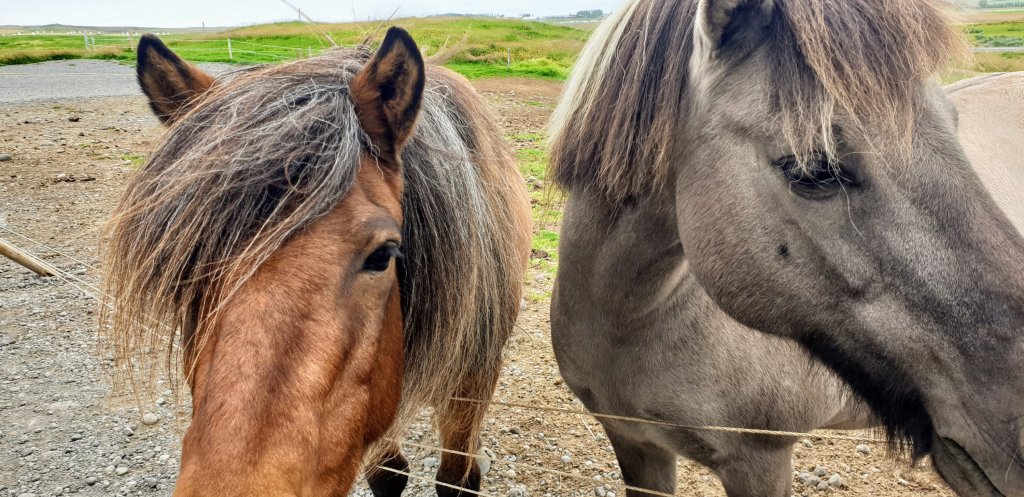
The famous ponies. Yes, they are cute.
I like being outside. I love walking. I really don’t like being cooped up in a car or bus. And when it comes to group activities, I’m pretty sociable, but my other half is not. There was no way we could spend every day of our trip going on organised tours. If there’s a particular member of the group who’s always late, Tony’s blood pressure starts to rise very quickly. And as for those over-jolly tour drivers…! One day of that would be more than enough.
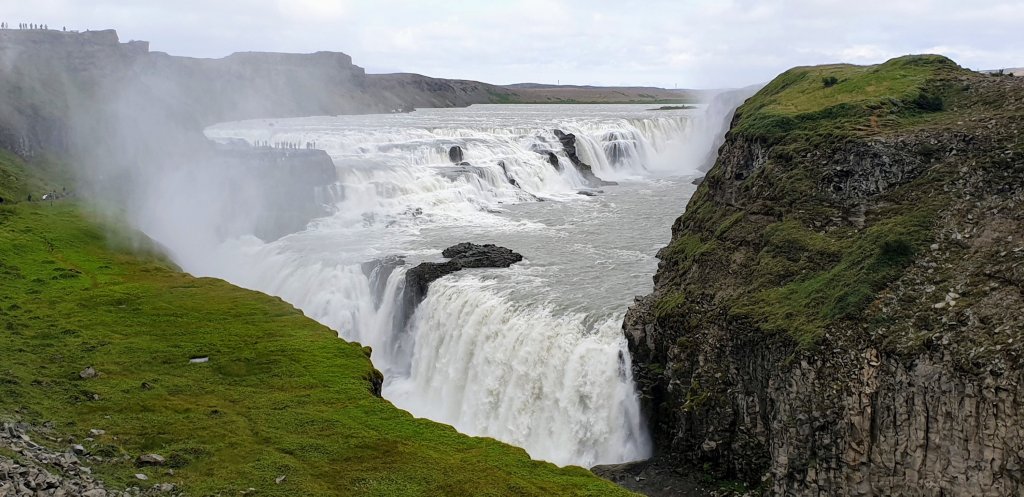
Gullfoss waterfall.
There must be things to do in Reykjavic itself? I persisted. No-one seemed to think so. ‘It’s just OK, not much to it,’ said a work colleague. Well, I like a challenge. When I visit a city, I like to feel I’ve really seen it, not just scratched the surface. Just walk, set off on foot and see what you find. So that’s what we did…
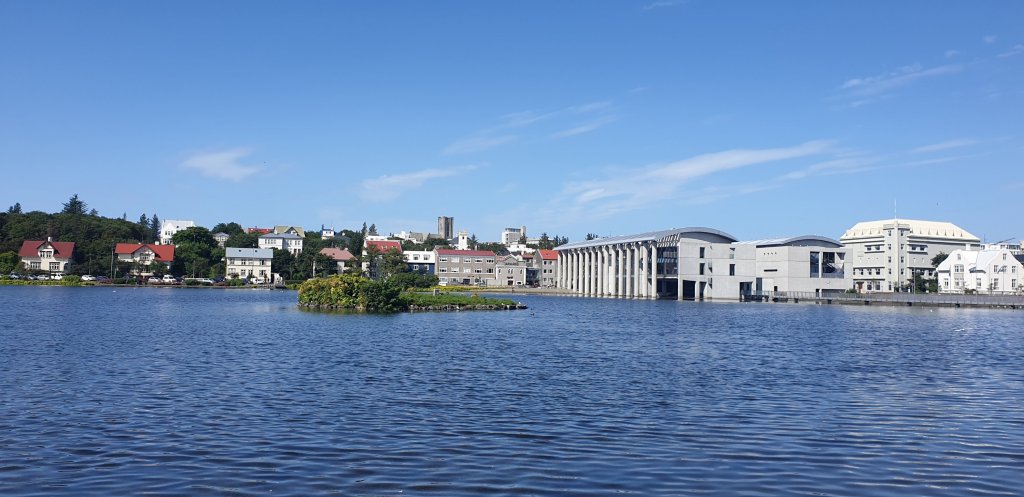
Tjörnin – the Pond – and the City Hall.
We started by doing a recce of the town centre, which is easily walkable. The hotel we chose, Centerhotel Midgardur, is right at one end of the main street. At the opposite end is the old town (neat and not particularly old- looking) bordered by the Pond on one side and the harbour on the other.
In the Old Town.
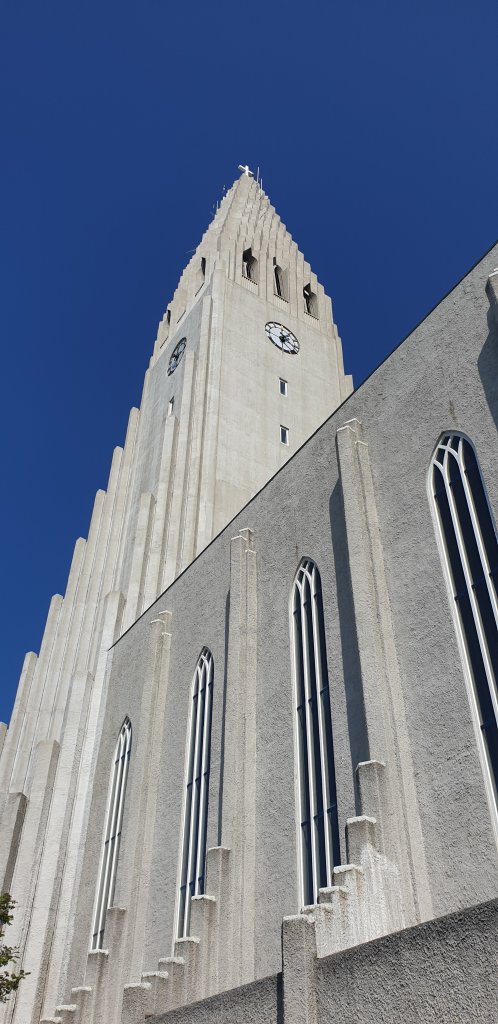
About halfway along, up the hill to the left, is the impressive Hallgrimskirkje, which gleams in the sunshine. Maybe not in Winter but we were lucky enough to get plenty of sunshine while we were there (not guaranteed, even in August).
The luminous Hallgrimkirkje. It’s nice inside too.
Turn right instead and you hit the seafront. Simple. The hotel itself was very pleasant with friendly staff. One thing really impressed us – no individual packets or containers in rooms or at breakfast. Everything was in larger dispensers, reducing plastics and packaging. Big tick!
Old Town Reykjavik.
I have to say that Reykjavic, at first glance, doesn’t have the wow factor. Venice it’s not. It’s extremely tidy. The buildings are so well maintained that even the old stuff looks new. It feels clean and modern. It’s just not particularly impressive in terms of architecture. But the more time you spend there, the more it gets under your skin. It’s a chilled out kind of town, pleasantly busy with lots of locals out and about, and not much traffic. Everyone is welcoming. We liked it.
Reykjavik seafront. It’s quite austere.
If you’re prepared to put your comfy shoes on and go a bit further afield, you can have the city’s natural beauties almost to yourself. We hardly saw anyone once we got away from the main streets. And the coast is stunning.
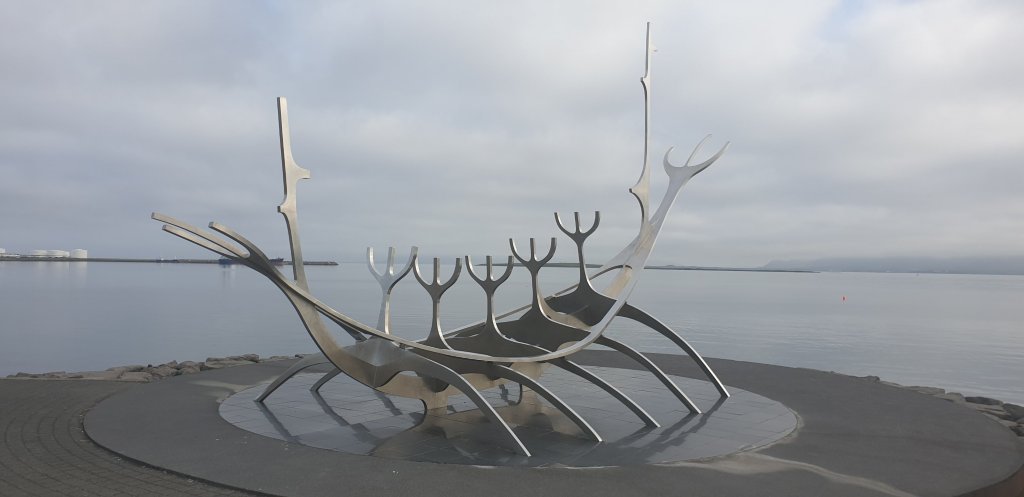
Sun Voyager. Very Icelandic.
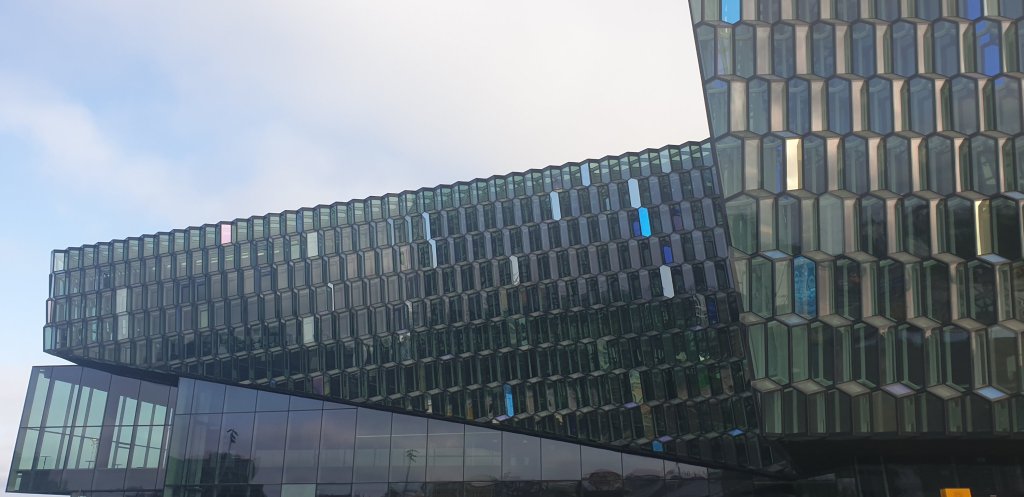
Starting on the seafront, the Sun Voyager sculpture suits the surroundings – stark and unadorned. From there, we headed west along the coast towards the harbour, which is dominated by the huge and rather jazzy Harpa concert hall.
The Harpa.
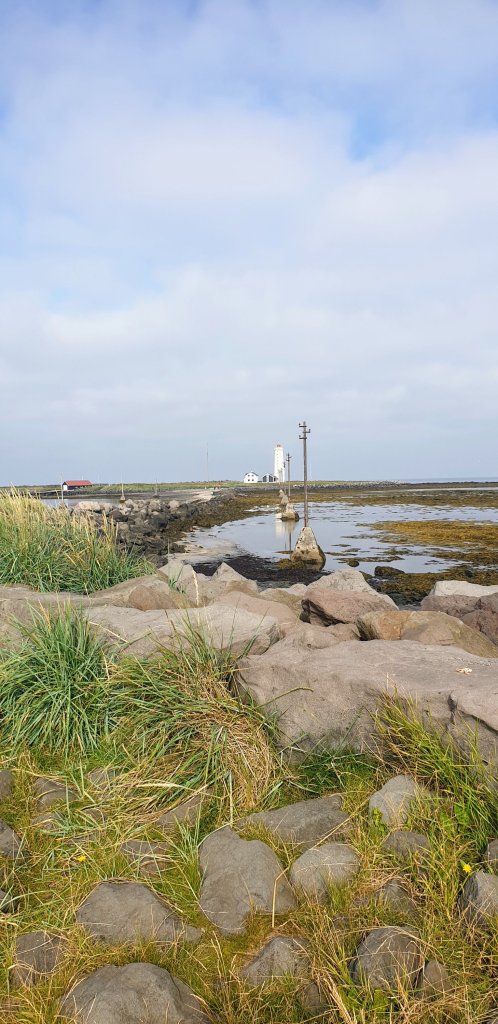
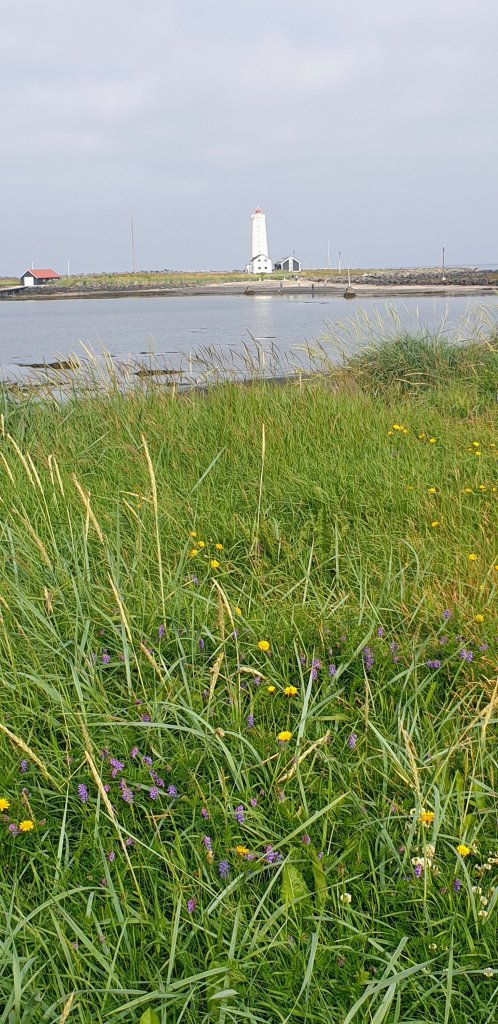
Past the Harpa, the old harbour has been spruced up with new apartments, several museums, tour operators and lots of places to eat. You can easily while away several hours here. Carry on walking along the waterfront pathway and you’re in the seaside suburbs heading towards the desolate Seltjarnarnes peninsula, famous for birdlife and the iconic Grótta Island lighthouse.
Walking towards Grótta Island.
On a Summer’s day we saw a few walkers and cyclists, and many, many birds. Apparently 2.5 million tourists visit Iceland each year – none of them were in evidence here. If you like to get away from it all, it’s perfect.
Seltjarnarnes peninsula. Like being the only people in the world.
If you walk south out of town there’s also lots to see. We sauntered past the University and tiny Reyjavik airport, watching mini planes take off. A left turn and we reached our first destination – the Bike Cave cafe. Remember, win-win. I could drink vino while Tony checked out the bikes. The food looked good too, but as usual I’d overdone it at the breakfast buffet.
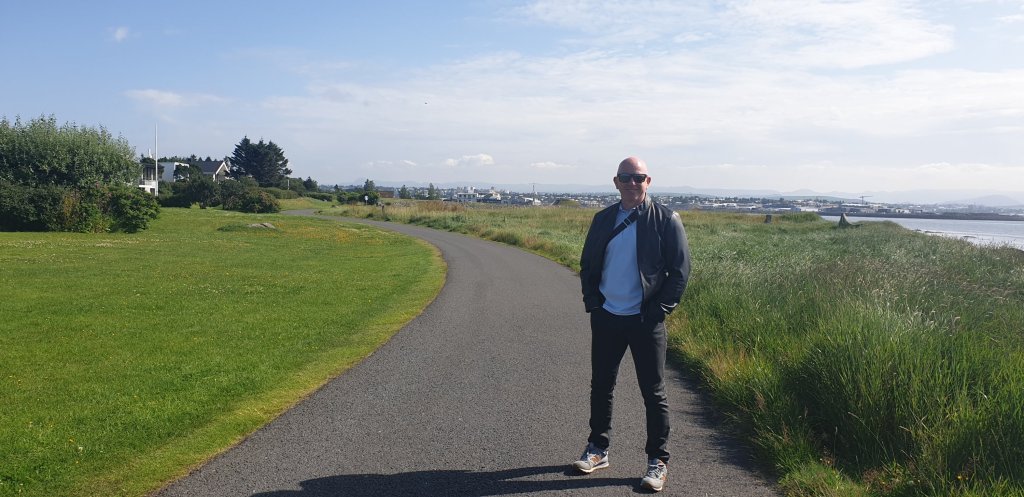
Skerjafjördar coastal path.
Leaving the cafe behind we hit the coast, and a lovely deserted route past lots of back gardens. After bikes, Tony loves property. He can spend hours on Right Move or looking in estate agent windows. So giving a running critique on waterside properties passed a happy half hour for him.
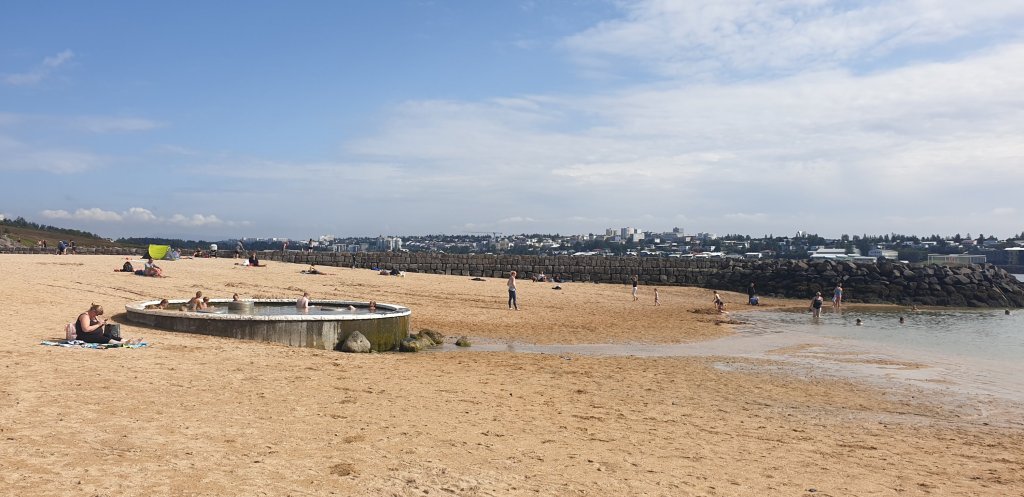
Nauthólsvik geothermal beach.
Next stop, a hot pool on the beach. No tourists there, just happy locals enjoying the natural hot water being piped up from under the ground. Let’s be honest, Iceland in Summer is still not exactly Tenerife, so a little extra heat is very welcome.
This is not a built-up city!
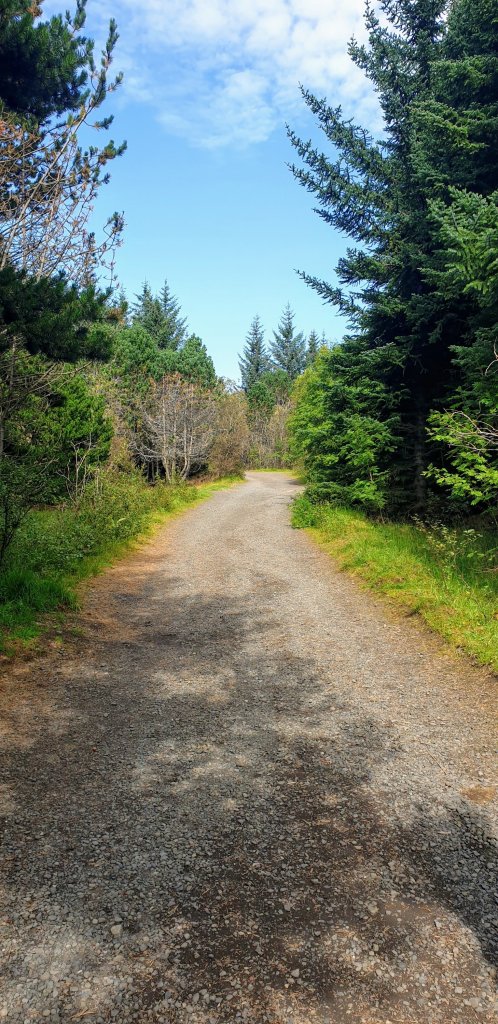
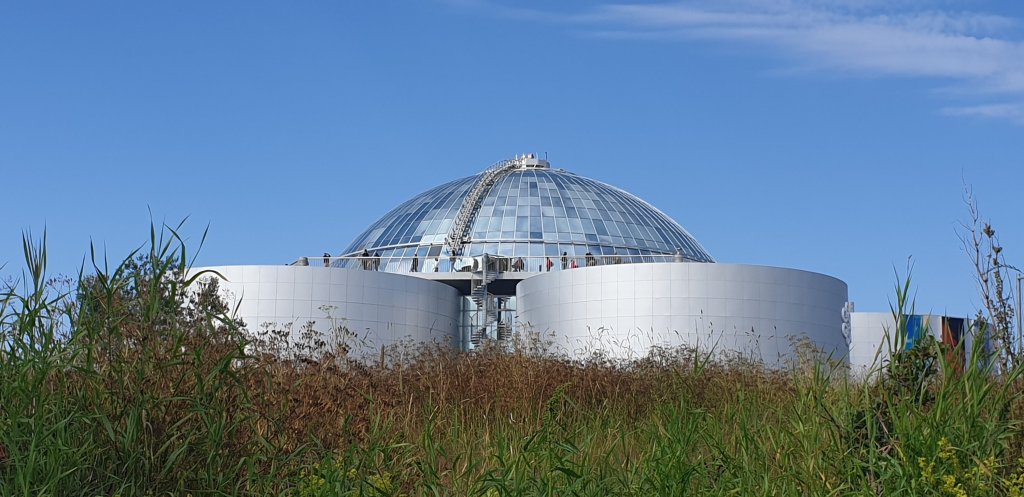
From the beach, a hike up a woodland path takes you towards what looks like a space station – the Perlan museum and observatory. A stroll through Klambratún park and we were back at our hotel, feeling like we’d been out for a country hike.
Perlan – Wonders of Iceland.
On our final day we gave in and joined a tour, which seemed to be what everyone else at our hotel was doing. It was definitely worth it to see more of the landscape but we weren’t on our own anymore. We set off late, but the driver still pulled over to initiate some forced fun. The speakers weren’t working, cue a chorus of “we can’t hear you” every time he spoke. I was quite pleased that I couldn’t hear him. Tony was stoney faced. I braced myself for the complaints…
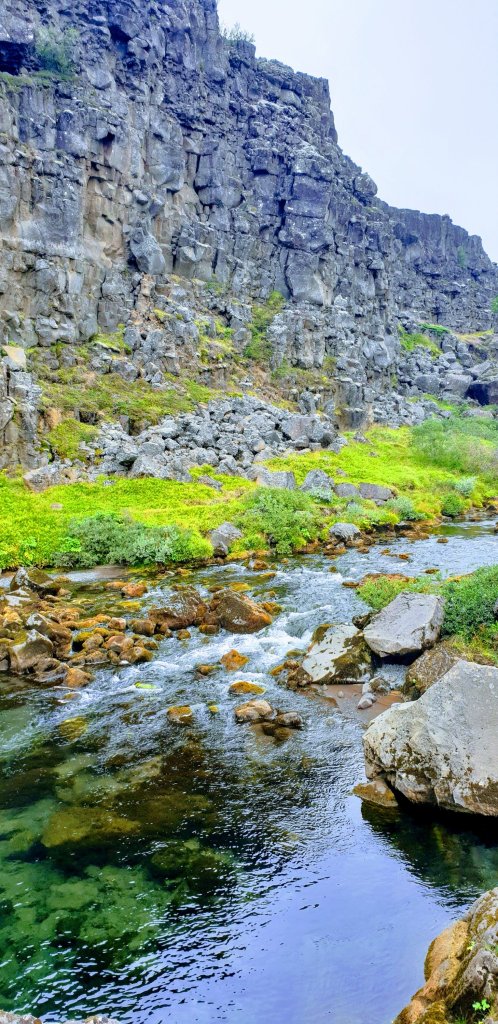
Pingvellir National Park.
Luckily the countryside around Reykjavic has enough gems to distract from the pain of group travel, phew! The tectonic plates grind away at each other, the ground bubbles and spits, the waterfalls roar and the ponies are ridiculously cute. It was still a relief to get off the minibus at the end of the day though.
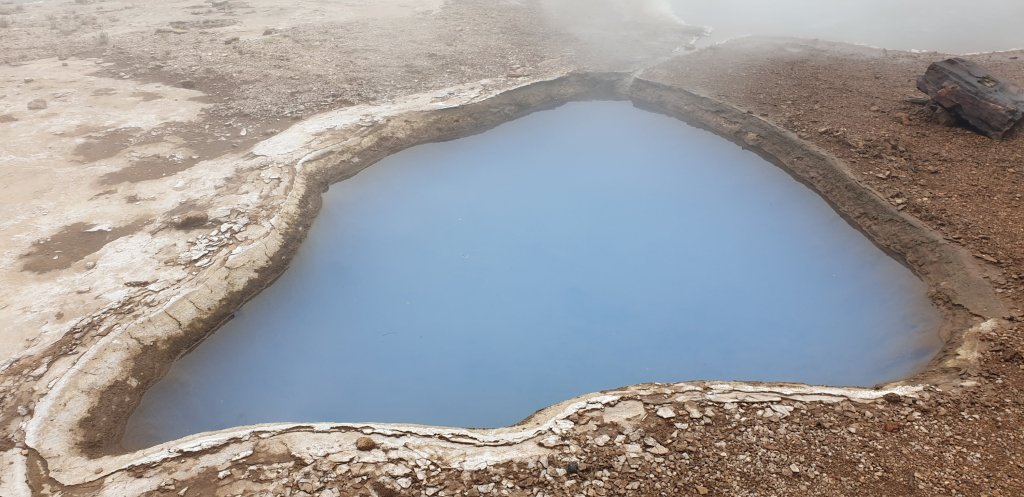
Haukadalur geothermal area – if you like New Zealand (or you just can’t face flying that far) you will love it here.
If you’re thinking of a trip to Iceland, get your priorities straight before you book. Lots of people go in Winter for the northern lights. Personally I’d rather go to the dentist than have constant darkness on my hols. In Summer you get loooong days and the locals are all in a great mood. Bars and restaurants are packed and the atmosphere is buzzy.
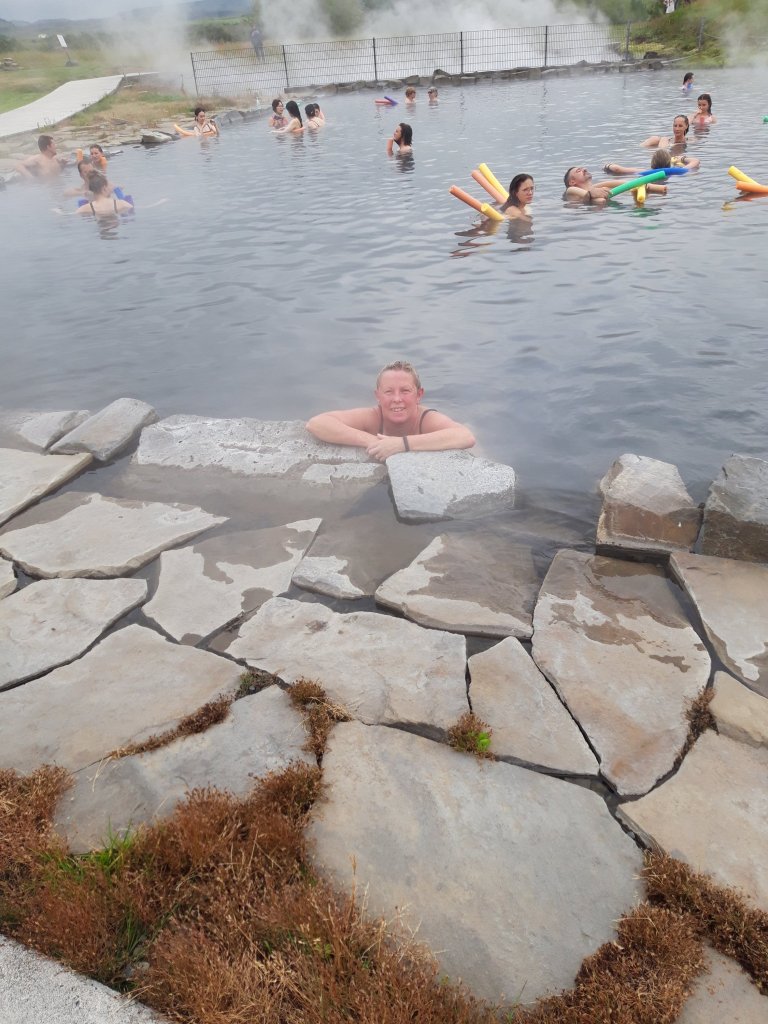
No trip to Iceland is complete without a dip in the natural hot pools.
Also, be prepared for the prices. I recommend downloading the Appy Hour app if you want to buy drinks without crying. The food is so good you may not mind the cost. The fish may be the best I’ve tasted anywhere. And that alone makes it worth the trip!
What’s not to like? No matter how many great cities I visit, London remains one of my favourites. The fact that it’s only a quick train ride from where I now live, so I can go as often as I like, doesn’t diminish the attraction. And gin, well who doesn’t love gin?
Hmm, maybe not neat gin…
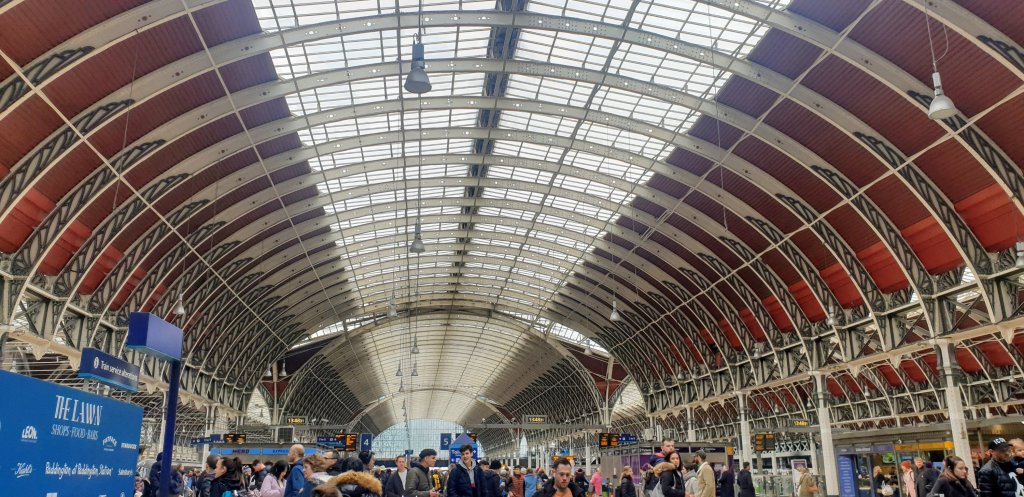
Our trip started on the 09:58 to Paddington. Possibly the most famous station in the capital, thanks to a certain bear, it’s a beautiful space, designed by Brunel and opened in 1854. I love train stations almost as much as airports, they have the same whiff of possibility in the air. One day I’ll just hop on a train and keep going as far as I can. And write a blog about it!
The main concourse at Paddington station.
We then changed onto the tube, not my favourite means of transport, especially on a day when the whole Bakerloo line was suspended due to signalling problems. We got a seat, which was a plus, but really, who wants to travel around London underground where you can’t see anything? It’s such a waste in a fabulous city.
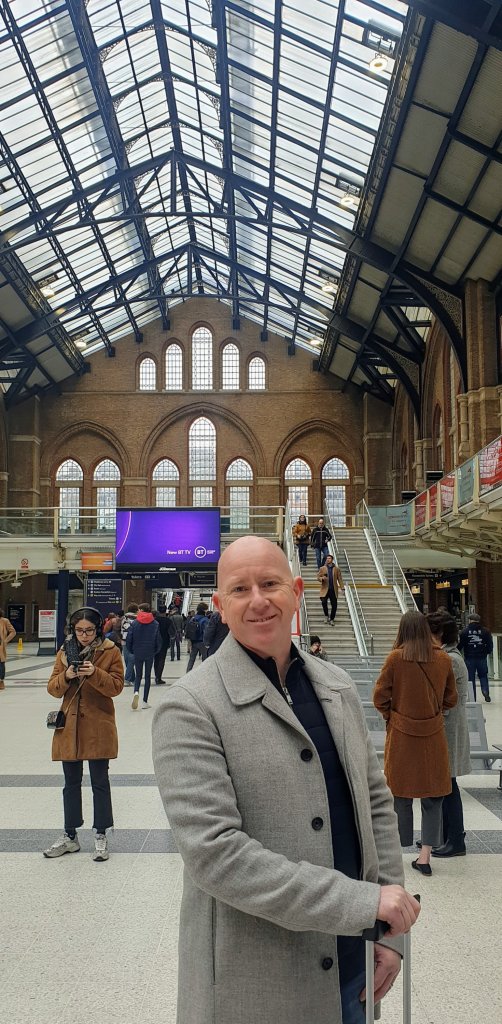
It was a relief to come back up to the surface at Liverpool Street, another lovely old station. It opened in 1874, is Britain’s third busiest station and, of course, appears on the Monopoly board.
Back into the sunlight at Liverpool Street station.
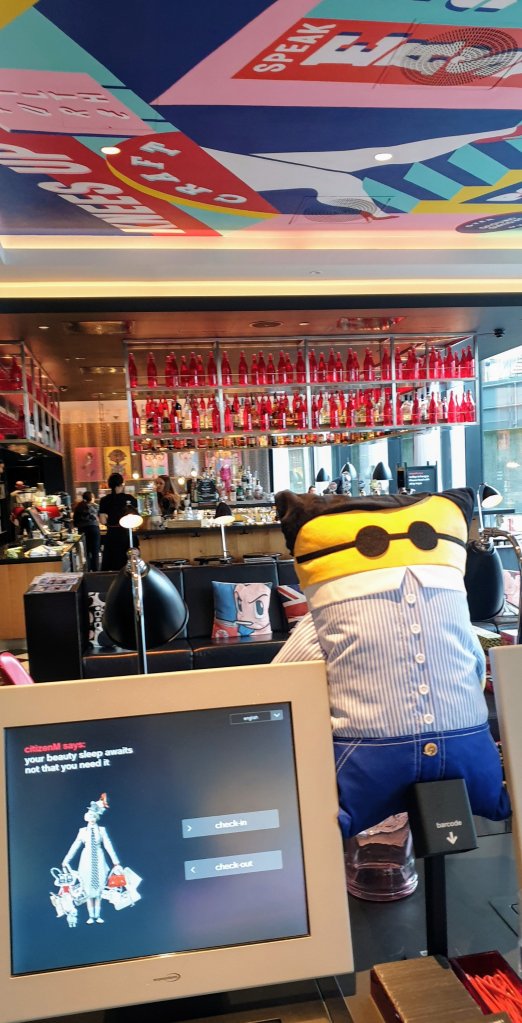
Our home for the weekend was the CitizenM in Shoreditch, just a short walk from the station. It’s a great hotel, but obviously designed for people who are a bit more tech savvy than us. Everything in the room was controlled from an i-pad, which Tony very nearly threw out of the window (luckily the window didn’t open). What’s wrong with good old switches?
Checking in. A reception is so old hat.
I’m not sure about the significance of the strange stuffed toys (there was one on our bed too) but the location was perfect and breakfast was quality. Really good coffee should never be underestimated, especially when slightly hungover!
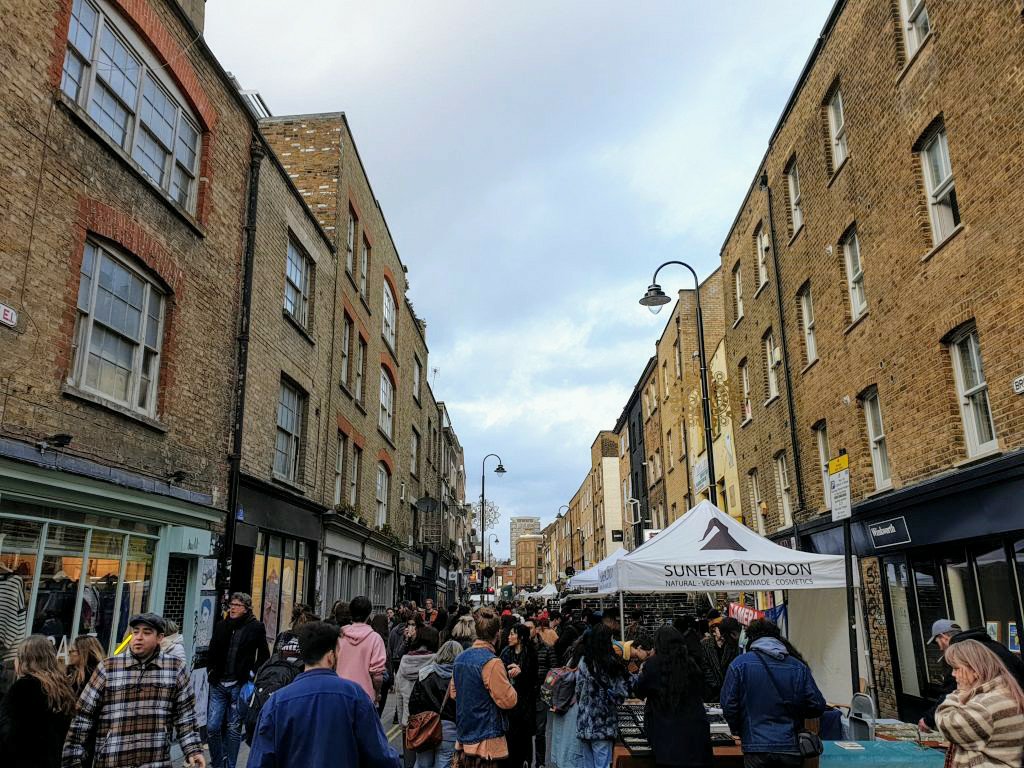
Now, Shoreditch is known for hipster cool, so you may be wondering why on earth we decided to stay there? Gin and curry is the simple response. We were joining a gin tour for the afternoon, followed by a meal in Brick Lane, otherwise known as Banglatown.
The ever-teaming Brick Lane.
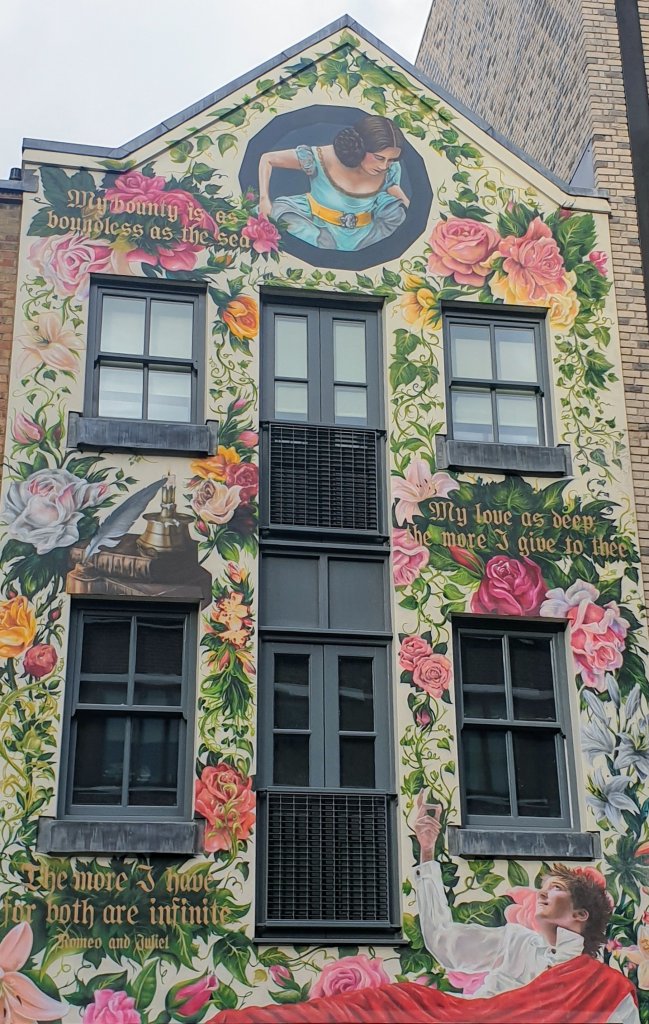
We had a bit of time in hand before joining our tour, so we went for a wander around the area. You can tell you’re somewhere ‘trendy’ because of the amount of street art, whole buildings are covered with it. Some of it is beautiful, some less so…
Romeo and Juliet, Shoreditch style.
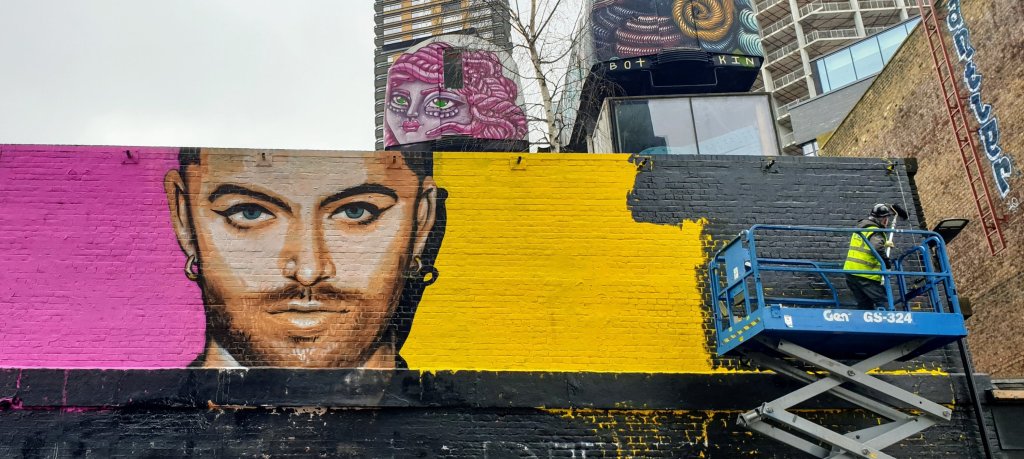
It’s a bit grungey in parts, despite the ongoing gentrification.People watching is also great fun here, there are some, shall we say, eye-catching outfits on display.
Poor old Sam Smith, he obviously upset someone!
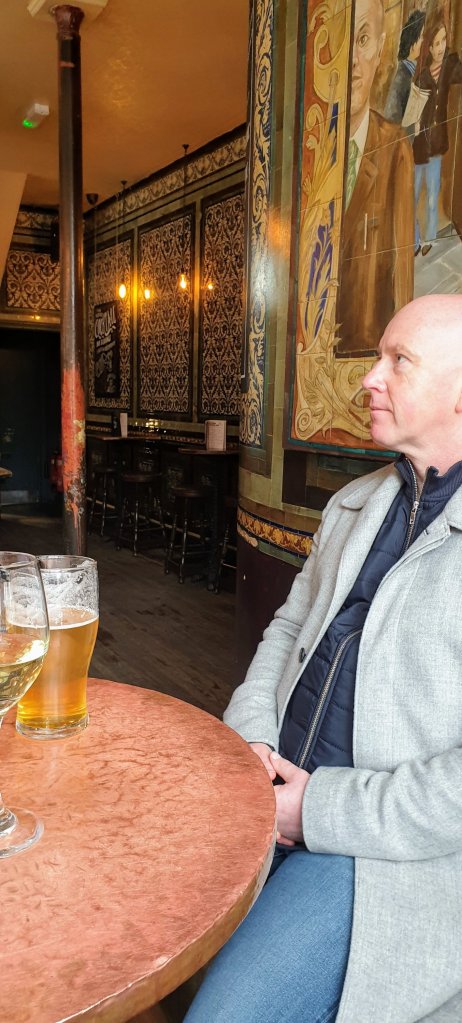
The area around Brick Lane and Spitalfields was the stomping ground of Jack the Ripper back in the 1880s. We stopped for a drink at the Ten Bells opposite Spitalfields market, where some of his victims had their very last drinks. It probably hasn’t changed that much since then. It’s a proper old boozer, complete with tiled walls and copper topped tables. London excels in places like this.
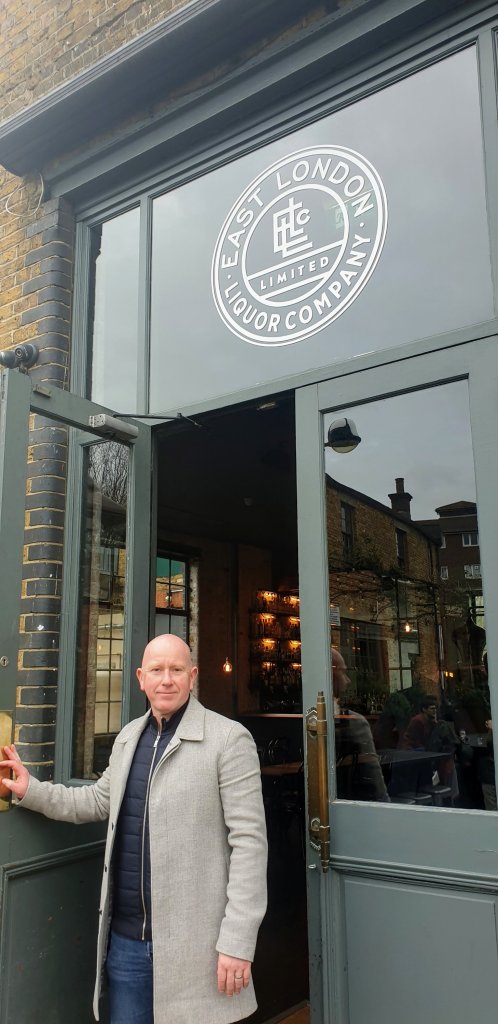
We joined our Gin Journey along Bethnal Green Road at the Sun Tavern. Running in several cities around the UK, you join a group and are chauffeured around to 5 locations, sampling 5 different gins neat and in a cocktail, while learning more about your favourite tipple, which originated as a herbal tonic in the Middle Ages. Line your stomach before embarking.
The old glue factory in Bow, now home to a distillery producing gin, vodka and whisky – everyone’s a winner.
After consuming a fair amount of gin, it was time to mop it up with some poppadoms. Out of a smorgasbord of curry houses on Brick Lane I’d chosen the Bengal Village based on longevity, awards and reviews. We weren’t disappointed. It was crowded with people enjoying their food – we chatted to the people sitting on either side of us (we were talkative, it could have been the gin!) and they were all raving about what they’d eaten. Paneer and prawns are my recommendation. It was the perfect end to the day.
On Sunday morning we set out on an epic walk to the Olympic Park and back, almost 10 miles but totally worth the effort. There’s nothing better than sauntering around the back streets of London when the sun’s out.
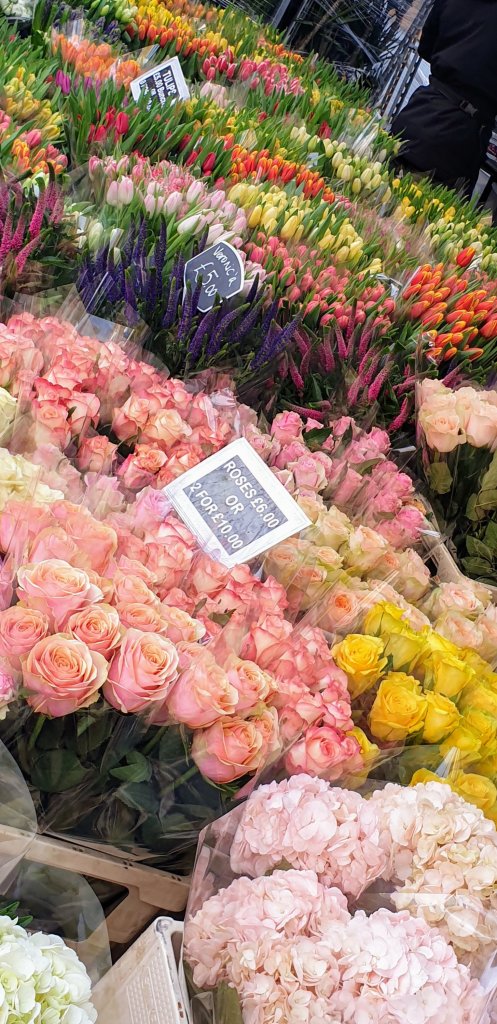
Every kind of bloom, and the most gorgeous scents.
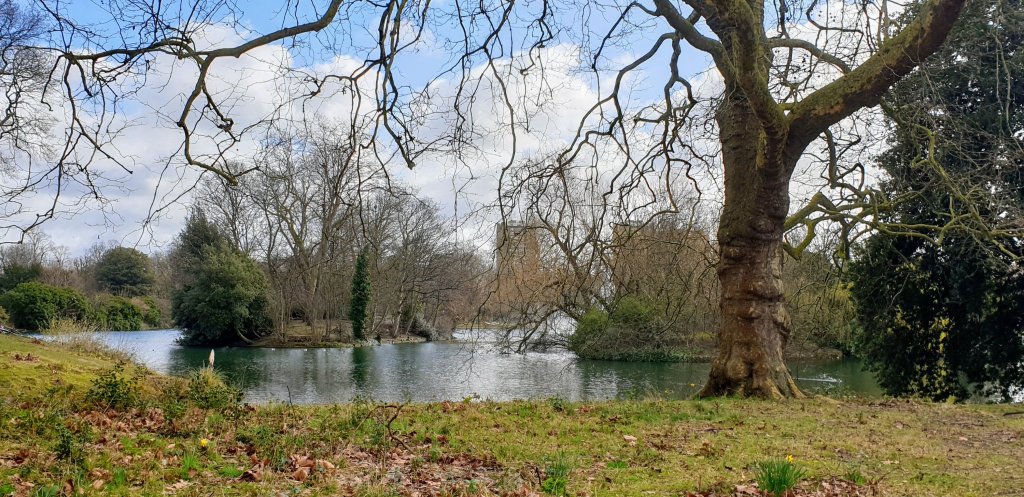
We wandered through Columbia Road flower market, which smelled absolutely amazing. Cut flowers, plants, herbs, succulents are all piled high on Sunday mornings from 8am. Further along Hackney Road, we joined the hordes walking their dogs, running, cycling around Victoria Park. Known to locals as Vicky Park or the People’s Park, it’s been one of the capital’s most popular open spaces since it opened in 1845.
Vicky Park – it looks empty but it wasn’t.
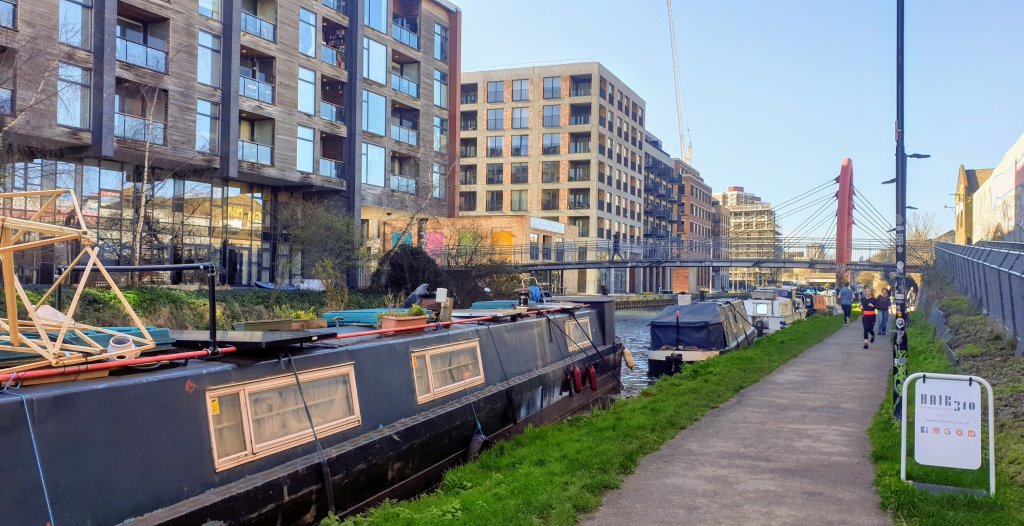
The Regent Canal runs along the southern edge of the park, and a short stroll eastwards takes you past new apartment blocks into the heart of the Olympic Park, our ultimate destination. Covering 560 acres, it’s almost impossible to imagine that prior to the 2012 Olympics, this area was largely derelict. Eight years later, the construction continues, with cranes as far as the eye can see.
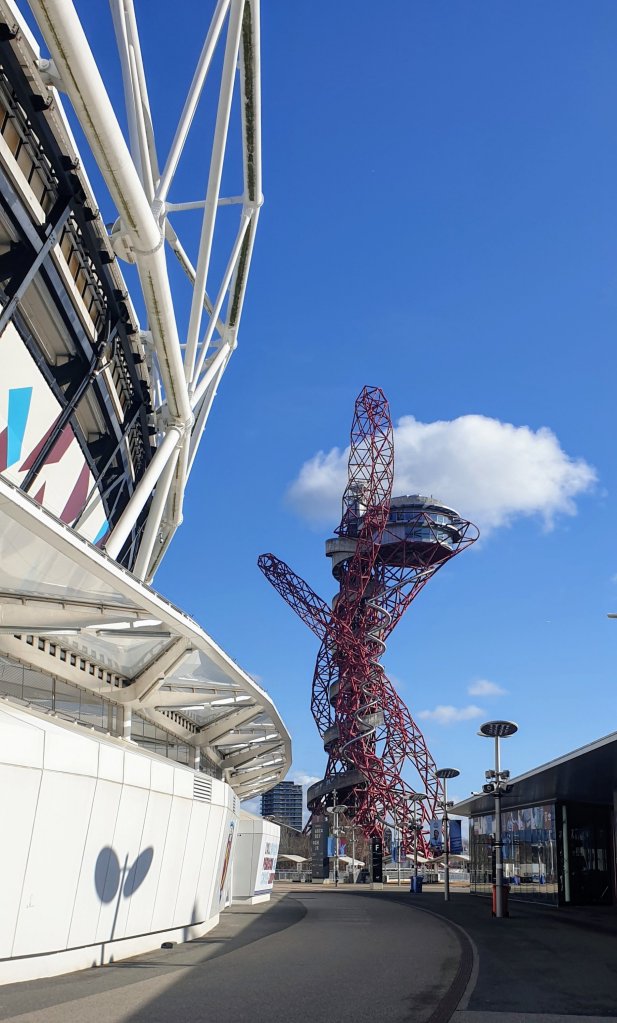
What exactly is that thing?
The star sights of the Park, obviously, are the Olympic venues – the Stadium, now home to West Ham Football Club, the Copper Box, the Aquatic Centre and the ArcelorMittel Orbit which is just weird looking, I’m still not sure what it does. But for me the canalside paths were the main attraction, joining the locals in their Sunday morning strolls. No tourists. No selfie sticks. My kind of London.
Some time ago, I decided that I wanted to visit all of the smallest countries in Europe. Why? Like there has to be a reason. Why not? Don’t you want to visit them too? It’s good to have life goals and mine are all travel-based!
Vatican City is the smallest country in Europe, with an area of less than half a square kilometre. Next are Monaco, San Marino, Liechtenstein, Malta, Andorra and Luxembourg. I’m sad to report that San Marino still eludes me, but rest assured I’ll get there.
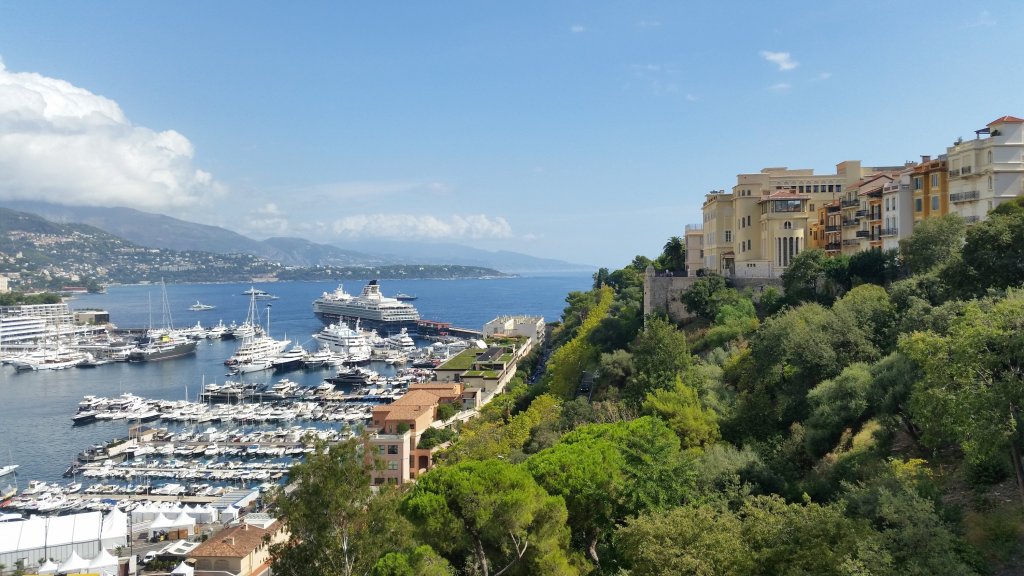
Monaco, a story for another day…
The great thing about a small country is that you can see quite a lot of it in just a short trip. Everything is close together. And these places are not on the top 10 list of ‘must-do’s for millions of tourists. So the locals tend to be glad to see you, and you can get a bit of peace and quiet away from all those pesky people with their selfie sticks. No, I don’t own one.
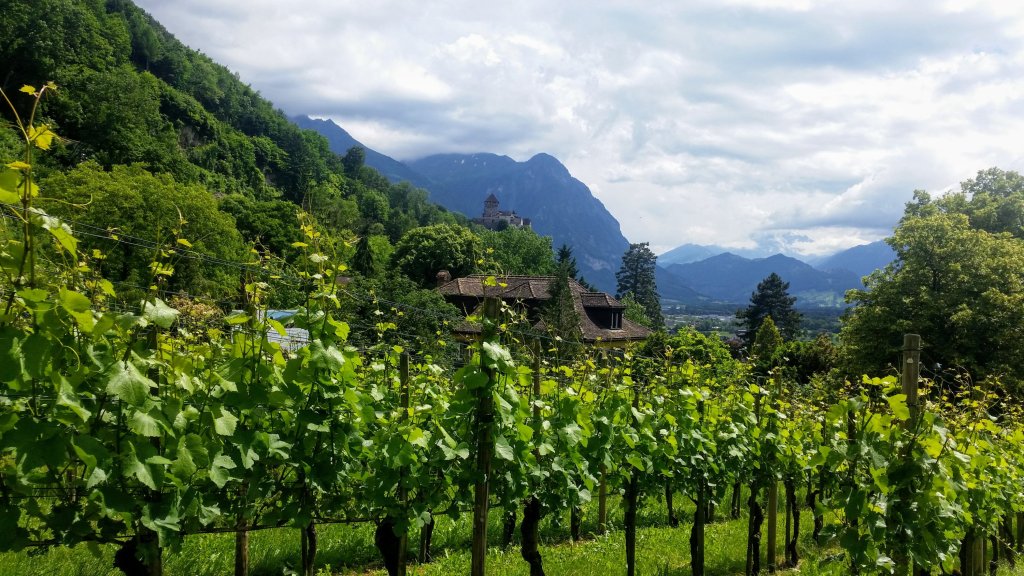
Glorious scenery in Liechtenstein.
I saw my chance to get to Liechtenstein when we were planning a driving trip to the Italian Lakes. “We can just pop over the border and have a night in Vaduz”, I suggested casually. Tony looked unimpressed, “And why would we want to do that?” Erm…
The fact that I collect old books by Dornford Yates in which rich guys drive around the back roads of Liechtenstein in their Rolls Royce catching criminals was not going to cut it for Tony. I had to think of something else. “Apparently there’s a really great Indian restaurant there.” We were in.
As we crossed the border, I pretended to be in a Rolls, spotting bad guys behind every tree. The countryside was lush and green, with mysterious-looking forests. Adventure was in the air! As a cyclist, Tony was busy marvelling at the smooth road surfaces. Oh, and looking forward to his dinner.
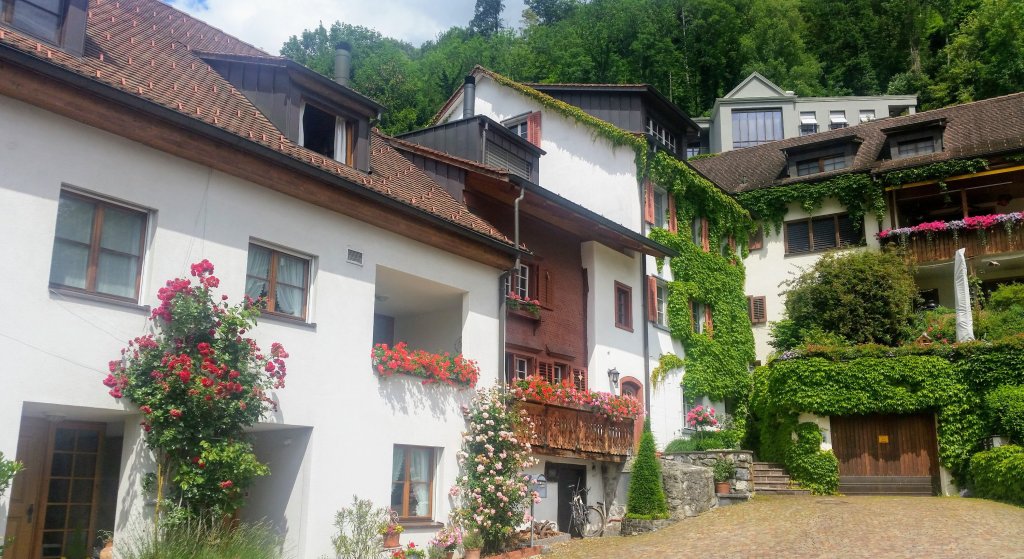
Picture-perfect Vaduz.
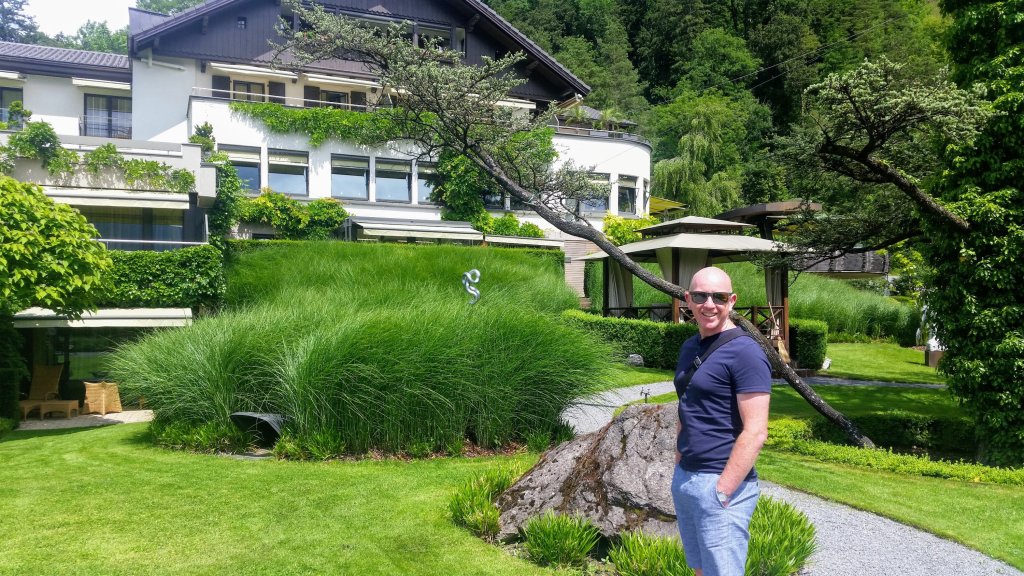
We stayed at the Park Hotel Sonnenhof in Vaduz. It’s lovely and gets five star reviews, and so it should – it’s expensive. You should know this before you go – Liechtenstein is the richest country in the world so it’s not cheap to visit, hence we only stayed one night. The hotel has a Michelin starred restaurant, which of course I didn’t get to try, because (a) I’m married to a Yorkshire man, and (b) I had already promised him a curry. Such is life. Michelin starred breakfast was impressive though.
Outside the Park Hotel Sonnenhof – probably the most expensive hotel I’ve stayed in, but look how photogenic it is.
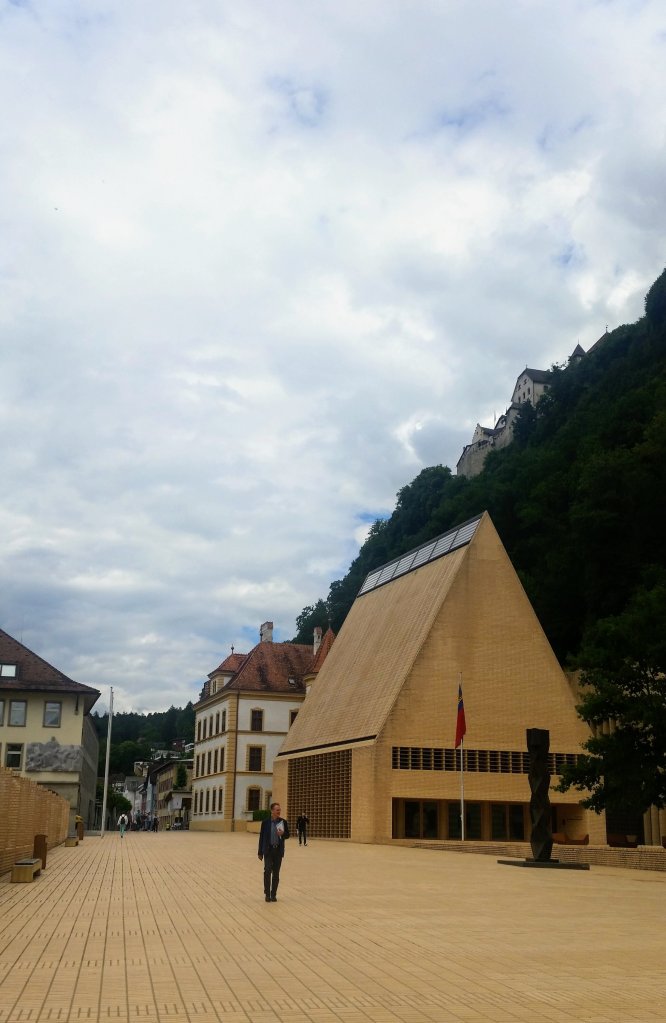
Vaduz is the capital of Liechtenstein. Remember that, it might come in handy for a pub quiz one day, or Pointless! It has less than 6,000 inhabitants. It’s very pretty but tiny. And there was literally no-one there when we stopped off in June. The town is in a steep valley with the Prince’s castle up on the hillside. Our hotel was up there too, so we got some decent exercise just going to the shops. Not that there are many shops.
The striking New Parliament Building on the Städtle, the pedestrianised main street of Vaduz.
As for the much-hyped Indian restaurant, the Schlössle Mahal was also perched up on high with a lovely view over the town. There was no-one there apart from us, but the food was great, and we had a good old natter with the owner. He had nothing better to do than chat, with a big old empty restaurant, and he was keen to sing the praises of his adopted home. Living in Liechtenstein is amazing, it seems, even with only two customers per evening.
Even though it’s very scenic, I get it that not many people reach Liechtenstein. It’s tucked away and you never hear about it. The locals are obviously too busy counting their money to make any headlines. Luxembourg, on the other hand, is easy to get to and quite a big cheese in the EU. We flew direct from Heathrow in just over an hour. Why does no-one go there?
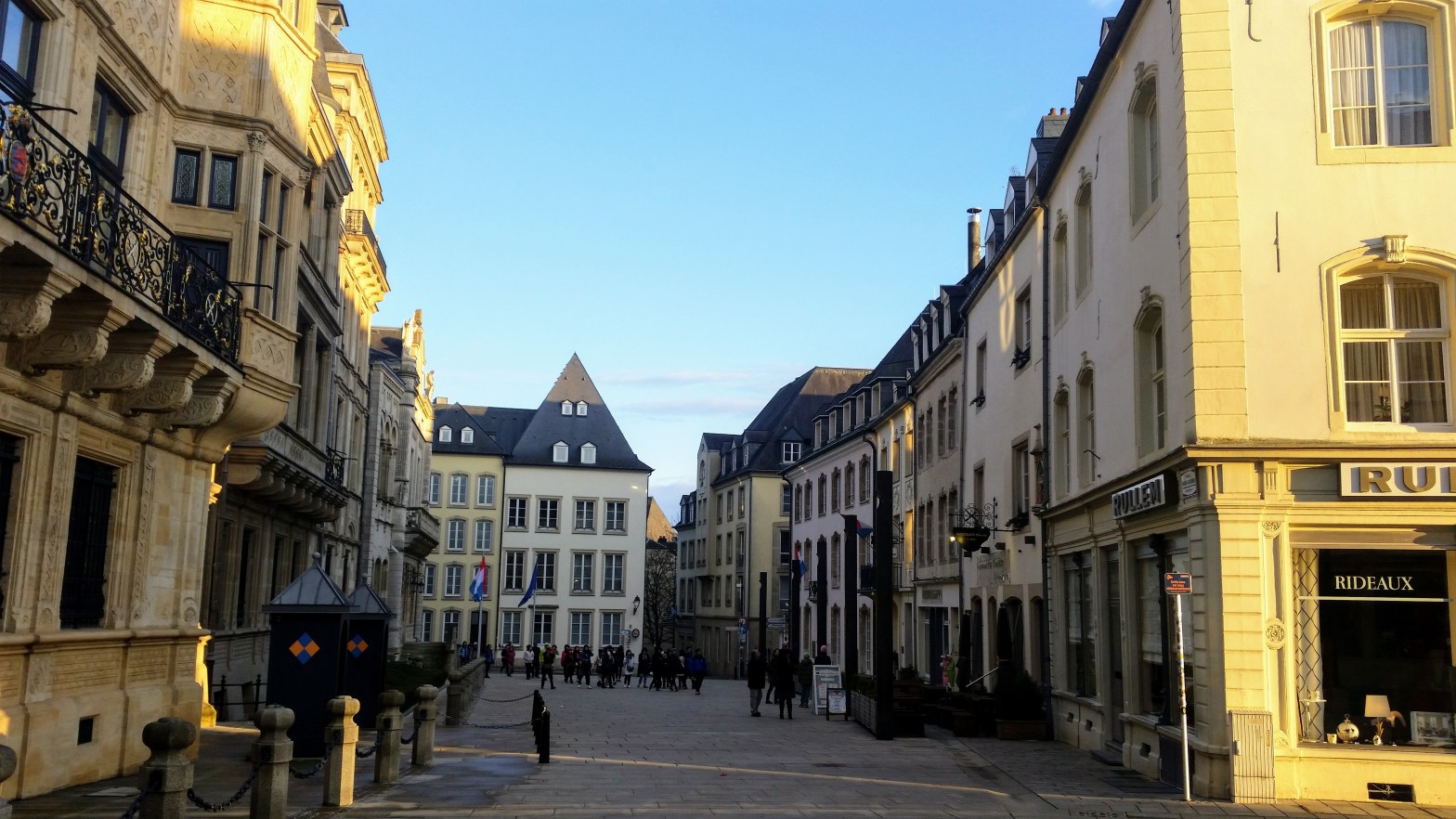
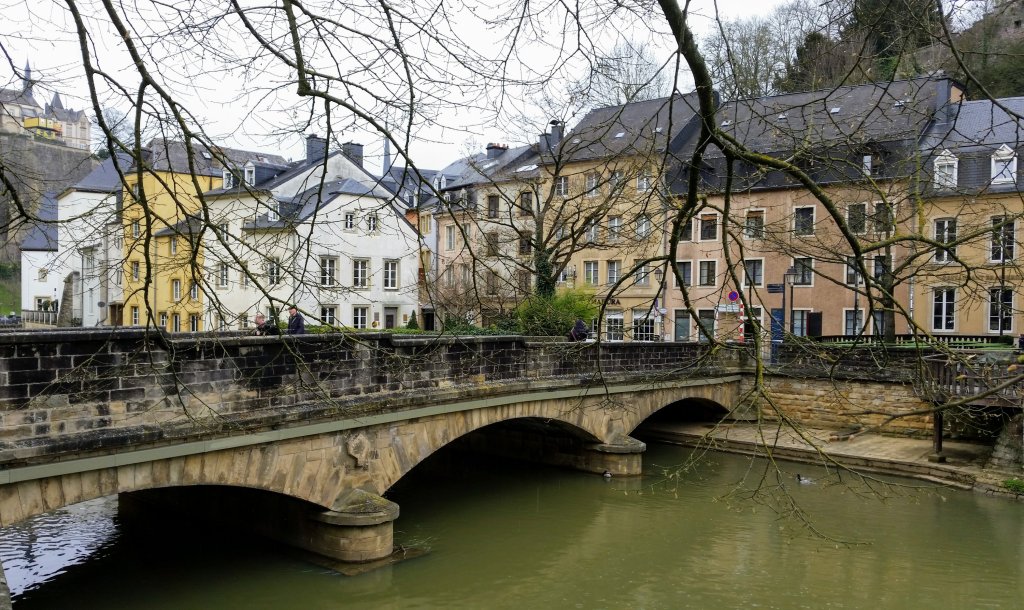
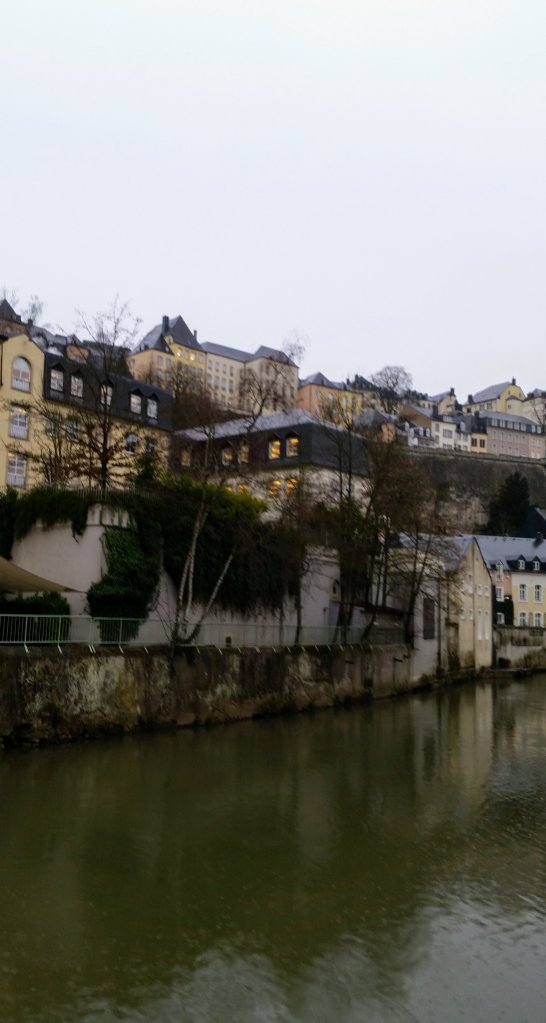
Down in the Grund, Luxembourg City.
We went to Luxembourg with my parents, Mum being the only other person, apart from me, who had read about how gorgeous it was. As I’ve said before, there are amazing deals to be had in these overlooked corners of Europe. It cost about 60% of what we usually pay for a weekend break.
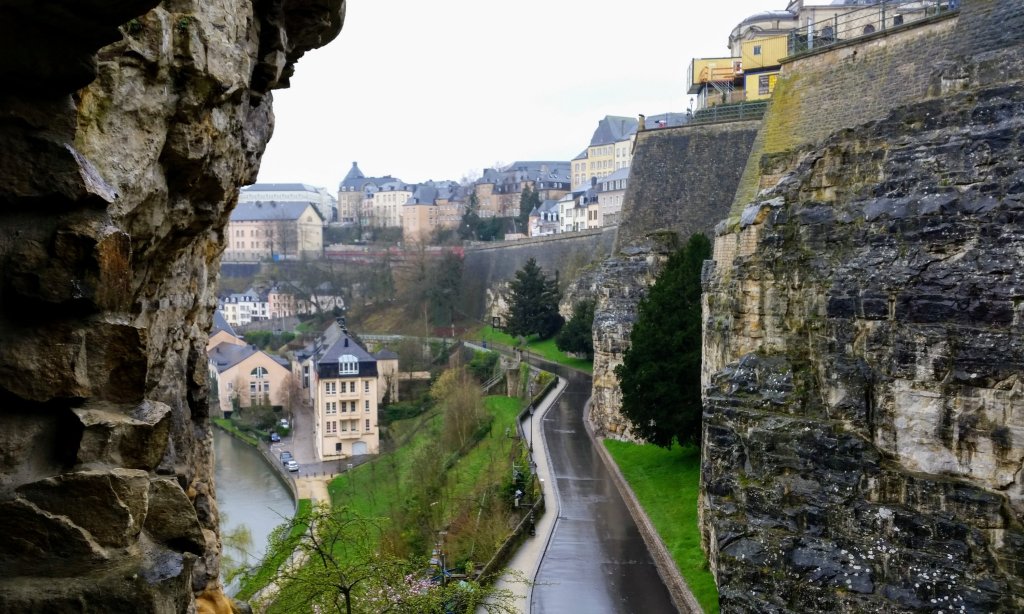
View from the Old Town down to the river Arlette.
Luxembourg City is the capital (another useful fact). The whole population is just over 600,000. That’s coniderably more than Liechtenstein, but less than Leeds! It’s the second richest country in the world, so there must be something about these small places… Public transport is free and more alcohol is sold than anywhere else in Europe. I repeat my question, why does no-one come here?
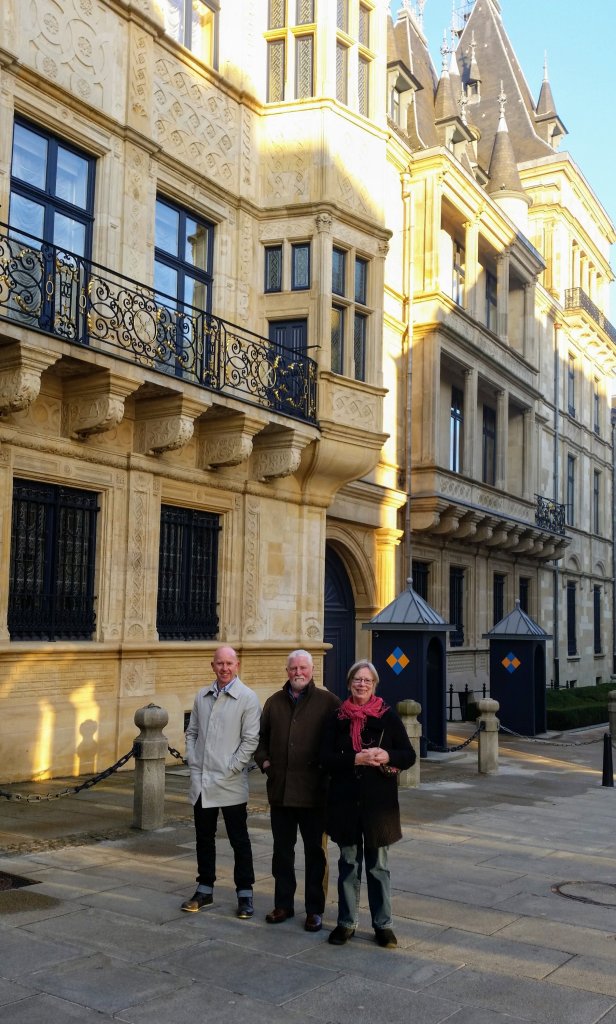
Outside the Palace of the Grand Duke of Luxembourg. He’s the richest royal in Europe, worth a cool €4 billion.
Luxembourg City is stunning to look at. The Old Town sits up on a plateau overlooking deep gorges, with numerous bridges providing vertiginous views. Below the cliffs runs the river Alzette with riverside walks and red squirrels scampering amongst the trees. The lovely old houses of the Grund district are clustered along the river banks, interspersed with pubs and restaurants. It’s pretty idyllic.
View up to the Old Town from the river.
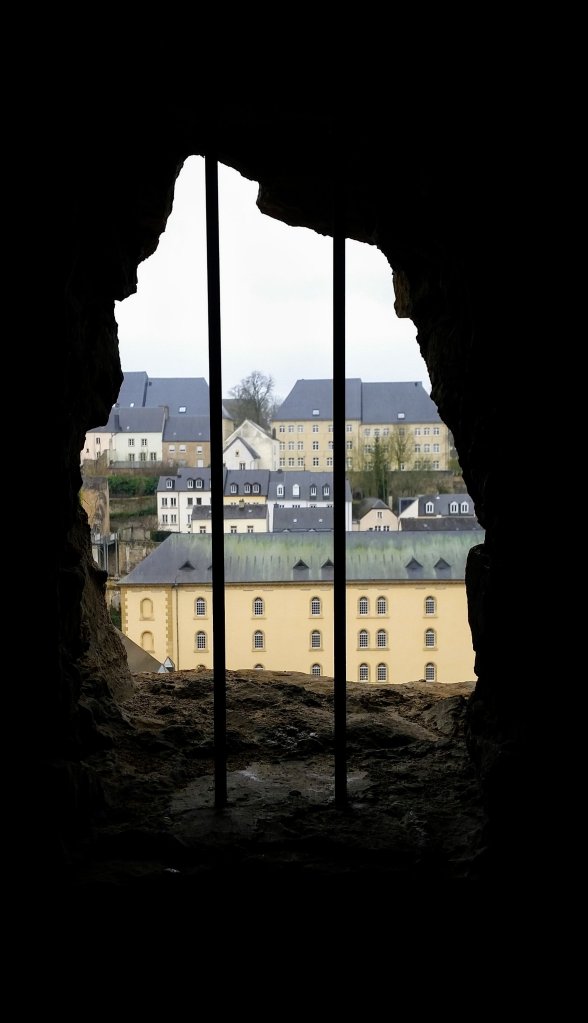
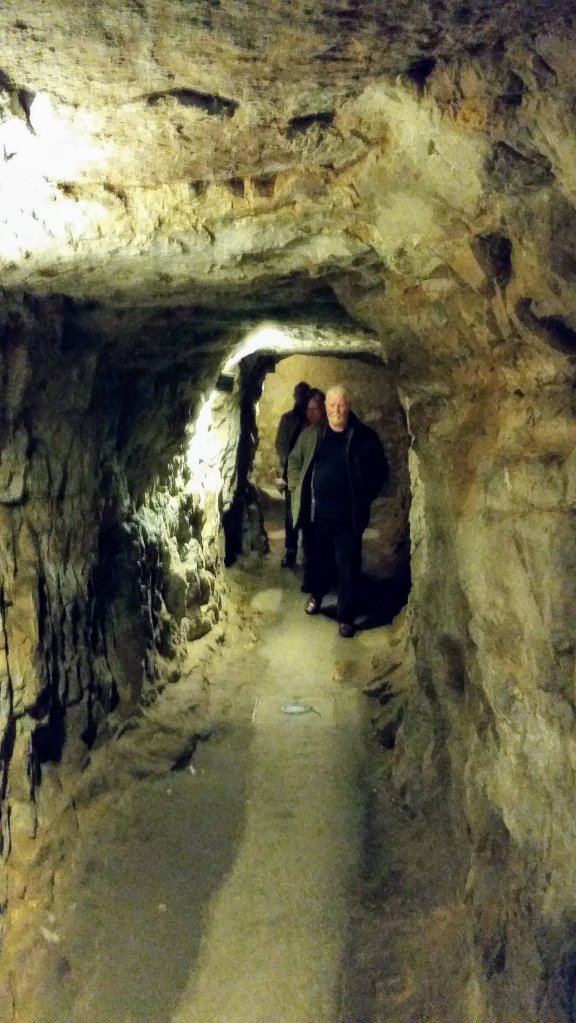
Up in the Old Town, there are views galore and meandering little lanes to explore. The ‘casemates’ is a system of tunnels hewn into the rock of the city’s cliffs, originally part of a huge medieval fortification. Perfect for a rainy day, you can stay dry whilst admiring the views from various spy holes.
View from the casemates – let me out!
I always need to talk about food. In a city where almost 50% of the inhabitants are foreigners, you’re guaranteed to find a good selection of restaurants. But I do like to go local, so we tried Mousel’s Cantine, where huge pork knuckles and horse meat are the specialities. Perhaps not ideal for a pescatarian like me (I think Mum was a bit shocked by the gory menu too) but there was some fish on the menu so I didn’t starve. The atmosphere was great, who doesn’t love a bit of oompah music when in Europe? And the next night we had a delicious Italian at Onesto in the Old Town. No complaints at all.
Exploring the underground tunnels – Dad in Indiana Jones mode!
I hope I’ve managed to convince you to try out some of the smaller, often overlooked corners of Europe. I could tell you about other petite countries I’ve loved, but I don’t have time today, I’ve got to work out how to get myself to San Marino…
That’s according to the Sunday Times anyway, which included this market town in Leicestershire on a list of the top 50 places to live in the UK.
The church and old Grammar School, High Street, Market Harborough.
So why am I here? Agreed, it’s a bit of a random choice for a weekend break. But I live in Berkshire, my friend Bev lives in Yorkshire. We look for somewhere picturesque about halfway between the two and meet up to explore somewhere new as we catch up. Wine and food feature heavily, needless to say. Market Harborough, being ancient market town (clue in the name) looked like a safe bet.
On a previous trip – Bev in the market square in Warwick.
If you’re not from the UK you may wonder what a market town is. Historically it was a settlement that was awarded a royal charter to hold a regular market. In the Middle Ages, markets couldn’t be held within one day’s travel of each other so they had to be at least 10 miles apart.
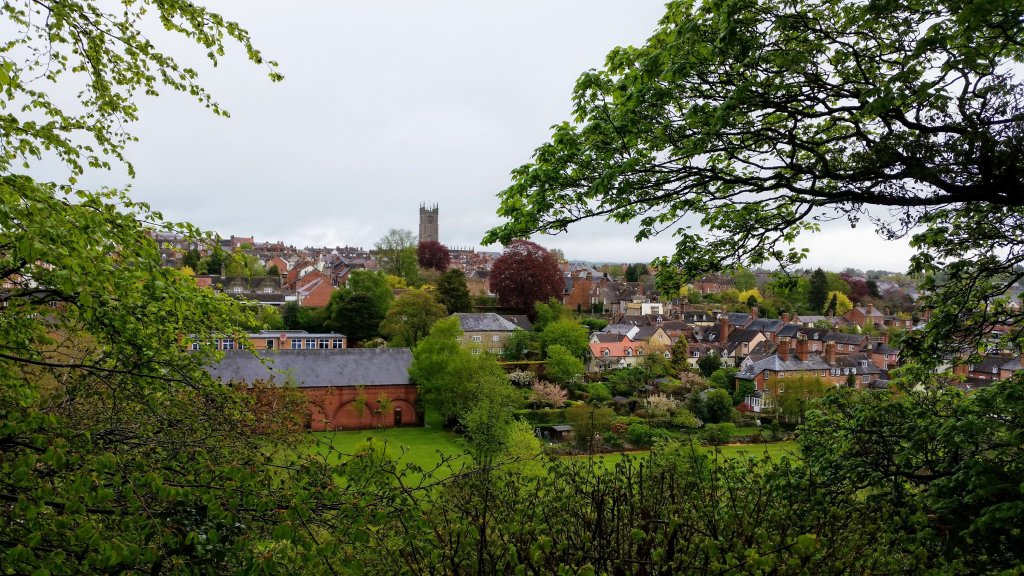
View towards Ludlow in Shropshire.
Market towns are now really popular places to live, with a historic centre and great amenities in a rural setting. There’s usually a market square, where business was done in the open air, and sometimes a market cross in the middle. Throw in some ancient properties, maybe a lovely river crossing, and always some old coaching inns (pubs, hurrah!). Who wouldn’t want to live in a place like this?
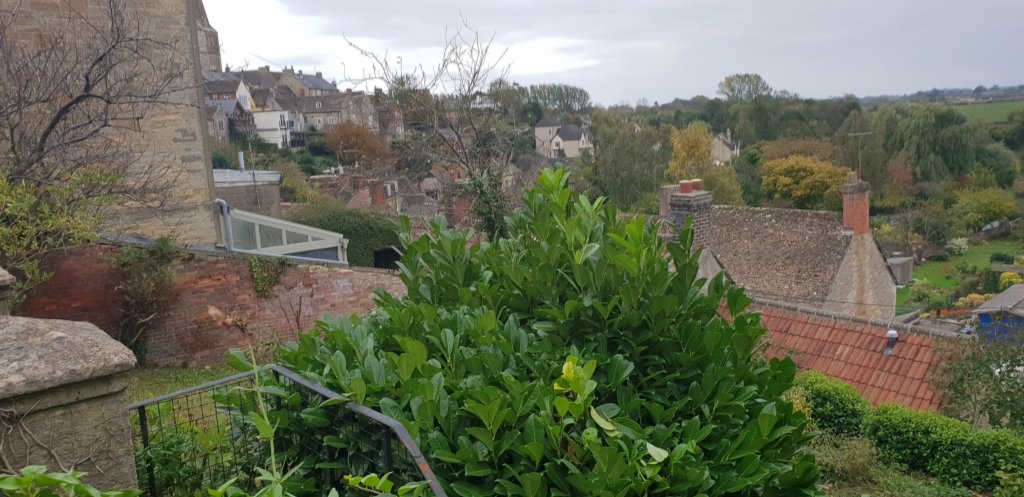
In Malmesbury, Wiltshire, looking out towards the countryside.
Personal favourites include Stow-on-the-Wold in Gloucestershire, Saffron Walden in Essex, Keswick in the Lake District, Knaresborough and Filey in Yorkshire, Blandford Forum in Dorset. Market towns are everywhere. Just pick one at random and visit. Even better, book yourself a room in a nice comfy old inn, as we do.
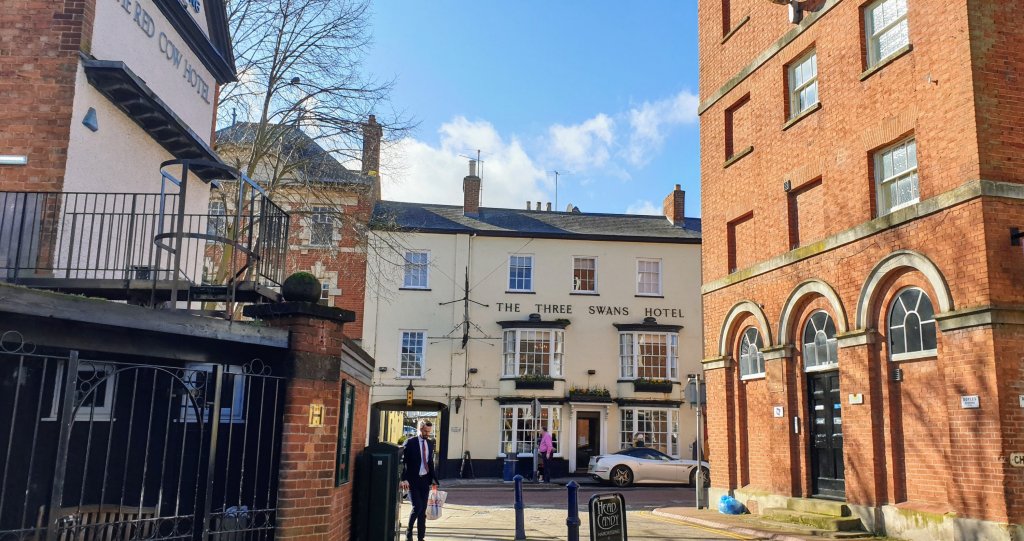
The Three Swans Hotel, Market Harborough.
This trip, we stay at the Three Swans Hotel, an old coaching inn that’s been welcoming visitors for over 500 years. On one of the great old roads of England from Manchester, via Nottingham and Leicester, to London, the first written record of the pub dates from 1517. It’s quite a big place and it’s popular with overnight guests. Obviously, spending a weekend in Market Harborough isn’t as unusual as I thought…
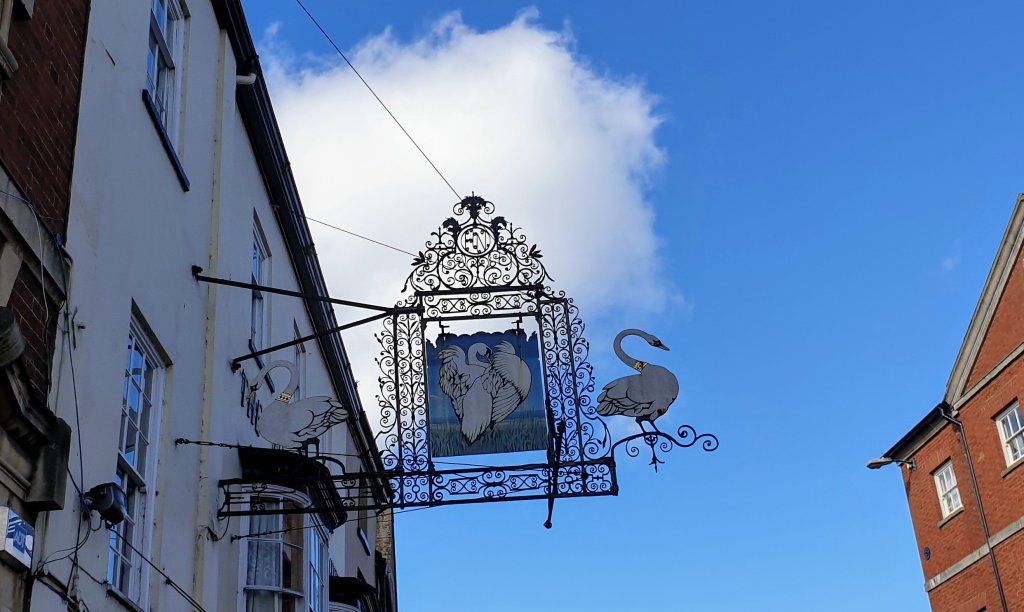
The rather elaborate sign at The Three Swans.
When we arrive the pub is busy with the lunchtime crowd. An artisan sandwich with halloumi and pesto hits the spot nicely. The two couples at the next table have obviously been there for some time. “You promised you wouldn’t get drunk” one wife berates her husband, while their three kids watch folornly. The men start to sing loudly. “Are they bothering you?” asks the nice waitress. No, it’s quite entertaining thanks.
The view along Church Street.
Exploring Market Harborough doesn’t take long, but that’s really the point of a market town, they are small but perfectly formed. There are some lovely Georgian buildings along the main streets, and lots of little passageways between them. The shops aren’t up to much. There’s an impressive war memorial. It’s very English.
We have dinner at a lovely Italian place, Casa Nostra, and then wonder back to the pub for a nightcap. Despite it being late February, there are plenty of scantily clad ladies coming out of the pubs on the High Street. We’re a tough race.
Time for wine and pizza.
The next morning, after a hearty English breakfast (no smashed avocado on toast here) we take a walk along the pretty riverside path to Welland Park. A robin watches us pass from his perch beside the river. Most of the dogs in town are out for their Sunday morning walks. It’s officially Spring and the sun is shining, but this is the UK after all and it’s freezing.
Along the river Welland.
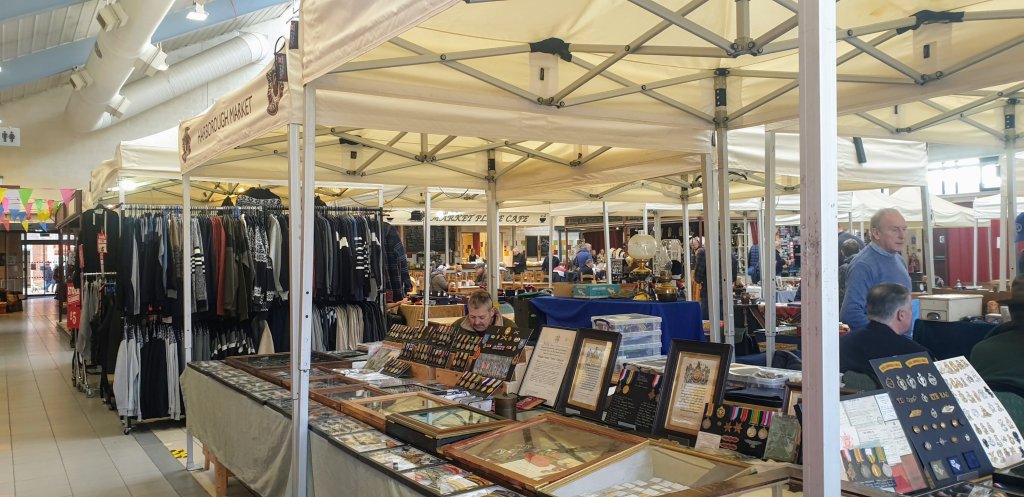
To escape the cold, we take a look inside the market hall. Markets have been held here since 1204 when King John granted a charter, but stalls were originally set up on the High Street. The current hall is a relatively modern building, and walking in is like being transported back to 1975. There are some parts of England where it feels like time has stood still and this is one of them.
The market – we didn’t buy anything.
There are stalls selling wool, old medals, toy cars, socks of every hue. I’m really not sure who needs this stuff. No-one buys anything while we’re there. My Dad could spend hours at the record stand though. We pause outside the old-style sweet shop for a while, reminiscing about Floral Gums and Wagon Wheels. Lots of people are drinking tea in the market cafe. Bill Bryson would love it!
Driving home in the sunshine, I pass through lovely little villages and rolling countryside. There’s a sign saying ‘Badgers crossing here’. It’s a quirky old country isn’t it? Go and make that booking.









 Steph's Travels