Geneva, Switzerland’s second city, is known as a hub of worldwide diplomacy and banking. Added to the fact that it’s in Switzerland, which has a reputation fot being a bit, well, unexciting. And rich, therefore expensive. So basically, not very enticing in terms of a weekend break.
However, I’ve been to Lucerne before and was blown away by the scenery. More importantly, I’m travelling with my friend Heather to celebrate 25 years of riotous friendship. Boredom is simply not on the cards. We decide to give Geneva a go…
First impressions are good. Swiss efficiency is on parade as we obtain our free train transfer tickets into the city. Many cities see airport trains as their first opportunity to rip off tourists (yes, Heathrow Express, I’m talking to you!) so this is a breath of fresh air. Naturally, the train leaves on time. Before long, Heather and I are strolling downhill from the central station to the lakeside, where our hotel is situated.
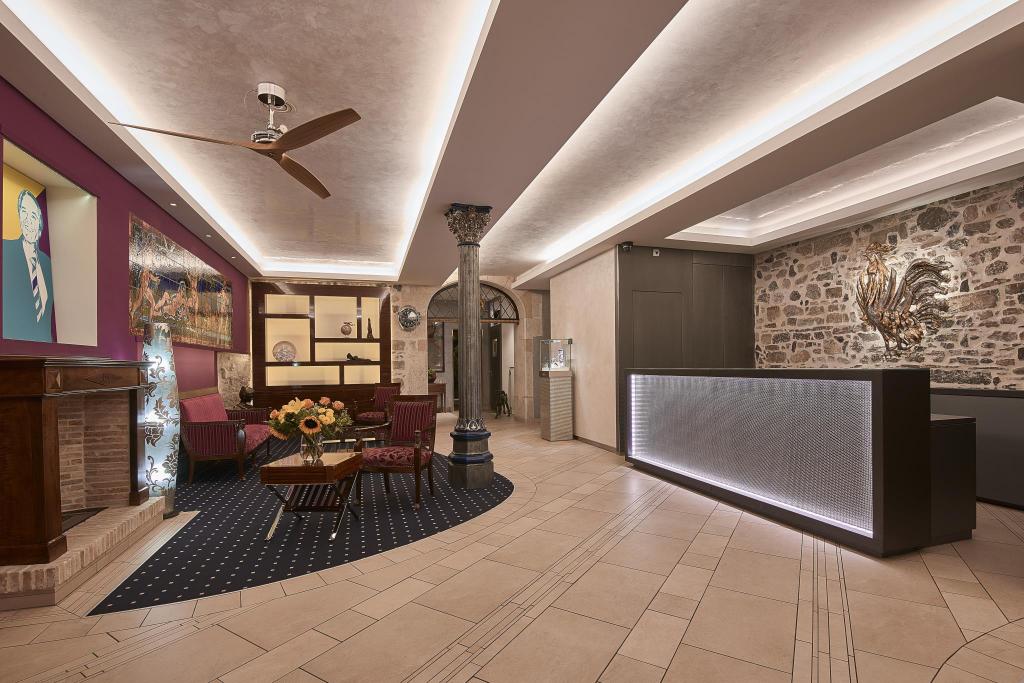
We’re staying at the 4 star Hotel d’Alleves which does everything it says on the tin, with pleasant staff, comfy rooms and a decent breakfast included. Admittedly, Heather does have a nasty fall in the shower which results in quite a spectacular bruise, but we can hardly blame the hotel for that! We are both equally accident-prone, so I’m just relieved that fortune seems to be shining on me, for now at least.
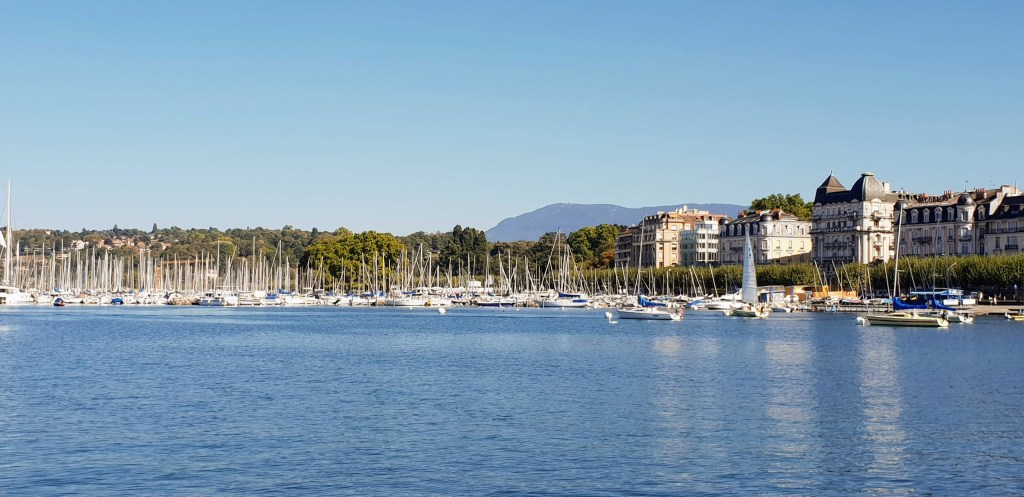
Location-wise, we have chosen well. A short hop over nearby Pont de La Machine, one of the pedestrian bridges crossing the Rhone river, and we’re in the old town. Here steep cobbled lanes and staircases all head upwards towards the Cathedral Saint Pierre. It’s a beautiful sunny day and we have a weekend of exploring before us. It really doesn’t get much better than this, in my humble opinion. I couldn’t be less bored if I tried.
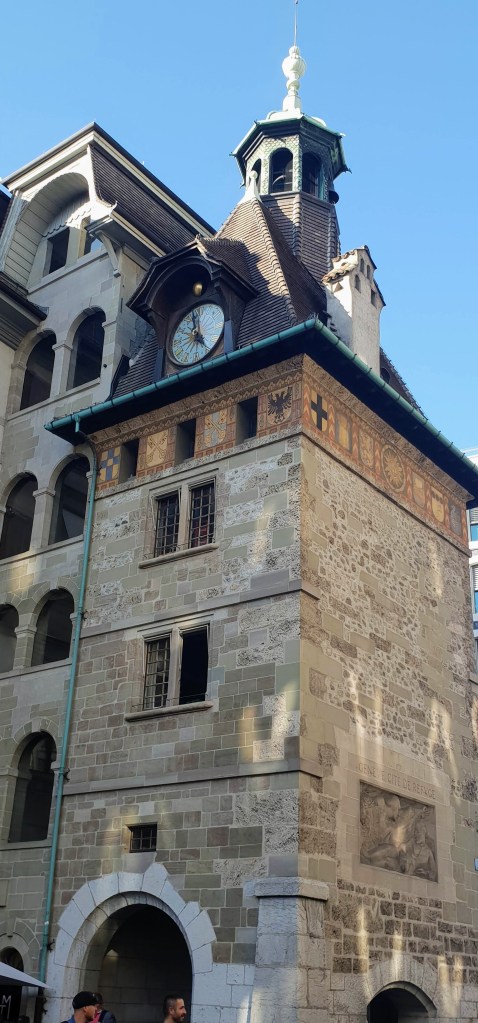
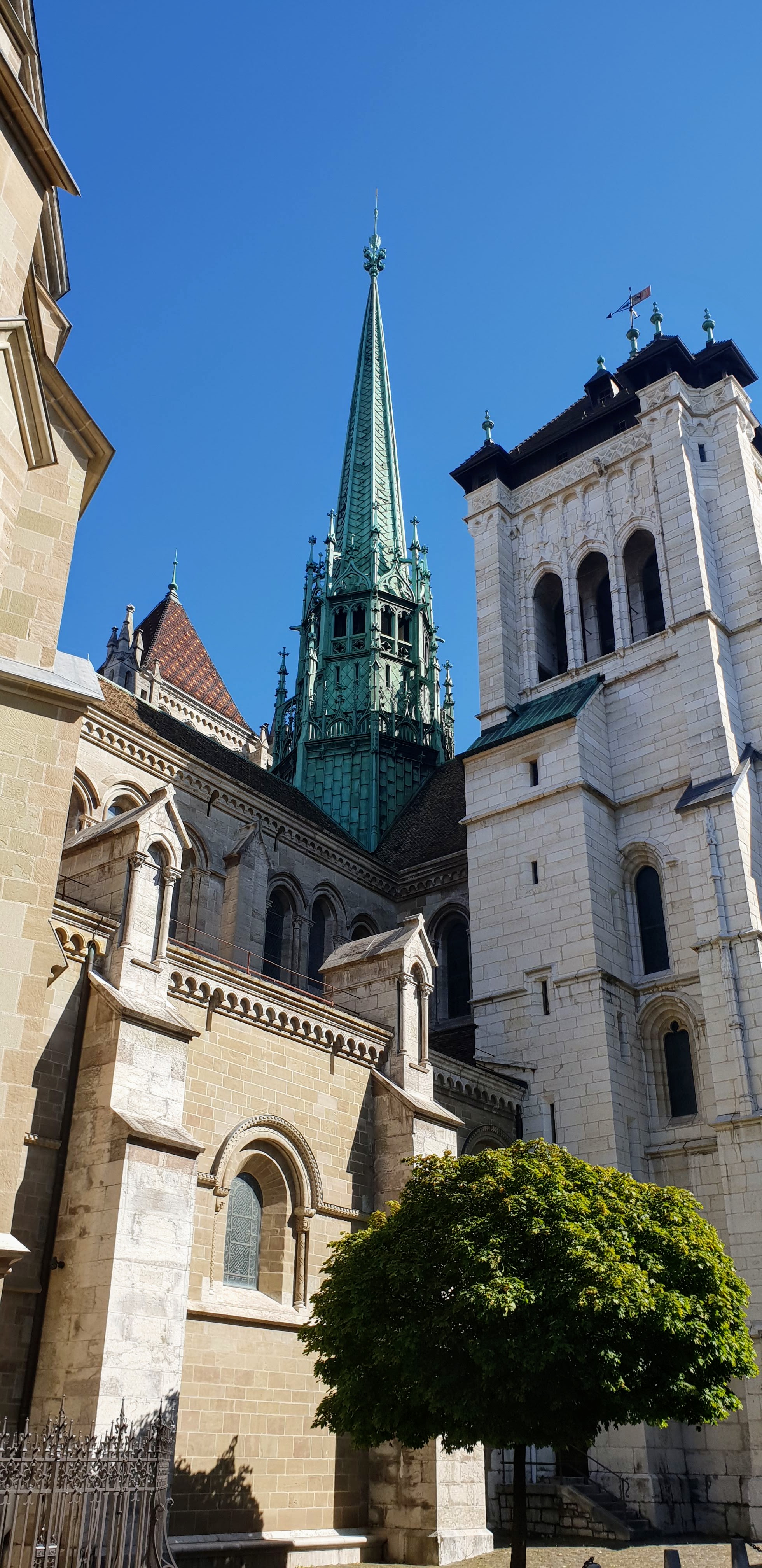
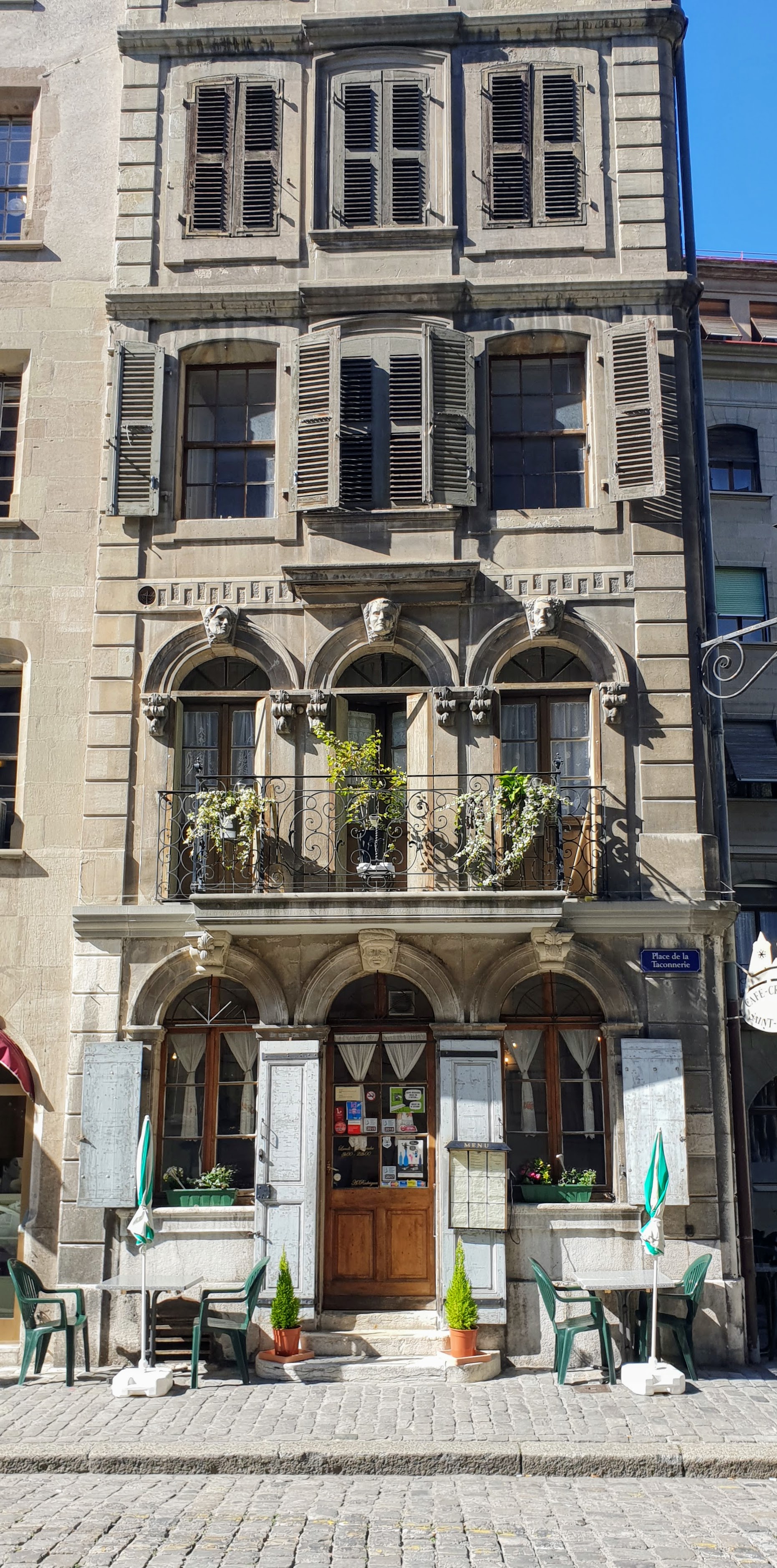
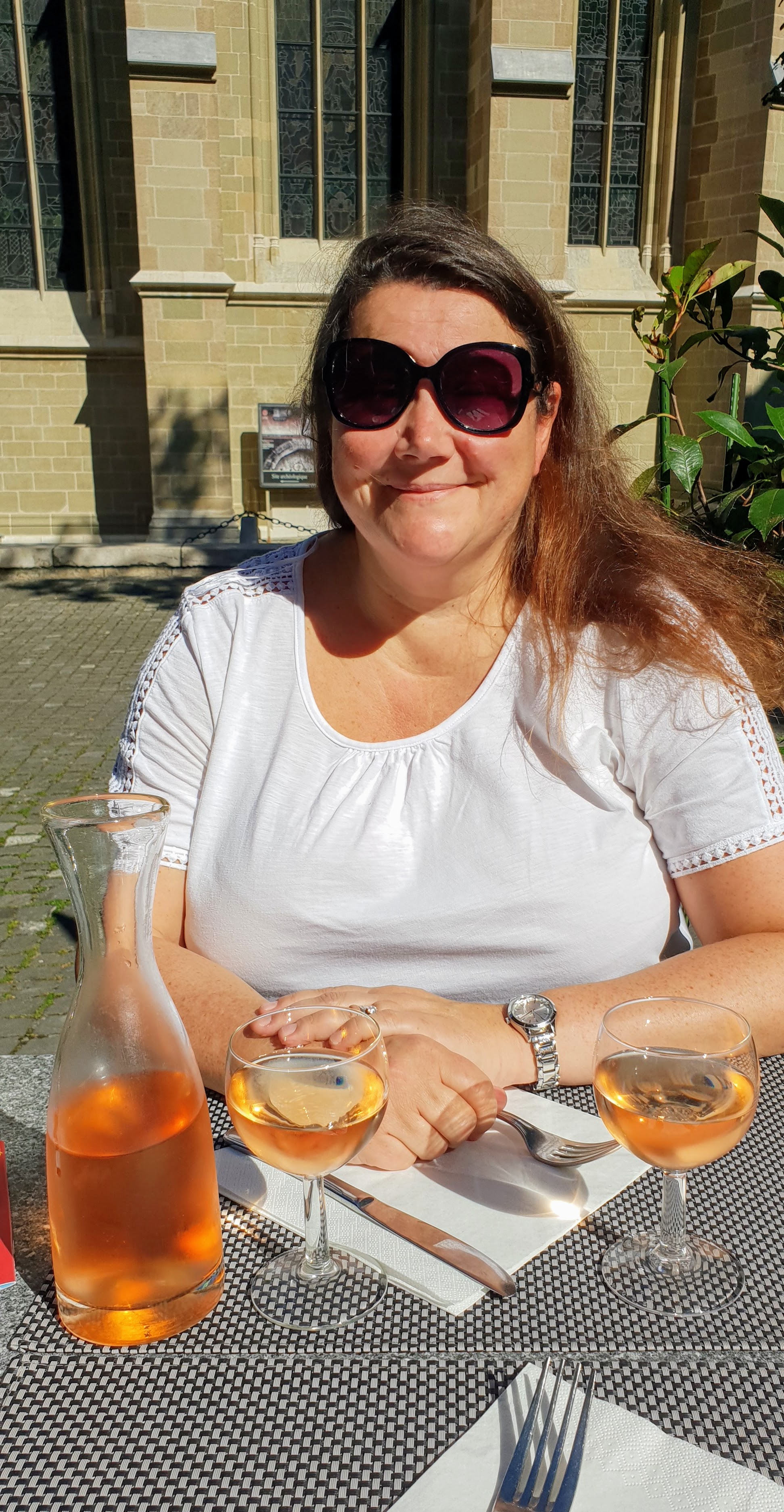
First priority: Catching up over lunch and drinks. Cafe Saint Pierre has sunny tables directly opposite the cathedral, and offers the most delicious crepes. We spend a happy hour here over a carafe of local rose wine. We like both restaurant and rose so much that we come back for lunch another day.
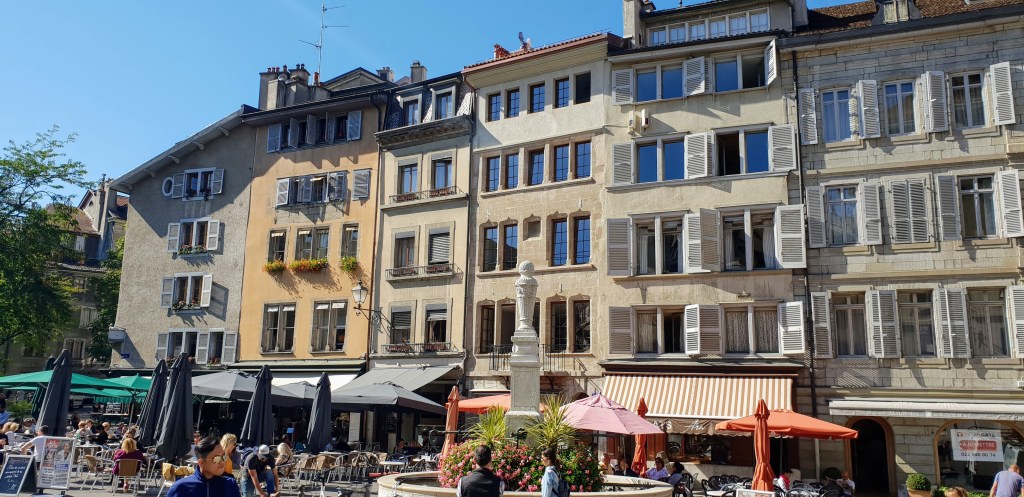
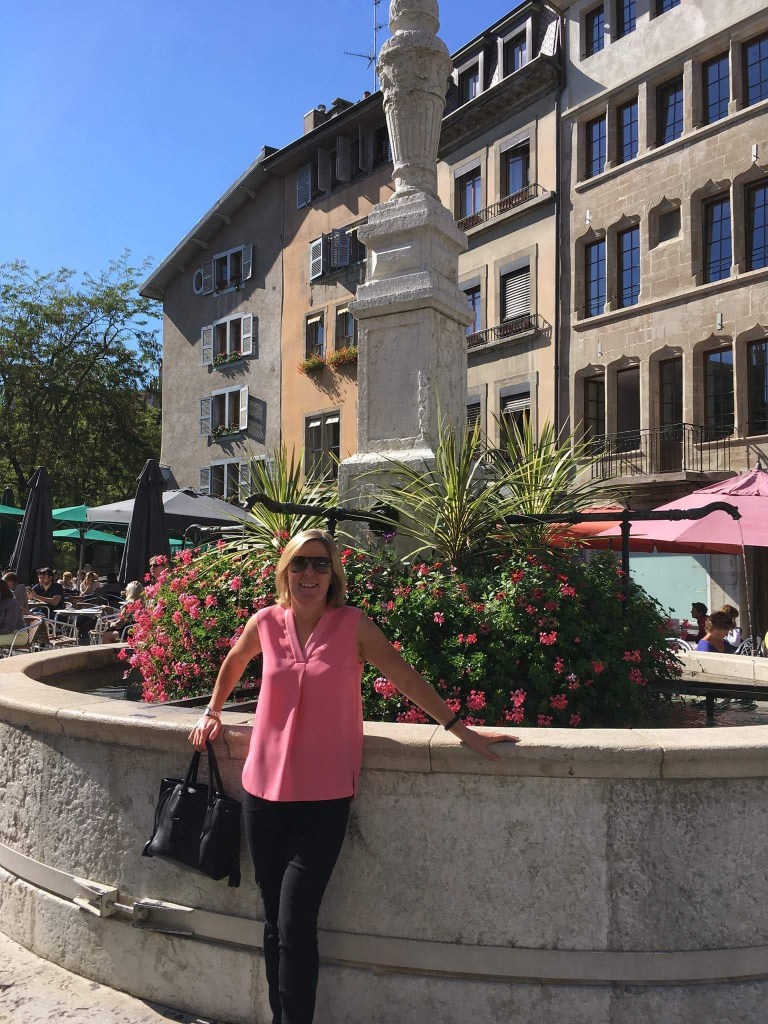
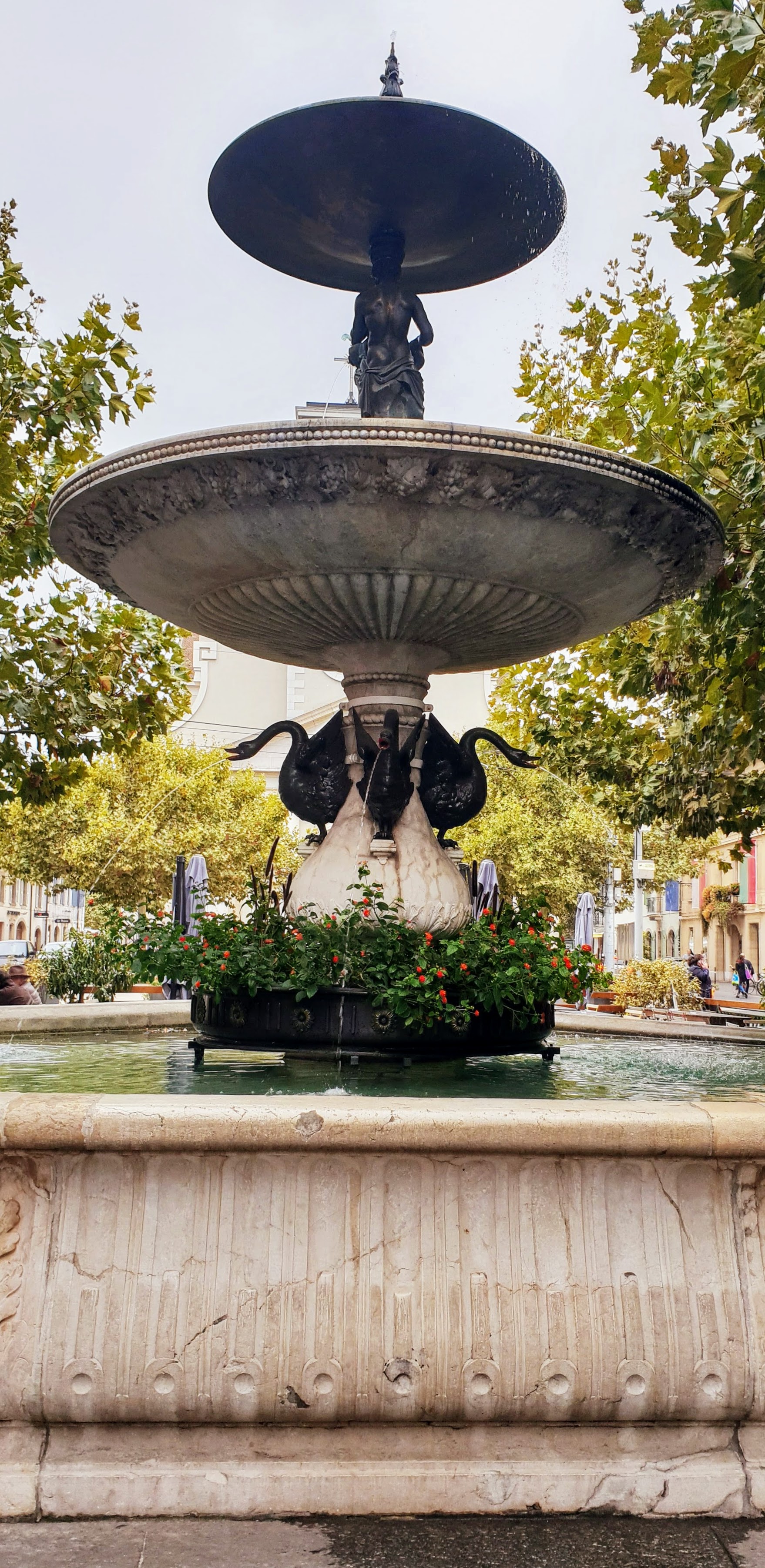
A short walk away is Geneva’s oldest square, Place du Bourg-de-Four, which has served as a meeting point since Roman times when there was a cattle market here. It continued to be a marketplace through the Middle Ages and nowadays restaurants and cafes surround a lovely 18th century fountain. It’s a perfect place to sit outside a pavement cafe and watch the world go by. Which, of course, we do.
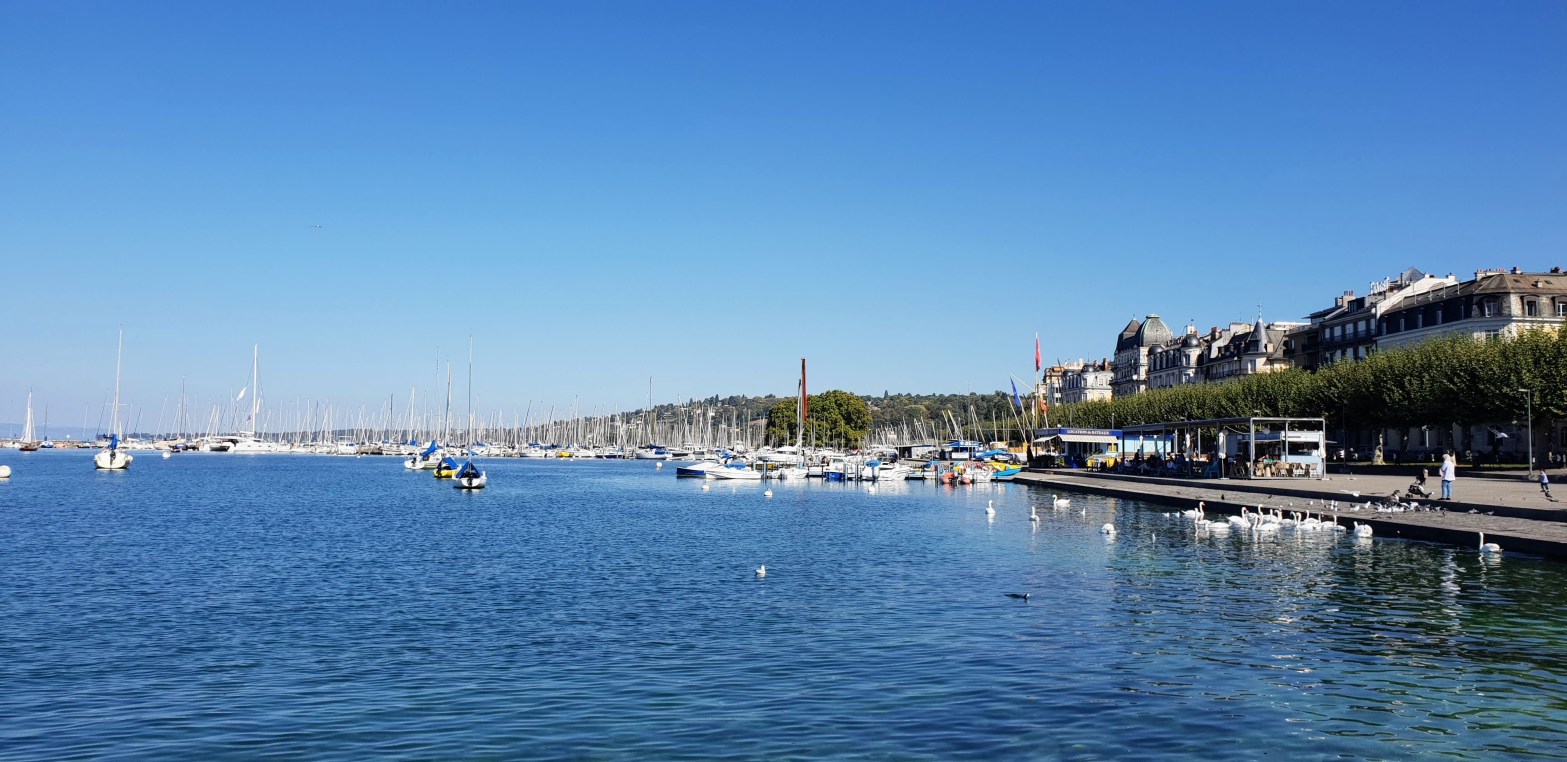
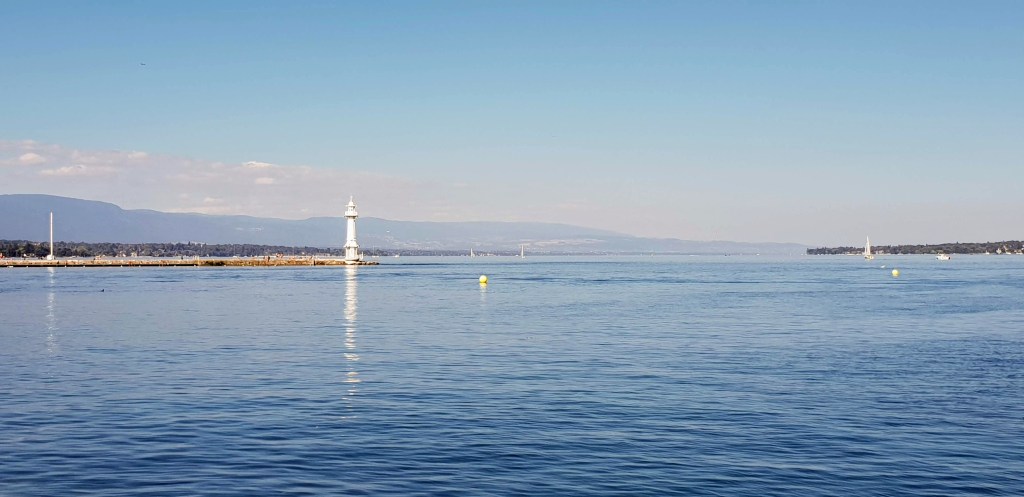
Next, we head down to the shores of Lake Geneva, or Lac Leman to the French – it’s shared between the two countries 60:40 so the Swiss get most of it. One of the biggest lakes in Western Europe, 73km long and up to 310m deep, it’s huge. It’s also very pretty, whichever way you look at it.
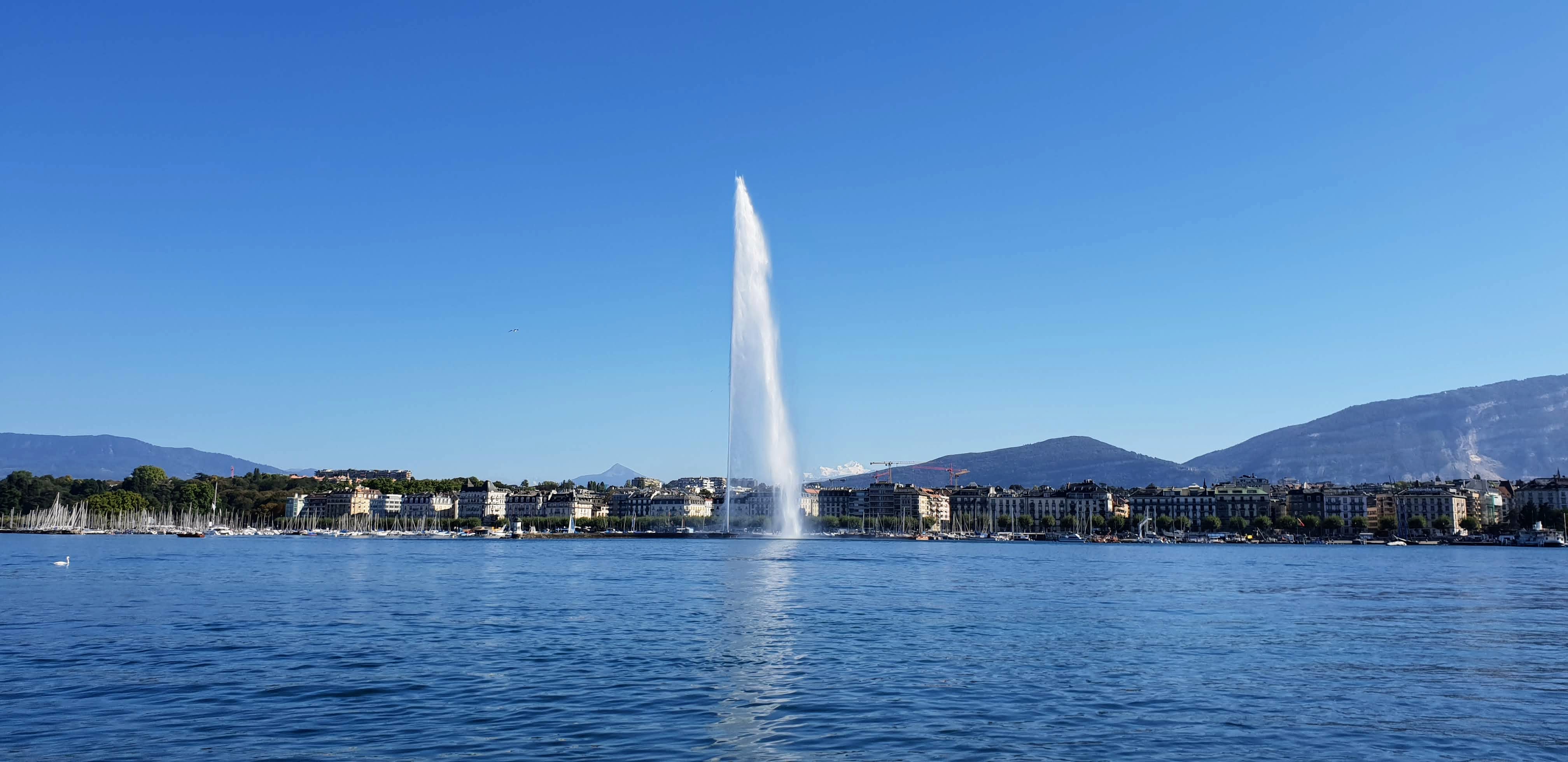
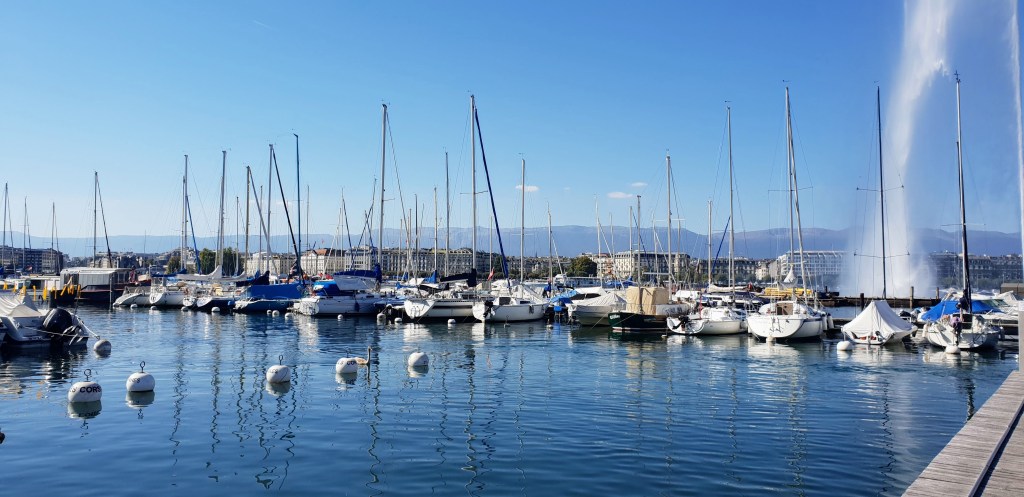
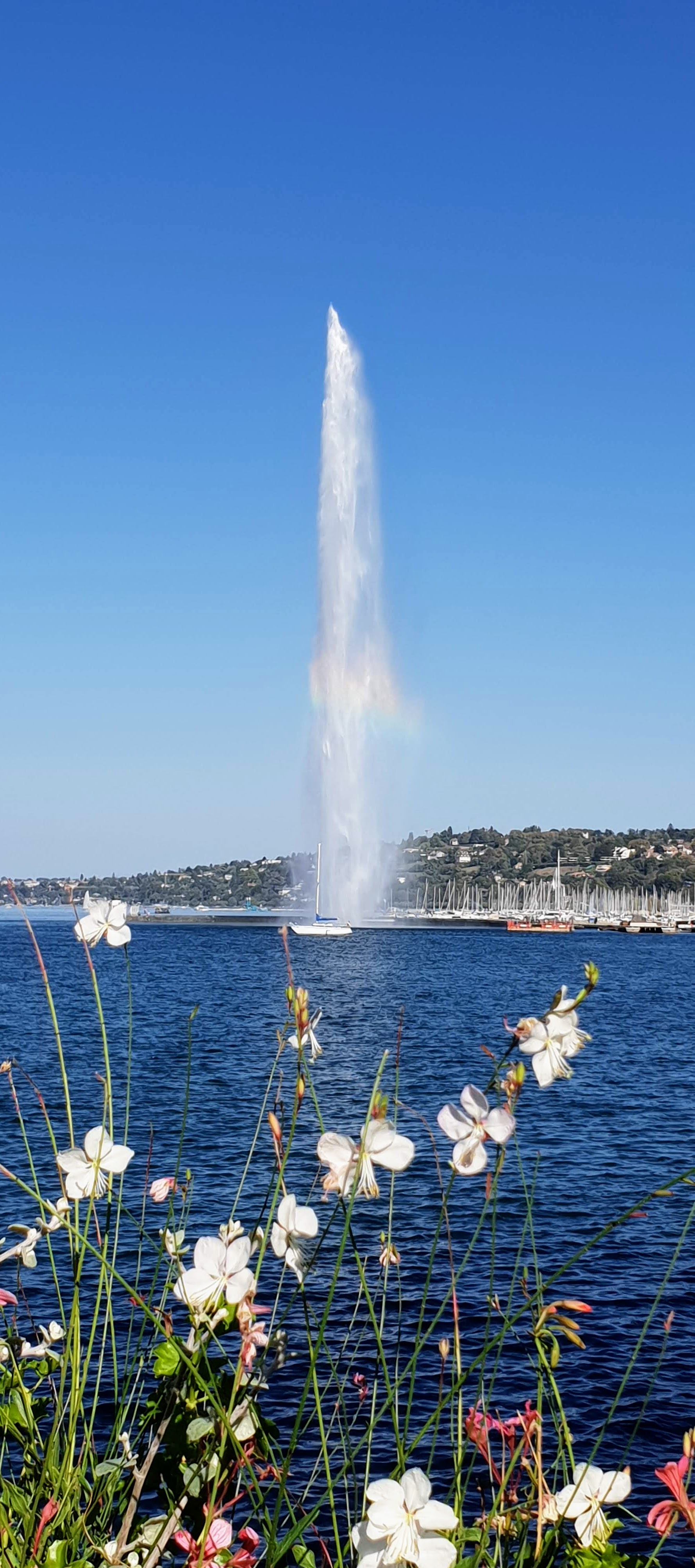
The Jet d’Eau water fountain is one of the city’s most famous landmarks, rising up to 140 metres in the air. It’s fairly spectacular, especially when seen against a clear blue sky.
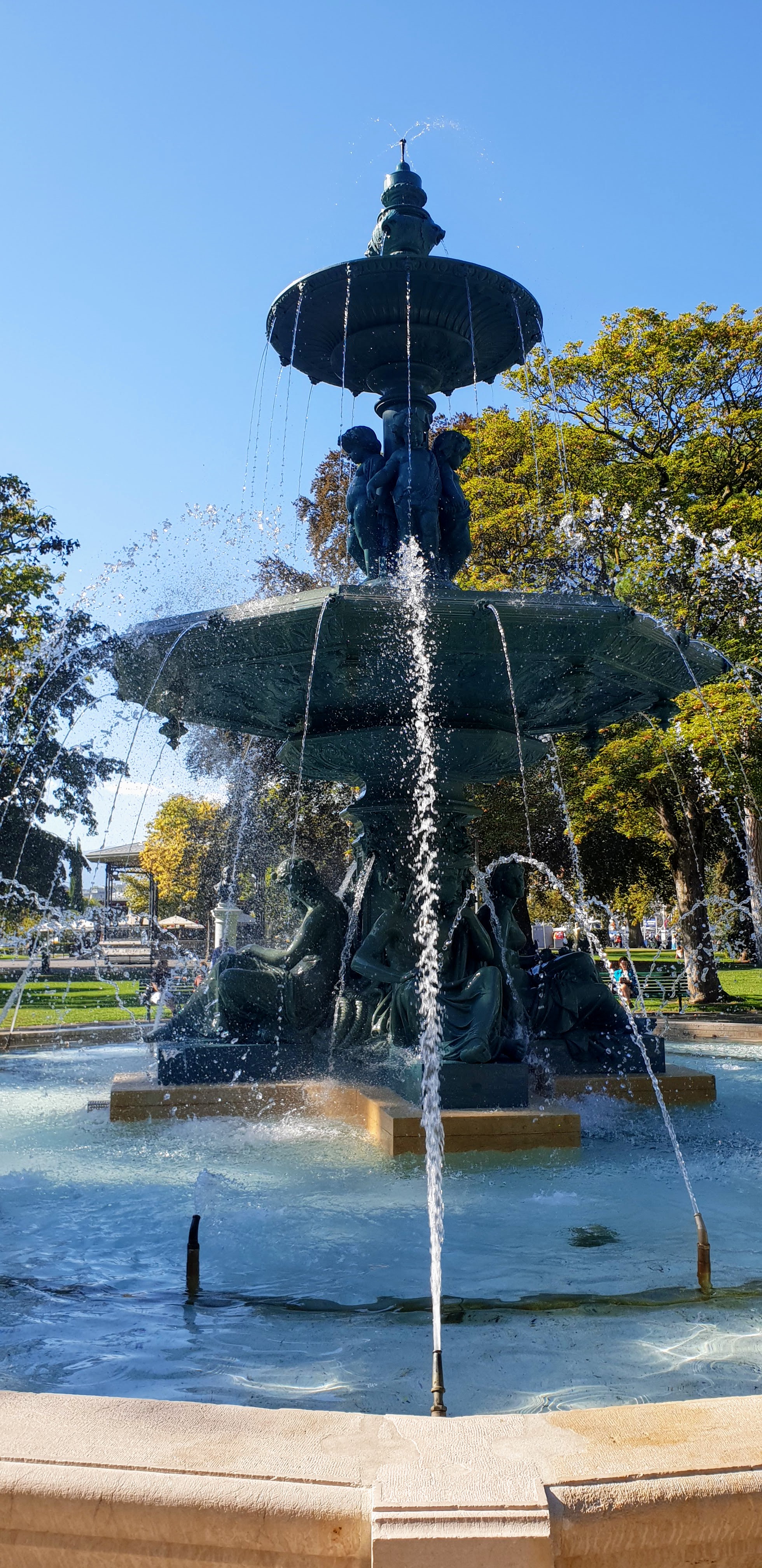
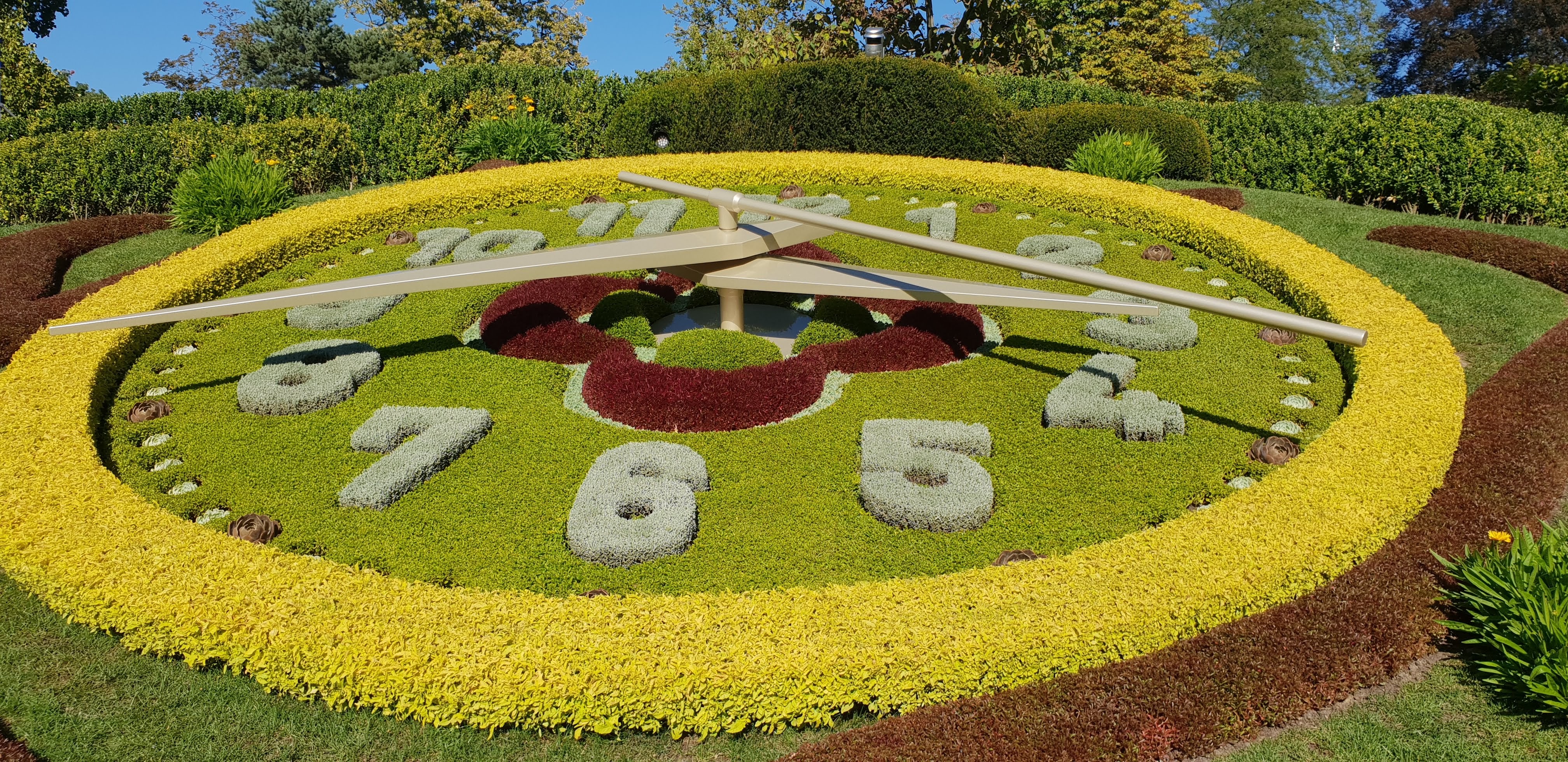
A walk along the lakeside promenade is a must both for the outlook and the gorgeous landscaping. As in so many European cities there’s a Jardin Anglais or English Garden which resembles nothing I’ve ever seen in England. It has a lovely bronze fountain, a national monument and a flower clock which keeps perfect time – hmmm, I’m not getting visions of home yet! The timekeeping in particular is a bit of an anomoly. Why not just call it a Swiss Garden? Or at least make the clock run slightly behind time – that would be much more English!
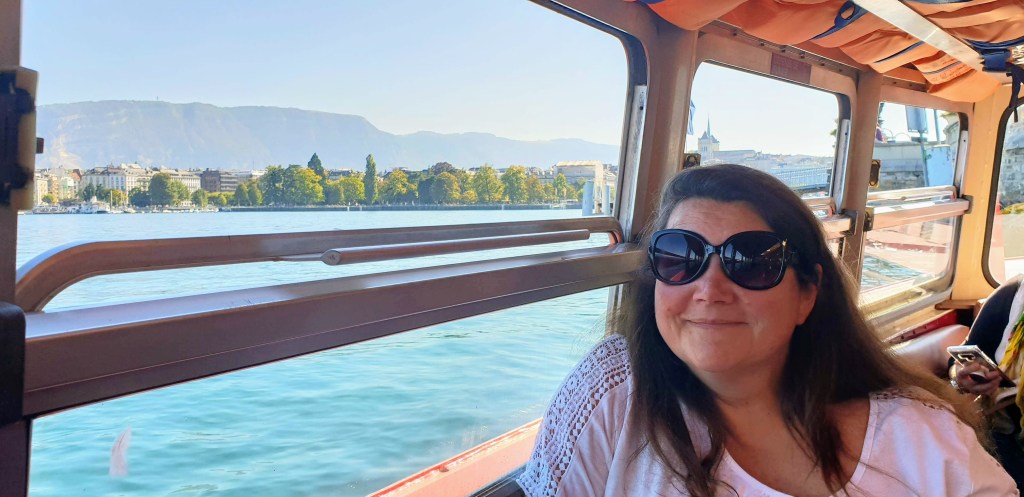
Getting around Geneva is a dream, as you’d expect in this most efficient of countries. Trams, trains, buses all run on time and are immaculately clean, but my favourite method of transport here are the cute little ferries that shuttle across the lake. We zigzag around a few times just because it’s fun and the views over the lake to the mountains are stupendous. Travel is such a joy when things work, isn’t it? Nope, we’re still not bored.
After exploring the old town and the lakeside, my picks for getting to know Geneva a bit more intimately are as follows. Number one, catch the tram out towards the groovy little suburb of Carouge. You can stop off at the flea market of Plainpalais on the way there. If you’re a keen bargain hunter you may be able to pick up something that will impress on Antiques Roadshow. I am not, and I spend most of my time trying not to laugh at the hideous things people are hoping to flog.
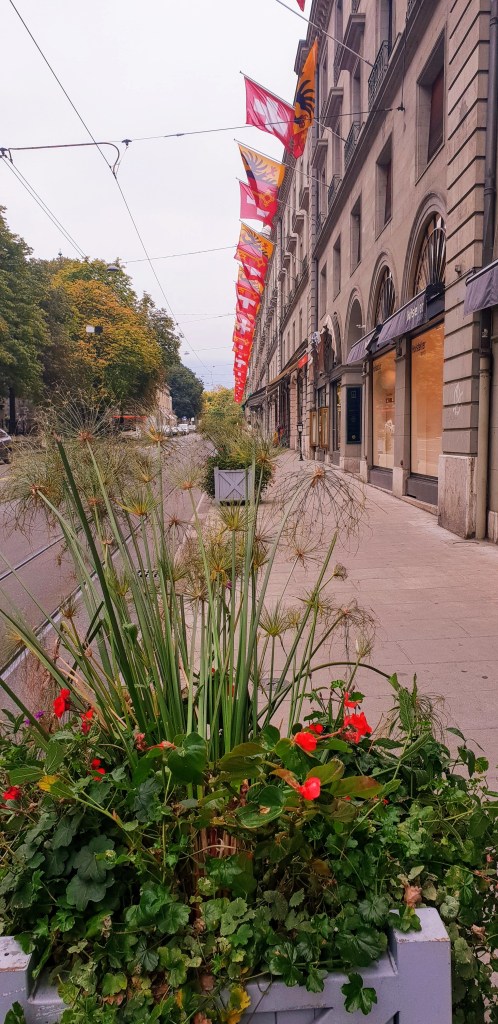
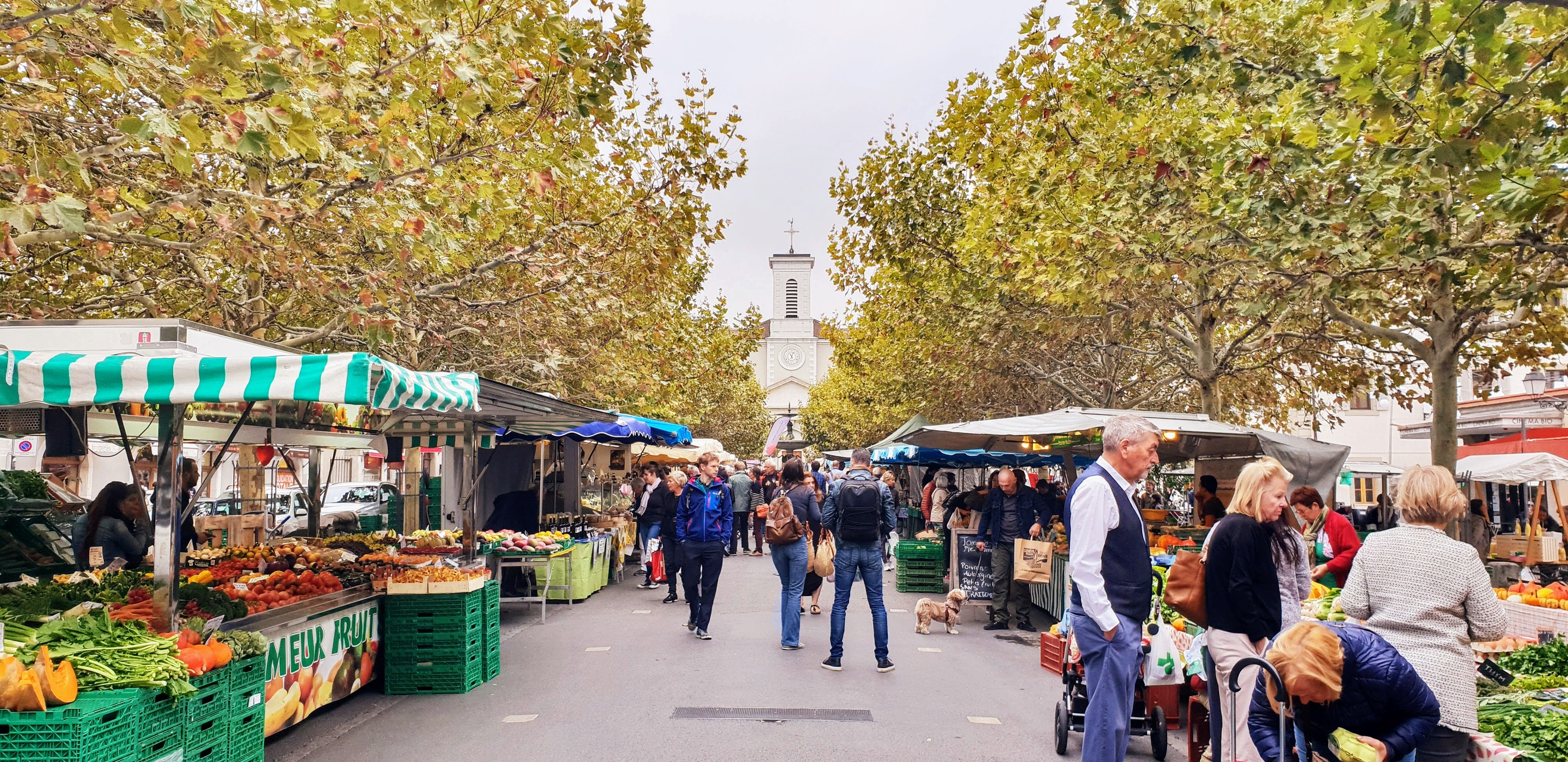
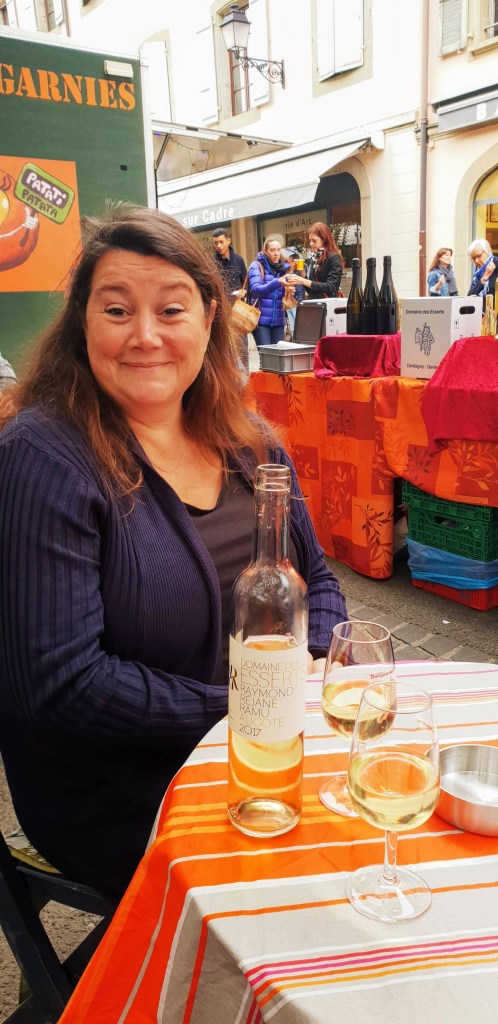
Carouge itself centres on its farmers market, which is much more my kind of thing – food! Even better, there are stalls set up by local winemakers. It would be rude not to try some wouldn’t it? Heather and I happily take a pew and do some enthusiastic tasting. Cultural research, we call it. Far from boring.
Quite apart from the marché, it’s worth strolling around the backstreets to admire the architecture here. Carouge is known as Geneva’s Little Italy, with a different feel to the rest of the city due to the area’s Sardinian heritage. The area has lots of cafes, galleries and independant shops to check out. We find a great little Italian restaurant where they prepare a huge pan of the pasta of our choice. Plates cleared, the contents of the pan keep coming. I’m stuffed, but it feels rude to refuse, plus it’s delicious. Go on then, just a small second portion.
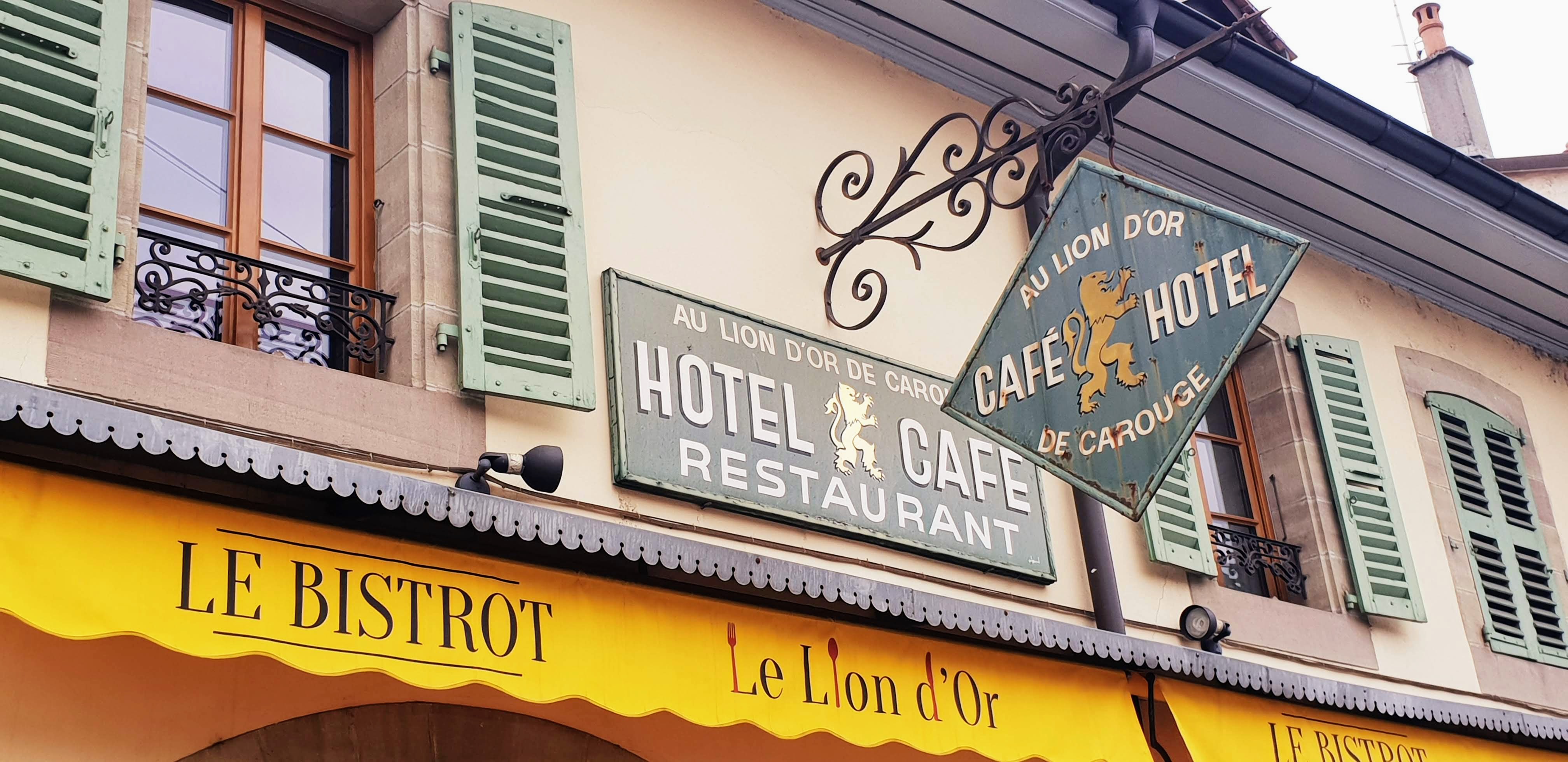
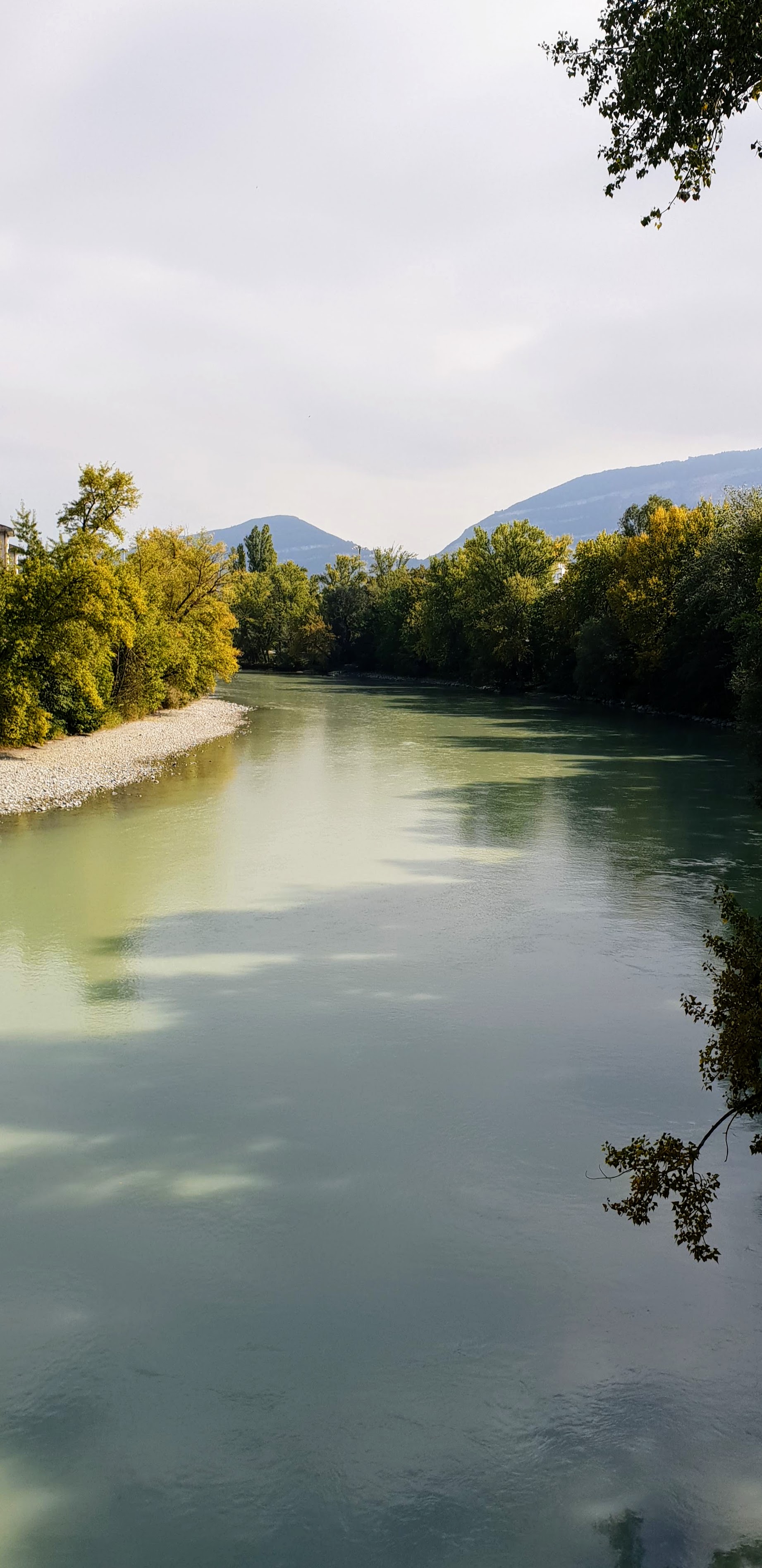
Walking, or rather waddling back to the city centre, in the vain hope of shifting the kilos of carbohydrate we’ve consumed, we cross the River Arve. This flows into the Rhone, which in turn flows into the lake. Geneva really is a city where water dominates, which is one of the reasons I like it. Rivers and lakes guarantee good walks.
Because of the famous Swiss neutrality, Geneva hosts more international organisations that anywhere else in the world. So my second recommendation is to visit the headquarters of the United Nations and the Red Cross and find out more about the serious work that goes on here.
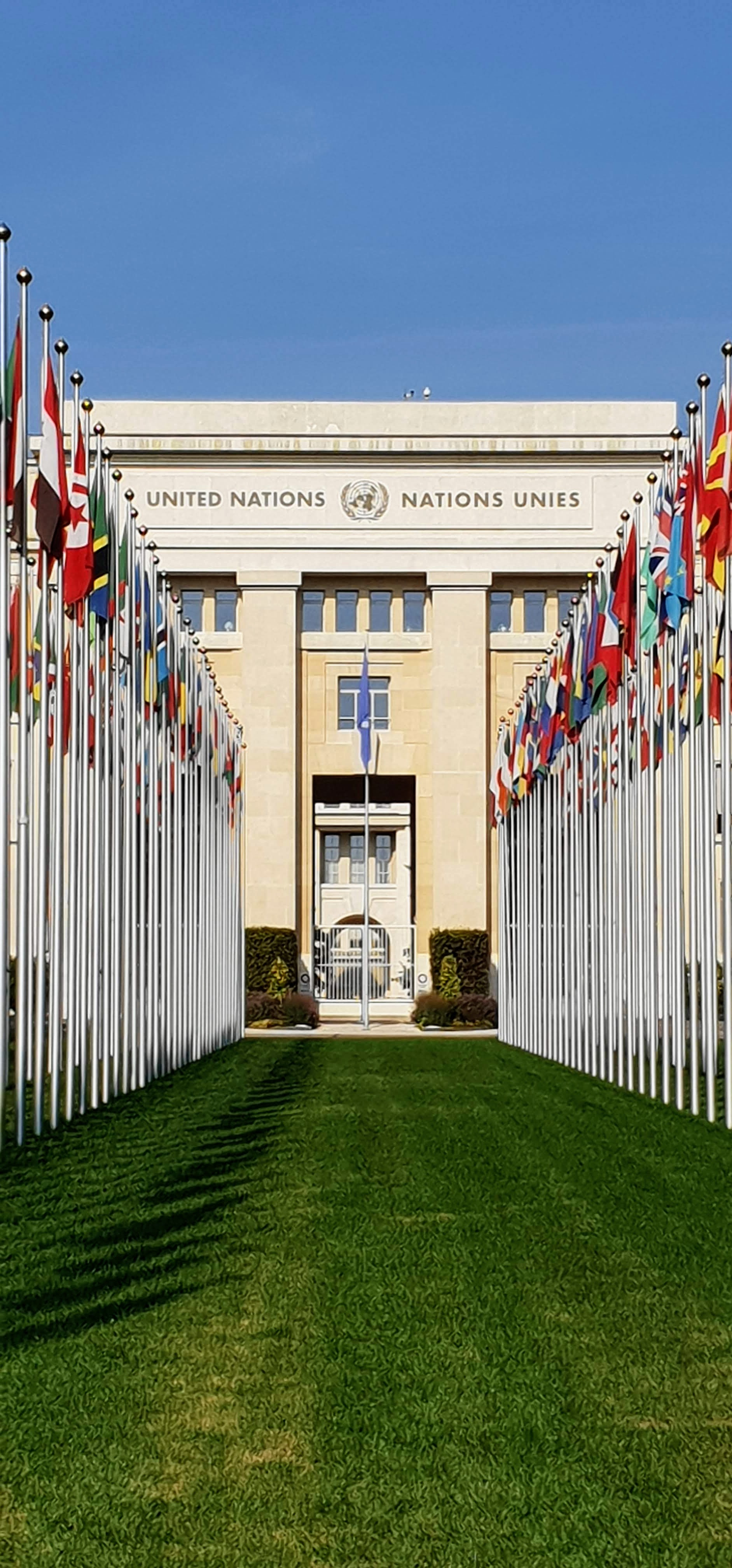
The UN was founded in 1945 after WWII to stop wars and promote dialogue between countries. That’s not going so well then is it? Home is the Palace of Nations in the north of the city. Around 10,000 meetings take place here each year, which doesn’t necessarily mean a lot gets done in my experience. Ironically, when a competition was held to design the palace, the international jury was unable to agree on a winner, so five different architects were asked to collaborate on the building. These things have to be shared out, you know. When built, it was almost as big as Versailles, and it’s had huge extensions since then. It’s mind boggling, the amount of time and money that goes into an organisation like this.
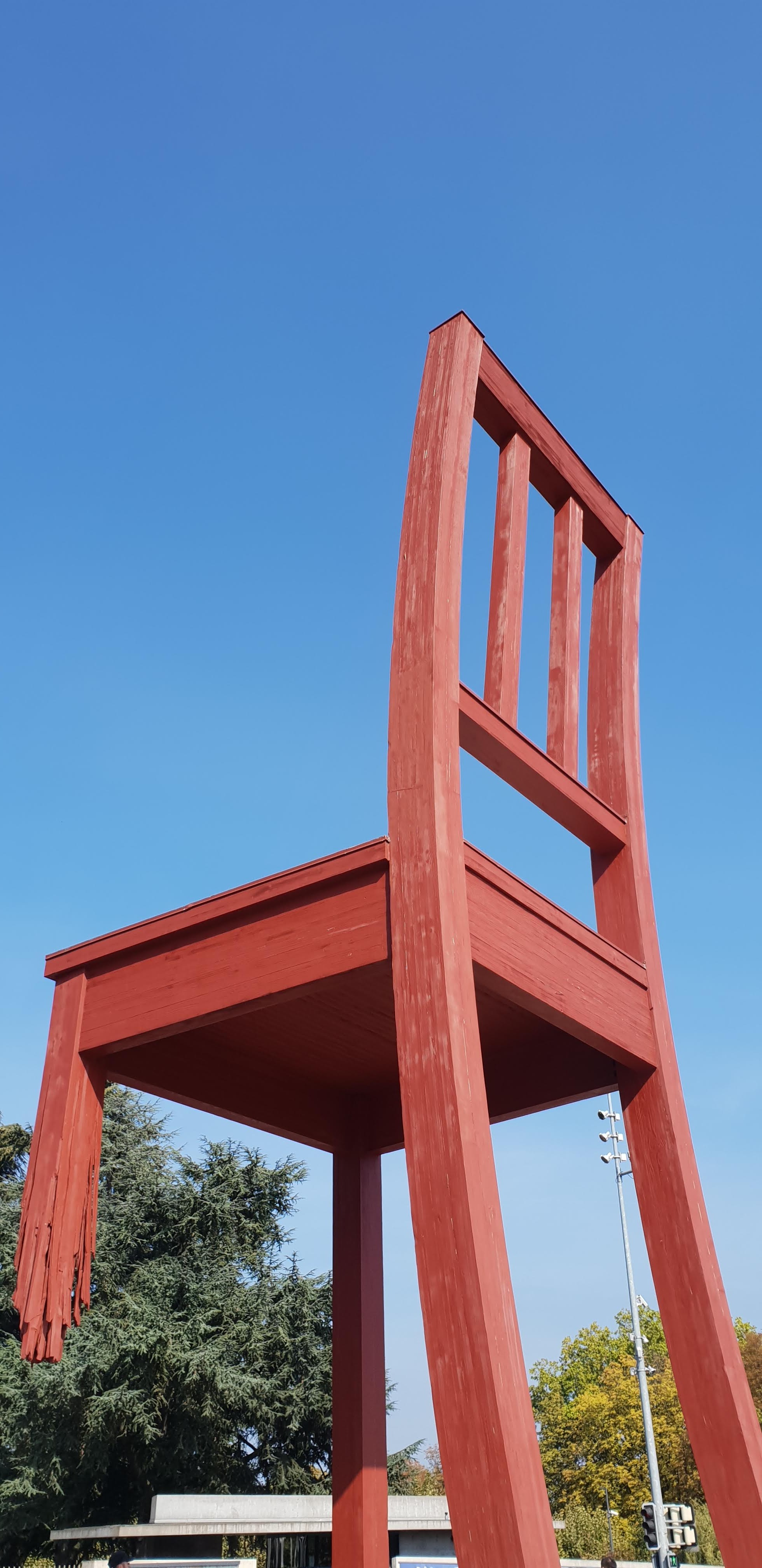
Outside, the most striking monument in the Place des Nations is The Broken Chair which symbolises opposition to landmines. Twelve metres high and bright red, with one leg blown off, it’s hard to ignore. Originally a temporary installation, it proved so popular with the public that it’s still in place 23 years later.
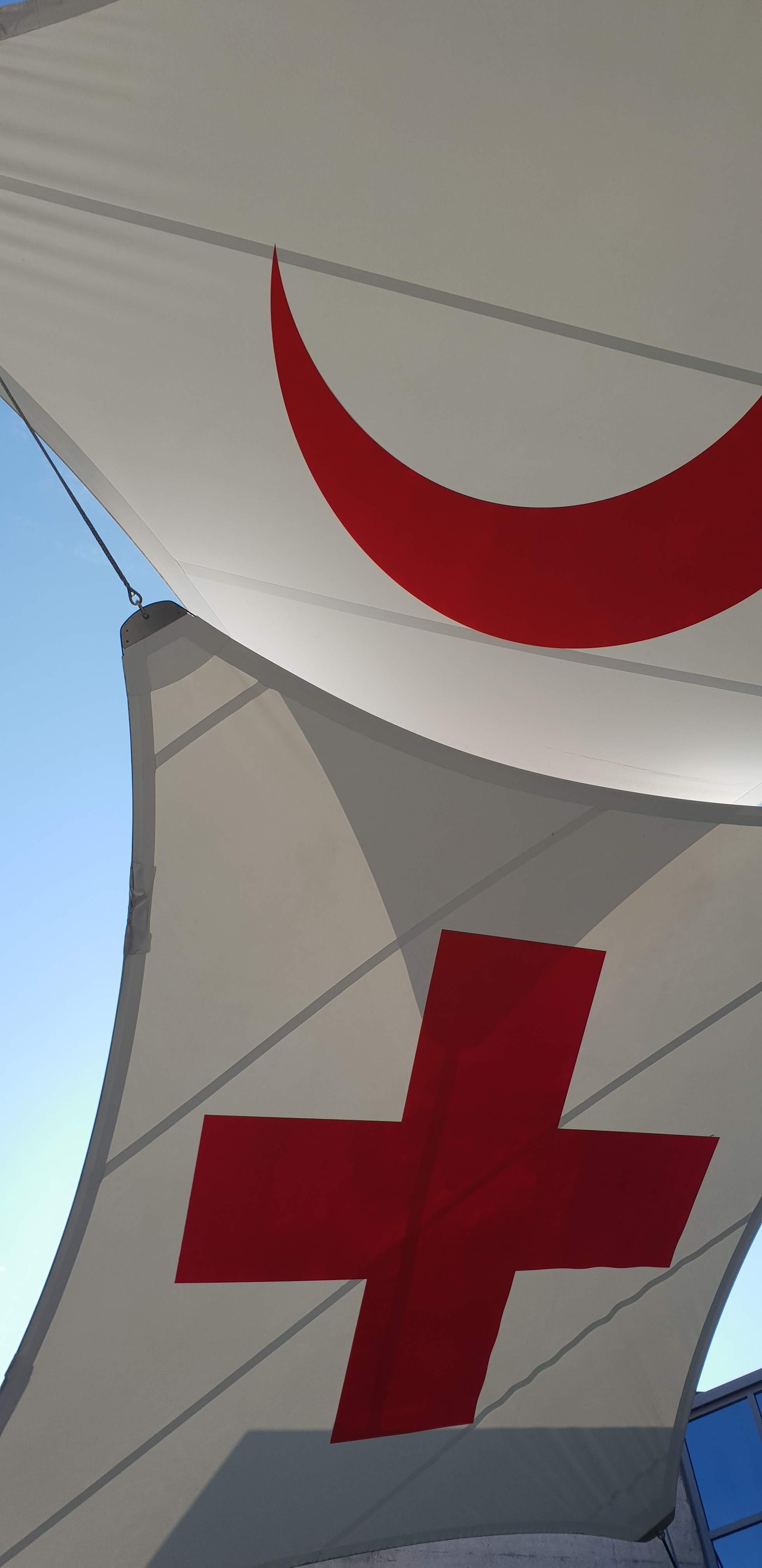
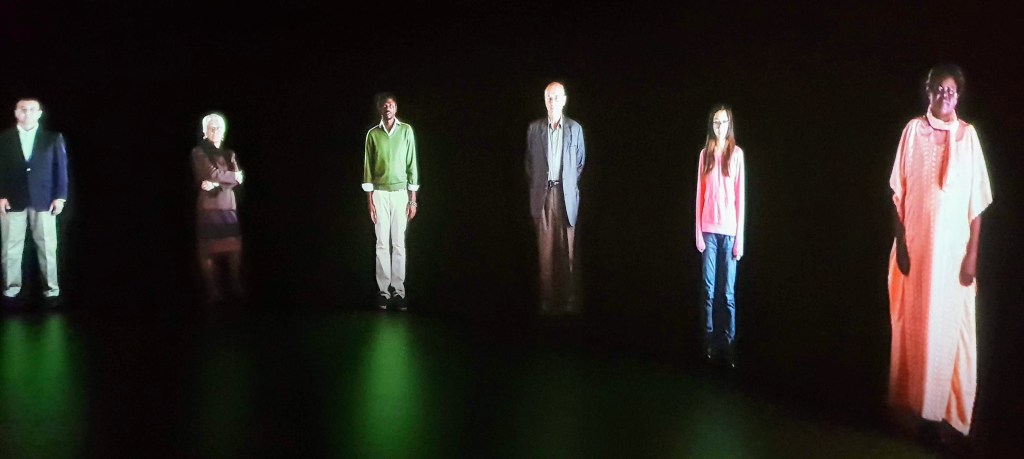
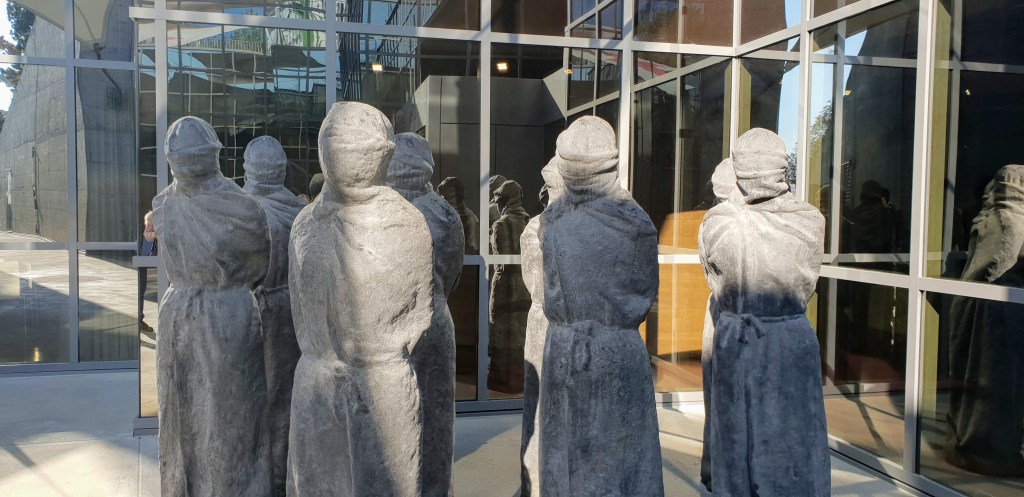
The International Museum of the Red Cross and the Red Crescent is just a bit further up the road. The mission here is to alleviate human suffering, which again seems like a big ask, and something we are far from achieving. Originally formed to tend to those wounded in battle, it has become the largest humanitarian organisation in the world. The galleries definitely provide food for thought.
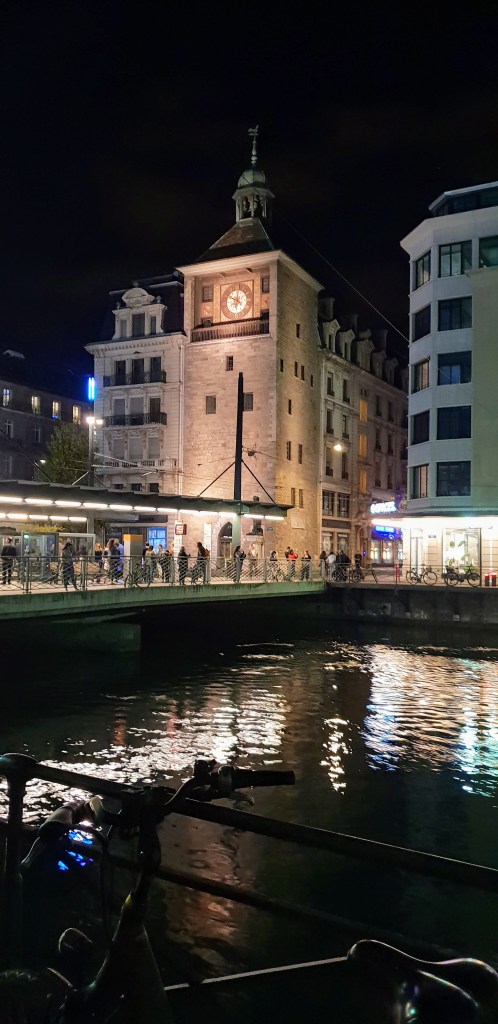
For evenings out in Geneva, there are lots of waterside options with stunning views, and the old town is beautifully lit and brimming with atmosphere at night. I can’t say I’m blown away by the food here – Switzerland isn’t really famous for cuisine, fondue excepted. We have quality meals, but nothing truly memorable.
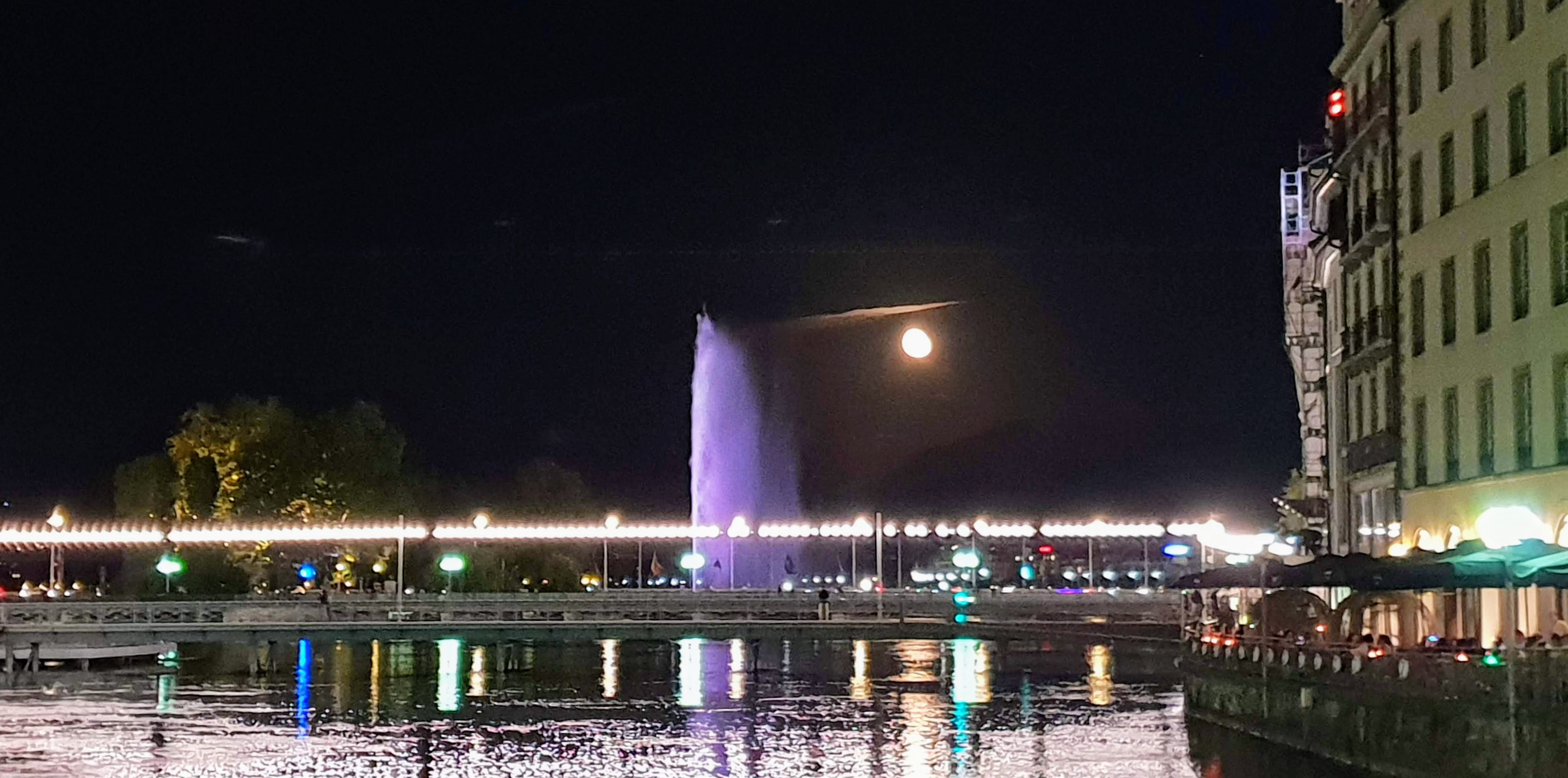
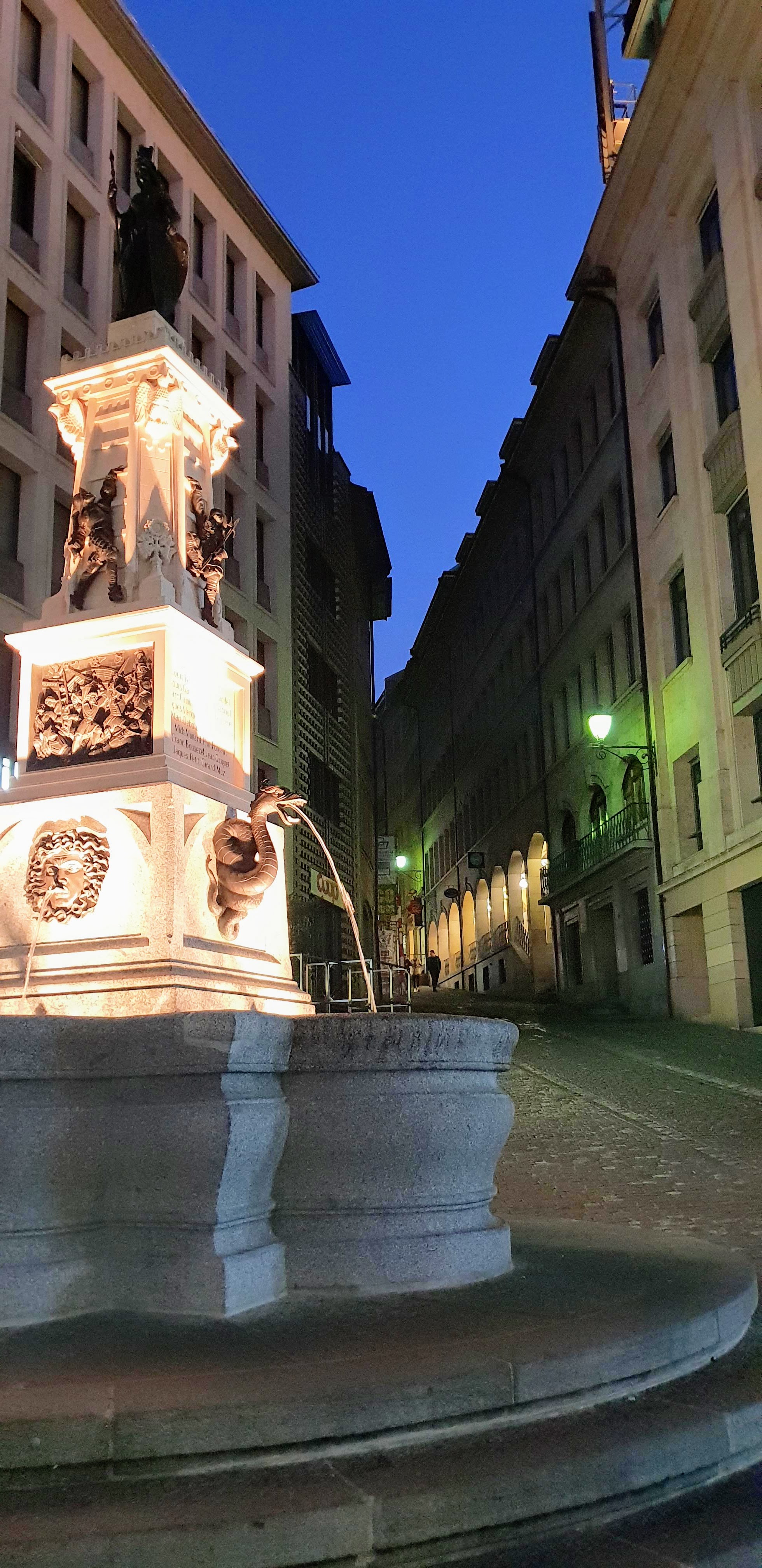
Geneva does excel in ambience though, whether in historic pavement cafes, sophisticated waterside bars or cosy places for a nightcap hidden down narrow lanes. We have lots of fun trying out all the various options. Sooo far from dull.
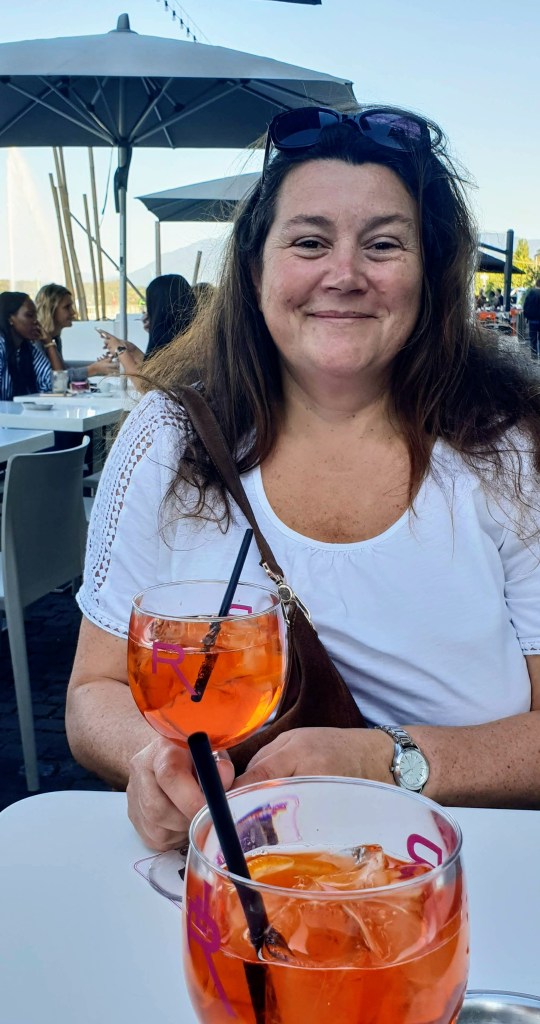
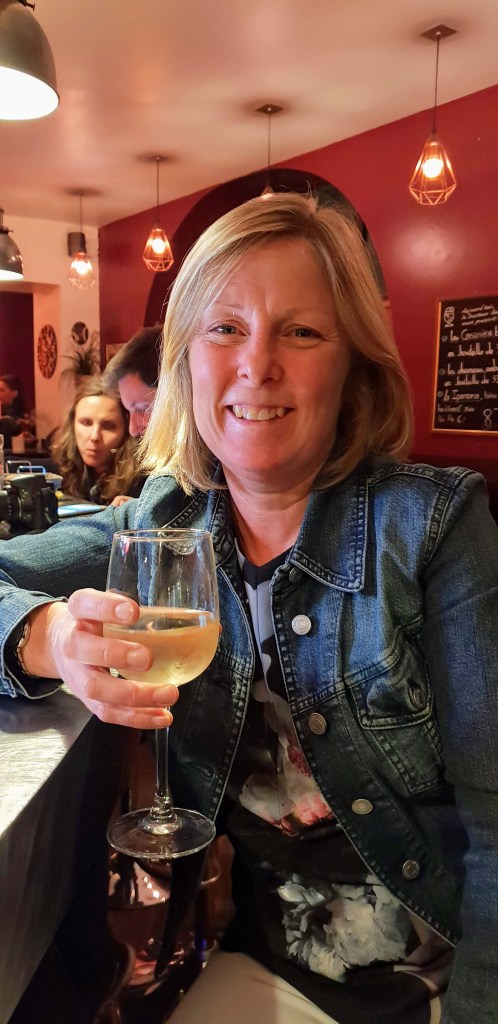
So, the overall verdict on Geneva is a thumbs up from us. Anyone describing this city as boring should take a good look at themselves. Maybe they are a little bit unexciting? It’s all to do with attitude, and I always pack lots of positivity along with my Birkenstocks.
 Steph's Travels