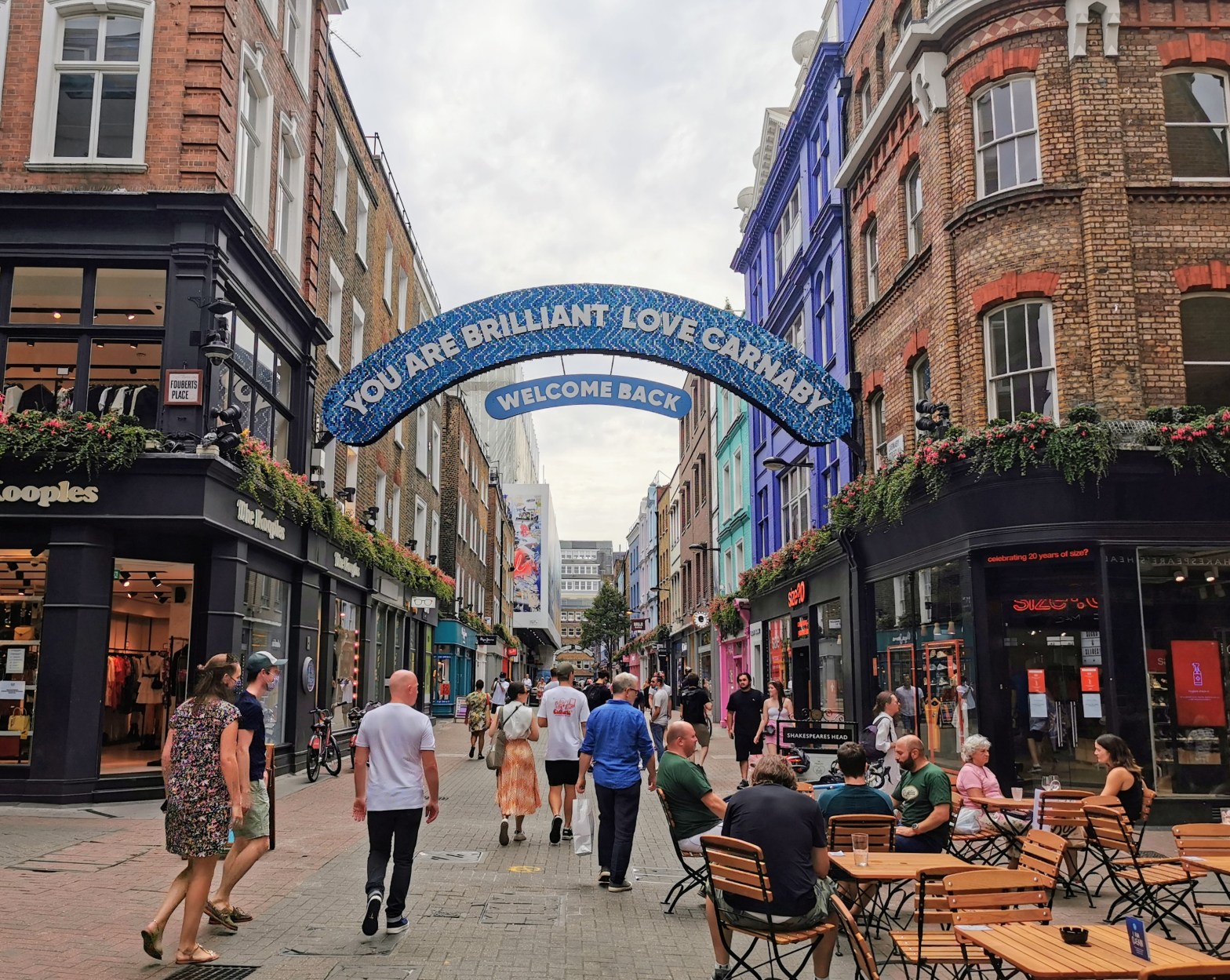
The husband wants to go shopping in the Big Smoke. Normally I would groan and try to wriggle out of accompanying him. Today, after our recent trip to a very quiet Palermo, I feel that I should go and assess how things are going in London in the wake of coronavirus.
The train to Paddington is empty. It feels a bit silly wearing a mask to protect ourselves from ourselves, but the Government rules don’t allow for common sense. Luckily the train is new and the air con is good – it’s another hot day in the UK. The Tube to Oxford Circus, on the other hand, is quite busy. A lady gets on with her mask round her neck and you can feel the tension. I’m glaring at her myself, in fact. She obviously feels the disapproving vibes and pulls her mask into place.
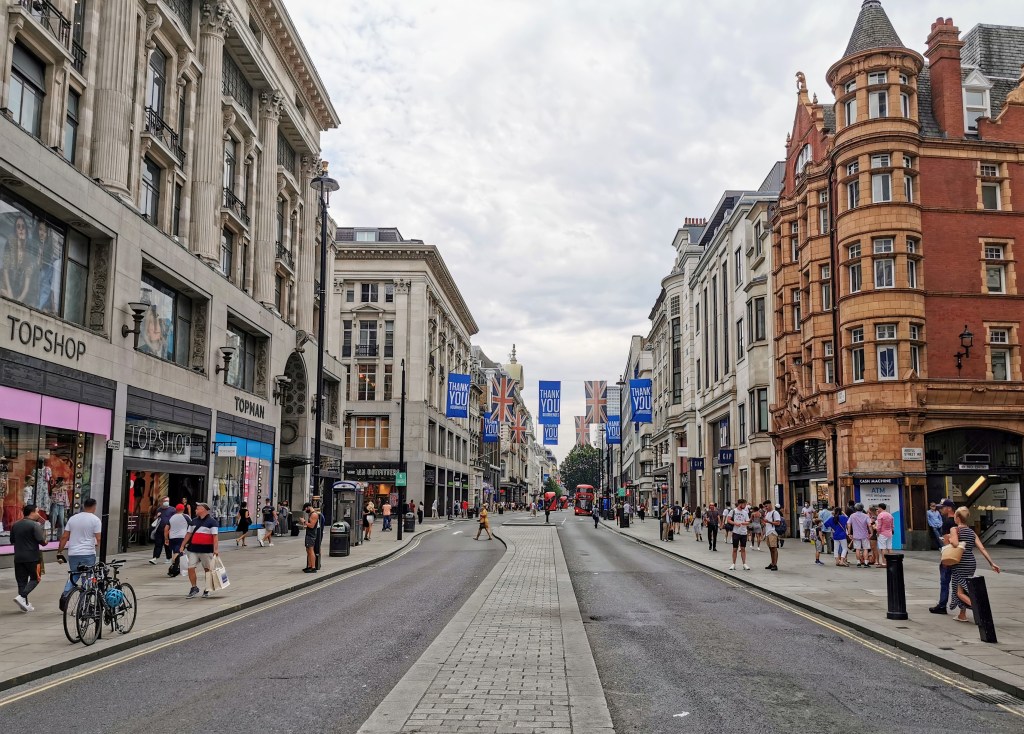
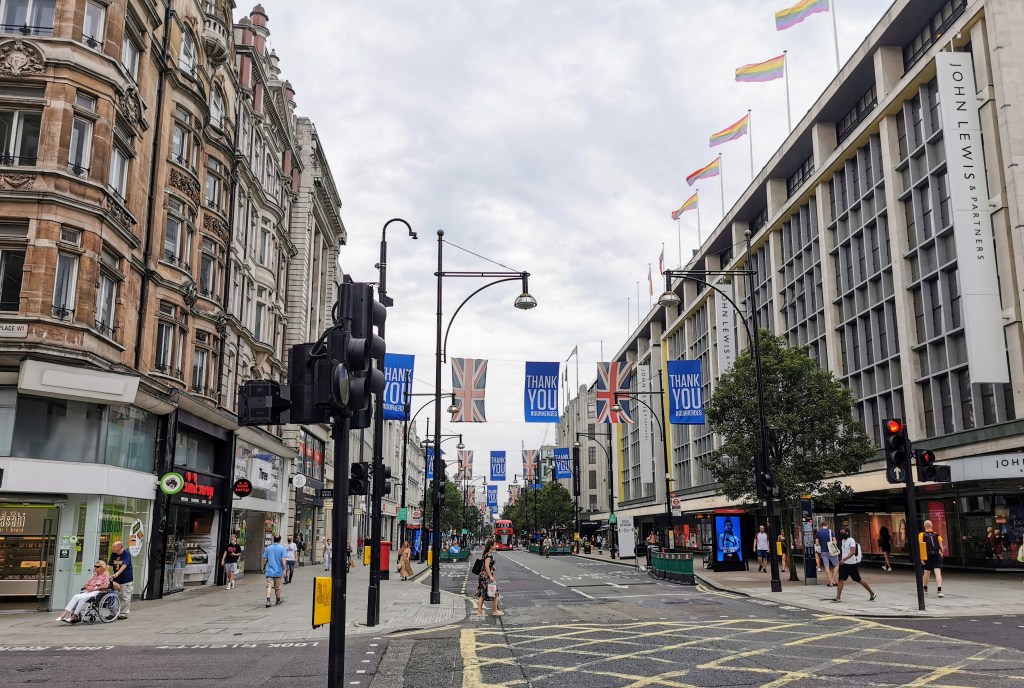
Our first shopping destination is Oxford Street. Originally a Roman road, then a major coaching route, it developed into a major retail hub in the 19th century. Famous department stores John Lewis and Selfridges were founded here. In normal times, it’s the busiest shopping street in Europe.
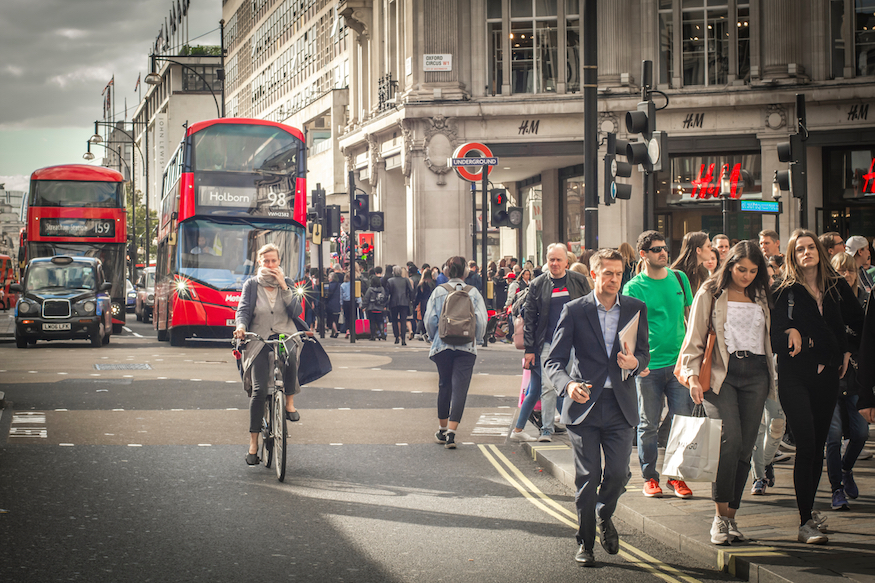
Today, all is quiet. The traffic is non-existent, basically only a few buses and taxis. Walking along the pavement here in the middle of Summer is usually like being in a computer game, dodging left and right to avoid the idiots taking selfies. We tend to avoid it like the plague. Now, well, we can walk normally. It’s rather nice for us, not so great for the economy.
The husband has a list of shops to visit, at least he’s organised. And it’s a reasonably short list too. He promises me a pub stop halfway. This should be quite painless. We head just around the corner to our second shopping mecca, Carnaby Street, birthplace of 1960s Swinging London.
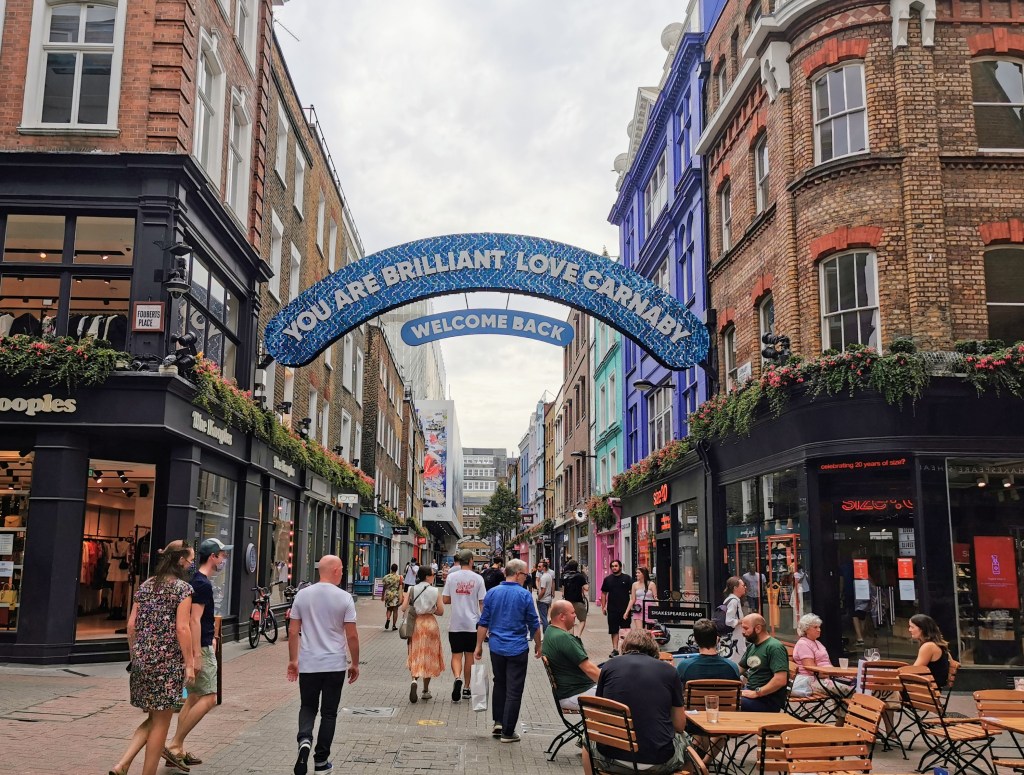
The first clothes shop opened here in 1957 and it soon became known as fashion central, particularly after the first women’s boutique Lady Jane arrived, complete with publicity stunts such as models getting dressed in the window. Owner Henry Moss was fined £2 for causing the blockage of a highway. Designers such as Mary Quant moved in, bands like The Who and The Stones came here to shop, and a legend was born.
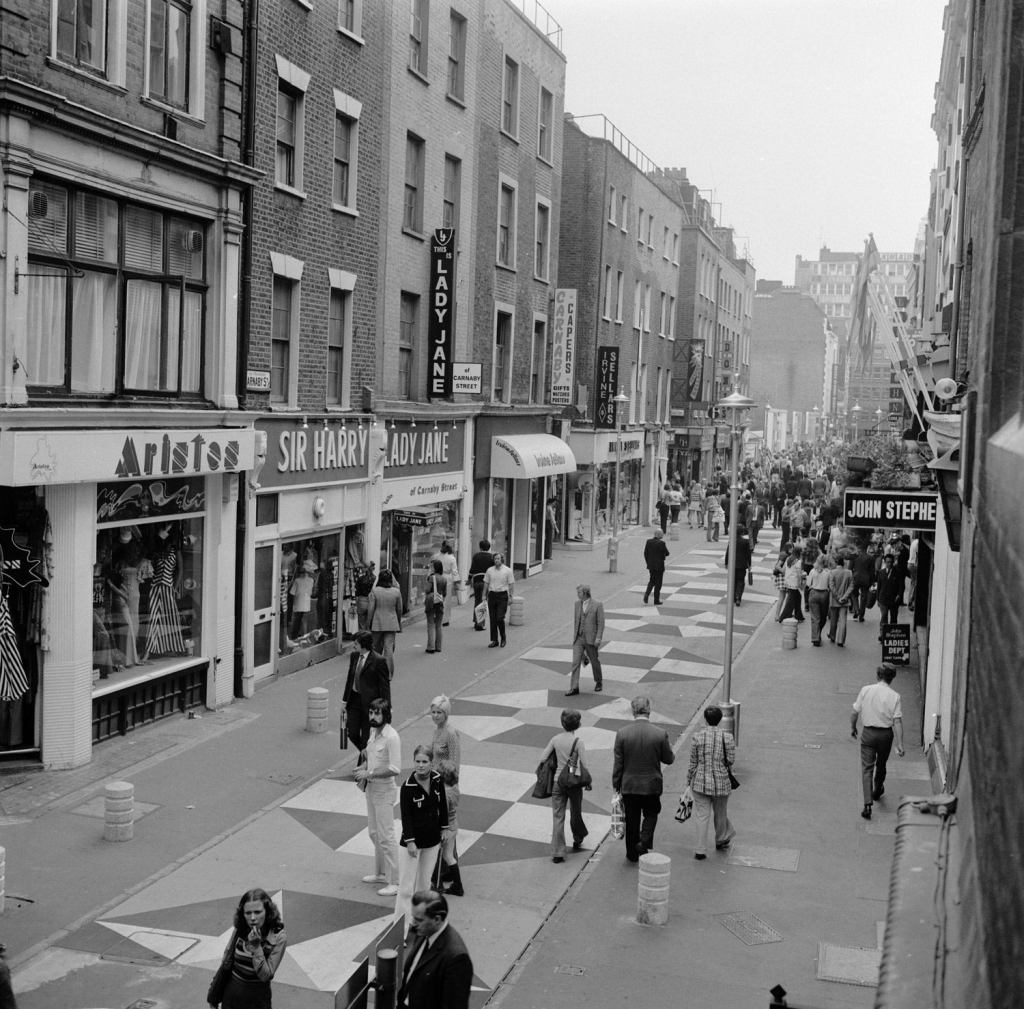
No longer cutting edge, nowadays Carnaby is still a hugely popular, pedestrianised shopping and eating district. Today it feels pleasantly buzzy and relaxed. There are free seats, outside, in the middle of Summer – unheard of! We happily grab a table. In previous visits we’ve sought one in vain.
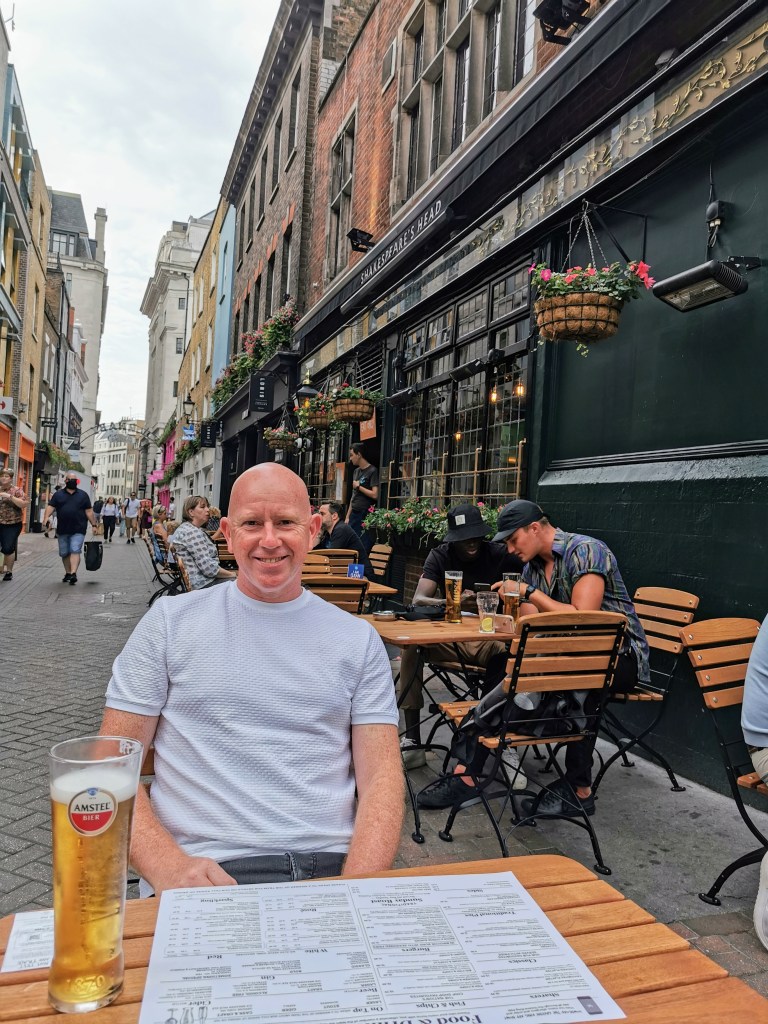
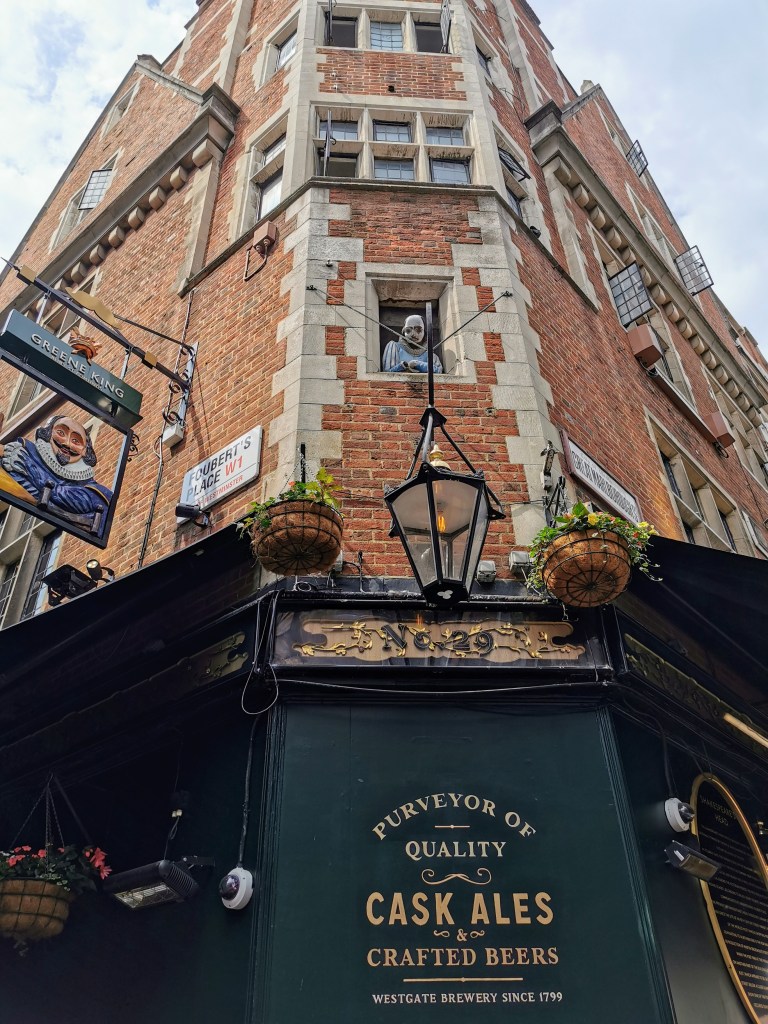
The Shakespeare’s Head was built in 1735 and actually belonged to relatives of the Bard, Thomas and John Shakespeare. How exciting! I nearly spit out my wine when I see Will himself looking down at me from the window above. He’s missing a hand, thanks to a WWII bombing nearby.
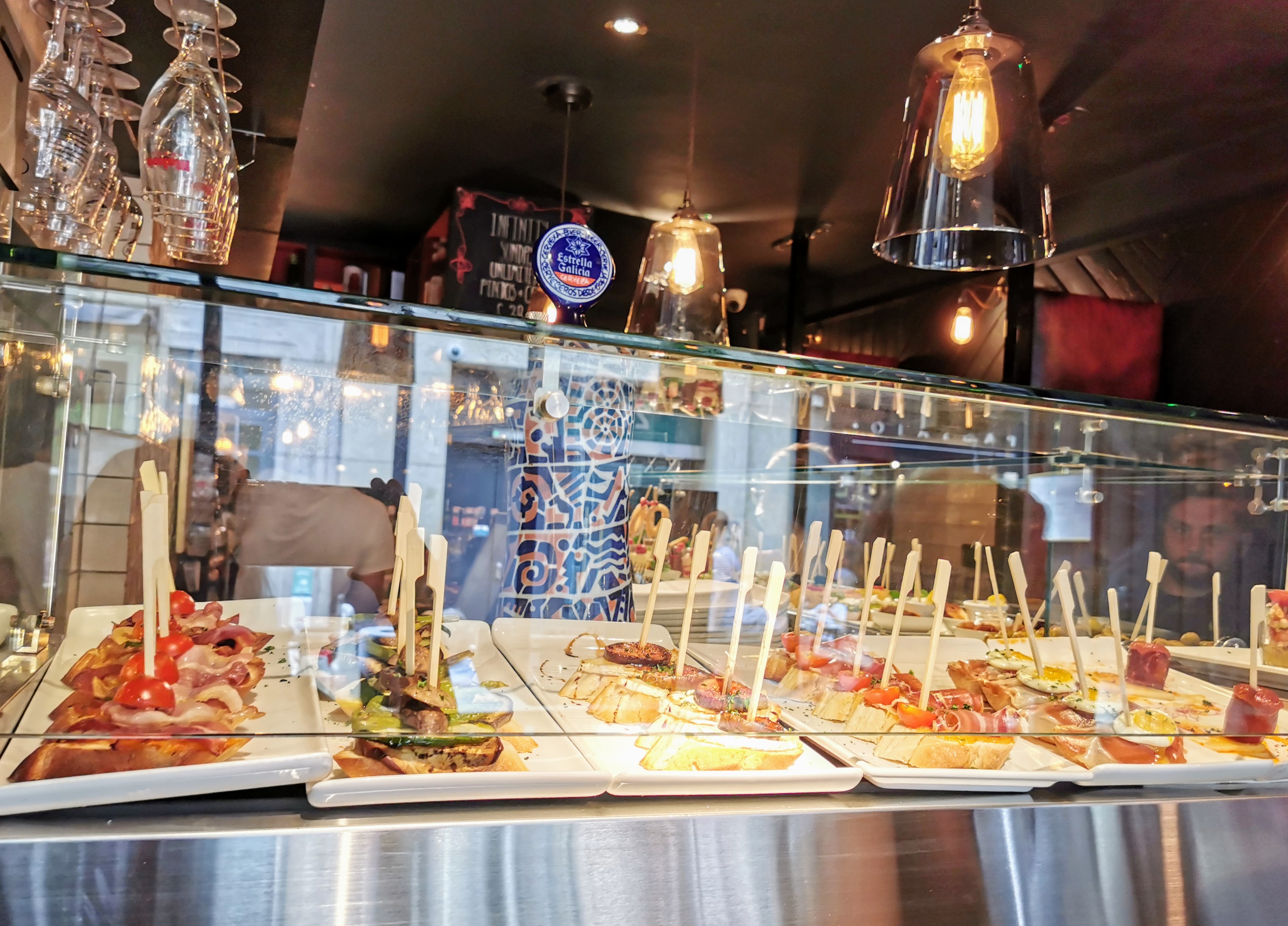
One more shop and then it’s time for lunch. The husband knows I can only go so long without sustenance. I booked, erring on the side of caution due to past experience, but probably didn’t need to bother. The restaurants here, usually full to the brim, are mostly quiet. Pinxchos at Pix is perfect as a light meal, and everything is tasty and authentic, albeit smaller than the snacks we’ve had in Spain.
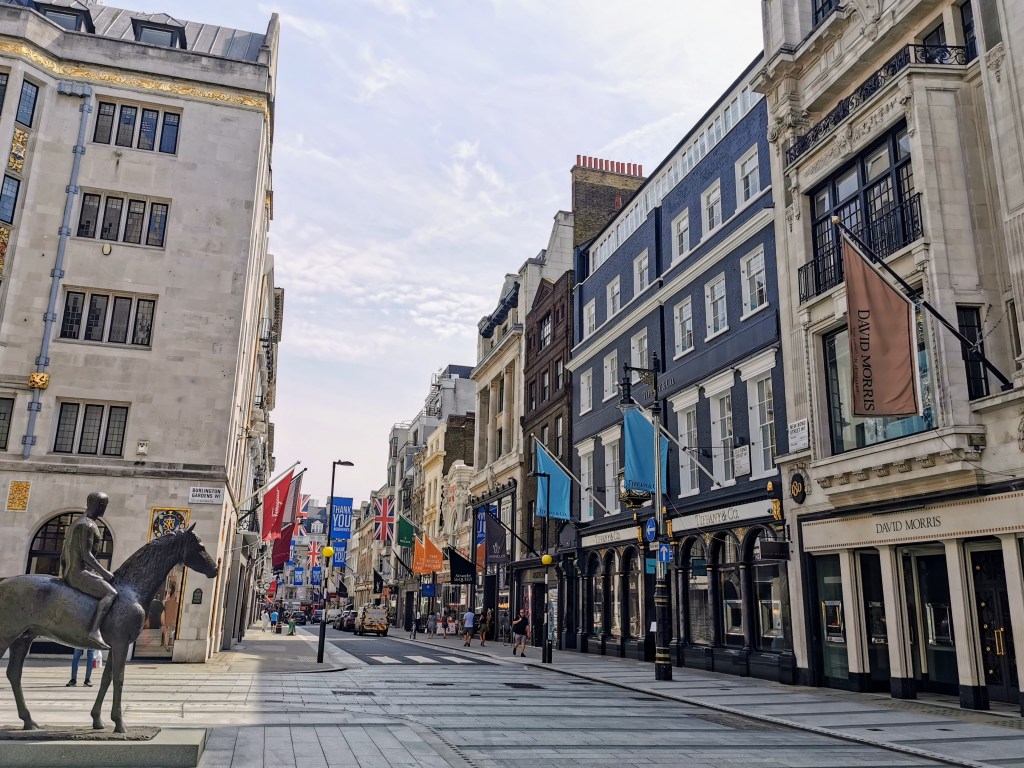
Our final destination is oh-so-snazzy Mayfair, famous for its high-end tailors, designer boutiques and auction houses. The most expensive space on the Monopoly board is also the site of Britain’s most expensive home, worth £250 million.
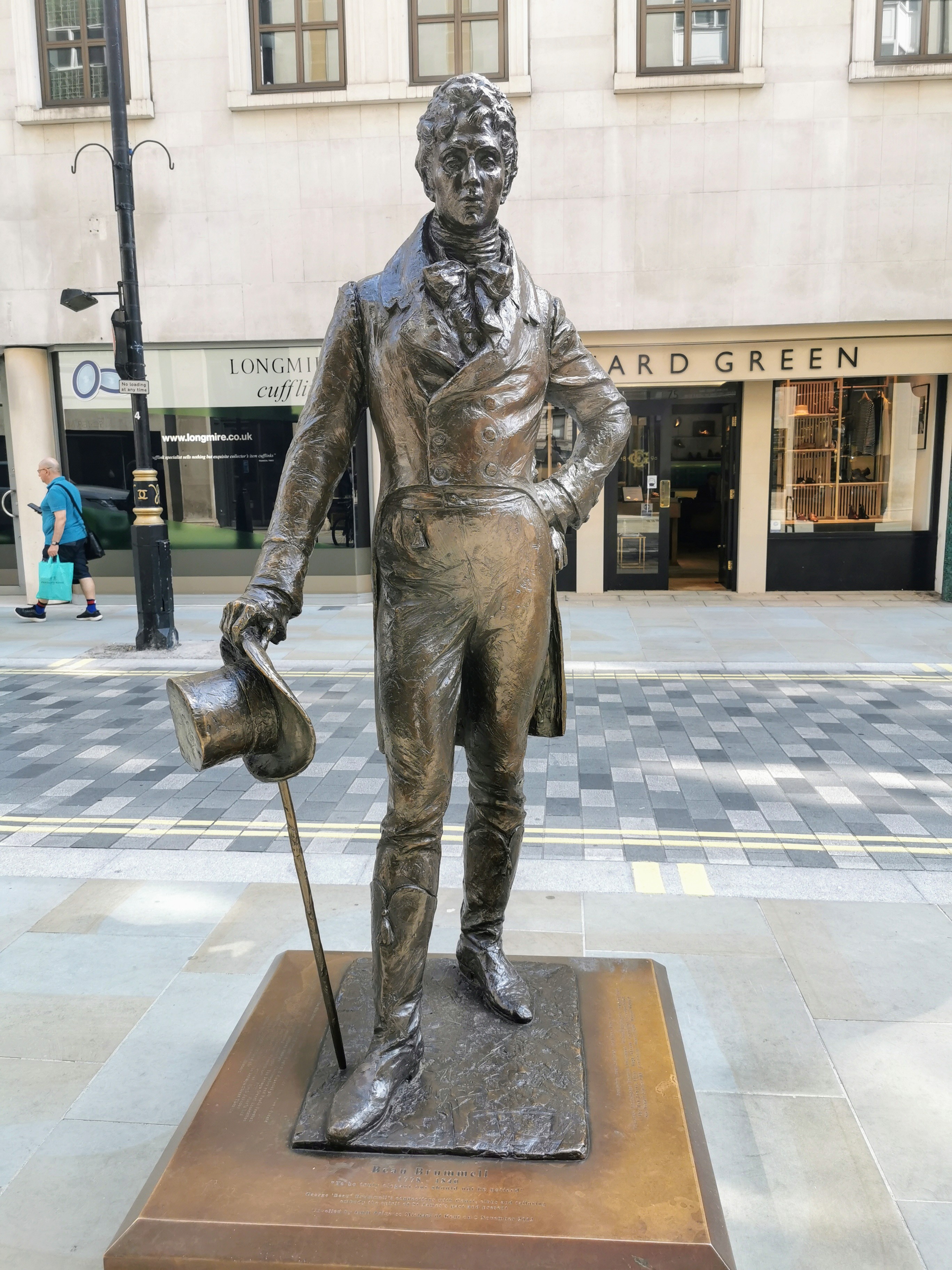
Fittingly, we’re greeted by Beau Brummel, the most fashionable man of his time. Born in 1778, Brummel was the original dandy, friend of royalty and arbiter of taste. He famously refused to live in Manchester as it had no culture or civilisation. If anyone from Manchester is reading this, don’t shoot the messenger!
The May Fair was held in this area in the 17th and early 18th centuries, when it was largely rural. The Grosvenor family then purchased 100 acres of land and laid out a grand plan for development, with large squares and mansions. The ‘undesirable’ fair was abolished and the upper classes moved in. Mayfair has never looked back.
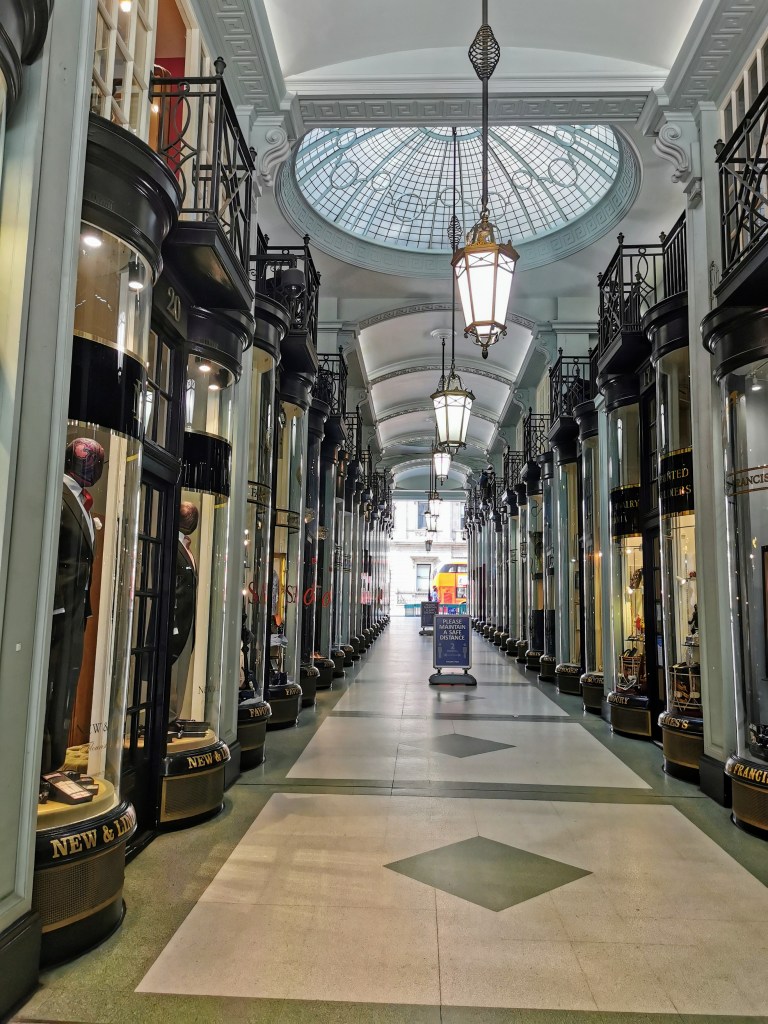
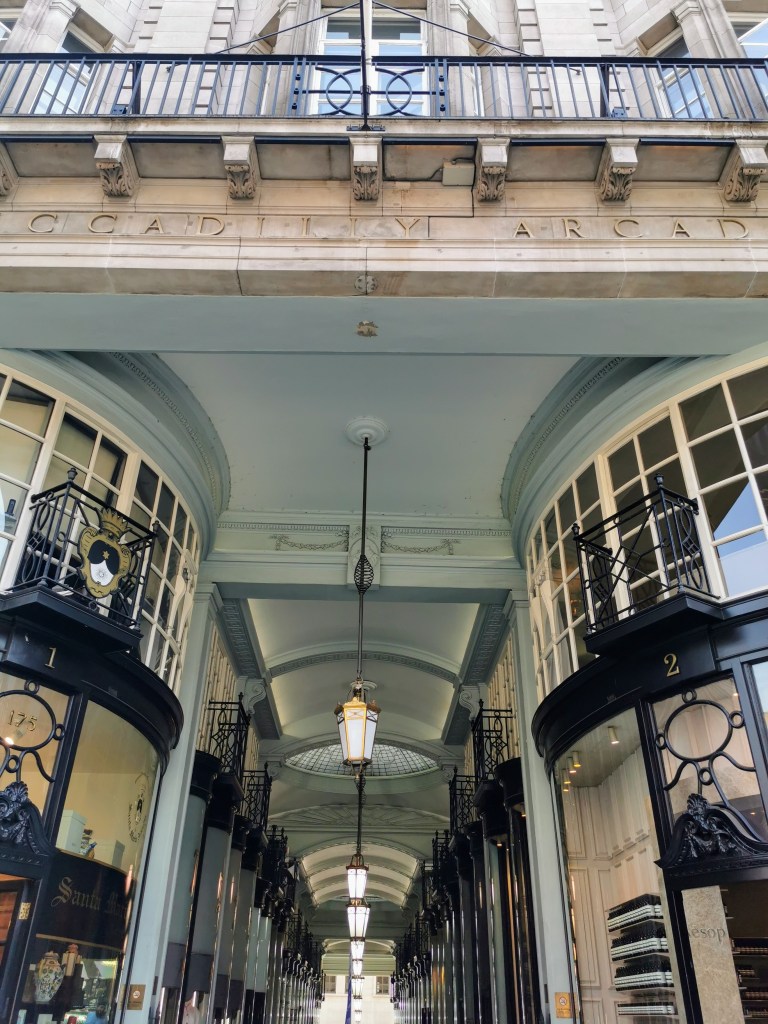
We walk through the area’s celebrated arcades, which are totally deserted – it’s quite eerie on a Saturday afternoon. The Piccadilly Arcade opened in 1909 and sells ‘fashion, jewellery and taste’ according to the website. No-one is buying any of those today.
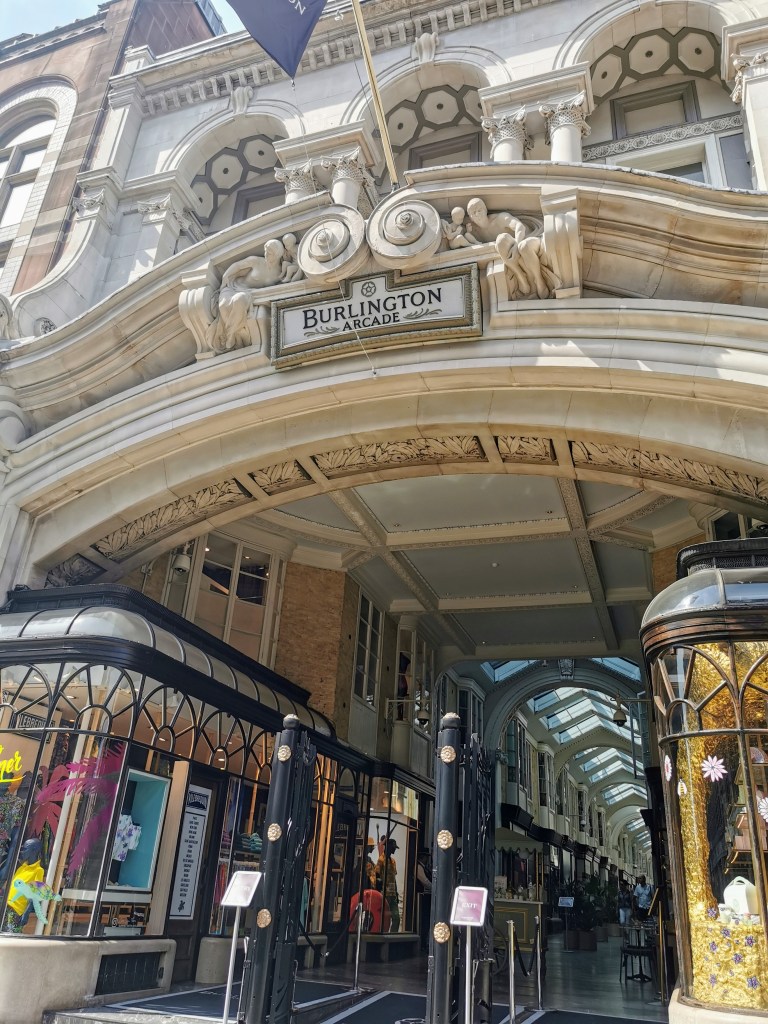
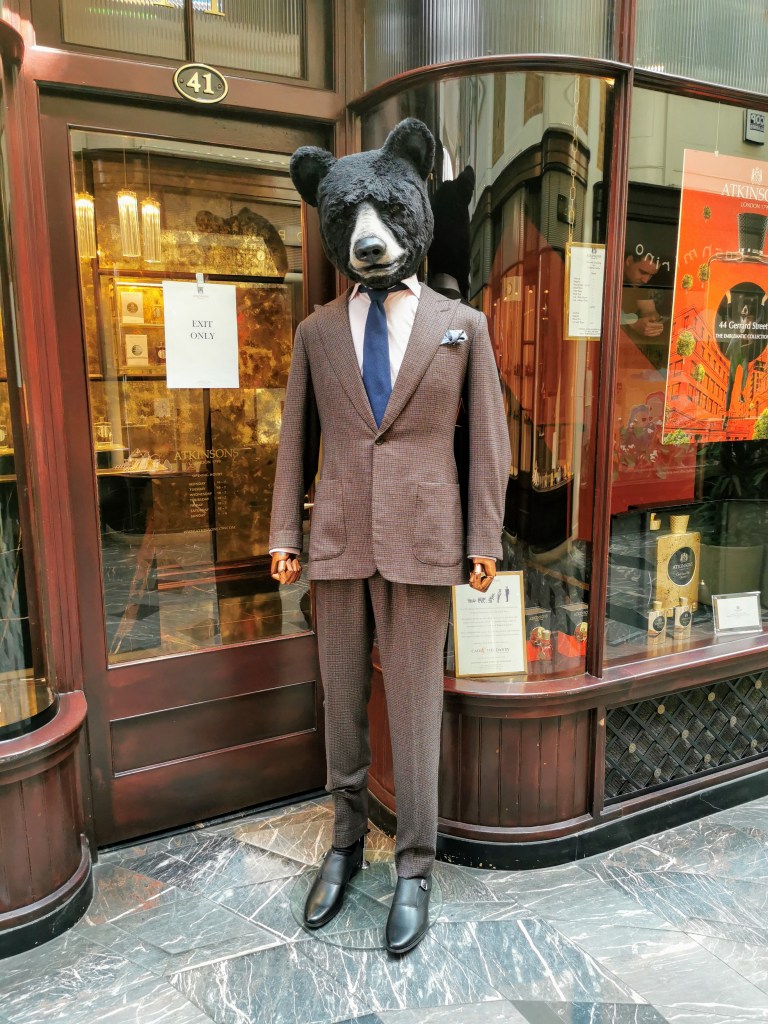
The Burlington Arcade has been attracting rich shoppers and gawkers since 1819 with its high end shops. Humming, singing and hurrying are banned, and there are usually uniformed beadles on duty (known as Burlington Berties) to ensure that rules are adhered to. No sign of them today, but then they’re really not needed. There’s no-one here to misbehave.
Our shopping trip has been successful in terms of purchases, but we are both feeling quite subdued as we return to Paddington to get the train home. We’ve heard on the news how badly London is suffering during the pandemic, but it’s different to actually seeing the impact for ourselves. Clearly, this city will take a while to recover, if it ever does. Churchill and Roosevelt may be smiling, but no-one else around here is.

 Steph's Travels