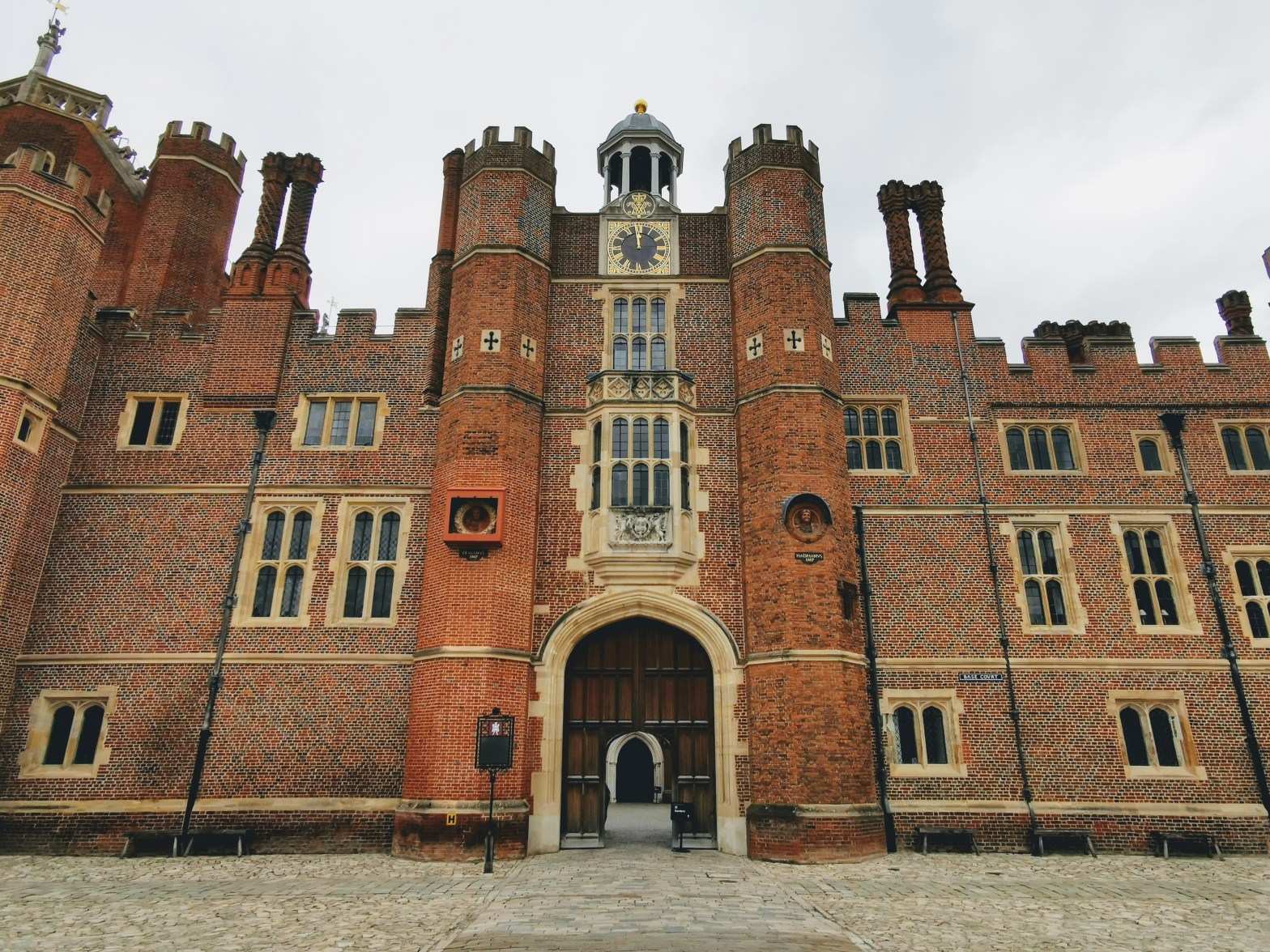
Today I’m visiting Hampton Court Palace. I’m in the middle of the final book of Hilary Mantel’s Wolf Hall trilogy, set at the Court of King Henry VIII, so it seems an appropriate time to soak up some period atmosphere at the royal residence that’s best known as his favourite home.
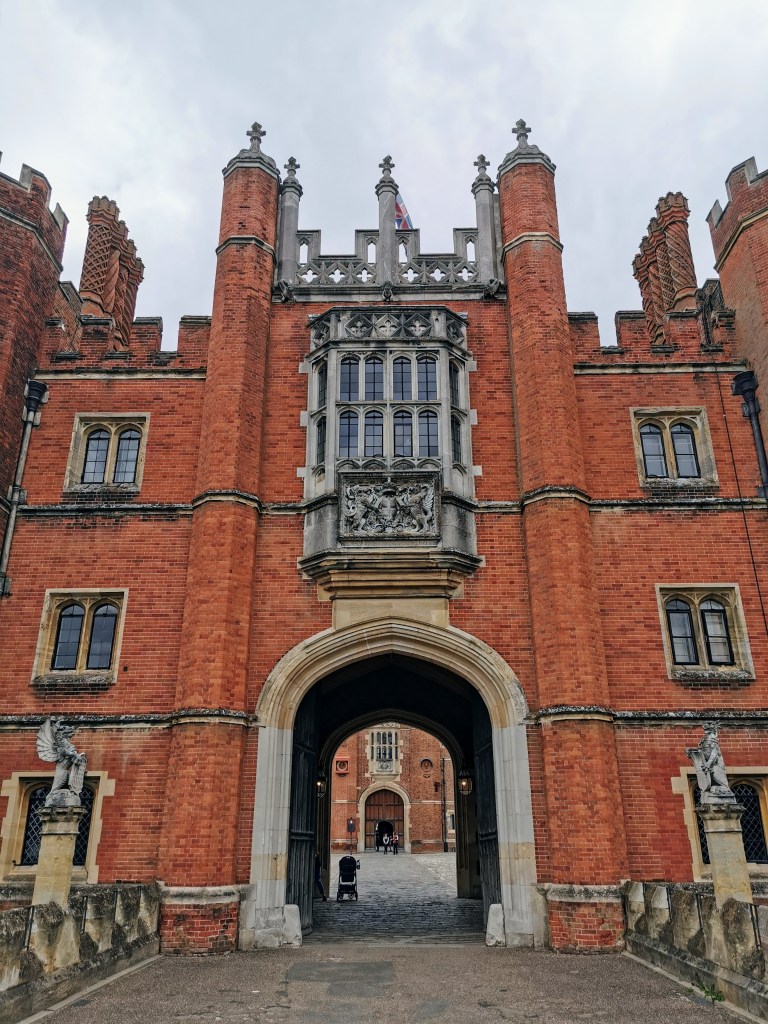
There has been a house on this site at Hampton, on the banks of the River Thames, since the 14th century. In 1514 it was purchased by Thomas Wolsey, Chancellor to Henry VIII and the most powerful commoner in England. He transformed the house into a showcase fit for the friend of a mighty monarch. But history has taught us that with friends like Henry, you didn’t need enemies!
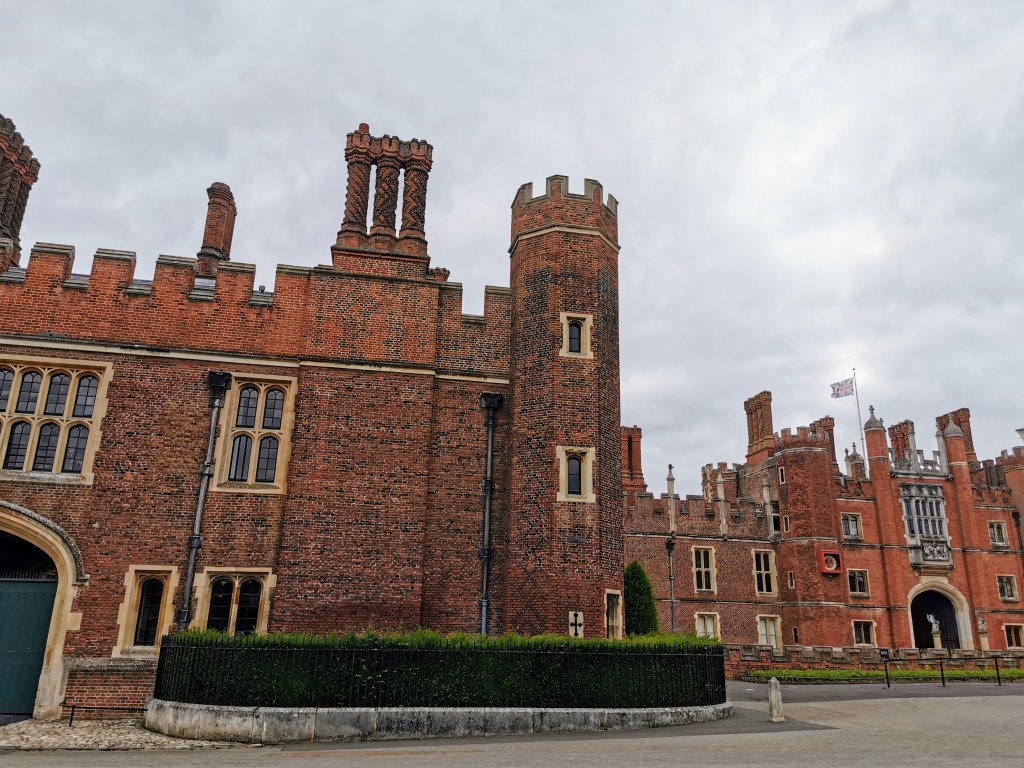
The splendour of Hampton Court Palace infuriated the nobility even more about this jumped up nobody who lorded it over them. Wolsey was on dangerous ground, and when he failed to get Henry the annulment he so desperately wanted from wife number one, Katherine of Aragon, the King began to dislike him too.
Hampton Court was a Palace fit for royalty, and Henry decided it really should belong to him. In an effort to save his skin, Wolsey gave him the property as a gift. Did it work? What do you think, reader? He was hated by wife number two, Anne Boleyn, so his days were numbered. As with anyone who displeased the King, treason was declared, but luckily for Wolsey he fell ill and died naturally before he could be beheaded.
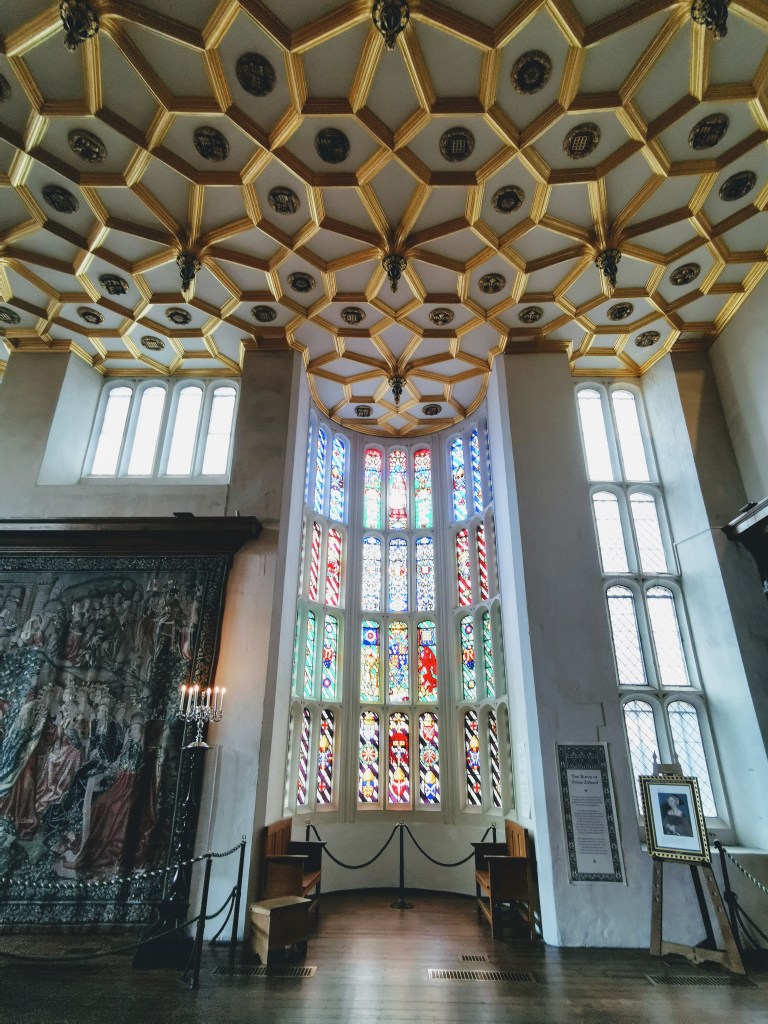
Ah, life was harsh back then, unless you were the Monarch of course! After Wolsey’s death, Henry merrily undertook extensive renovation works to make his new palace even more spectacular. He even added a tennis court – although we all picture him as the mammoth man of his later years, he was actually a superb athlete in his youth.
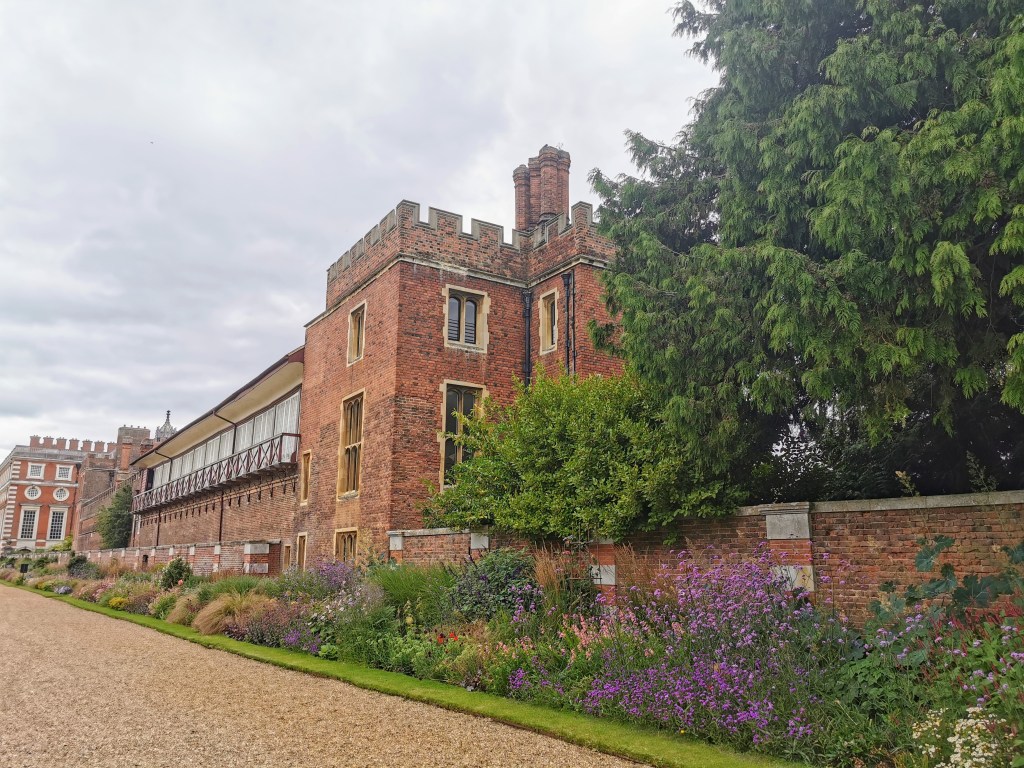
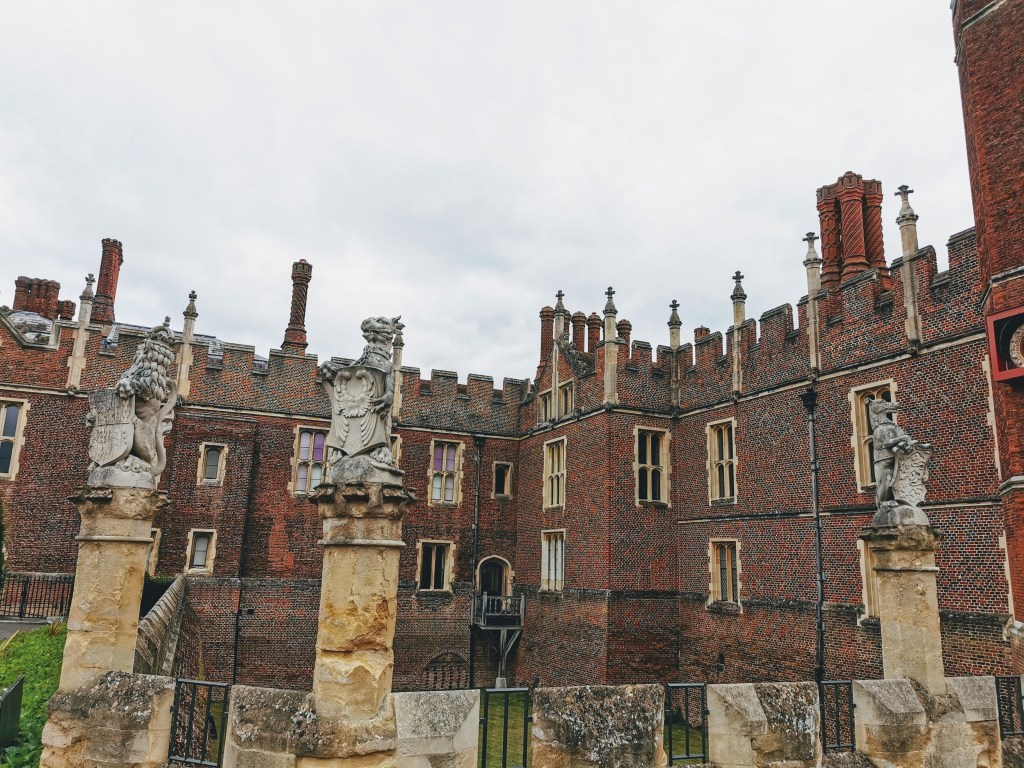
Henry saw Hampton Court as a place to show off and have fun, with entertainments and sporting competitions galore, hence some of the strange sculptures around the grounds. After wife number three (Jane Seymour) died in childbirth here and wife number five (Catherine Howard) was arrested in her chambers and dragged off to the Tower, I would imagine the jollity was wearing a bit thin, but who knows? They were a bit more blasé about death back then.
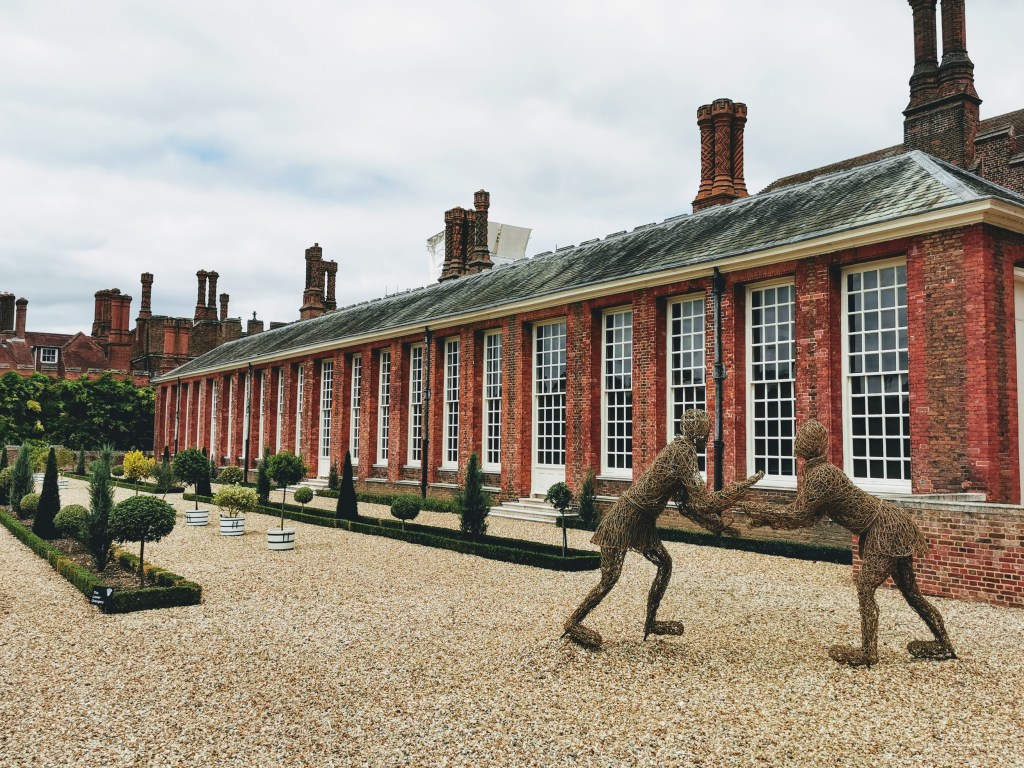
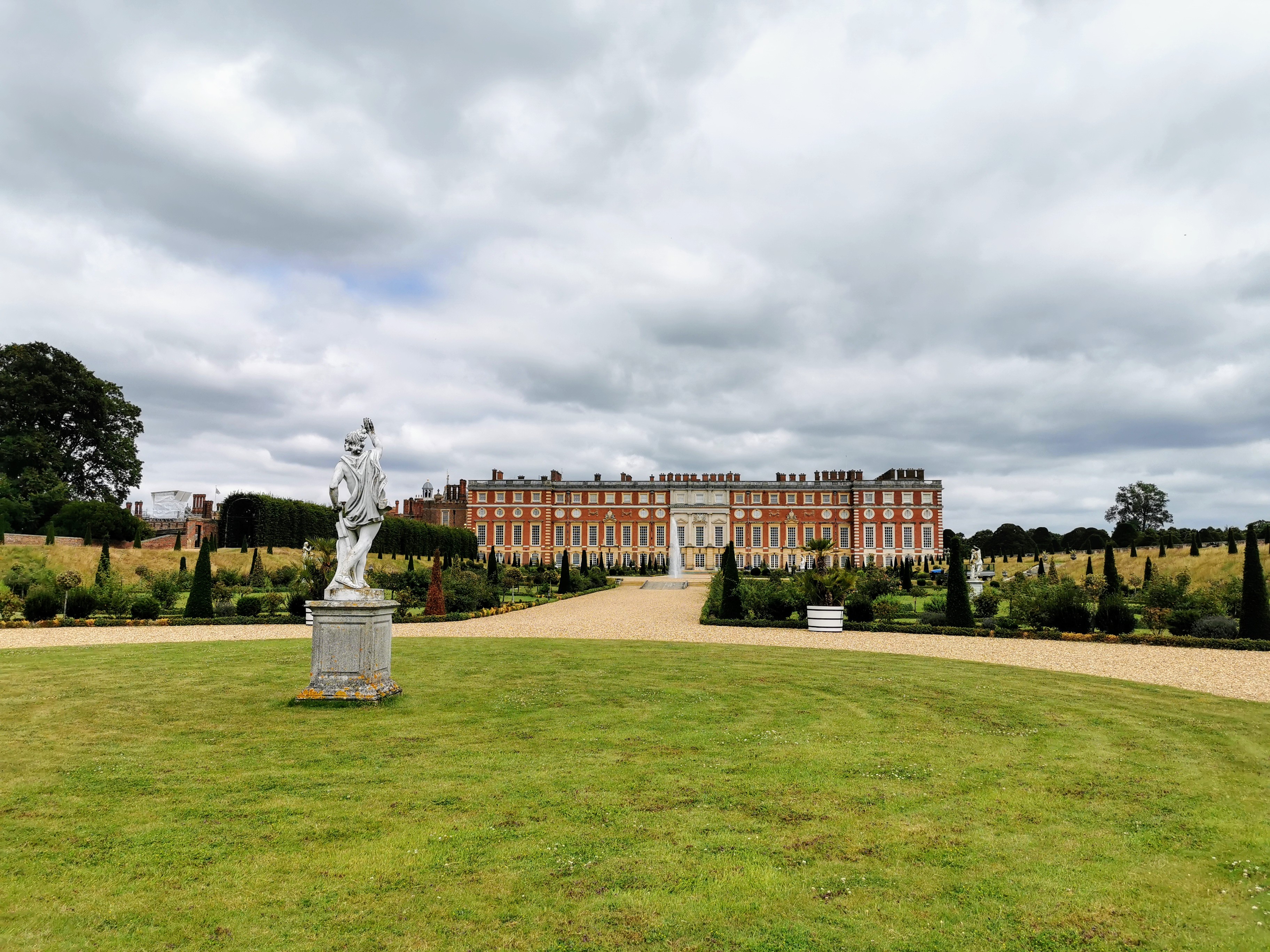
Hampton Court is actually more like two palaces than one. You enter through the original Tudor buildings but at the rear is a boroque mansion built in the 17th century for joint rulers William III and Mary II. Christopher Wren, who was chosen to design the new residence, originally intended to get rid of the old buildings and start from scratch, but thankfully he changed his mind.
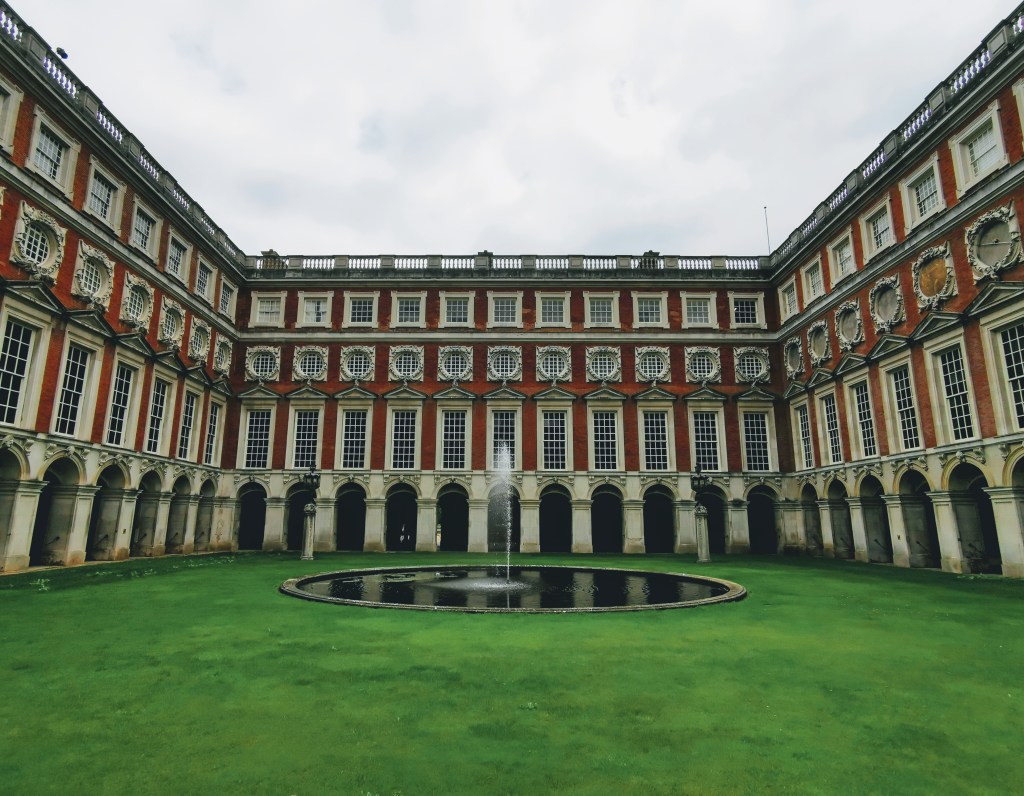
We don’t really hear much about William and Mary. I had no idea they had remodelled the palace until I came here, and it’s not exactly a small extension is it? This place is known as Henry’s house. Compared to him, they’re a bit dull I suppose. To be fair, they did manage to depose Mary’s Catholic father, James II and seize the throne by force in 1689 as figureheads of the Protestant cause but after that they had a happy marriage and were capable rulers. William, of course, is celebrated to this day by Northern Ireland’s Protestant Orange Order. For the rest of us though, Henry’s the man despite all his faults.
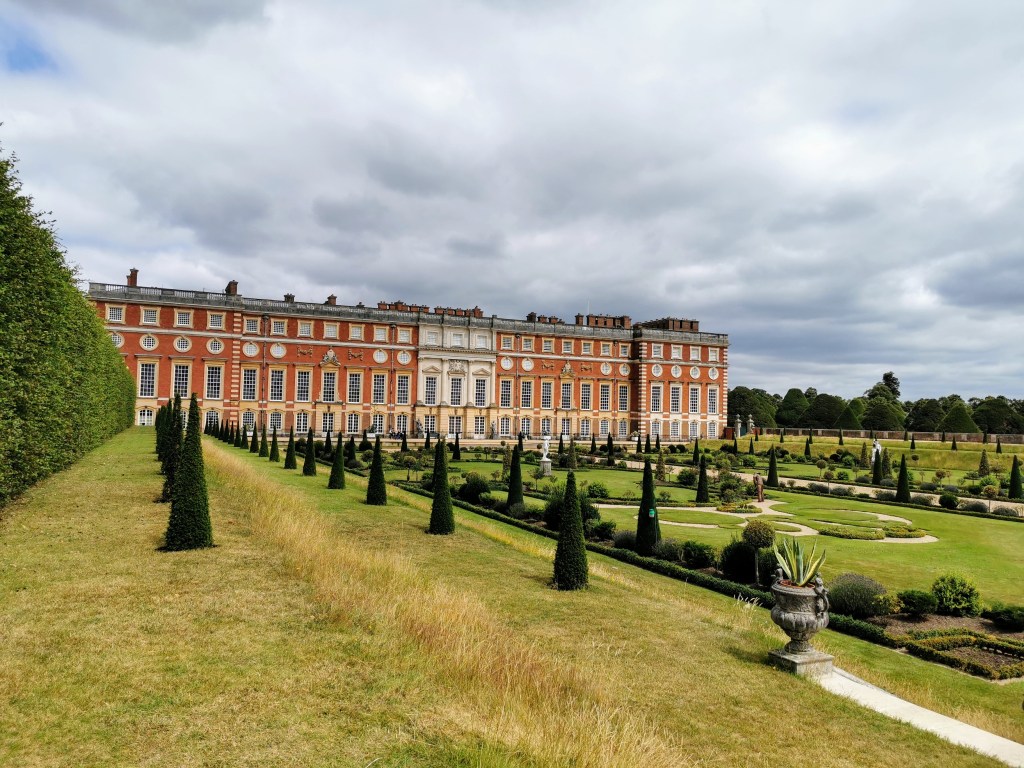
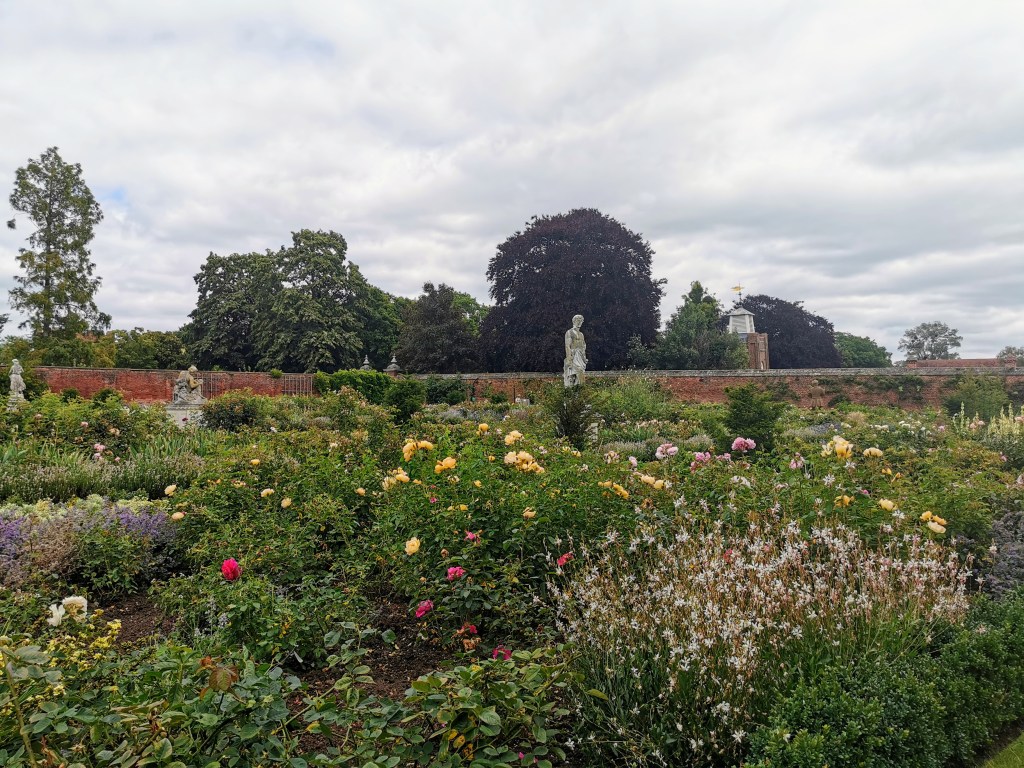
The gardens at Hampton Court have been carefully renovated to appear exactly as they did in the reign of William and Mary, and they are very lovely. I spend a few hours wandering around and enjoying the views…
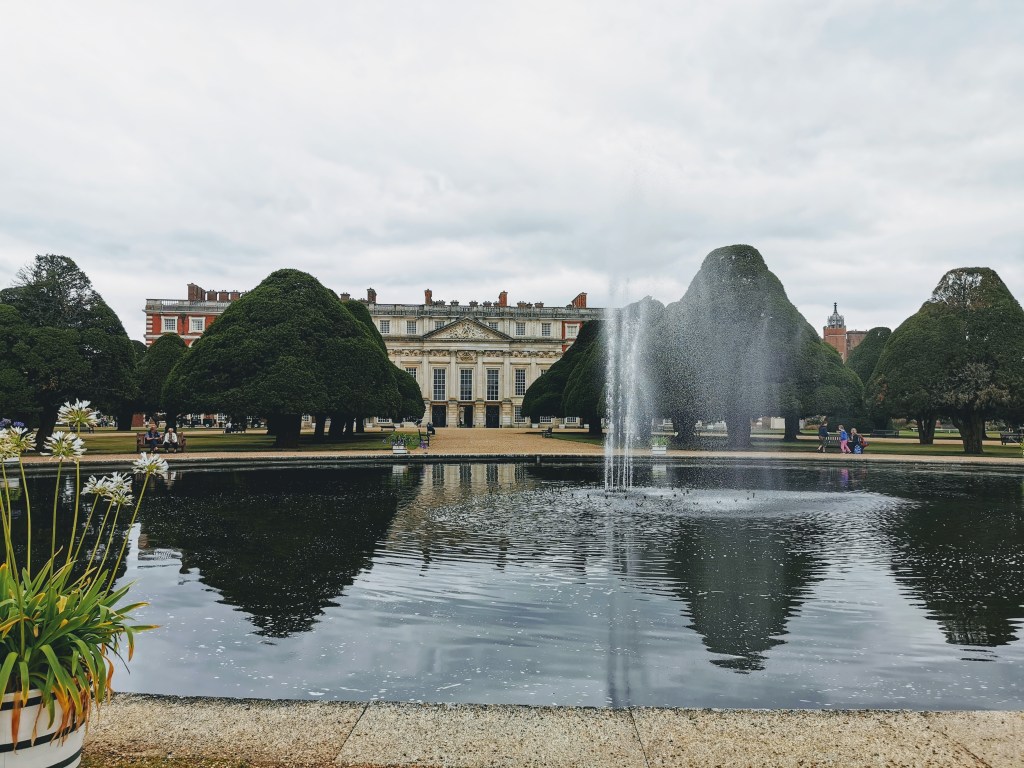
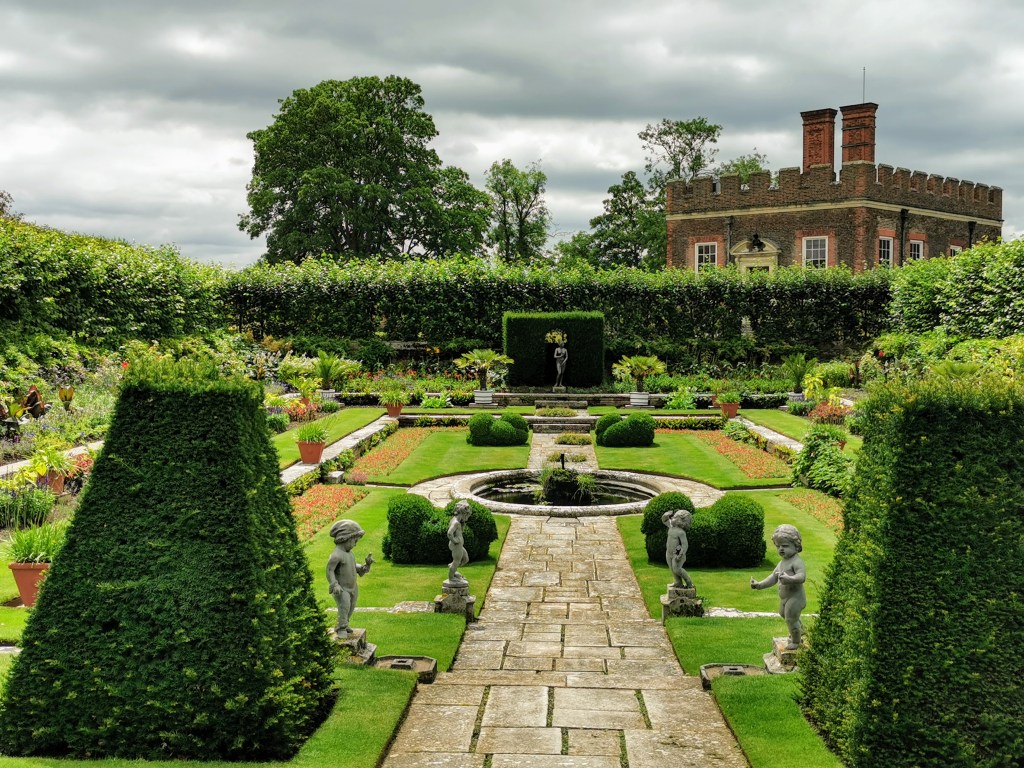
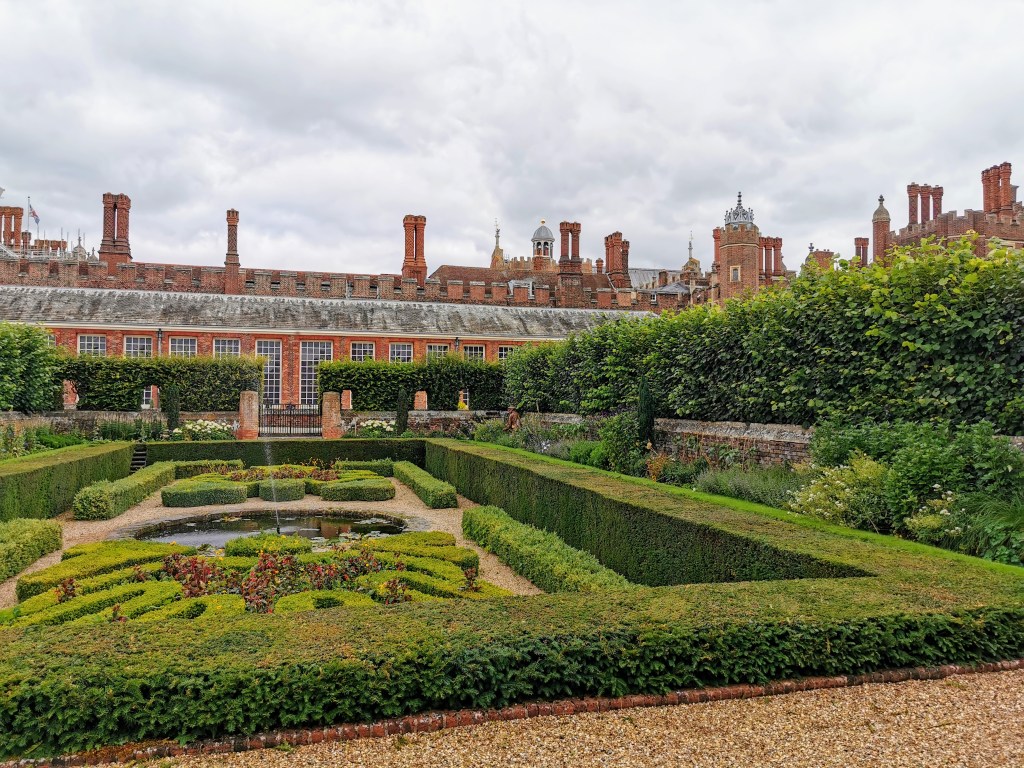
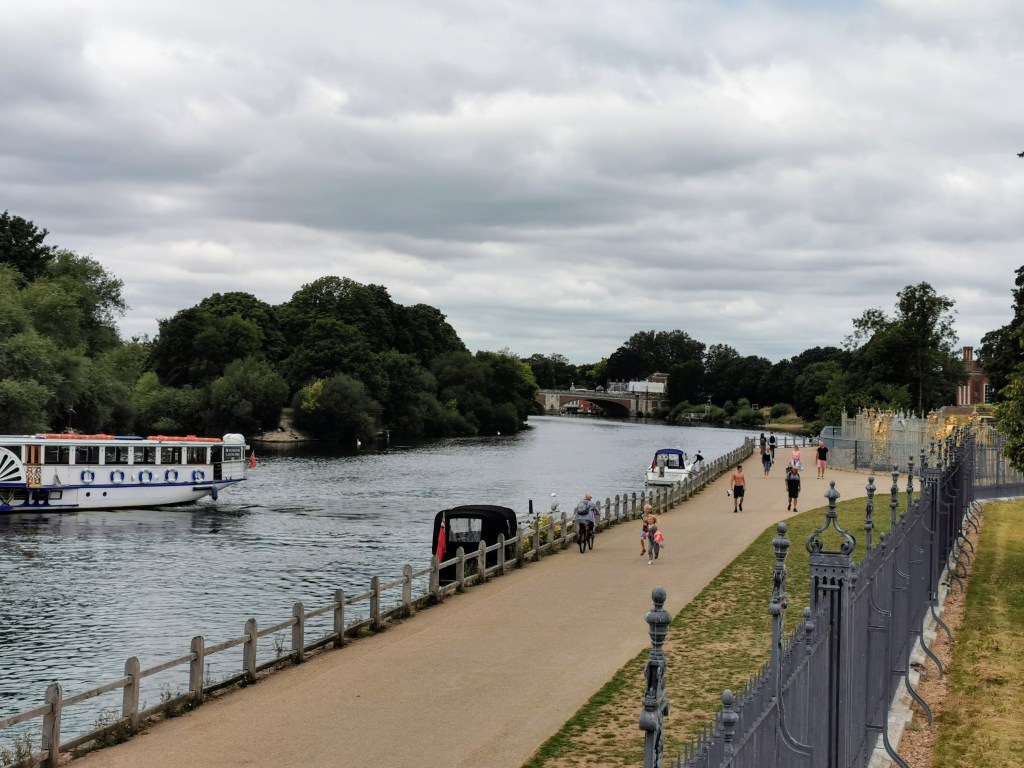
I’m surprised to find the River Thames skirting the Hampton Court Estate, although it makes absolute sense that the palace was built adjoining the great river, so it was accessible from central London by boat. Anyone walking along the Thames Path has a pretty impressive view at this point.
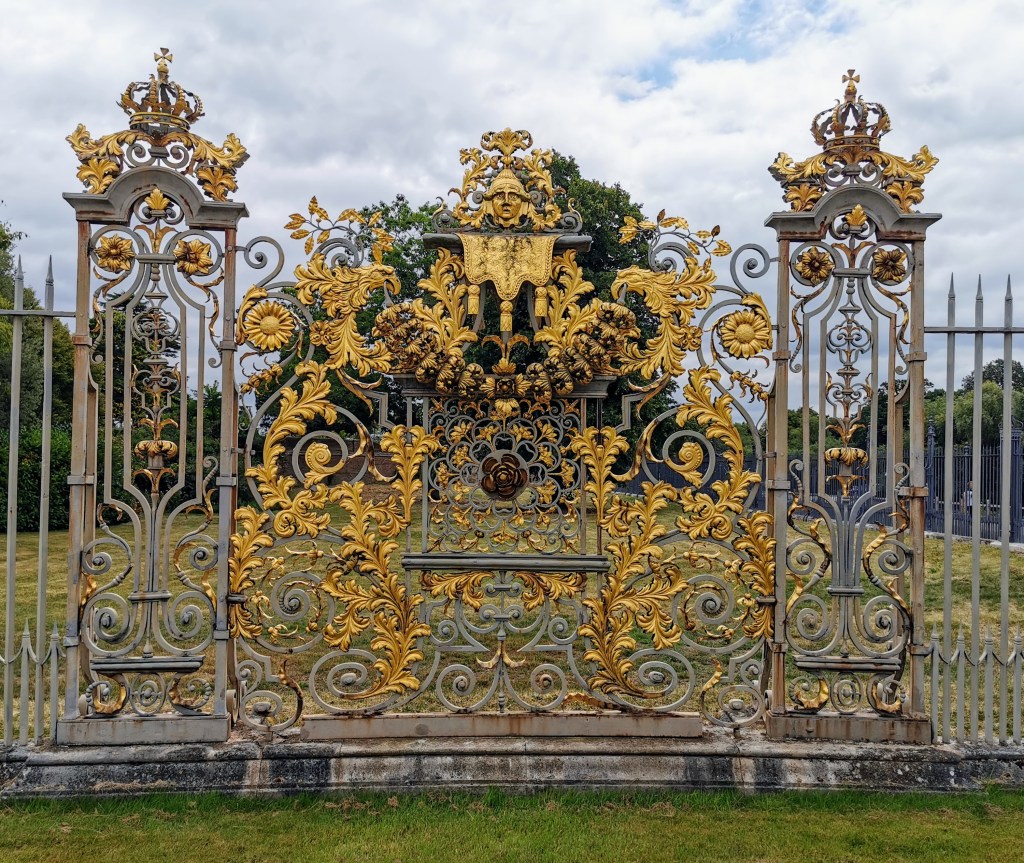
William and Mary paid French craftsman Jean Tijou over £2,000 back in 1689 for a suitably ornate fence along the river. It’s hard to miss the fact that you’re passing somewhere quite important.
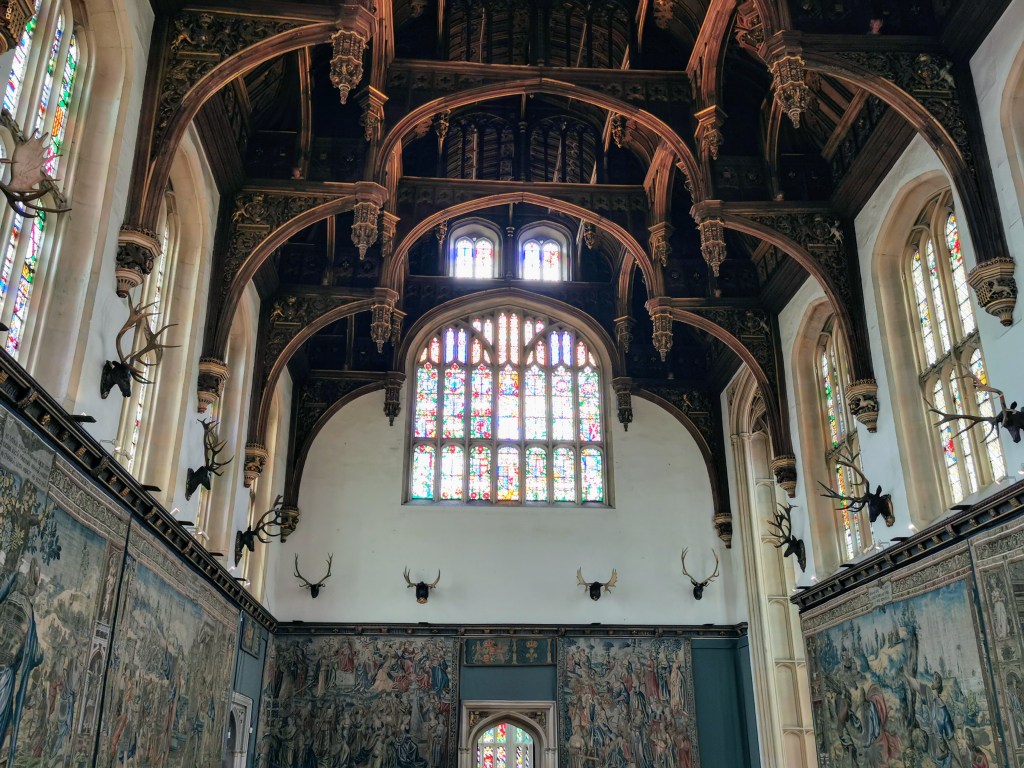
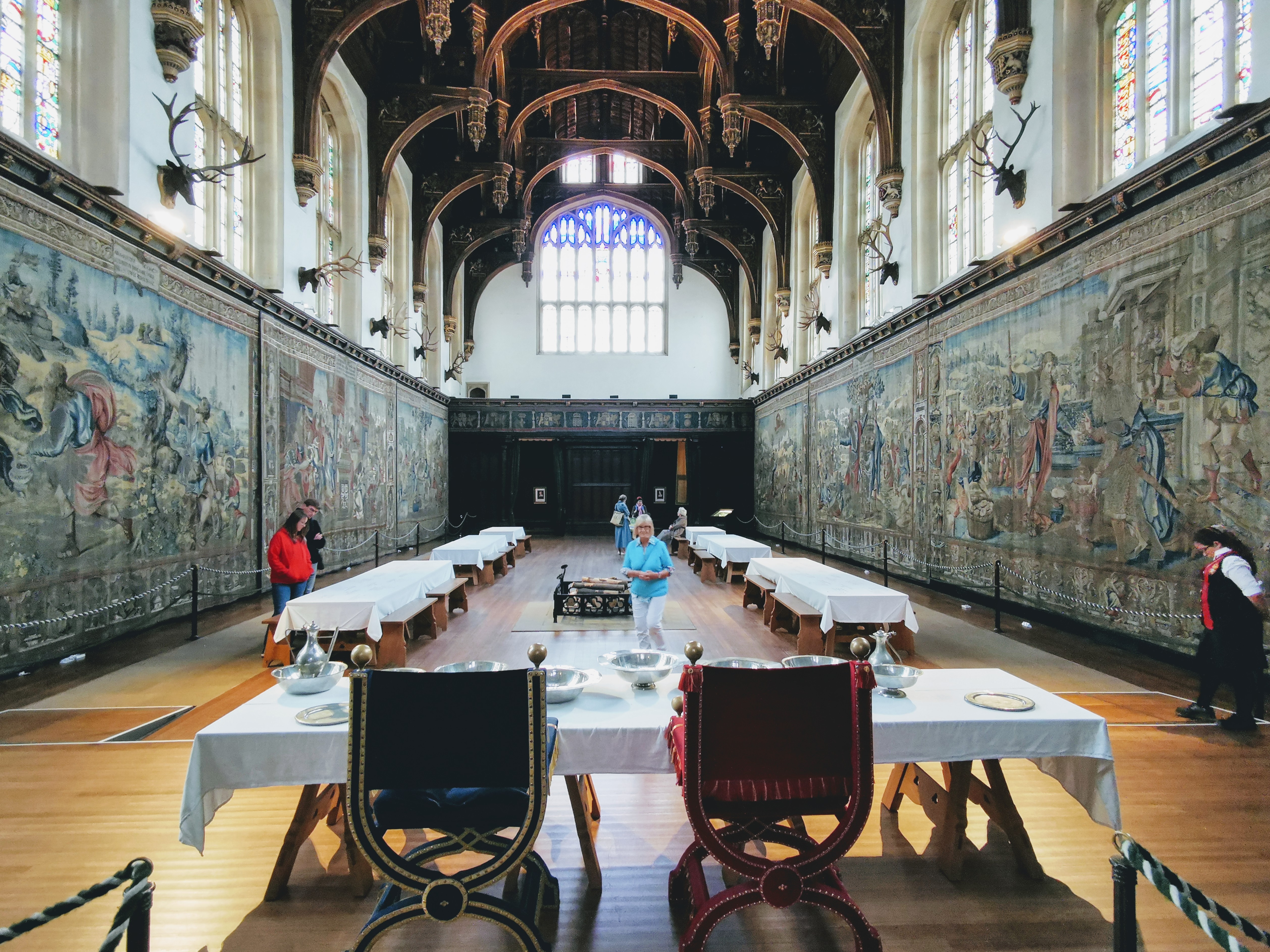
Now for my favourite bits – I have two. Firstly, the Great Hall. Originally built in Wolsey’s time but then rebuilt by Henry, it was designed to overawe visitors with its splendour and used for dining and entertainment. During the reign of James I in the early 1600s it was converted into a theatre and Shakespeare’s company – The King’s Men – performed many of his plays here, including Macbeth, Hamlet and A Midsummer Night’s Dream. As a fan of the Bard, I’m a tad impressed. If I only had a Tardis!
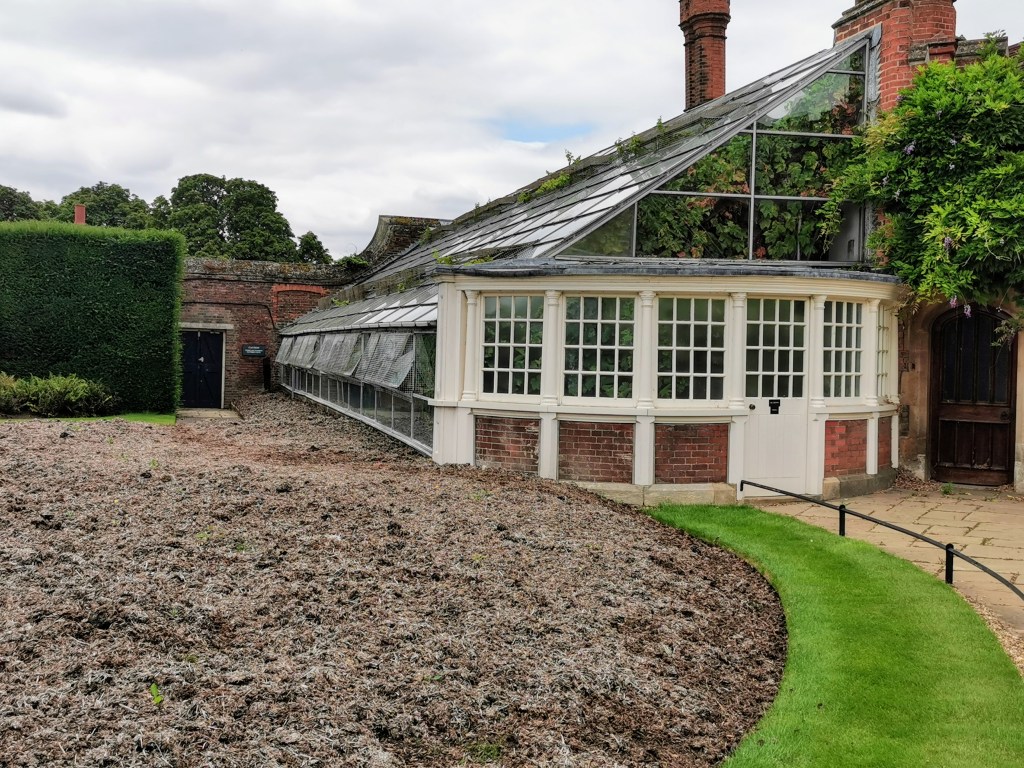
Secondly, just because it’s a bit random, and of course I love wine, the Great Vine. Yes, the largest grape vine in the world, over 250 years old. How brilliant is that? It was planted by Capability Brown and has been lovingly cultivated ever since. It still produces grapes now, which you can buy if you happen to visit in September. I know it doesn’t look much but the vine itself fills a whole greenhouse and the garden outside is for the huge roots.
So there we are, another very entertaining and enlightening day out. I hope you’ve enjoyed it too. Now I’m in the mood, I think I’ll go home and read some more of my book.
 Steph's Travels